The date of inauguration of the exhibition hasn’t been decided yet, but most of the groundwork for the event has been completed.
For the first time in almost 12 years, the National Museum in Delhi is preparing to display the priceless jewellery collection of the Nizam of Hyderabad.
The date of inauguration of the exhibition hasn’t been decided yet, but most of the groundwork for the event has been completed. The National Museum exhibited the jewellery for the first time in 2001 and again e in 2007. There have also been two exhibitions of the jewellery at the Salarjung Museum in Hyderabad during the same period.
“In India, jewellery is an integral part of lifestyle. Among them, the Nizam’s collection of jewels is especially unique. It, therefore holds a significant position in the history of gemology and jewellery,” said Sanjib Kumar Singh , curator of the exhibition.
Soon after India’s independence and the annexation of erstwhile princely state of Hyderabad, the seventh and last Nizam, Mir Osman Ali Khan, created 54 trusts. The jewels, now in the custody of the Indian government, were part of the assets of these exclusive trusts. In March 1951, HEH the Nizam’s Jewellery Trust was created and it took over 103 items including state regalia; in February 1952, HEH the Nizam’s Supplemental Jewellery Trust took custody of 144 pieces of jewellery.
Negotiations began in 1972 between the Indian government and the family for the sale of the priceless heritage. In 1995, the Indian government finally acquired a part of the inventory for Rs. 217 crore. The actual value of this precious legacy is difficult to asses because it not only represents some of the finest jewels found in the Indian subcontinent, but also stands as a silent witness to the history of the Deccan region.
According to the government, the present collection comprises a total of 173 items acquired from the two trusts. The actual number of pieces, if pairs and groups of ornaments are split up, is 325 not, including 22 unset emeralds, and the 185-carat Jacob diamond, one of the world’s largest by size.
The collection includes turban ornaments, necklaces, earrings, armbands, bracelets, bells, buttons and cufflinks , anklets, watch chains and rings—all jewels once worn by the once fabulously wealthy Nizams of Hyderabad, their wives, children and grandchildren.
“This collection is a national treasure and comprises of jewels of fine beauty and rarity. I believe the jewels should be on permanent display as they belong to the people of India,” says art historian Deepthi Sasidharan, who has co-authored the book, Treasures of the Deccan–Jewels of the Nizams, published recently.
The exhibition is likely to feature around 33 showcases. The National Museum proposes to charge visitors Rs 50 for a 30-minute tour of the exhibition.
source: http://www.hindustantimes.com / Hindustan Times / Home> India / by Vanita Srivastava, Hindustan Times, New Delhi / January 11th, 2019
This is expected to boost the writing of people belonging to Nawayat community from Bhatkal, who use the Persian script to write their unique language ‘Nawaiti’ — a rare language and script.
Karwar :
A 1,000-year-old language is complete only now after a team of software engineers from Mumbai developed three of its characters to crack its Unicode script.
This is expected to boost the writing of people belonging to Nawayat community from Bhatkal, who use the Persian script to write their unique language ‘Nawaiti’ — a rare language and script.
Nawayat is an Indian-Muslim community, which lives in Bhatkal of the Uttara Kannada district.
Mohammed Mohsin Shabandri, a community member, pointed out that due to three missing characters in Unicode fonts, people were not able to write as they pronounced.
“About three years ago, we decided to develop these three characters and called a meeting of Nawaiti-speaking people. After eliciting their opinion and conducting proper research, we finalised three new characters,” he said.
“Nawaiti is an endangered language. Three months ago, we approached a software development firm in Mumbai. After studying the language, they developed phonetic characters and its software, which is called ‘Nawayat language solution’,” he said.
source: http://www.newindianexpress.com / The New Indian Express / Home> States> Karnataka / by Arunkumar Huralimath / Express News Service / January 16th, 2019
The Meghalaya HC currently has just one judge, Justice Sudip Ranjan Sen, who is also officiating as the acting Chief Justice. Its sanctioned strength is four judges.
THE CENTRE on Thursday appointed Justice Mohammad Yaqoob Mir, the most senior judge of the Jammu & Kashmir High Court, as the Chief Justice of Meghalaya High Court.
The Meghalaya HC currently has just one judge, Justice Sudip Ranjan Sen, who is also officiating as the acting Chief Justice. Its sanctioned strength is four judges.
“In the exercise of powers conferred by clause (1) of Article 217 of the Constitution of India, the President is pleased to appoint Shri Justice Mohammad Yaqoob Mir, Judge of the Jammu and Kashmir High Court, to be the Chief Justice of the Meghalaya High Court with effect from the date he assumes charge of his office,” said the notification issued by the Ministry of Law and Justice.
The appointment is significant as the Supreme Court Collegium, on April 19, while recommending Justice Mir’s name, had cited regional representation. “Justice M Yaqoob Mir is the senior-most Judge from Jammu & Kashmir High Court and has been serving there since his elevation as a Judge of that High Court in November 2007. Having regard to all relevant factors, the Collegium finds Justice M Yaqoob Mir suitable in all respects for being appointed as Chief Justice of the Meghalaya High Court. The Collegium resolves to recommend accordingly. While making the above recommendation, the Collegium has also taken into consideration the fact that for quite some time there has been no Chief Justice from Jammu & Kashmir High Court,” it had said.
Last week, a Supreme Court bench of Justices Madan B Lokur and Deepak Gupta had pointed out the shortage of judges in high courts in the North-East. On May 5, Attorney General K K Venugopal had assured that the appointments would be made soon. On May 4, the ministry also cleared the appointment of Arindam Lodh, member of bar, as a Judge of the Tripura High Court.
source: http://www.indianexpress.com / The Indian Express / Home> India / by Kaunain Sheriff M / New Delhi / May 11th, 2018
Samatala Village, Tarikere Taluk, Chikkamagalur District – KARNATAKA :
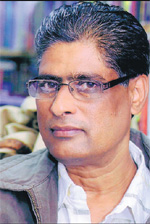
Tarikere, the Dean of the Languages Discipline at the Hampi Kannada University won the award for his work Kattiyanchina Daari.
The others who have been chosen for the awards are former union minister Veerendrakumar (Malayalam), Aurobindo Uzir (Bodo), Arun Sakhardande (Konkani), Gopi Narayan Pradhan (Nepali), Vanita (Punjabi), Mangat Badal (Rajasthani), Mithila Prasad Tripathi (Sanskrit), Laxman Dubey (Sindhi), Sheen Kaaf Nizam (Urdu), Bani Basu (Bengali), Esther David (English), Dhirendra Mehta (Gujarati), M Borkanya (Manipuri), Manoj (Dogri), Uday Prakash (Hindi), Nanji Nadan (Tamil), Keshada Mahanta (Assamese), Basher Bashir (Kashmiri), Ashok R Kelkar (Marathi) and Pathani Pattnaik (Oriya).
Tarikere told Deccan Herald: “I had authored this book in 2006 itself. The joy is manifold as the award comes at a time when Kannada University is celebrating the 19th ‘Nudihabba’. I dedicate the award to the university”.
source: http://www.deccanherald.com / Deccan Herald / Home> State / by New Delhi – Hospet / DHNS / December 20th, 2010
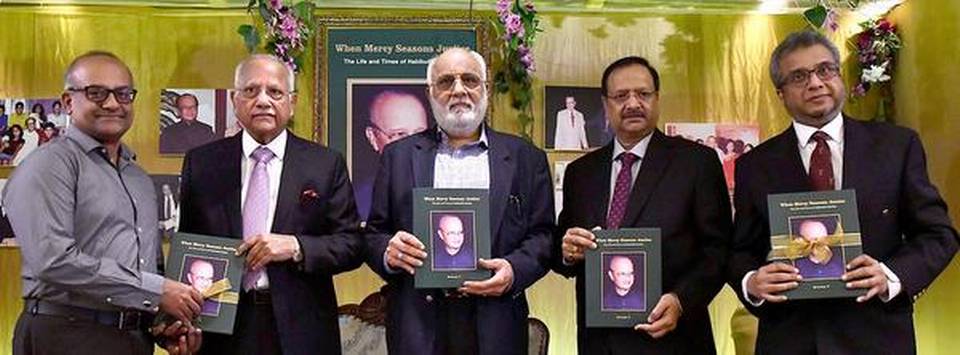
Paying tribute: (from left) Historian V. Sriram, Apollo Hospitals Chairman P. C. Reddy, Prince of Arcot Nawab Mohammed Abdul Ali and Justice R. Sudhakar at the event.
Will include excerpts from the former Advocate General’s memoirs
Jurist Habibulla Badsha was an amazing person and he always did what he thought was right, Dr. Prathap C. Reddy, Chairman, Apollo Group of Hospitals, said on Sunday.
Speaking at the launch of the book ‘When Mercy Seasons Justice’ – The Life and Times of Habibullah Badsha authored by historian V. Sriram, he recalled how they had met in the 1950s as college students.
“It was for an event in which the then Prime Minister Jawaharlal Nehru was to address students. I had chosen the Presidency College grounds and I went to meet their chairman and it turned out to be Badsha, and that was the beginning of a life long relationship,” he recalled. The former Advocate General was also a founder-director of the Apollo Hospitals.
Recalling his long association with Badsha, Prince of Arcot, Nawab Mohammed Abdul Ali said that on many occasions, he had fought cases for free for clients who could not afford any fees.
Chief Justice of the Manipur High Court R. Sudhakar recalled how his guru’s home was always open to friends and family.
He said Badsha and his wife were a couple who should be emulated and added that their home was witness to many an intellectual discussion.
Mr. Sriram said he had used large passages from Badsha’s memoirs in the book. His memoirs reflected the life of the Muslim community and the anguish they felt during Partition.
source: http://www.thehindu.com / The Hindu / Home> News> Cities> Chennai / by Special Correspondent / Chennai – December 31st, 2018
The joint state conference of the Students Islamic Organisation and the Girls Islamic Organisation was held at the Al Jamia al Islamiya at Santhapuram in Malappuram on December 22 and 23. The conference titled ‘the power of faith for a beautiful life’ was inaugurated by Dr Thaha Mateen, national leader of the Jamaat-e-Islami. The chief address was delivered by VT Abdulla Koya Thangal, Kerala assistant amir of the JIH. State leaders of the SIO and GIO spoke at the session presided over by GIO president Afeeda Ahmed. More than 3,000 students from different parts of the state attended the conference.
Several topics were discussed at the conference in various sessions, including ‘liberal cultures and the Islamic life’, the Islamic civilization and contributions to knowledge, the method of Islamic preaching, the future of student politics and ‘art and aesthetics in Islam’. The JIH state secretary Shihab Pookottur, AL Jamia rector Dr Abdussalam Ahmed, MES Engineering College vice-principal Dr Badeeuzzaman, Dr V Hikmatullah etc spoke at the event.
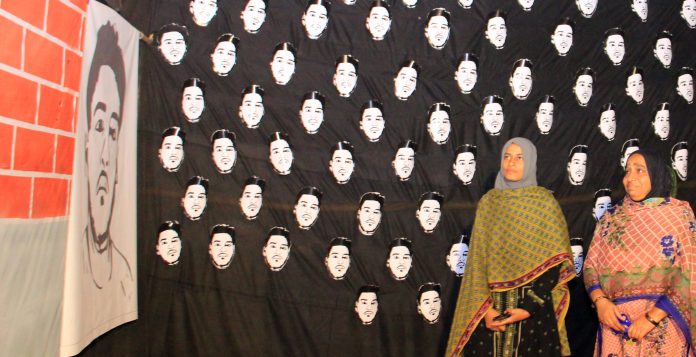
Fatima Nafees, mother of Mohammed Najeeb who has been missing from the JNU, inaugurated the art exhibition titled ‘Oodum Pavum’ arranged at the Conference venue. The exhibition themed ‘defend the racist looks’ was noted for its distinct nature – it had set the rooms of Mohammed Najeeb and Rohit Vemula who had committed suicide in the HCU following caste discrimination by the university authorities, symbolic graves for those killed in state atrocities in Kashmir as well for those killed in mob lynching, representation of the Muslim woman as stereotyped by the mainstream public and media etc. The exhibition was organised by the students of the Al Jamia al Islamiya.
The new leaders of the student organisations were also announced. Salih Kottappally is the new president of the state SIO and Binas TA is the general secretary for the year 2019-20. Afeeda Ahmed is the president of the GIO and Nasreen P Naseer is the general secretary.
source: http://www.twocircles.net / TwoCircles.net / Home> Dalit / by Najima O, TwoCirlces.net / December 28th, 2018
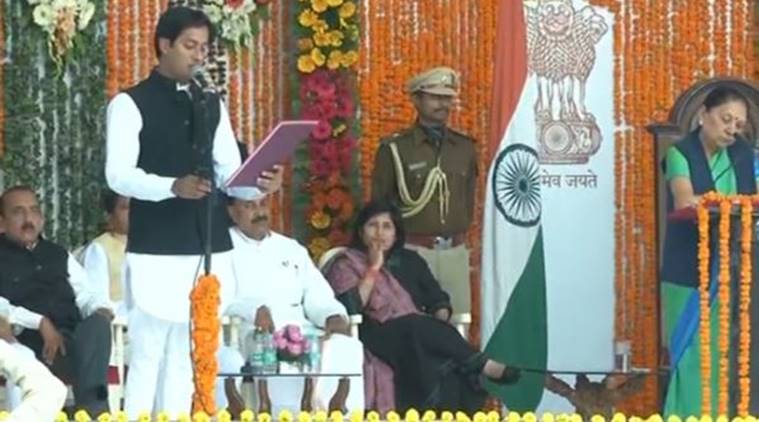
The swearing-in ceremony began at Raj Bhavan in Bhopal at 3 pm. Governor Anandiben Patel administered the oath to the newly inducted ministers. In the recently held assembly elections, Congress managed to win 114 seats in 231-member state assembly.
In the recently held assembly elections, Congress managed to win 114 seats in 231-member state assembly. (Photo-ANI)
Digvijay Singh’s son Jaivardhan Singh was among the 28 MLAs who were sworn in as the cabinet minister in Madhya Pradesh on Tuesday. Governor Anandiben Patel administered the oath to the new ministers at the Raj Bhavan in Bhopal.
Sajjan Singh Verma, Vijayalaxmi Sadho, Hukum Singh Karada, Govind Singh Rajput, Bala Bachchan, Pradeep Jayaswal, Imarti Devi were among those sworn in as ministers. Arif Aqueel was the lone Muslim face in the new council of ministers. Aqueel, MLA from Bhopal North, is the first Muslim minister in the state after 15 years.
The names of the ministers were cleared after Chief Minister Kamal Nath met Congress chief Rahul Gandhi over the weekend.
Congress’ chief whip in Lok Sabha, Jyotiraditya Scindia, former Madhya Pradesh chief minister Digvijaya Singh and ex-state Congress chief, Arun Yadav, also attended the meeting.
source: http://www.indianexpress.com / The Indian Express / Home> India / by Express Web Desk / New Delhi / December 25th, 2018
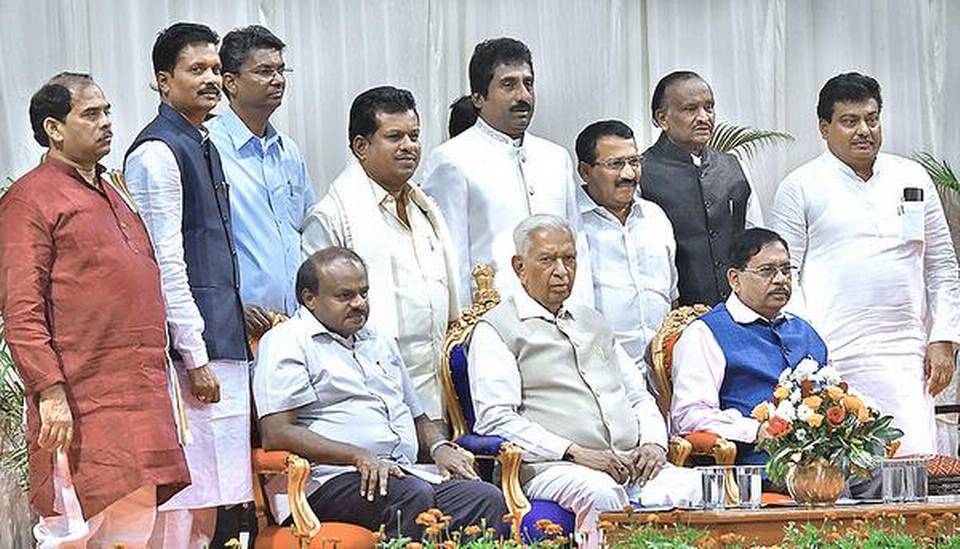
Governor Vajubhai Vala, Chief Minister H.D. Kumaraswamy, and his deputy G. Parameshwara posing for a photographs after the swearing in of eight new Cabinet Ministers at the Raj Bhavan in Bengaluru on Saturday.
R. Shankar, Ramesh Jarkiholi dropped from the Ministry
The long-awaited expansion of Karnataka Cabinet materialised on Saturday, with eight Congress legislators — seven of them hailing from the north Karnataka — being sworn in by Governor Vajubhai R. Vala.
While this fills the Congress quota in the coalition government’s Cabinet, Janata Dal (Secular) has chosen to keep its options open on its quota of two Ministers.
Ahead of the 2019 general elections, the decision of the Congress to give prominence to north Karnataka has assumed significance as the JD(S) is largely focussing on its electoral base in the southern districts of the State. This is also aimed at addressing the constant complaints of neglect of the people of north Karnataka.
While M.T.B. Nagaraj (Hoskote, Bengaluru Rural) is the lone MLA to become Minister from the southern part of the State this time, the other newly sworn-in ministers are M.B. Patil from Babaleshwar in Vijayapura district; R.B. Timmapur, MLC; Satish Jarkiholi from Yemkanmardi in Belagavi district; C.S. Shivalli from Kundgol in Dharwad district; P.T. Parameshwar Naik from Huvinahadagali in Ballari district; E. Tukaram from Sandur in Ballari district; and Raheem Khan from Bidar North.
All eight were administered the oath of office and secrecy at the Raj Bhavan in the presence of Chief Minister H.D. Kumaraswamy, Deputy Chief Minister G. Parameshwara and several Congress and JD(S) leaders. All eight are of Cabinet rank.
Forest Minister R. Shankar and Municipal Administration Minister Ramesh Jarkiholi have been dropped from the Ministry.
Protest
There were rumblings of discontent from some legislators not inducted into the Cabinet even as the oath-taking ceremony was on. Supporters of the Congress MLA, Ramalinga Reddy, protested near the Raj Bhavan to demand his induction into the Cabinet.
With the Ministry’s size fixed at 34, the Congress has filled its full quota (22) and the total strength of the Council of Ministers has increased to 32. Only two seats are vacant and both belong to the JD(S) quota.
Of the eight inducted, four have become Ministers for the first time. Mr. Satish Jarkiholi, Mr. Patil, Mr. Thimmapur, and Mr. Naik had served in the previous Siddaramaiah government.
Caste equation
The Congress struck a balance by providing fair representation to all major castes/communities. There are two Ministers from Kuruba community (Mr. Shivalli and Mr. Nagaraj), two from the Scheduled Castes (Mr. Naik and Mr. Thimmapur), two from the Scheduled Tribes (Mr. Tukaram and Mr. Satish Jarkiholi), one from Lingayat (Mr. Patil), and one Muslim (Mr. Khan).
To contain dissidence, the Congress has given postings to 31 legislators, including eight Ministers, nine parliamentary secretaries, and 19 heads to boards and corporations. The Congress has recommended to the government names of 19 MLAs to appoint as heads of various government boards and corporations.
The party has appointed three MLCs and six MLAs as Parliament Secretaries. Sharanappa Darshanapur, MLA for Shahpur in Yadgir, has been appointed as Deputy Chairman of the Planning Board.
Senior leader and former Minister H.K. Patil has been appointed as Chairman of the campaign committee of KPCC. He has replaced Minister for Water Resources and Medical Education D.K. Shivakumar.
Jewargi MLA Ajay Singh has been appointed as the special representative of the government in Delhi, while V. Muniyappa, MLA, is the Political Secretary to the Chief Minister.
source: http://www.thehindu.com / The Hindu / Home> News> States> Karnataka / by Special Correspondent / Bengaluru – December 23rd, 2018
The British unleashed ruthless violence over Mappilas to quell the rebellion in south Malabar taluks
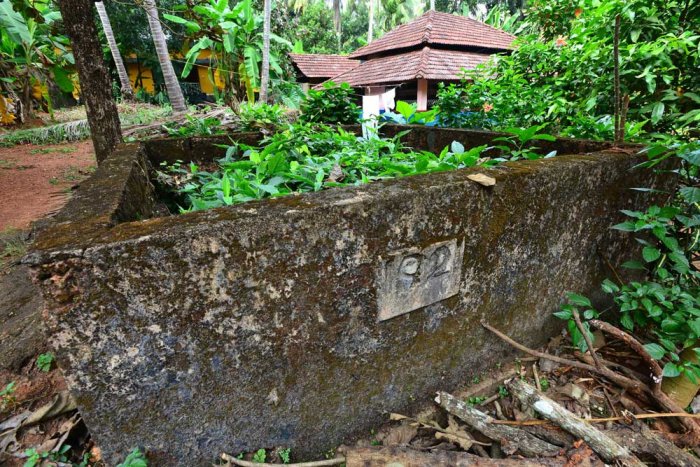
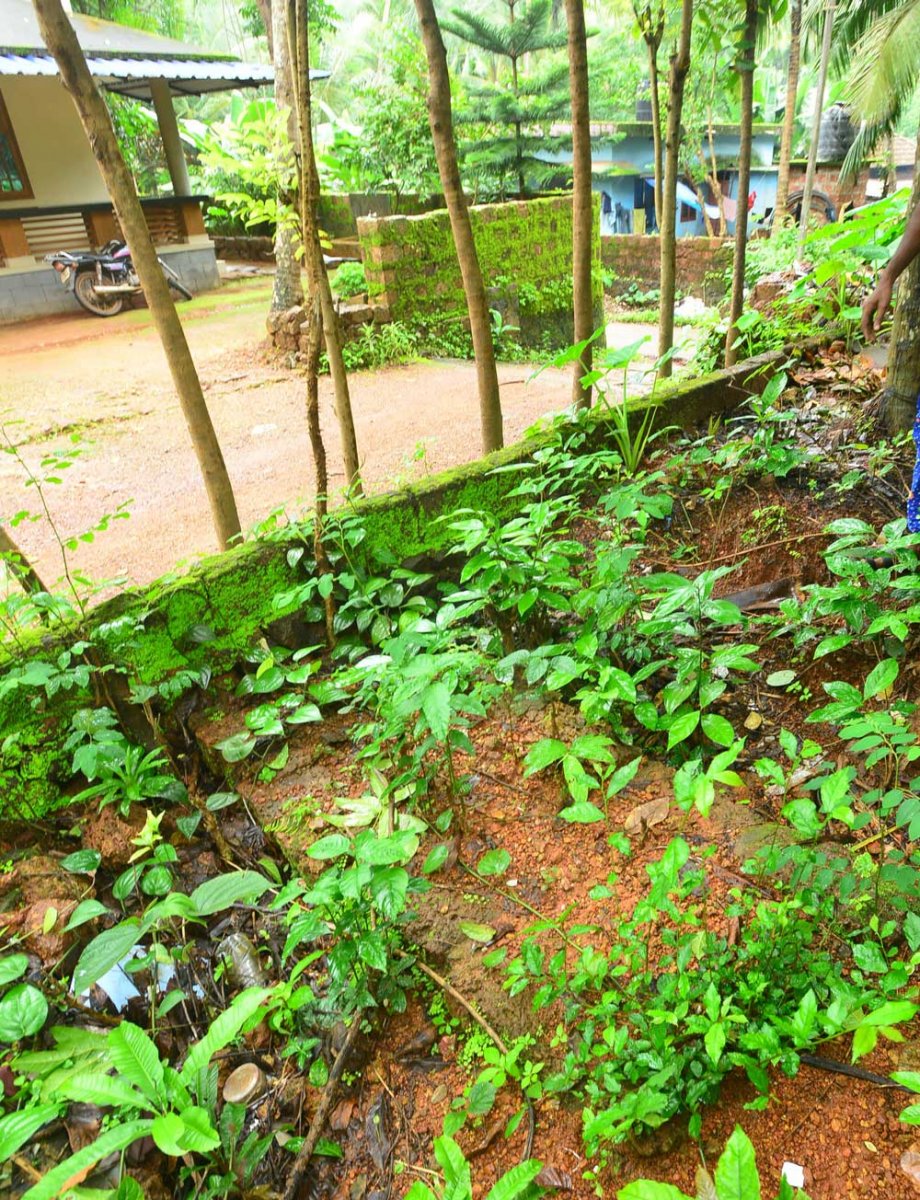
A mass grave in Adhikarathodi, Melmuri, where 11 bodies had been buried after the massacre. (Photo courtesy: Sameel)
Ninety-seven years ago on this day, the British army massacred 246 people in a small village in the Malappuram district of Kerala as part of a crackdown against the Mappila rebels.
The Mappila Rebellion was part of the non-violent Khilafat Movement led by Mahatma Gandhi and the Ali Brothers in 1921-22. The Mappila Muslims, who reside in the south Malabar region, had taken the movement seriously and engaged in combat with the well-equipped British army.
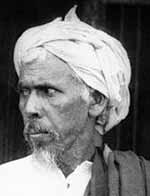
Ali Musliyar (Courtesy: Wikimedia)
The Mappila warriors, under the leadership of cleric Ali Musliyar and Variyam Kunnath Kunjahammed Haji (V K Haji), captured the taluks of Eranadu and Valluvanadu from the British and established their own rule.
After a short period, the British suppressed the rebellion savagely by letting loose the Gurkha Regiment, Dorset Regiment etc. According to official data, more than 2,300 people were killed and over 45,000 rebels were imprisoned in different jails across the country (the numbers are five-fold higher in unofficial records).
The rebellion had a huge impact on the region as well as the country. Mahatma Gandhi distanced himself from the rebels stating that the rebellion was just “an outburst of fanatics”. Several works, both critical and in support of the rebellion, have been published, but most of them are silent about the British crackdown on the rebels.
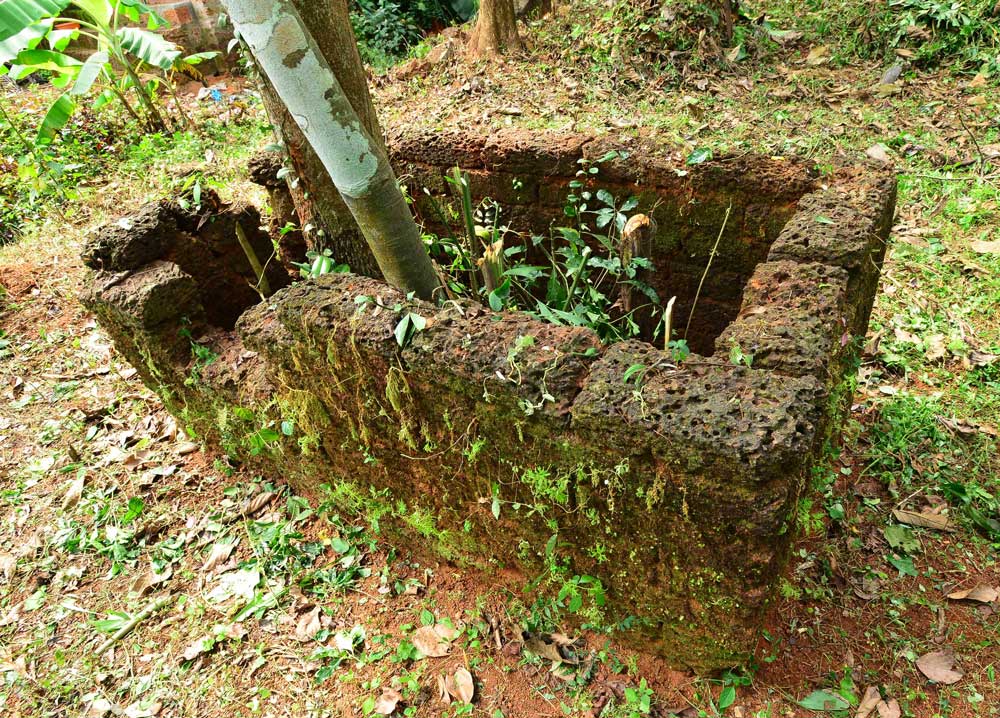
Two bodies were buried in this grave. (Courtesy: Sameel)
Unmarked graves
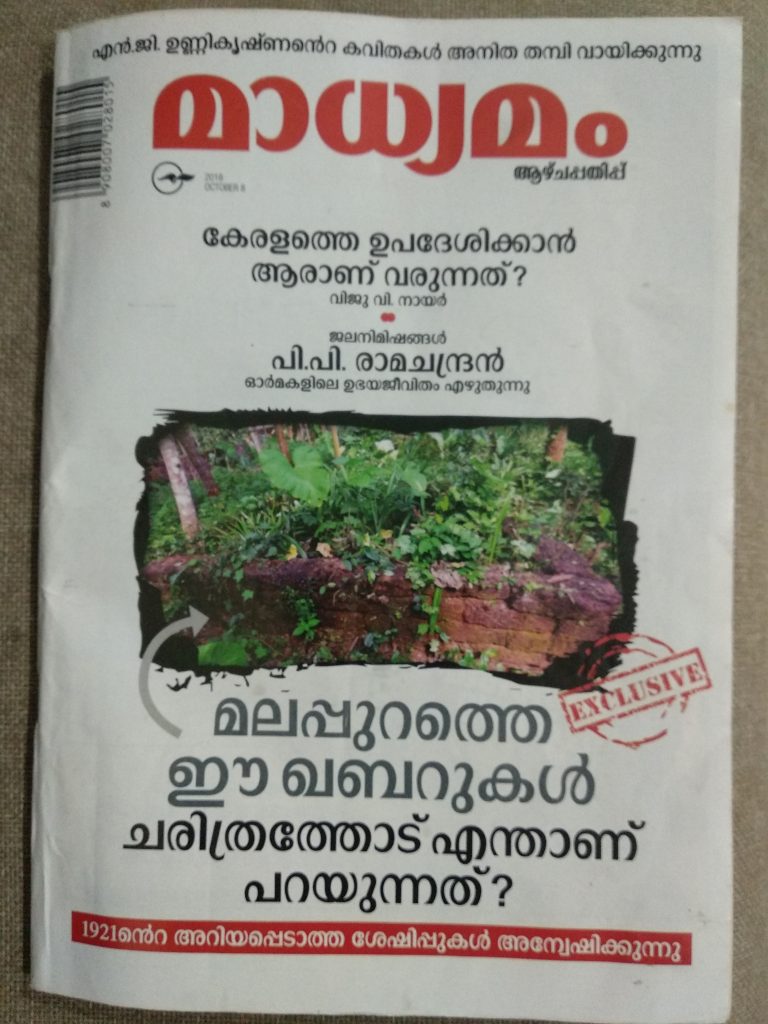
This bloodbath, which was largely forgotten, came to light after a three-year-long research by a journalist. Illikkal Sameel, who is with a Malayalam media organisation, spent four years documenting the history behind unmarked graves in a village located 3 km from the Malappuram district headquarters. In a detailed report published in Madhyamam Weekly, a Malayalam magazine, Sameel has illustrated the brutality of the British towards the Mappila, mostly innocents, including the old and the sick, to terrorise the rebels who had driven the mighty English force away from the region for months.
Cover page of Madhyamam Weekly.
In an ironic twist, Sameel, who resides in a nearby village, got to know about this forgotten historical episode four years ago from a friend, K Ashraf, who is pursuing his PhD from Johannesburg University, South Africa. Ashraf informed Sameel about the undocumented graves dating back to 1921 present in the area.
Initially, Sameel could find only five graves at Adhikarathodi in Melmuri village but nobody had any details about those buried there. After tracing the descendants of those buried, Sameel obtained information of 40 people from nine graves. All the graves had more than one body buried and among them one had upto 11 bodies.
“Malabar struggle is a well-researched topic from Kerala’s freedom movement and several scholars are still trying to explore more aspects. But I could find no trace of this particular massacre in any of those works,” Sameel said.
“In a casual conversation, a researcher in Malabar history mentioned Dorset Regiment and their involvement in suppressing the rebellion. I dug further to get details of the regiment and their expeditions, that was also futile,” Sameel explains.
From an octogenarian physician Dr Thorappa Muhammed, Sameel got to know that the number of people killed in the massacre was more than he could count. Muhammed told him that the number would go above 200 and challenged him to look at official British documents for more information.
Connecting the dots
“Most of the documents are not publicly available now, so I started flipping through the contemporary chronicles of officials. Among them, I went through a book of the Personal Assistant of Kozhikode Collector Mr Gopalan Nair’s ‘The Moplah Rebellion 1921’, which was published in 1924. In that book, he has just mentioned that the Dorset Regiment met some rebels near Melmuri and it led to the killing of 246 people on October 25, 1921,” said Sameel.
A book by the then police inspector of Malappuram, R H Hitchcock, describes every moment of his life as a British officer in Malappuram.
“The book is no more in print, hence, I got a photocopy of the book from one of my friends and a professor at Malappuram Government College, Dr Jameel Ahmed,” said Sameel.
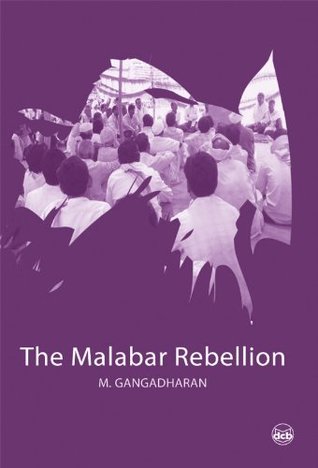
Another historian, Dr M Gangadharan, has cited British officials G R F Tottenham and C T Atkinson in his work on the Malabar struggle. Sameel found Tottenham’s book to be the most valuable as the author had added all the official communications, notes, commission reports etc., that were available during the rebellion.
“I stitched all these details together with the verbal accounts of various residents and stories of survivors to write this report. It was a painful effort,” said Sameel.
Earlier efforts
In the early 2000s, an article published in ‘Souvenir’ as part of the Pookkottur War anniversary had made some efforts to cover the massacre.
Some young enthusiasts and writers had also made videos regarding this massacre and related artefacts still available in the area. The information for these efforts led Sameel to more graves.
Two feet deep grave. (Courtesy: Sameel)
‘Girls were murdered’
“Dr Thorappa Muhammed had mentioned graves dug by Muslim women as men were unavailable to conduct the funerals,” elaborates Sameel. “I found two such graves in the latest expedition. Unlike the usual six-feet deep Muslim graves, these were only two feet in depth,” he said.
“As per some official documents and the accounts of descendants of the dead, a significant amount of the people killed in the massacre were innocent. Family members told me about men, including aged and sick, being forcefully dragged out of their home and shot. Two girls who were trying to protect their fathers were also shot by the army,” Sameel added.
Punished for links?
Apart from a telegram communication of the officials mentioning the short-engagement between Dorset and rebels in Melmuri after the Mappilas were attacked, there is no other evidence to lead us to the motive behind the massacre.
“A large gang reported last night four miles north-west of Malappuram. Operations are undertaken against them by Dorsets, Artillery and armoured cars. Enemy met in jungle west of Melmuri opposing our troops there and in the houses, refusing to come out when ordered to surrender and offering continued opposition resulting in 246 rebel casualties,” reads the telegram.
Sameel assumes the British unleashed violence in that particular place due to the presence of a big chunk of Ali Musliyar’s students and giving shelter to V K Haji when he was in underground.
He rules out any connections to the alleged Mappila brutality, including forceful conversion of non-Muslims. “In my research, I could not find any credible information about the forceful conversion. Rather, there are mentions of participation of lower caste people in the rebellion,” Sameel claims.
“If such forceful conversions had happened, where are the later generations of those people. But till now nobody came forward claiming as the descendants of ‘those people’,” says Sameel.
“The story of forceful conversion was to demonise Mappila warriors and justify the British brutality. Even the leaders in the freedom movement believed this story and ignored the ruthless suppression of the rebellion,” he added.
In his article, Sameel gives an account of assistance from Thiyya family, lower caste Hindus, to extinguish the fire set on homes of Muslim neighbours by the army.
The course of rebellion changes
The entire course of the rebellion changed after the massacre as more rebels surrendered. Also, the popular support to the rebellion had also diminished. The British created an impression among the people that none, despite being active or inactive in the rebellion, would be spared.
“This was the British strategy to terrorise the rebels as well as sympathisers of rebels to give a strong message: ‘either support British or die’,” Sameel added.
The British officials themselves accepted that all they killed were not rebels, but they cheered the increase in the number of submissions as a result of the army act.
“In the interval before they (Dorset Regiment) came into action, there had been several encounters with the rebels and on October 25th the Dorsets had killed 246 Mapillas in the Melmuri area. Not all of these probably were active rebels, and the encounter seems to have had a considerable moral effect, for shortly afterwards petitions began to be received from ‘amsams’ in the neighbourhood of Malappuram offering submission,” Under Secretary reported to superiors. (Tottenham, 39).
In the correspondence of F B Evans, I US, Special Civil Officer, he wrote that Malappuram Kazi with thousands of men and women pleaded for amnesty after the massacre. In continuation, he regrets about the bloodbath, saying, “I think this may be put down as the effect of the Melmuri show on the 25th when no doubt a certain number of comparatively innocent people were unavoidably killed.”
Complete cover-up
British and upper caste historians deliberately neglected this episode for their benefits, alleges Sameel.
British officials tried to cover up this brutality to suppress the rebellion as part of maintaining themselves from further reactions from Muslims from other parts of India and to avert the global scrutiny of the war crime.
Sameel demands an open apology and reparation from the British government for their brutality on innocent people.
“The massacres the British army unleashed as part of a crackdown on the rebellion in Malabar, including the one in Melmuri, was one of the deadliest violence in India when one looks at its intensity. There were families without men, as all men were killed or taken to prisons. Those families need both an apology as well as compensation. The Indian government should pressurise the UK for this,” Sameel said.
For generations to come
After publication of the article, Sameel received several calls from different corners detailing other similar massacres. He is planning to write a book with more descriptions and related events.
There is also a plan to produce a documentary on this. Malayalam filmmaker and director of hit movie ‘Sudani from Nigeria’, Zakaria Muhammed, has agreed to produce the documentary under the banner of his production house – Cross Border Camera.
Sameel hopes the history books will feature this episode in the coming days. “The episode of the massacre was known among the victims’ families, till the last generation. The present generation is not aware of this. I hope my work will instil curiosity among them,” Sameel added.
source: http://www.deccanherald.com / Deccan Herald / Home> Specials / by Ajmal V / DH News Service, Bengaluru / October 25th, 2018
The 13th Kodagu district Kannada literary meet will be organised at government PU College premises in Napoklu on December 22 and 23, said Kannada Sahitya Parishat district president B S Lokesh Sagar.
He told reporters here on Thursday that Madikeri tahsildar Kusuma will hoist the National flag at 8 am on December 22. Napoklu gram panchayat president K M Ismail will hoist the Kannada flag.
Exhibition stalls will be inaugurated by CMC president Kaveramma Somanna at 11 am.
The formal inaugural programme will be held at Jagadatmanada G Maharaj Sabhangana at 11.30 am. Zilla panchayat vice president Lokeshwari Gopal will inaugurate the programme.
The main stage, ‘Mahabaleshwara Bhat Pradhana Vedike’ will be inaugurated by zilla panchayat president B A Harish. Kannada Sahitya Parishat state president Dr Manu Baligar will inaugurate the literary convention.
Bharadwaj K Anand Theertha will preside over the literary convention. MLA K G Bopaiah, MLC Sunil Subramani and MLC Veena Acchaiah will take part. Cultural programmes will be inaugurated by social worker Sanket Poovaiah.
ZP member Latif will inaugurate Janapadotsava at 9.30 am on December 23.
An open forum will be held at 2.30 pm. The valedictory programme will be held at 4 pm, said B S Lokesh Sagar and added that various literary events will be held on both the days.
Kannada Sahitya Parishat district honourary secretary K S Ramesh, taluk president Kudekal Santhosh and office bearer Kodi Chandrashekhar were present in the press meet.
source: http://www.deccanherald.com / Deccan Herald / Home> State> Districts / by Adithya KA / DH News Service / Madikeri – December 20th, 2018