Category Archives: Leaders

Revisiting the life and times of Hayat Bakshi Begum

Hyderabad, TELANGANA :

A day after staging the internationally-feted heritage play, Quli: Dilon ka Shahzaada , actor-director-playwrighter Mohammad Ali Baig staged its sequel, Saavan-e-Hayat in Golconda Fort this Sunday celebrating the splendour of the Qutub Shahs.

A biographical play on the life of Golconda’s de facto empress, Hayat Bakshi, the only child of Mohammad Quli Qutb Shah and perhaps the most powerful lady of medieval Deccan.

A magnificent blend of great writing and commendable acting ensured the 65 minute play in Hindustani kept the audience glued to their seats.

The play featuring Mohammad Ali Baig in triple roles as Hayat’s father, husband and son, Rashmi Seth as old Hayat, Noor Baig as young Hayat and Ayushi Gupta as adolscent Hayat also featured Vijay Prasad, Kavita Golechha and SA Majeed in prominent roles.

It was well-attended and generously applauded by the theatre lovers and the locals alike who thronged the fort to watch the historic play.

source: http://www.timesofindia.indiatimes.com / The Times of India / News> City News> Hyderabad News / December 20th, 2016

Rosaiah releases compilation of speeches of Shabbir

Hyderabad, TELANGANA :

Hyderabad  :

A transparent governance was the only factor that would drive all-round development of the State, said Leader of Opposition in the Telangana Legislative Council Mohammed Ali Shabbir.

He was speaking after a book — actually a compilation of Mr. Shabbir Ali’s speeches delivered in the House — was released by former Governor of Tamil Nadu K. Rosaiah, who said it would be a record of proceedings that could be referred in future. The former Chief Minister of erstwhile Andhra Pradesh also recalled his association with the Council that lasted over 22 years.

Mr. Shabbir Ali wanted democratic traditions in elected Houses to be preserved and said his own journey of two years in the Council of Telangana State was more dynamic and meaningful in serving the cause of the poor and downtrodden. In his second innings as Leader of Opposition, he said he was in a position to advise the TRS Government in welfare measures.

Presiding over the meeting, Chairman of the Telangana Council K. Swami Goud said it was new tradition of book release at Council initiated by Mr. Shabbir. The tradition should continue for a healthy democracy.

Leader of Opposition in the Telangana Assembly K. Jana Reddy, former Union Minister S. Jaipal Reddy, TPCC president N. Uttam Kumar Reddy, Telangana’s Irrigation and Legislative Affairs Minister T. Harish Rao and a host of others, said the book contained valuation information on various subjects and that it would be helpful to future generations.

source:  http://www.thehindu.com / The Hindu / Home> News> Cities> Hyderabad / by Special Correspondent / December 19th, 2016

Woman who defied clerics is now mayor of Kolhapur

Kolhapur, MAHARASHTRA :

Hasina Faras, 61, has become the first Muslim woman to bag the post of Mayor in Kolhapur

____________________________________________________

HIGHLIGHTS

  1. Despite a fatwa issued by a local Muslim cleric body last year warning Muslim women to not contest the municipal elections, 19 women had filed for candidacy.
  2. Five women were elected as corporators including the newly elected mayor of Kolhapur, Hasina Faras
  3. ________________________________________________


Kolhapur :

When Hasina Faras wanted to contest the Kolhapur Municipal Corporation (KMC) polls last year, she was warned by a local body of 40-50 clerics that it was un-Islamic to do so. In fact, the clerics of the Majlis-e-Shoora-Ulama-e-Shahar had then issued a fatwa to all Muslim women not to stand for polls.

However, 19 Muslim women defied the fatwa and contested. Five of them, including Faras, were elected as corporators. A year down the line, 61-year-old Faras has become the first Muslim woman to bag the post of mayor in Kolhapur.

Political twists and turns and challenges are not new to Faras, whose family has been associated with the NCP. The religious challenge had posed a new hurdle, but she said support from her family and members of the community helped her face it.

“The fatwa went against the democratic values of the country. Kolhapur has the great legacy of  Chhatrapati Shahu Maharaj. We did not pay attention to the fatwa and contested the elections. Society has changed and we have to accept the changes. Muslim women have entered every sphere of life. I will stand against extrajudicial elements in future too if similar fatwas are issued,” Faras told TOI on Wednesday.

With 50% reservation for women in the local civic bodies, the 81-member KMC House has 42 women corporators belonging to all major political parties. The mayor’s post is to be rotated between NCP and Congress after an agreement was worked out between the two ruling alliance partners last year. However, with the opposition fielding a candidate, polls were necessitated this year.

source: http://www.timeofindia.indiatimes.com / The Times of India / News> City News> Kolhapur News / by Shekhar Paigude / December 15th, 2016

Realtor Razack to open Bengaluru’s first Museum of Indian Paper Money

Bengaluru, KARNATAKA :

In 1913, Maharaja Krishna Raja Wadiyar IV appointed William Clarence Rose as the first chief manager of the Bank of Mysore. Whilst in office, Rose collected all British India banknotes of denominations five, ten, fifty and one hundred in a series. When he retired in 1925, he received a wax-paper scroll rolled into a carved silver sheath, mounted on a teak base. Everything was made from melted silver coinage issued by the Raj.

Rose passed all this onto his daughter Vera Katherine Maud Collins, who bequeathed it to her grandson Simon Collins.The latter remembers how the “gift was kept in a 1937 coronation stamp album“ and was passed on two months before his grandmother’s death in 1982. This legacy -along with other historical nuggets -is finding its way back to the city .

The collection will be housed in a museum of Indian currency, expected to come up in Bengaluru next year.

The project is the brainchild of realtor and currency collector Rezwan Razack, who has been collecting Indian paper money since 1971. Spread across 4,000 square feet and located off Brunton Road, the museum is expected to be open to the public in the latter half of 2017. “The intention of setting up the Museum of Indian Paper Money is to display all that there is in my collection. It is to create awareness about our history and our journey so far as a nation, through our currency ,“ says Razack,  who is the managing director of city-based Prestige Estates Projects and chairman of the International Banknotes Society’s India chapter.

Among the world’s most prolific collectors of rare currencies, Razack has preserved bills dating back to early 1770s.These include the uni-face (onesided) notes first launched by the government of India, portrait notes of King George V & VI, cash coupons of princely states, Indian notes issued in Pakistan and Burma, special issues made for the Persian Gulf and Haj Pilgrims and all variants of Indian notes -from the Independence era till the latest demonetisation exercise.

E a ch n o t e links us to the way of life in the past and unearths lesser-known stories of our city and country, believes Razack. For instance, on display will be 100-odd Prisoner of War coupons issued by the British. “There were eight camps across India, including Bengaluru, which issued bills from one anna to ten rupees,“ he says.

The museum will comprise of interactive displays, historic facts and trivia, along with stories and essays written by Razack from his own journey and experience as a collector.Architects are working on the blueprint of the museum and estimates should be drawn up by the end of the year, Razack informs.

source:  http://www.economictimes.indiatimes.com / The Economic Times / Home> ET Home> Magazines> Panache / by Divya Shekhar, ET Bureau / November 24th, 2016

Baikal Utsahi , Poet, Writer and Politician, is no more

Balrampur – Lucknow, UTTAR PRADESH  / NEW DELHI  :


Photo: rekhta.org
Photo: rekhta.org

Well-known poet and former Rajya Sabha MP Bekal Utsahi passed away at New Delhi’s Ram Manohar Lohia Hospital on Saturday.

The 88-year-old poet was admitted to the hospital on 1 December after a fall in the bathroom at his South Avenue residence in Delhi.

According to Utsahi’s daughter Sophia, he suffered a brain haemorrhage following the accident.

Utsahi was nominated to the upper house of Parliament during Rajiv Gandhi’s tenure as Prime Minister.

An Enthusiastic Poet

Utsahi was born on 1 June 1928 in Uttar Pradesh’s Balrampur (formerly Gonda) district. His father was Lodhi Mohammad Zafar Khan.

Utsahi’s family named him Mohammad Shafi Khan. He changed his name to ‘Bekal Varsi’ in 1945 after a visit to the mazaar of Hazrat Vaaris Ali Shah of Devan Sharif, at which time Shah Hafiz Pyari Miyan said: “Bedam gaya, Bekal aaya (Bedam went, Bekal came).”

During an election meeting in 1952, Jawaharlal Nehru was impressed with Bekal’s poetry, and said: “Yeh humara utsahi shayar hai (He is our enthusiastic poet).”

This added the sobriquet ‘Utsahi’ to the poet’s name.

Utsahi was known for his poetry in Awadhi. He also hosted several programmes for Doordarshan, including ‘Bazm‘, a show dedicated to Urdu poetry.

Utsahi participated in several poetry symposiums across the globe. In 1976, he was awarded the Padma Shri for his contribution to the world of literature.

Edited by Shreyas Sharma

source: http://www.catchnews.com / Catch News / Home / by Catch Team / December 03rd, 2016

Indian businessman gives Rs 10 lakh to compatriot living on terrace in UAE

KERALA / GCC  / Muscat, SULTANATE OF OMAN :


Dr K T Mohammed Rabeeh Rabeeullah

Dubai :

An Indian philanthropist from Oman has given Rs 10 lakh to a jobless compatriot who has been living on the terrace of a building in the UAE for more than eight months without proper food, media report said on Friday.

Sajeev Rajan, an electrician in his early forties, belongs to Kollam in Kerala where his wife, two children and ageing parents live.

Indian philanthropist from Kerala Dr K T Mohammed Rabeeh Rabeeullah, chairman and managing director of a healthcare conglomerate, came from Muscat and handed over 5,000 dirham (Rs 93,272) to Rajan for immediate relief. He also promised to transfer Rs 10 lakh to his bank account in India, Khaleej Times quoted Rajan’s friend Biju as saying.

He was left with no other option but to live on the terrace of a building in Ajman city because his employer had refused to return his passport after settling his dues, the paper said.

His company officials visited the Indian consulate and agreed to return his passport at the earliest.

The Indian mission in the UAE and social workers have come forward with moral and material support for the man.

“It is a big relief for me because my pocket is empty. I have not received any money for the past eight months and my travel back home seemed impossible,” Rajan said.

He spent 236 days on the terrace because he does not have a job or money to get a bed space, the report said.
He has been surviving with the generosity of some construction workers and shop owners, it said.

“My contract ended on March 11 and I wanted to go home. Working for 900 dirham (Rs 16,761) per month did not meet my expectations,” he said.

Ranjan alleged that his employer was not ready to relieve him from work and send him back home after clearing his gratuity and leave salary.

On March 21, Ranjan was forced to vacate the company accommodation in Ajman.

“The employer from Punjab, India, promises to return my passport in front of officials who mediate for my release, but once he leaves their office, he refuses to hand it over to me,” he was quoted as saying by the paper.

After his plight was highlighted by the paper, several people came forward with offers to buy air tickets, give him a job among others, the report added.

source: http://www.timesofindia.indiatimes.com / The Times of India / News> NRI> Middle East News / by PTI / November 25th, 2016

Remembering sacrifice of those killed in line of duty

Mysuru, KARNATAKA :

Eight families of Army personnel to be felicitated

District administration to do the honours during the official Republic Day function

VeKare Ex-Servicemen Trust’s president says it is for the first time war widows will be honoured

Mysore:

On Republic Day, the district administration will honour the family members of the armed forces personnel who laid down their lives while defending the country.

M.N. Subramani, president of the city-based VeKare Ex-Servicemen Trust, who first mooted the idea of felicitating ex-servicemen and remember the personnel who were killed in the line of duty by honouring their family members, said that this is for the first time that war widows were being honoured by the district authorities during Republic Day celebrations. “Of those who are being honoured, five are war widows and three are mothers of unmarried soldiers who laid down their lives for the sake of the country”, said Mr. Subramani.

Dakshayani, Nirupa Madappa, Salma Shafeeq, Sarala, Jyothi Bai, Yallammal, Lakshmi and Saroja will receive the felicitation on the occasion.

Dr. Dakshayani, a resident of Vijayanagar II Stage, is the wife of Lt.Col. N.S. Yogesh of 6 Rashtriya Rifles. He was killed in an army operation against terrorists in Jammu and Kashmir on May 11, 1996. On receiving specific information about the presence of two terrorists, Yogesh immediately led his men and cordoned off the village. When the house in which terrorists had taken shelter was being cordoned off two terrorists rushed out and fired indiscriminately. In the encounter that followed Lt.Col. Yogesh sustained a bullet wound in the abdomen. Disregarding the bleeding injury he followed the second militant and in the firing that followed, the militant was injured but Lt.Col. Yogesh succumbed to his injuries. The Government recognised his contribution by way of conferring him gallantry medal posthumously.

Nirupa Madappa, a resident of Ramakrishna Nagar, is the wife of late Major Ganesh Madappa of 36 Rashtriya Rifles. Maj. Ganesh Madappa was directed to carry out a raid on a suspected militants’ hideout at Bachchru village in Badgam district of Jammu and Kashmir on September, 27, 1995. Major Ganesh Madappa immediately had the house cordoned off and he rushed to block the exit. Shocked militants rushed out and started firing in desperation. Maj. Ganesh Madappa boldly engaged the militants at a close range. As a result, he suffered bullet injuries. Yet, he charged at the militants killing one of them before collapsing. He later succumbed to his injuries and was awarded the Shaurya Chakra posthumously.

Salma Shafeeq is the wife of late Major Shafeeq Mahmood Khan Ghori. Maj. Shafeeq Mahmood Khan Ghori (Artillery) died on July 1, 2001 while fighting terrorists in Boban Watsar forests of Jammu and Kashmir. Major Shafeeq Mahmood Khan Ghori was posthumously awarded the Chief of the Army Staff’s Commendation for his meritorious service.

Sarala, wife of late Sepoy Naik Kiran Kumar, will also be honoured on Tuesday by the district authorities. Her husband laid down his life fighting terrorists in Kashmir on January 9, 2008.

Jyothi Bai is the wife of Sepoy Sakriya Naika who was killed by terrorists on May 13, 2003 in Kashmir.

Yallammal is the mother of late Sepoy S. Vasu. Sepoy Vasu laid down his life on July 1, 1990 while fighting terrorists in Jammu and Kashmir during Operation Rakshak.

Lakshmi is the mother of late Sepoy Hema Chandu. Her son died fighting terrorists at Surankot in the Poonch district of Jammu and Kashmir on August 26, 2001.

Saroja’s son Sepoy A.P. Prashanth died on December 31, 2003 fighting terrorists in Kashmir during ‘Operation Rakshak II’.

source: http://www.thehindu.com / The Hindu / Home> National> Karnataka / by Special Correspondent / January 25th, 2010

Justice V. Khalid: An immaculate judicial career

Kannur, KERALA / JAMMU & KASHMIR / Chennai, TAMIL NADU :

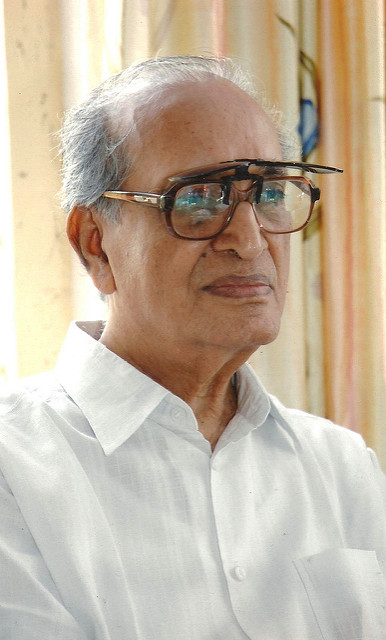
MUHAMMED NOUSHAD profiles Justice V Khalid, renowned Supreme Court judge and veteran jurist, a man of integrity and knowledge.

Certain human beings mark a place in history with their impeccable professional decorum and striking humility that springs forth from profound knowledge. Even after long years of service at the highest offices of the world’s largest democracy, they remain incorruptible, refusing fame and glitter despite every right to claim significance. Power doesn’t infect their souls, though they have closely witnessed dirty tugs of war in the formidable corridors at capital cities. Justice V Khalid belongs to this rare breed.
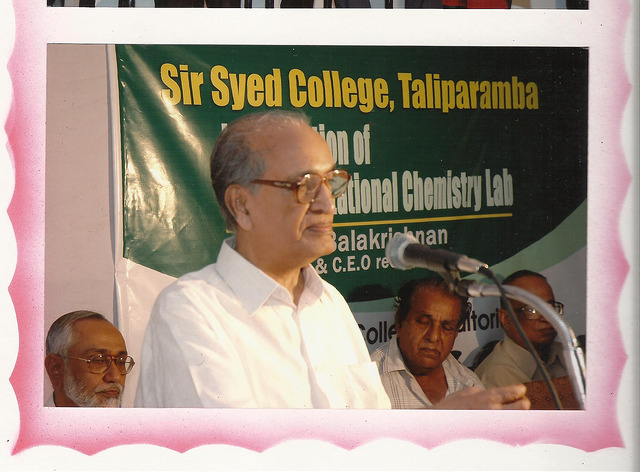
JusticeKhalidMPOs29nov2016

Justice V. Khalid

Having learnt of an impressively well-read, extremely sophisticated veteran with enviable experiences at the highest national offices in India, you do not expect to meet a polite, down to earth, self-effacing smiling saint. Justice Khalid has been to the forbidding interiors of Indian politics, but it least affected him, as it appears. He was not only a renowned justice at the Supreme Court of India, but also served Governor to India’s one of the most tumultuous states – Jammu and Kashmir.

Childhood & Education

Vazhakkulangarayil Khalid has his story’s humble beginnings in Kannur city, a few kilometers away from Kannur. He was born on 1 July, 1922 as the fourth child of a lower middle class couple – Mr. CC Marakkar and Ms. Zainaba. They had six children: three girls and three boys. His father was helping his elder brother in the business of coffee husk, coffee and tea at Changanassery.

Arakkal Raja, the then king from the sole Muslim royal family in Kerala history, was his immediate neighbor. Khalid studied in Madrasa Ma’dinul Ulum, an aided school, where he received both religious and modern education. A philanthropist called Koyakkunji, alias Koyikka, had founded the school with the aid of the Arakkal family. Koyikka’s vision and commitment has been instrumental to many people’s education in Kannur. Khalid gratefully remembers: “Koyikka is responsible for what I am. He himself was not educated. But he helped a lot of students to get education. He was very able, powerful and influential.”
When Khalid was 10, his father passed away. Koyikka came to his home, and decided to teach him. It was a sort of adoption; till graduation he was supported by Koyikka. Same was the case for many. He believed in the power of education. He was not rich, but he was very generous.

Obviously, Khalid was a bright student. He learnt Arabic, English, Malayalam, Urdu and a little Persian apart from other subjects at the school. The languages he learnt there would come for great help in his later career. It was 1926-27. Thereafter, he studied in Municipal High School, Kannur, did intermediate at Government Brennen College in Thalassery and went to Presidency College in Madras to do graduation in mathematics.

Stint as Teacher

Sultan Abdurahiman Ali Raja of the then Muslim League was an MLA and a respected Raja. When the British officer, then Director of Public Instruction, Sir Reverend Stathem visited him, the Raja introduced Khalid to the former. Having learnt of the unemployed boy’s educational qualification, the British officer immediately offered a King’s Commission in the army to be a second lieutenant. Khalid’s mother was not happy, however. She started crying as she was worried that her son might be killed in war. She wanted to dissuade him from joining the army. He obeyed his mother and soon found himself a PSC (Public Service Commission) appointed teacher at Malappuram Government High School.

He was 21 years old, then. In his one year stint as a teacher, he befriended two colleagues who would make a lasting influence on him: two brilliant science teachers, Mr. Koya and Mr. Mukundan, with whom Khalid stayed in a lodge. They initiated him to the world of reading, chess and star gazing. Khalid read classics, history, science, everything in their collection, and fell in love with letters. After one year, he went to study law, at Madras Law College thanks to the encouragement of his relative, Mustafah Sahib.

Lawyer, Husband, Judge

Having completed the course in law, he came home and joined the Kannur Munsiff’s Court in 1948. Only 19 advocates were there. Khalid remembers he was lucky to be with “saintly” lawyers like PS Narayana Iyer and later after a year in Thalassery with SS Ramanadha Iyer.

After the practice in Thalassery bar since 1949 to 1964, he moved to the Kerala High Court. It was not part of a well-planned ambitious career goal. This small-town boy had a thirst for knowledge and exposure, and a sincere attitude towards his society. But, that was enough. He was meant for big things. Later, after years of service as a reputed judge, in one of his lectures, he would speak about the decision to shift from Thalassery to the High Court: “it was a jump in to the unknown. Nothing was planned. I cannot boast of any heraldry. Nor do I have any ancient legacy. I just decided to go. I thought I will either sink in the backwaters of Cochin or swim. Sink I did not. I swam, rather successfully”.

In 1949 December, Khalid married Rabiya, daughter of Mr. AC Muhammed, a rich and generous business man in Kolkata, originally from Thalassery. Khalid remembers how his richly brought up wife reconciled herself to the very ordinary and moderate ambience of his home. They have one daughter: Thahira.

In 1969 came the first proposal to elevate Khalid as a Judge in the Kerala High Court. Syed Abdurahiman Bafaqi Tangal, one of the foremost leaders of the Muslim League, was behind this move. Khalid hadn’t even known him personally, nor had he targeted it in near future. When the news of the vacancy broke, Tangal wanted him to meet Justice Hidayatullah, the Chief Justice of the Supreme Court of India. Khalid remembers it was an order, from an irresistibly sincere politician. Khalid was already in Madras for a surgery for his wife, and was least prepared for a formal meeting with a high dignitary in Delhi. But, owing to Tangal’s command, he did go to meet Justice Hidayatullah, borrowing the coat of his friend Prem Nazir, Malayalam film industry’s one of the first super stars. However, the meeting didn’t bring the fruit Tangal had expected. The Justice was of the opinion that Khalid was too young for the designation and can wait.
Khalid waited. He kept practicing as a lawyer and was principled not to approach anyone for the post. Justice TC Raghavan affectionately asked him to be a High Court judge and the dream of many of his well-wishers came true on April 3, 1972. Justice Khalid remained at the office of the High Court till 1983.

Kashmir Calling

There was a growing rift between the Prime Minister Ms. Indira Gandhi and the Jammu and Kashmir Chief Justice Justice Bahauddin. Ms. Indira was looking for a Muslim judge to replace Justice Bahauddin. Since 1981, Justice Khalid kept receiving proposals, in the form of phone calls and letters from VIPs, to be the Chief Justice of J&K. “I was afraid to go to Kashmir, as I was not very sure if I will be welcomed, due to political circumstances. I resisted the offer for two years, despite the continuous insistence of friends like Krishna Iyer,” notes the Justice. Eventually, Dr. PC Alexander, the then private secretary of Ms. Indira came to Kochi on a personal visit and invited him for a friendly dinner. In the end of the dinner, Dr. Alexander told Justice Khalid firmly: “You must leave for Delhi tomorrow.” Justice Potty, the then Acting Chief Justice of the Kerala High Court was surprised. Khalid was left with no options: he had to leave for Delhi the next day and he found all documents ready at the Kerala House. He then flew to Srinagar. “Kashmir was a beautiful experience. The people were so good-natured. I loved the place and the people. However, I soon realised that most of them had strong anti-India feelings. It was all connected with the Centre’s promise to hold plebiscite,” adds Justice Khalid. He would later recall his short stint as the Chief Justice of Jammu and Kashmir, quoting two lines from one of his favourite Urdu poems by Bahadur Shah Zafar:

Umre daraaz maang kar laaye the chaar din
Do aarzu mein kat gaye, do intezaar mein..

(Having sought a long life, I had brought four days.
Two were lost in desire, and two in waiting.)

Soon after the arrival, he met Mr. Farooq Abdullah, the Chief Minister, who was not in good terms with the Centre. The Chief Minister did express his resentment with the Centre in the first meeting itself, though the relationship between the judge and the CM later turned out to be personal, to the extent that the CM’s mother, Sheikh Abdullah’s widow, Noorjahan became very close to him. “She was a very pious lady, and everyone called her as ‘mother’, with veneration”, says Justice Khalid.
JusticeKhalid02MPOs29nov2016

Another important person Justice Khalid was to befriend in the valley was none other than the then Governor of the State Mr. BK Nehru. He was an upright and sane statesman. When Mrs Gandhi demanded the Farooq Abdullah ministry to be dismissed – as an eventuality of a long unpleasant political battle between the two – Mr. BK Nehru forthrightly rejected the idea. BK Nehru replied that he could do it only on the floor of the assembly, as per the constitution. Obviously, it infuriated Mrs Gandhi. Mr. BK Nehru, in one of his lecture tours to the US, requested Justice Khalid to “look after the state” and thus Justice Khalid was appointed the Governor of Jammu and Kashmir for 12 days, in 1984 winter.

After the tenure of Mr. BK Nehru, Jagmohan came as the governor. Many of the chroniclers of the Kashmir dispute have rightly registered him as the main culprit who worsened the crisis with gruesome human rights violations. He was very unfriendly to the people of Kashmir. He reportedly commented that he didn’t want the people of Kashmir, but only the land. Justice Khalid remembers the days Jagmohan reached the State. “When he assumed the office, I had to administer the oath of office to him as the Chief Justice. He desired to take oath in Urdu and wanted to know if I could do it. He and his circle expected that I may not be able to speak all those chaste Urdu words, as I am a South Indian. To their surprise, I said yes, and accordingly, the oath was taken in Urdu.” Once, Jagmohan gave a dinner to Fraooq Abdullah and Justice Khalid. In a very friendly ambience, the host was cracking jokes at Pakistani leaders like Ziaul Haq, eating with Mr. Farooq Abdullah and Justice Khalid. It was a total surprise when the very next morning the same Governor had dismissed the Chief Minister. Quite long, Mrs Gandhi had been waiting for this.

As Justice Khalid’s term at the High Court of J&K was about to end, Dr. Alexander called him to offer the chairmanship of the National Minority Commission. He politely declined, telling that he would like to be with the Supreme Court. But, becoming a Chief Justice at the SC required a nod from the Centre, and Mrs Gandhi was not very sympathetic to Justice Khalid as she thought his judgment, along with Justice Potty’s, was responsible for her colleague K. Karunakaran’s resignation as the Chief Minister of Kerala, after the Rajan murder case. However, Dr. Alexander, playing the role of a great well-wisher, kept reminding her about the imminently ending term of Justice Khalid in Kashmir and his interest to come to New Delhi. As soon as Mrs Gandhi gave a silent nod, Dr. Alexander hurried the procedures and Justice Khalid became a Justice at Supreme Court of India without the usual procedural delays. It was 1984. The year Mrs Gandhi was killed. Fate had it that Justice Khalid would sit to hear the plea of the ones who were accused in the assassination of Mrs Gandhi.

Though there was no official relationship between Justice Khalid and Mrs Gandhi, their first meeting was in 1984, as the Supreme Court Judge and the Prime Minister had a chance encounter at the venue of the inauguration of the India Islamic Cultural Centre at New Delhi. Justice Khalid remembers it was late Mr. Hasan Haji of the Calicut-based JDT Islam Orphanage who introduced him to her. In a brief conversation, Justice Khalid told her that he was “in solitary confinement”. “Why?” she asked. “I am staying in a room of Kerala House,” he replied, as no house had been allotted to him. The next day, as per the instructions of the Prime Minister, he was shifted to a beautiful house. Their second and last meeting was at an official dinner, in which Mrs Gandhi complimented Justice Khalid’s wife for her simplicity and demeanour.

After three months of his arrival in Delhi, Khalid got one of the most shocking news he would ever hear: Mrs Gandhi was assassinated by her own body guards. It shook Delhi in umpteen ways. After trial, the three accused were sentenced to capital punishment. A special bench was constituted to hear the case and Justice Khalid was the senior on the bench. The appeal of the accused came. The evidences were strong and it was horrendous crime. But for the second and third accused, Kehar Singh and Balbir Singh, the evidences produced were not sufficient to find them guilty. However, the general talk in the elite clubs in Delhi was that the bench will reject the appeal of the accused, with the blunt harshness it deserves, saying that the conscience of the nation wanted it. It is in classic situations like these, that the judicious discernment of a judge is put to test. The talks in the clubs reached the ears of Justice Khalid, too. Political circles expected the appeal would be rejected outright. Justice Khalid couldn’t just do that. Not because he didn’t love his country or its assassinated Prime Minister. Just for the opposite reason. He loved the country. And firm was his belief that judicious decisions are judicious only when the evidences are gathered indefectibly.

He decided to go through the bundle of papers being submitted. “The records came the previous day; I went through the records at a stretch from 2 pm to 8 pm. Though the murder was shocking and I was mentally prepared to confirm the sentence, I felt on going through the records that there were some grey areas in the evidence which for an impartial Judge, knowing Criminal Law, would like to give an opportunity to hear the counsel for the accused,” he recalls. The decision to issue notice surprised almost everybody in the capital’s high offices. It invited longstanding wrath from many from the ruling class. However, this would bring deep reputation for his nonchalant commitment to the fundamental principles of judicial system. For instance, Adv. Ram Jethmelani, one of the most demanded and most expensive criminal lawyers India has ever seen, would say on the retirement of Justice Khalid, in a farewell party: “Judge, normally I am not sorry when a judge leaves the Supreme Court. But in your case, I feel sorry.” The Judge gives his characteristic smile back to him. After an immaculate service of three years, Justice Khalid returned from New Delhi, at the age of 65.
“I was told by many that I was the first Muslim Judge in the history of Supreme Court who practiced namaz. Of course, there were many reputed Muslim judges before me. However, my regular prayers and attendance in Friday prayers became a talk among the staff and colleagues. Later, many Muslim judges followed my path,” adds Justice Khalid.

Shah Bano Case and Other Muslim Legal Issues

Shah Bano case was, perhaps, the most controversial judgment in the history of India, thanks to politically instigated agitations and provoked reactions from the Muslim community. It simply stated that the divorced Muslim woman has the right to maintenance from her ex-husband. However, the judgment contained a passing reference to the effect that the Qur’an is the word of the Prophet. Muslim politicians like Ebrahim Sulaiman Sait and G.M. Banatwala came to meet him. The congress ministry soon brought a new law, arguably to appease Muslims, as an election was imminent.

There were situations in the judicial career of Justice Khalid where he would worry about the pathetic state of the community, particularly its criminally negligent attitude towards women. He also had issued a verdict saying that even after talaq, a woman has to get maintenance from her ex-husband till she is remarried. About the triple talaq custom, Justice Khalid famously wrote in a verdict: “my judicial conscience is disturbed at this monstrosity of giving three talaqs together. When this monstrosity will end? Will the conscience of the leaders of the community also be disturbed at this?”

As a Judge at the Kerala High Court, in one of the verdicts, he told: “if a question is raised as to whether a Muslim wife can get divorce except through the intervention of court, my answer is an emphatic no.” However, this judgment was subject to criticism from various corners. Justice Khalid was sane and humble enough to realise it was not the way it should have been expressed. “I also later realised that I was not fully correct in what I wrote. I waited for an opportunity till retirement in the Supreme Court, to correct this mistake, but the opportunity did not come. I hope someone will correct it.”

Justice Khalid has always been a firm believer. Whenever there was a case which had a negotiating point with the Islamic Shariah or the Muslim Personal Law, he was very conscious of both the Qur’an and the India legal system. He says he didn’t practically find much contradiction or conflicts between the two. “I have always felt that ours is a remarkable constitution. 85 per cent of those who wrote it were Hindus, still they went for a secular state, instead of declaring it a Hindu Rashtra”, says he. However, Justice Khalid is not in favour of a uniform civil code as he believes it can be made only through a direct conflict with Shariah rules. He adds that a codification of Muslim personal law is absolutely necessary so that the gap between the Mohemmaden law and the Shariah regulations are minimised. “But remember, the codification must be strictly in accordance with the Shariah. For example, our law of divorce is to be completely changed. The Quranic scheme is neglected in its current form. In the case of inheritance laws also, there are contradictions with what Quran says. Our leaders and political parties do not seem to be interested, for political reasons. As the Muslim masses are not educated about this, the parties are frightened about consequences. What they don’t realise is that we don’t have to go against the Shariah, but as per the Shariah. The spiritual exploitation is to blame here,” concludes Justice Khalid.

Justice Khalid has always been unhesitant to correct whenever he found his interpretations on the wrong side of the Shariah’s intended spirit. Honesty to acknowledge one’s mistake, indeed, is a value to be saluted. His love for the Quran is famous among those who know him closely. He took inspiration from the Quran, almost always, and read many translations. Quran literature has been his favourite genre for reading.

For a short term, during his retirement life, he went into Hadith negation. A strict rationalist in him, for a short period, thought that many Hadith are beyond the logic of Islamic values. His Hadith negation was a critical stage in his intellectual growth; he didn’t stay there for long as his honest enquires through various scholarly books from the Muslim world thoroughly convinced him that without Hadith, Islam cannot be fully understood.

After retirement, he has served in different government bodies, including the Chennai based Railway Rates Tribunal. Also, he headed a Police Commission for Tamil Nadu. He served as the chairman of the PM Foundation from its inception in 1988 to 2008.
The best qualifier to denote Justice Khalid’s career would perhaps be “judicious”. He has been fully committed to its virtuous and dignified service of his nation, his people, and the judicial system. He has resisted and refused powerful pressures from both governments and corporate: sometimes mild and covert, sometimes harsh and overt. His political orientation was broadly pro-socialist as many of his judgments, along with his reputed colleagues, stood with the interest of labourers. He belonged to a period when judges were venerated with a degree of fear, by the public and the political class. He hates the custom of judges hanging out and mixing up with public figures and millionaires. With an immaculate record, this man of integrity and knowledge offers a lot of hope. He smiles self-effacingly, sitting in his drawing room, spending time with his books and family. Judiciary’s future lies in the hands of judges with formidable integrity, he reminds us with his life full of accomplishments.

—
M. Noushad is a Kerala-based teacher of journalism.

source: http://www.twocircles.net / TwoCirlcles.net / Home> Articles / by Muhammed Noushad / July 29th, 2012
A Look At the ‘Life and Times of a Nationalist Muslim’

Aligarh, UTTAR PRADESH :

M. Hashim Kidwai’s memoir recollects the student movements at Lucknow University, the role of Muslims in resisting Partition, and their participation in politics and academics after Independence.

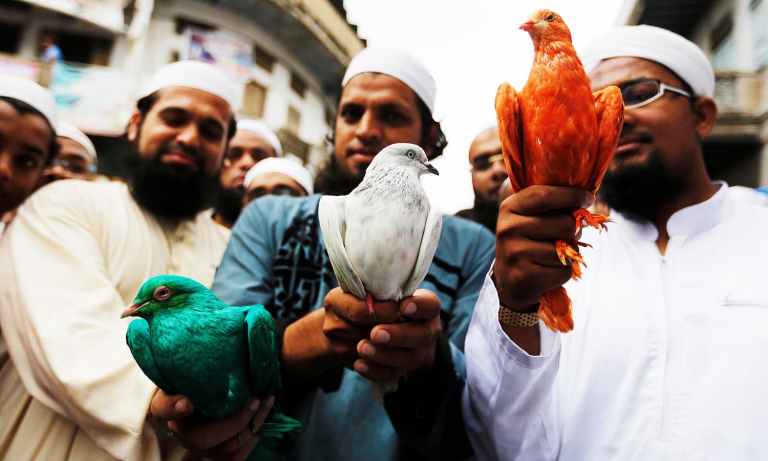
Muslims hold pigeons during a march to celebrate India’s Independence Day in Ahmedabad, India, August 15, 2016. REUTERS/Amit Dave

There is a remarkable similarity in the rise and ascension of religious reactionaries between the majority and minority communities in the decade before Independence. During the period of 1938-47, the Muslim League’s communal separatism was in fierce contest with the majoritarian assertion of the Hindu Mahasabha and the RSS, while at the same time it also benefitted from the extremism of the other party. The colonial state abetted such reactionary forces.

Other than the presence of the colonial state during that era, the Congress was the most powerful political force in the country, and was led by the likes of Mahatma Gandhi, Jawaharlal Nehru and Maulana Azad, even though the ideologies of many members of the provincial and district Congress leadership overlapped considerably with the Hindu Mahasabha.

Another reassuring difference is that today we do not have a Muslim political force comparable with Jinnah’s Muslim League, even though we do have the likes of Asaduddin Owaisi, Azam Khan and the sympathisers of the illiberal, non-plural, exclusionary traditions among Muslims and Hindus. If one may add, at the global scale as well, such forces seem to be on the rise today.

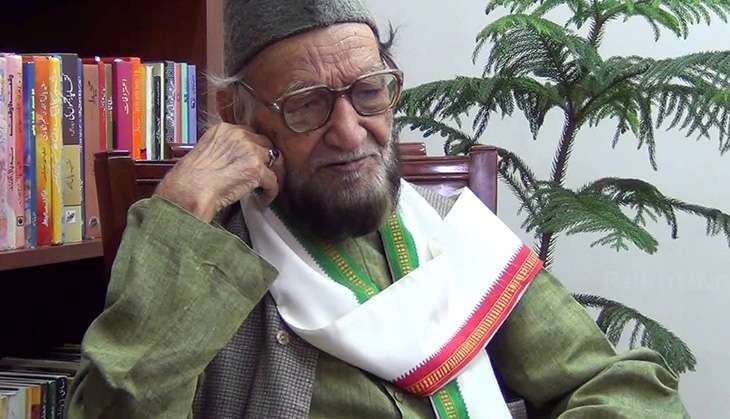
Born in 1921, Muhammad Hashim Kidwai saw all of this from close proximity. In his diary, he recollects the days of the late colonial India while living in today’s era. The title of the book itself is interesting. He describes himself as a ‘nationalist Muslim’.

In the late colonial period, the likes of Maulana Azad and Rafi Kidwai were banking upon the nationalist Muslims against the onslaught of the Muslim nationalists (or the votaries of the separate nationhood), just as the likes of Gandhi and Nehru were fighting with the Hindu nationalists, the rabid majoritarian reactionaries.

One should read the first volume of Kidwai’s reminiscence in the backdrop of these events. His account is rich in details pertaining to politics up to the Nehru era. His presence in Lucknow as a student till his late 20s and then his role as a teacher of political science at the Aligarh Muslim University (AMU) immediately after Independence and Partition enabled him to articulate significant narratives.

The fact that he was also an activist – both as a student and as a teacher – adds to the sharpness of his observations and insights. His long chapter on the student movement in Lucknow University provides vivid details of various little and big political organisations and fronts, literary associations and journalistic initiatives. The details captured in that chapter provide a valuable account of the political evolution of the Lucknow youth in the popular phase of the national movement.

In terms of academic explorations in India, we have an inadequate understanding of student movements as well the role of Muslims in resisting partition. This chapter invites us to make attempts towards filling the gap. The subsequent brief chapter on the consequences of Partition reflects on how Muslims adjusted thereafter.

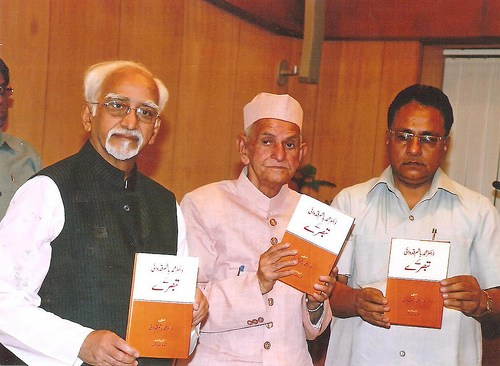
Vice President Muhammad Hamid Ansari with Hashim Kidwai (C) at the launch of his book Life and Times of a Nationalist Muslim. Credit: Aligarh Movement

It also hints at the relatively greater communalisation of the regional politics of Uttar Pradesh, which pushed Rafi Kidwai out of UP politics and then led to Nehru accommodating him in national politics.

There are a number of Urdu memoirs about the socio-political life on the huge AMU campus, but rather than offering informed criticism and reflections, most are essentially exaggerated eulogies. Kidwai’s memoir is not very critical either, but it does stand out for being able to relate campus life to the world outside. To him, the AMU campus was neither politically insulated nor did it suffer from an ‘isolation syndrome.’

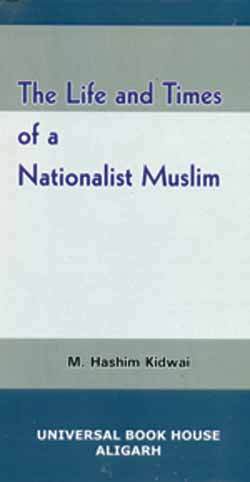
Life and Times of a Nationalist Muslim M. Hashim Kidwai Universal Book House Aligarh, 2015
Life and Times of a Nationalist Muslim
M. Hashim Kidwai
Universal Book House Aligarh, 2015

Being a quintessential Congressman, his narrative about the stealth placing of an idol in the Babri Masjid in December 1949 is focussed more against socialists like Ram Manohar Lohia and Acharya Narendra Dev, who according to him, remained silent to this injustice. Kidwai, however, does show his reservations against G.B. Pant, the then chief minister of UP. He complains, “Both Pandit Nehru and Sardar Patel urged Pandit Pant, the UP premier, to take strong action… But for reasons best known to him, Pantji did not take any action… Pantji’s policy of leaving everything to the district authorities was very much condemned and resented by a large number of Congressmen.”

Progressing strictly in chronological sequence and living up to its name as a diary, almost half of the memoir is devoted to AMU. Kidwai served there not only as a teacher but also as a writer of textbooks, a teacher activist and also contributed in academic governance.

In a huge residential university like AMU, which houses more than 30,000 students, “policing” students is a challenging task. Kidwai describes his roles as that of a provost of a residential hall as well as a proctor. While describing the role of the various vice chancellors, he, unfortunately, neglects their impact on establishing or encouraging academic rigour.

Kidwai is almost solely concerned with the socio-political life on the campus and the narrative gives the impression that the Youth Congress dominated the campus. Other accounts of post-Independence AMU inform us that Left activism had gained a significant presence at the university in the 1960s. Kidwai’s account ignores this and also does not dwell on the composition of the student body, that is, the regions the students came from or their socio-economic status.

The volume concludes with the death of Nehru in 1964.

A close reading of India’s comparative history that draws few parallels between the elections of 1946 and of 2014, and the consequences thereof, is still awaited. One hopes that the sequel volume of Kidwai’s memoir will delve deeper into such issues.

By his own admission in the preface, Kidwai, as a parliamentarian, stood behind the clergy, jarringly conservative on gender issues. He was also one of those that ill-advisedly encouraged Rajiv Gandhi to legislate against the Supreme Court verdict on the Shah Bano issue. Therefore, this first volume really sets up expectations for the next and about how he will recollect the days of 1985-86, especially at a time when the same gender issues have once again acquired significant political saliency. Equally important will be to read his views on the decline of the Congress post-1980s.

This is an important book, one which will become a resource for scholars interested in the participation of Muslims in both politics and in academics after Independence.


source:  http://www.thewire.in / The Wire / Home> Books / by Mohammad Sajjad / November 04th, 2016

‘Teaching profession, an intrinsically rewarding one’

Hyderabad, TELANGANA :

Director of Glendale Academy, Anjum Babukhan, said there was a severe shortage of good teachers and pointed out that while in the real world, life could get difficult and stressful for aspiring teachers, it would, in the end, be a most intrinsically rewarding profession.

Teachers, who are in a profession that creates a lasting impact in shaping future citizens and one that empowers them to make a difference at home and school, should maintain work-life balance. Teachers need to imbibe intelligence, emotional and social quotients, she said.

She was addressing the gathering at the third convocation of the Integrated Pre-School Teachers’ Training Academy (IPTTA) here on Saturday, when 36 teachers passed out.

Others who were present and also spoke included former principal of Meridian School, Pratima Sinha and academic coordinator of Eurokids, Sultana Shahin Moidu, an expert in the field of early childhood education.

Toppers Afsha and Padmaja were felicitated and a digital video disc of the training workshop was released by Ms. Sultana. IPPTA President V. Ravi said their mission was to develop teachers who were passionate, had active and creative minds, and with the courage to act on their beliefs.

“We wish to create a generation of pre-school teachers, who would guide the nation’s future,” he said.

source: http://www.thehindu.com / The Hindu / Home> News> Cities> Hyderabad / by Special Correspondent / Hyderabad – November 20th, 2016