Hundreds including Ministers Tanveer Sait and MLA Vasu pay last respects
Mysuru :
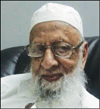
Dr. Nazeer Ahmed (94), Chief patron of Al-Ansaar Hospital, located at Mohamed Sait Block in city, passed away on Saturday evening at his residence in Subhashnagar. Namaz-e-Janaza was offered on Sunday at 2 pm after Namaz-e-Zohar at Siddiqia Arabic College on Mysuru-Bengaluru Road. He is survived by four sons, a daughter and host of friends and relatives.
Late Dr. Nazeer Ahmed’s son Dr. Ifthekar Ahmed led the Nama-e-Janaza in which hundreds of community members took part.
Last rites was held Muslim Burial Ground at Bada Makan near Tipu Circle.
Minister for Primary and Secondary Education Tanveer Sait, MLA Vasu, SJCE Principal Dr Syed Shakeeb Ur Rahman, Yenepoya University Former Vice-Chancellor Dr. Syed Akheel Ahmed, Mangalore and Goa Universities former Vice-Chancellor Dr. B. Shaik Ali, former Mayors Ayub Khan and Ariff Hussain, Corporators Suhail Baig, Mysuru District Wakf Advisory Committee Chairman Ariff Ahmed Mehkri and others took part in the last rites rituals.
source: http://www.starofmysore.com / Star of Mysore / Home> General News / Monday, July 25th, 2016
REAL ISSUES, GRAND PRESENTATION Mohammad Ali Baig / Photo: P.V. Sivakumar
Hyderabad , TELANGANA :
As Mohammad Ali Baig’s “1857: Turrebaz Khan” opens in Edinburgh Fringe Festival this August, the playwright-director-actor talks about the heroic figure in Deccan history
Already recognised as one of India’s best known theatre personalities and India’s youngest Padma awardee in theatre, playwright-director-actor Mohammad Ali Baig has received multiple national and global honours and awards. This time, beginning August first week, his well-known play, “Quli: Dilon ka Shahzaada”, as well as his new production “1857: Turrebaz Khan” have both been invited to the Edinburgh Fringe Festival 2016. While “Quli” has already seen several productions across the world, “Turrebaz Khan” will be premiering at the Edinburgh Fringe Festival, before travelling to London and then returning to Hyderabad.
Excerpts from an interview:
Tell us about your new play, “1857: Turrebaz Khan”, and its central character?
Turrebaz Khan was a heroic figure in Deccan history, known for his valour and courage. There is a slang in Hyderabad folklore, a positive one — “Turram Khan”. When you call someone that, you are calling him heroic. That comes from Turrebaz Khan’s name. He was a revolutionary figure freedom fighter, who revolted against the ruling design of the 4th Nizam of Hyderabad and the British. He attacked the British residency, which now houses the women’s college in Koti in Hyderabad, to free his comrade who was detained on charges of treachery without a fair trial by the British. He was caught and detained, but even the jail he was put in couldn’t hold him. After a year, he escaped, and then was caught in the forest of an area called Toopran, near Hyderabad. The man who caught him, Qurban Ali Baig, was the talukdar there. Turrebaz Khan was kept in captivity, then shot, and then his body was hanged in the centre of the city to prevent further rebellion. That is his story.
When you read about 1857, places like Delhi, Meerut, Lucknow, Jhansi and Mysore, all of them are mentioned, but Hyderabad isn’t. This is because the Nizams were allies of the British, and there was no reason to fight. But with Turrebaz Khan, there came a brief period when Hyderabad joined the struggle, the uprising.
Does the play follow Turrebaz Khan’s life?
No, the structure of the play is very interesting actually. It follows the last one hour of his life in captivity, and that one hour is also the duration of the play. It shows the difference between the man who has been captured, and his captor, Ali Baig. They are both sons of the same soil, are of the same colour, but they stand on opposite sides. Ali Baig has allied with the British. He is a man who is privileged in more ways than one, and he has no problem with who his allies are — Indians, British, French. His life is about his own family and prosperity. From his point of view, Turrebaz is “naïve”, and immature. For Turrebaz, Ali Baig has a self-serving agenda.
How does the play deal with this clear difference between the two men?
There are two people, one placating the system, another one going against it in the name of his motherland. Neither one is shown as the villain. Both are victims of their situation.
The play is about discrimination and about oppression, two issues that are relevant anywhere in the world. It can be discrimination of blacks and whites, of haves and have nots, east and west. The play brings both sides of the story out by bringing out both characters. There is very interesting wordplay between the two, philosophical debates which explore different sides of the story. At one point, Ali Baig says to Turrebaz that you talk about leaving your home to fight for your motherland, but what about your own mother at home? What about your aging father, who needs you? Before you, there have been so many others who tried to revolt against the British empire, and look what happened to them.
To this, Turrebaz replies that his motherland is more important to him than his mother; that if he is killed, the world will remember him. No one will remember Qurban Ali Baig.
There are many such debates and wordplay between the two characters and the play is an intense drama. I’ve used live percussion— marfa, dhol, etc.— to complement the dialogues.
The research must have been challenging. Do you supplement it with a lot of fiction?
A lot of research went into this play. It is definitely a challenge, because you can’t fictionalise plays like these too much. You have to pay due respect and maintain sanctity, when you portray these historical figures, since there is no one around to correct the errors. Forget political correctness, you have a responsibility of not putting them in a light that is not morally and ethically right. You can’t sit in judgement. For this play, we have picked the aspects of the story that are relevant to today’s global scenario, since it has to make sense to lot of audience everywhere.
My wife, Noor, who is also my co-playwright, has done most of the research, and a lot of it is also based on research by authorities who have written on Turrebaz.
You spoke about the need to make your play’s relevance to audience across the world. Tell us about the responses you get from these audience? How do you see them connecting to your work?
If you take “Quli”, which is the legendary love story on which Hyderabad is supposed to be founded, or “Spaces”, which is about the thought of sticking to your home and heritage, and about traditionalism versus modernism; both could be about people and lives anywhere in the world. We don’t stick to judgement; we don’t say who is right and who is wrong. Our purpose is to bring out an issue, and let the audience decide their own views.
I’ve taken these plays to English, Turkish, Romanian, Bosnian, Iranian, American audiences, to name a few. “Spaces” moves them to tears; many of them come backstage to me and tell me that this is their story. “Quli” too, sees the audience connecting to it. When they are moved, it moves me as a playwright; it shows me that the kind of theatre I believe in is working, that despite the barrier of language and context, people can connect with these plays. I hope that “1857: Turrebaz Khan” will do that same.
Your productions, held in forts and ruins, are known for usually being larger than life. How difficult is it to travel with these productions?
The earlier plays that I mounted were really huge and I was stuck with own vision of them, so we couldn’t travel. But since the last few plays, like “Spaces”, “Quli” and now “Turrebaz”, I’m still mounting them on a big scale, but I’ve tried to make them production sensible. I keep the portability in mind, so that now we are travelling light, but the end result is still grand. Of course, adapting a play I stage in forts and ruins to a festival setting is difficult, but so far, we have managed to do it successfully.
source: http://www.thehindu.com / The Hindu / Home> Features> MetroPlus / by Swati Daftuar / July 29th, 2016
Tanveer Sait to inaugurate Haj Camp-2016 on Aug. 1
Mysuru :
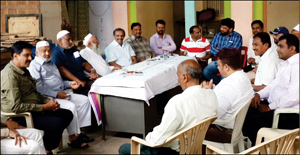
The District Haj Committee held its preliminary meeting under the Chairmanship of Abdul Azeez Chand at Muslim Girls Orphanage in city recently. The meeting elected Abdul Azeez Chand as Convener and Arif Ahmed Mekhri as Joint Convener for the orientation and inoculation for pilgrims of Haj-2016 from Mysuru, Mandya and Chamarajanagar.
The Haj Camp-2016 will be held on Aug. 1 at RK Palace in Udayagiri. Minister for Primary and Secondary Education, Minority Welfare and Wakf Tanveer Sait will be the chief guest.
Co-ordinator Mohammed Mumtaz Ahmed, Anwar Pasha, Syed Younus, Rafeeq Ahmed Khan, Rehman Khan, Irfan Silverline, Sohail Baig, Yusuf Jidda, Shabnam Sayeed, Akbar Aleem of Nanjangud, Mohiuddin of Mandya, Qurath Bhai and Khaleel, District Wakf Advisory Board Officers, were present.
For details, contact the Cordinator on Mob:97417-89000.
source: http://www.starofmysore.com / Star of Mysore / Home> General News / July 23rd, 2016
Former Rajya Sabha member and Congress leader Faiz Mohammed Khan (82), popularly known as F.M. Khan, who was residing at Balayatrie Estate in Kodagu, passed away yesterday after a brief illness.
He leaves behind his wife and three daughters.
According to family sources, Khan’s last rites were held at Rasulpur in Guddehosur in Kodagu this morning.
Khan entered politics during 1960s along with his friend former Chief Minister R. Gundu Rao and joined the Indian National Congress led by former Prime Minister Indira Gandhi.
He became the General Secretary of State Youth Congress before becoming a member of the Legislative Council in 1974.
Khan was a two-time RS MP, elected in 1976 and1982. He was also a former Vice-President of Indian Olympic Association (IOA). He had been away from politics for more than two decades.
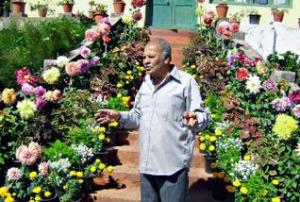
Khan was famous for his annual flower show at his Balayatrie Estate in Kodagu.
source: http://www.starofmysore.com / Star of Mysore / Home> General News / July 22nd, 2016
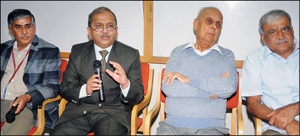
Dr. B.G. Sangameshwar, VC, JSS Science and Technology University, is seen addressing a press meet at SJCE this morning as Dr. K. Lokesh, Registrar, Prof. M.H. Dhananjaya, Director, Technical Education Division, JSS Mahavidyapeetha and Dr. Shakeeb-Ur-Rehman, Principal, SJCE, look on.
Mysuru ;
(US&PV)- Vice-President of India M. Hamid Ansari will inaugurate the JSS Science and Technology University and unveil the foundation plaque of Academic Block building at JSS Technical Institutions Campus (SJCE) here on July 23 at 11 am.
Disclosing this at a press meet at SJCE premises here this morning, JSS Science and Technology University Vice-Chancellor Dr. B.G. Sangameshwar said that Chief Minister Siddharamaiah would launch the new website of the University on the occasion.
Governor Vajubhai Rudabhai Vala will preside over the programme. Suttur Seer Sri Shivarathri Deshikendra Swamiji will grace the occasion.
District in-Charge Minister Dr. H.C. Mahadevappa, Minister for Higher Education Basavaraj Rayareddy, MP Pratap Simha, MLA Vasu and Mayor B.L. Bhyrappa will be the guests of honour.
source: http://www.starofmysore.com / Star of Mysore / Home> General News / July 20th, 2016
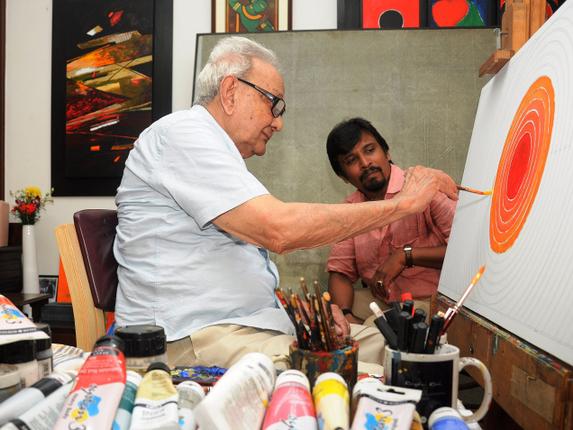
In this September 12, 2013 photo, S.H. Raza works on a “bindu” as his disciple Manish Pushkale looks on at the former’s studio in New Delhi. / The Hindu
“Bindu is a source of energy, source of life. Life begins here, attains infinity here”.
A few years ago, aged 89, S.H. Raza was game to talk to children almost like one, maybe just a couple of years older. Then, at the Jaipur Literature Festival he allowed the youngsters, who had surrounded him, a little peek into his life. Back in India after spending 60 years in France, his life seemed to have come a full circle. Not ready to confer retrospective dignity to his early years, Raza candidly admitted: “I was not fond of school. I was a bad student scoring low marks. Arithmetic did not interest me. My interest lay in drawing and painting. Fortunately, I found the right gurus. It is imperative parents as well as teachers understand a child’s qualities.” Raza himself was lucky. A restless soul that he was, his primary schoolteacher once asked him to continuously look at a dot on the wall inside the classroom to calm his mind. It was a little exercise that was to change the meaning of life for Raza, who turned the simplebindu into a work of art before raising it to the status of life itself.
Incidentally, Raza often judged as a France-based artist, grew up in a Madhya Pradesh village and went on to study at the Sir JJ School of Art. Around the time that the nation was hoisting the tricolour for the first time as an independent country in 1947, he founded the Bombay Progressive Artists’ Group. The group challenged the existing art establishment and Raza’s image as a rebel was probably etched with it.
His long journey in the world of arts started thus. Raza started as a landscape painter, a colourist. Soon the bindu occupied his mind and he turned to metaphysical ideas. This relentless search for the infinite got him plenty of laurels and lots of money. Though he refused to quantify art in terms of money, none could deny the steep price tags that accompanied many of his works. For instance, Saurashtra went for Rs. 15.9 crore. His La Terre attracted a whopping Rs. 18.8 crores.
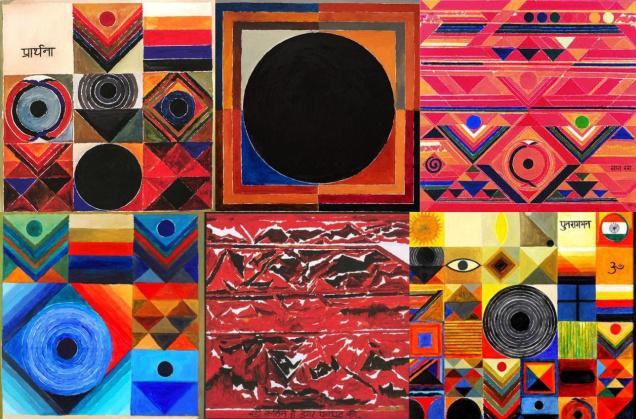
(A combination of S.H. Raza’s works. “Bindu is a source of energy, source of life. Life begins here, attains infinity here,” he had said)
After linking all the dots in the universe of art, Raza, aged 94, passed away quietly in an intensive care unit of a hospital in New Delhi.
There was not a note that was not dignified, not a colour in the palette that was left unexplored. Often short of breath, hard of hearing with fading vision, Raza with his frail frame looked very much his age to a layman. To a lover of art, he remained a genius, transcending the inevitable frailties of age with determination. Where his eyes failed him, his fingers did not. He continued to whip up magic till the end. Even when the man who was a master at giving a new meaning to colours needed the help of an assistant to mix his colours, his magic did not elude him. Fittingly, one of his last exhibitions was titledNirantar (Relentless). With that single term he lived up to the words of noted Hindi author Ashok Vajpeyi who often said that Raza did not paint to live, he lived to paint. The exhibition itself contained some of the works he had done after coming back to India, between 2011 and 2016.
If in that interaction with youngsters in Jaipur, Raza stated that “Bindu is a source of energy, source of life. Life begins here, attains infinity here”, a few years later in New Delhi he showed other shades to his personality as he talked gently, if, one may say so, almost relentlessly, of Modernism. Yet he did not fail to talk of specifics, happy once again to talk of the bindu, how it provides focus in life, indeed, life itself. Happy he was to talk of early red, the later blues and yellows. And equally at ease talking of the marriage of art and artist, how initially man creates art, how then art forms him. Little wonder, the distinction between Raza and his art gradually disappeared over the years. His art could never conceal the artist, in the final years, it spoke on behalf of the artist. Little wonder, fellow artist Krishen Khanna once said that his friend lived his art! And Raza found profound meaning into something as innocuous as juxtaposing two colours. According to him, the two colours could be in conciliation and harmony or conflict and unending struggle, almost like a man-woman relationship. Raza brought to his canvas the quintessential Indian spirituality and tradition by concentrating his energies on colours, purush-prakriti and nari in his trademark geometric abstract works. And to think, he introduced the French to our artworld and set up studios there!
A contemporary of M.F. Husain, F.N. Souza, Khanna and Tyeb Mehta, Raza carved out his own niche on his own terms. He played with colours like none else and was wise enough to understand that art lovers abroad loved Indian art not jut for its spirituality but its constant soaking in of colours. Of course, like the longest of journeys begins with a single step, for Raza any art too began with a dot. An art work was never the sum of its parts, rather each part, each stage was art itself. Slowly, this centreing of the universe around the dot consumed the mind, and life, itself of Raza. What it gave him in return was priceless art that seeks to confer immortality on the artist.
As he celebrated the bindu in conversations, he occasionally recalled the primary school teacher too. As the Padma Vibhushan awardee fought one last battle one cannot help recall Ashok Vajpeyi’s words that Raza lived to paint. And when he could no longer paint, life lost its meaning… Life indeed had come a full circle. Yes, the bindu is the most important thing of all.
source: http://www.thehindu.com / The Hindu / Home> Features> Friday Review> Art / by Ziya Us Salam / July 23rd, 2016
F.M. Khan (82), former Rajya Sabha member, and a controversial politician hailing from Coorg, passed away on Thursday at his Balayatrie estate near Madikeri in Kodagu.
Fiaz Mohammed Khan, popularly known as F.M. Khan, was a close associate of former Karnataka chief minister, Gundu Rao who affectionately referred to his mentor as ‘Father Mother Khan’.
Khan was part of the Sanjay Gandhi brigade during the Emergency and was allegedly involved in several unsavoury incidents. But Gundu Rao always went to his rescue.
He was the general secretary of the state Youth Congress and was a member of the Legislative Council from 1974 to 1976. Khan was elected to the Rajya Sabha twice in 1976 and 1982. He was also associated with various organisations connected with sports. He was vice-president of the Indian Olympic Association.
The former Rajya Sabha member was known for his love for gardens and won accolades for maintaining the best garden in Delhi in his MP bungalow. Back in Kodagu after his controversial political innings, Khan had been nurturing his garden and has been holding annual private flower show since 1998.
Khan was married to a Kodavathi. He leaves behind his wife and three daughters. The funeral will be held at Rasulpur in Guddehosur in Kodagu on Friday.
source: http://www.coorgnews.in / CoorgNews.in / Home> General News / July 21st, 2016
Faiz Mohammed Khan, popularly known as F.M. Khan, former Rajya Sabha member and Congress leader, died in his Balayatrie Estate in Somwarpet taluk of Kodagu on Thursday.
A close associate of the former Chief Minister R. Gundu Rao, Mr. Khan (82) leaves behind his wife and three daughters.
Family sources said Mr. Khan passed away around 11.30 a.m. on Thursday.
The funeral will be held on Friday at 10 a.m. at Rasulpur in Guddehosur in Kodagu, according his niece Gazala Khan.
Mr. Khan was involved in the anti-Hindi agitation and later joined the Congress. He became the general secretary of State Youth Congress before becoming a member of the Legislative Council in 1974.
Mr. Khan was elected to the Rajya Sabha first in 1976 and for the second time in 1982. Mr. Khan was also a former vice-president of the Indian Olympic Association. Having been away from politics for more than two decades, Mr. Khan used to hold an annual flower show at his estate.
source: http://www.thehindu.com / The Hindu / Home> Karnataka / by Special Correspondent / Mysuru – July 22nd, 2016
Former Rajya Sabha member and Congress leader Faiz Mohammed Khan, popularly known as F.M. Khan, died in his Balayatrie estate in Kodagu on Thursday. A close associate of former Chief Minister R. Gundu Rao, he leaves behind his wife and three daughters.
Family sources said Mr. Khan (82) died at around 11.30 a.m. on Thursday. The funeral will be held at 10 a.m. at Rasulpur in Guddehosur in Kodagu on Friday, according his niece, Gazala Khan.
Mr. Khan entered politics in the mid-Sixties during the anti-Hindi agitation, and then joined the Congress led by former Prime Minister Indira Gandhi. He became the General Secretary of State Youth Congress before becoming a member of the Legislative Council in 1974. Mr. Khan was a two-time Rajya Sabha MP, elected in 1976 and in 1982. He was also a former Vice-President of Indian Olympic Association (IOA).
He had been away from politics for more than two decades. He was holding an annual flower show at his Balayatri estate in Somwarpet taluk.
source: http://www.thehindu.com / The Hindu / Home> National> Karnataka / Special Correspondent / Mysuru – June 21st, 2016
Jyothismathi Institute of Technology and Sciences (JITS) associate professor Vankudhotu Malsoru won accolades for his paper presentation at the 24th World Congress on Engineering-2016 organised by the International Association of Engineers in London, from June 29 to July 1.
30 countries
Mr. Malsoru presented a paper on ‘domain specific performance evaluation sequential pattern mining approaches’, and won appreciation from the gathering from over 30 countries.
JITS chairman J. Sagar Rao, principal A.R. Naseer and other faculty members accorded a warm welcome to the associate professor for bringing laurels to the college and the State on Wednesday.
source: http://www.thehindu.com / The Hindu / Home> National> Telangana / by Special Correspondent / Karimnagar – July 14th, 2016