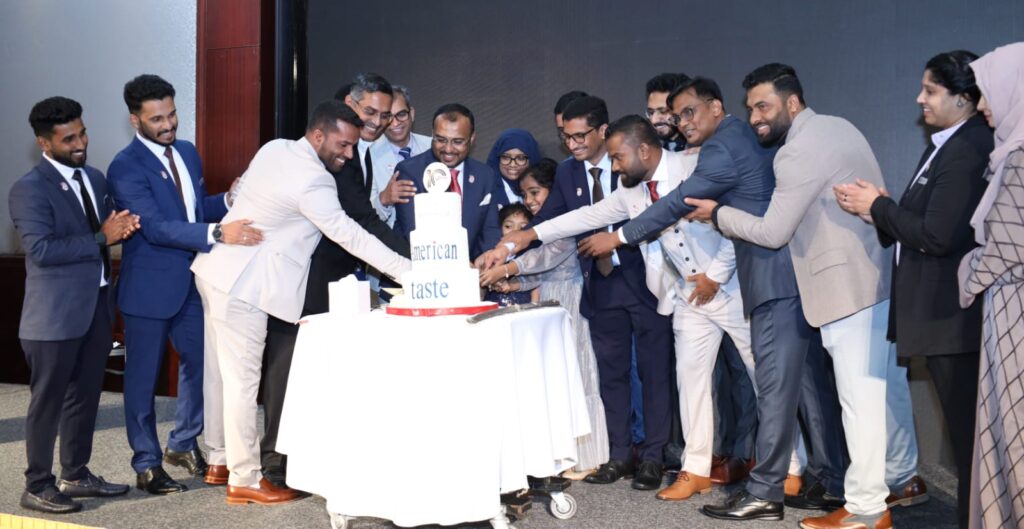
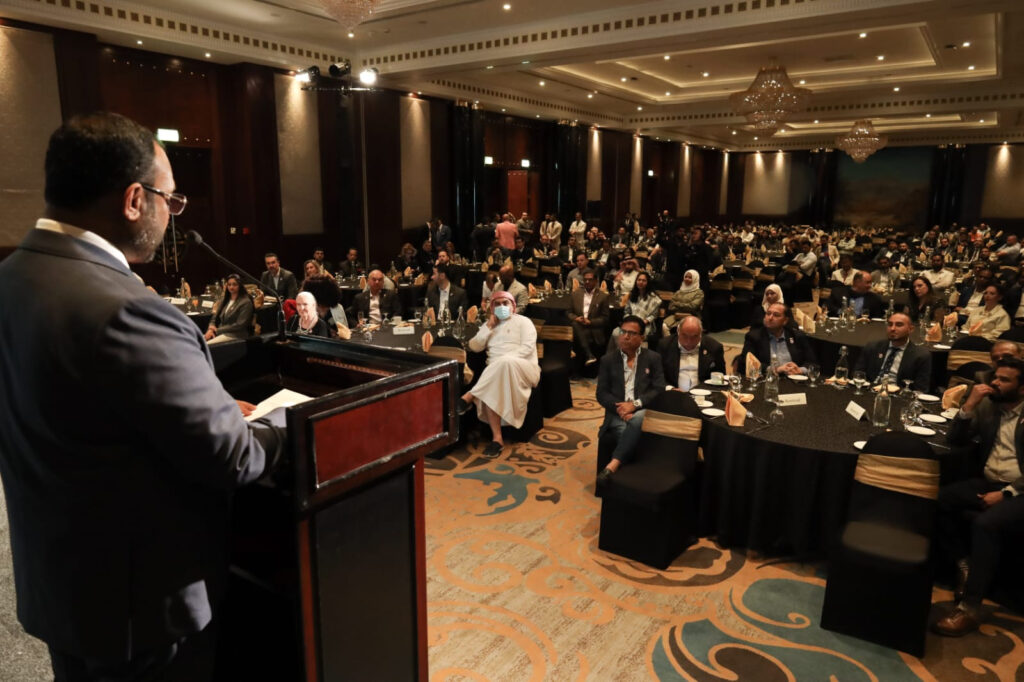
American Specialty Foods Co, on February 19 celebrated its 10th anniversary in Dubai with Valerie Brown, Regional Agricultural Counselor at USDA, US Consulate General Dubai attending the event as the Guest of Honor.
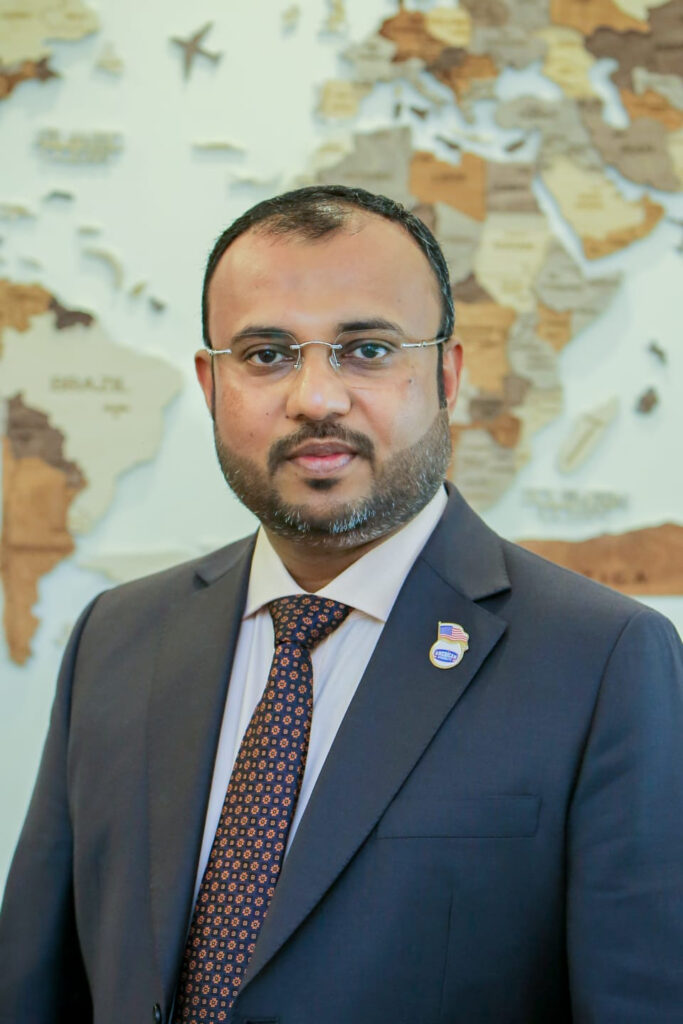
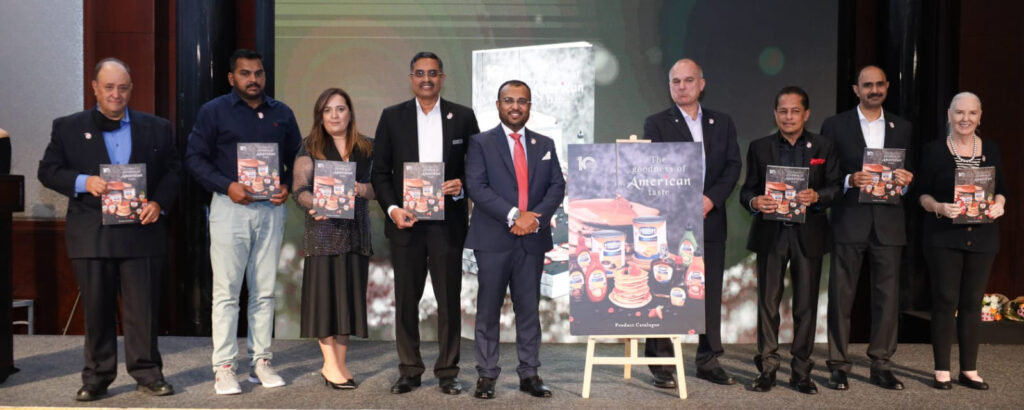
American Specialty Foods Co. that serves the taste of American flavors to over 50 countries with 20 product categories unveiled a brand new catalogue boasting over 650 products. The catalogue was unveiled by worldwide CEO of American Specialty Foods Co. Hany M Haneef, a prominent and dynamic NRI entrepreneur hailing from Mangalore.
“When I founded this company, it was a dream that I aimed to accomplish through passion. Despite the struggles we went through and the challenges we accomplished, it is the undying support of everyone which has enabled the company to achieve more than what we envisioned,” Hany M Haneef said during the event.
Valerie Brown, lauded the company and its achievements adding that the company was epitome of a company that “gets it”.
“They are deliberate, diligent and dynamic in promoting the best the US has to offer. I am delighted to celebrate them,” Valerie said.
Another guest Moroslav Hosek, spoke about the intensity with which Hany works as a professional.
“I have known Hany for five years now, but it feels like I have known him for at least 10 years. So intense a personal and business relationship it is indeed,” he said.
Incorporated in the USA 10 years ago, with a corporate office in Maryland, and a marketing office in New York, American Specialty Foods Co. includes a wide variety of products across 20 categories, including sauces, dressings, mayonnaise, tortilla chips, salsa, potato chips, popcorn, syrups, olives and more.
American Specialty has increased its global footprint, with regional offices in Dubai, London and Mexico.
The company is now venturing into the B2C segment to reach an increased number of households and bring the goodness of American taste to all, a press statement from the company said.
source: http://www.english.varthabharati.in / Vartha Bharati / Home> Gulf / by Vartha Bharati / February 25th, 2023
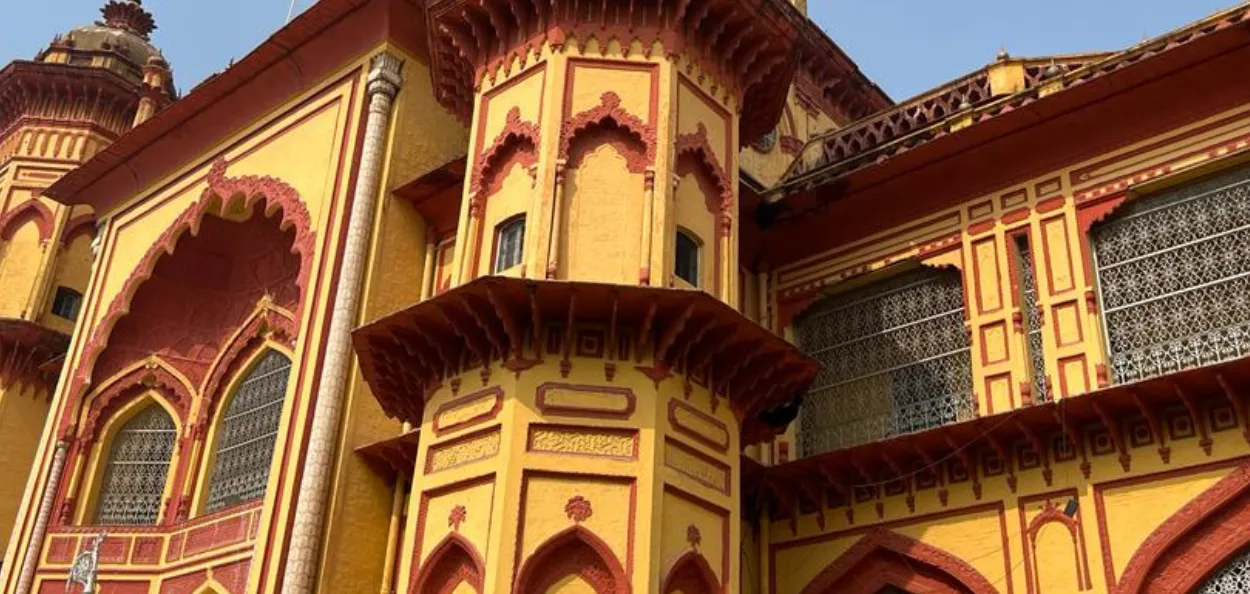
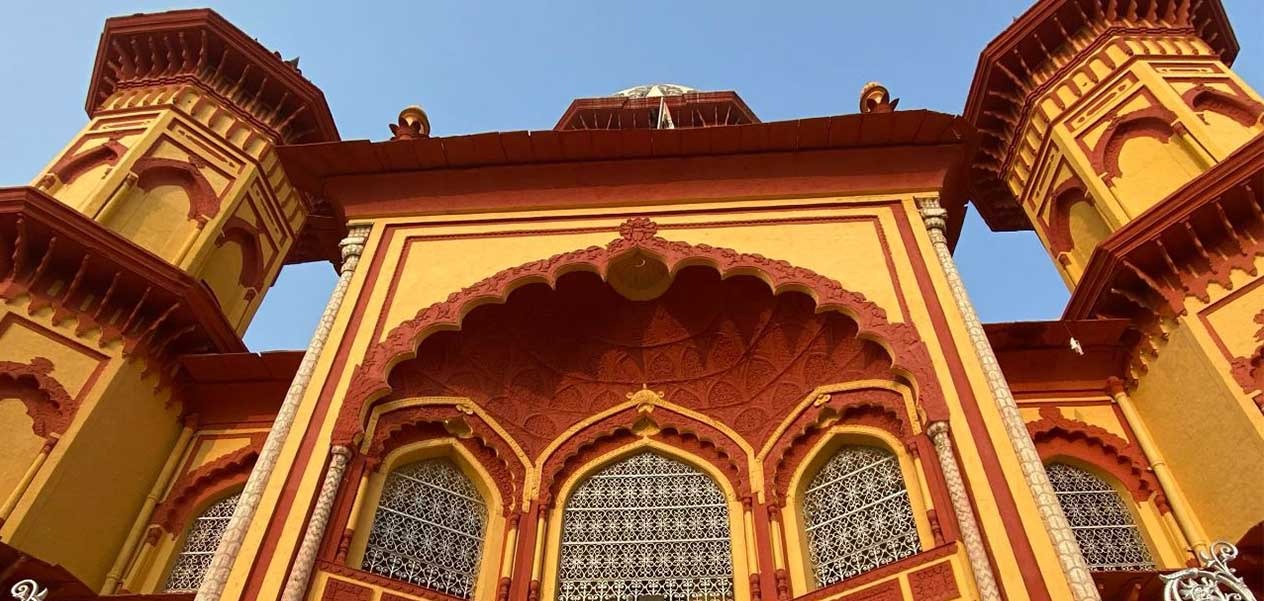
Eight minarets of Hamid Manzil, a magnificent building that houses the world’s famous Rampur Raza Library located some 200 kilometers from New Delhi, is a great symbol of pluralism in India.
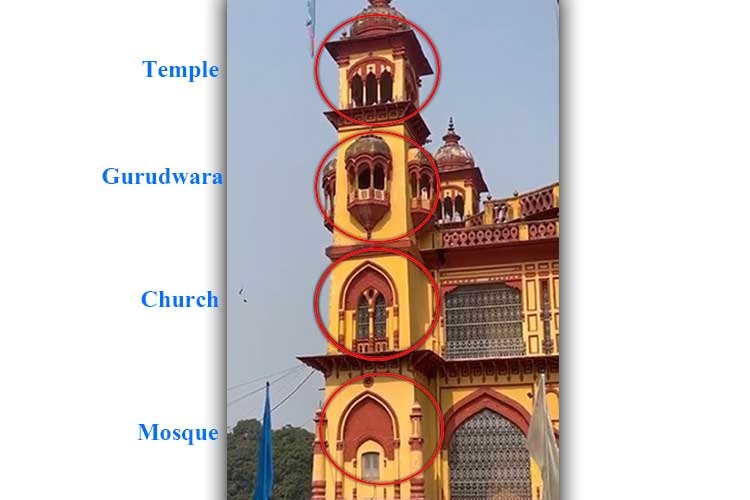
The first part of the library minaret at the bottom is built in the shape of a Mosque; the part just above this resembles a Church, the third part reflects the architectural design of a Sikh Gurudwara, and the top-most part is built in the shape of a Hindu temple.
The religious symbols
This spirit of inclusiveness promoted in the princely State early on continues to inspire the people of this Uttar Pradesh district to live in harmony.
Rampur also famous for the Rampuri Chaku (knife), is one of the few princely states in India where no major communal riots or disturbances ever took place during the British colonial era or in the years afterward.
What makes the symbolism of the building remarkable is that it was constructed between 1902-05 much before India got its Independence and the nawabs were in the power of the 15-gun salute Princely State. They consciously chose to keep the sequence of symbolism with a secular spirit.
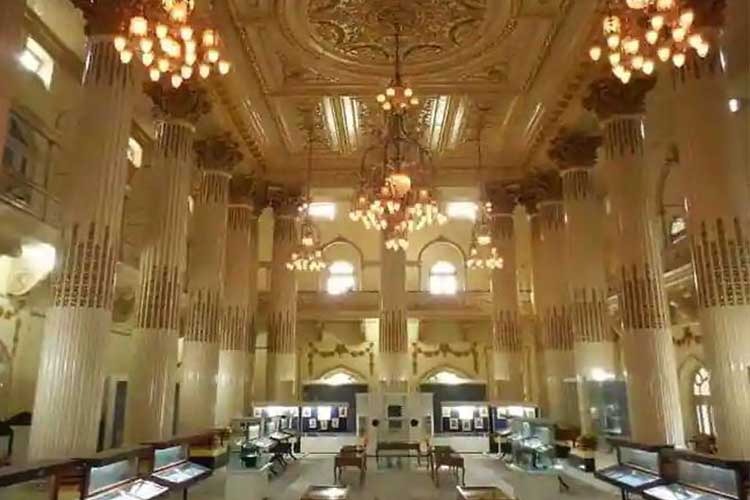
The unique architecture of the library building tells a long story about the nature and politics of the erstwhile Rampur Princely state. The interior of the building is also inspired by European architecture. The architect of the building was French architect W.C. Wright, who made the structure on the instructions given by Nawab Hamid Ali Khan.
The interiors of the library
The Nawabs of Rampur were Rohilas, who had their origin in Roh, Afghanistan, and were renowned for their secular and liberal outlook. They patronized the arts, culture, and education, and were known for their love of music, poetry, and architecture. They also promoted social and religious harmony by patronizing scholars and religious leaders from all faiths, including Hindus, Muslims, and Sikhs. Raza library continues to be one of the most important cultural institutions in India and houses a vast collection of rare manuscripts, books, and other artifacts.
The library is now managed by the Government of Uttar Pradesh but remains closely associated with the Nawab family. Its minarets capture the true soul of the syncretic traditions of India. The Rampur Raza Library collection was started by Nawab Faizullah Khan in 1774. But the building came up much later.
The library initially had the personal book collection of Nawabs of Rampur who were patrons of the arts and avid collectors of books and manuscripts. Over the decades, the library has grown to become one of the largest collections of rare books and manuscripts in the country.
The library houses a vast collection of 17,000 manuscripts, including 150 illustrated ones with 4413 illustrations and about 83,000 printed books besides 5,000 miniature paintings in albums, 3000 specimens of calligraphy, and 205 palm leaves. Many rare and valuable texts are in Arabic, Persian, Urdu, Hindi, and other languages. The collection includes works on a wide range of subjects, including history, philosophy, science, literature, and religion.
The Raza Library is also home to several rare artifacts, including miniature paintings, coins, and other objects of historical and cultural significance. The library has a conservation lab that works to preserve these artifacts and ensure that they are protected for future generations. Nawab Murad Ali Khan, the son of the last nawab Murtaza Ali Khan has been on the board of the library management. His brother Nawab Kazim Ali Khan was also involved.
He has been MLA for five straight terms from the Suar constituency. He has twice been a Minister in Samajwadi as well as the Bahujan Samaj Party Government of Uttar Pradesh. He has continued the legacy of his ancestors in furthering a tolerant and secular culture in his region. Maulana Azad was the first MP from Rampur, who also became the first education minister of independent India. The Nawabs of Rampur were particularly famous for their patronage of Urdu poetry and music.
The general view of the library
Nawab Yousuf Ali Khan learnt poetry from Mirza Ghalib, who had been employed by his court. The nawabs were avid collectors of musical instruments, and many famous musicians and singers, including Ustad Allauddin Khan and Ustad Faiyaz Khan, were associated with the Rampur court.
The Rampur-Sahaswan gharana of classical music is named after the princely state and continues to be popular among music enthusiasts in India. Even though Rampur was a predominantly Muslim state, the Nawabs encouraged the development of Hindu temples and other places of worship for non-Muslims.
They also supported interfaith marriages and were known for their efforts to bridge the gap between different communities in their state. Rampur Raza Library is today one of the biggest symbols of India’s syncretic heritage and continues to attract visitors from across the world.
source: http://www.awazthevoice.in / Awaz, The Voice / Home> Stories / by ATV / Posted by Shaista Fatima / February 22nd, 2023
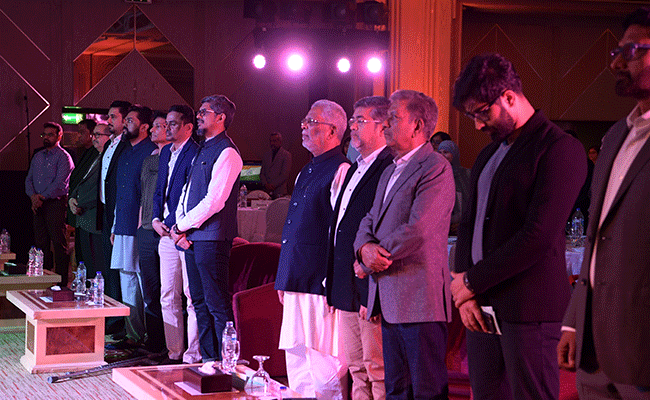
Sahebaan Business and Professionals Group (SBPG) and Sahebaan UAE conducted a Business and Professionals Meet at Al Jumairah Ballroom of Crowne Plaza Hotel, Sheikh Zayed Road, Dubai, on 5th February 2023 from 2.00 PM onwards.
The event, sponsored by the Sahebaan Business Community UAE, was a success, with Sahebaan Community delegates from UAE, GCC, and India in attendance.
The event commenced with a recitation of verses from the Holy Quran. The convenor of SBPG, Althaf M.S., welcomed the gathering and explained the purpose of this maiden initiative.
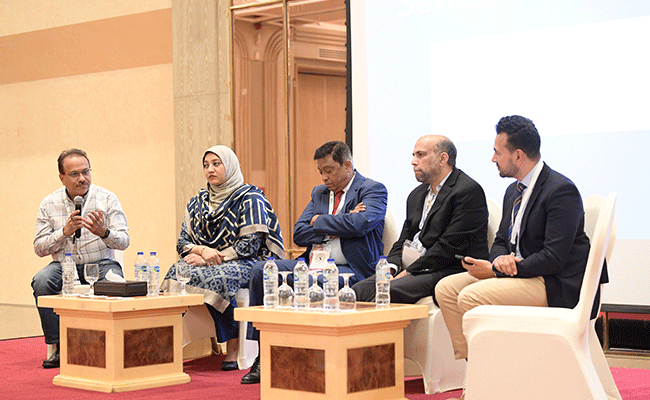
The Program thereafter commenced with a panel discussion moderated by Althaf M.S., an EPC Oil and Gas Professional. The panel consisted of Dr. Abdul Rahiman Beig, a Professor at Khalifa University Abu Dhabi; Mrs. Ambreen Sheik, a Businesswomen and also an Honorary President of the Indian Ladies Association, Abu Dhabi; Mr. Mumtaz Hussain, an established Businessman from Qatar; Dr. Waleed Ahmed, Fellow of the Royal College of Psychiatrists (UK) and a well- known consultant and Mr. Syed Siraj Ahmed, Ex banker & Risk Management Consultant.
While speaking during the event, Mr. Imran Hidayath, CEO of Hidayath Group, Dubai, dwelt on his entrepreneurial journey to success.
Mr. Suhail Kudroli, Chartered Accountant, urged all to participate in such gatherings.
While speaking at the sidelines of the meeting, UAE Sahebaan Convenor Mr. Afroz Assadi and Mr. Siraj Ahmed appreciated the initiative and urged all to lend their support.
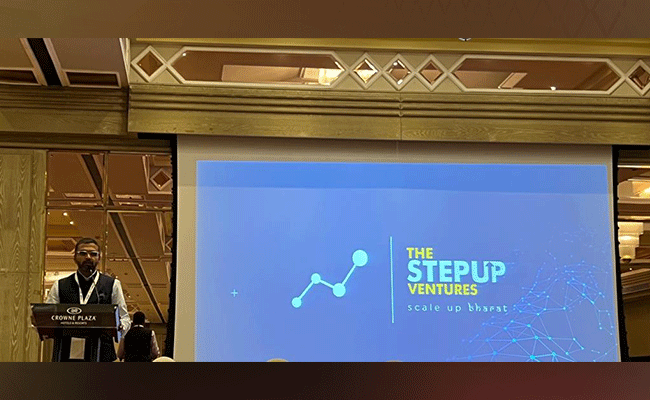
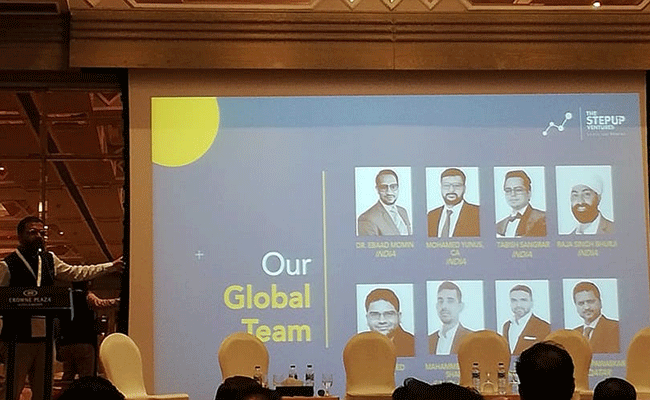
Business presentations were made subsequently by Mohd Salman on his startup business “The Stepup Ventures,” followed by Sahebaan ladies, Sahara Asif on “Life Skills Education” and Waseem Shaikh & Thanziya Khan on “Tru Choco & Nuts.”
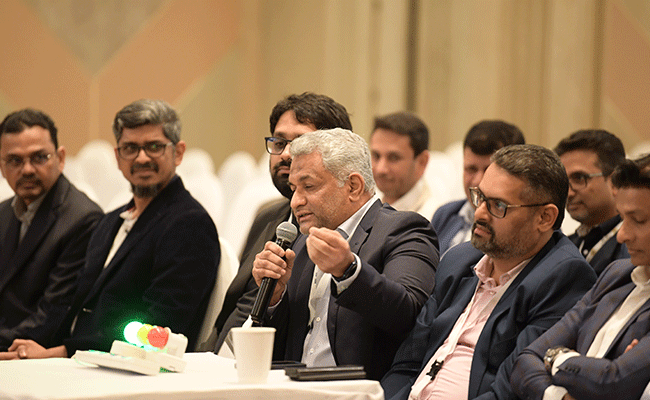
The event’s highlight was Speed Networking, which evidenced active participation by delegates and interaction on a one-to-one basis with every delegate.
The Program was managed by Althaf M.S, Mohd. Samiulla, Mohd Sufiyan, and Faizaan Khateeb and anchored by Mohd. Sufiyan.
source: http://www.english.varthabharati.in / Vartha Bharati / Home> Gulf / by Vartha Bharati / February 13th, 2023
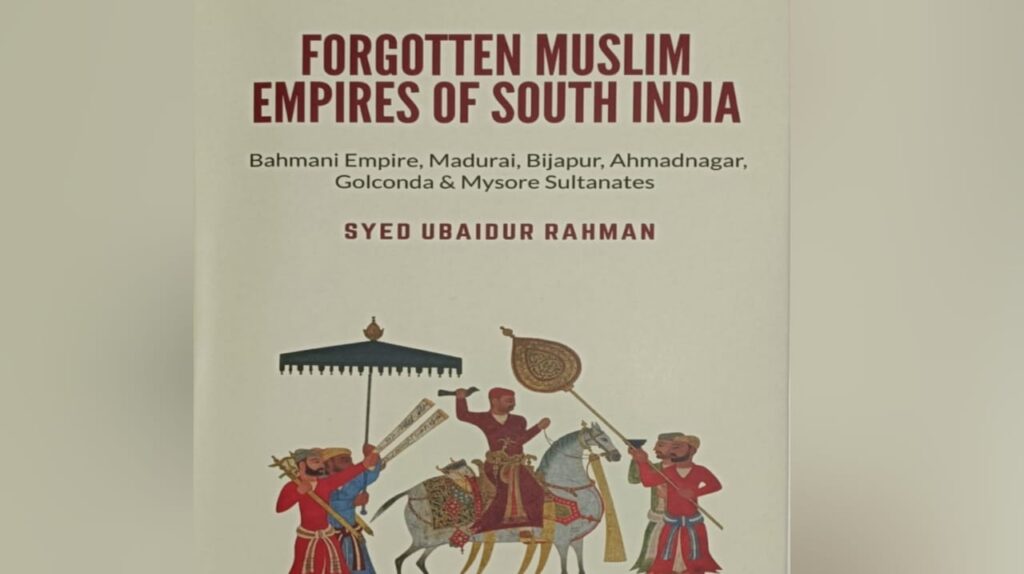
Delhi-based author Syed Ubaidur Rahman’s latest book is making waves among academics and history buffs these days. His book, ‘Forgotten Muslim Empires of South India: Bahmani Empire, Madurai, Bijapur, Ahmadnagar, Golconda and Mysore Sultanates’ that was released earlier this month has caught the imagination of a large number of people.
While the Muslim history in north India is well documented, the history of Muslims in the Deccan hasn’t caught the same attention. This is the reason that while hundreds of books have been penned on the Mughals and the Delhi Sultanate’s rule in different languages, if you try to lay your hands on the Muslim rule elsewhere, there is very little available on the ruling dynasties and their rule in other regions including South India.
Syed Ubaidur Rahman’s latest book tries to correct this mistake and bring back the Muslim sultanates of the Deccan and south India into focus. The voluminous book of 664 pages, it contains a more than three hundred fifty page chapter on the Bahmani Empire alone.
When asked as to why he wrote so much on the Bahmani Sultanate, the author says, “Bahmani Sultanate, towards the end of the 14th century was the pre-eminent power not just in South India, but across the Indian subcontinent. However, despite its resplendent and great past, there is not much literature available on the Bahmani Sultanate that was the most powerful empire from mid fourteenth century till the end of the fifteenth century. It has been relegated to the margins of history in our school syllabus and even in our history books. In this book, I have made an effort to bring it back to common imagination and make it a talking point”.
The author goes on to add that “The Bahmanis and the latter day sultanates in the region had a transformative impact over the populace, both Muslims and Hindus. Not much is written about how the Bahmani sultans spread education across the region and established schools and colleges in every major towns of their realm that not just provided free education to the pupils but took care of all their needs including food and lodging. Muhammad Shah II, during his peaceful reign of close to two decades, ensured that schools and colleges were established in almost every part of the sultanate with hostel facilities. The building of Mahmud Gawan’s university is still standing tall in Bidar, the second capital of the Bahmani empire”.
Chapters on Bijapur’s Adil Shahi Sultanate, Ahmadnagar’s Nizam Shahi Sultanate, Golconda’s Qutb Shahi Sultanate, besides Madurai and Hyder Ali and Tipu Sultan’s Mysore Sultanates are also thoroughly engaging, detailed and informative.
The book is a must read for history buffs, especially the ones who are concerned with preserving Indian Muslim history in the country.
***
Name of the book: ‘Forgotten Muslim Empire of South India’
She received three of the five votes cast by the committee members in the election held at the Delhi Secretariat.
Kausar Jahan is the second woman to be elected to the post.
New Delhi:
In a setback to the AAP, BJP leader Kausar Jahan was elected as the Delhi Haj Committee chairperson today.
Kausar Jahan is the second woman to be elected to the post.
She received three of the five votes cast by the committee members in the election held at the Delhi Secretariat.
The committee comprises six members — two each from the AAP and the BJP, Muslim theology expert Mohammad Saad and Congress councillor Nazia Danish. BJP MP Gautam Gambhir is among the committee members.
Delhi BJP working president Virendra Sachdeva said Ms Jahan’s victory shows the growing trust and faith of Muslims in the party.
“Congratulations to Kausar Jahan on being elected as the Delhi Haj Committee chairperson. The victory of the BJP-affiliated candidate in the Delhi Haj Committee makes it clear that now the Muslim community is also eager to join the country’s development stream Shri @narendramodi,” Mr Sachdeva said in a tweet in Hindi.
The three votes received by the BJP-affiliated candidate included those of Gambhir, Saad and Kausar herself. Nazia Danish abstained from voting.
AAP MLAs Abdul Rehman and Haji Yunus are also members of the committee.
(Except for the headline, this story has not been edited by NDTV staff and is published from a syndicated feed.)
source: http://www.ndtv.com / NDTV / Home> India News / by Press Trust of India / February 16th, 2023
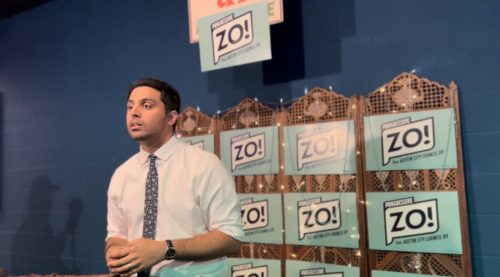
Indian American Zohaib “Zo” Qadri has become the first Muslim elected to the Austin City Council in Texas after winning 51% of the vote in last week’s runoff election against Linda Guerrero.
He will replace Council Member Kathie Tovo, who reached a term limit. Qadri is scheduled to be sworn in on Jan 6.
“Representation matters,” said Qadri, who will represent District 9 which includes downtown Austin, the UT Austin campus area, and portions of Central and South Austin, on the council.
“When I saw folks who looked like me — whether it be in the media or on the news — it was always in a negative light … a villain or the butt of a joke,” he was quoted as saying by KUT, Austin’s NPR station.
During the campaign season, Qadri gained a lot of support among students, and election results showed he polled well in and around UT’s campus.
“We wanted to make sure that every precinct, every neighborhood, every constituency was reached out to,” he said after winning the election on Dec 13. “Whether it be longtime Austinites or young folks who have just moved to the city, I believe everyone deserves to have a voice in City Hall.”
Housing has been at the forefront of every City Council race on Austin’s ballot this go-round — particularly in Central Austin’s District 9.
Qadri said he wants to accurately represent the majority-renter city, and tackle issues including the climate crisis, housing affordability, and public health and safety.
The first-born child of immigrants, Qadri moved to Texas at the age of 12 with his parents and two younger sisters, his website says. After deciding to follow in the footsteps of his mother who worked in a pathology lab and his father who was then an oncologist, Qadri began to pursue an education in science at the University of Texas at Austin.
He switched paths midway to study the structures of political decision-making. He received a Master of Public Administration degree from Texas State and a second graduate degree from Rice in Global Affairs.
Qadri worked on the political campaigns of Beto O’Rourke and Sen. Elizabeth Warren. A local activist and volunteer, he has worked with the Texas Homeless Network, Austin Latino Coalition, and No On Prop B. He also serves on the advisory committee for the Travis County Democratic Party.
source: http://www.americanbazaaronline.com / The American Bazaar / Home> Politics / by Arun Kumar / December 22nd, 2022
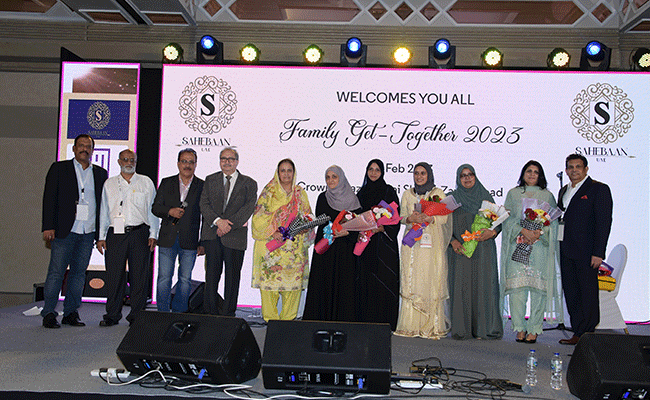
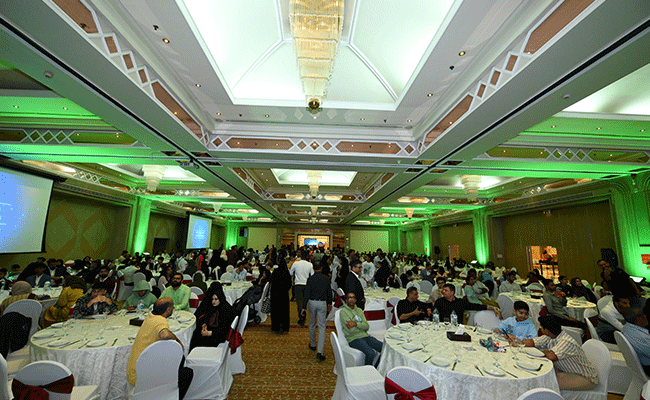
Sahebaan UAE, a premier organization for the Urdu-speaking Muslim Community hailing from the twin districts of DK & Udupi, hosted a grand social family get-together followed by gala dinner at Al Jumairah Ballroom, Crowne Plaza Hotel, Sheikh Zayed Road, Dubai, on 4th February 2023 from 5.30 PM onwards.
The event, sponsored by the Sahebaan Business Community UAE, was a grand success attended by more than 800 community members from all over UAE, neighboring GCC countries and India. Eminent personalities from the Sahebaan Community graced the occasion.
The event commenced with the recitation of verses from Holy Quran by Master Fazil Raheel Ali. Althaf M.S Coordinator, Sahebaan UAE welcomed the gathering and stated that Sahebaan UAE has been providing a platform for the community members to come together, connect and strengthen the brotherly bond.
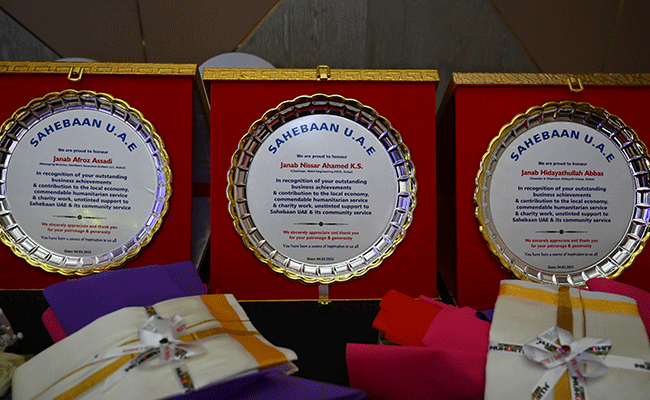
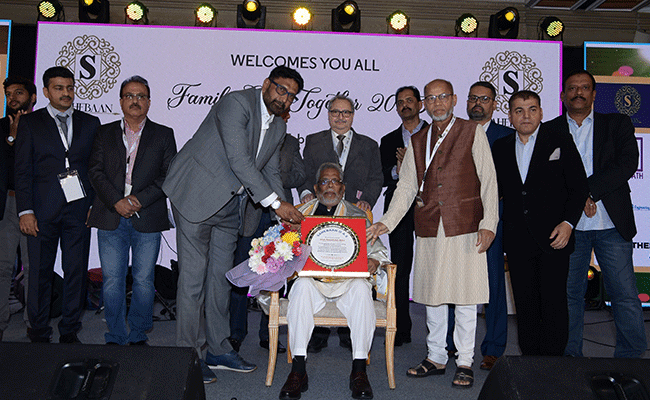
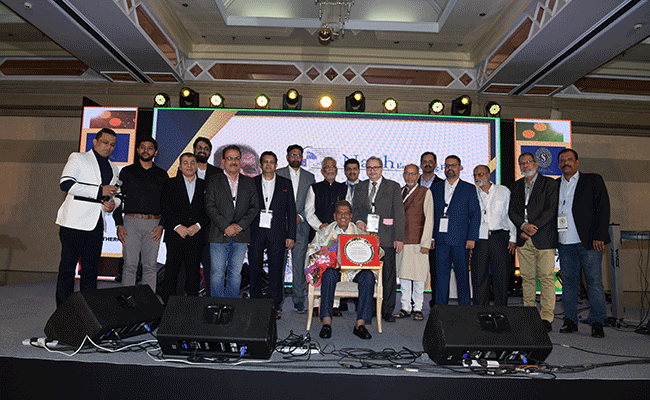
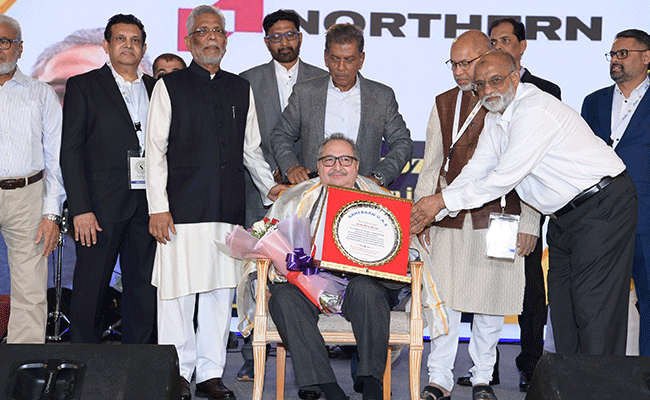
The patrons of the Sahebaan community Janab Hidayathullah Abbas, K.S. Nissar Ahmed and Afroz Assadi were honoured in recognition of their outstanding business achievements and contribution to the local economy, commendable humanitarian service, charity work and unstinted support to Sahebaan UAE and its activities. Janab Syed Siraj Ahmed, Suhail Kudroli, and Althaf Khalife initiated the honoring proceedings.
On behalf of the patrons, Janab Hidayathullah Abbas thanked the organisers and the gathering for the honor bestowed on them. He urged the Community to strive hard for success, prioritize family, help the Community, and give back to society, thus earning goodwill for Sahebaan.
The Chief guest of the evening Janab Kassim Ahmed H.K., founder of Hidaya Foundation Mangalore, while addressing the gathering called for the upliftmemt of the poor and the deprived.
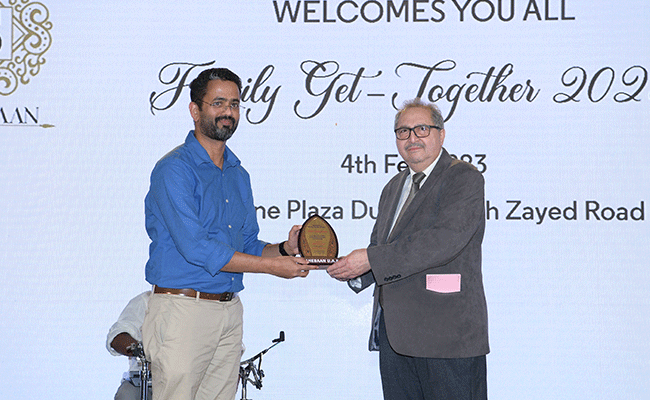
Janab Mohd. Akram, Mohammed Asif, Althaf Khateeb and Irshad Moodbidri conducted the felicitation of Sponsors. Dr. Abdul Rahiman Beig, Professor at Khalifa University, Abu Dhabi & recognised as a top rated scientist by Stanford University and Mrs.Yasmeen Irfan, winner of Foodshala UAE 2022 were honoured on the occasion.
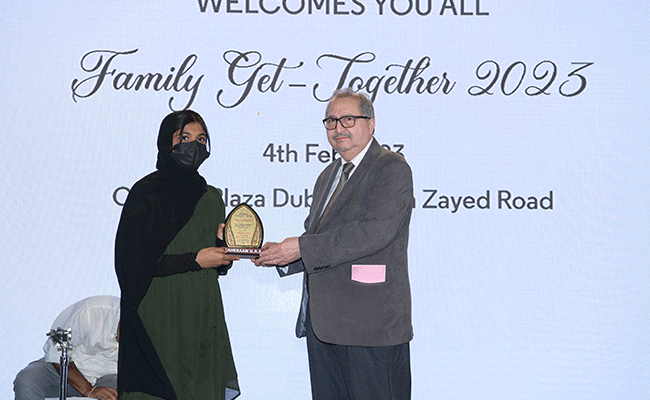
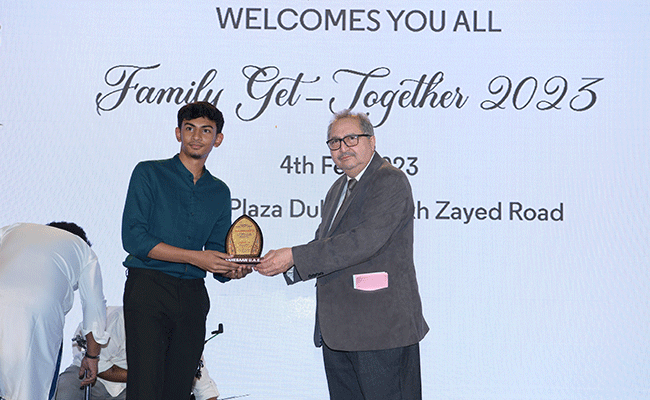
Janab Afroz Assadi Patron and Convenor of Sahebaan UAE presented awards to the talented Sahebaan Youth, namely, Sham Akbar Sheik, Safa Tamadur, Rafa Riyaz Khalife, Daniyal Danish Iqbal, Rafhan Balanthi Baig, Mohd. Rafan, Sheikh Saahir Akbar, Mehek Sheikh, Nuha Riyaz Khalife for excellence in academics.
Anbar Althaf and Saqib Baji for Sports achievement and Anam Aslam for performing arts.
Faizaan Khateeb, Mohd. Samiullaha, Mohd Sufiyan and Abdul Ahad presented a photo journey of Sahebaan UAE through the years.
Well-known bollywood stand-up comedian and mimicry artist Jayvijay Sachan entertained all with his mimicry & comedy. A Sufiana troupe from mumbai mesmerized the crowd throughout the evening with their melodious rendering.
Sahil Zaheer, a fellow Sahebaan and a hugely popular stage & radio artist from Mangalore, compered the program and entertained the crowd with his wit and humor.
Sahebaan Ladies Wing members Sahara Asif, Reena Althaf, Mehek Sheik and Riza Mustafa managed the children’s Program.
The function was sponsored by Hidayath Group, NASH Engineering FZCO, Northern Insurance brokers LLC, Prestige Engineering LLC, Petrosolutions FZCO, Creative House Scaffolding, Advanced Creative Techncial Services, Al Sitara Gulf Contracting, Multiline Technical Co. LLC, Progressive Technology & Services LLC, Sumtech Multiline Trading, Right Choice Trading, Al Bustan Trading, Vertex Engineering, Izza Gold & Diamonds Dubai, Cell Town, Invension Medical Requisities, Core Elements Interior Decoration LLC and Hasmai Mangalore.
The function concluded with a raffle draw and vote of thanks by Syed Mohd. Ajmal.
source: http://www.english.varthabharati.in / Vartha Bharati / Home> Gulf / by Vartha Bharati / February 13th, 2023
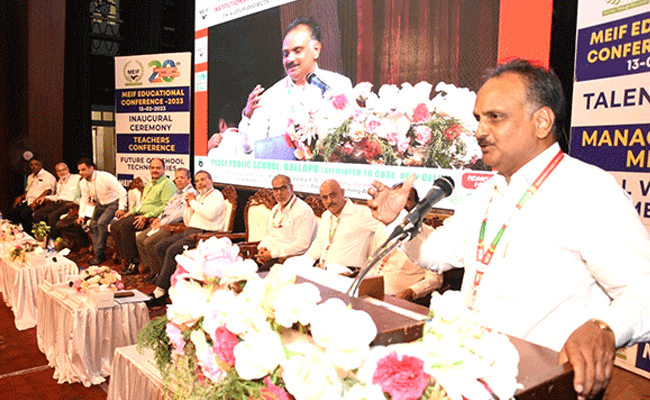
Muslim Educational Institutions Federation (MEIF) is not just providing excellent education, it is also spreading social harmony, Umar Teekay, Honorary President of MEIF and Chairman of Teekays Group, said.
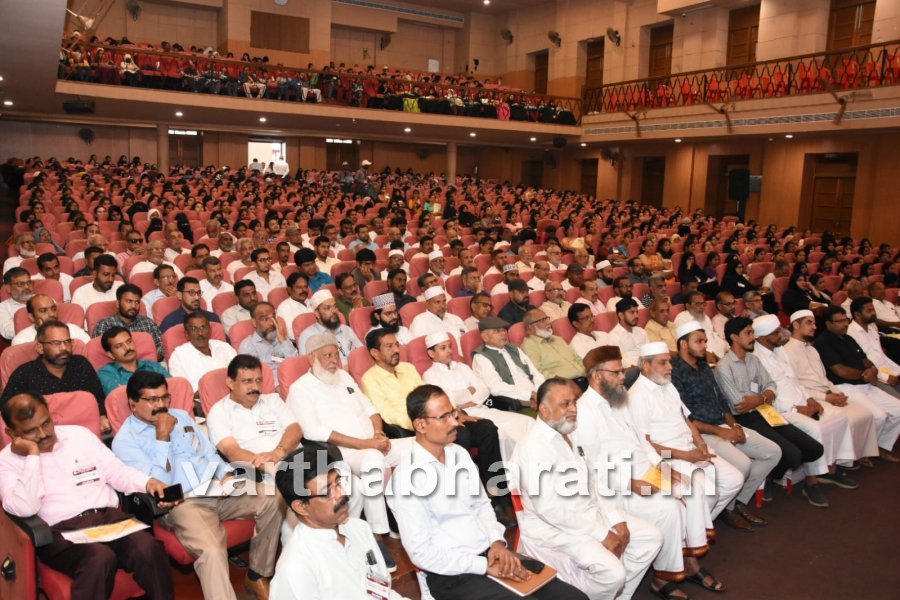
He was addressing the educational conference organized by the Dakshina Kannada and Udupi Districts Muslim Educational Institutions Federation at the Town Hall in the city on Monday.
“Former minister BA Moideen had dreamt of integrating all Muslim educational institutions. MEIF is a step towards bringing that dream to life,” he said.
“Solving a problem is important, but it should not become the priority. The priority should always be of preventing problems,” Teekay advised.
Citing the instance of the recent hijab controversy, he said, “We handled the situation carefully while facing opposition from all ends and ensured that Muslim girls were not deprived of a chance to take the examinations. This was possible through the joint efforts of the members of MEIF.”
Dr. N Vinay Hegde, Chancellor of NITTE Deemed to be University inaugurated the educational conference.
Umar Teekay presided over the conference while Syed Mohamed Beary, Honorary Advisor of MEIF and Chairman of Bearys Group of Institutions, delivered the introductory address.
Yenepoya Deemed to be University Chancellor Dr. Y Abdulla Kunhi, national-level trainer Rajendra Bhat, resource persons Mahesh Masal from Dharwad and Syed Sulthan Ahmed from Bengaluru, MEIF vice-presidents B M Mumtaz Ali, K M Mustafa Sullia, Shabi Ahmed Qazi and B A Nazeer were among those present on the dais.
source: http://www.english.varthabharati.in / Vartha Bharati / Home> Karavali / by Vartha Bharati / February 13th, 2023
At the Battle of Malegaon, Muslim soldiers in the Maratha army defied the British army for a full month when they had no hope of victory as the Chhatrapati and Peshwa had already surrendered.
These battles, says Colonel Anil A Athale (retd), are in contrast to the colonial mindset driven narrative of Muslim separatism.
The current politics of both communities ensures that the heroes of Malegaon — or for that matter personalities like Ibrahim Khan, who led the Maratha artillery at the battle of Panipat in 1761 — are forgotten.
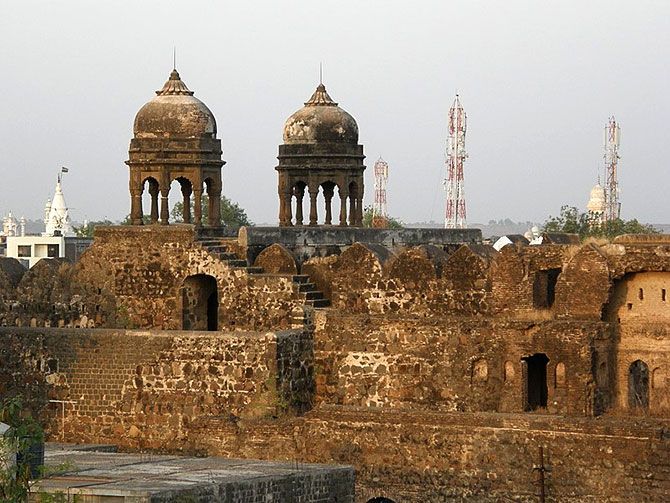
IMAGE: The Malegaon fort. Kind courtesy: Wikipedia
On January 1, 2018, the bicentenary of the defence of Koregaon by a small British force — that had a number of Mahar troops — was observed with great fanfare.
The British — the victors in the third Anglo-Maratha war — erected a pillar to commemorate the event.
During the same war, Muslim troops of the Marathas defied British forces for a full month from May 15, 1818 to June 13, 1818.
Since the Marathas were on the losing side, this saga of bravery was obliterated from history by the British.
As we approach the bicentenary of that event it is time to remember the brave soldiers of the Maratha army who continued to fight even when they had no hope since the Chhatrapati had already been captured by the British and Poona and Satara were under British occupation.
The loyalty to the Maratha flag by its Muslim soldiers even in a hopeless situation deserves to be remembered.
My own research in 1990 began with a question posed by the late Major General D K Palit, a military history scholar of repute.
The question he posed was this: How is it that the Marathas — who spiritedly fought a 22 year-long guerilla war against the mighty Mughal empire — succumbed to the British without a fight?
It is this quest for truth that led me to research the story of the Anglo-Maratha struggles of the 18th and 19th century.
The Battle of Malegaon fought in May-June 1818 was the last major attempt at resistance by the Marathas.
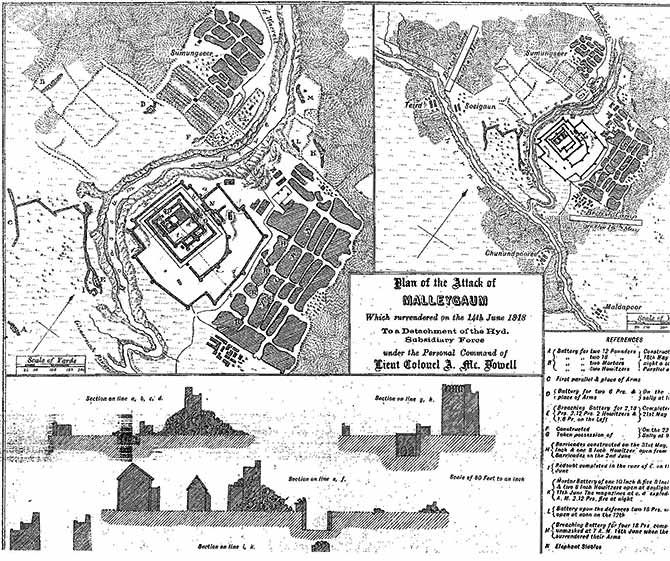
On May 15, 1818, a brigade strength force under Lieutenant Colonel A MacDowell reached the vicinity of Malegaon fort.
The British expected that this show of force would be sufficient to overawe the defenders of the Malegaon fort.
The British were in for a nasty surprise.
In response to summons to surrender, the defenders fired on the British camp leading to panic.
The quadrangular fort of Malegaon is located near the bend in the Musam river so as to cover two side of the fort, Malegaon town being on the other sides.
The fort had two lines of defence built of masonry surrounded by a seven feet wall and a 25 feet deep 16 feet wide ditch.
The outer wall had watch towers built of mud and stone. The inner fort or the citadel was 60 feet high with 16 feet wide ramparts.
On May 16, Colonel MacDowell reached the west bank of the river and began work to erect barriers of breastwork to deploy guns for the final assault.
At 8 am the British began bombardment of the fort with 20 guns, an assortment of 12 pounders (the biggest calibre gun then in India), 8 pounders and mortars.
The defending soldiers sortied out of the fort, destroyed the batteries and killed two British officers and several soldiers.
At the same time 7 guns from the fort opened devastating fire on the British lines on the west bank of the river.
The ding dong battle continued for six days.
On May 22, after particularly heavy shelling from the fort, the British were forced to abandon the breastwork for the guns and retreated.
On May 26, the British — through constant bombardment — succeeded in creating a breach in the inner wall of the fort.
The next day the British launched a three pronged attack after a bombardment lasting nearly two hours.
One column was led by Major Greenhill and consisted of a native battalion of 1,000 soldiers with 100 Europeans to directly go into the fort through the breach.
Another column of 800 sepoys under Lieutenant Colonel Stewart crossed the river downstream to outflank the fort from the west.
The third column consisting of 300 sepoys and 50 Europeans under Major Macbean went towards the river gate.
Each column had pioneers with tools, mines and ladders to tackle the fortification.
But the defenders of the Malegaon fort proved equal to the challenge.
The attacking British were met with a hail of bullets and gunfire. The attempt to scale the inner wall failed. Many of the engineer officers leading the attack suffered injuries.
Both the columns led by Majors Greenhill and Macbean were ordered to withdraw.
Only Lieutenant Colonel; Stewart’s column met with some success and he occupied part of the town.
The stalemate continued till June 4.
On that day another column under Major Watson arrived from Ahmednagar with a battalion of native infantry and a large number of siege guns.
For nine days, till June 13, the fort was subjected to heavy bombardment by the British guns.
On June 13, at 3 pm, the fort garrison accepted surrender and the Union Jack was hoisted in place of the Maratha saffron jari patka flag.
The next morning the garrison of 300 men marched out of the fort and surrendered their arms.
The British strength at Malegaon numbered over 2,000 troops. During the battle the British casualties numbered 11 officers and 220 soldiers (killed or wounded).
Thirty Maratha defenders died while 60 Maratha soldiers were wounded.
The British record states that in the end they used 36 guns, fired over 8,000 shells and used 35,500 pounds of gunpowder.
The British were so impressed with the valour and chivalry of the defenders that they permitted the surrendered soldiers to keep their daggers.
Historian N C Kelkar notes in his Marathi book Marathe ani Ingraj that at one stage the desperate British sent a message to the Muslim soldiers of the Maratha army that since the Chhatrapati had already surrendered, they should do likewise.
The doughty defenders replied that they were indeed aware that their king was in British captivity, but they were yet to receive instructions from him to surrender and therefore would keep fighting.
The devotion to duty and loyalty to their king was of the kind seen later only during World War II when many Japanese soldiers continued to fight even after Japan surrendered.
There is neither any victory pillar nor are the names of these brave soldiers engraved anywhere.
Even two hundred years after the event and the departure of British 70 years ago, the Muslim heroes of battle of Malegaon remain unknown, forgotten and unsung.
Two hundred years ago, the third Anglo-Maratha war fought in 1817 and 1818 ended in the Maratha Chhatrapati and Peshwa (prime minister) surrendering to the English.
After having defeated the Holkars and Shindias in early 1817, the British turned to the conquest of Maharashtra proper.
The full story of the Maratha struggle with the British has for long been swept under the carpet. In its place a modern myth of the British having directly taken over India from the Mughals or accidently acquired an empire has gained currency.
Ignoring the Marathas and their role in ruling most of north and central India was part of the grand colonial project of disinformation that sought to then play up Mughal-Rajput rule.
I recall an interesting news report some years ago, datelined Aligarh, where an Aligarh Muslim university ‘scholar’ had discovered that a major battle between the Marathas and the English had indeed taken place in Aligarh in 1803!
The worthy had, of course, never heard of the second Anglo-Maratha war that took place in 1803-1804 with battles at Delhi, Lassawari near Agra, Aligarh, Shekohabad etc.
The British had sound reasons to whitewash the Maratha period of our history.
Since the Marathas formed a formidable alliance with the Muslims, Jats and Sikhs in resisting the British, they posed a potential threat.
The distortions continued post-Independence as writing and teaching history was hijacked by the left-leaning Delhi elite. But those who ignore the Maratha or Sikh epoch fail to answer a simple question.
The Marathas fought three wars with the British, so did the Sikhs, the Gorkhas and Tipu Sultan in the south. Is there any mention of the Anglo-Mughal wars, even in the doctored historical narrative?
Note: The information about the Battle of Malegaon is based on a British Indian Army General Staff Publication (Simla 1910), Maratha and the Pindari War pages 89-91.
Colonel Anil A Athale (retd) is a military historian. This article is based on extracts from his forthcoming book, The Story of the Mighty Marathas and their Empire.
source: http://www.rediff.com / rediff.com / Home> News / by Colonel Anil A Athale (retd) / April 10th, 2018
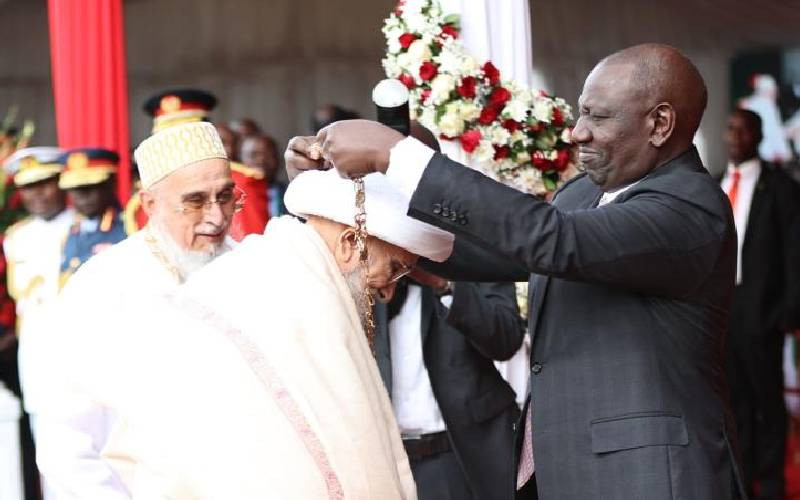
President William Ruto awards the spiritual leader of the Dawoodi Bohra community Syedena Mufaddal Saifuddin on Monday.[PCS]
His Holiness Syedna Mufaddal Saifuddin, the leader of the worldwide Dawoodi Bohra community, was among 460 people who were feted by President William Ruto on Jamhuri Day.
Saifuddin received the most prestigious award of the Order of the Golden Heart for his philanthropic contributions across the world, including in Kenya.
He was among the leaders invited by President Ruto to this year’s celebrations on Monday.
https://www.youtube.com/watch?v=OxGgOs4EnTE&t=2s
Speaking during the ceremony at the State House, the president thanked Saifuddin for supporting the government’s low-cost housing initiative as well as the ongoing drought relief efforts.
“We are collaborating with the Dawoodi Bohra community to build low-cost houses to address challenges facing low-income earners, especially in the informal settlements,” said Ruto.
Bohra community has established affordable houses in Athi River and Rongai.
The President acknowledged the role of Saifuddin in philanthropy across the world and his leadership role in fostering inter-faith dialogue.
Saifuddin joined the list of eminent personalities who have previously received the highest award in Kenya for their exemplary work.
Others include Uganda President Yoweri Museveni, former President of Liberia Ellen Johnson Sirleaf and the Aga Khan Shah Karim al-Husayni.
Saifuddin was previously presented with the Chief of the Order of the Golden Heart award during the inauguration of Aljamea-tus-Saifiyah’s Nairobi campus in 2017, the third campus of the Dawoodi Bohra community’s educational institute.
The award was in recognition of his efforts for the cause of education and literacy. The campus, inaugurated by former President Uhuru Kenyatta, offers higher secondary, undergraduate and postgraduate studies to more than 900 students from 24 countries in various disciplines.
In efforts to restore indigenous tree species, the Bohra community’s spiritual leader donated 76,000 seed balls to Kenya in 2019, which were planted near the Amboseli National Park to mark his 76th birthday.
The East Africa region has more than 10,000 community members and Kenya is home to about 5,500, mostly concentrated in Nairobi and Mombasa and a smaller population in Nakuru, Malindi, Lamu, Kisumu, Eldoret and Kitui.
Saifuddin is expected to meet the community members and deliver sermons in the course of his visit.
source: http://www.standardmedia.co.ke / The Standard, Kenya / Home> National / by Jacinta Mutura / December 16th, 2022