Bengaluru, KARNATAKA / La Jolla California, U.S.A :
Nasir is the man behind Discrete Cosine Transform – the technology which makes it possible to share photos & videos.
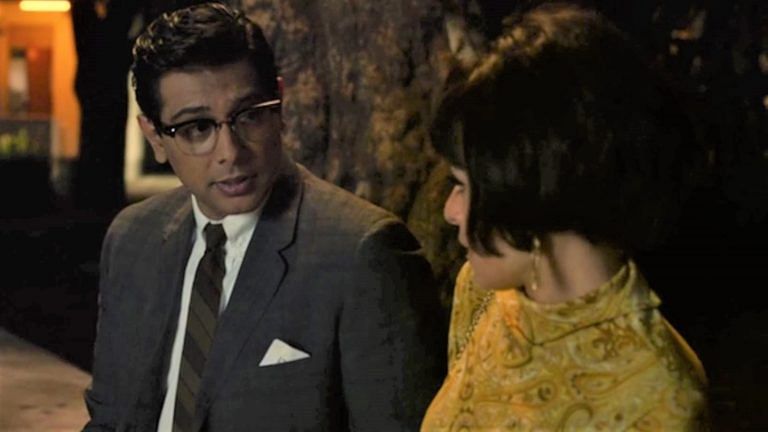
If you’ve been following the Pearson family closely, you must have watched episode 8 from the fifth season of ‘This is Us’ introducing two new characters to the show – Nasir and Esther Ahmed.
The first time we see the pair, it’s circa 1963 in Albuquerque, New Mexico, where a man introduces himself as “I’m Nasir from India” as a young Esther is seen walking up to him, asking for a light.
The next time we see the couple, Nasir is cradling their son in his arms. Shortly after, another scene reveals their relevance.
As Esther is seen getting annoyed at Nasir for having returned late from work, Nasir replies, “When your mother wants a picture of you, what do we have to do? What if instead of waiting for the mail, she could see it instantly? They will be able to share images… Imagine if you could talk to someone on the screen but with a video.”
These lines from the show piece the puzzle together as viewers learn by the end of the episode that Nasir is the man behind the video-calling technology we use today. He’s the reason the Pearsons are able to stay connected using FaceTime amid the raging coronavirus pandemic .
From Bengaluru to USA
Nasir Ahmed hails from the southern city of Bengaluru, in India. He was born in 1940, and subsequently completed his schooling from Bishop Cotton Boys School. He earned his Bachelors in electrical engineering from the University College of Engineering in Bengaluru in 1961. Thereafter, he moved to the US for his higher studies and pursued both his MS and Ph.D at the University of New Mexico in Albuquerque.
After his graduation, Ahmed worked as the Principal Research Engineer at Honeywell in St Paul, Minnesota from 1966 to 1968. He then took on the role of a professor at the Kansas State University and taught there till 1983, following which he joined the University of New Mexico and retired in 2001. He is currently Professor Emeritus of electrical and computer engineering at the University of New Mexico.
What is DCT?
In the 1970s, Nasir led a research team that developed the Discrete Cosine Transform (DCT), which makes it possible to share photos and videos.
In a paper on how he built the technology, Nasir says he had written a proposal to the National Science Foundation to study the cosine transform using two distinct polynomials. “Much to my disappointment, NSF did not fund the proposal,” he lamented, adding that a reviewer had deemed his proposal “too simple”. Not one to give up, Nasir kept at it through his P.hD until he finally cracked the DCT.
Today, Nasir and his team’s work on DCT is used in high-definition digital TVs, teleconferencing, and other image-sharing platforms, among numerous other commercial applications.
He is also credited with having invented the .jpg file format for photos, according to Bustle.
Finding Love
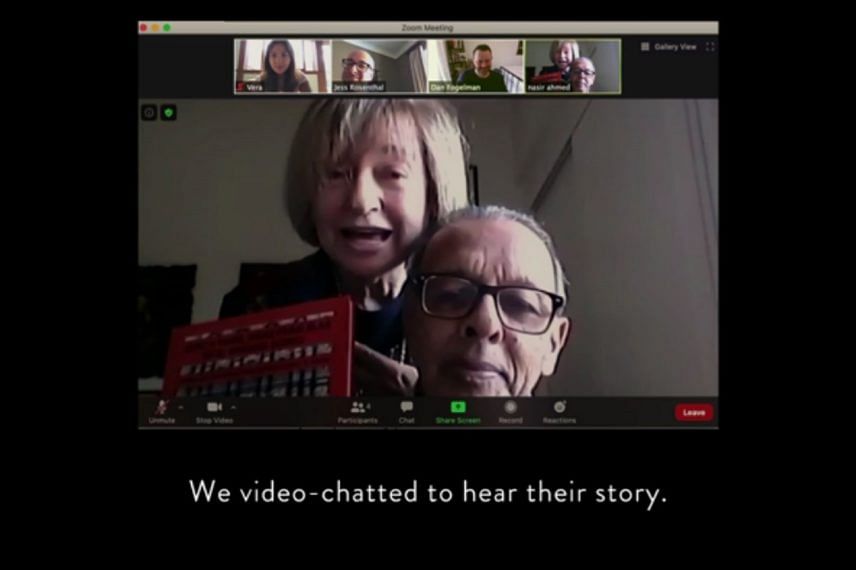
The real Nasir and Esther. /(Photo Courtesy: A still from the episode) /Esther and Nasir Ahmed video conferencing with This Is Us show creator Dan Fogelman and executive producers Vera Herbert and Jess Rosenthal in August of 2020. NBC
Nasir met Esther Pariente, an Argentinian, at the University of New Mexico. According to the College of Graduates in Economic Sciences of Tucumán, Esther holds a master’s degree in English from Kansas State University and a Ph.D in Spanish and Latin American Literature. Their son, Michael Pariente, is a well-known criminal defence attorney based in Las Vegas.
The makers of ‘This is Us’ caught up with the couple over a video chat to know their story, before paying a fitting tribute to the couple in the eighth episode.
According to Bustle, Nasir and his wife Esther released a limited-edition book about their lives called Parallel Lives In Curved Space in 2018. The couple celebrated their 56th anniversary recently.
source: http://www.thequint.com / The Quint / Home> The Indian American / by Rinki Sanyal / February 19th, 2021
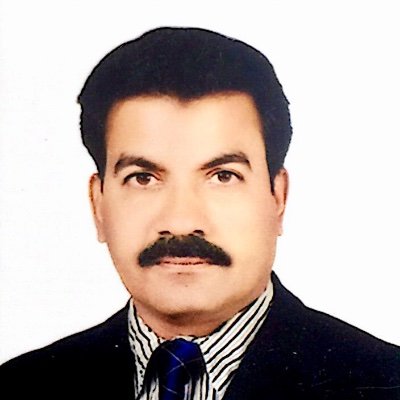
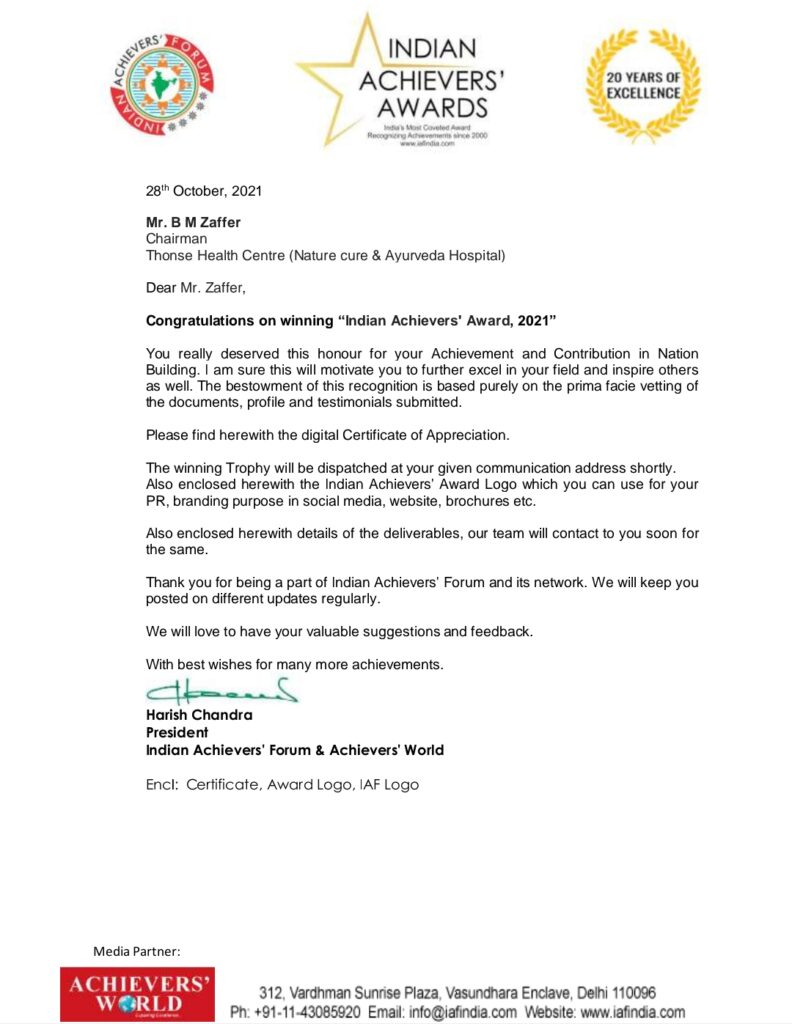
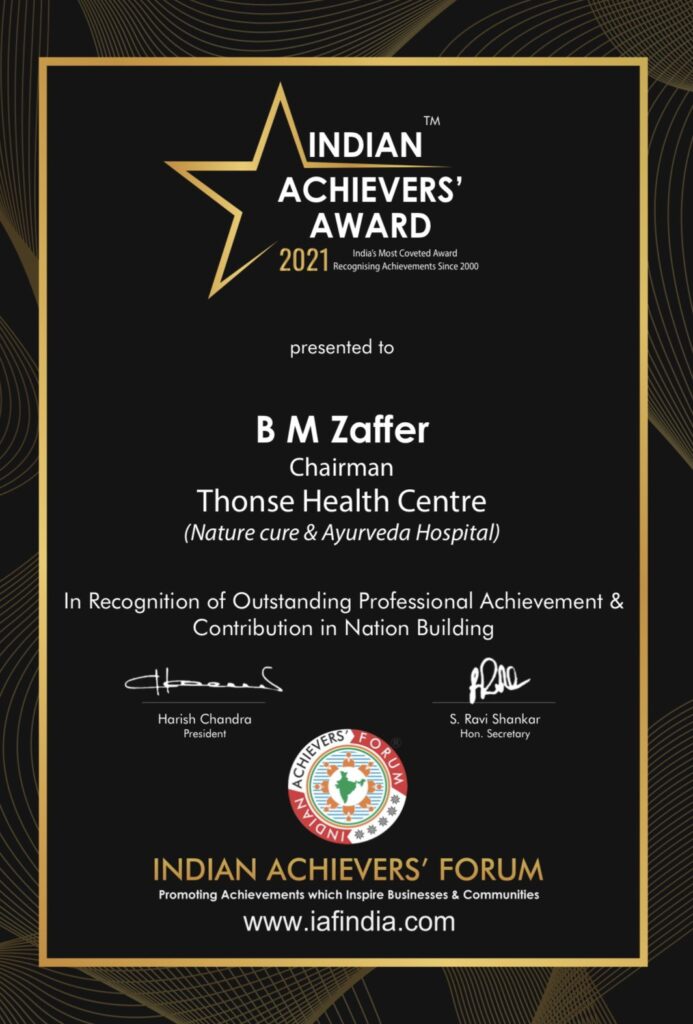
B M Zaffer Thonse Chairman Thonse Health Centre (Nature cure and Ayurveda hospital) has been selected for the prestigious Indian Achievers Award-2021 by the Indian Achievers’ Forum for his outstanding professional achievements and contributions in national building.
Zaffer is a known businessman from UAE and the award is given for recognizing his excellence in business, health sector and social activities.
Zaffer is the founder secretary of Qidmath Committee, Hoode and founder sports secretary of Young Men’s Association Kemmanu.
Zaffer is also the founder president of Thonse Cultural Association in UAE and president of Alumni Association of Government Urdu School Hoode.
He also established Nirmal Thonse, a NGO to protect nature and rendered service as honourary president in the same.
source: http://www.daijiworld.com / DaijiWorld.com / Home> Karnataka / by Media Release / November 03rd, 2021
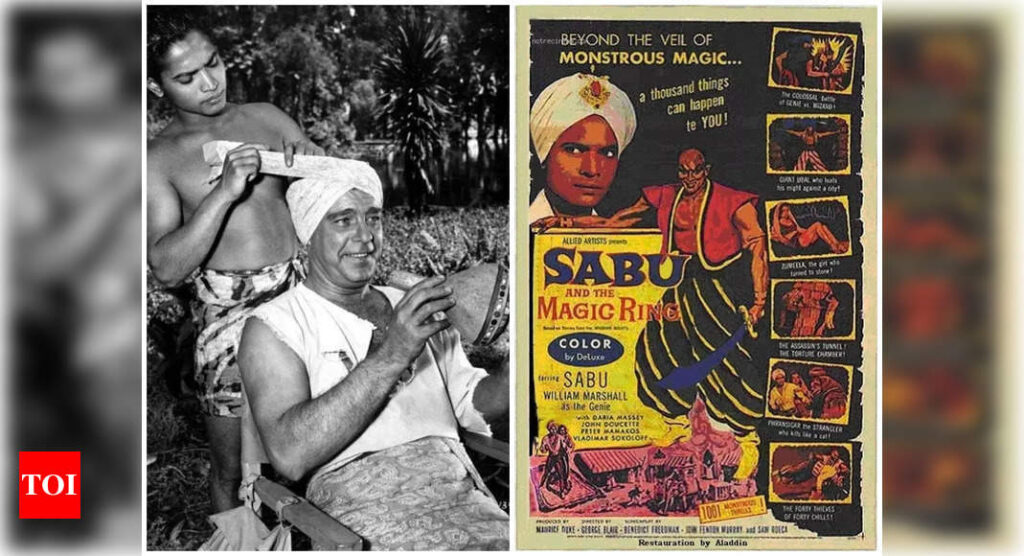
Sabu Dastagir, or Selar Sabu, might be an overlooked name in Indian Cinema’s vibrant history but many wouldn’t be aware that he was perhaps the first actor to find bonafide success in Hollywood. These are the early 1930s that we refer to, much before the likes of Om Puri, Saeed Jaffrey, Irffan Khan or even Priyanka Chopra made their mark on the foreign shores.
Born in the Mysuru kingdom of the pre-independent India to the then king’s official mahout, Sabu was spotted at the age of 13 by director Robert Flaherty (or his wife, some sources claim) who would later cast him in the screen adaptation of Rudyard Kipling’s Toomai and the Elephants (from the Jungle Book). While portions of the film were shot in Mysuru, the rest of the film was shot in London which meant that Sabu was flown over, along with his brother, to England where he is said to have attended school for a brief period.
But this was only the beginning for Sabu Dastagir as he chanced upon more such golden opportunities with projects like ‘The Drum (1938), wherein he played prince Azim, or Zoltan Korda’s ‘The Thief of Baghdad’ in 1940 in which he played Abu, the outwitter who ultimately saves the princess. ‘The Thief of Baghdad’ won the Oscars for Cinematography, Art, and Special Effects while ‘The Drum’ ended up causing riots in Mumbai for its subservient attitude towards the British in the film.
Around the time of ‘The Thief of Baghdad’s release, the second World War was looming large over the entire world, and Sabu, during its peak, had just completed shooting for ‘Jungle Book’ in Hollywood.
He would go on to serve the American military and become an integral member of more than 40 air missions across the pacific as their tail or machine gunner. Along with the acting accolades he had received till then, Sabu also became a decorated military officer after being awarded the Flying Cross.
Sabu would then continue residing in the United States of American and become the face of the “Empire Movies” with several hits like ‘White Savage (1942)’, ‘Cobra Woman (1944)’, ‘Man-Eater of Kumaon (1948), and many more to his name.
It was on the sets of ‘Song of India’ in 1949 that he met actor and future wife Marilyn Cooper for the first time.
Sabu Dastagir breathed his last on 2nd December, 1963 in California, despite being in the pink of his health at the time.
source: http://www.timesofindia.indiatimes.com / TimesofIndia.com / Home> Entertainment> Kannada> Movies / by Swaroop Kodur / September 07th, 2021
South Africans across the board voted for Sooliman, putting Deputy Chief Justice Raymond Zondo in second place.
Johannesburg:
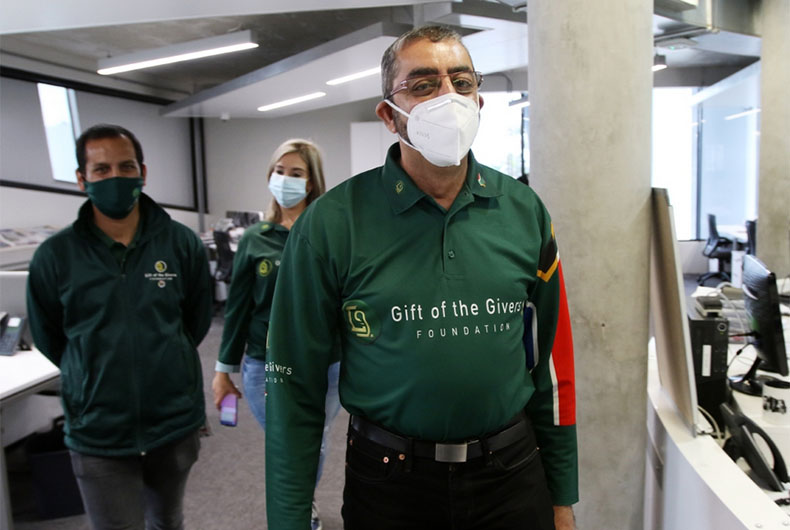
Indian-origin philanthropist and founder of disaster relief group ‘Gift of the Givers’, Dr Imtiaz Sooliman has won the prestigious South African of the Year Award run by the Daily Maverick newspaper.
South Africans across the board voted for Sooliman, putting Deputy Chief Justice Raymond Zondo in second place. Zondo heads the Commission of Inquiry into State Capture, which investigates fraud and corruption in the public sector, including state organs.
Dr Sooliman, in his acceptance speech at the Al Quds Mosque in Cape Town on Friday, called on Muslims worldwide to engage in caring for all communities to change Islamophobic perceptions.
“About Gift of the Givers”
Dr Sooliman started ‘Gift of the Givers’ after his religious mentor in Turkey, Muhammed Safer Dal Effendi, asked him to do so in 1994.
Since then, the charitable and relief organisation has undertaken relief work in more than 44 countries after natural disasters such as earthquakes as well as assisting people in war-torn countries.
Besides the Middle East, Eastern Europe and many countries in Africa, ‘Gift Of The Givers’ teams have also assisted during natural disasters in India and Pakistan.
“Utlization of Zakat”
Relying almost entirely on donations and the obligatory ‘Zakat’ paid by Muslims, ‘Gift of the Givers’ has provided almost 4 billion rand (USD 260 million) worth of aid to drought-stricken areas, ranging from mobile hospitals, food hampers, and digging boreholes.
The doctor recalled how Sheikh Muhammed Safer Dal Effendi, his religious leader in Turkey, had instructed him to establish the organisation ‘Waqful Waqifin‘, which translates to ‘gift of the givers’ from Arabic.
“My son, the Sheikh said, you will serve all people, of all religions, of all races; all colours, all cultures; all classes, of any geographical locations and of any political affiliation, but you will serve them unconditionally. You will expect nothing in return, not even a thank you,” recalled Dr Sooliman, who practises medicine.
“When we go into an area to do our work, we don’t look at their belief systems. Whether they are Hindu, Muslim or Christians, whatever they may be, we don’t go to be judgemental about anyone,” he said.
“This award came by South Africans who had voted across cultures, across religions, across people who do not have any faith too, but all of them were willing to vote for me,” Dr Sooliman said this symbolised that people in their souls, support goodness.
“Other Awards”
Dr Sooliman is recognised internationally for his works, winning scores of awards and accolades over the decades, lauded by South African and foreign heads of state for his organisation’s assistance during times of crises.
Dr Sooliman has also received National Orders, South Africa’s highest civilian honour, and earlier this year was named Social Justice Champion by the University of Stellenbosch in Western Cape province.
Dr Imtiaz Sooliman was born on March 07, 1962 in Potchefstroom. He completed his high school education at Sastri College in Durban, Natal in 1978, and later qualified as a medical doctor by obtaining his MBChB at the University of Natal.
source: http://www.ummid.com / Ummid.com / Home> India> Life & Style / by ummid.com with inputs from PTI / December 26th, 2021
Bihar,INDIA / North Carolina / Washington, U.S.A. :
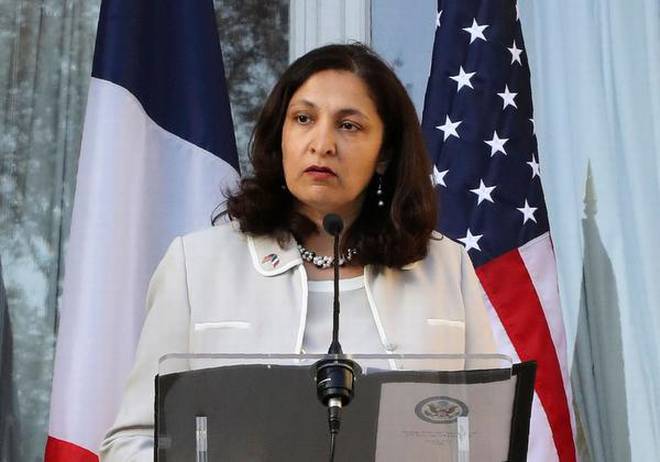
File photo of Uzra Zeya. | Photo Credit: AFP
The coordinator’s role involves promoting “substantive dialogue” between the Chinese government and the Dalai Lama.
U.S. official Uzra Zeya has been appointed the country’s new Special Coordinator for Tibetan Issues. She will hold the position concurrently with her current role as Under Secretary for Civilian Security, Democracy, and Human Rights, Secretary of State Antony Blinken said via a statement.
The coordinator’s role involves promoting “substantive dialogue” between the Chinese government and the Dalai Lama. The coordinator is also supposed to promote the unique identity of Tibet, safeguards human rights of Tibetans and coordinates U.S. policy on Tibet.
“Specifically, she [ Ms. Zeya] will promote substantive dialogue, without preconditions, between the Government of the People’s Republic of China (PRC) and the Dalai Lama, his representatives, or democratically elected Tibetan leaders in support of a negotiated agreement on Tibet,” Mr Blinken said in a statement, as part of a list of activities Ms Zeya would undertake in her new role.
In addition to her responsibilities around promoting human rights and preserving the distinct heritage of Tibetans, Ms. Zeya “ also will promote activities to protect the environment and sustainably manage the water and other natural resources of the Tibetan plateau,” Mr Blinken said.
The position, which was established by U.S.’s Tibetan Policy Act (2002), had been lying vacant for much of the Trump administration, i.e., from January 2017 to October 2020, when State Department official Robert Destro was appointed to the role.
Ms. Zeya was born in North Carolina to parents who emigrated from India. She quit the State Department during the Trump administration (2018), speaking and writing, after her departure, of the decline in diversity at the top levels of the administration.
Ms. Zeya has worked at the U.S. Embassy in New Delhi as a politicial-minister counselor, in addition to deputy chief of mission and charge d’affaires in Paris and postings in West Asia and North Africa.
source: http://www.thehindu.com / The Hindu / Home> News> World / by Srriram Lakshman / December 20th, 2021
A bunch of Bohra women harness the power of social media to ace their careers, clad in their colourful traditional wear
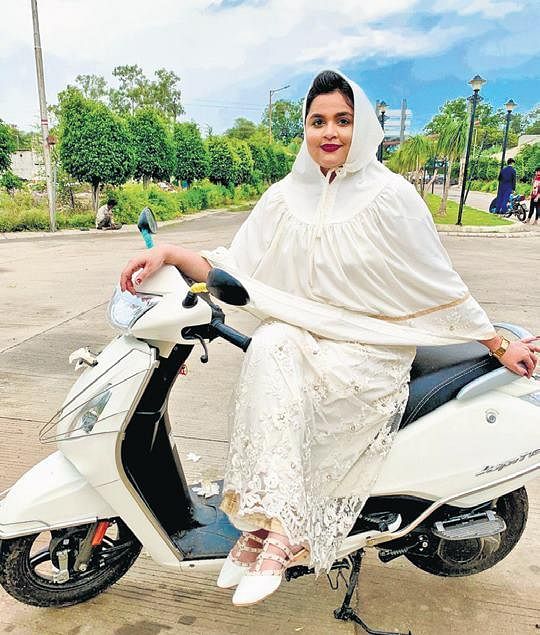
The rida is the traditional attire of the women of the Dawoodi Bohra community, a sub-sect of the Shiite Muslims.
After an adrenaline-charged skydive from 15,000 feet in the USA, everyone around Arwa Merchant was in awe, not because of her daring performance, but for her insistence on doing so in the rida. She wrote about this in a blog post for Dawoodi Bohra Women’s Association for Religious Freedom in October 2019.
The rida is the traditional attire of the women of the Dawoodi Bohra community, a sub-sect of the Shiite Muslims. The two-piece dress is distinguishable from other forms of the hijab by its bright colours, decorative patterns and lace. With their roots in Gujarat, the members of this peace-loving trading community follow the teachings of their spiritual leader Syedna Mufaddal Saifuddin. Although embedded in a tradition dating back to more than 1,400 years, this two million-strong Dawoodi Bohras in India have never been shy to embrace the latest technologies. They even have celebrated festivals like Eid and Shab-E-Baraat online due to the pandemic.
Not one to fall behind, the women of the community have taken social media platforms by storm. From content creators to food bloggers to creating clothing brands, they have managed to expand their careers online, but without giving up their rida.
MariyaKanchwala, 31 Makeup artist and beauty influencer, Indore Instagram: 28,000 followers Kanchwala has carved a niche for herself in the glamour industry by showcasing her makeup skills while wearing her rida. After a brief stint as a public relations executive for a fashion brand, she turned her full attention to makeup. She started posting on Instagram in 2017 as a food blogger, but 2020 made her realise her passion for makeup and she began posting beauty looks on Instagram. In the past year, she has started working on beauty and looks projects for weddings and shoots for makeup.
Rashida Jawadwala, 20 Content creator, Neemuch, Madhya Pradesh Instagram: 32,700 followers Known online as GirlInRida, Jawadwala started posting comic content on Instagram while pursuing her degree in Computer Engineering from Indore in September 2020. And the follower count went up to 32,000 in a year. Jawadwala has brand deals from companies such as VLCC, Urban Clap and Dresscode. Also, offers came her way for anchoring TV and stage shows, but she declined them to focus on her studies.
Arwa Zakir, 25 Fitness expert, GoFit Studio, Salmiya, Kuwait Instagram: 4,200 followers Also known as GoFit Arwa on Instagram and YouTube, Zakir is a certified trainer from the American College of Sports Medicine and owns the GoFit Studio fitness centre in Salmiya, Kuwait, where she trains people of all ages and genders. Her parents are originally from Sagwara, Rajasthan, and until she turned 16 she never paid heed to her health and was an obese child. Today, she posts content around health and workouts on Instagram. Even though some people initially mocked Zakir for posting content in the rida, she never let negativity come in the way of her passion. Zakir believes that social media is the best place for small business owners to grow and for creative people to showcase their talent.
Winner of the 2019 Women Icon of the Year Award in the field of coaching and the Best Life Coach of the Year Award, Ghadiali conducts workshops and seminars on motivation, personality development, life skills, etc—both online and offline—along with personal therapy sessions. Born in Tanzania, but working in Mumbai for the past 17 years, she has a master’s in Counselling Psychology along with a Life Coaching Certification from the International Learning Centre, Manchester, the UK. Ghadiali started posting videos and content on Instagram and Linkedin in 2015 when she found a lot of misinformation being circulated about mental health. It helped her grow from 2,000 to 19,000 followers on Instagram, which helped her garner many clients as well.
source: http://www.newindianexpress.com / The New Indian Express / Home> Magazine / by Zainab MM / December 12th, 2021
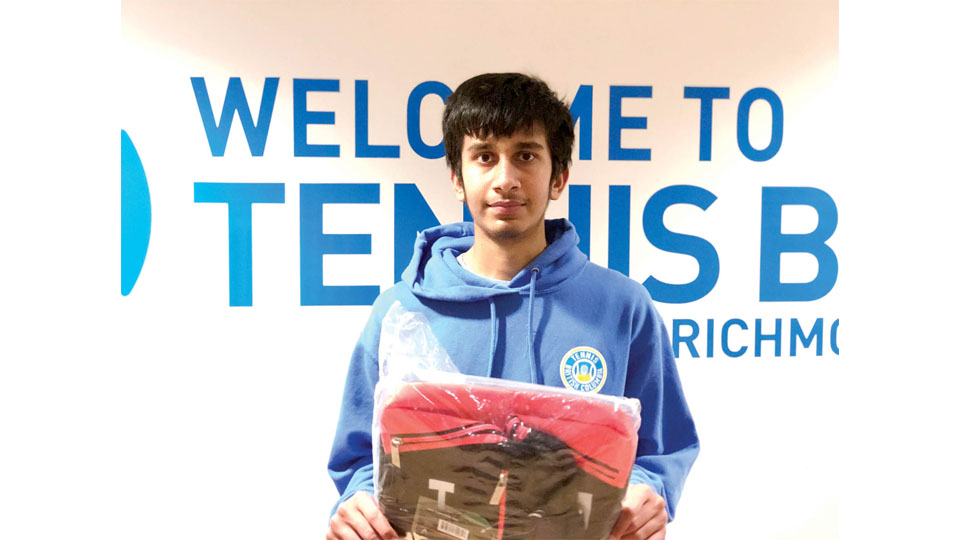
Mysuru boy, 14-year-old Mustafa Raja won his first U-18 Tournament in Vancouver, Canada, today. Mustafa, seeded fifth in the Tennis BC U18 4 Star Tournament, held his nerves at crucial moments, saving two match points in the finals, winning the tournament defeating the top seeded player Denny Bao 2,6; 7,6(7) and 6,1.
By virtue of this win, Mustafa became the top player in his age category in British Columbia and Top 4 in Canada.
Mustafa trains at the Tennis Centre in Surrey, Vancouver and studies at the Sullivan heights Secondary School.
Mustafa has had a good year, he was the Provincial Champion in U-14 category and was also the Canadian National Champion.
Mustafa used to train at the Nagaraj Tennis Centre at SJCE College Campus and is alumni of Excel Public School, Mysuru.
source: http://www.starofmysore.com / Star of Mysore / Home> Sports / December 13th, 2021
Barely two weeks before his death, Maulana Azhari went to Kasganj to meet the family members of Altaf, who was found dead in police custody
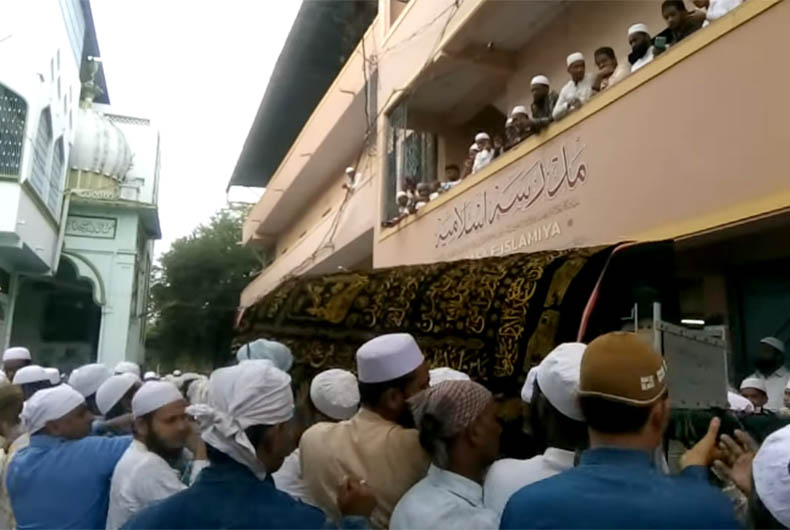
Maulana Abdul Hameed Azahri Funeral / Maulana Abdul Hameed Azhari’s Janaza taken to Bada Qabristan in Malegaon for the funeral and last rites. (ummid.com photo)
September 16, 2006, exactly a week and a day later, we were in a meeting with then Chief Minister of Maharashtra Vilasrao Deshmukh in Matralaya, Mumbai. The meeting was called at the behest of Abu Asim Azmi, then Rajya Sabha MP of Samajwadi Party (SP). Azmi had gathered about 25 Muslim MPs, including Maulana Mehmood Madani, Asaduddin Owaisi and others, along with the relatives and close family members of those arrested after the July 2006 Mumbai train blasts.
Abu Asim Azmi had sought from the Chief Minister a hearing to lodge complaint against the indiscriminate arrests of Muslim youth following July 2006 Mumbai train blasts. The case of September 08, 2006 Malegaon serial blasts at Bada Qabristan and Mushawerat Chowk was added in the agenda in the last minute.
Top police officials including Director General (DG) Police Maharashtra P.S. Pasricha, Mumbai Police Commissioner A.N. Roy and then ATS Chief K.P. Raghuvanshi were also there in attendance.
Family members of those thrown in jail following the Mumbai train blasts were sharing the heart wrenching stories of how their close kin were framed in the case and made accused for something they were not responsible of. It was then that a man in his sixties wearing white kurta and sporting Jinnah cap stood up.
“You have framed innocent Muslims in false cases. Now you want to repeat the same to cover up the Malegaon blasts case”, he said, his fingers pointing at the police officials.
He then turned towards Chief Minister Deshmukh and said, “We don’t trust your police. We have lost our near and dear ones in Malegaon blasts. Any attempt to cover up the case will be dealt with strongly.”
The Chief Minister, not accustomed to such plain speaking, watched in dismay.
The man who had upset the highest chair in the state was Maulana Abdul Hameed Azhari. Besides Maulana Azhari, I had seen only Maulana Mohammad Wali Rahmani (Sample here) talking to ministers and top officials in such a blunt, unapologetic and uncompromising tone.
My very first meeting with Maulana Hameed Azhari was when I went to Riyadh in 1994 to work as an Engineer at Saudi Carpet Factory. Maulana Hameed Azhari was in the Saudi capital since 1978. He served there at Information Centre of Saudi Ministry of Defence till his retirement in 2002 as Supervisor of the Centre.
“We used to work on monochrome computers provided on rent by IBM. Multi-tasking operating systems with GUI support were not yet available for the users. It was literally tiring to work on computers those days. No wonder if we were left completely exhausted after office hours.
“The Maulana however was a workaholic, and despite his hectic and tiring duty hours, would regularly engage with fellow Indians, especially those from Malegaon, listening their issues if any and helping them out in whatever way he could”, Sheikh Ahmed, who worked with him at the same centre in Riyadh, told ummid.com.
“His home in Riyadh was a centre for the expatriates to share their grievances, especially on Fridays when he used to serve lunch to the visitors. His wife was a good cook, and for the expatriates having home-made food in Riyadh was no less than a delight”, he said.
“Maulana Azhari was respected also by his seniors for his devotion to work. This is why he was honoured and conferred upon an award of appreciation and acknowledgement at the time of retirement”, Sheikh Ahmed recalled.
The post Maulana Azhari held was probably the highest by any Malegaonian abroad. Things have changed now a bit. But, getting rewarded for work in Saudi Arabia was rare during those days.
“Early days and Education”
Maulana Azhari was born in 1944. He was among the founding batch students of Madrasa Millat, established by Maulana Abdul Hameed Nomani – his mentor, guide and inspiration. After graduating from Madrasa Millat, Maulana Azhari went to Darul Uloom Deoband for further studies.
Later, he went to Al Azhar in Cairo, Egypt for higher studies. Maulana Hameed Azhari was one among the 05 students of Maharashtra who went to Al Azhar for higher education. Besides him, others were Maulana Nazir Azhari, Maulana Abdul Ahad Azhari and Maulana Mukhtar Azhari –a all from Malegaon. The 5th one was from Sholapur.
Back home from Al Azhar, Maulana Hameed Azhari joined Madrasa Millat, his alma mater, as a teacher. He spent few years here and then went to work at Saudi Embassy in New Delhi. It was because of this assignment that he got the posting at the Information Centre of Saudi Ministry of Defence in Riyadh where he worked till retirement.
During the same period, Maulana Azhari, with the help of some of his friends, worked towards establishing Kulliyah at Taherat – a madrasa for education of girl-students. The madrasa was administered by his younger sister, Gulshan Aapa, till her death.
“A Crusader”
Maulana Azhari was a great admirer of Maulana Abul Kalam Azad – one of the front leaders of India’s freedom movement and the country’s first Education Minister. Post retirement, Maulana Azahri established in his name “Maulana Abul Kalam Azad Research Centre” and devoted him for promotion of research and knowledge. He also undertook Arabic teaching classes and Duroos – sessions to study Quran at Rahmani Masjid, Nayapura on regular basis.
The Malegaon serial blasts on September 08, 2006 however “rekindled the activist” in him, and he led from the front the campaign for the acquittal of local Muslim youths who were wrongly framed in the case.
[Watch in this video Maulana Abdul Hameed Azhari criticising the functioning of ATS, Malegaon blasts, and also referring to his September 16, 2006 meeting with then Chief Minister Vilasrao Deshmukh in Mumbai.]
It was the time when no one, except the close kin of the accused, would dare to speak anything in favour of them. Maulana Azhari however started the campaign – initially with few of his close aides, later expanding it through the Kul Jamaati Tanzeem – an organisation represented by leaders of all Muslim sects.
The formation of Kul Jamaati Tanzeem was a big blow to the investigating agencies that were of the view that the bomb blasts in Malegaon were the result of sectarian differences between various Muslim groups.
During the course of about five-year long campaign, Maulana Azhari met everyone – right from UPA Chairperson Sonia Gandhi, Prime Minister Dr Manmohan Singh, Union Home Minister P Chidamabarm to CPI-M General Secretary Prakash Karat, Mulayam Singh Yadav, Lalu Prasad Yadav and others. This is besides frequently leading representations on a number of occasions to Maharashtra state leadership including Chief Minister Vilasrao Deshmukh and his successor Prithviraj Chavan. In all these meetings, the Maulana had only one point to raise. Local Muslim youths are innocent and there is a need for a thorough investigation into the 2006 Malegaon terrorist attack.
Slain ATS Chief Hemant Karkare had later confessed that it was because of this strong conviction that he decided to explore all possible angles while investigating the another terrorist attack that rocked Malegaon this time on September 29, 2008 at Bhikku Chowk. It is now a history how the motorcycle on which the bombs were planted led to the expose of the Hindutva terrorists who were involved in the terrorist attack not only in Malegaon but also in other places of the country.
The efforts taken by Maulana Azhari-led Kul Jamaati Tanzeem and others bore fruit when the Muslim accused were first granted bail in November 2011 and later discharged from the 2006 Malegaon blast case in April 2016.
“War against Coronavirus”
After the acquittal of Muslim youths in the 2006 Malegaon blasts case, Maulana Azhari kept alive the Kul Jamaati Tanzeem even though some people felt that the organisation was no more needed.
After the outbreak of the Covid-19 when unfortunately Malegaon became a victim at the initial stages of the Pandemic’s first wave and when whole of the city was turned into a prison, Maulana Azhari again rose to the occasion. Taking members of the Kul Jamaati Tanzeem along he met the Health Minister, District Collector and other officials of the civic body and health department to demand adequate facilities for those who were advised quarantine.
Maulana Azhari personally visited with few of his close aides the temporary quarantine centres and met the Covid-19 victims to solace them in the time of distress. This is perhaps why he too became infected with the deadly virus. Lucky as he always was, he won the battle against the Covid-19 but was forced to suspend his regular activities because of weakness and post-Covid complications.
Maulana Azhari resumed regular activities – this time at national level, after the first wave of Covid-19 ceded and his health condition improved. Expanding his activities, Maulana Azhari joined hands with Waman Meshram of BAMCEF and Maulana Khalilur Rahman Sajjad Nomani of All India Muslim Personal Law Board (AIMPLB).
While working with BAMCEF, Maulana was also nominated as the National President of Rashtriya Muslim Morcha. Through this platform Maulana Azhari travelled to far-away places of India and met Dalit and Muslim victims wherever they lived.
Barely two weeks before his death, Maulana Azhari went to Kasganj to meet the family members of Altaf, who was found dead in police custody. During the same period, Maulana Azhari visited a number of districts of Uttar Pradesh before attending the 27th session of the All India Muslim Personal Law Board (AIMPLB) held in Kanpur on November 20 and 21, 2021.
After his return from Uttar Pradesh tour, Maulana Azhari lost no time in meeting with the top police officials in the wake of indiscriminate arrests after November 12 Malegaon bandh and shutdown called to protest against the anti-Muslim carnage in Tripura .
“There should be a distinction between those involved in violence and the organisers who had called for the shutdown. Your tirade against the organisers is arbitrary and unconstitutional. It should be stopped”, he told Additional Superintendent of Police (ASP) Malegaon Chandrakant Khandvi in his signature blunt tone that had dismayed the Chief Minister Vilasrao Deshmukh back in 2006.
Two days later on December 04, 2021, Maulana Abdul Hameed Azhari, whose crusade and statesmanship helped in exposing the people involved in the war against Muslims in the name of fighting terrorism, left for his heavenly abode .
[The writer is Founder Editor of ummid.com and is privileged to work with Maulana Hameed Azhari.]
source: http://www.ummid.com / Ummid.com / Home> Obituary / by Aleem Faizee, ummid.com / December 07th, 2021
Amina had taken a loan from the Keechery Service Co-Operative Bank for the wedding of their daughter by mortgaging their land and house.
The bank will return the documents for the land after changing it to Amina’s name at the earliest, officials said. (Photo| EPS)
Kochi :
Amina’s family will sleep peacefully at their home in Kanjiramattom, a suburb in Kochi, free from the fear of bank attachment, thanks to the large-heartedness of NRI businessman MA Yusuf Ali.
She had been spending sleepless nights and had forgotten what it felt like to have a normal day due to a bank loan, which the family struggled to repay.
Amina had taken a loan from the Keechery Service Co-Operative Bank for the wedding of their daughter by mortgaging their land and house. The land and house were under bank attachment due to the default in repayment. Her savings were used for the treatment of her husband, and there is no money left to pay the recovery amount.
On Sunday, Amina rushed to Panangad to meet Yusuf Ali, who had come to the village to visit Rajesh and his family, who rescued the Lulu group chairman after his helicopter crash-landed early this year. As soon as Yusuf Ali heard about Amina’s distress, he instructed his coworkers to deposit the money and pay off her loan amount at the earliest.
Amina never thought that her problems would be solved quickly when she expressed her grief over the threat of losing her home to the bank to Yusuf Ali. Amina’s husband Syed Mohammad is suffering from cancer.
On Monday, Amina and her husband were informed that someone had come to visit them. Both of them rushed to the place and were clueless about the visitors. They asked the visitors who they were and the purpose of their visit.
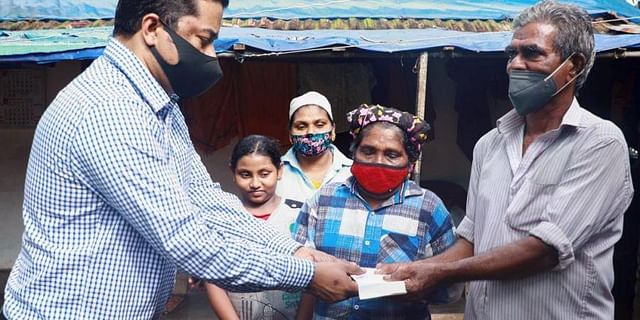
The visitors were the employees of Lulu Group. Though Amina didn’t understand who they were initially, the employees of Lulu told them that they had paid off the loan amount of Rs 3,81,160 that the couple owed to the bank. Amina and her husband were beyond belief when the media coordinator of Lulu Group NB Swaraj, handed over the receipt of the repayment of loan and interest to Amina. He also handed over a sum of Rs 50,000, including medical expenses, to the couple for treatment expenses on Yusuf Ali’s instructions.
The loan amount of Rs 2,14,242, and a total of Rs 3,81,160 including interest and penalty interest, was deposited by Yusuf Ali in the bank. The bank will return the documents for the land after changing it to Amina’s name at the earliest, officials said.
source: http://www.newindianexpress.com / The New Indian Express / Home> Good News / by Express News Service / December 07th, 2021
From being in the company of snake charmers at Kotla in 1999 to capturing history once again at Wankhede Stadium.
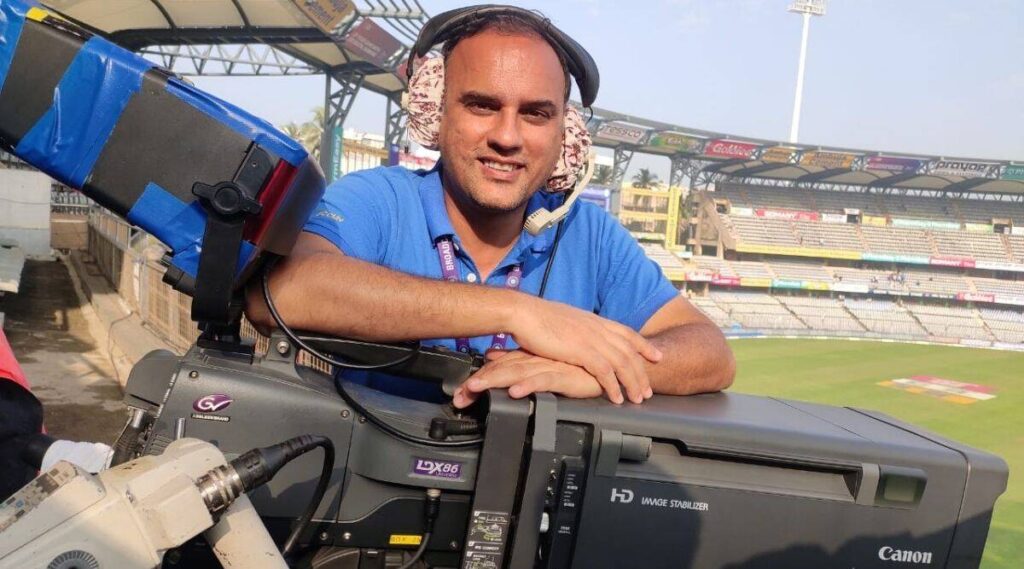
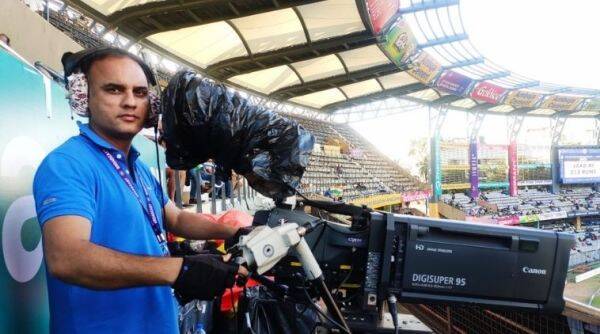
Taqi Raza has the unique distinction of being the camera person for Anil Kumble’s 10-for, as well as Ajaz Patel’s at Wankhede (Express Photo)
When Ajaz Patel twirled around in nervous excitement as the ball started to descend towards Rachin Ravindra, Taqi Raza cleansed himself of emotions and watched from the Grand stand at Wankhede stadium. He would give millions watching the game on television a peep into the mysterious art of a spinner with his spin-cam, the mechanical eye that reveals the ripping release and the revolutions of the ball across the 22 yards in slow-motion.
Now he held his breath and waited. Ravindra, who would later say how his peripheral vision had made him nervous as it had revealed his team-mates were already celebrating the historical moment, managed to safely pouch it. The crowd erupted, the commentators lost their heads, living rooms in New Zealand and even in India filled with joy but Raza struggled hard to check his emotions spinning out of control.
“Sadly I can’t show my emotions because if I express then I can’t concentrate and the world cannot see what is happening inside the stadium,” Raza told The Indian Express . The eye of the world can’t go blind in joy even on a moment that has only occurred thrice in the 144 years of cricket history. A tiny shake of a camera would deprive the viewers. Raza is a ‘slip’ cameraperson, beaming home the fingers of the bowler on the ball at release.
As rare as the epochal moment was, Raza has been there, done that. He had captured the incredible ten-for twice. He was there at Feroz Shah Kotla in 1999 when Anil Kumble snared 10 Pakistani batsmen.
In the company of a snake charmer. But we are getting ahead of the story. Here and now to Ajaz’s and his own tryst with destiny.
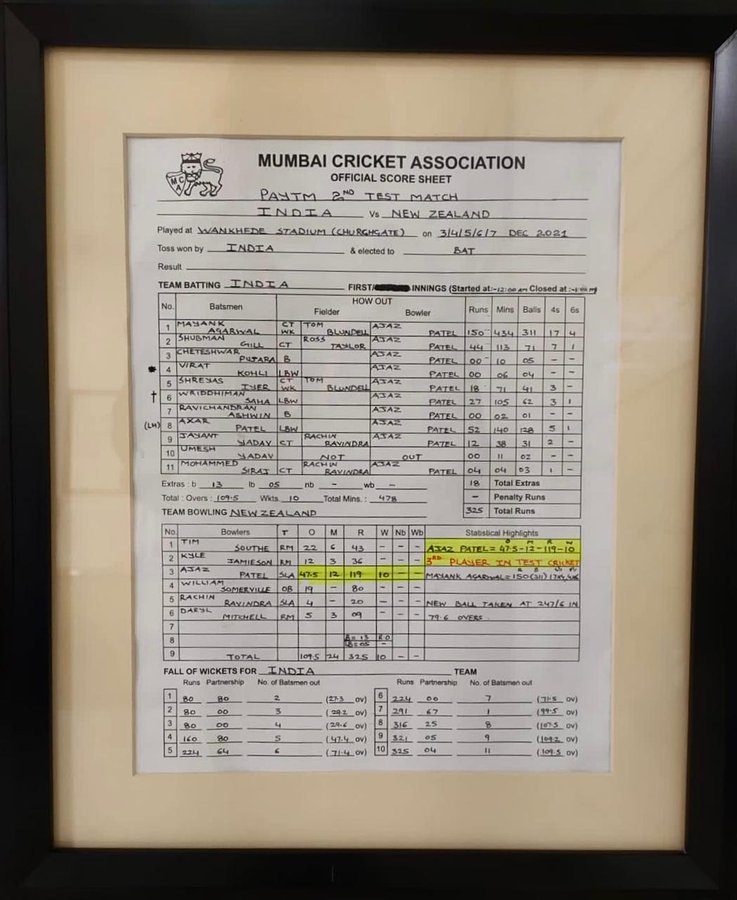
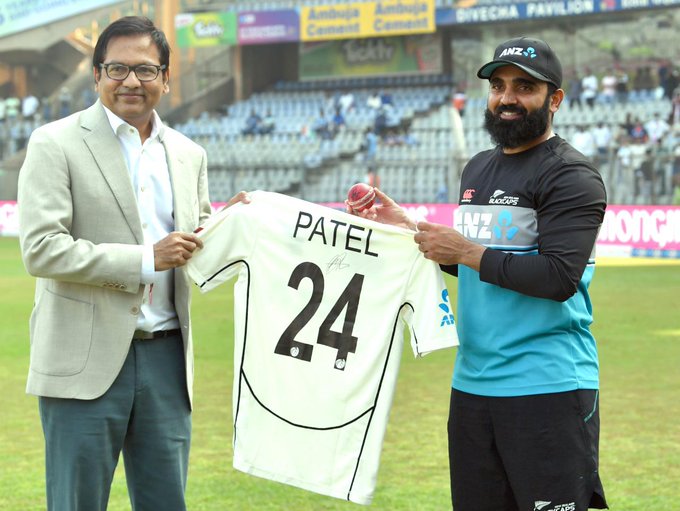
MCA President Dr Vijay Patil felicitated Ajaz Patel with #INDvNZ score sheet and momento. Ajaz handed over the ball and tshirt for the upcoming MCA museum
Ajaz Patel bagged 14 of the 17 Indian wickets to fall in the Mumbai Test He had picked up all 10 wickets in the 1st innings of the 2nd #INDvNZ Test
___________________
7, 8, 9, 10 countdown
Well before the historic moment, Raza had begun the countdown in his mind. 7 down, 8 down, hoping for a historical reprise. “When eight wickets fell down, I asked myself will I have a chance to see history again? I’m the only one in the camera crew who has recorded this achievement before while everyone has retired,” he says. “As a cameraman we don’t have liberty to talk to anyone. Our job demands lots of concentration.” So the internal monologue continued. “When Ajaz took ten wickets, I was overjoyed.”
22 years back, he had witnessed another ball travelling across 22 yards towards history. That memory rebooted now. It was a turbulent time. The political party Shiv Sena had warned of dire consequences if Pakistan were allowed to play at home in India. Uncertainty, tension, fear was in the Delhi air. Raza recalls how the Delhi police had locked all the gates of the stadium to prevent the protestors.
However, the Delhi police also feared the humans might outsource the vandalism to reptiles.
“There was fear that protesters could send snakes inside the ground, so I remember the authorities had kept a snake charmer near the boundary line, incase snake entered the playing area, they could catch it.”
In the end, the only spitting venom that stung the Pakistanis in Delhi winter was released by Kumble. Ajaz’s date with history was captured by 35 cameras. Kumble had got eight. One of which was in the hands of Raza. “Just 8. Now we have around 75 units compared to 30 earlier. There was no technology earlier,” Raza says.
Five years before Kumble had Wasim Akram poking to VVS Laxman for his glorious moment under the smoggy sun, Raza began his job as a technician. He has travelled the world since then, covered all cricket World Cups, including India’s triumph in 2011, trained his camera at Tiger Woods at golf courses, spent time capturing blurs at Formula 1 races, beamed Pro-Kabbadi to homes, and spent his life in various sporting arenas.
He has evolved; so has the broadcasting technology. “In 1999 there was no DRS and Ultra Edge, too much relied on human judgement but now with these tools, bowlers have more chances which wasn’t the case earlier.”
It’s a no-brainer choosing between Kumble and Ajaz’s achievements but the question is asked nevertheless. The answer comes quicker. “For me Kumble’s performance will always be on a higher plane. First it came against Pakistan and the team won because of him. Kumble was under more pressure because he was playing at home. I’m not taking away credit from Ajaz but Kumble was more special for me,” Raza says.
Anil Kumble 10 wickets record against Pakistan
Tough job
The job of the human behind the camera is one of the most difficult ones in the circuit. The pre-game rigging and testing of equipment and the match-day fatigue. Nature might yell, leave alone call, but they can’t abandon their post.
Raza chuckles at a memory from the 2019 World Cup in England. The body screamed for a release at the toilet, but he had to resist. “I somehow controlled and waited.”
Good he did as he could catch priceless moments of the World Cup . “I saw how Virat Kohli was consistently looking to his left side. First I felt there might be some family members seated there but between breaks, Kohli ran towards the stands and told the crowd not to boo Steve Smith, who had come after being banned by Cricket Australia after the ball tampering saga.” Eagle eyed, as ever, Raza didn’t miss the moment.
“I was the only cameraman who got that shot, it showed the other side of Kohli,” he says.
Taqi Raza (Express Photo)
More often than not, it’s a lonely job in some ways though in some stadiums, they aren’t left on their own. “In Multan stadium in Pakistan, Virender Sehwag used to come to our area, which was near the dressing room, and chat up,” Raza says. The new stadiums with segregated spaces don’t allow for that coziness. They are isolated in their corners. They do what the producer tells them to do. They stand for hours under baking sun or chilly winter to get us as close to the action. They stand there, in a cocoon, trying to drag us into the heat of the battle.
Jim Laker, 1956. Anil Kumble, 1999. Ajaz Patel, 2021. And one man with an umbilical cord to two of them – Taqi Raza. Remember the name.
source: http://www.indianexpress.com / The Indian Express / Home> Sports> Cricket / by Devendra Pandey, Mumbai / December 07th, 2021