The 45-year-old had been languishing in jail awaiting capital punishment with all hopes quashed.
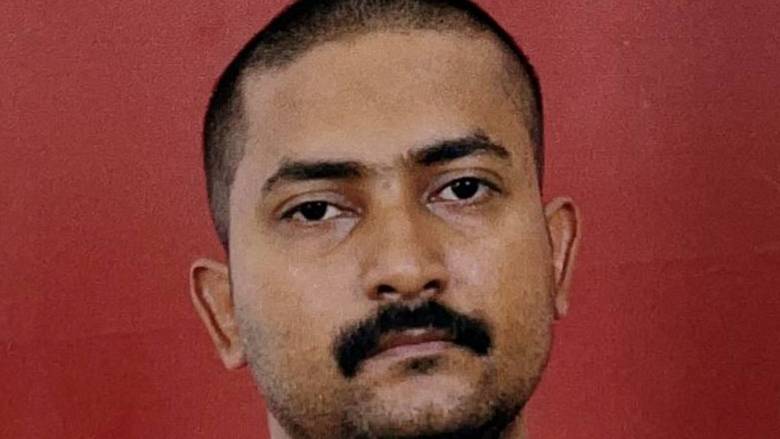
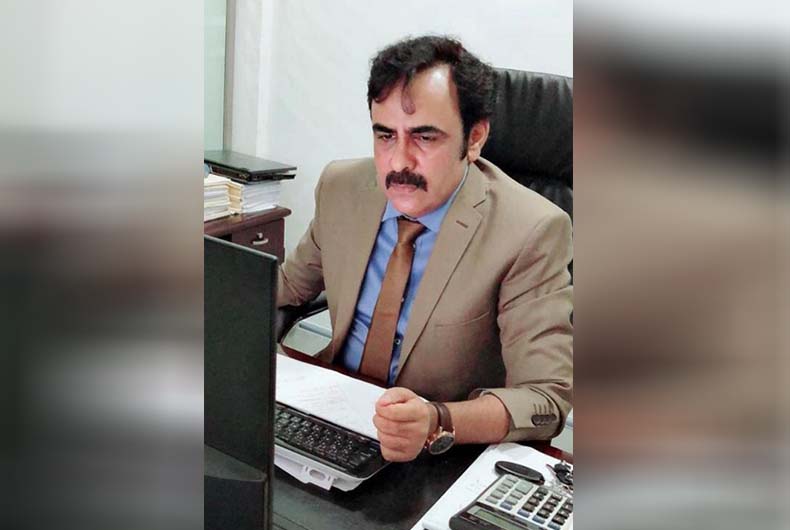
It is quite literally a second lease of life for Becks Krishnan. The Indian expat, who was on death row in the UAE for causing the death of a young boy in a road accident, can finally see the outside of a jail cell following the intervention of NRI businessman M.A. Yusuff Ali.
The 45-year-old had been languishing in jail awaiting capital punishment with all hopes quashed. But he got a second lease of life, thanks to the efforts of Yusuff Ali, chairman of Lulu Group.
Krishnan was sentenced to death by the UAE Supreme Court after he was found guilty of causing the death of a young boy. He had rammed his car into a group of kids in September 2012.
Ever since, his family and friends have been relentlessly trying for Krishnan’s release without any success, especially as the victim’s family had already gone back and settled in Sudan, putting an end to any kind of discussion or pardon.
As a last attempt, the Krishnan family approached Yusuff Ali, who went about getting the details of the case and got in touch with all stakeholders. At one point, Yusuff Ali flew down the victim’s family from Sudan to Abu Dhabi for a month and held extensive discussions to arrive at a compensation amount and secure pardon for Krishnan.
Ultimately, in January this year, the victim’s family agreed to pardon Krishnan, and Yusuff Ali paid Dh500,000 as compensation in the court to secure the early release.
source: http://www.khaleejtimes.com / Khaleej Times / Home> News> Crime and Courts / by James Jose, Dubai / June 03rd, 2021
In 1984, Dr Ismail started his first polyclinic in Karama, which soon became a familiar name for patients from South Asian communities in Dubai.
UAE resident Dr Ismail Kazia and his family are among the latest recipients of the coveted Golden Visa, thanks to his service in the field of medicine.
Hailing from Bhatkal, a coastal town in the state of Karnataka, India, Dr Ismail came to Dubai in 1982, at a time when only a few localities existed, together with a few hospitals and clinics. Karama has been his home ever since.
The doctor took up a post at an American clinic — but though he was “offered a good salary compared to other hospitals”, he said he soon realised there was a specific need for a clinic in Karama.
In 1984, he started the Dr Ismail Polyclinic in Karama, which soon became a familiar name for patients from the Indian, Pakistani, Bangladeshi and Nepali community in Dubai.
“We are very blessed and thankful for the Golden Visa, which is valid till May 2031,” he said, adding, “A few doctors in my hospital have also been granted the visa for their service during the pandemic.”
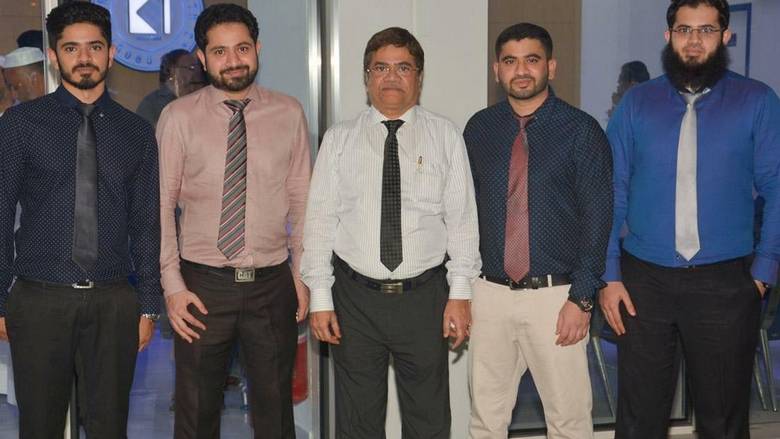
Dr Ismail has four sons, all of whom have followed him into the medical profession to become doctors themselves.
The eldest, Dr Mohammed Dawood Kazia, holds a Doctorate of Medicine (DM) in Gastroenterology, while his second son, Dr Mohammed Nooh Kazia, works as an endodontist at their polyclinic in Karama.
The third son, Dr Sheesh Kazia, is presently working at Kanachur Medical College in Mangalore, Karnataka — while his younger brother, Dr Mohammed Yusha Kazia, completed his MBBS recently.
Dr Ismail also has a son-in-law, Dr Anas Mohtesham, who works at the Royal Wing of Rashid Hospital.
The oldest, Dr Dawood Kazia, said: “It’s a blessing to work here in Dubai. My brothers, who are presently in India, have also been granted Golden Visas by the authorities. My younger brother Dr Sheesh will also join us in the coming days. We thank the authorities for recognising the efforts of doctors.”
Dr Ismail now has a day surgical centre in Karama along with six polyclinics at various locations in Dubai. He also has clinics at labour camps in Al Quoz, Jebel Ali and Sonapur, which are dedicated to the treatment of labourers at minimal charges.
He has reportedly offered his services to people of over 80 nationalities, something he considers a bit of a personal achievement, given that there are over 200 nationalities residing in Dubai.
ayaz@khaleejtimes.com
source: http://www.khaleejtimes.com / Khaleej Times / Home> News / by SM Ayaz Zakir, Dubai / June 06th, 2021
Young Eshal’s great achievement was recorded in the International Book of Records of 2021.
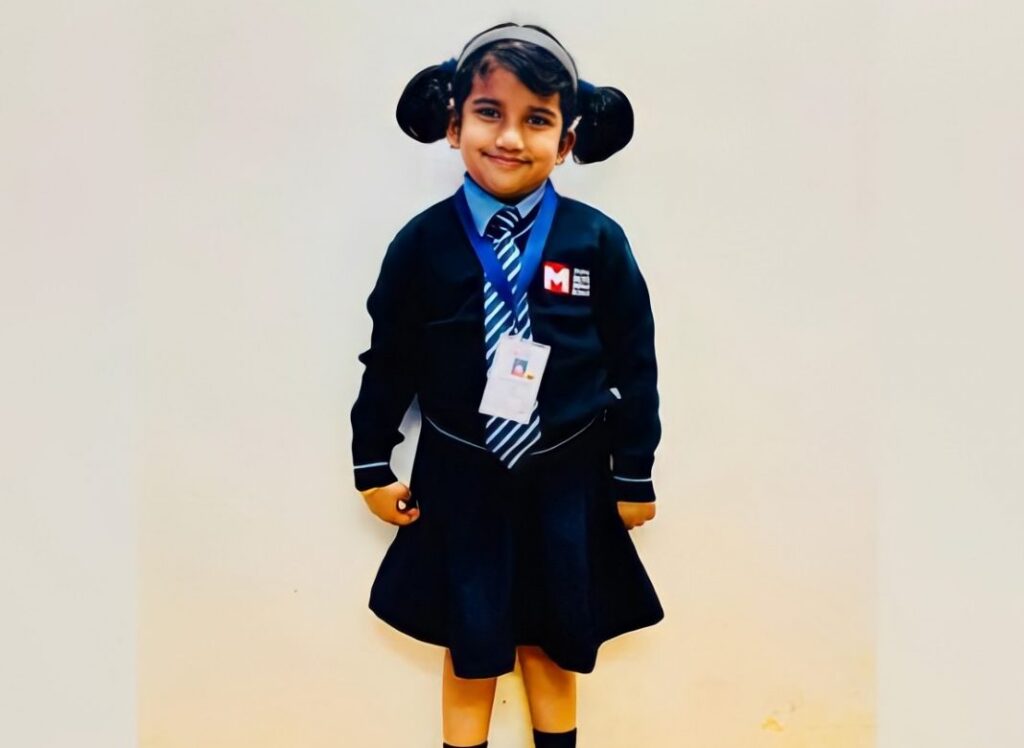
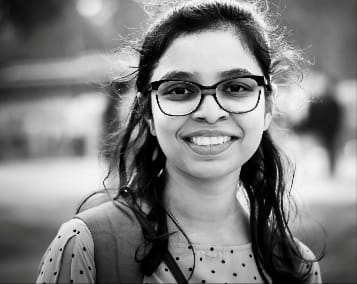
At just four years old, little genius Eshal Marwa Firos Khan set the world record for reciting all the elements in the Periodic Table in just 2 minutes and 28 seconds.
The kindergartener at Doha Modern Indian School didn’t only learn all the elements of the periodic table by heart, but also recited them in record-breaking time, earning her a spot in the International Book of Records on March 26, 2021.
“The World Record of “FASTEST RECITATION OF PERIODIC TABLE BY A KID” is achieved by ESHAL MARWA FIROS KHAN on 26th March 2021 from Doha, Qatar,” the organisation said.
“4 years 8 months Eshal recited all the elements of periodic table in 2 minutes 28 seconds and has set a new world record for International Book of Records,” it added.
Now, Eshal holds the record for “Fastest Recitation of Periodic Table By a Kid,” making her family and wider community in Qatar proud.
But that’s not the little girl’s only achievement.
Eshal is also documented in the India Book of Records and Champions Book of Records for identifying 55 critical human body parts, eight planets of the solar system, and 14 prime ministers of India in the shortest possible time.
Highlighting the girl’s achievement, the school extended their gratitude and pride towards her teachers for their support and guidance.
“On behalf of our esteemed Principal, Senior Leadership Team, Management, Staff and Students of DMIS we wish her further success and greater glory in the years to come,” said DMIS.
source: http://www.dohanews.co / Doha News / Home> Family Life / by Menatella Ibrahim / May 02nd, 2021
Born on 21 October 1933, Shakeb grew up in Hyderabad and Aurangabad . He received a BA in Political Science from the Osmania University , and an MA from the Aligarh Muslim University in 1956. He completed his doctorate on Relations of Golkonda with Iran from Deccan College in 1976.
Shakeb together with Vasanth Kumar Bawa, setup the first-ever Hyderabad Urban Development Authority which is now referred to as Hyderabad Metropolitan Development Authority.
In 1962, he was appointed as an archivist at the State Archives of Andhra Pradesh in Hyderabad. Whilst here he created the Mughal Record Room. His publications include Mughal Archives Vol I: A Descriptive Catalogue of the Documents Pertaining to the Reign of Shah Jahan, in 1977 which remains critical reading for those seeking to learn how to read administrative documents in Indo-Persian. He went on to write many publications for The British Library , State Archives Andhra Pradesh and other repositories, universities, and auction houses.
From 1980 to 1987, Shakeb taught Indian history and the history of Indo-Islamic art and culture in the Department of Indology at the School of Oriental and African Studies, University of London.
He later on worked as a consultant for Christie’s in their department of Islamic and Indian Art as their leading expert on Persian and Arabic manuscripts for 30 years.
He also continued to work on Indo-Persian manuscripts and Mughal documents and catalogued such manuscripts in the British Library, such as the Batala Collection of Mughal Documents 1527-1757 in 1990. Throughout this time he supervised many doctoral researchers in the fields of Mughal history, Deccan studies and Urdu and Persian literature.
Shakeb was also the Director of Urdu teachers training at Middlesex University up until 1998.
He also played a key role in setting up the Haroon Khan Sherwani Center for Deccan Studies at Maulana Azad National Urdu University and had been a member of the center’s first advisory board. He was considered a pioneer, having helped lay the foundations of Deccan Studies
Shakeb was an authority on various poets from the Indian subcontinent and Persia, writing books and organising and speaking at conferences on Bedil, Amir Khusrau, Iqbal, Ghalib and Rumi .
Shakeb died in London on 20 January 2021, aged 87. He is survived by his wife, Farhat Ahmed, two daughters, a son and nine grandchildren.
source: http://www.indianmuslim.org.uk / Indian Muslim UK / Home> Obituary / by Mohmed / April 03rd, 2021
Aligarh Muslim University (AMU) has seen unprecedented number of cases and deaths during the second wave of Coronavirus pandemic
Bareilly , UTTAR PRADESH / Jubail, SAUDI ARABIA :
Rehan Alam Siddiqui
Aligarh:
At a time when universities across the country are been adversely affected by the pandemic, Rehan Alam Siddiqui, a Non Resident Indian (NRI) based in Jubail, Kingdom of Saudi Arabia (KSA) has donated Rs 15 lakhs to Aligarh Muslim University (AMU) to set up an oxygen generation plant at its Jawaharlal Nehru Medical College (JNMC).
Aligarh Muslim University (AMU) has seen unprecedented number of cases and deaths during the second wave of Coronavirus pandemic which is yet to be brought under control.
As per the last update , as many as 18 working faculties besides a number of other retired professors and serving employees have become victim of the deadly virus so far.
“Alarming death toll”
The alarming death toll has sent shock-waves leading to apprehensions that a deadlier ‘AMU strain’ of the virus is wreaking havoc. It was also reported that for the first time in the history of the university, the AMU cemetry is running short of space and old graves are now being dug up to bury the dead.
Against this backdrop the university had issued appealed to the government and other public and private organisations and individuals for help and support.
True well wisher of AMU”
Rehan Siddiqui obliged and donated the huge sum to his alma mater. Extending gratitude on the largesse, AMU Vice Chancellor, Prof Tariq Mansoor said:
“Mr Rehan is a true well wisher of the university, whose donation will be very beneficial to upgrade the existing health infrastructure for an effective Covid Response”.
“We at AMU are making all possible efforts to contain the spread of this pandemic and Mr Siddiqui’s donation will go a long way in serving the sick and the distraught with the lifesaving oxygen supply”, he added.
Born and brought up in a middle-class family in Bareilly (UP), Rehan Siddiqui has emerged as one of the fastest growing businessmen and industrialists in the Eastern Region of KSA.
Rehan Siddiqui is promoting better relations of the Indian community with the Indian consulate in KSA. He also organises cultural and academic programmes.
“Rs 3L donation by TSA”
In another development, members of the Technical Staff Association (TSA), Aligarh Muslim University (AMU) donated Rs 3 lakhs to facilitate Medical Attendance Scheme (MAS) to purchase equipments to be used for the treatment of registered employees and to strengthen the MAS Covid Response team.
The cheque was handed over to the university officials after the TSA members, Faisal Rais (TSA President), Abid Ali Zaidi (TSA Secretary General) and Kamran Husain (TSA Treasurer) met the Vice Chancellor, Prof Tariq Mansoor and Registrar, Mr Abdul Hamid (IPS).
source: http://www.ummid.com / Ummid.com / Home> India / by ummid.com News Network / May 31st, 2021
This is the eighth part of the series called `Scientist Says’, where we bring for our readers significant research works of young scientists in various fields.
Dr. Hina Khan started her research journey in year 2014 with Prof. Tushar K. Chakraborty research group, Department of Organic Chemistry, IISc Bangalore. After completing her PhD in July 2019, she worked as a Research Associate in the same lab for a year. In September 2020, she joined a Biocon-group company as a Research Investigator where she worked in collaboration between Bristol Myers Squibb and Syngene International. Currently, she is a postdoctoral fellow at the University of Pittsburgh, United States. She shares her significant research work with Rashida Bakait of India Tomorrow. Here are the excerpts of the interview.
Q. Please briefly explain your research.
Ans. Chemistry is frequently described as the central science and chemical synthesis lies at the heart of the subject. Synthetic organic chemistry underpins several areas of chemistry, including drug discovery, chemical biology, materials science, and engineering. However, the practice of total synthesis of natural products has a rich history of achievements and benefits to science and society that ranges from replicating the molecules of nature in the laboratory to the preparation and production of pharmaceuticals, developing new synthetic strategies and methods, and also synthesizing designed molecules for biology and medicine.
In contributing to the everlasting field of “the art of making molecules”, my research work mainly focuses on the discovery of new organic transformations which are of significant interest to the fields of medicinal chemistry and pharmaceutical development and also uncovering the practical application of Titanocene (III)monochloride in the synthesis of architecturally challenging and biologically important natural products and their inspired synthons.
Q. When did you start and complete your research?
Ans. I started my learning to be a researcher in Aug 2014 with Prof. Tushar K. Chakraborty at IISc, Bangalore, submitted my doctoral thesis in July 2019, and defended the thesis in March 2020. Later in the year 2020, I joined Biocon-group company as a research investigator and worked till April 2021. Currently, I am working as a postdoctoral fellow in University of Pittsburgh, United States.
Q. What was the objective of your research?
Ans. With the ever increasing demand of developing new, efficient, and cheaper methods to construct biologically relevant molecular frameworks, my research aims on the design and developing new synthetic strategies for concise entry to important functionalized bioactive synthetic scaffolds/target.
Q. What were the findings of your research?
Ans. The research findings revolves around two main areas:
I : In developing a synthetic methodology which is flexible and provide single potential route for the diastereoselective construction of diversely substituted 1,3-X,N-heterocyclic variants as valuable scaffolds for natural products and pharmaceuticals, in a diversity-oriented approach. The methodology is amenable for a broad range of substrates based on a metal-free approach.
II. In exploring the synthetic utility of Titanocene(III)monochloride-promoted radical cyclization protocol on to the findings:
a) We have developed a concise and unified approach to gain access to handful iridoid monoterpenes that exhibit wide range of pharmacological activity.
b) We have portrayed a synthetic route to a bicyclic lactone containing a bridgehead hydroxy group, a structure that is present in many natural products of biological and medicinal relevance.
c) Furthermore, an efficient route for the construction of pyrrolo/piperidino[1,2-a]indole derivatives have been developed.
During my research endeavour I have also been involved in the synthesis of sugar amino acid (δ-SAA) based linear lipopeptides (Almiramide analogues) that were screened for their biological activities, viz. antileishmanial and anticancer and the extension of this work is currently active.
Q. What was the conclusion of your research?
Ans. Driven by the ever-increasing demands for small functionalized bioactive scaffolds and the need of broadening the toolbox of unexplored chemical space, our designed strategy provides a flexible route to construct the unique five/six membered 1,3-heterocycles by exploring the synthetic utility of α-phenyl-β-enamino ester following a Mitsunobu-Michael reaction sequence. Next, taking advantage of Cp2Ti(III)Cl-mediated reductive epoxide opening-cyclization, we have developed an expedient and the most concise and unified approach till date in the total synthesis of iridoid monoterpenes in an enantiomerically divergent manner starting from (+)-β-citronellene. Further expansion of the strategy was made to fix hydroxylated bridgehead chiral centre, in the fused/bridged bicyclic lactone, a structure that is present in many natural products of biological and medicinal relevance. Furthermore, as part of our ongoing research interest, we have successfully extended yet another practical application of Ti(III)-mediated epoxide opening-cyclization protocol to devise a simplified route to a pyrrolo/piperido[1,2-a]indole framework, featuring many useful functionalities on the saturated ring, which is ideally suited for further manipulation.
Q. What kind of challenges did you face?
Ans. A doctorate is a long project so your motivation will dip and peak along the way. In multi-step synthesis, designing a synthetic route to the target molecule, optimizing every step of the synthetic plan with the best possible outcome, revising the plan, if needed and starting all-over again is really a burnout process. I would say you can learn more from your failures than successes. They are often catalysts for positive change in the long term. And remember one thing that you are training to be a researcher.
Q. Any scholarships or awards for research?
Ans. For my Ph.D. and Research Associateship (Aug 2014 – Jul 2020), I have received funding from Indian Institute of Science. I have received award for my research work in Indian Peptide symposium, in 2017. Currently, for my postdoctoral program I am receiving scholarship from University of Pittsburgh, United states.
Q. How do you think your research would be beneficial to the industry or society?
Ans. Organic synthesis, the art and science of constructing substances, natural or designed, in the laboratory to replicate the molecules of living creatures, and create other molecules like them, is a remarkable development in human history. Organic synthesis in general, have led to an impressive host of benefits to society, including useful products ranging from pharmaceuticals, dyes, cosmetics and agricultural chemicals to diagnostics and high-technology materials used in computers, mobile phones and spaceships. My research on designing and developing synthetic route to construct heterocycles, terpenoids, alkaloids will provide a new synthetic approach and scope to replicate some of the most intriguing molecules of living nature in the laboratory and apply the developed synthetic strategies to construct variations of them to facilitate biology and medicine.
Q. Any new research you are working on now.
Ans. My current research at University of Pittsburgh, as Post-doctoral fellow is to rationally design and synthesize more efficacious 2-Pralidoxime analogs (2-PAM) which is the only therapeutic countermeasure that is approved by the United States Food and Drug Administration for treating Organophosphorus nerve agents (OPNA) poisoning. However, 2-PAM is not centrally active due to its hydrophilicity and resulting poor blood−brain barrier permeability; hence, these deficiencies warrants the need for antidotes with the development of more hydrophobic analogs.
Q. How do you think your research can be carried forward?
Ans. Taken together, the simplicity and efficiency of the designed strategies can further be adopted to obtain other enticing heterocyclic variants, highly functionalized iridoids/cyclo-pentanoid natural product, also having bridgehead hydroxyl group in a bicyclic lactone, [a]-annulated indole frameworks, which are beneficial to the science of organic synthesis for further innovative applications.
Q. Please give few tips and suggestions to the budding scientists.
Ans. Research is a never-ending journey of learning something new, honing your problem-solving skills and challenging yourself in new ways. I would advise the young scientists to stay curious and stay determined. Science is not easy, become comfortable with failure because a major component of the scientific process is trial and error. Failure is okay! Failing provides some of the biggest learning opportunities and finding new scientific discoveries.
It is not about perfection but curiosity and perseverance. Keep exploring, keep experimenting, keep learning, keep improving. Avoid burnout and look after your mental health to make you more productive in the long run.
Remember to take five-minutes brain break by walking away for a moment, rest that brain and then resume.
source: http://www.indiatomorrow.net / India Tomorrow / Home> Education> Featured / by Rashida Bakait, India Tomorrow / May 19th, 2021
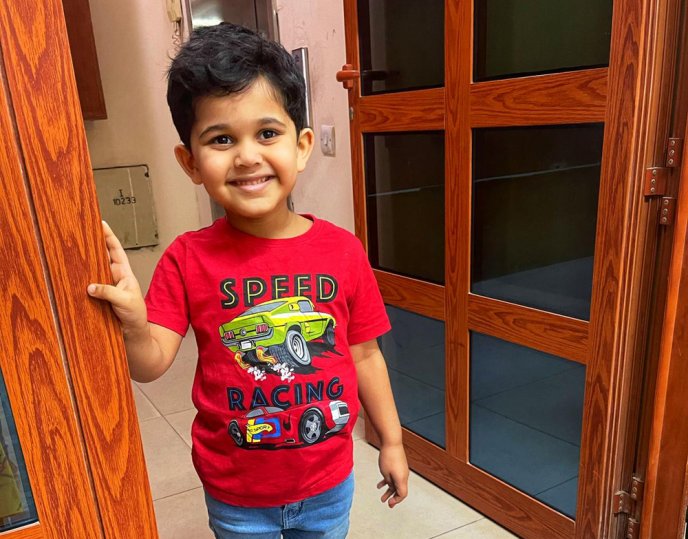
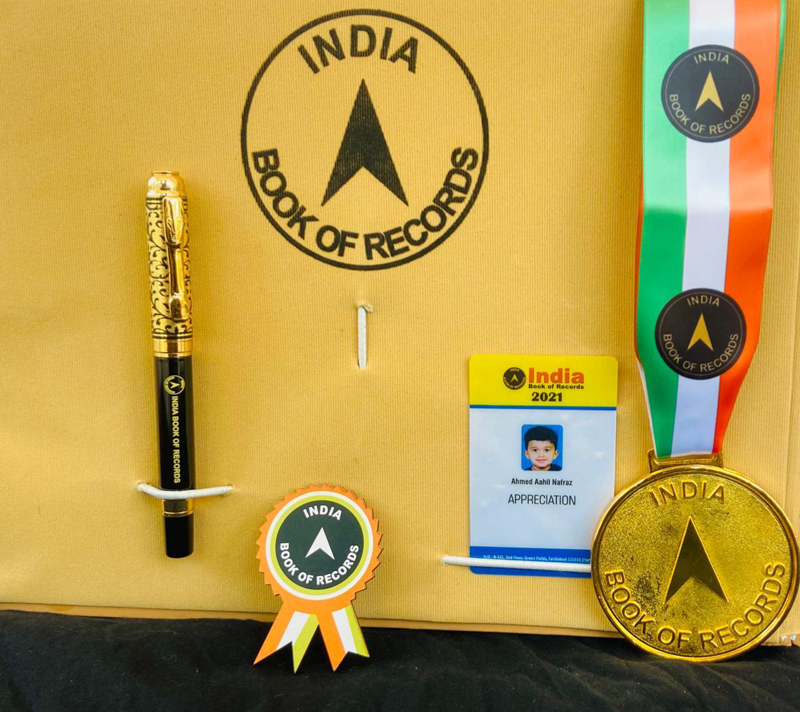
Four-year-old Qatar resident gets an entry in India Book of Records for identifying maximum number of car logos in 30 seconds.
Ahmed Aahil Nafraz, a KG2 student of Noble Indian Kindergarten, also answered general knowledge questions regarding India and Qatar, various questions regarding sense organs, animals, professions etc on April 13, 2021.
He is now waiting for an entry in International Book of Records.
Ahmed was interested in cars from a very early age and with help from family members started identifying and memorizing various logos as a hobby and with help of family friends he applied for the record and easily achieved the same.
source: http://www.thepeninsulaqatar.com / The Peninsula / Home> Doha Today> Community / by The Peninsula Online / May 10th, 2021
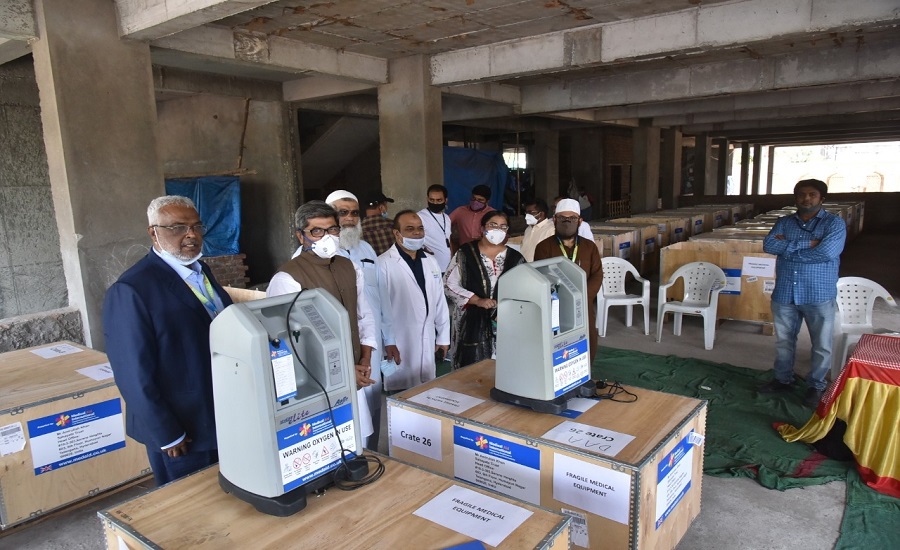
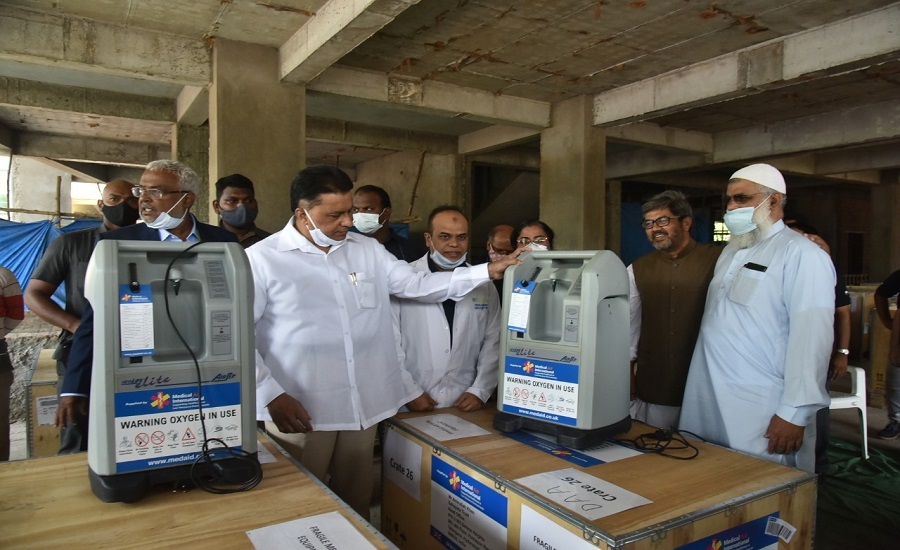
The first plant is expected to be up and running in Hyderabad next month,” Prof Amirullah Khan, coordinator of Sahayata Trust informed. — IANS
The NGO is also receiving 400 high quality oxygen concentrators from different charities in the United Kingdom and the United States which is described as the world’s largest donation of oxygen concentrators.
Hyderabad :
Sahayata Trust, a Hyderabad-based NGO, plans to set up four medical oxygen generation plants to cater to the requirements of hospitals treating Covid patients.
Each plant will have a capacity of 4,500 litres per day and will come up at a cost of Rs 1 crore each. Two plants will come up in Hyderabad and one in Gujarat. The NGO is yet to decide on the location for the fourth plant.
“The first plant is expected to be up and running in Hyderabad next month,” Prof Amirullah Khan, coordinator of Sahayata Trust, told IANS on Monday.
The development economist said the NGO would be importing the plants. He said these plants would meet the requirements of various hospitals treating Covid or other critically ill patients.
He pointed out that the NGO is also receiving 400 high quality oxygen concentrators from different charities in the United Kingdom and the United States. He described it as the world’s largest donation of oxygen concentrators.
The devices will be allocated on a per-need basis to different NGOs across Hyderabad, Lucknow, Allahabad, Delhi, Ranchi, Bhopal and other cities. — IANS
The first consignment comprising 170 devices arrived in Hyderabad from the UK by a special flight of Qatar Airways on Friday. The second consignment of 270 concentrators is scheduled to arrive next week.
Sahayata Trust has started distributing concentrators to different healthcare organisations in Telangana and other states. “The relief effort will add oxygen to the efforts of NGOs scrambling to procure oxygen to save as many lives as they can,” said Sahayata Trust CEO Syed Aneesuddin.
The devices will be allocated on a per-need basis to different NGOs across Hyderabad, Lucknow, Allahabad, Delhi, Ranchi, Bhopal and other cities. The organisation included Access Foundation, Safa Baitul Maal and SDIF.
Different NGOS across international borders have joined hands for the noble cause at a time when several lives are being lost across India due to shortage of oxygen cylinders and oxygen concentrators during the second wave of Covid-19.
Donation of concentrators is a meticulously coordinated relief effort by UK-based charities managed by the Indian diaspora including Maahir Charity, Deccan Medical College Alumni Association, and Medical Aid in coordination with the US-based Indian Muslim Relief & Charities (IMRC), the parent body of Sahayata Trust.
Syed Aneesuddin thanked Hyderabad Member of Parliament Asaduddin Owaisi who played an important role in helping the consignment reach India within a short span of time.
“These are high quality oxygen concentrators with dual outflow of oxygen enabling two patients to use the same machine at a time. We are training people to use the device using the device manuals received from England. This is a daunting task to coordinate the allocation as well as train and equip the personnel to handle the device in a very short time, especially since every passing minute increases danger of loss of life for people struggling to find oxygen support,” said Amirullah Khan.
India needs about one lakh oxygen concentrators. “The government has been able to import only 1000 from the USA, which means there is a deficit of 99%. In such savaging times, the import of 400 units is a small but significant effort in saving more lives”, said former civil servant Prof Amirullah Khan.
He thanked the state and central governments for waiving the import duty on the equipment. He also thanked Chief Secretary Somesh Kumar for taking up the matter on an urgent basis and Commissioner Commercial Taxes Neetu Prasad who went out of the way working late at night to grant ‘real-time approval’. Due to her personal interest in expediting the process, the consignment was ready for pickup within three hours after arrival. — IANS
source: http://www.clarionindia.net / Clarion India / Home> Editor’s Pick> India / by IANS / May 24th, 2021
“If you try to understand what Islam is and what Islam teaches, it’s just the opposite of what you hear in the media,” said Dr. Zia Usman, owner of Rogers Park Animal Hospital in Chicago.
Dr. Zia Usman is a rarity within the U.S. veterinary profession.
Not only does the Indian-born and -trained veterinarian own a companion animal practice on Chicago’s North Side, Dr. Usman is also a Muslim.
Such a combination is unusual among first-generation immigrants who are followers of Islam, according to Dr. Usman’s colleague, Riaz H. Siddiqi, a professor at Truman College in Chicago and president of the Muslim VMA.
The association believes approximately 500 Muslim veterinarians are in the United States. Dr. Siddiqi thinks most of them are employed in academia, research, industry, or government, where they are likely to be inspectors in slaughterhouses. Few Muslim veterinarians in the United States work with pets, he said, but this is more a matter of economics, not any Islamic taboo.
“Many of us who come here, we have families, and we’re in a hurry to find a job quickly, and we don’t have the time or money to go through the certification process,” Dr. Siddiqi explained.
Growing up in India, Dr. Usman was expected to become a physician like his father, yet his “heart was inclined toward animals,” he said, so he enrolled at the Ranchi College of Veterinary Science and Animal Husbandry in Bihar.
Two years after graduating in 1970, Dr. Usman immigrated to America. His first job was as a laboratory animal technician at the University of Illinois Biological Resources Laboratory in Chicago.
In time, Dr. Usman passed the AVMA Educational Commission on Foreign Veterinary Graduates certification program, became assistant director of laboratory animal resources at Northwestern University College of Medicine, and got his veterinary license. In 1992, he left laboratory animal medicine to open a private practice in Chicago, allowing him to work with pets and educate the public about Islam.
The Muslim community is well-established in Chicago, but Sept. 11 raised its visibility and put Islam in a negative light. “Now people know more about Muslims and Islam, and, unfortunately, they’re not knowing in the proper way,” Dr. Usman said. The media portrays Muslims as terrorists when “it’s just the opposite,” he said.
Muslims understand why Islam is one of the world’s fastest-growing religions, according to Dr. Usman. Islam, he said, is a peaceful religion that details man’s obligations to animals, especially the slaughter of food animals. Muslims are admonished not to slaughter an animal in front of other animals, for instance, and to end an animal’s life quickly and with as little pain as possible. There are even instructions on how a Muslim is to hunt humanely. “Every step of the way, we have religious guidance,” Dr. Siddiqi noted.
A common misconception is that Muslims shun dogs as unclean animals. Neither Dr. Usman nor Dr. Siddiqi is an Islamic scholar, but they say their faith does not prohibit Muslims from dog ownership. In fact, Dr. Usman owned a German Shepherd Dog as a teenager. “That was my baby,” he recalled. “I would take care of him and cook for him.”
Dr. Usman cited a popular account in the Hadith—a collection of narratives based on the words and deeds of the prophet Muhammad and, in addition to the Quran, one of Islam’s primary sources for instruction. According to the story, a man took pity on a thirsty dog by giving it water from a shoe. “Allah approved of his deed and made him to enter Paradise,” the story goes.
When Dr. Usman came to America, he didn’t know what to expect. So in 1999 he helped found the Muslim VMA to give Muslim veterinarians coming to the United States information he didn’t have. In addition to providing career advice, the association helps Muslims find halal food, that is, sources providing food that complies with Islamic dietary laws. The Muslim VMA wants to eventually start its own halal certification program.
Dr. Siddiqi said the association is planning to hold a meeting in Chicago of Muslim veterinarians and is hoping to network with human physicians to strengthen efforts at preventing the spread of zoonotic diseases.
source: http://www.avma.org / AVMA / Home>> JAVMA News / February 10th, 2010 / by R Scott Nolen / February 01st, 2010
Dr. Shamsheer Vayalil, Chairman and Managing Director of VPS Healthcare, donated AED1 million to the ‘100 Million Meals’ campaign, the first humanitarian campaign of its kind in the Arab world to provide food parcels for disadvantaged individuals and families across 30 countries in the Middle East, Africa, Asia, Europe and South America this Ramadan.
Dr. Shamsheer Vayalil’s contribution is part of the large response from companies, businessmen and community members in the UAE and abroad in support of the campaign, which was announced by His Highness Sheikh Mohammed bin Rashid Al Maktoum, Vice President, Prime Minister and Ruler of Dubai.
Given the influx of donations, from philanthropist individuals and companies, the ‘100 Million Meals’ campaign fully achieved its goal of 100 million meals within 10 days of its launch.
Dr. Vayalil said, “At VPS Healthcare, we are proud and privileged to be a part of this distinguished programme. It is in line with our motto to giving back to society and helping the needy.”
The 100 Million Meals campaign is managed by Mohammed bin Rashid Al Maktoum Global Initiatives, in cooperation with the UN World Food Programme, Mohammed bin Rashid Al Maktoum Humanitarian and Charity Establishment, Food Banking Regional Network, and local food banks and humanitarian and charity institutions in beneficiary countries.
Donations to the campaign can be made on www.100millionmeals.ae, by contacting the campaign call centre on the toll-free number 8004999, via the designated bank account through Dubai Islamic Bank (AE08 0240 0015 2097 7815 201), and by sending the word “وجبة” in Arabic or “Meal” in English by SMS on specified numbers via the Du or Etisalat networks in the UAE.
source: http://www.wam.ae / Home> Emirates> English / April 24th, 2021