Category Archives: NRI’s / PIO’s

Hyderabad boy’s life holds spotlight in London

Hyderabad, TELANGANA :

Mohammad Ali Baig in a scene from 'Under an Oak Tree' in London
Mohammad Ali Baig in a scene from ‘Under an Oak Tree’ in London

Hyderabad :

A play based on a Hyderabadi palace set in the mid-19th century has taken centre stage in London. The play’s premier attracted connoisseurs of theatre and enthusiasts of Hyderabadi history, drama and heritage.
“Under an Oak Tree”, presented by Hyderabadi theatre revivalist Mohammad Ali Baig, is based on the story of a boy born in the 19th century Ahmed Bowla Bagh Palace built by Nizam V Nawab Afzal Jah Bahadur. The play was produced by Qadir Ali Baig Theatre Foundation. The premiere show was sold out one week before the play was staged.

“The hour-long bio-play retraces the protagonist’s journey from the seclusion of a 19th century palace spread over 100 acres with a 100-horse stud farm, to the glitzy world of advertising and ultimately, to the intense spotlight of theatre, getting him one of the highest civilian honours of the country. The play aptly presents the changing political and social scenario in a post-Independence, post-Privy Purse era of the princely state of Berar and Deccan and consequently, the changing times,” Mohammad Ali Baig told TOI.

He said the play beautifully captures the story of a boy growing into adolescence without any friends, where the next neighbour was 5km away. The boy had more ponies than toys to play with. Written by Noor Baig, the play was directed by Mohammad Ali Baig. He also acts in it.

Mohammad Ali Baig has presented his plays earlier in Turkey, US, Canada and UK, taking Hyderabadi heritage to the global spotlight. The play is scheduled for its Indian tour in Bengaluru, Mumbai and other places this month.

“It’s really fulfilling when global audiences, accustomed to the best of world theatre, give an original Hyderabadi flavour such an amazing response with full house attendance,” he said.

According to Rehana Ameer, councillor of the City of London (the first Indian-origin woman of the elite Westminister district), the buzz was such that people from the Edinburgh and Oxford Universities came to London to watch the show. Prof Tariq Muneer, Millennium Fellow at Edinburgh University, also lauded the Hyderabadi play.

source: http://www.timesofindia.indiatimes.com / The Times of India / News> City News> Hyderabad News / by Syed Akbar / TNN / April 12th, 2018

International Women’s Day 2018: Jhansi woman in US cricket team wants local talent to dream big

Jhansi, UTTAR PRADESH /  U.S.A :

Jhansi :

It was a grand homecoming for her after five long years in the United States  where she had moved to after marriage.
When she had shifted in 2013, she was worried about what fate in the foreign country would do to her passion for cricket.

However, for 33-year-old Jhansi girl Zeenat Kausar , life in the US brought unparalleled success. She has been playing as a medium pace bowler with the American women’s cricket team since October 2015.

Now a mother of an infant, her sporting talent has taken her to international matches with Pakistan and England.

Married to a US-based software engineer who is also from Jhansi, Zeenat was born and brought up in the small town but had big dreams. Though a science teacher, she had a keen interest in cricket, thanks to her elder brother. In school and college, Zeenat represented Jhansi district woman’s cricket team in 2005 in Allahabad as vice-captain. She also played zonal-level cricket representing the winning central zone in 2007.

In 2008, she played for UP in the All-India Indira Gandhi Priyadarshani Memorial Cricket Tournament. The team was the winner.

Besides, Zeenat has played in a number of district and state-level cricket tournaments during her school and college time and has also participated in UP women’s cricket coaching camp in 2009. In the US recently, Zeenat and her team members had an opportunity to interact with master blaster Sachin Tendulkar .

“When my marriage was fixed, I was shattered, thinking that my cricketing career will end. But destiny held something else for me. In America, I got associated with local cricket clubs and a day came when I got this opportunity to play from the country itself,” said Zeenat, who is on a long vacation to meet her parents.

During her stay, she wants to motivate young boys and girls to pursue their dreams and encourages them to move ahead.

source: http://www.timesofindia.indiatimes.com / The Times of India / News> City News> Lucknow News / by Arindam Ghosh / TNN / March 08th, 2018

How Thumbay Moideen Became A Healthcare Billionaire In The U.A.E.

Mangaluru, KARNATAKA / UNITED ARAB EMIRATES :
ThumbayMPOs25mar2018

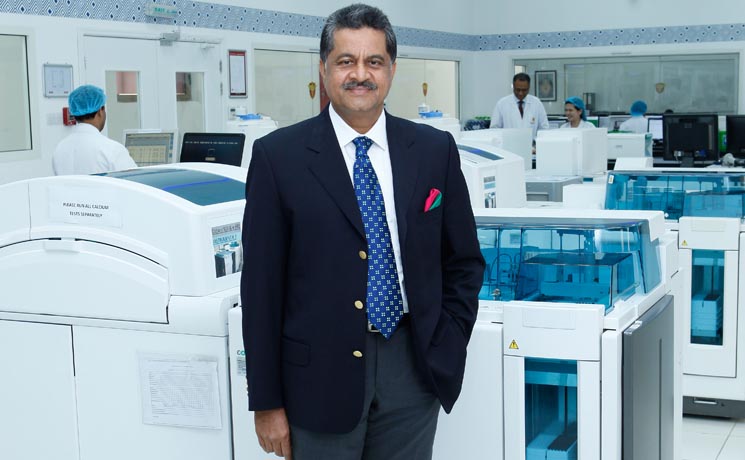
With the tinge of an Indian accent, a bespectacled professor rattled off medical terminology in English as students frantically took notes. Unfazed by the stench of embalming fluids, they examined the torso of a cadaver at Gulf Medical University (GMU) in Ajman, United Arab Emirates. Nothing unusual as far as anatomy classes go,  except that GMU is the only privately owned academic medical center in the U.A.E. It is part of a network of four pioneering teaching hospitals that now train 19% of doctors in the country and treat nearly 1,800 patients a day.

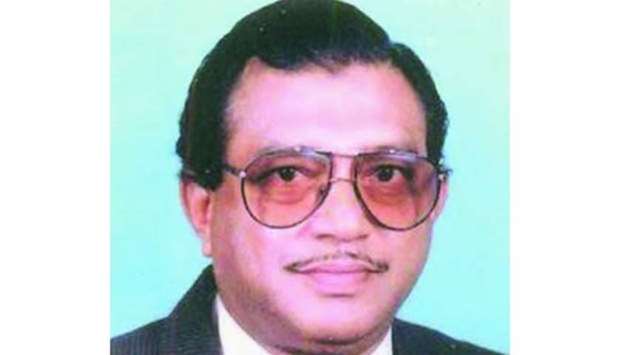
The founder is Thumbay Moideen, a 58-year-old former timber trader from Mangalore, a port city on the Arabian Sea in southern India. He is as surprised as anyone to find himself at the helm of a growing healthcare empire, Thumbay Group, which generated $700 million last year, up more than 20% from 2014. “It’s an unlikely tale,” says Moideen.
The career switch has made Moideen a billionaire, with a fortune FORBES MIDDLE EAST estimates at $1.8 billion, based on comparable publicly traded healthcare companies in the U.A.E. He says he’s Thumbay Group’s sole shareholder.

What began as an institution to teach aspiring medical professionals from India in the U.A.E.—Indians make up half of the country’s population, turned into training grounds for all expats, and includes a sizeable Arab student body. The university gets up to 6,000 applications a year for a total of 270 spots. Tuition ranges from $8,000 a year for a degree in physiotherapy to $32,000 annually for a medical degree—more than three times the cost of an MD at a government-run university. Other specialties include dentistry and pharmacy. Since 2003, over 2,000 students have graduated.

Healthy Choice

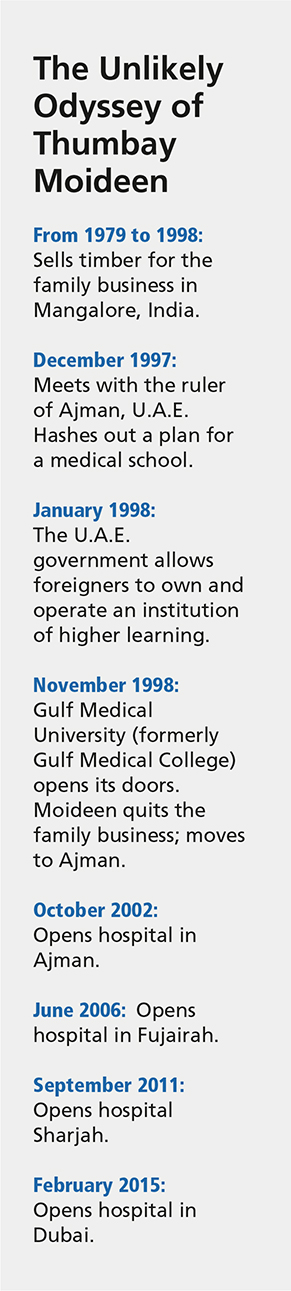
The tale of Moideen’s ascent into medical academia begins in December 1997.  Traveling from Mangalore to Tanzania, he made a stop in Ajman and paid a visit to a member of the royal family, Sheikh Majid bin Saeed Al Nuaimi, a family acquaintance.

Moideen was then working for his family’s timber and real estate company, BA Group Thumbay, a pillar of the Mangalore business community.  His father, Ahmed Hajee Moideen, formed the establishment in 1957. It imports wood from Malaysia, Papua New Guinea, Tanzania, Nigeria and Ghana, and processes them in its factories. After graduating with a degree in commerce from St. Aloysius College in Mangalore, Moideen joined the business in 1979, and traveled frequently.

Over dinner that December evening in Ajman, Sheikh Al Nuaimi asked him, “Can you think of a project which could have multiple effects on the economy of Ajman?” recalls Moideen.

Ajman is the smallest emirate in the U.A.E., and the royal family was on the hunt for new projects to help boost its economy.

“In those days, Ajman was like a village. There was nothing,” says Moideen.

He proposed expanding the family business in Ajman, but the Sheikh pushed for new ideas. Moideen told him the story of a medical university and affiliated hospital close to his hometown. Kasturba Medical College in Manipal began accepting medical students in 1969, and it built Kasturba Hospital. “The whole town grew around the college and it became world renowned,” says Moideen. In 2015, an India Today/Nielsen survey ranked Kasturba Medical College one of the top 10 medical schools in India—a feat in a country with more than 280 medical colleges.

Moideen thought their conversation was casual brainstorming, but the Sheikh immediately saw potential. Three days later, he brought up the idea of an academic medical center for Ajman with the Emirate’s ruler, Sheikh Humaid bin Rashid Al Nuaimi, who asked to see Moideen. He told the Emir that although it was an exciting idea, he didn’t have expertise in education or healthcare. The Emir persisted. “As we spoke, the ruler said, ‘you look like a smart chap, why don’t you try it? I’ll help you,’” recalls Moideen..

“It was a risky move, but I’m an adventurous fellow,” he says. It didn’t take him long to abandon his career in the family company in 1998, and immerse himself in the business of healthcare. “I was rushing between India and Ajman. I couldn’t keep up anymore and this was so much more exciting.”
OdyssesyThumbayMPOs25mar2018

His first move was to seek advice from Kasturba Medical College. Consultants from the school helped him draw a feasibility study. The only other medical schools in 1998 in the U.A.E. were Dubai Medical College, which is only open to women, and government-owned Al Ain University.

The Ministry of Higher Education didn’t allow expats to own a license for educational institutions, but a royal decree soon waived that requirement in January 1998. Moideen bought 25 acres of land from the government the following month, bankrolling the venture with an initial investment of nearly $41 million in bank loans and his own capital. In March, he began building the university and by the fall of that year, it started accepting students.

To his surprise, the school hardly got any Indian applicants. Arabs and expats from countries such as the U.K. and Germany enrolled. Gulf Medical University, which had only recruited Indian staff, quickly had to hire personnel from other nationalities.

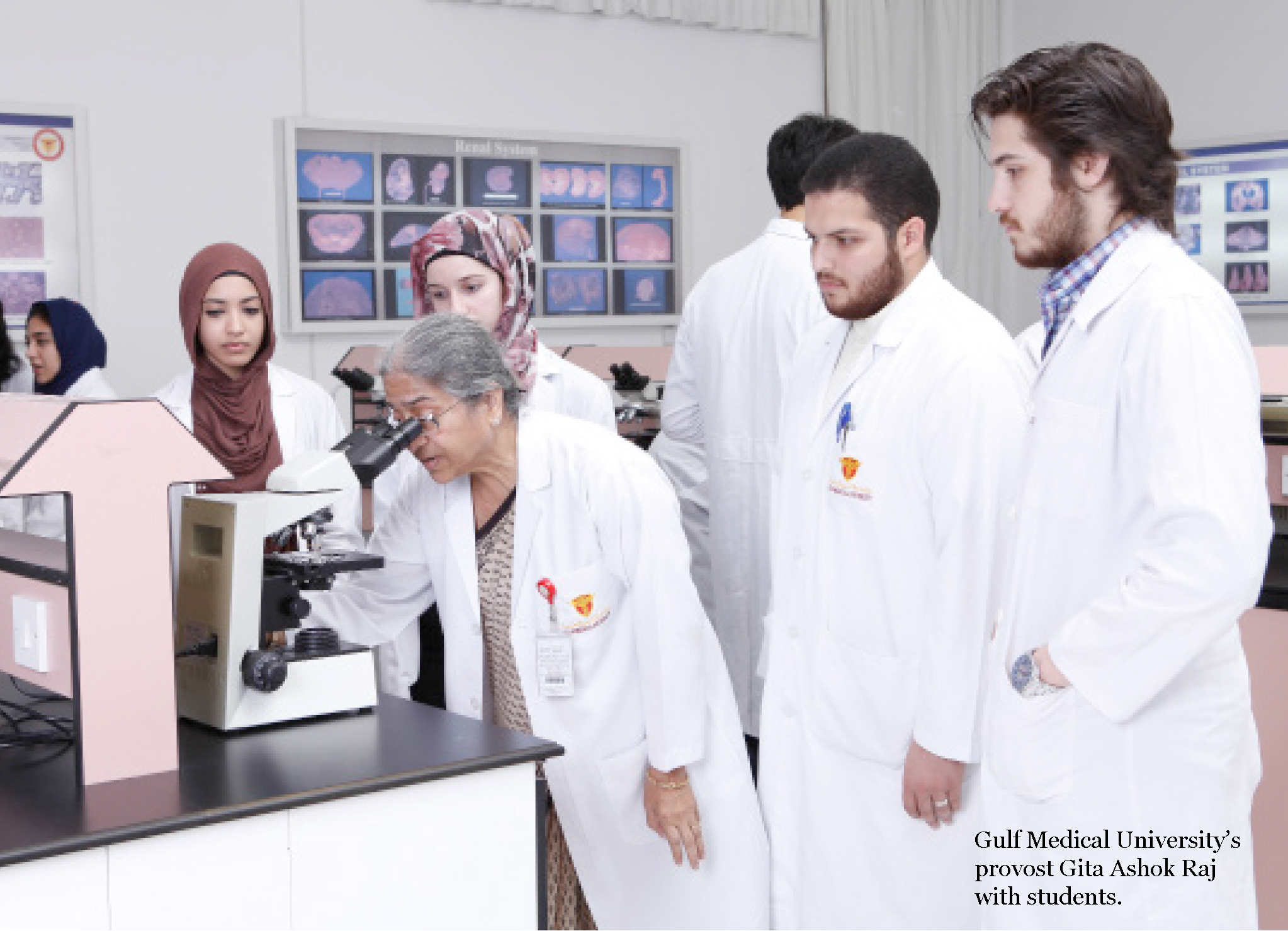
The student body is now made up of 36% Arabs, 32% Asians (including Indians, Pakistanis and Sri Lankans) and 22% Africans; the rest comes from Europe and the U.S. Gita Ashok Raj, a pathologist from Mangalore, oversees a faculty of 162 from 22 countries. Students straighten up when she walks down the university corridors.  “We have fast evolved from a college offering one full-time program to a full-fledged university offering 15 full-time programs,” she says.

To build the school’s reputation, Moideen began raising its profile by sponsoring conferences with top medical schools, such as Johns Hopkins, Mayo Clinic and Hamburg University. “We took the initiative 17 years ago and contacted these big universities,” he says. Early on, for example, GMU organized a national conference on ophthalmology along with the U.A.E.’s Ministry of Health and Mayo Clinic. James Garrity, Chair and Professor of Ophthalmology at Mayo Clinic, delivered the keynote address. To date, the school has organized more than 275 national and international conferences.

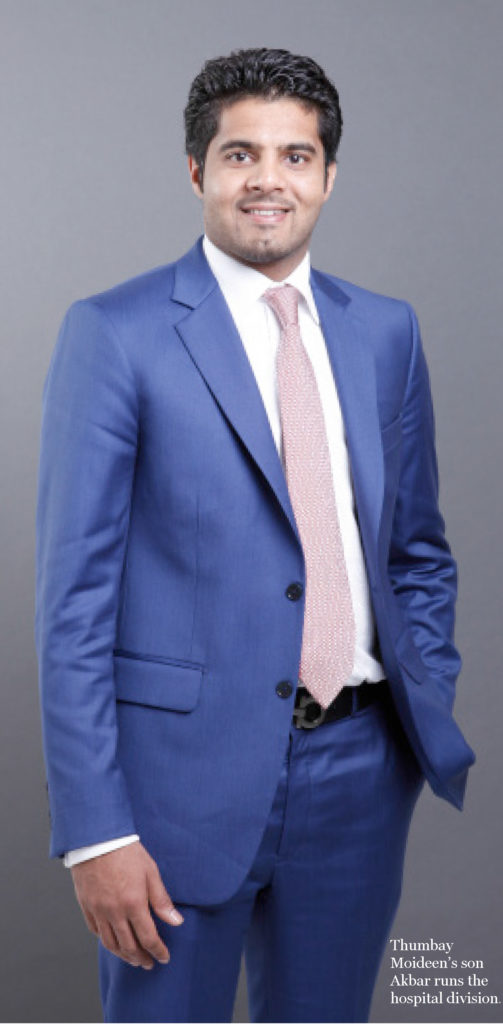
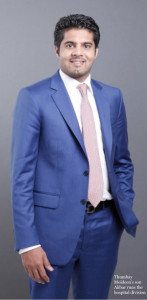
The plan for a teaching hospital began in 2000. For the first two years, students were sent to Iranian Hospital in Dubai, while Moideen built the first 200-bed Thumbay Hospital in Ajman. Financed with $81 million in loans from Islamic banks and his money, it opened in 2002, a year before the first graduating class. He opened three other hospitals with 60 beds each in Fujairah in 2006 and Sharjah in 2011, and 150 beds in Dubai in 2015. His eldest son Akbar who studied hospital management at the SDA Bocconi School of Management in Milan, Italy, runs the hospital division.
AkbarThumbayMPOs25mar2018

GCC countries still struggle with a shortage of medical professionals. There are 1.5 physicians per 1,000 people, while hospital beds lag at 21 per 10,000 people, according to Colliers International, a global real estate consultancy firm.

One law hasn’t changed for Thumbay Group: its medical school graduates are required to complete a year of internship at a government-owned hospital. Besides Al Ain University, they now include the University of Sharjah, and Ras al-Khaimah Medical and Health Sciences University.

The majority of GMU students go on to specialize in areas such as cardiology, neurology, and dermatology; 22% are admitted to U.S. medical schools for further training.

The school’s academic record hasn’t necessarily translated into a preference for its physicians, or any U.A.E.-trained doctor for that matter. Saudi German Hospital in Dubai, for example, hires GMU graduates with three years of experience, but a western education still carries prestige. “Western-trained doctors are preferred by patients,” says Semira Dikbas, executive, International Patients Program at Saudi German Hospital.  “Gulf Medical University is well recognized, but we cannot compare it with any other university in Europe, the U.S. or India.”
 

Thumbay02MPOs25mar2018

In an effort to gain prestige, Moideen started the first medical journal in the GCC. Launched in 2012, the Gulf Medical Journal is a peer-reviewed publication with an international advisory board that includes doctors from India, the U.K. and U.S. Researchers at Gulf Medical University are expected to publish two to three articles a year. The school spends close to $3 million a year on research, and faculty is regularly awarded external grants. Recently, for example, the World Health Organization provided a $10,000 grant to study at-risk relatives of patients with diabetes, which affects one in five people in the U.A.E.

The strategy is slowly paying off at Thumbay hospitals too. In 2013, they received accreditation from Joint Commission International, a U.S. non-profit organization. It bestows its highly coveted stamp of approval on hospitals that meet benchmarks for quality and safety.

Thumbay Group runs the only privately owned teaching hospitals in the U.A.E., but the number of hospitals is growing to meet demand. VPS Healthcare, HNC Hospitals and NMC Healthcare, to name a few, are expanding. Their founders are also Indian entrepreneurs, who have staked out a claim in the healthcare sector in the Gulf.

Moideen has now set his sights on Ghana where he expects to open a medical school by 2017. He inaugurated a hospital in Hyderabad in November 2015, and plans to build hospitals in Saudi Arabia, Qatar, Bombay and Bangalore next year.

source: http://www.forbesmiddleeast.com / Forbes Middle East / Home> Business / March 01st, 2016
Prominent Indian businessman Abdul Hameed dies

Kochannoor (Thrissur District), KERALA /  Doha, QATAR :

K P Abdul Hameed
K P Abdul Hameed

Doha :

Long-time Doha resident and prominent Indian entrepreneur K P Abdul Hameed (76) passed away at a hospital in Bengaluru in southern India on Monday.

He was a managing director of Al Muftah Rent A Car, set up in 1970 as the first vehicle rental firm in Qatar.
Hameed will be buried at his native place, Kochannoor, in Kerala’s Thrissur district on Tuesday. He leaves behind his wife Aminu and two sons, Dr K P Najeeb (Hamad Medical Corporation) and Fazil Hameed (Al Muftah Rent A Car). A K Usman, who is also a managing director of Al Muftah Rent A Car, is his brother-in-law.
Hameed had suffered a stroke more than a month ago in Doha and was taken to India for treatment. Hameed, who arrived in Qatar in 1965, was a regular presence at a number of community events over the last four decades.
The veteran businessman was among the founders of MES Indian School, which was the first Indian expatriate institution of the country. The school was established in 1974.
Hameed was also one of the founding members and chief patrons of the Indian Cultural and Arts Society (Incas Qatar).
Indian Community Benevolent Forum (ICBF) and expatriate forums Incas Qatar and Indian Medical Association (Qatar chapter) and Pravasi Malayali Federation have mourned the death of Hameed.
source: http://www.gulf-times.com / Gulf Times / June 19th, 2017

Keeping alive a shining legacy

Hyderabad, TELANGANA :

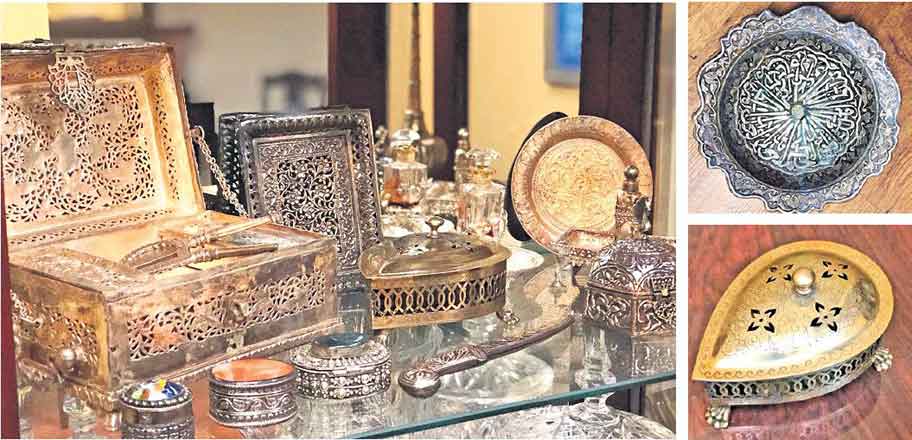
Some of the silver items collected by Riaz Ziaee

Meet the Hyderabadi  ‘heritage buff’ trying to preserve precious silverware that belonged to the city’s royalty.

Hyderabad:

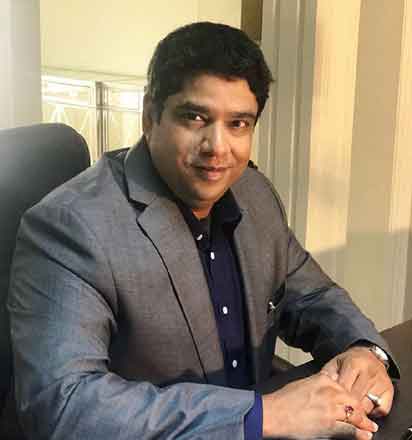
Riaz Ziaee, a blue-blooded Hyderabadi, has provided a worthy home to silver antiques that were made around the world for the city’s former royalty and nobles.

The techie-turned-real estate developer has two homes, one in Hyderabad and the other in Toronto, Canada, where he keeps dozens of pieces of original silver artefacts that salute the culture of a bygone era, the “time when people had time”, as he puts it.

A regular visitor to his ancestral home in Hussaini Alam, Riaz (47) spoke to Telangana Today from Toronto about the heritage he is trying to preserve.

Riaz Ziaee
Riaz Ziaee

For Riaz, the collection is a reminder of his roots. “I preserve these pieces, most of which are more than 100 years old, so that I can show my children, relatives and friends how we used to have the luxury of time when we were growing up in Hyderabad,” he said.

According to Riaz, a lot is being missed out due to life in the fast lane these days. “These collections, along with other heritage symbols, were our prized possessions. My ancestors collected antique silver artefacts, especially those pertinent to Hyderabadi culture,” he said.

Some of the items were inherited and many other pieces were collected later by Riaz. “Though several homes in Hyderabad still have such antiques, most are unable to use them due to the sheer lack of time. The importance of such precious aspects of our culture is losing ground with the new generation of Hyderabadis,” he pointed out.

In his exquisite and finely maintained collection are rare items such as kaandaan, which is different from paandaan in that it was used to keep fresh paan in its original heart-like shape.

“I also have an atardaani with pure silver filigree and a tray made in Italy for the Nizams. I collected these items from Hyderabad and from flea markets around the world. We also have silver scrolls, which were used to hold rolls of important documents,” Riaz revealed.

There is a bidri tray which was used for serving nuts and dry fruits to guests, and which has lovely calligraphy on it. There is a gulab pash, which was used to sprinkle rosewater on guests during Eid and other functions. “I still use these items on special occasions and maintain them regularly so that they stay on in our home as a reminder of where we come from and what we have lost,” said Riaz.

source: http://www.telanganatoday.com / Telangana Today / Home> Hyderabad / by  Sharjeel / March 05th, 2018

Meet the Indian expat who prepared Sridevi for her final journey home from the UAE

KERALA / UNITED ARAB EMIRATES :

Everyone is equal, whether you’re poor or rich, it doesn’t matter’, says Ashraf ‘Sherry’ Thamarassery.

Ashraf 'Sherry' Thamarassery, who volunteers his time helping repatriate the dead from the Emirates, has helped repatriate 4,700 bodies from the UAE and recently helped send the remains of Indian actress Sridevi back home to Mumbai. Jon Gambrell / AP Photo
Ashraf ‘Sherry’ Thamarassery, who volunteers his time helping repatriate the dead from the Emirates, has helped repatriate 4,700 bodies from the UAE and recently helped send the remains of Indian actress Sridevi back home to Mumbai. Jon Gambrell / AP Photo

Away from the camera flashes and the eyes of her millions of fans in India, the actress Sridevi’s body made its way to a simple mortuary in Ajman, where one man helped sign out her remains to return home.

Listed only as “ASHRAF” on the official paperwork in Dubai, Ashraf ‘Sherry’ Thamarassery is a 44-year-old Indian from Kerala who has become a ferryman of sorts for those who die here in the Emirates.

From indebted labourers to the moneyed elite, Thamarassery has helped repatriate 4,700 bodies to 38 countries across the world. He views it as a noble responsibility.

“For them, you or me, it’s all the same and everyone is equal. If someone dies in their room, they will take them to the hospital and then to be checked at the police mortuary,” Mr Thamarassery said.

“It’s the same process, whether Dubai or Sharjah or any emirate. Whether you’re poor or rich, it doesn’t matter.”

Sherry offered shrugs when talking about Sridevi, saying he helped repatriate five bodies on Tuesday, including the famed Bollywood star’s.

It’s hard to overstate the power Sridevi had over the imagination of many in India.

Starting out as a four-year-old child star in south Indian regional movies, she later became known for her impeccable comic timing as well as her dancing skills.

She appeared in hundreds of films, perhaps most known for her song-and-dance Hawa Hawai routine in the 1987 film Mr India, in which she joyfully prances around in an almost-elastic set of whirls, twirls and silly faces.

She smashed into the male-dominated movie industry to become her own star.

The 54-year-old Sridevi, only known by one name, which means “Goddess” in Hindi, died in Dubai while in the UAE for a wedding. Police and prosecutors say she drowned in a hotel bathtub after losing consciousness, calling her death accidental. Police officials also have said the actress had alcohol in her system at the time of her drowing.

News of her death dominated India’s newspapers and many television networks, with coverage ranging from the restrained to the lurid. One TV station aired a segment showing a reporter talking about her death while laying in a bathtub, while others had computer-generated graphics imagine the scene. Many newspapers chose not to mention she had alcohol in her system, while a hashtag #LetHerRestInPeace emerged on social media.

While Indian officials quickly cancelled her passport and prepared the other documents, Mr Thamarassery said the necessary police clearance slowed Sridevi’s repatriation. He said he has received hundreds of calls from journalists, officials and others in the interim.

When the clearance came, Mr Thamarassery travelled to a government-run mortuary in Dubai and there officials embalmed her corpse as he handled paperwork for her and three others.

On Tuesday night, Mr Thamarassery returned home to the apartment he shares with his wife and daughter in Ajman. There, he runs a mechanics shop but focuses largely on his philanthropic efforts.

Shelf upon shelf in his home bears honours and awards. A framed picture hangs on the wall showing him meeting Indian Prime Minister Narendra Modi.

“I do this to earn blessings, but also when someone dies here, people don’t know how to manage the repatriation procedures,” he said. “That’s why I do it.”

All the while, his phone never stopped ringing, some of them undoubtedly new calls for his help.

source: http://www.thenational.ae / The National / Home> UAE / by Associated Press / February 28th, 2018

Could Chicago’s Sameena Mustafa become the first Muslim woman in Congress?

Chicago, IL ,  U.S.A :

Sameena Mustafa / RICH HEIN/SUN-TIMES
Sameena Mustafa /
RICH HEIN/SUN-TIMES

Sameena Mustafa has had a successful career as a real estate broker working with nonprofits and small businesses in addition to a rising profile in the city’s comedy scene. In 2015 she cofounded Simmer Brown , a South Asian comedy collective. But the 2016 election made her take a hard look at the local political arena and decide to get involved. Now Mustafa, 47, is one of three Democratic primary challengers to incumbent Fifth District U.S. representative Mike Quigley, who’s held that office for nearly a decade. Mustafa believes he’s out of touch with the progressive values that she sees to be increasingly animating the district. If she wins, Mustafa would be the first Muslim woman in Congress and the first Indian-American woman to represent Illinois.

Here at the Reader we’re familiar with your comedy work. Have you always been doing comedy alongside your real estate career?

I started comedy in 2014, and that’s the newest venture. Real estate I started in 2003. I was still working full-time while I was performing. Comedy is a late-night venture, as it were, so it’s not something that would conflict with business meetings.

I had been creative when I was younger. I wrote poetry, and I wrote in high school. So I had that creative side of me, and it was one of those things where someone was like, “Take a class at Second City!,” and it was fine. I took another one and a friend suggested, “Hey, if you like this but you want something a little bit different, try this women-only stand-up and storytelling class,” and that was the Feminine Comique. My graduation was four years ago, my comedy graduation. I never actually performed onstage before that graduation. It was so different from anything I’ve done in terms of writing. I did debate in college, so I had no problem speaking in public, but this is very different—it was me bringing my political ideas, my creative side, and my comfort with being in front of people. Immediately I had an affinity for it. I really enjoyed it. I was nervous the first time I was onstage, but I loved it.

I can’t find any of your stand-up on YouTube. Is there a reason for that?

I see comedy as something you do. It’s something you can be doing for 20 years and still be learning and evolving—it’s like any craft. To me it was more important for people to come to shows. I didn’t want to do, like, a Facebook live. It was more about having the interaction and immediacy. We’re essentially creating an experience, a community in real time.

You’re running against an incumbent who’s held this seat for nearly a decade. Some would say that it’s not a great strategy for a first attempt at political office. Why did you decide to spend your time and money on a race that’s really stacked against you?

The electorate is looking for a different type of leader, one that’s grassroots, connected to the community, that isn’t somebody that’s been selected for them. If you look at the last ten years, Democrats have lost over 1,000 seats on every level including the White House. So it’s one of those things where all the data is pointing against your assumptions, yet you’re still holding those assumptions? To me this was a district, this was an incumbent that was important enough to challenge because we have a completely different environment than we did two years ago. And so to have someone in that seat who doesn’t advocate for the values of the voters of the Fifth District was an opportunity to bring that, to bring that leadership.

And having lived in the district as long as I have and had immediate contact with people from all walks of life and different parts of the district—you get a sense of what people value. When you’re in an environment like a comedy show, it’s a flash focus group. It’s not hard to figure out what people are thinking and feeling and what they care about. Mike Quigley refused to do a town hall following the inauguration, which was something being done by Republican lawmakers across the country. And I thought: Why is my Democratic congressman, in a very Democratic district, refusing to do them?

You’ve been living in the district for 30 years. When did you first learn anything about your congressman? And can you describe your relationship with the congressman over the years?

I knew who he was and, frankly, because he has never been challenged, I voted for him. I knew he had the baseline: he was pro-choice, he was pro-LGBT. Then when I started looking at my stack of leaders up and down the ballot and started thinking about the issues I cared about and started doing some research on some stances that Mike Quigley had taken, it occurred to me that he may be good on those two issues but there’s so many issues on which he is falling short. Or, frankly, is in opposition to the values that I hold and that the voters hold in the district. Mike Quigley is not someone who sticks his neck out on issues.

If you were elected, you’d be the first Muslim woman in Congress. What goes through your mind as you consider that prospect?

It would certainly be a milestone, but I’m optimistic that people in Democratic politics are increasingly accepting of leaders irrespective of their religion, gender, or ethnicity and are looking for candidates who stand with them on the issues and share their values. More doors are opening for candidates who have something to offer but who historically have not had opportunities to serve.

In light of the conversation that you participated in with the Reader last year, talking about feminism and intersectionality in what would be considered a nonmainstream way, how are you bringing your political consciousness as a feminist committed to intersectionality to this very mainstream political arena?

It’s in how I’ve organized my campaign, it’s in how I’ve talked about the issues. . . . I gotta tell you, we’ve talked to thousands of voters, and this is a progressive district. So when you approach them, they assume you’re agreeing on some baseline principles. Are you pro-choice? Are you pro-LGBT? Do you support the Dreamers, immigration reform? Are you going to be supporting health care access for all? This is something I’ve found is resonating with voters.

On the intersectionality piece per se, I have made it a point to have a very inclusive team. The majority of the leaders on my team are women and women of color. Those are the kinds of things that resonate with volunteers, with donors, with voters.

And are you also mentally preparing yourself to step into an electoral political space which requires compromise and working with people who have a radically different political understanding of things?

I’ve spent the last 13 years advocating for people and organizations that are founded on values—nonprofits that are working on important issues like immigration, sexual assault survivors. It’s something where I’m literally negotiating against people who don’t necessarily share those values and they are not really committed to those outcomes. And they have their own agenda, and they have their own profit motive, specifically in the space of commercial real estate.

As it relates to being a public figure and having criticism—I’ve been doing it for the last six, seven months. I have put myself out there in a way that’s public, and in some ways it was an extension of what I was doing in the arts community. Because when you’re onstage, you’re essentially saying,  “I am open to anything. I’m declaring my values, I’m declaring my beliefs,  and I welcome you to challenge them.” But I’m not shying away from being a public figure.

You’ve talked about how problematic gerrymandering is, how it creates this strange monoculture of an electorate in one particular district. Is there anything you’ve been either pleasantly or unpleasantly surprised by as you’ve been campaigning around the absurd contours of the Fifth District?

I know this district, this is the district I grew up in, my parents have lived here for over 40 years, and I felt confident in my knowledge of what the values were that I held and that were shared by the voters. And one thing that I keep getting positive reinforcement on is how much, despite the gerrymandering, how much the voters and the district value diversity and believe in inclusion and view it as one of our strengths. I’m getting phone calls, e-mails, and messages from people who are saying, “We want to help you, we support you, we share your values and we want to see a leader like you represent us.” It’s humbling, and it’s an honor. This has been an incredible opportunity to connect with people on values and policies that they care about.

source: http://www.chicagoreader.com / The Chicago Reader – TheReader / Home> News> Politics> The Best of Chicago / by Maya Dokmasova / February 27th, 2018

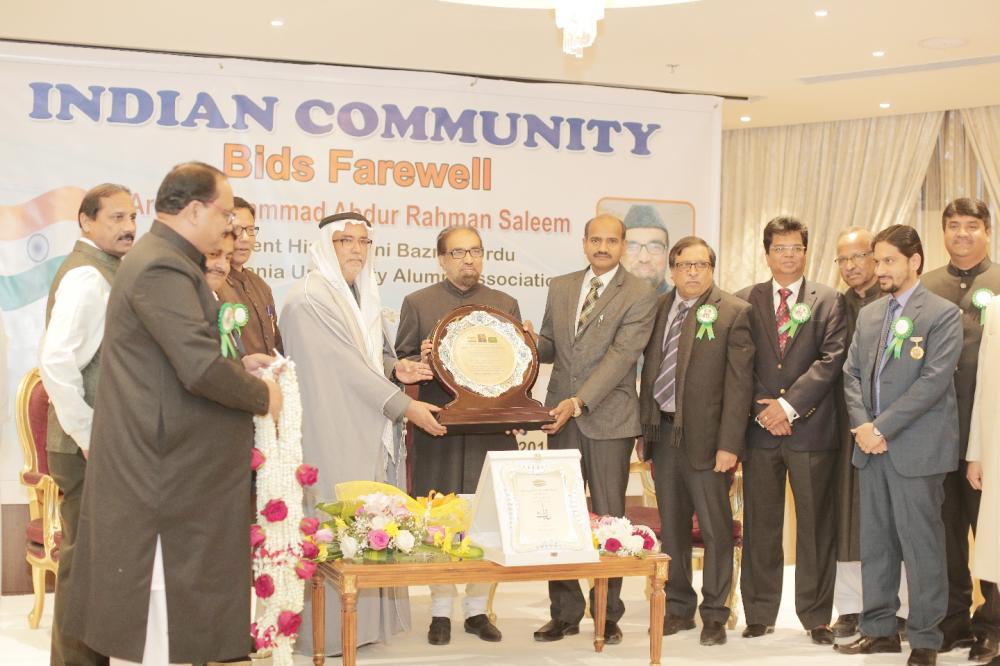
Indian community bids farewell to Saleem

Riyadh, SAUDI ARABIA :

SaleemMPOs28feb2018

Riyadh  :

The Indian community here bid farewell to longtime resident and senior NRI Arch. Mohammed Abdur Rahman Saleem, who is leaving the Kingdom after over four decades here.

Saleem who spent 43 years in the Kingdom, was a prominent social activist and promoter of the Urdu language and culture. He established different cultural and social organizations and organized many cultural events.

Saleem was the torch bearer of Urdu culture and tradition. After successfully establishing many organizations he formed the Toastmasters Club in Riyadh. Bazm-e-Urdu Toastmasters Club (BUTMC), which is successfully running with many youth joining it to excel in linguistic skills along with personality development and public speaking abilities.

By organizing elocution competitions for the students of Indian schools in Riyadh, Saleem was successful in attracting students to get interested in and opt for Urdu in their studies.

Chief Guest Dr. Hifzur Rahman Azmi, First Secretary, Embassy of India Riyadh, said, “Nowadays people with positivity are rarely found in our society whereas Saleem is a multi-faceted person who is filled with positivity. He dedicatedly works likes an organization in himself, and has organized many events on a grand scale. Even the Embassy needs the help of different organizations to arrange such events. In addition to organizing cultural events for entertainment, he has striven for many constructive works and events; elocution competition for school students is one such example.”

Rahman also disclosed that Saleem holds the credit of organizing the first Republic Day Mushaira in Riyadh, over 25 years back, under the banner of the Indian Embassy. His organization was associated with all the Mushairas organized by the Indian Embassy as he regularly felicitated all the poets.

Saleem successfully tried to link the people from all parts of India and managed to make an excellent group of like-minded people and hoped that his team will carry forward his legacy, he added.

In his welcome address THH and OUAAAR President Mohammed Qaiser said, “As an architect Saleem played an important role in giving beautiful buildings to this country. In addition to his professional commitments, his services and contributions towards the Indian community and for the promotion of Urdu were remarkable.”

K.N. Wasif read out a sketch about Saleem and said that he always was for justice among all and hence represents the justice of Jahangir. Ghouse Arsalan also read another sketch titled “Hindustani Tahzeeb ke Me’maar” (Architect of Indian culture) and said, Saleem truly represented the Deccani culture and tradition in the Kingdom and in USA.

Firasat Ali Khusro paid poetic tribute to Saleem’s long services and contributions. He said Saleem always did good deeds and never showed off, and it is very rare to find such humble people in the current period.

Taqiuddin Mir presented a humorous sketch “Pati Patni Aur Woh” about Saleem’s addiction to mobile and using social media to get in touch with all his friends. The community leaders from all parts of India spoke on various aspects of Saleem’s personality.

Zaigham Khan from Aligarh said that Saleem is Baba-e-Urdu of the Kingdom and will be remembered here for the long time. Ghazanfar Ali Khan said that Saleem has been the cultural ambassador of India to the Kingdom for over four decades.

Ghizal Mahdi appreciated Saleem’s affection for the Urdu language. Representing Jamia Millia Islamia, he said, Jamia played an important role in freedom struggle and its founders laid emphasis on education through mother tongue. Due to this factor Mahdi had long time association and friendship with Saleem.

Prominent Businessman Nadeem Tarin said that Saleem and his associates played an important role in introducing Hyderabadi community to the north Indian community, especially Aligs. Due to this a new impetus was prominent among both the communities and it was evident with the successful and historical events arranged and attended by all these communities.

AIUS President Dr. Mohammed Ashraf Ali appreciated the contributions and services of Saleem as he invited many prominent personalities from India and offered a platform to the community to interact with them.

Senior banker Shahid Ali Khan recalled his long time association with Saleem. Vice President Hindustani Bazm-e-Urdu Eng. Abdul Hameed introduced Saleem with the help of PPT presentation. Prominent Businessman Mir Muzaffar Ali was the Guest of Honor.

Saleem thanked the organizers, speakers and attendees for the marvelous display of love and affection for him. He promised that he will continue to strive for the promotion of Urdu wherever he goes. He announced that he will try his best to start Urdu Toastmasters Clubs in Hyderabad and USA.

On this occasion Mubibb-e-Urdu award was presented to Saleem. The organizing committee members presented him a memento of appreciation in recognition of his contributions and services.

Floral bouquets and gifts were presented by different organizations — Deccan Cultural Association, All India United Society, Ghazal Sara Group, Telangana NRI Forum, Paradise Group, Bazm-e-Farogh-e-Urdu and Bihar community.

Organizing committee members Aftab Nizami, Mohammed Mubin, Sohail Siddiqui, Mohammed Kaleem, Syed Ateeq, Aliuddin Ahmed, Shakeel Mah presented freshly prepared beautiful garland specially arranged for the event.

Mohammed Farooqui Shahbaz conducted the proceedings, while Dr. Shoukat Pervez, principal IISR proposed the vote of thanks. Hafiz Abdul Malik recited verses of Holy Qur’an at the start of the event. — SG

source: http://www.saudigazette.co.sa / Home> Saudi Arabia / Riyadh – February 22nd, 2018


UM’s Ikhlas Khan Wins Lifetime Achievement Award

Aligarh, UTTAR PRADESH / Mississippi,  U.S.A  :

Ikhlas Khan. Photo courtesy of Ole Miss Communications

Ikhlas Khan, director of the National Center for Natural Products Research at the University of Mississippi School of Pharmacy, is the winner of AOAC International’s 2018 Harvey W. Wiley Award, which recognizes lifetime scientific achievement.

AOAC International develops global quality standards for microbiological and chemical materials, ranging from food to pharmaceuticals in an effort to ensure public health. Khan, who has been with the university since 1992 and directed the natural products center since 2017, has spent much of his career developing standards for dietary supplements.

“I’m very pleased to receive this award,” Khan said. “AOAC is the top organization for chemical standards, and I appreciate this recognition of my work in this area.”

As part of the honor, Khan will deliver the Wiley Award address and chair the Wiley Award Symposium at AOAC’s annual meeting in August in Toronto.

The Harvey W. Wiley Award has been given to one person a year since 1957, with past recipients including scientists from government, industry and academic institutions from around the world.

The National Center for Natural Products Research maintains a repository with more than 18,000 natural product specimens, derived extracts and pure compounds. Photo by Robert Jordan/Ole Miss Communications

Story by Sydney Slotkin Dupriest, courtesy of Ole Miss Communications

source: http://www.hottytoddy.com / HottyToddy.com / Home> Headlines> News & Views / February 21st, 2018

Naeem Khan Designs Feathered Dress for Houston Gala Chair

UTTAR PRADESH / Mumbai, MAHARASHTRA  / New York, USA :

Khan designed the dress for Houston Ballet Ball chair Hallie Vanderhider.

Hallie Vanderhider / Photo by Jenny Antill
Hallie Vanderhider /
Photo by Jenny Antill

Black Swan :

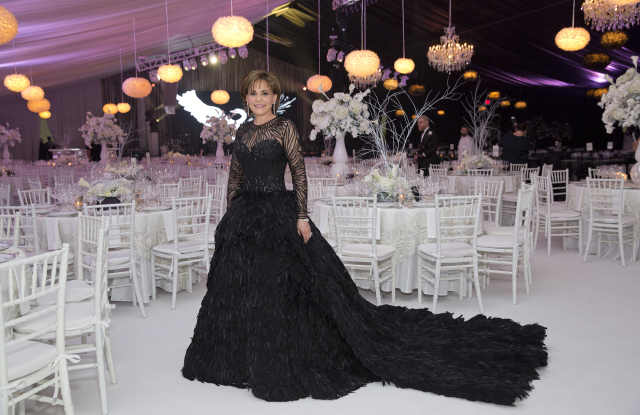
Guests at The Houston Ballet Ball were encouraged to don black, white or a mix of both as an ode to Tchaikovsky’s ballet “Swan Lake,” but Houston Ballet Ball chair Hallie Vanderhider took the concept further — much further, enlisting the design prowess of Naeem Khan to create her feather-laden gown.

Vanderhider and Tootsies creative director Fady Armanious flew to New York and met with Khan to discuss a gown that would capture the elegance and dark beauty that Vanderhider had envisioned for the ball. Within a few sketches, the trio had landed upon an all-black gown covered in 3,500 natural black coque feathers, weighing in at 7.25 pounds.

“It was a magical moment. Naeem totally captured the essence of Swan Lake,” Vanderhider said. “He is such an amazing talent and has a great sense of humor.

Khan encouraged Vanderhider to embrace the mysterious elements of the dress, reminding her, “This isn’t a mother-of-the-bride gown.” The gown’s sheer long sleeves and bodice were finished with intricate beading.

source: http://www.wwd.com / WWD / Home> Fashion> Fashion Scoops / by Heather Staible / February 22nd, 2018