Category Archives: Uncategorized

Withering Urdu Libraries Of India And Methods To Revive Them

INDIA :

Many scholars say that the time has come for these libraries to digitise their books and manuscripts and grant global access to their literary treasures through payment.
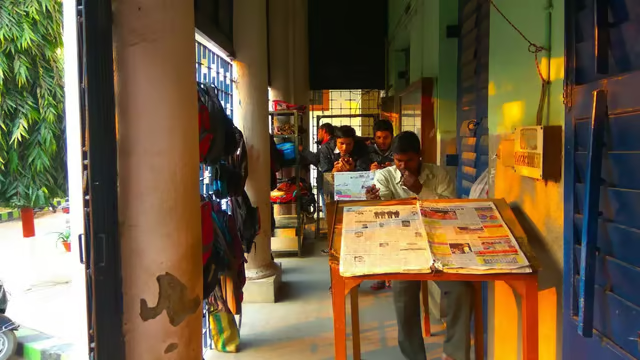
Khuda Baksh Library – Photo by UMAR AMAN

As Urdu libraries across various parts of the country witness a decline in readership, several libraries are adopting new strategies to expand their influence by adding books related to competitive examinations and providing reading space to students appearing for these exams.

One such example is the Alambazar Urdu Library located in Alambazar, near north Kolkata in West Bengal. The library has embraced this approach to attract readers. Arif Hussain, the secretary of Alambazar Urdu Library, says, “We have established an academic unit within our library. This unit houses books catering to a range of entrance tests, including ITI, NEET and other similar exams, for admission into medical and engineering courses. We also provide resources to prepare for competitive exams―for both, the state and Union government―as well as for banks, railways and other exams. Students and educated unemployed youth find it of great value and make use of our academic unit.”

Founded in 1978, Alambazar Urdu Library is located in an area inhabited mainly by the Urdu-speaking Muslim community of the state. Hussain says most residents are workers from the nearby Barnagore Jute Factory and daily wage earners. “A significant portion of these people are either illiterate or semi-literate. Due to the longstanding decline of the jute industry, which has adversely affected people’s financial condition, there is a dearth of educational opportunities. The library was established to serve the students of the local Urdu medium higher secondary school and cater to the needs of these underprivileged residents,” he says. Despite housing a large collection of Urdu novels and books, the library has experienced a reduction in footfall over the years. “One possible reason is that people no longer resonate with contemporary Urdu literature, which may have led them to explore other avenues. Social media has changed the whole scenario and people have moved away from reading,” he adds.

In Patna, the Khuda Bakhsh Oriental Public Library, a repository of Indo-Islamic knowledge and arts, has also turned its attention to civil services exam preparation. The library has made competitive examination materials, including those for medical and engineering fields, available to students and has dedicated a section for this purpose. The Curzon
reading room stands out as a popular space in the library. While scholars from India and beyond frequently visit the library to study its vast collection of manuscripts―Sufi literature, poetry, Persian literature, history, and miniature paintings―students appearing for competitive exams prefer the Curzon reading room. The library also houses books in humanities and social sciences, some dating back to the 1600s and 1700s.

The Khuda Bakhsh Oriental Public Library, inaugurated for public use in October 1891 by Bihar’s illustrious figure, Khan Bahadur Khuda Bakhsh, initially boasted of 4,000 manuscripts, with 1,400 of them inherited from his father. The Government of India designated it as an Institution of National Importance through a Parliamentary act in 1969.
Urdu poet Shahid Jamal, originally from Patna, expresses his concern over the trend of libraries incorporating competitive examination materials. He says, “I am surprised by the insistence of libraries on featuring competitive examination books or providing resources for students preparing for such exams, which seems to have little connection to the core essence of a library.”

Jamal says it is necessary to understand the political dynamics surrounding Urdu in the country to grasp the predicament faced by Urdu libraries. “The current status of the Urdu language in the country, often perceived not just as a spoken language, but as a language solely associated with Muslims, has had an impact on the status of Urdu libraries.”

While stating that both the Khuda Bakhsh Oriental Public Library and the Rampur Raza Library receive central funding under the Ministry of Culture, Jamal says his desire is to see these libraries expand their infrastructure and focus on digitisation.

The Rampur Raza Library, a prominent institution, traces its origins back to Nawab Faizullah Khan’s establishment of the library in 1774. The Nawab and his successors supported and patronised scholars, ulema, poets, painters, calligraphers and musicians, contributing to the library’s rich heritage. The library houses manuscripts in various languages including Arabic, Persian, Pashto, Sanskrit, Urdu, Hindi and Turkish.

Many scholars say that the time has come for these libraries to digitise their books and manuscripts and grant global access to their literary treasures through payment. “These institutions should introduce library science courses also, apart from making libraries available to the rest of the world through digitisation and a subscription model rather than bringing competitive exam books,” says Jamal. “You find these competitive examination centres everywhere. Don’t turn libraries into coaching centres,” he says.

Syed Kalim Akhtar, vice president of Bhopal’s Iqbal Library, Bhopal, says efforts are on to digitise the library’s resources. Established in 1939, the centrally-located Iqbal library aims to combat the waning interest in Urdu among the younger generation. Akhtar says there is a shortage of Urdu teachers in schools, leading students to opt for alternative languages. “While we don’t discourage learning other languages, we advocate for the preservation of Urdu,” Akhtar says.

He says in the past the library served as a reading room cum library, attracting visitors who came to read newspapers and magazines.

Akhtar says the library’s attempt to enhance its readership base by establishing a study centre and procuring over a hundred thousand books related to competitive examinations suffered due to flooding. A few years ago, the centre housing these resources was submerged after heavy and continuous rainfall, resulting in extensive damage to the books.

Ikram ul Haque, assistant professor in the department of history at the Maulana Azad National Urdu University, Hyderabad, says his long experience with Urdu libraries, especially in Hyderabad, has made him think that the libraries need to innovate and utilise the available modern tools and technologies to increase readership.

He cites the example of Idara-e-Adabiyat-e-Urdu, Hyderabad. He says it started as an organisation to promote Urdu and later its founders converted it into a library and started some courses. The Idara-e-Adabiyat-e-Urdu (Urdu Literature Institution) was established in the 1930s by Muhiuddin Qadri ‘Zore’, a Dakkani litterateur and a literary historian. The institute has ancient Urdu, Arabic, and Persian manuscripts, along with a collection of historical Urdu newspapers, and it attracts researchers from various universities across the country.

“Prof Zore was from Hyderabad, and he had established the Idara on the land owned by his mother. This library has rare Urdu books, a huge collection of manuscripts and the earliest collection of Dakkani Urdu manuscripts. But the Idara-e-Adabiyat-e-Urdu is today in its worst condition,” says Haque.

He says though the Rekhta Foundation has digitised Idara’s books, their physical copies are in bad shape. “You will not find a permanent librarian at the Idara. It is a retired person who voluntarily gives his service to the library,” says Haque. He says a complete lack of staff and a regular source of income have pushed libraries like Idara into a crisis.

“There are some structural problems with Urdu libraries in particular and other libraries in general. In Urdu libraries, people usually don’t visit. Only researchers and scholars visit these libraries,” he says. He attributes this to the disconnect between the people and libraries. “We have to find ways to attract people to libraries and provide books, reading rooms for competitive examinations and books about competitive examinations could be the possible solution,” says Haque. He also says that the libraries need regular funding to recruit and increase their infrastructure and that aspect has to be looked at by the government. He also says the libraries need to digitise their books and manuscripts to make them available for subscription to the whole world. “That is the only way these libraries will flourish,” adds Haque.

source: http://www.outlookindia.com / Outlook / Home> National / by Naseer Ganai / August 24th, 2023

SRK becomes first Bollywood star with a coin at Grevin Museum

Mumbai, MAHARASHTRA :

In addition to this honor, Shah Rukh Khan’s wax statues are displayed in 14 different locations worldwide, including the Grevin Museum.

Mumbai: 

Bollywood superstar Shah Rukh Khan, known for his triumphant return to success with the 2023 hits “Pathaan,” “Jawana,” and “Dunk,” has achieved another impressive milestone in his legendary career. 

The prestigious Grevin Museum in Paris has honored him by creating customized gold coins in his name, making him the first actor to receive such a tribute.

Often called King Khan, SRK has spent over three decades in the film industry, delivering numerous memorable movies. His remarkable contributions to cinema have earned him a vast array of awards, both domestically and internationally. The Grevin Museum first recognized his global influence in 2018 by creating a gold coin bearing his likeness and name.

SRK will be honored with the Career Achievement Award by the Locarno Film Festival. The ‘Jawan’ actor will be awarded the prestigious award for his outstanding career in Indian cinema spanning more than 100 feature films “in a breathtaking multitude of genres”. 

The 77th edition of the Locarno Film Festival will take place from August 7 and continue till August 17. Khan will receive the award on August 10 at the Piazza Grande open-air venue where his film ‘Devdas’ (2002) will also be screened. It will be followed by Shah Rukh Khan’s conversation on August 11.

In addition to this honor, Shah Rukh Khan’s wax statues are displayed in 14 different locations worldwide, including the Grevin Museum. His immense fan following and iconic status continue to grow, showcasing his unmatched impact on the entertainment world.

On the professional front, SRK is reportedly collaborating with his daughter Suhana on a film titled “King,” directed by Sujoy Ghosh. The film is set to begin production later this year and is expected to release in 2025.

According to reports, Abhishek Bachchan will take on a negative role in the movie. Additionally, there are plans for SRK to start working on “Pathaan 2” soon.

source: http://www.siasat.com / The Siasat Daily / Home> Entertainment> Bollywood / by Chandra Mouli / July 24th, 2024

Empowering Voices: Ms. Syed Shehzadi’s Inspiring Visit to Jamia Hamdard

NEW DELHI:

New Delhi :

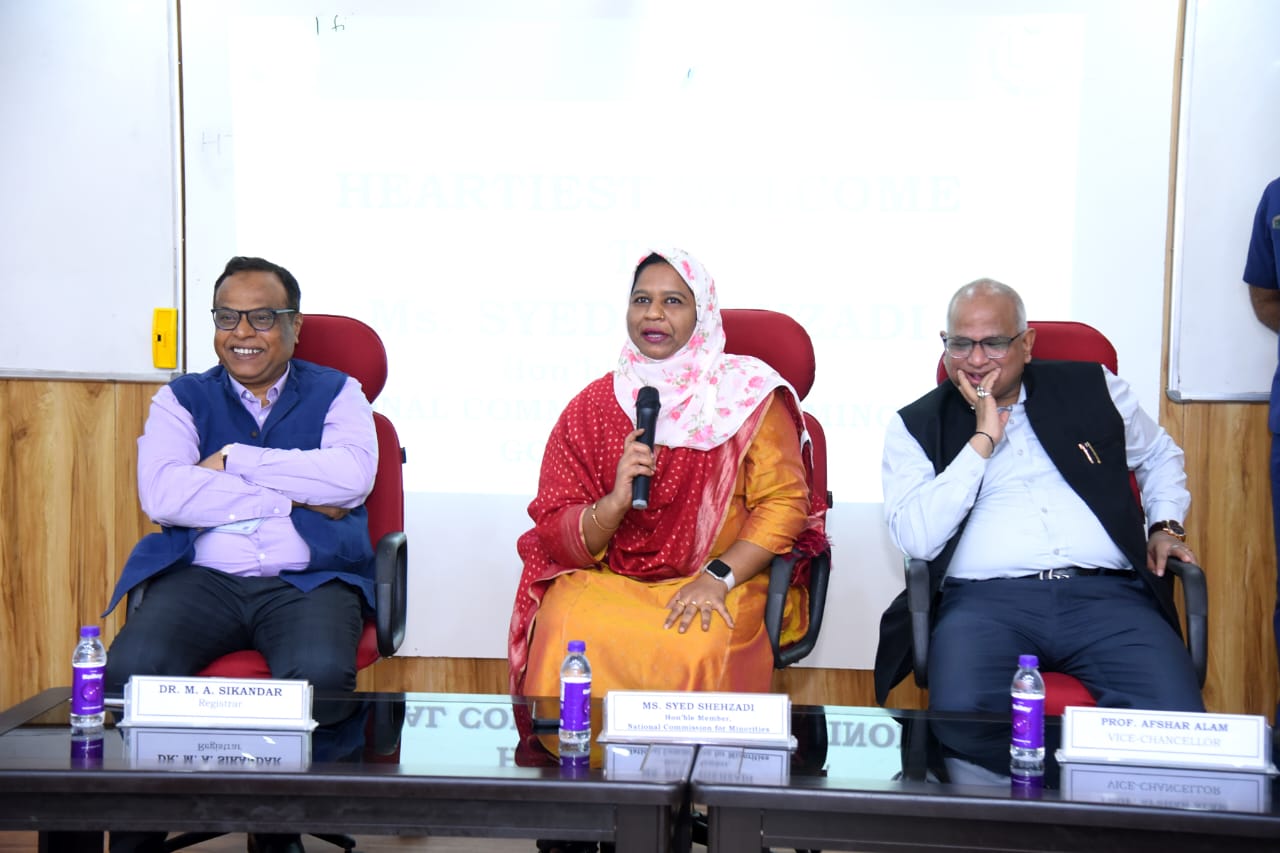
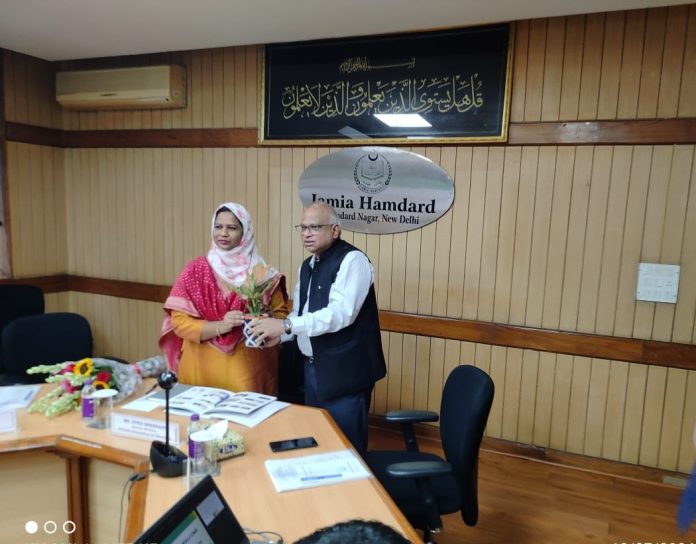
Jamia Hamdard was abuzz with excitement as Ms. Syed Shehzadi, Member of the National Commission for Minorities, Ministry of Minority Affairs, visited the campus. This significant occasion was marked by enriching interactions that left a lasting impact on students and faculty alike.

Ms. Shehzadi was warmly received at the VC Office Board Room by Prof. (Dr.) M. Afshar Alam, the Vice-Chancellor; Dr. M.A. Sikandar, the Registrar, and other senior university officials. Expressing her admiration for Jamia Hamdard’s commitment to educational excellence, Ms. Shehzadi’s opening remarks set a positive tone for the day’s events.

During a morning session with the university’s senior functionaries, Ms. Shehzadi and Prof. Alam discussed the institution’s achievements and ongoing projects aimed at fostering inclusivity. Ms. Shehzadi emphasized the crucial role educational institutions play in promoting social harmony and nurturing future leaders.

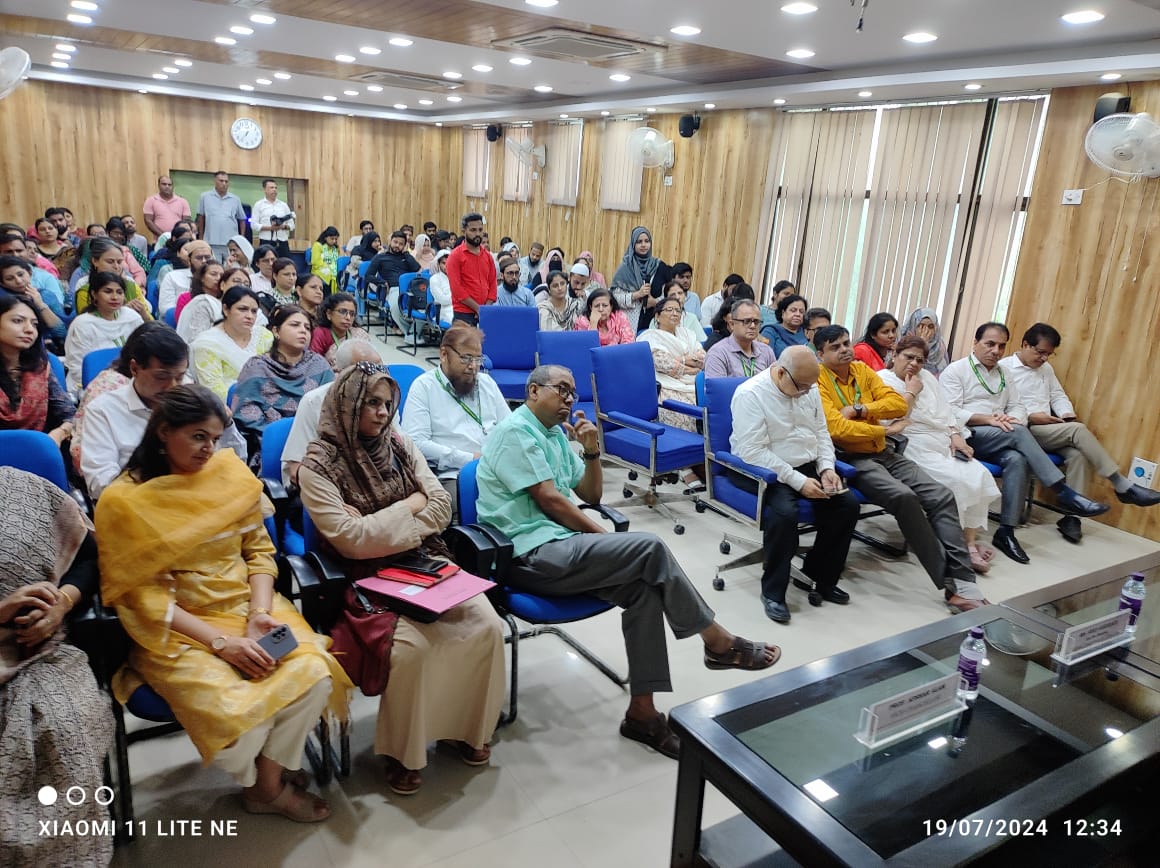
In a lively session held at the Seminar Hall of the School of Chemical & Life Sciences, Ms. Shehzadi engaged with enthusiastic students and faculty members. Her address, highlighting government initiatives for minority communities, was both inspiring and thought-provoking. She encouraged students to actively participate in nation-building activities.

The highlight of the day was the interactive Q&A session. Students asked questions ranging from educational policies to career advice, to which Ms. Shehzadi responded with insightful and motivating answers, reflecting her deep commitment to minority affairs. She urged students to be resilient, pursue their dreams, and contribute positively to society.

The visit concluded with a brief meeting where Ms. Shehzadi thanked the university officials for their hospitality and praised their efforts in creating a conducive learning environment. Prof. Alam presented her with a memento as a token of appreciation.

Ms. Syed Shehzadi’s visit was more than a ceremonial event; it celebrated shared values and reaffirmed the university’s mission to provide quality education to all. Her words resonated with everyone, inspiring students and faculty to strive for excellence and contribute to the community’s welfare.

Dr. M.A. Sikandar, Registrar, proposed the vote of thanks, marking the end of a memorable day filled with renewed energy and purpose at Jamia Hamdard. This visit will be remembered as a milestone, fostering stronger ties between the university and the National Commission for Minorities, and igniting the spark of empowerment among its students.

source: http://www.radiancenews.com / Radiance News / Home> Latest News> Report / by Radiance News Bureau / July 19th, 2024

Mangaluru’s Kian PC wins Bronze in Yonex Sunrise Karnataka State Badminton Tournament

Mangaluru, KARNATAKA :

Mangaluru:

Kian PC, a 12-year-old promising young talent from the SBA Badminton Academy in Mangalore, has secured a bronze medal in the U15 Boys Doubles category at the Yonex Sunrise Karnataka State Ranking tournament. The event took place in Shivamogga from July 1 to July 6, 2024.

Kian, guided by his coach Shreyas and supported by his partner Shivank from the DYES Academy in Bangalore, achieved this milestone in his budding badminton career. This victory marks his first medal in a state-level competition.

Kian hails from the Beary community in Mangalore and is the grandson of Prof. P.C.M. Kunhi and Dr. Abdul Majeed.

source: http://www.english.varthabharati.in / Vartha Bharati / Home> Karavali / by Vartha Bharati / July 08th, 2024

New office bearers elected for Bhatkal Muslim Youth Federation

Bhatkal, KARNATAKA :

Bhatkal: 

The Bhatkal Muslim Youth Federation (BMYF), an integral body affiliated with Bhatkal’s prominent socio-religious organization Majlis-e-Islah wa Tanzeem, announced its new office bearers on Thursday, July 11. The BMYF plays a crucial role in overseeing sports and developmental activities for the youth in and around Bhatkal through its various sub-committees.

Moulavi Wasiullah Damda Faqui of the Al Falah Youth Organisation was elected as the President of BMYF. Mubasshir Hallare from Shaheen Sports Center was appointed as the General Secretary.

The newly elected office bearers come from diverse backgrounds, representing different associations within Bhatkal, and bring a wealth of experience and dedication to their roles.

Moulavi Wasiullah Damda Faqui, the new President, is known for his involvement with the Al Falah Youth Organisation. Mubasshir Hallare, the General Secretary, is an active member of the Shaheen Sports Center and has been instrumental in organizing various sports and other events in the region.

Advocate Syed Imran Lanka from Azad Nagar Friends Association and Advocate Afaque Kola from Young Muslim Service Association have been elected as the Vice Presidents. Moulvi Iyaad S.M from Haneef Welfare Association will serve as the Secretary.

Rameez Kola of Madeena Welfare Society takes on the role of Treasurer, responsible for the financial management of the organization. Roshan Kundunguda from Al Hilal Association will serve as the Accountant.

Educational initiatives will be spearheaded by Waseem Asarmatta of Lion Sports Center, who has been appointed as the Educational Secretary. Zaheer Shaikh from Youngstar Welfare Association will focus on social activities as the Social Secretary. Talha Trichanapalli from Royal Sports Center has been elected as the Sports Secretary, tasked with promoting and organizing sports events. Moulavi Meera Pote from Coastal King Welfare Association will serve as the Discipline Secretary.

The BMYF has a long-standing commitment to promoting sportsmanship and developmental activities among the youth.

source: http://www.english.varthabharati.in / Vartha Bharati / Home> Karavali / July 12th, 2024

Tamil Nadu Reconstitutes State Minorities Commission

TAMIL NADU:

Chennai :

The Tamil Nadu government, under the leadership of Chief Minister M.K. Stalin, has reconstituted the State Minorities Commission, reported The Hindu. This significant move aims to enhance the representation and welfare of minority communities in the state.

Rev. Fr. Joe Arun has been appointed Chairperson of the newly reconstituted Commission. Rev. Fr. Arun is known for his extensive work in community service and his commitment to promoting educational and social equity.

M.M. Abdul Kuthoos, also known as Iraianban Kuthoos, has been named Vice Chairperson. Mr. Kuthoos has been actively involved in social work and advocacy for minority rights, bringing valuable experience to his new role.

The Commission’s newly appointed members include Hamilton Welson, A. Sornaraj, Nagore A.H. Nazimuddin, Praveen Kumar Thatiya, Rajendra Prasad, Rameet Kapoor, J. Mohammed Rafi, and S. Vasanth. Each member brings a wealth of knowledge and experience from various fields, including education, social work, and community development.

In addition to these appointments, the State government has also named C. Fernandas Rathina Raja chair of the Tamil Nadu Minorities Economic Development Corporation. This organization plays a crucial role in promoting economic opportunities and financial support for minority communities, helping to drive inclusive growth and development across the state.

The reconstitution of the State Minorities Commission is a testament to the Tamil Nadu government’s commitment to fostering an inclusive and equitable society.

source: http://www.radiancenews.com / Radiance News / Home> Latest News> Report / by Radiance News Bureau / July 24th, 2024

Assam highway tomb of freedom fighter Baga Maulvi is shrine of harmony

Marai Village, Siphajr (Darang District) , ASSAM :

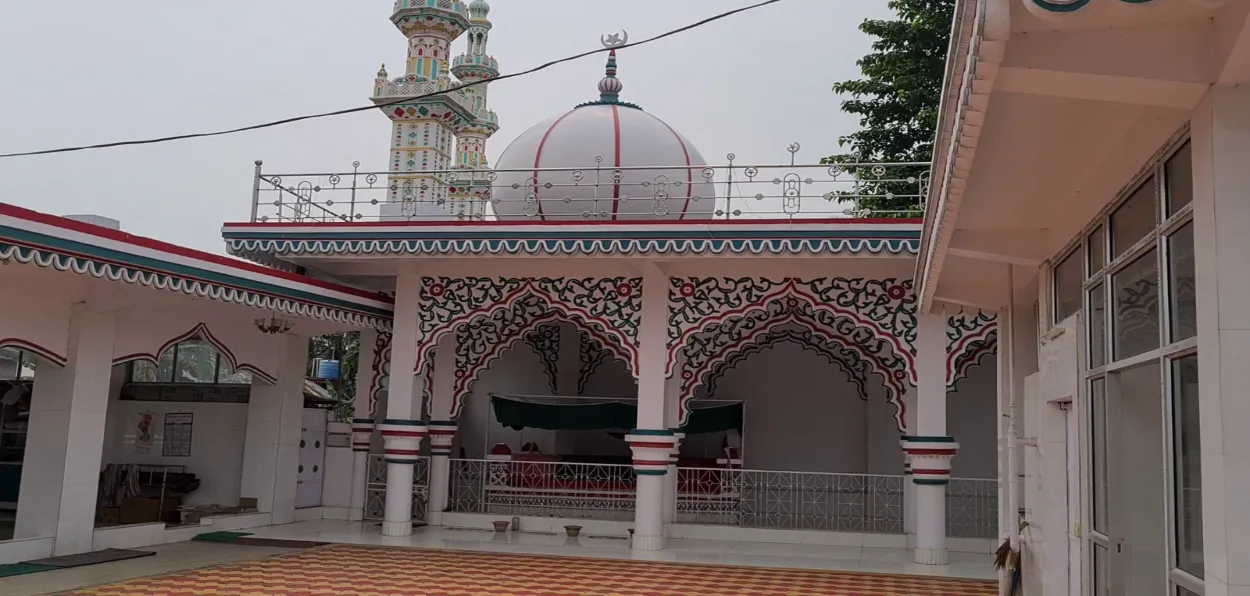
Inside the shrine of Baga Baba

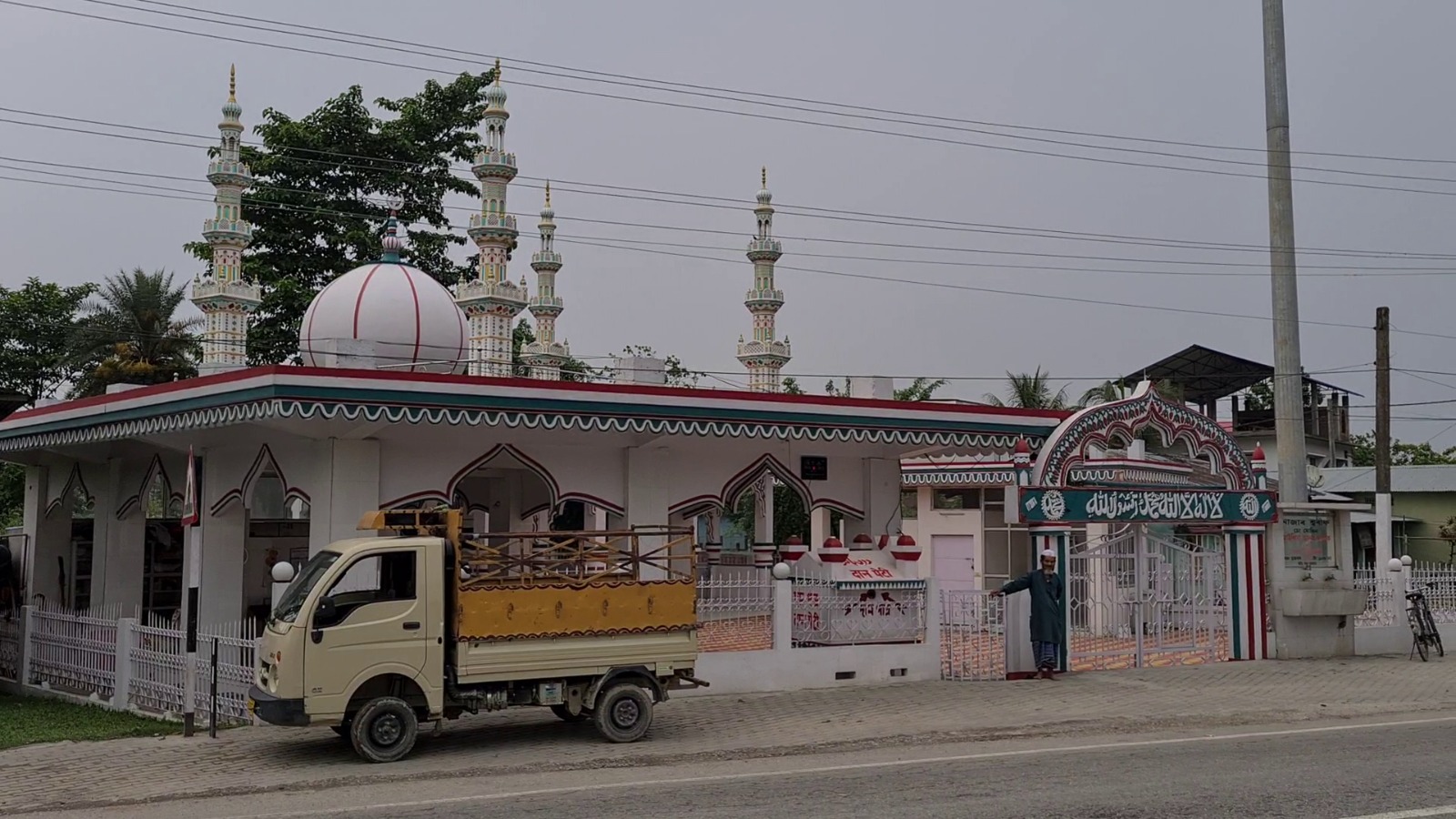
As National Highway-15 traverses through the village Marai of the Darang district in northern Assam, travellers see a shrine that commands the devotion and reverence of both Hindus and Muslims.

This is the shrine of Baba Baga which is visited by people of all faiths, and is especially popular among travelers who have taken the NH-15. Trucks and buses that come from far and wide stop here to offer prayers and make donations. All passenger buses and goods trucks stop here as the shrine management has kept drinking water available.

Baga Baba was born as Abdul Khaleque. He came to Assam in 1916 from the then Sylhet district (now in Bangladesh). Initially, he lived in Gog, Satsali, and Badalguri and finally settled down in Marai village of Sipajhar in 1919.

The shrine of Baga Baba in village Marai 

From there, he launched his mission of spreading Islam in the greater Darang district.  The Sufi cleric also joined the Indian freedom movement; he was also jailed.

Baga Baba died in 1933 and the locals raised a mausoleum (mazar) on his grave.

Speaking with Awaz-The Voice, Hafiz Ali, secretary of Baga Baba Mazar, said: “The cleric lit the torch of Islam here. Along with preaching the religion, he also spread the message of peace, harmony, and brotherhood. Then he sent Maulana Didaruddin Saheb to be educated as a maulana. Everybody believes Baga Baba to be an Auliya (master of some divine power) of Allah. Hindus and Muslims alike come here and pray.

“At present, people from all over Assam and India who travel through this highway donate at this mazar. Today the village has nine mosques. The inflow of people and pilgrims has increased over the years. Hindus and Muslims have equally contributed to it.

Drinking water facility at the shrine for travellers

The construction work of the mazar was initiated by former president Jiban Baruah. There are still many non-Muslims, such as Bhumidhar Saharia, Himanshu Kalita, and others, in the management committee of the Mazar,” he said.

The shrine hosts Milad sharif every Thursday of the week. In addition, a Urs is held every year on 12 of Magh (late January), the death anniversary of Baga Baba. People from different parts of India participate in the Urs. Although the Baga Baba Mazar is located on the northern side of NH 15, there is also a premises of the Mazar on the southern side of the road.

It is worth mentioning that the Baga Baba Mazar has played a significant role in maintaining Hindu-Muslim unity and harmony in the entire Darang district as well as in the greater Marai Bijulibari area.

source: http://www.awazthevoice.in / Awaz, The Voice / Home> Story / by Ariful Islam, Sipajhar / June 25th, 2024

Founder of Naya Nagar in Mira Road, Syed Nazar Hussain, Passes Away at 90

Mumbai, MAHARASHTRA :

Mumbai :

Syed Nazar Hussain, a pivotal figure in the development of the Naya Nagar township in Mira Road, passed away on Thursday at the age of 90. His namaz-e-janaza (funeral prayers) was held at Jama Masjid Al Shams on Friday at 2:30 PM, followed by his burial at Mira Road Qabrastan in the afternoon.

Nazar Hussain, often referred to as “Nazar Seth,” was instrumental in establishing Naya Nagar in the 1970s. Notably, he brought together the contrasting figures of Shiv Sena chief Balasaheb Thackeray and Indian Union Muslim League leader G.M. Banatwala for the township’s foundation stone laying ceremony, symbolizing his commitment to communal harmony.

Born in 1934 in Nandgaon, Amravati, Hussain moved to Mumbai at an early age. Despite limited formal education, he was a self-made man, known for his simplicity, modesty, and dedication to secularism. His efforts ensured that Mira Road remained peaceful during the 1992 Mumbai riots, a testament to his vision of communal harmony.

Hussain’s journey from performing odd jobs to becoming a significant real estate developer is marked by his deep commitment to his community. He envisioned a clean housing colony for Muslims but kept its doors open to all, fostering an inclusive environment. Today, Naya Nagar is a thriving township where shops owned by non-Muslims coexist peacefully with the predominantly Muslim residents.

Nazar Hussain valued education and, with the support of his wife Noor Jahan, ensured their five children received quality education. His elder son, Muzaffar Hussain, continues his legacy in both business and community service. Together, they have established numerous institutions in Mira Road, including schools, colleges, and a multi-specialty hospital, significantly contributing to the area’s development.

Even in his later years, Hussain remained active in his community, striving to maintain the moral fabric of Naya Nagar. His philanthropic efforts and charitable initiatives have left a lasting impact on countless lives.

As Mira Road mourns the loss of its founder, the community reflects on his legacy of unity and inclusivity. Syed Nazar Hussain’s contributions have left an indelible mark, and his memory will continue to inspire future generations.

source: http://www.radiancenews.com / Radiance News / Home> Focus> Obituary / by Radiance News Bureau / June 29th, 2024

VCK Honors Leaders for Community Service and Harmony

TAMIL NADU:

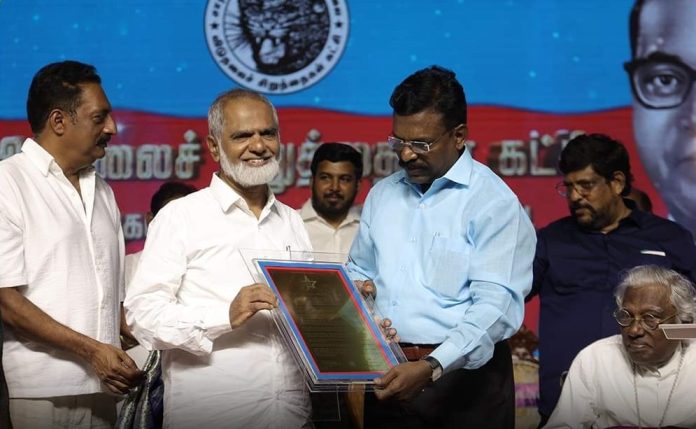
S.N. Sikkander (second from Left) receiving the award

Chennai :

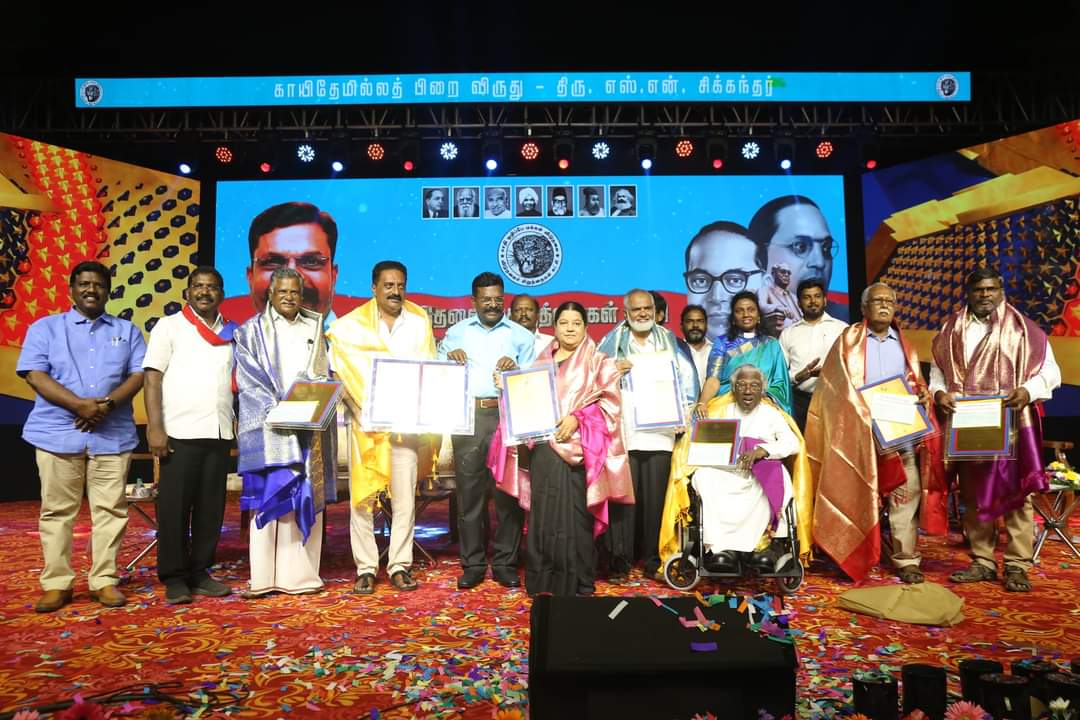
Viduthalai Chiruthaigal Katchi (VCK), a Dalit social movement and political party committed to combating caste-based discrimination and actively participating in Tamil Nadu’s politics, held an awards ceremony, on Saturday last, to honor prominent state leaders for their exemplary service to society.

VCK, currently represented by two MPs in the Lok Sabha, recognized seven individuals for their decades of selfless dedication to various social causes, ranging from political activism to fostering communal harmony

One of the distinguished awardees was S.N. Sikkander, State Secretary of Jamaat-e-Islami Hind, Tamil Nadu, former State President of Welfare Party of India, and editorial board member of Samarasam Magazine. He was awarded the ‘Qaid-e-Millath Crescent Award’ for his significant contributions to communal harmony, disaster relief efforts, and political activism.

Other notable awardees included Mr. R. Mutharasan, State Secretary of CPI; Advocate Arulmozhi, Secretary of Dravidar Kazhagam; actor Prakash Raj; Bishop Esra Sargunam; Mr. A. Subbarayulu, an epigrapher; and Professor Raj Gowthaman.

The award ceremony, held in Chennai, attracted thousands of spectators who echoed the importance of nurturing harmony, peace, and mutual respect among communities.

source: http://www.radiancenews.com / Radiance News / Home> Pride of the Nation> Awards / by Radiance News Bureau / June 01st, 2024

Prof Qamar Ahsan who became VC of four varsities

Patna, BIHAR :

Eminent educationist Professor Qamar Ahsan

It is rarely that a person becomes the Vice Chancellor of four universities.  Professor Qamar Ahsan, who was born into a middle-class family and started his education in Madrasa, is one such person.

Professor Qamar Ahsan is a top-ranking educationist and economist, who holds the distinction of being the vice chancellor of four universities. Speaking to Awaz-The Voice, Professor Qamar Ahsan said that he not only brought changes in the educational system but also started new courses, especially job-oriented ones for the benefit of students in all the four universities.

Qamar Ahsan became the Vice-Chancellor of Maulana Mazharul Haq University, Patna at its inception stage. He played an important role in shaping the University campus, curriculum, and ethos. Generally, it was believed that the path to education in a University or seminary is linear, but I believe, it should be dynamic and both the curriculum and pedagogy should change periodically. This will make the students ready for jobs and thereby increase their employability.

Speaking about his early life, Qamar Ahsan said he was an ordinary student but quite active. “I always worked with complete confidence, even today my method is the same,” he said.

Prof Qamar Ahsan with President Ram Nath Kovind

Qamar Ahsan says that self-confidence is an emotion that gives a person the courage to succeed in the environment of a comprehensive culture. “My father was in the police and he often said that everyone should live and work together. At my home, I was raised in an environment where there was no scope for hatred or negativity. We were brought up in an inclusive culture and in later days not only fostered mutual brotherhood and goodwill but also studied and grew up living with people of different religions.”

He said that it helped him as his friends (from other religions) also supported him. Prof. Qamar Ahsan has worked with many governors and is familiar with the Madrasa, School, and College education system and has worked on improving these institutions.

“When I was the Vice-Chancellor of Maulana Mazharul Haq University, I tried my best to implement modern science in madrasas, although I was not fully successful, we connected hundreds of madrasas with the university and it improved the standards of education there. I succeeded in changing the environment in the madrasa.”

Professor Qamar Ahsan was born in April 1952 in Patna. He is the fourth among seven brothers and sisters. His father Syed Muzaffar Ahsan was in police service and he retired as an Additional SP.

Prof Qamar Ahsan with his parents and siblings

According to Qamar Ahsan, their father also received a medal for his good service in the police service. “We belong to a village in Siwan district of Bihar. When my father was in the police service, he was constantly transferred and I could not study in one place. I studied in different cities and schools,”

Qamar Ahsan says that at the time he was in primary, his father was posted in Ranchi where he was admitted into Madrasa Islamia. Thus his formal education started from a seminary. Next, his father was posted to Muzaffarpur CBI, so he joined a Pathshala. He then joined an English medium school and later the famous Miller School This trend continued and finally, Qamar Ahsan joined Patna College for higher education.

Prof Qamar Ahsan says Patna, the city of his birth, was quite famous for its educational institutions. “One of these was the Patna University. At that time this university was well respected. I was admitted into the Patna College.”

According to Qamar Ahsan, when he reached Patna College and Patna University, he could understand life from a different perspective. “I did my BA and MA in Economics. I was an average student but very sensitive about my course and my studies.”

The Patna University, education was quite good; it charged a nominal fee and the University Library was a treasure trove. “I used to read non-syllabus books more than my course books. My father also encouraged me in this regard and I started reading a lot of novels and story books. I read Premchand and Ismat Chaghatai and in between I also read a lot of English novels. This broadened my horizons of thinking and understanding.”

He said that at that time JP (Jay Prakash Narayan) Moment was at its peak and he too joined it. He earned her doctorate from Ranchi University. “In the meantime, after MA, I got a job at Magadh University in 1977. Although my father had wanted me to join the civil services, I always wanted to be a teacher. So when I joined the college as a teacher, my dream had come true. I was quite happy and excited. I wanted to share my experiences with students and take practical steps to improve the system.”

Prof Qamar Ahsan with his wife, children and grandchildren parents and siblings

Interestingly, Qamar Ahsan’s grandfather was the Head Maulvi at ​​Chapra District School. ‘I had the experience of studying in different schools and mentally I was passionate about teaching. When my dream became a reality, I turned my full focus to teaching students and improving their academic standards. Then I got transferred to AN College, Patna, and was promoted as a Reader. Since then I never looked back and received promotions regularly.”

He first was appointed the registrar of Nalanda Open University, then Veer Kaur Singh University, and Maulana Mazharul Haq University of Bihar

Given his excellent educational experience, the government appointed him the Vice Chancellor of the BN Mandal University, Madhapura. He remained in the post from 2006 to 2008.

During this period he made the university clear a huge backlog of examinations and corrected the system. He tried to improve the attendance of teachers, and students; establish an educational environment, and promote curricular and extra-curricular activities in the campus and colleges under its jurisdiction. He introduced job-oriented courses in the university as well as improved the financial condition of the institution.

Prof Qamar Ahsan says,” I was given an opportunity to become the vice chancellor of various universities and in the meantime, I tried to provide job-oriented courses to the students so that their migration could also be stopped. Bihar students usually go abroad for job-oriented courses, I tried to start the same courses for which they would go abroad.”

In 2008, Professor Qamar Ahsan was made the Vice Chancellor of Maulana Mazharul Haq University, Patna. When he came to take charge, the University was in a small government building on Bailey Road, Patna. The Maulana Mazharul Haq Arabic and Persian University was established in 1998 and despite the appointment of three Vice-Chancellors, it did not take off till 2008. It was a University on the papers.

Prof Qamar Ahsan with Sushil Modi while inaugurating a University

Qamar Ahsan says, “I formulated a plan of action and the university was functional within three months. Today, more than 20,000 students are studying in different departments at this university.”

He said that the University has more than four dozen Knowledge Resource Centers throughout Bihar and arrangements have been made to provide regular education to 116 higher education institutions near Madrasas and Fazil.

The university has a strong management of teaching as well as training. Professor Qamar Ahsan was the Vice-Chancellor of Maulana Mazharul Haq University till 2011.

Mazharul Haq University started various courses at that time, in which BBA, BCA, BJMC, MBA, B.Ed, etc. are noteworthy. He said that this university was also related to madrasas, so in the meantime, I tried to correct the higher education system of madrasas, but some people did not approve of it.

Professor Qamar Ahsan says that my experience with madrasas is that there are two types of madrasa, one is a madrasa where religious education is given and the other is the one where all subjects are taught. I believe that normal education should also be introduced in the former while in the latter category, the curriculum needs to be modernized to make the alumni job worthy.”

He said that the curriculum and teaching method should be changed from time to time.

“When I was the VC of Maulana Mazharul Haq University and during my visits to the madrasas, I noticed that students showed up only on the day I visited these. That too only 50 percent of the students were present.”

Prof Qamar Ahsan delivering a lecture

This would change if the curriculum included research. “If there is a research curriculum then the students will benefit and the subject should be taught as per the demand of the market.”

After Maulana Mazharul Haq University, Prof. Qamar Ahsan became the Vice Chancellor of Sidhu Kanhu Murmu University, Dumka, Jharkhand and then of Magadh University.

Meanwhile, according to his vision, he continued to solve the problem of education quality of students, better university system and teachers. Qamar Ahsan is the author of about 9 books and more than 30 of his papers have been published in major journals of the country. He has been a member of the editorial board of NCERT, IGNOU and various journals. Professor Qamar Ahsan says that whether a student is successful or reaches a position, he should not forget honesty and hard work. Only those people who have the confidence and passion to do something achieve success in life.

Prof. Qamar Ahsan was born and brought up in Patna, son of Syed Muzaffar Ahsan and Nafis Fatima Naqvi. He has distinguished himself as an educator, educational administrator and educational innovator. He said that by the 10th class, every child should make his own goal of what he wants to do in his life. “People who do not fix their goal often fail,” Qamar Ahsan says.

He says he had made his goal clear as soon as he passed matriculation and it was he wanted to become a teacher.

Professor Qamar Ahsan got married in 1980, he has two children and his wife is also a school teacher. The elder of the two children, the daughter has shifted to the Netherlands and the son lives with them. He said that they are seven brothers and sisters. Four are in the US, and one is in England.

According to Qamar Ahsan, he had also shifted to the USA and had obtained a green card. However, due to his mother’s health, so returned and then decided to continue his services for the country.

Although most of his family has shifted abroad, Qamar Ahsan says he is satisfied with his life.

source: http://www.awazthevoice.in / Awaz, The Voice / Home> Story / by Mehfuz Alam, Patna / May 30th, 2024