Category Archives: Uncategorized

Indian Muslims played a role in development of democracy

INDIA:

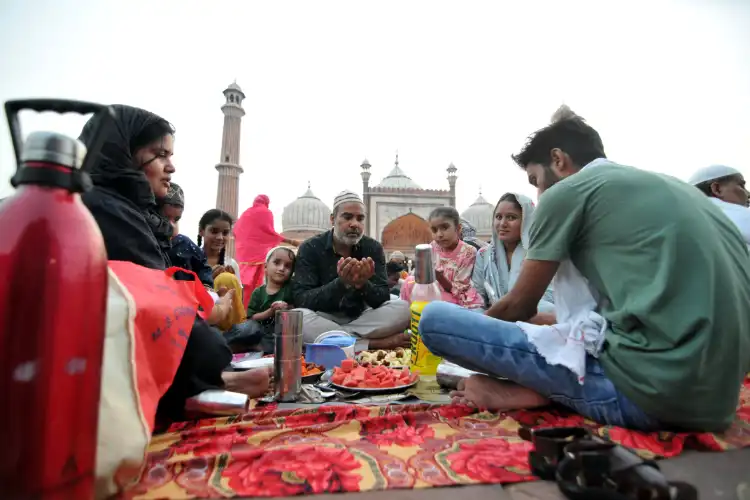
Indian Muslims - families breaking Ramazan fast at Jama Masjid of Delhi (Pics: Ravi Batra)
Indian Muslims – families breaking Ramazan fast at Jama Masjid of Delhi (Pics: Ravi Batra)

The world is celebrating the International Day of Democracy to emphasize the importance, strengths, weakness, and other aspects of this most popular system of government. In India, the largest democracy in the world, people are often misinformed about the commitment of Indian Muslims toward establishing democracy in the country. The misconception mostly arises from taking a few anti-democratic fanatics as representatives of the society

International Day Of Democracy 

Muslims have remained at the forefront of the battles fought for establishing democracies in India. It should not be lost that the equal voting rights for Indian women were won in 1935 after a political battle led by Begum Jahanara Shahnawaz. She was the only woman representative to attend all three Round Table Conferences (RTC) in the early 1930s where discussions over certain autonomies to the Indians were discussed. At RTCs, Begum raised the point that women should be given equal rights when choosing a representative to legislatures.  

After the RTCs were concluded she remained in England and created public opinion in favour of Indian women’s rights by meeting important politicians of England. When the Government of India Act, 1935, was finally drafted, Indian women were given voting rights. 

Begum’s was an important victory but far from what India wanted. The franchise was not a universal adult franchise. Only people with a certain level of economic assets or education were allowed to cast votes. Moreover, Muslims and Sikhs could vote only for their coreligionists, a system called separate electorates. Muslim leaders like K. A Abdul Hamied, Maulana Abul Kalam Azad, Zakir Husain, and others have blamed separate electorates for the ‘success’ of the Muslim League. We often miss noticing that in 1946 Muslim League won a majority of Muslim seats under a system where only affluent people could vote while a majority of Muslims, who were backward, couldn’t.

In 1940, Maulana Ubaidullah Sindhi, a revolutionary and Islamic scholar, chalked a plan for the future of India. He asked his followers to oppose separate electorates and a system where only elites could vote. Sindhi wrote, “our party will obviously work in a Muslim majority province (Sindh), but it will operate on the principles of joint electorates. If Muslims are such cowards that they cannot win the confidence of fellow Hindus and Sikhs to win elections and need crutches of separate electorates then this community should be terminated.” 

During the Constituent Assembly debates, Maulana Hasrat Mohani, the man who coined the slogan Inquilab Zindabad, demanded that a Constituent Assembly elected based on separate electorates should not draft the constitution of a Free India. Hasrat Mohani was one of the members of this Assembly and served on the drafting committee. On 4 November 1948, he moved an amendment saying, “the consideration of the Draft Constitution of India be postponed till the election of a fresh and competent Constituent Assembly on the basis of Joint Electorates and the formation of political rather than communal parties in India.”  

When a proposal to reserve seats for minorities was put in front of the Assembly, Mohani vehemently opposed the idea and got it removed. He said, “there is absolutely no need for reservations after we have made provision for joint electorates and adult franchise.…… On a communal basis, you are making its scope limited as you have already said that you would like to give reservations to the Muslims because they are in minority…..Why do you call the Muslims a minority? They can be termed as a minority only when they function as a communal body. So long as Muslims were in the Muslim League, they were in a minority. But if they elect to form a political party without any restriction leaving it open to any community, then you should remember that whenever political parties would be formed, the Muslims would give fight by forming coalitions.”

In 1951, after the Constitution of India was adopted Maulana Husain Ahmad Madni in his presidential address to Jamiat-e-Ulema-e-Hind, one of the largest body of Islamic scholars, said that now the country had adopted a system where the political rights of every individual irrespective of creed were equal therefore every Muslim must strengthen this democracy. He believed that Islamic scholars could teach and guide Muslims in a way that they work towards a secular and democratic India.  

The list is long and I have tried to show that every kind of prominent Indian Muslim – women, Ulema, and socialists, had put their efforts into making India the largest democracy.

source: http://www.awazthevoice.in / Awaaz, The Voice / Home> Culture / by Saquib Salim / September 15th, 2022
When an Indian Muslim soldier shot his younger brother in war against Pakistan

INDIA :

Don’t grieve Chotey. We are soldiers and we did our duty, cried out Younus Khan after shooting and injuring his brother on Pakistan side of the border.

In my childhood days, there was a rumour in my hometown, Deoband, that Late Haji Mastan had approached the authorities of Darul Uloom Deoband for permission to shoot some scenes in the world-known Islamic seminary for a film he was planning to make. The film’s story was said to revolve around a Hindu lady in pre-partition India who adopts a Muslim boy and brings him up with her son of the same age.

After the tragedy of the partition in 1947, the Muslim boy migrates to Pakistan. The two brothers join the Pakistani and Indian air forces as pilots. In the 1965 Indo-Pak war, they face each other in a dogfight in which their aircrafts crash and both of them die. In the last scene, the mother was stated to be hugging the dead bodies of her two sons on each of her shoulders.

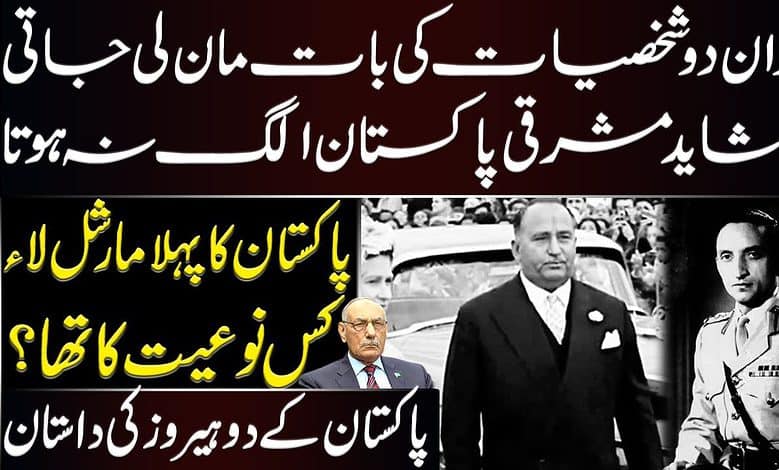
I was reminded of this unconfirmed story after listening to the reallife  episode told in this V-blog of Lt Gen (R) Amjad Shoaib of Pakistan. He describes how Sahibzada Yaqub Khan, who later became Pakistan’s Foreign Minister, was injured by his elder brother Yunus Khan while defending their countries. ((Watch the clip from 9:20-11:09)

Sahibzada Yaqub Khan was born in Rampur in the Nawab family (Gen Shoaib confuses the Nawabs of Rampur with the Nawab of Pataudi). He and his elder brother Yunus Khan had joined the British army in pre-partition days. When partition happened, Yaqub Khan joined the Pakistani side and Yunus Khan, the Indian army. In the 1948 Indo-Pak war, the brothers came face to face leading their battalions as majors on the Kashmir border, and Yunus Khan fired at and injured Yaqub Khan. When he realised that the soldier he had injured was none other than his own brother he shouted: ‘Don’t grieve Chotey. We are soldiers and we did our duty.’

When Colonel Maneckshaw, who retired as Chief of the Indian Army Staff, learnt about the incident, he commended Yunus Khan and also said sorry for his brother. The two brothers met in Calcutta after 36 years at the wedding of Yaqub Khan. They hugged each other and wept.

What it also shows, which the hard and soft-Hindutva elements fail to see, is that the love of Indian Muslims for their motherland is in no way less than all anybody else in the country. They fail to understand that Indian Muslims were neither the ‘enemies within’ in 1947 nor are they today. The Hindutva goons need to realise that they are serving neither their religion nor the country by creating and intensifying the venomous and destructive narrative. Which idiot in the world can imagine himself to be safe when his neighbour’s house is on fire?

In 1947 Indian Muslims were deprived of not only leadership but also educated members of the community, as the clip shows. Their extended families got divided. There are still relatives on both sides of the border who have not seen each other for years and are desperate to see their loved ones at least one last time. Even those born in US and UK with nationalities of these countries but parents of Indian and Pakistani origin face unnecessary bureaucratic difficulties in getting visas to go and see their grandparents in India. Late member of parliament Syed Shahabuddin used to refer to Indian Muslims as the ‘casualties of partition.’

From Major Yunus Khan, Brigadier Usman, and Havildar Abdul Hamid to the martyrs of Kargil, time and again, the sacrifices of Indian Muslims bear testimonies to their patriotism.

source: http://www.siasat.com / The Siasat Daily / Home> Featured News / by M Ghazali Khan / December 31st, 2022

Dr Suhel Ajaz Khan to be next Indian ambassador to Saudi Arabia

INDIA:

He is expected to take up the assignment shortly.

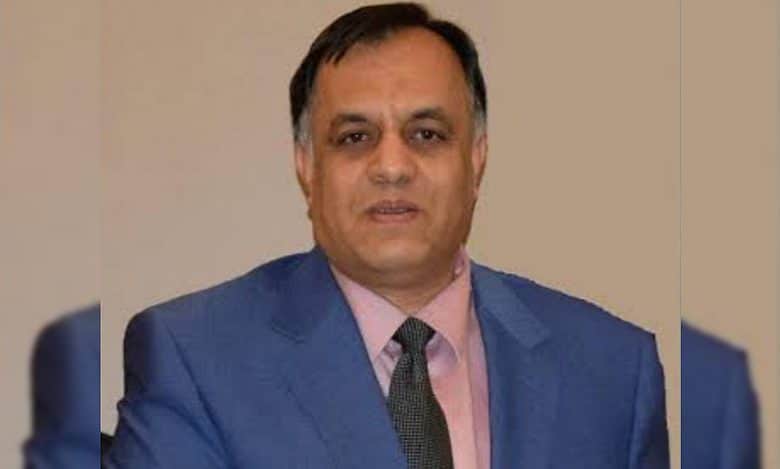
Dr Suhel Ajaz Khan

Riyadh:

Senior diplomat Dr Suhel Ajaz Khan has been appointed as the next ambassador of India to the Kingdom of Saudi Arabia (KSA), the Indian ministry of external affairs announced on Thursday.

He is expected to take up the assignment shortly.

From March 2022, the post was vacant after Ausaf Saeed was promoted as secretary, of overseas Indian affairs in the country’s Ministry of External Affairs.

N Ram Prasad, deputy chief of mission at the Indian Embassy in Riyadh was in charge instead.

About Dr Suhel Ajaz Khan
Dr Suhel Ajaz Khan a 1997 batch IFS officer, is presently serving as Indian ambassador to Lebanon.


Dr Khan’s first foreign assignment was to the Embassy of India, Cairo where between 1999-2001, apart from the other duties at the Embassy, he obtained an advanced diploma in the Arabic language from the American University, Cairo.


He later served at the Indian Embassy in Damascus, handling administration, press and political affairs between 2002-2005.


His next assignment was as Consul at the Consulate General of India, Jeddah between 2005-2008, where he was handling a number of issues including the Haj matters and Haj arrangements for the Indian pilgrims.
Later, Dr Khan worked as Deputy Secretary in the WANA (West Asia North Africa) Division of the Ministry of External Affairs between 2008-2009 followed by a stint at the Indian High Commission, Islamabad between 2009-2011 where he handled Visa and Consular matters.


Between 2011 and 2013 Dr Khan served as a director in the office of the Minister of State for External Affairs Mr E Ahamed.


Between 2013 and 2017 he was part of the Indian delegations to the IAEA (International Atomic Energy Agency), the UNIDO (United Nations Industrial Development Organization) and the UNCOPUOS (United Nations Committee on Peaceful Uses of Outer Space) meetings.


He was also the Head of the Indian Delegation to the Vienna Conference on the Humanitarian Impact of Nuclear Weapons in December 2014 in Vienna.
Dr Khan served as a member of the United Nations Pension Board in 2016 and 2017.


Khan worked at the Indian Embassy in Riyadh between September 2017 and June 2019 as Deputy Chief of Mission.
Khan arrived in Beirut on June 21, 2019.


Dr Khan has a graduate degree in Medicine from M.G.M. Medical College in Indore, India.

Dr Khan is married and his wife Rifat Jabeen Khan has long experience working in International and UN organizations. They have two daughters.

source: http://www.siasat.com / The Siasat Daily / Home> News> India / by Sakina Fatima / December 22nd, 2022

Know Your Nation: Prof. Masood completes 100-lecture series

INDIA:

Hyderabad: 

Who doesn’t chat up with utter strangers during journeys? Everyone does and the talk usually runs around inane things which lead to nowhere. Imagine such casual conversation resulting in something big – even constructive.

It happened with Prof. Masood Ahmed of Hyderabad. Once he was travelling to Mumbai by train and struck a conversation with his fellow traveller, an engineering student. As the conversation progressed, he was surprised to learn that the boy had no inkling of what economy is all about and what inflation is. “This is not part of our syllabus,” the youngster replied when the professor expressed surprise.

That was the turning point. It led Prof. Masood to embark on a journey of lectures on the topic – Know Your Nation. This fruitful lecture series touched the 100th mark recently. “I never thought these talks would last this long,” says the incredulous professor.

Former president of Association of Indian Management Schools, Prof. Masood delivered his first talk on August 1, 2015 to students and faculty of CORE School of Management, Roorkee, UP. The 48-odd participants hung onto each word and were visibly satisfied with the knowledge gained. As word spread, there was demand for such lectures and Prof. Masood delivered ten more lectures that very month in the Master School of Management, Meerut, Birla Institute of Technology, Ranchi, ICBM School of Business Excellence, Hyderabad, Hyderabad Business School, GITAM University, Birla Institute of Management and Technology, Noida.

There was no looking back. The lectures, which focus on India’s economic scenario, education status and employment opportunities, took him all over the country and even abroad. He addressed packed conference halls in business schools, engineering and medical colleges and other institutions. In 2016 he delivered a talk to Deans and Directors of Business School of South Asia, Sri Lanka and next year at the University of Liberal Arts Bangladesh, Dhaka. He delivered similar lectures in Muscat, Jordan and Qatar.  Prof. Masood’s 100th lecture was delivered on December 26, 2022 at the Shaheen Group of Institutions, Bidar.

Prof. Masood makes his talks appealing with power point presentations packed with interesting nuggets of information. What do 7 billion people do? He asks and then goes on to inform that 1.4 billion work in agriculture, 1.7 billion in services, 800 million work in industries while over 400 million are entrepreneurs and 430 million are unemployed. And 1.9 billion are too young to work (0-15 ages). He reels out quick data like South Asia being home to a quarter of world population, India fact sheet about population, health and literacy rate, Central government expenditure, growth projects, human development index, how India ranks in ease of doing business. There are a whole lot of other details too.

There is woeful lack of knowledge about these things both among students and adults. “You should know yourself, your organisation and your nation. This is the prerequisite for progress,” says Prof. Masood. And he believes that thirst for learning, consistency in relearning and adopting unlearning are the keys for professional growth.

What next? A health care management expert, he is now planning to launch 100 interesting lectures on the subject – Know Your Health. Those who want to avoid going to hospitals can look forward to them.

source: http://www.siasat.com / The Siasat Daily / Home>Opinion / by J S Ifthekhar / January 02nd, 2023

More than a Hagiographical Account

Aligarh, UTTAR PRADESH :

What binds the fifteen iconic texts, “High school English Grammar and Composition” (Wren and Martin,1935),” Arithmetic” (Jadav Chandra Chakravarty, 1890), “Algebra (Jadav Chandra Chakravarty,1912), ” An Introduction to the study of Indian History” (D.D. Kosambi,1956),” Sultan Mahmud of Gazana” (Professor Mohammad Habib,  1956),” The Agrarian System of Mughal India” (Irfan Habib,1963),” Toba Tek Singh” (Sadat Hasan Manto,1953),  The Serpent and the Rope(Raja Rao,1963), Twilight in Delhi(Ahmad Ali,1943), Lihaf(Ismat Chughtai 1943),” Aapbeeti” (Abdul Majid Daryabadi,1978), “Aag ka Dariya” (Qurratul ain Haider1951),” Aab-e- Gum(Mushtaq Yusufi,1990), “Isme Azam” (Shaheryar,1968),  and “And Then One  Day (NasiruddinShah,2014) together?

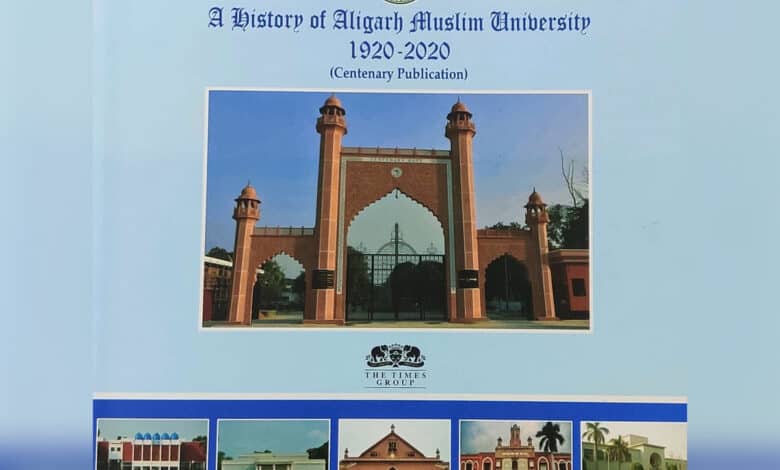
This seemingly perplexing question may leave many to grope for answers. One leaves surprised to learn that these questions are related to Aligarh Muslim University. A well-documented bookmarking of the centennial of the Aligarh Muslim University settles the issue. It is the institution where academicians produced the best graduate textbooks on Mathematics, History, and English Grammar, and its alumni contributed significantly to the collective life of India. These unheard but vital aspects of the university (It has been frequently, though erroneously described as the hotbed of Muslim communalism) are exhumed by the recent archival research in the book. The book,  A History of Aligarh Muslim University, astutely edited by Asim Siddiqui, Rahat Abrar and Faiza Abbasi, is published by The Times of India  Group, 2020).

Not infrequently, one finds AMU is being pilloried for the crimes it never committed. Recently CAA protest and hanging of Jinnah’s portrait, and covid casualties at the AMU medical college disproportionately highlighted by media, dented the academic and secular credentials of the university. The publication, offering more than glowing hagiographical descriptions, seeks to locate the university in shaping the collective life of Indians, especially Muslims, in the last one hundred years. The university’s contribution, not much visible in the public domain, is delineated with a sense of admiration and objectivity in almost equal measure. It is not always prejudice,   discrimination and political hostility that accounts for the university’s decline.

The centenary volume springs up some pleasant surprises as it reveals that the most influential textbook on English grammar in the subcontinent was coauthored by Henry Martin, who was the pro-vice-chancellor of Aligarh Muslim University from 1930-to 1931. Similarly, the author of the two most popular books on arithmetic and algebra was written by Babu Chand Chakravorty (1855-1920), who served in the Department of Mathematics. Eminent Historian and mathematician D.D.Kosambi (1907-1966) and renowned French mathematician Andre Weil (1906-1998), known for his seminal work on number theory, were also associated with the Department of Mathematics.

. The famous scholars of medieval history, Professor Mohammad Habib (1895-1971) and Irfan Habib (1931), were the faculty members and Sadat Hasan Manto (1912-1955), Raja Rao (1908-2006), Ahmad Ali (1910-1994, Ismat Chughtai (1915-1991), Abdul Majid Daryabadi (1892-1977), Qurratul Ain Haider (1927-2007), Mushtaq Ahmad Yusufi,(1923-2018), Shahryar(1936-2012) and Naseeruddin Shah(1950) were the students.

Indeed more than a glossy coffee table book spurring visual spectacle instead of conjuring up cerebral response,  the book is skillfully divided into six sections such as” Important Milestones, Builders of the Aligarh Muslim University, towards the making of Modern India, Realizing the idea of a university, Evolution of university, and Distinguish visitors to Aligarh Muslim University.

Aligarh Muslim University has produced two Barat Ratan awardees, Khan Abdul Ghaffar Khan (1890-1988) and Zakir Hussain (1897-1969) and its contribution to the Indian national movement, despite the marked fascination of its student for the Muslim League in the late thirties and forties, is enormous as its students Shaukat Ali, Mohammad Ali, Hasrart Mohani, Rafi Ahmad Kidwai, Raja Mahindra Pratap, Mohammad Yunus, Saifuddin Kitchlu, Abdul Majeed Khawaja, KM Ashraf,  Qazi Jaleel Abbasi, Sheihk Abdullah,  Abbas Ali and after partition, Mohsina Kidwai, Anwara Taimur,  Saheb Singh Verma,  Arif Mohammad Khan, Azam Khan and many more dominated the political arena.

Not people know that iconic dhrupad singer Rahimuddin Khan Dagar (1901-1976) completed his graduation from Aligarh Muslim University. A Padma Bhushan awardee. Ustad Rahim Uddin Khan Dagar contributed immensely to articulating a distinct variation of Dhrupad, the oldest existing form of Hindustani classical music, The Dagar Bani. He blazed a new trail in dhrupad singing. He preferred a lower octave and hardly used Madhya and taar saptak, the highest notes. Asim Siddiqui, one of the editors and a known scholar of film studies, took pains to highlight the lesser-known contribution of AMU to the Indian film industry. With a marked sense of academic rigour, an awe-inspiring list is produced that includes the name of the original pin-up girl of Hindi cinema Begum para, Renuka Devi, Khwaja Ahmad Abbas, Akhtarul Iman, Jan Nisar Akhtar, Shakeel Badayuni, Talat Mahmood, Rahi Massom Raza, Saeed Jaffery, Surekha Sikri,   Naseeruddin shah, Javed Akhtar, Muzaffar Ali, Anubhav Sinha,  Dilip Tahil and the like. Acclaimed playwrights Habib Tanvir and Asghar Wajahat studied here. Its alumni were globally acclaimed printmaker Zarina Hashmi and famous collage painter Farhan Mujib.

Passion for literature has been the hallmark of the university. It produced many writers who wrote in Urdu, English, Hindi, Malayalam and Assamese and bagged the highest literary awards, including Jnanpith, Sahitya academy award and Iqbal Samman. The celebrated authors groomed by the university seem to be ever-growing, and some prominent are; Hasrat Mohani, Moulvi Abdul Haq, Rasheed Ahmad Siddiqui, Abdul Majid Daryabadi,  Josh Malihabadi, Raja Rao, Ahmad Ali, Majaz, Sadat Hasan Manto, Hayatullah Ansari,  Ale Ahmad Suroor, Qurrarul Ain Haider, Ali Sardar Jafri, Ismat Chughtai, Mushtaq Ahmad Yusufi, Mukhtar Masood, Asloob Ahmad Ansari, Waheed Akhtar,  Munibur Rehman, Reyazur Rehman Sherwani,  Nazeer Ahmad,  Nebakant  Barua, KP   Singh,  Namita Singh,  Ifthikhat Alam Khan, Ather Siddiqui, Azarmi Dukht Nahid Safavi,  Yaseen Mazhar Siddiqui and many others.

It is not that Aligarh Muslim University puts a premium on oriental learning, languages, and literature. It strove to propagate science almost equally in line with its founder’s dream. Many faculty members and students have been recognized internationally and nationally. The book provides an exhaustive list of figures Obaid Siddiqui, Zahoor Qasim, Shamim Jairaj puri, Shahid Jameel, Muzaffar Ali, Fakhruddin Ahmad, Mohammad Shafi, Abrar Mustafa Khan, Narendra Kumar Govil, Premnath Ganju, Piara Singh Gill, Salim uz zaman Siddiqui, Akhlaqhur Rehman Kidwai, Asoke Nath Mitra and Qudsiya Tehsin etc.

The Aligarh Muslim University made a sterling contribution to Urdu, English journalism and electronic media. It was the first university to introduce a course in journalism in 1938, and the course was abruptly scrapped in 1941. The full-fledged department of Journalism came into existence much later. However, its alumni made a mark at the international and national levels. Some of them are Saif Khalid(Aljazeera), Anuj Kumar (the Hindu), Brijendra Prashar (The Hindustan Times), Navaid Anjum(OutLook), Arfa Khanum Sherwani (The wire), Romana Israr( ABP news0, Sumera Khan ( TV9) Hina Zubair(ETV Urdu), Ehtisham Khan ( TV 18 ), Jeelani Khan ( Resident editor, Inquilab), Ismaeel Zafar Khan (group editor, Rashtriya Shara) Mohammad Anas ( Sunday Guardian), Ehtisham Ali Khan (NDTV), Poonam Sharma(Aajtak) and the like.

Since its inception AMU has been known for promoting sports and perhaps it was the institution that set up a cricket club and Rudyard Kipling mentioned it. It hardly surprising to find that Wazir Ali, Nazir Ali, Lala Amarnath Syed Mushtaq Ali, Jhangir Khan, Mohammad shahid, Rizwan shamshad and ace hockey players BP Govinda, Inamur Rehman, Zafar Iqbal, Aslam Sher Khan and many more studied here.

Several books on AMU has been published   in the centenary year. The Sir Syed academy too published three volumes of the collected works of Sir Syed and seminal works of Christian Troll, GFI Graham, David Lelvyeld and Gail Mainult have been published by the academy.  The centenary volume encapsulates what AMU is all about with a sense of ease and objectivity.

Shafey Kidwai is a bilingual critic who got Sahitya Academy Award in 2019 for Urdu. He  is professor of Mass Communication at Aligarh Muslim University.

source: http://www.siasat.com / The Siasat Daily / Home> Featured News / by Shafey Kidwai / April 25th, 2022

Bhopalites Remember Eminent Scholar Qazi Wajdi-ul-Hussaini

Bhopal, MADHYA PRADESH :

Late Allama Qazi Syed Abid Ali Wajdi-ul-Hussaini.

Bhopal:

A two-day national seminar was organized to acknowledge the intellectual prowess of Allama Qazi Syed Abid Ali Wajdi-ul-Hussaini, a towering personality known across the Islamic world.

It was organized at the initiative of Adv. Haji Mohammad Haroon.

He was Bhopal Shahar Qazi for nearly three decades from 1961 to 1990 when he left for his heavenly abode. He authored many books and was also a Freedom Fighter as he had actively taken part in the Quit India Movement.

Qazi Syed Abid Ali Wajdi-ul-Hussaini, was a symbol of communal harmony and ensured that there was never any communal conflict. People of other faiths stood in awe with folded hands whenever they saw him passing by. He led a simple life and had close relations with religious personalities of other faiths. 

Adv. Haji Haroon, president Maulana Barkatullah Bhopali Education Society, and his team organised the national seminar on life and works of late Qazi Maulana Syed Abid Ali Wajdi-ul-Hussaini the other day here at Barkatullah Public School. The seminar was held under the auspices of Maulana Barkatullah Bhopali Education Society.

A versatile personality

Dr. Mohammad Nauman Khan, a retired Professor of NCERT, in his keynote address said that Allama Wajdi-ul-Hussaini was considered to be one of the great and talented personalities of his time. He was an institution in his own right due to his versatile and all-round personality.

Dr. Nauman said he was not only a religious scholar, Mufti, Qazi, Muhaddith, commentator, thinker, researcher, historian, eloquent speaker, qualified translator, teacher and intellectual, but was also a Qadir-ul-Kalam poet and writer. He had equal proficiency in different languages, familiarity with different academic, literary and religious studies, national unity, and adherence to Islamic and Indian common culture. His wide observation and study made his personality a source of knowledge and awareness.

Allama Wajdi-ul-Hussaini’s maternal grandfather, Hakeem Hafiz Abdul Hafeez Khan, wanted to make him Hakeem (a Unani medical practitioner) like him, but this noble soul preferred to become a religious scholar and chose the profession of teaching. Along with all his virtues, his righteousness was that he was a pioneer of national unity. He had good relations with followers of every religion, Dr. Nauman revealed.

The inaugural session of the seminar was presided over by present Bhopal Shahar Qazi Maulana Syed Mushtaq Ali Nadvi. While Dr. Sheikh Aqeel Ahmed, Director of National Council for Promotion of Urdu Language (NCPUL), New Delhi, participated as chief guest.

Adv. Haji Haroon,welcomed the guests. In his welcome speech he said that Qazi Wajdi-ul-Hussaini resides in the heart of every Bhopalite. The aim of this seminar is that the new generation can also get to know about this great personality.

On this occasion Adv. Haroon announced that a program will be organized every year in the memory of Qazi Wajdi-ul-Hussaini and two awards will be presented in his name every year. We will also try to publish his unpublished works. In this regard, a committee will be formed to carry out this work, he added.

While presiding over the inaugural function, Bhopal Shahar Qazi Maulana Syed Mushtaq Ali Nadvi said that those who are associated with institutions, they try to benefit from the name of these institutions, but Qazi Wajdi-ul-Hussaini was such a character that institutions benefitted by his presence and his associations with it.

NCPUL to publish unpublished works

While NCPUL Director Dr. Sheikh Aqueel Ahmad observed that Qazi Wajdi-ul-Hussaini had the characteristic of doing comparative studies. He said languages have played an important role in the development of composite culture of India.

Responding to Haji Haroon’s announcement, Dr. Sheikh Aqueel declared that NCPUL would publish all the unpublished works of the great saint if its manuscripts are handed over to it.

Was known across Islamic world

Bhopal Shahar Mufti Abdul Kalam Qasmi said that Qazi Wajdi-ul-Hussaini was known across the Islamic world and the library of international repute Dar-ul-Uloom in Deoband is named after him, which is a source of pride for people of Bhopal. Padamshri Hakeem Zillur Rahman from Aligarh said that Qazi Wajdi-ul-Hussaini was not just known for his simple life, humility and knowledge but had excellent relations with people from all sections of the society.

Maulana Mohammad Hassan Khan, Rector of Dar-Uloom, Taj-ul-Masajid, Bhopal said that it was the responsibility of all of us to hold a program on Qazi Wajdi-ul-Hussaini which was long overdue, but Haji Haroon and his team did it. We congratulate them.

Bonhomie with religious leaders of other faiths

A photograph of late Qazi Syed Abid Wajdi-ul-Hussaini with the late Mahant of Bhopal’sGufa Mandir Chandra Das at the venue of the seminar was a centre of attraction which depicted the former’s association with religious leaders of other faiths.

On this occasion, representatives of different religions and ideologies expressed their views while paying rich tributes to Qazi Wajdi-ul-Hussaini. Among them were Adv. Syed Sajid Ali, Mufti Muhammad Saeed Akhtar, Architect S. M. Hussain, Dr. Tariq Zafar, Dr. Razia Hamid, Dr. Bilqis Jahan, Giyani Dilip Singh, Shailender Shelley, Gurucharan Singh, G. Arora, Rajendra Kothari, Pandit Mahendra Sharma and Fr. Dilip etc.

Over a dozen papers were presented in the seminar on the life and works of Qazi Wajdi-ul-Hussaini which included Maulana Umair Siddiq Nadvi from Azamgarh, Dr. Khalid Mahmood from Delhi, Ms. Razia Tanveer, the daughter of Qazi Wajdi Sahib, Arif Aziz, Iqbal Masood, Dr. Arif Juned Nadvi, Dr. Azam Mohammad Khan, Dr. Saifi Sironji, Dr. Marzia Arif, Badr Wasti etc. while Prof. Iqtadar Ahmad paid poetic tributes to the great soul.

Adv. Haji Haroon and his team were showered with accolades from one all for organising such a graceful programme on the life and works of Qazi Wajdi-ul-Hussaini wherein family members of the great scholar were also present.

Meanwhile, books of eminent Urdu journalist Arif Aziz, Maulana Naimatullah Nadvi, Khalid Muhammad Khan, and Nafisa Sultana etc. were also released during the opening ceremony of the seminar.

Adv. Mohammad Kaleem Haroon, the joint secretary of the Society, compeered the opening ceremony. Dr. Syed Mehrul Hasan proposed a vote of thanks.

Haji Mohammad Imran Haroon, Haji Hanif Ayyubi, Mohammad Amir, Mohammad Salman, Maulana Yasir, Mohammad Ahmed, Mohammad Zubair did their bit to make the seminar successful. A large number of men and women, lovers of knowledge and literature from Bhopal and outside participated in the seminar.

source: http://www.indiatomorrow.net / India Tomorrow / Home> Education> Bhopal / by Pervez Bari / December 21st, 2022

Tahira Rizvi: icon of inclusive Indian passes away

Lucknow, UTTAR PRADESH :

Tahira Rizvi with locals in Lucknow

Leading social activist Tahira Rizv who worked for the poor and underprivileged children, passed away on Thurasday.

Like her late husband Sageer Rizvi, Tahira Rizvi was also considered to be a top ranking activist, who represented ethos of Lukcnow and Kashmir.

Tahira Rizvi’s services tio promoting the Ganga-Jamuni Tehzeeb, the inclusive Indian culture, were of great importance. In her speeches she would often speak of the Lucknow’s culture, language, literature, elegance and decency as gifts of the Nawabs.

Lucknowi Tehzeeb has extraordinary support from Kashmiris – Pandits and Muslims – living in the city. Litterateurs Pandit Brij Narayan Chakbast, Pandit Daya Shankar Naseem, Pandit Anand Narayan Mulla and Pandit Ratnath Sarshar are many a few names that give Lucknow its distinct identity.

Tahira Rizvi often said the story of literary history and cultural heritage of Lucknow cannot be completed without the participation of Kashmiris.

Pandit Ratnath Sarsar’s writings reflected the openly presented the activities of Lucknow’s civilization, culture and factors, religious harmony, tolerance, unity, brotherhood, harmony in his works.

It is said that the scholarly literature and urban environment of Lucknow is incomplete without the spirit of Kashmiriyat. History is witness that when Nawab Asif-ud-Daula left Faizabad made Lucknow the capital of Awadh in 1774, most of the Kashmiri families moved from Faizabad to Lucknow to settle.

Nawab Asif-ud-Daula provided regular land for the residence of Kashmiri Pandits, built the best temples and houses and also gave jagirs for patronage, resulting in a very pleasant and meaningful environment in Lucknow, which led to the growth of the city. Happened. There is a fragrance of Kashmiriness in the air.

Tahira used to often say that the other side of the picture is that among the people coming from Kashmir there were people who were knowledgeable as well as wealthy and very serious about religious matters and their customs and traditions and religious matters Were.

Tahira had established three madrassas named Jamia Al Noor Islamia, Jamia Al Tahira Answan and Sagir Uloom. Along with this, she was also the nurturer of hundreds of orphans and helpless children.

His point of view was that the children of poor and troubled people should also get such education which will enlighten their religion and the world and make their future bright.

The most important thing is that all the children of Tahira Rizvi, Yasmin Siddiqui, Farheen Rizvi, Imran Ahmed Rizvi, Irfan Ahmed Rizvi and Asma Mumtaz have the same passion to serve the people. It can be said that Tahira Rizvi has dedicated her life to the service of the people and has also done extraordinary work by inspiring the new generation towards it.

The important aspect is that hundreds of children are free of cost in the madrassas established by him. There are many teachers who are getting education and also getting employment.

Tahira Rizvi is not among us today, but if the development of the institutions established by her continues, those dreams will also be fulfilled which could not be fulfilled during her lifetime.

Irfan Rizvi and Imran Rizvi say that the education plant planted by their parents will be irrigated with full heart and seriousness and will be transformed into trees under whose shadow the new generation will be able to build their future and get education.

Irfan Rizvi also says that some plans and sketches remain incomplete, but he will try his best to complete them. Bazmee women members also say that many organizations and associations were orphaned due to Tahira Rizvi’s untimely death Huh. But his teachings and the institutions he founded will continue to acknowledge his extraordinary services.

source: http://www.awazthevoice.in / Awaz, The Voice / Home> Culture / by M Mishra, Lucknow / December 16th, 2022

Women’s National Boxing Championships: Nikhat Zareen wins gold medal

Hyderabad, TELANGANA :

Zareen faced a stiff challenge from RSPB’s Anamika in the 50kg gold medal match.

Bhopal: 

Living up to their favourites tag, the reigning world champion Nikhat Zareen and Tokyo Olympics bronze medallist Lovlina Borgohain registered contrasting victories to clinch the titles while Railway Sports Promotion Board (RSPB) lifted the team trophy with 10 medals at the 6th Elite Women’s National Boxing Championships in Bhopal on Monday.

While the Assam boxer Borgohain beat Arundhati Choudhary of the Services Sports Control Board (SSCB) quite comfortably by a 5-0 margin in the 75kg final, Zareen faced a stiff challenge from RSPB’s Anamika in the 50kg gold medal match before the 26-year-old Telangana pugilist tilted the match 4-1 in her favour to successfully defend her title.

The boxers received the medals in the presence of the Union Minister for Youth Affairs & Sports Anurag Singh Thakur and officials of the Boxing Federation of India.

Another highlight of the day was Manju Rani, who led the domination of RSPB on the final day. The 2019 World Championships silver medallist won RSPB its first gold after outpunching Tamil Nadu’s S Kalaivani 5-0 in the 48kg final. Shiksha (54kg), Poonam (60kg), Shashi Chopra (63kg) and Nupur (+81kg) were the other gold medallists for RSPB, who also bagged three silver and two bronze medals.

Madhya Pradesh, with one gold, two silver and five bronze; and Haryana (two gold and two bronze) claimed second and third positions respectively.

Manipur’s young boxer Sanamacha Thokchom Chanu, who won gold at the 2021 Youth World Championships, also put up an impressive show to secure the title in the 70kg, beating Madhya Pradesh’s Shruti Yadav 3-2 in the thrilling final.

Haryana’s Manisha (57kg) and Saweety (81kg), SSCB’s Sakshi (52kg) and Madhya Pradesh’s Manju Bamboria (66kg) also clinched gold medals in their respective categories at the prestigious tournament, which saw participation of 302 boxers in 12 categories.

source: http://www.siasat.com / The Siasat Daily / Home> News> Sports / by Asian News International (ANI) / December 27th, 2023

The Muslim comrades of Rani of Jhansi

Jhansi, UTTAR PRADESH :

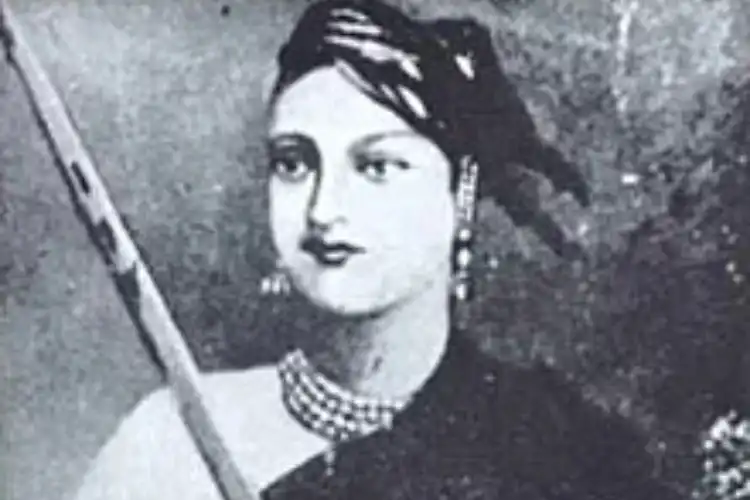
Rani Laxmibai of Jhansi

At the very outset, I apologise to our freedom fighters for highlighting the role of Muslims among them. They would have never wanted themselves to be identified as Hindus, Muslims, or Sikhs. Hopefully, they would understand that under the attack of divisive propaganda I intend to bring out a united struggle against the British.

Colonial historians and educationists did not leave any stone unturned in dividing Indians based on religion and caste. Yet, no matter how many collaborators they had bought and manipulated our history Indians remain united. The first war of national independence of 1857 is a shining example of national unity. It was the Hindu-Muslim unity during the revolt of 1857 which led the British in implementing a divide-and-rule policy in every sphere of governance and policy-making. 

A Slice Of History

No wonder, our books are still following the pattern. Rani of Jhansi Lakshmibai was one of the brightest stars in the constellation of the Indian freedom fighters. English forces were the most frightened of her because she brought Hindus, Muslims, lower castes, upper castes, men, and women under one flag to fight against foreign rulers. 

Not many people know that on 6 June 1857, Rani of Jhansi sent a Muslim Maulana to announce the war against the British from a mosque with prayer calls. In his history of 1857, Colonel Malleson wrote, “The afternoon of the 6th, then, the Rani, escorted by her new levies came from her palace, and went in procession towards the cantonment. As she issued from the town, a Mulla (a Muslim scholar) called all the true believers to prayers. This was the signal. The cavalry and infantry at once rose in revolt. They met Captain Dunlop, as already stated, on his return from the post office, shot him dead, and with him another officer, Ensign Taylor.” 

On 21 August 1857, the deputy collector wrote that the Indian sepoys of 12th and 14th Irregular cavalries were concocted into mutiny by “bigoted Mussulmans of Delhi, who were considered the ring leaders” through weeks of ‘nocturnal meetings’ at the cantonment. The official inquiry setup by the British government named Bakhshish Ali, a jailer, as the leader who initiated mutiny among sepoys in Jhansi. The reports read, “Buxish Ali (Bakhshish Ali), the Jail Darogah, was the principal leader; he was concerned in the murder of the Officers”. The report also mentioned, “Buxish Ali publicly boasted (that he had killed the “Bura (Bara) Sahib’’ (Captain Skene) with one cut.” As a medal of his patriotic services an award of Rs. 2000 was announced to provide the whereabouts of Bakhshish Ali, equal amount was declared to capture Mama Sahib (father of Rani).

Other important leaders and associates of Rani were tehseeldar, Ahmad Husain, risaldar, Kaley Khan, and doctor Saleh Mohammad, they played an instrumental role in bringing about the surrender of British officers. They were accused of killing British officer and were punished. Deputy Commissioner in his report on Jhansi wrote, “Rani of Jhansi, the Tehsildar of the same place (Ahmad Husain), and Kaley Khan Risaldar of the 14th Irregular Cavalry, as the instigators and ring leaders of the cruel massacre at Jhansi” should be punished after the war was over.

If they were the loyalists of Rani before the war, Muslim revolutionaries also poured in from across the country to help defeat the British. An intelligence report from February 1858, read, “Vilayatis (Afghan Pathans), Mevatis and other Mahomedans (Muslims) that escaped from Raatghur came in here” another report said, “She has kept Nawab Adil Khan and Feeroz Shah of Mundisore in her service.” After the fall of the fort of Jhansi, the Superintendent wrote to W. Muir, “the Fort was taken possession of and an attack made on parties of rebels, mostly Rohillas, who had taken up a position outside the wall”   

Major General Hugh Rose also pointed out that the close bodyguards of Rani were mostly Muslim fighters. He wrote, “the Ranee, accompanied by 300 Vilaities (Vilayatis) and 25 sowars fled that night from the fort”. About the war in Jhansi, Rose further wrote, “The Rebels, who were chiefly Vilaities (Vilayatis) and Pathans, generally sold their lives as dearly as they could, fighting to the last with their usual dexterity and firmness.”

The artillery, or cannon guns, were chiefly operated by a group led by Ghaus Mohammad Khan. The British were amazed at the great artillery work by Rani’s army. Hugh Rose wrote, “The Chief of the Rebel Artillery was a first-rate Artillery man; he had under him two Companies of Golundauze. How the Rebels served their guns, repaired their defenses, and reopened fire from Batteries and guns repeatedly shut up, was remarkable. From some Batteries, they returned shot for shot. The women were seen working in the Batteries and carrying ammunition: The garden Battery was fought under the black flag of the Fakeers.”

Interestingly the women and faqirs (Muslim Sufis) were an important part of the artillery force at Jhansi. Rose wrote, “women were seen hurrying along with ammunition and even assisting in working the Batteries, faqueers (faqirs) and fanatics exhorting the combatants to behave like men and taking part themselves in the fight. One Battery was indeed entirely served by faqueers who fought as their custom is under a black flag.”

Rani and her revolution had an important Muslim woman Moondar. She was a close aide and assisted her during battles. Robert Hamilton, agent of Governor-General to Central India, informed the British government on 30 October 1858, “Rani was riding a horse. Another Muslim woman was riding with her, who used to be her servant as well as a companion for many years. Both fell from the horse with the bullet wounds simultaneously.” Another British officer John Venables Sturt claimed that the body recovered by the British was not of Rani’s but Moondar’s. 

Our politicians before dividing the communities should know about the vision these nation-builders had. 

source: http://www.awazthevoice.in / Awaz, The Voice / Home> Culture / by Saquib Salim / November 19th, 2022

Hyderabad: Last Nizam’s great-granddaughter pays homage to royalty fashion

Hyderabad, TELANGANA :

Feroze Jahan begum’s main goal is to make the current generation aware of the Nizams’ era; their food, culture and ‘adab-o-akhlaq’.

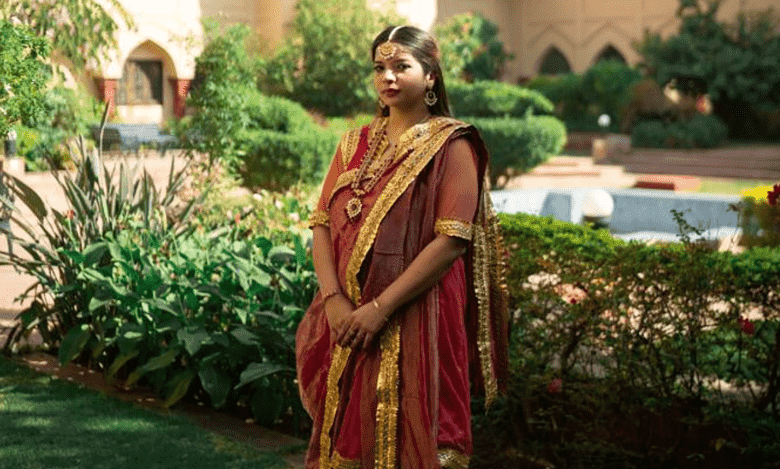
 Sahebzadi Feroze Jahan Begum.

“When I wore the Khada dupatta at my wedding, a garment passed on to brides in the family, I didn’t give it a lot of thought. But it was at once desired by everyone,” remarked Sahebzadi Feroze Jahan Begum, the great-granddaughter of the last Nizam of Hyderabad, Mir Osman Ali Khan.

“Fashion can be traced back to our heritage,” she remarks.

Currently, Feroze is on a mission. Under her current project, she will travel across India hoping to shed light on how restored palaces across India are able to maintain remnants of royals who reigned in the past. Aside from spreading heritage and history, Feroze will also stage a photo shoot in which she will wear the Khada Dupatta alongside the historic monuments and old architecture at various locations.

Feroze Jahan begum’s main goal is to make the current generation aware of the Nizams’ era; their food, culture and ‘adab-o-akhlaq’.

“It worries me that each passing generation loses touch with Hyderabad’s history a little more than the previous one. It is haunting to see works of historical relevance in such a dilapidated state. My goal is to protect the neglected architecture and culture that Hyderabad has held on to for many years,” she said.

Feroze’s last trip was to meet the royal family of Bhopal. Her next trip will be to Bangalore. During her visit to Bhopal, Feroze Jahan Begum also met the state’s former royal family there. The Begum of Bhopal’s sons, Obaidullah Khan and Hamidullah Khan, are the descendants of Nawab Sultan Jehan Begum. She also promoted Hyderabadi culture, food, attire, and history by talking about Mir Osman Ali Khan Bahadur and his contributions.

The link between fashion and history is hard to miss. Hyderabad’s very own sixth Nizam Mahbub Ali Pasha played a key role in the evolution of modern-day Sherwani.

“No matter how drastically fashion changes, we keep going back to royal India’s treasured outfits. All big designers find their way to vintage and antique designs. I strongly feel the urge to connect with that style of clothing. It comes with a cultural atmosphere of its own and exemplified the royals’ sartorial sophistication,” she added.

Feroze hopes to launch a clothing line in keeping with her desire to honour the Nizam’s fashion aesthetic. Her own royal blog, ‘lifeofbegum‘, will debut soon.

source: http://www.siasat.com / The Siasat Daily / Home> News> Hyderabad / by Sanjana Gupta Taduri / December 07th, 2022