Category Archives: World Opinion

Admin steps in to restore Moti Jheel

Agra :

The district administration has initiated steps to restore the Moti Jheel that is located behind Fatehpur Sikri fort complex, following the directions from the central government.

The project is aimed at rediscovering the beauty of this Mughal lake by preventing encroachments and settlements around it. The union tourism ministry wants the water body to be restored near the Unesco heritage site (Sikri fort complex) so as to promote tourism in the area.

Speaking on this aspect, district magistrate Pankaj Kumar said, “The Moti Jheel is a massive project. So, in the meantime we plan to build a pond nearby the fort. The biggest obstacles that would make the task of reviving the Jheel quite difficult, are the settlements and farm lands, surrounding it.”

“The work for constructing the pond will start in the next 15 to 20 days. As far as the Jheel is concerned, we have two options – either we compensate the villagers and ask them to vacate the land or convince them for the same. We are looking in to the matter,” Kumar added.

Sources said kumar recently conducted an inspection of the area along with a team of revenue and irrigation department officials to identify the area, where once this lake existed. The officials were asked to demarcate the lake area with the help of old maps. They were also directed to file a report on the size and appropriate depth of the lake.

The project has been gathering dust for the last two years, but revived once again during the visit of union tourism minister Shripad Naik, who instructed the ASI and the local administration to look into the feasibility of restoring the Moti Jheel.

An ASI official said, “It is the responsibility of the administration to restore the lake. There are historical evidences about the Jheel and about its tributaries. No doubt, it will take time to acquire land before restoration work can starts.”

source: http://www.timesofindia.indiatimes.com / The Times of India / Home> City> Agra / Aditya Dev, TNN / August 25th, 2014

Chess gold medallist calls on Naidu

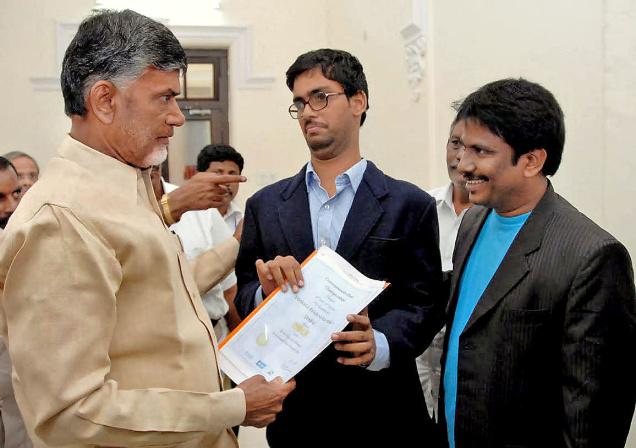
Global chess Academy K.Venkata Krishna Karthik and his coach Shaik khasim met Chief Minister Nara Chandra Babu Naidu at Hyderabad on Assembly premises. / The Hindu

Commonwealth chess gold medallist under physically challenged category K.V. Krishna Karthik along with his coach Shaik Khasim of Global Chess Academy called on Chief Minister N. Chandrababu Naidu at Hyderabad on Tuesday.

Mr. Naidu appreciated the medal-winning achievement of Mr. Karthik, who suffers from an acute orthopaedic disorder and assured all assistance to him in the future. Later, Mr. Khasim narrated Mr. Karthik’s on-board exploits at Glasgow to the Chief Minister and also explained him about his unflinching commitment towards promoting and playing chess, said a press release.

Mr. Khasim said that the Chief Minister had enquired about the support offered by the Sports Authority of Andhra Pradesh and the benefits Mr. Karthik was getting from it. “We told him the fact that SAAP was not financially helping the physically challenged players for which he asked us to put a note with his personal secretary.”

Incidentally, Mr. Karthik is qualified to participate in the World Physically Challenged Chess Championship to be held in Serbia later this year.

source: http://www.thehindu.com / The Hindu / Home> News> Cities> Vijayawada / Special Correspondent / Vijayawada – August 20th, 2014

Champion quest

Bodybuilder Syed Siddiq talks about his journey from a scrawny lad to winning the Mr.Asia title

Mr Asia -  Syed Siddique / Photo: G.P. Sampath Kumar / The Hindu
Mr Asia – Syed Siddique / Photo: G.P. Sampath Kumar / The Hindu

It is hard to miss Syed Siddiq. As he strolls down the road, passersby stop and stare. It would take a brave man, however, to pass a smart-alec comment in his direction, or to antagonise him in any way.

Siddiq is the closest thing to the superhuman comic figure ‘Hulk’ you can hope to see.

Massive muscles seem to rip through every inch of his 105 kilogram body – a truly intimidating sight when he ‘flexes’’ to strike a pose.

Ace bodybuilder

The ripped physique of India’s ace bodybuilder, of course, did not take shape overnight. Siddiq, who recently won the Mr. Asia title at Manila (Philippines), takes out a dusty photo of a scrawny lad. “That was me, eight years ago. I weighed just 48 kilos,” he says with a grin.

That photo is a reminder of his first tryst with the sport. “I was 17 and I enjoyed watching World Wrestling Entertainment (WWE) on television. I admired The Rock , and wanted to be like him. That pushed me to the gym, for the first time,” he says.

Around a year later, Siddiq witnessed a State-level bodybuilding competition, which sparked his desire to take up the sport seriously.

“I saw the crowd’s reaction to the competitors, and I decided that I wanted to be on stage one day. I drew inspiration from Arnold Schwarzenegger. He is an icon for all of us.”

In the documentary Pumping Iron, which chronicles Schwarzenegger’s path-breaking route to stardom, the Hollywood star talks about one of the turning points of his career.

The introduction of big quantities of meat in his regimen, after years of ignoring his diet, finally allowed Schwarzenegger to put on much-needed mass. This aspect is not lost on Siddiq.

The 25-year-old states that he consumes 30 egg whites and two kilos of boiled chicken in a day, apart from large servings of fruits and vegetables.

And three months prior to competition, rice, bread, salt and oil are off the table.

“I don’t drink alcohol or smoke cigarettes. Ever. A strict diet overall must be maintained to succeed as a bodybuilder.”

Acting with Vikram

Director Shankar cast Siddiq in his to-be-released flick, Ai. Siddiq will feature in a few fight scenes with lead actor Vikram, and recalls the experience with excitement.

“It was great fun to be on a movie set. I have been approached to act in Bollywood movies as well, but I think I will focus on bodybuilding for now.”

With the Mr. Universe event coming up in Germany later this year, Siddiq clearly has his hands full.

source: http://www.thehindu.com / The Hindu / Home> Features> MetroPlus / by Ashwin Achal / Monday – August 25th, 2014

India-Born Author Brings Mirza Ghalib’s Treasure to Americans

Washington: 

India-born author Surinder Deol has penned a new English translation of Mirza Ghalib’s works to bring the famous Urdu poet to North Americans as also those South Asians who have lost touch with their native languages.

Author Deol, who worked as a World Bank staffer for nearly 25 years before turning a poet and novelist, says he undertook the task “with the objective of bringing Ghalib to those North American readers who have found Persian poets like Rumi and Hafiz interesting to read.”

“That is a very large audience. And if I succeed in getting their attention, then my job is done. But I also feel that my book is useful for South Asian readers too,” Mr Deol told IANS in an interview.

Published by Penguin-Random House imprint Partridge, Deol’s 378 page free verse translation of Ghalib’s entire Urdu divan titled “The Treasure: A Modern Rendition of Ghalib’s Lyrical Love Poetry” was released last week.

It’s not easy to understand Ghalib even for those who have a normal level of proficiency in Urdu, Deol said, but “My book makes life easy for everyone.”

“If you have high school level understanding of English, you can read the whole book and get the true essence of Ghalib’s poetry without any difficulty.”

“The younger generation of Indians in the US and other foreign countries who do not read Urdu or Hindi scripts or can’t speak the language can now enjoy India’s most loved poet in a language that they speak every day,” he said.

Mr Deol said he was quite satisfied with the result of his efforts to bring Ghalib to American readers as also Indians abroad, but the key factor will be how people react to his work

“Most importantly, I have used a language that is poetic but it is not archaic. Look at the reason why Americans love Rumi in Coleman Barks’ translation. It is simple, direct, and touches you at a deep personal level as you read it.”

Asked what inspired him to translate Ghalib, who is considered “untranslatable”, Mr Deol said “Because I loved Ghalib, I wanted to see his work made available in a good English translation so that he gets the recognition as a great world poet.”

“Since I was very impressed with Coleman Barks’ free verse rendering of Rumi, I thought of using the same technique for Ghalib.

“My idea was to apply this technique on 15-20 compositions or ghazals as a creative experiment.”

“But you know Ghalib’s poetry is like red wine that he cherished so much. You start this work and you get intoxicated and you can’t leave it.” Mr Deol said.

“The task got harder as I proceeded but by then I had become an addict.

That took two solid years of my life. But I have no regrets.”

“A book like this takes much longer to find acceptance but I’m very hopeful that my rendition of Ghalib will one day become a popular text for ordinary readers as well as for students of oriental literature,” Mr Deol said.

“The Treasure” is available on amazon.com internationally and on FlipKart in India.

source: http://www.ndtv.com / NDTV / Home> Sections> Diaspora / Indo-Asian News Service / August 24th, 2014

Postal department to release postage stamps on music maestros

Allahabad :

Yesteryears’ classical music maestros, who gave new dimensions to Indian music would now hog the limelight through postage stamps. For collector’s delight, the postal department has decided to release stamps of eight legendary vocalists and instrumentalists who captivated the audience worldwide through their talents.

The release being commemorative and a one-time release has been eagerly awaited by the city philatelists here. The maestros who had ruled the music world and made their presence felt in overseas also, ranges from that of early 20th century to the past few years.They include Bharat Ratna and three time Grammy award winner Pandit Ravishankar who introduced sitar to the world, Bharat Ratna Bhimsen Joshi who ruled the music arena for over six decades with his ‘khayal’ style of singing and Padma Vibhushan, Kumar Gandharva, famous for his unique vocal style and his innovative genius.

Among the list are sitar maestro Ustad Vilayat Khan who recorded his first performance at the age of eight and gave his last concert at the age of 75 years. Similarly, Ali Akbar Khan, Pandit Mallikarjun Mansur, classical singer of the `khayal’ style and Padma Vibhushan awardee Gangubai Hangal also of the `khayal’ genre and Padma Vibhushan Awardee and DK Pattama, renowned Carnatic musician and a playback singerfor film songs would also figure in the stamps to be released soon by the postal department.

Director, postal services, KK Yadav said, “Gauging from the response the people, specially the young collectors have shown over the stamps of yesteryears’ actors, we are convinced that the collection of the stamps of the musicians which will be released in a limited number across the country will be sold out within couple of days. The stamps release is proposed on September 3.”

Harish, a registered stamp collector said they are eagerly awaiting the collection of stamps of musicians to be released in the month of September.”It will be a valuable collection for us as it would be the first of its kind stamps on Indian music in the past few years,” he added.

source: http://www.timesofindia.indiatimes.com / The Times of India / Home> City> Allahabad / by Vinod Khanal, TNN / August 23rd, 2014

Calligraphy fans come from Jaipur, Japan to hone skills

Allahabad :

In a bid to revive the glory of dying art of calligraphy, youngsters from Jaipur to Japan have assembled here to receive training of the art from Hyderabad-based artist Mohammad Nayeem Sabri. Majority of them do not are experts in Urdu, still they want to carry forward the legacy of this art.

On Friday, TOI spoke to trainees and trainer in the ongoing workshop at Allahabad Museum.

Harpeet Kaur Chabra, a Sanskrit calligrapher, came to know about the training workshop from social site, Facebook in Jaipur. She contacted Allahabad Museum and sought permission to attend the workshop.

“I am a professional dealing with Sanskrit manuscripts and not well acquainted with Urdu language so I decided to participate in the week-long training sessions,” Chabra said.

Asuka from Japan, who was researching on Urdu, joined the workshop to carry the dying art to her country.

“Calligraphy is a medium of expression practiced in English, Urdu and Arabic and others languages. Since I am researching on Urdu, I decided to join the workshop to hone my skills,” Asuka said. Hamidia Girl’s Degree College (HGDC) principal Rehana Tareeq invited her to join the diploma course in calligraphy in her college also.

HGDC student Farheen Kausar and 15 others have decided to join the workshop.

“We are from fine art background, so we decided to learn the difficult form of art. We have added innovations to it by using brush strokes in calligraphy,” Farheen added.

Calligraphist Mohammad Nayeem Sabri (86), who had dedicated his life to the art after getting relieved from 48 years of service as engineer in Hyderabad, said: “There are couple of girls who can make it big in the art of calligraphy if they practice under the guidance of experts.”

“The art is found on nearly every monument in India and even in English there is a immense scope. The calligraphy at Qutab Minar, Taj Mahal had attracted tourists worldwide. At present, this art is passing through a poor phase so I hope government will look into it.”

source: http://www.timesofindia.indiatimes.com / The Times of India / Home> City> Allahabad / by Vinod Khanal, TNN / August 23rd, 2014

Hockey festival thrills fans, marks Indian I-Day

TeamCoorgKF23aug2014

Muscat :

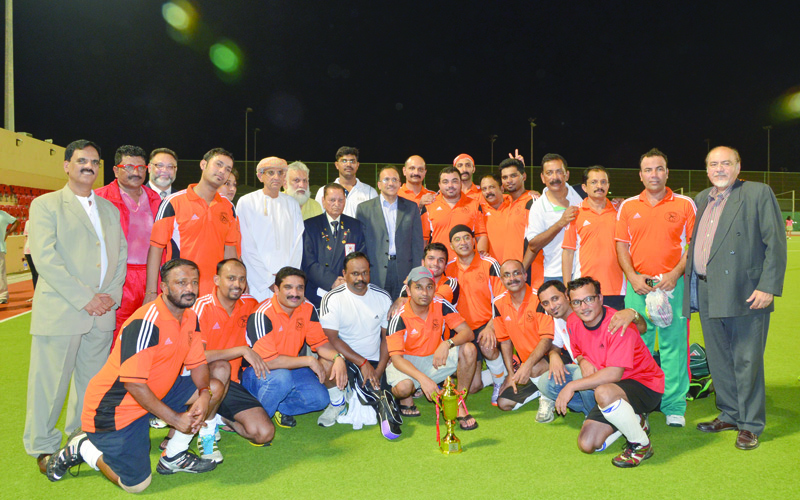
To mark the 68th Independence Day of India, under the patronage of Indian Embassy in Oman and Oman Hockey Association (OHA), the Friends of Naqvi Group and Team Coorg organised an exciting hockey festivity at the Sultan Qaboos Sports Complex on August 8.

Two festival matches, one for the Ambassadors Cup and the other for the seventh edition of Independence Day of India 2014 Cup, were played under the flood light at the lush green hockey astro turf. JS Mukul, Indian Ambassador to the Sultanate, was the chief guest and Shaikh Mahfood Ali Juma al Juma was the guest of honour.

The other sports dignitaries present were the OHA- secretary-general Redha Taqi Lawati, the Secretary-General of Oman Cricket Madhu Jesrani and the former Indian hockey player Sultan Abbas Naqvi.
The Indian Embassy XI lifted the Ambassadors Cup defeating Indian School Al Seeb 2-1 and the Oman Veterans XI lifted the Independence Day Of India 2014 Cup defeating Team Coorg Muscat 6-3 in the presence of hockey lovers of all ages.

“We got ample chance to score but could not capitalise it in the absence of our star forward Zaman,” said Team Coorg manager Belu Kuttappa.

The prizes and other citations were given away by JS Mukul, Madhu Jesrani and Redha Taqi Lawati.
The excitement of evening for the children below 10 years of age was the Indian national anthem recitation competition which was judged by Kanchan Bijlani and Farheen Khan.

This patriotic activity will now be a regular feature in years to come.

“I am quite pleased and charged to see such a massive attendance of the hockey lovers of Oman from all communities at the stadium, who have turned in such a large number to mark the independence celebration of India through this hockey festivity,” said veteran hockey ace SAS Naqvi who has indeed pledged his entire life for the promotion hockey in India and Oman.

The event was supported by Khimji Ramdas, Raha Poly products and Pokari (Muscat Pharmacy) and BG.
The vote of Thanks was given by Mohammad Osama Rawat.

source: http://www.main.omanobserver.om / Oman Daily Observer / Home> Sports / by Oman Observer / Sunday – August 10th, 2014

Cupping therapy eyes its niche in city

Cupping therapy in progress

Alternative form of medicine with Chinese origins gets its own association for promotion

Cupping therapy, an alternative form of medicine with Chinese origins, is trying to find its space in the city. The International Cupping Association of India was officially inaugurated on Tuesday, and Dr Badruzzama Nadeem, a practising Unani physician who is the moving force behind it, has plans to take it to Chennai, Bhubaneswar, and Patna by the end of next month.

Cupping is an ancient practice where heated cup-like devices are used to create suctions on the skin. These suctions are believed by practitioners to not only detox the body but also help relieve pain in the spinal cord, neck, and shoulder region.

Dr Nadeem explained, “When suction is applied, blood from a radius of three centimetres from where the cup is placed is sucked into the bump.” Practitioners believe that ‘impure blood’ gets collected in one place and blood circulation gets better once the cup is released. They also hold that the method detoxifies the body.

Cupping can be broadly classified into two types — dry and wet. While dry cupping is practised using suction cups made of silicone, rubber, or fibre where the air is sucked out, wet cupping follows the same process except for the little incision made in the bump for ‘impure blood’ to trickle out — a procedure known as controlled bleeding.

A third form of cupping is fire cupping. Here, a cotton ball is soaked in 70 percent alcohol which is then held by a pair of forceps and lit. The lit cotton ball is then placed into the cup and removed as soon as it is placed. Practitioners say the process removes oxygen from inside the cup. It is then placed on the skin quickly to create a small amount of suction as the hot air inside the cup cools.

Dr. Nadeem founded the association, which was inaugurated by Health Minister UT Khader, in a bid to increase awareness. “At the moment there are not more than 65 practitioners in Bangalore,” he said.

INEXPENSIVE, AND HOT

Cupping as an alternate form of therapy is yet to catch on in Bangalore, despite being inexpensive. Treatments can range anywhere from Rs 100 to Rs 500 for dry cupping. “Since wet cupping requires experts, it can range from Rs 200 to Rs 1,500. At the moment we get six to seven patients a day, most of them due to word of mouth,” explained Dr Nadeem.

source: http://www.bangaloremirror.com / Bangalore Mirror / Home> Bangalore> Others / by Tapasya Mitra Mazumder, Bangalore Mirror Bureau / August 20th, 2014

Original manuscript of Urdu poet Ghalib’s work found

Papers were presumed destroyed 50 years ago

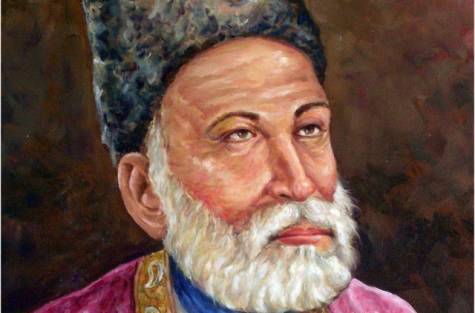
Mirza Ghalib / Image Credit: Supplied

New Delhi:

In a thrilling discovery for lovers of Urdu poetry, the original manuscript of famous poet Mirza Ghalib’s verses has miraculously survived after being reported missing and presumed destroyed almost 50 years ago.

Penned in 1821 by Mirza Asadullah Khan Ghalib, the original manuscript — Nuskha-e-Hameediya — survived after being reported missing during the 1940s’ India — Pakistan division.

Commissioned by Nawab Faujdar Mohammad Khan and penned by calligrapher Hafiz Mueenuddin, the manuscript features some of the most authentic and beautiful Urdu poetry ever written.

After years of believing that the manuscript was missing and accepting doctored and amended versions of this work as ‘authentic’, Urdu poetry lovers can finally see the genius of Ghalib as it was originally intended.

The discovery of the original manuscript has sparked celebrations in the creative community, especially the researchers on the works of Mirza Ghailb, many of whom are thrilled that the doctored and amended texts will not go down in history as the definitive poems.

The manuscript was the first of the nine known manuscripts of the ‘Divans of Ghalib’, commissioned when Ghalib was just 24 years of age. Accounts from scholars and publishers say the original manuscript contained almost 1,800 verses, nearly twice the number of verses that were published in the “authorised” version in 1941. While writing, Ghalib did not find the omitted verses fit for publication, but true poetry lovers were ever keen to read the missing text.

In 1969, Professor Hamid Ahmad Khan wrote that he examined the manuscript in 1938, but did not keep extensive notes on his thoughts regarding the omitted piece, later going on to publish a ‘corrected’ version of the poems.

By the time the corrected version of the poems had been released, the actual manuscript had disappeared, presumed missing or possibly destroyed during the India — Pakistan division back in 1947. With no original text as evidence, readers had to accept that Professor Khan’s version as authentic.

Husaini Arts online art gallery and museum takes the credit for the find.

“This is indeed an incredible find and we are extremely thrilled that we now get to read the original manuscript, which is almost 200 years old. Urdu poetry lovers everywhere will be rejoicing at this news that the original text can now be added to the canon of work Mirza Ghalib worked on. The original Nuskha-e-Hameediya is about to be brought to light, and all those who love Urdu poetry are about to see the true, authentic text that Ghalib first intended to be read by the elite in the 19th century,” a Husaini Arts spokesperson told Gulf News.

Ghalib, born Mirza Asadullah Baig Khan on December 27, 1797, was the pre-eminent Indian Urdu and Persian poet during the last years of the Mughal empire. He used pen-names of Ghalib and Asad. During his lifetime, the Mughals were eclipsed and displaced by the British and finally deposed following the defeat of the Indian rebellion of 1857, events that he wrote of.

Most notably, he wrote several ghazals during his lifetime, which have since been interpreted and sung in many different ways by different people. Ghalib, the last great poet of the Mughal era, is considered to be one of the most popular and influential poets of the Urdu language. Today Ghalib remains popular not only in India and Pakistan but also among diaspora communities around the world.

source: http://www.gulfnews.com / Gulf News / Home> News> World> India / by Karuna Madan, Correspondent / August 18th, 2014