The merchant who bought a mosque

NEW DELHI :

Chunnamal Haveli carries many fascinating tales about the change in lifestyle and architecture of Delhi after 1857

Chunnamal Haveli carries many fascinating tales about the change in lifestyle and architecture of Delhi after 1857

The redone arterial road of Shahjahanabad has attracted attention towards conserving the historical architectural facades of several buildings along the stretch that connects Sri Digambar Lal Jain Mandir to Fatehpuri Masjid.

Along with the facades of heritage homes, there is an urgent need to conserve family and lifestyle histories as part of intangible heritage. In this regard, Lala Chunnamal, the largest living mansion on the iconic street, illustrates a fascinating account.

The Chandni Chowk and surrounding lanes and by-lanes represent, along with several other layers, the lifestyles of the landed elites, merchant classes and evolving middle-class professionals. Several mansions reflect the Mughal period and the British rule in Delhi. Many of these families aligned with the Mughals for practical reasons and changed their allegiance to the new British masters, impacting the nature of lifestyles and architecture.

‘Lalacracy’ era

The period and predominance of merchants and the new landed class in different cities have been described as ‘Lalacracy’ by eminent historian Narayani Gupta in Delhi Between Two Empires 1803-1931: Society, Government and Urban Growth.

Built in 1864, the Chunnamal Haveli continues to be used by Lala’s sixth-generation descendant Anil Pershad and his family. A successful trader, Chunnamal was primarily a cloth merchant (indicative of the exact location of the house in Katra Neel) and had significant trade links in Kolkata, and a summer home in Shimla.

Soon after 1857, Lala Chunnamal bought a large part of the present-day Chandni Chowk and the Fatehpuri Masjid in an auction for a pittance. “Most mosques were closed for a couple of years after the rebellion; many Muslims fled the city. My grandfather, a practical businessman, watched out for the shops around the mosque. The family-owned shops built Shivalayas, dharamshalas and drinking water kiosks in Shahjahanabad, Mehrauli, Nangloi, etc. So why could he not manage a mosque,” remarks Pershad.

He says the family owned the shops from the erstwhile Majestic cinema to the Baptist Church and the area behind the present Bhagirath Palace. “After some years, the family returned the Fatehpuri mosque to the Muslim community. The British recognised the gesture and gave us some villages as a gift,” adds Pershad.

Unlike many others, knowingly or inadvertently, the Chunnamal family saved a mosque from being demolished or turned into a bakery shop or a garrison for the armed forces when the British took over after the First War of Independence.

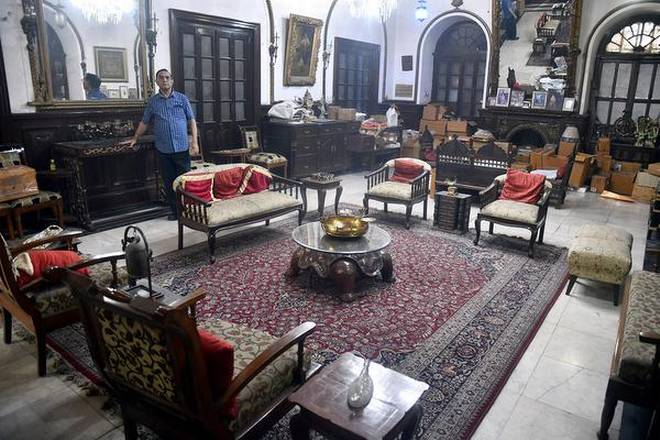
The grand mansion integrated sturdy cast-iron balconies and spun spiral staircases, wooden Venetian windows, and used stained glass. The interiors characterise Indo-Western aesthetics decor like the famed Osler glassware chandeliers for candles, Belgian mirrors, European furniture, clocks, telephones, fireplaces, and even maintenance tools for the fireplace. Sophisticated crafts to embellish the interiors include clay tiles from Sindh that provide a carpet look. The gold-plated stucco work in the ceiling is offset with natural indigo. The roof is decorated with ceiling cloth that displays the best of Indian crafts.

Ice emerged as a much-wanted product since the British required it to cool their drinks and water. Chunnamal owned the famous Baraf Khana or the ice-making unit in North Delhi, the Old Subzi Mandi and Pul Bangash. “Twice-elected to the Municipal Corporation, he was one of the few Indians who were granted membership of the exclusive Delhi Gymkhana Club during the British days,” remembers Pershad. He was also a member of the Roshanara Club, Delhi Race Club and the National Sports Club.

High life

The Chunnamal family bred horses, some were housed in their home stables, while others were in the Delhi Race Club. Members of the family rode horses from Chandni Chowk to New Delhi. A special place for the family was their Rambagh Garden near the Roshanara Club. Viceroys visited, Indira Gandhi came to dine, and the family participated in horse races, including winning the Aminabad horseshow in Lucknow. Some members of the family even came to be members of the secret society of the Freemasons, who continued to meet in the Qudsia Bagh in Civil Lines.

The courtyard hosted gatherings of courtesans, which women of the family watched from behind the bamboo curtains. Pershad’s daughter-in-law Swetcha Pershad described how female service providers like washerwomen and barbers transmitted ‘news’ from one zenana or women quarters to other havelis. The hustle-bustle of the home saw the women under the guidance of a Parsi governess acquire skills in cooking western dishes, accessing recipes from the Woman & Home magazine launched in the 1920s.

Organisations like the UNESCO and urban governments in different parts of the world attempt to formulate policies to balance development with preserving historic urban landscapes. They involve stakeholders, incentivise owners of heritage homes to retain facades while making the inside of dwellings modern.

The remaking of the Chandni Chowk requires holistic policies and their execution before many of more than 30 private-public owned heritage buildings are replaced by buildings that do not go with the character of the historical landscape.

(The author is an expert on cultural heritage)

source: http://www.thehindu.com / The Hindu / Home> News> Cities / by Navina Jafa / October 10th, 2021
Soha Bags Fourth Title Of The Season At AITA Women’s Tennis Event

Bangalore, KARNATAKA :

Soha bags fourth title of the season at AITA women’s tennis event

Bengaluru:  

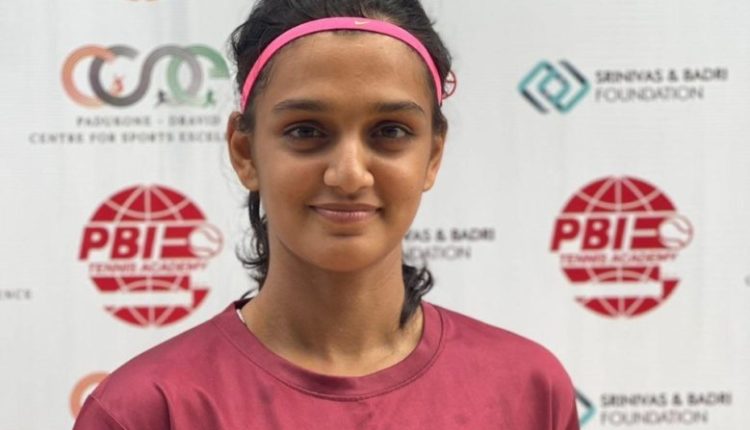
Soha Sadiq came back from a set down to beat Akanksha Nitture of Maharashtra in the final as she bagged her third singles crown of the season at the AITA women’s tennis tournament played under the aegis of KSLTA here on Saturday.

The top seed from Karnataka beat Akanksha 4-6, 6-3, 6-1 to end the tournament with a fine double. Overall, this was Soha’s fourth title of the season as she and Akanksha had won the doubles crown on Friday.

After heavy rains had delayed the start of the final by more than two hours, the 23-year-old Soha dominated the proceedings from the start and was soon 4-1 up. However, she lost the momentum which was quickly grabbed by her opponent as third seed Akanksha went on to win five games on the trot to take the first set, according to information reaching here.

The second set saw both the rivals fight hard for each point until the sixth game with the scores being level. It was then that Soha stepped up on the gas and closed out the set at 6-3.

Soha, after a 2-1 lead, broke Akanksha’s serve in the fourth game of the decider which saw both of them reach deuce five times before the latter succumbed. There was no stopping Soha from that point as she just marched away with the set and the match.

“I am happy to win my third singles title of the season. I didn’t expect it to be a three-setter but luckily I found my rhythm when I needed it most,” Soha, who has just graduated in Commerce from Mount Carmel’s College, was quoted as saying by the KSLTA in a release.

Results (Seedings in pre-fix, States in brackets)
Women’s Singles (Final): 1-Soha Sadiq (KAR) bt 3-Akanksha Nitture (MAH) 4-6, 6-3, 6-1.

(IANS)

source: http://www.ommcomnews.com / Ommcom News / Home> Sports / by Ommcom News / October 09th, 2021

A feel-good take on life

Coimbatore, TAMIL NADU :

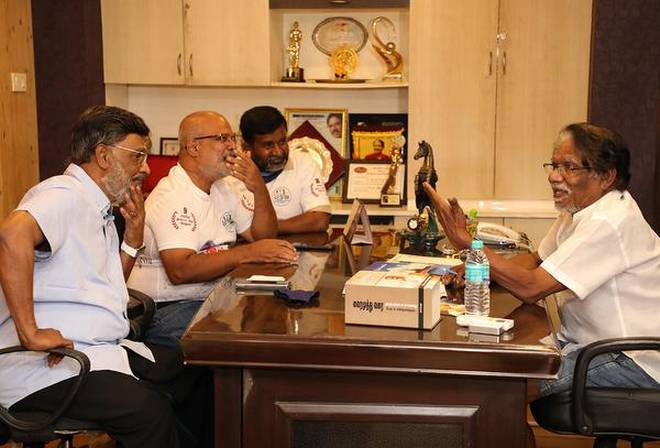
Shades of life (Clockwise from far left) Late Jabaramma in a still from Insha Allah; Director Bhaskaran with directors Bharathiraja and Bhagyaraj and Abdul Salam in a still from the film / Special Arrangement  

SPP Bhaskaran’s film Insha Allah set in Coimbatore, releases in theatres on October 15

“It was a special moment,” says director SPP Bhaskaran about receiving praise from his mentors, director Bharathiraja and K Bhagyaraj, for his first feature film, Insha Allah .

He arranged a private screening for the veteran filmmakers in Chennai recently. “They had positive things to say about the film, location, cinematography which was done by T S Prasanna of Blue Ocean Film and Television Academy and recording of live sounds.

But what took them by complete surprise is the performances of poet Vikramathithan and his wife Bhagavathi Ammal who play an old couple in the film. Vikramathithan has played character roles in director Bala’s award-winning films like Naan Kadavul .”

After doing the festival circuit (it made to the official selection at 32 film festivals and won nine awards at international film festivals), the film gears up for a theatrical release in Tamil Nadu, on October 15. Bhaskaran shot the film at Pillyarpuram village in Coimbatore where hundreds of families from different religious communities live in perfect harmony.

The 84-minute film narrates the story of a middle-class Muslim society and is partly inspired by short stories by Thoppil Mohammed Meeran and Firdous Rajakumaran.

He chose death as a central theme and the script touches upon the five tenets of Islam that includes daily prayers, alms giving ( zakat ), fasting during Ramadan, pilgrimage to Mecca (Haj) and the profession of faith.

The protagonist is an ambulance driver played by Mogly K Mohan (who has been part of films like Kirumi , Bakrid and Master ).

Abdul Salam from Thanjavur who is related to Kamala amma, wife of late actor Sivaji Ganesan plays an important role in the film. “He converted to Islam many years ago and Sivaji Ganesan’s family stood by his decision and supported him. He plays the role of an elderly man who saves money to do Haj but gives it away to support a needy girl’s marriage.”

The film also has footage that shows the Cheraman Juma Masjid, believed to be the first mosque in the country, located at Kodungalloor in Kerala and the 800-year-old mosque at Keeranur, near Palani.

Insha Allah is produced by Shahul Hameed, under his banner Nesam Entertainment Private Limited. “To learn more about the community, I shifted my residence to Karumbukadai, a Muslim-dominated locality in Coimbatore, and lived there for six months,” says Bhaskaran, whose first short film Naanudaimai won recognition at online short film festivals. Insha Allah , he says, sheds light on the philosophy behind the Islamic way of life.

The film is dedicated to the late Jabaramma,who ran a mess at Pillyarpuram. “She served us all three meals during our 30-day shoot there. I wrote a character based on her during my stay there and nudged her to play the role. Though shy to face the camera, she learned acting at a workshop done by late Arunmozhi and his team during our shoot and performed confidently. Her role in the film showcases how looks become banal in a relationship bound by love.”

source: http://www.thehindu.com / The Hindu / Home> Features> Metro Plus / by K Jeshi / October 08th, 2021

Indian Muslim women urged to plan career in civil services

Patna, BIHAR :

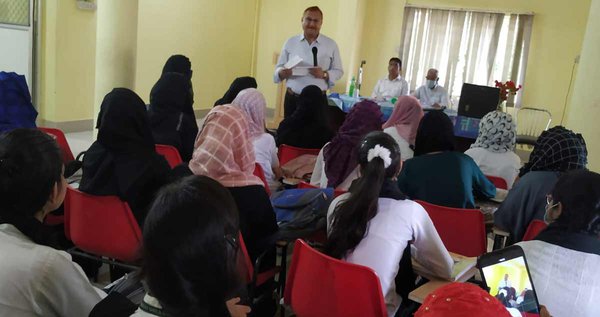
M.W. Ansari, former Director General of Police, Chhattisgarh speaking

Patna:

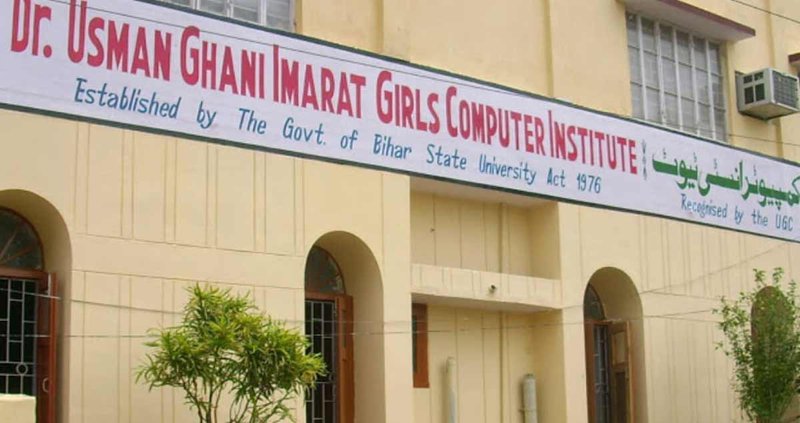
A career awareness program on civil services was held at Dr. Usman Ghani Imarat Girls’ Institute in Patna on 26 September 2021.

The program started with recitation of the Holy Quran.

While talking on ‘What is Civil Services’, Mohammad Naushad Ansari, Hon’y vice chairman of the Institute, through a power-point presentation, elaborated details on the profession of civil services, the rewards and challenges of being in civil services. He emphasised that all graduates are eligible to appear in this exam. They can definitely crack and get a good rank provided they plan their preparation under good guidance and work very hard. It is seen that a good number of candidates qualifying in civil services exams come from lower strata of the society. “Civil Servants of different services are the officers behind implementation of government development plans. They are the people who keep law and order, and work as a link between the public and the government”, he stated.

The chief guest, Mr. M W Ansari, former Director General of Police, Chhattisgarh spoke on the topic ‘Career in Civil Services: Criteria, roles and opportunities’. He stated that the prestige, power and the status that one acquires after entering civil services is immense and unparalleled. Besides, this service provides opportunity to serve the society and the nation at a larger scale. More than 10 lakh students apply for this exam each year. The number of aspirants is increasing every year. This year 761 students have cracked this prestigious exam, out of which only 31 students are from the Muslim community. It is too low considering their population. We require good number of quality institutions, proper guidance and good mentors so that chances of success brighten considerably. In particular, he pointed out that the proportion of Muslim women in these services is negligible. The community cannot prosper without bringing quality education among their women. He also appreciated the contribution of Dr. Usman Ghani Imarat Girls’ Institute in imparting education to the weaker sections of the society with limited resources. In the question and answer session he advised the students that the preparation for Civil Services exam should start from tenth class itself. Bihar had been contributing a good number of Civil Servants every year and this year’s topper in the exam is from Bihar only.

Mr. Khurshid Anwar Arfi, Senior journalist, renowned author of many books and Hon’y chairman of the institute, in his presidential address, emphasised that the community must focus on quality education which should enable new generation to successfully face the modern challenges. The other area of attention should be job-oriented courses and professional educational.

This institute offers various courses viz., BCA, BBA, B Lib. Sc, DCA, Diploma in Dress Designing etc which gives immense opportunity to girls to gain access into good professions and earnings.

He informed that the institute has a plan to organise similar career guidance programs and will be providing all the assistance needed to the Civil Services aspirants for state as well as for UPSC exams.

He thanked all the honorary members of the institute including Mr. Enam Khan, Secretary of the institute, for dedicating his time and energy for the institution’s development.

He also thanked all the teachers and, in particular, Mrs. Ruby Nishat, for offering her services to the institute voluntarily for over two years.

He acknowledged and offered dua for Late Maulana Wali Rahmani who worked hard for development of Institute’s building and infrastructure.

The program was attended by a large number of students, teachers and others. The welcome address was delivered by Mrs. Rupa Sharma, Principal of the Institute and vote of thanks was given by Mrs. Nuzhat Ghousiya . The girls put forward various questions and got enlightened. They noted down details of study plan for the exam and also felt ignited to write this exam.

Dr. Usman Ghani Imarat Girls’ Institute, Patna was established and run by Imarat-e-Shariah Educational & Welfare Trust, Bihar. It is one of the Knowledge Resource Centre of Maulana Mazharul Haque Arabic & Persian University, Bihar.

Union Public Service Commission (UPSC) is India’s premier central recruiting agency for central government public servants.

source: http://www.milligazette.com / The Milli Gazette / Home> News> Education & Careers / TheMilli Gazette Online / September 27th, 2021

Meet Sadaf Chaudhary, who wants to serve country by becoming an ambassador

Roorkee (Haridwar District), UTTARAKHAND :

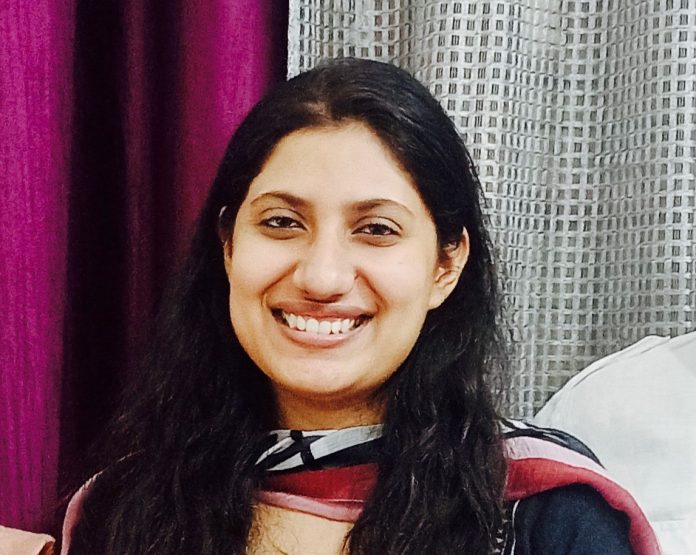
Roorkee girl Sadaf Chaudhary secured the 23rd rank in the UPSC exams.

UPSC topper among Muslim aspirants, Sadaf Chaudhary of Roorkee uttarakhand, who secured the overall 23rd rank, is of firm opinion that improvement in the education of girls in India will bring great social change and calls for the society to provide special attention to the education of girls.

The ambience at Sadaf Chaudhary’s home at Roorkee, Uttarakhand is of glee. There is a continuous rush of local people at her home at Green Park Colony who are visiting to congratulate Sadaf. Sadaf’s pictures are being shared on social media. In the last few days, Sadaf has seen a change in her life. Cell phones of her family members are ringing continuously. No one in Sadaf’s family was able to sleep in the last three days owing to celebrations at their home.

Twenty-seven-year old Sadaf is the eldest daughter of Israr Ahmed and Shahbaz Bano of Roorkee. Her father Israr Ahmed was a former manager at Gramin Bank at the Deoband branch. In the recently announced UPSC 2020 results, Sadaf has secured all over India 23rd rank. She has got the highest rank among the Muslim aspirants.

Talking to TwoCircles.net, Sadaf said that she wants to become an Indian Foreign Service (IFS) officer like IFS Sneha Dubey.

Considering her 23rd rank and OBC quota, Sadaf has a good chance of getting into IFS.

Sadaf said that she chose International Relations as her subject in UPSC as she is “interested in foreign service.”

“I was getting a good salary at an MNC where I used to work. I left that job and worked hard for two years to clear UPSC,” she said.

Sadaf said that “one of the daughters of the country IFS Sneha Dubey is being praised all over the country, I want to follow in Sneha Dubey’s footsteps.”

She said that if the country that she can do a better job as an IAS officer, “I will be mentally prepared for that as well.”

On the day when UPSC results were announced, Sadaf’s mother was praying all day.

Recalling the tense atmosphere at their home before the announcement of the result, Sadaf’s younger brother Mohammad Shad said, “Last year Baji (Sadaf) missed cracking the exams by a few numbers so this year the atmosphere at the home was tense.”

Sadaf said that her UPSC result is beyond her expectations. “I was sure that I will qualify this year.”

To her credit, Sadaf didn’t take any coaching for her UPSC exam. “I have been preparing for last twenty years,” she said.

Recalling her childhood, Sadaf said that as a kid she would go to her grandfather’s house (in Saharanpur, Uttar Pradesh) with her mother during summer vacations. “He had a school there and during the summer vacations I would study everything,” she said, adding, “I got the benefit of regular studies.”

Talking about her strategy of cracking UPSC, Sadaf said she “actually had none.” She said after having breakfast in the morning, she would sit down to study as long as she could. “I would review and assess my preparations once a week.”

She said that she would always try to understand the toppers and what they read as she is fond of reading. “Everyone thinks I enjoy reading, That’s alright, I enjoyed the books, I love them. Books are like friends to me. Reading is my hobby and that has made me successful without coaching,” she said.

The passion for civil services runs through the family. Sadaf’s younger sister Fatima is also preparing for UPSC. “You will have to come here once again because Saima is also very talented and is preparing for UPSC under the guidance of Sadaf,” Sadaf’s brother Sikander Ali told TwoCircles.net. “Fatima is more talented than me and always tops the class,” quips Sadaf.

Sadaf’s mother Shehbaz Bano said that Sadaf is very diplomatic and applies diplomacy at home. Sadaf laughs. “I just get my work done. That’s what diplomacy is,” she said.

Talking about her mother, Sadaf said that she herself admitted her mother to college. Her mother had gotten married after higher secondary. “I would always check if Ammi is reading her books,” she said.

“I realized that Ammi wants to study but couldn’t as she was a mother. I persuaded her to study. So, when I took admission in College, Ammi also took admission in BA. As I completed my Chemical engineering from Jalandhar, Ammi also completed her BA,” Sadaf said.

Sadaf credits her success to a good environment for studies at her home. “We all like to study. My brother recently got a 96.5 per cent and he is not happy with that,” she said.

Sadaf said the assessment done by the schools during the Corona period was not totally correct. “I think studies should be done diligently and there should be a clean competitive environment at home,” she added.

Speaking on Sadaf’s success, her uncle Nadeem Pradhan is full of pride, saying, “Those people and relatives who said girls shouldn’t be sent outside to study are saying now that our daughter has done wonders.”

Pradhan said successful stories always change the mindset of society.

“Today only 40 per cent of girls are able to study. If this number increases, a great social change will take place,” Sadaf said, adding, “We have to give special attention to the education of girls.”

source: http://www.twocircles.net / TwoCircles.net / Home> Lead Story / by Aas Mohammad Kaif, TwoCircles.net / September 27th, 2021

An empire’s fall: cause and effect

DELHI / INDIA :

History proved beyond doubt that every Empire that evolved and flourished across centuries created its own grave-diggers. As is the case, the historians of all hues since the 18 Century have debated the causes of the decline of Mughal Empire. The notion of decline envisages a prior state of perfection, efflorescence, harmony, and cohesion, in contrast to corruption, moral degradation, and loss of ethical values, principles, and customs. Hence, historians wish to understand the phenomenon of change and its causes. For instance, social decay, deterioration of the previous order, and belief and long spells of chaos and disorder are considered the causes of such decline.

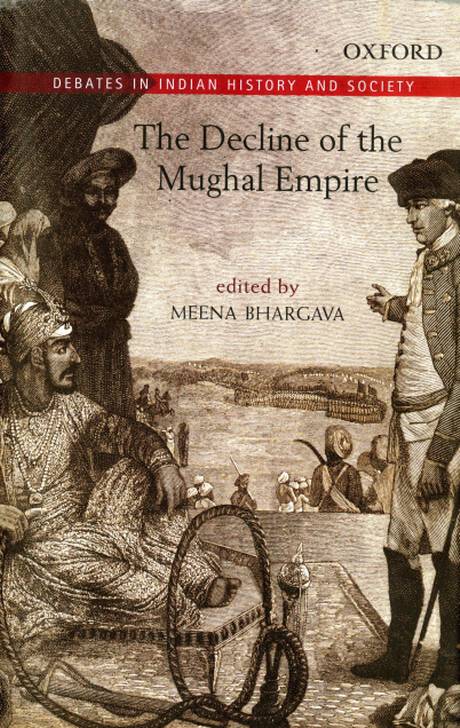
The OUP’s The Decline of the Mughal Empire, edited by Meena Bhargava provides a series of coherent answers to this question through a collage of ideas brought forth by many eminent historians as part of its Debates in Indian History and Society series. While there were divergent views and debates among historians about the withering of the “mammoth imperial banyan tree”, this collection attempts to focus on different paradigms or assumptions that have shaped interpretations on the decline of Mughal Empire.

According to the authors, the causes of the decline of the Mughal Empire can be grouped under the following heads: a) deterioration of land relations; b) emergence of regional powers as successor states; c) selfish struggle of nobles at the court; d) lack of initiative in modern weapons; e) lack of control over the bankers of the state and above all f) Aurangzeb’s Deccan campaign.

Unlike Emperor Akbar who preferred paying his officials’ salaries directly from the state treasury, his successors Shahjahan and Aurangzeb opted for jagirs (temporary allotment of lands to officials for their services – which may be according to the satisfaction of the Emperor) and Paibaqi (revenue from reserved lands which was sent to the central treasury). While the jagirdars tried to extract as much from the land by oppressing the peasants within a short period, the zamindars (who were given powers to manage the lands belongs to the state by managing the peasants and delivering the state’s prescribed share to the treasury) became a subordinate class within the ruling elite of the Mughal Empire. There was a constant clash of interest between the nobles at the Emperor’s court and zamindars. Consequently the main danger to law and order came from zamindars who refused to pay the revenue and had to be cowed down or destroyed by force.

The politics that emerged upon the collapse of the Mughal Empire was two kinds. In one class the ‘succession states’ like Hyderabad, Bengal and Awadh, which were really fragments of the Empire, had to stand on their own as the central government decayed and became powerless to assist or assert. In the second category were the Maratha confederacy, the Jats, the Sikhs and the Afghans. Their origins as polities were independent of Mughal Empire.

Mysore under Hyder Ali and Tipu Sultan stood outside these two categories, and was in some ways most remarkable. It made a conscious attempt to implant Mughal administrative institutions in an area that had only been nominally a part of Mughal Empire. At the same time, it was the first state in India to make a beginning towards modernisation, first and foremost in the realm of the military and in the manufacture of weapons, but also in commerce, where the English East India Company’s practices were sought to be imitated.

The nobles found that their careers were not linked to talent and that loyal and useful service was ‘no security against capricious dismissal and degradation’. Their (selfish) struggle necessarily ranged them in factions, each group or bloc trying to push the fortunes of its members and hinder the success of its rivals. However, only some of them could establish their dominance . In order to sustain their power in court, these nobles had surreptitious relations with regional governors, zamindars and other chieftains. It is the case of Mushid Quli of Bengal who through his clout among the nobles at the court, effected reforms in revenue which ultimately led to the formation of a new, regional ruling group.

The period of imperial decline coincided with the increasing involvement of banking firms in revenue collections at regional and local levels. It brought bankers, more directly than before, into positions of political power all over India. In contrast to their earlier policies, the bankers extended trade and credit transactions to newcomers, the Dutch and the English. Ironically, the Jagat Seths (Imperial Treasurers) who helped the East India Company to overthrow Nawab Sirajuddaula, were cut to size by the same Robert Clive who stopped the allowance of Seths as ministers of the Nawab in 1770. Ultimately, they ceased to be Company Bankers by 1772.

In a sense, the Deccan Campaign became Aurangzeb’s Waterloo. In his eagerness for further expansion, Aurangzeb exposed to incessant raiding districts in the Deccan that were formerly secure from outside attack. Unlike Emperor Akbar, who assimilated Rajputs within his kingdom, Aurangzeb was unable to effectively assimilate the Maratha, Bedar, Gond or Telugu warrior chiefs formerly living in areas beyond the reach of direct administration by a Muslim state as imperial elites. Failure to sustain imperial officers in the province resulted in intensified disorder and defiance of imperial authority. Even though they were stationed in the Deccan, the Mughals failed to defeat the Marathas. It was these protracted wars that produced the signs of decline, namely an imbalance between the number of jagirdars and the jagirs available, peasant revolts and disloyal nobility. Together with the emergence of regional dynastic rulers who pioneered processes of growth and regeneration, the Mughal Empire did not fall — it was simply swallowed by a larger political organism. The Company was waiting on the wings to gobble them up whole soon.

For students of history, this attempt is really an opportunity to understand the inherent contradictions that prevailed under the Mughal Empire, which ultimately led to the emergence of British colonial rule in India.

THE DECLINE OF THE MUGHAL EMPIRE: Edited by Meena Bhargava; Oxford University Press, YMCA Library Building, 1, Jai Singh Road, New Delhi-110001. Rs. 795.

source: http://www.thehindu.com / The Hindu / Home> Books> Reviews / y V.B. Ganesan / July 28th, 2014

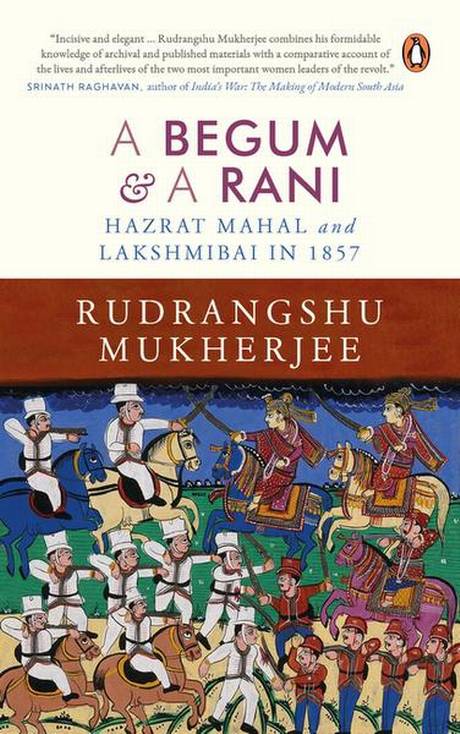
A Begum & A Rani: Hazrat Mahal and Lakshmibai in 1857’ review: Giving an obscure figure of the 1857 revolt her rightful place

Awadh, UTTAR PRADESH:

Juxtaposing the life of Begum Hazrat Mahal, who worked behind the scenes, with one of the most well-known heroes of the time, Rani Lakshmibai

The villain in Rudrangshu Mukherjee’s A Begum & A Rani: Hazrat Mahal and Lakshmibai in 1857 is certainly the British, but it is also time and memory. Mukherjee places Begum Hazrat Mahal, an obscure figure who was integral to the mobilisation of the 1857 revolt — taught to students as “India’s first war of independence” — alongside Rani Lakshmibai, whose life has spurred not just biographies but hagiographies, calcified by myth and movies, the 2019 Kangana Ranaut shriek-historical, Manikarnika: The Queen of Jhansi, notwithstanding.

The book, divided into four parts — Origins, Rebellion, Leadership, Afterlife — is attempting two important correctives.

The first is to give Begum Hazrat Mahal of Awadh her rightful place in history. Daughter of an African slave, she was briefly married to Awadh’s king Wajid Ali Shah, then divorced and left behind in Awadh, as Shah moved to Calcutta after the British annexed Awadh in 1856. She helped mobilise the military and administration of Awadh, which became the war theatre’s centrepiece after Delhi was vanquished by the British. This story is also important to counter the narrative that the 1857 revolt was a pastiche of mindless and uncoordinated violence, because it was meticulously planned. Mukherjee quotes generously, indulgently, with page-long historical anecdotes which could have been paraphrased or woven into the narrative. There are too many anecdotal jolts for a seamless read.

Eventual move

The second objective is to inject some history into the hagiography of Rani Lakshmibai. Mukherjee notes how she wasn’t the ready rebel we think of today. That she even wrote to British officials asking for help, declaring her support to their regime, and it was only when she was pushed against circumstances that she eventually took to the battlefield with vigour, dying in it, memorialised by it.

This is a clever framing here that Mukherjee employs, because there isn’t enough information on Hazrat Mahal to carry an entire book by itself. There isn’t even an available description of how she looked. Her role in the rebellion is behind-the-scenes, and her obscurity is thus, double.

To resurrect her, by pairing her with the most coveted figure of the rebellion — Rani Lakshmibai — is thus necessary, because Mukherjee gets to not just tell their stories, demystified or dusted, but to speak to the larger villainy of historic memory — who gets written about and why?

Putting it in context

Mukherjee is a master of context, providing a sense of the time, even as he is hazy on the details of main events, recounting them as historical facts and not narrations, preferring a depth of detailing around the event over the grip of a historical plot. That said, a map would have been helpful to make sense of the geographic dump of names.

It must be noted, though, that Lakshmibai and Hazrat Mahal never met, and in the 140-page book, their paths, and the paths of their rebellion also don’t cross, as if they were happening in different times, different places.

Sometimes, as a result, the book feels disjointed — that the only reason for having these two stories together is not that they will tangle, but that through comparison, each one’s story deepens, darkens.

Placing these figures side by side, the urge to compare them comes but naturally. Mukherjee’s insistence on Hazrat Mahal’s oblivion comes short of calling her more important and interesting than Rani Lakshmibai. That Rani Lakshmibai fought on the battlefield while Hazrat Mahal fled to Nepal is enough to deify the former, and forget the latter, he finds unfair. That Lakshmibai and her son were receiving pensions from the British government, while Hazrat Mahal who died in obscurity and her son, both refused it, he finds telling. That history is besotted with blood, he finds tragic. That historians can puncture history’s myopia, he finds hopeful. Thus, this book.

A Begum & A Rani: Hazrat Mahal and Lakshmibai in 1857; Rudrangshu Mukherjee, Penguin Random House India, ₹699.

The writer is a critic with a weekly online newsletter titled prathyush.substack.com

source: http://www.thehindu.com / The Hindu / Home> Books> History> Reviews / by Prathyush Parsuraman / October 02nd, 2021

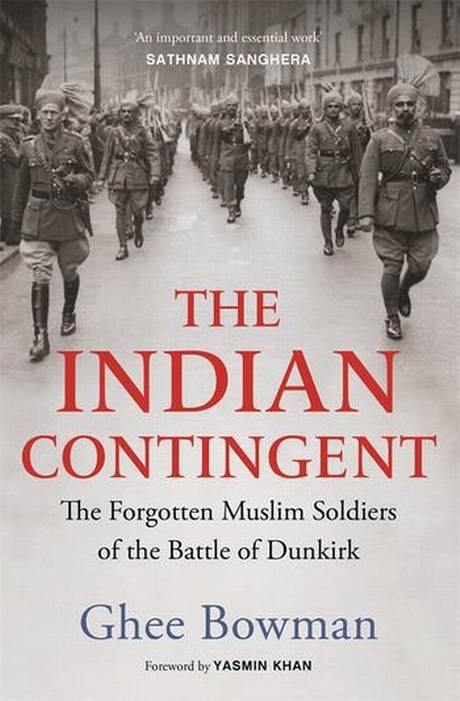
‘The Indian Contingent: The Forgotten Muslim Soldiers of the Battle of Dunkirk’ review: Force K6 in a colonial war

INDIA (Pre-Partition) :

Tracking soldiers from the subcontinent who fought on the battlefields of Europe

Whether it’s Dunkirk or Iwo Jima, we tend to associate World War II with other countries. India, of course, was in the midst of the struggle for independence during the years of the war. But, since the country was a British colony, it was also dragged into the war not just in terms of materials being shipped. A crucial factor were the soldiers from India who fought on the battlefields of Europe but remain unknown.

Multiple threads

Of late, we have had books on the Indian participation in World War II and here is another which looks at soldiers from undivided Punjab who arrived in France in 1939 and returned to find their country on the verge of Partition.

Ghee Bowman’s The Indian Contingent: The Forgotten Muslim Soldiers of the Battle of Dunkirk focuses on a group called Force K6, who were largely from the northwest provinces, now in Pakistan. They were part of the mule transport companies, which helped the British army transport supplies in areas where trucks could not reach. During the Battle of Dunkirk, some of these men were captured but many escaped to Britain and were relocated to various parts of the U.K. where they helped in the infantry training.

Bowman doesn’t lump all the individuals together into one unit. Each person has a story and he unravels the multiple threads till the reader gets a complete picture of the “poets and musicians, cooks and carpenters and a veterinarian… writers, cinema lovers, boyfriends and parents” — as author Yasmin Khan puts it in the Foreword — who comprised the Force K6.

On the one end you have poetry-writing Aurangzeb who died as an 18-year-old in Wales and is still remembered in his village in Pakistan; at the other is mule driver Mahmud Khan who is captured by the Germans, forced to join the Indian Legion, seduces his German officer’s daughter and a male orderly and escapes to Switzerland.

Forming bonds

Bowman also tracks the lives of the men in “obscure corners of the British Isles” where they “formed strong bonds with farmers, children and women”. Some of these bonds resulted in children and the story of Jeff Shapland who finds out about his father Jamal Khan much later in life is moving. Shapland recounts being singled out for his dark looks — at Leeds University South Asian men would talk to him in Hindi or Urdu and his landlady in Bristol wouldn’t let him eat in the common dining room, he was abused and punched by students at his school in Leicester —and how he came to accept himself.

There is a lovely little nugget of jemadar Malik Mohammed Khan visiting a school to hear Welsh folk songs and teaching the children a Punjabi lullaby that went ‘Sunate Sunate Sunate Krishna’. There are also anecdotes from those who were children at that time about their interactions with these soldiers.

In his Prologue, Bowman writes, “This book aims to reclaim them from the backwater and reinstate them in the mainstream: part of the current of recognition of Commonwealth and global contributions to the Second World War.” He has, indeed, succeeded in this.

The Indian Contingent: The Forgotten Muslim Soldiers of the Battle of Dunkirk; Ghee Bowman, Pan Macmillan, ₹699.

krithika.r@thehindu.co.in

source: http://www.thehindu.com / The Hindu / Home> Books> Review / by R. Krithika / October 02nd, 2021

Benevolent Kerala parliamentarian is beacon of light for poor tribal pupils

KERALA / Dubai, UAE :

P.V. Abdul Wahab, the IUML leader, successfully implements Indian government’s development plan in Malappuram district.

It’s a dawn of a new era for a group of poor tribal pupils amid these unprecedented viral times at Nilambur taluka — a cluster of villages — in north Kerala’s Malappuram district.

They are back to learning and continuing their school education, which have been suspended since March 2020, when the Covid-19 pandemic struck and resulted in the closure of schools.

Many of the pupils had virtually forgotten in-classroom teaching.

To make matters worse, they were cut off from the rest of the world because of the unavailability of Internet connectivity and lack of smartphones.

P.V. Abdul Wahab, a sitting member of the Rajya Sabha (RS) — the Upper House of Indian Parliament — and a non-resident Indian (NRI), who has been living in the UAE for the past four decades, told that their education suffered since March 2020.

“Some of them could barely remember the names of their schools because the prolonged break had almost wiped out their memories of the campus,” he said.

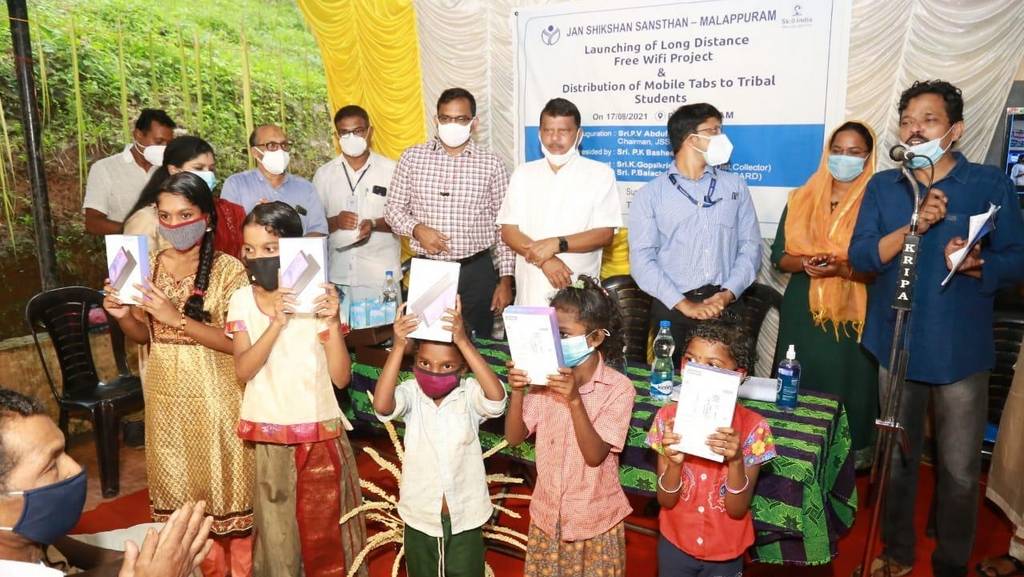
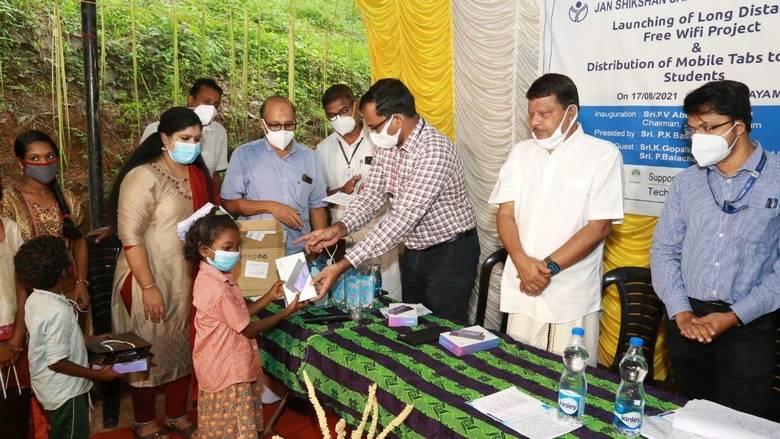
Wahab, who belongs to the Indian Union Muslim League (IUML), which is a potent political force in the district, has arranged for the distribution of Internet-enabled tablets for the tribal pupils under the Indian government’s Jan Shikshan Sansthan (JSS) initiative.

He has been a three-term RS MP and heads the JSS initiative in the district.

So far, around 150 tablets have been given to the tribal pupils, who are overjoyed at being able to reconnect the world at large and continue with their education.

Wahab has been involved with the tribal villages of Karulai gram panchayat as part of the Indian government’s Saansad Adarsh Grama Yojnna, a developmental scheme, and has adopted four villages in the district.

“They live in the middle of the forest in small houses and most of them are unemployed,” Wahab said.

“The only source of economic sustenance is the forest produce that the male tribals collect and sell. Healthcare facilities are abysmal and most of them lack basic amenities such as access to electricity or even telephones,” he added.

The tribal villages are neither well-connected with other parts of the district or the southernmost Indian state and a majority of the locals don’t want to venture out for jobs.

The tribals of Nilambur are a rare exception to Kerala, whose ambitious and enterprising people have been heading out to other parts of India, Arabian Gulf or across the world for better financial prospects.

“But we’re trying to provide employment opportunities for them through specialised training in the hospitality, plumbing and electrical industries,” said Wahab, who has four-decade-long experience in the Middle East, and enjoys a filial bond with Nilambur.

In the UAE, he established the Bridgeway group of companies and along several other firms in his native India; his sons now look after the businesses.

He said the boost on the telecom and education fronts in these tribal villages because of the JSS, which helped instal over 10 basic towers to ensure 5 GHz wireless connectivity to the settlements. “The project aims to create a sustainable social and economic ecosystem for tribal people through a high-speed internet connection,” said Wahab. “It offers a total solution for the digital affairs of the inhabitants of the colonies. This allows them to interact directly with stakeholders and other public servants,” he added.

In the pre-Covid-19-pandemic era, tribal pupils only had access to single-teacher primary schools. The teacher taught all subjects and took four classes simultaneously.

After Grade IV, the tribal pupils would drop out because they were reluctant travel outside their native village.

To make matters worse, the devastating Kerala floods in 2018 and 2019 also destroyed half a dozen computers, a printer and a projector in the school.

The natural disaster was followed by the contagion, which struck a rude jolt as it denied poor tribal pupils’ basic education.

However, the sufferings appear to be a thing of the past, as the poor tribal children can look to a better and prosperous future, thanks to Wahab’s initiative to make the government’s scheme a roaring success.

source: http://www.khaleejtimes.com / Khaleej Times / Home> World> Rest of Asia / by Nithin Belle, Pune / August 26th, 2021

Umran Malik: The J&K bowler whose scorching pace is lighting up the IPL

JAMMU & KASHMIR :

Malik, who bowled the fastest ball yet of IPL 2021, started with tennis-ball cricket

SRH’s Umran Malik celebrates his first IPL wicket in the match against RCB | IPL Twitter

It is no easy task to trouble Glenn Maxwell when he gets into the mood to hit bowlers around the park. The big Aussie was getting warmed up for Royal Challengers Bangalore in the Indian Premier League match against Sunrisers Hyderabad, but fast bowler Umran Malik was proving to be a thorn in his side.

With Maxwell and Devdutt Padikkal steadily building a partnership, Malik threw a spanner into RCB’s run-chase with three excellent overs, making the target of 142 seem like a long way off.

In the ninth over, the speedster bowled three consecutive balls that crossed the 150kmph mark. The third of those was clocked at 153kmph, making it the fastest delivery of this year’s tournament.

He conceded just five runs off that over, returning in the 11th to part with a measly four runs.

In the first over of that spell—the seventh over of the RCB innings—Malik took the wicket of Srikar Bharat and gave away just one run.

Malik had successfully taken the sting out of the RCB onslaught in the crucial middle overs, despite other bowlers like Siddharth Kaul, Rashid Khan and Jason Holder getting hit for boundaries.

Sunrisers won the game by four runs, and both captains would heap praises on the 21-year-old bowler from Jammu and Kashmir.

RH skipper Kane Williamson counted him as one of the positives of a largely disappointing season for his team.

“Umran certainly is special,” said Williamson. “We’ve seen him in the nets for a couple of seasons. [It is a] special opportunity for him and it’s not surprising to see him come and do well. [He has] been a really valuable addition to the side.”

RCB captain Virat Kohli noted that it was important to track Malik’s progress from here.

“This tournament throws up talent every year. Good to see a guy bowling at 150 clicks. It is important to understand the progress of individuals from here on,” Kohli said in the post-match presentation.

“The pool of fast bowlers being strong is always a good sign for Indian cricket and whenever you see talent like this, you are going to have your eyes on them and make sure you maximise their potential.”

After the game, Malik would request Kohli to autograph his jersey, the Indian captain gladly obliging.

Humble beginnings

Malik made his IPL debut against Kolkata Knight Riders on October 3, in which he bowled a 151kmph delivery, which was the fastest by an Indian in the tournament this year. He would only better that, twice, in the ninth over against RCB.

Malik is the son of a vegetable vendor in Jammu. His father told a news channel after his IPL debut that it was no ordinary achievement for their family, because of their financial status.

He was a net bowler for the Sunrisers for two years until getting his big break this week, owing to the absence of T. Natarajan who is down with Covid-19.

Malik would bowl nervously to the likes of David Warner and Kane Williamson in the SRH nets, he told the IPL’s official website.

“I prayed to god that let me bowl well to them. I thought if I have to beat them I have to hit the right length. I kept beating them and I learned from that, I kept bowling on that same length. That made a big difference,” said Malik.

Like Natarajan, Malik entered the sport as a tennis-ball cricketer. He credits this experience for his yorkers and raw pace.

In 2018, when he attended a trial for J&K U-19 players, he saw shoes with spikes for the first time. He had arrived for the trials in jogging shoes and would borrow the spikes from a friend.

The selectors took note of his abilities and he would make it to the U-19 one-day team. He would then participate in the Vijay Hazare and Syed Mushtaq Ali tournaments before being roped in by SRH as a net bowler.

There are comparisons being drawn of Malik’s action with that of legendary Pakistan pacer Waqar Younis.

Former Indian skipper Kris Srikkanth said on his YouTube channel that his “rhythmic” run-up reminded him of Younis.

“His run-up, his action everything resembles a bit of Waqar Younis’s style. He has a very good rhythmic run-up and he is able to bowl at a good pace,” said Srikkanth.

Indian coaches and strength and conditioning trainers will be keeping an eye out for the young speedster to prolong his career and keep him from injuries that commonly plague bowlers with such pace.

The hype around such fast bowlers often leads to unreal expectations and eventually disappointment if they fall by the wayside. But should Malik maintain consistency, he would prove useful for the Indian team with his raw pace and excellent line and length.

(With inputs from PTI)

source: http://www.theweek.in / The Week / Home / by the Web Desk / October 07th, 2021