Helping the Poor through Aarthik Qurbani

Pune, MAHARASHTRA :

Over the last decade, individual Muslims have started breaking from the tradition of sacrificing animals on Bakra Eid, motivated by the thought that the considerable amount spent on buying and sacrificing animals would be put to better use for the community’s welfare, specially education.
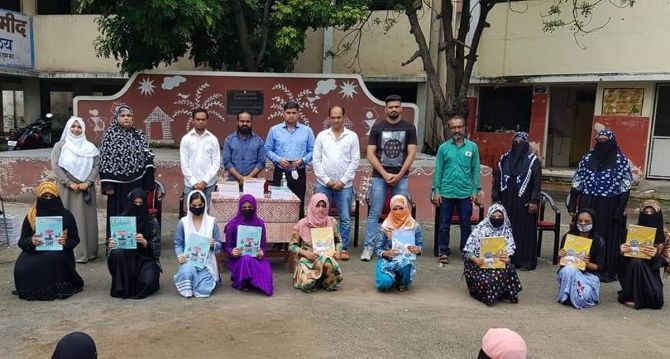
Paigambar Shaikh (with beard) flanked by Rafique Shaikh, left, and Alam Pathan with the beneficiaries of Aarthik Qurbani in 2020.

Wednesday was a busy day for Pune activists Paigambar Shaikh, Alam Pathan and Rafique Shaikh. It marked the start of the distribution of funds collected by Paigambar through his ‘Aarthik Qurbani‘ campaign.

It’s happened elsewhere, but the ‘Aarthik Qurbani‘ movement started by Pune activist Paigambar Shaikh is unique.

Over the last decade, individual Muslims have started breaking from the tradition of sacrificing animals on Bakra Eid, motivated by the thought that the considerable amount spent on buying and sacrificing animals would be put to better use for the community’s welfare, specially education.

In Bengaluru, some of these Muslims have managed to convince others to follow their example. After the 2018 Kerala floods, social media helped convince many across the country to donate the money kept for the sacrifice, or at least a part of it, for the floods, as reported in Rediff.com.

However, Paigambar Shaikh’s Aarthik Qurbani movement is different from all these, in that it is not restricted to Muslims. In fact, the campaign run by this self-employed content writer on Facebook, gets more responses from Hindus than Muslims, and the beneficiaries of the monetary sacrifice are also from all communities.

This reflects the concerns of 31-year-old Shaikh and his colleagues: All three are social activists, not just community activists.

“Not once has any Muslim who has contributed Aarthik Qurbani told us that his/her money should only go to Muslims,” Paigambar tells Rediff.com  Senior Contributor Jyoti Punwani. “And we would never accept such a condition.”

The meat that is sacrificed on Bakra Eid, points out Paigambar, does not go only to Muslims. “It’s in three parts: One kept for yourself, one for those who are needy among your relatives, and the third for the poor. The poor need not be from your community only,” he explains.

“Also, the money you spend on buying animals does not go to Muslims; most of the sellers are non-Muslims,” he points out.

However, since he started his campaign in 2014, more and more Muslims have been getting drawn to it. This year, of the 117 persons who donated, 50 were Muslim.

They collected almost Rs 95,000, less than earlier years, but more than what they expected, given the financial blow dealt by the two lockdowns.

On Wednesday they kicked off their distribution by donating educational material to two women, one Hindu, the other Muslim, who teach poor children for free. Needy students are their main beneficiaries, but they have also helped flood victims in Kerala and Maharashtra.
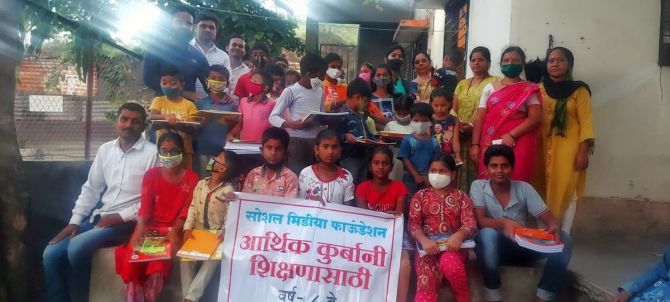
Distribution of Aarthik Qurbani in 2021.

While orthodox Muslims oppose substituting animal sacrifice with monetary sacrifice, Paigambar reveals that it was his study of the Quran that prompted him to begin this practice.

“In the Quran it says one must sacrifice that which is dearest to our hearts. How can an animal that is purchased with the express aim of sacrificing it be the closest thing to our hearts,” he asks.

In the last two years, the Maharashtra government has insisted that because of Covid compulsions, Muslims should perform a ‘symbolic’ sacrifice. But community leaders have rejected this suggestion, saying no such concept of symbolic sacrifice exists.

However, Paigambar Shaikh maintains that the Bakra Eid sacrifice is symbolic. “Hazrat Ibrahim dreamt that Allah had asked him to sacrifice that which was dearest to him, and prepared to sacrifice his son. But at the crucial moment, Allah presented a dumba (ram) for the sacrifice. Doesn’t that show that it was a symbolic sacrifice? Our Aarthik Qurbani too is symbolic.”

Finally, what set the seal on Paigambar’s conviction were the words from the Quran: ‘Their meat will not reach Allah, nor will their blood, but what reaches Him is piety from you.’

“It’s the intention that counts,” says Paigambar.

Those who oppose the concept of substituting charity for animal sacrifice point out that Bakra Eid is the one occasion that the poor get to eat mutton which is otherwise out of their reach.

However, asks Paigambar: “What is more important — eating mutton or getting out of poverty? Those who go around distributing mutton to poor families, would be surprised to know that some of those families can’t even afford to buy the half-a-dozen notebooks needed for their children’s school. It’s not in our hands to abolish poverty, but by enabling a poor family to educate its children, we are providing them a means to come out of their poverty.”

At any rate, he adds, the prime motive for the animal sacrifice is not feeding the poor; it is pleasing God.
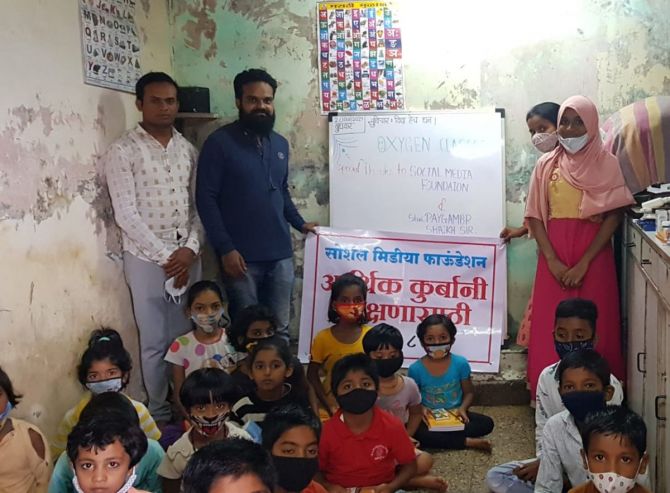
This year’s distribution of Aarthik Qurbani: Rafique Shaikh and Paigambar Shaikh with the recipients.

Rafique Shaikh joined Paigambar’s campaign in 2019, when Sangli, Satara and Kolhapur were hit by floods. The eldest of four brothers, this 33-year-old businessman decided that the money they’d kept aside for sacrificing goats would go for the flood hit.

“The satisfaction we got from wiping the tears of those in distress by this sacrifice was a completely different experience,” he recalls.

Alam Pathan was already performing Aarthik Qurbani since 2009. That year, Pathan’s father died a day before Bakra Eid, and the family felt it inappropriate to celebrate the festival. Instead, they donated the money they would have spent on the animal sacrifice to the poor, and have since stuck to that practice.

Opposition from the orthodox, including threatening calls, have not fazed these men.

“We don’t tell anybody to give up animal sacrifice,” points out Rafique Shaikh. “This year, I could afford to sacrifice a goat and also make an Aarthik Qurbani, so I did both. One can buy a goat for Rs 11,000 or Rs 50,000. Isn’t it wasteful to spend so much on one goat? We just suggest that instead of spending all that money on an animal, why not keep a part of it for those who need it?”

Alam Pathan has one way of dealing with opposition: Ignoring it.

Were he to heed opposition from the orthodox, this 39 year old’s life would be very different.
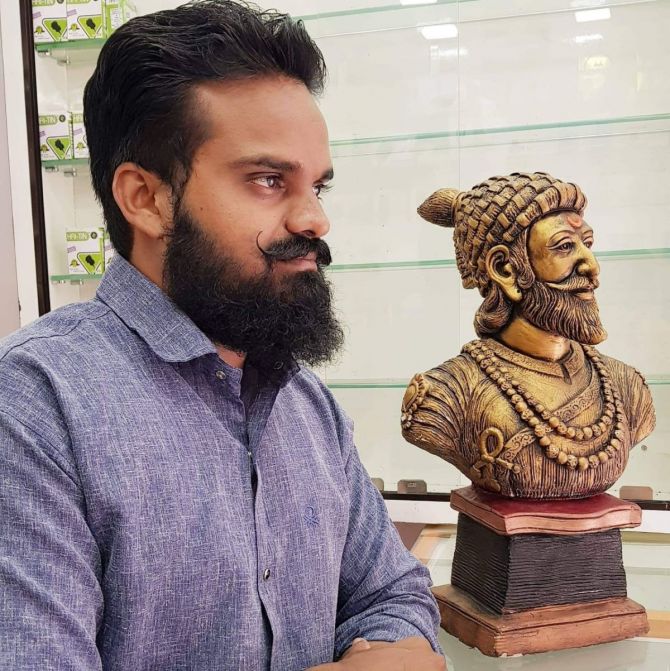
Paigambar Shaikh derives his inspiration from Prophet Mohammed and Shivaji Maharaj.

As the only Muslim family in his village, says Pathan, the palkhi carrying the padukas of Sant Tukaram taken out during the annual Pandharpur pilgrimage, would stop at his house. He would participate in all the village bhajans and keertans, and continues to do Shri Dnyaneshwari Pravachan — he lectures on the Dnyaneshwari written by the 13th century poet Sant Dnyaneshwar. He also visits the famous Tirupati Balaji temple in Andhra Pradesh every year.

“This is how my father brought us up,” says the real estate dealer.

Paigambar Shaikh has received threatening calls for his campaign. But says he, he derives inspiration from two personalities when confronted with such opposition.

First, Prophet Mohammed, who said nothing even to the woman who threw garbage on him whenever he passed by her house. The day she didn’t do so, he went to check if she was okay and tended to her.

That gesture made her accept Islam.

Paigambar’s second inspiration is Shivaji Maharaj, who never accepted defeat.

Aarthik Qurbani is now here to stay. No one can stop us. Next year onwards, we will be spreading the movement from Pune to other districts of Maharashtra.”

Feature Presentation: Aslam Hunani/Rediff.com

source: http://www.rediff.com / rediff.com / Home> News / by Jyoti Punwani / July 30th, 2021
Rickshaw puller’s son in J-K cracks prestigious IES exam

Nageenpora Kund (Kulgam District), JAMMU & KASHMIR :

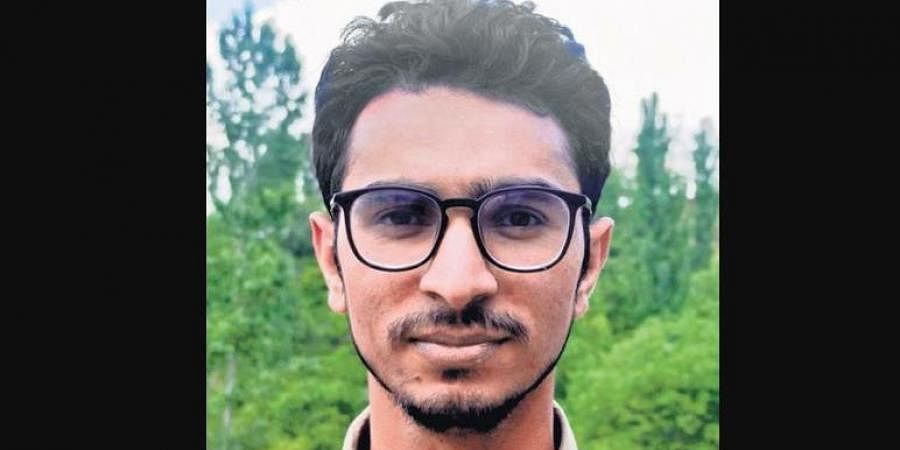
Tanveer Ahmed Khan (Photo | Twitter)

My journey has been very tough. However, every success story has a struggle behind it. I too had to struggle as we were financially weak, says Tanveer.

Srinagar : 

Tanveer Ahmed Khan, son of a rickshaw puller and farmer, has secured second rank in the prestigious Indian Economic Services (IES) examination conducted by Union Public Service Commission (UPSC). 

“My journey has been very tough,” Tanveer said. “However, every success story has a struggle behind it. I too had to struggle as we were financially weak. It was my positive side that made me want to change our poor condition by studying and making it count.”

Tanveer’s father hails from remote Nageenpora Kund in South Kashmir’s Kulgam’s district. He also works as a seasonal rickshaw puller in Amritsar, Punjab, during the winter months to earn extra money to provide quality education for his son.

He has done his schooling in government schools and got his BA from Government Degree College Anantnag in 2016. He secured third rank in the entrance test for a post-graduate course in economics at University of Kashmir.

“I worked very hard and my family fully supported me. The support from my parents, uncles and teachers has brought me to this point,” said Tanveer. Tanveer secured Junior Research Fellowship (JRF) during his last year of post-graduate programme and says the fellowship helped him a lot. He went to Institute of Development Studies, Kolkatta, for Masters in Philosophy (M.Phil) in Development Studies, which was awarded to him in April. Tanveer is in the Open Category.

Tanveer’s father said he is proud his son did not waste the parental toil and effort. “I am very happy that mine and my son’s hard work has paid off,” he added.

source: http://www.newindianexpress.com / The New Indian Express / Home> Nation / by Fayaz Wani, Express News Service /August 02nd, 2021

Adv Mehmood Pracha Awarded At 2021 Safai Mazdoor Divas

NEW DELHI :

Adv Mehmood Pracha. Photo: Ghazala Ahmad/The Cognate

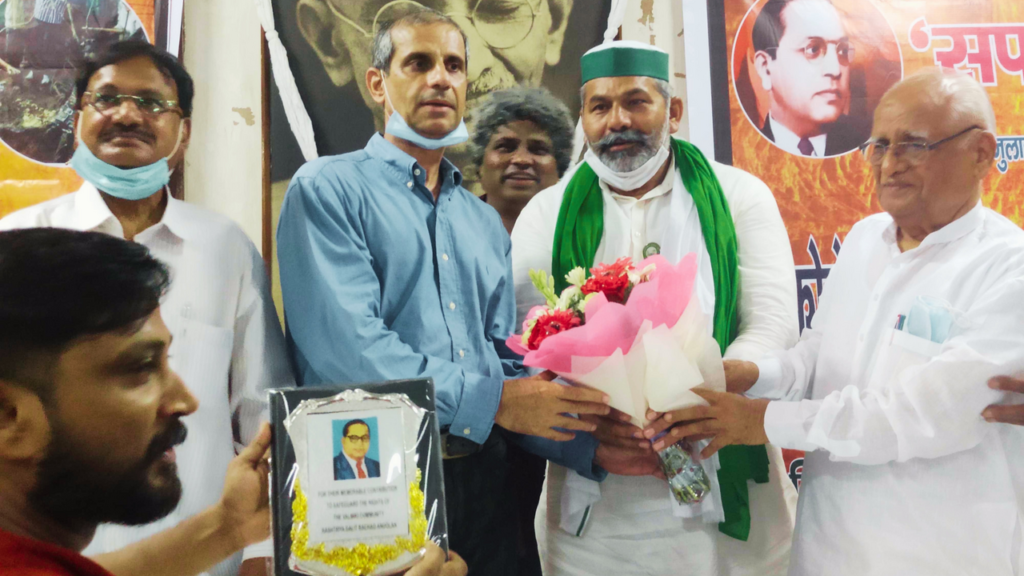
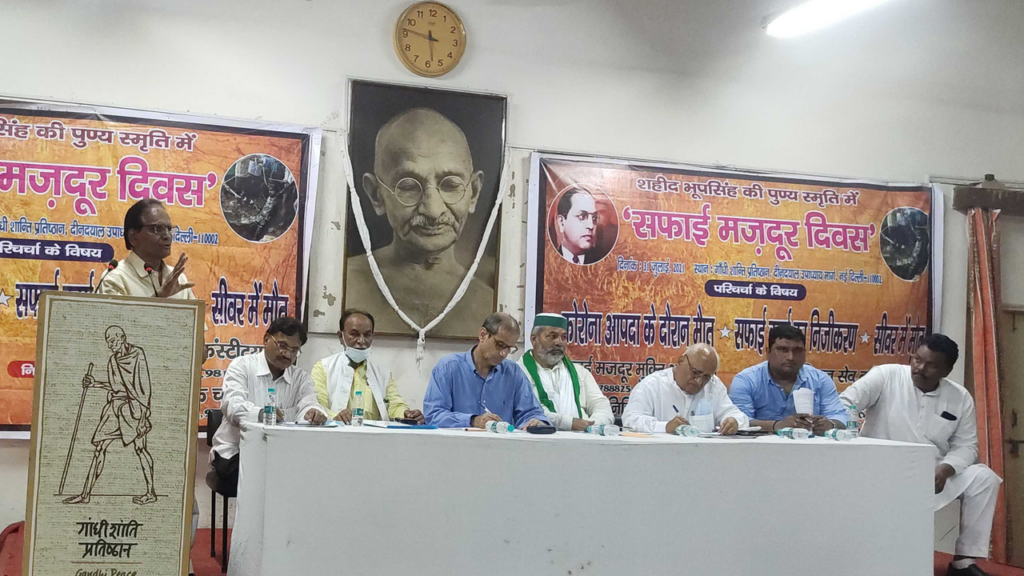
Prominent Lawyer Advocate Mehmood Pracha was honoured with the 2021 annual award at the ‘Safai Mazdoor Divas’ last week for his work in supporting the Safai Karamcharis’ demand for equal status in society.

The ‘Safai Mazdoor Divas’ is commemorated every year on 31st July which is observed in the memory of a Safai Karamchari ‘Bhoop Singh’ who was shot down by Delhi Police during the strike of Safai Karamcharis on 31st July in 1957. The day is also celebrated to highlight the contribution of Swachchta Karamcharis to society despite being extremely marginalized and deprived.

Advocate Mehmood Pracha in his address said, “I have received many awards on national and international platforms till now for various activities, but I consider this award as one of the most important awards of my life and career, as this has been given by the community, who made every individual of the country self-sufficient and talked about equal rights for all”.

“Manual scavengers who carry our filth with their bare hands are the first and foremost frontline workers of the society, before and after the pandemic, because they prevent us from getting ill to diseases”.

He asserted, “They should be given equal and even more status than the doctors and army of the countries, as doctors treat our diseases but these workers prevent us from getting these diseases. Army protects us on borders but these workers protect and save us within the country”.

“Privatization of the work done by manual scavengers should not be done, if the government wants to replace the manual work with machinery, the Dalit/Valmiki community should be given the contract of the machines and not the Savarnas, who already enjoy the privilege of being the upper caste and majority”, he further said.

The award was handed over to Adv Pracha by Rakesh Tikait, farmer leader and national spokesperson of Bhartiya Kisan Union. He extended his support to Swachchta Karamcharis for their struggle in getting equal and fair status in society.

He said, “The support we have received from the Dalit community is overwhelming, we are also ready to lend our possible support to the workers in their struggle”.

Along with Mehmood Pracha, the award for the year 2018-19 was given to Bharat Kesari Birju Pehelwan (Valmiki) and for 2019-20 to Professor Dr Kaushal Pawar of Delhi University.

The event was jointly organized by Dalit organizations which include, Rashtriya Dalit Bachao Andolan, Mission Save Constitution, Valmiki Chaupal, Safai Mukti Andolan, and Delhi Municipal Worker Sangh.

The event was joined by many eminent figures, including Dr OP Shukla, President Rashtriya Dalit Bachao Andolan, a retired bureaucrat of Valmiki caste, and Justice BG Kolse Patil and moderated by Harnam Singh, former Chairman of the Delhi Commission for Safai Karamcharis.

source: http://www.thecognate.com / The Cognate / Home> News / by Ghazala Ahmad / August 02nd, 2021

On a mission to take ‘Dev Bhasha’ to people: UP man conducts free online Sanskrit-speaking classes

Mahoba Village (Bundelkhand), UTTAR PRADESH :

Free online Sanskrit-speaking classes by UP is an instant hit as there is a surge in excitement about learning the ‘language of gods’.

free-of-cost online Sanskrit-speaking classes of 20-day duration (one hour daily) were planned and launched in the first week of this month.

Uttar Pradesh : 

Around 25 years back, Class V student Hasan Khan would spend hours with his friends at the local Hanuman temple in his Mahoba village in UP’s Bundelkhand region, listening to the Ramayan verses. He recited the ‘chaupais’ and ‘shlokas’.

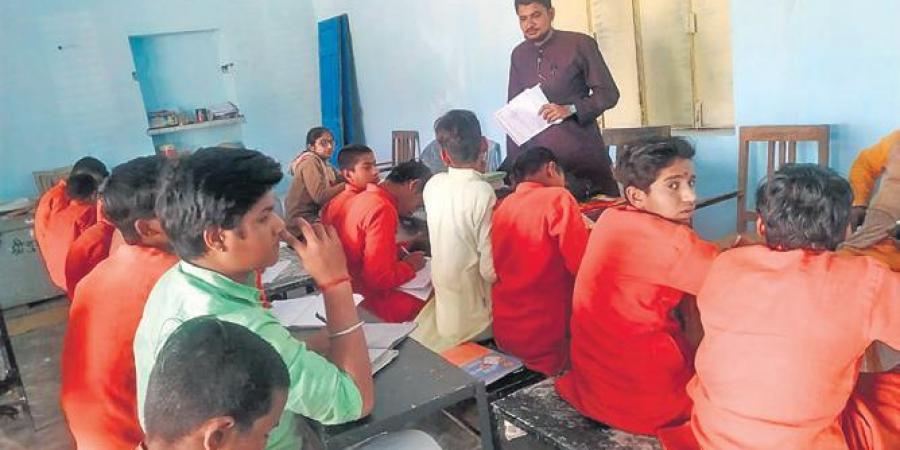
Now 35, Khan is currently on a mission to popularise Dev Bhasha (the language of gods, as Sanskrit is known) as Jan Bhasha (the language of commoners). Pursuing PhD in Sanskrit, he isn’t alone in his mission but is joined by 40 other trainers working on a dedicated project of the Uttar Pradesh Sanskrit Sansthan to break the myth of Sanskrit being a difficult, primitive and elitist language.

“Four years back, UP embarked on a dedicated mission to popularise Sanskrit, starting with government school teachers and students. Till two years back, special camps were organised across the state which enabled not only 12,000 primary teachers, but their students also to learn how to speak in Sanskrit on a daily basis. Our next plan was to establish centres in all development blocks and train at least 1,000 people in each block to speak fluently in the language,” UP Sanskrit Sansthan president Vachaspati Mishra.

The Covid pandemic came as a big obstacle. As the pandemic shows no signs of ending, the Sansthan has taken to the online medium. Free-of-cost online Sanskrit-speaking classes of 20-day duration (one hour daily) were planned and launched in the first week of this month. Aspirants were asked to give a missed call on cell-phone number 9522340003.

“We received 45,000 missed calls. All those who made the calls automatically received forms to get enrolled for our free online course being conducted in one-hour slots from morning till evening. Over 8,500 have already enrolled,” said Mishra. While 60% of those enrolled are students (from Class V students to PhD scholars), the rest are professionals, including doctors, engineers, journalists, software engineers, lawyers, teachers and even sportspersons. Among the non-students, around 30% are women, many of them housewives. 

While the maximum (over 25%) of these 8,500-plus students are from UP, participants from Maharashtra are second only to UP. Madhya Pradesh, Gujarat, Karnataka, Punjab, Bihar, Delhi, Uttarakhand and Telangana too are in large numbers. Though the present duration is for only 20 days, the Sansthan is planning to follow it with virtual Sanskrit Vyakaran (Grammar) classes for those eager to delve deeper into the language. Also, the success has prompted the Sansthan to plan such courses in Pali and Prakrit languages as well. 

The participants are already excited. “Since childhood, Sanskrit and not Bengali has been my third language after English and Hindi. With my father being in a transferable job, I did my schooling in Chennai where I learnt Sanskrit in Devanagiri script,” says Shantanu Ganguly, associate professor of English language at a leading college in Kolkata. “The course has given me an opportunity to refurbish my Sanskrit knowledge attained during school days. I’m eagerly waiting to pursue further courses in the Dev Bhasha and would be happy if my services are used to run similar courses in West Bengal,” he says.

Ganguly’s batchmates in the virtual classroom include Anup Singh, a national-level rifle shooter from UP. “Meditation holds the key to concentration and success in target sports such as shooting and archery. I’ve been meditating with Hindi words, but mediation with Sanskrit shlokas generates different vibes,” Singh said. “I’ve never studied Sanskrit before. The free online platform attracted me,” said Nagpur-based software engineer S R Mungatiwar.

source: http://www.newindianexpress.com / The New Indian Express / Home> The Sunday Standard / by Express News Service / August 01st, 2021

Book review | ‘Labour and Migration among Indian Muslim Artisans’: A limited but sensitive look at work-from-home outside urban, corporate India

Sahranpur, UTTAR PRADESH :

Chambers’ research on how women’s labour is devalued and underpaid lays the ground for future researchers on how women offer care and strength to each other within patriarchal settings.

In Saharanpur, Uttar Pradesh, Chambers' research showed, job opportunities for female wood workers are still curtailed. Most women are restricted to the home, and many of those who work in factories, are concerned about sexual predators.

In Saharanpur, Uttar Pradesh, Chambers’ research showed, job opportunities for female wood workers are still curtailed. Most women are restricted to the home, and many of those who work in factories, are concerned about sexual predators.

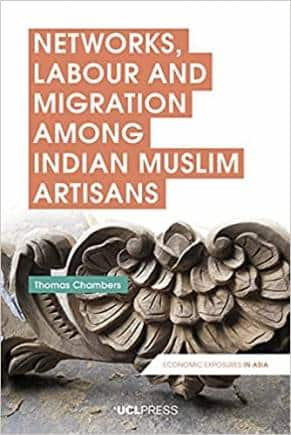
Whose stories are centred when ‘working from home’ is seen as ‘the new normal’? How does one account for the labour of women who have always worked from home because of the patriarchal structures in their lives? Thomas Chambers’ book Networks, Labour and Migration among Indian Muslim Artisans (2020) will make you think about these questions.

Book Review | 'Labour And Migration Among Indian Muslim Artisans': A Limited  But Sensitive Look At Work-from-home Outside Urban, Corporate India

The author is a senior lecturer in anthropology at the Oxford Brookes University. His book is based on ethnographic fieldwork with woodworkers in Saharanpur, Uttar Pradesh.

Chambers notes that migration to the Gulf Cooperation Council (GCC) from Uttar Pradesh now exceeds that from Kerala, Andhra Pradesh and Tamil Nadu. He writes, “The state registered 191,341 emigrants to the Gulf in 2012, compared with 27,428 in 2004. Figures for 2013 and 2015 suggest that numbers exceeded 200,000 in these years.”

The book examines how local friendship groups and apprenticeship networks open up opportunities for men to migrate to the GCC whereas women’s engagement with the labour market keeps them mostly confined to the home. The book will help readers appreciate how ‘working from home’ is experienced outside corporate India, and how this experience is shaped by gender. Chambers tries to explain this using the concept of ‘chal-chalan’ in local parlance.

He writes, “The term articulates a complex assemblage of gendered moral and ethical circulations that regulate women’s sexualities, bodies and subjectivities. It was also at the forefront of women’s discourses about participation in paid labour within and beyond the home.” His book will deepen your understanding of workplace sexual harassment, a big reason for women woodworkers to prefer working from home rather than in factories.

Unlike men who are able to withdraw their labour and seek work elsewhere within India or outside, women’s mobility is restricted. They are expected to look after children, and the sick and elderly. Their economic independence is also curtailed by employers who justify low wages by insisting that their labour is unskilled, and that their income is meant to supplement the earnings of the men in the house who are supposed to be the real breadwinners.

The book shows how this reasoning is flawed. Chambers found that women with husbands who were either unemployed or alcoholic had to bear all the responsibility for running their households. Women who were divorced or widowed were also in a precarious situation. Working in factories would pay them a lot better but it would make them more vulnerable to sexual predators who saw them as easy prey as “they lack(ed) the ‘protection’ of a husband.”

Chambers writes, “My involvement with the mohallas has always been mediated in a highly gendered context. Narrating the lives, experiences and subjectivities of women is therefore one of the more challenging aspects of this book.” He adds, “Gradually, curtains fell away, and over the years I have developed many close relationships with women in the mohallas.”

Earning the trust of one’s respondents is key to producing ethical scholarship. Researchers need to care not only about their research questions but also the human beings who help them generate knowledge by sharing their time, lived experiences and personal insights.

Chambers has quoted some of the women he interviewed. One of them, named Sabra, says, “Sometimes in the factories the men are really very rude. Some men address me like a dog…I never talk to men in the factory as I know they are shameless…They say, ‘If you are pak daman, then go to your home. If you belong to a respectable family, you would not come to the factory.’ I have to bear this blame silently. If I did not, my job would be finished.”

Acknowledging the particularities of his social location as a white, non-Muslim man from the UK entering a gender-segregated environment in north India for his research, he attempts to listen and understand with sincerity. This is refreshing because the trope of white men trying to save brown women from brown men is not only patronizing but has also been overdone.

Chambers writes, “My male positionality imposed limitations that did not arise in my relationships with men. The experiences of women who labour in wood production are so distinct from those of their male counterparts that any attempt to interlace the narratives runs the risk of obscuring these distinctions.” To overcome these limitations, he draws on Ayesha Ansari’s work to contextualize Muslim women’s experiences in the Indian workforce.

It can be rewarding to read Chambers’ book alongside Devaki Jain’s recent memoir The Brass Notebook (2020). As a feminist economist, she is deeply invested in pointing out that women in households marked as being below the poverty line are neither sitting idle nor occupied exclusively with household chores and childcare. They roll bidis, sell cow dung cakes, or earn money for their family in other ways. This is economic activity, and it requires skill acquisition.

Though Chambers’ analysis is largely heteronormativehe subtly points out the relationship between homosociality and same-sex desire in Saharanpur’s gullies, expressed through the religious rhetoric of brotherhood. You might find it useful to read Gayatri Gopinath’s book Unruly Visions: The Aesthetic Practices of Queer Diaspora (2018), which suggests that the “Gulf dreams” of migrants may “extend beyond limited heteronormative framings.”

She writes, “If working-class migrants are viewed as heterogeneous, desiring subjects rather than reductively defined simply through their labour, what other longings and forms of relationality come into view in the homosocial, regional and diasporic spaces they inhabit?”

This question could also be posed in relation to the desires and aspirations of women woodworkers in Saharanpur, involved in “polishing, sanding and touching up on defects on items such as boxes, incense holders and rehals (folding stands for holding the Quran).”Are these women’s lives defined only by their income and status as woodworkers? Chambers’ limited access to them keeps him from offering insights into the friendships, solidarities and intimacies that might be forged between them. However, his research on how women’s labour is devalued and underpaid lays the ground for future researchers to explore how women offer care, joy and strength to each other within patriarchal settings.

source: http://www.moneycontrol.com / Money Control / Home> News> Trends> Features / by Chintan Girish Modi / July 24th, 2021

From Mysuru To Mumbai: Railway Porter Badge No. 16 Takes Her To ‘Indian Idol’ Stage

Mysuru, KARNATAKA :

Rizwana Banu’s story breaks free from dogmas of male-dominated profession.

She is alone but not broken. Her life is filled with tragedy, yet she is a dreamer. She is brave, graceful, independent, hard-working, confident and what not. Words fall short to describe her attitude towards life. Her journey of life is an inspiration to all women out there. 

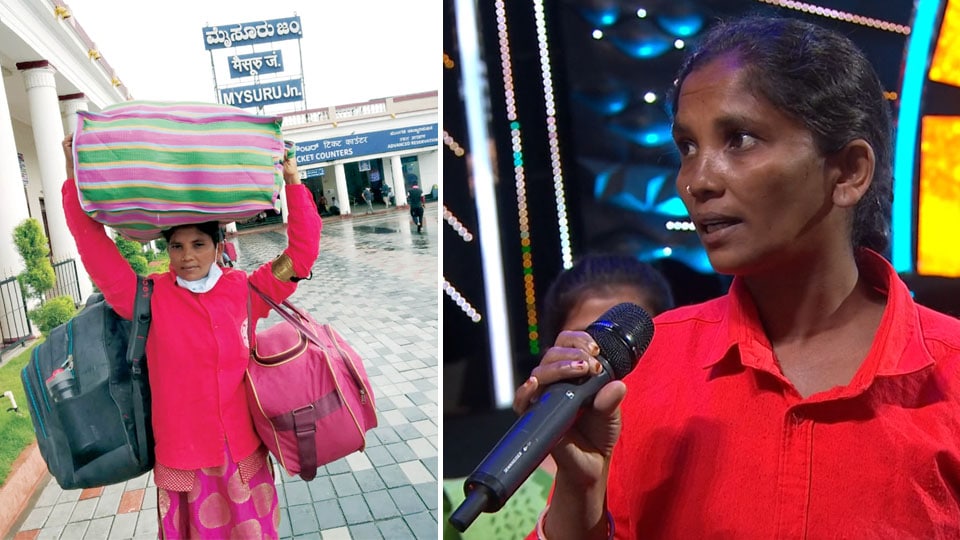
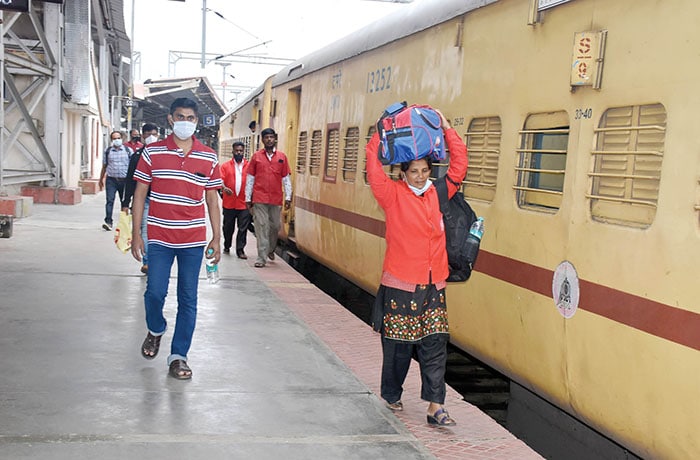
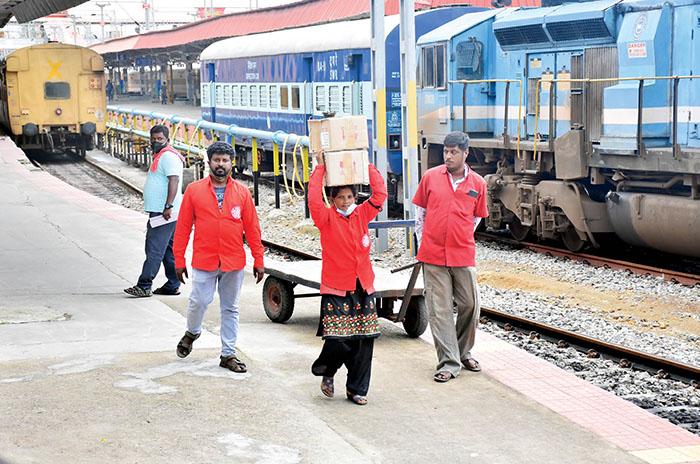
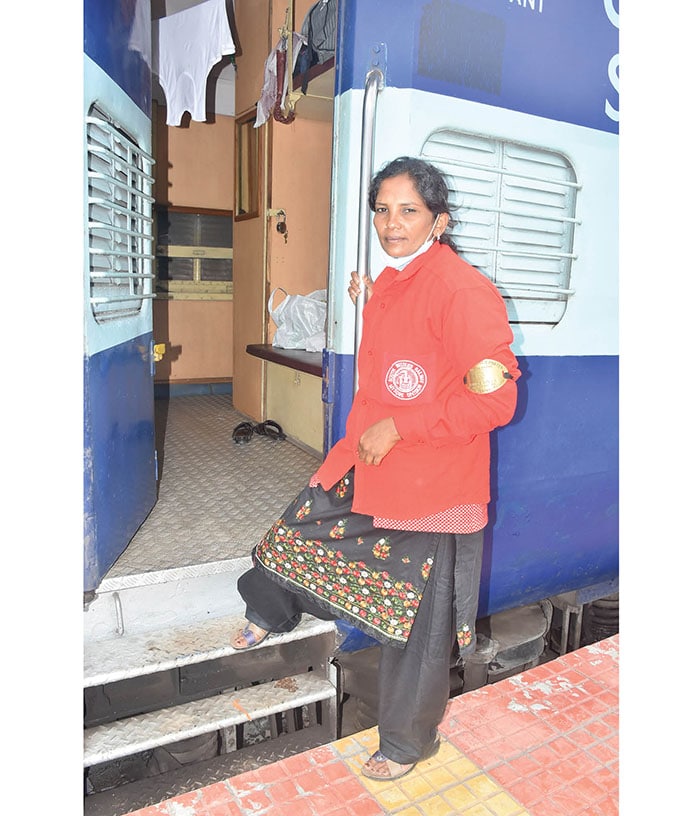
Next time when you are at the Mysuru City Railway Station, there are chances that you will come across 39-year-old Rizwana Banu, with a smiling face offering to carry your luggage. She is the only woman among the 60 porters at the Railway Station and she does the job as efficiently as the men.

Wearing Porter Badge No. 16, Rizwana has appeared on the stage of the country’s biggest singing TV reality show ‘Indian Idol’ in Mumbai on July 6 and this has made her the talk of the town. But the celebrity status has not got into her head and she still lifts passenger luggage, smiling. Her amiable approach gets her a few rupees more than the normal remuneration.

Life not a bed of roses

Rizwana lives in Shanthinagar and she lost her husband Javed Pasha in 2010. Javed was also a Porter at the Railway Station and after his death, the world came crashing on her as she had to take the responsibility of looking after the family including four children, parents and in-laws. 

She was not qualified enough to get a job and she fell back on what her husband was doing for a living. Fortunately she got the job on compassionate grounds and she became the lone woman porter. 

Sharing her life’s story with Star of Mysore, Rizwana said, “Initially I was scared to work amidst men as I was the only woman doing this job. I did not have friends and even passengers would ignore me thinking that I cannot carry heavy luggage. There were many depressing moments and many times I cursed myself for having been born as a woman.”  

“I had no other option as I am the only bread-winner in the family on whom eight are dependent. I slowly gained confidence to work among men and even passengers started showing concern towards me. They sometimes pay extra money for my hard work.  It’s been 10 long years,” she says with a sigh. 

Unexpected opportunity

On appearing on ‘Indian Idol’ stage, she said that she never thought of standing on such a huge and famed stage. “Though I was not a contestant, it happened to me unexpectedly. I got an opportunity to go to Mumbai through our mesthri Jalendra. The ‘Indian Idol’ show managers were looking for a lady surviving life despite odds. Somehow they contacted Jalendra and asked me to come to Mumbai,” she said. 

“I was flying for the first time in my life. After I reached Mumbai they arranged for accommodation at a private hotel. The next day I was invited on the stage and a video of my entire journey was shown to the audience. Show judges Anu Malik, Himesh Reshammiya and Sonu Kakkar praised me,”  Rizwana recalled. 


“Seeing the video that captured my life and struggle, everyone’s eyes welled up with tears. For me, I received the respect which I always wanted to earn. The anchor of the show Aaditya Narayan (son of singer Udit Narayan) announced that he would give me his one episode’s remuneration,” she said. 

Rizwana got Rs. 1.5 lakh from the reality show. She plans to use it to clear a part of the Rs. 5 lakh loan taken for her daughter’s marriage. “Actually I watched the show and I am a big fan of contestant Mohammad Danish. But I never imagined that I would get an opportunity to be on the live stage,” she noted. 

Life of a Porter not easy

“Earlier there were no lifts and escalators and porters had to carry the luggage using stairs. Now things have changed. I work 11 hours a day, from 6 am to 5 pm and whenever I have body ache, I take painkillers to be prompt at work the next day,” she said. 

Lockdown was tough for Rizwana and her son sold tea to make ends meet. “I earn Rs. 300 a day, which is hardly enough but I have never complained and I am thankful to have at least this much. I love watching movies and dream of meeting the ‘real coolie’ Amitabh Bachchan one day,” she said and went about her routine.

source: http://www.starofmysore.com / Star of Mysore / Home> Feature Articles / by G. Amit Kumar / July 30th, 2021

Mangaluru: Lady proves caste, religion barriers cannot stop humanitarian vibes

Mangaluru, KARNATAKA :

Mangaluru :

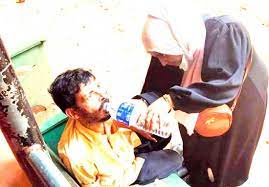
Innumerable incidents have exemplified the humanitarian feelings gaining upper hand over the barriers of caste, creed and religion. One such example emerged in the city on Saturday in which a man named Subrahmanya, who was shivering due to fever and hunger, having turned wet in rain, was cared for by a Muslim lady. He was also admitted into a hospital by her. This gesture of the lady has come in for lavish praise.

Sambreena Banu, daughter of Sheikh Khaleel, working for a jewellery store in the city, had visited Wenlock Hospital here on Saturday. She took pity on Subrahmanya, who was shivering on account of fever outside the hospital. She ordered food for him and gave him water. On questioning him, she came to know that the youth belonged to Kaup in Udupi district. He had left home after differences arose between him and his family members. He had no money and therefore did not have any food. As he had drenched in rain, he was also suffering from fever.

Sambreena not only took care of the helpless youth but also contacted Fayaz from Madoor, an office bearer of Blood Donors and MNG Foundation and informed him about the predicament of the youth. Subrahmanya was admitted into the hospital after which his family was informed.

Sambreena said that her grandfather, parents and people at a firm here she works, used to tell her about the virtues of social service. “I had visited Wenlock Hospital for getting medicine for my leg pain. I was pained at the condition of the youth and could not convince myself to leave without taking care of him. He too is a human being like me, and this feeling made me want to help him,” she said.

Fayaz Madoor said that after Subrahmanya was admitted into hospital, he spoke to him and informed his family. He appreciated Sambreena for the kindness she showered on a stranger and helping him.

source: http://www.daijiworld.com / Daijiworld.com / Home> Top Stories / by Daijiworld Media Network Mangaluru – (SP) / July 28th, 2021

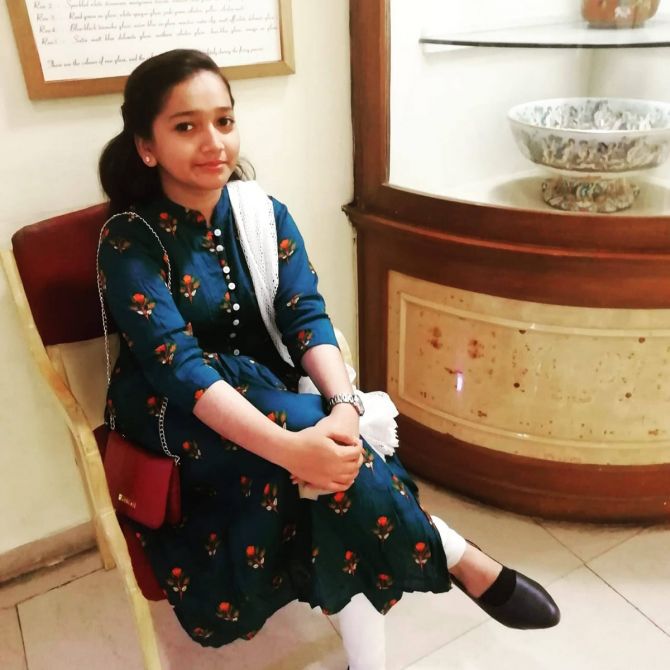
The mechanic’s daughter who topped CA exam

Mumbra, MAHARASHTRA :

Zareen Khan scored 461 out of 700 marks and topped the Chartered Accountancy intermediate exam conducted by The Institute of Chartered Accountants of India in the results announced February 8, 2021. Photographs: Kind courtesy Zareen Khan

Until February 8, 2021, no one knew who Zareen Khan was, where she lived or what her dreams were.

All that changed a few hours after the results of the Chartered Accountancy intermediate results were announced online this year.

Zareen, the eldest among four siblings, who had appeared for the exam in November 2020 for the first time after pleading her case with her parents, had secured an All India Rank of 1 and topped the exam scoring 461 marks out of 700.

“It was my younger sister who encouraged me to appear for the exam once. Earlier, I’d taken a break for two years to work before I could complete my post-graduation. I knew this might be the first and maybe the last time I could become a CA. So I told my parents to give me one chance to prepare and appear for this one, Zareen, who thinks she is a “little old at 25 years” tells Rediff.com‘s Divya Nair in a late night conversation over the telephone.

When the results were announced, Zareen who didn’t even have the courage to check her marks online, had to further explain to her bewildered parents what her success in the exam meant.

“My parents had no idea what CA is or how difficult it is to crack the exam,” she says while talking about how the entire neighbourhood came together to congratulate her for her achievement.

What makes Zareen’s story so inspiring is the fact that she is the first post graduate in the family and perhaps one of the few highly educated young women in Mumbra, a township on the outskirts of Mumbai, where she grew up and currently lives with her family of six.

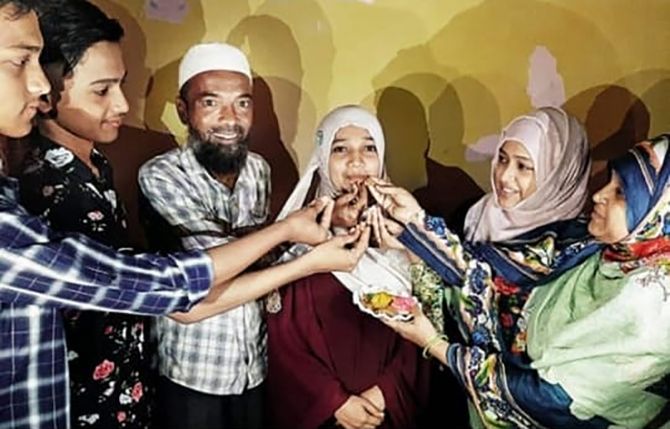
Zareen is congratulated by her family. She lives in Mumbra with her parents, a younger sister and two younger brothers.

Growing up, Zareen, an academically bright student, was often subjected to criticism from neighbours over pursuing higher education.

“I used to score over 85 per cent and even stood second through my graduation and post graduation. Yet people would often say ‘kya kar logi itna padhai karke? Aage jake shaadi hi to karna hai,’ she recalls.

“I am sure everyone knows now that I stay in a 300 square foot one room kitchen which is shared by my parents, a younger sister and two brothers,” she says while explaining that her educational journey wasn’t a cakewalk for her.

Zareen’s father works as an auto mechanic and all her siblings equally contribute towards running the home, she informs us.

Although Zareen was aware of her family’s financial and social standing, she firmly believed that the “place, conditions or challenges you are born with doesn’t define how your future will turn out to be.”

Studying for a competitive exam like Chartered Accountancy, where the overall pass percentage is less than 25%, requires more than just academic brilliance or good coaching, she agrees.

Zareen pursued online coaching through an institute in Faridabad which provided her study material and other resources.

“In the morning, the kids would be playing outside. My mother would be cooking at home; anyone would walk in to chat or for some work. So I would wait till evening to begin my studies,” she says.

“10 pm to 6 am was perfect for me. I started in November 2019 and studied minimum 10-12 hours in the months leading to the exam and up to 16 hours a month before the exam.”

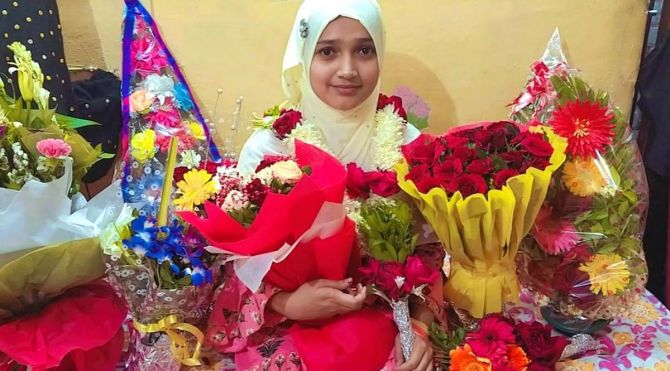
Soon after the results were out, wishes started pouring in from all over. Their humble 300 sq ft home has been bustling with well wishers, including local politicians.

For Zareen, the biggest hurdle was fighting her fears. “Like everyone else, I feared failure. I know the best of people crumble under pressure. I had only one chance. I didn’t want to fail.”

Looking back, she feels that the lockdown was a blessing in disguise for students like her.

“When the exam kept delaying from May to November, I used all the time to revise over and over again. I think this constant link between studies and revision helped me prepare better and finish the exam on time. My aim was to attempt all the questions in 3 hours, which was possible. I must have barely left out 3-4 marks.”

Zareen’s new found fame may have turned her into a mini celebrity of sorts in Mumbra. But she is unperturbed by all the attention around her.

“I am happy that people want to support me. I feel more responsible now. I want to be a positive example for compulsory higher education among girls,” she tells us.

Zareen feels that this success is an eye opener for her to chase her dreams and support her family.

“I will not lie — I wasn’t too confident of my abilities, yet I could reach so far purely because of my consistent dedication. Also, my family supported me. I really hope my story gives more women the power to dream big and fulfill them too.”

Currently, Zareen spends her time applying for articleships and wants to focus on preparing for the CA final exam scheduled for November 2021.

Agar aap me dedication aur vishwas hai, aap kuch bhi kar sakte hai. At least ab to koi nahi bolega itna padh likhke kya karoge?” she says.

“I am the first post graduate in my family. I want to be the first CA too.”

source: http://www.rediff.com / Rediff.com / Home> Getahead / by Divya Nair / February 19th, 2021