A Keralite racquet stringer’s dexterity and craftsmanship will be in high demand at the Dubai Open which will feature top tennis stars like Roger Federer and Serena Williams.
Jasif Mustafa, the lone Malayali in the team of official racquet stringers for the championship, which kickstarts on Sunday at the Dubai Tennis Stadium, is an expert racquet mechanic.
A native of Perumpilavu in Thrissur district, Jasif is the head of the racquet stringing section of Adler Sports, one of Dubai’s top sporting goods and equipment dealers.
Professional players would restring their racquets occasionally as the strings tend to lose their tension after several games. Jasif’s job is ensuring the precise degree of tension requested by each player.
The professional stringers of Adler Sports, headed by Jasif, got the offer to be a part of the Dubai Open after they did a commendable job at the Abu Dhabi WTA Women’s Tennis Open which was held earlier this year. During the course of the 10-day event, they repaired as many as 513 racquets and their work was widely appreciated.
Jasif has vast experience under his belt as a string mechanic. He had worked at a racquet repair shop in his home town for six years before he landed in Dubai four years ago. After joining Adler Sports, he has repaired over 20,000 tennis and badminton racquets that include the ones used by ace Indian shuttlers like Kidambi Srikanth and P V Sindhu.
“Jasif has a knack of executing the right tweaks. He can assess the quality of the strings just by slapping it on his palm. It is something he has picked up over the course of time,” says Pramod, a native of Guruvayoor and a coordinator at Adler Sports.
Stringing a racquet can take up to twenty minutes for a skilled stringer. Jasif’s strength lies in his speed and accuracy. Recently, he strung a racquet in 12.33 seconds and shared the video on social media which attracted great attention from people and the media particularly in the Gulf.
The 28-year-old is a certified stringer of Yonex, a global leader in sports equipment manufacturing. He has had the opportunity to train under Yonex stringing team head Tim Willey and Europe Racket Stringers Association chief Mark Maslowski. Jasif is also grateful to Adler Sports owner Abdul Salam for all his support.
Challenging job
Stringing racquets is a challenging job. A stringer has to ensure that racquets are strung at the right tension based on the style of each player. Racquet tension can vary from anywhere from 30-70 lbs. Professional players tend to opt for the upper limit of the racquet tension range which offers more control, while lower tensions provide more power. Tennis strings are usually made up of polyester, synthetic gut or a hybrid of the two and the price ranges between Rs 300 and Rs 8,000.
www.onmanorama.com / OnManorama / Home> Sport / by Raju Mathew / March 04th, 2021
Missing engineer Subhan Ali. | Photo Credit: Special Arrangement
Subhan Ali’s vehicle fell off the road and plunged into the Drass river that flows into Pakistan last June, but the process of matching his DNA with those of his parents is far from over.
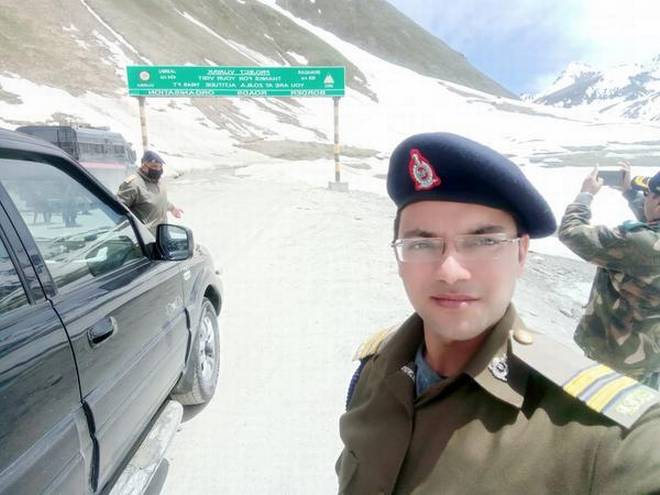
The wait for the family of Subhan Ali, a 27-year-old civil engineer posted with the Border Roads Organisation (BRO) who went missing after an accident on the Zozila-Kargil-Leh road last June, just got longer.
Son of a tailor from Balrampur in Uttar Pradesh, the Indian Engineering Service (IES) officer had been posted in Ladakh as part of the General Reserve Engineering Force (GREF) of the BRO when his vehicle fell off the road and plunged into the Drass river that flows into Pakistan.
Though the Pakistani side had recovered an unidentified body on Shingo river close to the Line of Control (LoC) on 27 June, the process of matching the DNA with Mr. Ali’s parents is far from over.
Lok Sabha member and Bahujan Samaj Party (BSP) leader Kunwar Danish Ali had taken up the case with Defence Minister Rajnath Singh in July last year.
Now, eight months later, Mr. Singh informed his Lok Sabha colleague that the DNA matching process would need more time as “the sample is in a queue”.
“It is learnt that DNA matching analysis at FSL [Forensic Science Laboratory], Chandigarh, is in queue and it may take 3-6 months before the report is received. Further action will be taken on receipt of report from FSL, Chandigarh,” Mr. Singh said in his letter dated February 11.
On June 22 last year, Mr. Ali, along with his driver, Palwinder Singh, went missing after their vehicle fell into the Drass and got swept away by the fast flowing river.
While the Gypsy and the driver’s body were recovered from the river, the engineer’s body remained untraceable.
Five days later, Pakistani authorities reported the finding of an unidentified body from Shingo river close to the LoC on 27 June. Following up the lead, the Army Headquarters coordinated with Pakistani authorities to collect the DNA samples of the unidentified body.
The DNA samples of the unidentified body were received by Kargil police at Tangdhar on August 22, 2020. Two months later, the DNA samples of his parents were also collected on October 28, 2020 and was forwarded to the FSL, Chandigarh.
“But since then, it has been a long wait for the family. They have been waiting for a sense of closure to this tragic chapter. Even now, they may have to wait for another six months. I would request the government to speed up the process of DNA sample matching and provide them some relief,” the BSP MP told The Hindu on Sunday.
source: http://www.thehindu.com / The Hindu / Home> News> National /by Sandeep Phukan / New Delhi – February 28th, 2021
The man in the Indian Air Force uniform is Air Commodore Hilal Ahmad Rather with India’s Ambassador to France Jawed Ashraf, an Chairman of Dassault Aviation, Eric Trappier
Hilal was commissioned in Indian Air Force as a fighter pilot on December 17, 1988
Air Commodore Hilal Ahmad Rather is presently India’s Air Attaché to France
________________
The first batch of the much-awaited five Rafale fighter jets that took off from France on July 27 will reach India today around 2 PM. In the moment of euphoria over the arrival of one of world’s best fighter jets, Indian social media users were quick to point out the important role played by Hilal Ahmad Rather in the quick delivery of Rafale.
Air Commodore Hilal Ahmad Rather is presently India’s Air Attaché to France. Hilal hails from South Kashmir’s Anantnag district. He became India’s first pilot to see off the batch of Rafale jets from France to India on July 27. Reports suggest that he played a crucial part in early delivery of the Rafales, and was previously associated with the weaponisation of the Rafale jets according to the Indian requirements.
Hilal was commissioned in Indian Air Force as a fighter pilot on December 17, 1988. He became flight lieutenant in 1993, wing commander in 2004, group captain in 2016 and air commodore in 2019.
Recipient of Vayu Sena Medal and Vishisht Seva medal, Hilal has a record of 3,000 accident-free flying hours on different aircraft.
An October 2019 video was also shared widely where he was preparing for Shashtra Puja along with Group Captain Anand, in presence of Defence Minister Rajnath Singh.
India had signed a deal worth over ₹60,000 crore with France in September 2016 for 36 Rafales to meet the emergency requirements of the IAF.
source: http://www.livemint.com / Mint / Home> News> India / by Staff Reporter / July 29th, 2020
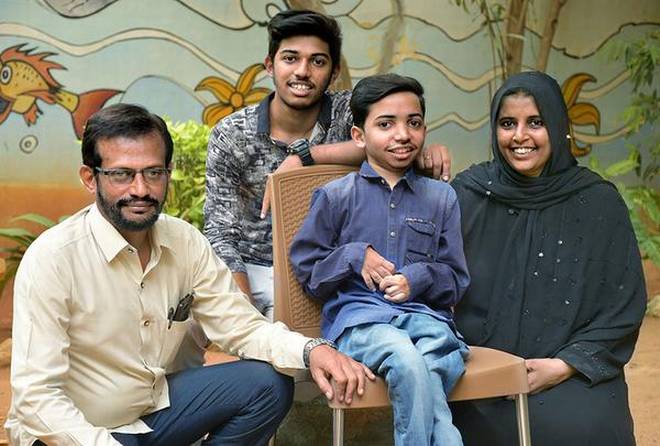
N. Mohammad Afzal with his parents and younger brother Faazil. | Photo Credit: M. Moorthy
N. Mohammad Afzal loves computers and cars, and thanks to his prodigious memory power, he is his family’s ready reckoner on anything from bank transactions to route maps.
“Even in our lowest moments, Afzal has had the most practical and sanguine attitude about his disability, and that has kept us motivated,” says his father Ahmed Nasir, a businessman based in the city.
Diagnosed with juvenile rheumatoid arthritis at the age of 7, Afzal slowly lost the use of his limbs, but remained active in academic pursuits. He passed his Secondary School Leaving Certificate (SSLC) Class 10 exams (written with the help of a scribe) with a total score of 419 in 2016 under the Samacheer Syllabus.
“I was unable to fulfil my dream of studying in NITT due to my personal circumstances, but my son is doing it,” says Mr. Nasir with pride. “While he has got admission to Civil Engineering in the first phase, we hope the authorities will consider him for Computer Science.”
Afzal also has his own YouTube channel, where he showcases his love for technology and gaming. He has taught himself to operate and assemble computer equipment, and prefers no special treatment when he is at home.
“We have adapted the design of our residence in Palpannai to allow him to move around in his wheelchair without assistance,” says his mother Shahida.
He is very excited to be part of a classroom after his many years of private study. And Afzal has just one response for those who may say hurtful things about him.
“I will simply ignore them,” he says with a smile.
source: http://www.thehindu.com / The Hindu / Home> Cities> Tiruchirapalli / by Nahla Nainar / Tiruchi – July 03rd, 2019
The Calcutta boy plays one of the primary characters— opposite Aditi Rao Hydari’s Nusrat — in Ribhu Dasgupta’s directed movie, now streaming on Netflix
Shamaun Ahmed : Styled by : Nazmee Niten / Picture : Brandon Chung
City boy Shamaun Ahmed plays one of the primary characters — opposite Aditi Rao Hydari’s Nusrat — in The Girl on the Train, now streaming on Netflix and also directed by another Calcutta boy, Ribhu Dasgupta. t2 caught up with Shamaun on his big break and the road ahead.
Given that it’s your big Bollywood break, was there an initial sense of disappointment when you found out that The Girl on the Train was headed for a streaming release?
I wouldn’t say I was disappointed… that’s a very big word. Yes, this was going to be my first Hindi theatrical release. But I believe in destiny, and I am sitting here and thinking, ‘How will this benefit me’ and I know eventually, God will show me how.
I am happy that with a streaming release it will reach so many countries at one go. I am grateful to OTT because actors like me who don’t want to do television and wouldn’t get films in a hurry, now have the opportunity to do similar, or even bigger stuff, on OTT.
I am fairly new, the other cast members are established and are doing a lot of work. But after the trailer came out, I became very nervous because the buzz was quite insane. Because of the trailer, my Instagram followers bumped up by a couple of thousands, an effect which I hadn’t seen since Bard of Blood (Shamaun starred as a key character in the 2019 Netflix web series). I haven’t had a release since then anyway. The Girl on the Train is a niche film, so we didn’t really expect this kind of a buzz. It’s now translated into a lot more responsibility. It’s not going to be a few thousand cinema halls, it will be the whole world.
Bard of Blood was, of course, also directed by Ribhu Dasgupta. How did you bag this film?
I was in Calcutta, and I knew that the cast and crew of The Girl on the Train were then in London shooting the film. At that time, I was in talks about doing a three ad film deal. I got a call and Ribhuda asked, ‘London aayega?’ He said that he was taking an English actor for the part, but eventually decided to talk to me. Ribhuda asked me if I could leave the ad deal, and I spoke to the agency and they graciously let me go. Within 10 days, I was in London shooting for the film.
For an artiste, it’s very significant when your director repeats you in his very next project. That made me a lot more confident about my craft. I am grateful to Ribhuda for the opportunity.Had you watched the original Hollywood film, starring Emily Blunt, either before or after starring in the Hindi version?
I actually had watched it a couple of years ago when it released. I like to get my script in my hand, but with this film, Ribhuda’s approach was very different. He said, ‘With this one, you have to trust me’. He sent me a rough idea of the script and then I watched the Holly film again to see what my character was meant to be doing. But I knew that our film would be quite different… Ribhuda has put in a lot of his own, whether it’s the detailing of the characters and everything else too. Ribhuda has told me that this film will surprise even the biggest The Girl on the Train and Paula Hawkins (the author of the book on which the film is based) fans. Even when we were shooting this film, we knew it would be quite a ride.What was it like shooting in London with the ensemble cast?
I have been in the industry for a while and have interacted with a lot of good performers. But when you know that you will share the frame with them and will be watched by the whole world, then a sense of nervousness obviously creeps in. When I reached the set on the first day, I walked into Totada’s (Roy Choudhury) room by mistake, instead of mine. We were shooting in Surrey and that was a very calm room on a set that was going fully mental. I was about to introduce myself to him, but he knew who I was, and he said, ‘Aamra toh ek desher chhele!’ For an actor to be recognised by a senior artiste is always very special.
Then I met Parineeti (Chopra) who was also damn cool. Aditi (Rao Hydari) was doing a scene with me in which I had to be rough with her. There were people on set who told me I had to be very careful, but I was like, ‘This is a scene that can’t be cheated. The camera is really close to us’. We did two takes and then Ribhuda told me, ‘Shamaun, ki korchhish? Do what you always do’. And that gave me confidence and a sense of belonging that my director is aware of what I am capable of as an artiste, and the scene worked out. Aditi later asked me, ‘You’ve done this before, right? This is not your first film’. I told her I had been acting for a while and she was like, ‘Good, man’. That, in itself, set the pace for me. There were such warm, loving people working on this film. If they would head out after work, they would always invite me. Avinash (Tiwary) and I would chill out a lot together. Jim (Sarbh) and Harshvardhan (Rane) were also staying in the same hotel and were shooting Taish at the time. Jim had told Avinash about a certain bar in the village which was near a river. After that, Avinash and I had quite a few romantic evenings together, staring at each others’ faces and having gin and tonic! (Laughs)
After we came back from London, we had the Bombay premiere of Bard of Blood. Parineeti had come for the premiere. I was in a corner stuck with a crowd. She saw me from a distance, worked her way through the crowd and gave me a tight hug and said, ‘Congratulations buddy, this is your big release’. My eyes actually welled up, it was such a nice gesture. There were some amazing bunch of actors on this one. Kirti (Kulhari) and I, of course, had also worked on Bard of Blood together.How are you planning to use this film to further your career in Bollywood?
I have had only one release every year for the last three years. There are some friends who I started with and they have become big stars and they tell me, ‘Why are you not here with us?’ And I am like, ‘Because you deserved to be where you are’. I did get opportunities, but I probably didn’t take them because I wanted to be ready for them. Somehow I felt I wasn’t, and that’s why I stayed away. Even now, I do a project only if I think I can do justice to it. I never say I am talented, I always say that I put in a lot of hard work. I am always going to be the guy working the hardest on that set, or in that frame. That I am sure about.
Adil bhai (Hussain, actor) has been aware of my journey, of me not being confident enough about my craft, or even my looks. That is also something that keeps me on my toes all the time. So Adil Hussain told me, ‘Ei nyakamo ta chharo and start working’.
Honestly, I am what I am because of what Calcutta’s advertising fraternity gave me. All the love and support from senior photographers as well as directors like Tonyda (Aniruddha Roychowdhury) and Anikda (Dutta) who gave me my first ad films. That gave me confidence and that’s when The Big Bong Connection happened and then came Bard of Blood and The Girl on the Train.
All these years, in Bombay, I have been offered ‘hero’ type roles of beating up 10 goons at a time by smaller studios, and there are some bigger studios that offered me roles that I didn’t like. In Calcutta, I haven’t worked in some time because I don’t get offered roles of consequence, probably because of the way I look (laughs). Since I play one of the primary characters in The Girl on the Train, I am hoping that in Bombay, substantial roles will now come my way. The fear of regret has brought me back to acting and now I plan to pursue it seriously.
Shamaun in Bard of Blood
I do a project only if I think I can do justice to it. I never say I am talented, I always say that I put in a lot of hard work. I am always going to be the guy working the hardest on that set, or in that frame. That I am sure about.
source: http://www.telegraphindia.com / The Telegraph Online / Home> Entertainment / by Priyanka Roy / February 26th, 2021
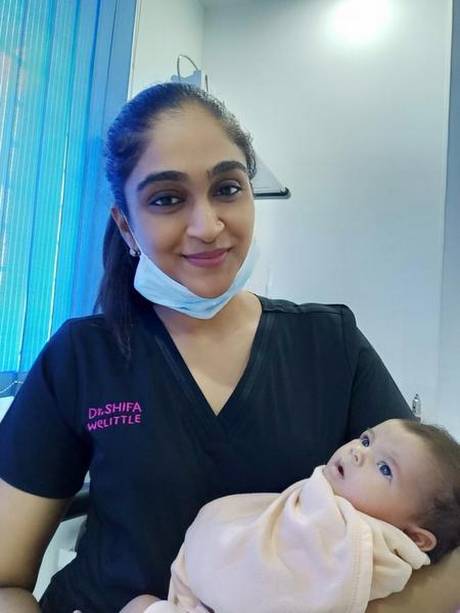
Paediatric dental specialist Dr. Shifa Shamsudeen discusses the work The Tongue Foundation, a non-profit founded by her, will be doing.
Did you know breastfeeding is a bulwark against diseases for both mother and child? Do you wish more people knew this? If you do, then join hands with The Tongue Foundation which looks for support groups to create awareness about mother-child health, in Chennai.
Founder of the non-profit The Tongue Foundation, Dr. Shifa Shamsudeen is establishing her first paediatric dental clinic, We Little, in Chennai soon, and she seeks to replicate the Foundation’s work in Coimbatore, where it has doctors, researchers and parents on board.
“The Foundation informs the general public about how the tongue as a muscle is related closely to many other parts. It starts with breastfeeding, then goes on to teeth development, eating and breathing. It even has a link to cardio-vascular diseases,” says Dr. Shifa, who has earlier worked at various hospitals in Chennai.
“We are trying to find an association between non-functioning tongue, hyperactive deficiency and attention deficiency,” she says, adding that the Foundation is collaborating with researchers and doctors, locally and globally, to initiate more research into the role of the tongue in breastfeeding.
“Bottle feeding can cause narrow jaws and also narrow the wind pipe, eventually leading to disjointed teeth. We are trying to break this chain by creating awareness,” says Dr. Shifa, adding that the group used talks, workshops and seminars towards this end.
“In the past we had associated with Coimbatore Parenting Network to conduct sessions regularly, but we need more people to help us take the Foundation’s activities forward,” she says.
In Chennai, the Foundation wants parents’ groups to spearhead a campaign against bottle feeding, with support from them.
“Or, if you stay in a gated community, invite us over for a talk,” she adds.
For details, visit www.thetonguefoundation.org
source: http://www.thehindu.com / The Hindu / Home> Society> Wellness / by Liffy Thomas / February 27th, 2021
Majees Technical Services continues to look at new lines of business in line with the growing need for localization of services and manufacturing.
______________
BIOGRAPHY
Ishrath Habibulla is an experienced Managing Director with a demonstrated history starting up and operating profitable businesses in varied sectors including oil, gas, power, construction, automation. He is skilled in negotiation, business planning, and sales. He is also a strong business development professional. Since 2006, he has been the Managing Director of Majees Technical Services, positioning the company as a leading turnkey security and telecoms contractor, as well as flare system manufacturer. He holds an MBA from the University of Florida, US, and a BSc in electrical engineering from Crescent Engineering College.
_____________________
INTERVIEW :
What role does MTS play in Oman’s market and what is your medium-term growth strategy? Majees Technical Services started purely as a trading organization and then moved onto services and eventually into manufacturing, mostly geared toward the oil and gas industry, targeting the Middle East, North Africa, and Southeast Asia. We continued the traditional lines of business and added newer lines under our new focus on manufacturing. We are looking to bring in skillsets that are not present in Oman. At present, we produce flare packages in Oman, but we want to take this to the next level and produce more process packages. On the digital transformation aspect, we already provide cybersecurity solutions for a number of banks. Internally, we are exploring robotic process automation. In this sense, our priorities for 2020 can be summarized as increasing the local content in our teams, exporting more, and implementing more digital strategies.
Are these avenues for growth a reactionary approach to how the market has evolved? In the last few years, the market has moved toward the localization of services and manufacturing. There is a policy that Omani-made products must be given a 10% price preference, especially in engineering services and equipment. On the employment side, local companies are under tremendous stress because of Omanization. On the digital transformation side, although we are one of the leading telecoms and security providers in Oman, PDO is leading the charge because it established digital transformation as a unit within the company, setting new rules of engagement and pulling in companies like us who are service providers. This might lead to the development of some models that are relevant for all players.
How will Oman strike a balance between the government trying to engage SMEs and big established players? In the last few years, a handful of companies that were once SMEs have grown, and there is currently a lack of SMEs. Young companies will grow to fill that vacuum, while the larger companies will no longer compete on smaller projects due to high costs. The marketplace will adjust itself. The bigger companies might suffer, or they might even grow their prospects and revenues. Nonetheless, there is space for new players to come in.
How do you expect the relationship between local players and foreign players to evolve? The new foreign capital investment law will possibly allow foreign investors to hold up to 100% ownership. We welcome competition, though at the same time we have to be careful about foreign manufacturers if we want to develop a manufacturing industry in Oman. Foreign investors will be more confident in deploying capital, and the practice of having silent shareholding will also stop, which means serious Omani businesspeople will probably start investing more. Previously, Omani businesspeople were investing because the law required them to be a 30% shareholder. More active engagement between all shareholders is good for the entire economy.
What is the key for filling the skills gap in the market in a sustainable way? It has been a challenge because we can no longer hire foreign engineers, and there are not many engineers in the local market. The private sector has to be profitable at the end of the day, which means we need to find competent people with the right skills and work ethics. We are training fresh Omani graduates and helping them assume junior management and mid-management roles in the future. We need to continue to improve the workplace and grow our presence on social media so that we can better attract young Omanis.
Where will technology have the greatest impact within your industry, and what is your definition of innovation? The deepest impact will be on how we market ourselves. The market is still dependent largely on local clients, but that is changing. As a business, you also want to innovate in terms of new products. For us, innovation is using the latest technology to improve your processes and increase profitability.
source: http://www.thebusinessyer.com / The Business Year / Home> Oman 2020> Industry> Interview / by The Business Year, UK / UAE – 2020
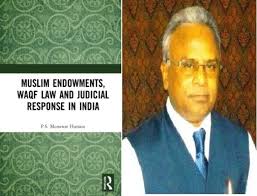
The book “Muslim Endowments Waqf Law and Judicial Response in India” authored by Dr. P.S. Munawar Hussain is making waves as renowned publisher Routledge from London and New York have published its international edition in December 2020. The book has found its place in around 70 libraries of universities and colleges of different countries around the world.
The author is a Joint Registrar of Maulana Azad National Urdu University, Hyderabad who has expertise in waqf affairs. India boasts of more than 6 lakh waqf properties but mostly is under adverse possession or is not used to its optimum potential.
The volume covers several jurisprudential and historical aspects of Waqf, which include Doctrines of Waqf; Essential Requisites of Waqf; Valid Objects of Waqf; Historical Account of Waqf; Emergence of Waqf Law in India; and Constitutional Validity of Waqf in India. The chapters then go on to discuss the Waqf Act 1995 and Waqf Amendment Act 2013. The legal perspectives of each Section of Waqf Act and its amendments are elucidated with references under Reflections. The case-law has been analysed and cited under each Section of Waqf Act, wherever applicable.
As per the information available on Worldcat.org, the book has found its place in around 70 libraries of universities and colleges of different countries around the world including Australia, Canada, U.K., USA, Mexico, Germany, Nigeria, Malta, etc., apart from the Gulf countries in just one month of its release.
The book will be of interest to scholars and researchers of law and legal studies. It will help practitioners of Law, the managers of Waqf Institutions and officials involved in Waqf Administration.
The Foreword is written by Justice L. Narasimha Reddy, Chairman Central Administrative Tribunal and Dr. Ausaf Sayeed, Indian Ambassador to Saudi Arabia. It is priced at 120 British Pounds.
The Publisher has placed the book in Theorising Education Series, because of its innovative work from a wide range of contexts and traditions.
source: http://www.muslimmirror.com / Muslim Mirror / Home> Featured / by Special Correspondent / February 22nd, 2021
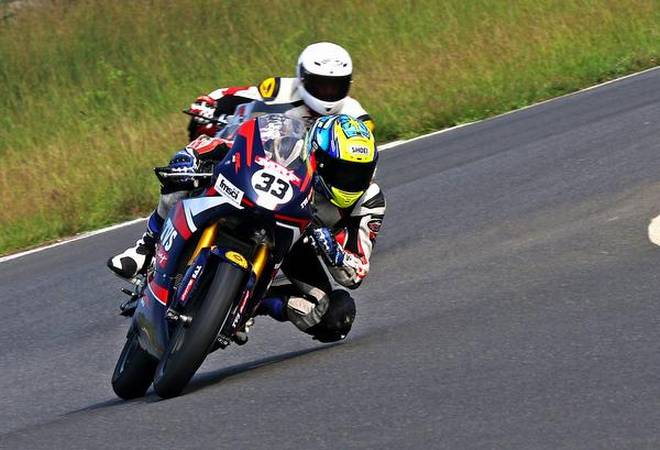
Speed merchant: Ahamed has come a long way since his humble beginnings in 2012.
Jagan Kumar has played a big role in guiding the youngster
From dropping out of school after Class X to fighting amongst the best riders in the country, K.Y. Ahamed has come a long way since his humble beginnings in 2012.
The rider scaled a new high last weekend at the MMRT when he clinched his first title in the premier class (Pro-Stock 301-400cc) driving for TVS Racing.
Ahamed swapped his thrill for speed on the streets of Triplicane in the City to the safe confines of the race track after being spotted by another National champion Jagan Kumar.
Jagan won the Pro-Stock 165 cc title for the eighth time this year, incidentally beating Ahamed by just one point.
“When Jagan saw me racing on the streets, he warned me not to do so and took me to the race-track so that I could do it safely. Once I tried his bike, I decided I wanted to race professionally,” said Ahamed on Thursday.
“Initially my family was reluctant with my decision considering the risks involved, but Jagan convinced them explaining how safe the track is with safety measures and protective gears. Now, they are happy that my decision has paid off,” added the 23-year-old who has had to support his mother and sister since his late teens.
Inconsistent
Ahamed, who won the 125cc novice title in 2013, has been nipping on the heels of his mentor Jagan in terms of speed for the last few years after joining TVS Racing in 2014.
However, he has struggled to find consistency, involving himself in needless crashes. It is an aspect where Jagan has had a role to play in guiding the youngster.
“He has the speed but does not play the long game in terms of the championship. I have scolded him and, he used to get angry but this year he was able to finally understand that aspect of racing,” said Jagan, who reclaimed his 165cc title after his seven-year streak (2012-18) ended last year.
This year was supposed to be a big one for the duo as TVS Racing entered the AP 250 class in the Asian Road Racing Championship, a fully Indian entry.
International glory
However, the pandemic meant the season was cancelled after the first round. With the National titles sealed, the riders are focussed on a second attempt at international glory with the season set to start in June 2021.
source: http://www.thehindu.com / The Hindu / Home> Sport> Motorsport / by S.Dipak Ragav / Chennai – December 24th, 2020
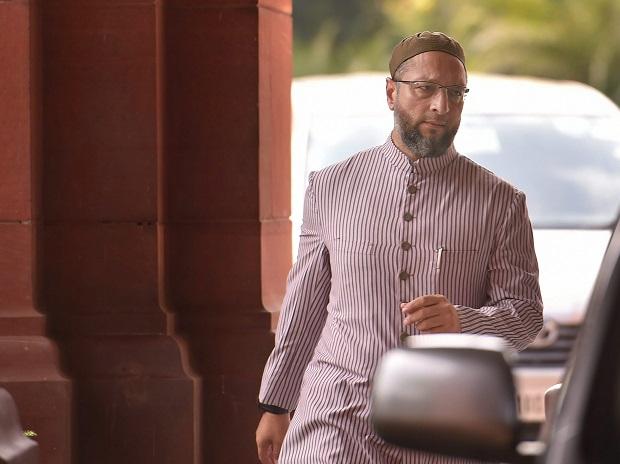
All India Majlis-e-Ittehadul Muslimeen (AIMIM) President Asaduddin Owaisi
Hyderabad MP Asaduddin Owaisi’s All India Majlis-e-Ittehadul Muslimeen (AIMIM) marked its debut in Gujarat polls by winning seven seats in the civic body of Ahmedabad.
Results of polls to six municipal corporations were declared on Tuesday, and AIMIM, which fielded 22 candidates in six wards, ended up with seven wins in two wards.
In Gujarat, each ward of a municipal corporation has four seats.
While a panel of four candidates won in Jamalpur ward, three out of its four contestants won in Maktampura ward in Juhapura area of the city.
Those who won in Jamalpur included former Congress corporators Mohammad Rafiq Shaikh and Mushtaq Khadiwala, while the third victor, Bina Parmar, was a new face.
The AIMIM did not field candidates in Surat, Vadodara, Rajkot, Bhavnagar and Jamnagar, which also witnessed civic polls on February 21 along with Ahmedabad.
Owaisi had addressed a large gathering here as part of AIMIM’s campaign.
(Only the headline and picture of this report may have been reworked by the Business Standard staff; the rest of the content is auto-generated from a syndicated feed.)
source: http://www.business-standard.com / Business Standard / Home> Elections> News / by Press Trust of India, Ahmedabad / February 24th, 2021