Airtel to Truecaller: 24-YO Has Safeguarded the Data of 700 Million App Users

Mysuru, KARNATAKA :

At age 24, this college dropout helps companies like Airtel, Truecaller and Justdial protect their users’ personal data. Incredibly, however, he learnt all the necessary skills not through formal courses, but research on Google!

Meet Ehraz Ahmed, a 24-year-old, independent data security researcher from Mysuru, Karnataka, who since last year has protected the data of 700 million users by helping companies like Airtel, Justdial and Truecaller detect major flaws in their data security architecture. Simultaneously, he runs a fintech and a web security company.

What’s particularly remarkable about this first-year engineering college dropout is that he learnt all the necessary skills not through formal courses, but research on Google. A real online prodigy, Ehraz is looking to protect the data of 1 billion users by the end of this year. So, how did this ethical hacker and serial entrepreneur get to where he is today?

Early Days

“I began using computers when I was just 10. I remember accompanying my brother to the local cyber cafe paying Rs 30 an hour and playing games like Counter Strike or browsing the internet. Besides playing games, I was exploring different facets of the online world from social media sites like Orkut to finding ways of building a website because my elder brother was a web developer. I would peek into the source code of the websites he built and try to learn things independently through Google. Whatever I have learnt about computers, web security and the online world is through Google,” Ehraz tells The Better India.

It was while playing Counter Strike with his friends when Ehraz found his first opportunity at entrepreneurship. Understanding the craze for the game amongst his friends, at age 14 Ehraz started a game server hosting venture. However, besides providing online gaming servers for players to connect and play the game for just Rs 200 per player, his venture also began offering web hosting services to different websites.

The reason he ventured into the world of entrepreneurship this early was because of a few tragedies in his life. As an 8th grader, he recalls witnessing his brother meet with a serious road accident. Two years later, his father suffered a heart attack.

“My interest in my venture had dimmed after my father’s heart attack. I lost interest in my studies as well. That’s when I put everything on hold to make a fresh start. I wanted to stand on my own feet by doing something better and more significant than what I was doing. These incidents made me realise the value of time and money. Life is short and there is so much left to do not just for yourself but others as well. Nonetheless, by this time, I had grown into a competent web developer, picked up real-life entrepreneurial skills and began understanding some of the basic nuances of data security,” he recalls.

Meanwhile, by the early 2010s, discussions surrounding data security in the online world had begun to take off in India. One day during high school, he read a post on Facebook by a security researcher who was listed in Google’s Hall of Fame for finding a flaw. This researcher was even paid for it. This inspired him to learn how he could do the same.

That’s when he began targeting companies that offered bug bounties to hackers who would help them find flaws in their data security architecture. By the age of 16, Ehraz got listed in 50 Security Researcher’s Hall of Fame for finding security breaches in companies like Facebook, Microsoft, Apple, Adobe, Blackberry, Soundcloud, and EBay. These Halls of Fame are listings compiled by major tech companies of online security researchers who helped find these flaws.

Besides recognition and a certificate, there was monetary compensation involved which depended on the magnitude of the flaw found. In India, however, he observes that the concept of bug bounties are still very new and not many companies operating here have that facility for freelance security researchers.

His first hall of fame listing was on Facebook, where he discovered a cross-site scripting vulnerability that could have allowed attackers to steal a user’s browser cookies. With this, any hacker could log in to a user’s account without a password and users are vulnerable to extortion and blackmail.
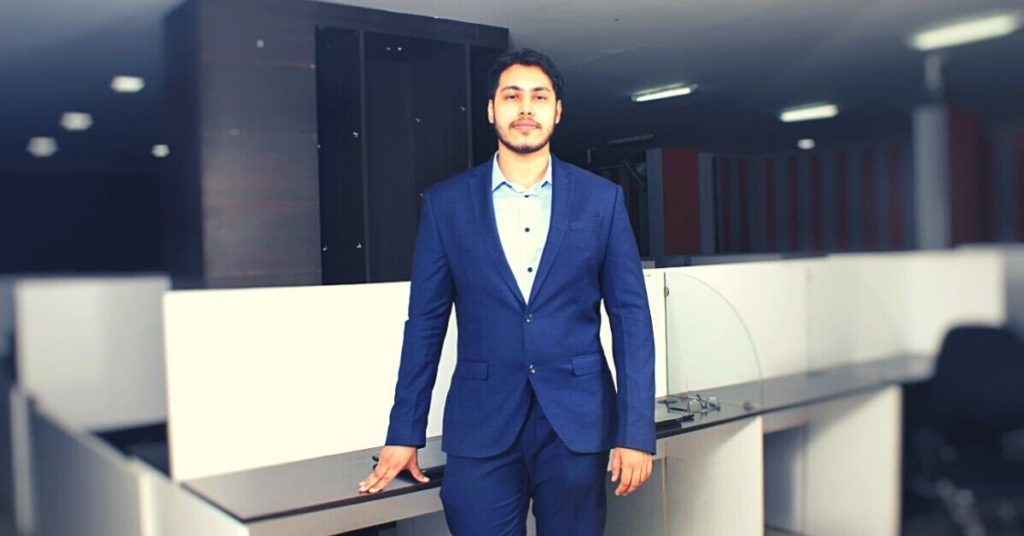
Ehraz Ahmed: The ethical hacker who has helped companies like Airtel address their user data vulnerabilities.

Serial Entrepreneur

“Although I was good at finding security flaws, I was not making enough money from it. Not all companies offer bug bounty programs, while only a few provide monetary rewards. But most of them do acknowledge your efforts in finding that flaw,” he says.

Looking for ways to make money, one day he found someone trading in the financial markets talking about making money in a Facebook post. It piqued his interest and he began exploring this field. Ehraz admits that it took him a while to figure out how it all works because he was sifting through hundreds of blogs.

“It wasn’t the most efficient way of learning, but I wasn’t interested in studying courses. My interest lay in obtaining that raw information about how to navigate this world. In the initial years, I lost a lot of money trading from my brother’s account. Since I was still under 18 during my PUC days, I couldn’t really open my own trading account,” he recalls.

By the time he enrolled into an engineering college at the age of 20, in Mandya, to pursue a course in computer science engineering, he started a fintech company called Voxy Wealth Management that engaged in offering financial advice and analytic services to traders and other consumers who wanted to manage their stock portfolios.

But travelling 80 km up and down from Mysuru to Mandya everyday, attending classes and running a fintech company was becoming very stressful. Although he finished his first semester with good marks, when the time came to enroll for the second semester, he began questioning why he was studying these heavy theoretical courses.

“What am I learning all this for? Completing these courses felt like climbing a mountain, reaching the top and then seeing nothing. I had already begun earning money through my company. Meanwhile, I was already getting job offers because of the work I had done detecting security flaws across different websites. I eventually figured out engineering college wasn’t meant for me and before the second semester in 2017, I decided to drop out to start a web security company as well,” says Ehraz.

After launching Voxy Wealth Management, he started Aspirehive—a web security company that offers solutions for small and medium-sized companies—in December 2017.

Unfortunately, as he was making his way simultaneously in the world of financial markets and web security, another tragedy struck home.

In April 2018, his elder brother met with another road accident. He suffered an injury and upon recovery, his brother expressed a desire to start a company together. Following this conversation, he began work on launching a new company called StackNexo.

The premise for StackNexo is to offer all web services and solutions on a single platform. He describes it like an Amazon for users wanting to start their own website.

“We seek to provide all necessary services for starting your own website on one platform instead of compelling you to visit different websites for domain services, hosting services, etc. This is for entrepreneurs or users looking to start their own website without the necessary IT expertise. I have partnered with 20 companies like Stackpath, Cloudflare and Google to integrate their services on our web platform. I have spent over a year developing this platform and our plan is to launch the company in two months,” he says.

Protecting people’s data

While working on all these companies, Ehraz also began reading news of major data breaches in Indian companies last year. Using his expertise, he decided to help.

His work commenced in August 2019, and by December he had safeguarded user data of over 700 million users. In Airtel, for example, which is India’s second-largest telecom network, Ehraz had found a security flaw that could have allowed hackers to steal sensitive data of 320 million users. By December, he had discovered and reported data breaches to 10 companies, including Truecaller, Justdial and Nykaa.

By the end of this year, his objective is to protect the data security of 1 billion users. His work in this regard hasn’t stopped. Most recently, he detected and reported a major security flaw in a company called Thrillophilia that risked sensitive data of 2 million users.

“We don’t fix data breaches, but find them, report and notify the said company via email. With Airtel, for example, I began scanning their My Airtel app. I found a very simple flaw in the their application programming interface (API), which hackers could exploit to gain access into users’ personal data (address, location, IMEI, sex) through their mobile number. It took me just 15 minutes to find this flaw and access all this confidential data. Honestly, I was shocked to find such a basic flaw. Moreover, I am an Airtel user and it scared me how vulnerable their data was to this breach. With a user’s IMEI number, hackers can organise spear phishing attacks into your system using just a simple SMS,” he says.

With Truecaller, he had found a vulnerability on the app’s backend attached to the user’s profile picture. With this breach, if a user is trying to find out about who’s calling from an unknown number, a hacker could mine their location, figure out their IP address and their identity. As a result of this breach, nearly 150 million users were at risk here. Another major Indian company he assisted was Justdial, which has over 165 million users.

Through the breach he detected, hackers could log into a user’s Justdial account, access their JD pay (their payment gateway) and divert payments away from a particular merchant into another account. He approached the company and got this major flaw fixed.

Most small companies/startups, he believes, don’t focus on data security, and instead look towards getting the venture off the ground and earning all the money back that was invested. But these breaches are not restricted to small startups.

Just a couple of weeks ago, Big Basket suffered a major data breach.

“Government must make data security auditing mandatory. Secondly, we don’t have the legal architecture in place for independent security researchers like me to disclose to companies about major flaws in their data security. Indian companies, particularly the major ones, don’t have a responsible disclosure policy in place. Without such a policy, companies get intimidated when we find flaws and begin questioning us even though our intentions are good. There are no laws to govern and protect security researchers like us. International companies, meanwhile, are a lot more accessible and we can easily help them find flaws without any threat of a blowback. Indian companies have to start promoting bug bounty programs so that independent researchers can help them find flaws,” he says.

After all, there isn’t a bigger commodity out there than user data.

(Edited by Yoshita Rao)

source: http://www.thebetterindia.com / The Better India / Home> The Better Home / by Rinchen Norbu Wangchuk / November 30th, 2020
Two Muslim scholars awarded PhD in Telugu from TU

TELANGANA :

Telangana University awarded PhD to three research scholars on Tuesday, among them two are from Telugu department and one is from Botany

Nizamabad:

Both research scholars are Muslims, their mother tongue is Urdu but they choose Telugu language as their career and obtain PhD from Telugu department of Telangana University.

Telangana University awarded PhD to three research scholars on Tuesday, among them two are from Telugu department and one is from Botany. These two research scholars’ are Syed Afreen and Shaik Akbar Pasha. Afreen researched on ‘Observation on Telangana female novelists’, and Akbar Pasha researched on ‘Development of Warangal district literature’.

Telugu department senior professor and Arts department Dean Prof Kanakaiah guided these scholars.

Syed Afreen, research scholar said that being Muslim and by having their mother tongue Urdu, they grown in Hindu people locality and speak Telugu language very well, also having interest in Telugu literature and had done Ph D in Telugu language.

source: http://www.telanganatoday.com / Telangana Today / Home> Telangana> Nizamabad / by Telangana Today / November 24th, 2020

Meet Seema Iqbal, who broke glass ceiling in male-dominated shayari circuit

NEW DELHI :

In the male-dominated shayari circuit of India, Seema Iqbal has broken the glass ceiling, using the Urdu language and its vast nuances that made people take note of her creativity.

Virasat me mujhe shayari mili hai (I have inherited shayari),” says Seema Iqbal. She insists, her father Syed Wahid Ali’s keen interest in poetry introduced her to this world. She says, her brother Majid Ali also writes ghazals and so does another sibling, Dr Mujahid Faraz, who, too, is a shayar.

But Seema Iqbal always wanted to come out of their influence and carve a separate identity of her own. Be it ‘Naye Purani Chirag’ by the Urdu Academy or ‘Karvane-sher-o-adab-al-hind’ by the Ghalib Academy, Iqbal has been a prominent presence in all these recitation events.

But she accepts it has been a significant step for a woman to make a name in the discipline.

“Of course it will encourage a lot of women to take this up. If one has interest and talent, women too can pursue it. In fact, there are few who have made their mark in this field,” Iqbal tells IANS.

She adds that one day, she hopes to bring out a book of her own. “Shauq hai ki kitab likhungi zaroor, main apna kalaam laoongi in the public domain, insha-allah,” she quips.

She has also introduced many women to this ‘language of melody’ in the past, on behalf of the Urdu Academy. But this year, she claims, the pandemic has disturbed everything.

While her love for Urdu remains unchanged, she complains that this alone is not enough to financially sustain one self. “I will keep enlightening the world with the sheer brilliance of Urdu, but the unpredictability of income is real,” she says. No wonder, she has taken up a job at a popular insurance company.

However, it is shayari that keep her creative side alive. She says, “Ab to chup ho ja tu khuda ke liye, khud ko khamosh kar rahi hun main, jaane kya ho gaya hai mujhko ada, ab to khud se bhi dar rahi hun main.”

( Anindya Banerjee can be contacted at anindya.b@ians.in )

Source: IANS

source: http://www.muslimmirror.com / Muslim Mirror / Home> Featured / by Anindya Banerjee / November 07th, 2020

Heritage of Bijapur : Ruins have eyes

Bijapur, KARNATAKA :

From, the sky-kissing palaces in the city, to the dust-biting burials in the graveyard, there is something in common; that’s brevity. The spacious chambers, the courtyards, the pavilions, gardens, and everything that once added stars to the beauty of the palaces is now in ruins. Their patrons have shifted themselves permanently to the graveyards to become one with the earth. Their relentless pursuit of worldly pleasures yielded them nothing but a fistful of dust for their mouths.

Wandering aimlessly inside the graveyard of Shahnur town, of Haveri District, I threw glances at various burials. At one of the corners, there were a few graves with monolithic sarcophaguses, with intricate floral patterns and calligraphy etched on them. Their presence in the graveyard was unobtrusive, suffused with weed and vines.  When enquired, they belonged to the Nawabs of Shahnur. To the other side there were graves built with stones, crumbling to the ground, as though the time has wreaked havoc on them. Those were the graves of their kith and kin. The graveyard is also replete with countless burials of town dwellers, of recent times. There is a single cubicle, four-walled structure, with a large dome and minarets. That was a tomb of wife of one of the Nawabs, who belonged to the lineage of Prophet (PBUH).

Those who would strut about with arrogance are no more, and their descendants are hard to locate; like the beetles on a tree, that run away in all directions, when it is shaken. The time has also played a cruel game, as there are no chronicles to portray their life and time of the past. Only the legends make rounds inside the city, glorifying few of them as equal to saints and others are portrayed in lowlight.

I cringe, and often falter as I walk through those ruins. Their whines and whimpers are unbearable to my heart. Everyone thinks they are soulless; stone, mud and water; however, like everything else in the universe, they have life, embedded in their each element. They want them to be buried next to their masters, rather live a burdensome life. The pitiful wails, however, fall on deaf ears. I become their sole companion in grief, as we both believe we have so much in common to share with.

source: http://www.muslimmirror.com / Muslim Mirror / Home> Indian Muslim / by Anees Maniyar / December 07th, 2020

JNU’s former professor of Arabic Faizanullah Farooqi passes away

NEW DELHI :

New Delhi :

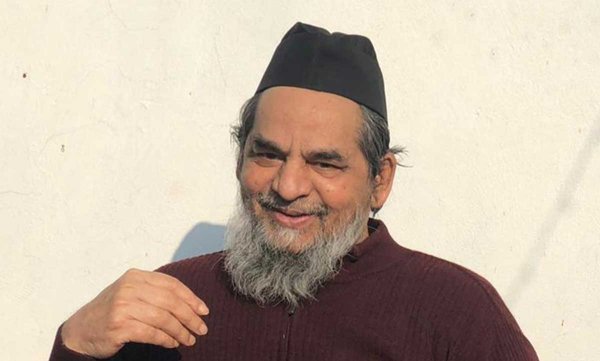
JNU’s former professor of Arabic, Janab Faizanullah Farooqi passed away today. He was not well and tested positive for Corona a week ago and was under treatment at Fortis Escorts Hospital in Sarai Jullena. He breathed his last at 2 am early this morning.

Tadfeen (burial) will insha Allah be at 3 pm at Jadid Qabristan Ahle Islam (Behind Old ITO Delhi Police Headquarters) .

Faizanullah Saheb taught at Centre for Asian and African Studies, Jawaharlal Nehru University till his retirement in 2017. He was a great scholar and critic of Arabic and Islamic Studies and a poet of Arabic, Persian and Urdu.

In his house in Abul Fazal Enclave in south Delhi, he used to run a maktab teaching children to read and memorise the Quran.

Reacting to his demise, Dr Zafarul-Islam Khan tweeted, “I am sad to know about the untimely demise of my old friend Prof. Faizanullah Farooqi. He was a distinguished scholar of Arabic who enriched teaching of Arabic in India and enhanced Indo-Arab relations. He had translated most parts of my Arabic book on methodology of research which is available in Urdu as “Usool-e Tahqiq”. He leaves behind a rich legacy and many sad hearts. May his soul rest in peace.”

He was awarded the President of India Certificate of Honor for his services to Arabic language in 2019. He is survived by his wife Farzana Khatoon, daughter Amna and two sons Irfanullah and Abu Talha.

_______

Twitter
Zafarul-Islam Khan@khan_zafarul
·

I am sad to know about the untimely demise of my old friend Prof. Faizanullah Farooqi. He was a distinguished scholar of Arabic who enriched teaching of Arabic in India and enhanced Indo-Arab relations. He had translated most parts of my Arabic book on methodology of 1/nQuote Tweet

Milli Gazette@milligazette · Jul 22

JNU’s former professor of Arabic Faizanullah Farooqi passes away. Tadfeen (burial) will insha Allah be at 3 pm at Jadid Qabristan Ahle Islam (Behind Old ITO Delhi Police Headquarters). @Muslims_India @jnu_in

https://milligazette.com/news/1-community-news/33644-jnus-former-professor-arabic-faizanullah-farooqi-passes-away/

________

source: http://www.milligazette.com / The Milli Gazette / Home> News> Community News / by The Milli Gazette Online / July 22nd, 2020

Meet Waseema Shaikh: A deputy collector from rural India

Joshi Sanghvi Village, Loha Taluka (Nanded District), MAHARASHTRA :

Waseema with her parents

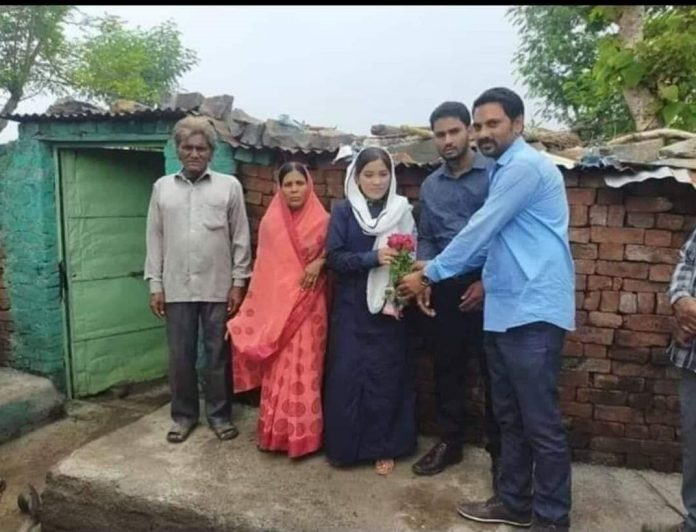
Born and brought up in a small village called Joshi Sanghvi in Loha Taluka of Nanded District of Maharashtra, Waseema Shaikh struggled at every step and braved the odds to be where she is today.

In the recently announced results for the Maharashtra Public Service Commission (MPSC) exam, Waseema secured 3rd rank. She is now undertaking training for the post of Deputy Collector.

Joshi Sanghvi is a small village with a population of about 3000 people and there are no opportunities for girls to study because they are married off as soon as they reach puberty. After class 7, the girls are forced to drop out of school. The maximum a girl can study in Joshi Sanghvi is till class 10. There is no college in the village, just a Zilla Parishad school in Marathi medium.

Waseema, the 4th child of her parents who are poor farm labourers, was passionate about studies. Despite having no electricity in their hut, she topped in the SSC board in her Taluka in 2012. And for college, she had to walk at least 6 kilometres every day as there was no transport available. However, when the exams for XII of junior college approached, she stayed at a relatives’ house and wrote the exams.

But graduation was again an uphill task as she would have to move away from home and stay in a hostel which her family could not afford.

She opted to study from an Open University and thus pursued her graduation from Yashwantrao Chavan Maharashtra Open University again in Marathi medium. Though her mother tongue is Urdu, Waseema is comfortable studying Marathi. She became the first graduate in her family of 6 siblings.

Her parents are both farm labourers and after her father fell sick, affecting his mental capabilities, the burden fell on the shoulders of her mother.

Her mother and elder brothers encouraged her to study despite the situation in the village where relatives kept advising them to get Waseema married off like her elder sister.

Waseema appeared for the MPSC exams for which she prepared through self-study as she could not afford coaching classes. She passed the exams, but her ranking was just good for a Class II post and she was appointed as a sales tax officer for the Maharashtra Sales Tax Office in Nagpur.

However, it was payback time for Waseema. She put her brother back in college to pursue his B.Sc degree and then appeared for the MPSC exams as was his ambition. She is also taking care of her younger 2 sisters’ education, who like her want to appear for the state civil services.

But evidently, a class II job was not enough for her so she appeared again for the MPSC and ranked among the top 5, scaling her position to that of Deputy Collector.

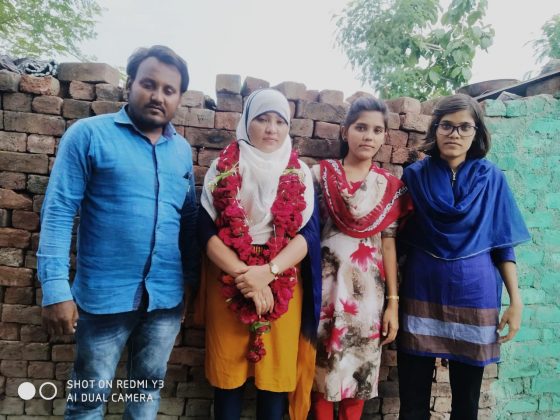
Waseema with her siblings

“The situation in my village where girls are not encouraged to study and forced into marriage, violence against women, poverty and poor infrastructure in the village often set me thinking what I can do to change this situation? Besides, my friend who was very good at studies and wanted to study further was married off when we were in class 9. This upset me a lot,” Waseema told TwoCircles.net.

It was this desire to empower girls and women which motivated her to appear for the MPSC exams.

Sanghvi Joshi village has a sizable Muslim population as it was in the erstwhile Nizam state of Hyderabad and now acceded with the Marathwada region.

Today the village is proud of their daughter who is the first person from their village to reach that level. She has become the idol for many young girls who are in school.

“Many girls used to come up to me to talk about their concerns when their parents wanted them to stop their studies or when their parents were looking for matches. I used to give counselling to the parents and persuade them to let their daughters study,” Waseema said.

She said she was pained that girls’ education is never a priority for parents.

Waseema said that parents of girls should become aggressive about the educational rights of their daughters. “The percentage of women in civil services is very less and I think to increase this we should have reservations, free coaching, scholarships exclusively for women so girls will be encouraged to aspire for civil services,” she said, and added, “Proper guidance, hard work, consistency in study hours, the best utilisation of resources available are equally important.”

“But I am fortunate that my mother and my brother encouraged me and I am so grateful to my brother who sacrificed his education for me when anyone else in his place would think it futile to educate a girl,” Waseema said.

It was her brilliant academic performances year after year that gave confidence to her mother and brother to let her pursue her dreams.

Waseema wishes to be posted in a rural backward place like her village so she can work for their betterment. “I want to develop the villages and help the people come out of their poverty. I have known what it is to be poor and experienced the hardships so I can empathise with the people”, Waseema said.

Waseema got married on June 8, a few days before her MPSC result, to Shaikh Haider who is also a Maharashtra Public State Services (MPSC) aspirant. “Yet again Allah has been kind to me, my spouse and my in-laws are supportive of my career and are proud of me,” she said.

waseema and Haidar

source: http://www.twocircles.net / TwoCircles.net / Home> Indian Muslim / by Nikhat Fatima, TwoCircles.net / July 01st, 2020

IAS trainees take life lessons from Mobina – a 5th grader

Pandola Village, Sheopur District , MADHYA PRADESH :

Mobina with her family members had started a campaign to transform the lives of the disadvantaged under the Bismillah self-help group.

A woman who has studied up to the fifth taught IAS officers.

Bhopal: 

Mobina, a fifth-grade student hailing from the Pandola village in Sheopur district of Madhya Pradesh has been sharing life lessons with trainees of the Indian Administrative Service (IAS).

This may come as a surprise for many people but it is true that Mobina has been working to light up the lives of women from poor and economically weaker sections in her village.

Most of the members of Mobina’s family earn their livelihood as daily-wage workers but she, along with her family, started a campaign to transform the lives of the disadvantaged under the Bismillah self-help group in 2005. Through this self-help group, 10 women joined this initiative which brought about a dramatic transformation in the lives of their families.

Mobina says that she, along with 10 women, had collected a small amount to begin with and started helping each other. Gradually, they began getting support at the government level and from banks. As a result, today the lives of these women have changed and each of them is engaged in different businesses.

Mobina says that her husband Mohammad Salim used to work as a daily wager. With a meagre income, she could barely grow one crop. As she started earning more, she bought a pump for irrigation and now has started growing two crops. Along with this the income is increasing steadily. Now she has also started giving employment to other people as well.

Jugal Soni of the National Livelihood Mission says that Mobina along with her fellow colleagues, has carried out many new innovations that have earned accolades. They are also becoming economically independent. This is why Mobina and her fellow women were invited to Mussoorie to share their experience with those training for the Indian Administrative Service (IAS).

Mobina says that there were many questions in her mind before going to Mussoorie and she was wondering how she would share her experiences with the people from big cities. She further said that she benefited immensely from this experience.

On reaching there she saw that many girls older than her were still studying and when she returned to her village, they made sure her daughter completed her studies. The women associated with the self-help group are also ensuring an education for their daughters.

Mobina says that she explained to the officials undergoing training in Mussoorie about the genesis of the self-help group, its functioning and the income generated from it in great detail. Her experiences were heard with great enthusiasm by the IAS trainees.

source: http://www.ummid.com / Ummid.com / Home> India / by Sundeep Pouranik, IANS / December 01st, 2020

The rise of Aijaz Dhebar, Chhattsigarh’s first Muslim Mayor

Raipur, CHHATTSIGARH :

Dhebar says he got interested in politics at 16 years of age when his elder brother asked him to help a candidate for the municipal election.

Aijaz Dhebar is Mayor of Raipur.
Aijaz Dhebar is Mayor of Raipur. (HT Photo)

Thirty-years ago, while everyone would enjoy the conviviality of much awaited recess, a kid from Raipur used to sit alone. He did not have the luxury of bringing food due to his family’s penurious condition. One day, an empathetic lady teacher sensed the loneliness of the child and since then always handed over her tiffin-box to that kid.

That boy, Aijaz Dhebar, now 39, is Raipur Mayor, the first Muslim in Chhattisgarh to hold this post.

His teacher, Iccha Madam, now in her seventies, recalls Dhebar’s days of penury and says that in the last 30 years he has never missed teacher’s day. “He is among the first to ring door bell of my house and wish me teacher’s day,” she said.

“Those were difficult days for us…My father was just a worker in a shop and he had 10 children and therefore, we could not afford lunch in school. Every day, I used to pray to God before recess…..I felt humiliated,” Dhebar recalls, sitting in Mayor’s Chamber in the White House — the municipal corporation building in Raipur.

“Later, my father opened a scarp shop in Muadhapara and then our family’s financial condition started improving,” he says.

Dhebar got interested in politics when he was 16.

“One day, my elder brother instructed me to help a candidate who was fighting for municipal election and it was my first foray in politics. My brother, Haneef Dhebar, was close to Ajit Jogi and later I came close to some of senior leaders of Congress… I was made Baijnathpara ward president of Congress in 1995-96,” Dhebar said.

Dhebar became close to Jogi, who appointed him state president of National Students Union of India in 2001. “In 2006-07, I moved away from Jogi family due to personal reasons,” he says.

“Then I got in touch with Charandas Mahant, who gave me a post in Congress. I worked across the state and organized protests and events against the BJP government,” Dhebar claims.

But, Dhebar earned an image of rowdy in Chhattisgarh politics, which he vehemently denies. “There is was only case against me, in which I have been exonerated,” he says.

But, his rivals in the Congress say he has an image of ‘nuisance’ creator in the party. “I am sure by next assembly election the party will realize its mistake of making Dhebar mayor. He will have a negative impact on all the four assembly seats of the city,” a says a senior Congress leader, preferring anonymity.

But, those close to Dhebar said his image of an “aggressor” is result of his political fight against the Bharatiya Janata Party (BJP) during the saffron party’s rule in the state for 15 years.

“He fought on the streets when BJP was in power and therefore he is often described as an aggressive person. Each and every protest organised by Congress was either led by Vikas Upadhyay (now an MLA) or Dhebar…I have seen him since he was ward president of Congress party in the city…He is always devoted towards for the party and its objective,” said Sandeep Sahu, a coordinator of Other Backward Classes wing of All Indian Congress Committee (AICC).

Dhebar claims that his image was “distorted” by some people for vested interest. “If my image was so bad, I would not have won by the highest margin in municipal election in the state,” he says in his defence.

BJP leaders alleged that Dhebar became Mayor because he was close to those in power in Chhattisgarh.

“During legislative elections, he threatened Congress leader PL Punia and was denied a party ticket after which he ransacked the Congress office. This shows that who has promoted him. He handles all the big mining projects for some important persons in Congress. His image is of a trader not a politician,” Gauri Shankar Srivas, BJP spokesperson, claiming that Dhebar got Mayor’s post because of CM Bhupesh Baghel.

Dhebar had no qualms in agreeing with Srivas on this. “In the era when there is big debate on Citizenship Amendment Act (CAA) and National Register for Citizens (NRC) across the country, Bhupesh ji trusted me,” he said.

In his own words, Dhebar has seen meteoric financial rise. From a family, which was not able to provide him lunch in school, he now owns a lush hotel in Raipur and has invested in at least 10 construction projects in the city. “Ye sab apni mehnat se kiya hai (All this I have got through my hard work)… Not a single paisa is illegally earned,” he says, claiming that he delves in real estate and hospitability business.

Political commentator, Nand Kashyap, said he has earned his position.

“He has been very active since the state was formed and held many dharnas and protests against the previous BJP government. I will not call his appointment as Muslim appeasement. I think, he deserved the post,” Kashyap said.

source: http://www.hindustantimes.com / Hindustan Times / Home> India News / by Ritesh Mishra, Hindustan Times, Raipur / January 31st, 2020

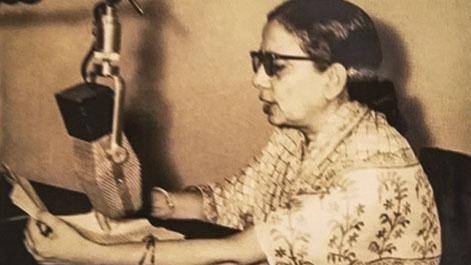
WKND Conversations: India’s first female radio newsreader ‘lived life on her own terms’

Bhopal, MADHYA PRADESH /Lucknow, UTTAR PRADESH / NEW DELHI :

Saaeda Bano in her glory days

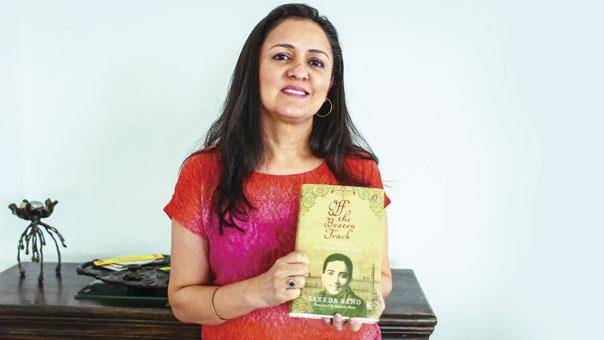
Saeeda Bano’s Dubai-based granddaughter, Shahana Raza, tells WKND about rediscovering her ‘Bibi’ when she took on the task of translating her memoir.

Shahana Raza, Indian writer and journalist and granddaughter of Saeeda Bano
(Shihab)

One of the pioneering women of the 20th century who probably didn’t get the recognition she deserved in her lifetime was Saeeda Bano, the first woman in India to work as a radio newsreader on All India Radio (AIR) in 1947. However, Bano (fondly known as Bibi) did leave behind a poignant autobiography called Dagar Se Hat Kar in Urdu that was published in 1994. The book has now been translated into English by her granddaughter, Shahana Raza, a Dubai-based writer and journalist, and is titled Off the Beaten Track.

In a chat with KT, Raza reveals that she translated the Urdu memoir into English so that more people could read about the unconventional yet inspiring journey of a woman of indomitable spirit — her grandmother Saeeda Bano. Excerpts from the interview:

What led you to translate your grandmother’s memoir into English after so many years?

Dagar Se Hat Kar was published in 1994 in Urdu. My grandmother, whom I fondly called Bibi, suffered a paralytic stroke soon after. During that time, when I visited her in New Delhi, she asked me if I could translate the book into English for her. I told her that it was written in a language that I understood, but couldn’t read or write. She remained quiet then, but a few days later when I was leaving for the US to make a life for myself, I received a parcel containing eight audio cassettes from her close friend, who told me, “Bibi asked me to read and record the entire book onto these tapes, just so that you could translate them into English.”

The tapes travelled with me to the US and stayed with me till I settled down in Dubai in 2000. I did try transcribing them once before, but was intimidated by the heavy Urdu vocabulary. I delayed it until three years ago, when my dad motivated me to try again.

What is the story behind Bano becoming India’s first female voice on All India Radio?

An excerpt from the book tells us that, in 1938, a radio station was set up in Lucknow that also held shows for women and children; these were also hosted by women. My grandmother started participating in the radio shows regularly. When things on the personal front got a bit turbulent, she sent her application to BBC in New Delhi for a news reader and she got accepted. She moved from Lucknow (her husband’s house) to New Delhi with her younger son and took up accommodation at the YWCA and began working at AIR full time.

What made her life an unconventional one?

Although I always saw Bibi as a bold, independent woman who was truly ahead of her times, it was after reading and translating her book that I understood she was truly a force to reckon with.

Back in 1947, she had walked out of her marriage and decided to lead life as a single, working woman, which was unheard of at that time. She had all the possible comforts of life when she lived in the ancestral house in Lucknow with her husband and in-laws — but when she realised it wasn’t going in the right direction, she took the bold step of walking out of it along with her two boys, Asad and Saeed. She moved to New Delhi after putting her elder son in a boarding school and stayed in a women’s hostel in Delhi. Apart from making professional strides where her career soared as she started doing more shows on All India Radio, she was also quite candid about her relationship with a married man — something not many would do even today.

What are some of your favourite chapters in the book and what did you like about them?

The initial few chapters of the book are captivating, as Bano gives a very vivid description of the way people lived in the early 20th century, beginning with the life of her mother, who got married when she was 14. She gives a riveting description of how people traveled in palanquins and how the palanquin bearers communicated with each other; how homes were lit with oil lamps, and the way they were designed to keep women away from the public eye. Since the purdah system was practised by both Muslims and non-Muslims of that time, homes were designed in a way that there were no openings (windows) towards the façade of the house. It simply transports you to that era and gives you a glimpse of the socio-cultural setup of that time.

What aspects of Bano’s personality did you think stood out? Who or what shaped her ideas?

Bibi’s early days were spent in Bhopal, which I believe played a crucial role in moulding her personality, as the city was run and ruled by women (Nawab Begums) for four generations. The women of Bhopal were very empowered and were aware of their unique identity; they were encouraged to study and go out to women’s clubs, where they learnt how to live a life independently without the need for male approval.

She lived her life on her own terms and never bowed down to societal pressure. I never saw her doing anything that a traditional grandmother would do, like cook or oil our hair. I always saw her as a gutsy, fearless woman who drove around the city on her own, lived alone, and didn’t seek support from anyone — even in the lowest phases of her life. Her sheer determination always stood out, as she never looked back and regretted any of her decisions.

What are the key takeaways from the book? What would you want to imbibe from her?

Something that I really understood from her book was the importance of individuality. There is more to us than we are socially. We always try and slot ourselves into relationships — mother, daughter, sister, wife etc. Bibi taught us how to claim our identity. She never went back to her parents when her marriage didn’t work. She just used whatever skills she had to find a job and support herself. Even today, not many have the courage to take such a step. To me, the step that I would call the defining moment of Bibi’s life would be leaving her extremely comfortable life in Lucknow, where she would drive a convertible car, to move to a new city, New Delhi, where she would mostly commute on foot because she wanted to save money. The most invaluable lesson I learnt from this book is how, sometimes, to reclaim your identity, you may have to forgo the comfort and security of being in a family.

(Off The Beaten Track is available at Ciel bookstore in Dubai.)

saman@khaleejtimes.com

source: http://www.khaleejtimes.com / Khaleej Times / Home> WKND> Interview / by Saman Haziq, Dubai / November 27th, 2020

An Educational Movement That is Bringing Change in Muslims of West Bengal

WEST BENGAL :

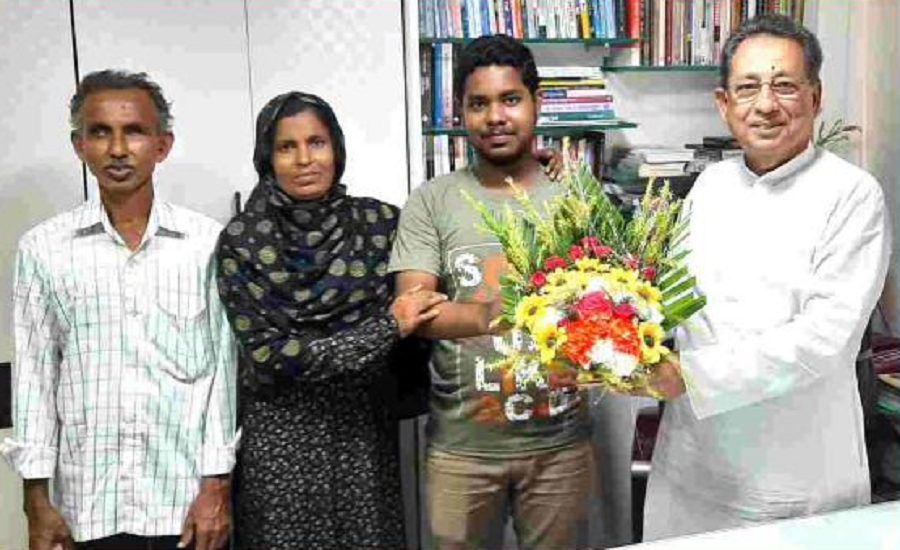
Nurul Islam, general secretary of Al-Ameen Mission (right), with a successful student and his parents.

SPECIAL REPORT

With 63 residential campuses in 20 of the 23 districts of West Bengal, Al-Ameen Mission is mentoring 17,000 students; so far it has produced 3,000 doctors, 2,800 engineers and hosts of civil servants, professors and lawyers.

A SILENT revolution in education is taking place in West Bengal which the rest of India may not be aware of. What is significant about this revolution is that it is happening in the marginalised section of Muslims.

The Al-Ameen Mission, a Howrah-based charitable organisation, has been spearheading a movement for over three decades to educate those who can’t afford quality education. Its success graph is increasing each year. This year, 378 students mentored by Al-Ameen have been selected for medical education (310 for MBBS and 68 for BDS).

This figure is after the first round of counselling held on July 16, 2020, when Clarion India interviewed Nurul Islam, the founder general secretary of the organisation. He is expecting another 100 students to be selected in subsequent rounds of counselling.

A total of 516 students of Al-Ameen have cleared NEET, an all-India written test for admission to medical colleges. Out of that, 378 have already been selected. This is no mean achievement considering the fact that two-thirds of them come from a background where becoming a medical doctor is just unthinkable.

Al-Ameen has been achieving this success year after year. In 2019, its 407 students secured admission in medical colleges for MBBS and BDS education. As many as 370 students were successful in 2018; 115 in 2017; 393 in 2016; 223 in 2015; and 212 in 2014.

Al-Ameen mentors both boys and girls. Thirty per cent of its students come from families who are very poor and categorised by the government as below poverty line. Forty percent are from lower middle income groups. The rest belong to the middle and upper middle income group. That means 70 per cent students enrolled here come from poor families.

Al-Ameen’s journey started in 1986-87 with only seven students. The aim was to give modern education with moral values in a full residential system where students from all strata of society, irrespective of their economic conditions, would stay and learn together. Students coming from the poorest sections of society were given free education. Donations and zakat were collected to meet up with the expenses. Gradually, the name of the mission spread far and wide and people came along and a movement started.

Nurul Islam says that in the 80s when he started his mission, the percentage of Muslim students in medical and engineering colleges of West Bengal was hardly two to three per cent. “But because of Al-Ameen’s efforts that percentage is today between 20 and 30 percent,” he claims.

Admission criteria

The current strength of Al-Ameen is 17,000 students. It admits students from Class V to XII. Those preparing for competitive exams also stay here beyond 12th. Merit is given top priority for admission. A common admission test is conducted for all its branches at 63 residential campuses in 20 of the 23 districts of West Bengal. Those who qualify are called for an objective test followed by interviews of their guardians.

A substantial number of seats are reserved for orphans and meritorious students of very poor families. They are also given special financial aid. In 2019, about 32,000 students appeared for admission tests to classes V to XII. Nurul Islam says his institution is able to accommodate only up to 20 per cent applicants.

Residential facility

Al-Ameen is essentially a residential institution. Those selected are required to stay in one of the 63 campuses that it runs throughout West Bengal. They are taken care of by everything: from education to food to accommodation. A strict discipline is followed by everyone alike from students to teachers to general staff.

Howrah, where it is headquartered, has four campuses in which 3,000 students are living. Al-Ameen also has campuses outside West Bengal: One in Patna, one in Ranchi and one in Tripura. There is one more in Assam which temporarily is not functional.

Scholarship scheme

Fees of the students are determined as per financial capacities of their families. Being a charitable organisation, Al-Ameen gives 100 per cent subsidy in the fees and even takes other responsibilities of education and upbringing of a deserving student if deemed fit. At present, Al-Ameen’s fee structure is divided into three categories:

  • 25 per cent students pay zero to 25 per cent fee. Their subsidy is funded by zakat from across the country;
  • 40 per cent pay fee ranging from 26 percent to 60 per cent. This subsidy is funded through general donations of the public;
  • 35 per cent pay between 61 per cent and 100 per cent.

Focus on school education

Besides preparing students for medical and engineering, Al-Ameen is also focused on basic education of students under its guardianship. This year, 2,223 of its male and female students appeared for Class XII exams of states as well as Central boards. Not only all succeeded, 81 of them even occupied their positions within the rank of 20.

The background of all the successful candidates is noticeable: 605, or 27 per cent, are from poor and BPL families; 775, or 35 percent, from lower middle income groups; and 843, or 38 per cent from middle and upper middle income groups.

Similarly, 1,777 boys and girls took exams for Class 10. Fifteen of them occupied their positions within the rank of 20. Their background: 627, or 35 per cent, come from poor and BPL families; 680, 38 percent, from lower middle income groups; and 470, or 27 per cent, from middle and upper middle income groups.

23,000 Alumni

During the last 34 years of its existence, Al-Ameen has developed a strong base of alumni. They number 23,000, according to Nurul Islam. Out of that, 3,000 are doctors and 2,800 engineers. The rest are in various other fields such as civil services, academia, law and media.

The boys and girls hailing from the most backward areas and lowest strata of society, he says, are now dreaming to become doctors, engineers, civil servants, teachers, professors, researchers, lawyers or journalists.

Nurul Islam calls it a “Silent revolution”.

“Silently, a revolution is taking place. Al-Ameen has become the conduit in this whole churning of transformation which may be defined as a silent revolution,” he says.

A look at the list of Al-Ameen alumni bears testimony to what Nurul Islam is claiming. The list includes successful professionals and academicians in prestigious institutions. What is heartening is their background. Most of them belong to economically poor sections of society. But for this educational movement, they would have remained poor and uneducated. But today, they are respectable members of society and source of inspiration for others.

Some of the notable alumni are listed below:

Md Arif Shaikh, Senior Research Fellow at Harish Chandra Research Institute, Prayagraj, UP.

Dr Safina Begum, MS, Senior Resident at Fort Gloster State General Hospital, Howrah, West Bengal.

Dr Nargis Molla, MS, Specialist Medical Officer (Gynaecology), Dhaniakhali Rural Hospital, West Bengal.

Magfura Parvin, Senior Research Fellow, Vidyasagar University, Midnapur, West Bengal.

Dr Sk Altaf Hossien, MD, DNB Post-Doctoral Fellow, National Institute of Mental Health and Neurosciences (NIMHANS), Bangalore.

Dr Khandekar Fariduddin, MS, Assistant Professor, Malda Medical College and Hospital, Malda, West Bengal.

Dr Hibjul Ali Khan, MS, Assistant Professor, College of Medicine & Sagore Dutta Hospital.

Dr Md Hadiuzzaman, MS, MCH Senior Resident, SSKM Hospital.

Akram Hoque, MBA, Founder Editor, The Policy Times.

Ali Ahmed Alamgir, WBCS, Assistant Labour Commissioner.

Jahangir Mollick, WBCS (Exe), Deputy Magistrate and Deputy Collector, West Bengal.

Shayan Ahmad, WBPS, Deputy Superintendent of Police, West Bengal.

Sk Samsuddin, WBPS, Deputy Superintendent of Police, West Bengal

Ramjan Ali, WBCS, Assistant Commissioner of Revenue, West Bengal.

Dr Kader Ali Sarkar, Assistant Professor, Visva-Bharati University, Santiniketan, West Bengal.

Dr Mukandar Sekh, Assistant Professor, Aliah University, Kolkata.

Md Minarul Islam, Divisional Engineer (IT & C), WBSETCL, Vidyut Bhavan Minarul, West Bengal.

Md Golam Mortoza, Chartered Accountant, Senior Executive (Finance), Management Development Institute, Murshidabad, West Bengal.

Dr Md Samim Reja, MVSc, Veterinary Officer, Domjur Block, Howrah, West Bengal.

Healthcare unit in Khalatpur

Recently, Al-Ameen has opened a healthcare facility at its main campus of Khalatpur in Howrah district. It is run mainly by its alumni, some of whom are today established medical practitioners. They regularly visit the healthcare unit and give their services to poor and needy people of the locality.

source: http://www.clarionindia.net / Clarion India / Home> Big Story – Special Report / by Shaheen Nazar – Clarion India / November 23rd, 2020