Jobless Kerala anthropologist goes down history lane

Vatakara (Kozhikode District), KERALA :
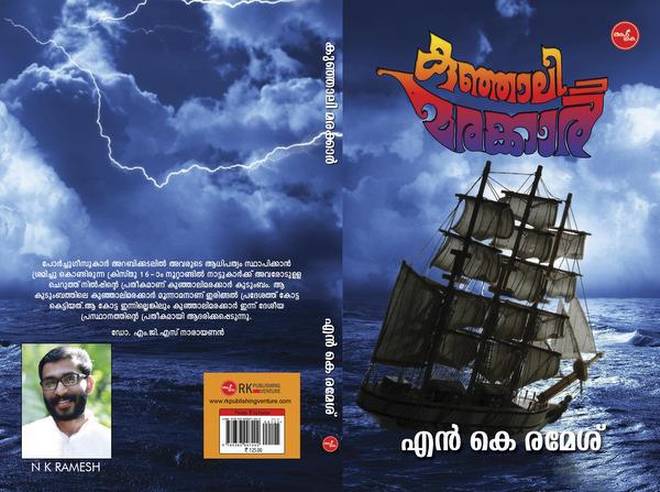
Illustrated book on legendary hero Kunjali Marakkar brought out for children

The popular witticism – when the going gets tough, the tough get going – has literally set off a young anthropologist- cum- archaeologist to author a book for children on Kunjali Marakkar, the legendary hero of the 16th century.

For N.K. Ramesh, a guide at the Kunjali Marakkar Memorial Museum at Vadakara, it was an opportunity to trace the history of the four Kunjali Marakkars, when his contract was terminated after the museum was closed to the public from March.

“Certainly a difference existed between writing for children and for adults. So I put down a simple narration and included illustrations based on important events during the period of Kunjali Marakkar and also a picture of a mural painting of a sea war,” he says.

Kunjali Marakkar was a honorific title given to the Muslim naval chief of the erstwhile Zamorin of Calicut. “The four Kunjali Marakkars who were the naval commanders of Zamorin fought against the Portuguese from 1507 to 1600. In fact, the Kunjali Marakkars were maritime merchants and supporters of Arab trade who lived in the coastal regions of Kayalpattinam, Kilakarai, Thoothukudi, and Karaikal. But they shifted their trade to Kochi and then migrated to Ponnani after Portuguese trade interference,” Mr. Ramesh says.

He took about four months to pen the book with 104 pages. The book has already hit the stands although the official launch has been deferred in view of the COVID-19 protocol.

Historian M.G.S. Narayanan has given an introduction to the book on Kunjali Marakkar, whose battles against the Portuguese were portrayed as a symbolic national movement.

The book also delves into the objective of the construction of a fort by Pattu Marakkar, the third Kunjali Marakkar, at Iringal (Kottakkal) in 1571 and the political dispute between his nephew Mohammed Marakkar, who became the fourth Kunjali Marakkar, and the Zamorin.

Later, the Zamorin joined hands with the Portuguese to defeat the last Kunjali Marakkar. The fort was also demolished and Kunjali executed by the Portuguese. The decline of Kunjali Marakkar, he says, led to establishment of Dutch Dominion and later British rule in India.

Mr. Ramesh, who holds a postgraduate degree in anthropology from Kannur university and Post M.Sc. Diploma in Museology from Aligarh Muslim University, has been credited with numerous discoveries, including the unearthing of Palaeolithic tools from north Malabar.

For a living, the 34-year-old is now engaged in de-husking at farms and odd jobs at Nadapuram and adjoining areas.

source: http://www.thehindu.com / The Hindu / Home> News> States> Kerala / by Biju Govind / Kozhikode – September 15th, 2020

Justice Saiyed Saghir Ahmed – A Tribute

Lucknow, UTTAR PRADESH :

by Naved Masood *

News had come last week of the hospitalisation of Justice Saiyed Saghir Ahmed with respiratory distress in Lucknow. When I rang up to inquire his welfare his son in law gave the glad tidings that he was out of the woods and I could briefly speak to him. On Sunday it was gathered that he was well on his way to recovery and will be discharged on Monday morning – news came late last night (Monday) evening that he was no more! This brings the curtain down on the life of a loveable, affectionate human being.

Saghir Bhai, as he was almost universally known, was born in 1935. His father Mr. Syed Mohammed Husain was not only a well known lawyer but a versatile jurist whose compendium of legislations and regulations from the days of the East India Company onwards is a testimony to his erudition. Saghir Bhai had his early education in Christian College Lucknow. After passing the Intermediate examination he went to Aligarh and obtained his BSc from the AMU. He came back to Lucknow to be in his father’s foot-steps and joined the legal profession after obtaining a degree in Law from the University of Lucknow. He soon became Standing Counsel for the Central Government at the Lucknow Bench of the Allahabad High Court; his fairness and diligence stood Organisations like the Railways in good stead. He was elevated to the Bench of the High Court in 1981 and was appointed Chief Justice of the Jammu and Kashmir High Court in 1993. He was transferred to Hyderabad as Chief Justice of the Andhra Pradesh High Court in 1994 from where he moved over to the Supreme Court in 1995 retiring in June 2000.

As a judge he was very popular among the lawyers due to his unfailing politeness and consideration particularly to the younger members of the bar. Though he left Uttar Pradesh in 1991 he maintained contacts with the members of the subordinate judiciary. To the younger judicial officers with a reputation of integrity he was some kind of a patron saint. His major contribution to public affairs came after retirement when in 2005 the Prime Minister appointed him to head a Committee to work out a consensus among different regions and sections of Jammu and Kashmir for enhanced autonomy. Although the recommendations of the Committee remain unimplemented any future initiative to iron out local differences will have to substantially lean on the “Saghir Ahmad Committee” report.

This writer had the good fortune of enjoying his unselfish love and attention. Whenever he happened to visit Delhi he would invariably ask for a ‘nashist’ or a sitting for general conversation.

Even as late as last Friday when he had come out of coma and we spoke over the phone, he was solicitous of my welfare and expressing a keen desire to meet face to face at an early date. He was a generous host and a real connoisseur of good food awho was genuinely pleased to have at least a few guests share the repast at the dining table.

Deeply attached to his father, during his judgeship of the High Court in Lucknow he would drive most evenings from his residence in Kali Das Marg to the old city to have Dinner with him.

His innate goodness and lack of aggressive covetousness came in the way of receiving post retirement sinecures and assignments that come all too frequently to retired judges of the apex court – his reward was however the high degree of love and respect that he enjoyed among the members of the bar and general public.

In the death of Justice Saiyed Saghir Ahmed the country and community has lost a most decent human being and this writer has been deprived the company of someone considerably older than him but who was a dearly respected friend.

*Mr. Naved Masood is an AMU Alum and a senior Civil Servant in Govt. of India and he is based in New Delhi. He can be reached at  naved.masood@gmail.com

source: http://www.aligarhmovement.com / Aligarh Movement / Home> Blogs> Admin’s Blog / by Naved Masood

Notes: Justice Saiyed Saghir Ahmed passed away on 30th January 2011

Muslims arrange langar for Sikh farmers protesting in Punjab’s Malerkotla, pictures go viral

PUNJAB :

Social media users compared the gesture to when Sikhs set up food camps for CAA protestors

Muslims arrange langar for Sikh farmers in India / Image Credit: Twitter

As Sikh farmers took to the streets in the Indian state of Punjab to protest against farm laws, a group of Muslims organised a langar meal for them on September 26. The pictures of the gesture have gone viral on social media and it is setting an example for communal harmony in the country.

The protests took place in the state’s Malerkotla town, where Muslims set up food camps near the locations where the demonstrations were carried out against farm bills passed by the Indian parliament earlier this week.

A langar is referred to a community gathering in a Gurdwara, a Sikh temple, where free meals are served to all visitors.

Many are sharing pictures of the scene and lauding the volunteers for their efforts in supporting the farmers.

Twitter user @kawalpreetdu wrote: “Farmers from Punjab had joined in solidarity with protestors at Shaheen Bagh where Sikh men and women served langar. In Malerkotla, Punjab which has long history of communal harmony, Muslim youth yesterday served the langar to the protesting farmers. This is the model of India.”

_______

Kawalpreet Kaur @kawalpreetdu

Farmers from Punjab had joined in solidarity with protestors at Shaheen Bagh where Sikh men/women served langar. In Malerkotla, Punjab which has long history of communal harmony, Muslim youth yesterday served the langar to the protesting farmers. This is the model of India.

_______

Many said that the gesture should be an example for religious tolerance in India.

Tweep @shuja_2006 posted: “The Sikh brothers had arranged ‘Langer’ in Saheen Bagh. In Punjab, Muslims have arranged the ‘Langer’ for farmers, this is India but some people don’t like it.”

_________

Shuja@shuja_2006

The Sikh brothers had arranged ‘Langer’ in Saheen Bagh. In Punjab, Muslims have arranged the ‘Langer” for farmers, this is India but some people dont like it.

_________

During the Citizenship Amendment Act (Bill) protests, which occurred after the Citizenship Amendment Act (CAA) was enacted by the Indian government in December 2019, Sikhs from Punjab had come from their state to Delhi and setup similar camps.

Referring to the help extended by the Sikhs, user @harsh_mander tweeted: “Farmers from Punjab came to Shaheen Bagh to establish a langar in solidarity with their sisters protesting CAA/NRC (National Register of Citizens). Now Muslim youth from Malerkotla serve food in solidarity with protesting farmers of Punjab. With these bonds of love that bind us, India is safe…”

Farmer protests – controversial laws

Protests by farmers against three farm laws are continuing across India. The three farm bills are: The Farmers’ Produce Trade and Commerce (Promotion and Facilitation) Bill, 2020, The Farmers (Empowerment and Protection) Agreement of Price Assurance and Farm Services Bill, 2020 and The Essential Commodities (Amendment) Bill 2020.

The government has said that these bills will allow farmers to sell their produce anywhere they want at a better price. However, many farmers believe that the reforms would pave a way for the dismantling of the minimum support price system, leaving them at the “mercy” of big companies.

source: http://www.gulfnews.com / Gulf News / Home> World> Asia / by Falah Gulzar, Social Media Reporter / September 28th, 2020

Assam’s only woman CM passes way

ASSAM / AUSTRALIA :

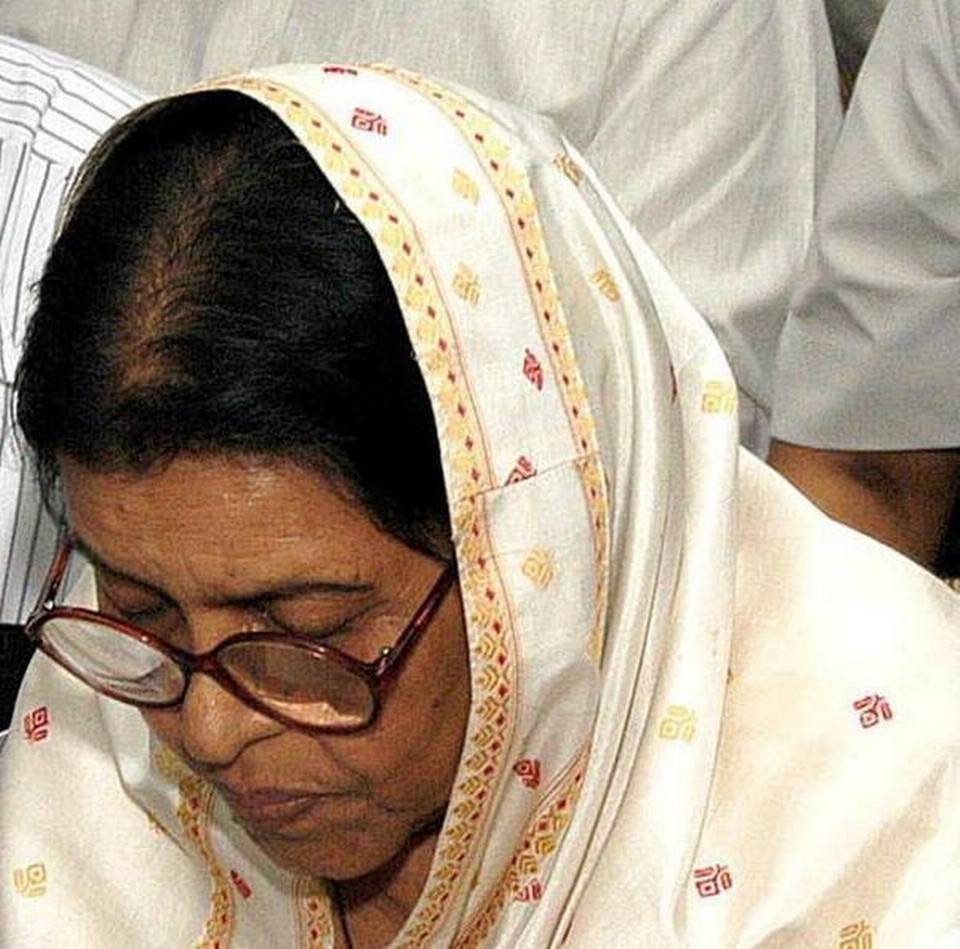
Former Chief Minister of Assam Syeda Anowara Taimur. File   | Photo Credit: The Hindu

Syeda Anwara Taimur had taken charge during the peak of the Assam Agitation; her name did not figure in the NRC

Syeda Anwara Taimur, Assam’s only woman Chief Minister passed away on Monday. She was 84.

A four-time Congress MLA who won her first election in 1972, Ms. Taimur became the Chief Minister for a little more than six months during the height of the anti-foreigners’ agitation in the State. Her tenure ended on June 30, 1981.

Ms Taimur represented the Congress in the Rajya Sabha twice before joining the All India United Democratic Front (AIUDF) in 2011.

She had made headlines in 2018 when her name did not figure in the updated National Register of Citizens. She later said members of her family might not have applied to get her name included in the list. Ms Taimur has been living with her son in Australia for the past four years.

Prime Minister Narendra Modi, Assam Governor Jagdish Mukhi and State Chief Minister Sarbananda Sonowal condoled her death and underlined her contribution for the development of the State.

State Congress president Ripun Bora, the party’s leader of opposition in the Assam Assembly Debabrata Saikia and AIUDF president Maulana Badruddin Ajmal also mourned Ms Taimur’s death reportedly due to cardiac arrest.

source: http://www.thehindu.com / The Hindu / Home> News> States> Other States / by Special Correspondent / Guwahati – September 29th, 2020

Memoir of India’s first woman radio newsreader to be out in October

Lucknow, UTTAR PRADESH / NEW DELHI :

The book, co-published by Zubaan Publishers, will hit the stands on October 12

The book will hit the stands on October 12. (Source: University of Chicago Press)

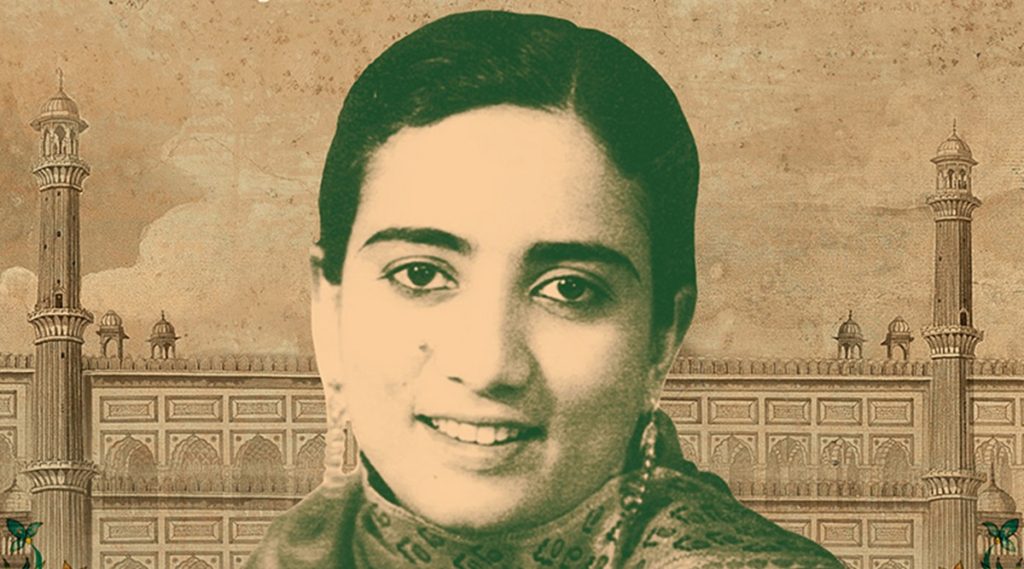
The life and times of India’s first woman radio newsreader Saeeda Bano will unravel in a new book, originally written as a memoir in Urdu, Penguin Random House India announced on Monday.

The book, Off the Beaten Track, has been translated into English by Bano’s granddaughter Shahana Raza from her 1994 memoir Dagar Se Hat Kar“.

The memoir takes the reader through events of great personal impact in her life such as walking out of a suffocating marriage, witnessing the violence of the Partition, moving to Delhi from Lucknow as a single mother, eating toast with prime minister Jawaharlal Nehru , and falling in love with a married man — Nuruddin Ahmed, who would, in the course of their twenty-five-year relationship, become the Mayor of Delhi.

“Unflinching and riveting, ‘Off the Beaten Track’ offers a personal account of the Partition and the burgeoning capital city of a newly-independent India.

“A story of hope and resilience, it’s an unforgettable exploration of a fascinating woman; beckoning readers to reflect upon what it means to live and love passionately in the face of conformity and social pressure,” the publishers said in a statement.

The book, co-published by Zubaan Publishers, will hit the stands on October 12.

source: http://www.indianexpress.com / Indian Express / Home> Books and Literature / by PTI, New Delhi / September 28th, 2020

Jamia Researchers Develop Fastest Molecular Docking Tool for Drug Discovery Pipeline

NEW DELHI :

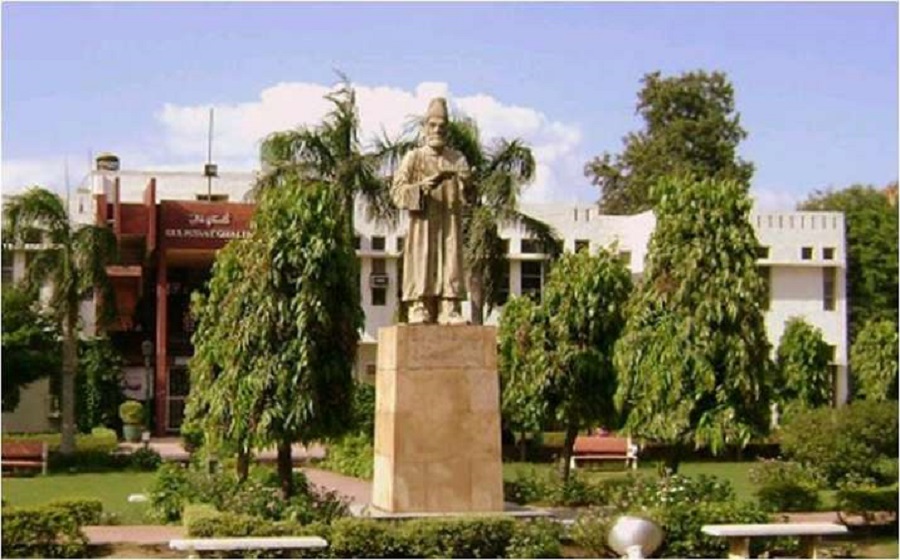
Jamia Millia Islamia, New Delhi.

Drug discovery is a complex and long-drawn process that requires an interdisciplinary approach to discover new drug-like molecules called leads

Clarion India

New Delhi :

A team of researchers, led by Dr. Md. Imtiaz Hassan at the Centre for Interdisciplinary Research in Basic Sciences, Jamia Millia Islamia(JMI), has developed a molecular docking-based high-throughput virtual screening tool as freeware named InstaDock.

Molecular docking is an in-silico method used for exploring protein-ligand interactions of therapeutic interest and is one of the most widely used approaches in drug development and discovery. Drug discovery is a complex and long-drawn process that requires an interdisciplinary approach to discover new drug-like molecules called leads.

In-silico approaches such as molecular docking are used in “virtual high-throughput screening” of chemical libraries containing millions of compounds to find potential leads in drug design and discovery.

Dr. Hassan and his students Taj Mohammad and Yash Mathur developed InstaDock, a free and open-access Graphical User Interface programme that uses standard tools to perform molecular docking and virtual high-throughput screening efficiently.

An InstaDock suite is a single-click executable, specially made for the convenience of non-bioinformatician and for people who are not experts in using computers. It is the easiest and more interactive interface than ever existing software that facilitates on-board visualisation and docking analysis in just a single click.

InstaDock has been accepted for publication by the Briefings in Bioinformatics, a reputed journal of the Oxford University Press with an Impact Factor of 9.1. InstaDock is freely available for academic and industrial research purposes at www.hassanlab.org/instadock.

“It is quite challenging for non-expert users to perform molecular docking and high-throughput virtual screening directly at a universal platform, as the process involves a large number of steps. We have presented InstaDock in such a way that it can be used by even non-bioinformaticians and people with very little knowledge of computers, which greatly enhances its scope of usefulness”, Taj Mohammad, Senior Research Fellow at Dr. Hassan’s Lab, said.

Yash Mathur said “we developed InstaDock with an aim to provide a simple and interactive drug-discovery platform to help curious minds and professionals alike, experiment and understand proteins in-silico with just a single click”

“The fields of molecular docking and high-throughput virtual screening are the much-needed areas of drug discovery and thus deployment of InstaDock is bound to greatly enhance the pre-existing procedures. It is a novel method that gives non-expert users the freedom and efficiency that is not provided by existing programs”, said Dr. Hassan.

Dr. Hassan said this work is a great effort of his students Taj Mohammad and Yash Mathur who worked constantly for a long time even in the lockdown situation. They are dedicatedly working in the field of structural biology, machine learning, drug discovery, and NGS analytics to contribute towards modern medical science.

Dr. Hassan’s lab is running several research projects related to drug design and discovery which can be accessed via www.hassanlab.org.

source: http://www.clarionindia.net / Clarion / Home> Editor’s Pick> India> Indian Muslims / September 25th, 2020

This team of four from Anantpur step in when even relatives look away to bury COVID-19 victims

Hindupur (Anantapur District), ANDHRA PRADESH :

The team swings into action whenever the administration finds it difficult to dispose of a body.

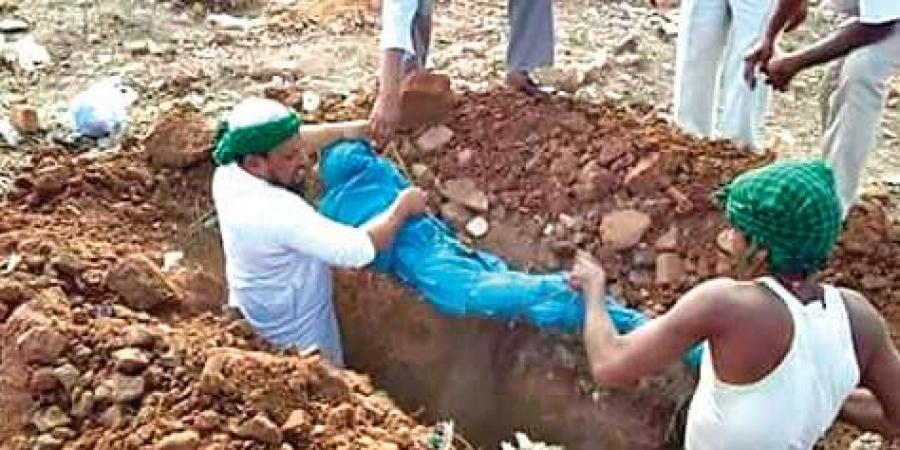
The team performs last rites of a Covid victim in Anantapur district | EXPRESS

Anantapur :

Remember the Rajendra Prasad-starrer Telugu hit movie Aaa Naluguru — about the importance of human relations and the need for at least four people who will take part in the last journey of a person? At a time when even relatives refrain from taking part in the last rites of Covid-19 victims, a team of four from Hindupur in Anantapur district has been volunteering to perform the last rites of bodies abandoned in morgues.

The team swings into action whenever the administration finds it difficult to dispose of a body. “It is appalling that even the families of victims do not come forward to give them a decent farewell,” says Uday, convenor of the Life World Charitable Trust in Hindupur.

He has been performing the last rites of unclaimed bodies ever since he saw an abandoned infant being preyed on by stray dogs on a street in Hindupur. Inspired by Uday, Umar Farooq Khan, of the Muslim Nagara organisation, started performing the last rites of unclaimed bodies.

Amid the Covid-19 outbreak, those who used to assist them backed out, leaving them with the support of just two friends, Sriramulu and Gangadhar. “We perform the last rites as per the religious tradition of the deceased. We do not look into caste, creed, or financial status,” Umar Farooq tells TNIE. Till date, the four have performed the last rites of over 50 Covid-19 victims both as individuals and as a team. Meanwhile, Uday himself has tested positive for coronavirus and is undergoing treatment. “I will continue the service once I recover,” he asserts.

source:http://www.newindianexpress.com / The New Indian Express / Home> States> Andhra Pradesh / by CP Venugopal / Express News Service / September 27th, 2020

Sons stitch together Kerala tailor’s dream of ‘longest’ Quran copy

Eruva (near Kayamkulam), KERALA :

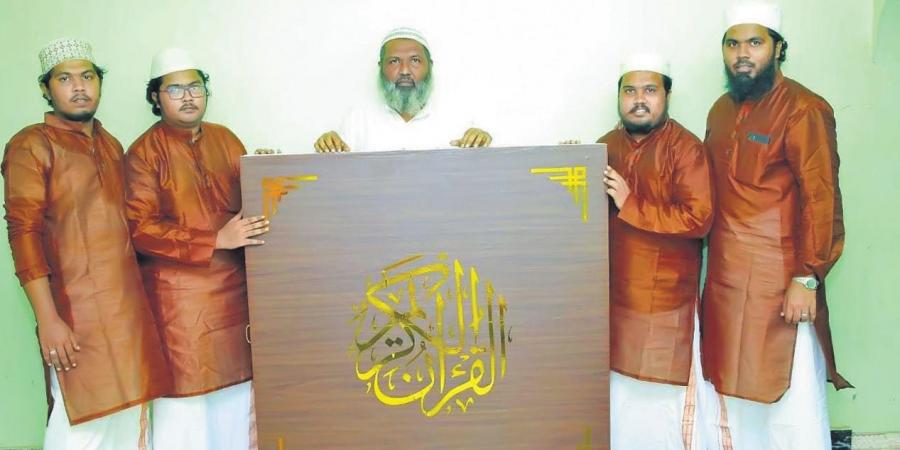
The dream of a tailor at Eruva near Kayamkulam was fulfilled by his four sons who created the 3.1-kilometre-long handwritten copy of the Quran in the world.

Noushad and his sons with the box in which the collar cloth rolls of handwritten Quran are fixed on a rotator | Express

Alappuzha :

The dream of a tailor at Eruva near Kayamkulam was fulfilled by his four sons who created the 3.1-kilometre-long handwritten copy of the Quran in the world. Kadharsha Moulavi, son of M K Noushad, said his father’s dream was to create the holy text on a cloth canvas as a handwritten copy.

The Quran teacher of Tharbiyya Madrasa at Palluruthy in Ernakulam said, “He had expressed his wish a few years ago, but the lack of time did not allow us to complete the task. In the Covid lockdown period, we decided to undertake it. We etched the text on the stiff collar rolls of 1.5-inch width stitched together. It took us around 111 hours to complete the writing. Ten green marker pens and 40 bottles of ink were used and  and the whole project cost us Rs 20,000.” 

Noushad himself had created records by stitching a huge shirt joining the flags of 54 nations and made the Indian Tricolour using buttons. When the then president, APJ Abdul Kalam, came to Kochi in 2003, Noushad was called there and felicitated by him.

His four sons are educated in the Quran and Arabic studies and all are teaching in different institutions. Muhammad Shafi, a teacher of KIT School, Kayamkulam, said the siblings started the work on June 8 and completed it by July 26.

“As many as 155 collar canvas rolls were used to create the long strip. One collar canvas is 20m long. The copy was written using marker pens in neat handwriting. The special box to fix the canvass roll was designed by our father. People can read from Volumes 1 to 30 without any difficulty. If the reader turns the rotator fixed in the box, the text starts unrolling for easy reading,” Shafi said. “As per our knowledge, such a long handwritten copy of the holy text does not exist in the world,” he added. 

Noushad said the national flag with buttons was a novel idea and he got several accolades for it. He had tried to get these recognised by the Guinness World Records but could not pursue it  then. “President Abdul Kalam felicitated me after hearing about the flag. I had stitched it using 20,454 buttons and presented it during the official Independence Day celebrations in Kayamkulam on August 15, 2003.

Another initiative was a shirt that was stitched together with the flags of 54 countries. Each flag was stitched in my shop and the shirt in the end had a height of 10 feet. It was released on the 54th Republic Day in 2003.

I had also created a floral arrangement using small pieces of clothes on the Thiruvonam day in 2004,” Noushad said.

source: http://www.newindianexpress.com / The New Indian Express / Home> Good News / by Biju E. Paul / Express News Service / September 26th, 2020

Adil Hussain-starrer Netflix drama ‘Delhi Crime’ gets nominated for Emmy

ASSAM / NEW DELHI :

‘Delhi Crime’ is also set for the second season. The first season was based on 2012 Delhi rape survivor Nirbhaya

The show that stars Adil Hussain, Shefali Shah and Rasika Duggal in the lead roles, is based upon the real-life incident of 2012 Delhi rape of a medical student|Twitter

The nominations for the best drama are revealed, after Emmys 2020 for the comic category concluded. In the list of nominations is Netflix’s popular show ‘Delhi Crime’. The show that stars Adil Hussain, Shefali Shah and Rasika Duggal in the lead roles, is based upon the real-life incident of 2012 Delhi rape of a medical student.

The news was shared by Adil Hussain on his Twitter handle . He wrote, “As we speak. Just now I came to know that #DelhiCrime, that I am a part of, has been nominated for Best drama series at @iemmys International #emmyawards #Emmys.”

‘Delhi Crime’ is also set for the second season. The first season was based upon Nirbhaya (the name given by the government), who was gang-raped in 2012 in a moving bus in the capital of India.

Recently, Schitts Creek sweeped all the awards as being the best comedy show.

source: http://www.eastmojo.com / EastMojo / Home> National / by Pratisha Borthakur / September 24th, 2020

Community icon presented with Australian award

JAMMU & KASHMIR / AUSTRALIA :

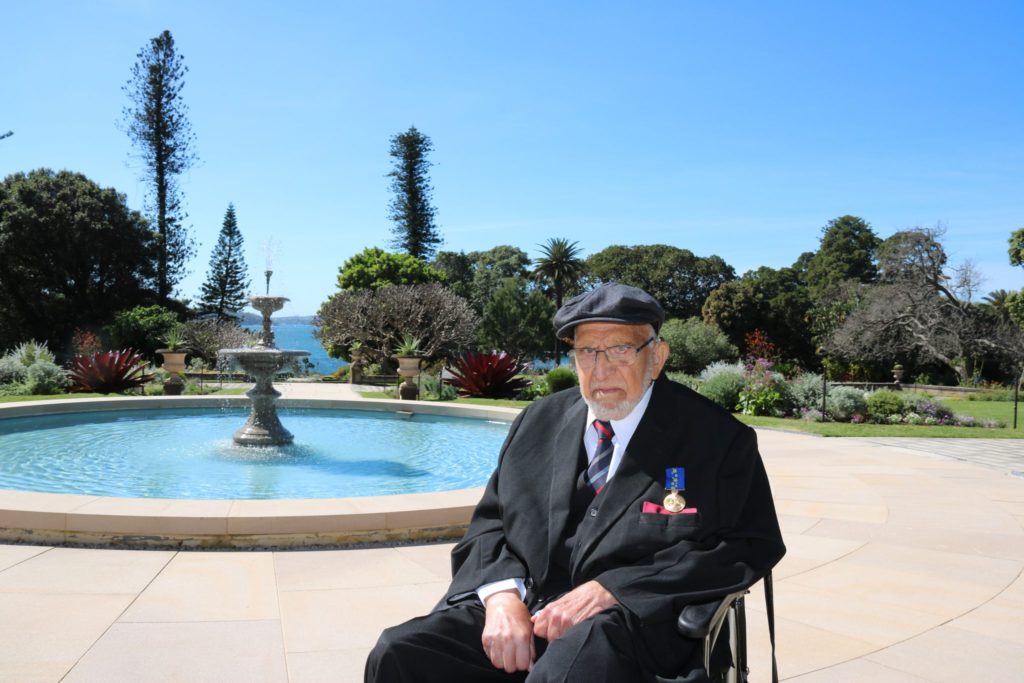
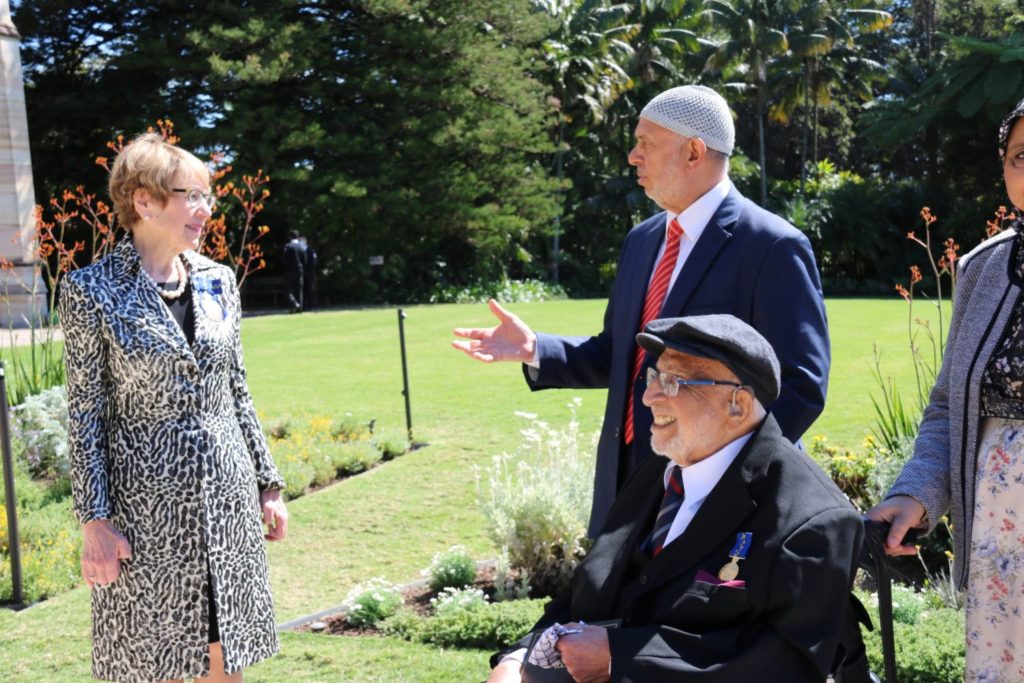
Reflections on half a century of community service in Australia: Dr Qazi Ashfaq Ahmad after the award ceremony on Tuesday 8 September 2020 at the front lawns of Government House in Sydney.

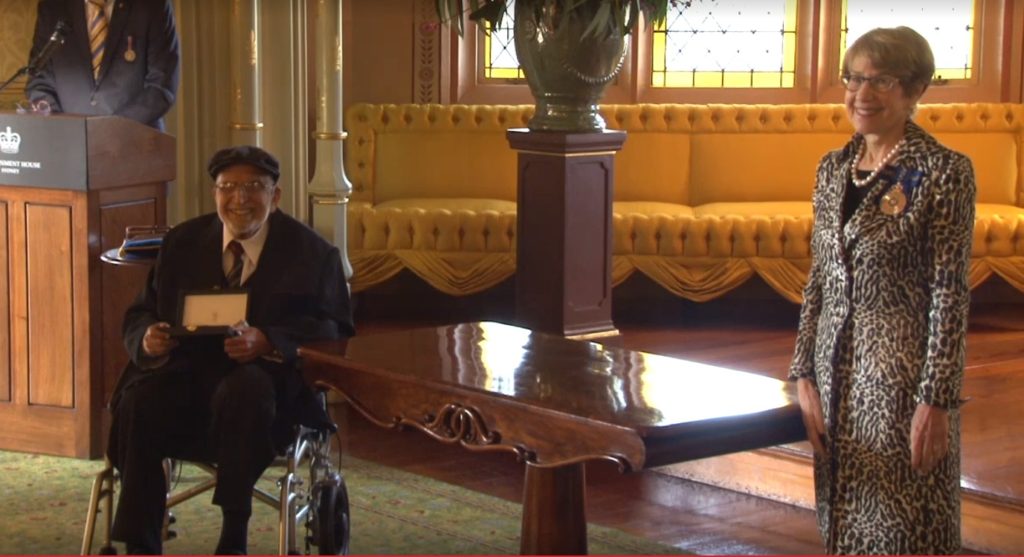
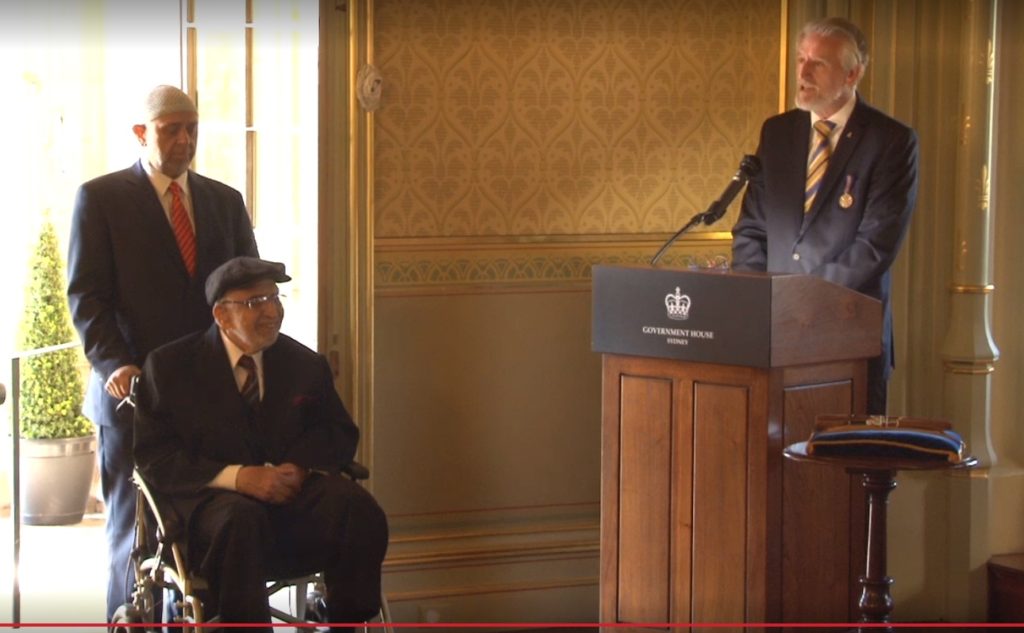
Dr Qazi Ashfaq Ahmad OAM, 90, a retired professor of mechanical engineering and a Quranic scholar and long time community leader was presented with his Order of Australia medals on Tuesday 8 September 2020 by Her Excellency the Honourable Margaret Beazley, AC, QC, the Governor of NSW.

Watch video of Investiture Ceremony and citation for Dr Ahmad for the award.

The award was announced on Australia Day 26 January earlier this year but the investiture ceremony was much delayed due to the pandemic and was held in September at the Government House in Sydney under COVID-19 restrictions.

Dr Ahmad, professor and head of department of mechanical engineering in Kashmir was forced to leave his job and arrived in Australia in 1971 and has been in the forefront of building Islamic institutions, founding community organisations and promoting interfaith harmony for almost half a century.

Dr Qazi Ashfaq Ahmad receiving the Award Medals from the Governor of NSW, Her Excellency the Honourable Margaret Beazley, AC, QC on Tuesday 8 September 2020 at Government House, Sydney.

This was the first of a number of investiture ceremonies to be held in stages for the recipients of Order of Australia medals this year in compliance with COVID-19 regulations and health advice.

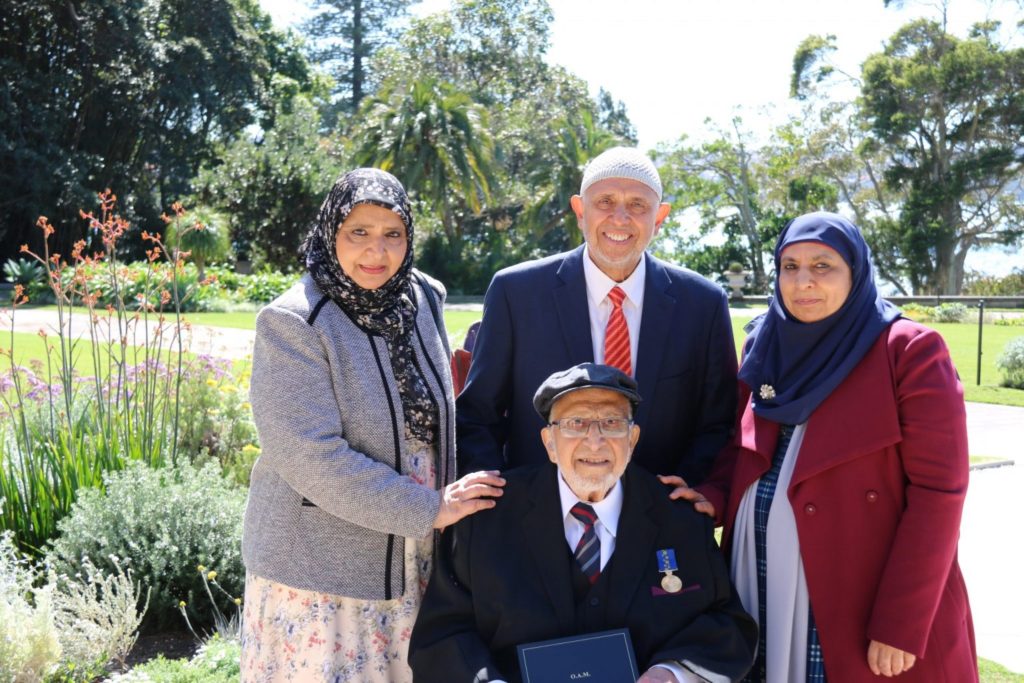
Dr Ahmad was accompanied by his eldest son Zia Ahmad and and daughters Fauzia Siddiqui and Najia Khalil at the award ceremony at Government House in Sydney.

Dr Ahmad with his daughter Fauzia Siddiqui (left), son Zia Ahmad and daughter Najia Khalil after the investiture ceremony at the Government House front lawn in Sydney on Tuesday 8 September 2020.

The Order of Australia was bestowed upon Dr Ahmad in recognition of his services to the Muslim community and for promoting interfaith harmony.

By profession, a retired engineer and academic having earned his major qualifications at Aligarh Muslim University, India, University of Wisconsin, USA and University of Sydney, Australia, he taught at various universities in India, Australia and Papua New Guinea.

A Quranic scholar of international standing, having obtained his Islamic education from original sources after mastering English, Urdu, Arabic and Farsi languages, his major passion in life is, and has been for most of his life, the application of Islam in the daily life of mankind, both for Muslims and people of other faiths and beliefs.

Dr Ahmad lives in Sydney with his wife Jamal Ara Ahmad surrounded by 70+ strong extended family and is a father, grandfather and great grandfather.

With the Governor of NSW at the front lawn of  Government House, Sydney.

The citation announced at the event for the award included a long list of services that he has been rendered by him to the Australian community during the last 50 years.

Citation for the award read at the Investiture ceremony

Below are some of Dr Ahmad’s community achievements:

  • Founding Secretary, Australian Islamic Mission (AIM) 1972.
  • Founding President, Muslims Australia (also known as Australian Federation of Islamic Councils AFIC) 1976-77.
  • Editor-in-Chief, Australian Muslim Times 1991; Chief Advisor, Australasian Muslim Times AMUST, 2014-current.
  • Member, Board of Trustees, International Council of Islamic Information (United Kingdom), since 1993.
  • Founder and Patron, Islamic Forum for Australian Muslims (IFAM) 1993.
  • Founder, Member and Patron, Aligarh Muslim University Alumni of Australia (AMUAA), since 1992.
  • Member, Association for Indian Muslims (United States), 1992.
  • Founder and Patron, Islamic Foundation for Education and Welfare, since 1986.
  • Co-Founder and Chief Organiser, Multicultural Eid Festival and Fair (MEFF), since 1985.
  • Founder and Member, Council of Islamic Affairs New South Wales (now ICNSW), 1974-1976.
  • Founding President, Sydney University Muslim Students Association, 1972-1974.
  • Assembly Member, Council of Parliament of World Religions, USA, since 1993.
  • Establishment of the Interfaith Youth Friendship Centre, 2006.

Awards and recognition of Dr Ahmad’s contribution include:

  • Lifetime Achievement Award, Australian Muslim Achievement Awards, 2011.
  • Sir Syed Award, AMU Alumni of Australia, 2003.
  • Centenary Medal for contribution to Australian society, 2001.
  • Services to Islam Award, Australian Muslim Professionals (FAMP), 1994.
  • Community Service Award in recognition of a valuable contribution to the Bicentenary, 1988.

Read more about Dr Qazi Ashfaq Ahmad’s life and achievements.

source: http://www.amust.com.au / AMUST (Australian Muslim Times) / Home> News> Top News / by Zia Ahmed / September 11th, 2020