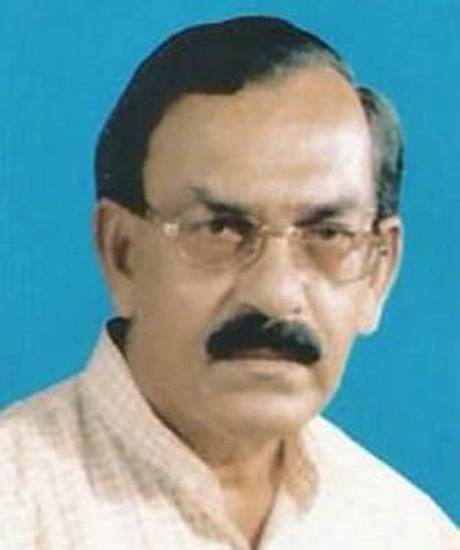
Islamic history expert Prof. P.A. Ibrahim Kutty, 71, a prominent presence in the city’s cultural and literary circles, passed away on Wednesday.
He was the vice president of Kerala History Association and treasurer of Samastha Kerala Sahitya Parishad. His body, kept at his house Nilofer on SRM Road at Kaloor, will be buried at the Kaloor Thottathumpady Juma Masjid on Thursday.
Born in 1948 at Mala, Prof. Ibhahim Kutty had his education in Maharaja’s College, Aligarh Muslim University and Ernakulam Law College.
He had retired as Head of Islamic History Department from the Maharaja’s College in 2001. He was a member of boards in various universities and was the chairman of the Islamic Studies Board in Kerala University, Calicut University and Mahatma Gandhi University.
He is survived by his wife Razia, daughter of former Mayor A.A. Kochunni Master.
source: http://www.thehindu.com / The Hindu / Home> News> Cities> Kochi / by Special Correspondent / Kochi – July 04th, 2019
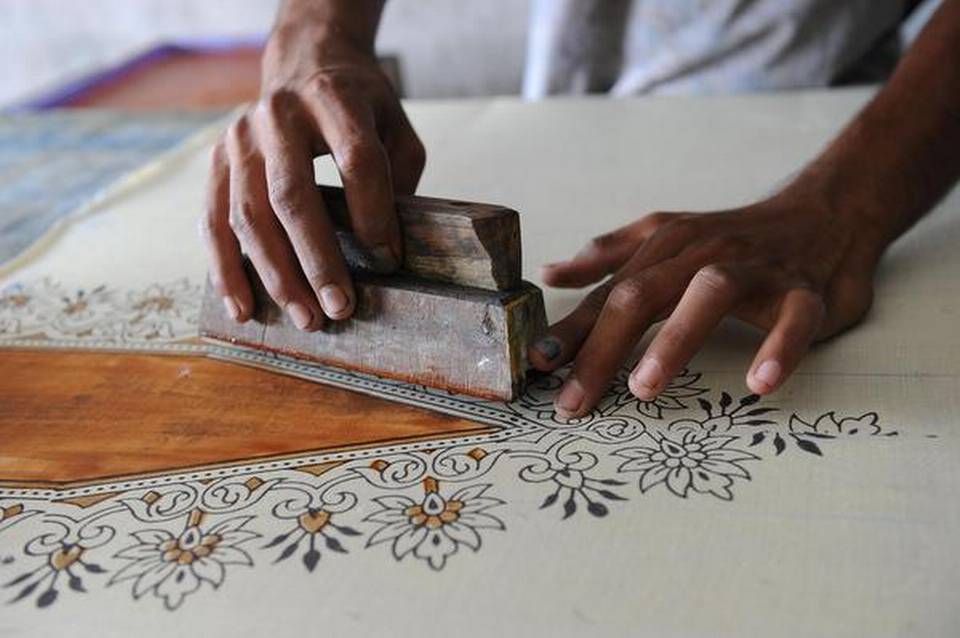
An artisan works on one of Khatri’s unique asymmetrical designs. | Photo Credit: Vijay Soneji
Khalid Amin Khatri’s favourite theme is clouds floating atop mountains
He grew up in a world of symmetry. The perfectly synchronised movement of wooden blocks from a plate of colour onto long stretches of cloth, and the accompanying sound of a regular, dull beat, are deeply ingrained in Khalid Amin Khatri.
This is, after all, Ajrakhpur, in the Kutch region of Gujarat ,and he was born the son of generations of ajrakh printers. Khatri, however, was bored by the regularity. He wanted to capture his imagination on a piece of cloth, to bring the clouds and the mountains, shrines and monuments down to his canvas.
So that’s what he did.
Khatri, 26, calls himself an artist — more than an artisan. A step away from the traditional ajrakh block-printing that relies on uniformity of design, Khatri’s work is dominated by asymmetricity. But it’s more than that. “Each of my creations has a theme,” he tells us, as he unfolds piece after piece, each hand crafted, each guided by a theme. Unlike the traditional form that mostly prints floral motifs and geometrical designs, Khatri’s designs are guided by his imagination. His favourite theme, for example, is clouds floating atop mountains.
Different strokes
Showing us one such piece — it has a river, flowers, bushes, and yes, clouds and mountains — Khatri recalls a time, not even 10 years ago, when other artisans in his village would look at him with dismay. “‘Why are you hell-bent on destroying the art form,’ they would ask,” he says, smiling. “But I didn’t care. I always knew if I was going to do Ajrakh, I would do something different.”
Khatri was a child when the 2001 Bhuj earthquake destroyed their village, Dhamadka, and the entire community of artisans moved to Ajrakhpur. Most villagers went back to their craft, but Khatri’s father, Amin Khatri, stopped working on ajrakh and instead opened a grocery shop.
He did not however discourage his son from learning the art form in his uncle’s workshop. But traditional ajrakh could not capture the boy’s interest, and he ran away to Mumbai. He was just a teenager and he had found himself a job as a telemarketer.
“I lasted just six months there,” he smiles sheepishly. “I decided to come back to my world — but to innovate and leave my mark.” In 2010, his uncle, Dr. Ismail Khatri, encouraged him to study textile design at Kala Raksha Vidyalaya.
During the one-year course, one theme caught Khatri’s fancy: concept design. “Concept development was completely new to me. We were taught how to develop a theme; it was aligned to what I wanted to do,” he says.
Dargah on cloth
Khatri’s first finished product as a student was a black stole on which he made mountains and clouds. “A lady from the U.S. had come to see our products and when she saw my creation, she said my talent was qudrati, that I was a natural, like M.F. Husain. I didn’t even know who Husain was then,” he says. The stole sold for ₹50,000.
Since then, Khatri’s visually arresting work has gained widespread popularity, both among Ajrakhpur’s regular customers and new buyers. His work is unusual, for instance, a stole with a vivid image of Mumbai’s Haji Ali Dargah, complete with the half-submerged road leading to it. Or the white Rann of Kutch printed on a scarf. He also does a lot of abstract work, both on silk — modal, mashroo, etc. — and on cotton.
“I spend a lot of time on each piece and make sure it is unique. I take at least two hours to print a two-metre piece of cloth, when traditional ajrakh block-printing would have taken 10 minutes,” he says.
He gets wooden blocks made for every design and theme, and uses paper to cover portions of the cloth in order to break the symmetry; he hand-paints some as well. This means that unlike the traditional six metre long ajrakh prints, he usually does stoles, scarves and dupattas. “But I recently got an order for a cotton sari and I did that,” he says.
Khatri has travelled across the country for exhibitions and his wares are displayed at fashion shows. A lot of his orders come from overseas. “These,” he says, showing a pile of abstract art stoles on his bed at home, “are ready to be shipped to a textile designer and collector in the U.S.”
Khatri’s work was exhibited at the V&A Museum in London. And he is renowned enough for students from design schools like the National Institute of Fashion Technology (NIFT) and M.S. University (Vadodara) to visit him for learning.
Asked about his future plans, Khatri looks up for a second and then smiles. “I don’t think too much about the future. I enjoy doing what I do. Like, right now, I want to work on a piece that celebrates Delhi, its monuments and landmarks,” he says. His father, who now helps him in his workshop, nods approvingly.
The author is a Gujarat-based freelance journalist.
source: http://www.thehindu.com / The Hindu / Home> Sunday Magazine> Focus> Society / by Azera Parveen Rahman / June 29th, 2019
The genre has given new life to the literary landscape of the northeastern state.
Miyah poetry gives us a peep into how it is to live in the Char Chapori or riverine geographies in Assam. Photo: Kinshuk Kashyap/Flickr (CC BY 2.0)
For Richard Rorty, there are two kinds of writers largely – those who strive for ‘private perfection’ and those who are collectively engaged with efforts to make our institutions ‘more just and less cruel’. I wish to draw from his seminal work Contingency, Irony and Solidarity to critically think about the ongoing debate about Miyah poetry. It might come across as a highly unusual reference, but I do believe that there are interesting parallels.
Miyah poetry as a genre is multilingual and encompasses a world of suffering and humiliation of a group of people whose life-world has passed through numerous political claims and counterclaims. My first introduction to Miyah poetry was through an article written by the talented poet and translator Shalim M. Hussain. I was deeply moved reading his account of the word Miyah and how this subaltern group of committed poets are trying to create something beautiful through protest and celebration of life. Hussain shared with us this beautiful poem of Maulana Bande Ali written in 1939:
“Neither charuwa, nor pamua I am an Asomiya. Of Assam’s earth and air I am an equal claimant.”
This one is seen as the first wave of poems, followed by a series of poems in the 1980s mostly written in Assamese by the likes of Khabir Ahmed and Dr Hafiz Ahmed. Hussain notes in a recent article that the new wave of poems has been more explorative and has moved beyond protest and resistance. This new generation is committed to writing a total history of their being.
If one follows Miyah poetry closely, it has always attempted to enrich our understanding of the cultural and political landscape of Assam. It gives us a peep into how it is to live in the Char Chapori or riverine geographies in Assam. It teaches and asks us to be ‘more just and less cruel’. These groups of poets also share a love for Assamese culture and society. In their humble effort, they seek to beautify the cultural landscape of Assam. And to remember Jyoti Prasad Agarwala, their contribution brings light (puhor) to our society.
Criticism of Miyah poetry
The recent debate about Miyah poetry questions its very existence and need. This discomfort and criticism mirror the condition of Assamese civil and literary class/society which is deeply rooted in the hegemony of Assamese language, its form and one that guards its boundaries. It cannot digest a new discourse emerging from the within which reflects our own condition of culture. It fails to give freedom even for artistic and aesthetic expression, like it does to any critical intellectual pursuit. The ‘otherisation’ that Bangla speakers of the state face is precisely a product of this Assamese hegemony and the ‘class condition’ in the state.
Criticisms about Miyah poetry suffer from a ‘liberal irony’. For Rorty, such a condition and being is one where people hope for a decrease in suffering and hope that humiliation shall end one day. They indulge in discussions involving concerns about whether it is right to deliver innocents to the torturer if they let go more people instead. In Assam, there is a considerable section who thinks that something good may come out of the National Register of Citizens (NRC) process. This something good is indeed a discourse of ‘private perfection’ where there are many sacrificial lambs being created. Such ironists are far greater in number. In essence, they determine a hierarchy of responsibility, which is indeed an irony.
For Rorty, it is a liberal utopia that irony is hostile for democracy and human solidarity at once. In essence, criticism of criticism is the only way out of the present milieu. However, it doesn’t threaten human solidarity itself. Solidarity for him is not only possible by enquiry, perhaps even criticism, but also, through imagination. Solidarity can be created by highlighting the pain and suffering of people that are not familiar or who you know.
To agree with Rorty again, one needs to think of human beings as ‘one of us’ and not as ‘them,’ write about the ‘other’ as ‘us’ and ‘redescribe’ and re-visit who we are. In other words, we ought to write not only about others but also of the capabilities of love and evil one carry. In the process, we create more vocabularies to understand our everyday life. It makes us better, not worse off.
Need for a cultural revolution
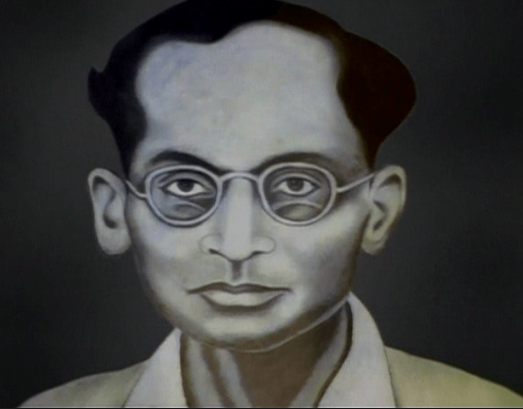
It struck a chord with me and I have come to admire the poems, its discourse and have shared them with numerous friends and acquaintances. Recently, when Miyah poetry is being put in a pickle by a few writers, one should always remember that being in Assam, the world of beauty and its articulation is not lost on us. The cultural icon of Assam, Jyoti Prasad Agarwala believed that any culture ought to have a revolution (biplab) in society whenever there is a threat to our cultural mores.
Jyoti Prasad Agarwala. Photo: YouTube
Our culture, and I use ‘our’ with much discomfort and keeping in mind the syncretism that we find in Assam theoretically and the ‘otherisation’ that is rife, requires a biplab – for Assamese political and cultural landscape have become narrow and selfish. Our social boundaries are more rigid than before. In Agarwala’s words, we have an unholy presence of anti-cultural (duskriti) in our society that asks us to become divisive. It is, thus, imperative that we need a revolution, a cultural one as Agarwala articulated.
Miyah poetry, of which there is no gatekeeper as Hussain empathically puts it, gives new vocabularies to a culture that comes out of a ‘lifetime of oppression’. A new grammar of suffering and humiliation is being written through these poems that tell us not to walk those paths that treat people with disdain and humiliation.
Like the contribution of Henry James and Nabokov, it shows us the limits of our culture and the ‘cruelty we are capable of’. Miyah poetry, in fact, creates a meta-vocabulary of our everyday life, of possible ways of knowing and feeling.
Why Assam should embrace Miyah poetry
This genre of poetry has given new life to the literary landscape of Assam. It creates new grounds for solidarity and takes us to a world unknown – of suffering, othering and humiliation. Assamese society ought to embrace it, not brush it aside as unnecessary and describe it as reactionary. Brushing them aside also means forgoing the possibility of solidarity. It is time to move beyond ‘private perfection’ and think of human solidarity outside the gaze of liberal irony. People who engage in art and intellectual pursuit ought to extend their love, not silence, and certainly not hollow criticism.
Perhaps, Miyah poetry needs to accept the politics it carries or its potential, although, Hussain notes that ‘they are least bothered about politics’. The history of Miya poetry suggests that in many ways, it essentialises Char Chapori settlements as only Miyah settlements, however, the history of permanent settlement in riverine areas of 90 odd tributaries of the mighty Brahmaputra suggest that there are other river people (nadiyal) who share the same precarity, perhaps not the intensity of social othering.
A complete history of Char Chapori ought to appreciate that heterogeneity of Char Chapori scapes and how it is home to the other margins of Assam – the Mishings and the Kaibartas (a lower-caste group), among others, who are the first permanent settlers of these areas. As non-colonising settlers of these geographies, there are many commonalities that these communities share.
At the moment, there is no solidarity among these communities as such, but as Rorty suggests, solidarity can be created. It can be created from the shared lived experiences, of being marginalised through religion and caste and the productive activities that they are engaged with. Hussain notes in the FirstPost article that ‘Miyah poetry has done its job’, however, borrowing Hafiz Ahmed’s words: I beg to state that it has, in fact, began.
Suraj Gogoi is a doctoral student in sociology at National University of Singapore and tweets @char_chapori.
source: http://www.thewire.in / The Wire / Home> Culture / by Suraj Gogoi / July 03rd, 2019
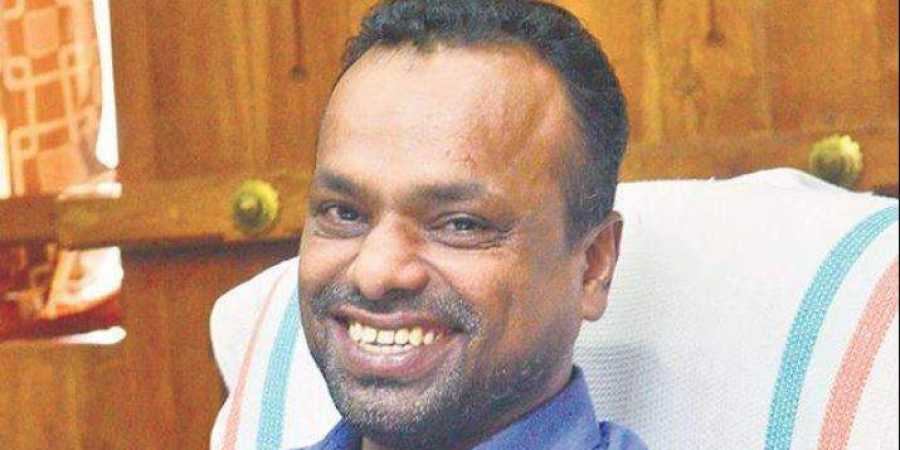
For Abdul Nasar, it was a long journey from an orphanage to the District Collector’s office.
Abdul Nasar
Kollam :
For Abdul Nasar, it was a long journey from an orphanage to the District Collector’s office. The Thalassery man who assumed office as Kollam Collector the other day had lived the hard ways of life, spent childhood in an orphanage and came up to the top fighting all odds in life. Tragedy befell his family when Abdul was just 5. His father Abdul Khadar passed away, leaving his mother Manjumma Hajjumma alone to fend for six kids. The financial crisis pushed Manjumma to send her youngest son Abdul to an orphanage in Thalassery.
He spent the next 13 years at the orphanage. He had worked as a supplier and cleaner in hotels during his school days to fund his education. While pursuing his BA in English Literature at Government Brennen College, Thalassery, Abdul also worked as a telephone operator and a newspaper boy. After his graduation, he worked as a health inspector in Kerala Health Department and then as an upper primary teacher at a school in his village, and finally, after his preparations, he cracked the PSC exam for the post of deputy collector.
He passed the prelims in 2002 and mains in 2004. In 2006, he was appointed deputy collector. During his stint as the State Entrance Exam Commissioner, he was able to convert the exams into an online format. And in October 2017, he was elevated as an IAS officer.
Abdul is all praise for his mother whose hard work is behind all his achievements. “It was her hard work that made me the person I am today,” said the 49-year-old. He also appreciated the support he had received from his wife MK Ruksana, a higher secondary teacher. The couple has three children – Nayeema, an engineering graduate; Nuamul Haq, BBA student; and Inamul Haq, who studies in Class VIII.
source: http://www.newindianexpress.com / The New Indian Express / Home> States> Kerala / by Express News Service / July 04th, 2019
The Nikah between Muhammad Muhsin and Shafaq Qassim was a strictly family-and-friends event
Palakkad:
Pattambi’s young MLA Muhammad Muhsin has married a student from Uttar Pradesh’s Balrampur. The wedding was held in the bride’s hometown.
The Nikah was a strictly family-and-friends event as the bride, Shafaq Qassim, has to fly out to Europe on December 31 for studies leading to a PhD.
Shafaq, who has completed her M Phil from the Jamia Millia University in Delhi, has worked at the National Physical Laboratory there for sometime.
Muhsin and Shafaq knew each other for the last year-and-a-half.
Muhsin, who was a firebrand leader at the Jawaharlal Nehru University in Delhi, is an MLA of the CPI. The bride’s family, however, are Samajwadi Party supporters and they have contributed MLAs to that party.
Muhsin is the son of Puthenpeediyakkal Abubaker Haji and Jameela Begum of Karakkad, Pattambi.
source: http://www.english.manoramaonline.com / OnManorama / Home> News> Kerala / by OnManorama Correspondent / December 23rd, 2018