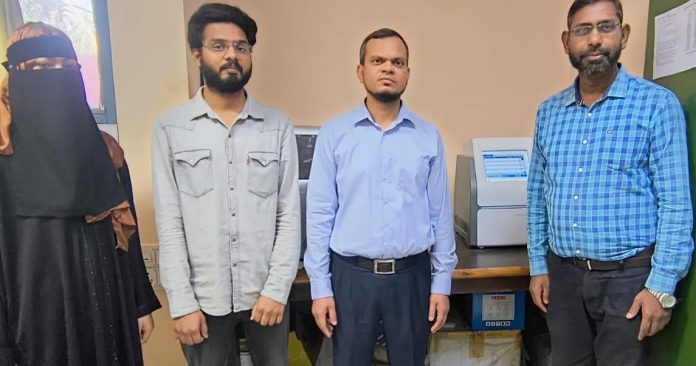
The initiative underscores the importance of nurturing a diverse pool of legal talent equipped to address the complex societal issues facing diverse communities.
pix: X.com /@AleemIlahi
Kochi :
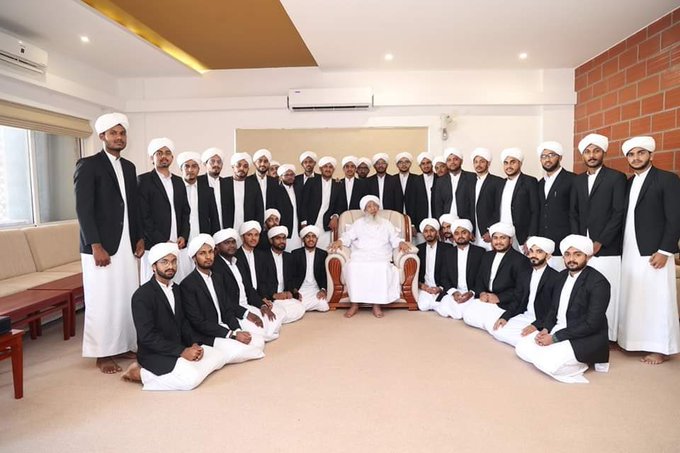
Responding to the pressing need for diverse representation in the state’s legal sphere, particularly to counter communalism, a Muslim organisation in Kerala has taken proactive measures.
It identified a crucial gap in the representation of Muslims in the judicial apparatus of the state and recently qualified and enrolled 50 Islamic scholars as advocates in Kerala High Court.
The southern state has a significant Muslim population and a commendable literacy rate in the community.
The organisation embarked on a training initiative for law graduates after recognising the need for informed legal practitioners well-versed in Shariah-related matters.
This initiative aimed to bridge the gap in Muslim representation in the judiciary, ensuring adequate expertise in addressing legal issues pertaining to the Muslim community.
The successful integration of modern education with religious teachings has been a hallmark of Kerala’s educational landscape. Leveraging this trend, the organisation trained the lawyers who are expected to play a pivotal role in advocating the rights and interests of the Muslim community, particularly in matters concerning Islamic Shariah.
The initiative’s significance extends beyond the confines of Kerala, serving as a model for other states grappling with similar challenges. It underscores the importance of nurturing a diverse pool of legal talent equipped to address the complex societal issues facing diverse communities.
The absence of qualified legal representation among Muslims has often resulted in judgements which do not fully consider Shariah principles. By empowering Muslim scholars with legal expertise, this initiative aims to rectify this imbalance and ensure fair and informed judicial outcomes.
As the need for competent legal practitioners among Muslim communities continues to grow, initiatives like these stand as crucial steps towards fostering a more inclusive and equitable legal landscape.
source: http://www.clarionindia.net / Clarion India / Home> Editor’s Pick> Indian Muslim / by Clarion India (pix edited source by X / @AleemIlahi / February 19th, 2024
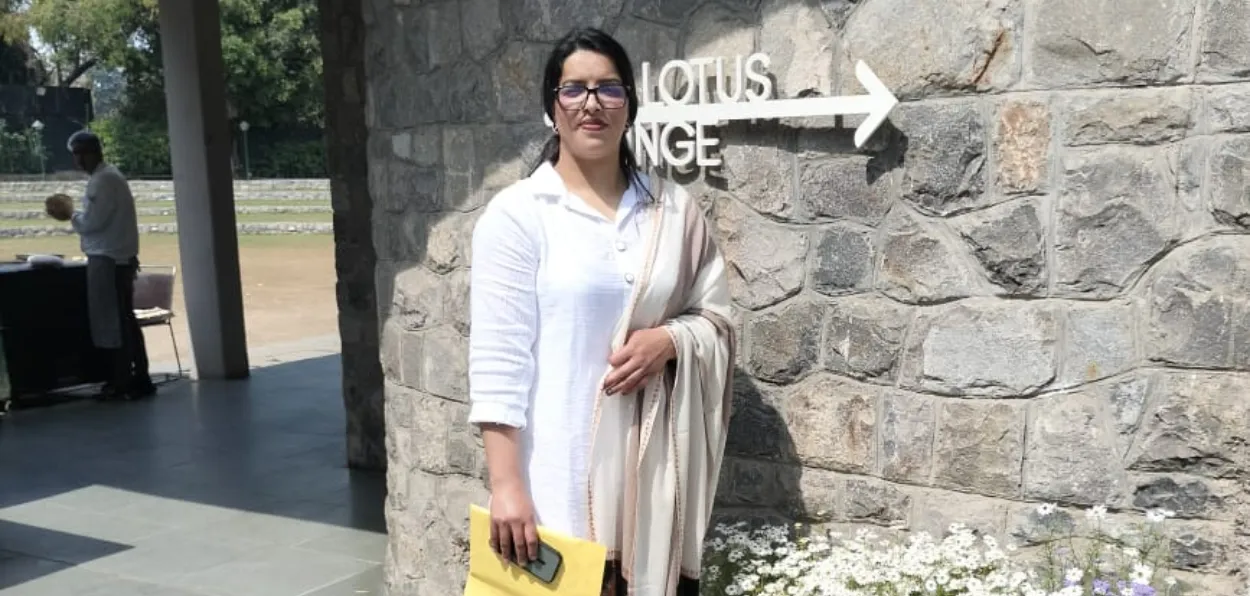
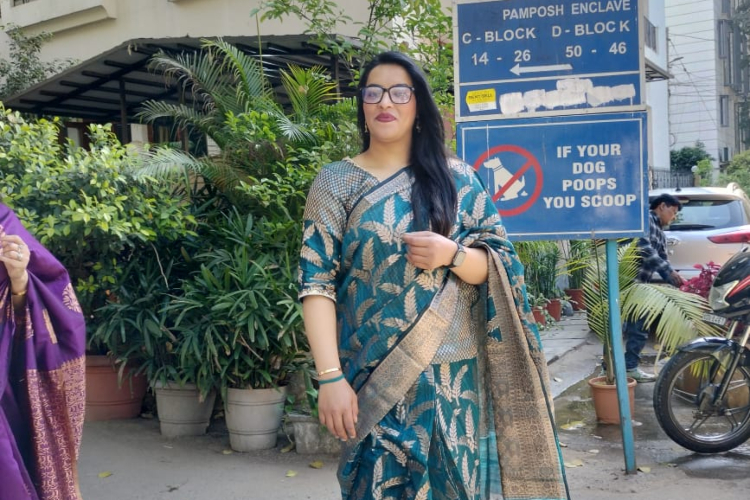
A remarkable woman from North Kashmir is breaking stereotypes and inspiring change in Kashmir. Advocate Tabassum who prefers to be known as Advocate Sibgat, a lawyer-cum-wrestler, is not just fighting legal battles in the courtroom but also empowering women by educating them about their rights and guiding them toward a brighter future.
Sibgat’s journey has been anything but conventional. She hails from the village Tujar Sharif, close to the apple town of Sopore which was once the hub of terrorism.
Losing her mother at a young age in 2012, she stepped into a leadership role within her family. Despite societal norms that often frown upon step-relations, she urged her father to remarry.
Defying expectations, she and her sibling embraced their stepmother wholeheartedly. “Our society doesn’t easily accept the concept of step-relations. But I insisted and got my father married again. We accepted our stepmother as our own; she did the same for us. I made sure the revolution began at home,” she recalled.
This belief in challenging societal norms shaped her into the woman she is today. Sibgat pursued law to fulfill her late mother’s dream of seeing her in the black coat. Now, as an advocate at the Srinagar High Court, she dedicates her life to making legal awareness accessible to the people, especially women.
“Women in our society have always been kept secondary. They are taught to live under the dominance of their fathers and later their husbands. Why is that so? Women must have control over their own lives and be able to make their own decisions,” says Sibgat. Through her legal practice, she educates and consults women on their rights, encouraging them to stand up for themselves and fight against injustices.
Beyond her legal career, Sibgat is also a national-level arm wrestler, competing in the 75kg and 95kg categories and the winner of several medals in the sports. She was even selected for international competitions but could not participate due to personal and professional commitments. “Paron ko khol zamana udaan dekhta hai, Zameen pe baith ke kya aasmaan dekhta hai?” she says, emphasising the importance of ambition and perseverance.
For a woman from Kashmir, excelling in sports, especially a physically demanding one like arm wrestling, is no small feat. “I was always inclined towards sports, but in my area, it wasn’t easy for women to pursue it. I want to pass on this strength to young girls and encourage them to break barriers,” she stated passionately.
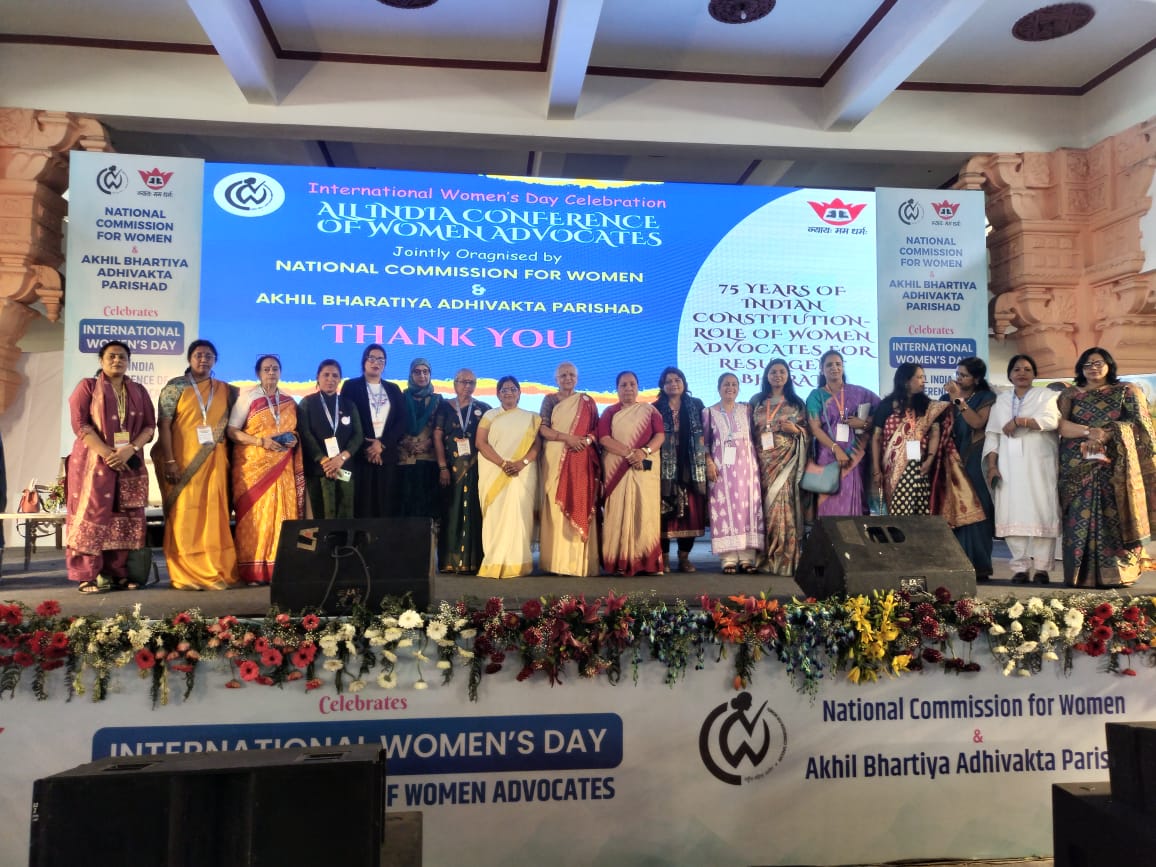
Advocate Tabassum alias Sibgat attending a conference of Women advocates in Delhi
Her commitment to societal well-being extends beyond law and sports. Recognizing the growing influence of digital spaces, Sibgat is spreading cyber awareness.
“Youth is an essential part of our society; they are taking over social media and cyberspace. It is crucial to educate them about cyber laws and digital safety,” she explained.
Advocate Sibgat’s story is one of resilience, determination, and change. Whether in the courtroom, on the wrestling mat, or in society, she continues to fight for justice and empowerment. Her unwavering spirit is a beacon of hope for women in Kashmir and beyond, proving that no societal norm is too rigid to be challenged and no dream too big to be pursued.
source: http://www.awazthevoice.in / Awaz, The Voice / Home> Stories / by Vidushi Gaur, New Delhi / March 24th, 2025
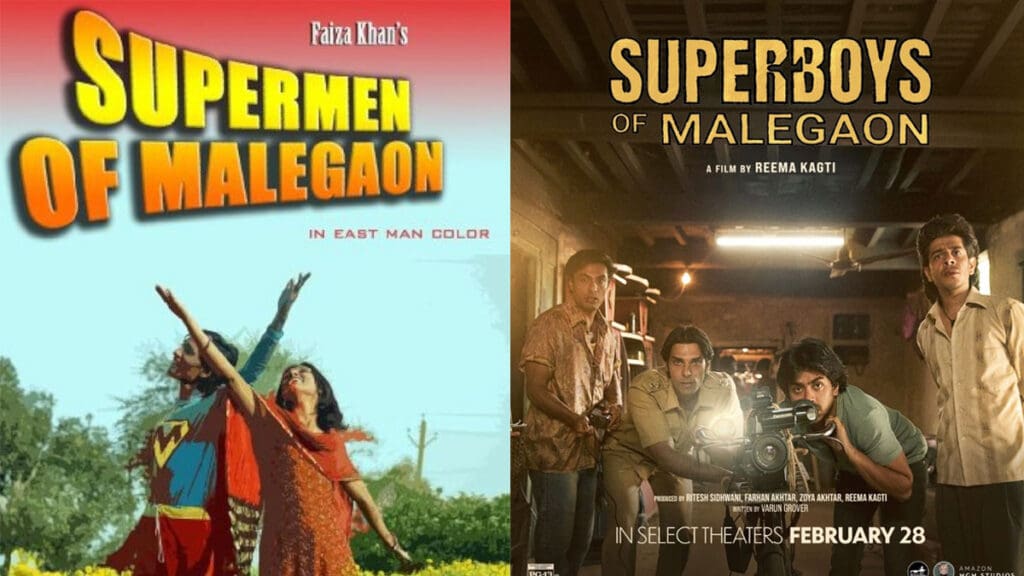
Cinema, at its best, is an act of discovery—a way to reveal untold stories, amplify unheard voices, and explore cultures beyond mainstream narratives. Faiza Ahmad Khan’s celebrated documentary, Supermen of Malegaon (2012), did precisely that. It offered an authentic, heartfelt portrayal of a town’s passion for cinema, honestly capturing Malegaon’s people’s struggles, aspirations, and resilience.
Enter Superboys of Malegaon , a film emblematic of mainstream Hindi cinema’s exploitative tendencies—appropriating genuine experiences into sanitized narratives.
Superboys of Malegaon fails ethically and creatively, offering no fresh perspective while recycling Khan’s original vision. The filmmakers behind Superboys claimed “life rights” yet sidelined Khan when she sought acknowledgement, providing only a perfunctory shout-out at the film’s end—masking intellectual theft. This echoes the controversy involving Dalit writer Yashica Dutt, whose work was appropriated without credit in the series Made in Heaven. Powerful creators (also the same) behind these productions repeatedly draw from marginalized voices without meaningful acknowledgement, silencing concerns when challenged.
Such incidents highlight mainstream Hindi cinema’s transactional activism—superficially engaging marginalized spaces for fleeting relevance, prioritizing optics over authenticity. Some argue that under a politically charged climate with a right-wing fundamentalist government at the centre, this diluted portrayal is the best achievable representation—but accepting superficial representation as an acceptable standard of progress only normalizes mediocrity and stifles genuine change, further entrenching injustice rather than challenging it.
Erasing Malegaon’s complexity
Supermen of Malegaon succeeded precisely because it didn’t shy away from reality. Malegaon is more than just a quirky small town—it’s a working-class Muslim community shaped by poverty, systemic discrimination, and communal violence, including devastating bomb blasts in 2006 and 2008, initially blamed on local Muslims but later linked to Hindu nationalist groups (such as those implicated in investigative reports and legal proceedings, including the Malegaon blasts cases, as detailed in various court judgments and media investigations). This complex history has continued to profoundly impact residents, whose filmmaking is not merely artistic expression but an act of resistance and survival.
However, Superboys strips away these critical layers, presenting Malegaon as an optimistic yet sanitized locale devoid of historical context or socio-political nuance. Even the town’s distinctive dialect—a rich blend of Marathi, Urdu, and Dakhani—is diluted to a more palatable version. The film carefully constructs picture-perfect frames, evading the filth and squalor that define the neglected streets of Malegaon. This visual sanitization is emblematic of the state’s apathy towards Muslim ghettos—neighbourhoods that are frequently labelled ‘Pakistan’ as a means of deliberate alienation and justification for withholding even the most basic amenities.
Christoph Jaffrelot and Laurent Gayer, in Muslims in Indian Cities, document the systemic oppression and deprivation faced by Muslims in these spaces, reinforcing how Superboys dilutes Malegaon’s reality into an aestheticized, palatable narrative for mainstream consumption.
While some applaud the mere presence of Muslim characters, depicting a predominantly Muslim town without engaging its realities constitutes tokenism, not meaningful representation. Authentic storytelling demands acknowledging the community’s lived experiences, struggles, and resilience—precisely what Superboys avoids.
Flattening reality
Ironically, Superboys of Malegaon, despite proclaiming, “Writer baap hota hai,” suffers from a weak screenplay devoid of the sweat, grime, and authenticity central to Malegaon’s sole filmmaker featured in the film, Nasir Shaikh.
Excessive close-ups, overly polished aesthetics, and sanitized set designs further detach the film from reality, undermining grassroots storytelling. Casting choices deliberately select bodies that cannot represent those that labour—bodies that do not carry the marks of a lifetime of struggle, calloused hands, or the weight of exhaustion.
The film’s music, rather than reinforcing the struggles of Malegaon, renders them more palatable, smoothing over the jagged edges of survival. Crucially, the plotline completely erases a key detail from Faiza Ahmad Khan’s documentary—that every child born in Malegaon sleeps to the lullaby of the working mill. The hum of the power looms is the constant soundscape of the town, an unbroken rhythm of survival and labour. Superboys silence this ever-present industrial echo, replacing it with a more sanitized, digestible version of struggle that aligns with Hindi cinema’s broader tendency to aestheticize hardship while stripping it of its deeper socio-political implications.
Additionally, Superboys completely sidesteps critical caste dynamics influencing Malegaon’s filmmakers, isolating characters from the complex social hierarchies shaping their reality. This omission reflects mainstream Hindi cinema’s broader reluctance to engage meaningfully with caste or class, further flattening the film’s portrayal.
Industry machinery of mediocrity
Mainstream Hindi cinema’s insular ecosystem—an interconnected network of privileged filmmakers, critics, and cultural commentators—enables such mediocrity. Films like Superboys evade genuine criticism because their perception is managed by an influential elite. Glowing reviews, interviews, and festival accolades form a self-sustaining validation loop disconnected from authentic evaluation, shielding Superboys from any meaningful critique. Instead of being judged against the documentary it so evidently draws from, or the socio-political realities it claims to depict, the film is celebrated within elite industry circles that determine cinematic ‘success’ on the basis of marketability rather than integrity. The same privileged class that overlooked Faiza’s Supermen of Malegaon, now eagerly praises its sanitized counterpart.
Ultimately, Superboys of Malegaon isn’t a tribute—it’s appropriation. Mainstream Hindi cinema frequently silences creators lacking resources to challenge this imbalance. The filmmakers had the opportunity to respectfully acknowledge Khan’s vision but instead rebranded it as their own, altering the title likely for legal convenience rather than ethical accountability.
Contrasting this with other films that have successfully adapted documentary narratives into feature films, one can observe how respectful adaptations can retain the depth and authenticity of the original. For instance, Joshua Oppenheimer’s The Act of Killing (2012) directly influenced the narrative choices of the Indonesian feature film Solo, Solitude (2016), which recontextualized the atrocities explored in the documentary through a more personal fictionalized lens while preserving the socio-political depth. Similarly, City of God (2002), though not a direct remake, was heavily inspired by real-life events documented in News from a Personal War (1999), translating raw documentary insights into an electrifying yet authentic cinematic experience.
In contrast, Superboys strips away the very essence that made Supermen of Malegaon so compelling. Where films like Solo, Solitude and City of God retained the unsettling truths and urgency of their documentary counterparts, Superboys prioritizes aesthetics over authenticity, sanitizing uncomfortable truths for a wider audience. By ignoring the socio-political fabric that shaped Malegaon’s filmmakers, it reduces lived experiences to an easily consumable narrative devoid of the structural forces that shape them.
In a just world, such dishonesty would have consequences. Unfortunately, powerful creators routinely rewrite narratives without accountability. To experience the magic of Malegaon in its raw and real form, watch Supermen of Malegaon—a film that not only respects its subjects but builds a narrative that rejects neatness and celebrates their wins—a film that authentically respects its subjects, allowing their voices to be genuinely heard. Superboys, by contrast, reminds us of mainstream Hindi cinema’s continued failure toward meaningful representation.
Zeeshan Hasan Akhtar is a Mumbai-based theatre practitioner and screenwriter whose work interrogates identity, caste, class, and memory through intimate yet politically charged storytelling.
source: http://www.maktoobmedia.com / Maktoob Media / Home> Features / by Zeeshan Hasan Akhtar / March 21st, 2025
Nizamabad Town (Azamgarh District) UTTAR PRADESH / Mumbai, MAHARASHTRA :
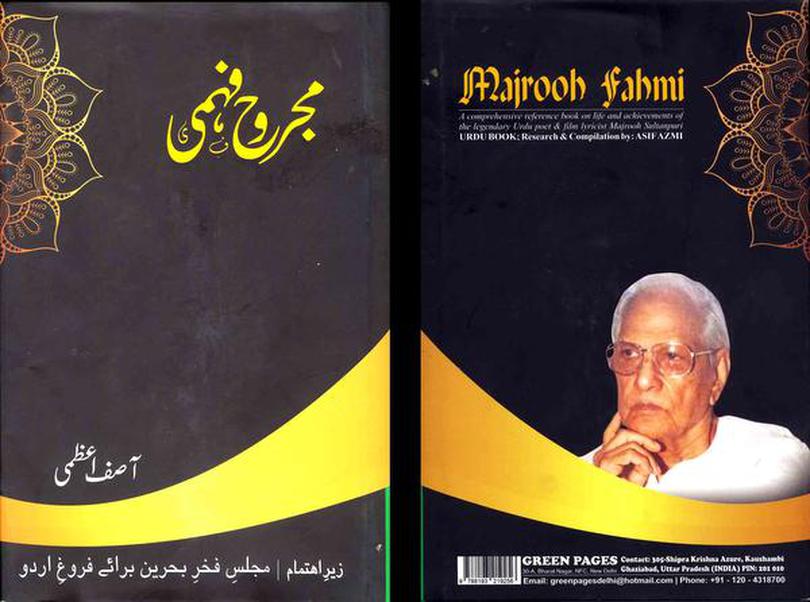
“Majrooh Fahmi” explores different layers of the celebrated poet’s luminous legacy
Majrooh Sultanpuri
Can a poet write more than 3000 songs hummed by millions without squandering his aesthetic subtlety and creative dexterity, partially? Does his ghazals, not many in numbers, expand and reinvent matrix of the traditional ghazal and go beyond the insatiable world desire? Can one juxtapose the well-wrought vocabulary of ghazal with the quintessential aesthetic sensibility and modern-day longing in a new idiom? These are the pertinent literary questions that are affirmatively answered by Majrooh Sultanpuri whose birth anniversary is being celebrated across the country, and this is what aptly articulated by a promising literary enthusiast and writer Asif Azmi in his astutely edited book “Majrooh Fahmi” that appeared recently.
Divided into three equally important sections, the book comprising 600 pages seeks to explore different layers of Majrooh’s luminous legacy with a marked sense of critical acuity. It tries to capture the brilliance of a poet who got wide acclaim both in literary circles and the film world. The book, through its discerning articles, zeroes in on Majrooh Sultanpuri’s oeuvre that remains unseen till date.
Not many Urdu poets can vie with Majrooh as far as literary acclaim and popularity are concerned, but it was hardly measured up to the expectation of the poet who remained disenchanted with the critics. It prompted Asif Azmi to initiate a critical dialogue to locate Majrooh in the larger collective consciousness, and the book also seeks to understand why his immensely popular film songs overshadow his awe-inspiring poetry.
Majrooh’s intent of creating new semantic space by using traditional metaphors and motifs was erroneously credited to Faiz and critics eternalised the critical injustice.
Majrooh has a point, but one must also realise that his poetic journey spanning over six decades produced less than 50 ghazals and such a small work of art cannot subvert the archaic form and cliché-ridden thematic mannerism of ghazal.
Spelling out the contours of his critical gaze, editor Asif Azmi says “One of the greatest exponents of the contemporary ghazal, Majroooh is yet to get his due even at the time of his 100th anniversary. It betrays a deep-rooted prejudice or a wilful ignorance.”
He, again, rightly asserts that Majrooh played a pivotal role in shaping popular Indian literature and popularising Urdu at mass level. Every notable Urdu critic has made a critical appraisal of his work and a plethora of books and special issues have appeared on his art.
Critical evaluation
The voluminous book is certainly more than a commemorative volume as it is not an assortment of flattering articles, but concentrates on a thorough critical appraisal of the poet. The editor turns attention to the best articles that emerge out of the rubble heap of the assessment of the poet, and the discerning evaluation of prominent Urdu critics such as Sardar Jafri, Mohammad Hasan, Waris Kirmani, Zoe Ansari, Waheed Akhtar, Wahab Ashrafi, Syed Hamid and Sidiqur Rehman Qidwai have been selected.
For Waheed Akhtar, Majrooh, for the first time, used the traditional metaphors of ghazal: morning, night, slaughterhouse, prison, autumn and spring as political symbols and it is Majrooh who made them as the distinctive feature of Progressive poetry.
Zoe Ansari opines that his poetry unravels a nuanced sense of civic lyricism which was not explored by any other poet. Several Urdu scholars castigated Majrooh for his bizarre, declamatory diction meant for instigating people to take up arms for the revolution
The book carries two perceptive essays of accomplished Hindi critics such as Jitender Srivastava and Rakesh Pandey. Mapping out semantic similarities between Kabir and Majrooh, Srivastava quotes a couplet of Majrooh and points out that Majrooh engages himself with the tremendous anti-establishment tradition of Kabir. He urges ordinary people to join him after burning their homes, and he does not address the capitalist and the people belonging to the powers-that-be.
Befitting tribute
The first section of the book puts together the reminiscences of Lata Mangeshkar, Mazhar Imam, Jagannath Azad, Kashmiri Lal Zakir, Ziauddin Shakib, Ali Ahmad Fatemi, Naeem Kauser and his seminal contribution as a lyricist has also been well documented by Nadeem Ahmad and Rashid Anwar, and S.S. Bhatnagar Shadab.
Delineating his contribution to films which fetched him the Dadasaheb Phalke Award, Majrooh asserts, “I have no hesitation in saying that I, along with O.P. Nayyar, successfully used innumerable Persian and Urdu words and gave nearly 20 new words to the vocabulary of film songs. I invented a unique style with S D Burman which has been described as romantic comedy. It was widely believed at that time that duet songs would not become famous, but I wrote many duets that became immensely popular.”
The book is a befitting tribute a poet who creatively explored various genres including qawwali, bhajan, cabaret, folksongs and ghazal with remarkable ease and Asif deserves accolades to acquaint us with a world of the poet which is not shaped by hatred, suspicion and delirium.
source: http://www.thehindu.com / The Hindu / Home> Books> Authors / by Shafey Kidwai / May 16th, 2019
The Deputy Commissioner of Wokha district, Dr. Manazir Jeelani Samoon will be among the awardees, who will receive the Election Commission of India’s National Awards 2018 for outstanding election-related activities during the elections held in 2018.
Chief Minister Neiphiu Rio congratulated Samoon for the achievement. “Congratulations Dr. Manazir Jeelani Samoon, IAS @DcWokha #Nagaland who will be conferred with National Awards 2018 for smooth conduct of elections, by the #ElectionCommissionOfIndia, on National Voters’ Day, at Delhi, by the Honourable President of India…” tweeted Rio on his Twitter handle.
An IAS officer of the Nagaland cadre, Samoon will receive his award in the ‘general category’ on the occasion of National Voters’ Day on January 25. The President of India will confer the awards at a ceremony to be hosted at the Manekshaw Centre, Delhi.
source: http://www.morungexpress.com / The Morung Express / Home / by Morung Express News, Dimapur / January 24th, 2019
I found that the journey from East Pakistan to India is seen in a completely different light – unlike in Assam.
Design | Rubin D’Souza
Earlier this month, I was on my way to the India-Bangladesh border in West Bengal on a reporting assignment.
As I crossed the outskirts of Kolkata and took the Jessore Road, ancient trees swam into view. Our driver, Swapan Kumar Shikari, got talking. “These are very old trees,” he told me. “They guided millions of refugees from East Pakistan who were fleeing the [1971 Bangladesh liberation] war.”
Jessore Road is a historical refugee route, connecting Kolkata and Khulna in present-day Bangladesh, and the flight of terrorised people on this road in 1971 is now part of collective memory. “Most people who you will meet, they came here in 1971 or after that,” Shikari said, pointing to the houses and paddy fields on both sides of Jessore Road.
A similar journey is part of my history too. More than a hundred years ago, our forefathers, mostly peasants, migrated from the Mymensingh district of undivided Bengal to Assam – they were not fleeing violence, but following the instructions of the British colonial power.
Many of them tried to assimilate with the mainstream Assamese society. They not only started to read and write in Assamese but also initiated campaigns to identify themselves as “Assamese speakers” and “Assamese” in the 1941 census. Over decades, however, even our best efforts have not led to acceptance from Assamese society.
And in the process, we have become wary of recognising our roots – on the other side of the border.
For good reason. The rise of Assamese sub-nationalism has led to Muslims of Bengali origin being vilified as “illegal immigrants” from Bangladesh – even though many of them migrated years before the creation of India.
An anxiety, if not paranoia, about outsiders has taken centre stage in Assam and shaped politics in the state for the last six decades. The rise of Hindutva in Assam has only made our lives more precarious.
But as I began my interviews in Thakurnagar, the seat of the Matua order in North 24 Parganas district, I found that the journey from East Pakistan to India is seen in a completely different light here.
The Matuas, an influential religious order consisting almost exclusively of Namashudra Dalit immigrants from Bangladesh, are open about their migration history and are not afraid to speak of their origins.
“My family came here between 1980 and 1985,” said a resident of Thakurnagar. “There is nothing to hide. People in West Bengal have accepted us. Even if they don’t accept us, we don’t have anywhere else to go. Lakhs of people fled, and the local Bengali people not only welcomed us but also gave shelter and showed empathy.”
If he were in Assam now, he would never speak this openly. “You would have been picked up by the border police any day,” I told him.
Indeed, the state in Assam has come up with several mechanisms, from foreigners’ tribunals to the National Register of Citizens, to detect “illegal” residents. This institutional suspicion has taken a toll on the Bengali community in Assam, both Muslims and Hindus.
I have been reporting on the citizenship crisis in Assam for the last five years. Minor errors in documents or the inability to prove they are the children of their parents through documentary evidence have led many people to “fail” their citizenship test.
The plight of Bengalis in Assam was familiar to those I interviewed. Indeed, a few years ago, residents of West Bengal were spooked at the prospect of the National Register of Citizens being carried out on a nationwide scale, as suggested by the Union home minister Amit Shah.
On the last day of my reporting assignment, a Kolkata-based social activist from the Matua community had several questions for me about the National Register of Citizens.
I told him how the majority of Bengali Muslims in Assam supported the idea of the National Register of Citizens. Since they are required to produce papers in every aspect of life to prove their citizenship, they were not anxious. They knew they could produce the documents that could rid them of the lifelong “Bangladeshi tag.”
The Assam National Register of Citizens ended up excluding 19.06 lakh people, from Hindus to Muslims, from natives to those with a migration history. They are on the verge of statelessness and they now have to prove their citizenship before the tribunals, the last chance before being declared as non-citizens.
I told the Matua leader that if the National Register of Citizens came to West Bengal, those who came after 1971 would face hurdles having their names included. But while Hindu migrants may be protected by the Citizenship Amendment Act, Muslims may still have to prove their citizenship.
“Yes, the words ‘infiltrators’ and ‘illegal immigrants’ will only be associated with Muslims,” he agreed.
Citizenship is a federal subject in India, and the Union government makes the laws for it. But how a state responds to the spectre of illegal immigrants depends on its own history and culture.
In Assam, both the state and the citizenry are suspicious about migrants.
But other regions show us that another way is possible. In West Bengal, the state and its people not only accept migrants wholeheartedly but also show compassion for their history.
Most recently, the tiny northeastern state of Mizoram gave shelter to refugees from Myanmar and Bangladesh, describing them as their kith and kin.
But in Assam, with an aggressive form of Hindutva becoming dominant, it is unlikely that a Bengal-origin Muslim like me will find the courage to look back at my history – without having to pay a price for it.
source: http://www.scroll.in / Scroll.in / Home> Backstory 2024 / by Rokibuz Zaman / December 11th, 2024
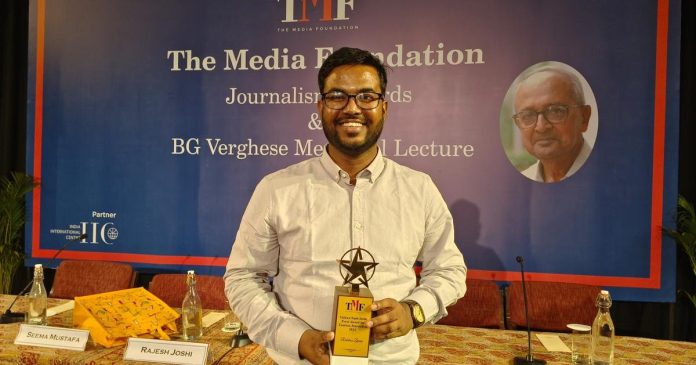
Scroll journalist Rokibuz Zaman has been honored with the prestigious 2024 Vishwa Nath-Delhi Press Award for Fearless Journalism for his unwavering coverage of the state of minorities in Assam.
The jury praised Zaman for his “consistent and steadfast” reporting, stating that he has shown “exemplary courage in relentlessly pursuing stories to their logical conclusion, despite challenges on the ground.” His investigative journalism has shed light on the systemic discrimination against minorities in Assam, particularly regarding land rights and forced evictions.
Zaman’s reports have exposed the exclusion of minorities from rural landless schemes and the eviction of Muslim families from railway land in Assam’s Morigaon district. The jury commended his “exceptional courage in speaking truth to power” and his commitment to ethical journalism.
The award, instituted by The Media Foundation in memory of Delhi Press founder Vishwa Nath, aims to uphold freedom of speech and journalistic integrity.
The foundation also awarded the 2024 Kamla Mankekar Award for Journalism on Gender to BehanBox’s Priyanka Tupe and the Chameli Devi Jain Award for Outstanding Woman Mediaperson to The Caravan’s Jatinder Kaur Tur.
source: http://www.radiancenews.com / Radiance News / Home> Awards> Latest News / by Radiance News Bureau / March 23rd, 2025
Dr. Mehdi Hayat Shahi with research team comprising Dr. Musheer Ahmad, Arif Ali, Ms. Basree at Brain Research Centre
Aligarh:
In a ground-breaking achievement, the Interdisciplinary Brain Research Centre (IBRC), Faculty of Medicine, Aligarh Muslim University (AMU), has been granted an Indian patent for a novel compound named ARSH-Q. The compound is the result of rigorous research and extensive screening conducted by the Centre in collaboration with the Department of Applied Chemistry.
ARSH-Q has shown exceptional potential in inhibiting brain cancer cells by targeting stem cells, which are major contributors to resistance against radiation and chemotherapy. Given the high recurrence and mortality rates associated with brain cancer, this discovery brings significant hope for more effective treatment options.
Led by Dr. Mehdi Hayat Shahi, the research team, including Dr. Musheer Ahmad, Arif Ali, Mr. Mohd. Muzzammil, Ms. Basree, and Mr. Swalih P., developed ARSH-Q after screening numerous synthesised compounds. Dr. Shahi, whose research on brain tumours has been ongoing since 2005, focused extensively on the Sonic Hedgehog cell signalling pathway – a critical factor in stem cell-mediated brain cancer and other malignancies.
The team’s objective was to develop a compound that surpasses the efficacy of Temozolomide, the current standard chemotherapy drug. After extensive efforts, they successfully synthesised ARSH-Q, which has demonstrated exceptional results in suppressing brain cancer cells in initial studies.
Dr. Shahi and his team are now set to advance their research through pre-clinical studies to validate the efficacy of ARSH-Q. The goal is to develop the compound as either a standalone therapeutic agent or an adjuvant to existing chemotherapy treatments for brain cancer.
The team expressed gratitude to the Vice-Chancellor of AMU, the Dean of the Faculty of Medicine, the Convenor of the IPR Cell, and the Coordinator of IBRC for supporting the patent filing process and facilitating this significant research endeavour.
source: http://www.radiancenews.com / Radiance News / Home> Focus / by Radiance News Bureau / March 22nd, 2025
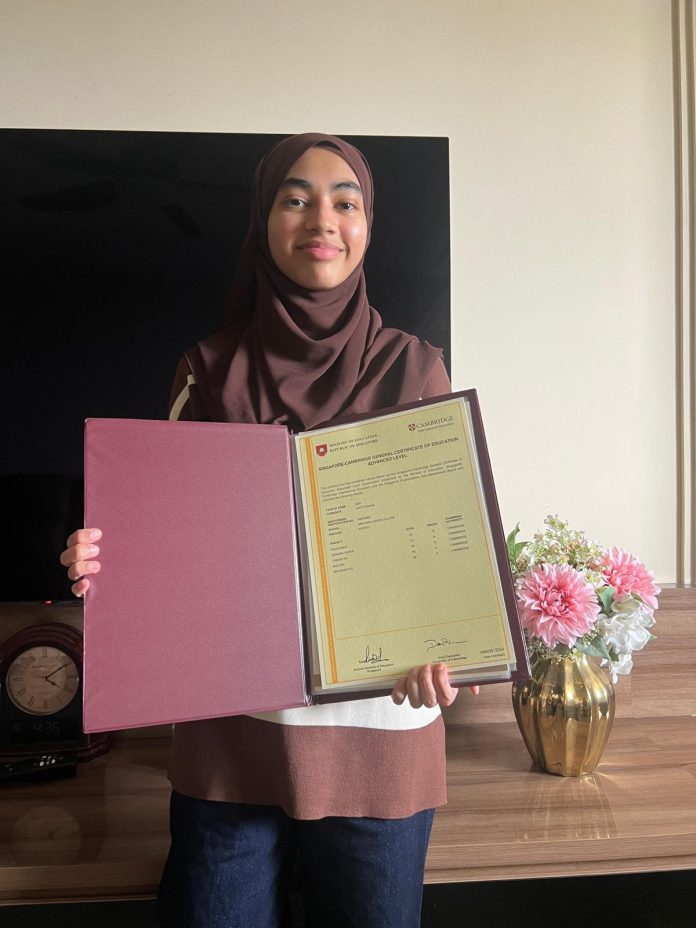
Ms. Zainab Irfan Sheth, daughter of leading emergency physician of Singapore General Hospital Dr Irfan Abdurrahman Sheth and Muniba Irfan Sheth, a native of Modasa Town of Gujarat State of India, has achieved maximum achievable rank points which are 90/90 in 12th grade exams of Singapore. She is now eligible to get admission in all the faculties including the reputed medical school of Singapore for further studies. May Allah bless her to get more and more success in future endeavours, too.
Ms. Zainab’s maternal uncle Dr Iftekhar Malek, who is a practising doctor in Modasa for many years, says that her achievement is a proud moment for our family as well as for the whole of the Muslim community.
Her other maternal uncles, Dr Shahid Malek and Dr Shakib Malek, are also practising Anaesthetist and Orthopaedic Surgeon respectively, providing services in their fields.
Zainab’s grandfather Late Abdurrahman Sheth, was a famous CA and her grandpa Late Nisharahmed Malek was an educationist associated with various educational institutions in Modasa.
On this occasion of Ms. Zainab’s brilliant success in academics, the whole family is proud and happy, expressing gratitude to Allah Subhanahu wa Ta’ala for the same.
source: http://www.radiancenews.com / Radiance News / Home> Focus> Pride of the Nation> Markers of Excellence / by Radiance News Bureau / February 24th, 2025
Sayani not only hosted Binaca Geetmala for 42 years, he produced more than 50,000 radio programmes, including the popular Bournvita Quiz Contest, and managed to transition from radio to television with seamless ease.
Ameen Sayani, who passed away at the age of 91 due to a heart attack. | Photo Credit: Hardeep Singh Puri-X
He painted with the spoken word and ended up filling our canvas with rich memories of his mellifluous voice and popular songs of Hindi cinema. A word that dropped off his lips got a life, a lilt, even destiny of its own. Listening to Ameen Sayani, who passed away in Mumbai following a heart attack on Tuesday evening, was like serenading joy. The Binaca Geetmala he hosted with much relish and not a little chutzpah gave millions of weary listeners of first, Radio Ceylon, and then Vividh Bharati, a reason to smile at the end of the day. For a brief while every week, from 1952 to 1994, it seemed there was no sorrow in life, and the music of life itself had an unending rhythm of its own. Until it all came to an end when Sayani, who had been battling age-related issues for a few years, breathed his last at HN Reliance Hospital, leaving his fans speechless.
The tributes came in thick and fast with Prime Minister Narendra Modi tweeting: “Shri Ameen Sayani Ji’s golden voice on the airwaves had a charm and warmth that endeared him to people across generations. Through his work, he played an important role in revolutionising Indian broadcasting and nurtured a very special bond with his listeners.” Devendra Fadnavis, Deputy Chief Minister of Maharashtra, stated, “He had an equally sweet voice as the songs.” Seasoned actor Raza Murad called him “the badshah of radio just like Lata Mangeshkar was the badshah of music”.
The praise was hard-earned. Sayani not only hosted Binaca Geetmala for 42 years, he produced more than 50,000 radio programmes, including the popular Bournvita Quiz Contest and the well-received S. Kumar ka Filmi Muqadma besides Saridon ke Saathi, and managed to transition from radio to television with seamless ease. He composed around 19,000 radio jingles, too. Such was the charm of Sayani that playback singers, music directors and film stars, all wanted their songs to be featured on his countdown show. Once renowned film director Basu Chatterjee wondered aloud what did he have to do for the songs of his films to make it to Binaca Geetmala! His prayers were answered, and the songs of both Chhoti si Baat and Rajnigandha earned repeat slots in Binaca Geetmala in the 1970s.
There is an interesting story behind Binaca Geetmala, and how some 37 years later, it became Cibaca Geetmala with a jingle announcing, “Wohi gun, wohi kaam, Binaca ka sirf badla hai naam” (same values, same work, only Binaca’s name is changed).
Back in the early years of Indian Independence, there was a pronounced effort to promote classical music. The Information and Broadcasting Minister B.V. Keskar did not have much regard or space for Hindi film songs on All India Radio (AIR). With AIR limiting itself to merely 10% for Hindi cinema, Radio Ceylon, then riding waves of popularity, stepped in with its combination of English, Tamil and Hindi music. Sayani was to make his first splash not in what was then Bombay but Ceylon.
It so happened that an American businessman, Daniel Molina, hired Hamid Sayani, Ameen’s elder brother, to run the operations at Radio Ceylon. The elder brother, in turn, brought in his sibling, Ameen, then barely 20, to host a music show. The programme was sponsored by a Swedish company Ciba, the manufacturers of Binaca toothpaste. The name Binaca was prefixed to the ‘Geetmala’. It played popular songs of the week though it would be another couple of years before the countdown started. And Sayani devised a vocabulary all his own.
Added to his easy, conversational style were terms like ‘paydaan’ or rank. He backed it up with information about the songs and little anecdotes about the films. For instance, he told the listeners how it took 16 years to make Mughal-e-Azam, or how Lata Mangeshkar sang the songs of Satyam Shivam Sundaram at one go. Or why Amitabh Bachchan kept his hand in the pocket during a song from Sharaabi. These were little gems only Sayani, who began his programmes with trademark remark, “Behno aur bhaiyo, main hun apka radio dost Ameen Sayani”, could offer.
He played Hindi film music, the kind which was first available on LPs, then on music cassettes. Yet when he played snatches of it on radio, there was an indefinable charm. Added to the joy was anxiety to see which song would rise to the top in those rather innocent days, and his unique ability to keep the suspense going.
The show shifted to Vividh Bharati in the late 1980s before the curtain fell one last time in 1994. As a tribute, Saregama released a 10 volume compilation called ‘Ameen Sayani Presents Geetmala Ki Chhaon Mein’. It apprised the next generation with the programme’s illustrious history.
Back in the late 1970s, Jnanpith winner Gulzar had penned a timeless song, ‘Naam gum jayega, chehra ye badal jayega, meri awaaz hi pehchan hai’ for the film Kinara. The song, a regular on Geetmala, was widely played at the demise of Lata Mangeshkar. One could play it again for the matchless Ameen Sayani, the Padma Vibhushan winner who gave radio a new identity altogether.
source: http://www.thehindu.com / The Hindu / Home> News> India / by Ziya Us Salam / February 21st, 2024