Monthly Archives: March 2025

ISRO scientist Sabir Alam of Chandrayan-3 fame feels he has miles to go

Chhogra Village (Kathihar District), BIHAR :

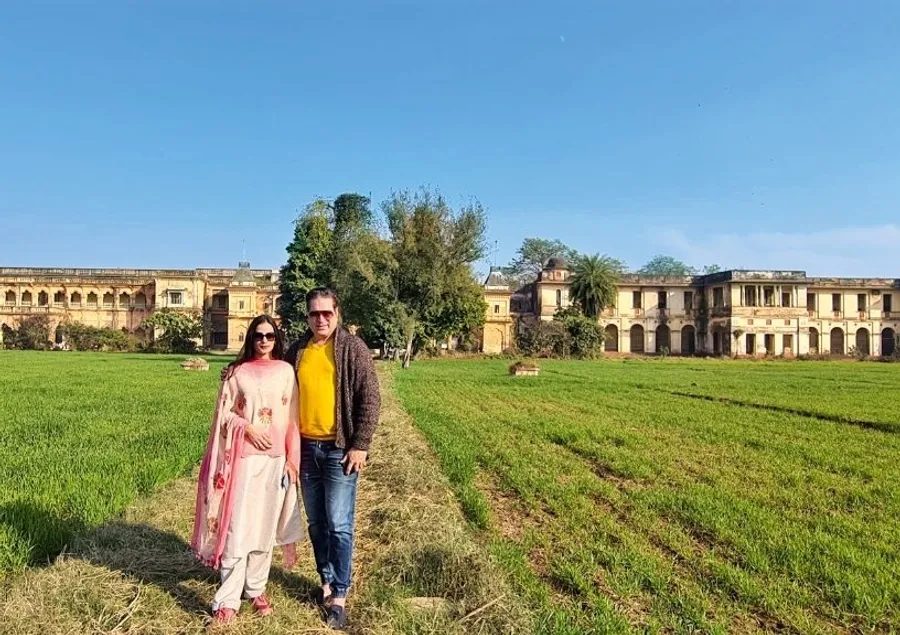
Sabir Alam with his wife

It is the story of a young boy who once wanted to take his parents to the moon. However, for Sabir Alam, the journey from a small village in Bihar to the one in which he was associated with ISRO’s Chandrayan Mission 3, Moon was a destiny chiselled with grit.

Sabir Ali’s story began in the Chhoghra village in Katihar district, 350 km from Patna, Bihar. Son of a primary school teacher from Seemanchal – one of India’s most underdeveloped regions – this young boy turned his limitations into challenges and life happened to him.

Sabir’s father, Harun Rashid, knew the value of a good education but often wondered how to make his son rise in life with his meagre earnings. “With my limited earnings and the struggle to secure quality education for him, it was a challenging journey,” Harun says.

Sabir Alam having chai

Sabir joined his father’s school, where learning was born from passion rather than resources.

When Sabir cracked the Jawahar Navodaya Vidyalaya (JNV) entrance exam, it was a monumental moment. JNV was a lifeline, offering free education to talented students from rural areas.

He joined the JNV in Kolasi, Katihar, and after his 10th-grade exams in 2012, he shifted to JNV, Puducherry.

Sabir also enrolled in a coaching program run by Avanti, an NGO in collaboration with Tata Motors, to prepare students for competitive exams like IIT–JEE, the gateway to some of India’s most prestigious engineering institutions.

He graduated with a B.Tech in aerospace engineering from the Indian Institute of Space Science and Technology (IIST) in 2018 and then joined the Indian Space Research Organisation (ISRO) at the Vikram Sarabhai Space Centre, Thiruvananthapuram, Kerala.
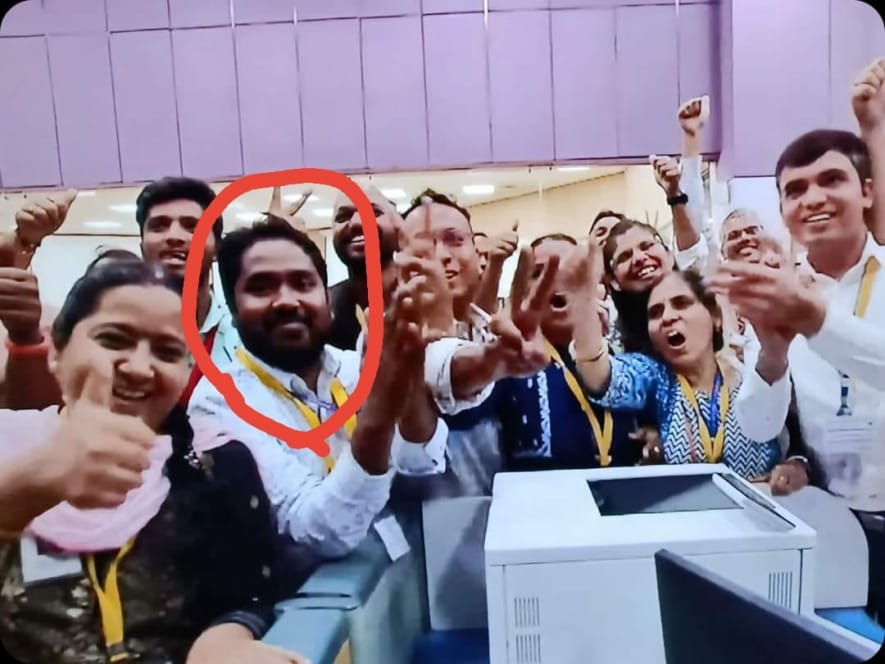
Sabir Alam with fellow scientists celebrating the launch of Chandrayaan-3

Then came the day that would forever etch Sabir’s name in history. On August 23, 2023, when India made its historic landing on the moon’s South Pole as part of the Chandrayaan-3 mission, Sabir stood among the brightest minds who made it possible.

The moment was both joyous and emotional for his family.

“It was like Eid for us,” says Harun Rashid. “People gathered at our house to congratulate us and shower blessings. It felt natural as a young man from a region often associated with poverty and underdevelopment contributed to the country’s successful lunar mission,” he says with palpable pride and happiness.
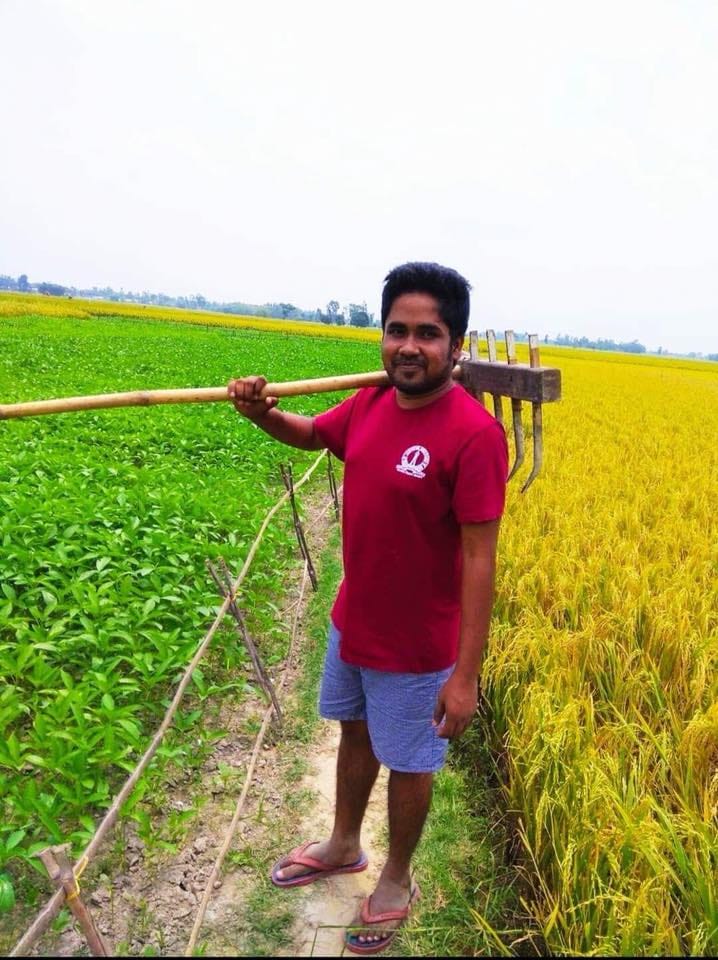
Son of the soil : Sabir Alam in his field in the village

Though his mother, a homemaker, may not fully grasp the enormity of the achievement, she stood in quiet pride, holding back her tears. “As a mother, I cannot put my emotions into words. All I know is that my son has made not just Seemanchal but the entire country proud,” she says, her voice trembling with love and joy.

For the family, Sabir’s rise was not about wealth. “There was no financial investment in his schooling,” his mother said.

Sabir’s education was sustained by the values of hard work, sacrifice, and scholarships. The JNV provided the crucial foundation, and scholarships allowed Sabir to scale the mountain that seemed insurmountable to so many.

Did Sabir’s mother ever imagine he would join ISRO or contribute to such a prestigious national mission? I asked her. “I always knew he would succeed,” she said. “He often joked during his visits home that he would take us to the moon one day.”

Sabir Alam showing a model of the lander at the surface of the moon to his son at ISRO center

Mumtaz Naiyer, a scientist based in the United Kingdom, shares a unique bond with Sabir. Hailing from the same region, he always acknowledged Sabir’s abilities. “Sabir has always been extraordinary. He stands out from other youth in Seemanchal because of his approach, temperament, and determination to learn and succeed. Thanks to Sabir, we, the Surjapuri-speaking (local dialect of the region) people, Seemanchalis and Biharis, are now part of history,” Naiyer says.

“This will certainly inspire the youth of this underdeveloped region to dream big,” Naiyer adds. “I also want to thank Sabir’s parents, as their son has brought immense pride to Seemanchal.”

Yet, despite all his achievements, Sabir has never seen himself as someone extraordinary. In a post on Facebook’s page ‘Humans of Seemanchal’ he wrote, “Honestly, I do not feel that I have achieved anything extraordinary or made any significant breakthrough in my field. I do not need to talk much about Seemanchal – its literacy rate already tells its story. I was just fortunate to find a way around the high cost of education.”

For Sabir, it was never about the prestige of joining ISRO. It is simply a milestone. “There are numerous challenges for those from backward areas, but with dedication, hard work, willpower, and, most importantly, awareness, you can overcome them,” he advises.

source: http://www.awazthevoice.in / Awaz, The Voice / Home> Stories / by Tarique Anwar, New Delhi / February 13th, 2025

An ode to a visionary

JAMMU & KASHMIR :

Documentary filmmaker from Kashmir, Bilal A Jan on his latest film on social worker J L Kaul.

Inspiring story – Filmmaker Bilal Jan on the set with J L Kaul. / Special arrangement

There was a little buzz around a film on Jawahar Lal Kaul, a visually challenged man who made light of his own limitation to dive into social work. As he strived to make the lives of those around him in Kashmir better, Kaul himself was awarded the Padma Shri.

Kaul’s incessant struggle inspired Bilal A Jan, a documentary filmmaker from Kashmir, to make a film on the man who lost his eyesight in tragic circumstances. An attack of smallpox at the age of five left him visually impaired.

Jan cannot stop talking about Kaul and his work and what motivated him to direct J.L. Kaul: A Man of Action .

“I was moved by the unending struggle of Kaul not because he is a native of Kashmir but because of his enthusiasm for social work, despite being visually challenged. He is a goal-oriented person. Internal and external conflicts and heartbreaking hardships have not dimmed his enthusiasm or vision of the world,” says Jan in a telephonic chat.”

The film was shot in Srinagar, Amritsar and Delhi, where Kaul had set up Training and Rehabilitation Centre for the Blind in 1967. Today, the All India Conference of the Blind, which he founded, helps run a modern school for visually impaired children, an audio library besides Braille equipment, banking and pension for the elderly.

The 30-minute documentary took a year to complete. The reasons for the long gestation period are attributed to dearth of finance and the challenges in working with a visually impaired person.

“The biggest challenge was to find a financier. The second challenge involved interacting and understanding the life and struggle of a visually impaired man, and managing visually impaired individuals during the filming process. For me as a director, it was the first time I was tackling a subject around disability. In the past, I have worked extensively with social issues,” says Jan.

Of course, it did not help that Kaul, the protagonist of the film, was based in Delhi. “Kaul sahab’s work is spread across India. So I had to cover other locations too. I shot the film in phases rather than at one go,” he adds.

The film, produced by National Film Development Corporation, Mumbai, has been selected for the 16th International Documentary Film Festival of Kerala, in the short documentary focus section.

The festival opens on July 21. For Jan, it is a homecoming of sorts. His film, Daughters of Paradise , had also been at the Kerala Film Festival in 2018.

source: http://www.thehindu.com / The Hindu / Home> Today’s Paper> Miscellaneous> Others / by Ziya Us Salam / July 19th, 2024

Dayar-e-Madina (1975)

INDIA :

Nazima in Dayar-e-Madina

Till about 30 years ago we used to have a flourishing devotional movie culture in the country. These films were usually made on a shoe string budget with non-stars. Despite their amateurish direction, hackneyed plots and tacky sets, the films did well at the box office largely because of a couple of hummable devotional songs which every film packed in, and a segment of the oft unlettered audience that accepted every thing in the name of faith. If in the ‘60s, we had a film like “Jahan Sati Wahan Bhagwan”, it was followed a few years later by “Ganga Sagar” and “Har Har Mahadev”. The biggest though was “Jai Santoshi Maa” which surprised everybody with its record run at the box office. Many in the audience crossed the line between reel and real by bowing in front of the film’s hoardings, bringing along pooja thalis to cinema halls and the like. The devout lived the film.

Parallel to this Hindu devotional stream was a sub stream of Muslim devotionals. If Hindu devotionals were usually released in those parts of the cities where immigrant blue collar workers resided, Muslim devotionals, almost entirely predictably, played at show houses near places of Muslim predominance.

This relation between cinema and demography was unique, and lasted till the time a film packed in enough masala or message to transcend boundaries of class or religion. Something which Hindu devotional “Jai Santoshi Maa” did with felicity. “Mere Gharib Nawaz”, “Niaz aur Namaz” and “Dayar-e-Madina” too reaped a rich harvest at the box office.

Incidentally, keeping in mind that a big chunk of the audience – Muslims – stayed away from cinemas in the month of Ramadan, big banners avoided releasing their films during the time of fasting, waiting for the more celebratory mood around Eid. The Muslim devotionals though ran during this time, the assumption being that these films, like the Hindu mythologicals, were not regarded as entertainment but an extension of faith.

The success of “Dayar-e-Madina” was particularly impressive with the Urdu language film even managing a run at a cinema hall like Chanakya, otherwise renowned for playing the best of Hollywood in Delhi’s super elite zone.

Then, in a fine advertisement for the nation’s secular culture, the film often showed at a cinema a week after it had shown “Jai Santoshi Maa”. At Old Delhi’s Jagat cinema too it had a fine run. The cinema was located close to the historic Jama Masjid with a couple of other masjids in the vicinity.

Director A. Shamsheer’s film had a limited run. However, the local clerics sent in an application to the management of Jagat requesting for an extension to the film. They saw the film, not as a ruse of Satan to lead the faithful astray, but as a vehicle for inner satisfaction.

Why not, the film begins with Qari Mohammed Mewati’s complete azan followed by a little lecture on the five principles of Islam. “The life of Huzur (Prophet) is like the Quran. He practised what he preached and preached what he practised. Zakat is the poor due. Pay zakat, it cleans your wealth,” says the school master in customary fashion before being dragged away by other demands of life.

Soon though the film, with commentary by Kamal Amrohi, changes tracks developing into the timeless tale of “twins separated at birth”. Here, two girls go their own ways after having lost their mother at the time of birth. One is adopted by her aunt, the other stays home. One develops into a believer, the other, in a perfect cliché, is all about fashion, tennis, guys and the like. Yet they manage to meet as lovers, as adults, giving a typical twist to the tale. In between Shamsheer remembers that the film is about belief. So, every now and then, he takes recourse to faith; a verse from the Quran here, a reference to a hadith there.

Not to forget the likeable song “Madad Kijiye Taajdar-e-Madina”. Incidentally, the film’s music by Mohammed Shafi stayed on in the memory of cinegoers long after the film’s bow office showing was over. A couple of cassette-sellers in the neighbourhood of cinema chose to play “Madad Kijiye Tajdaar e Madina” in the voice of Mohammed Rafi to attract the faithful. Interestingly, the female version of the song, by Asha Bhonsle, perfectly melodious, met with a lukewarm reception on the streets of Old Delhi.

The film had enough clichés to last half a dozen such ventures: ghararas, burqas, mushairas, sherwanis, paan-chewing men, age-old havelis with lattice work, etc. That it still worked at the box office says as much about the director’s ability to carry a moth-eaten tale as the viewers’ eagerness to watch a Muslim devotional. Not just “Dayar-e-Madina”, many men and women around Jagat waited for the 1973 film “Alam Ara” to grace the hall. No such luck. They learnt their lesson. So in 1977 when “Niaz aur Namaz” was shown at any hall in the vicinity, they trooped along. A devotional could not be missed.

source: http://www.thehindu.com / The Hindu / Home> Features> Friday Review> Blast from the Past / by Ziya Us Salam / July 09th, 2015

Prakasam district collector leads fight against bonded labour, rescuing victims

Prakasam District (Ongole) , ANDHRA PRADESH :

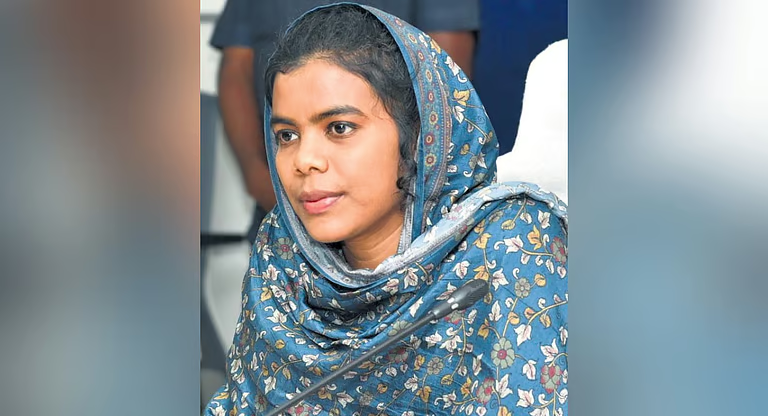
Under Ansariya’s leadership, Prakasam has become the first district in Andhra Pradesh to establish a vigilance committee on bonded labour.

District Collector A Thameem Ansariya IAS

Nellore :

In the dusty villages and industrial pockets of Prakasam, a quiet revolution is underway. District Collector A Thameem Ansariya has made it her mission to eradicate bonded labour, rescuing the exploited and restoring their dignity. With a rare blend of authority and compassion, she is enforcing the law and transforming lives, proving that governance driven by justice can be truly impactful.

Under Ansariya’s leadership, Prakasam has become the first district in Andhra Pradesh to establish a vigilance committee on bonded labour, setting a precedent in tackling the issue. More than a bureaucratic milestone, the initiative is a lifeline for the voiceless, ensuring legal action against violators and rehabilitation for victims.

Her approach is multifaceted—aggressive rescue operations, strict enforcement, and large-scale awareness campaigns. “Every government stakeholder must take responsibility of this issue. We will ensure strict action against violators to make Prakasam free from bonded labour,” Ansariya said.

Recently, officials rescued two minors trafficked from Madhya Pradesh to an aquaculture unit in Karavadi village near Ongole. Stripped of their wages and phones, they were trapped—until Ansariya intervened. She directed Ongole Revenue Divisional Officer Lakshmi Prasanna to lead the rescue, ensuring the children were issued release certificates and reunited with their families.

In another operation, eight workers were freed after being trapped for eight years in a timber unit, while two others were rescued from a shrimp farm after six months of forced labour. These are not isolated but part of a system Ansariya has built—one that combines surprise inspections, swift rescues, and rehabilitation to dismantle exploitation at its roots.

Ansariya believes that prevention is as crucial as rescue. Between February 10 and 16, her administration launched an awareness campaign that reached over 13,404 people. Posters, rallies, and mobile LED displays carried the message that exploitation has no place in Prakasam. Workshops brought workers, law enforcement, and industries together, fostering accountability and equipping vulnerable communities with the knowledge to resist bonded labour traps. “Awareness is our shield,” she said, underscoring her proactive approach.

The Vigilance Committee, chaired by Ansariya, spearheads inspections, legal proceedings, and rehabilitation efforts. Rescued workers receive financial aid and employment support, while offenders face prosecution.

Prakasam Collector Ansariya, a 2015-batch IAS officer, previously served as Srikakulam Municipal Commissioner and Annamayya Joint Collector. She has been married to Srikakulam Collector Manajir Jilani Samoon, she stands as an inspiration to young women aspiring to join civil service, proving that perseverance can shape meaningful leadership.

source: http://www.newindianexpress.com / The New Indian Express / Home> Good News / by D Surendra Kumar / March 09th, 2025

Unraveling The Rich History Of Noor Mahal Palace With Nawab Kazim Ali Khan

Rampur, UTTAR PRADESH :

Nawab Kazim Ali Khan tells the tale of the dynasty, its Raza Library, and years of progressive thinking that expanded the region and its many enterprises.

Luxury realtor Sush Clays takes us to a royal wedding in the Noor Mahal Palace, home to the Nawab of Rampur.

Nawab Kazim Ali Khan tells the tale of the dynasty, its magnificent Raza Library, and years of progressive thinking that expanded the region and its many enterprises.

His obsidian eyes halt you till you reach the twinkle in their midst. You look again, and those deep dimples flanking his wide smile reach right into your heart. And then he speaks: he tells you tales of conquering heroes and lands won and lost; princesses from far lands who made India’s sons and daughters; gemstones and swords that filled coffers; a land, united and forged as one by the many layers of the legacy of the past.

Nawab Kazim Ali Khan, much loved among his friends as Navaid bhai, is one of the most precious custodians of India’s history and some of its invaluable treasures.

Raza library in Rampur is one of the most important repositories of Indo-Islamic learning in South Asia

I met him first as Nawab Sahib, in his full reglia, when he leaned down with his statuesque Pathan grandiosity and said gently, “Call me Kazim.” I was facetiously outraged. “I love calling you ‘Nawab Sahib’,” I spluttered laughing. That didn’t last long. The bonhomie that the nawab exudes makes it hard to retain deference and address him by his title.

This was also the first of many conversations on the history of the Rampur dynasty, rewinding its track through accession and succession, the British Raj and India’s Independence, right back to the Marathas and the Mughals.

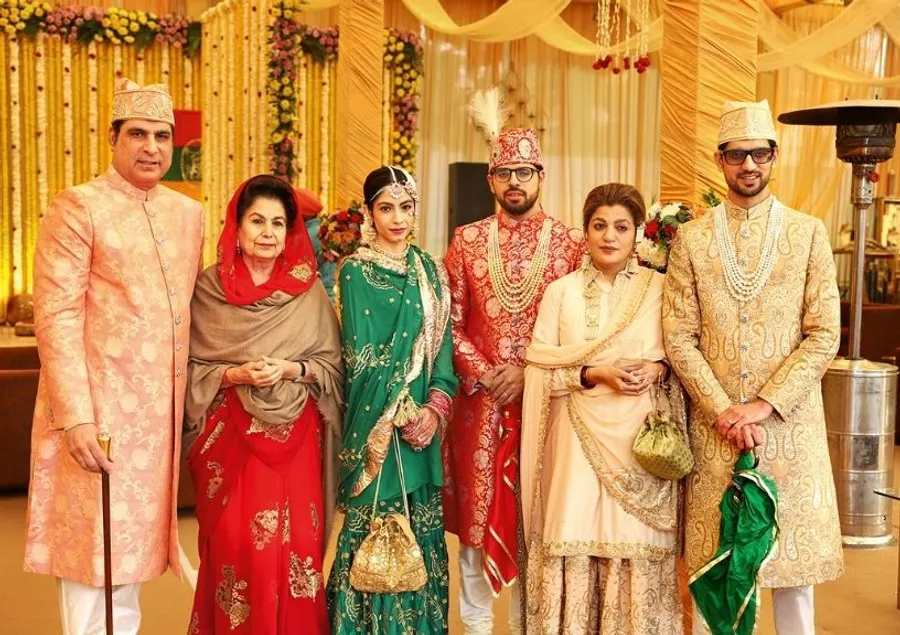
The Rampur royal family bedecked in heirlooms at the wedding

The Rampur state was created by the Rohila Afghan Pathans of Kandahar. The Yusufzai clan were originally traders. Their leader had two sons, Dawood and Kaisaf Khan. This was when the Marathas, a Hindu warrior sect, were fighting back the Mughal dynasty in the subcontinent. They had reached up to what is now northern Uttar Pradesh in victory.

By the 1700s, the Mughals engaged the services of the Pathans and the first battle pitted the Marathas against the Pathans in Fatehganj. The Maratha Peshwas were defeated and pushed down to Gwalior. In honour of this victory, the Mughals gave the Pathans eight districts in Rohilkhand. Dawood Khan moved to India, and this marked the beginning of the Rohila family saga in India. Faizullah Khan, one of the eight grandsons of Dawood Khan, inherited the kingdom of Rampur and was established as its first nawab.

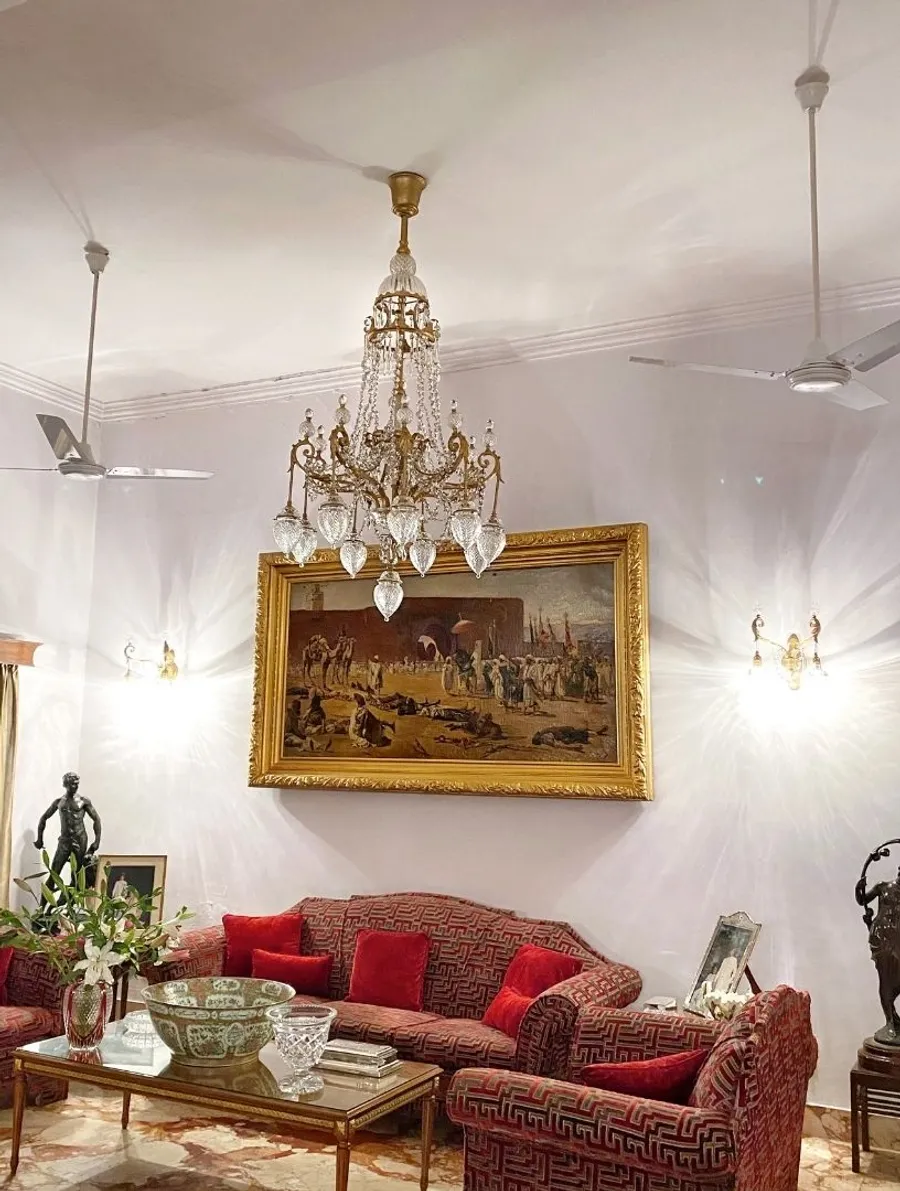
The drawing room in Noor Mahal

During the British Raj, as the city of Rampur expanded, a new undertaking of building the Khas Bagh palace was begun. Built over several years and completed in 1930, it marries a variety of architectural styles. With India’s Independence came a new strain of history into the Rampur family. Nawab Raza Ali Khan was the first to merge his state into the Indian Union in May 1949.

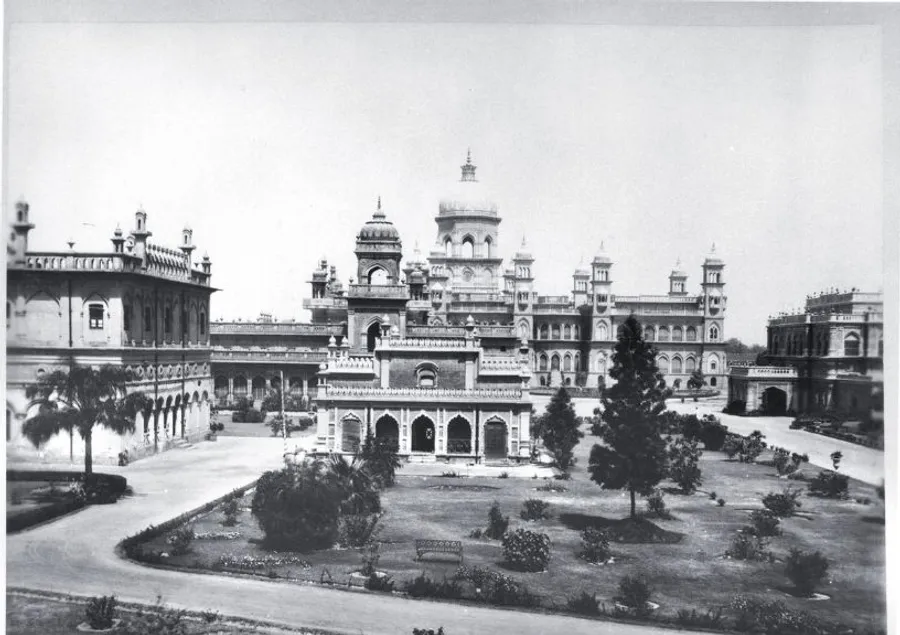
The Raza Library is ensconed in acres of manicured gardens

And finally, in 1960, Noor Mahal, formerly the Viceroy’s representative’s palace, was turned into a haveli—as it stands now—for the birth of Nawab Kazim Ali Khan. He grew up there surrounded by his governess and staff, was fed food cooked in copper vessels, and had a daily appointment between 6 pm and 8 pm with his grandfather in Khas Bagh.

Noor Mahal, where Navaid bhai lives to this day, stands surrounded by his lush never-ending acres of farmland. The haveli holds priceless treasures: intricate vases, jade pieces of pottery, and photographs of the family beautifully installed by Queen Mother Begum Noor Bano and the current queen of Rampur, Begum Yaseen Ali Khan. Built in the classic British Raj style of architecture, with open verandahs circling the palace, Noor Mahal is where the heart of the family resides.

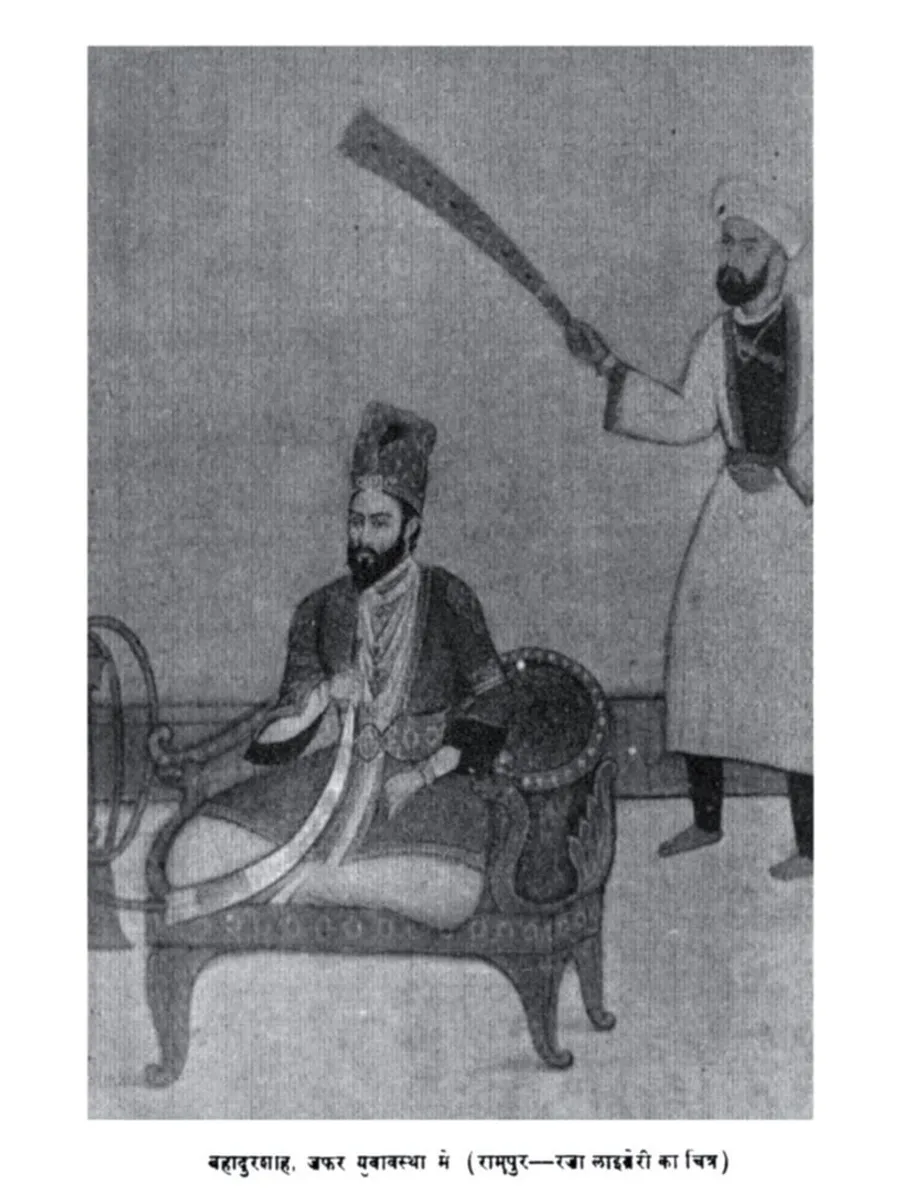
A painting of Bahadur Shah Zafar from the collection of the library

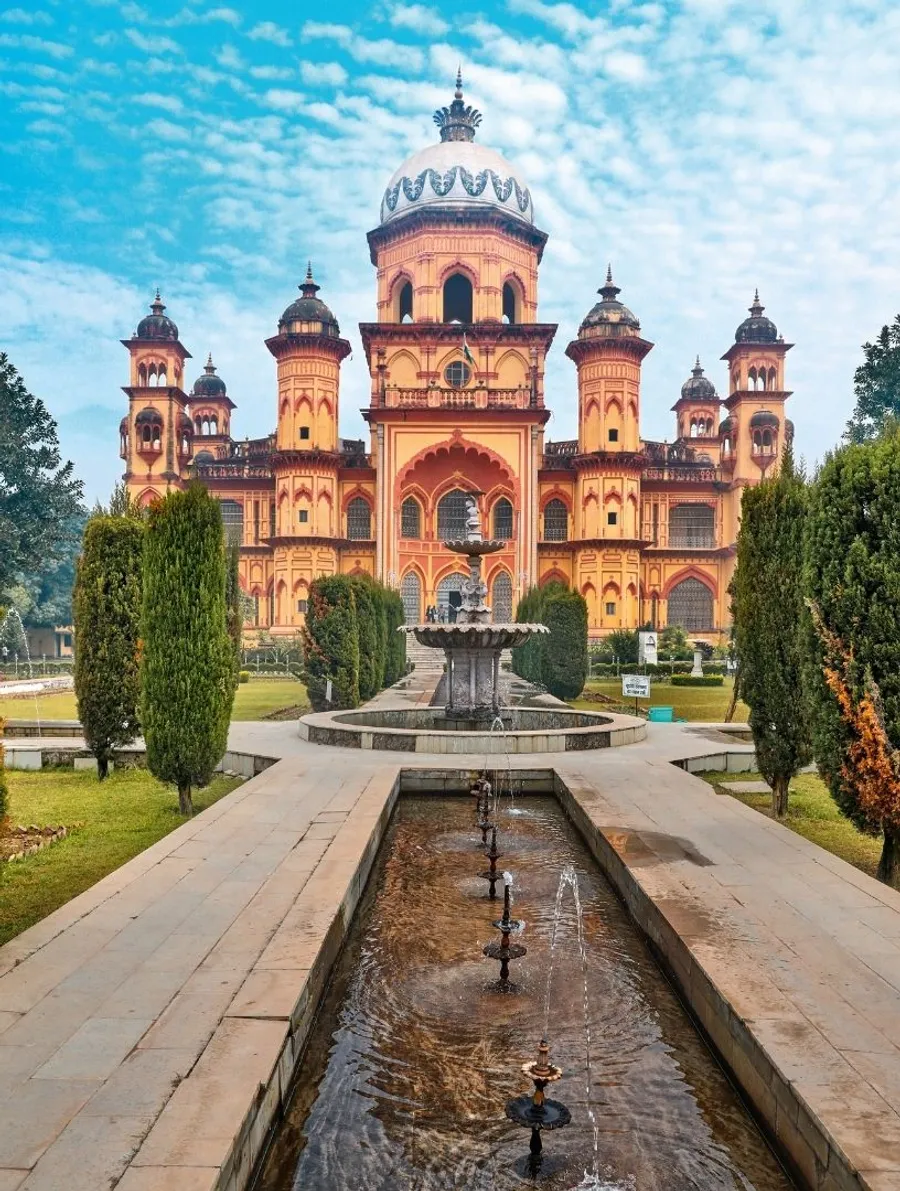
The Raza Library is the crown jewel of the Rampur dynasty. It stands tall and imposing, a precursor to the Indo-Saracenic architectural style, ensconced in acres of manicured gardens. The erudite Rampur nawabs had a passion for learning and collected over 22,000 manuscripts since the library was established in 1774 by Nawab Faizullah Khan.

They were also great promoters of women’s education. Begum Noor Bano, a descendant of Uzbekistan royalty, brought several manuscripts to Rampur as her bridal gift to the family. Today, the Raza Library remains one of the most important repositories of Indo-Islamic learning in South Asia. Its range of manuscripts stretches from Persian to Arabic, Pashto, Sanskrit, and Urdu. The collection includes the al-Qurani Majid, a priceless manuscript dating to the seventh century AD, and an illustrated Ramayana translated to Persian around 1715 AD.

Navaid bhai takes his daughter-in-law on a tour of the treasures of Rampur

Firm believers in the value of secularism and progressive thinking, the Rampur Nawabs were the only Islamic kingdom where the coronation ceremony was performed by a Hindu Brahmin pandit. With the advent of industrialisation, the far-sighted rulers realised that agriculture alone could not sustain the economy. Hence, the land was leased out to several manufacturers, including a distillery that produces the fabulous Rampur Single Malt Whisky today. With the birth of democracy in India, the instinct of the sovereign ruler of the time was to enter politics or the armed forces. Navaid bhai’s grandfather, Nawab Raza Ali Khan, was the honorary colonel of two infantries and an armoured regiment that participated in World War II to protect what was to become Indian territory post Independence.

Nawabzada Haider Ali Khan and his bride Shaukat Zamani Begum

Queen Mother Begum Noor Bano was the first female member of the family to successfully contest elections and win the seat of Rampur. This began a new era in the lives of the Rampur family. The seat of the nawabs was then moved to Noor Mahal so that they could move a little away from the swiftly expanding city of Rampur. This brings us to the present day when I find myself at this stunningly historic haveli to celebrate the wedding of Nawab Kazim Ali Khan’s second son.

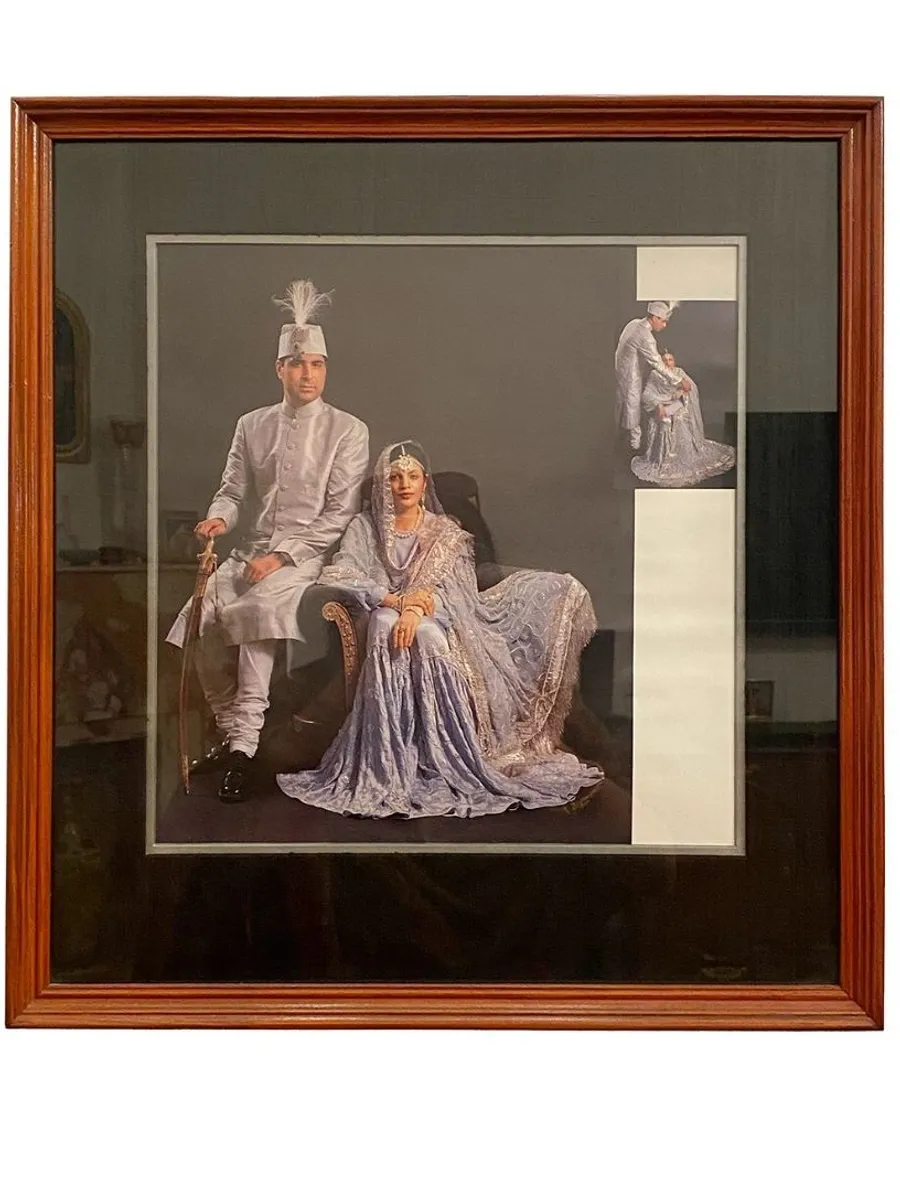
The wedding portrait of Nawab Kazim Ali Khan and Begum Yaseen Ali Khan

The year 2020, with all its woes, brought this one joyous occasion for Navaid bhai to gather an intimate group of family and friends and celebrate the nikah of his second son, Haider Ali Khan, to the beautiful Shaukat Zamani Begum. Sufi music composed by Navaid bhai’s grandfather fills the haveli. An incredible performance of a whirling Sufi dancer puts us in a delicious trance. The exotic aroma of Rampur’s extraordinary cuisine titillates our olfactory nerves. And the melting flavours of the famous chapli kebab make our palates spiral into ecstasy. As our senses are soothed into sublime languor through three days of feasting, dancing, laughter, and love, we awake to the nikah on the final morning.

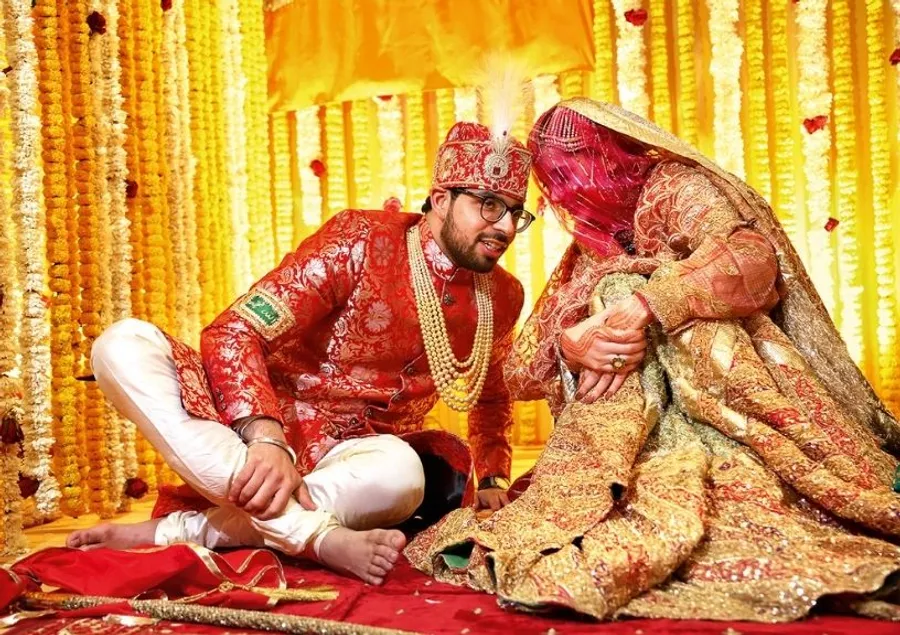
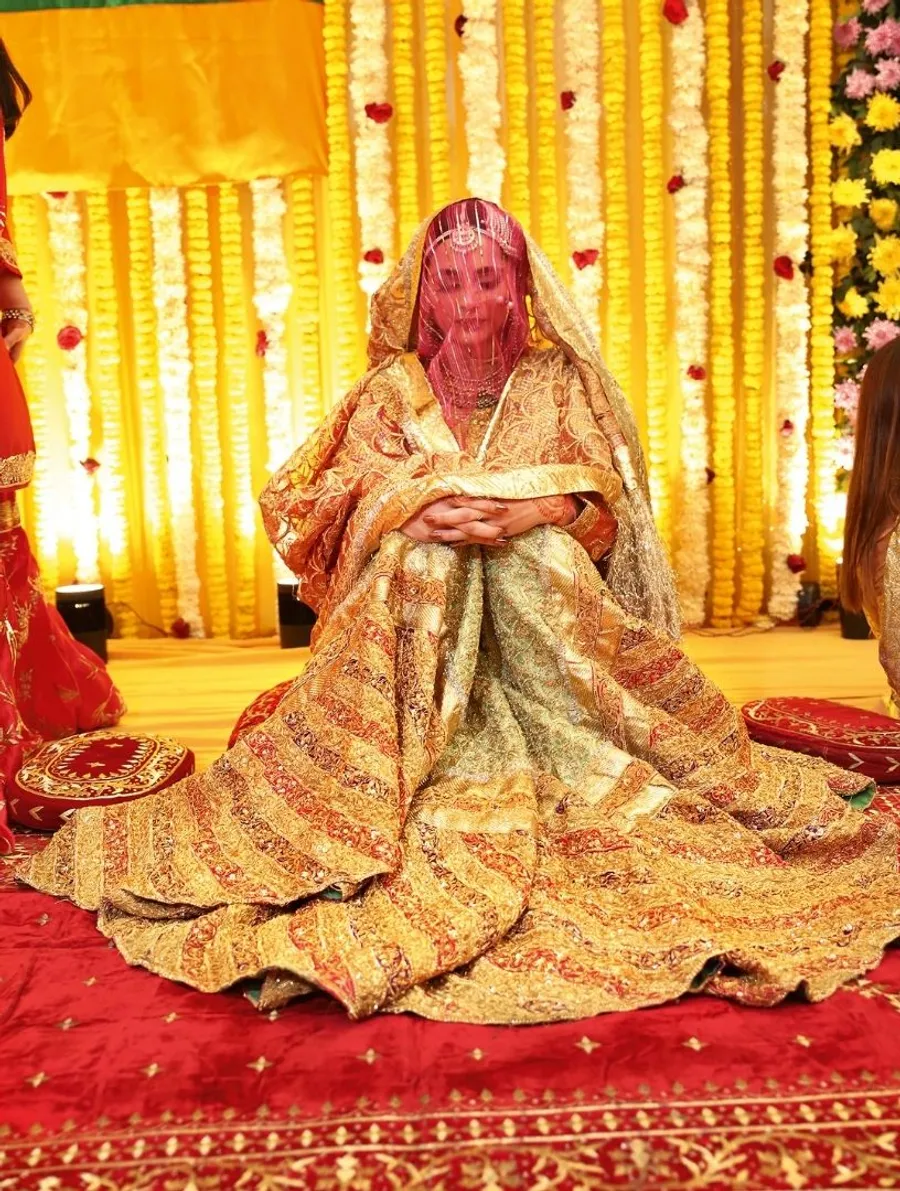
The pure pageantry of the ceremony is a joy to behold. Begum Zamani is clad in an intricately embroidered sharara that requires three bridesmaids to carry it; Nawabzada Haider is dressed up in his Pathan grandeur, with the family’s bejewelled heirloom sword; Navaid bhai is in a stunning rose ensemble and Begum Yaseen in delicate beige—the scene belongs to a different time, a few thousand years before 2020.

The dynasty is inclusive as always, and the rites are performed in Shia and Sunni traditions. And then the gentle, lilting sound of “Qubool hai” from the bride’s veil confirms her assent to the marriage to Nawabzada Haider, sending the guests into raptures.

The Pathani nawabs of Rampur have always adopted the Hindu rituals of their homeland, so they include a henna ceremony and an evening of dancing to celebrate the union.

Begum Zamani clad in intricately embroidered sharara for her nikah

The ceremony verifies everything the nawab has told me about his family, “Of the 300-odd sovereign states of the Union of modern India, there are only a dozen Islamic royal families. Ours has always believed in educating our women, and we have forever held a deep passion for art, literature, and music.” Rampur sparkles as a shining example of myriad traditions evolved into a singular culture, which spans thousands of years and retains a resplendence of its own in modern India.

The writer is the founding partner of  Welcome Home Luxury Real Estate Services in New Delhi.

source: http://www.travelandleisureasia.com / Travel and Leisure / Home> Hotels / by Sush Clays / January 20th, 2021

Book Review: Maroof Shah’s book on Muslim woman is a gamechanger

JAMMU & KASHMIR :

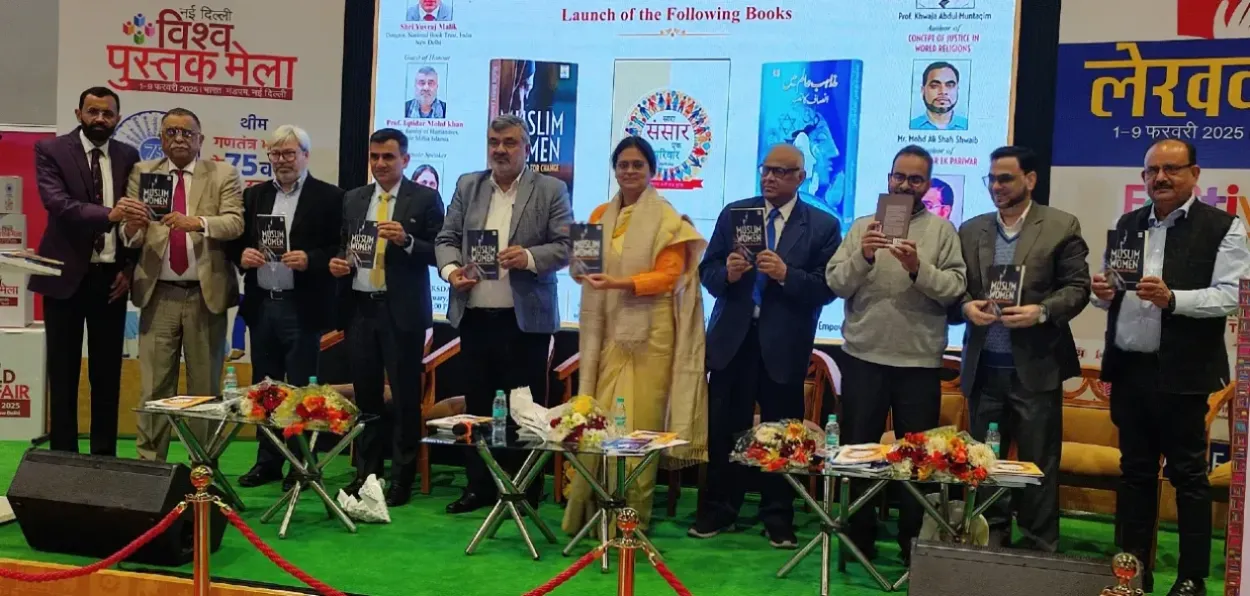
The book launch function of the Khusro Foundation

Muslim Women: A Manifesto for Change by Dr. Muhammed Maroof Shah is an insightful book that examines the challenges faced by Muslim women in India and offers practical solutions grounded in both religious teachings and social progress. The author balances tradition with progress, advocating for a model of empowerment that remains deeply rooted in Islamic values while promoting justice and gender equality, making this work a crucial addition to discussions on women’s rights in Muslim communities.

The book is divided into eight chapters, each addressing key issues that affect Muslim women. Rather than simply identifying problems, Shah provides practical solutions based on religious principles, ethics, and social policies. He touches on struggles like limited access to education, financial dependence, domestic challenges, and restrictions on movement. The book encourages both religious scholars and modern thinkers to engage in discussions rather than opposing each other and encourages communities to work together toward progress.

The author raises an important question—should discussions focus on rights or duties? He argues that understanding and fulfilling duties naturally lead to the realization of rights. His approach promotes fairness, where women can participate in society while respecting cultural and religious values.

Maroof Shah deeply engages with Islamic teachings to show how religion can be used to empower rather than limit women. He argues that many restrictions placed on women stem from cultural traditions rather than religious doctrine. His proposed roadmap for change includes the establishment of Women’s Welfare Funds, increased access to quality education, and a cultural shift towards recognizing women’s contributions beyond traditional roles.

The book also explores the financial burdens linked to marriage. Shah criticizes extravagant wedding traditions that place unnecessary pressure on women and their families. He suggests reforms to the Nikah Nama (marriage contract) to better protect women’s rights and encourage simpler and more affordable wedding customs. By reducing financial burdens in marriage and ensuring fairer agreements, women can become more stable and independent. Furthermore, he highlights how financial problems often limit women’s freedom to make choices and advocates for legal frameworks that allow control over finances and assets.

Another significant aspect of Shah’s book is his discussion of women’s well-being beyond legal and social rights. He talks about mental health, emotional support, and strong family relationships that help rather than confine women. Many struggles come from rigid social expectations, and the author calls for a shift in these norms to create healthier and more supportive communities.

He also urges religious institutions to play an active role in advocating for women’s rights, suggesting that mosques and Islamic schools can become platforms for educating people about gender justice, domestic violence, and financial independence. He further emphasizes the importance of media representation, encouraging more stories of empowered Muslim women to be highlighted in literature, film, and TV.

One of the greatest strengths of Muslim Women: A Manifesto for Change is its balanced perspective. The author finds a middle ground that resonates with a broad audience, acknowledging feminist concerns while reaffirming religious and ethical values, making the book relevant to scholars, activists, and policymakers. A recurring theme throughout the book is the importance of open dialogue—between men and women, religious scholars and reformers, and between tradition and modernity.

Shah emphasizes that meaningful progress comes from discussion rather than ideological confrontations. The book does not remain purely theoretical but offers practical steps to improve the condition of Muslim women, such as marriage reforms, financial education, and community welfare programs. Moreover, he provides examples from Islamic history where women played key roles in scholarship, leadership, and business, demonstrating that Islam encourages women’s participation in all areas of life.

The Book makes a significant contribution to the discourse on women’s rights in Muslim societies. By advocating for reform while staying grounded in religious and ethical values, Shah presents a compelling vision for progress. His emphasis on dialogue, action, and ethical responsibility makes this book an essential read for anyone interested in gender justice within an Islamic framework.

It encourages constructive discussions and practical reforms, offering hope for a more inclusive and rightful future for Muslim women. This book is highly recommended for academics, policymakers, social reformers, and Muslim communities seeking a balanced perspective on women’s empowerment.

The Khusro Foundation is a widely recognized organization in India and beyond, dedicated to fostering peace, harmony, and unity through literature and education. It has established a strong reputation for its efforts in promoting cultural understanding and truthful information about Islam. A major initiative of the foundation is the publication of high-quality literature in Urdu, Hindi, and English, to inspire, integrate, and unite the people of India.

It actively works to promote communal harmony, tolerance, and understanding among individuals from diverse faiths, religious practices, and cultural backgrounds. It is committed to generating and disseminating accurate information about Islam to counter misconceptions and misinformed narratives. By fostering dialogue and intellectual engagement, it strives to build a more inclusive and informed society.

The printing quality of the book is excellent, with a well-designed layout, clear typography, and high-quality paper. The attention to detail complements the depth and importance of the content, enhancing the reading experience.

The author is a former research fellow with INTACH and CCRT

source: http://www.awazthevoice.in / Awaz, The Voice / Home> Stories / by Dr Ruchika Arora / February 13th, 2025
AMU’s Diversity, Riots: Award Winning Director’s Eye-Opening Take

Aligarh / Banaras , PRAYAGRAJ (formerly UTTAR PRADESH) :

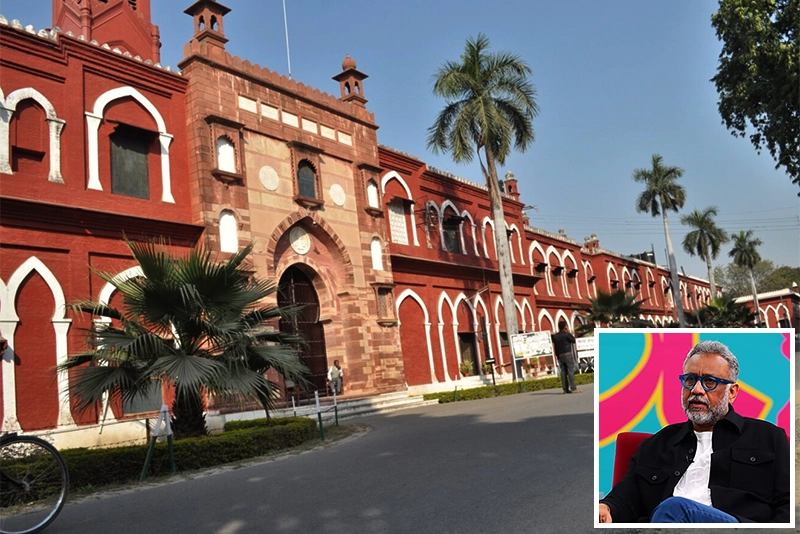
Film Director, Producer and Writer, Anubhav Sinha, who has won numerous awards, has made some interesting remarks about the diversity he saw at Aligarh Muslim University (AMU) and how riots are used to paint Indian Muslims in a particular colour.

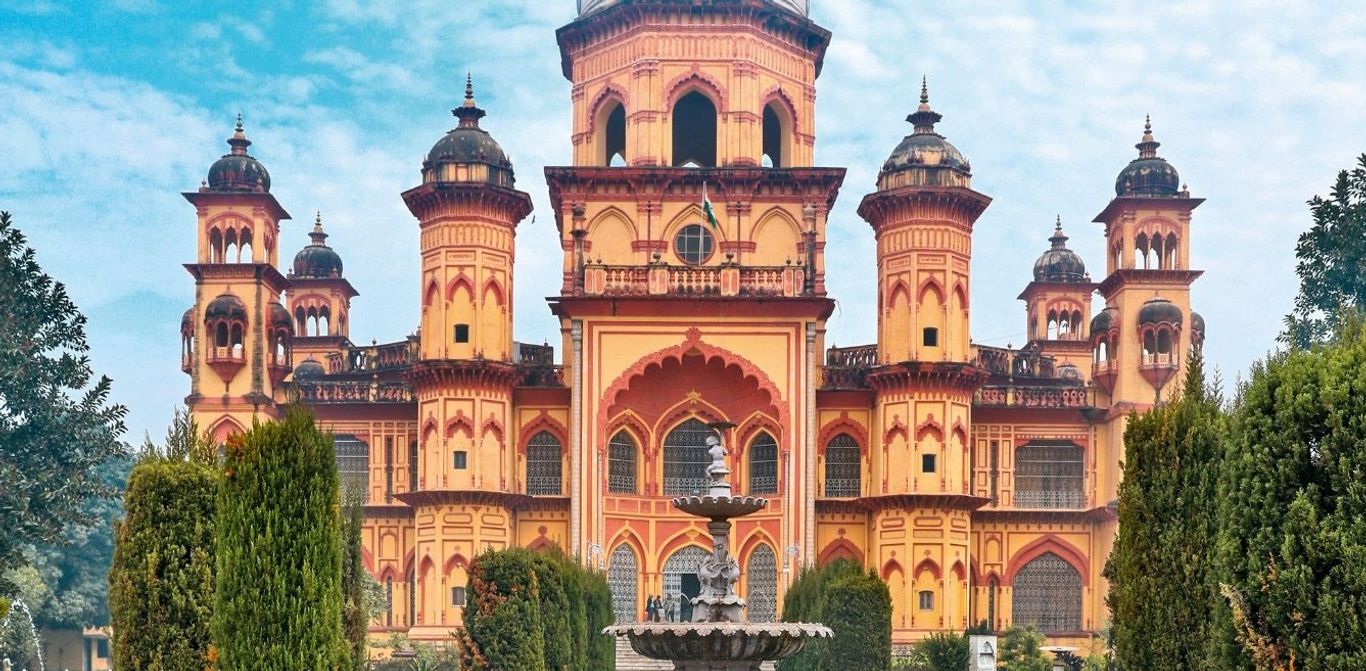
Aligarh Muslim University, Anubhav Sinha (Inset)

Film Director, Producer and Writer, Anubhav Sinha, who has won numerous awards, has made some interesting remarks about the diversity he saw at Aligarh Muslim University (AMU) and how riots are used to paint Indian Muslims in a particular colour.

AMU’s Diverse Culture

Speaking to journalist Saurabh Dwivedi for his YouTube show “The Lallantop”, Anubhav Sinha, who hails from Banaras, now Prayagraj, said he was introduced to the rich Indian diversity for the first time at the Aligarh Muslim University.

“I started believing in the Indian diversity only after I went to Aligarh Muslim University. Before that I was not even aware what diversity actually is”, the maker of Shah Rukh Khan starrer “Ra One”, said.

“Not Muslims alone. At AMU, there were friends from different places of the country. Some were from Hyderabad. Some others were Bengalis from Kolkata. Their Hindi accent was different. They had varying food habits and lifestyle.

“All these things were very interesting and helped me in understanding the diversity of our country… Something that I was unfamiliar with while in Banaras where we had encounters only with local people”, Sinha, who graduated from the AMU in 1987, said.

“This is why I am so powerful an advocate of Indian diversity… India is great because of its diversity”, Sinha, known for award winning films Article 15ThappadMulkBheed and Tum Bin, said.

Communal Riots

During the conversation with Saurabh Dwivedi, Anubhav Sinha also highlighted how the communal riots were used to demonize the Indian Muslims.

Recalling the atmosphere in his house after he cleared AMU Entrance Test and got admission Anubhav Sinha said everyone was in shock.

“There used to be frequent communal riots in Uttar Pradesh, including in Aligarh. So my family was worried”, Sinha said.

Watch Video

“We have always been made to believe that Hindus would never do any mischief… Muslims would always be the real culprits and perpetrators… This is why everyone was worried of my safety”, he said.

“But at Aligarh Muslim University, I reinvented India and got introduced to its powerful diversity”, he said about the university founded by great reformer Sir Syed Ahmed Khan.

source: http://www.ummid.com / Ummid.com / Home> India / by Web Desk / February 19th, 2025

Handbook on healthcare sensitises patients to legal rights

Tiruchi, TAMIL NADU :

‘When patients know their rights, hospitals will be more receptive to their demands’

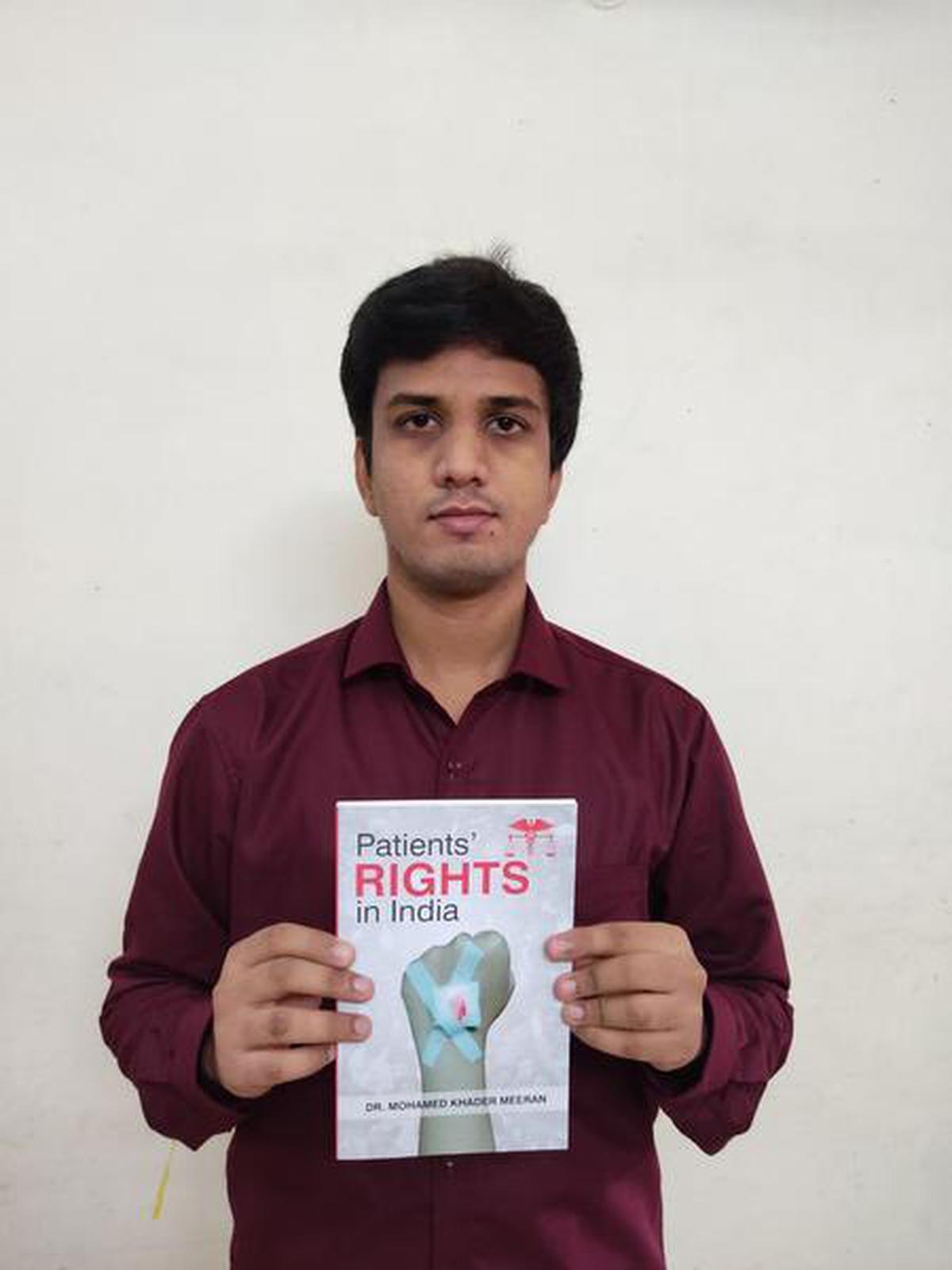
Dr. Mohamed Khader Meeran with a copy of his book ‘Patients rights in India.’

A medical graduate-cum-public rights activist in the city has brought out a handbook to raise awareness of patients’ rights, in the hope that people and healthcare providers can resolve issues amicably.

Mohamed Khader Meeran, 27, who completed his MBBS degree from Mahatma Gandhi Institute of Medical Sciences, Sevagram, in Maharashtra in 2020, and is a NEET aspirant for postgraduate studies, was inspired to write ‘Patients’ rights in India’ to specify the legal means of redress available in the wake of rising number of complaints related to hospitals and treatment options, especially during the pandemic.

He has been in the news for his advocacy work, notably for filing a public interest litigation (PIL) in Madras High Court, to launch online right to information (RTI) filing facility in Tamil Nadu State’s government departments in 2017. “Last year, there was a lot of misinformation being circulated about COVID-19. Patients’ health status details, which were meant to be confidential, were leaked through social media. Many hospitals were overcharging. Initially I was getting calls from within Tamil Nadu [for help], but as I had studied in Maharashtra, and was part of many student unions, we began coordinating with doctors there, to arrange for beds. This is when we felt that a handbook would be useful to tell patients about their rights,” Dr. Meeran told The Hindu .

Among the issues covered in the book are right to information; safe and quality treatment; seeking a second medical opinion, and so on. Initially published last year in Tamil, the English version of ‘Patients’ Rights …’, which was launched in October this year, is more detailed, with sections on government-sponsored health insurance schemes and contact details for grievance resolution.

“There are both legal and ethical angles when a patient comes for treatment. Since ethics is a vast field, I have narrowed it down to specific issues, such as cost of definitive treatment for ailments according to the patient’s paying capacity. We are focusing on how financial compensation can be accessed by patients,” said Dr. Meeran.

In real world

Case studies and legal rulings on medical issues help readers to understand how these rights work in the real world.

A chapter on alternative medicine calls for greater understanding between practitioners of Ayurveda, Yoga and Naturopathy, Unani, Siddha and Homeopathy (AYUSH) and modern medicine. “There are evidence-based treatments for some ailments in both systems, but alternative therapists should understand their limits, and advise their patients to seek assistance from modern medicine when necessary,” said Dr. Meeran.

When the patients know their rights, hospitals and medical authorities will be more receptive to their demands, he feels. “Patients’ rights are not taught in medical schools, because of which violence against healthcare professionals is rampant in India. This book could help reduce such instances,” he said.

source: http://www.thehindu.com / The Hindu / Home> News> Cities> Tiruchirapalli / by Nahla Nainar / December 03rd, 2021

Allama Hameed Uddin Farahi’s philosophy: Beyond tradition and towards truth

INDIA :

There are three ways of connecting with the greats, as they themselves tell us. First, dangle by their bootlaces and go just a little further than they did. Second, stand on their shoulders and see farther. Third, use their shoulders as a springboard and leap ahead. Allama Hameed ud Deen Farahi chose the third path and didn’t stop there; he went far beyond.

Farahi was a seeker, unmindful of the commotion around him. He ventured into uncharted territories, undeterred by fear. This is what made him extraordinary.

When Iqbal discussed Muslim political power in the Indian subcontinent, Muhammed Pickthal held a differing view. Pickthal believed that Muslim society was too degenerated and required all efforts for its recovery. For him, any struggle for political power in such a decayed state was unwise. Farahi, with the calm focus of his personality, carved another path: the path of knowledge. For Farahi, everything else stemmed from this pursuit.

This does not mean others were unaware of the need to restructure knowledge. Leaders like Sir Syed, Shibli, Iqbal, Abul Kalam, and other Muslim intellectuals recognized the importance of reviving Muslim knowledge. However, Farahi stood apart. While others were deeply engaged with the history and sciences of the Muslim world, Farahi placed the Quran at the very center of Muslim knowledge. He focused exclusively on the Quran, making everything else secondary.
Although many of us profess the Quran’s supremacy in an emotive sense, we often compromise its sovereignty in various ways. Through tradition, history, jurisprudence, mysticism, philosophy, and the ever-looming image of empire, we carve tunnels into the Quran. Farahi, however, stripped his mind of these distractions and approached the Quran through its own lens. He deciphered its language and found it coherent. This was a monumental discovery. But what does this coherence mean?

Charles Mackay’s masterpiece Extraordinary Popular Delusions and the Madness of Crowds offers an intriguing perspective on human tendencies. He illustrates how we “love the marvellous” and “disbelieve the truth” through an exchange between a sailor and his mother. The sailor tells his mother, “As we were sailing over the Line, we saw a fish rise out of the sea and fly over our ship.” The mother, incredulous, replies, “What a liar you are!” A simple fact of marine life seemed utterly untrue to her.

Sensing her skepticism, the son adds: “We saw even more wonderful things than that.” The mother, intrigued but still dubious, responds, “Let us hear them, and tell the truth, John, if you can.” The son continues, “As we were sailing up the Red Sea, our captain decided he wanted fish for dinner. So, we cast our nets, and on the very first haul, we brought up a golden chariot wheel, inlaid with diamonds.” This piques the mother’s curiosity. “What did the captain say about it?” she asks. The son replies, “He said it was one of Pharaoh’s chariot wheels, lying in the Red Sea ever since that wicked king was drowned while pursuing the Israelites.” This fantastical tale satisfies the mother, who exclaims, “Tell me such stories as that, and I’ll believe you; but never talk to me of such things as flying fish!”

Mackay concludes that in a contest between the “wondrously false” and the “wondrously true,” the false often wins. When Farahi’s ideas are applied and his discoveries are brought to light, even reasonable minds recoil. His work disrupts entrenched ideas, much like the flying fish, which many deny while embracing the chariot wheel. Spectacular dullness frequently eclipses spectacular brilliance.

In today’s world, where Islam and power politics are wildly entangled, applying Farahi’s insights is doubly challenging. A closed, stagnant mind may merely dismiss the flying fish. However, a mind intoxicated by power and frenzy may go further and destroy it. General acknowledgments of Farahi’s greatness are easy and often met with applause. But when one begins to question deeply held ideas and ideals, decency is often forgotten.

Here, Farahi’s character may be as vital as his knowledge. Those who knew him observed that it was hard to decide which was greater: his knowledge or his piety. His saintly heart was fused with a philosopher’s mind.

When Farahi proposed the coherence of the Quranic text, even Shibli, initially unconvinced, eventually came around. Through further discussions, Shibli recognized the idea’s merit. In one of his letters to Farahi, he wrote: “From now onwards, I will study the Quran with attention to the order in the verses and get back to you.” This humility, especially from someone who once taught Farahi, is remarkable. It takes both a perceptive mind to judge greatness and an unbiased heart to acknowledge it. Shibli realized that the flying fish in the Red Sea was indeed real.

Shibli later wrote to Hamid: “I have thoughtfully read your commentary on Surah Abi Lahab and parts of your work Jumahratul Balagah. I congratulate you. All Muslims must be grateful to you for this.” Shibli didn’t mind the old ideas being displaced in light of Farahi’s discoveries. True seekers carry no idols. They only bear a cross on which biases and disguised reverences are crucified.

In the pursuit of truth, losing cherished ideas does not matter. What matters is the truth itself. This pursuit brings humility, and the knowledge gained on this path nourishes and revitalizes, like rain on parched land, fostering growth rather than igniting fires.

Today, those inciting violence in the name of Islam are fueled by delusions perpetuated by preachers and demagogues, stories akin to Pharaoh’s chariot in the Red Sea. This collective madness includes Kashmir, where we are complicit. Farahi would have no interest in catering to our delusions. He would simply assert that there was a flying fish in the Red Sea and no more.

source: http://www.muslimmirror.com / Muslim Mirror / Home> Opinion> Religion / by Ramiz Bhat / March 05th, 2025

Three students of Milagres College secure first rank in Mangalore University BSc exams

Mangaluru, KARNATAKA :

Three students from Milagres College, Mangaluru, have secured the first rank in their respective courses in Mangalore University for the academic year 2023-24.

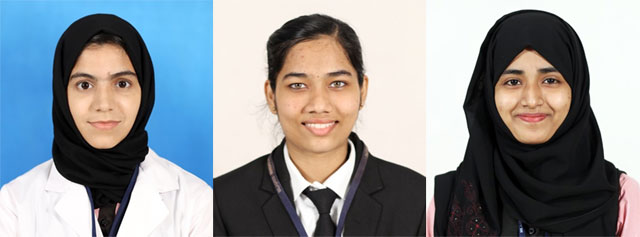
Jesline Jane Rodrigues, daughter of Francis Ivan Rodrigues and Jacintha Rodrigues from Damaskatte, Ellinje, secured the first rank in BSc Hospitality Science with 88.98%.

(L to R) Hajira Elfa, Jesline J Rodrigues and Surayya Sadaf

Hajira Elfa, daughter of Mohammed Kifayatulla Mulla and Tasneem Banu from Bhatkal, Uttara Kannada, achieved the first rank in BSc Food, Nutrition & Dietetics with 91.27%.

Surayya Sadaf, daughter of Mohammad Hashim and Rehana Parveen from Gurupura Kaikamba, Mangaluru, secured the first rank in BSc Interior Design & Decoration with 91.08%.

These students, part of the 2021-24 batch, have demonstrated consistent academic excellence along with active participation in extracurricular activities.

The management, principal, and staff of Milagres College have congratulated them on their outstanding achievements.

source: http://www.daijiworld.com / DaijiWorld.com / Home> Campus Beat / by Media Release / March 10th, 2025