The Aligarh Muslim University (AMU) community deeply mourned the passing of Professor Qazi Zain-us-Sajideen Siddiqui, former Dean of the Faculty of Theology and former Chairman of the Department of Sunni Theology.
AMU Vice Chancellor, Prof. Naima Khatoon, expressed her condolences, remembering Professor Siddiqui as a scholar of humility and grace. “Despite his academic eminence and leadership, he remained approachable and humble. His contributions to the university and the academic community were invaluable,” she stated.
Earlier a condolence meeting was held at the department to honour his legacy, with faculty members, students, and dignitaries in attendance.
Presiding over the gathering, Professor Muhammad Habibullah Qasmi, Dean and Chairman of the Faculty of Theology, highlighted Professor Siddiqui’s strong commitment to his principles. Former Dean, Professor Muhammad Saud Alam Qasmi, reflected on his deep engagement with socio-religious issues impacting the Muslim community.
Professor Towqueer Alam Falahi, also a former Dean, spoke of his mentorship and dedication to students, while Dr. Syed Muhammad Asghar praised his courage in addressing complex issues.
Other faculty members, including Professor Muhammad Rashid, Dr. Nadeem Ashraf, and Dr. Obaid Iqbal Asim, shared memories of his wisdom, generosity, and lasting impact on the university and society.
The meeting concluded with prayers for Professor Siddiqui’s eternal peace.
source: http://www.radiancenews.com / Radiance News / Home> Latest News> Report / by Radiance News Bureau / March 14th, 2025
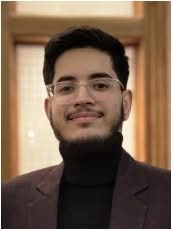
Syed Adnan Mian, a third-year undergraduate student from Jamia Millia Islamia’s (JMI) Department of Biotechnology, has made the university proud by securing a place in the esteemed Khorana Program for Scholars 2025.
This highly competitive scholarship is jointly supported by the Department of Biotechnology (DBT) – Government of India, the Indo-U.S. Science & Technology Forum (IUSSTF), and WINStep Forward, offering exceptional Indian students the opportunity to engage in advanced research at leading U.S. institutions, reported the Okhla Times.
As part of the program, Adnan has been placed at Brigham and Women’s Hospital, affiliated with Harvard Medical School in Boston, Massachusetts, where he will contribute to cutting-edge biomedical research. The scholarship covers round-trip airfare, a stipend, and health insurance, providing an invaluable academic and professional experience.
This achievement highlights JMI’s commitment to excellence in scientific research and global academic collaboration. Adnan’s selection for this prestigious program serves as an inspiration for aspiring researchers at the university.
source: http://www.radiancenews.com / Radiance News / Home> Focus> Markers of Excellence / by Radiance News Bureau / March 12th, 2025
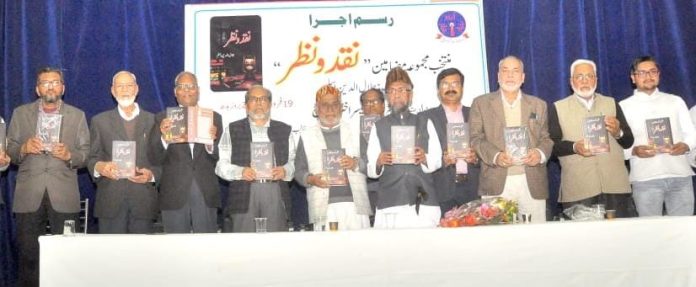
Veteran journalist and writer Jalaluddin Aslam was honored at Ghalib Academy with the release of his selected anthology of essays, Naqd-o-Nazar. The event brought together distinguished scholars, journalists, and literary figures, who acknowledged Aslam’s lifelong dedication to writing and journalism.
Padma Shri awardee Professor Akhtarul Wasey, delivering the presidential address, praised Jalaluddin Aslam’s remarkable contribution to literature and journalism. “He has devoted his entire life to the service of pen and paper. Even in his advanced years, his commitment to writing remains unshaken,” he remarked. Prof. Wasey further emphasized that Naqd-o-Nazar reflects Aslam’s deep thoughts and ideological perspectives and should reach a wider readership.
Renowned journalist Masoom Moradabadi highlighted the humanitarian aspect of Aslam’s life, stating, “The essays in his latest book reflect his deep concern for the nation and community. His life has been marked by selfless service to the needy and deserving.” He underscored that Aslam’s engagement in journalism and literature has always been driven by sincerity rather than financial motives.
Senior journalist Suhail Anjum commended Aslam’s contributions to Urdu language and literature through journalism and writing. “His anthology Naqd-o-Nazar is of archival significance and serves as a valuable resource for researchers,” he stated.
Editor of Urdu Book Review, Mohammad Arif Iqbal, noted that Naqd-o-Nazar contains thought-provoking essays, demonstrating Aslam’s intellectual depth and analytical prowess.
Dr. Syed Ahmed Khan, national president of the Urdu Development Organization, acknowledged Aslam’s silent yet profound contributions to the Urdu language. “Few writers and journalists have served Urdu as selflessly as he has,” he asserted.
Dr. Aqil Ahmed, Secretary of Ghalib Academy, extended his congratulations to the author and urged him to publish his unpublished works as well. Several other prominent figures, including Feroz Hashmi, Javed Rahmani, Dr. Mufti Anwar Javed Dehlvi, and K.L. Narang Saqi, also lauded Aslam’s literary journey.
Among the notable attendees were Maulana Arshad Sirajuddin Maki, Dr. Khurshid Alam, Hakim Aftab Alam, Mohammad Naushad Nadwi, Israr Ahmed Ujini, Danish Rahman, Faizan, Rehan, Zeeshan, Mohammad Owais, Mohammad Hanif, Nadeem Arif, and Mohammad Imran Kannauji.
The event concluded with a vote of thanks by Dr. Abu Zaid.
source: http://www.radiancenews.com / Radiance News / Home> Arts & Culture> Focus / by Radiance News Bureau / February 20th, 2025
Kilakarai (Ramanathapuram District) , TAMIL NADU :
Legends abound in Tamil folklore about the ‘merchant prince’ Shaikh Abdul Qadir, popularly known as Seethakathi. He was one of the earliest regional traders to do business with the Dutch and the British in the 17th Century. A generous patron of the arts, he supported poets Umaru Pulavar, Padikasu Thambiran, Kandasamy Pulavar, and others.
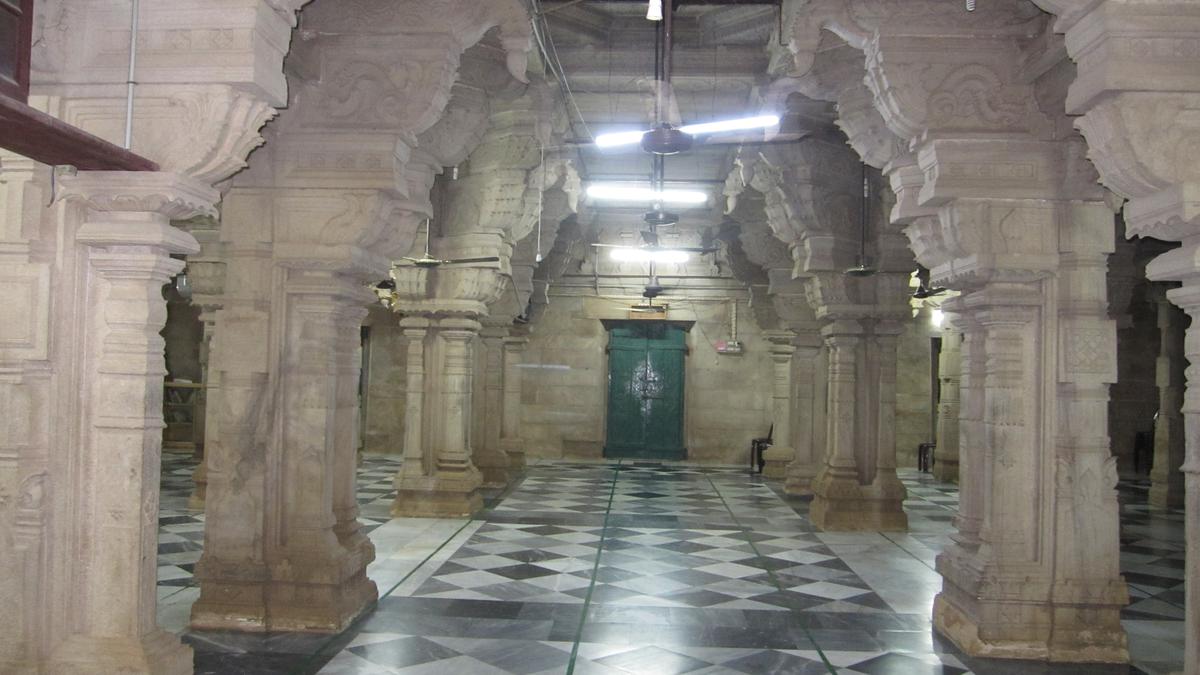
Cultural confluence: The prayer hall of the Grand Jumma Masjid, which is central to the landscape of Kilakarai. It was built in the 17th Century in the Dravidian style of architecture. | Photo Credit: Special Arrangement
In Tamil, Seethakathi is a byword for philanthropy. The adage ‘Seththum kodai kodutthan Seethakathi’ (Even in death, Seethakathi donated generously) is often used to refer to a person’s exemplary munificence. But who was Seethakathi, or rather, Shaikh Abdul Qadir, who also sported the title, Vijaya Raghunatha Periyathambi Marakkayar, endowed by Kilavan Sethupathi?
Legends abound in Tamil folkloric narratives about this ‘merchant prince’ of the coastal town of Kilakarai, in the present day Ramanathapuram district, whose name is variously spelled as ‘Seydakadi’ or ‘Sidakkali’. Actual evidence of his enterprise and influence, however, has survived only in a handful of records and inscriptions of the late 17th Century.
In memoriam
Kilakarai continues to commemorate its famous son. The main thoroughfare here is called ‘Vallal Seethakathi Salai’, and a grand memorial arch in his name on the outskirts welcomes visitors. An annual ‘Seethakathi Vizha’ is organised with panegyric poems and speeches in his honour.
Central to Kilakarai’s landscape, though, is the Grand Jumma Masjid, built in the Dravidian style of architecture, where Seethakathi is interred.
The mosque, said to have been commissioned by Seethakathi or built during his lifetime in the 17th Century over two decades, also houses the graves of his elder brother ‘Pattathu Maraikkar’ Mohamed Abdul Qadir, and the domed mausoleum of the saint-scholar Shaikh Sadaqatullah (known locally as Sadaqatullah Appa), to whom Seethakathi was close, both as disciple and friend. Seethakathi also commissioned the grave of his younger brother Sheikh Ibrahim Marakkayar in Vethalai.
“This mosque has 110 pillars made with stone quarried from the seashore in Valinokkam village. Its style is typical of southern Indian buildings of its time, and is of great interest to researchers because of its unique structure. All the pillars are embellished with floral patterns, and some of them are naturally embedded with seashells,” A.M.M. Kader Bux Hussain Siddiqi Makhdoomi, the town Qazi and ‘Mutawalli’ (administrator) of the Grand Jumma Mosque, told The Hindu.
Blending with locals
According to research by S.M. Hussain Nainar (1899-1963), who was a professor of Arabic, Urdu and Persian at the University of Madras and Sri Venkateswara University, Tirupati, Arabs and Persians had been trading with the Indian peninsula even before the advent of Islam. Over time, the Arab traders settled along the coast of southern India, and with the coming of Islam, became assimilated with the local population. Most Tamil-speaking Muslims in these regions have Arab ancestry.
Islam’s influence in the Deccan has been noted from the end of the 13th Century, but it peaked only after the mid-17th Century, in the reign of Mughal Emperor Aurangzeb (1658-1707).
Born to Malla Sahib Periya Thambi Marakkayar and Syed Ahmed Nachiyar, as the second of three sons, Seethakathi hailed from Selvarkulam. The Marakkayars (an abbreviated form of Marakala Rayar) were one of the five early Tamil Muslim communities (the others being Sonakar, Labbai, Turki and Rowther) mentioned in historical texts.
The Marakkayar community was known for its maritime trade, and Seethakathi made his fortune in dealing with pepper, rice, pearls and handloom textiles, among other commodities.
Seethakathi was a close friend of Vijaya Raghunatha Thevar, or Kilavan Sethupathi, a loyal vassal of Chokkanatha Nayak, who helped Thirumalai Nayak in his war against the Mysore army.
Sethupathi cut off ties with Madurai in 1792 and built the Ramalinga Vilasam palace to fortify his position in the region. The palace, set in the middle of a moated campus, has a stone tablet that bears Seethakathi’s name.
The title, ‘Vijaya Raghunatha Periya Thambi’, denoted the affection and trust that Seethakathi enjoyed of his royal friend.
Mughal ‘khalifa’ in Bengal
It is also said Shaikh Sadaqatullah’s mention of Seethakathi’s generosity and character to Emperor Aurangzeb resulted in the ‘merchant prince’ being sent to Bengal as the Mughal ‘khalifa’ (regent). However, Seethakathi decided to resign after a while, as the new environment did not suit him.
Seethakathi’s acumen helped him become one of the earliest regional traders to do business with the Dutch and the British in the 17th Century. He is known to have maintained ventures from the Coromandel Coast to Sri Lanka (Ceylon). The British made contact with Seethakathi in the mid-17th Century.
Nainar’s 1953 book Seethakathi Vallal refers to the correspondence, in 1686-1690, between Seethakathi and the British East India Company’s agents William Gyfford and Elihu Yale negotiating trade in pepper and rice. The Dutch, too, interacted with Seethakathi, first as business rivals, and then as collaborators.
Patron of arts
Seethakathi was a generous patron of the arts, with poets like Umaru Pulavar, Padikasu Thambiran and Kandasamy Pulavar among the many supported by him.
Umaru Pulavar wrote the Seera Puranam, a 5,000-stanza verse biography of Prophet Muhammad in Tamil. Nainar’s book also contains two extant literary works about him: Seethakathi Nondi Nadagam (a Tamil mono-drama) and Thirumana Vaazhthu (felicitation written for Seethakathi’s wedding).
“Over time, many myths have become attached to Seethakathi. As archival documents show, he was a successful businessman and ‘rental farmer’ for the powers of the day. More systematic research of old records would help to highlight the role of Tamil Muslims like Seethakathi in Indian history,” said J. Raja Mohamed, historian and former curator of Pudukottai Government Museum.
source: http://www.thehindu.com / The Hindu / Home> News> India> Tamil Nadu> In Focus / by Nahla Nainar / October 27th, 2023
Y K Pora, Qazigund (Anantnag District) Kashmir , JAMMU & KASHMIR :
Qazigund :
A woman from Qazigund of Anantnag district has topped the Service Selection Board (SSB) examination for the post of Supervisor in the Social Welfare Department.
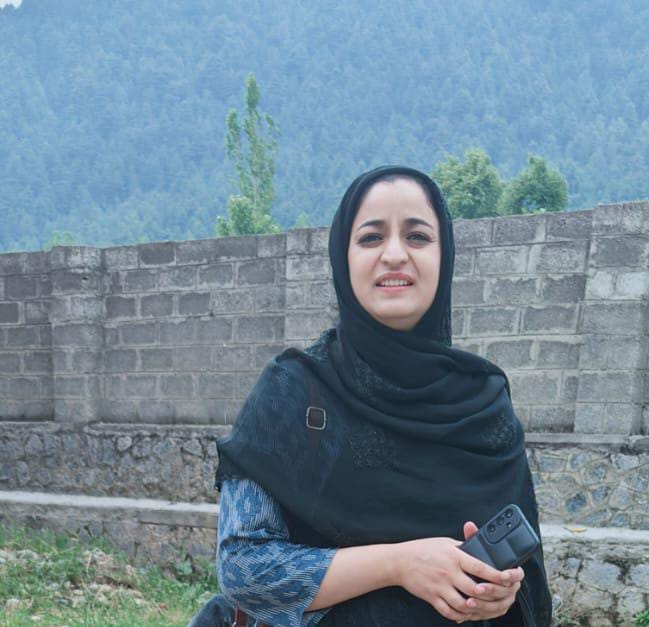
Barely three kilometers from Qazigund, a native of Y K Pora, Ishrat Nisar (28) expressed contentment as her relentless perseverance bore fruit, securing her the top rank and realizing the objective she had diligently pursued.
The SSB held the Supervisor exam on June 23, 2024, and 201 posts in the Social Welfare Department are to be filled, with Ishrat securing the top position.
She completed her master’s degree from Kashmir University after graduating from Anantnag College. Later, she was selected as a vocational trainer and had been working at a higher secondary school since 2020.
“Well, I think it’s a source of happiness to see oneself at the top of the SSB list. We have thousands of graduates every year competing, and the SSB is one of the few opportunities for employment, so yes, it’s an honor to top the list,” she said.
She said that many people apply for SSB recruitment every year, and everyone works hard to cross the selection threshold and secure their desired job. “I believe the SSB is one of the main platforms where students appear for exams, and hard work is crucial. Whoever works hard, I think, will make it to the list,” Ishrat said, adding that she used to study in the evenings.
Ishrat credited her success to her parents and siblings. “My siblings are my support system. They’ve been like guardians and teachers, contributing significantly to my success.”
“I managed my time well. I was probably the only staff member at school who didn’t participate in optional events or celebrations. I gave maximum time to my studies. I bought study material from Delhi, including Topper’s Notes, and studied a little online. I had been preparing for this exam for many years. The forms were issued in 2018, and since then, I stayed somewhat connected to it. The exam didn’t happen at that time, but today, my hard work has paid off,” SSB topper said.
source: http://www.risingkashmir.com / Rising Kashmir / Home> Blog> Kashmir / by Younus Rashid (headline edited) / October 07th, 2024
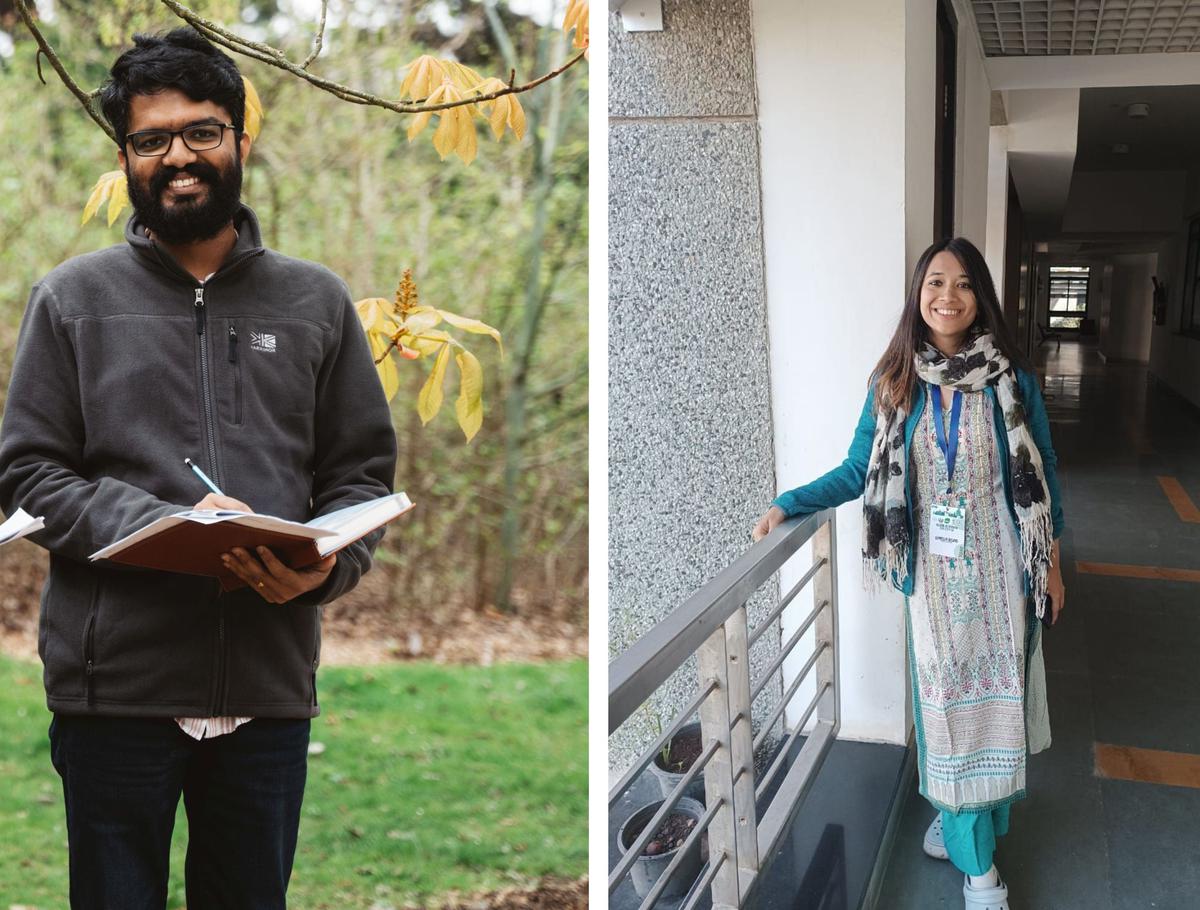
Camellia Biswas and Ajmal S. Rasaq, who won the EARTH scholarships, on how they moved to studying the environment and sustainability through various perspectives.
Recognising the impact of climate change. | Photo Credit: Freepik
Two Indian doctoral researchers, Camellia Biswas and Ajmal S. Rasaq, have been awarded the prestigious EARTH scholarships funded by British Council Scotland and delivered by the Scottish Graduate School for Arts and Humanities. It supports early-career researchers from around the world studying environment and sustainability through the Arts, Science, and the Humanities.
Biswas, who is in the Humanities department of IIT-Gandhinagar, specialises in ecological anthropology, human-animal studies, disaster studies and participatory research methodologies. Her Ph.D thesis focuses on mapping the dynamics of human and non-human interactions in the Indian Sundarbans, under the larger discourse of the climate disaster. In 2022, she was named British Council’s Women Leadership Fellow.
Rasaq, who secured the first rank in B.A. Political Science from St. Thomas College in Palai, Kerala, and pursued M.A. and M.Phil. degrees in Political Science at the University of Hyderabad and Jawaharlal Nehru University in New Delhi, switched over to climate change studies in his Ph.D course in IIT-Guwahati.
Since April, they have been undertaking in-person and hybrid exchanges in Scotland, which would go on until June in environmental arts and humanities. During her scholarship period, Biswas will collaborate with University of the Highlands and Islands (UHI) in Inverness, while Rasaw is affiliated with the University of Glasgow’s Human Geography department. They shared their experiences over an e-mail interaction. Edited excerpts:
From left: Ajmal S. Rasaq and Camellia Biswas, winners of the Earth scholarship winners. | Photo Credit: Special Arrangment
What inspired you to take up your field/subject of study?
Camellia Biswas (CB): I am deeply intrigued by the ever-changing realm of interactions between multiple species in the context of climate change. In this project, my focus lies on the study of zooarchaeology entwined with cultural and political ecology. I will be utilising a deep-time perspective to explore the implications of climate change. Specifically, I am examining the ecological-cultural evolution of human-seal relationships in the Northern Scottish Islands, from past to present, to comprehend climate emergency and conservation action.
Ajmal S. Rasaq (ASR): My Ph.D. project looks into how the changing weather conditions, particularly unseasonal precipitation and cyclones, impact the socio-economic relations in Chellanam, a coastal suburb of Kochi in Kerala. Though my academic background is in Political Science, I shifted to human geography in my Ph.D. programme after seeing significant weather events in recent times, such as the devastating floods of 2018 and the Ockhi and Tauktae cyclones (in Kerala). Over time, I came to recognise the profound impact of climate, which I had until then seen only as a background for agricultural and fisheries production.
How can the EARTH scholarship help you to enhance your understanding of your subject?
CB: The programme will enrich my understanding of STEAM (Science, Technology, Engineering, the Arts, and Mathematics) education in Scotland, and I hope to bring some of these learnings to apply in India. I’ve realised that topics across Humanities have implications for my own work. Scotland is very rich in visual narratives such as storytelling, folktales and myths embedded in historical records. Therefore, this will be very useful for my research. During my time here, I’m learning that topics across Science and Humanities are all connected. Scholars can help each other through different expertise and subjects.
ASR: I had already spent over a year collecting data through ethnographic fieldwork before joining this programme in April. This is an opportunity to connect with leading professors and other fellow scholars for three months. The training programme offered during the initial two weeks of the scholarship helped me to look deeper into the data. My mentor, Dr. David Featherstone at Glasgow University, has also been helping me in enriching my understanding in my area of research.
Any advice for students who may wish to apply for such programmes?
CB: Students who are interested in these scholarships must stay alert and proactive by subscribing to notification pages and newsletters. Also, customise your applications to align with the specific requirements and goals of the scholarship(s).
ASR: Start early and allow sufficient time for the application process. Begin by identifying a potential supervisor who aligns with your area of research. In the proposed application, it is vital to emphasise the anticipated impact of the research. Applicants must highlight how their work can help in fostering cross-national collaborations in future.
source: http://www.thehindu.com / The Hindu / Home> Education / by Nahla Nainar / June 24th, 2023
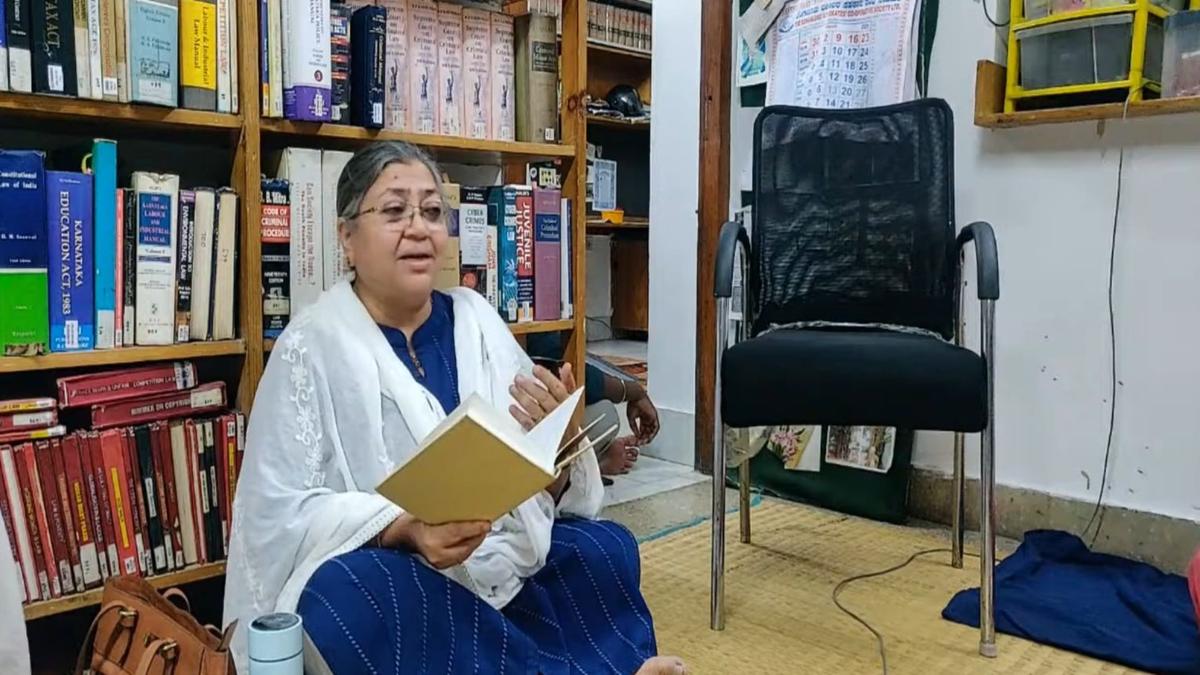
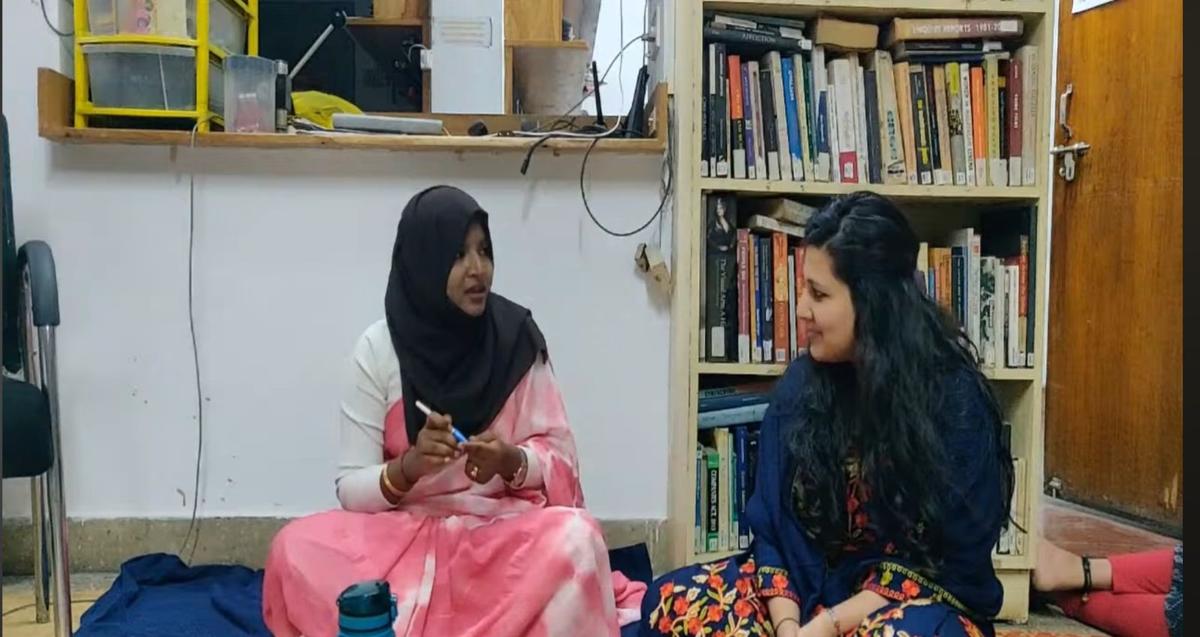
Activists Najma Nazeer and Ishrath Nissar reiterated that Muslim women’s emancipation must be defined on their own terms, not by external frameworks that fail to understand the intersection of culture, religion and identity.
Ishrath Nissar | Photo Credit: SPECIAL ARRANGEMENT
It has often been criticised that the Western feminist lens tends to reduce Muslim women’s freedom to the act of unveiling the hijab. Poet, activist and writer, Najma Nazeer, and educator and activist, Ishrath Nissar reiterated this at a discussion held by the Alternative Law Forum in connection with Women’s History Month and asserted that Muslim women’s emancipation must be defined on their own terms, not by external frameworks that fail to understand the intersection of culture, religion and identity.
“For some women, emancipation is wearing the hijab. Likewise, for others, it is wearing it without fear. For some, it might be education whereas others might take it as financial independence. Our liberation cannot be boxed into a single narrative,” said Nazeer.
The discussion brought together voices that challenge dominant narratives surrounding emancipation and shed light on the struggles, resilience and agency of Muslim women in India. Speaking about the barriers that Muslim women face, both the speaker emphasized that the exclusion of women from political, social and religious institutions is not accidental but is a systematic result of patriarchy, misinterpretation and Islamophobia.
Najma Nazeer | Photo Credit: SPECIAL ARRANGEMENT
The in-between space
“To be a Muslim woman in India is to constantly navigate between invisibility and hypervisibility,” said Nazeer. Seconding this, Nissar highlighted that Muslim women have always been active participants in society but their contributions have been erased or co-opted. “Our fight is not just against the community, but also against the state which weaponizes our identity and denies us rights, education and political representation,” she said.
She further added that liberation is undefined when access to basic rights is unequal and emphasised on the stereotypes imposed on Muslim women that often erase the diversity within the community. Nissar also highlighted the role of caste and class in shaping access to rights and the invisibility of Dalit and Bahujan Muslim women in mainstream feminist discourses.
Forms of resistance
The discussion also highlighted various forms of resistance deployed by Muslim women, in larger movements as well as through everyday acts of defiance. While Shaheen Bagh, where Muslim women led the protest against the Citizenship Amendment Act (CAA) and National Register of Citizens (NRC), was a watershed moment, resistance does not always take the form of large protests, but often start at home, the speakers remarked.
“Every act that defies patriarchy, inside and outside our community, is a form of resistance,” Nissar said. Nazeer spoke about the economic resistance, highlighting how Muslim women engage in financial independence as a way to assert their rights and identity.
Political representation
The lack of political representation of women in India, especially Muslim women, was yet another point of discussion. While political participation is one of the ways Muslim women negotiate their rights, barriers of gendered Islamophobia and internal misogyny makes it difficult.
“Only 1-2% of seats have been occupied by Muslim women, and most of them come from families with a political background,” noted the speakers who called for intersectional solidarity. “We cannot fight alone. Muslim women’s struggles are connected to Dalit, Bahujan, Adivasi and queer struggles. The more we divide, the weaker we become,” Nissar said.
“We are not stories of suffering, but of power, of resistance and of survival. And we will continue to write our own history,” Nazeer added.
source: http://www.thehindu.com / The Hindu / Home> News> Cities> Bengaluru / by Sutapa Dey / March 18th, 2025
Mahe Noor from Udaipur will study graduation in International Relations at Queen Mary University, a famous college of London.
Noor will go to London to study
Rajasthan News:
Noor, a student from Udaipur, Rajasthan, has made her mark in London. She has cracked the exam of a famous college in London with her hard work. Now she will go to London to study. However, the special thing is that the government will bear the expenses of Noor’s studies. The government will give Noor Rs 1.10 crore for this and will also give Rs 1 lakh every month for expenses.
Actually, Noor has been selected under the scholarship scheme of the state government. After this, Noor, a resident of Mahawatwadi in Udaipur, will now go to London for studies.
Will study at Queen Mary University
Noor will study graduation in International Relations at Queen Mary University, a famous college in London. She has been selected under the scholarship scheme of the state government. Let us tell you that Noor belongs to a simple family, her mother could not complete her studies and her father is an ordinary businessman.
I had a childhood dream of studying in London
Noor’s mother Nausheen Khan told that Noor wanted to study abroad since childhood and used to read magazines from there regularly online. Not only this, Noor worked online to help the family’s financial condition. Also, she excelled in studies from the beginning. She scored 65% in class 10th and 80% in class 12th. Her subject was English. She studied in St. Mary’s School, Udaipur till class 12th. After that she prepared to take admission in London in which she was successful.
She will do Bachelor’s degree in International Relations
Noor said that she has taken admission in Queen Mary University of London, which is ranked 120th globally. There she will pursue a bachelor’s degree in international relations. Where my focus will be on India’s growing influence in the Indo-Pacific region. I have been particularly interested from the beginning in how India is establishing itself as a global power, drawing strength from its vast human resources and young population. Additionally, India’s rich cultural capital and historical ties in South Asia increase its soft power. As China’s influence is increasing, India’s strategic, diplomatic, military, and economic actions are important to maintain the balance of power and establish its presence globally.
You will get this benefit in this scheme
Mahe Noor has been selected for Swami Vivekananda Scholarship Scheme. Under this scheme, Mahe Noor will be paid about Rs 1.10 crore as tuition fee for her three-year course by the state government. Apart from this, she will get a stipend of Rs 1 lakh per month for other expenses including food. This will be Rs 36 lakh for three years.
source: http://www.rajasthan.ndtv.com / NDTV Hindi / Home> Rajasthan News / by Vipin Solanki and edited by Sandeep Kumar (further headline edited with full name ) / October 06th,2024
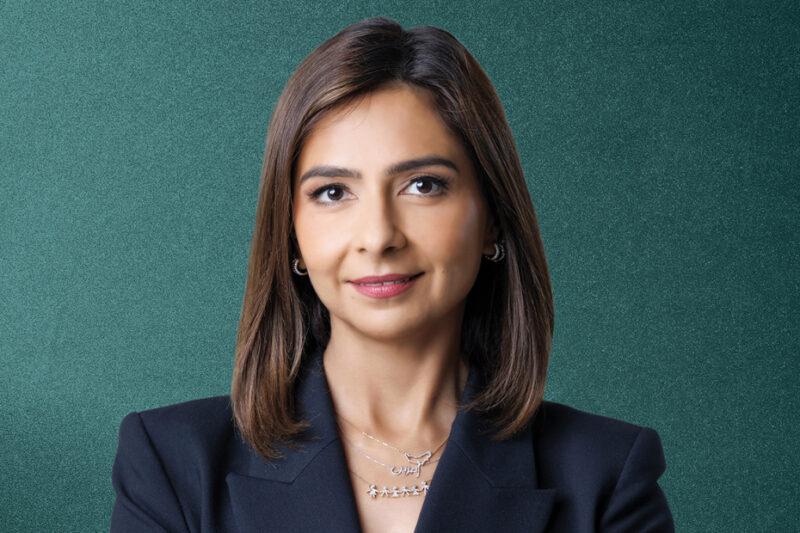
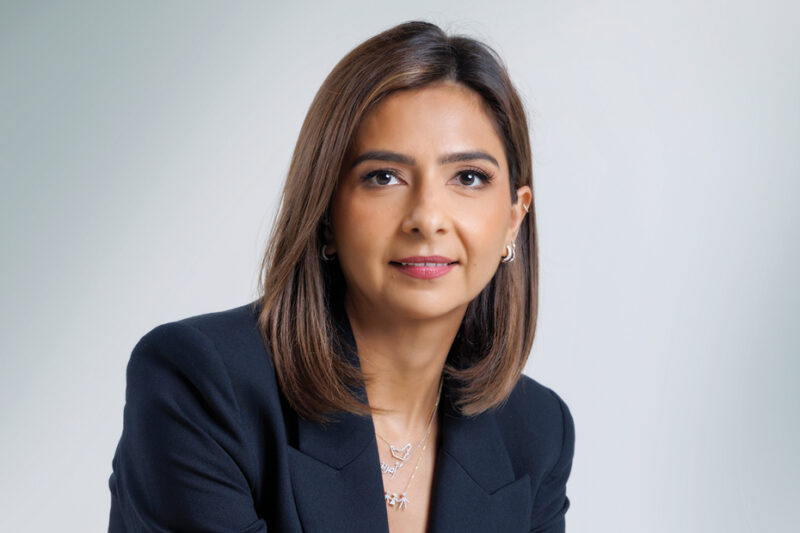
Amreen Iqbal, founder of Piece of You, is proving that jewellery is more than just an accessory — it’s a timeless connection to life’s milestones
Image: Motivate Media Group/ Supplied
Jewellery is not just about adornment — it’s about capturing moments, emotions, and memories that last forever, says Amreen Iqbal.
For Iqbal, the founder of Piece of You , jewellery is more than just a luxury or a decorative accessory. It’s a reflection of life’s most meaningful moments; a creation of something truly personal and lasting. It’s this deep, emotional connection to jewellery that led her to create Piece of You, a brand that has quickly become the go-to brand in the personalised, bespoke jewellery space.
Like her brand, Iqbal’s journey is a meaningful narrative of passion, perseverance and family. It’s a story that weaves together her roots in a family business, her entrepreneurial spirit and her ‘sparkling’ vision for the future.
Iqbal’s passion for jewellery isn’t just a product of her creativity – it runs in her blood. Growing up in a family deeply entrenched in the jewellery trade, she was surrounded by the sights and sounds of goldsmiths, diamonds, and the ever-evolving world of high-end craftsmanship. Her father, Firoz Merchant, is the founder of Pure Gold Jewellers, a recognised and trusted name in the industry. Watching him build a brand from the ground up was a formative experience for Iqbal, one that would shape not just her understanding of the jewellery industry, but also her approach to business.
Learning from the best
“I had the privilege of learning under the guidance of my father,” Iqbal reflects. “He has been a true mentor, shaping my understanding of business, not just from a technical perspective, but also in terms of ethics and values. His wisdom and leadership have been instrumental in everything I do today.”
Her father’s influence is evident in how Iqbal runs her business. The commitment to quality, transparency, and customer satisfaction are values that Iqbal has carried with her, and they are reflected in every piece of jewellery she creates.
One moment that stands out for Iqbal as a testament to the legacy she’s building is when someone approached her father, and said, “Oh, you’re the father of Amreen?” “That moment is unforgettable for me,” Iqbal reflects. “It was a powerful reminder of the legacy I want to create – not just for myself, but for my parents and my children. I want to be known as a hardworking founder who has made a name for herself in this industry.”
Iqbal’s journey as an entrepreneur didn’t come by chance; it was a deliberate decision to follow her passion for jewellery design and make it her own. After years of crafting bespoke pieces for family and friends, her husband, Amran, encouraged her to take the leap and turn her craft into a business. “It was after the birth of our third child, Omar, that Amran pushed me to pursue my dream,” she explains. “He saw how much joy creating personalised pieces brought me and encouraged me to turn that passion into a brand. He truly believed in me, and that belief made all the difference.”
Piece of you: The birth of a brand
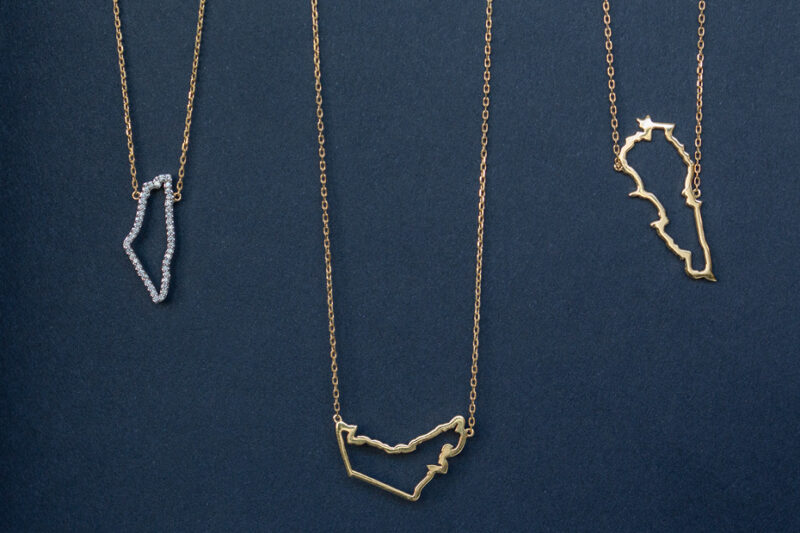
And so, Piece of You was born – an online jewellery brand that offers personalised, one-of-a-kind pieces that allow customers to capture their special moments in a way that’s as unique as they are. The brand’s one-of-a-kind pieces (rings, necklaces, earrings, bracelets) are crafted from pure 18-carat gold and adorned with diamonds, pearls and other precious stones.
The idea of personalised jewellery resonated deeply with customers, and the brand quickly gained traction. “I believe there’s something incredibly powerful about jewellery that carries personal significance,” Iqbal shares. “When you wear something that has meaning – whether it’s a name, a date, or a symbol that’s important to you – it becomes so much more than just an accessory. It becomes a part of your story.
“Piece of You is about capturing that personal connection and turning it into something tangible – it’s about being ‘uniquely you’.”
“We are proud to be pioneers in personalised jewellery — a space where others have tried to replicate our success,” Iqbal says with a sense of quiet confidence. “As the saying goes, imitation is the sincerest form of flattery, and we take pride in knowing that others look to us as a models. However, we will always remain distinct – and dare I say, better – than other brands.”
With over 35 years of family experience in the industry, coupled with nearly 20 years of her hands-on expertise working with gold and diamonds, Iqbal has developed a deep understanding of the craft. “Our knowledge and passion for the trade are at the heart of everything we do,” she explains.
Furthermore, the brand’s partnership with Pure Gold Jewellers provides an unmatched competitive edge, with Iqbal’s father playing a critical role in the operations, personally overseeing the manufacturing unit. “His involvement ensures the highest standards of ethics and quality at our factory,” Iqbal notes.
“With our manufacturing unit and the ability to purchase on a large scale through our partnership with Pure Gold Jewellers, we offer accessible luxury that goes beyond competitive prices. This combination gives us a distinct advantage in delivering high-quality, personalised jewellery at unparalleled value, she adds.
But while the brand’s distinctiveness is rooted in its expertise, vision, and commitment to quality, it is the power of social media that has enabled Piece of You to share its story with a global audience, transforming its appeal and growth trajectory.
Leveraging social media
Social media has become a game-changer for many businesses – and Iqbal’s journey with Piece of You was no exception. She knew that connecting with customers online was essential, but it wasn’t until her pieces were worn by influential personalities that her business truly took off.
“Social media has completely transformed the jewellery industry,” Iqbal explains. “When I started Piece of You, I knew that building an online presence was crucial. But it wasn’t until one of the influencers in Dubai wore one of our pieces that things started to take off. The response was overwhelming. It opened the floodgates for brand recognition and allowed us to reach customers we never could have imagined.”
The influencer’s endorsement catapulted the brand into the limelight, bringing Iqbal’s personalised designs to the attention of a wider audience. “It was a turning point for us,” she admits. “The exposure we gained through social media and influencers has been incredible. People loved the idea of personalised jewellery, and when they saw someone they admired wearing our pieces, it gave them the confidence to buy for themselves.”
With the power of platforms like Instagram, Piece of You has rapidly grown its following, reaching customers in the UAE and beyond. “The beauty of social media is that it allows us to connect with people globally,” Iqbal says. “Social media has truly allowed us to connect with people who are passionate about what we do, and it’s helped us tell our story in a more meaningful way.”
Like any entrepreneur, Iqbal faced her share of challenges when launching the brand, but she also had a significant advantage.
“I was incredibly fortunate to have minimal challenges in terms of suppliers and understanding the industry,” she admits. “Having worked in the jewellery business for over 12 years before launching Piece of You, I knew the ins and outs of the trade. However, establishing the brand in the market was a challenge. It’s never easy to carve a niche, especially in a market as competitive as Dubai.”
Despite the challenges, Iqbal’s persistence paid off. The brand is a rising star in the world of personalised jewellery. “Today, I’m proud to see Piece of You’s growth and success,” she says with a smile. “It’s a reflection of all the hard work and love I’ve put into the brand.”
Girl power
As a female entrepreneur in a traditionally male-dominated industry, Iqbal has encountered her own set of challenges. However, instead of viewing these as setbacks, she embraces them as opportunities to demonstrate her capabilities and create a path for other women to follow in the industry.
“I believe that as women, we all face challenges – especially in industries like gold and diamonds where women are often underrepresented,” she says. “But that is changing rapidly, especially in the UAE, where visionary leaders are empowering women to achieve their dreams. There is a space for everyone to succeed, and talent, drive, and passion are what matter the most.”
“The growth of Piece of You is directly tied to the growth of my entire team,” she adds. “As a leader, I’ve learned that delegation is key. When I first started, I struggled with letting go of control, but over time, I’ve learned that empowering others is essential for the growth of both the business and the people around me.”
Her leadership extends beyond her team to the broader community as well. “One of the things I’m most proud of is how Piece of You is able to give back,” she says. The brand’s ‘One Order = One Meal’ programme, which provides a meal to someone in need for every piece of jewellery sold, is just one example of how Iqbal strives to make a difference. “It’s about more than just making money. It’s about creating something that has meaning, that can help people, and that can make the world a better place.”
As much as she is dedicated to her business, Iqbal’s commitment to her family is equally unwavering. “In addition to being an entrepreneur, I am also a full-time mom to four amazing children, aged two to 12, who need me endlessly,” she says with a smile. “It’s a constant balancing act, but I believe that time management and proper planning are the most important factors when it comes to maintaining balance.”
Iqbal makes it a point to wake up every day at 5:30 am, carving out those extra hours to balance her many roles – both at home and in business. “As my brother, Karim Merchant, MD and CEO of Pure Gold Group, taught me early on, effective time management and planning can have a profound impact on every aspect of your life – business, family, mental health, and more,” she says. “As the saying goes, proper planning prevents poor performance.”
As e-commerce continues to reshape industries across the globe, Iqbal has fully embraced digital transformation, understanding the critical role technology plays in the modern consumer experience.
“E-commerce is definitely the future,” Iqbal says. “The ability to shop for jewellery from anywhere at any time is a game-changer. But what really excites me is how technology is transforming the jewellery shopping experience. Virtual try-ons, AI-assisted design tools, and augmented reality are revolutionising the way customers engage with our products.”
Piece of You was quick to adopt these advancements, offering customers the ability to design their jewellery online, see virtual mock-ups, and even try on pieces virtually before making a purchase. “These technologies are key to ensuring that our customers have a seamless and personalised experience,” Iqbal explains.
“We bring your unique vision to life and ensure it is delivered directly to your preferred location, combining convenience with a truly bespoke experience,” she adds.
Committed to sustainability
In today’s world, consumers are increasingly conscious of the ethical and environmental impact of their purchases. Iqbal has always been committed to sustainability and responsible sourcing, working with suppliers who share her values of transparency and ethical practices.
“Luxury doesn’t have to come at the expense of the planet,” Iqbal says firmly. “At Piece of You, we ensure that all our materials are ethically sourced. I work with trusted suppliers, ensuring that our jewellery meets the highest standards of quality and sustainability.”
As the brand continues to gain recognition, Iqbal is looking forward to expanding its reach even further.
“My goal for Piece of You is to establish ourselves as the world’s leading destination for personalised jewellery,” she reveals. With a growing demand for special-shape diamonds, such as hearts and stars, Iqbal is excited about introducing new designs that will appeal to consumers seeking both timeless elegance and bold individuality.
The future of personalised jewellery looks bright, and Amreen Iqbal is poised to lead the way. “We aim to remain leaders in this space, and we’re thrilled about the opportunities ahead,” she says. “It’s an exciting time, and I’m proud to help people express their individuality and create meaningful connections through jewellery.”
___
Leadership lessons: Amreen Iqbal’s advice for aspiring women entrepreneurs
Find your passion: Pursue a career or business that truly makes you happy. Your passion will drive you even when times get tough.
Build a strong support system: Having a strong support system at home is essential. Whether it’s your spouse, family, or even house help, don’t be afraid to ask for help when you need it.
Stay true to your values: Integrity and honesty are everything in business. Never compromise your values, no matter how tempting the shortcut may seem.
Delegate and trust your team: When you empower others, you allow them to help you achieve your vision. Leadership is about bringing out the best in those around you.
Embrace social media and technology: Social media can truly elevate your business. Build a community around your brand, and let your customers become your advocates. Incorporating technology is also key to business success in the digital age.
source: http://www.gulfbusiness.com / Gulf Business / Home> UAE > Dubai / by Neesha Salian / December 26th, 2024
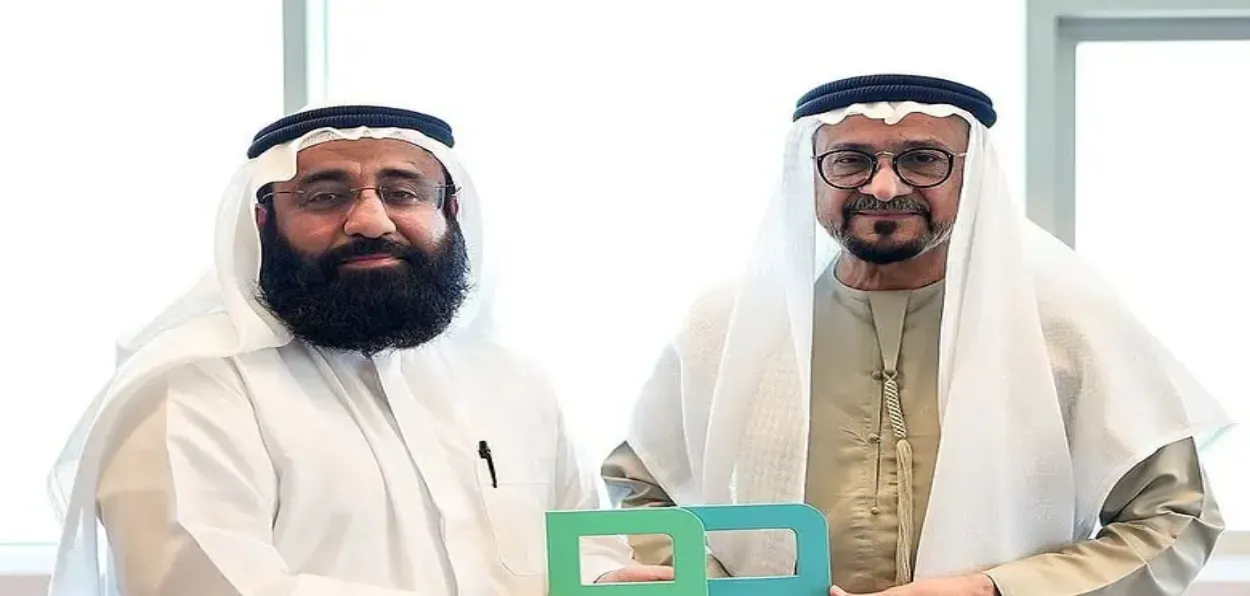
Firoz Merchant (Left) donating the cheque to Khalid Al Olama, Secretary General of the Dubai Charity Association
New Delhi :
Mumbai-born Indian businessman Firoz Merchant has donated AED 1 million (approximately Rs 2.25 crore) to the Dubai Charity Association to support kidney patients and release prisoners.
Firoz, a philanthropist is the founder and chairman of Dubai’s Pure Gold Group. The donation will be used for dialysis at the Dubai Charity Association and his initiative of paying the fines of prisoners who have served their terms in jails and have been languishing as they cannot pay the fines imposed on them.
Khalid Al Olama, Member and Secretary General of the Dubai Charity Association, posted the story about Merchant’s charity on Instagram. He thanked Feroz and said it would be of great help to the kidney patients.
He said, “This donation is not just a financial contribution. It is a symbol of Pure Gold Group’s social responsibility and commitment to community welfare. We are proud of this Group’s collaboration. We are grateful for its continued support for humanitarian work in the UAE. This collaboration allows us to expand healthcare services and help more patients.”
After donating to the Dubai Charity Association, Firoz Merchant said, “I would like to thank the Dubai Charity Association for their continued dedication to humanitarian causes. I believe that everyone has a fundamental right to access the best medical care in the world. I am happy that I could contribute to this community service.”
Firoz Merchant’s social work has made a big difference in the lives of many poor and vulnerable people. Firoz’s ‘Forgotten Society’ initiative has freed more than 20,000 prisoners in the UAE since 2008. For this, he waived the prisoners’ debts and arranged for them to fly back to their countries. In 2024, he gave crores of rupees to free 900 prisoners before Ramadan.
In 2017, he announced to provide an annual sum of US$130,790 to repatriate prisoners from the UAE to their home countries. Feroze is fulfilling his social responsibility by helping the needy in society. Mumbai-born Firoz Merchant is well known for his jewelry business and above all human service in the UAE. Each year before Ramazan, he gets prisoners who are languishing in jails after serving their terms but unable to pay the fines imposed by the Courts on them freed from the UAE’s jails.
Firoz set up ‘The Forgotten Society’ in 2008. Each years the society hands over a cewrtain amount to the UAE government as the cumulative fine amount for the release of prisoners
Merchant had to drop out of school due to financial difficulties and he moved to UAE where he worked and gradually established his business.
Firoz Merchant says he does this to ensure that the prisoners can return to their homes before Ramazan. ‘The Forgotten Society’ arranges tickets for the air travel of prisoners. Firoz Merchant, 66, is the owner ‘Pure Gold Jewellers which he set up in Dubai in 1989. He claims to live up to the name of his business and sell only quality jewelry to his customers.
Firoz Merchant says after becoming a brand and enjoying a monopoly on the jewelry market of Dubai and later Abu Dhabi, he wants to expand globally with his new design jewelry.
All the exquisite gold-diamond designer jewelry of ‘Pure Gold Jewellers’ is available for sale online.
While selling designer jewelry, one day Firoz Merchant thought of freeing the prisoners lodged in various jails who don’t have a relative and resources to pay the fine imposed on them by the court as part of the punishment.
Due to his charity, 700 prisoners were released in 2019 and 900 the next year. Till a year ago his initiative has helped more than 20,000 prisoners.
Merchant says his deed is a message of humility, humanity, forgiveness, and kindness during Ramzan.
source: http://www.awazthevoice.in / Awaz, The Voice / Home> Story / by Awaz The Voice / March 12th, 2025