Monthly Archives: May 2026

Reclaiming Truth, Restoring Memory: History as a Source of National Guidance

NEW DELHI :

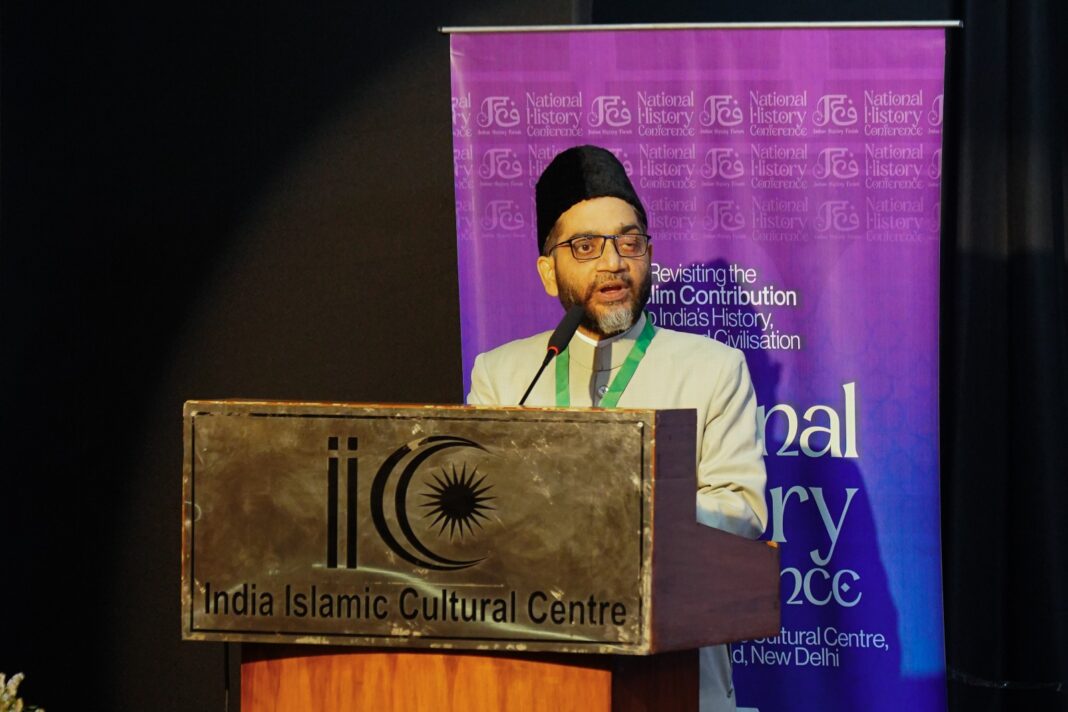
Syed Sadatullah Husaini, a prominent Islamic Scholar, speaks at an event organised by the Indian History Forum at the India Islamic Cultural Centre in New Delhi on April 11, 2026.

The Indian History Forum hosted a two-day event in Delhi on April 11 and 12, highlighting the contributions of Muslims to Indian history. Several scholars, intellectuals, academicians and Parliamentarians took part and delivered insightful speeches at the event. For the benefit of its readers, India Tomorrow has serialised the full texts of selected speeches by some of the event’s most prominent speakers.

Here is the full text of the speech delivered by Syed Sadatullah Husaini, a prominent Islamic scholar, who happens to be the patron of the Indian History Forum.

“The real purpose of the conference is to understand the history of India from the right perspective. History is very important for any nation. It is said that every nation lives twice, once in reality and once in memory. Reality follows memory. Today’s reality will be shaped by our memories.

Every nation is defined not only by its achievements but also by its memory, what it chooses to remember and what it tends to forget. Therefore, it is important that we remember correctly. Our memory should be accurate. History is not merely nostalgia; it is not just information. It is a source of guidance. It is a source of civilisational wisdom in the light of which we embark on our journey today.

So, ladies and gentlemen, this conference is not just an event. In fact, there is a greater purpose behind it. Our country, India, should not forget an important part of its history. Collective amnesia should not make us victims of collective oblivion. The disease of oblivion is harmful to an individual, and similarly, it is harmful to nations.

The benefits of history and memory are conditional, and I am very happy that today’s learned speakers have shed light on these conditions, what constitutes the right history and what kind of research is needed to benefit from history. It is important that history is read and understood with neutrality.

History should be viewed with realism. It should not be interpreted based on personal likes and dislikes. It should not be reduced to dividing characters into binaries of hero and villain. All these approaches harm our collective memory. Therefore, history should be written and understood with seriousness so that it becomes a true source of guidance.

Why is there a need to look at history in this way? Our speakers have shed light on this from different perspectives. Some challenges are global in nature, while others are rooted in our country’s specific political context.

As far as the global situation is concerned, we are living in a time when the difference between truth and falsehood has become minimal, a post-truth condition. Some have rightly observed that history is no longer being written; it is being curated, amplified, and weaponised.

History is curated, amplified, and weaponised. It is distributed on a large scale through algorithms and filtered through the lenses of likes and dislikes. Such history does not enlighten; rather, it misguides the nation. It does not contribute to nation-building but instead leads to polarisation and division, ultimately weakening the nation. This is precisely what we are witnessing in our country today.

If history is reduced to propaganda, society is deprived of its memory and its ability to think critically. Therefore, we believe that a serious and sincere study of history, a genuine search for truth and factual accuracy, is the responsibility of every citizen. It is their duty. Supporting this responsibility is the real purpose of this conference and this movement.

The central theme of this conference, as you all know, is the contribution of Muslims in Indian history. We believe that this issue has become one of the most problematic areas due to distortion. History is not only distorted by what is written but also by what is omitted.

There are three ways to distort reality: deletion, distortion, and generalisation. Deleting facts and erasing them from memory is one method. Distorting facts is another. And generalising, turning specific instances into stereotypes, is the third way of destroying truth.

Today, history is being subjected to all three forms of distortion. A large part of Muslim history is being deleted, from textbooks, discussions, debates, and the collective memory of the country. Another large part is being distorted and presented inaccurately, often through powerful mediums like films. Meanwhile, the media frequently engages in generalisation.

For instance, if there is an incident involving an attack on a temple, it is generalised into the claim that Muslims destroyed temples everywhere and built mosques over them. Such narratives distort reality. We want to revisit history, not to glorify any community, but to restore truth and present historical facts accurately. This is the real objective of this conference.

It has been rightly mentioned that the history of Muslims in India is not a marginal story. Rather, it has played a central role in the making of this country. Muslims are not appendices to Indian history; they are co-authors of its civilisational journey.

They did not come as invaders like later colonial powers such as the British. Rather, they came as contributors and builders. They did not plunder the country or transfer its wealth elsewhere. Instead, they contributed to its growth and progress.

The discussions and exhibitions in this conference will demonstrate that the story of Muslims in India is a story of connections, economic, cultural, and intellectual. They connected India with the wider world and facilitated interaction among different communities within the country. This exchange enriched Indian civilisation and elevated it to new heights.

The theme of Oceanic Islam highlights how the Indian Ocean became not just a body of water but a highway of ideas, ethics, and coexistence through Muslim networks.

When we talk about history, we often focus on rulers, the chronology of battles, dynasties, and empires. However, real history is the history of society, the life of the common people. This social history is rich and meaningful.

Through this conference, you will learn how Muslims built institutions, advanced knowledge and sciences, developed arts and skills, and contributed to languages and literature. You will see how markets, ethics, traditions, and everyday life were shaped, and how these contributions made the country prosperous and culturally vibrant.

As highlighted earlier, Muslims connected India to a global knowledge network. While India had ancient traditions of philosophy and learning, these were once confined within the region. Through translation movements, intellectual exchanges, and synthesis of traditions during periods like the Abbasid era, Indian knowledge became global.

In the domain of economy and trade, India once (during Mughal period) contributed nearly 30% to global GDP, with a significant share in world industrial production. We will explore how such achievements were made possible.

Muslims also established inclusive markets where people of all castes and communities could participate equally. The emergence of languages like Urdu, through the fusion of Sanskrit, Arabic, and Persian, symbolised cultural synthesis and intellectual exchange.

In governance and institutions, contributions included revenue systems, urban development, and infrastructure. Special sessions will also highlight women’s contributions and their empowerment within the framework of Islamic teachings.

While all these contributions are important, I believe the most significant contribution of Muslims to this country lies in the principles of Islam, especially the message of Tauheed, the belief in One God, which also brought the message of the unity of humanity.

This principle created a deep bond among people. Allama Iqbal described it beautifully as Wahdat Khaiz Quwwat, the unifying force of Islam. In a land of diverse cultures, customs, and communities, this principle fostered unity and a sense of shared identity.

This unity was not merely political but social and civilisational, bringing together different peoples into a cohesive whole. It played a vital role in shaping the historical unity of the Indian subcontinent.

In this context, I would like to recall the words of Maulana Abul Kalam Azad from his historic address:

“We brought our treasure with us. This land was also full of treasures. We shared what we had, and it opened its treasures to us. We gave it the most precious gift it needed, the message of democracy and human equality.”

Respected elders and friends, this conference is not merely an academic exercise or a presentation of papers. It is the beginning of a movement, a movement to bring truth back into public discourse.

The truth must reach every heart. The veil of falsehood that has covered it must be lifted. Only then can we protect the unity, culture, and history of our country.

I call upon all of you, especially the students, to take up this responsibility, to carry this message of truth to every corner of the country.

This is the purpose of this conference, and I hope it marks the beginning of an important movement.

Thank you very much.”

source: http://www.indiatomorrow.net / India Tomorrow / Home> Education / by India Tomorrow / April 12th, 2026
Reclaiming Objective History: Addressing Narratives, Gaps and Challenges

NEW DELHI :

PIC

The Indian History Forum hosted a two-day event in Delhi on April 11 and 12, highlighting the contributions of Muslims to Indian history. Several scholars, intellectuals, academicians and Parliamentarians took part and delivered insightful speeches at the event. For the benefit of its readers, India Tomorrow is serialising the full texts of selected speeches by some of the event’s most prominent speakers.

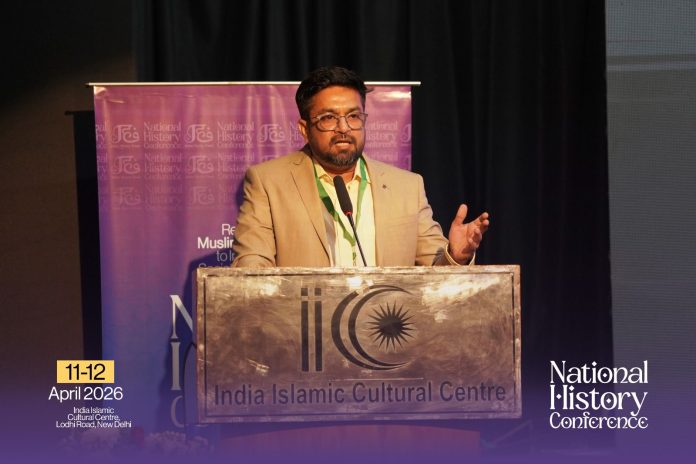
Here is the full text of the speech delivered by Dr Shadab Moosa, convener of the Indian History Forum:

“From Bengal to Gujarat, and from Kerala to Delhi, across universities, among professors, and with students pursuing PhDs and postdoctoral research, our interactions revealed a clear pattern. When we engaged with them and examined the challenges in the study of history, it became evident that there are three major problems.

The first problem, which you and I are well aware of, is that a very superficial, misinformed, and propagandist narrative of history is reaching our screens, mobile phones, and social media day and night. But if you look beyond this level, even if you have a little interest in history, whether you are a teacher, someone who teaches or designs a syllabus, someone related to NCERT, or among those who read serious media, you will see that alongside this, changes in NCERT and in school, college, and university history syllabi are altering the entire pattern of study and research. We understand that this is a very important and critical issue that needs to be identified, corrected, and given a proper objective narrative.

This is our primary duty. Beyond that, if you are an ordinary person, you must have visited a history museum with your family, taken your children to museums, or visited archaeological monuments. You will see that from museums to archives, from archaeological sites to the guides who show you around, history is a major issue everywhere. When we went t the Victoria Museum in Kolkata, it was a very magnificent museum.

If you go to that museum, you can feel that you have entered the colonial era. When you go to the first floor and observe the exhibits, you will see that the heroes of the First War of Independence of 1857 have been depicted there. However, you will find every person represented except the Muslims.

You will find every leader’s photo except those who led the 1857, those who played the most important and leading role in that movement. When we observed this phenomenon in many places, we motivated some of our research scholars to conduct a study of Indian museums to examine the extent of marginalisation and fake narratives present in them.

It is not a big deal to spread misinformation on WhatsApp today, but when it reaches Aasar-e-Qadeema(archaeology) and when those historical remains are manipulated, then there are serious problems. We have visited 50 universities in India where history is taught, and a syllabus is followed.

What is the challenge in these universities? When we talk about Muslim history, plural history, or objective history, the major challenge we identified is that within these universities, history is divided into three major domains: ancient, medieval, and modern history.

The most contested zone is medieval history. There are no contemporaries of medieval history, and there is a lack of new students interested in it. As a result, when someone attempts to discuss medieval history after 50 years, we face a crisis where there are very few students, PhD scholars, or post-doctorate researchers in this field.

The Indian History Forum will try to fill this gap. When discussing medieval history, we must understand that it is not just history. To understand it, you need knowledge of the Persian language, geography, and climate. History is not just about individuals or buildings; it is about language, geography, and culture.

When this culture becomes a geographical entity that we call Indian culture, and when we aim to present an objective and plural narrative, we must strive for a centrist approach. We do not want to lean left or right, but instead bring history to an objective and balanced position.

The second major challenge we identified is that historians have done immense work. People have dedicated their entire lives to writing books and conducting remarkable research. Professors have worked for 30 to 40 years and are the guiding lights of our nation. Their books are luminaries that continue to illuminate the field of history.

However, the biggest challenge is bringing this intellectual and academic work, often filled with jargon, into the public domain. Making it accessible as popular history and embedding it into public consciousness is what the Indian History Forum seeks to achieve.

Today, through fake narratives spread every minute and every second via algorithms, people’s minds and, consequently, societal behaviour are being manipulated. This manipulation is changing social psychology, which in turn is reshaping the political identity of the nation. This is a serious concern.

We often wonder how long we can keep responding to fake narratives. If you answer today, a new question arises tomorrow; if you answer tomorrow, another appears the next day. This becomes a never-ending cycle.

But there is a simple solution: if you want to make a line appear smaller, draw a bigger line next to it. That bigger line is the recognition that in the thousand-year span of medieval history, Indian Muslims have made immense contributions, in universities, science and development, civic infrastructure, city-building, food and cuisine, women’s leadership, and economic development.

Their role was so significant that India once had the highest GDP in the world. The Indian History Forum aims to bridge the gap between the common masses and historical texts and promote an objective understanding of history.

The third and final challenge is interpretation. Writing history is one thing, but interpreting it correctly is equally important. Without an objective lens, history cannot be understood properly. Whether one leans right or left, problems arise.

We recognise two major ideological challenges in revisiting history. The first is the colonial framework. Much of today’s biased and propagandist history traces back 150 years to British historians like James Mill, Henry Elliot, and John Davison, who wrote highly biased and communal accounts. These narratives continue to influence modern interpretations, whether in academic writing, media, or social platforms.

The second challenge is communal narratives. We must understand that this country has a thousand-year history marked by love, education, development, and harmony. It is a legacy where cultures evolved, people learned to live together, and India emerged as a global leader in philosophy, culture, food, clothing, and education.

The Indian History Forum will work across all these areas. Inshallah, through our conferences, prominent professors and historians will engage with you. Our programmes will focus on four major areas.

First, we will examine economic contributions, how economic systems, currency, mechanisms, land reforms, agricultural revolutions, and trade routes were developed, and how India’s goods and influence reached global markets. A strong regulatory economic system based on justice, equality, and moral integrity enabled India to become a prosperous nation.

Next, we will discuss the contributions of women and highlight the extraordinary roles they played. Following that, we will explore urban planning, administration, and infrastructure.

For example, building large cities in medieval India required advanced systems, water management, security, technology, and architectural innovation. These were not simple tasks but complex achievements.

We will also examine key industries. For instance, while the British introduced railways, the development of steam engine technology suitable for India’s diverse terrain required local adaptation. Unlike Europe’s plains, India’s geography demanded advanced engineering solutions.

This thousand-year history remains one of the most significant aspects of our past. We aim to establish an objective and centrist narrative. With such a perspective, we welcome you and hope that you will find this programme intellectually enriching and engaging.”

As reported in India Tomorrow

source: http://www.radiancenews.com / Radiance News / Home> Features / by Radiance News Bureau – As reported in India Tomorrow / April 13th, 2026

Rs 1 crore to be provided for Beary community hall in Kodagu: Speaker U T Khader

Mangaluru / Madikeri (Kodagu District), KARNATAKA :

Rs 1 crore to be provided for Beary community hall in Kodagu: Speaker U T Khader

Madikeri:

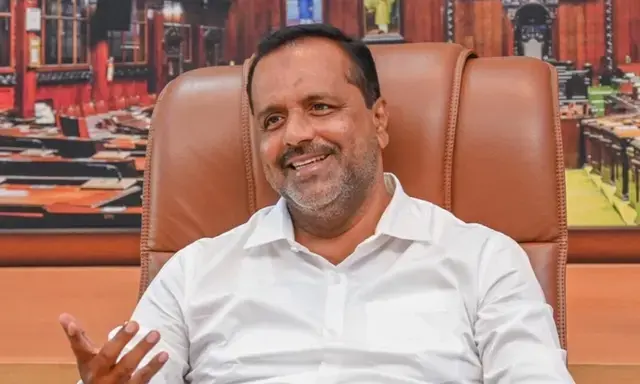
Karnataka Legislative Assembly Speaker U T Khader said that Rs 1 crore will be allocated for the construction of a Beary community hall in Kodagu district, and directed officials to identify suitable land for the project.

He was speaking after inaugurating the first Kodagu District Beary Literary Conference organised by the Karnataka Beary Sahitya Academy in association with the Kodagu Bearys Welfare Trust.

The event was presided over by B A Shamshuddin. Khader said the grant of Rs 1 crore would be facilitated with the support of local MLA Mantar Gowda and Virajpet MLA as well as Chief Minister’s legal advisor A S Ponnanna.

Highlighting the cultural importance of the community, he said Beary culture, literature and traditions have a distinct history and called for efforts to preserve and promote them.

He said the literary conference would help encourage discussions, strengthen the Beary language, and guide the community towards development. It would also help educate youth about Beary literature, culture and history, and provide a platform for exchange of ideas.

Khader also stressed the importance of learning and respecting all languages, stating that in a globally connected world, multilingualism promotes harmony.

Speaking on the occasion, MLA Mantar Gowda assured that funds would be released once land is identified for the construction of the community hall.

source: http://www.msn.com / MSN / Home / by Newspoint / April 2026