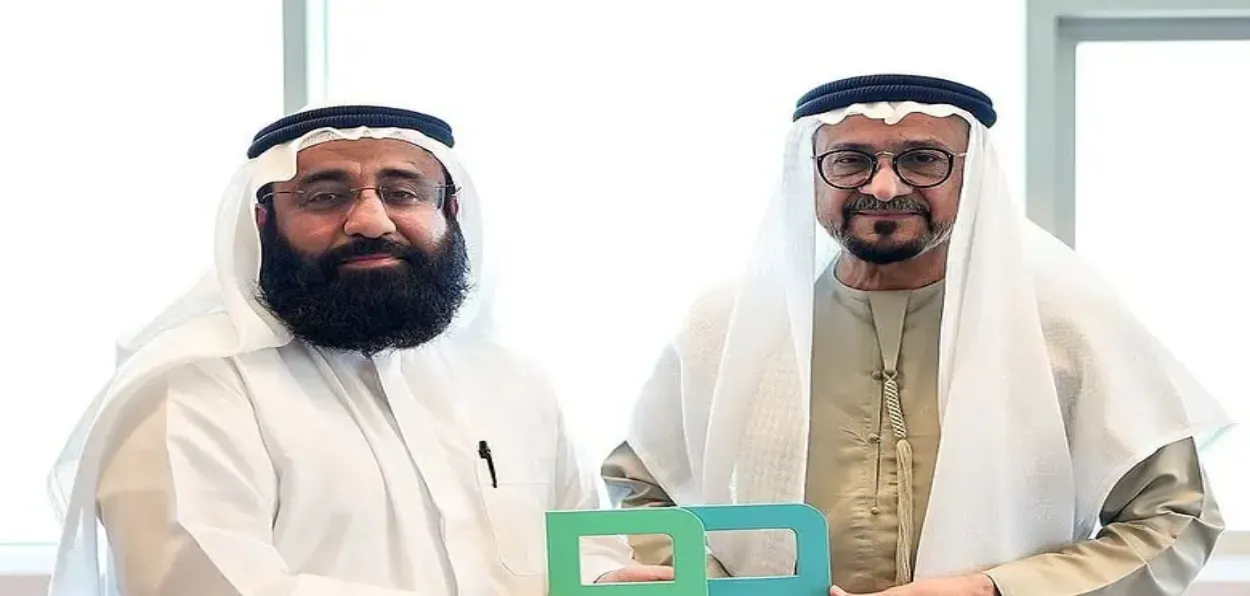
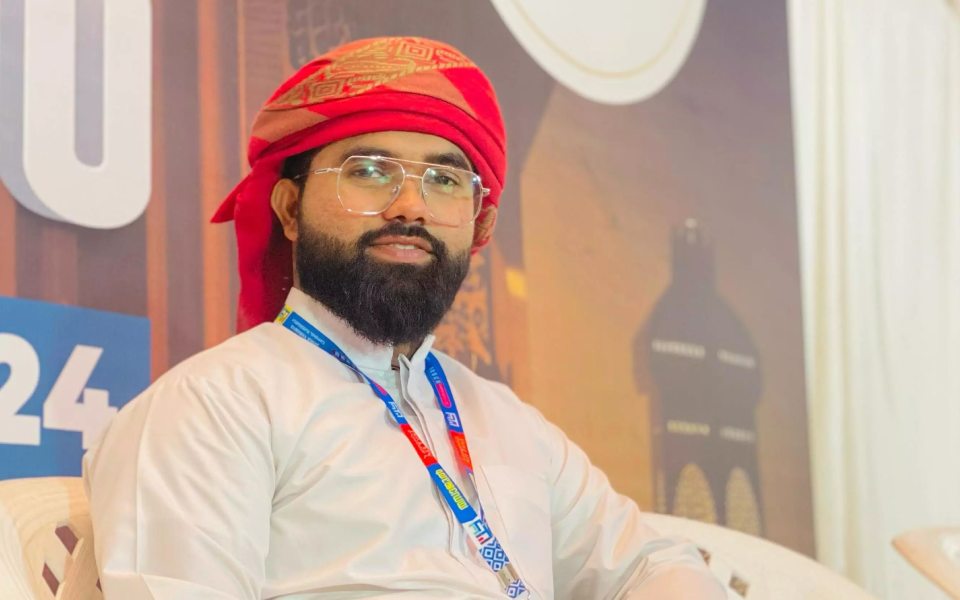
Firoz Merchant (Left) donating the cheque to Khalid Al Olama, Secretary General of the Dubai Charity Association
New Delhi :
Mumbai-born Indian businessman Firoz Merchant has donated AED 1 million (approximately Rs 2.25 crore) to the Dubai Charity Association to support kidney patients and release prisoners.
Firoz, a philanthropist is the founder and chairman of Dubai’s Pure Gold Group. The donation will be used for dialysis at the Dubai Charity Association and his initiative of paying the fines of prisoners who have served their terms in jails and have been languishing as they cannot pay the fines imposed on them.
Khalid Al Olama, Member and Secretary General of the Dubai Charity Association, posted the story about Merchant’s charity on Instagram. He thanked Feroz and said it would be of great help to the kidney patients.
He said, “This donation is not just a financial contribution. It is a symbol of Pure Gold Group’s social responsibility and commitment to community welfare. We are proud of this Group’s collaboration. We are grateful for its continued support for humanitarian work in the UAE. This collaboration allows us to expand healthcare services and help more patients.”
After donating to the Dubai Charity Association, Firoz Merchant said, “I would like to thank the Dubai Charity Association for their continued dedication to humanitarian causes. I believe that everyone has a fundamental right to access the best medical care in the world. I am happy that I could contribute to this community service.”
Firoz Merchant’s social work has made a big difference in the lives of many poor and vulnerable people. Firoz’s ‘Forgotten Society’ initiative has freed more than 20,000 prisoners in the UAE since 2008. For this, he waived the prisoners’ debts and arranged for them to fly back to their countries. In 2024, he gave crores of rupees to free 900 prisoners before Ramadan.
In 2017, he announced to provide an annual sum of US$130,790 to repatriate prisoners from the UAE to their home countries. Feroze is fulfilling his social responsibility by helping the needy in society. Mumbai-born Firoz Merchant is well known for his jewelry business and above all human service in the UAE. Each year before Ramazan, he gets prisoners who are languishing in jails after serving their terms but unable to pay the fines imposed by the Courts on them freed from the UAE’s jails.
Firoz set up ‘The Forgotten Society’ in 2008. Each years the society hands over a cewrtain amount to the UAE government as the cumulative fine amount for the release of prisoners
Merchant had to drop out of school due to financial difficulties and he moved to UAE where he worked and gradually established his business.
Firoz Merchant says he does this to ensure that the prisoners can return to their homes before Ramazan. ‘The Forgotten Society’ arranges tickets for the air travel of prisoners. Firoz Merchant, 66, is the owner ‘Pure Gold Jewellers which he set up in Dubai in 1989. He claims to live up to the name of his business and sell only quality jewelry to his customers.
Firoz Merchant says after becoming a brand and enjoying a monopoly on the jewelry market of Dubai and later Abu Dhabi, he wants to expand globally with his new design jewelry.
All the exquisite gold-diamond designer jewelry of ‘Pure Gold Jewellers’ is available for sale online.
While selling designer jewelry, one day Firoz Merchant thought of freeing the prisoners lodged in various jails who don’t have a relative and resources to pay the fine imposed on them by the court as part of the punishment.
Due to his charity, 700 prisoners were released in 2019 and 900 the next year. Till a year ago his initiative has helped more than 20,000 prisoners.
Merchant says his deed is a message of humility, humanity, forgiveness, and kindness during Ramzan.
source: http://www.awazthevoice.in / Awaz, The Voice / Home> Story / by Awaz The Voice / March 12th, 2025
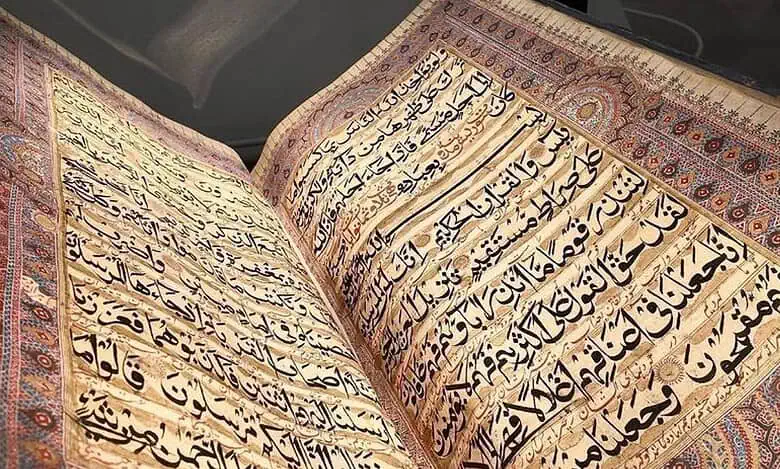
Indian calligrapher Ghulam Mohiuddin transcribed this manuscript.
pix: SPA
Jeddah:
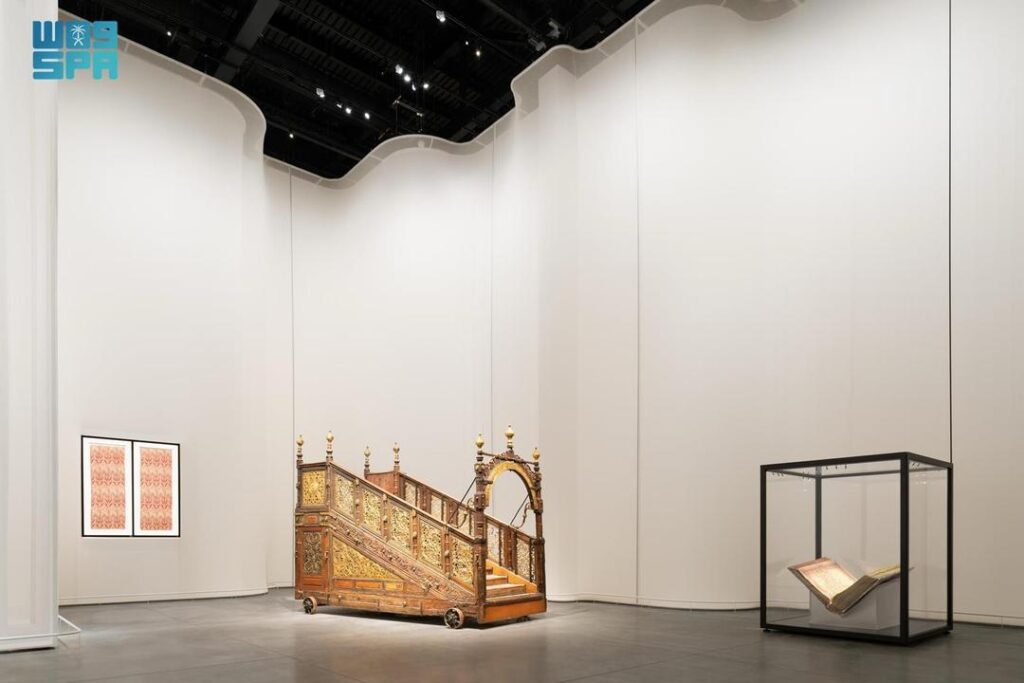
A two-century-old Quran manuscript, transcribed in India, is now on display at the Islamic Arts Biennale at the Western Hajj Terminal of King Abdulaziz International Airport in Jeddah, Saudi Arabia.
Indian calligrapher Ghulam Mohiuddin transcribed this monumental Quran manuscript on the 6th of Muharram, 1240 AH (August 31, 1824 AD) in northern India. It was designated as a waqf (endowment) for the Prophet’s Mosque in Madinah, reflecting India’s deep historical ties to Islamic art and heritage.
Measuring an extraordinary 139.7 × 77.5 cm, the manuscript is embellished with gold, deep-colored pigments, and a cover originally encrusted with rubies, emeralds, turquoise, and peridot, making it one of the rarest Quran copies on display, the Saudi Press Agency (SPA) reported.
The text is written in black Naskh script, with a Persian translation in red Nastaliq, showcasing the Indo-Persian calligraphic style of the era.
Historical records indicate that the manuscript arrived in Madinah in the mid-13th century AH and was initially placed near Bab As-Salam before being moved to the mosque’s treasury during restoration in 1273 AH (1857 AD).
In 1302 AH (1884 AD), it was rebound by Hajj Yusuf bin Hajj Masoom Nemankani, a scholar and manuscript expert from Uzbekistan who later settled in Madinah.
Now preserved at the King Abdulaziz Complex for Endowment Libraries in Madinah, this rare Indian-transcribed Quran is a key attraction at the Biennale, celebrating India’s historical ties with the Islamic world and its legacy of artistic excellence.
source: http://www.siasat.com / The Siasat Daily / Home> News> Middle East / by Sakina Fatima, X / March 12th, 2025
Fathima has consistently excelled in academics, scoring 9.5 GPA in Class X and 943 out of 1,000 marks in intermediate.
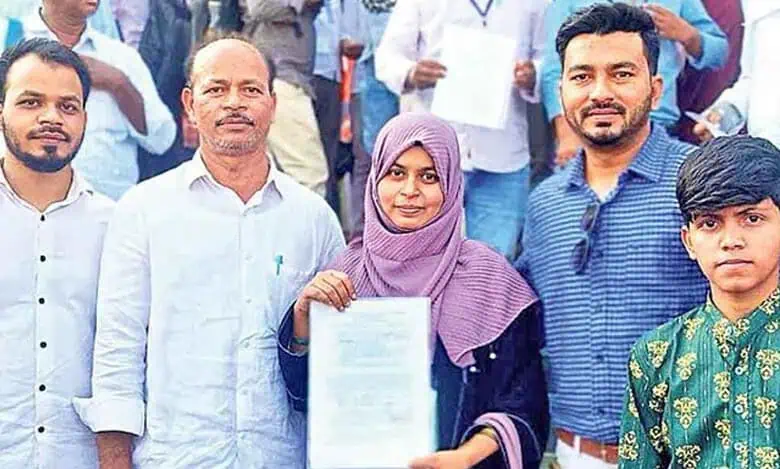
Taslima Fathima and family with the appointment letter in Hyderabad.
Hyderabad:
Taslima Fathima (26), the daughter of a hammal (loading, unloading labour) at a civil supplies godown in Sadasivapet, has secured first rank in the Junior Lecturer (Zoology) recruitment examination in Telangana.
Fathima, a resident of Ishrathabad, will now begin her career as a lecturer at the Government Junior College in Sadasivapet, her hometown. Her father, SK Babumiya, who has worked as a labourer for three decades, expressed pride in her achievement. He recalled the financial struggles he faced to support his two children’s education.
Despite studying in Urdu medium until Class X, Fathima overcame challenges by switching to English medium for intermediate at Indo British Junior College, Sadasivapet.
She later completed her graduation at Women’s College, Koti. Excelling in academics, she secured sixth rank in TSPGCET and pursued a postgraduate degree in Zoology at Osmania University’s College of Science.
Less than two years after completing her post-graduation, she achieved the top rank in the Junior Lecturer recruitment exam following the state government’s job notification.
Speaking to Telangana Today, Fathima expressed her desire to give back to society by teaching students in Sadasivapet.
She also hopes to pursue a PhD and become a professor in the future.
Fathima has consistently excelled in academics, scoring 9.5 GPA in Class X and 943 out of 1,000 marks in intermediate.
source: http://www.siasat.com / The Siasat Daily / Home> News> Telangana / by Zahed Farooqui – X / March 15th, 2025
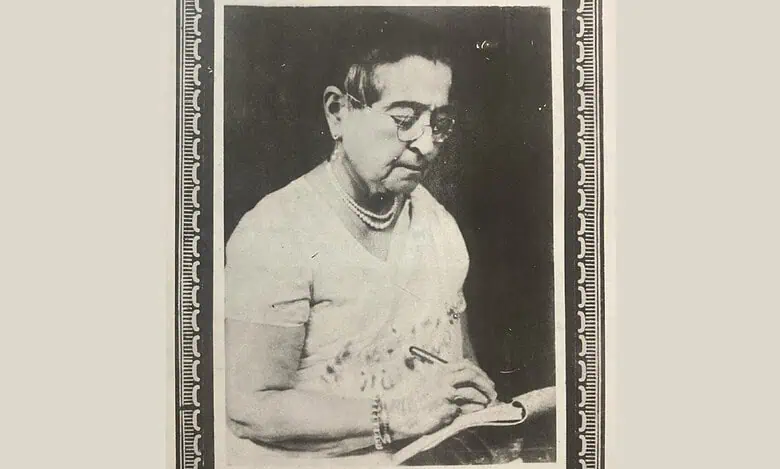
Sughra Humayun Mirza; Photo courtesy: Safdaria school
Today, we honour the legacy of Sughra Humayun Mirza Begum, whose courage and vision paved the way for future generations.
Sughra Humayun Mirza was born in December 1882 in Hyderabad. Her father, Dr. Safdar Ali Mirza, was a Captain-Surgeon in the Nizam’s Army and a pious man of Sufi leanings. He had migrated to Hyderabad during the reign of Mir Nizam Ali Khan, Asaf Jah Il.
Growing up Begum Sughra was home tutored in Persian and Urdu. As a young woman, she was inspired by nationalist and reformist ideals. She was married to Barrister Syed Humayun Mirza, after whom the Humayun Nagar area in Hyderabad is named.
Edited magazines
After her marriage, she travelled widely and read extensively and became a person of wide knowledge. Sughra Mirza served as the editor of many journals related to women. They include Al-Nisa (The Woman), and Zaib-un-Nisa (Women’s Adornment). Al-Nisa focused on social issues like cleanliness, health, nursing, and critiqued outdated customs like child marriage and polygamy. The readers of the magazine extended beyond the Deccan region. It spread throughout the mainland of British India, which included Lahore, Delhi, Lucknow and Aligarh.
By 1913, Begum Sughra became the secretary of the Anjuman-e-Khawatin-e-Islam (Association for Muslim Women), contributing to the organization’s efforts toward improving the status of women. Soon after, she joined the Anjuman-e-Khawateen-e-Dakkan (Deccan Ladies’ Association).
She spread her work
She started similar organisations in Madras, Delhi and Aurangabad. They became platforms for discussing issues related to girls’ education, teaching trades and crafts, fundraising for educational initiatives, vocational training and arranging sports activities for women.
Begum Sughra contributed articles to various newspapers and magazines advocating for social reforms. Being a prominent Urdu language writer of her time she authored several books on women’s education, ‘Safarnamas’ or travelogues, novels, short stories, poetry, and essays.
Wrote books
Some of her well known literary works include – Sarguzisht-e-Hajra (1926), Mohini (1929), Musheer-e-Niswan ya Zohra (1930), Raaz-o-Niyaaz (1933), Bibi Toori ka Khwaab (Toori’s Dream–1952), Awaz-e-Ghaib (Voice of the Unknown).
Begum Sughra wrote her thoughts and authored most of her books by the pen name ‘Haya’.
Writing about Hindu-Muslim unity, encouraging the use of swadeshi goods, working towards setting up national universities and promoting education in the mother tongue, Begum Sughra’s achievements set her apart as a pioneer of her era.
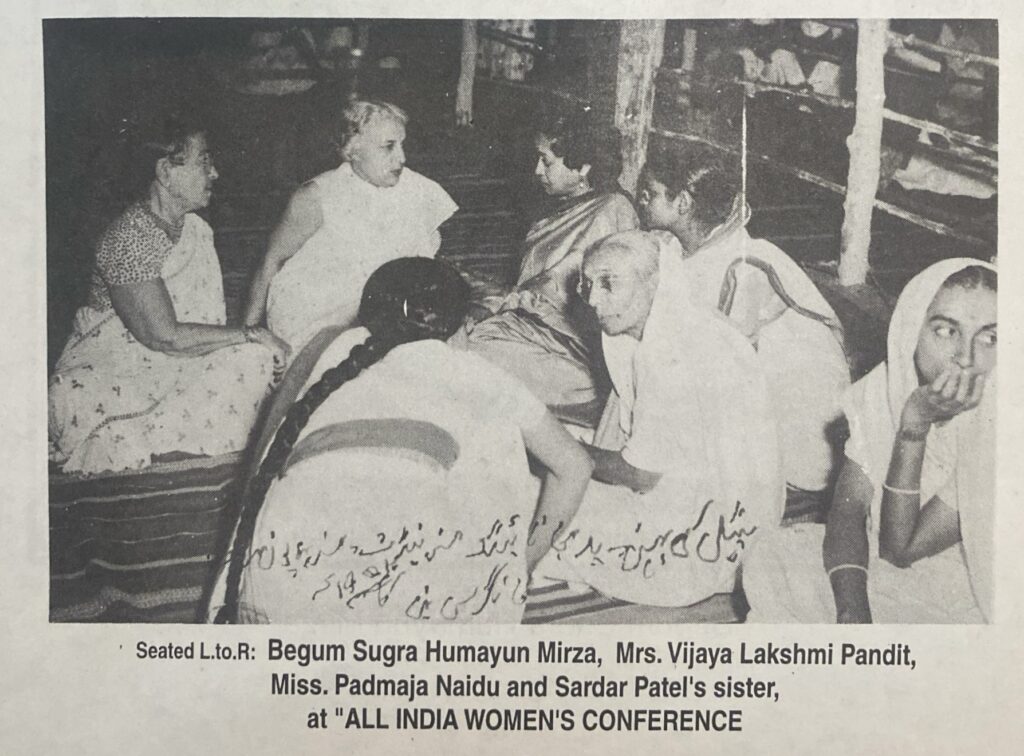
She extensively traveled in India as well as many countries in Europe meeting people of repute and broadening her horizons. She met prominent figures like Mahatma Gandhi, Kasturba Gandhi, Dr. Rajendra Prasad, Pandit Jawaharlal Nehru, Shah and Queen of Iran, Dr. Ravindranath Tagore, Vijaya Lakshmi Pandit, Sarojini Naidu and many others.
She expressed through her poems, books and letters. Begum Sughra wrote letters to Jawaharlal Nehru, and even to Adolf Hitler asking him to end the war.
She kept an autograph book which was filled with messages from her esteemed friends and acquaintances. On 11th April 1944, Vijaya Lakshmi Pandit penned a message in Sughra’s book–“India will progress in proportion to the progress of its women. Let us realize this and march forward boldly with faith in the future.”
Royal Asiatic Society, London
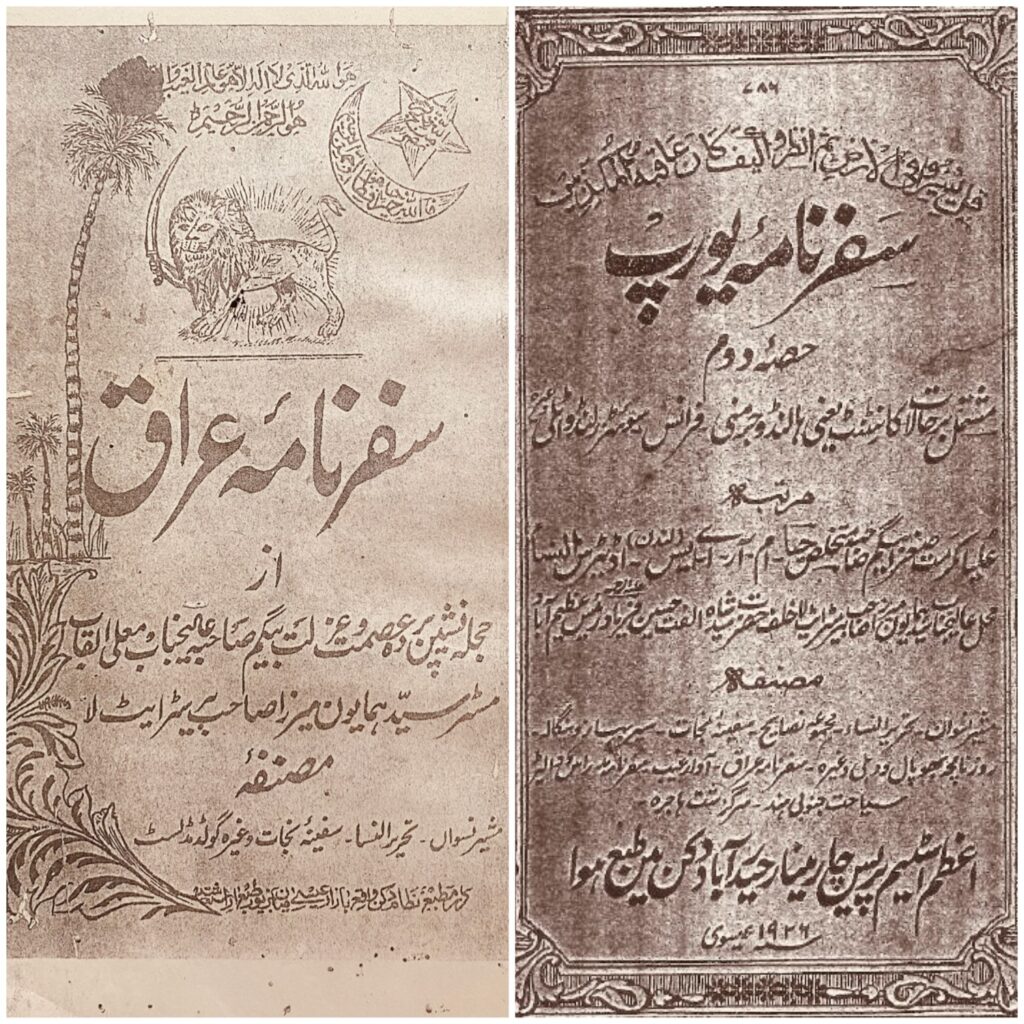
In 1923, she was made a member of the Royal Asiatic Society of London. Begum Sughra wrote five travelogues, three of which document her travels within India between 1914 and 1918, while two feature her journeys to Iraq in 1915 and through Europe in 1924.
Her domestic travel books focus more on social engagement and reformist ideas. Her international travels explore more her personal observations of the countries she visited, while discussing social issues.
In her travel book ‘Safarnama-yi Yurap’ published in 1926, she detailed her travels through England, Germany, France and Switzerland, and mentions about her time as a guest in Geneva of Sultan Abdulmejid II of Turkey, the last Ottoman caliph.
Madarasa-e-Safdaria
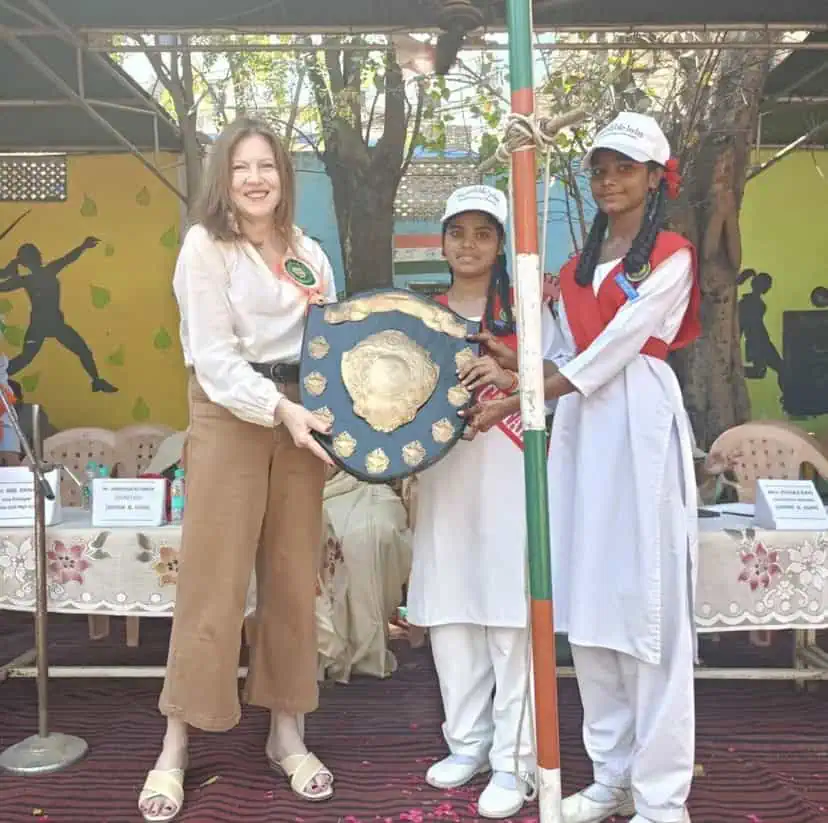
One of Sughra Begum’s most extensive educational projects was the Madarasa-e-Safdaria, which she founded in 1934, it has flourished since and is a beacon of education. Located in Humayun nagar
Safdaria school’s objective is to provide free of cost education to the girl child born in Hyderabad’s lowest socio-economic class families. Several dignitaries and luminaries have visited the school since its founding. They include Dr. C Rangarajan, former governor of A.P., Air Chief Marshal Idris Latif, former MP Denzil B. Atkinson, Kumudben Joshi, former governor of AP, Dr. Syed Abid Hussain, and very recently in 2025 U.S. Consul General of the US in Hyderabad, Jennifer Larson.
A few years back, the students of Safdaria school had the opportunity to visit Delhi to meet Dr A.P.J. Abdul Kalam at the Rashtrapati Bhavan.
Screenshot
Over the years, Safdaria School made rapid progress, achieving high standards of girls’ education at both Urdu and English medium levels.
When Begum Sughra founded the school, she had to donate her property for its maintenance to meet the expenses and give scholarships to orphans and girls from destitute families.
Her acts of kindness and service include directing her efforts in raising funds for Aligarh Muslim University, providing relief for those affected during the Musi floods of 1908, and even for the victims of an earthquake in Persia.
Standing firm
As one of the first woman activists in Hyderabad, Begum Sughra faced a great deal of challenges yet she stood firm in her resolve to work for women’s rights and their education. Her impact resonates far beyond her time, reminding us of the strength and resilience that women embody in every field and every corner of the world.
She’s a prominent figure in the history of Hyderabad who needs to be celebrated and recognised on a global platform.
Ameera Aaiza is based in Washington, DC, with her roots in Hyderabad, India. Her work explores history, culture, art, and architecture. She contributes columns and blogs and is currently in the process of writing/authoring a book.
source: http://www.siasat.com / The Siasat Daily / Home> News> Hyderabad / by Ameera Aaiza / March 12th, 2025
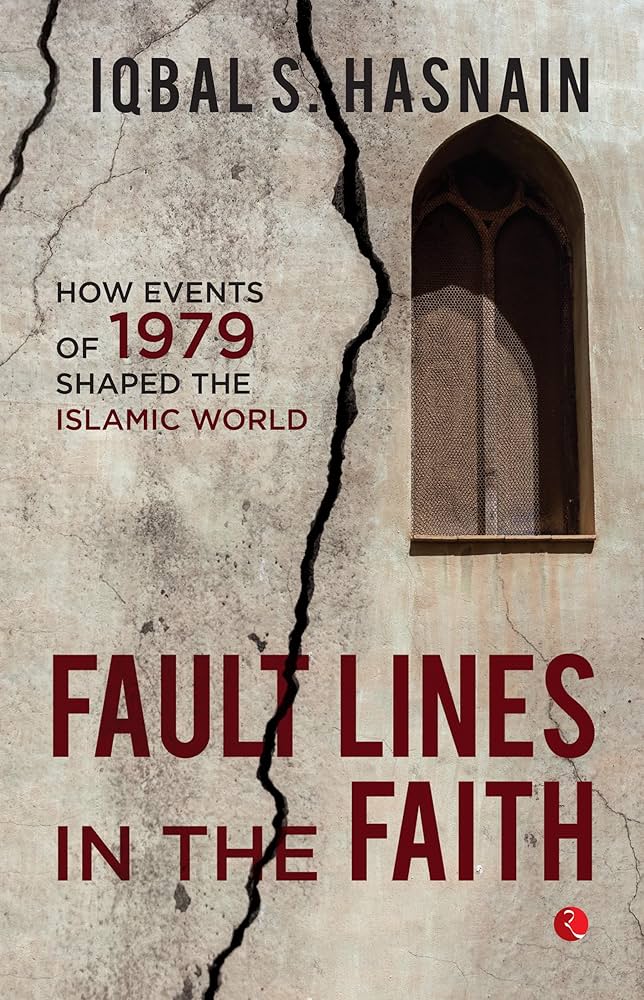
Padma Shri awardee Iqbal Syed Hasnain’s ‘Fault Lines in the Faith: How Events of 1979 Shaped the Islamic World’ was the topic of an animated discussion at Delhi’s IIC earlier this month.
The ‘Fault Lines in the Faith’ book discussion at IIC | Photo: Heena Fatima | thePrint
New Delhi:
A series of three momentous events irrevocably changed the social, religious, and political fabric of the Islamic world. And they all took place in 1979. This is the central argument of Padma Shri awardee Iqbal Syed Hasnain’s book Fault Lines in the Faith, which became the topic of a lively discussion among academics and history buffs at Delhi’s India International Centre on an early February evening.
Presiding over the panel discussion in IIC’s conference room, Hasnain, who is also an eminent glaciologist, elaborated on the three “fault lines” that sent shockwaves far beyond their immediate contexts.
First, the Islamic Revolution in Iran cleaved the Muslim world along sectarian lines with the establishment of the first Shia state. Second, the siege of Mecca ignited the conservative Sahwa (Islamic awakening) movement in Saudi Arabia, blending Muslim Brotherhood and Salafist ideologies. And third, the Soviet invasion of Afghanistan led to the birth of violent extremist groups like al-Qaeda and its offshoots.
“All these three pivotal points led to the surge of fundamentalist or Islamist jihad,” said Hasnain. He added that what began as a “normal struggle between invading forces and local communities” warped from nationalism to a violent ideological shift with devastating repercussions.
Iqbal S Hasnain | Photo: Twitter/@Rupa_Books
Hasnain further elaborated on the global impact of these events by sharing personal anecdotes from his time studying in the UK. He said he encountered strong anti-Western sentiment among students from Middle Eastern countries during his glaciology programme at the University of Manchester in the 1990s.
During Friday prayers in a large hall, he said, student speakers often delivered khutbahs (sermons) against Western culture and American exploitation of their regions, with some even advocating for jihad. As American involvement in the Middle East increased, especially with the invasions of Afghanistan and Iraq in the early 2000s, this hostility intensified.
pix: amazon.in
During the book discussion, audience members raised questions about Hasnain’s narrative. One participant, Sumanjeet Choudhary, a retired corporate executive, inquired why there wasn’t more opposition to jihadist activities despite Islam’s rich history and the presence of prominent leaders.
Hasnain countered this view with the example of Morocco’s King Mohammed VI, who has urged Moroccans worldwide to embrace tolerance and reject Islamist extremism.
“King Mohammed VI came out and he stopped the funding [of madrasas] from Saudi Arabia. He changed the whole narrative in the madrasas,” Hasnain said. He acknowledged, however, that while there is an ongoing debate within Muslim communities and their leadership about how to address extremism, it is “not very visible”.
Ripple effects
Hasnain’s book traces the rise of anti-pluralism, misogyny, and severe intolerance within the Arab world. The 1979 Shia Islamic Revolution in Iran, he said, shook the Sunni Arab world. In response, Saudi Arabia, fearing a Shiite revival, actively promoted puritanical Wahhabi Salafism, a strand of Islam that’s deeply hostile not only to Shias but also to Sunni Sufis. He, however, implicates the West as well. In February 1989, after nearly a decade of occupation, the Soviet army left Afghanistan, leaving behind a fractured nation, where tribal warlords and mujahideen groups engaged in an intense tussle for power. The US, having lost interest, “abandoned” the region, he added, leaving a vacuum for the likes of Osama bin Laden to fill.
Ultimately, Hasnain argues that the events of 1979 triggered a chain reaction, including 9/11, the US invasions of Afghanistan and Iraq, and the rise of al-Qaeda and ISIS. In 2021, in what seems like an eerie echo of the past, the US withdrew its troops from Afghanistan, leaving it with no democratic foundation and back in the grip of the Taliban.
When a participant asked about the impact of the 1979 events on India, Hasnain answered that the after-effects “were not limited to West Asia”, with radicalisation spreading to all corners of the world. “In India, to some extent, it was [mitigated] because India practiced a more moderate form of Islam , Hanafi Sufi Islam, which emphasised trade,” he added.
However, as more Indians went to work in Saudi Arabia, they were influenced by Salafi ideology, Hasnain said. For instance, those who’d grown up celebrating Eid-e-Milad (Prophet Muhammad’s birthday) stopped doing so after stints in Saudi Arabia, where Wahhabis do not observe such festivities.
One of the panel’s members was former Indian ambassador to Qatar KP Fabian. Chiming in, he said that it was important tomonitor developments in Muslim-majority countries, given India’s sizeable Muslim population. There may be political borders but “ideas come without a visa”, he pointed out, and vigilance is essential. He also claimed that Arab countries are keeping an eye on India’s Muslims. “They are watching us,” Fabian said. “They are also discreet.”
(Edited by Asavari Singh)
source: http://www.theprint.in / The Print / Home> Features> Around Town / by Heena Fatima / pix of book edited – source amazon.in / February 29th, 2024
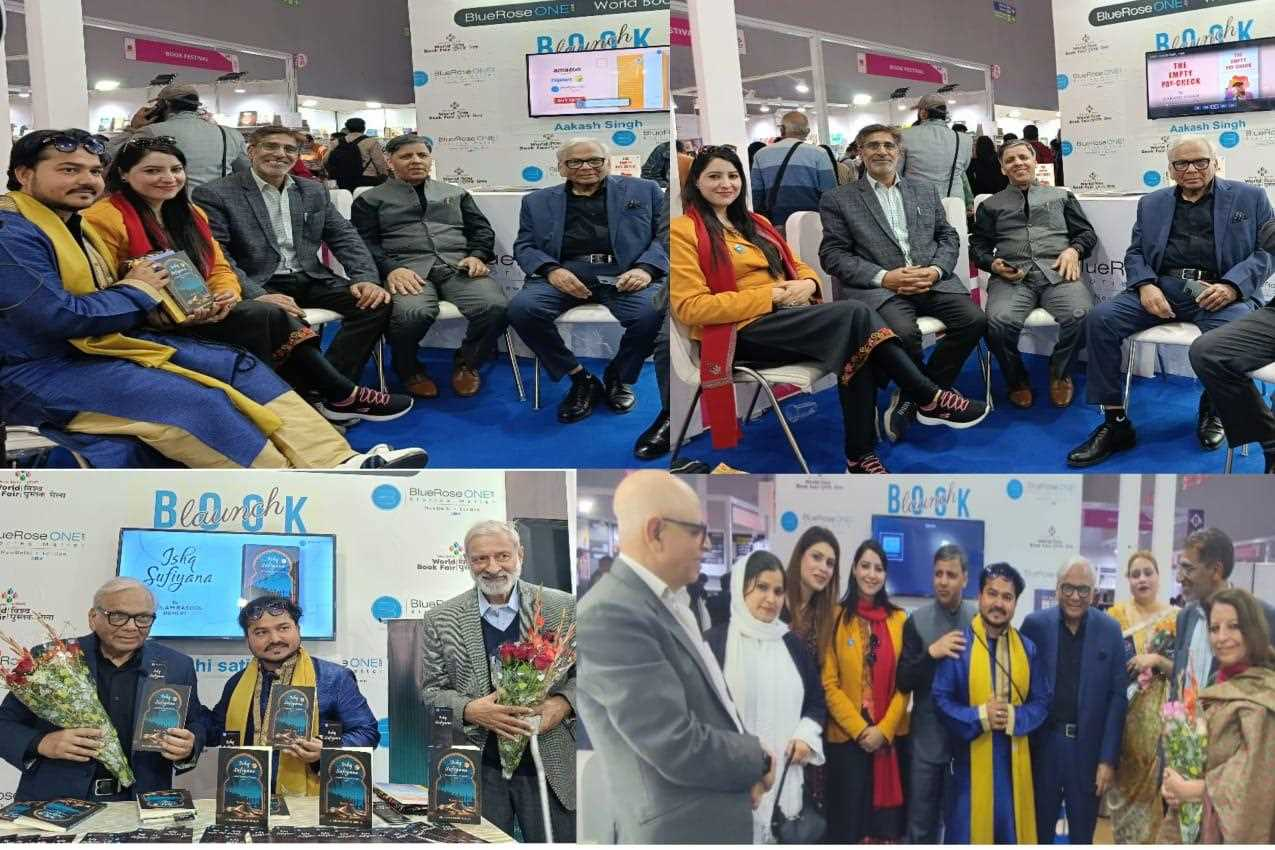
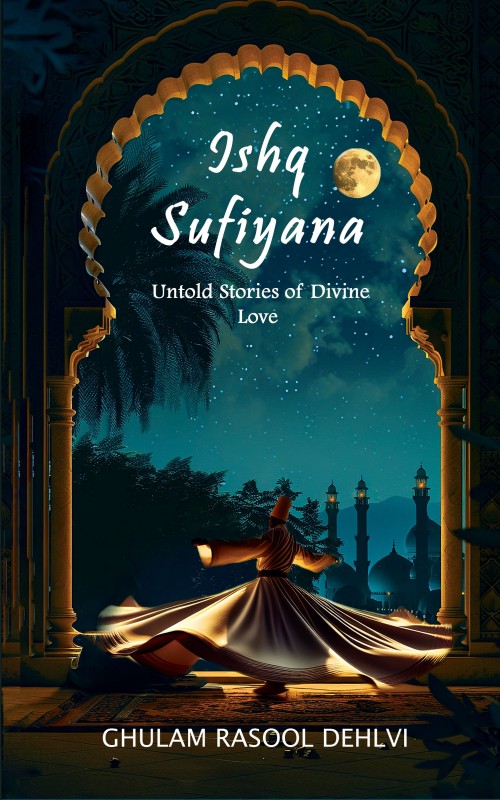
On the concluding day of the World Book Fair 2025, held in at Bharat Mandapam / Pragati Maidan New Delhi from February 1 to February 9, the book “Ishq Sufiyana: untold stories of divine love” by young writer and intellectual Ghulam Rasool Dehlvi was officially launched.
Ishq Sufiyana: Untold Stories of Divine Love / by Ghulam Rasool Dehlvi / image: blueroseone.com
The book launch ceremony took place at Stall No. 12 in Hall No. 6, with several distinguished personalities in attendance.
Notable figures present at the event included Kamlesh Sharma, former Secretary General of the Commonwealth and former Indian Ambassador to the United Nations (New York and Geneva), Padma Shri Professor Iqbal Hasnain, former Vice-Chancellor of Calicut University, Professor Madhu Khanna, former Director of the Department of Comparative Religions and Spirituality, Jamia Millia Islamia, Dr. Shahid Rasool, Dean of Academics at the Central University of Kashmir, Dr. Anita Benjamin, Founding Director of the Rashtriya Christian Mahasangh, Farooq Wani, Chief Editor of the daily Brighter Kashmir, Syed Abid Gowhar, renowned broadcaster and journalist from Jammu & Kashmir, Tasleema Akhtar, human rights activist, Tahmeena Rizvi, researcher, Dr. Rachika Arora, Syed Affan Yasawi, among others.
During this vibrant event, all the distinguished guests shared their thoughts about the book and its author. Ishq Sufiyana is a unique blend of reality and imagination. It creatively presents the real-life stories of thirty renowned Sufi saints of India.
The book among other Sufi intellects also highlights four revered saints and spiritual figures from the Kashmir Valley, Mir Syed Ali Hamdani (RA), Sheikh Noor-ud-Din Noorani (Nund Rishi) (RA), Sheikh Hamza Makhdum (RA) and Lal Ded (Lalla Arifa)
Additionally, Ishq Sufiyana includes a collection of narratives based on Sufism, ethics, and spirituality, many of which have been previously published in various newspapers and journals. The book aims to inspire seekers of all religions and spiritual traditions to dive into the ocean of divine love. The values and teachings of the personalities featured in the book remain relevant today, helping individuals grasp the depths of divine love that transcend worldly boundaries.
Ghulam Rasool Dehlvi is a well-known Sufi scholar, researcher, critic, speaker, and author based in Delhi. He is fluent in Urdu, Arabic, and Persian and is a trained scholar in Indo-Islamic traditions. He has received in-depth education and training in various spiritual orders, particularly the Naqshbandi, Qadiri, and Chishti Sufi traditions.
He has also undergone spiritual training and initiation under Turkish-origin Naqshbandi Sufi Sheikh Ashraf Effendi (Founder of Sufi Land, Germany). Pir Zia Inayat Khan (Global Head of the Inayati Chishti Sufi Order), American Sufi guide Pir Shabda Khan (Director, Sufism International, USA). He has studied under several esteemed Sufi scholars and spiritual elders in India. Recently, he was invited as a scholar-in-residence at the Bawa Muhaiyaddeen Fellowship (Philadelphia) and the Awliya Council of North America (New York, USA).
He has also served as an advisor on Islamic affairs for the National Security Council Secretariat, New Delhi.
Moreover, he has participated as a permanent representative of UN-affiliated NGOs at the United Nations Human Rights Council in Geneva, Switzerland.
The author is also an independent writer, poet, translator, and commentator.
source: http://www.brighterkashmir.com / Brighter Kashmir / Home> Breaking News / by Abid Gowhar / image of publication edited by blueroseone.com / February 12th, 2025
Her dedication to enhancing people’s quality of life sets her apart. With patience, empathy and strong communication skills at the core of her work, she has built deep connections with those she serves.
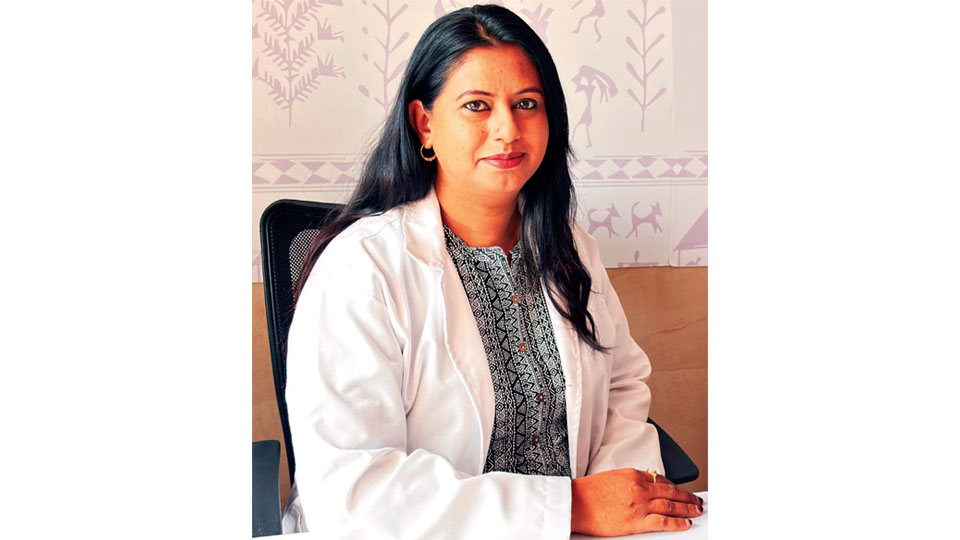
Introducing Irfana Husen, whose unwavering commitment to understanding the challenges faced by individuals with speech and hearing impairments not only improves their lives but also highlights the power of compassion in transforming communities.
In this special interview with Star of Mysore on the occasion of International Women’s Day, Irfana shares her journey, insights and the driving force behind her mission to create a more inclusive world. —Excerpts:
Star of Mysore (SOM): Tell us about the significance of the ‘Karnataka Brain Health Initiative’ and your involvement in it.
Irfana: The Karnataka Brain Health Initiative (KABHI), launched by the Government of Karnataka in collaboration with National Institute of Mental Health and Neuro Sciences (NIMHANS), aims to facilitate the early identification and management of neurological disorders such as stroke, epilepsy, dementia and headache. The initiative has established Brain Health Clinics in District Hospitals, integrating neurological care into primary healthcare.
My role involves assessing and rehabilitating patients with speech, language and swallowing disorders caused by neurological conditions. I work closely with neurologists, physiotherapists and other specialists to provide comprehensive care. Additionally, I actively participate in awareness campaigns and trainings to promote brain health and early diagnosis.
SOM: What inspired you to take up this profession?
Irfana: My motivation to pursue Speech-Language Pathology and Audiology was shaped by my experiences at the All India Institute of Speech and Hearing (AIISH) in Mysuru. Witnessing children seeking help ignited my passion for a field that can profoundly impact individuals with communication and hearing challenges. Many children suffer due to late diagnoses and societal stigma, which inspired me to focus on early detection, rehabilitation and community education. My goal is to bridge this knowledge gap and ensure communication accessibility for all, especially for children with disabilities, empowering them to lead fulfilling lives.
SOM: How do you demonstrate patience, empathy and effective communication in your profession?
Irfana: These qualities are essential for building strong connections with patients, especially children with disabilities. Patience is crucial, as progress can be slow, particularly for individuals with speech delays or autism.
I tailor each session to their pace, fostering a supportive and encouraging environment. Empathy allows me to understand the struggles faced by individuals with speech and hearing impairments. I actively listen to both patients and their families, providing them with emotional support throughout their rehabilitation journey.
Strong communication skills enable me to simplify complex medical information for families, ensuring they understand the treatment process. Additionally, these skills help me collaborate effectively with other professionals, ensuring holistic care.
Awareness programme in the Maternity Ward of District Hospital, Mysuru.
SOM: How do you provide guidance to patients and their families regarding their health issues and treatment options? What about children with special needs?
Irfana: Counselling patients and their families requires compassion and clear communication. I hear their concerns, provide emotional support and simplify medical explanations to help them better understand their condition and treatment. For families with children with disabilities, I emphasise the importance of early intervention, educate them on the benefits of therapy and set realistic expectations for progress.
When working with children with special needs, I build trust through play-based therapy, incorporating sensory tools and visual aids to make sessions engaging and effective. I tailor therapy to each child’s strengths and use positive reinforcement to encourage their progress.
SOM: What is the most difficult part of being an Audiologist and Speech Pathologist?
Irfana: The most challenging aspect is addressing the emotional needs of children with disabilities and patients with severe neurological disorders. Families often struggle to accept diagnoses, especially after life-altering events like strokes or brain injuries.
Balancing emotional support with therapy can be demanding, as slow progress sometimes leads to frustration. However, witnessing patients regain communication skills and achieve milestones makes it all worthwhile.
SOM: In what ways do you believe the current lifestyle of young individuals will impact their hearing?
Irfana: The modern lifestyle, particularly excessive headphone use and exposure to loud music, poses a significant risk to hearing health. Prolonged exposure to high-volume sounds, noisy environments and poor ear hygiene can lead to noise-induced hearing loss.
Individuals should limit exposure to loud noises, avoid using cotton swabs for ear cleaning and maintain proper ear hygiene. A balanced diet, regular exercise and avoiding tobacco can improve blood circulation and nerve function.
SOM: Can you share some tips on maintaining composure and managing time? How do you handle stress?
Irfana: To maintain composure and balance multiple responsibilities, I rely on structured planning, prioritisation and self-care. Creating a daily schedule and setting realistic goals helps me stay organised and efficient.
When dealing with stress, I adopt a calm and solution-oriented approach. Taking short breaks allows me to reset and refocus. Most importantly, the unwavering support of my family keeps me strong. Spending quality time with my children and engaging in activities that bring me joy helps me rejuvenate.
SOM: What message would you like to give to youngsters who want to pursue a career in your field?
Irfana: They must be patient and committed to making a difference in people’s lives. It is not just about diagnosing and treating communication and hearing disorders — it’s about giving individuals a voice, restoring their ability to connect and improving their quality of life.
The demand for skilled professionals is growing, with opportunities in hospitals, rehabilitation centres, schools, research and private practice.
SOM: How do you define women empowerment?
Irfana: Women empowerment is about enabling women to access their rights, opportunities and confidence to make independent choices. It involves ensuring equal participation in all fields while dismantling societal barriers.
True empowerment is achieved when women attain financial independence, social respect and control over their decisions — both in their careers and personal lives.
ACADEMICS & PROFESSION
Irfana Husen holds a Master of Science in Audiology from Dr. Chandrasekar Institute in Bengaluru and a Bachelor of Science in Speech and Hearing from JSS Institute, Mysuru.
Beginning her career at AIISH in 2010, she specialised in advanced assessments and has accumulated over a decade of expertise in healthcare and rehabilitation.
From 2011 to 2013, she gained clinical and research experience at the Samvaad Institute and Dr. B.R. Ambedkar Hospital in Bengaluru. Between 2013 and 2016, she served as a Speech Therapist and Audiology Specialist at Shifaa Hospital.
From 2018 to 2024, she contributed to the District Disability Rehabilitation Centre in Mysuru, supporting individuals with disabilities. In her current role, she focuses on speech and swallowing disorders related to neurology.
Beyond her clinical work, Irfana is passionate about advocating for disability rights and actively engages in community interventions and awareness programmes.
In her personal time, she enjoys travelling, cooking and cherishing moments with her children.
source: http://www.starofmysore.com / Star of Mysore / Home> Feature Articles> Top Stories / by Shadan Muneer / March 13th, 2025
An online database, it is a collection of qawwalis in cinema, from talkie days to the present.
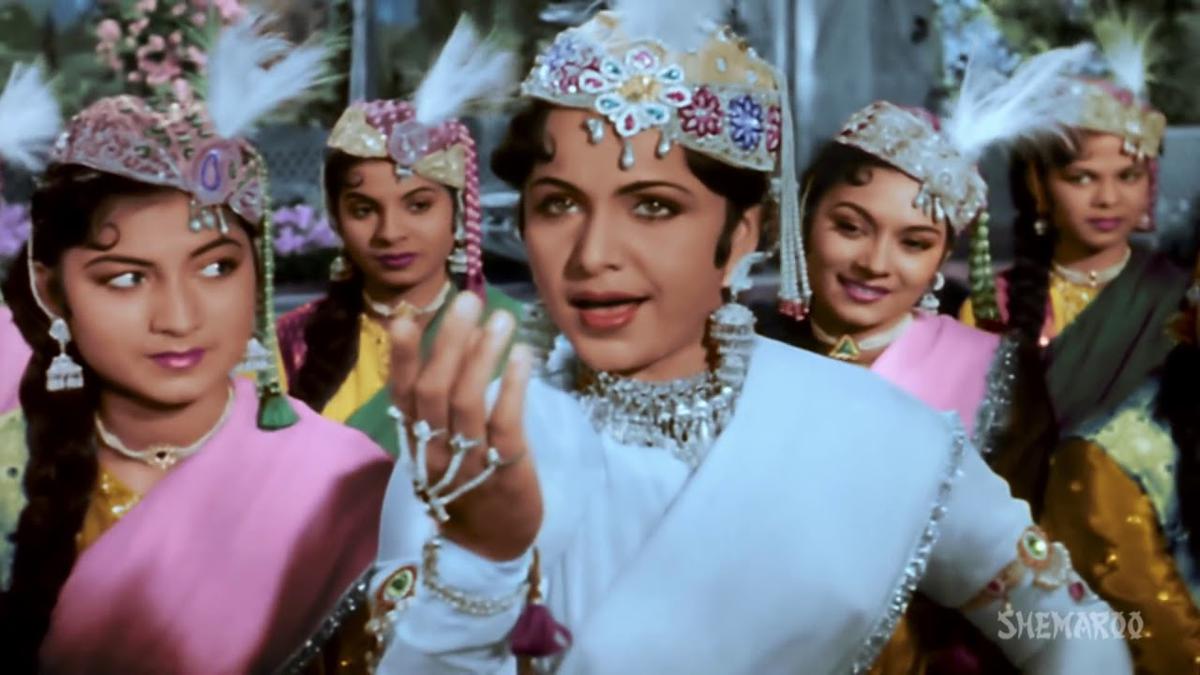
The popular qawwali, ‘Teri mehfil mein kismat azamakar’, from Mughal-e-Azam | Photo Credit: Special Arrangement
The qawwali, a musical genre closely associated with Islamic Sufi tradition, has evolved over the generations to include not just devotion, but romance, comedy and even social commentary in its fold.
Its journey from the courtly environs of erstwhile princely salons, to the dargahs, and then into the Hindi film industry, has largely gone undocumented, though the transition is still in progress. However in recent weeks, the Cinema Qawwali Archive, an online database curated by Delhi-based independent filmmaker and researcher Yousuf Saeed, has been reviving interest in this pop culture import.
“Qaul means a saying or spoken phrase [in Arabic and Urdu]. Those who sang a qaul were called qawwals. All qawwali lyrics may not necessarily send you into a trance, some can also be subtle. But the singing style is surely bold. Off-hand, most people can recall only around 10-20 qawwalis in Hindi cinema, but the actual number is much bigger,” says Saeed in a phone interview.
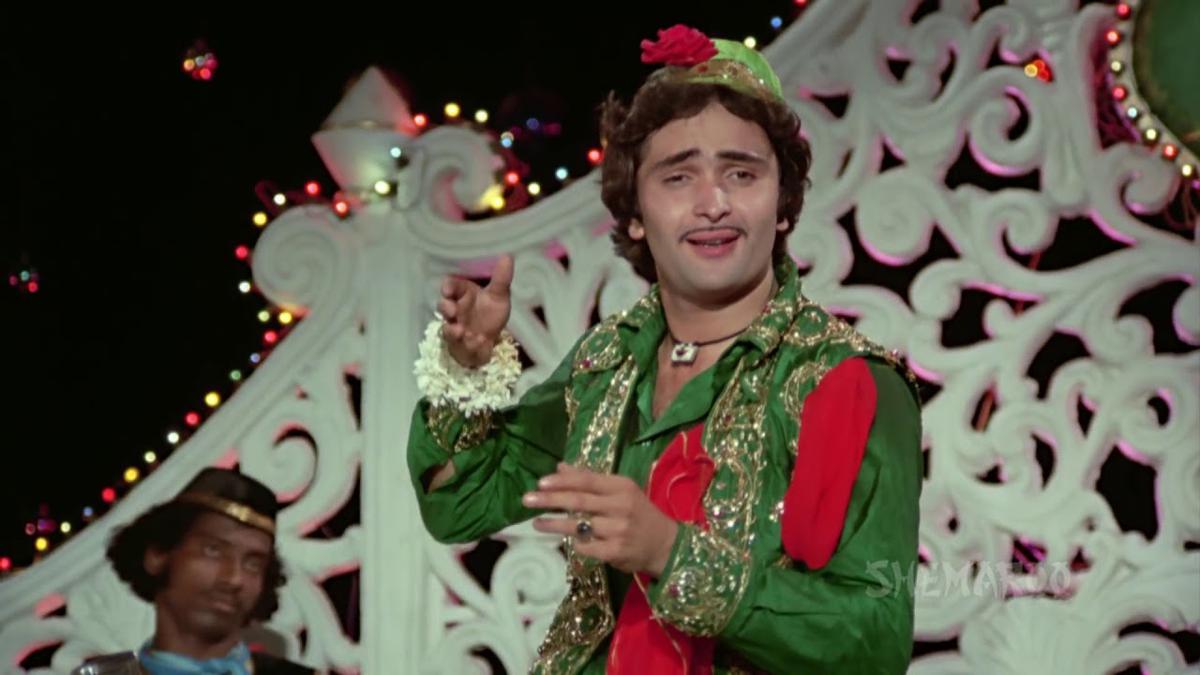
‘Parda hain parda’ from Amar Akbar Anthony
Working on the database for a decade, Saeed has compiled 800 qawwalis so far, with the earliest going back to the 1930s, and latest, until 2022. “The ‘talkie’ pictures came to India in 1931; though the original movies from the early 1930s are lost forever, I did manage to find some from 1936, with unusual names like Miss Frontier Mail (starring ‘Fearless’ Nadia), and the 1939 film Brandy Ki Botal,” says Saeed.
Poetry of the past
Saeed began noticing the qawwali’s ubiquity in Hindi films while working on a series of documentaries on Sufi poet and musician Abul Hasan Yamin-ud-din Khusrau, also known as Amir Khusro (1253–1325 AD). “I realised that quite a few of his qawwalis had been lifted and modified for Hindi films, so I started noting them down, and soon, the list grew to 400 songs. I wanted to make them available on a common database in chronological order,” he says. Among these is the qawwali ‘Zihale Miskin’ sung by Lata Mangeshkar in Ghulami (1985). A simplified version of Khusro’s original, the lilting composition retains the poet’s penchant for multi-lingual lyric arrangements.
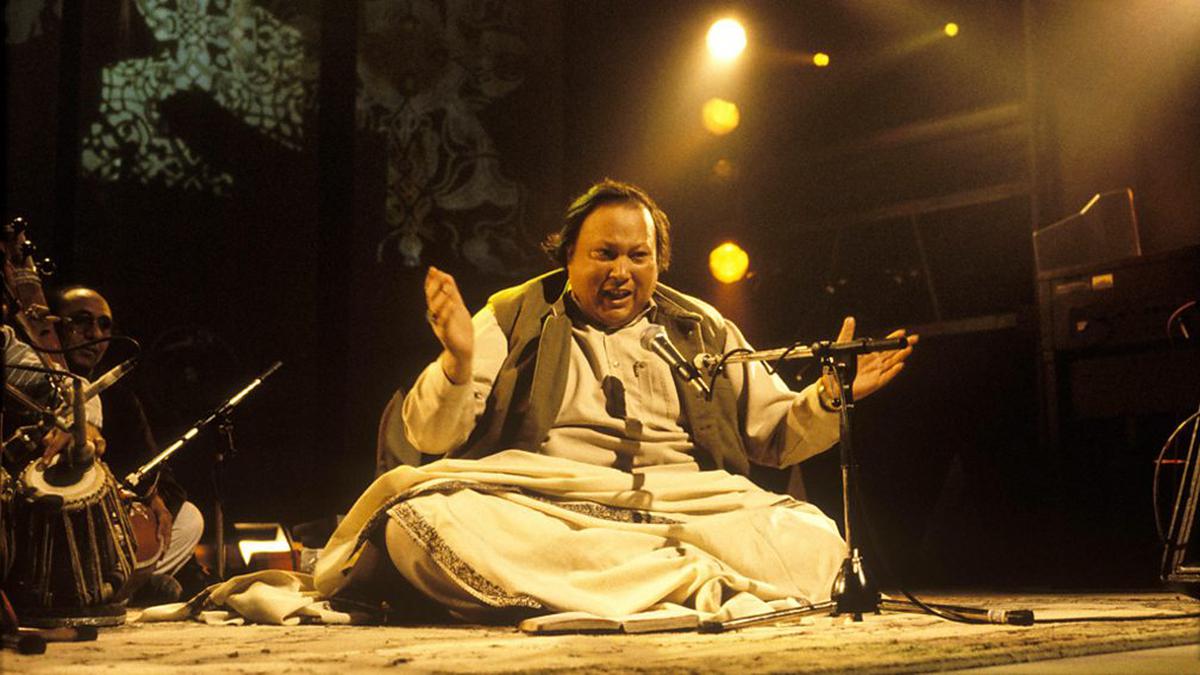
The inimitable Nusrat Fateh Ali Khan | Photo Credit: Getty Images
“’Zihale Miskin’ is very popular, and unusual, because it has one line in Persian and one in Brij Bhasha. Then there are many of Khusro’s Dohas (couplets) that are used in qawwali songs quite often,” says Saeed.
Qawwali, says the filmmaker, is a free-floating art that allows singers and lyricists to combine several genres and poetic forms in a seamless composition. Besides YouTube, Saeed has picked out his selections from DVDs and VCDs (remember those?). “I haven’t had a problem with copyright so far, since quite a few of the songs are already in the public domain. But it’s amazing how I keep discovering new qawwalis everyday. My latest is ‘Shikayat’ from last year’s Gangubai Kathiawadi,” he laughs.
Qawwali down the ages
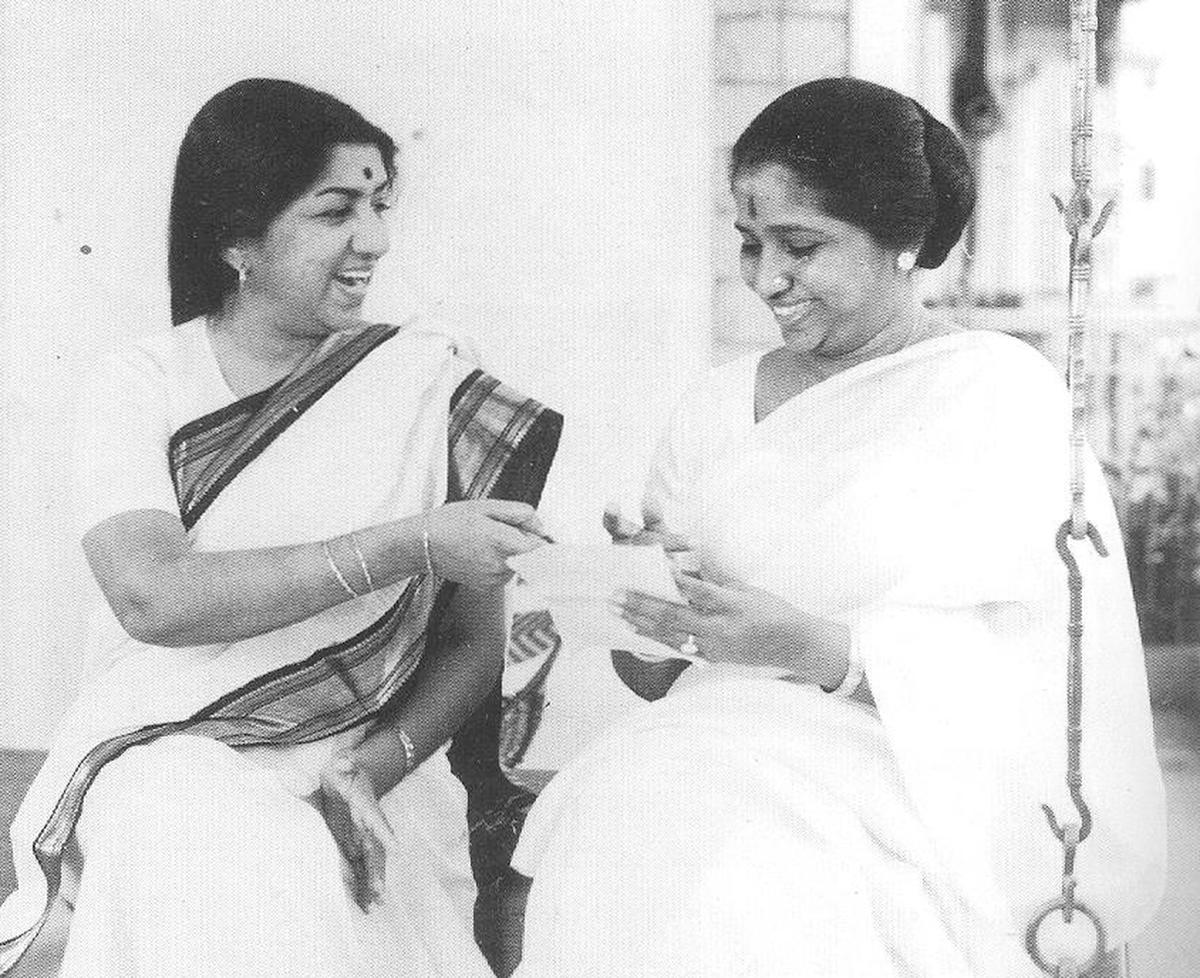
Lata Mangeshkar and Asha Bhosle have sung some popular qawwalis | Photo Credit: The Hindu Archives
Saeed categorises the film qawwali of the 20th century into three periods. The first starts with the black-and-white films of the 1940s until the 1950s, when the lyrics showcased a literary flair for Urdu, by adding ‘ghazals’ into qawwalis. The second stage starts with the coming of colour films, when the qawwali too literally added some hues to its own repertoire. “A lot of things were happening in the 1960s, ‘70s and ‘80s, when qawwalis became more of a device to move the plot ahead. In some films, for example, a qawwali would be staged to highlight comedy, in the backdrop of a fight sequence, or to convey romance between characters,” he says.
The mass entertainer Amar Akbar Anthony (1977), for instance, uses the qawwali both for fun (‘Parda hai parda’) and spirituality (‘Shirdi wale Sai Baba’), to good effect.
The third phase started in the 1990s, when Pakistani singer/songwriter Nusrat Fateh Ali Khan and India’s A.R. Rahman brought in sea-change by modernising the qawwali with electronica and smooth singing.
Teri Mehfil Mein | Lata Mangeshkar, Shamshad Begum | Classic Duet | Mughal-E-Azam | Bollywood Song
Comment on society
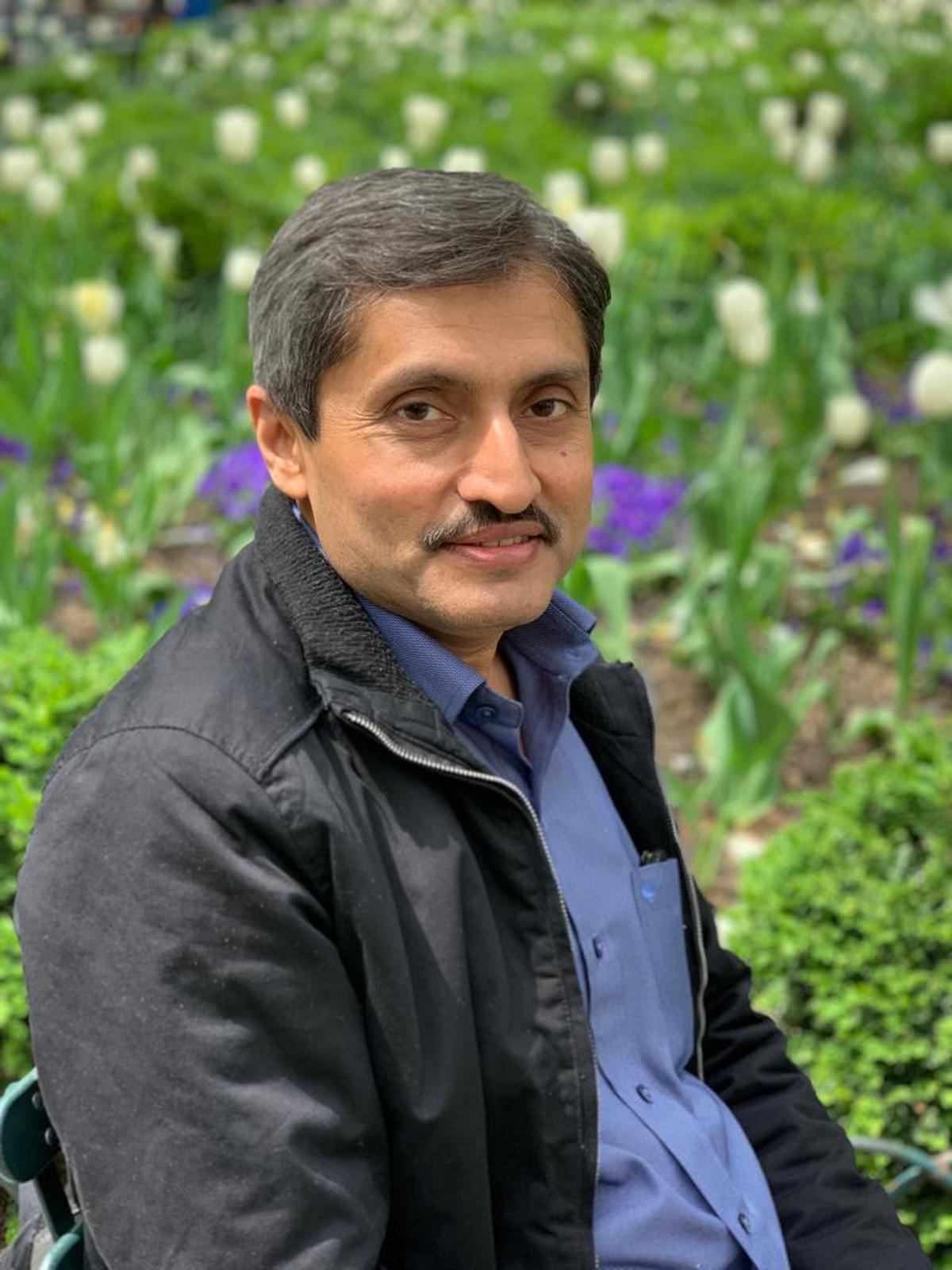
Yousuf Saeed | Photo Credit: Sandeep Sharma
The qawwali has become a social marker of sorts in films, says Saeed, creating a Muslim stereotype where the singers wear slanted fur caps, a kerchief around their neck and clap in a certain style. The Bollywood ‘Muslim social’ film that featured stories with veiled damsels courted by sherwani-clad gentlemen (Mere Mehboob, 1963) was born out of this need to appeal to family audiences from this community.
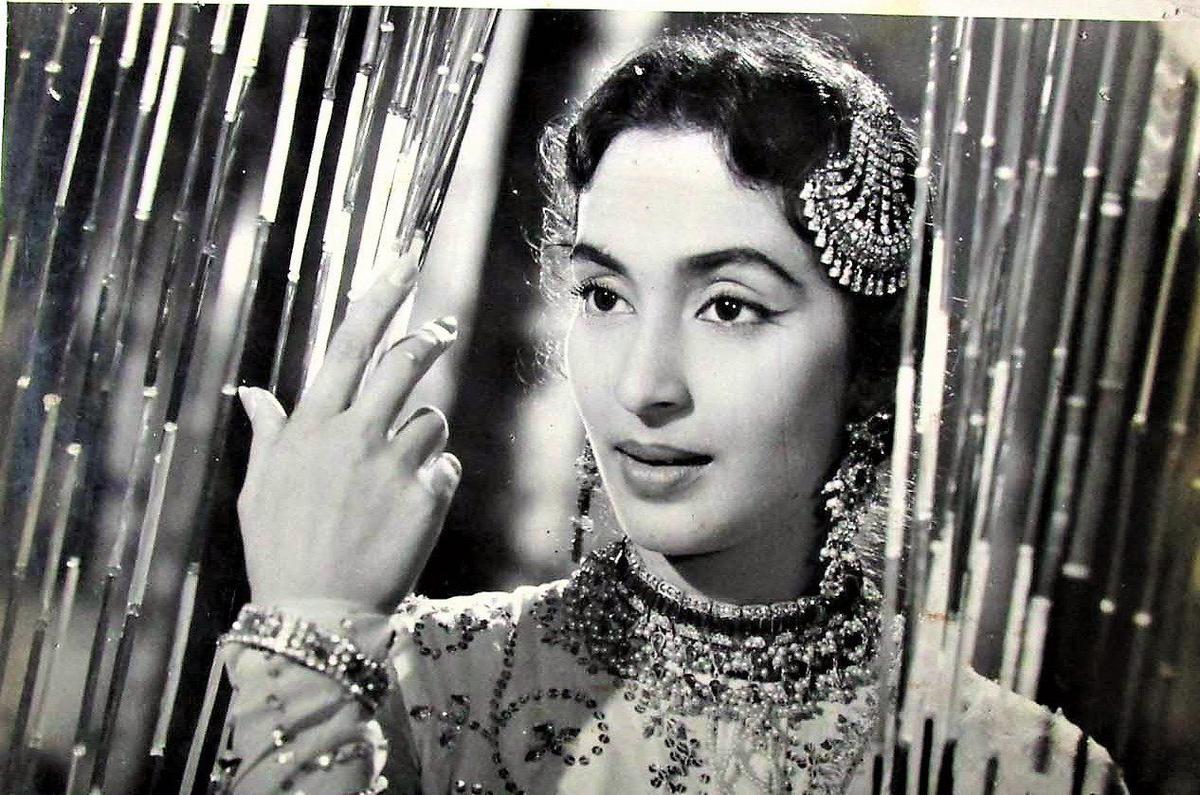
Nutan in the famous qawwali, ‘Nigahen milane ko ji chahta hai’ from the film Dil hi to hai | Photo Credit: Special Arrangement
Female singers have also had strong showing in this genre, from ‘Aahen na bharin shikve na kiye’ (Zeenat, 1945), and ‘Aaj teri mehfil mein’ (Mughal-e-Azam, 1960) to Shikayat’ (Gangubhai Kathiawadi, 2022), all showcasing the skills of chanteuses Sudha Malhotra, Lata Mangeshkar, Asha Bhonsle, Shamshad Begum, and Archana Gore.
Linguistic gymnastics
The Cinema Qawwali Archive also helps visitors to understand the literary changes over the years. “It’s inevitable that the linguistic purity of the early qawwalis is no longer there. But new words like ‘Maula’ and ‘Allahu’ and Arabicised Urdu have become more common in film qawwalis, especially as a choral element. Off the screen, in private qawwali mehfils, singers are often known to sing certain words or phrases again and again on the patron’s farmaish (request) for him or her to attain ecstasy,” he says.
Music director A.R. Rahman gave qawwali a distinct twist with Turkish, Moroccan and Syrian Sufi rhythms. | Photo Credit: RAVINDRAN R
Rahman’s infusion of Turkish, Moroccan and Syrian Sufi rhythms into his songs has helped the qawwali reach out to both the South Asian diaspora and Westerners, says Saeed. “The film Rockstar (2011) made qawwali singers at Nizamuddin Dargah famous, with tourism developing around the shrine. But interestingly, cinema has also used qawwali for its own purpose, by taking it into a secular space,” says Saeed.
Hoping to publish a companion volume on the Cinema Qawwali Archive soon, Saeed says, “People think that the qawwali is dying out, but this isn’t true. They will continue to be written and performed because film directors find it a very fascinating and unique form. Qawwali weaves the story together and keeps it going.”
ROCKSTAR: Kun Faya Kun (Full Video Song) | Ranbir Kapoor | A.R. Rahman, Javed Ali, Mohit Chauhan
source: http://www.thehindu.com / The Hindu / Home> Entertainment> Music / by Nahla Nainar / July 10th, 2023
Muhammad Bishr Karaya from Karaya in Uppinangady has achieved an 11th rank in the prestigious Yamani Degree Examination, conducted by Shamshul Ulama E.K. Aboobacker Musliyar Memorial Islamic Centre, Jamia Yamaniyya, in Kuttikkattoor, Kozhikode, Kerala.
Bishr, who serves as the Executive Secretary of the SKSSF Karaya Unit, has been recognized for his academic excellence in Islamic studies.
He is the son of KH Hamid Musliyar, a teacher at Karaya Badriya Juma Masjid, and Hazra. His achievement has brought pride to his family, institution, and community
source: http://www.english.varthabharati.in / Vartha Bharati / Home> Karavali / by Vartha Bharati / March 11th, 2025
Cemeteries representing Patna’s chronicle of history and heritage are dying a slow death
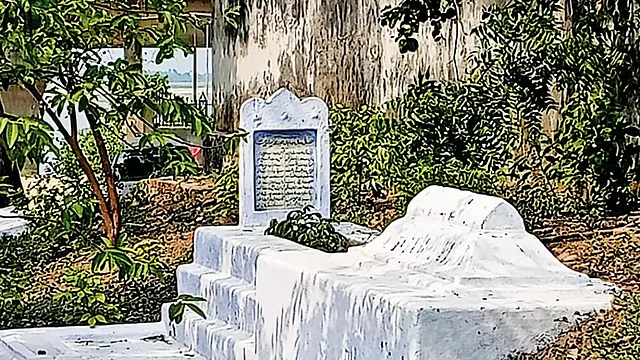
Unkept Legacy: The grave of Shahzada Karim Shah, the great-grandson of Tipu Sultan.
Like every other city, Patna also owes, to an extent, its cultural and literary existence to the courtesans who blended with the local society and provided it with a new dimension. One among them was Allah Jilai, who had settled in Patna from Allahabad. She was considered a gorgeous woman and sported a honey-dipped voice which had an arresting power. While visiting Calcutta, she developed a terminal illness. She was barely 24 when she died in 1918 and was buried in the Pakki Dargah Muslim graveyard. Her tombstone with 12 lines of Urdu couplets helped in figuring out her biographical information. Had there been no tombstone one would have never known her existence in Patna and the services that she rendered to the city.
Patna, other than being the capital of Bihar, served as a home to multiple cultures, identities, art forms and families. Today, the city has almost lost the reminders of its glorious past. But a few graves still stand as reminiscent of a bygone era. These tombs, or time capsules, where hundreds of stories remain buried, are largely deserted, ignored and unknown.
Bihar is home to more than 9,272 graveyards, according to the government’s estimate. The Bihar government planned to fence these cemeteries, and in 2022-2023, a total of Rs 93.74 crore was approved for this purpose, while an additional amount of Rs 1.25 crore was set aside for the same. According to Bihar Finance Minister Vijay Kumar Chaudhary, the fencing of about 7,647 graveyards has been completed, and the remaining will be done shortly.
In addition to the 9,272 cemeteries, Bihar also has a sizable number of privately-owned graveyards maintained by the families of former nobles, aristocrats, zamindars, jagirdars and nawabs. Thus, the overall number of burial grounds in Bihar would be close to 10,000. Moreover, several Christian cemeteries are located in Patna.
Further east on Ashok Rajpath, one can find the Gurhatta cemetery which chronicles the gruesome massacre of the British prisoners at the house of Haji Ahmad Ali in 1763 at the command of Mir Qasim, the nawab of Bengal.
The tomb of Mir Mohammad Naseer, the father of the first Nawab of Awadh Photo: Ali Fraz Rezvi
Padri Ki Haveli is the final resting place of people from Armenia, Portugal, France, Persia, Italy and the UK. In a sense, this place is a symbol of international harmony. Here, one can find a Jewish grave next to a Chinese, and a Greenlander adjacent to a Mozambican.
Near Patna Ghat Railway Station is the Danish Kothi—established in 1775—signifying the presence of Denmark in Patna in the past. It was the house of Jorgen Hendrich Berner (1735-1790), Chief of the Danish Factory in Patna, who was buried on the premises as demonstrated by his tombstone. There are at least three more tombs here which are bereft of inscriptions. Later, the Kothi became the residence of the station master of Patna Ghat, and is at present, the office of the store in-charge of railway electrification.
The Lost Glamour
While Zohra Bai, the queen of thumri, remains buried within the campus of Rauza Masjid at Maharaj Ganj, Haider Jaan, Najban, Ramzu, and Chhottan were also the tawaifs (courtesans) whose presence had made Patna a lively place.
These courtesans participated in religious activities as well, and the existence of the Imambara at Chowk is a living example of their dedication towards such pious endeavours.
As we move towards the eastern corner of the city, another story lies buried in the deadlands of Begumpur.
Father of a Persecuted Son
Popularly known as Nawab Shaheed Ka Maqbara among the locals, is the tomb of Ihteram-ud-Daula Nawab Zain-ud-Deen Ahmad Khan Bahadur Haibat Jung, the father of Nawab Siraj-ud-Daula of Bengal. Nawab Haibat Jung successfully defended Patna during the Maratha attacks but was later murdered by the Afghan rebels. His wife and children were imprisoned when he was killed.
The tomb of this martyr lies deserted in Begumpur, guarded by Dashrath Gope Yadav who comes at dawn and leaves by dusk. “The tomb, mosque and the several acres of land belong to the State Waqf Board which is least interested in the property unless there’s a chance to sell,” says Dashrath, as he cleans the interiors of the tomb. The place also had an Imambara which used to host majlises during the month of Muharram in the presence of Raja Ram Narain, the then deputy governor of Bihar.
Padri Ki Haveli is the final resting place of people from Armenia, Portugal, France, Persia, italy and the UK. it is a symbol of international harmony.
Dashrath has devoted 45 years of his life to this tomb of Nawab Shaheed. “This place had a dense jungle and I cleared it all on my own. No one from the Waqf Board or the caretakers helped me. There was no roof at this tomb, so I went around begging in the streets of Patna so that there could be a roof at the grave,” he says.
Affectionately, he calls Nawab Haibat Jung as Data Sahib—a term usually used for Sufis. Dashrath believes that he is at peace and his children are married because of the blessings of Nawab Haibat Jung.
This is not the only case of a burial place turning into a mazar. While he is aware of Nawab Haibat Jung and the history, another tomb in the city’s centre has been converted into a Sufi shrine by the people unaware of the person buried inside.
Nawab Munir-ud-Daula Raza Quli Khan Bahadur Nadir Jung, a minister of Mughal emperor Shah Alam, was the founder of the Patna Bhiknapahari and Bhagalpuri families. He was instrumental in obtaining a grant from the emperor for the East India Company and assisting the reappointment of Shuja-ud-Daula to the Vizarat. He remained in charge of Korah and Allahabad until a little before his death in Benares on October 11, 1773. Later, his corpse was transported to Patna, where he was laid to rest.
His tomb, embracing a Persian inscription of eight lines, is located west of the Government Hospital in Patna. The vicinity is collectively known as Bawli. The grave is located on a raised platform of about four feet from the ground level and enclosed by intricate lattice designs of stone.
Surprisingly, his grave has lately attained the status of a Sufi shrine where devotees of all faiths converge to venerate him. His followers used to organise a majlis (a religious discourse to commemorate the martyrdom of Imam Hussan, the grandson of Prophet Mohammad) at his shrine during Muharram. It is imperative to observe how the mausoleum of an astute politician is providing spiritual respite to everyone and is acting as a melting pot of different cultural, religious and ethnic affiliations, thereby bridging the communal and sectarian divides.
The Awadh Connection
Mir Mohammad Naseer Nishapuri was the father of the first Nawab of Awadh, Mir Mohammad Amin. Being a descendant of the Seventh Shiite Imam, Musa Kazim—a progeny of Prophet Mohammad—he was considered among the nobles. He along with his eldest son, Mir Mohammad Baqar, reached India in the reign of Mughal emperor Bahadur Shah and settled in Patna, where he was provided with subsistence allowance by Murshid Quli Khan, the governor of Bengal, at the recommendation of his son-in-law, Shuja Khan, who also had his roots in Persia.
When his son, also named Mir Mohammad Amin (Saadat Khan Burhan-ul-Mulk), came to Patna in 1708-09, his father had already passed away and was buried in a cemetery. Subsequently, both brothers, Mir Mohammad Amin and Mohammad Baqar, in search of employment, set out for Delhi in the beginning of 1709.
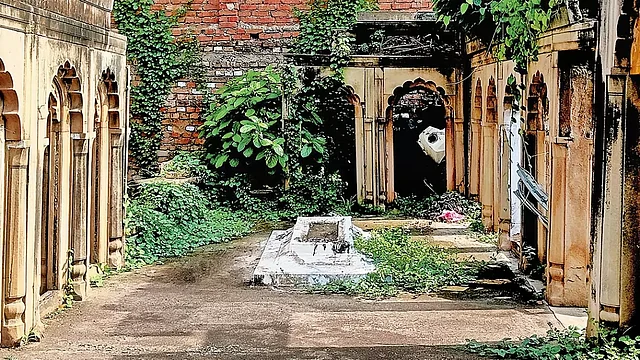
The tomb of Nishapuri is located to the north of Patna City Railway Station. It borders the Kachchhi Bagh Cemetery and the nearest landmark is the now-defunct Pradeep Lamp Factory. It lies in a roofless rectangular enclosure, supported by ornamental arches and turrets of small heights. There are remains of flower motifs on the walls. The intricate stone lattice work on the arches has disappeared and the horizontal beams supporting the enclosure have also fallen at places due to the absence of proper maintenance. There is a garage in the vicinity which is using the site as its dumping ground, thereby causing further damage to it. Moreover, the overgrowth of trees and shrubs is also playing its notorious role to damage the place. This neglected heritage, which should have been a symbol of Patna’s glorious past and its royal association with Awadh, is counting its final days.
Several tombs are scattered across the city of Patna; some are fortunate to bear a name or a tombstone while the others remain deserted and ignored.
When Safdar Jung visited Patna in 1742 to support Ali Vardi Khan to push the Marathas out, he paid a visit to the grave of his maternal ancestor and recited the Quranic verses or Fatiha to his soul. It was at his instance the walled enclosure and latched screen (carved jaalis) were built around the burial place.
The aforesaid site had an attached Imambara where Muharram majlis were held, but nothing remains now. The disappearance of such heritage is swiftly obliterating the past of the city and disconnecting the cultural thread which joins several eras.
The Prince of Mysore
Among all the legendary personalities buried in the city, there exists a chapter of Mysore’s history in an unimaginable grave at Meetanghat, Patna. In the compound of Khanqah Bargah-e-Ishq Takiya Shareef—where rests the great Sufi mystic and poet of the 18th century, Shah Rukn-ud-Din Ishq Azimabadi—exists the burial place of Shahzada Karim Shah, the great-grandson of Tipu Sultan.
He was a man of mystic inclination and was thus affiliated to the Khanqah of Hazrat Ishq Azimabadi, through his pir, Syed Shah Khwaja Amjad Hussain Saheb. He died in Patna in 1915, and Shamshad, a poet, composed a Persian inscription of 10 lines for his tombstone.
He was a man of mystic inclination and was thus affiliated to the Khanqah of Hazrat Ishq Azimabadi, through his pir, Syed Shah Khwaja Amjad Hussain Saheb. He died in Patna in 1915, and Shamshad, a poet, composed a Persian inscription of 10 lines for his tombstone.
There exists as a cemetery of history in Bihar—the grave of Shahzada Mirza Zubair-ud-Deen Bahadur Gorgani, the grandson of the last Mughal Emperor Bahadur Shah Zafar, at Darbhanga or the tomb of Yusuf Shah Chak, the Sultan of Kashmir who reigned from 1578 to 1586, and was exiled by the Mughal Emperor Akbar. He along with his family members now rest in Biswak, Nalanda. Furthermore, Mahmud Shah, the fourth king of the Hussain Shahi dynasty of Bengal, died in 1538 AD in Kahalgaon (previously spelled Colgong), Bhagalpur, and was buried there. Similarly, Hussain Shah, the last king of the Sharqi dynasty of Jaunpur, took refuge at Kahalgaon and died there, and Sher Shah Suri, the founder of the Sur dynasty, lies buried in Sasaram. Sadly, Bihar’s Chief Minister Nitish Kumar is busy presenting a model of development upon the ruins of Patna’s heritage, while these graves representing the chronicle of history are dying a slow death.
Syed Faizan Raza is the area representative of the British Association For Cemeteries In South Asia
Ali Fraz Rezvi is an independent journalist, theatre artist and a student of preventive conservation
source: http://www.outlookindia.com / Outlook / Home> National / by Syed Faizan Raza and Ali Fraz Rizvi / Novmber 04th, 2023