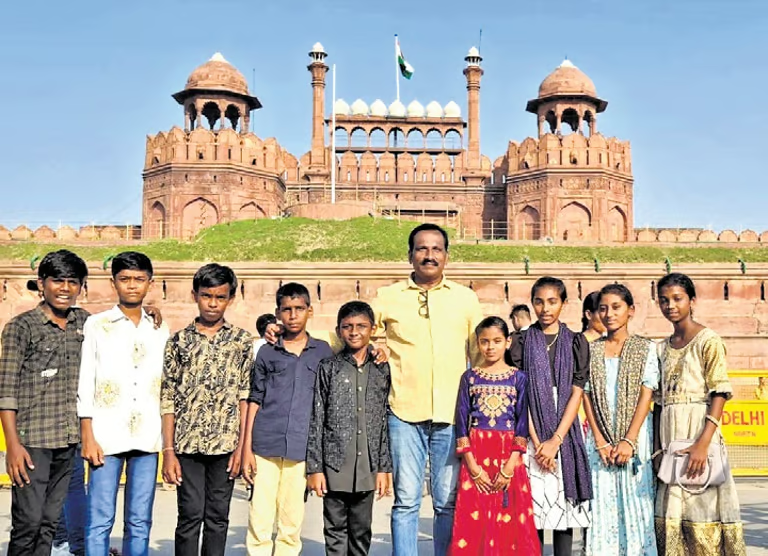
A group of nine Class 8 students took part in this tour under the guidance of their Hindi teacher, Shareef Ahmed.
Class 8 students of Zilla Parishad High School (ZPHS) in Mallapur, Thimmapur mandal, Karimnagar district, along with their Hindi teacher during an educational tour in New Delhi.(File Photo)
Karimnagar :
Students from the Zilla Parishad High School (ZPHS) in Mallapur, Thimmapur mandal, recently embarked on an educational tour to New Delhi, where they had the opportunity to visit some of the nation’s most iconic historical and cultural landmarks.
A group of nine Class 8 students took part in this tour under the guidance of their Hindi teacher, Shareef Ahmed. The group explored sites such as the Red Fort, Lotus Temple, Qutub Minar, India Gate, Parliament, Rashtrapati Bhavan and Akshardham temple.
Part of Hindi curriculum
Shareef told TNIE that this trip was part of an experiential learning initiative, directly tied to the Class 8 Hindi curriculum, which referenced many of the historical landmarks the students visited. “We aimed to bridge the gap between book learning and real-world experience. I explained each site, connecting the theoretical knowledge from the textbooks with practical insights,” he said.
The trip helped the students gain a deeper appreciation of India’s rich cultural heritage, the teacher said, adding that by walking through these historical monuments, they developed a personal connection with the history the students had studied in class.
The students expressed immense joy, particularly when witnessing structures like the Red Fort and Qutub Minar. Visits to spiritual places such as the Akshardham and Lotus temples added another dimension to their tour, they said.
source: http://www.newindianexpress.com / The New Indian Express / Home> Good News / by Naveen Kumar / October 06th, 2024
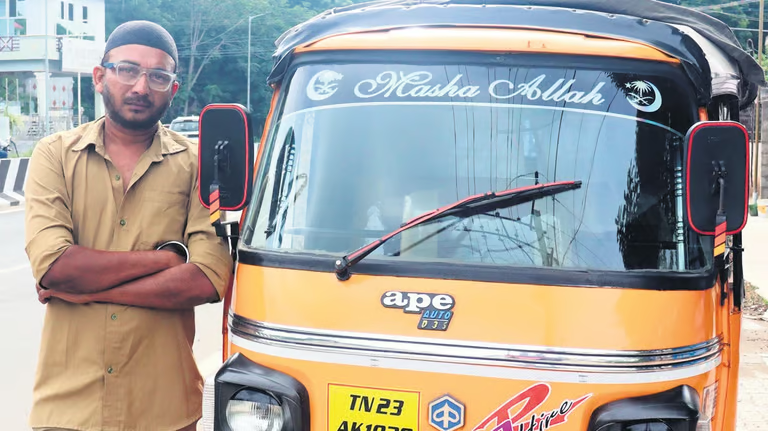
Shabir and his team stepped in, despite the language barrier, to assist the grieving daughter.
Vellore :
At the chaotic Ariyur auto stand in the heart of Vellore, amidst the blare of honking rickshaws and the buzz of commuters, 39-year-old Mohammed Shabir orchestrates a life-saving mission that few would notice.
With one eye scanning for passengers and the other glued to his phone, he is constantly coordinating urgent blood donations for patients in dire need. For Shabir, it’s more than just a local cause.
His focus stretches across borders and helps patients from as far as West Bengal, Jharkhand, Bihar, and Assam, who come all the way to Vellore, most of them clinging to the last straw of hope for critical medical treatment.
Since 2019, Shabir has been at the helm of a team of volunteers, racing against time to provide emergency blood donations across the districts of Vellore, Tirupathur, and Ranipet. Their relentless efforts have become a lifeline for patients at their most desperate moments, a beacon of hope in the face of life-threatening crises.
Shabir, a BBA graduate from Vellore, was forced to take up the role of an auto driver in life in 2013 due to financial difficulties at home. However, the course of life changed forever after a personal tragedy struck him.
His father, Ansar Basha, was a kidney patient and was admitted to the Vellore Government Hospital and Medical College. Back then, according to Shabir, the hospital didn’t have a well-equipped facility for dialysis, and despite his desperate efforts, he could not secure a blood donor for his father’s treatment on time.
Tragically, his father passed away within a week due to the unavailability of blood. “The incident shattered me,” Shabir recalls, tears welling up in his eyes. “I couldn’t move on from it for a long time,” he added, reflecting on the event that now fuels his determination to help others.
Driven by this loss, Shabir began arranging blood donations in 2013, focussing particularly on patients from North India, who often face language barriers in Vellore.
Despite financial challenges, Shabir formalised his work in 2019 by rallying a group of volunteers and forming the Nodtigal Trust. Every day, they receive about 10 requests from various hospitals, prioritising the most urgent cases. “We manage to fulfil at least five requests weekly within Vellore,” Shabir said.
The outbreak of Covid-19 added another layer of complexity to their work. Arranging blood donations during the pandemic became increasingly difficult. But Shabir and his team were undeterred, stepping up to the challenge.
In 2020, they encountered a particularly heartbreaking case involving a cancer patient from West Bengal. The patient passed away while her husband was away trying to sell his land to fund treatment. Their daughter was left alone with her mother’s body.
Shabir and his team stepped in, despite the language barrier, to assist the grieving daughter. With the husband’s permission, they arranged for the woman’s burial in Vellore, free of charge. “It was a deeply emotional moment for us,” Shabir said. “The husband saw his wife’s body over a video call and thanked me in Bengali. I couldn’t understand his words, but I could read the emotion on his face.”
What began during the pandemic has now become a regular part of Nodtigal Trust’s work. “We’ve buried over 24 bodies so far, mostly North Indian patients who don’t have any local connections,” Shabir explained. “It costs around Rs 5,000 to bury one body, and we’ve been covering the costs ourselves, with help from friends and well-wishers.” In addition, Shabir also cares for five orphaned girls in Vellore, committing to support them for life.
Looking ahead, Shabir has broader ambitions for the Trust. He is particularly concerned about the lack of awareness and support for transgender people in Vellore. “If any transgender individuals want to study and live a decent life, we are ready to support them,” he said. He also aims to assist mentally ill people found on the streets, helping them reunite with their families.
However, the work is not without challenges. “We sometimes struggle to cover transportation costs for the burials,” Shabir shared. “It would be a great help if the district administration could provide us with an ambulance for these cases.”
(For more details, Mohammed Shabir can be contacted at 9361719520)
(Edited by Sneha Joseph)
source: http://www.newindianexpress.com / The New Indian Express / Home> Good News / by Rajalakshmi Sampath / October 13th, 2024
Courtesy: Facebook/Mohammed Ali Library Students’ Section
Kolkata:
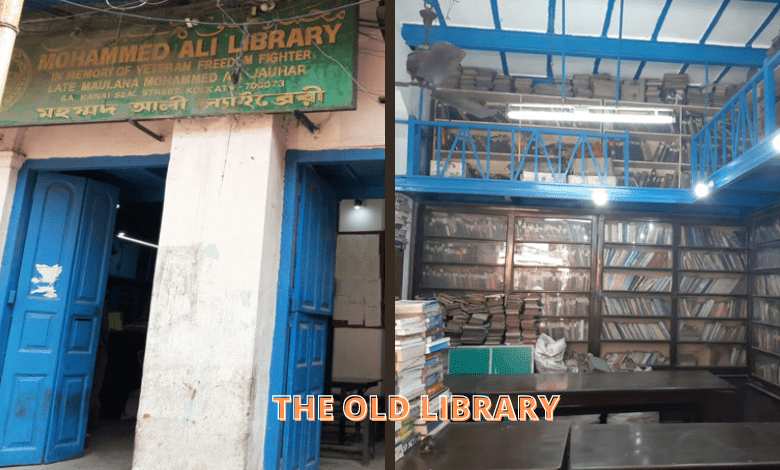
Mohammed Ali Library, located on the ground floor of Barry House, on Kanai Seal Lane is one of Kolkata’s oldest public libraries. Lost in the hustle-bustle of the ever-so chaotic, ever-so-charming Zakaria Street is this 93-year-old library being resurrected to its past glory.
Many local residents and researchers in the past have complained about the treasure trove of Urdu literature being in ruins and how not much is being done to preserve the library’s legacy and the thousands of rare books that lie in it.
“This library was established in the year 1930, by Mulla Mohammad Jan to create a reading space for the community youths. After the death of Mohammad Ali Jauhar, a fellow Khilafat leader and prominent freedom fighter, in 1931, the library was named in his honor. Mohammad Ali was a visionary, who was also one of the co-founders of Jamia Milia Islamia,” said Anwarul Haque, librarian of Mohammad Ali Library.
Admitting that the library had been in a deplorable state and needed a shot in the arm, Haque said, “The library, in need of a complete makeover, had long been the subject of demands from locals and visiting researchers.”
Rising from its ashes
Taking a cue from the public demand, and a pump of new blood in the committee that takes care of the almost century-old library, a slew of changes has been initiated to not just preserve the books but to also transform it into a new-age library that caters to the new age readers and researchers.
Speaking to eNewsroom, the president of the library committee, Nasir Ahmed, said, “We had been thinking about this makeover for a long time. But the fact that the library is in a rented space, initiating a renovation seemed a mammoth task. However, with the induction of new members who were willing to work for the betterment of the library, we realized the importance of having a new-age library for the readers. The books were decaying, racks were falling off, and we were seeing the legacy of the library being destroyed. So, we had a couple of meetings and decided to go for a complete renovation.”
On being asked about the library’s rare collection, Haque said, “It houses some rare books and manuscripts like the Urdu translations of the Mahabharata and Ramayana and the Awadh Punch, an Urdu satirical weekly.”
From archaic library to new-age library-cum-information centre
A budget of Rs 10,00,000 has been estimated to give a face-lift to the library, which is being done under the leadership of Usman Ghani, head of office and ALIO, National Library.
Ghani explained the transition that the library is undergoing at the moment. He told eNewsroom, “The library will be undergoing a gradual metamorphosis, where we will witness its transition from a local library to a state-of-art library cum information centre that will cater to the needs of the new-age readers, researchers and bibliophiles.”
Elaborating on the slew of changes that the library will undergo, he said, “A complete structural makeover has been initiated, which will be followed by the restoration of books, cataloguing, digitization of rare books that the library boasts off. I will be overseeing the indexing, cataloguing and digitization of books.”
Adding to that, Ahmed said, “Once we are done with the renovation, we plan to introduce computers and digital readers. We also plan to make the library air-conditioned and use it as an information centre from where the youths can not just get information about the competitive exams but also use other resources available here to prepare for the exam.”
Ghani also mentioned that the library would have its own website and offer online services, enabling readers to register, request, renew, and even read books online.
The proposed upgrade will take almost six months to complete. Talking about funds, Ahmed said, “We sought help from Siddiqullah Chowdhury, minister-in-charge of Mass Education Extension & Library Services. We are hopeful to get some help from him. Local MP and MLA have also been approached to help us bring Mohammed Ali Library to life .
source: http://www.enewsroom.in / eNews Room India / Home> Bengal> Let There Be Light / by Shabina Akhtar / December 05th, 2023
Abid, a painter, puts immense effort to help bring back stranded people to India, the act which brings cheers to the families. He has mastered the skill, how to deal with embassies, journalists, officials and celebs to raise each issue and bring back the lost person.
Syed Abid Hussain
Bhopal:
A man has been quietly helping Indian citizens caught in difficult circumstances in countries across the world for years.
Known for lending a helping hand to any family whose kin is trapped far away, he uses all his links and puts energy into the efforts to bring the person back home.
Syed Abid Hussain has mastered the skill to deal with the bureaucracy in different countries and with the use of social media, reunites such people with their families.
By profession, Abid is neither a bureaucrat nor a politician, who has contacts and departments to follow their instructions but he is just a painter and single man army.
And even not being associated with any government organisation, he has so far helped hundreds of people stuck in countries spread over the Middle East, West Asia, Europe and other parts of the world. Abid keeps getting calls and messages from families who have their kin caught in a country and even those whose whereabouts are not known.
The ‘Mesiah’ has developed a style of his own to resolve these cases. Whether it’s the case of a person who is untraceable or has been kept unlawfully by someone in a foreign land, Abid uses social media, particularly Twitter, to bring focus on the disappearance of the person or his plight. He tags officials of the particular country, their embassies and the Indian Embassy.
He also messages prominent personalities of the particular country, including peaceniks or activists, film actors, journalists and urges them to raise the issue. Subsequently, it comes in media in those countries, gets attention and opens the door to the person’s return.
During the Russia and Ukraine crisis, he helped dozens of youth to return with his efforts.
“I don’t have a strong financial background but I never take a penny for this work. It’s just for the sake of humanity and social work”, he says.
The number of people Abid helped bring back to the country is uncounted now. “I don’t do it for any number or statistics, I stopped counting, the figure is more than 500,” he says. “Whenever I get a call I start working on the mission. I feel that the victim’s family must not get depressed and lose hope”, he adds. One of the first cases that brought him nationwide attention was when he helped the family of a missing boy, Kailash Arjunwar.
“I found through a newspaper report about Kailash, who is from Madhya Pradesh that he had somehow overstayed on the other side of the border and was caught, and kept in jail. I began my efforts. After a long process, Kailash was rescued with the help of the foreign ministry. I constantly kept raising his issue until it got resolved”, he recalled.
Recently, Abid helped get 12 people from a country in West Asia to return to India. These people, Harendra Ram, hails from Siwan (Bihar), Jai Soorat (Ghazipur), Dharmendra Kumar (Deoria), Sheetal Singh (Kapurthala), Husan Lal (Jalandhar), Surendra Verma (Sant Kabir Nagar), Ved Prakash (Kushinagar), Hardas Prakash (Ghazipur) and Shiv Locahn of Mau along with others were reunited with their families.
From yet another country, he helped bring 48 persons back to India, in January. A painter by profession, he was born in Faizabad, UP.
Abid, 38, says that when he started helping people stuck in foreign lands, he came to know about a lot of factors, especially how some people who are less educated are fooled by their employers or agents who take them to those countries but they end up working as bonded labourers sometimes & are even not allowed to contact families.
When Abid comes to know about a family that has a person ‘lost’ in a country, he takes documents and contacts the government, foreign ministry, the particular country’s consulate and embassies in both countries. Mostly he manages to get them returned. Former Minister for External Affairs Sushma Swaraj also used to know him for his efforts. Sandeep Kumar, who was helped rescued by Abid recalls, “Our company had promised a job in the construction sector. After paying money to the agent, we were cheated.” “Our families told Abid bhai, who started the campaign because we couldn’t do anything. He also ran a hashtag to save us and this led to action (return),” says Sandeep, who is thankful to the activist for his role.
In the case of Babar Ali, who was stuck in Mozambique, the family approached Abid. “Babar was promised a big salary but when he reached there, he was not paid and made to work 18 hrs daily apart from harassment and torture”, said his family members. “He made a video and managed to send it. Then Abid took up the case and the Embassy acted, bringing Babar back”, a family member mentioned.
Abid has been felicitated many times and got awards too for his work.
Abid has been affectionately called ‘Bajrangi Bhaijan’ because of the movie and the similarity of his work with the Salman Khan starrer Bollywood flick.
source: http://www.enewsroom.in / eNews Room India / Home> Freshly Brewed> Madhya Pradesh / by Shams Ur Rehman Alavi / February 02nd, 2023
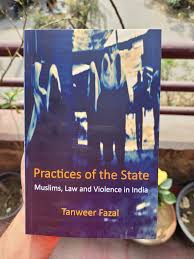
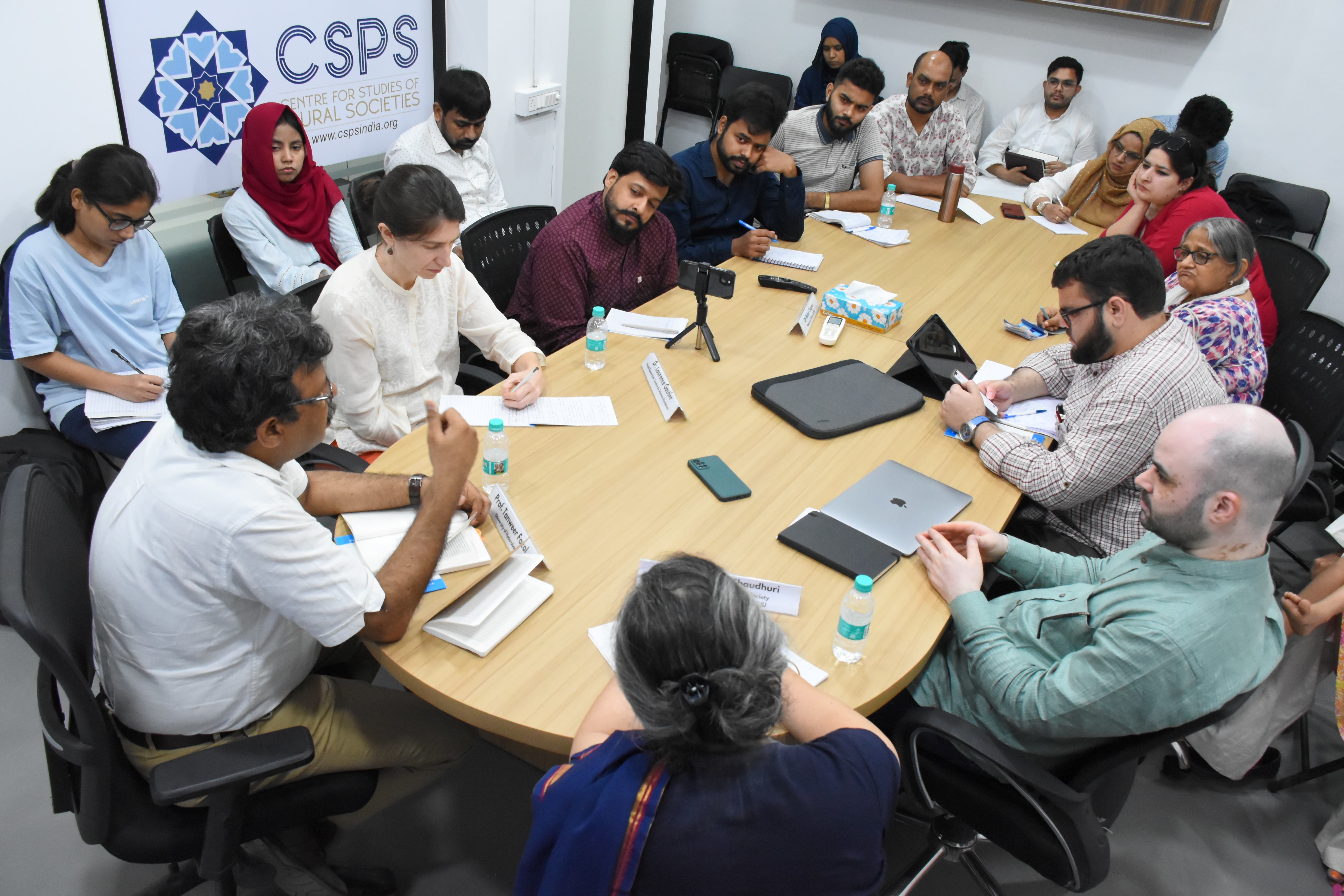
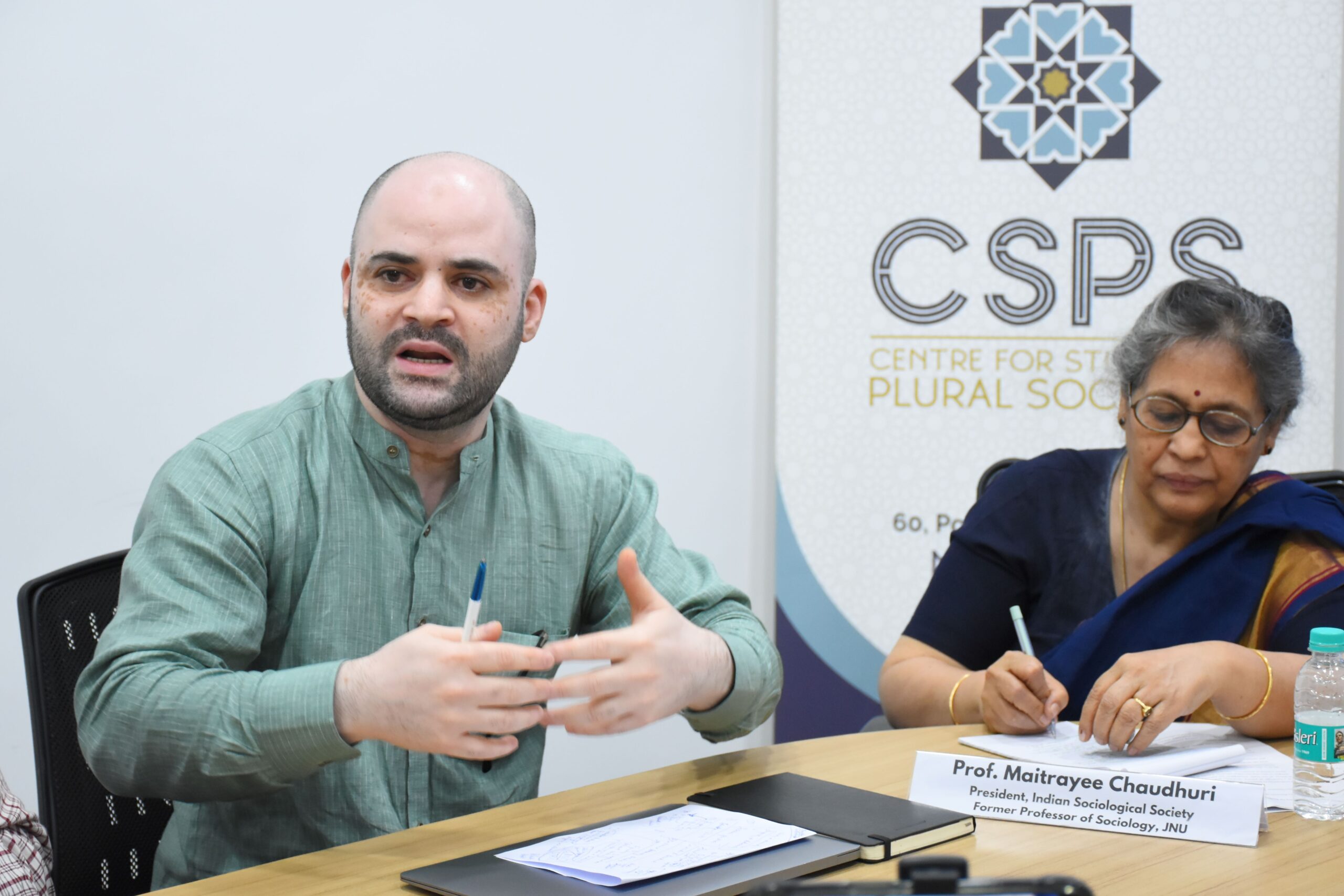
Centre for Studies of Plural Societies (CSPS) organised a book discussion on “Practices of the State: Muslims, Law and Violence in India,” authored by Professor Tanweer Fazal, a professor of sociology at the University of Hyderabad. Prof. Maitrayee Chaudhari, former professor of sociology at Jawaharlal Nehru University, New Delhi chaired the discussion.The session was moderated by Dr. Javed Iqbal Wani, Head of Research and Publications at the Centre for Studies of Plural Societies (CSPS).
pix: facebook.com/threeessayscollective
Professor Tanweer Fazal commenced the session emphasising on the 5 essays that comprised his book as an exercise to decode the complexities of the Indian State and its evolution in interacting with society and Muslim communities in particular. He spoke on the projection of the scapegoating of minority communities as well as vulnerable citizenry amidst an emerging silence within academia that led legitimacy to the current regime. By interrogating the idea about whether a pre-2014 India lacked the same level of vitriol and aggression as the previous years, Prof. Fazal instead follows a historical and anthropological understanding of the state and calls for a reworking of analytical frameworks to decode the present state of affairs. He posited his work as a continuation of placing the state as a subject of analysis and weighs the Indian State’s substantive realities against its constitutional ideals.
Prof. Fazal makes a note to remind his audience that the question of ‘Muslims’ cannot and should not be treated as a monolithic community and instead as a collective of communities that interacts with larger institutions and collectives outside it. Simultaneously however, it becomes important to acknowledge that there is a level of vulnerability that a Hinduised state uniquely targets Muslim communities with. He starts by tracing the history of cow-slaughter laws and frames it through three different time periods; pre-independence, post-independence and post-2014, where he elucidates that while law and public order was given primacy in the previous two periods, there has been a shift in the past two decades towards open hostility and institutional impunity for perpetrators of violence. The author mentions the Shaheed Ganj Mosque, which came under Sikh occupation when later Muslim organisations petitioned for its restoration, but British courts, fearing public disorder, chose to maintain the status quo. Fazal notes the fundamental changes post-1947, with the establishment of deities within the Babri Masjid from 1950 onwards, the 1992 demolition to the Supreme Court verdict, reflecting shifts to address majoritarian anxieties. These instances showcased how earlier institutions and the state managed communal disruptions while also positing the post-2014 era as marking a shift towards triumphalism and defiance where the priority was no longer the preservation of law and order, but instead the accentuation and placating of majoritarian anxieties.
The discussion also touched upon the shifting ideological stance of the state from precolonial times wherein various theoretical approaches to understanding the state were examined, highlighting the importance of political economy and the relationship between the state and society. An anthropological analysis of the state, focusing on its experience by populations, was emphasised, particularly in situations of violence and crisis. The author in his discussion also examined the production of impunity in post-conflict incidents, such as the Bhagalpur riots of 1989 and the Ranvir Sena massacre of Dalits in 1997. He discussed how media narratives, court proceedings, and inquiry commissions contribute to impunity while critiquing the Citizenship Amendment Act (CAA) and National Register of Citizens (NRC), which rendered 1.9 million people stateless in Assam.
Prof. Maitrayee Chaudhari, chairing the discussion, reflected on the rapid dismantling of past ideals. She took the example of the ‘Subcommittee on the Role of Women’ under the National Planning Committees of 1947 and identified three ideological strands: the socialist idea of a working class woman, the liberal idea of an individual unencumbered by caste or religion, and lastly, cultural nationalism, which has become more prominent as of late. Chaudhari emphasized the convergence of dominant societal forces with the state, subsuming academia, judiciary, and media into a nationalistic framework that seems to have gained currency in recent times. Prof. Chaudhari also spoke about how the past functioning of committees following a particular violent incident were set up as a means to resolve tension but ultimately failed to reach substantive resolutions. In the present context, there then comes a point where a belief that the state should follow ‘social law’ has taken root with the 2014 Lok Sabha elections being a populist, majoritarian articulation of grudges that previously may have gone unaddressed. These occasions of tensions get heightened in times of crisis, much like the COVID pandemic where there was massive inequalities, communal tensions and stark vulnerabilities in full display.
Prof. Fazal also highlighted instances where Muslims have been treated by the state, law and subjected to persecution because of a particular making of law, showcasing the way the state interacts with its constituents. He argues that one can understand community formations and the narrative of the ‘us versus them’ through a ‘Triadic lens’ where the state plays a central role in the construction of community boundaries. The triad consists of the nation-state at the centre, the communities on the spectrum and the national public on the other spectrum. The state and the national public have a close relation with the state drawing legitimacy from the national public who approves the bulldozing of houses and grants legitimacy to the state. This national public is then constituted and reconstituted according to political negotiations and the needs of those in power.
The moderator Dr. Javed Wani, also spoke about the blurry lines between what constituted the state and society and whether the ‘impunity’ that is becoming more prevalent belongs to the sacred or the profane. He touches upon the crisis of sovereignty and the incomplete project of decolonisation that has led to it triggering old claims in new repackaged ways that underline the continuities of social formations. One good measure to markedly chart this departure would be a relook into the Constituent debates, as the moderator put it, which mentioned many unresolved questions that have now come to the forefront. Prof. Javed also drew a parallel between the NRC process with the Criminal Tribes Act used by British colonialists, both of which placed the burden of proof on the accused while not requiring evidence collection when a testimony was enough to declare anyone as an ‘illegal/criminal’.
The discussion also saw questions raised about the ‘us versus them’ narrative being raised in states like Assam, to which the author posits that the process of ‘otherisation’ is one that is not new and instead follows a larger history. The superimposing of past boundaries, claims and the overlooking of histories such as when migration into the valley was sought by colonialists and land owners to overcome labour shortages, have instead given way to regional chauvinism that have translated into anti-migrant rhetoric and violence. The author also talked about how there is an evolving political articulation using the language of rights and citizenship that are now being wielded by the Muslim community alongside exclusionary aspirations of institutions and political forces.
The discussion concluded with reflections on the state’s relationship with society, the role of social media, and multivocality of the Indian State while pointing future researchers towards the need to map these evolving changes. Overall, “Practices of the State: Muslims, Law and Violence in India” offers a crucial lens to understand the intricate dynamics of state practices in India. Prof. Fazal’s work challenges us to critically evaluate the past and present, urging a deeper understanding of the state’s role in perpetuating violence and exclusion. The book discussion highlighted the need for continued discourse and analysis to address these complex issues and foster a more inclusive society.
The report is prepared by Callistine Lewis, a research intern at CSPS
source: http://www.cspsindia.org / CSPS / Home> Book Discussion – Seminar Report / by CSPS Team
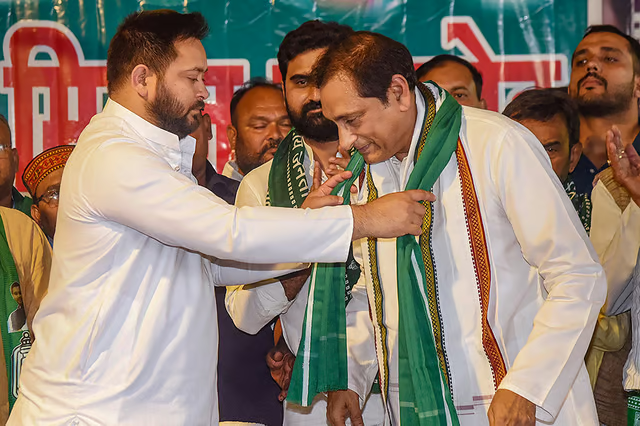
“Kaiser-saheb is joining us after a meeting with party president Lalu Prasad-ji. We stand to gain from his experience. It is a development that will send across a strong message in favour of our fight to protect the Constitution, which is facing threat from the ruling dispensation,” said Tejashwi Yadav.
Mehboob Ali Kaiser joins RJD / Photo: PT
LJP MP Mehboob Ali Kaiser, the lone Muslim to have been elected to the Lok Sabha from the BJP-led NDA in Bihar, joined the RJD on Sunday, in a shot in the arm for the opposition party amid the elections.
Kaiser, who sided with former Union minister Pashupati Kumar Paras when the latter split the LJP, and was denied a ticket this time by Chirag Paswan despite efforts to seek rapprochement, joined the RJD in the presence of its leader Tejashwi Yadav.
“Kaiser-saheb is joining us after a meeting with party president Lalu Prasad-ji. We stand to gain from his experience. It is a development that will send across a strong message in favour of our fight to protect the Constitution, which is facing threat from the ruling dispensation,” said Yadav.
Born into the family that ruled the erstwhile princely state of Simri Bakhtiyarpur in Saharsa district, Kaiser started his political career with the Congress and headed the party’s state unit till 2013.
He joined the LJP in 2014 and won the Khagaria seat, which he retained five years later.
His relations with Chirag Paswan, the then LJP president, began to sour when the party denied a ticket to his son Yusuf Salahuddin in the 2020 assembly polls.
Salahuddin went on to contest and win the Simri Bakhtiyarpur seat on an RJD ticket.
It was not immediately known whether the RJD, which has announced candidates for all but one of the 23 Lok Sabha seats it is contesting, will be fielding Kaiser in the ongoing elections.
source: http://www.outlookindia.com / Outlook / Home> Elections / by PTI / August 21st, 2024
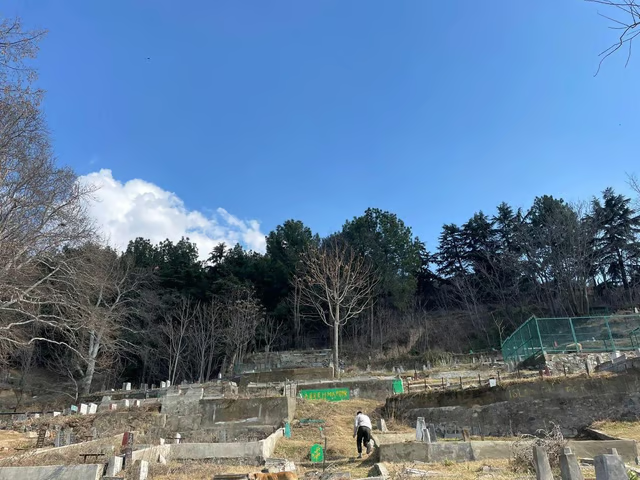
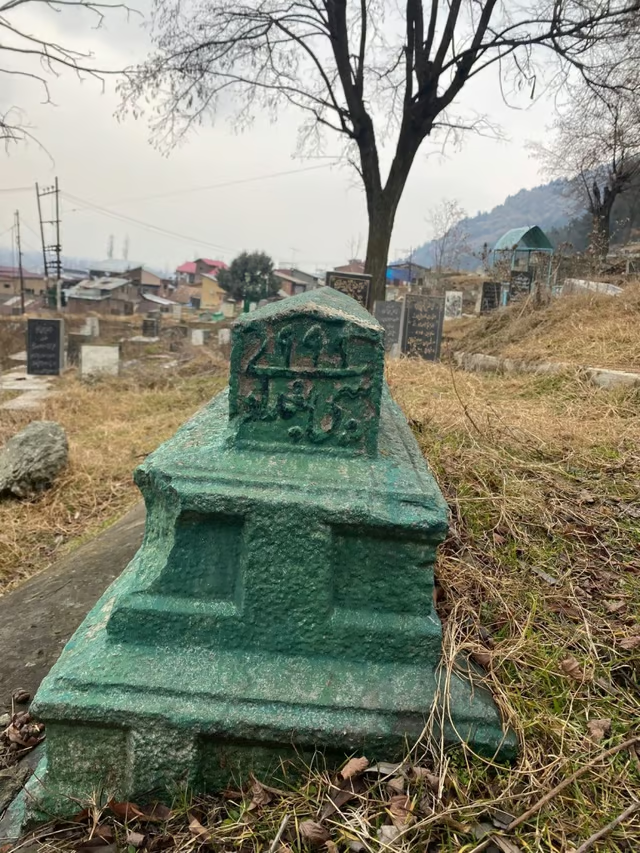
The cemetery and those who lie buried in the soil of time and fate are the witness to the the lost romance, their epitaphs bear a testimony to a history of prose and poetry.
The forgotten poet cemetery of Kashmir / Photo: Shakir Mir / Internet
خاک میں کیا صورتیں ہوں گی کہ پنہاں ہو گئیں
(In the soil- what faces must be hidden)
Beauty finds its way at odd places; away from the flamboyant commotion of Boulevard, far from the amorous colours of Zabarwan and distant from the prospects, perspectives and spectre of present. Beauty finds its way at odd places: along the sombre shores of the lifelessness, in the weed, litter and rubbish of a graveyard, the withered tombstones of a cemetery,
The Cemetery of the Poets
The cemetery and those who lie buried in the soil of time and fate are the witness to the the lost romance, their epitaphs bear a testimony to a history of prose and poetry.
Laala tooram, na humchoon ghuncha gulboo zadaem
Shaula jae bakhya bar chaak-e-gereban meezenam
(I am the Tulip of Sinai and not the bud borne of a rose
To my torn collar, I apply the needle of my fire to stitch it)
Cries out poet Mazhari, having penned down 6000 Persian verses throughout his travels from Iran, Khorasan, Hindustan to Kashmir, but now lost in graves and indifference of another necropolis, Malkhah.
Founded in year 1587 C.E during by the Mughal emperor Akbar, the cemetery of poets, also called Mazar-e-Shoara is situated along the banks of Dal Lake. The burial ground for the once eminent poets seems to have been selected carefully to give the dead souls a serene eternal sleep. The historical records show that there were five poets and men of letters buried in the cemetery, all of them the eminent avant grade of Iran, associated with the literary upper class of Mughal court. However, as of today only three of the tombstones can be located in the mazar, rest covered in debris of time and apathy.
There seems to be some confusion regarding the first grave in the cemetery, largely appearing due to the mistakes in copying the previous historical accounts. In this regard the first reference comes from the great historian and author, Mohammad Azam Dedmari in his Waqiat-e-Kashmir. Dedmari was a scholar, researcher, and also a poet of his time and was born during Aurangzeb’s era when Abu Nasr was performing the duties of sobedar (Governor) of Kashmir. Therefore, due to his temporal proximity to the rule of Akbar and his other meticulous documentations, his record can be taken as more authentic.
According to him the great Iranian savant and scholar of his time, Shah Fatehullah had come from Iran to Deccan. According to M. A Alvi and Abdur Rahman’s seminal work, “Fathullah Shirazi: The great Indian scientist of 16th century” and Mohammad Akmal Makhdum’s, “A Great Man: Shah Fateh Ullah Shirazi”, Fatehullah was brought up in Shiraz and learnt under great teachers like Kamal-ud-din Masood Sherwani and Khwajah Jamaluddin Mahmud, a disciple of the logician Jalal-al-din-Davani. Shirazi furthered his knowledge in medicine, mathematics, and science under the instruction of Mir Ghayasuddin Mansur. After completing his education, Shirazi embarked on a career in education in Shiraz. Among his notable students was Abdul Rahim Khan-i-Khanan, who served as the close confidant of the Mughal Emperor Akbar. In 1583, Shirazi received an invitation from Mughal Emperor Akbar and subsequently joined the imperial court in Agra.He soon earned the title of Amir and a rank (mansab) of 3000. Two years later, in 1584, Akbar appointed him as the Amin-ul-Mulk, also known as the Trustee of the State.Shirazi’s first task was to reexamine and rectify the Mughal Empire’s vast transaction records, which he accomplished with diligence and success. Along with his administrative work, Shirazi also undertook the task of regulating the intrinsic and bullion values of coins. He identified and corrected discrepancies in the currency, ensuring its reliability and trustworthiness. Shirazi’s skills and talents also earned him various honors and titles. In 1585 and 1587, the emperor selected him to lead diplomatic missions to the Deccan, where he was recognized for his efforts with the title of Azud-ud-Dawlah, or the Arm of the Emperor. He also received a horse, 5000 rupees, a robe of honor, and the office of the Chief Sadr of Hindustan.
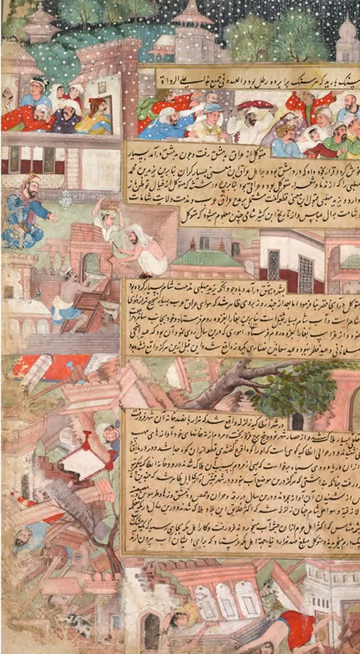
A great poet, he also made significant contributions to the fields of philosophy and logic, particularly in his work, Takmilah-i-Hashiyah. Additionally, he played a crucial role in compiling the Tarikh-i-Alfi, a thousand-year history of Islam, demonstrating his vast knowledge in the field of history.
Page of disasters, from Tarikh-i-Alf
One can try to estimate the scholarship of Shah Fatehullah by the brief introduction Abul Fazal (Grand Vizier of Emperor Akbar the Great) writes about him. Abul Fazal being a royal minister and himself a great scholar did not recognise anybody at par with his own scholarship, but about Shah Fatehullah he writes:
“if all the books of all the subjects and sciences and crafts are destroyed then Shah Fatehullah, with his scholarship and knowledge, and with his memory, will create a parallel new library of books.”
Emperor Akbar mourns his death in following words:
“Had he fallen in the hands of Franks and had they they demanded all my treasures for him, I would gladly have entered such profitable traffic and brought the jewel cheap”
Shirazi was a great inventor and is credited with numerous innovations like improved cannons and guns, wagon mllls, mirrors that would make far things appear closer, travelling baths etc.
Two references are made to the death of Shah Fatehullah by Kashmiri scholars, one by Dedmari who says that he developed Typhoid and self treated it by over-eating Harisa. Another reference is made by Hassan Kuehami in his Tareekh-e-Hassan in which he refers to him (probably mistakenly) as Shah Abu Fateh and cites tuberculosis as his cause of death. The mistake (viz a viz name) seems an error while copying from Waqiat-e-Kashmir, where a poet called Mir Abu Fateh is mentioned immediately after Fatehullah, whom Kuehami seems to have skipped and probably mixed with the former. The location of his burial is mentioned atop Takht-e-Sulaiman, in Mazar-e-Shoara.
M.A Alvi and Abdur Rahman refer to Abdul Qadir Badaoni’s, Muntakhab-ut-Tawarikh, which narrates a story similar to that of Dedmari in which Fathullah Shirazi dies because of over-eating porridge made of meat while having an episode of febrile illness. But there is a very important historical fact that is referred to in this version. According to them Fathullah was buried on koh-e-sulaiman, in the monastery of Sayyid Ali Hamadani. However, today we do not know any such monastery that exists on koh-e-sulaiman (or takht-e–sulaiman). So could this be reference to the lost monastery of Sayyid Ali Hamadani’s student Mohammad Ismael Kubravi which is historically known to exist around the same place. It was a matter of reverence to teachers that the students would name their schools and shrines after them. The great scholars would be buried in graveyards adjacent to these monasteries. So, is the location of the Mazar-e-Shoara the place where the monastery of Mohammad Ismail Kubravi actually stood?
(The lost monastery has a history of its own, allegedly destroyed by Chak rulers, the location where it stood has been a centre of academic debate in archaeological and academic circles.)
Cemetery
Second grave in the cemetery is of Haji Jan Muhammad Qudsi Mashadi popularly called Qudsi Mashadi. He was a native of the Mashhad in Iran. He joined the court of the Mughal emperor Shah Jahan where he rose to become Malik-al-Shura (poet laureate). It is said that Mughal empire had Qudsi weighed in gold, which was then presented to him as a reward for his poetic excellence. On the occasion of the installation of the famous Peacock Throne in 1635, for example, Qudsi composed a dedicatory chronogram that was cast in glazed tile and inserted inside the throne canopy. Qudsi wrote several topographical poems as well, the most famous of which is his description of the journey to Kashmir.
When his son Mohammed Baqir died in the prime of his youth in Mashhad, Qudsi was heartbroken and decided not to go back to his native land but remain in India. Later he settled permanently in Kashmir. His works includes the poetical composition Zafarnama-yi Shahjahani, devoted to the king’s conquests, containing some 7000 rhymed couplets, and covering the first fourteen years of Shah Jahan’s reign and is by far Qudsi’s longest work, though it remained incomplete at the time of his death it was later completed posthumously by Kalim Kashani; a mathnawi entitled Wasf-I Kashmir. The poet remains buried in the Mazar-e-Shoara.
The third poet lying at rest in the graveyard is Abu Talib Kaleem. A native of the Persian city of Hamadan when Abu Talib Kaleem heard about Qudsi’s reception at the court of Shah Jahan, he was perturbed and said, “The man who was to be held by neck, it is strange, was weighed in gold”. He travelled Deccan and other Indian cities and later became a courtier of the Emperor at Shahjehani Darbar. Kaleem soon attained fame as a poet. The great Urdu poets Sauda and Mir Taqi Mir have written Tazmeens (poems formed by inserting verses from another’s poem) of his ghazals. Kaleem was assigned the task of writing a history of the Mughals, Padshah Nama or Shahnama Shaham Chugtia, in poetic form and sent to Kashmir so that he could do his work undisturbed. Hw wrote qasidas and mathnawis about every important event of his time, be it the fight of young Aurangzeb with an infuriated elephant, the famine in Deccan or his visit to a paper mill in Kashmir. He also composed a poetic chronicle sahgihannama Like Qudsi, he was a great admirer and friend of Ghani Kashmiri who wrote an elegy on his death (in 1650 C.E) in which he also remembered Qudsi and Saleem as great and noble poets. In the elegy he compared his friend to Moses ‘Kalimullah”, the pen being his miraculous rod, and gives chronograph of his death in the line:
The Sinai of inner meaning became radiant by Kalim
The fourth poet, another native of Iran, Mohammed Quli Saleem went to India in the reign of Shah Jahan. He joined the court of the prime minister Nawab Islam Khan. He was a man of high poetic calibre and is famous for his works ‘mathnawi-qadha-wa-qadar’ and another mathnawi in praise of Kashmir. Saleem was accused by the Iranian poet Sa’ib of plagiarising his poetry. During his stay in Kashmir he fell ill and passed away to be buried in the cemetery of the poets.
The last poet buried in the graveyard is Tughra Mashadi. Nothing is known of Tughra’s childhood and youth, other than that he probably was born in Mashad. Tughra moved to Mughal India and the court of Jahangir towards the end of the latter’s reign. During the reign of Jahangir’s successor, Shah Jahan, Tughra joined the court of one of Shah Jahan’s sons, Murad Bakhsh, and accompanied him on the Mughal campaign in Balkh (1646). Although unsuccessful, this campaign is nonetheless commemorated by the poet as a victory in his panegyric to Murad Bakhsh, Mir’āt al-futūḥ (Mirror of victories), which appears near the end of the present collection. Tughra subsequently settled in Kashmir, where he lived in a shop at Rainawari on the banks of Nayidyar canal, where he died in solitude. Tughra composed verse in all the popular forms of Persian poetry, but he is most famous for his prose works known as risālahs (epistles) which include Risālah-ʼi Firdawsīya and Mir’āt al-futūḥ.
Every grave in the cemetery has thousands tales to tell. Every epitaph bears signs of a glorious past. However, today the cemetery, just like our past, lies in shambles, withered and perishing.
References:
Waqiat-e Kashmir by Muhammad Azad Dedmari
Tareekh-e-Hassan by GH Khuehami
Muntakhab-ut-Tawarikh by AQ Badyuni
The Islamc literature of India by Annemarie Shimmel
Haji Jan Muhammad Qudsi by Prof. Zia-i-Ahmad
Fathullah Shirazi: A Sixteenth Century Indian Scientist by MA Alvi
A Great Man: Shah Fateh Ullah Shirazi by MA Makhdum
Encylcopedia Iranica
source: http://www.outlookindia.com / Outlook / Home> Culture & Society / by Khawar Khan / October 06th, 2024
Humayun World Heritage Site Museum in New Delhi opened for visitors on Tuesday
Latest addition to 16th-century tomb complex ‘brings alive 700 years of heritage’
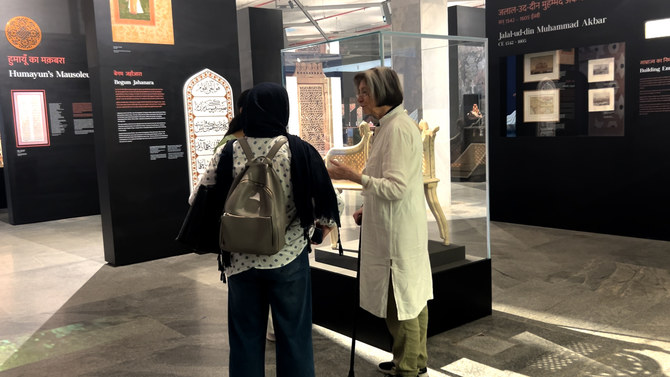
Visitors look at artifacts at the Humayun World Heritage Site Museum — the newest addition in Humayun’s Tomb complex — in New Delhi on July 29, 2024. (AN Photo)
The second Mughal emperor Humayun was widely known as an avid reader fond of journeys, architecture, and storytelling. Almost half a millennium after his death, a new museum in the heart of New Delhi highlights his role in shaping India’s cultural heritage.
Opened for visitors on Tuesday, the Humayun World Heritage Site Museum is the newest addition in Humayun’s Tomb complex — a landmark 300-acre area in New Delhi’s Nizamuddin that features dozens of historical monuments and includes Sunder Nursery, a 16th-century heritage park.
The advent of the Mughal dynasty, which ruled the Indian subcontinent between the 16th and 19th centuries, marked the global revival of Islamic architecture, with works that until today are examples of the highest quality and refinement.
Originally from Central Asia, the Mughals carried cultural elements borrowed from Arabs, Persians and Ottomans. As they settled in India, they fused these with the various local styles found in their new domains.
Humayun was the son and successor of Babur, founder of the dynasty, and ruled the empire from 1530 to 1540 and again from 1555 until his death the following year.
The new museum, established by the Agha Khan Trust for Culture and the Archaeological Survey of India, traces Humayun and his descendants’ lives, as well as the 700-year-old history of the whole Nizamuddin locality and its influence on Indian culture.
“There are hundreds of stories to be told, which the stones don’t speak,” Ratish Nanda, conservation architect and projects director at the AKTC, told Arab News. “The idea is to bring alive 700 years of heritage.”
The museum is located in Humayun’s Tomb, a UNESCO World Heritage Site, and the first of the grand mausoleums that became synonymous with Mughal architectural innovations and, three generations later, culminated in the construction of India’s most iconic monument, the Taj Mahal. About 7 million tourists from across India and abroad visit the complex every year.
“The idea is that people who now visit the World Heritage Site come with a deep understanding of the site,” Nanda said.
“We’ve been able to … combine architectural elements with incredible manuscripts, miniature paintings, calligraphy, textiles, coins, metalware, architectural elements — one is two one scale — with lots of films and digital technology, and models and so on.”
Spanning five galleries, the underground museum has over 500 artefacts sourced from the collections of the National Museum in New Delhi, ASI and AKTC.
“It captures the 700 years of history that is associated with the region of Nizamuddin and the World Heritage site of Humayun’s Tomb …This museum really captures the history,” said Ujwala Menon, AKTC conservation architect.
“The principal gallery talks about Humayun. There’s very little known about this emperor, and one of the things with this museum is to really address that … Then we have a second section of this gallery which talks about the personalities that are associated with Nizamuddin.”
Among the famed figures featured in the second gallery are Nizamuddin Auliya and Amir Khusro. Auliya was an 13th-century Indian Sunni Muslim scholar, Sufi saint of the Chishti Order, and is one of the most famous Sufis from the Indian subcontinent. His shrine and tomb are located near Humayun’s complex.
Khusro was a 13th-century poet and scholar who remains an iconic figure in the culture of the subcontinent.
Both Auliya and Khusro lived during the period of the Delhi Sultanate, which Humayun’s father conquered, leading to its succession by the Mughal empire. The museum shows how the empire did not come to its bloom in a cultural vacuum, but drew from and incorporated the culture of its predecessors.
“There was this idea of pluralism that existed during the Mughal period,” Menon said. “And this (museum) really captures all of that.”
source: http://www.arabnews.com / Arab News / Home> World / by Sanjay Kumar / July 31st, 2024
Bollywood and politics unite in grief after Baba Siddique’s tragic murder in Mumbai.
He played peacemaker between one-time warring superstars Salman Khan and Shah Rukh Khan at what was one of the most viral moments of 2013 before the social media rage kicked in and was a protege, even a second son, to cinema veteran Sunil Dutt.
NCP leader and former Maharashtra minister Baba Siddique, who was shot dead on Saturday night, epitomised the symbiotic relationship between politics and the Hindi film industry.
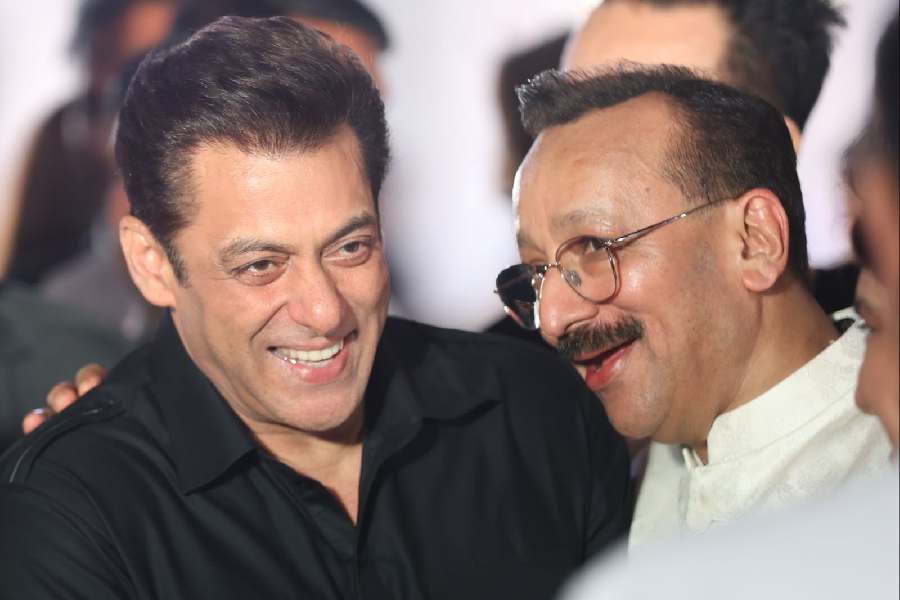
Baba Siddique with Salman Khan X/@BabaSiddique
His grand iftar parties were a starry affair attended by right from the Khans to filmmaker Kabir Khan, celebrity designer Manish Malhotra, and actors Urmila Matondkar, Katrina Kaif, Huma Qureshi, Sonu Sood, Sushant Singh Rajput, Ankita Lokhande, Kiara Advani, R Madhavan, and Aditi Rao Hydari.
Dutt’s daughter and Congress leader Priya Dutt said she is “shocked” by Siddique’s death.
“Baba was more than a political associate; he was family. To my father, Baba Siddique was like a son, and to me, he was a brother and a dear friend,” she wrote in an X post.
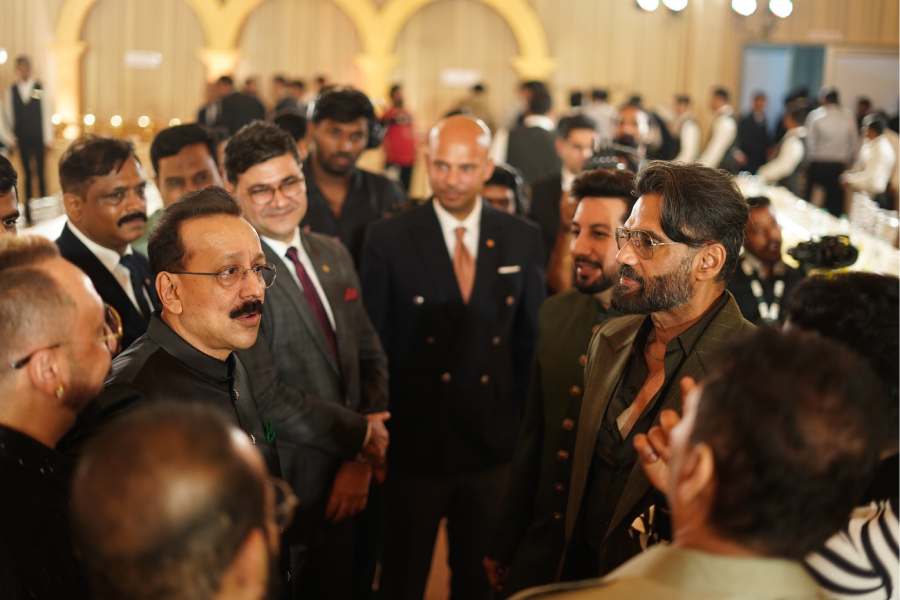
With Suniel Shetty/ X/@BabaSiddique
Siddique, a popular figure in Bollywood circles who earned praise for supplying life-saving medicines to patients during the COVID-19 pandemic, was waylaid by three men at Kher Nagar in Mumbai’s Bandra area just outside his MLA son Zeeshan Siddique’s office and shot at on Saturday night.
He was taken to the Lilavati Hospital where he was declared dead.
Siddique, 66, was brought into politics by the late Congress MP Dutt, who represented Mumbai North West for five consecutive terms.
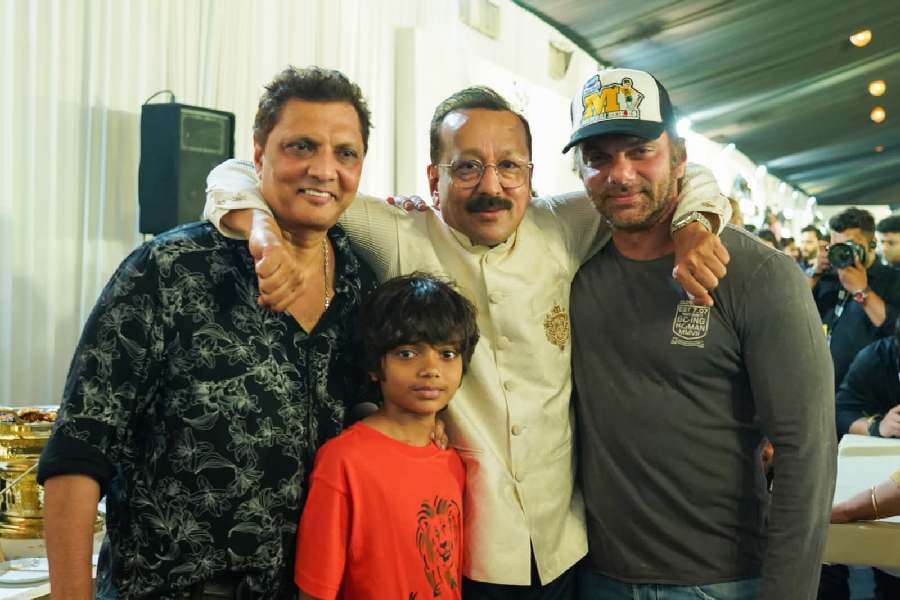
With Sohail Khan/ X/@BabaSiddique
Siddique joined the Indian National Congress (INC) as a teenager back in 1977. Even when he became a part of the Ajit Pawar-led National Congress Party (NCP) in February, he acknowledged the role of Dutt in his political career.
Priya Dutt said Siddique stood “steadfast” by her father throughout his political journey and beyond.
“When I entered politics, he guided me through its ups and downs, offering his unwavering support. His loss feels like the departure of a family member. My heart bleeds for Bhabhi, Zeeshan, and Arshia.
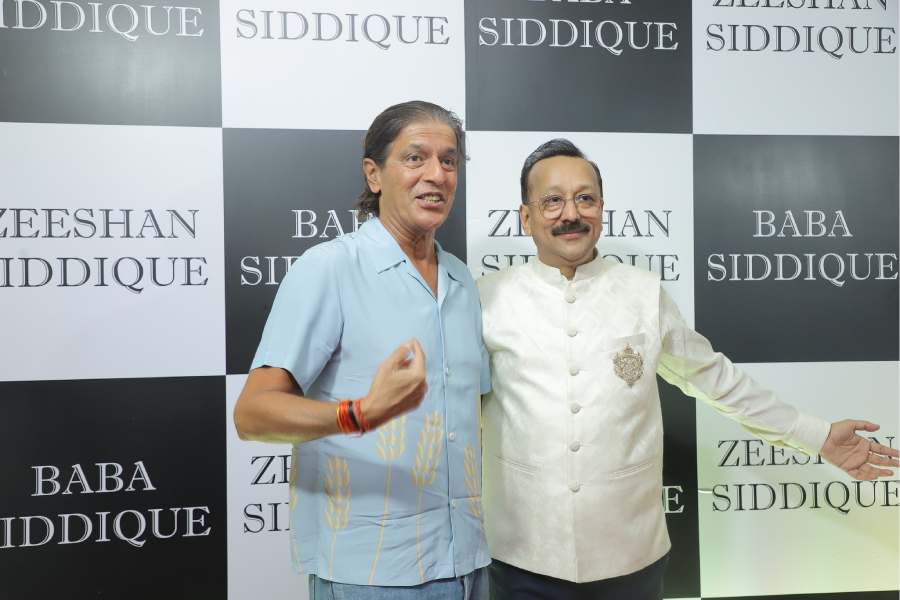
With Chunky Pandey X/@BabaSiddique
“May God grant them the resilience to bear this immense sorrow. May his soul rest in eternal peace. Farewell, dear brother. #BabaSiddiqui,” she wrote on the microblogging site.
It was his connection to Dutt that helped Siddique secure an MLA ticket in 1999 from Bandra West, a seat he retained for three back-to-back terms. Not only politics, former actor Dutt also introduced the political leader to the world of Bollywood.
After the news of Siddique’s death broke, Dutt’s son, actor Sanjay Dutt was one of the first celebrities to visit the late politician at the Lilavati Hospital where he was declared dead on Saturday night.
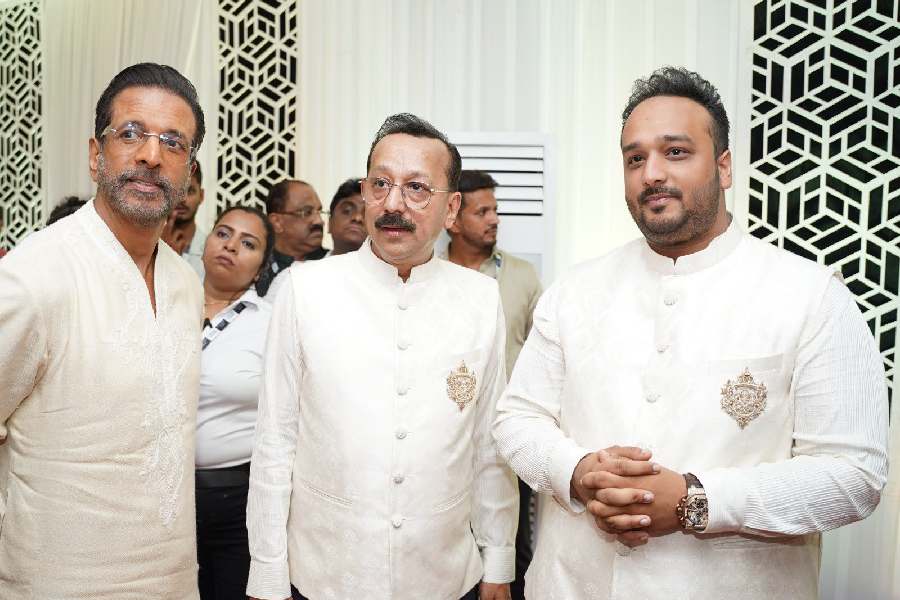
With Javed Jaffrey/ X/@BabaSiddique
Salman and Shilpa Shetty, along with her businessman-husband Raj Kundra, were also photographed reaching the hospital to meet Siddique’s family.
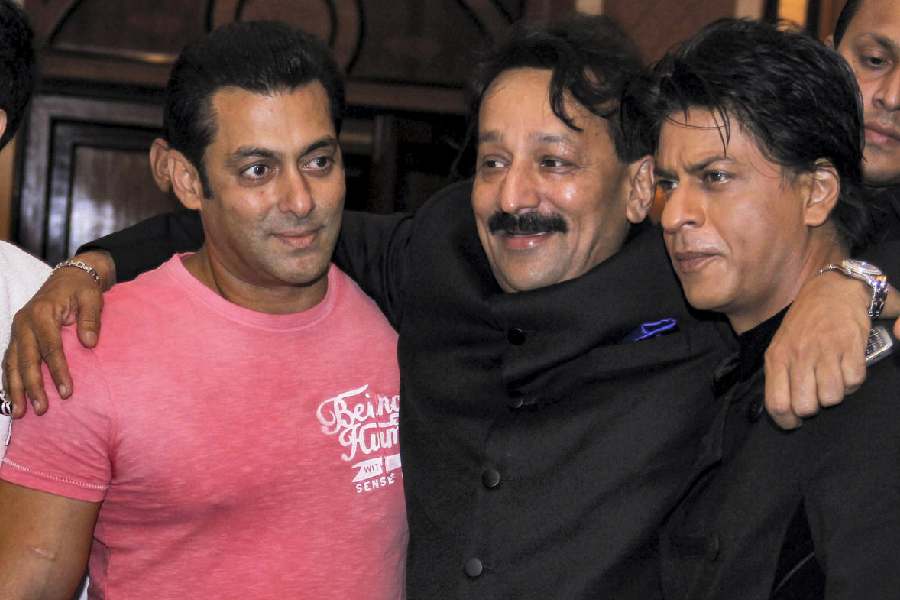
It was at Siddique’s 2013 iftar party, hosted at a five-star hotel in Mumbai, that Salman and Shah Rukh buried the hatchet.
The two Khans were on unfriendly terms since their spat at Katrina’s birthday party in 2008. The feud was so bitter that they avoided each other not only at private parties but also at public events.
There are several videos on the Internet capturing one of the highlights for the fans of the duo hugging it out back in 2013.
With Salman and Shahrukh Khan/ PTI
The iftar was on when Salman patted Shah Rukh on his shoulder, who was sitting next to his screenwriter-father Salim Khan, to embrace his “Karan-Arjun” co-star, thus ending their infamous rivalry.
A year later, Salman also endorsed Congress’ Siddique when he spent an afternoon in Ahmedabad with the then BJP’s prime ministerial candidate Narendra Modi on the kite-flying festival of Uttarayan.
“In our constituency Bandra, where it’s my responsibility to cast a vote, the best people there are Baba Siddiqui and Priya Dutt. You have to give Modi sahab the vote, I have to give my people the vote,” the superstar said.
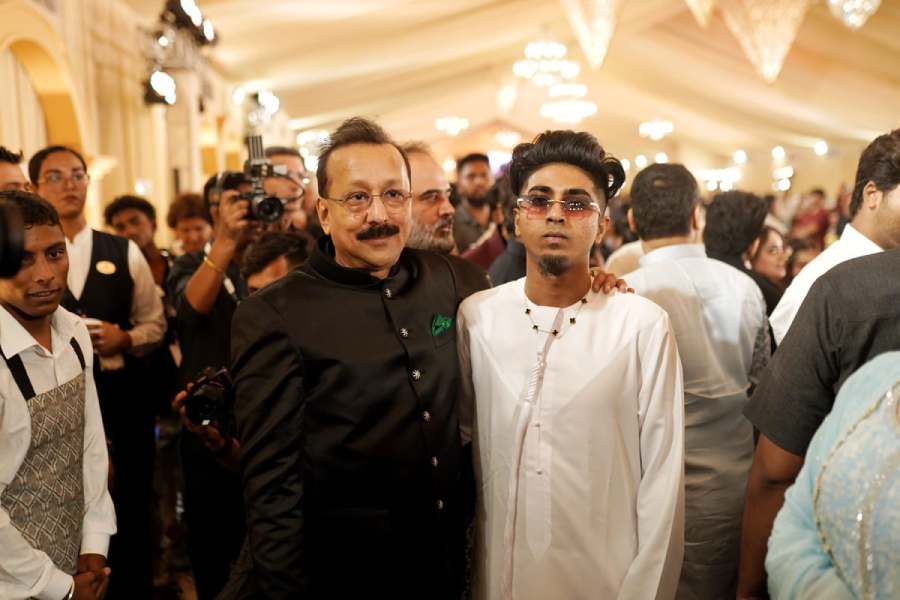
With Rapper MC Stan X/@BabaSiddique
Matondkar, a Shiv Sena member, said she was “extremely saddened” to learn about Siddique’s death.
“May God grant strength to @zeeshan_iyc and his family in this tragic time. Prayers for the soul departed,” the former Congress leader said.
“My heart goes out to @zeeshan_iyc and the entire family- May god give them strength to brave this difficult time. The perpetrators of this horrific crime must be brought to justice,” actor Riteish Deshmukh wrote on X.
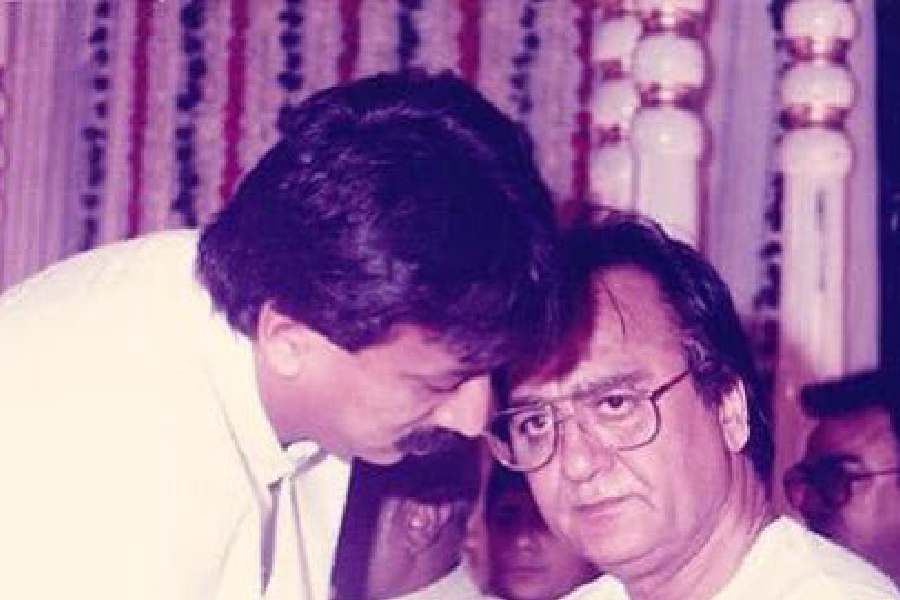
With Sunil Dutt X/@BabaSiddique
Two of the accused have been arrested — Gurmail Baljit Singh (23), a resident of Haryana, and Dharmaraj Rajesh Kashyap (19), a native of Uttar Pradesh. Some teams have also been sent out of Maharashtra to nab the third accused who is still at large, police said.
The accused have been booked under relevant Bharatiya Nyaya Sanhita sections, including for murder, as well as provisions of the Arms Act and the Maharashtra Police Act, they said.
source: http://www.telegraphindia.com / The Telegraph Online / Home / October 13th, 2024
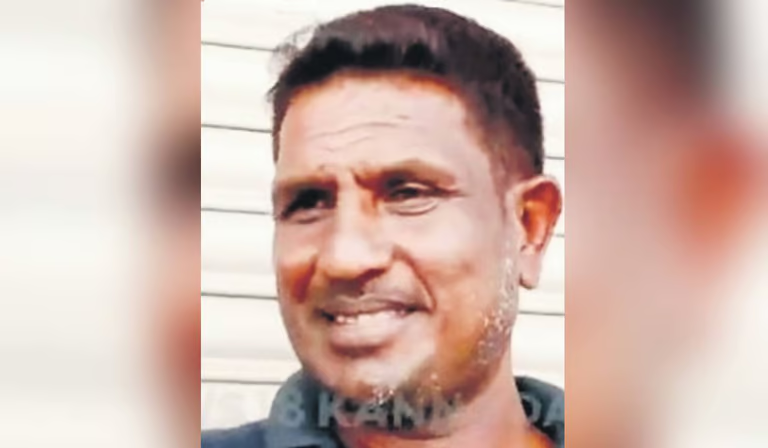
Altaf could not send his son to school because of poverty and they both worked in their garage.
Altaf Pasha (File Photo)
Mandya :
A bike mechanic from Pandavapura town has won Kerala government’s Rs 25-crore Thiruvonam bumper lottery. Altaf Pasha, 45, bought a lottery ticket (TG 434222) for Rs 500 a few days ago.
The results were declared on Wednesday. Altaf runs a small bike garage on Pandavapura-Mandya Road. He lives with his wife Seema in a rented house at Basavanagudi Layout.
They have a 21-year-old son and a 19-year-old daughter. His friend Samiulla told reporters that a few days ago Altaf visited Wayanad in Kerala where he purchased the lottery ticket.
After returning home, he tried to sell the ticket to his friend, who owns a welding shop adjacent to his garage, when he ran out of money. But the shop owner refused to buy the ticket.
Altaf could not send his son to school because of poverty and they both worked in their garage.
“After I came to know that I won the bumper prize, I rushed home and informed my wife and daughter. Initially, they did not believe me. But when I showed my ticket and the winning number on my mobile phone, they rejoiced,” Altaf told reporters.
“I will receive Rs 12.8 crore after all deductions. I will buy a house first and start a business. I can now get my daughter married happily. I will also help the poor as I know what poverty is,” he said.
source: http://www.newindianexpress.com / The New Indian Express / Home> Karnataka / by Express News Service (headline edited) / October 11th, 2024