All posts by mpositiveone@gmail.com

Resurgence: Revival of Indian Embroidery

INDIA :

Virtual Exhibition

Featuring the work of Asif Shaikh and his artisan studio

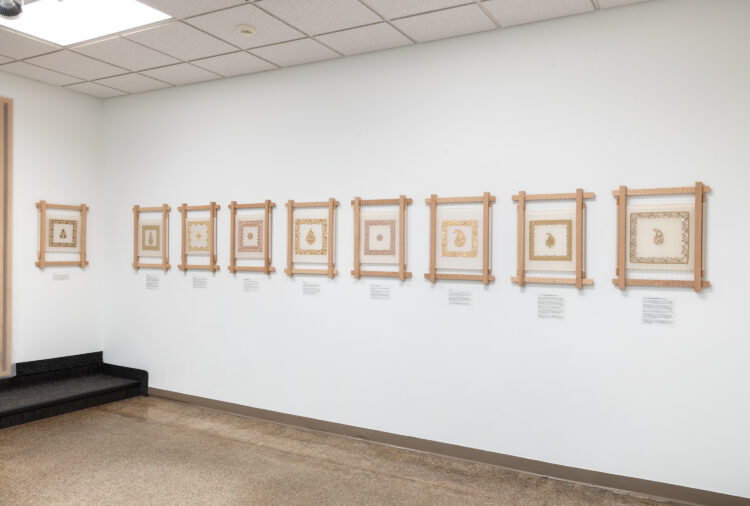
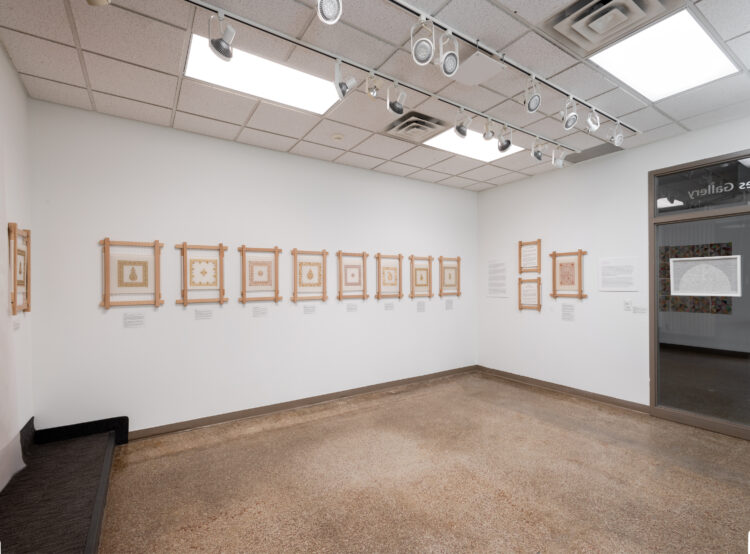
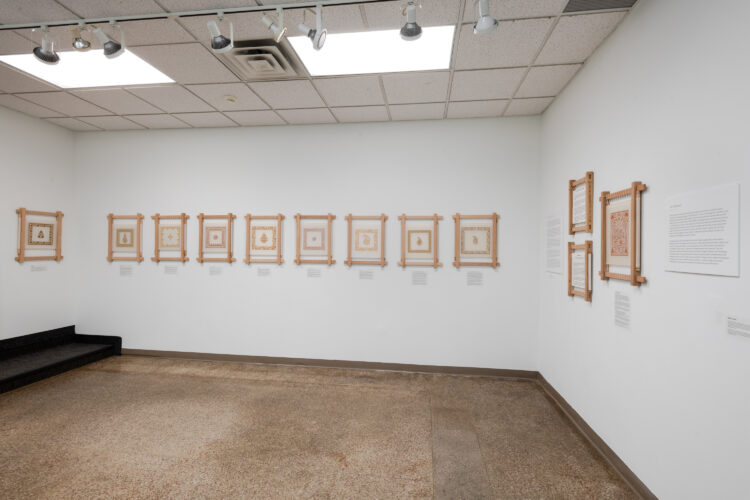
Mary Giles Gallery • April 18 – June 7, 2023
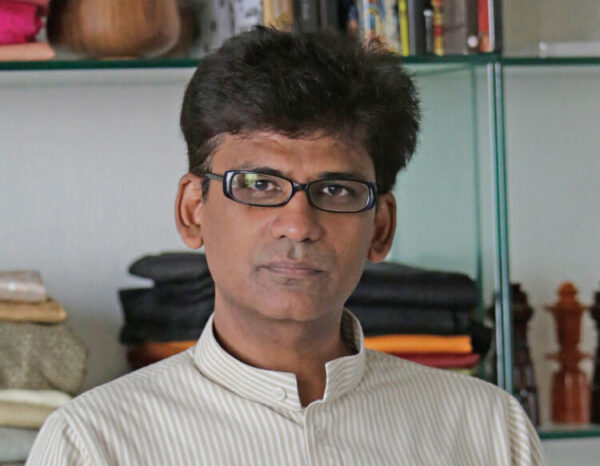
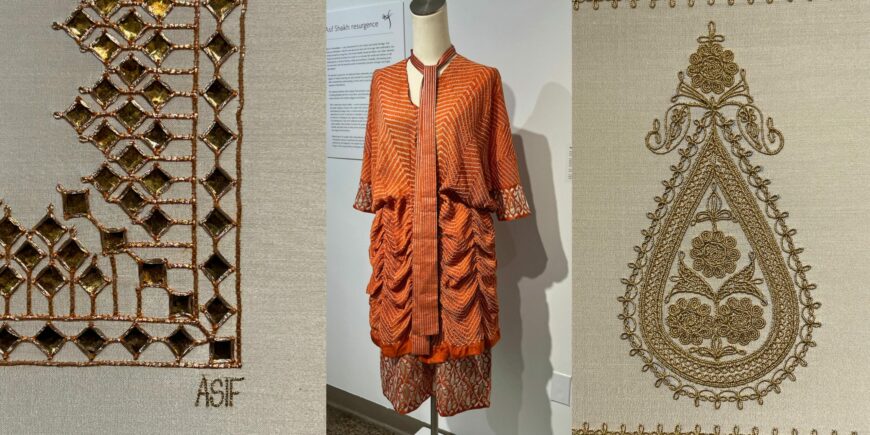
Textile Center is honored to host this special exhibit of work by Asif Shaikh, from Ahmedabad, India. As one of India’s most accomplished and acclaimed embroidery and textile artists and experts, Asif’s incredible embroideries, research, and writing create a bridge between East and West, old and new, tradition and innovation. His intricate and labor intensive artisan stitching “mends” a historic gap in Indian craft through his revival of Mughal (court) embroidery.

This collection of work from his studio highlights his leadership and influence in the revival of India’s textile heritage, focused on hand embroidery. Throughout his life, Asif’s work has developed with a highly refined and deeply held sense of aesthetics, steeped in detailed design and technical tradition. His dedication to the making of the ornate embroideries featured in the exhibition serves is testament to the social and cultural value of embroidery.

Born in Ahmedabad, a city renowned for its rich culture and textile heritage, Asif took up embroidery when he was about ten years old. At an age when embroidery was rarely pursued by young boys, Asif chose needle, thread and fabric over other interests. He explored a spectrum of traditional Indian embroidery techniques from different regions of India by learning the stitch himself, to build a sound technical foundation and fundamental understanding of stitch. Currently, his studio employs artisans who produce a range of embroidered yardage, which is transformed into garments and textiles. Showcasing a sophisticated juxtaposition of contemporary style and traditional textile techniques in stitch, motif, composition, and color palette, these textiles recreate the grandeur and fineness of India’s fabled royal textiles and attire, while reviving and preserving the tradition of Indian embroideries and supporting local artisans.

Reflecting on his sought-after works, Asif says, “Embroidery is what I live for. I will always immerse myself into this mesmerizing world because it gives me utmost satisfaction and happiness. No matter how fanciful, I love to give shape to an idea and bring it to life using timeless techniques with an innovative twist.”

Thanks  to Mary Anne Wise for introducing us to Asif’s work and to Shelley Wells for delivering, curating, and installing this exhibition.

_____________________Art Speaks: Resurgence with Asif Shaikh_______________

In this virtual conversation in June 2023, Asif Shaikh joined Textile Center from Ahmedabad, where he presented his work and practice, including his most recent projects.

source: youtube.com
https://youtube.com/watch?v=PpSP-LgtBgY%3Ffeature%3Doembed

In this virtual conversation in June 2023, Asif Shaikh joined Textile Center from Ahmedabad, where he presented his work and practice, including his most recent projects.

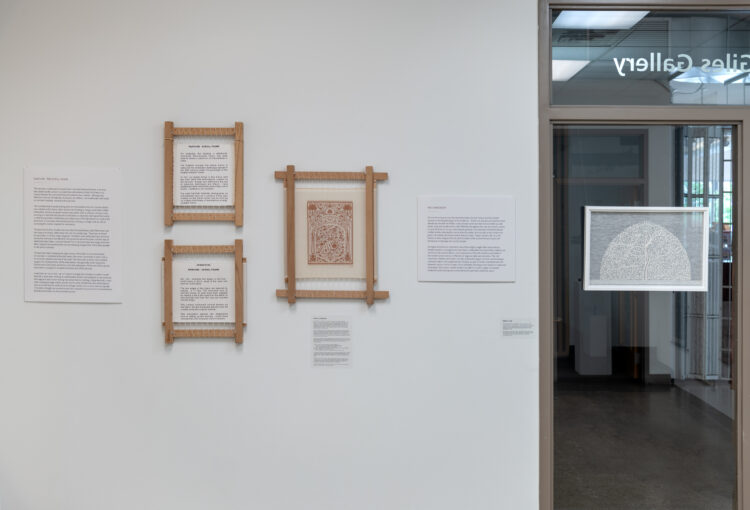
____________________In the Gallery_________________
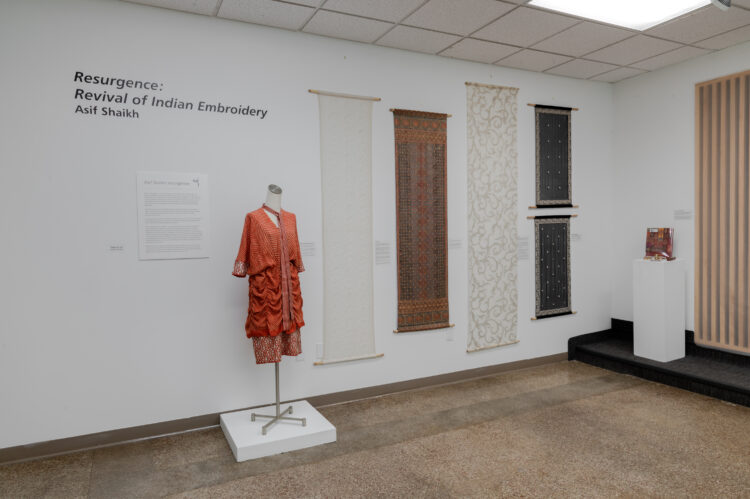
Photos by Rik Sferra

______________________THE EMBROIDERY_____________________

source: http://www.youtube.com / Art Speaks: Resurgence with Asif Shaikh

One of the most precious links between India’s ancient history and the present moment is the living heritage of her textile art – those rich and glorious traditions that effortlessly interlink the Maker, myths, human hands and time honored skills as weft meets warp and needle meets cloth. Manifest throughout this vast and varied country is a rich diversity of woven, embroidered, printed, resist dyed and embellished handcrafted textiles intended for use as attire for deities and mortals, as decorations for places of worship and homes and as items of trade. Today’s textiles still carry the history of early cargoes that set sail from India to the ancient Roman Empire, the Indonesian archipelago and courtly Europe.

Amongst those historic shipments were India’s highly sought after embroideries. Initially created to strengthen and join fabrics, embroidery has been finely crafted over time for its decorative effects, as an expression of the skill, creativity and belief of the needle worker and as a reflection of regional styles and variations. The rich repertoire of Indian embroidery includes a beautiful range of stitches and techniques worked on fabric with supplementary threads, as well as further embellishment with elements such as mirrors, metals, coins and shells. Drawing on the wealth of traditional techniques, 21st century needle workers are able to create a range of exquisite traditional and contemporary embroideries for garments and home décor.

________________________AARI on KARCHOB______________________________

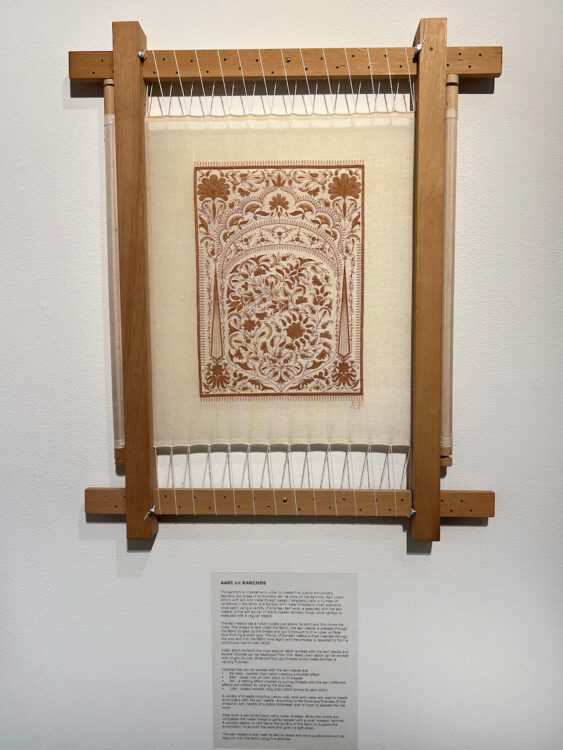
The karchob is imperative in order to create fine quality embroidery. Basically two types of embroidery can be done on the karchob; Aari (chain stitch) with silk and metal thread (kasab / kalabattu) with a number of variations in the stitch and Zardozi with metal threadand other elements once again using a variety of stitches. Aari work is executed with the aari needle, a fine awl similar to the European tambour hook, while zardozi is executed with a regular needle.

The aari needle has a notch incised just above its point and this forms the hook. The thread is held under the fabric, the aari needle is pressed through the fabric to take up the thread and pull it through to th e upper surface thus forming a small loop. The tip of the aari needle is then inserted through the loop and into the fabric once again and the process is repeated to form a continuous line of chain stitch.

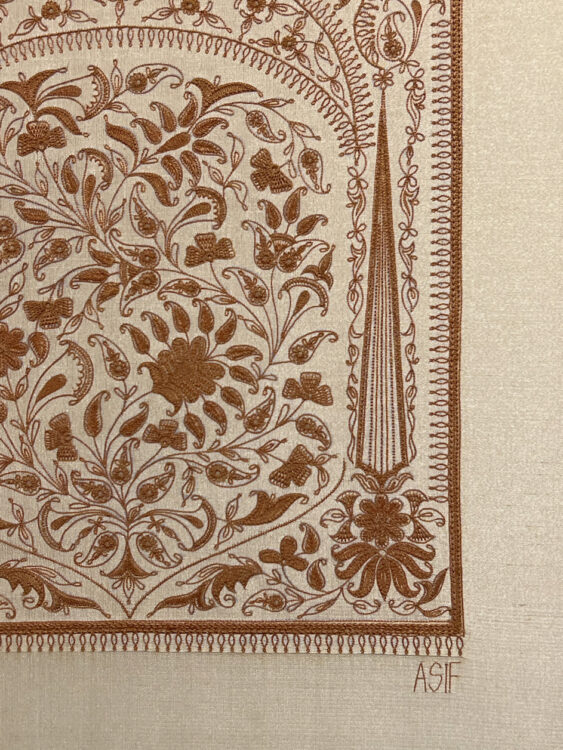
Chain stitch remains the most popular stitch worked with the aari needle and several stitches can be developed from this. Basic chain stitch can be worked with single, double, three and four ply threads which make stitches of varying fineness.

Stitches that can be worked with the aari needle are:

  • Bal taka – twisted chain stitch creating a knotted effect
  • Batt – close lines of chain stitch to fill shapes
  • Jali – a netting effect created by pulling threads with the aari (different effects are created by varying the stitches)
  • Lote – closely worked, long chain stitch similar to satin stitch

A variety of threads including cotton, silk, wool and metal are used to create embroidery with the aari needle. According to the thickness/fineness of the thread an aari needle of suitable thickness/ size of notch is selected for the work.

Pitta work is aari embroidery using metal threads. When the motifs are completed the metal thread is gently tapped with a small wooden hammer. A wooden dabber is held below the surface of the fabric to support the embroidery, to smooth the work and give it a soft sheen.

The aari needle is also used to secure beads and various elements such as sequins onto the fabric using fine stitches.
________________________________AJRAKH___________________________________

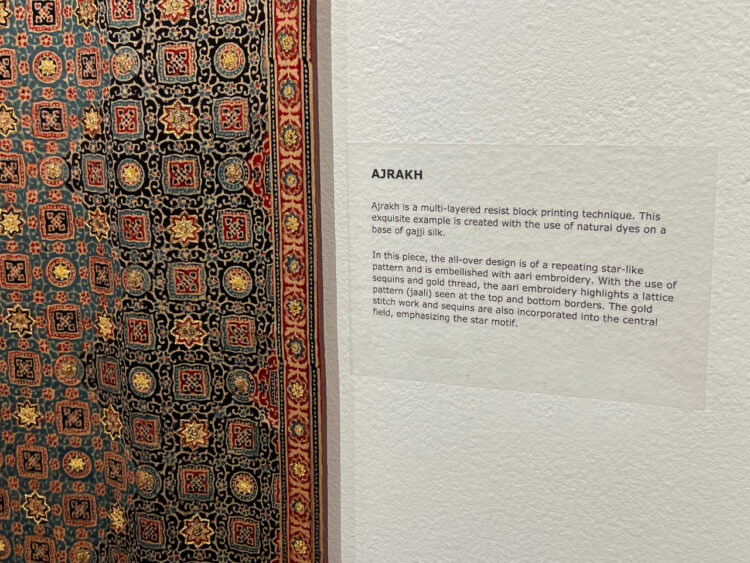
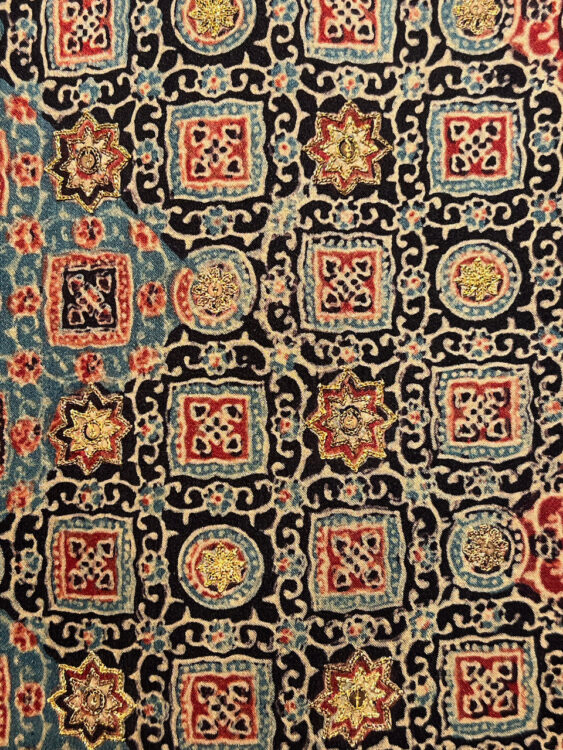
Ajrakh is a multi-layered resist block printing technique. This exquisite example is created with the use of natural dyes on a base of gajji silk. 

 In this piece, the all-over design is of a repeating star-like pattern and is embellished with aari embroidery. With the use of sequins and gold thread, the aari embroidery highlights a lattice pattern (jaali) seen at the top and bottom borders. The gold stitch work and sequins are also incorporated into the central field, emphasizing the star motif. 

 The ajrakh on the silk fabric is the work of Abdul Jabbar Mohammad Khatri of Dhamadka.
____________________BANDHANI (with Aari Pitta Embroidery)_________________

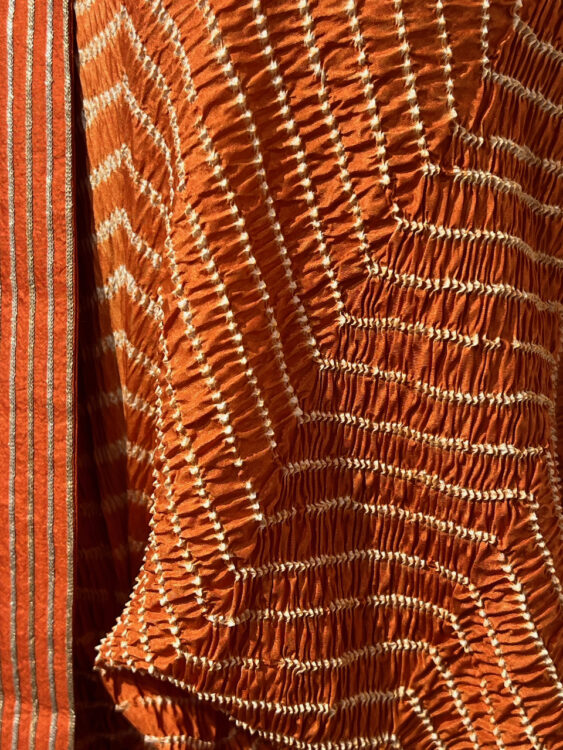
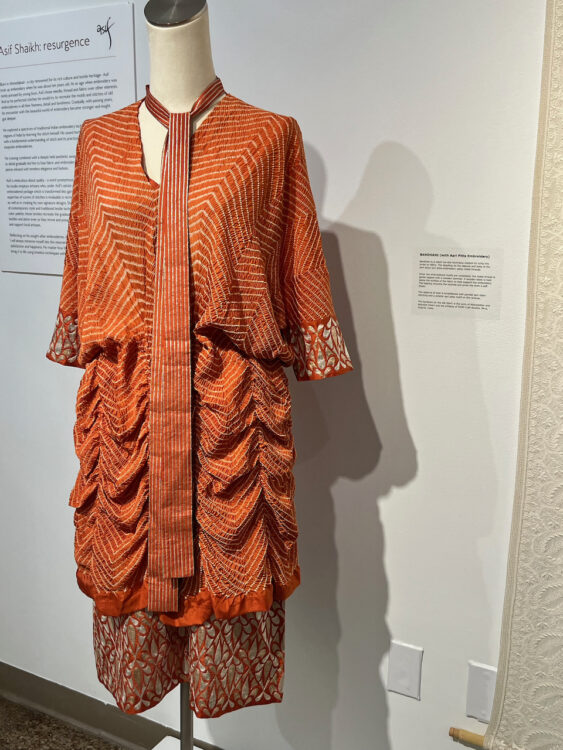
Bandhani is a resist tye-dye technique created by tying tiny knots on fabric. The detailing on the sleeves and base of the skirt show aari pitta embroidery using metal threads. 

When the embroidered motifs are completed, the metal thread is gently tapped with a wooden hammer. A wooden block is held below the surface of the fabric to help support the embroidery. The tapping smooths the stitches and gives the work a soft sheen.

The observe of sash is embellished with parallel aari chain stitching and a smaller aari pitta motif on the reverse. 

The bandhani on the silk fabric is the work of Abduljabbar and Abdullah Khatri and the artisans of SIDR Craft studios, Bhuj, Gujarat, India. 
______________________________CHIKANKARI_________________________________

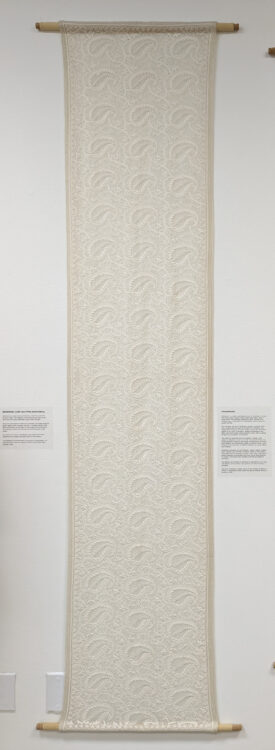
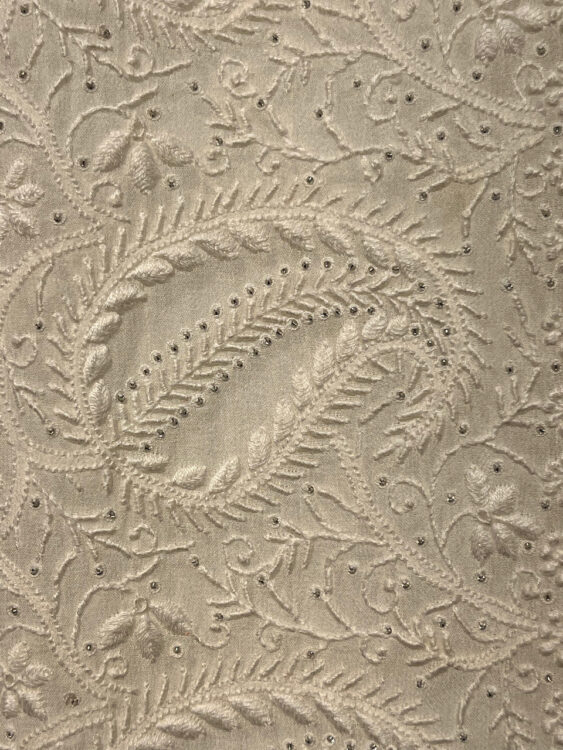
Chikankari is a subtle, sophisticated style of embroidery worked with white cotton threads on fine white cotton fabric using a round frame. This ethereal needlework, often referred to as ‘shadow-work’, was perfect for embellishing summer attire for royalty families.

The technique and skill of chikankari remains Lucknow’s forte, and is passed down through the female line. Chikankari was traditionally worked on very fine muslin, making the embroidery appear to be a part of the fabric. Motifs are stamped on the fabric with small wooden blocks dipped in colour that is washed off after the embroidery is completed.

The motifs are generally floral and paisley in design. Each pattern is designed in such a way that it seamlessly forms part of the garment in terms of size, shape and placement. Since the colour palette was traditionally limited to white on white, it was through the incorporation of different stitches that varied effects were created.

Chikankari comprises six main stitches – taipchi, bakhia, khatao, murri, phanda, jali, and their variations. Some on the reverse, while others pull the threads to create a ‘jali’ (net). A garment or textile frequently incorporates more than one of these stitches. To create a rich formal look, kamdani and fardi are added to chikankari.

The delicacy and fineness of chikankari is dependent on the care and patience of the artisan. One garment can take months to complete.

This work is stitched on fabric woven by the artisans of Bhairvis Chikan, a cooperative textile center founded by Mamta Varma, in Lucknow, India.
___________________________DANKA EMBROIDERY_________________________

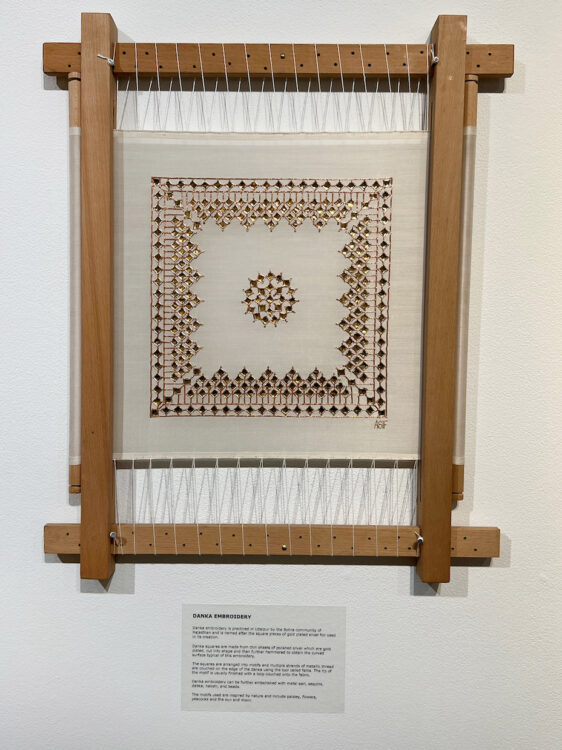
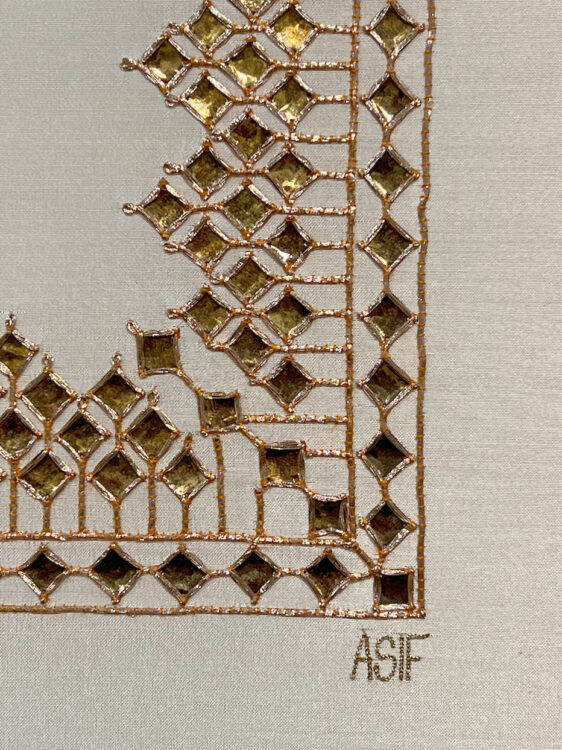
Danka embroidery is practiced in Udaipur by the Bohra community of Rajasthan and is named after the square pieces of gold plated silver foil used in its creation.

Danka squares are made from thin sheets of polished silver which are gold plated, cut into shape and then further hammered to obtain the curved surface typical of this embroidery.

The squares are arranged into motifs and multiple strands of metallic thread are couched on the edge of the danka using the tool called fatila. The tip of the motif is usually finished with a loop couched onto the fabric.

Danka embroidery can be further embellished with metal aari, sequins, dabka, nakshi, and beads.

The motifs used are inspired by nature and include paisley, flowers, peacocks and the sun and moon.
_______________________________DOKH______________________________________

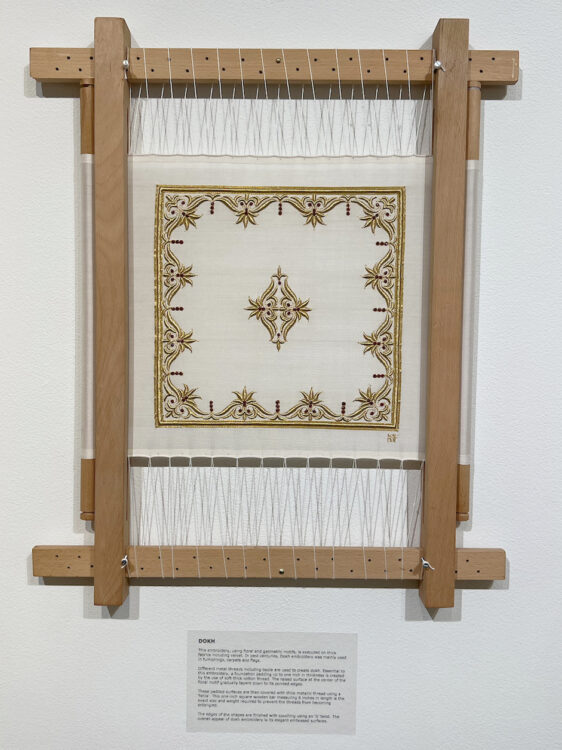
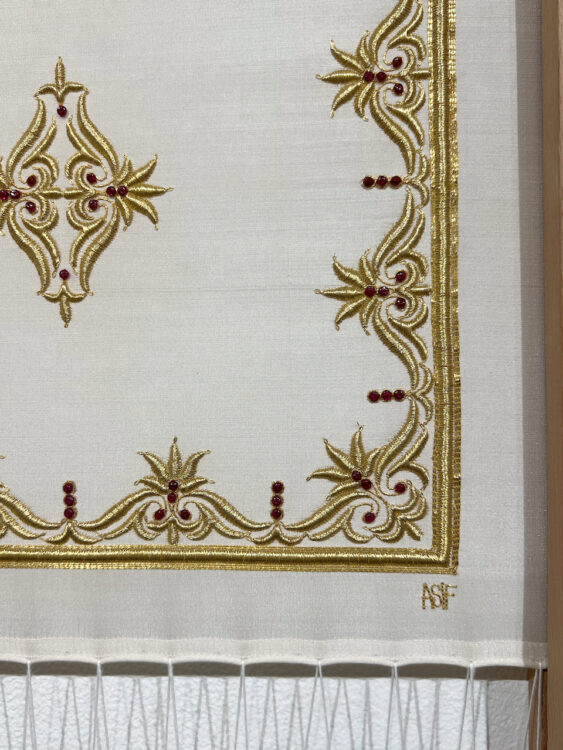
This embroidery, using floral and geometric motifs, is executed on thick fabrics including velvet. In past centuries, Dokh embroidery was mainly used in furnishings, carpets and flags.

Different metal threads including badla are used to create dokh. Essential to this embroidery, a foundation padding up to one inch in thickness is created by the use of soft thick cotton thread. The raised surface at the center of the floral motif gradually tapers down to its pointed edges.

These padded surfaces are then covered with thick metallic thread using a ‘fatila’. This one-inch square wooden bar measuring 6 inches in length is the exact size and weight required to prevent the threads from becoming entangled.

The edges of the shapes are finished with couching using an ‘S’ twist. The overall appeal of dokh embroidery is its elegant embossed surfaces.
__________________________________GIRAH_________________________________

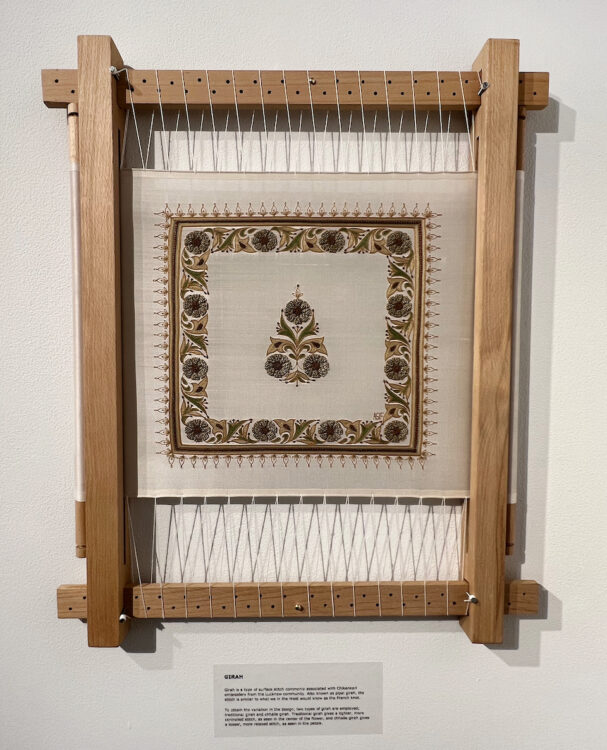
Girah is a type of surface stitch commonly associated with Chikankari embroidery from the Lucknow community. Also known as pipal girah, the stitch is similar to what we in the West would know as the French knot.

To obtain the variation in the design, two types of girah are employed; traditional girah and chhalle girah. Traditional girah gives a tighter, more controlled stitch, as seen in the center of the flower, and chhalle girah gives a looser, more relaxed stitch, as seen in the petals. 
_______________________GOTA PATTI EMBROIDERY__________________________

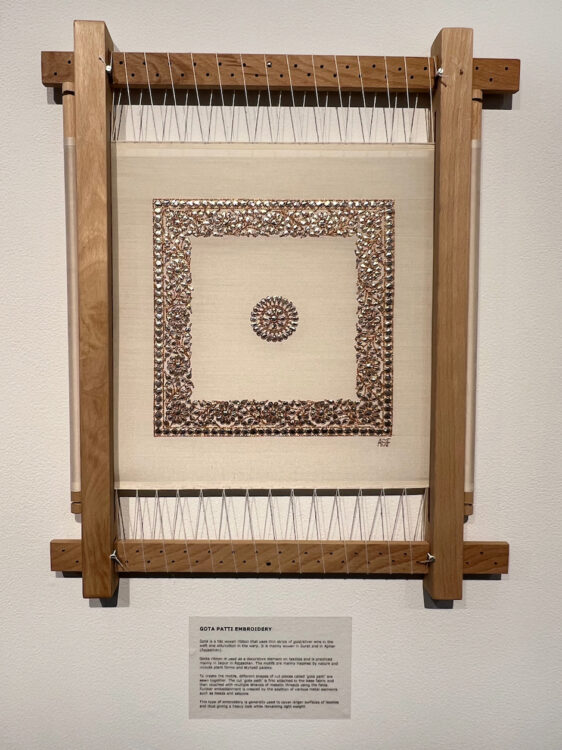
Gota is a flat woven ribbon that uses thin strips of gold/silver wire in the weft and silk/cotton in the warp. It is mainly woven in Surat and in Ajmer (Rajasthan).

Gotta ribbon is used as a decorative element on textiles and is practiced mainly in Jaipur in Rajasthan. The motifs are mainly inspired by nature and include plant forms and stylized paisley.

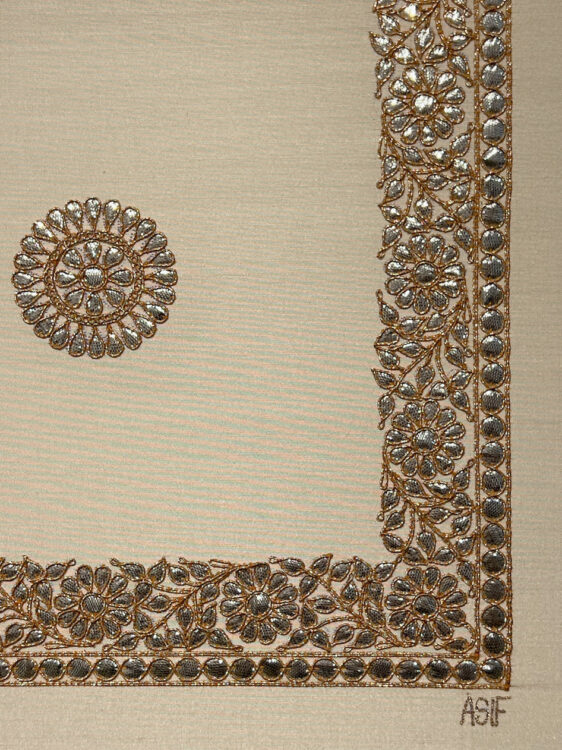
To create the motifs, different shapes of cut pieces called ‘gota patti’ are sewn together. The cut ‘gota patti’ is first attached to the base fabric and then couched with multiple strands of metallic threads using the fatila. Further embellishment is created by the addition of various metal elements such as beads and sequins.

This type of embroidery is generally used to cover larger surfaces of textiles and thus giving a heavy look while remaining light weight.
__________________________________KAMDANI________________________________

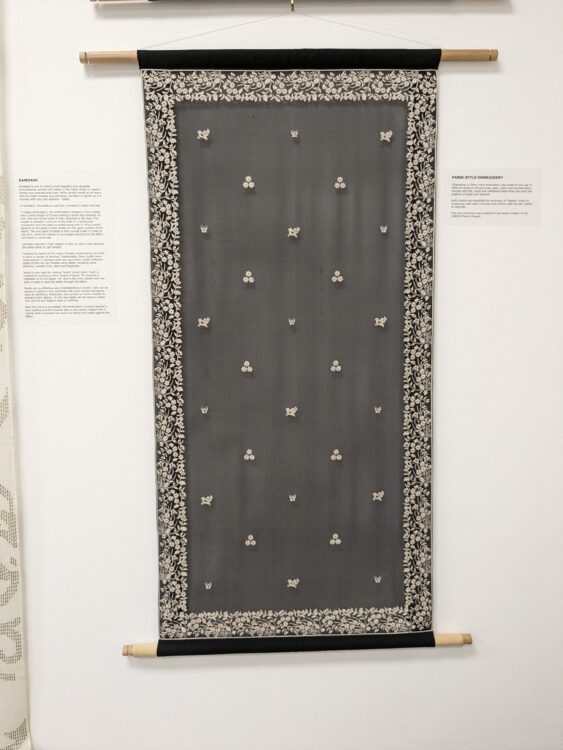
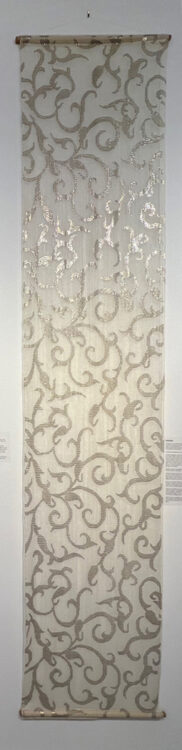
Kamdani is one of India’s most beautiful and versatile embroideries worked with badla or flat metal strips to create a dressy and sophisticated look. While zardozi tends to be heavy with its metal threads and elements, kamdani is lighter as it is worked with only one element – badla.

In kamdani, the badla is used like a thread to create stitches.

To begin embroidery, the embroiderer threads a thick needle with a short length of thread making a small loop towards its end. One end of the badla is then attached to the loop. The needle is slipped in and out of the cloth in a continuous movement and the badla is pulled along with it. Only a small amount of the badla is then visible on the upper surface of the fabric. The end piece of badla is then turned under in order to secure it, while the needle is once again pierced into the fabric and stitch is continued.

Kamdani requires a high degree of skill, as after a few stitches the badla tends to get twisted.

Treating the badla as if it were a thread, embroiderers are able to work a variety of stitches. Traditionally, floral motifs were most popular in kamdani with few geometric motifs. Different types of jalis can be created using badla, including wave patterns, parallel lines, stars and diagonals.

Badla is also used for making ‘fardis’ (small dots). Fardi is created by knotting a short length of badla. The process is repeated to fill the space. For fardi a flat thick needle with two eyes is used to take the badla through the fabric.

Fardis are an effective way of embellishing a textile. Dots can be placed in patterns and combined with other textile techniques such as bandhani, chikankari, and printed or woven textiles to enhance their beauty. In this way badla can be used to create rich, formal and elegant work on clothing.

After the work is completed, the embroidery is placed against a hard surface and the reverse side is very gently rubbed with a cowrie shell to smooth the work and flatten the badla against the fabric.
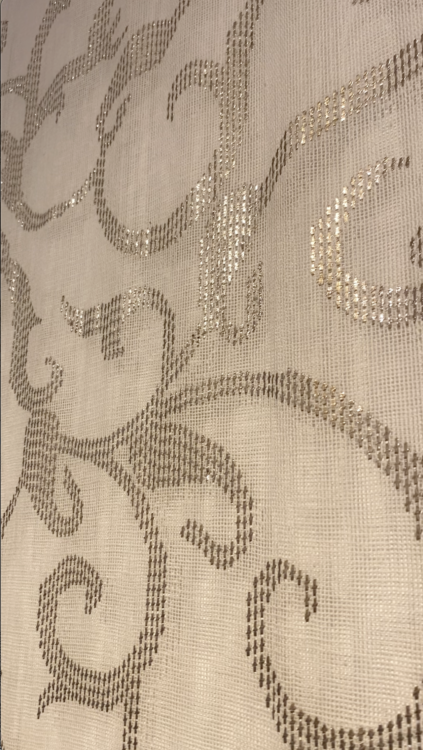
_______________________KARCHOB – THE SCROLL FRAME__________________

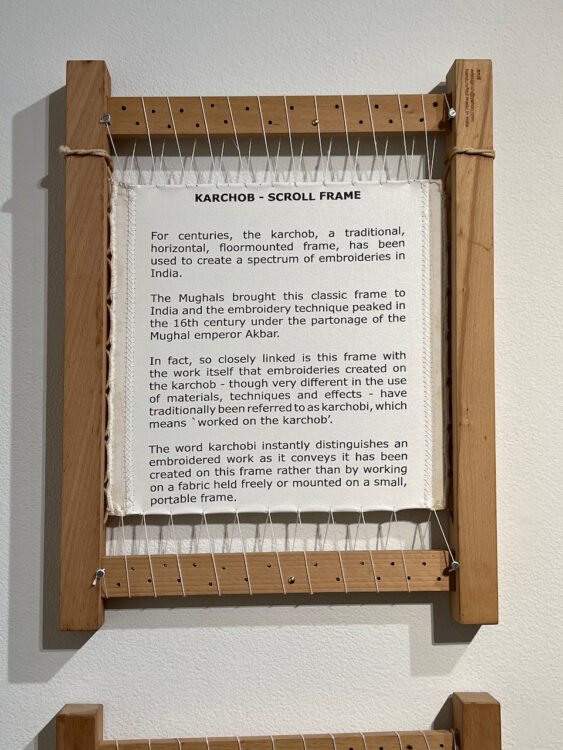
The karchob, a traditional, horizontal, floor-mounted hardwood frame, is the tool that assists needle workers to create fine embroideries. In fact, this frame is so closely linked to the work itself that embroideries thus created – although very different in the use of materials, techniques and effects – are traditionally referred to as ‘karchobi’ meaning `worked on the karchob’.

The word karchobi instantly distinguishes an embroidered work as it conveys that it was created on this frame rather than by hand holding or using a small frame. While embroidery can be executed in various ways either with or without a frame, it is by working on a karchob that the art of embroidery is extended well beyond that which is otherwise possible. Furthermore, as it allows up to 20 embroiderers to work at the same time on one piece, the karchob permits working on a large scale as well as producing the volume required for commerce.

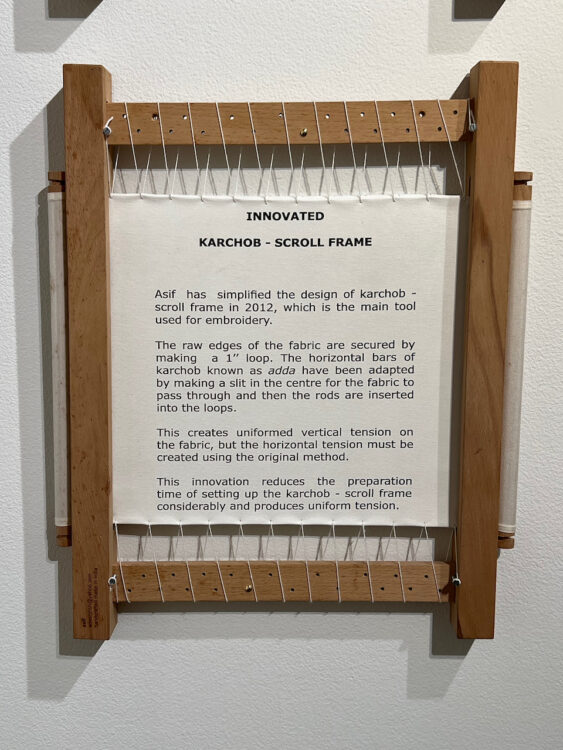
The karchob has four wooden bars; two short horizontal bars called Shamsheer and two long vertical bars called Adda that rest on wooden legs. These bars are fixed to each other on all four sides using nails. The fabric to be embroidered is stretched across the framework and affixed to the horizontal and vertical bars with the help of additional cotton fabric, cord and thread. This is the most important stage where the fabric needs to be attached with precision keeping the grain line of the fabric parallel to the bars of karchob.

The karchob helps in keeping the right tension of the fabric to be embroidered. As the fabric is stretched across the frame it becomes convenient to stitch, that is, to move the needle in and out of the cloth. The frame also provides much needed support for the hands/arms of the embroiderer who generally works long hours. Furthermore, both hands are free to work the embroidery. At the end of the day the embroidery in progress is wrapped around an arm of the karchob.

A karchob can vary in size – up to 3 metres in length and 1.5 metres in width. A small karchob is used when working on small textiles and this can be placed on any structure that supports each corner leaving the centre free for stitching. A large karchob is used when working on large textiles and the work is often divided between embroiderers who sit on the floor to work. Sections of large textiles such as saris, that are typically 5.5 metres in length, are worked on and then wrapped around an arm of the karchob to facilitate embroidery on the unworked section.
_____________________KUTCHI AARI EMBROIDERY, example 1____________________

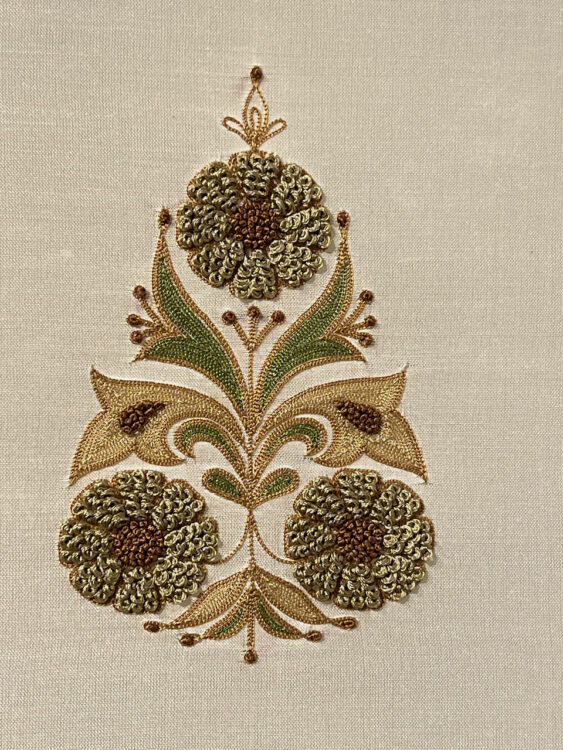
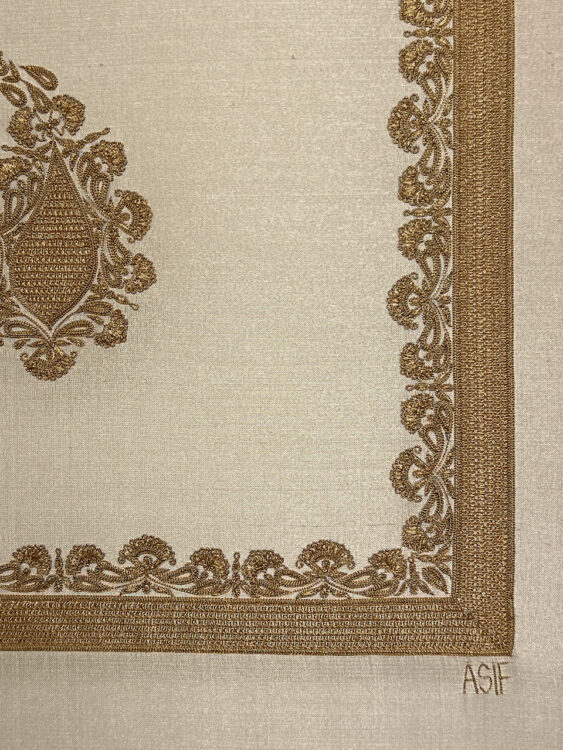
One of the most fascinating historical and cultural inheritances of Kutch, a desert area located in the western most part of Gujarat, is its wealth of textiles. Kutch women traditionally create densely worked embroideries to beautify fabrics, create social wealth and express their skills and identities.

Kutchi embroidery features several stitches one of which is an adaptation of the cobbler’s stitch. This stitch, worked with an awl, was executed by ‘mochis’ (cobblers) to embellish leather goods such as shoes, bags, camel saddles and other articles. It is interesting to note that this technique was adapted over time for use on fabric and is now known as aari embroidery.

An entire spectrum of Kutchi embroidery is worked with the creative and skillful use of the needle without the use of frames. Exquisite and fine motifs inspired by nature, mythology and tradition are thus created.

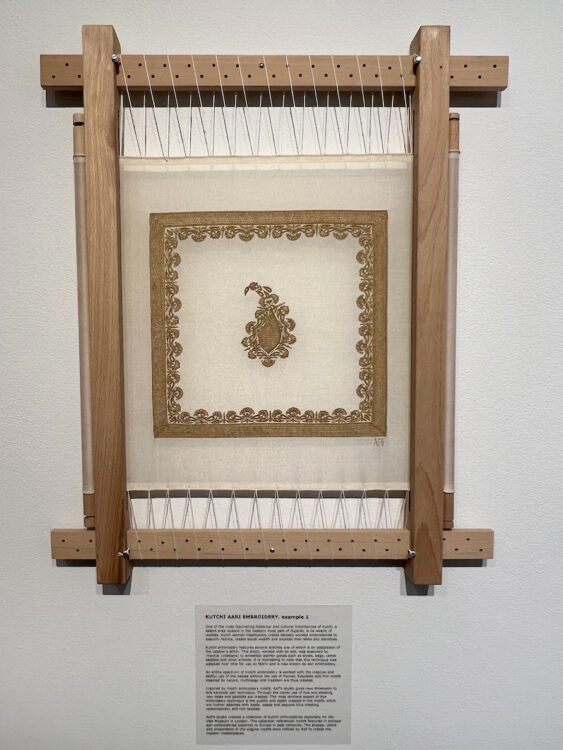
Inspired by mochi embroidery motifs, Asif’s studio gives new dimension to this karchobi aari technique. Through the clever use of hue and shading, new looks and palettes are created. The most eminent aspect of this embroidery technique is the quality and depth created in the motifs which are further adorned with badla, beads and sequins thus creating contemporary and rich textiles.

Asif’s studio created a collection of Kutchi embroideries especially for the V&A Museum in London. This collection referenced motifs featured in antique aari embroideries exported to Europe in past centuries. The shapes, colors and proportions of the original motifs were refined by Asif to create the modern masterpieces.
_____________________KUTCHI AARI EMBROIDERY, example 2________________

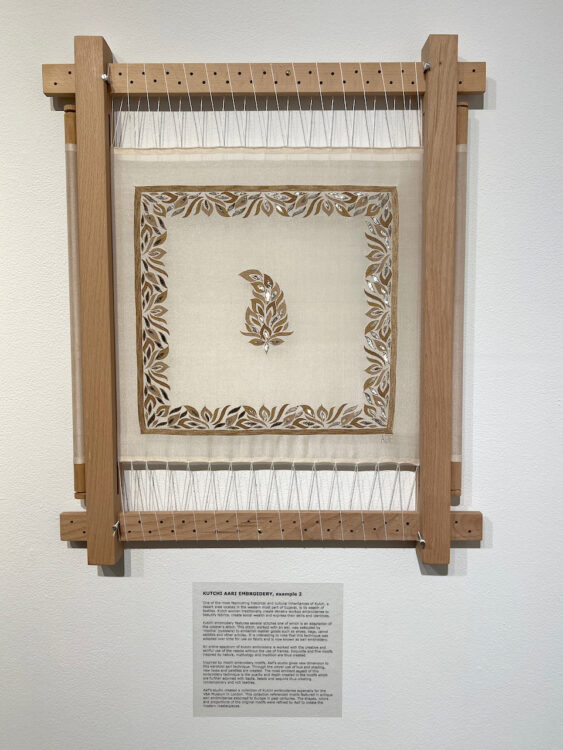
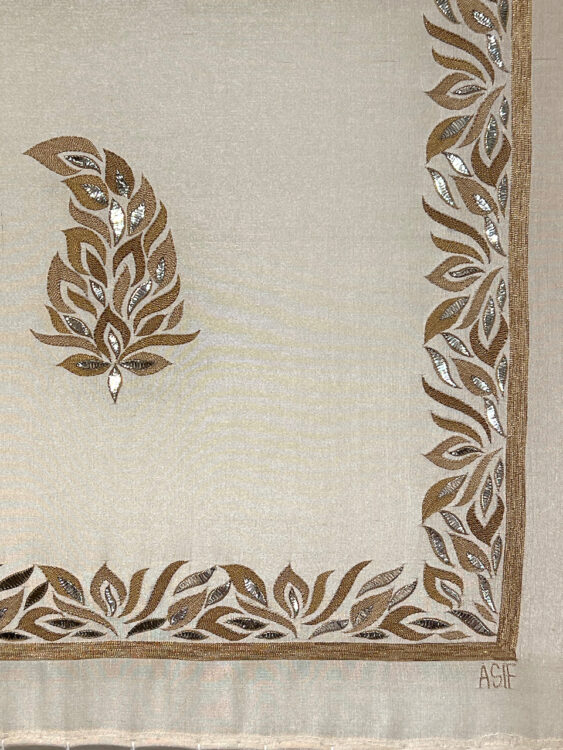
One of the most fascinating historical and cultural inheritances of Kutch, a desert area located in the western most part of Gujarat, is its wealth of textiles. Kutch women traditionally create densely worked embroideries to beautify fabrics, create social wealth and express their skills and identities.

Kutchi embroidery features several stitches one of which is an adaptation of the cobbler’s stitch. This stitch, worked with an awl, was executed by ‘mochis’ (cobblers) to embellish leather goods such as shoes, bags, camel saddles and other articles. It is interesting to note that this technique was adapted over time for use on fabric and is now known as aari embroidery.

An entire spectrum of Kutchi embroidery is worked with the creative and skillful use of the needle without the use of frames. Exquisite and fine motifs inspired by nature, mythology and tradition are thus created.

Inspired by mochi embroidery motifs, Asif’s studio gives new dimension to this karchobi aari technique. Through the clever use of hue and shading, new looks and palettes are created. The most eminent aspect of this embroidery technique is the quality and depth created in the motifs which are further adorned with badla, beads and sequins thus creating contemporary and rich textiles.

Asif’s studio created a collection of Kutchi embroideries especially for the V&A Museum in London. This collection referenced motifs featured in antique aari embroideries exported to Europe in past centuries. The shapes, colors and proportions of the original motifs were refined by Asif to create the modern masterpieces.
_____________________________MARODI______________________________________

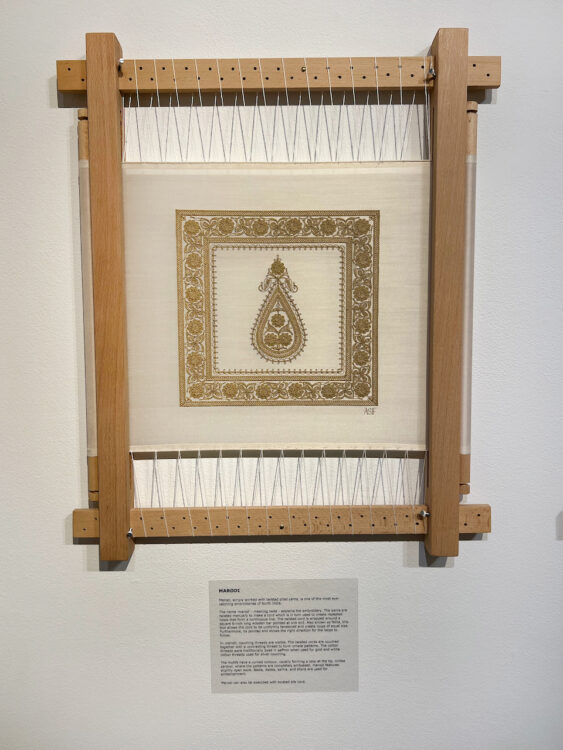
Marodi, simply worked with twisted plied yarns, is one of the most eye-catching embroideries of North India.

The name ‘marod’ – meaning twist – explains the embroidery. The yarns are twisted manually to make a cord which is in turn used to create repeated loops that form a continuous line. The twisted cord is wrapped around a square 6-inch long wooden bar pointed at one end. Also known as fatila, this tool allows the cord to be uniformly tensioned and create loops of equal size. Furthermore, its pointed end shows the right direction for the loops to follow.

In marodi, couching threads are visible. The twisted cords are couched together with a contrasting thread to form ornate patterns. The cotton threads were traditionally dyed in saffron when used for gold and white cotton threads used for silver couching.

The motifs have a curved contour, usually forming a loop at the tip. Unlike zardozi, where the patterns are completely embossed, marodi features slightly open work. Badla, dabka, salma, and sitara are used for embellishment.

Marodi can also be executed with twisted silk cord.
___________________________PARSI STYLE EMBROIDERY___________________

Originating in China, Parsi embroidery was noted for the use of different kinds of minute knots, satin, chain and couched stitch worked with silk, metal and untwisted silken floss yarn with the addition of beads and sequins.

Asif’s studio has simplified the technique of ‘khakha’ knots by employing ‘palti taka’ (reverse chain stitch) with the aari needle on karchob.

This new technique was created for the textile chapter of the UNESCO Parzor Project.
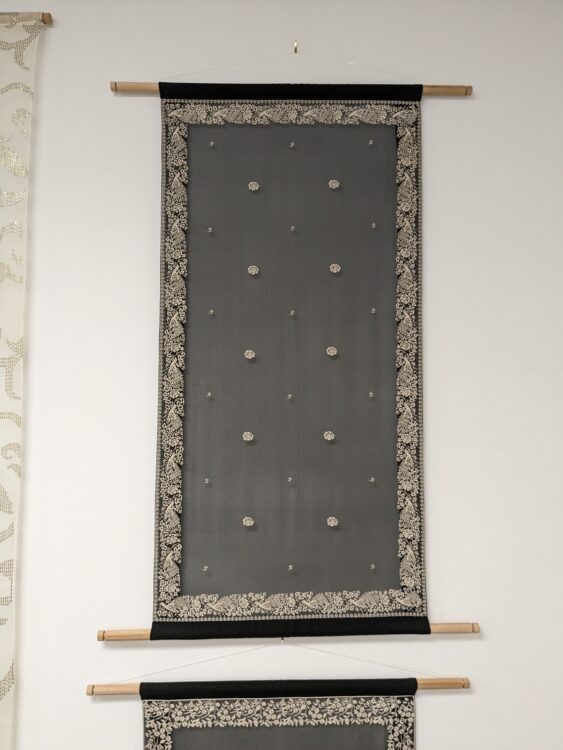
____________________________TREE of LIFE____________________________

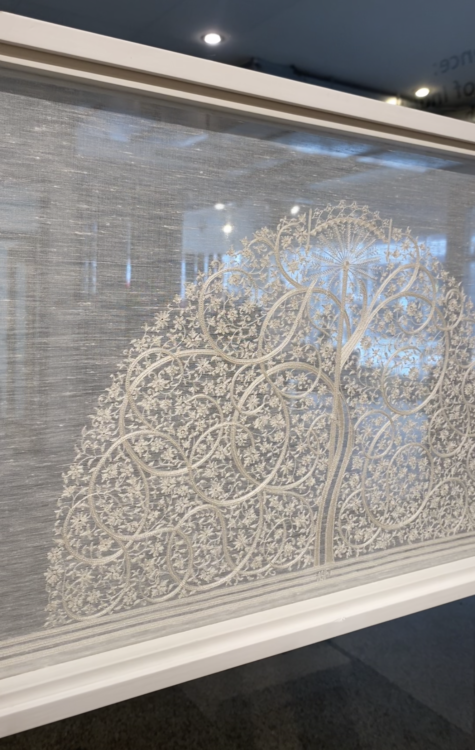
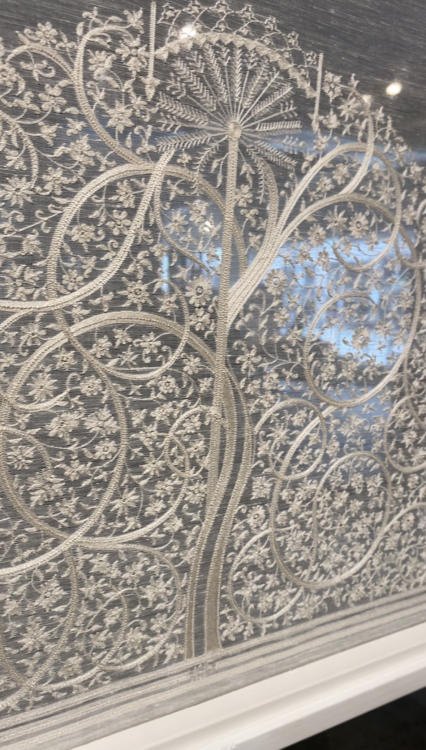
This exquisite piece of needlework can be viewed from both sides. Similar to the Chinese form of Su embroidery, this double sided embroidery depicts the Tree of Life, found in the stone fretwork of the historic Sidi Saiyyed Mosque (built in 1573) Ahmedabad, India.

In the piece, the ground cloth is handwoven fabric made of silk and linen. The aari stitch, seen throughout the exhibit, is seen here crafted in fine silk, half the thickness of traditional embroidery thread.
__________________________________VASLI_________________________________

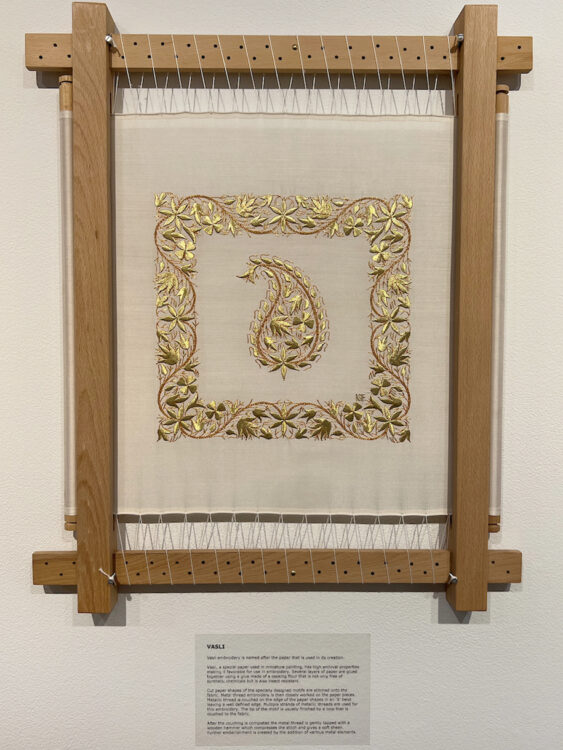
Vasli embroidery is named after the paper that is used in its creation.

Vasli, a special paper used in miniature painting, has high archival properties making it favorable for use in embroidery. Several layers of paper are glued together using a glue made of a cooking flour that is not only free of synthetic chemicals but is also insect resistant.

Cut paper shapes of the specially designed motifs are stitched onto the fabric. Metal thread embroidery is then closely worked on the paper pieces. Metallic thread is couched on the edge of the paper shapes in an ‘S’ twist leaving a well defined edge. Multiple strands of metallic threads are used for this embroidery. The tip of the motif is usually finished by a loop that is couched to the fabric.

After the couching is completed the metal thread is gently tapped with a wooden hammer which compresses the stitch and gives a soft sheen. Further embellishment is created by the addition of various metal elements.
__________________________________ZARDOZI________________________________

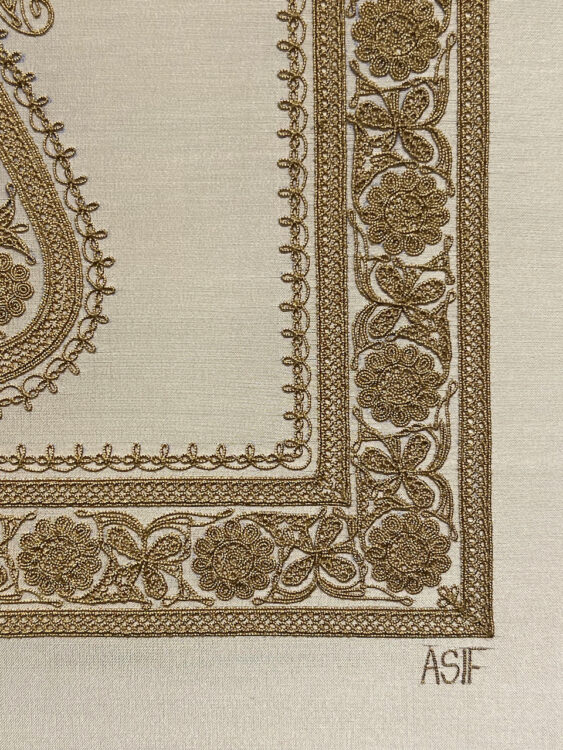
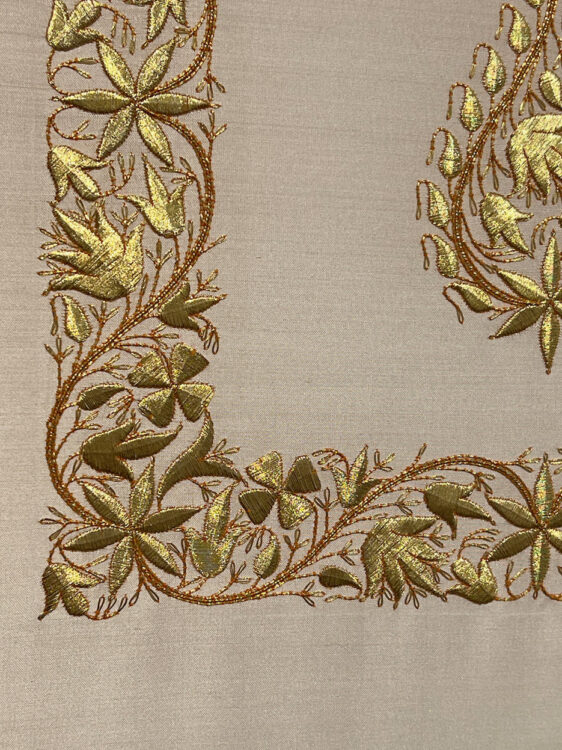
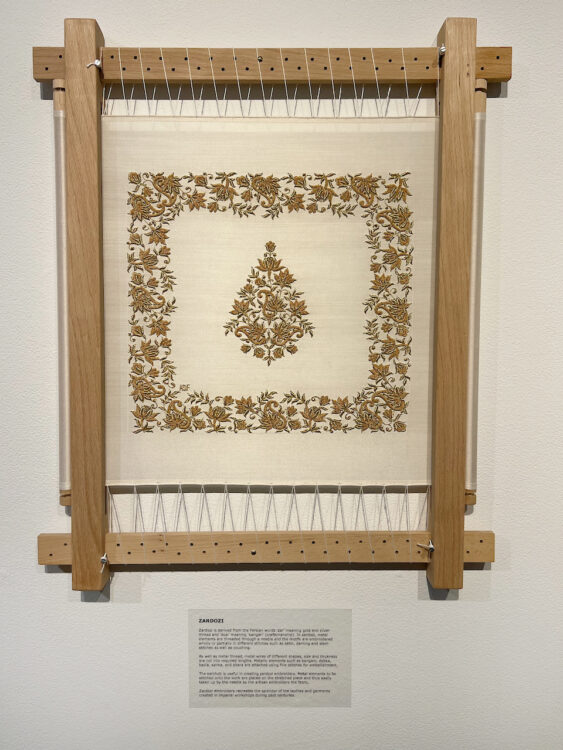
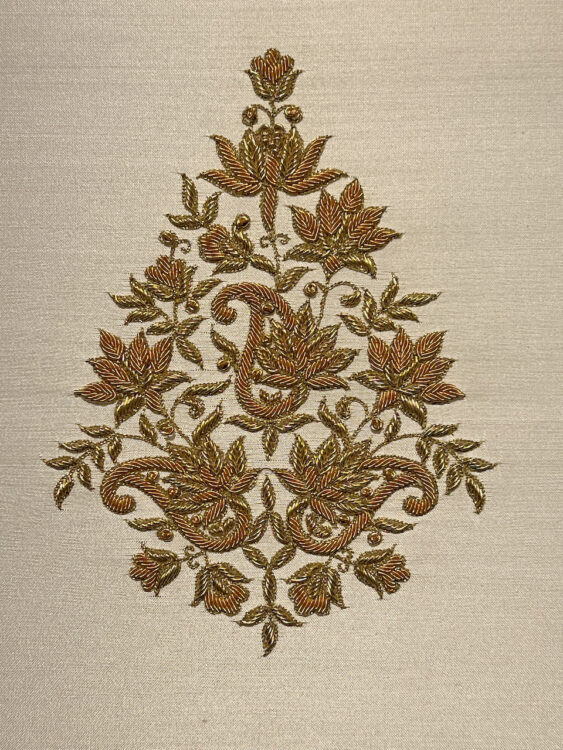
Zardozi is derived from the Persian words ‘zar’ meaning gold and silver thread and ‘dozi’ meaning ‘karigari’ (craftsmanship). In zardozi, metal elements are threaded through a needle and the motifs are embroidered wholly or partially in different stitches such as satin, darning and stem stitches as well as couching.

As well as metal thread, metal wires of different shapes, size and thickness are cut into required lengths. Metallic elements such as kangani, dabka, badla, salma, and sitara are attached using fine stitches for embellishment.

The karchob is useful in creating zardozi embroidery. Metal elements to be stitched onto the work are placed on the stretched piece and thus easily taken up by the needle as the artisan embroiders the fabric.

Zardozi embroidery recreates the splendor of the textiles and garments created in imperial workshops during past centuries.
source: http://www.textilecentermn.org / Textile Center / 2023

Nirali Urdu: The First Ever Book in Karkhandari Dialect of Dehli

NEW DELHI :

“Karkhandari” as per Professor Gopi Chand Narang (1931-2022), a noted Urdu scholar, literary theorist, and linguist, “is a social dialect spoken mainly by the artisans, traders, craftsmen and labourers of old Delhi.”

Representational image of a book. Photo: Pavan Trikutam/Unsplash

Dehli, not Delhi. Yes, you read that right. For this is how it is spelt in Urdu,  the language whose birth and development is often attributed to purani Dehli or Shahjahanabad. But, it is not the only language to be spoken in the walled city. In fact, people from old Delhi can often be found to be speaking in a language which is closer to the Karkhandari dialect. It is not very uncommon to hear sentences like vai, itte din ka the? instead of “bhai, itne dinon tak kahan the?” (Bro, where were you for so long?), while passing through the kuchas (lanes/small streets) of the walled city. 

“Karkhandari” as per Professor Gopi Chand Narang (1931-2022), a noted Urdu scholar, literary theorist, and linguist, “is a social dialect spoken mainly by the artisans, traders, craftsmen and labourers of old Delhi.” In his monograph (1961) titled “Karkhandari Dialect of Delhi Urdu,” he lists out the names of the locales of old Delhi where the dialect is spoken. “The Karkhandari areas outside the walls of the old city,” adds Narang, “include Mohalla Kishan Ganj, Shish Mahal, Qasṣāb Pura, Beri Wälä Bagh and a few lanes in Bära Hindu Rao.”

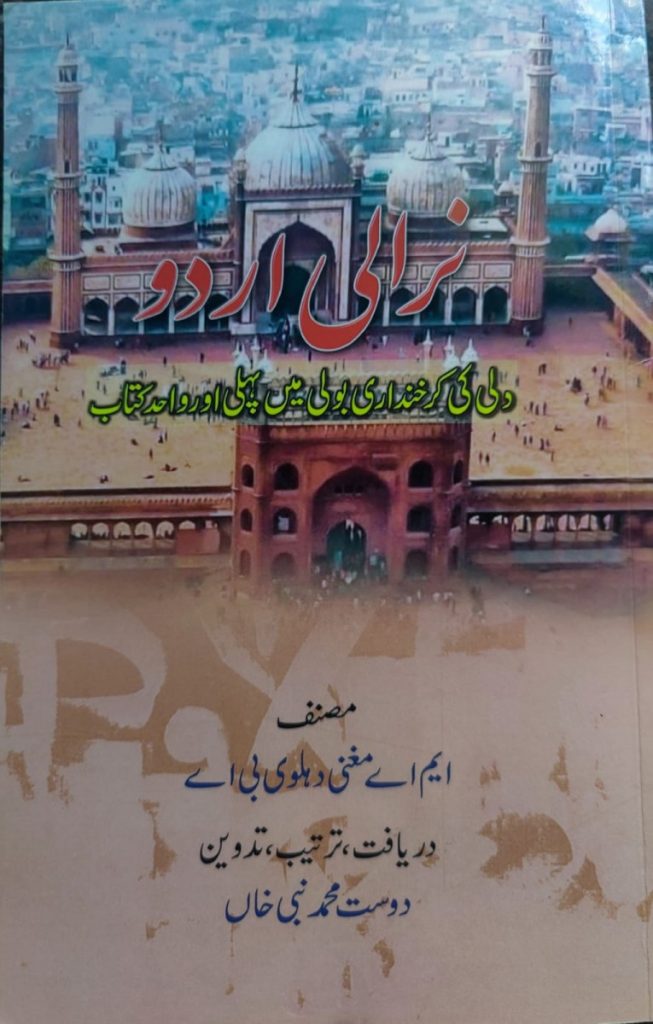
Abu Sufiyan, a resident of old Delhi and founder of Purani Dilli Walo Ki Baatein, says that it is not a dialect of the yesteryear. “Karkhandari is still spoken by the working class of the old city and their family members,” adds Sufiyan. Earlier this year, a book titled Nirali Urdu by M.A. Mughni Dehlavi was republished in India, nearly after a century of its publication, and it is believed to be the first and the only book in the Karkhandari dialect of Delhi Urdu.

New book cover of Nirali Urdu. Photo: Arranged by the author

In fact, there is a difference of opinion on the year of publication of Nirali Urdu. According to Shan-ul-Haq Haqqee (1917-2005), a researcher, linguist and lexicographer, the book was first published in 1927, while Dost Mohammad Nabi Khan, a compiler and editor of the latest version of the book, on the other hand, argues that it was first published in 1932. 

To substantiate his claim, Khan notes that in one of the stories in the book, the narrator talks about watching the second talkie film of India, ‘Shirin Farhad,’ which was only released in May 1931. He also notes that as per Google Books as well, it was published in 1932 by Daftar Nirali Urdu. Notably, the copy of the book available on the Rekhta website does mention Daftar Nirali Urdu as its publisher, but the year of publication is missing. However, where both Haqqee and Khan seem to agree is that after its initial publication, it became nayaab (rare/scarce) and was hardly available in the market.

Khan, who was born and brought up in Dehli and who loves collecting books on the city, narrates an engrossing story about his ‘discovery’ of Nirali Urdu in its muqaddama (introduction) to the bookKhan came to know about this book when, several years ago, he was surfing through the booklists of various Pakistani publications online.

“Both Nirali Urdu and its author M.A. Mughni were new and unfamiliar to me. Topics included in the book and its writing style were literally Nirale (unique) and offbeat. It was nothing short of a discovery for me,” he writes. With the help of a friend in Lahore, he procured the book and occasionally started posting excerpts from it on Facebook. The book was eventually re-published in January 2024. However, it is not just a re-publication of what was originally published in 1932 and reprinted in 2017 (in Pakistan), for there are useful additions to the current version. Khan has added a short Glossary (Farhang), a few explanatory notes (Wazahati Note) and some proverbs and idioms of Kharkhandari to it. 

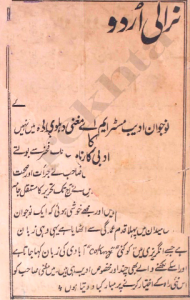
Old book cover of Nirali Urdu. Photo: Arranged by the author

Apparently, unlike most of the books around Delhi, the book does not contain stories about monuments or history. Rather they are about the people, society and scenes of everyday life of ordinary people of Delhi in the 1920s. In other words, in Nirali Urdu, the people of Delhi don’t go for Lal Qile Ki Sair or Qutub Minar Ki Sair, they go for Baiskop Kee Sail (Biscope Ki Sair/ outing to a bioscope show) and Jaloos Kee Sail (Juloos Ki Sair/excursion to a procession). However, in some stories, there are references of excursions to monuments as well. For example, sample this excerpt :

Aaj subo mein zari aawere utha tha. is liye apne aap kuchh aisi khud bar khud ghabri hui ki mein hadbada ke bistare pe se khada hoke baith gaya aur is fikhar mein pad gaya ki kain sail ko chalna chaieeye. Magar akele jana to theek nai tha. Isliye apni jigri yaar ke makkaan pe ponch kar vise aawaz di. “Abey muntiyaaz, o muntiyaaz”. muntiyaaz wabsurrti shakl bana kar bahar aakar kaine laga, abey kyun cheekhe peete ja riya hai. Meine kaha pyaare khafa kyun hota hai ya shikal hi aisi hai. Dekhta nai kis zor se ghata chha rahi hai. chal mandarsa (Safdar Jang) todi chalein. Bada lufat aa riya hoga…”      

The above text can be translated as :

This morning, I woke up a little early. That’s why I woke up with a start and started thinking about going for an excursion somewhere. But it didn’t feel okay to go alone. So I landed at my best friend’s place and called out to him. “Aye Muntiyaz, O Muntiyaz.” Muntiyaz appeared with an agitated face and said, “Oye, why are you shouting?” 

“Why are you getting angry dear, or is your face like this only?, I replied, adding Don’t you see how lovely the weather is? Let’s go to Safdar Jang’s tomb. It must be a great fun there…”      

While the text does not read totally distinct from standard Urdu, but certain words are spelled and pronounced differently. For example, in Karkhandari dialect, Subah is Subo, Sawere is Aawere, Makaan is Makkaan, Fikr is Fikhar, Shakal is Shikal, Madarsa is Mandarsa and Lutf is Lufat.

There are a total of 31 short stories in the book. It also has stories titled Dilli Ke Panjabi Musalman (Delhi’s Punjabi Muslim), Eeed Ka Pologram (Eid Ka Program/the program for Eid), Kishmishi Din Kee Sail (Krismas Din Ki Sair/outing on Christmas day) and Mushahare Kee Sail (Mushaire Ki Sair/ outing for a mushaira). 

In short, Nirali Urdu is full of unique and offbeat stories from Delhi. If you can read Urdu script and are interested in Delhi, it becomes an essential read.

~~~~

Although there is no shayari in the book, even in the story about a Mushaira, one finds the same in the Balraj Sahni and Farooq Sheikh starrer Garm Hava that was released after four decades in 1974. The tongawala who drives Salim Mirza (the protagonist of the film played by Sahni) to his Karkhana (factory) can be seen reciting a couplet in Karkhandari Urdu. While commenting on the tragedy of partition and its impact on Indian Muslims, the tongawala, in the opening sequence of the film, recites the following verses: 

Wafaon ke badle jafa kar riyae

Mein kya kar riyaun tu kya kar riyae

This is a couplet from a Ghazal in Karkhandari Urdu written by Majeed Lahori (1913-1957), a noted poet-satirist, humorist and journalist. The full ghazal reads as follows : 

Wafaon ke badle jafa kar riyae

Mein kya kar riyaun tu kya kar riyae

Mein jo kar riyaun bhala kar riyaun

Tu jo kar riyae bura kar riyae

Abey todta kyun hai tun vis ke dil ko

Jo dil apna tujh par fida kar riyae 

Sanbhal kar qadam vis ke kooche mein rakhiyo

Suna hai wo fitne bapa kar riyae

Udu se bhi waade mujhe bhi dilase 

Mein hiryaan hoon tun ye kya kar riyae

Kiya hai ata darde dil jis ne mujhko 

Wahi darde dil ki dawa kar riyae

Majeed aaj bhi shaad wa aabad hoon mein 

Karam mujh pe mera khuda kar riyae

source: http://www.thewire.in / The Wire / Home> Books / by Mahtab Alam / July 29th, 2024

New book explores how Urdu verses challenge Hindutva’s homogeneity

NEW DELHI :

Rakhshanda Jalil’s latest work examines Urdu poetry’s role in promoting secularism and resisting communal division in contemporary India.

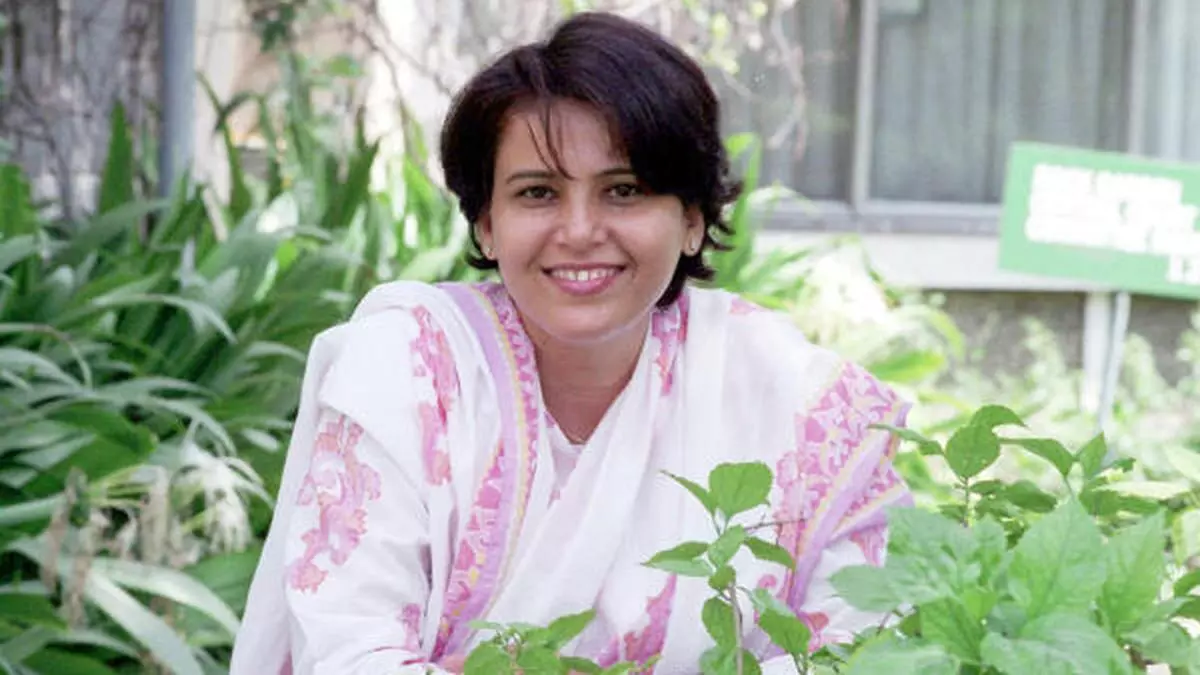
Rakshanda Jalil at India International Centre in New Delhi on September 06, 2004. | Photo Credit: Photo: R. V. Moorthy

Phir roshan kar zehar ka pyaala, chamka nayi saleebain,

Jhuthon ki duniya mein sach ko taabaani de Maula!

(Light up the poison cup again, make new crosses shine,

In this world of lies, illuminate truth, O Lord!)

-A ghazal by Urdu poet Nida Fazli

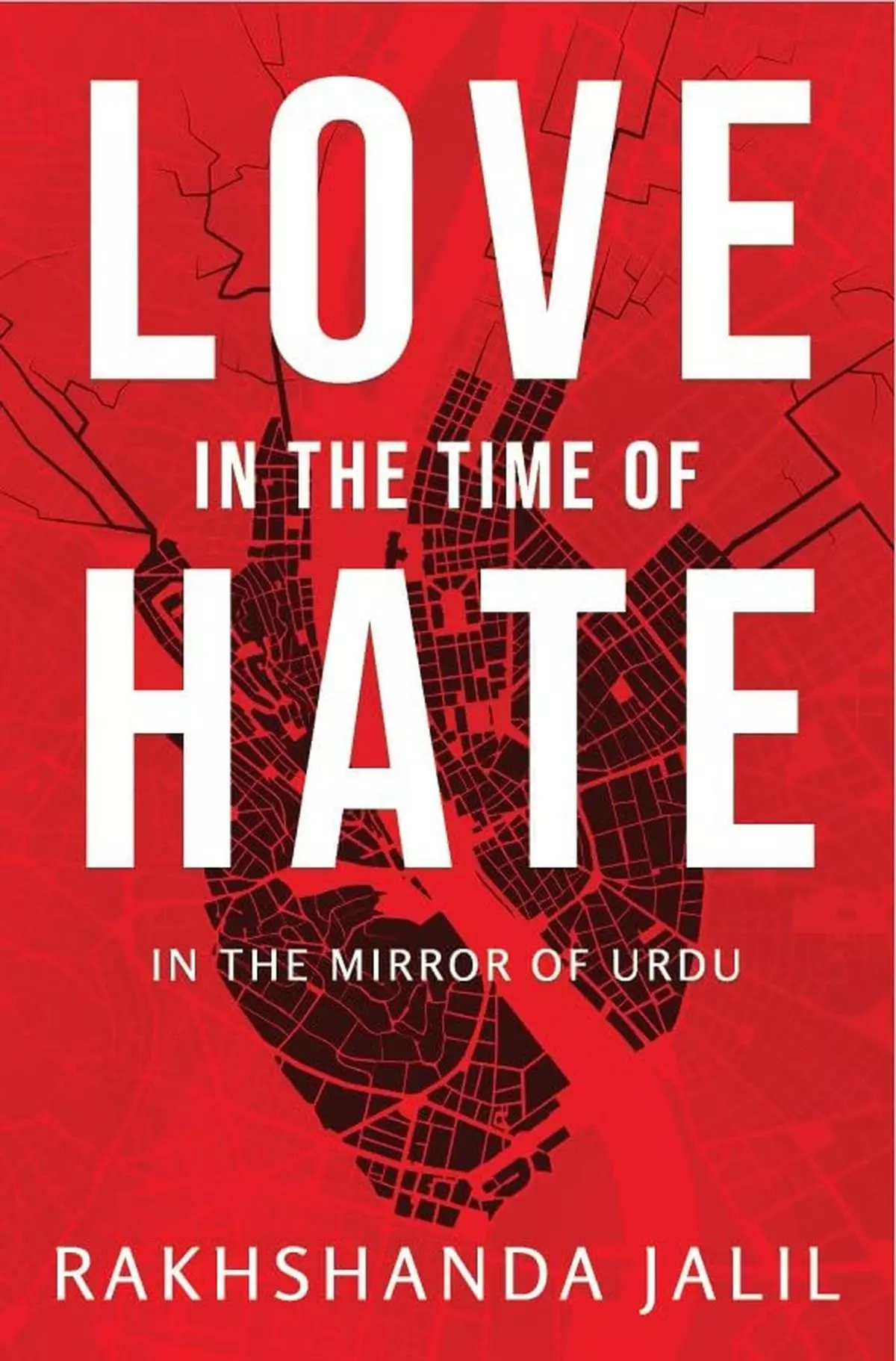
Noted literary historian Rakhshanda Jalil’s latest book, Love in the Time of Hate: In the Mirror of Urdu, recently released in New Delhi, delves into the rich history of Urdu poetry. It demonstrates how the language and its poets are mounting a robust resistance against the spread of right-wing-sponsored hatred and the rising climate of polarisation in India. Divided into sections such as essays, politics, people, and passions and places, the book features insightful Urdu poetry. Anchored in the theme of love for one’s country, the work illustrates how India’s social fabric is fraying and how Urdu verses, with their secular themes, challenge the push for Hindu supremacy.

“Unlike publicists and propagandists, a shayar (poet) rarely falls victim to bigotry, prejudice, and narrow-mindedness,” Rakhshanda told the audience at a book discussion event held by Karvaan India, a multimedia platform promoting pluralism and inclusion, in Delhi on July 7. “Urdu poets have always been known for their liberalism and eclecticism. They have championed the mingling of cultures and communal harmony.”

According to Rakhshanda, in recent years, Urdu has been stigmatised as a language of Muslims. Political representatives have been barred from taking oaths in Urdu, and artists have often been prohibited from creating Urdu graffiti. Also, many everyday Urdu terms are being removed from school textbooks and official communications.

“Urdu is antithetical to what Hindutva preaches. Unlike Hindutva’s obsession with homogeneity, Urdu embodies the essence of a pluralistic India, mirroring a multitude of worldviews,” she told Frontline. Citing the example of Syed Fazl-ul-Hasan (1875-1951), better known as Hasrat Mohani, she noted that the communist freedom fighter performed Hajj 11 times in his life while maintaining devotion to Lord Krishna. Mohani, who wrote the famous ghazal “Chupke-chupke” (later sung by Ghulam Ali), coined the slogan “Inquilab Zindabad” which changed the course of India’s independence movement.

Rakhshanda discussed Nadir Shah’s invasion of India (1739), the Battle of Plassey (1757), and events surrounding 1857 as defining moments in Urdu poetry. “During the Independence movement, as the political climate shifted, Urdu poetry chronicled anti-colonialism, anti-fascism, anti-imperialism, nationalism, feminism, and land reforms,” she said, noting that the recent anti-CAA movement revived public resistance poetry.

While reading from her book, she shared poems about Tipu Sultan (1782-99), the anti-colonial ruler who died fighting the British. She also mentioned dedicating an essay to Urdu poetry about Jawaharlal Nehru, who is currently a pet target of right-wing misinformation campaigns.

In her new book Love in the Time of Hate: In the Mirror of Urdu, Rakshanda Jalil invokes the power of love, inclusivity, and harmony that is the trademark of poetry and literature. | Photo Credit: By Special Arrangement

Rakhshanda discussed the Progressive Writers Movement’s impact on post-independence Indian cinema. “India and Pakistan became independent simultaneously, but their paths diverged. In post-independence India, cinema, literature, and intellectuals effectively interpreted the zeitgeist,” she said, discussing the Nehruvian vision of India. “Nehru’s death marked the end of an age of innocence”.

As Hindutva “hate politics” increases attacks on symbols of Muslim rule in parts of India, some Hindu extremists claim the Taj Mahal was originally “Tejo Mahal, a Shiva temple”.” Rakhshanda mentioned including poets’ descriptions of the Taj Mahal in her book.

Highlighting contradictions between India’s founding vision and Hindutva ideology, she said, “We’ve reached a point where a family can be attacked for storing meat in their fridge. Your name now defines your identity, regardless of economic or educational status.”

Sharing her personal experience as a Muslim, Rakhshanda described difficulty finding decent rental accommodation: “It’s been months. It feels like a Sisyphean task.”

She characterised her book as an expression of depression and fear, adding, “We didn’t learn from the COVID pandemic. Even then, we raised the “Corona-Jihad” issue and called for boycotts of Muslim food vendors.”

Among various poems by notable Urdu poets on Gautam Buddha, Ali Sardar Jafri’s iconic work on communal riots, “Awadh Ki Khaak-e-Hasin” (The Beautiful Land of Awadh), is featured. Two key verses read:

Ram-o-Gautam ki zameen hurmat-e-insaan ki ameen

Baanjh ho jaaegi kya khoon ki barsaat ke baad

Ai watan khak-e-watan woh bhi tujhe de denge

Bach raha hai jo lahu abke fasaddat ke baad

(This land of Ram and Gautam, guardian of human dignity,

Will it turn barren after the rain of blood?

O homeland, we’ll give you what remains,

The blood left after this carnage of riots.)

source: http://www.frontline.thehindu.com / Frontline / Home> Books> Poetry / by Ashutosh Sharma / July 12th, 2024

City’s Coin Man displays over 1,000 coins from 93 countries

Mysuru, KARNATAKA :

Mysuru:  

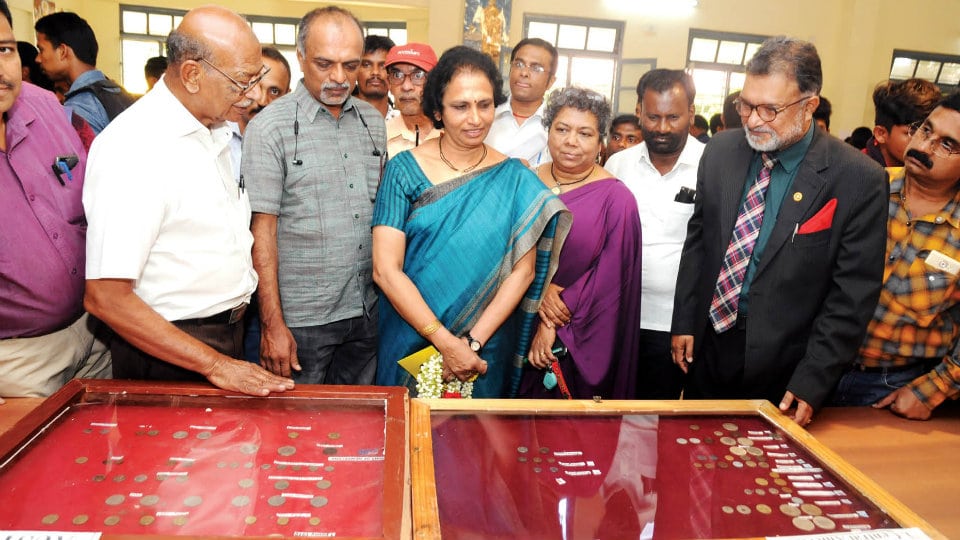
A day-long exhibition of coins (from ancient to modern) was organised by Maharaja’s College, in association with the Department of Ancient History & Archaeology and Musicology and the Department of History and Graduate Library, University of Mysore (UoM), at the Library Reference Hall,  Maharaja’s College campus here recently.

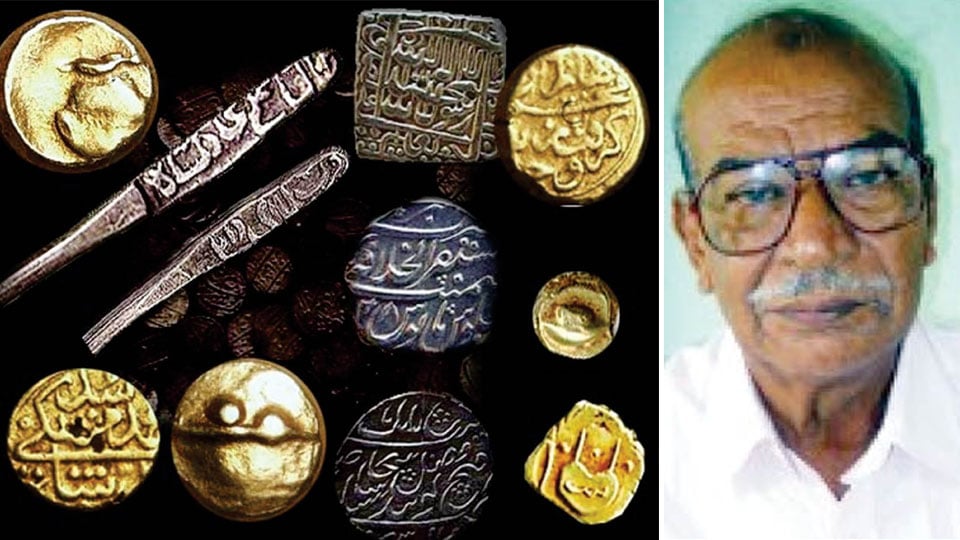
The exhibition was by Dr. Abdul Rasheed, popularly known as the ‘Coin Man of Mysore.’ The main objective of the exhibition was to create awareness on the antiquity of Indian Coinage among students and members of the public. The exhibition was inaugurated by H.I. Abdul Rashid, Programme Executive (Co-ordination), All India Radio, Mysuru.

The exhibition featured coins of the next age that were circulated in India by the Indo-Greek kings of North Western India. The coins are mainly made of Silver, Copper, Nickel and Lead. The collection of coins belonged to dynasties like Kalingas, Hoysalas, Cholas, Vijayanagar Moghuls and coins from East India Company, all of which were made of Gold, Silver, Copper, Nickel, Aluminium, Lead and other alloys.

The fascinating collection further included coins from the kingdoms of Kashmir, Jaunpur, Malwa, Diwanpur, Gujarat, Bahmanis, Bengal, Shahi and other princely States which existed during the British rule and prior to it, and also from Goa, Hyderabad, Travancore, Mysore, Arcot, Wadiyars, Pudukottai rulers, Peshwas, Marathas.

A total of 1,200 coins of 93 foreign countries from all continents and belonging to the times of Napoleon, Hitler, Queen Victoria, Tipu Sultan and other rulers were on display.

Also on display were more than 2,000 currency coins of India and other unique coins of many great personalities, events, food, agriculture practices etc., of the past. These coins have been collected with great efforts and persevered carefully over the years. They have also been systematically classified, categorised and fixed on proper display boards. It was an informative exhibition on Numismatics, the study or collection of currency, including coins, tokens, paper money and related objects.

The expo chronicled the decline of coinage, with notings in their number, their appearance and their value. Almost all the coins had inscriptions of their times, mainly in Perso-Arabic-script.

The exhibition, apart from display of collection of coins through the ages from punch marked coins to gold coins from the Moghuls to the imperial coins and coins of post-independent India, also featured coins from third century BC, Ghazni era coins from North India and from Kanishka era coins in South India.

Over a thousand students and members of the public visited the expo.

When asked what drove him to pursue such a time-consuming hobby, Dr. Abdul Rasheed said that it all began with a curiosity to know about coins of different countries, supplemented by fascination and passion.

The journey began in the year 1955 when he was studying in high school, where he used to exchange coins which he had in excess from the collections of his forefathers, he said and added that his grandfather was an Inspector during British rule,who had the hobby of collecting coins.

Continuing, Dr. Rasheed said he used to collect ancient coins whenever he visited historical places during his trips abroad and he has coins from as old as 3rd Century BC.

source: http://www.starofmysore.com / Star of Mysore / Home> News / March 10th, 2019

Hoof Care: The saga behind bare hands

Mysuru, KARNATAKA :

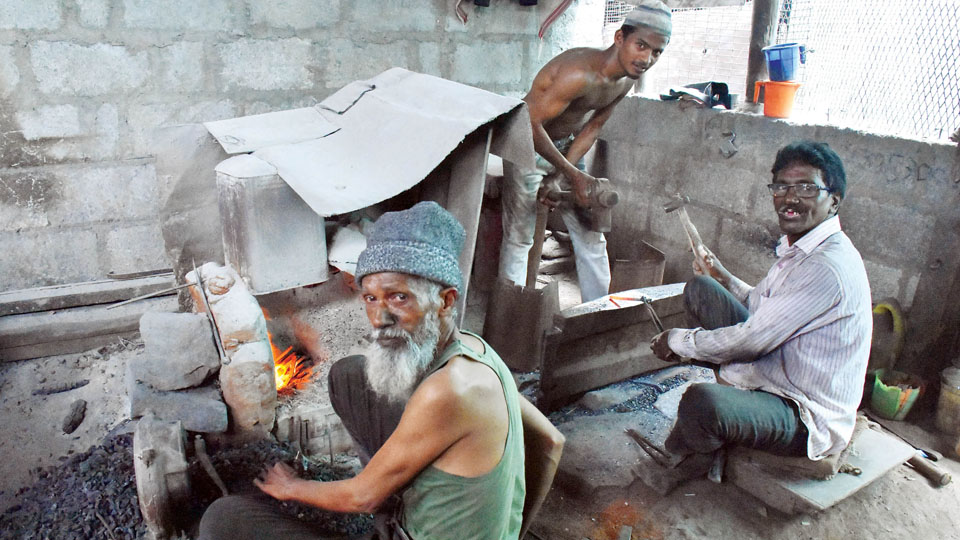
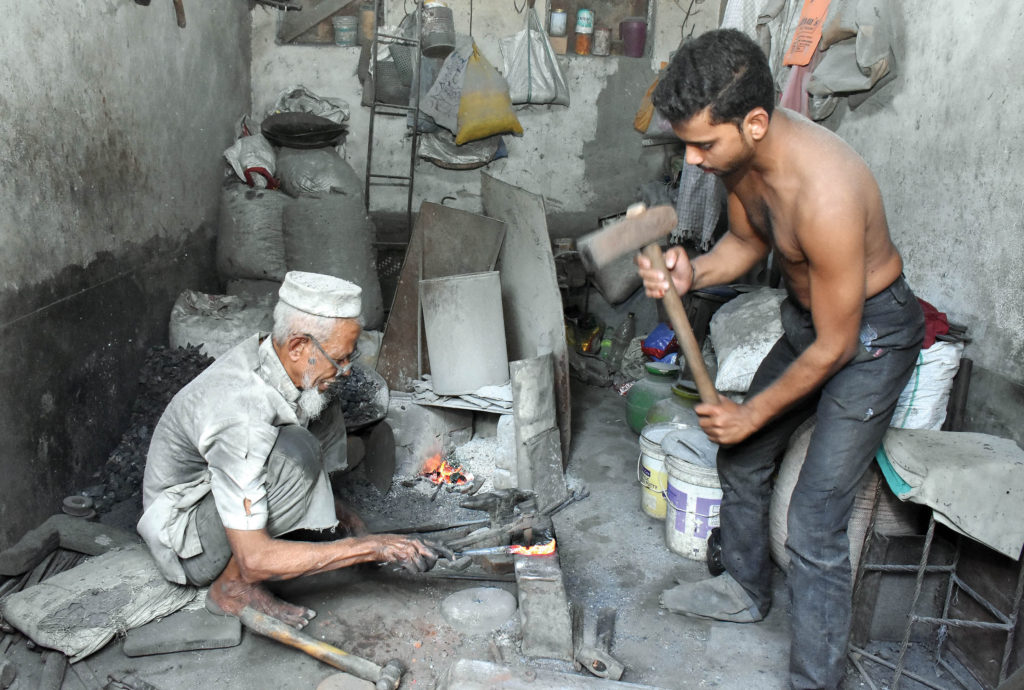
A few members of the once famed horseshoe maker generation work in cramped spaces on Pulikeshi Road in Tilaknagar, Mysuru. Like the many old structures dotting the area’s landscape that stand amidst high-rises, refusing to change with time’s swift change, these professionals have the unyielding spirit of holding on to the past. 

These horseshoe makers — farriers — are carrying on the legacy till their bodies can take the immense physical endurance demanded by the profession. They harbour no illusions and every time their hammers strike the metal, they know their profession has not many takers.

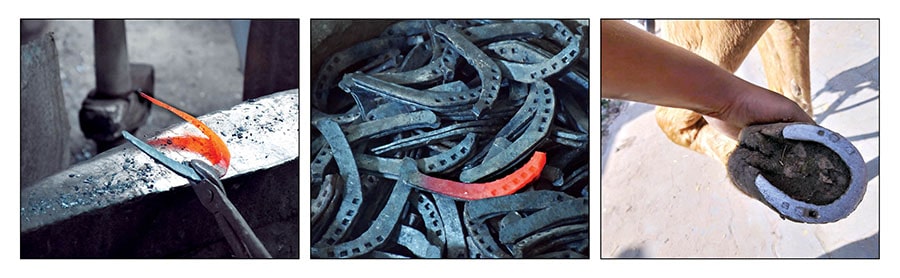
The invention of horseshoes revolutionised ancient means of trade, transportation and warfare.  It was necessitated as horses were being exposed to harsh conditions on a daily basis that resulted in breakage, wearing off or damage to their hooves. By providing sufficient protection from sharp objects in the ground and the constant stress of travelling hundreds of miles every day, horses became more useable for longer periods of time. 

Strike while the iron is hot: Mohammed Ghouse (standing) and his assistant moulding a shoe

Playing with fire

Moreover, the horses that are equipped with protective foot gear ran faster compared to other horses. However, the work of these farriers is delicate and requires a hard-earned skill. They play with fire and embers to produce that perfect horseshoe to fit the hooves. 

Any wrong design or a wrong hole in the horseshoe makes the animal bleed and would lead to a lot of suffering, even death. Although hooves are strong, even stronger than bones, they sometimes developed cracks because of horseshoes. Damage to hooves must be avoided. Hooves have dead tissues and cannot heal themselves. Any crack that reaches the living tissue inside the hoof becomes a spot for infection that takes the life of the animal.

Age is just a number: 88-year-old Abdul Rasheed (squatting) and his assistant engrossed in making a tong

Beating red-hot iron

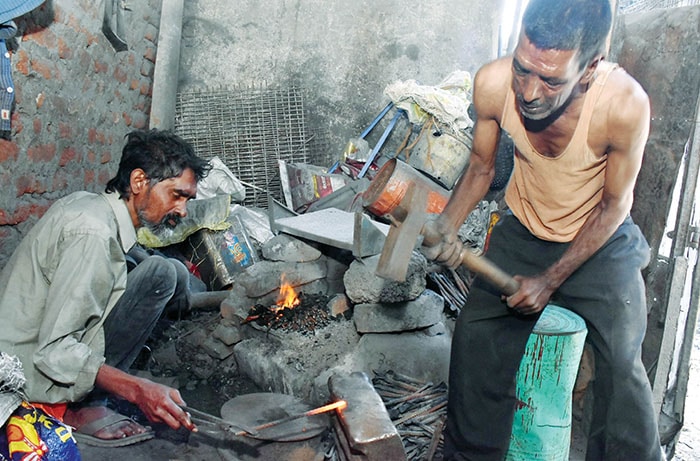
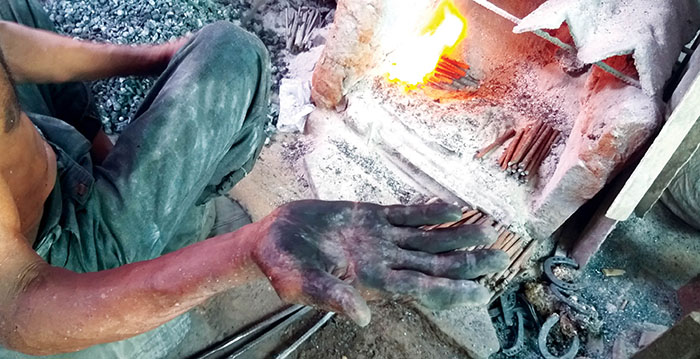
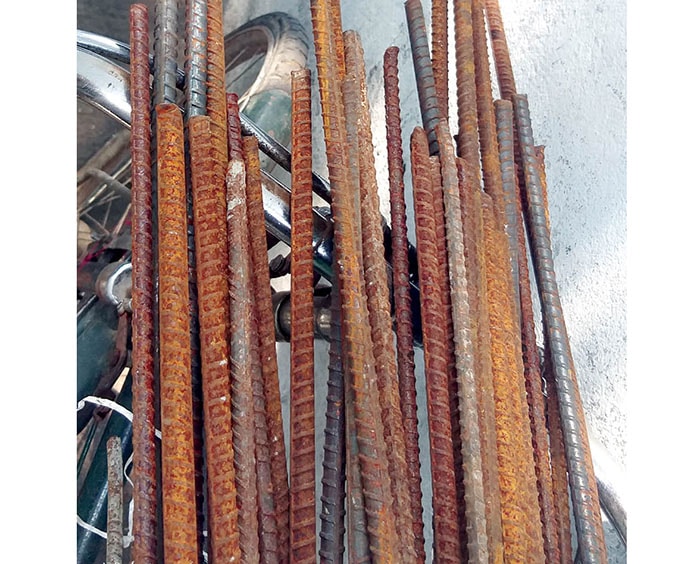
Farriers on Pulikeshi Road get the iron from scrap yards, heat them, and beat the hot iron to the desired shape. The efforts of three persons are required to make a U-shaped horseshoe. While one person stokes fire to soften the iron, the other person takes a huge hammer and beats the red-hot iron into desired shape. 

Excessive heat is involved in the process and these men do not wear any protective gear. After the metal is beaten to shape, holes are drilled into horseshoe to nail them to the hooves. And this is taken care of by another person. 

Meagre profits

While U-shaped metal forms the horseshoe for horses, crescent moon shaped shoe is fixed for cows and oxen. These metal pieces wear out quickly and they must be replaced once in two months. Over 20 farriers on  Pulikeshi Road work from an old building. There are seven pits where the fire is stoked and horseshoes weighing over 30 kgs are prepared every day in each pit and the income is shared among the three persons. 

They do not take a single day off and work tirelessly from 6 am to 3 pm. The horseshoes prepared here is primarily supplied to Nanjangud, Mandya, Handpost, H.D. Kote and surrounding areas. The finished horseshoes are taken in a bag and marketed at designated areas. 

Dearth of skilled workers

“Each kilogram of horseshoes is sold at Rs. 150. There is huge demand but we cannot fulfil that as we are facing dearth of skilled workers. Raw materials like iron and coal eat away most of the income and each box of coal costs Rs. 80 and 1 kg of iron costs Rs. 35. Profit is less and we pay a house rent of Rs. 5,000 and we have to maintain the family with the rest of money,” says Fairoz Khan of Aziz Sait Nagar who works as a farrier. 

“My grandfather and father were doing this work and I learnt from them. I have not studied beyond second standard and I have been doing this work since 22 years,” he says. In summer, the sun’s heat and the heat generated while making the horseshoe result in boils and even sparks fly to burn their skin. “We don’t know any other work and if we stop this work, our families will go hungry. There is no alternative,” he says. 

No one-size-fits all rule 

In this skilled work, there is no one-size-fits all rule as hooves are different. Machines cannot produce these horseshoes as there are animals of different age groups. “In the Mysore Race Course, the requirement is for bigger horseshoes which they get from Bengaluru. I have been doing this work since 35 years and I used to work with my father. Even I studied till second standard and I also worked in a scrapyard but returned to this profession,” says 50-year-old Ammanulla Khan. 

These farriers also sell crowbars, files, chisels, pliers and tongs. The 88-year-old Abdul Rasheed has been doing this since 50 years. “Earlier, our life was very busy as horse owners, tongawallas and owners of oxen used to line up before our shops for horseshoes. Now, horses have been limited to races and even tongas and bullock carts have been replaced by automobiles,” Rasheed rues.

source: http://www.starofmysore.com / Star of Mysore / Home> Feature Articles / by Rajkumar Bhavaskar / pics by Lakshminarayana Yadav / February 23rd, 2021

Daria Daulat Bagh – an Incredible Painted Palace

Mysuru, KARNATAKA :

India has one of the greatest traditions of paintings on walls. Called murals or frescos, we see a high level of technical excellence, grace and sublime beauty among Indian murals right from the time of Ajanta.

In 1335 AD, the remarkable city of Vijayanagar or the ‘city of victory’ was established in south-central Karnataka. In no time, the city and the empire became a fertile ground for creativity, thanks to the patronage of its powerful King Krishnadeva Rai. A remarkable style of painting evolved with ideas merging from Deccan, Cholas of Tamil Nadu and Jain tradition. When the Vijayanagar Empire collapsed after the battle of Talikota in mid-16th century many of state artists moved to Serirangapatna, a pristine and sacred land surrounded by Cauvery River on all sides. Here they thrived under the royal patronage of the Mysuru Wodeyers. In 1761 AD, the island became the seat of power of Haider Ali Saheb. He and his son Tipu Sulatan established Mysuru as a vibrant Sultanate and continued to patronage the artisan of Vijayanagar ancestry.

Daria Daulat Bagh is a palace situated in the island near the village Ganjam at Seringapatna. The village is set amidst beautiful gardens. It was built by Tipu Sultan in 1784 as his summer palace.

Built entirely out of teakwood, the architecture of the palace shows remarkable fusion of Deccani, Persian and Rajput styles. The most stunning feature of the palace is that all the space available on the walls, pillars, jharokas and arches have colourful fresco work in the style of Vijayanagar-Mysuru paintings.

On the western wall right to the entrance is depicted the battle scene of second Anglo-Mysore war or the battle of Pollilur. The battle had been fought between Haider-Tipu and the British forces, in which Haider and Tipu combated splendidly and won.

The paintings executed by the artists at the instance of Tipu Sultan where primary aim was to glorify their victory over the British. Colonel Bailley, the defeated British officer was taken to Serirangapatna after his defeat. The battle mural is seen in four different panels portraying Tipu and Haider marching in procession towards Pollilur near Kanchipuram. Tipu is depicted in all finery, himself leading the army towards Pollilur riding a beautiful white horse. Baillie sits in a palanquin as he is wounded and biting his pointing figure – a gesture employed by many to signify defeat in dismay.

The climax of the battle scene depict Baillie’s defeat giving special prominence to the explosion of tumbril and to the consternation of the British square colonel.

On the eastern part of the building there are a number of small frames containing figural motifs, architecture in brilliant composition. The most special is the one where the queen is seen seated on a carpet smoking a hookah. Some of the layouts strongly resemble Rajasthani miniature. The other panels illustrate incidents in the lives of princes, rulers and grandees of Tipu’s contemporary and also includes several rajas defeated by him. There are also neighbouring nawabs and kings including the Hindu Rani of Chittore, Rajas of Tanjore, Benaras, and Balajirao Peshwa II.

Come, lets discover the murals of Daria Daulat Bagh and appreciate the legacy of Tipu Sulatan, a brave son of the soil and perhaps one of the earliest freedom fighters.

YOUTUBE

source: http://www.blogvirasatehind.wordpress.com / September 26th, 2016

Awards of the khudadad sarkar: medals from Tipu Sultan’s Mysore

Mysuru, KARNATAKA :

Published online by Cambridge University Press:  01 February 2023

Abstract

The collection of the Asiatic Society, Calcutta, preserves a manuscript titled Risala-i-Padakah which was formerly in the library of the ruler of Mysore, Tipu Sultan (d. 1799).

This manuscript has descriptions of medals with drawings illustrating their forms.

We investigate the design of these medals and assert that Tipu Sultan understood the importance of rewarding his loyal subordinates with medals, thus transferring his authority down to them.

The ‘People’s Medals’ given to non-combatants, a novel award for those times, are also covered here in detail. We show that some of these medals, reflecting Deccan jewellery traditions, were actually awarded by Tipu Sultan himself to his men, who wore them; and we draw attention to the plunder of these medals, along with other treasures, during the sack of Seringapatam.

The authors also view this as a demonstration of Tipu Sultan’s regard for loyalty, rank, as well as good governance in opposition to estimates of him by contemporary British biographers.

This article is the first documentation of these medals, which were the earliest to be awarded by any state in pre-modern India.

source: http://www.cambridge.org / Cambridge University Press / published online by Cambridge University Press, February 01st, 2023 / by Adnan Rashid and Nidhin Olikara

Link: Journal of the Royal Asiatic Society, Volume 33, Issue 3, July 2023

https://www.cambridge.org/core/journals/journal-of-the-royal-asiatic-society/article/abs/awards-of-the-khudadad-sarkar-medals-from-tipu-sultans-mysore/9B18AC9E4856FB44B7353C6A3F3DFE22

An Exhibition of Coins by the Coin Man of Mysore Dr. Abdul Rasheed tomorrow

Mysuru, KARNATAKA :

Mysuru:

The IQAC Maharaja’s College, Departments of Ancient History & Archaeology and Museology and the Department of History, in association with Graduate Library, University of Mysore, is organising an Exhibition of Coins (from Ancient to Modern) by the Coin Man of Mysore Dr. Abdul Rasheed.

The expo will be inaugurated by H.I. Abdul Rashid, Programme Executive (Coordination), All India Radio (AIR), Government of India, on Mar. 7 at 11 am at the Reference Hall, Graduate Library, Maharaja’s College here.  

The main objective of organising this exhibition is to bring awareness of the antiquity of Indian Coinage among students and the public.  

Numismatics is the study or collection of currency, including coins, tokens, paper money and related objects. The earliest references to coins in the Indian context have been found in the Vedas. Breakthrough in the Indian coinage can be traced back to 6th century BCE. Several small States emerged in Northern India during this period. The trading activities grew rapidly. We come across several terms such as the Nishka, Karshapana, Shatamana, Vimshatika which were coins of different weight and value. They are known among Numismatists as punch-marked coins. The coins of the next age were circulated in India by Indo-Greek kings of North Western India. Coins were mainly made of silver, copper, nickel and lead.

The reign of the Gupta dynasty is described by historians and scholars as the ‘Golden Age’. Numismatists have found many gold coins of this dynasty. These coins are also rich in details of their issuing authority. The gold coins of the Guptas were known as Dinaras.  With the fall of the Gupta dynasty in mid-6th century CE there was a marked decline in commercial activities in Northern India. This period is significant in the history of Indian coinage because of the decline of the monetary system. However, the situation changed with the invasion of Turks in 11th and 12th century CE. The various dynasties of Delhi Sultans issued Silver and Copper coins. The inscriptions on the coins were mainly in Perso-Arabic script.

[Star of Mysore had featured “Dr. Abdul Rasheed: The Coin Man of Mysore” in SOM dated Aug. 21, 2013].

Dr. Abdul Rasheed (MBBS), popularly referred to as Dus ka Doctor as he charged a nominal fees of Rs.10 from poor patients, has an amazing collection of more than 3,000 coins, some of them dating back to as far as 300 BC and some as recent as of today.

Dr. Rasheed who worked for 22 years as a doctor in Saudi Arabia, Iran and Syria is now settled in Mysore and runs a clinic on Ashoka Road. He will be exhibiting his collection of coins through the ages from the Punch Marked Coins to the Gold Coins of the Mughals to the Imperial Coins and Coins of those of the Post-Indian Independence.  Along with these, currencies of six different Continents consisting of 120 countries through the ages will also be exhibited. The exhibition is open to public and there is no entry.

source: http://www.starofmysore.com / Star of Mysore / Home> News / March 06th, 2019

Mysuru’s Extraordinary individuals share their extraordinary journeys

Mysuru, KARNATAKA :

Mysore/Mysuru:

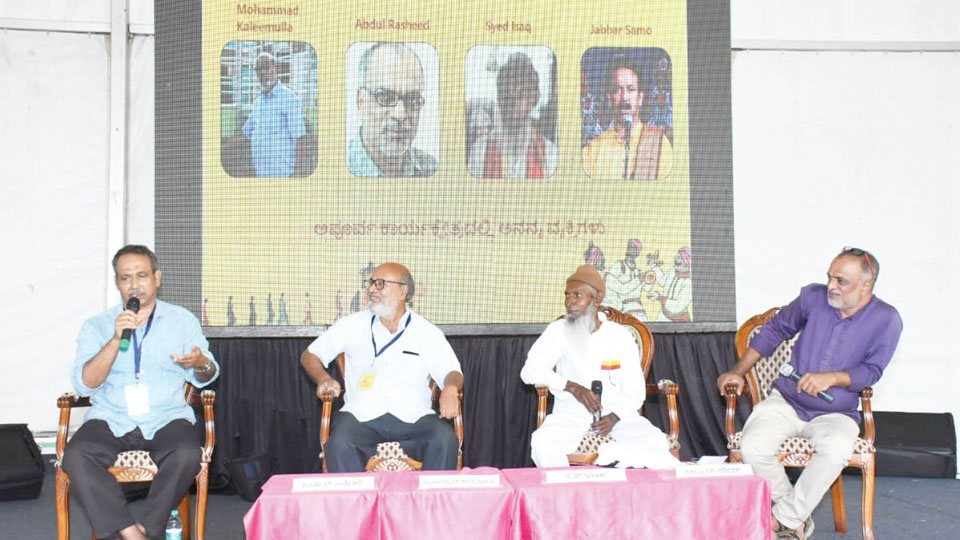
In a unique session, extraordinary individuals from different domains came together for a rare confluence at the Mysuru Literature Festival last evening. They introduced the audience to new perspectives and showcased their talent beautifully.

Abdul Rasheed, Programme Executive, Akashvani, Mysuru, delivered an engaging speech and introduced the audience to the world of new ideas. He explained his journey through various phases of life and how he embraced several individuals from different social strata as his mentors. He expressed his excitement about presenting his distinctive insights, which will provide a more representative portrayal of himself.

Jabbar Samo, a talented Yakshagana artiste from Uttara Kannada district, shared his experiences and motivations. He shed light on the significance of his performances in different aspects of life, both at the societal and personal levels. He also acknowledged the numerous individuals he considers his gurus and how they have influenced him.

He expressed how art flourishes without a specific reason and shared the dedication of Yakshagana artistes, who work without any external motivation. Despite facing difficulties as a member of the Muslim community, Jabbar Samo fearlessly pursued his passion. “Due to the prevailing circumstances, pursuing formal education was not possible, but I found solace in Kannada poems sung at the school, which fuelled my interest in the language,”  he recalled.

Mohammed Kaleemulla, a retired teacher from Nagamangala taluk, dedicated his life to the preservation of historical temples, monoliths and hero stones in Mandya district. He explained the architectural aspects of these stones, their current conditions and the ongoing efforts to safeguard them with the support of Shri Kshetra Dharmasthala. “Many hero stones are being used for mundane purposes like drying clothes. I took it upon myself to inform the villagers and engage in the preservation work,” he said.

Syed Isaq narrated how he had built the library with zinc sheet roof at the corner of a playground in Rajivnagar and has been running it for the benefit of the public for 12 years. He also told the audience how the library was burnt down and his efforts to rebuild it.

“I have never been to school but my love for books gave wings to my dream of setting up a library. I built the library with 85 percent of books in Kannada and newspapers of various languages. My Kannada library is located in an area where there is a majority of the Urdu-speaking population and Kannada language must be propagated in areas like these,” he added.

source: http://www.starofmysore.com / Star of Mysore / Home> News / July 03rd, 2024

PCI announces Moulvi Muhammad Baqir Award to honour journalists for exemplary work

NEW DELHI :

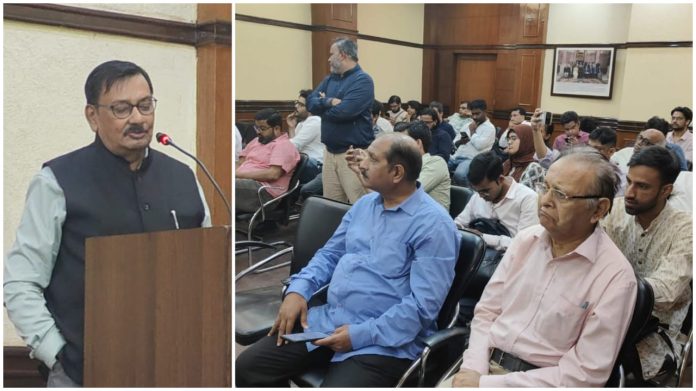
PCI President Gautam Lahiri addressing the gathering

In a significant move, the Press Council of India (PCI) has announced the institution of the Molvi Baqar Award to recognize and honour three outstanding journalists from the Urdu, Hindi, and English media every year.

PCI President Gautam Lahiri revealed this during an event commemorating the life and contributions of Molvi Muhammad Baqar, a pioneering figure in Indian journalism and the first journalist to be martyred during the 1857 Indian Rebellion.

“The criteria for this award will be to encourage journalists to follow in the footsteps of Molvi Baqar, who made the ultimate sacrifice while covering the events related to the 1857 ‘Mutiny’ through his newspaper, Delhi Urdu Akhbar,” said Lahiri in his presidential address. He added that PCI would soon finalize the modalities and constitute a jury to select the awardees.

The event, which focused on “The Life and Times of Moulvi Muhammad Baqir ,” highlighted his role as a patriotic journalist who played a key part in preparing the ground for India’s freedom. Historian and author Dr. Swapna Liddle, the Chief Guest at the event, praised Baqar’s commitment to the nation’s cause, despite the controversies surrounding his role.

“Some confusion exists due to the views of his son, Mohammad Hussain Azad, a renowned Urdu literary figure, who appeared to have taken a contrary position to his father. However, this must be understood in the context of the reign of terror during that time,” said Dr. Liddle, clarifying that Azad’s actions were likely influenced by the pressures of British rule.

Shoib Raza Fatmi, Editor of Hamara Samaj, reinforced this perspective by noting that Azad’s name frequently appeared in Delhi Urdu Akhbar as Editor, Printer, and Publisher, indicating his involvement in his father’s journalistic mission despite the difficult circumstances.

The program also featured a panel discussion moderated by Mahtab Alam, where young Urdu journalists discussed the relevance of Molvi Baqar’s journalism in today’s media landscape. Munazah Shah of News 18 pointed out the striking similarities between the challenges faced by Baqar in his time and those confronting the Urdu media today, particularly financial pressures and the need to foster communal harmony.

“The challenges faced by Molvi Baqar and today’s Urdu media are not very different. We should look to him as a role model for overcoming these obstacles,” said Sohail Akhtar Qasmi of Al Jazeera Arabic.

Tasleem Raja, a journalist with Siyasi Taqdeer and Qaumi Awaaz, echoed this sentiment, emphasizing how much contemporary media could learn from Baqar’s work in covering sensitive and complex issues.

A.U. Asif, a senior PCI member who was instrumental in connecting the Urdu media with PCI initiatives, lauded Molvi Baqar’s pioneering work in investigative journalism. “Molvi Baqar was one of the first to practice on-the-spot reporting and investigative journalism between 1837 and 1857 through his newspaper Delhi Urdu Akhbar, a practice that is now common in today’s media,” said Asif. He congratulated the PCI for unveiling Molvi Baqar’s portrait in its central conference hall, a tribute to his lasting legacy.

The event, organized to mark the martyrdom of Molvi Baqar on September 16, was held a day earlier this year due to the coinciding celebration of the Prophet’s birth anniversary. A large number of journalists attended, and the program concluded with a question-and-answer session.

The institution of the Molvi Baqar Award is seen as a step toward encouraging journalists to adhere to principles of courage and integrity in their work, much like the pioneering figure it honors.

source: http://www.muslimmirror.com / Muslim Mirror / Home> Indian Muslim> Media> Positive Story / by Muslim Mirror Desk / September 16th, 2024