All posts by mpositiveone@gmail.com

Shaykh Abdul Qadir al-Thani and the Hidden Domains of Puratheel

Kannur, KERALA :

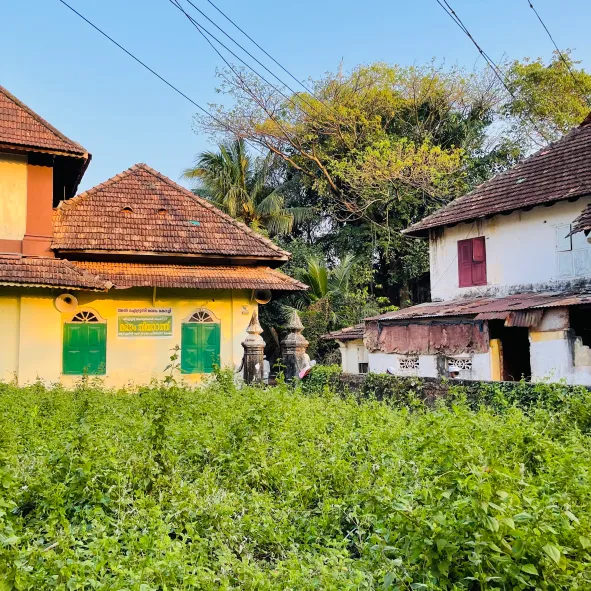
Puratheel. Image credit: Prageeth T N

The road unfolded before us like a ribbon, guiding our car through the lush greenery and coconut groves of Kerala. It was the sacred month of Ramadan, and we had embarked on a journey to the enchanting city of Kannur in search of a pious man. The road ahead promised a culturally rich, soul-stirring experience that would leave an indelible mark on our hearts.

We entered the city after a two-hour long drive; the streets bustled with pedestrians, the sound of traffic filled the air, buyers and sellers haggled in the marketplace. Amidst this vibrant chaos, an air of sanctity was palpable; it carried the essence of a bygone era, where the mingling of diverse traditions shaped the city’s identity. Our guide informed us of Kannur’s deep-rooted connections with the Islamic world, which dated back centuries.

Nestled along the coast of the Arabian Sea, Kannur holds a special place in the tapestry of Islamic culture. The arrival of Arab merchants, who had ventured to the Malabar Coast for trade, had a lasting impact on the locals. Legend has it that Islam took root in Kannur even before the arrival of Malik ibn Dinar, who is famously known as the first companion of the Prophet Muhammad ﷺ to arrive in India (though this cannot be verified historically). The tales passed down through generations speak of King Cheraman Perumal, ruler of the Chera kingdom, who was drawn to Islam after witnessing the miracle of the split moon. He embraced Islam, took the name Tajuddin, and ventured to Mecca, where he shed his worldly concerns. His story, engraved in verse on a wooden tablet at the Arakkal Palace, is a testament to the city’s historical connection with Islam.

Over the centuries, Kannur flourished as a centre for Islamic scholarship and culture, particularly Sufism. It became a hub of spiritual seekers, earning the moniker ‘Baghdad of India’. One notable figure in Kannur’s Sufi tradition is Ghawth al-A’zam (the Greatest Helper), Shaykh Abdul Qadir Al-Thani, whose presence lingers in the serene village of Puratheel, just a short distance from Kannur city, and whose grave we were destined to visit that day.

After parking our car near Varam Kadavu Bridge, we were drawn to a nearby river, its cool, sparkling waters beckoning us under the scorching summer sun. Seeking respite from the heat, I cupped my hands and splashed the cool water on my face, feeling rejuvenated in both body and soul. My colleague, who had visited Puratheel before, remarked that this river served as a natural border for the village, fortifying the sacred site with its life-giving waters. It was this very river that earned Puratheel the epithet dweep, or ‘island’. The flowing waters represented a boundary that was not only physical, but also spiritual, separating this land from the rest of the outside world.

Puratheel. Image credit: Salz Graphy

Standing on the river’s edge, engrossed in its serene beauty, I felt a profound sense of peace wash over me. At that moment, I understood why Puratheel was revered as a place of spiritual import. It provided a sanctuary, a space where seekers could disconnect from the outside world and embark on a meaningful journey of self-discovery. Even as we reluctantly left the riverbank, the serenity of that moment remained with us, and we cherished this reminder of the intense connection between nature, spirituality, and the pursuit of inner peace.

As we wandered through the village, faint sounds of devotional music played from afar. Our guide, prayer beads in hand, began to narrate the story of Shaykh Abdul Qadir Al-Thani.

There once lived an extraordinary man in Afghanistan by the name of Shaykh Uthman Hamdani. A Persian ruler and descendent of the esteemed first Caliph, Abu Bakr Al-Siddiq, this Sultan of Hamadan left all his riches behind to go on a quest for truth. He wandered tirelessly across distant lands, his footsteps guided only by his faith and a thirst for spiritual knowledge.

Shaykh Uthman eventually arrived in Valapattanam, a tranquil village in the northern province of Kerala. One night, during his stay in the village, he experienced a vision. This vision promised him that, should he marry on that very night, he would sire a miraculous child. A year later, in the nearby kingdom of Chirakkal, royal astrologers uncovered a celestial secret. They revealed to their king that a child had been born in the Valapattanam province — a child destined to become the greatest of all miraculous beings. They further prophesied that if the King provided protection and support to this child, his kingdom would prosper.

Intrigued by this prophecy, the King of Chirakkal set out to meet the newborn child, who had been named Abdul Qadir. Recognising the infant’s extraordinary potential, the King assumed responsibility for his upbringing, ensuring that he grew into a virtuous and revered figure. As such, the child was brought to the King’s palace at the tender age of five or six, where he continued his spiritual journey surrounded by the kingdom’s grandeur. His princely childhood abruptly ended at the age of sixteen, when his fortuitous encounter with four strangers changed the course of his life forever. 

The strangers had arrived at his family home in a famished state while Abdul Qadir was away at the palace. With his mother’s permission, they slaughtered cattle she had originally set aside for her son, and chopped down a jackfruit tree in front of the house. They cooked their meal, ate, and saved some of the food to be given to Abdul Qadir when he returned. As the strangers departed, the family were astonished to find that both the cattle and jackfruit tree had been miraculously restored to their original state. When Abdul Qadir eventually came home, his mother informed him of their unusual visitors. Realising that these were no ordinary beings, he set off to find them, eventually encountering four people from Bhatkal, Karnataka. Amongst them was the distinguished Sufi shaykh, Mahmoud Al Khabooshani, who bestowed Abdul Qadir with an ijaza in the Suhrawardi tariqa. This was a licence that would formally permit him to instruct his own disciples in the teachings and practices of the Suhrawardi Sufi order. 

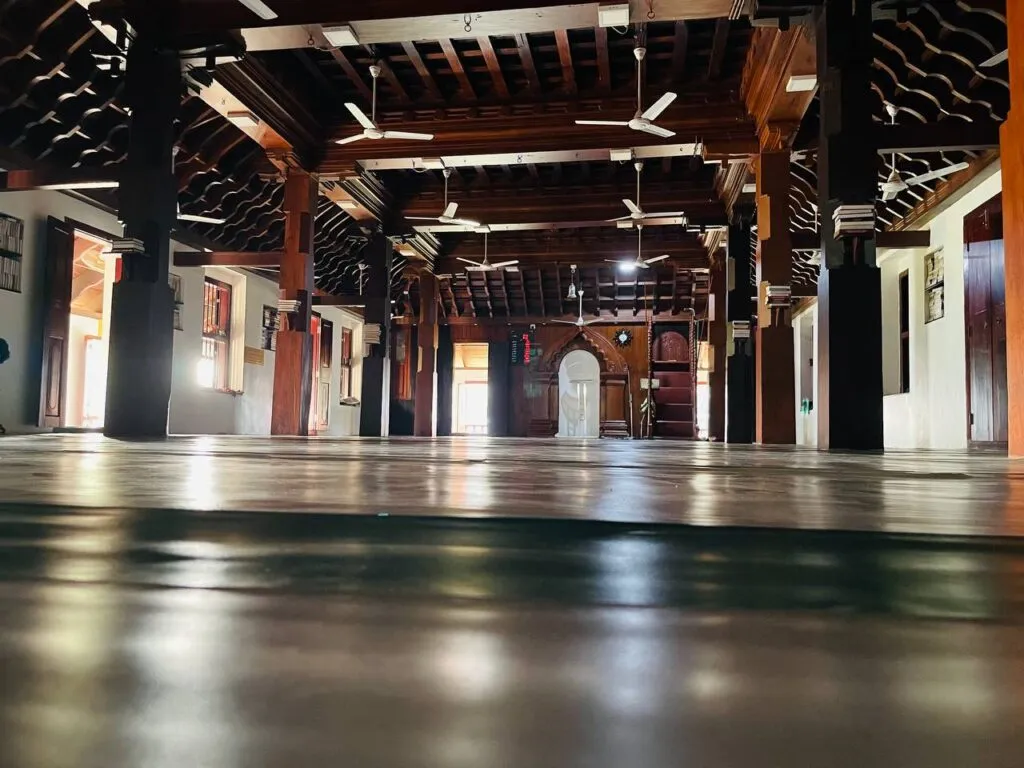
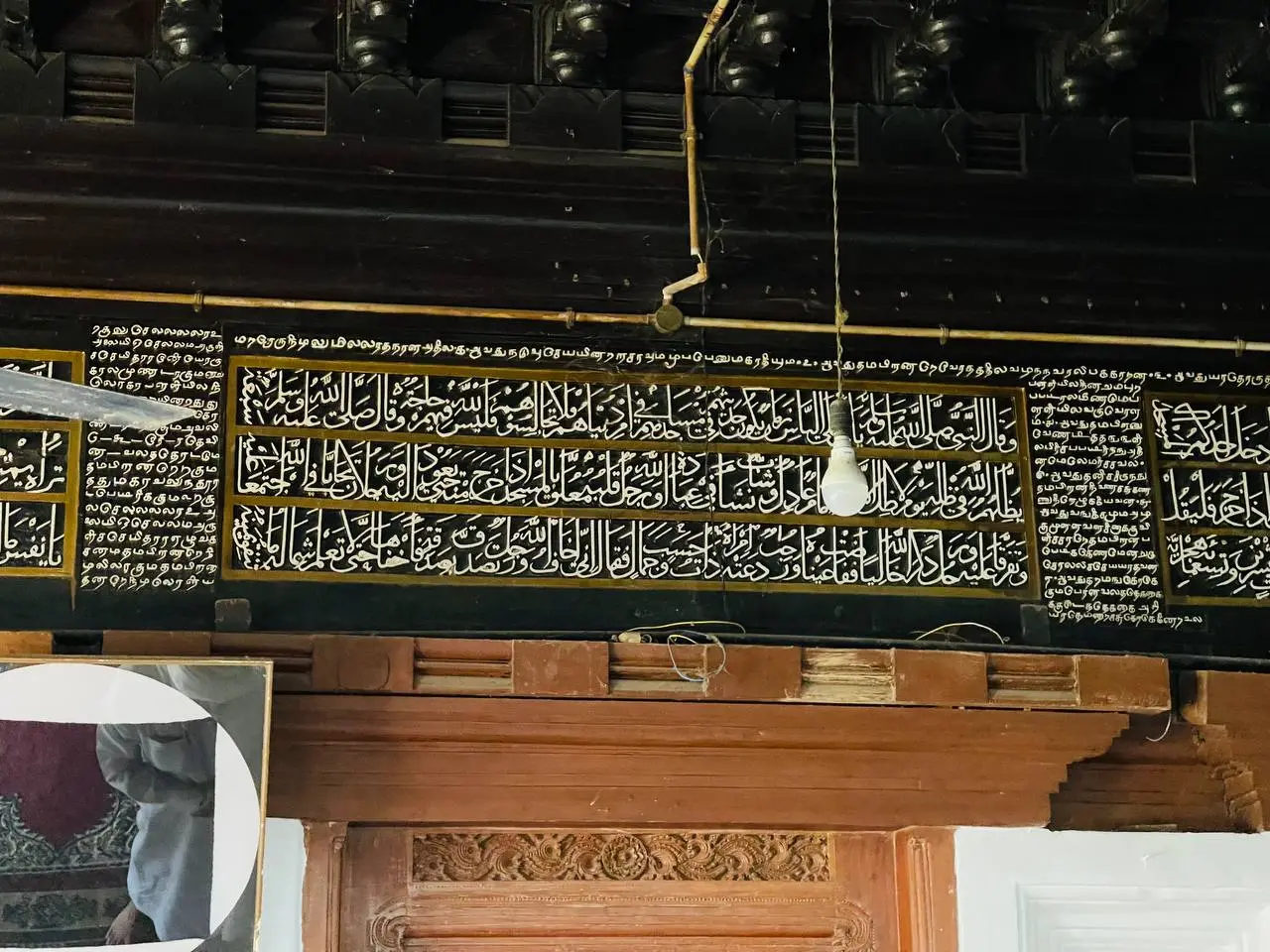
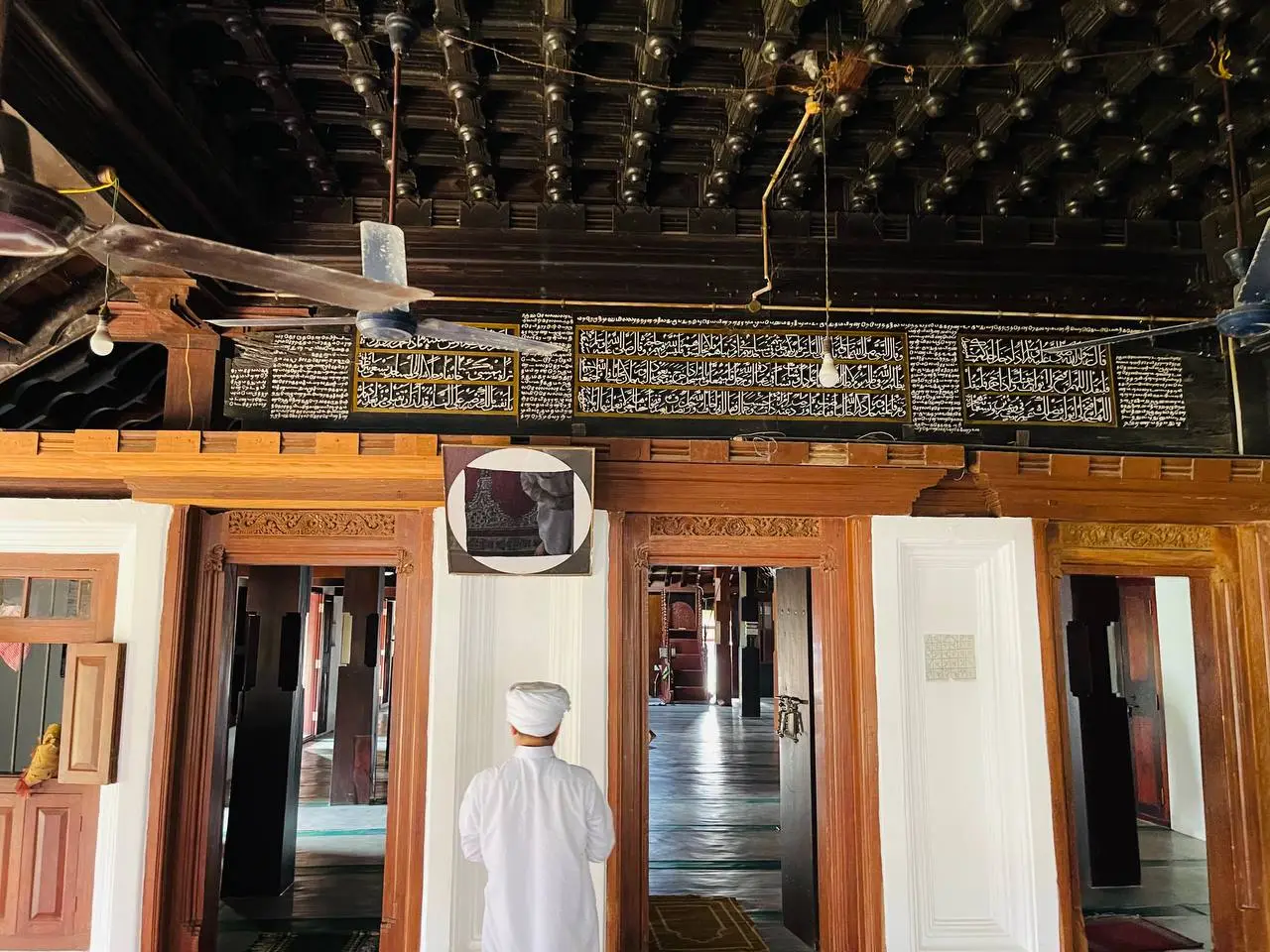
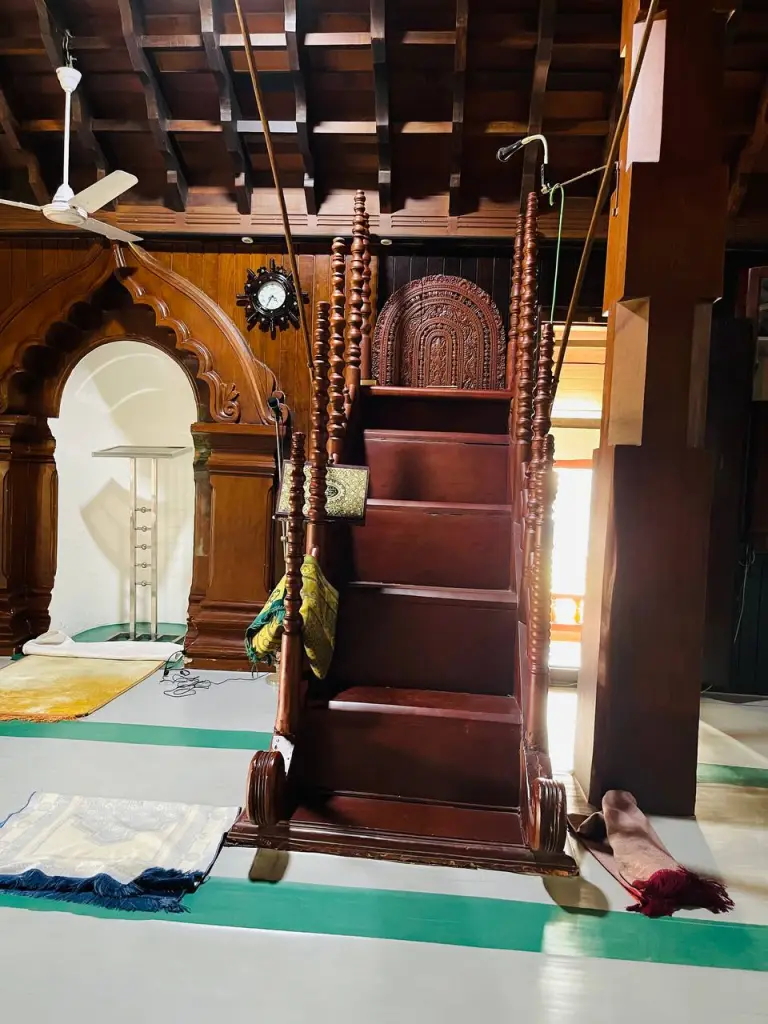
Mosque built by the Shaykh himself

Inspired, Shaykh Abdul Qadir abandoned all material pursuits and devoted himself to worship. When the King grew concerned at the Shaykh’s sudden withdrawal from the palace and other worldly affairs, the Shaykh expressed his desire to continue this path, furthermore requesting that the King grant him a portion of the land to be reserved for regular worship and seclusion. The King assented, and named this land ‘Puratheel’. There, the Shaykh built a mosque and established a settlement, fostering a culture of spiritual seclusion and growth. He eventually became known as Abdul Qadir Al-Thani (‘the Second’), as people reverentially associated him with Ghawth al-A’zam Abdul-Qadir Al-Jilani, esteemed scholar and saint of Baghdad. 

Despite my efforts, I found little information about Abdul Qadir Al-Thani in my research. Even in Malayalam, the native language of Kerala, references were scarce. Only in Arabic did I find a single work, entitled The Holy Maulid, by Shaykh Valappil Abdul Azeez Musliyar. Shaykh Abdul Qadir’s obscurity in the digital realm was, to say the least, disappointing. However, as I stepped into the sacred sanctuary of Puratheel, I was astounded to see its pathways abound with visitors, their footfall echoing with purpose and a yearning for the blessings of a shaykh unknown to Allama Google. This was a realm beyond the age of digital information, where human souls longed for a connection unencumbered by the pretensions of media and search engine rankings. I felt an enigmatic current that drew people to a shaykh who, while evading fame and renown in written histories, had claimed his place in living hearts and memories.

Tombs of Shaykh Abd al-Qadir al-Thani’s descendants

With the setting sun, a melodious call to prayer echoed through the misty valleys, summoning the faithful to gather in the sanctum of the mosque. Inside, the golden glow of flickering lanterns danced across the walls, and the congregation united in prayer between them. The rhythmic recitation of sacred Qur’anic verses rose and fell, followed by murmured supplications emanating from each devotee’s lips.

After the Maghrib (sunset) prayer, a serene calm enveloped the community. We had just shared an Iftar meal to end the day’s fast, replenishing both body and soul with food and prayer. However, the night was far from over. At 12.30am, as moonlight filtered through the mosque’s stained glass windows, bathing the prayer hall in its soft glow, the call to prayer would recommence. As the rest of the world slept on, these worshippers would perform the Taraweeh prayer until 2am, a night prayer reserved for the blessed month of Ramadan, followed by more supererogatory prayers and whispered invocations hoping to forge a bond between this earthly realm and the Divine.

Though Muslims the world over perform these rites every Ramadan, Puratheel has its own unique customs. The Qunut, a special supplication, is recited with every prayer except Maghrib. On Mondays, Thursdays, and Fridays after Maghrib, devotees gather for a dhikr halaqa, or gathering of remembrance, chanting the Divine’s sacred names in melodious union. After the Jumu’ah (Friday) prayers, which are led by a descendent of Abdul Qadir Al-Thani, a ritual of repentance takes place; the Shaykh recites words of istighfar, invocations that seek Divine mercy and forgiveness. Believers repeat the Shaykh’s istighfar, and disclose their struggles and shortcomings to a spiritual mentor as a means of guidance, purification, and self-reflection.

As Ramadan nears its end, the anticipation of seeking Allah’s blessing in the final ten nights of the Sacred Month swells, culminating in the sought after ‘Night of Power’, or Lailat ul Qadr. This is the twenty-seventh night of Ramadan, where in Puratheel, the adhan (call to prayer) resounds seven times to herald the Night of Power’s arrival. The mosque transforms into a radiant beacon, drawing the servants of Allah from near and far.

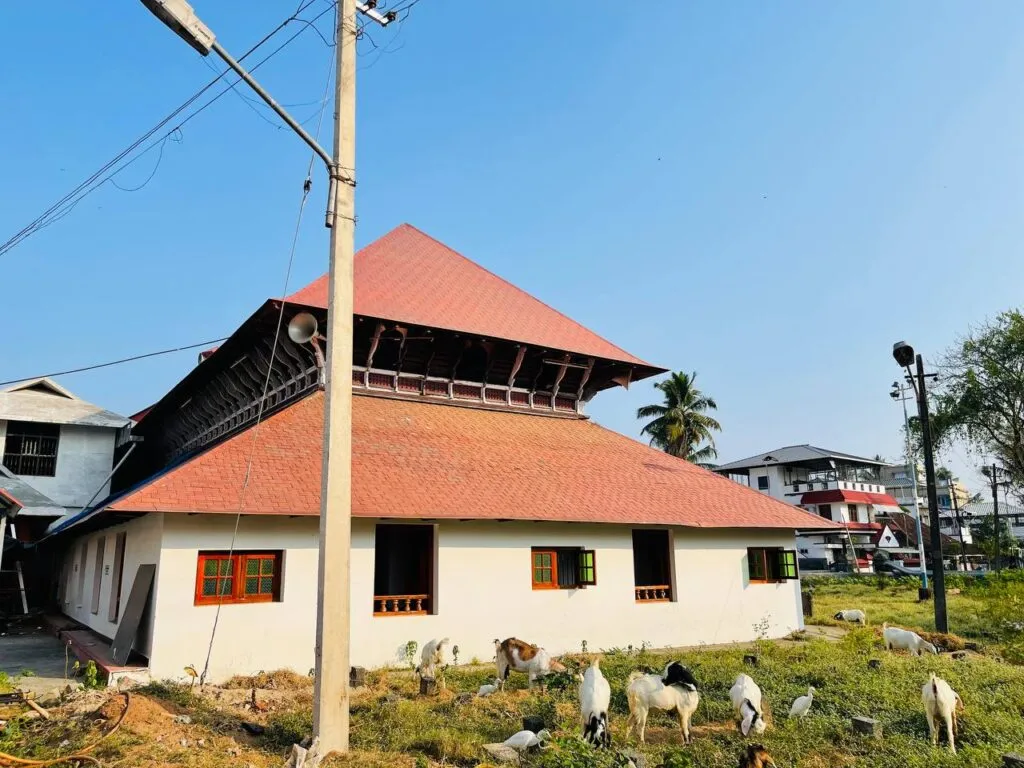
Puratheel Juma Masjid

When the final sun sets on Ramadan, and Eid ushers in the Sacred Month’s end, the Isha (evening) prayer is delayed until 2am to encourage the faithful to immerse themselves in worship until dawn. Although these customs may seem arduous to some, they are embraced with an unwavering devotion in Puratheel, keeping the legacy of the Shaykh alive. In our age of information and instant gratification, Puratheel reminds us that there are still enigmas to unravel, hidden domains waiting to be explored, and extraordinary souls whose influence transcend the virtual realm. True enchantment lies not in its digital presence but in the transformative encounters that await those who embark on this journey with an open heart and a yearning for the Divine.

Before our trip came to its end, our guide led us inside the mausoleum that housed Shaykh Abdul Qadir Al-Thani’s tomb, where he rested adorned in royal green clothing. Mausoleums of his children, grandchildren, other family members, and companions abound, both in Puratheel and all throughout India.

As we left Puratheel, a sense of tranquillity washed over me, dispelling, for the moment at least, all of life’s uncertainties. I felt that an inner peace had permeated my being, reminding me that we are never truly alone. For a moment, the world stood still and breathless, before exhaling a gentle breeze that brushed against me. I felt tears spring to my eyes, and wondered if nature possessed its own soul.

I left marvelling at the interconnectedness of the human spirit and the natural world. With the wind divulging its secrets and the land preserving ancestral tales, our souls are inextricably tied to that of nature’s. Through timeless bonds, we find solace, guidance, and an earnest understanding of our place in the cosmos. I journeyed forward, guided by whispers of the unseen, embracing the beauty and mystery bestowed upon us by nature.

Edited by Asma

source: http://www.sacredfootsteps.com / SacredFootsteps.com / Home>Asia> India / by Swalih Kuzhinholam / edited by Asma

____________________________________

Swalih Kuzhinholam

Swalih is a writer, Islamic tutor, and cultural explorer based in Kerala, India. He is a graduate of Darul Huda Islamic University in Chemmad, and a former Associate Editor at Thelitcham monthly magazine. His interests lie in culture, society, Sufism, aesthetics, literature and the arts.
Gujarat’s Forgotten Islamic History

GUJARAT :

Islam in India is often portrayed as a byproduct of the 16th century Persian Mughal Empire; but if you look past the Taj Mahal and Jama Masjid of Agra and Delhi, you find that Islam’s roots actually run far deeper in other parts of the country.

The claim that the Mughal Empire is responsible for the spread of Islam in the subcontinent, is often made by far-right (Hindu or Indian) nationalists, and has contributed to the common misconceptions that Islam is a recent phenomenon in South Asia, and that it spread from the north of the country to the south. However, evidence suggests that the religion first reached the shores of the Gujarati-Konkan and Malabar coasts (in the south) almost a thousand years earlier, in the 7th century, through trade in the Indian Ocean with East African and Arab merchants.

One of the oldest mosques in the world, Cherman Juma Mosque, is thought to have been built in Kerala, in the south of the country, in 629 AD, and a few years later the Palaiya Jumma Palli Masjid was built in Tamil Nadu.1 Ibn Battuta, who travelled throughout the Islamicate, even worked as Qadi (judge) in the Delhi sultanate in the 14th century, before his disastrous shipwreck.2 

In this article, I want to concentrate on a part of India that is often overlooked in discussions of Islam: Gujarat. 

A brief history  

Sitting on the Arabian Sea, Gujarat is the most western state of India. Centuries of migration have seen it become a cosmopolitan melting pot. The state’s diverse religious and ethno-linguistic communities are reflected in both Gujarati architecture and the Gujarati language, which is interlaced with Persian, Arabic, Swahili and Sanskrit. Gujaratis, well-known for their influence in trade and business, were prime merchants in the Indian ocean in the centuries prior to the emergence of the East India company. It has also been argued that the lack of written Gujarati sources was due to Gujarati merchants not wanting outsiders to access this exclusive language of trade.3

Handmade ships being built at the timber shipyard, Mandvi, Gujarat. Copyright Sasha Patel. All rights reserved.

Yemeni shipbuilders, Zoroastrian Parsi’s (who fled Iran due to religious persecution in the 8th century), and Ismaili Shias, are just some of the many groups that have settled in Gujarat, and influenced its culture for centuries. In the 10th century, Ibn Hawqal, Muslim Arab geographer and chronicler, even observed mosques in four cities of Gujarat that had Hindu kings, namely, Cambay, Kutch, Saymur and Patan.4

Tensions 

In the decades since partition, and in recent years, communal tensions and violence have flared up periodically in Gujarat. Since 1950, over 10,000 people have been killed in Muslim-Hindu communal violence5 with horrific events such as the Bombay riots (1992) and Gujarat riots (2002)6 still heavily imprinted in recent memory. The cause of the unrest is often attributed to the multitude of diverse communities living in close proximity; however, this is a gross simplification that ignores the role of colonialism in instigating communal violence7 by emphasising religious difference.8 Though no one is suggesting that religious tensions didn’t exist in pre-colonial times, scholars have argued that the lines of religious practise were often blurred (as we shall see). 

This colonial legacy, alongside increased saffronisation of the Indian government9 and increased Hindutva mobilisation, has led to Muslim minority groups being attacked as “outsiders” or “invaders” to support the idea of a ‘Hindu Rashtra(nation)’.10 This ideology tries to omit the centuries long existence and contribution of Muslims within Gujarat and the Indian subcontinent.

Though there are no doubt numerous means by which this contribution can be demonstrated (i.e. social, lingual, economic, culinary (for example did you know that biryani is not actually Indian in roots but was introduced by immigrants from Iran?), here I will concentrate primarily on architectural, since in recent years, right-wing hardliners have sought to politicise monuments by calling into question their ‘true’ antecedents.11 As I will show, there are a number of Islamic monuments within Gujarat that reflect the presence of Islam and contribution of Muslims in India before, during and after the reign of the Mughals. 

Chamapaner-Pavagadh Archaeological Park

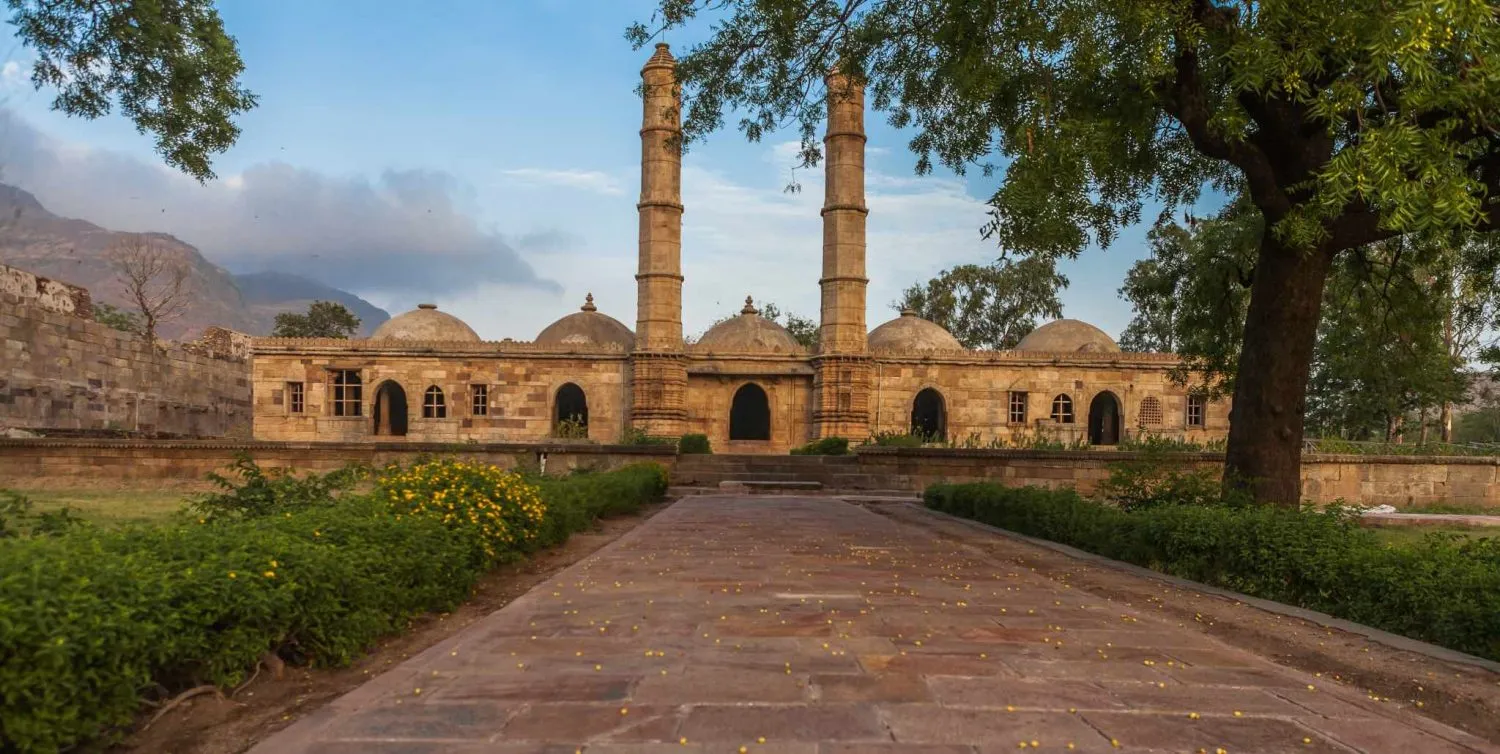
Forty-seven kilometres outside the city of Baroda in Gujarat, is the Champaner-Pavagadh Archaeological Park, a UNESCO world-heritage site, the oldest parts of which were built in the 8th century. Champaner is the 16th century historical city at the centre of the site built by sultan Mahmud Begada of Gujarat. The forts on the hills of Pavagadh surround Champaner. Once the capital of the Gujarat sultanate, before it was moved to Ahmedabad, the site features intricately designed palaces, masjids, mandirs, stepwells and much more. Champaner-Pavagadh is the only complete and unchanged Islamic pre-Mughal city in India, highlighting its historical significance.

Mosque at Champaner. Image CC: Olivier & Pascale Noaillon Jaquet via Flickr.

A fusion of both perceived Islamic and Hindu architecture, in its domes and arches, this site encapsulates the historical context of India prior to imperial rule: cultures defined by regions which incorporated significant aspects of all religions.12

Champaner-Pavagadh today is a pilgrimage destination for Hindus, Muslims and members of other religions, demonstrating how blurred the lines of religion once were in India’s pre-colonial past.  

Hazira Maqbara

Away from the dusty hustle and bustle of the purana shehr, or old town, lies the Hazira Maqbara.It serves as a good example of how Islamic monuments in Gujarat are given little recognition and often overlooked completely. 

Hazira Maqbara

Built in 1586, the monument contains the tomb of Qutubuddin Muhammad Khan, who was the tutor of Jahangir, the son and successor of Akbar. The significance of the mausoleum, as belonging to the teacher of one of the most famous Mughal emperors of all, is barely acknowledged in Gujarati history, let alone recognised in travel guides. For me, the tomb and its surrounding gardens offered a serene experience, that could be described as an ode to the education provided by Qutubuddin Muhammad Khan to the emperor in his lifetime.  

Inside Hazira Maqbara

The mausoleum now seems to be looked after by members of the Ismaili Shia community of Baroda. While visiting, the two men who were acting as ‘guards’ were eager to show us around, perhaps a reflection of the lack of visitors received by this hidden charm of the city. It’s almost ironic that the Hazira Maqbara, a Mughal monument, is even forgotten by the groups who over-emphasise the role of the Mughals in bringing Islam to India.

Laxmi Villas Palace 

Laxmi Villas is the former palace of the Gaekwads of Baroda. The Hindu Gaekwad dynasty ruled the princely state of Baroda from the early 18th century until 1945. Under the rule of Sayajirao Gaekwad III (1875-1939), Baroda was seen as one of the most socially progressive states in India. 

PIX07

Built in 1890, Laxmi Villas embodies the elegant and ostentatious Indo-Saracenic style- a style that was ‘developed’ by colonial architects to combine elements of both Indo-Islamic and ‘traditional’ Indian architecture. The elaborate decoration of the palace leaves no detail untouched; the intricate floral designs on all the arched window frames, mosaics sparkling in gold, and the magnificent Darbar and Hathi(elephant) halls are just some of the delights this palace holds. It also includes gardens designed by William Goldring, a specialist for Kew Gardens, and a miniature train which encircles a mango orchard. Laxmi Villas Palace is an important representation of India’s elite within the context of it’s colonial past, and its inclusion of Islamic elements is significant, in that it acknowledges the presence and contribution of Islam in Gujarat. 

Three different sites, eras and locales; each in its own way represents the long-standing presence of Islam within Gujarat. The lazy attribution of Islam to the Mughals, and the limiting of its contribution in India to the Taj Mahal (though, bizarrely, even this is being challenged), is not difficult to refute- and when invented histories and political narratives (which often politicise monuments) are being used to challenge the rights and existence of minority communities, it must be refuted. In Gujarat, monuments such as Champaner-Pavagadh demonstrate the existence of Islam in India prior to Mughal rule, and the architecture of Laxmi Viilas Palace represents its influence and contribution more than a thousand years since it arrived on the shores of the Indian Ocean.

Footnotes

1 http://tamilnadu-favtourism.blogspot.co.uk/2016/08/palaiya-jumma-palli-kilakarai.html and http://www.heritageonline.in/kilakarai-the-oldest-mosque-in-india/

2 Dunn, Ross E. (2005), The Adventures of Ibn Battuta, University of California Press, p. 245.

3 Riho Isaka, ‘Gujarati Elites and the Construction of a Regional Identity in the Late Nineteenth Century’, in C. Bates (ed.), Beyond Representation.

4 Wink, André (1990). Al-Hind, the making of the Indo-Islamic world (2. ed., amended. ed.). Leiden: E.J. Brill.

5 ʻAbd Allāh Aḥmad Naʻīm (2008). Islam and the Secular State: Negotiating the Future of Shari`a. Harvard University Press. p. 161.

Varadarajan, Siddharth. Gujarat, the making of a tragedy. New Delhi: Penguin Books, 2002.

7 Cohn, B., ‘The Census, Social Structure and Objectification in South Asia’, in B. Cohn (ed.), An Anthropologist Among the Historians (1987).

8 Bayly, C. A. “The Pre-History of ‘Communalism’? Religious Conflict in India, 1700-1860.” Modern Asian Studies 19, no. 2 (1985): p. 177-203.

9 http://www.scmp.com/week-asia/politics/article/2100513/modis-party-stokes-anti-muslim-violence-india-report-says

10 Sumit Sarkar, ‘Indian Nationalism and the Politics of Hindutva’. in Ludden, David (ed.), Contesting the Nation: Religion, Community and the Politics of Democracy in India 

11 Bhattacharya, Neeladri, ‘Myth, History and the Politics of Ramjanmabhumi’, in S. Gopal (ed.), Anatomy of a Confrontation: The Babri Masjid-Ram Janmabhumi Issue. (further reading)

12 Metcalf, T. R., 1994. Ideologies of the Raj. Cambridge: Cambridge University Press.

source: source: http://www.sacredfootsteps.com / Sacred Footsteps.com / Home> Asia / by Sasja Sasha Patel

_________________________________________________________

Sasha Patel

Currently studying History & South Asian Studies (Hindi) at SOAS. Passionate about using the power of history to challenge current political narratives in regards to race & gender. Classical musician who loves reading postcolonial literature & visiting exhibitions. Best travel moment? Journeying through rural Gujarat to the White Salt Desert/ Rann of Kutch, India.

A Yemeni Oasis in India

Hyderabad, TELANGANA :

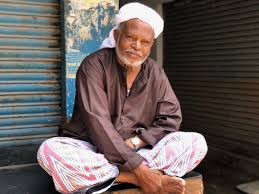
Senior citizen Abdullah Bin Ahmad sports Yemeni headgear and a colourful sarong

In a little known corner of an Indian metropolis lies a thriving Yemeni oasis, complete with hareesgahwah, and mandi.

It’s Sunday morning, and the Bin Habtoor family is hard at work on Barkas’ bustling Market Road. They serve a steady stream of customers making a beeline for harees, the sticky, porridge-like breakfast that has long since become a local favourite. But what is harees, an Arabian dish, doing in a south Indian neighbourhood?

The answer lies in the origins of Barkas, a suburban enclave founded on the outskirts of Hyderabad city over a century ago.

A corruption of the English word barracks, Barkas is a distinct and vibrant neighbourhood that, despite its still being firmly rooted in the Yemeni ethos, has acquired a local flavour through assimilation with native traditions.

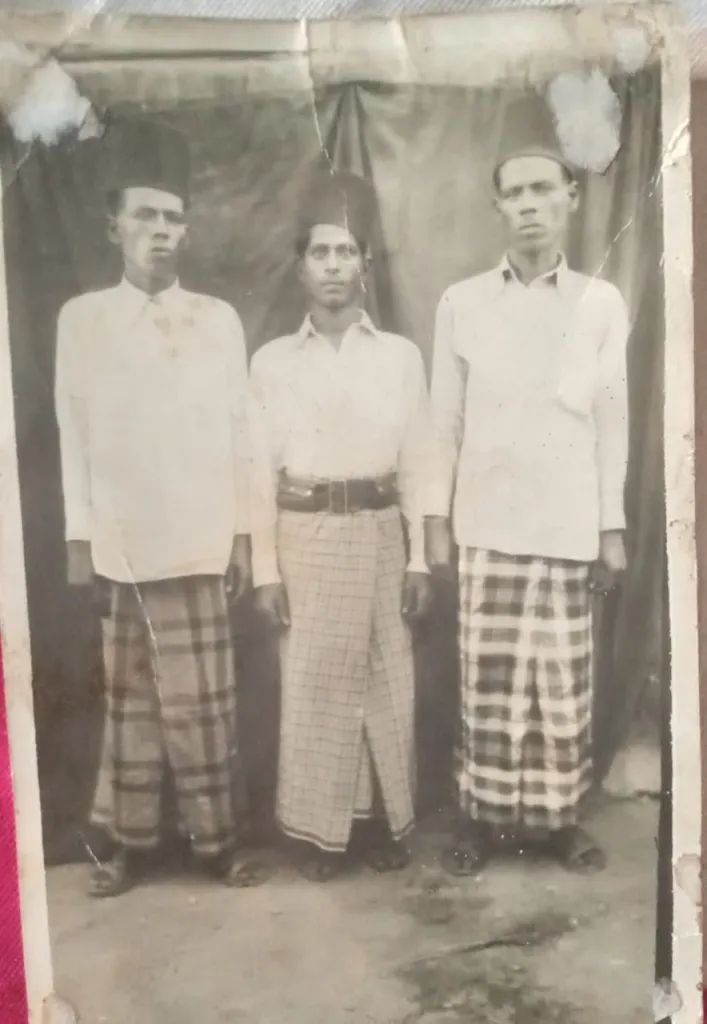
Senior Barkas resident, Awad Bin Badar Barrawaz, with his children (1920s)

In the late 19th and early 20th centuries, the Hyderabad state was the largest and most prosperous kingdom within British-controlled India. Its army, which was comprised of soldiers from far and wide, included a great number of Arabs, many of whom hailed from Yemen.

According to popular local history, Barkas was founded in 1903 by Awadh Saleh Abillail al-Salami, a commander in the Nizam’s army. As a general, al-Salami helped the Nizam set up the Arab Regiment, filling it with young Yemeni mercenaries. The soldiers eventually married Hyderabadi women, starting families and permanently settling in the city.

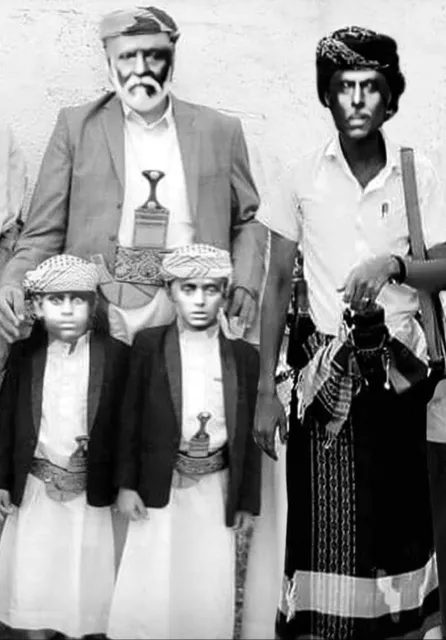
Barkas residents Jaffer Barrawaz and his twin brother posing in traditional attire (1946)

Following India’s independence from British colonial rule, Hyderabad was annexed and added to Indian territory. The Nizam’s army was disbanded however, it’s soldiers and their families remained in Barkas. It was their strong sense of identity that saw them not only endure, but thrive in the region. Today, they number more than 200,000, representing a unique synthesis of Indian culture and Arabian customs.

This merging of identities to form something new reminds us of more syncretic, symbiotic times, when communities would often blend together without surrendering their collective self-hood. And so, while they saw themselves as Indians, these once-Yemeni soldiers and their progeny held on to many of their Arabian traits. Some of their customs remain to this day.

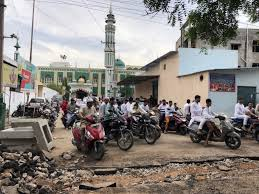
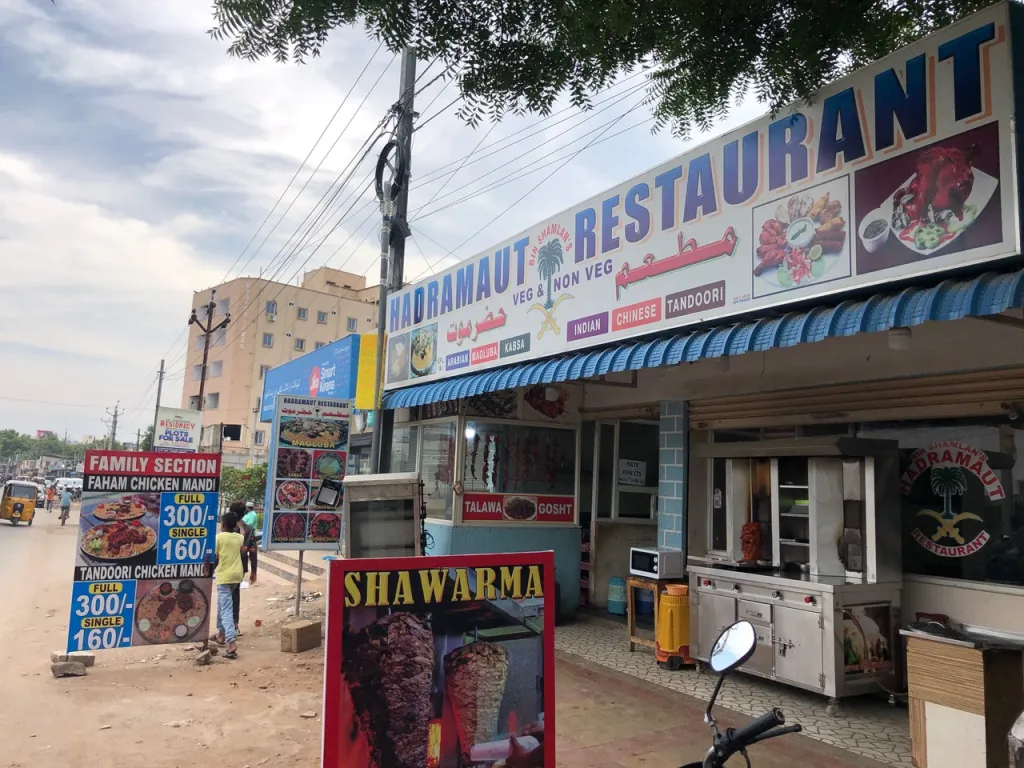
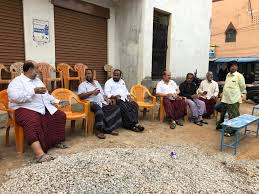
The moment you enter Barkas, you are met with Arabic signboards and welcomed by an array of Arab eateries. As you wind through the old city streets, as well as the neighbouring area of Salalah (named after the Omani region bordering Yemen), you will no doubt spot Yemeni headgear and colourful sarongs that transport you from southern India to southern Arabia.

Restaurants serving mandi, shawarma, and other Arab foods have become particularly popular in Barkas.

Food for Thought

If you were to close your eyes and breathe in the Barkas air, you would take in the aroma of Arabian spices, coffee, and perfume. You would be forgiven for wondering, standing outside the Harees Al Hadrami eatery on Market Road, whether you were in Yemen’s Hadramaut, or if this was just another shade of India’s diverse tapestry.

Only upon hearing the locals welcoming you in the typical Hyderabadi Deccani dialect of Urdu would you be sure it was the latter. The adoption of Urdu is just one of many aspects of the local culture the migrants have embraced over the last century.

The locals gather at the Gahwah stall every evening, sharing joys and sorrows over their steaming cups.

Not only did they adapt their tongues, but their palates, too, as Arabian tastes gave way to local culinary preferences.

Traditionally, the Arabian harees is made with meat, wheat grains, and generous dollops of ghee (clarified butter), but without any use of spices or sugar. It tastes quite bland if you grew up on the spicy local food. Over the years, as our forefathers adapted to their new life in Barkas and their tastes began changing, they catered to the local preferences which gave birth to two varieties of harees: the sweet, and the savoury, and both are equally popular now,” remarked Qaiser Bin Abdullah Bin Habtoor, one of the four brothers running the only surviving harees eatery in the area.

The business was started by their grandfather almost six decades ago. It was among a handful of harees businesses in town, until the changing realities of modern life forced the others to shut up shop.

We are the oldest surviving Harees outlet in Hyderabad now. There were a few others on this street that have closed down. This is a tough business; the making of Harees is a lengthy process and needs a lot of patience and skill. The knowledge has been passed down to us by our forefathers and we are glad to have been able to maintain this tradition,” said Sabir Bin Abdullah, who spends nearly ten hours per night preparing the dish, continually stirring the mixture as it simmers over a low, coal-powered flame.

Craze for Coffee

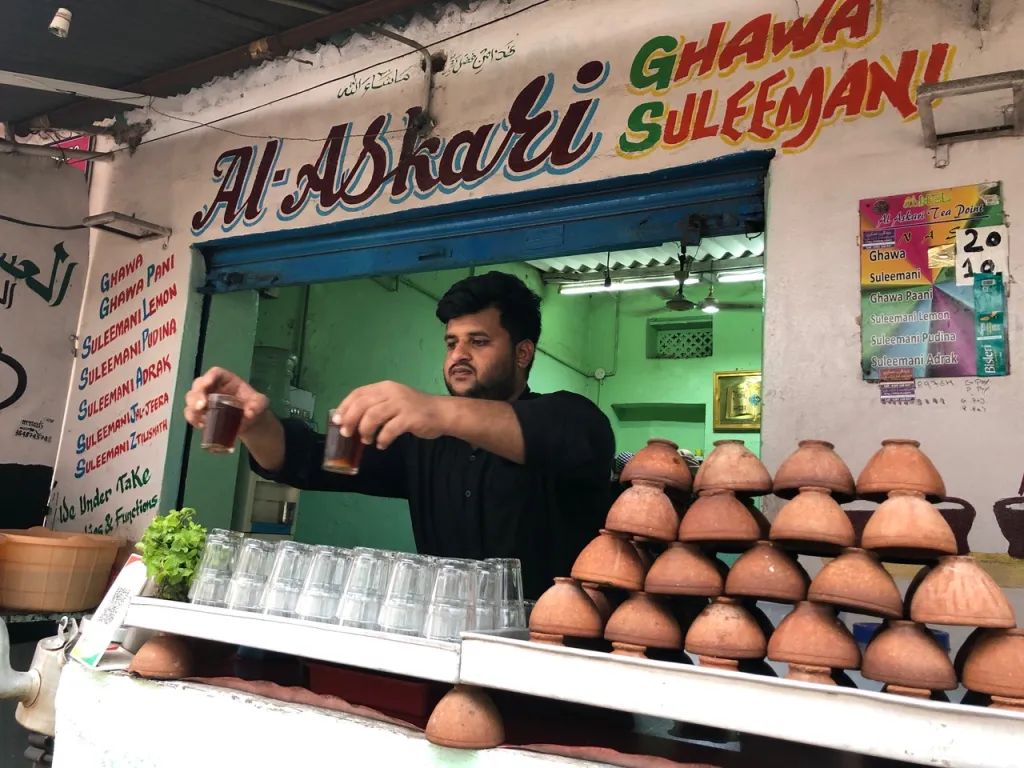
Another family business and Yemeni tradition that has survived the test of time, albeit with a local twist, is gahwa, or Arabic coffee.

While Yemenis and most other Arabs prefer their gahwah black -a blend of water, herbs, spices, and powdered coffee – Barkas’ own popular variant is a mixture of coffee powder, sugar, cloves, cinnamon, cashews, almonds, saffron, and, most importantly, milk.

Our ancestors brought with them many of their Yemeni traditions. Though we have adopted most local Indian customs over the years, there are certain traits that are too strongly ingrained in us, and one of them is a love for coffee,” noted 25 year old Omar Bin Nasir Al Askeri, the fourth-generation inheritor of the only traditional gahwah stall in Barkas.

The locals gather at the Gahwah stall every evening, sharing joys and sorrows over their steaming cups.

Though the nourishing, milk-based gahwah is particularly popular, many still prefer the more authentic, water-based original. The Al-Askeri cafe has been serving traditional gahwah and Suleimani tea for several decades, keeping the pot of traditions simmering on.

Coffee runs deep in Yemeni veins. It’s in our blood. Yemenis start their morning with gahwah, and we are no different. Even now, most of us start our morning with gahwah. We are proud to have been able to facilitate this tradition of our ancestors through our small stall,” added Omar.

Backyard Bounties

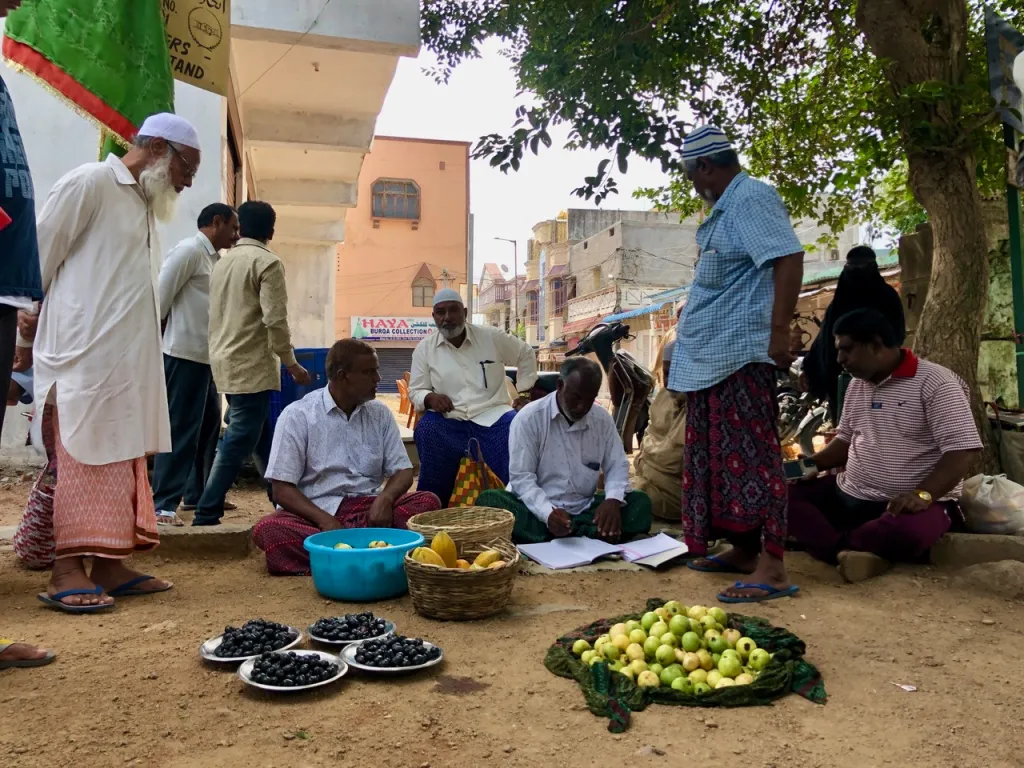
A popular social hub, the gahwah stall is where the locals gather every evening, sharing joys and sorrows over their steaming cups. It is also located next to the traditional market, where locally grown fruits and vegetables are traded every morning. This tradition dates back to the early days of Barkas, though later generations have added plenty of new flavours to it.

The traditional market, where locally grown fruits and vegetables are traded every morning. This tradition dates back to the early days of Barkas.

One new food staple is mandi. Although this dish has been a mainstay of Yemeni culinary tradition for centuries, it only recently found its way to Barkas. This is largely due to a rival meat-and-rice dish, Hyderabadi biryani, which has long dominated the region.

However, as the number of men from Barkas working in the Arabian Gulf steadily increases, Arabian cultural influence has led to a rise in the number of restaurants serving mandi in the area.

This is a recent phenomenon. There was no mandi culture in Barkas a decade back. Biryani was always more popular, because the people of Barkas married local women, and the local food habits were mostly dominant. There might have been a few families who cooked mandi at home, but it was certainly not part of the popular culture,” observed local historian and cultural activist, Badar Bin Jaffer Barrawaz.

While the economic migration of young Barkas residents to the Gulf has helped revive more of their Arabian heritage, the locals remain firmly rooted in Indian soil. One of Barkas’ most senior residents, Ali Abdul Rahman, affirms exactly that: “This is home, this is where we belong. We might have Arab blood and Yemeni traits, but we are Indians in every other way.”

Edited by Asma

source: youtube.com / The Oasis People | TSOI Documentary | Barkas | Indians of Yemeni Origin | Yemeni Community in India

source: http://www.sacredfootsteps.com / Sacred Footsteps.com / Home> Asia / by Shafaat Shahbandari / edited by Asma

__________________________________________________________

Shafaat Shahbandari

Independent journalist, poet and filmmaker based in Bengaluru. Shafaat Shahbandari is the founder of Thousand Shades of India, an alternative media platform that celebrates the diversity of India through visual and literary interventions. Best travel moment? Watching the blue sky reach out to the blue ocean, from the balcony of an 18th century palace in Zanzibar, even as the sun still snuggled under a warm blanket.

The Mughal Mapmaker and his Remarkable Hajj Maps

MUGHAL INDIA :

Safi ibn Vali’s Mughal Hajj maps

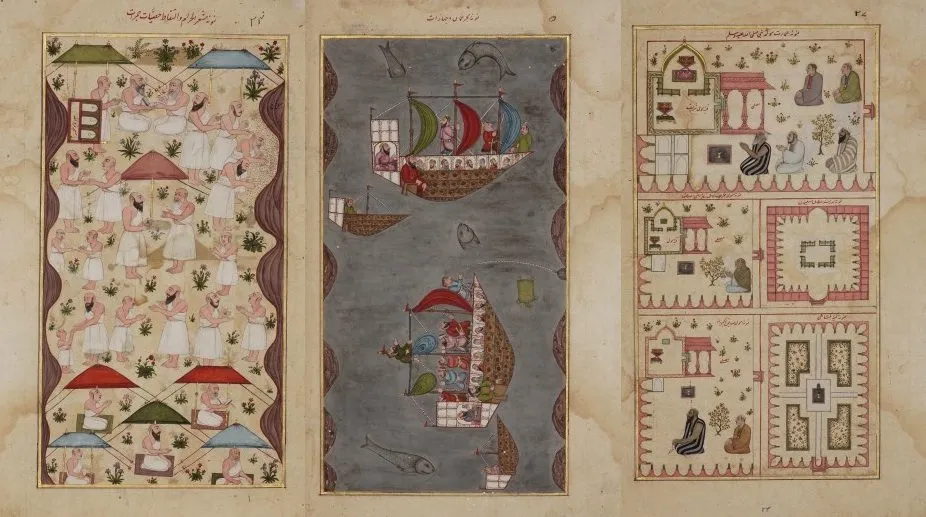
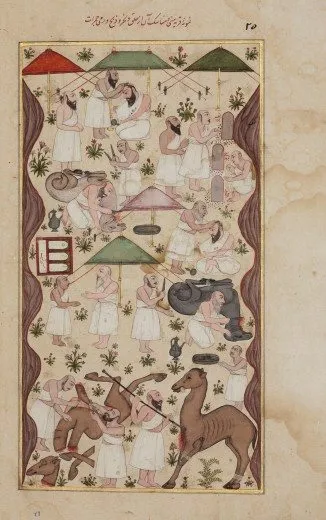
The Salamat Ras departed Surat in India on the 20th September 1676, carrying hundreds of pilgrims from Gujarat. On board was Safi ibn Vali; unlike the other pilgrims, his journey was sponsored by Zib al-Nisa, daughter of the Mughal emperor Aurangzeb (1658-1707). Along with completing his Hajj, Safi ibn Vali was given the task of creating a Hajj guidebook for future pilgrims. Presumably aimed at Indian pilgrims like himself, the ‘Anis al-Hujjaj’ (The Pilgrim’s Companion) contains advice regarding all aspects of the pilgrimage, including the journey to Jidda by sea.

His book is but one of many surviving pilgrimage guidebooks, from various parts of the Islamic world, forming a long-established tradition. They are typically accompanied by diagrammatic views of the holy sites, and Anis al-Hujjaj is no different in this respect. What sets it apart, however, is its use of colourful illustrations depicting various scenes of the pilgrimage, as well as the remarkable accuracy of its maps.

Safi ibn Vali’s Anis al-Hujjaj (‘Pilgrims’ Companion’), possibly Gujarat, India, circa 1677–80. Ink, gold and opaque watercolour on paper; modern leather binding. 3 separate folios show here side by side.  Nasser D. Khalili Collection of Islamic Art. Copyright Nour Foundation. Courtesy of the Khalili Family Trust.

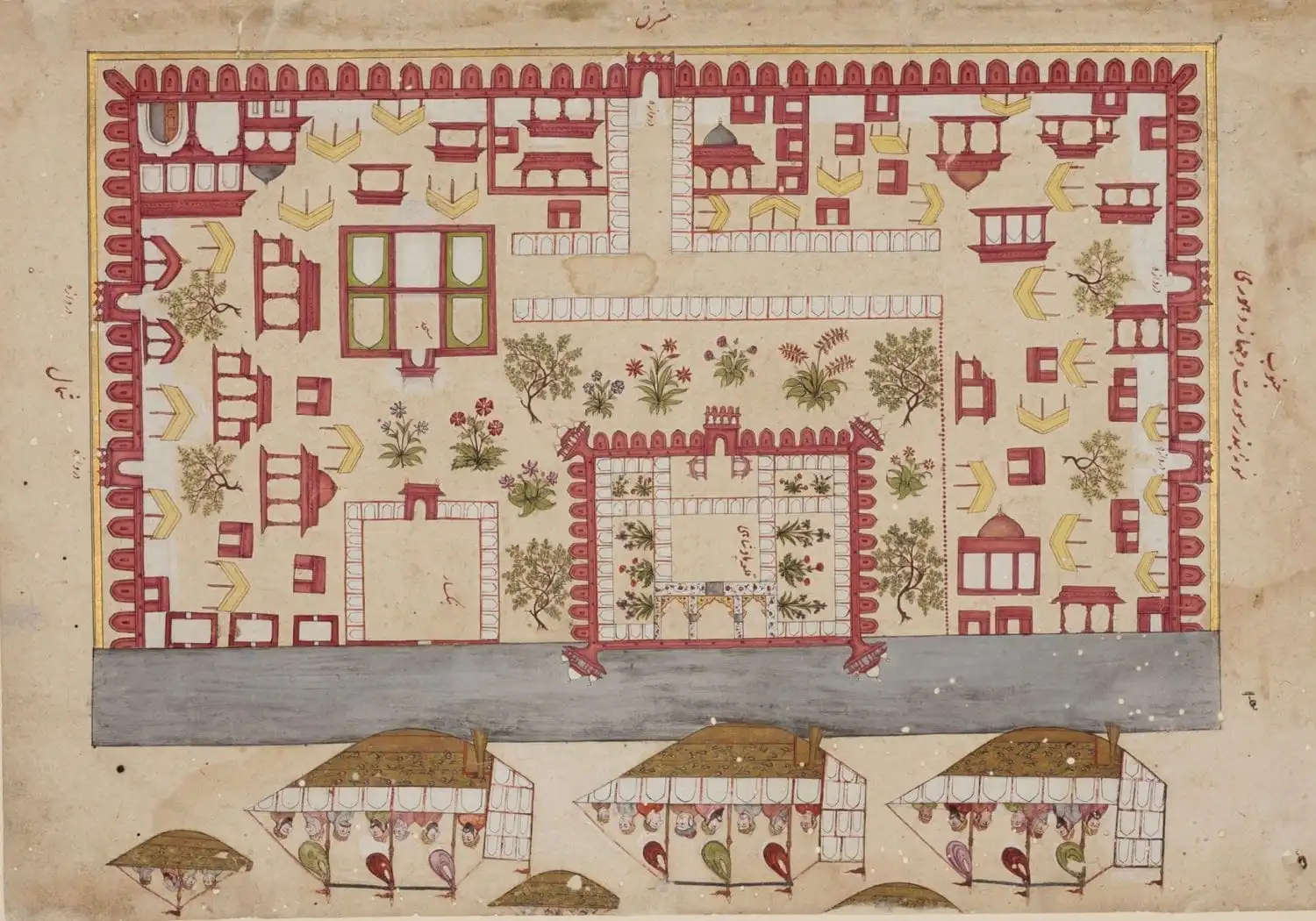
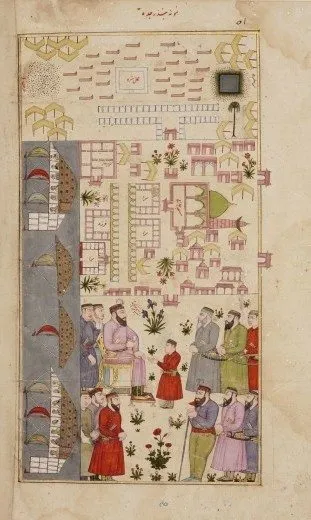
The illustration below is a map of Jidda. Jidda was a major port for pilgrims arriving for Hajj, and is thought to have been founded by Caliph Uthman in 647 AD. Safi ibn Vali, arriving at the port himself, maps major parts of the city. Archaeologist Dr Geoffrey King examined the map and found that the vast majority of places and landmarks depicted lie in the same position today.

Nasser D. Khalili Collection of Islamic Art. Copyright Nour Foundation. Courtesy of the Khalili Family Trust.

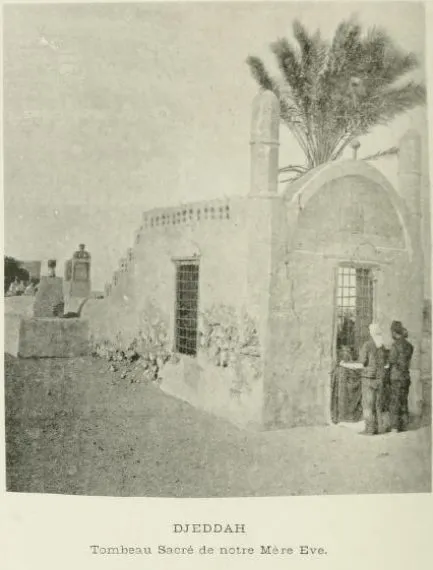
The upper section of the map depicts Hawa cemetery, thought to be the burial place of Eve, the mother of humanity. While the pink markers represent other graves, the black square indicates the head side of the resting place of Eve (peace be upon her), the white square her naval, and the gravelly area her feet. In Safi ibn Vali’s time, her grave, which is more than 100 feet in length, would have been marked by some sort of edifice. It is possible that the structure that can be seen in the image below, an illustration from 1894, or one similar to it, was what he saw two centuries earlier. The structure is no longer standing; it was destroyed in 1975 and covered with concrete by Saudi religious authorities.

Illustration of the Tomb of Eve in 1894, Jidda.

The middle section of Safi ibn Vali’s map shows the old city of Jidda. When examining the area, Dr King found that everything was accurately placed; a parade of shops and houses in the old city, as well as the surrounding roads, are all found in the same position today. There is however, one surprising discrepancy; an obvious landmark was mapped by Ibn Vali on the wrong side of the road. The green-domed Shafi’i mosque is shown in the Anis al-Hujjaj on the east side of the main street, whilst today it can be found on the west side; “This confuses me- was this main street in Jidda on a different alignment when the Anis al-Hujjaj was composed, or is it a simple error?” Given the remarkable accuracy of the map in every other way, King says this discrepancy is especially puzzling. The Shafi’i mosque is the oldest mosque site in Jidda; its floor is well below street-level, a fact that, according to Dr King, indicates that it predates the Shafi’i period. The oldest standing part of the mosque today is its Ayyubid minaret, dating back to the 13th century.

Nasser D. Khalili Collection of Islamic Art. Copyright Nour Foundation. Courtesy of the Khalili Family Trust.

Since there is no question over the identity of the mosque depicted by Safi ibn Vali, further research needs to be conducted to reach a clear conclusion over the discrepancy. In the foreground of the Jidda map, the governor of the city is shown welcoming pilgrims. There are numerous such illustrations in Safi ibn Vali’s book, depicting various scenes of the Hajj. On the folio below, pilgrims are shown on the day of Eid al-Adha. In the top right hand corner, pilgrims in ihram throw stones at the three pillars representing shaytan, while others have their heads shaved after completing the rites of the Hajj. In the foreground, animals are being slaughtered for the Eid sacrifice.

 Safi ibn Vali also made mention of various holy places to visit that are not part of the Hajj itself. The illustration below is a typical diagrammatic view found in the tradition of Hajj guidebooks. According to the captions, the building in the upper section marks the birthplace of the Prophet Muhammad (peace and blessings be upon him). In Ibn Vali’s time, the blessed area was marked by a small mosque with a courtyard and dome. Today a simple library building built in the 1950’s stands over the area. Depicted beneath the upper section are the birthplaces of Lady Fatima and Abu Bakr al-Siddiq (may God be pleased with them both) as well as the Madrassa of Sultan Sulayman and a Sufi lodge of the Bektashi order. The clothes worn by the visitors indicate their various nationalities.

Nasser D. Khalili Collection of Islamic Art. Copyright Nour Foundation. Courtesy of the Khalili Family Trust.

While Safi ibn Vali’s Anis al-Hujjaj is not unique in its function, the accuracy of its map of Jidda, and possibly others, such as Surat in India and Mocha in Yemen, which are also represented, is remarkable, setting it apart from other guidebooks of the same genre. Its colourful illustrations give the viewer a sense of the energy of the pilgrimage, as well as the diversity of the pilgrims represented. Given that many of the sites Ibn Vali illustrates no longer exist in the same form, his work takes on added historical importance, preserving a past all but lost to modernity.

Bibliography 

L. York Leach, Paintings from India, The Nasser D. Khalili Collection of Islamic Art, volume VIII, London 1998, cat.34, pp.124–9.

J.M. Rogers, The Arts of Islam. Masterpieces from the Khalili Collection, London 2010, cat.332–41, pp.284–7.

source: http://www.sacredfootsteps.com / SacredFootsteps.com / Home>Asia> Arabia> History / by Zara Choudhary

The Sufis of Kochi, South India

Kochi, KERALA :

The cultural fabric of Kochi has been elegantly woven by the beauty of Islam. Known as the ‘Princess of the Arabian Sea’, the city is a well known tourist hotspot and one of the most visited in all of Kerala, India, but the influence of Islam here, is still relatively understated, if not unknown.

Though Islam on the Malabar coast of Kerala has been widely studied and discussed, Kochi’s case is quite different. It is generally seen as a modernised city on the seashore, attracting tourists from all over the world, rather than known for its (much neglected) Islamic culture. As Mehardad Shokoohy observes, in India, there are few historic towns which have been remodelled and reconstructed as Kochi,1 which was rapidly modernised.

Still, the aesthetics of Islam though hidden under a veil, are definitely notable and worthy of discussion. Islam in Kochi is marked by its uniquely local character, and influenced by the Sufis who lived and enriched this once lively trading port, something which has sadly been left unattended. This article seeks to analyse the Islamic culture of Kochi through the traces left by the Sufis, and scholars of the city. Walking through the old wooden mosques of Kochi evokes a nostalgia for the tradition and splendor of Islam, and a time when sufis and saints wandered along these narrow streets and soft shores. 

Chembitta Masjid -the Copper Mosque

The streets of Kochi have been an abode for Jews, Christians and Muslims. Today, its population is thought to be made up of 42 diverse communities, a quarter of them Muslim. While the city is well known for its Jewish settlement, its rich Muslim heritage has so far remained in the shadows.2 Some have suggested that this could be due to the fact that unlike Calicut, another city of Islamic influence, Kochi was never a highly influential commercial area, and therefore its heritage remained somewhat hidden.3

Written accounts of Kochi have been recorded by many historians and voyagers. The renowned globe trotter Ibn Battuta mentions his journey to the city in his Rihla:

The journey from Calicut to Quilon (Kūlum) will take almost ten days to reach, whether on land or water. I preferred to travel on water and hired a Muslim to carry my belongings. It is common among those who travel on the water to come ashore in the dusks to the coastal villages and proceed with their trip the next morning, we did the same.  My servant was the only Muslim on the boat, but he drank toddy in every stop together with the infidels, muttering at me, making me even more depressed.  On the fifth day, we reached Kunji Karī which is situated above a hill and its population are the Jews who have their community leader, and who pay their tribute to the king of Quilon.

Chembitta Mosque

Chembitta Mosque, locally known as Chembitta Palli or the ‘Copper mosque’ is one of the best examples of Islamic heritage in Kochi. Termed as a ’monsoon mosque’, an architectural style specific to the Malabar coast, it is arguably Kochi’s most prominent. It is sometimes referred to as Shafi’i Jami, or the Shafi’i Mosque.

Inner hall of Chembitta Masjid

The building has a wooden structure and a prayer hall with a colonnaded entrance porch on its eastern side. The outer walls are constructed of stone and the doors have been adorned with Hadith inscriptions in Arabic and old Tamil that refer to the etiquettes related to visiting a masjid. These inscriptions date back to 926AH/1519AD. 

Inscriptions inside Chembitta Masjid

As with every monsoon mosque, it is designed in a way to block out sunlight. A silent theology underlies this form of architecture: that in the darkness, free from distraction, a greater sense of khushu (humility and tranquility) and taqwa (God consciousness) emanates in the heart. This can be also read in accordance with the Islamic practice of khalwa (seclusion).

Mihrab and minbar inside Chembitta Masjid

The decorated mihrab is particularly stunning.

The Sufis and the Making of a Muslim Kochi

Around the masjid complex, you will encounter the shrines of a number of Sufi figures who are credited not only with establishing the masjid, but also a vibrant Muslim community. Syed Ismail Bukhari and his son Syed Fakhruddin Bukhari helped make Muslim Kochi prosperous, as exemplars in their faith and teachings. Their shrine is located near the masjid and is often visited locally. The building includes an anti-chamber leading to two interconnected burial chambers, each containing the resting places of these two individuals. The shrine itself is a small, simple but elegant structure designed in the local style with stone walls and a wooden roof covered with terracotta tiles. 

Shaykh Ismail Bukhari was the only son of Syed Ahmed Jalaluddin Bukhari, the first Bukhari Syed (descendant of the Prophet Muhammad ﷺ through the saint Jalaluddin “Surkh-Posh” Bukhari from Bukhara in modern day Uzbekistan), who came to Kerala, in 928AH/1521AD. After his studies, Syed Ismail travelled from his hometown Valapattanam, in north Kerala to Kochi, where few Musilms resided at the time. He was a learned scholar who propagated Islam in the city. His three sons, Syed Ahmed Bukhari, Syed Muhammed Bukhari, and Syed Ba Fakhruddin Bukhari were also great scholars and Sufis who contributed to the making of Muslim Kochi. The Saadat (pl. of Syed) genealogy in Kerala begins with Syed Fakhruddin.

View of a graveyard as seen from the upper floor of Chembitta Masjid

Shaykh Makhdum is another scholar considered among the architects of Muslim Kochi. Shaykh Zainuddīn al-Makhdūm Al Ma’bari (1465- 1522) was originally from Yemen and came first to Nagore in Tamil Nadu in the early fifteenth century.  Later, he moved to Kochi and established himself as a teacher and spiritual leader in the region, playing a significant role in the conversion of the local people to Islam. Zainuddīn Al Makhdūm is also said to be the founder of the original Jami’ (mosque) which once stood on the site of the present Chembittapalli, and was a historian, writing the first account of Portuguese colonialism on the Malabar coast.

Zainuddīn al-Makhdūm had two sons, Ibrāhīm and Alī. After his death, he was buried in Kochi, and while his son ‘Alī remained in Kochi as the Qadi (religious judge) of the town, Ibrāhīm moved to Pannauni to be the Qadi there.4 Syed Ba Fakhruddin was the spiritual guide (murshid/murabbi) of Shaykh Zainuddin Makhdum.

The mureed-murabbi (mentor and disciple / teacher and student) nexus is one of the keystones of Keralite Islam, and Kochi is where the seeds were sprouted. The Pannauni, for example, one of the earliest Muslim settlements in south India, known popularly as the Mecca of Malabar, was considered a centre of learning in the region where students would travel to study under scholars of the Makhdum family. The roots of this scholarly family can of course, be traced back to Shaykh Makhdum of Kochi.

Resting place of Bukhari Sadat of Kochi

Apart from the Bukhari Saadat of Kochi, there are other Syed families (Qabila) associated with the city, such as Aidarus, Jamalullail, Ba Faqih, and Jilani.  Syed Abdurahman al-Aidarus, locally known as Bamb Thangal is considered one of Kochi’s great Sufis.  His resting place is a beautiful small old mosque called Thakya.

All of this points towards the integral position Kochi occupies in the cultural and historical making of Keralite and south Indian history in particular. Since the Malabar coasts of this period were cosmopolitan,5 attracting both traders and scholars from Africa, Europe and the Middle East alike, it is imperative that Kochi should be noted as significant within global Islamic history also.

A local man told me, “These Sufis, who made Kochi a beautiful and remarkable land, must be remembered and regarded as the founders of the city.” They were the architects of this city. Just as Usman Dan Fodio in West Africa, Moinuddin Chishti in Hindustan and Yunus Emre in Anatolia transformed their lands into centres of scholarship and sufism, so too did the Sufis of Kochi. Their influence is still visible – you just have to lift the veil a little in this aesthetically mesmerising city.

Footnotes

1 Shokoohy, Mehrdad. “The Town of Cochin and Its Muslim Heritage on the Malabar Coast, South India.” Journal of the Royal Asiatic Society, vol. 8, no. 3, 1998, pp. 351–94. JSTOR, http://www.jstor.org/stable/25183570. Accessed 5 Sep. 2022.

Ibid.

3 Ibid.

Shokoohy, Mehrdad, 1998.

5 Pearson, MN and Mahmūd Kūria, Malabar in the Indian Ocean : Cosmopolitanism in a Maritime Historical Region (Oxford University Press, First edition., 2018)

Bibliography

  • Alavi, AP. “Maqdums of Ponnani: The Pioneers of Islamic Higher Education Systems in Medieval Kerala.” In Kanpur Historiographers 7 (2). 73-86.
  • Ali, Akbar. “Makhdum II – a great Islamic scholar lost in history.” Accessed on 20 May 2022. https://www.arabnews.com/islam-perspective/makhdum-ii-%E2%80%93-great- islamic-scholar-lost-history
  • Aslam, Muhammed E.S. 2013. Caste, Conversion and Collective Resistance: Understanding Religious Conversion to Islam in South Malabar 1850–1930. Unpublished MPhil Dissertation. New Delhi: Jawaharlal Nehru University.
  • Babu, Anitha. 2019. “Busting myths, setting trends: A mosque that houses an art gallery in Kerala.” In The Week, January 26, 2019.
  • Chakraborty, Debashree. “Fort Kochi: the crowned queen of Arabian Sea.” Best tourist places in Kerala. Accessed May 10, 2022. https://www.indianholiday.com/blog/tourist- places-kerala/
  • Fels, Patricia Tusa. 2011. Mosques of Cochin. Mumbai: Grantha Corporation.
  • Fels, Patricia Tusa. 2020. Monsoon Mosques: Arrival of Islam and the Development of a Mosque Vernacular. Ahmedabad: Mapin Publishing.
  • Friedmann, Y. 1975. “Qissat Shakarwati Farmad: A tradition concerning the introduction of Islam to Malabar.” Israel Oriental Studies V, edited by M. J. Kister. 233-258. New York & London: Routledge.
  • Helminsky, Kabir. 1989. Yunus Emre: An Introduction. Accessed on 21 May 2022. http://www.polpero.ca/com/spirit/Yunus-TheDrop/intro.xhtml.
  • Hudawy, C. P Basith, “Syed Ahmed Jalaluddin: Keralathile Bukhari Paramparayude Vamsha Nathan.” Kerala Islamic Heritage Library, accessed May 11, 2022. http://www.islaminkerala.in/2020/08/blog-post_8.html?m=1
  • Ibnu Battutta, Muhammed. 1987. Riḥlat Ibnu Battutta (Tuḥfat An-Nuẓẓar Fī Ġaraibi Al Amṣāri Wa Ajāibi al Asfār). Beirut: Dar Ihya al Fikr.
  • KK, Abuthahir. 2021. The Impact of Sufi Ethics on Keralite Culture; an analysis of Mystical lives in Malabar. Unpublished research paper.
  • Krishnadas, N V. 2020. Chronicles of Naina community and how they became part of Kochi. Accessed on May 19, 2022. https://www.onmanorama.com/travel/kerala/2020/01/22/naina-community-history- fort-kochi-mattancherry.html
  • Kunjhali V. 2004. Sufism in Kerala. Calicut: Publication Division, University of Calicut.
  • Logan, William. 1887. Malabar Manual volume 1. Madras: Government of Madras.
  • Mahmūd Kūria, and M. N. Pearson. 2018. Malabar in the Indian Ocean: cosmopolitanism in a maritime historical region. New Delhi: Oxford University Press India.
  • Miller, Roland E, 2016. Mappila Muslim Culture: How a Historic Muslim Community in India Has Blended Tradition and Modernity. New York: SUNY Press.
  • Nellikkuth, Muhammedali Musliyar. 1972. Malayalathile Maharadanmar. Manjeri: Nellikkuth Bookstall.
  • Pilakkal, Abdul Baswir Saquafi, 2021. Balsam Aḍ-ḍamīr Madḥ Khwaja Ajmīr. Manjeri: Dar Nashrat Al Tayba.
  • Prange, Sebastion R. 2018. Monsoon Islam: Trade and Faith on the Medieval Malabar Coast. Cambridge: Cambridge University Press.
  • Rosa, Fernando. 2015. The Malabar Coast (Kerala) and Cosmopolitanism.” In The Portuguese in the Creole Indian Ocean. 57-87.
  • Shokoohy, Mehrdad. 1998. “The Town of Cochin and Its Muslim Heritage on the Malabar Coast, South India.” Journal of the Royal Asiatic Society, Third Series 8 (3): 351–94.
  • Shokoohy, Mehrdad. 2013. Muslim architecture of South India: The sultanate of Ma’bar and the traditions of the maritime settlers on the Malabar and Coromandel coasts (Tamil Nadu, Kerala and Goa). London: Routledge.
  • Thadathil, Hashim. 2020. “Constructing Authenticity in Discourse(s): Debates among the Mappila Muslims of Malabar, South India.” Asian Journal of Social Science 48, no.5-6: 449-467. DOI:https://doi.org/10.1163/15685314-04805007
  • Twahir, Muhammed A. 2020. “Osman Dan Fodio: Sokoto Samrajyathinte Athulya Shilpi.” In Rushd Malayalam Magazine. May 2020. https://www.rushd.in/usman-dan-fodio-the- founder-of-sokoto-empire/

______________________________________________

Muhammad A Twahir

Muhammed A. Twahir is from Kerala, South India and is a graduate of Jamia Markaz in Calicut. He authored a biography of Syed Fazl Pasha in Malayalam as a part of ‘Makers of Islam in Malabar’ book series published by Malaibar Press, India. He is currently pursuing his masters in Sociology at Ibn Haldun University, Istanbul. He can be reached at @el.malaybari on Instagram.

_______________________________________________

source: http://www.sacredfootsteps.com / SacredFootsteps.com / Home>History / by Muhammad H Twahir

Syed Fâzil Pasha: A Legacy Across Continents

KERALA / TURKEY :

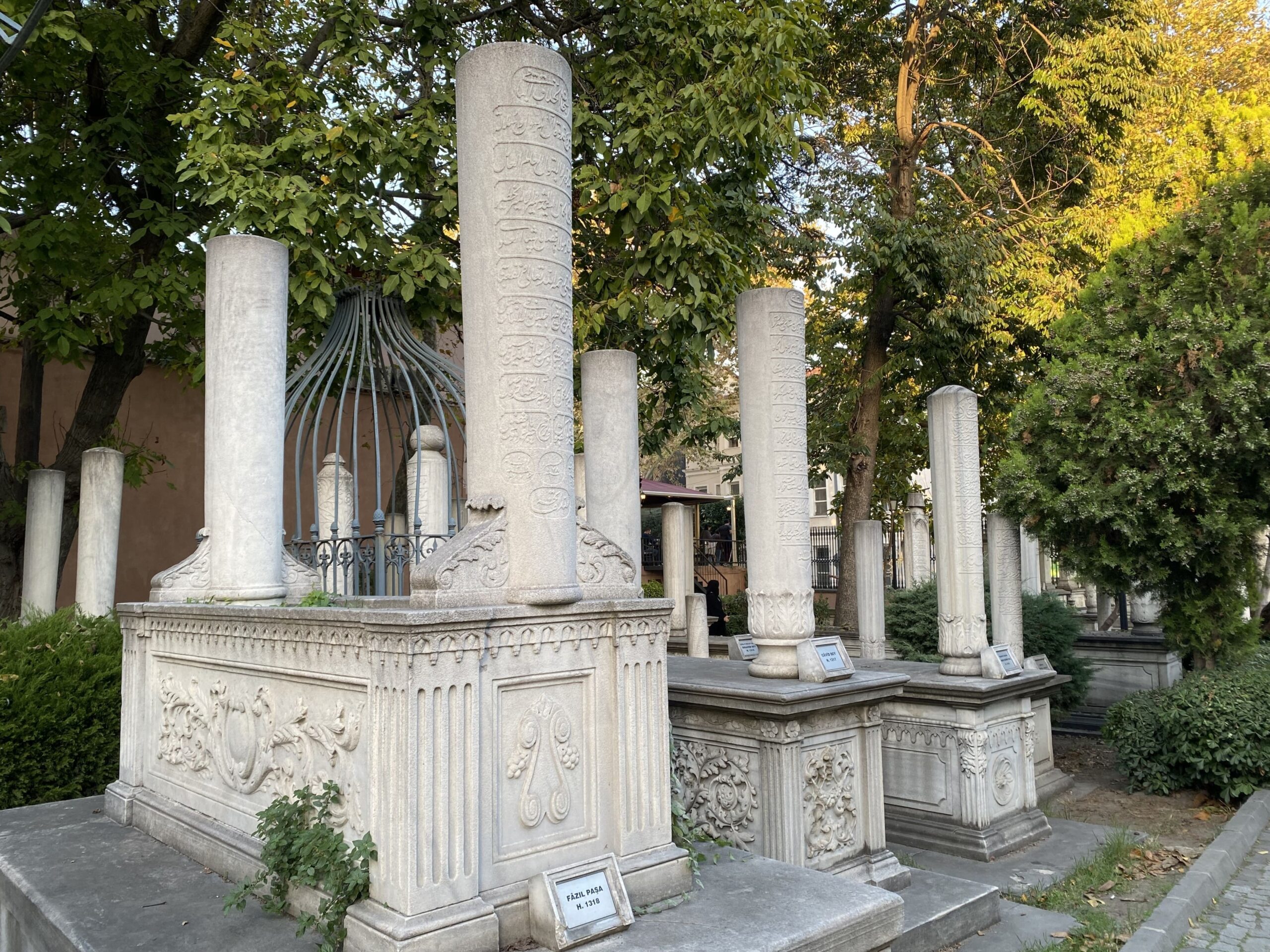
If we take a 400 metre walk from the bustling Sultan Ahmed tram station – the gateway to the two great historical and widely-visited tourist attractions, Aya Sophia and the Blue Mosque – we encounter a small but serene mausoleum complex on the left– Sultan Mahmud Han Turbesi. Unless visitors pass this royal cemetery to get to the cafe on the other side, it is a calm and quiet neighbourhood corner. Nestled in this tranquil corner of the mausoleum lies a grave with a headstone inscribed with the name Fâzil Pasha (1318), a testament to transoceanic Sufi sagas and the magnificent history of the Ottomans. 

Fâzil Pasha’s headstone

Why is this ordinary-looking grave even noteworthy in an area already replete with so much history? The story that answers this question begins in Malabār, my homeland, a coastal region in south India’s Kerala state. 

In the year 1824 AD, Fâzil Pasha was born in the remote yet historically significant  village of Mamburam in Malabār. He was the only son of the great Sūfi scholar who made substantial contributions to the shaping and nurturing of south Indian Islam– Syed ‘Alawy al Mauladdawīla of Mamburam. As an integral part of the everyday lives of the people of Malabār, he was fondly referred to as Mambuaram Thangal.1 He was also respectfully titled Qutub al-Zamān – Pole Saint of the Time.2  Mamburam Thangal was also a shaykh (spiritual mentor) to many of the ‘Ulemā and Sūfis of the time. Following the footsteps of his Bā ‘alawy3 forefathers, he built masjids, invited people to Islam, fought colonisers, wrote many scholarly treatises and poems, and propagated the tariqa (Sufi order) on the coast. He lived a fruitful life, and his teachings still endure in the hearts of south Indian Muslims.

Fâzil Pasha

Educated by his Sūfi father in the foundational Islamic sciences and the ways of the Qadiriyya tariqa, Fâzil Pasha embarked on a quest for knowledge in Yemen and Mecca. It has been said that he set out to these lands at the age of 20 after his father’s death. He had also gained ilm (knowledge) and tarbiyah (spiritual nurturing) from several local and global ulama including Parappanangadi Avukkoya Musliyar (d.1292 AH),4 Shaykh Abdullah Bin Omer (d.1265 AH),5 and Shaykh Abdellah bin Husain Bin Tahir (d.1282 AH)6 of Yemen. Life in Mecca offered more than knowledge to Syed Fazl Pasha; he married one of Shaykh Shafi’i al Habashi’s daughters and started a family there.7 He also had the good fortune to be a disciple of Shaykh Ahmed Zaini Dahlān, one of the great Sunni scholars of the late modern period who wrote over a hundred books, including his magnum opus Al Fitnat al Wahhābiyya– the book that traced the historical and political routes of the Wahhābi movement. 

In 1848, Fâzil Pasha returned to Malabār to continue the legacy of his Sufi father. The people of Malabār accepted and revered him in the same way they did Mamburam Thangal. Fâzil Pasha soon attained the religious, spiritual, and political leadership of not only the Muslims, but a vast populace that included Hindus and others. He disputed the caste practices and advised working-class people (Kudiyāns) to pay no respect to the landlords (Janmis)8 and not to eat their leftovers.9 Fâzil Pasha showed no hesitation in inviting them into his own home for a meal. His work and teachings led to the conversion of many Hindus to Islam, and he soon earned the ire of British officials and Janmis. Concurrently, he spearheaded religious and spiritual endeavours such as constructing masjids, establishing Sufi hadras (religious gatherings), disseminating ideals of the Qādiriyya tarīqa, and writing books in various Islamic sciences.

The shrine of Mamburam Syed Alawy Thangal

Just as his father’s presence in Malabār had “stirred the problem”,10 so too did Fâzil Pasha‘s – as was observed by British officials. Anti-colonial resistance seemed often to begin with a visit or ziyarat to Mamburam Thanga‘s grave, and his son did not shy away from speaking out against the cruelties inflicted on the local populace by colonial officers.

Records found in British Indian archives document several attempts by the colonial British authorities to exile or arrest Fâzil Pasha, but his wide popularity prevented the government from doing so. Fâzil Pasha’s influence prompted greater fear and anxiety in British officials than even his father, due to his stronger connections with the Muslim world and its leaders outside India. Britain made several unsuccessful attempts to persuade Fâzil Pasha to leave Malabār and settle in Arabia to ease the civil unrest they were facing. By now, thousands of anti-colonial freedom fighters had been killed in the protests, and after thorough consideration, Fâzil Pasha decided to heed the calls of the authorities and leave for Arabia. This exile in 1852 was a turning point in Fâzil Pasha’s life, marking his transition from a regional leader to one with global impact.

The cover page of Correspondence of Moplah Outrages in Malabar

In Arabia, his influence continued to burgeon. After spending some months in Mecca, he travelled to Egypt where he was welcomed by Hidive Abbās Pasha, the Ottoman official in command of the region at the time. He stayed in Cairo for some time and published Uddat al umarāi wal hukkām (Equipping the Leaders and Rulers) before departing for Istanbul, despite Hidive’s insistence for him to stay in Egypt.  

In Istanbul, Fâzil Pasha met Sultan Abdul Mecid (d.1861), with whom he discussed the existing challenges and threats faced by the Muslim world.11 After returning to Mecca, several years later, Fâzil Pasha visited Istanbul again, during the reign of Sultan Abdul Aziz Han (d.1876), informing the new sultan of developments in the Hejaz. The renowned author and Ottoman governor of Lebanon, Emir Shakib Arslan, also mentioned his meeting with Fâzil Pasha in his magnum opus Hadiru al ‘alam al Islami

Fâzil Pasha in Ottoman uniform

In 1876, in the era of Sultan Murad Effendi, the Ottoman government assigned Fâzil Pasha as the governor of the Dhofar region in Oman, where many Ba ‘alawi ancestors were buried. Fâzil Pasha was distressed by some of the un-Islamic practices he saw there, and raised his concerns to the Ottoman sultan. He focused on restoring Islamic tradition in the region, and the implementation of Zakat. He also prohibited sihr (black magic) and detained those who practiced it.

Fâzil Pasha also worked hard to improve Dhofar’s economy by importing and exporting goods throughout the Indian Ocean. He even attempted to negotiate trade with the British in colonial India;12 though unsuccessful in this, his endeavours managed to improve the economic situation in the region.

It is noteworthy that the revival of Dhofar, a land that had once flourished with the presence of the Bā ‘Alawis, was entrusted to another from among their lineage, though from a different land, centuries later.

Fâzil Pasha’s seal

After years of successful rule, Fâzil Pasha was finally forced to leave Dhofar due to political conflict. In 1880, he returned once again to Istanbul, where he was warmly welcomed by Sultan Abdul Hamid II. The sultan appointed him to his cabinet, and Syed Fâzil officially became a pasha, entrusted the duties of the finance department and becoming the first Indian assigned as a pasha in the Ottoman caliphate.13 Sultan Abdul Hamid made good use of Fâzil Pasha’s knowledge of southern Arabia, and the Pasha helped him accomplish a great deal, playing a vital role in the Sultan’s master project, the Hamidiye Hejaz Railway. Fâzil Pasha and his wife were among its first passengers14

Five of  Fâzil Pasha’s nineteen works were published during his time in Istanbul.15 Ottoman historian Tufan Buzpinar states that a copy of all of his works were preserved at the Yildiz Palace and later moved to Istanbul University.  

Fâzil Pasha continued in his role as pasha until his death in 1900. His death was marked as a huge loss by Turkish newspapers16 and his funeral was attended by many high-ranking Ottoman officials and ministers with Sultan Abdul Hamid Han. The names of these dignitaries have been listed in many works, including Misbāh-ul Fuād by Kānjirāla Kunjirāyin Kutty, one of Malabār’s most famous poets and scholars. 

Fâzil Pasha’s journey unfolds like a tapestry woven across continents. He was an anti-colonial freedom fighter and social reformer, as well as a seeker and provider of sacred knowledge for 19th-century scholars and students of Mecca. Earning many different titles throughout his life, he was also recognised as an emir who restored Dhofar to its historical legacy. Additionally, he held the esteemed position as a minister for Sultan Abdul Hamid II, earning a title by which he is remembered to this very day.

Fâzil Pasha was laid to rest at the Sultan Mahmud mausoleum compound, after an incredible life journey that took him from the shores of Malabār all the way to Istanbul’s imperial chambers. His tombstone serves as a source of reflection and contemplation for people around the world, but especially for Malabāris such as myself.

Edited by Leila Khansa

Footnotes

  1. Thangal is a term of respect used for the Syeds, individuals with prophetic lineage, in Malayalam language. ↩︎
  2. There is a belief among traditional Muslims that Allah will choose one of His Awliyā (saints) as a leader for the saints of the era. This revered figure is known as the Qutb↩︎
  3. Ba Alawiyyah is a Sufi Tariqa founded by Shaykh Faqih al Muqaddam(d.1255) in early 13th century in Tarim, Yemen. Shaykh al Muqaddam was a student of Shaykh Abu Madyan Ghawth al Tunisi(d.1198) who was a direct disciple of the famous Sufi Shaykh Abdel Qader al Jilani(d.1166) Hence, the Ba Alawiyyah tariqa is also regarded as a sub-branch of Qadiriyya tariqa. ↩︎
  4.  Avukkoya Musliyar aka Abu Bakr Koya Musliyar is a Malabari scholar who travelled across Muslim lands and made connections with many of the ulema of the time including, Ibrahim al Bajuri, Abdul Hamid al Sharwani, Rahmatullah Qiranwi, and others. It was his habit to write poems on scholars he met and some of them are preserved in Malabar. He also authored a number of books in Arabic. ↩︎
  5.  Shaykh Abdullah was a famous Yemeni scholar who also served as the mufti of Yemen. He visited Kerala in the era of Mamburam Thangal. While there, he taught Imam Ibn al Hajr al Haytami’s (d.1566) Tuhfat al Muhtaj bi Sharh al Minhaj to Keralite scholars including Fâzil Pasha. ↩︎
  6. Shaykh bin Husain bin Tahir was a Yemeni scholar who wrote extensively on both fiqh and tasawuf↩︎
  7. Shaykh al Habashi was a scholar who lived in Mecca where he taught classical Islamic texts. ↩︎
  8.  Janmi is the term referred to the landlords who belonged to elite castes such as Brahimns and Nairs. They owned the land as a birth right where people from backward castes had to work for little or no wage. Workers from lower castes were called ‘Kudiyan.’ ↩︎
  9. In the caste system, the Kudiyans could only eat the left overs of the upper castes. ↩︎
  10. A term used in British archives in reference to Fâzil  Pasha and his father Mamburam Thangal. ↩︎
  11. Maluavi, Ahmed & Abdulkareem CK, Mahathaya Mappila Sahitya Parambaryam. Calicut: Azad Bookstall, 1978. ↩︎
  12. Alawy, Seema, Muslim Cosmopolitanism in the Age of Empire. Harvard: Harvard University Press, 2015. ↩︎
  13. Jackob, Wilson Chacko, ”Of Angels and Men: Syed Fazl and Two Moments of Sovereignty”, The Arab Studies Journal 20/1, 2012. ↩︎
  14. Musafir, “Hejaz railwaykku pachakkodi kaattiya Mamburam Thangal”. ↩︎
  15. Buzpinar, Tufan, “Abdul Hamid II and Syed Fadl Pasha of Hadarmaut: An Arab Dignitary’s Ambitions 1876-1900”. The Journal of Ottoman Studies, 1993. ↩︎
  16. Maluavi, Ahmed & Abdulkareem CK, 1978. ↩︎

______________________________________________________________

Muhammad A Twahir

Muhammed A. Twahir is from Kerala, South India and is a graduate of Jamia Markaz in Calicut. He authored a biography of Syed Fazl Pasha in Malayalam as a part of ‘Makers of Islam in Malabar’ book series published by Malaibar Press, India. He is currently pursuing his masters in Sociology at Ibn Haldun University, Istanbul. He can be reached at @el.malaybari on Instagram.

___________________________________________________________

source: http://www.sacredfootsteps.com / SacredFootsteps.com / Home>History / by Muhammad H Twahir / edited by Leila Khansa

Bengal to Barbados: Sabir Nakhuda’s quest to unveil the untold story of Indian migration on the Caribbean island nation

INDIA / BARBADOS :

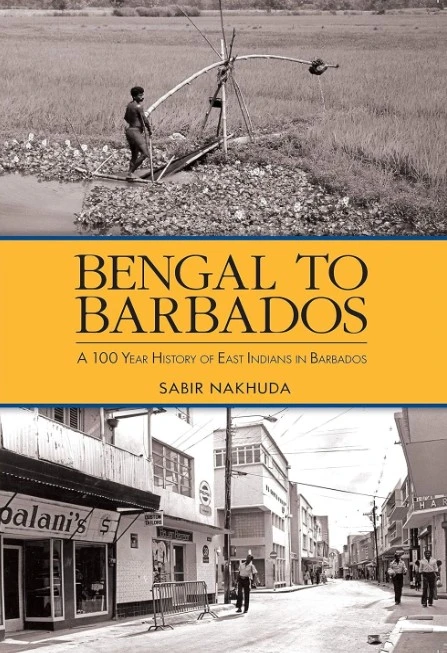
Nestled in the southeastern Caribbean Sea, Barbados is an island country in the Lesser Antilles of the West Indies, next to North America. It’s one of the more populous and prosperous Caribbean islands. The story of Indian migration to Barbados began around 1910 with Bashart Ali Dewan from West Bengal, the first documented migrant from India to the island. Intrigued by this historical narrative, Indian-origin Sabir Nakhuda, a former journalist and author who grew up in Barbados, dedicated 15 years to researching and crafting his book – Bengal to Barbados: A 100 Year History of East Indians in Barbados. “It is a labour of love and a crucial mission to preserve the history of a community whose story needed to be told,” he remarks while connecting with Global Indian.

This year Sabir Nakhuda co-founded the Bengal to Barbados Foundation Inc. and Bengal to Barbados Digital Project with his friend Suleiman Bulbulia to highlight the distinctness and impact of East Indian-Bajan identity. The digital project, which is being co-curated by the Barbados Museum and Historical Society, weaves together migration stories from Bengal, Gujarat, Sindh, and South India with themes of cultural integration, heritage, and intergenerational experiences.

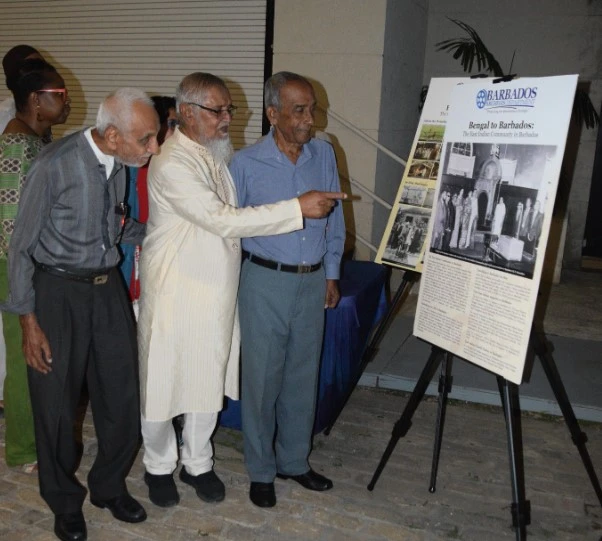
Sabir Nakhuda (centre) with Indian-origin people during the launch of Bengal to Barbados Foundation and digital project

Quest to revive Indian legacy in Barbados

In 1953 author Sabir Nakhuda’s father travelled from the village of Tadkeshwar in the Surat district of Gujarat to the distant Caribbean Island of Barbados for work. He was one of those Indian migrants from the region who were seeking better opportunities far from home. Five years later, in 1958, when Sabir was just ten years old, his father sent for him to join him in this new land. His mother and younger brother followed them in 1960, and the place became their new home.

“Growing up in Barbados, I navigated a unique cultural landscape, balancing my Indian roots with my new life in the Caribbean. I completed my primary and secondary education on the island, and later, pursued higher education in Canada. Fluent in Gujarati, Hindi, and Urdu, I always maintained a strong connection with my heritage, even as I adapted to my new environment,” Sabir tells.

It wasn’t until he began working at The Barbados Advocate, one of the oldest newspapers on the island, that he realised how little was known about the East Indian community in Barbados. He came across a few interviews from the 1950s with two elders from their community, which touched on their arrival in Barbados. But it quickly became apparent that there was so much more to uncover. “There were no documented records or any other accounts of our community’s history on the island. This realisation sparked a determination in me to dig deeper and document our story,” he remarks.

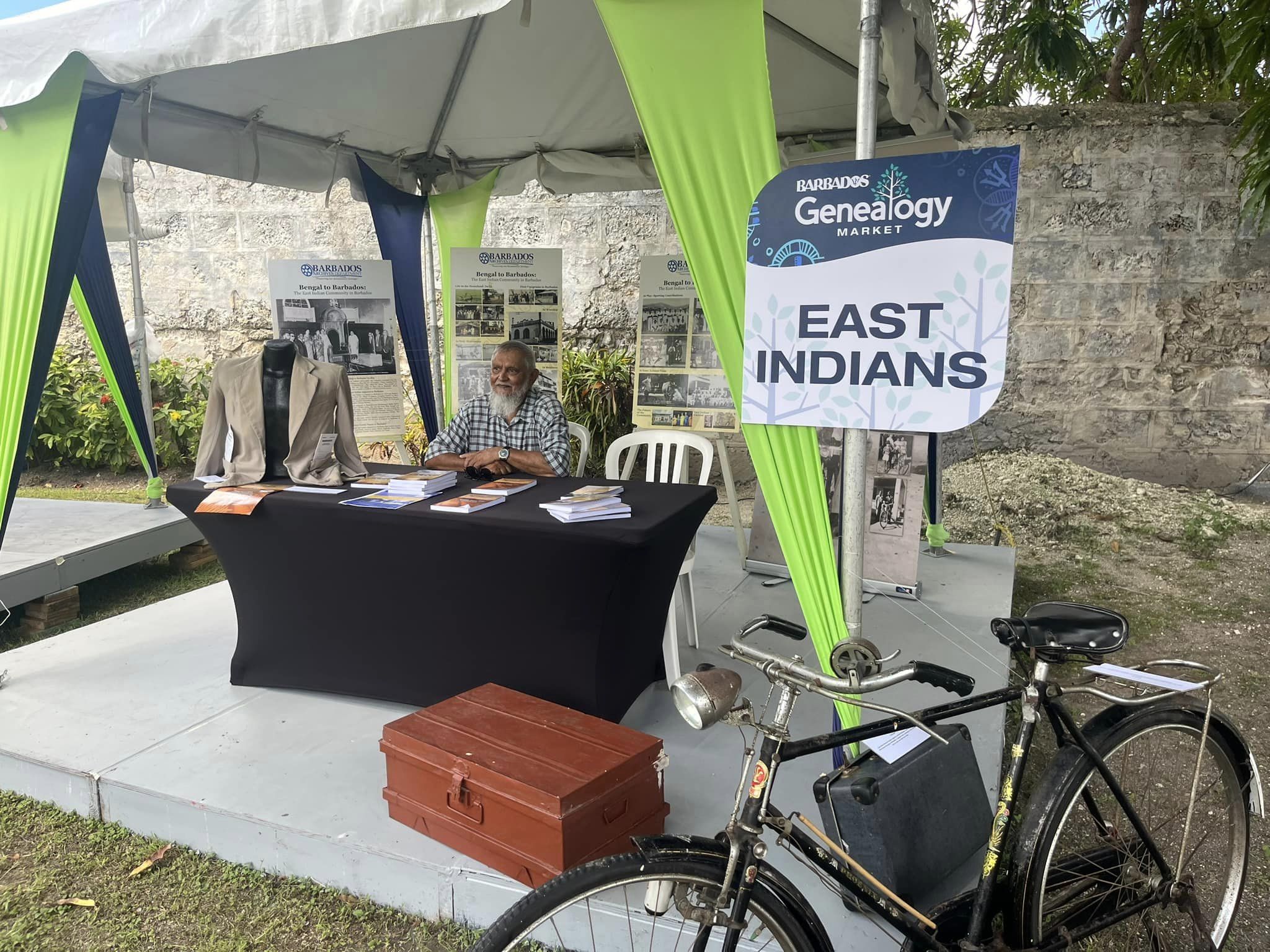
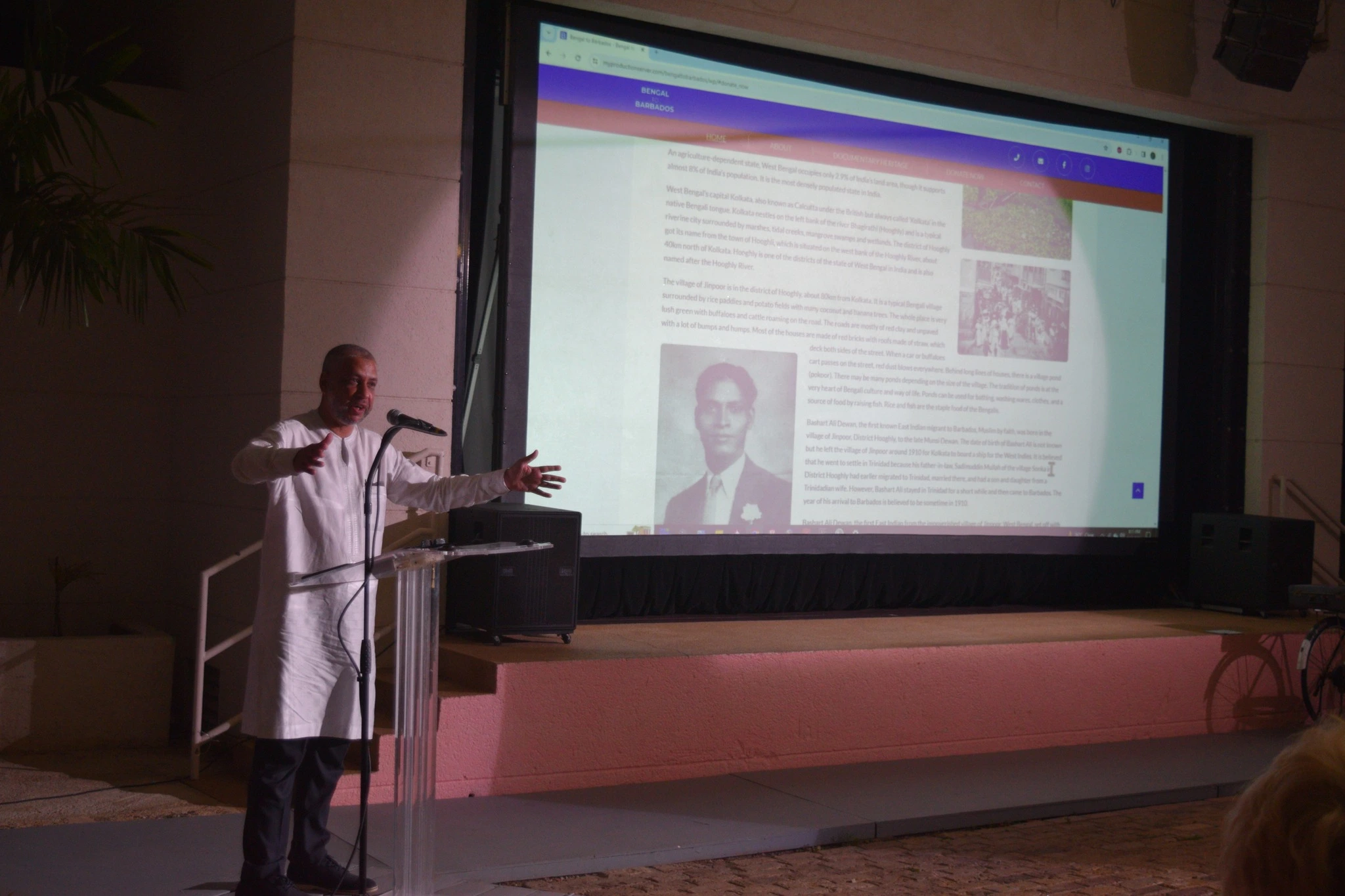
Sabir Nakhuda at the 2024 Genealogy Market, Barbados

With no written records to rely on, Sabir turned to oral history, visiting and interviewing various members of both the Barbadian and East Indian communities. He collected documents, photographs, and artefacts, piecing together the fragmented history of this often-overlooked group.

During my research, a particularly significant moment came when a family of early Bengali migrants shared an airmail letter with me. The sender’s address on the back of that letter led me to India, where I was determined to trace the roots of the first migrant who came to Barbados.

Sabir Nakhuda shares

In 1999, Sabir took a trip to India with a purpose – to find the first migrant from India who landed in Barbados. It was a journey that took him to the village of Jinpoor, where he found the descendants of the first migrant – Bashart Ali Dewan. It took him about two weeks to find the village of the first migrant.

“I interviewed his sons, other family members, and villagers, documenting their stories through pictures, videos, and recorded interviews. Often, my Bengali friends helped translate, ensuring that the rich history of these families was accurately captured. These recordings, now preserved in my hard drive, form a crucial part of the historical record I have worked to create,” he says. 

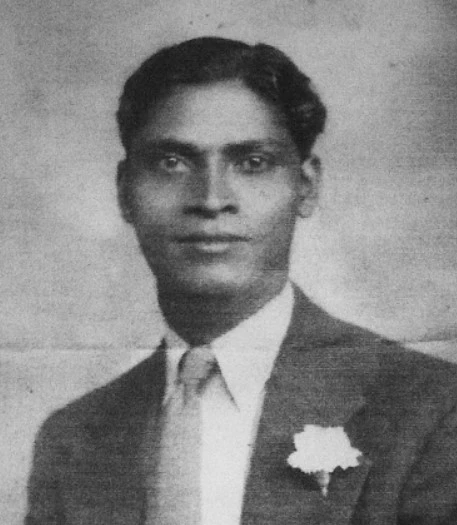
Bashart Ali Dewan – first Indian migrant to Barbados | Photo Courtesy : Bengal to Barbados Foundation Inc

Keeping heritage and connections alive

Along with his research, Sabir Nakhuda has also collected various Indian artefacts, including old bicycles, jackets, relics, and photographs. These items, along with the history of the East Indian community, have been displayed in genealogy and archive exhibitions in collaboration with the Barbados Archives Department, where Sabir has been a contributor for many years.

“I also give lectures on the arrival of East Indians and their contributions to nation-building in Barbados, ensuring that our story is told and remembered,” tells Sabir who is enjoying an active retired life.

Due to his research that lasted 15 years, the author and former journalist has developed strong connections with the families of other Bengali migrants across various villages in West Bengal. “Although I am a Gujarati and not related to Bashart Ali and his family, I visit them and family members of other migrants spread across various villages in Bengal, whenever I travel to India.” he mentions.

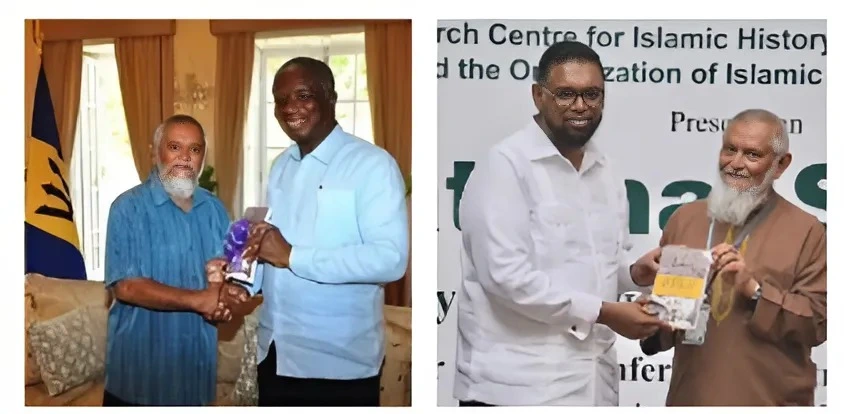
Sabir Nakhuda presented his book to Barbados PM Freundel Stuart in 2013 and President of Guyana, Mohammed Irfan Ali in 2023

Sabir Nakhuda has been to many parts of India dozens of times, and makes a point to visit his own uncles, aunts and extended family members in India, whenever possible.

One of my most cherished experiences was being invited to speak at the Visva-Bharati University at Shantiniketan in West Bengal in 2019, where I discussed the Indian diaspora in the Caribbean. I was elated to visit the place built by Rabindranath Tagore, as he is one of my favourite poets.

Sabir Nakhuda shares

In addition to his historical work, Sabir Nakhuda also writes poetry in English, Gujarati, and Urdu, and has continued his oral research, currently focusing on a book on the migration of Muslims from India to Barbados. “This upcoming work will detail the names of the villages from which Muslims have migrated, the history and pictures of these villages, and a chronology of every individual who came to Barbados from 1910 to 2023,” he says.

Creating legacy for future generations 

The year 2016 was eventful both for Barbados as a nation and for Sabir Nakhuda as an author. It was the year when the nation celebrated 50 years of its independence. The same year, while attending the Commonwealth Prime Ministers meeting, Barbados’s PM Freundel Stuart presented Nakhuda’s book Bengal to Barbados to India’s PM, Modi. “PM Stuart later told me that he discussed the context of my book with PM Modi and highlighted the contributions East Indians have made in various fields of nation-building,” the author recalls. The foreword of the book was written by none other than PM Stuart himself.

During Barbados’s 50th anniversary of independence, the author was selected to serve on the committee organizing the celebrations. A time capsule was placed at the historic site of Independence Square in Bridgetown, the capital, where the Independence flag was first raised. Among the artifacts, two books were included: the autobiography of Sir Garfield Sobers, a former Barbadian cricketer who is considered Barbados’s national hero and the greatest all-rounder in the world, and Bengal to Barbados.

The time capsule is set to be opened on Barbados’s 100th anniversary in 2066. While I may not be around, my future generations will be, and most importantly, the legacy of the East Indian presence and our stories will resurface.

Nakhuda says with pride

Cover Image of Sabir Nakhuda’s book

Connecting the dots

Sabir Nakhuda’s friend Suleiman Bulbulia’s interest in co-founding the Bengal to Barbados Foundation Inc. with him stems from the same deep commitment to preserve and promote the history and culture of the East Indian community in the Caribbean island nation. He even has a distant connection with the first documented Indian migrant to the country. “My paternal grandfather’s second wife was related to Bashart Ali Dewan, the first documented East Indian migrant to Barbados,” he says.

Born and raised in Barbados, Suleiman’s paternal and maternal grandfathers migrated from Kaphleta, Gujarat in the 1930s. With the Bengal to Barbados Foundation Inc. the retail senior manager by profession seeks to bridge cultural understanding and acceptance of Indian-origin people in the island nation.

Suleiman Bulbulia during the launch of Bengal to Barbados Foundation and digital project

Both Sabir Nakhuda and Suleiman Bulbulia are dedicated to documenting the stories, history, and legacy of East Indians in Barbados. Their goal is to collect tangible, historic items from the Indian community to create a permanent display of these artefacts. Additionally, they aim to share the collected information through their website and social media platforms.

“Our efforts have centred around providing accurate historical information about the Indian community in Barbados while promoting their culture, knowledge, and heritage. These efforts have led to an understanding and acceptance of the Indian community among both the government and the general public in Barbados. Additionally, our work has strengthened the bonds of friendship between India and Barbados,” Suleiman signs off.

source: http://www.globalindian.com / Global Indian / Home> Story> Global Indian Exclusive> Indian Art & Culture / by Amrita Priya / September 05th, 2024

Ace IAS Academy launches UPSC/KPSC batch 2024-25 with inaugural ceremony

Mangaluru, KARNATAKA :

Mangaluru:

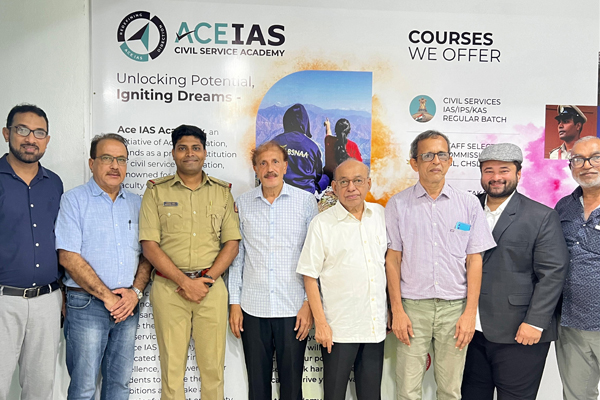
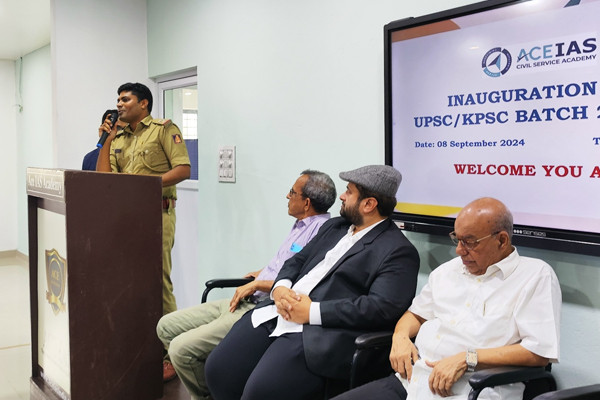
Ace IAS Academy inaugurated its UPSC/KPSC Batch 2024-25, with Police Sub-Inspector Mushahid Ahmed, an alumnus from the academy’s first batch, officially launching the program.

The event also saw the relaunch of the academy’s website by the Founder President of Ace Foundation, Saduddin Salihi. The occasion was graced by Abdul Salaam, retired General Manager of KIOCL, as the Guest of Honour.

Following the inauguration, a workshop on “Effective Communication” was conducted by motivational speaker and life coach, Saif Sulthan Syed.

The event was attended by the trustees of Ace Foundation, B.S. Muhammad Basheer, Siraj Ahmed, and Shahul Hameed. Nazeer Ahmed, Director of Ace IAS Academy, welcomed the dignitaries and students, while Academic Coordinator Hilaal Raafi hosted the event.

source: http://www.english.varthabharati.in / Vartha Bharati / Home> Karavali / by Vartha Bharati / September 10th, 2024

Veteran Ramgarh MLA Zuber Khan Passes Away at 61

Ramgarh, RAJASTHAN :

Alwar:

Zuber Khan, the four-time MLA from Ramgarh Assembly constituency in Rajasthan, passed away at 5:50 am on Saturday. The news of his demise was shared by his wife, former MLA Safia Zuber Khan, via social media. “It is with deep sorrow that I inform you all that respected Zuber Khan ji has passed away. Zuber ji breathed his last today (14 September 2024) at 5:50 am,” Safia Zuber wrote.

Khan, who had recently returned home after treatment at Medanta Hospital, had fallen ill on Thursday. His close friend, Anoop Sharma, revealed that Zuber Khan had undergone a liver transplant one and a half years ago, and doctors had advised him to rest. However, he remained active during the first phase of elections and in the assembly session, which led to deterioration in his health. He was admitted to Medanta Hospital a few days ago before being transferred to Jaipur.

On Tuesday night, after his health showed signs of improvement, Khan returned to his residence in Alwar. However, his condition worsened again on Thursday, and he passed away early on Saturday at his farm house in Dhai Pedi, near Alwar. Over the last three days, well-wishers had been visiting him to check on his health. According to close sources, doctors had indicated about 15 days ago that his health was critical.

Born on 1 August 1963, Zuber Khan’s final rites will take place today at 5 pm after Asr prayers, with his burial near the Gas Godown in Ramgarh, Alwar.

Zuber Khan had an illustrious political career, winning the Ramgarh Assembly seat four times. He was elected in 1990, 1993, 2003, and 2023 on a Congress ticket. He also served as chairman of Mewat Development Board in the previous Gehlot government. Despite contesting elections in 1998, 2008, and 2013, Khan faced defeats at the hands of BJP’s Gyandev Ahuja. In 2018, his wife Safia Zuber Khan contested and won, defeating BJP candidate Sukhwant Singh by over 12,000 votes.

Between 2003 and 2008, Zuber Khan also held the role of chief whip of the Congress Legislative Party in Rajasthan Assembly. His political journey began during his student days at Jamia Millia Islamia, New Delhi, where he was elected president of the students union twice under the banner of NSUI.

Hailing from a traditional farmer family in Machri Umrain, a rural area in Alwar, Zuber Khan’s political legacy was rooted in his father’s role as sarpanch for 38 years. After receiving his early education in a government primary school, he continued his studies at JMI, where his political career took off.

In the 2023 elections, Congress replaced Safia Zuber’s ticket with that of Zuber Khan, who went on to secure victory by defeating BJP candidate Jai Ahuja by 19,696 votes, securing 93,765 votes in total, compared to Ahuja’s 74,069.

source: http://www.radiancenews.com / Radiance News / Home> Latest News> Report / by Radiance News Bureau / September 14th, 2024

Bengaluru hosts workshop on Islamic Psychotherapy for health professionals

Bengaluru, KARNATAKA :

Muslim health professionals in India’s Bengaluru in the last week had a thrilling experience when they were introduced to Traditional Islamically Integrated Psychotherapy (TIIP) by renowned Islamic psychologist Yaqeen Sikander.

Bengaluru (India): 

Muslim health professionals in India’s Bengaluru in the last week had a thrilling experience when they were introduced to Traditional Islamically Integrated Psychotherapy (TIIP) by renowned Islamic psychologist Yaqeen Sikander.

Yaqeen Sikander was invited for a 5-day workshop jointly organised by Mind and Brain Hospital and Khalil Centre.

The workshop held from August 31 to September 04, 2024 in partnership with the Centre for Study and Research (CSR India) and International Students of Islamic Psychology (ISIP) aimed at introducing the innovative therapeutic framework of TIIP to Indian mental health professionals.

About Traditional Islamically Integrated Psychotherapy

Traditional Islamically Integrated Psychotherapy (TIIP) is developed by Khalil Centre’s interdisciplinary team of Islamic scholars and psychologists.

The programme integrates contemporary behavioural science within an Islamic epistemological framework.

Originally conceptualised by Dr. Hooman Keshavarzi and Dr. Amber Haque in 2013, the model has been further developed by Khalil Centre’s team, including Dr. Fahad Khan and Dr. Khalid Elzamzamy.

The programme approved by American Psychological Association (APA) is an evidence-based approach tailored to meet the needs of Muslim patients. It has been continuously refined through ongoing research.

About Yaqeen Sikander

Yaqeen Sikander is a clinical psychologist and certified TIIP practitioner based in Istanbul, Turkey.

Sikander, who led the sessions at the workshop, is currently pursuing a doctorate in Clinical Psychology at Ibn Haldun University in Istanbul, simultaneously receiving specialised TIIP training from Dr. Keshavarzi.

Yaqeen Sikander’s sessions in Bengaluru offered valuable insights into merging spirituality with modern clinical practice, a core aspect of TIIP.

TIIP Workshop Bengaluru

The TIIP Workshop Bengaluru commenced with a Meet and Greet session at Shifaa Hospital, Bengaluru, where Yaqeen Sikander shared his journey through global education and his career in psychology.

This session also featured presentations from Dr. Asfiya Khaleel, Psychiatrist and Director of Ummeed Deaddiction and Rehab Centre, Bengaluru, and Dr. Fiaz Ahmed Sattar, one of the leading psychiatrists in Bengaluru.

Both the speakers provided their insights from years of experience, enriching the discussion on integrating holistic approaches in clinical practice.

Zulekha Shakoor Rajani, Co-Head of the Islamic Psychology Department at Mind and Brain Hospital, shared a presentation on the evolution of Islamic psychology globally and in India exploring its development and future prospects.

Zulekha Shakoor Rajani along with Shujauddin Fahad Inamdar had in June 2024 travelled to Istanbul, Turkey, to undergo TIIP training organised by Khalil Centre where she completed her TIIP Level 2 training while Shujauddin completed his TIIP Level 1 training. While addressing the workshop, Zulekha also shared with the audience her TIIP training experience.

“Attending the TIIP training in Istanbul was a transformative experience that deepened my understanding of the vital connection between Islamic principles and modern psychological practices,” she said.

“It became clear to me that Muslim mental health professionals in India needed access to this invaluable approach. By bringing TIIP to Bengaluru, we aimed to introduce Islamic psychology to a broader community of psychologists, therapists, and counsellors, helping them integrate spirituality with their clinical practice”, she added.

After the introductory Meet and Greet session at Shifaa Hospital, the attendees participated in the workshop at Mind and Brain Hospital, focusing on Mastering Therapeutic Excellence. This session covered holistic case conceptualisation, integrative therapeutic interventions, and fostering self-efficacy to enhance client outcomes.

The 4th day of the workshop was held at Ummeed Deaddiction and Rehab Centre, Bengaluru, where Yaqeen Sikander provided introduction to Islamic psychology, discussing its core principles and the role of the practitioner in integrating spirituality into therapy.

The event concluded with a Tafakkur session — a short spiritual retreat emphasising psycho-spiritual contemplation. This session, led by Yaqeen Sikander and Shujauddin Fahad Inamdar, offered the participants a unique experience of Islamic meditation and holistic healing.

‘Just a beginning’

The workshop was a huge success, offering participants practical tools and insights that will enhance their ability to provide holistic, culturally relevant care.

“I am confident this is just the beginning of a much-needed shift in the way mental health is approached in our community.

“The success of this TIIP workshop has exceeded our expectations”, said Dr. Safiya MS, Psychiatrist and Director of Mind and Brain Hospital, the organiser of the event.

“The response from mental health professionals across the country has been overwhelmingly positive, reflecting a clear demand for approaches that integrate Islamic principles with psychiatric and psychological care.

“We believe this workshop will serve as a catalyst for the wider acceptance and practice of Islamic psychology in India. It is our hope that this initiative will inspire more professionals to explore and implement holistic, faith-based mental health practices, ultimately benefiting both practitioners and patients alike”, she said.

Mind and Brain Hospital, which hosted the workshop, is a leading neuropsychiatric treatment facility in Bengaluru. The hospital had established India’s first Islamic Psychology Department, co-headed by Zulekha Shakoor Rajani and Shujauddin Fahad Inamdar in 2023.

The department is dedicated to advancing mental health treatments that integrate modern psychological practices with Islamic principles.

source: http://www.ummid.com / Ummid.com / Home> Health / by Ummid.com News Network / September 11th, 2024