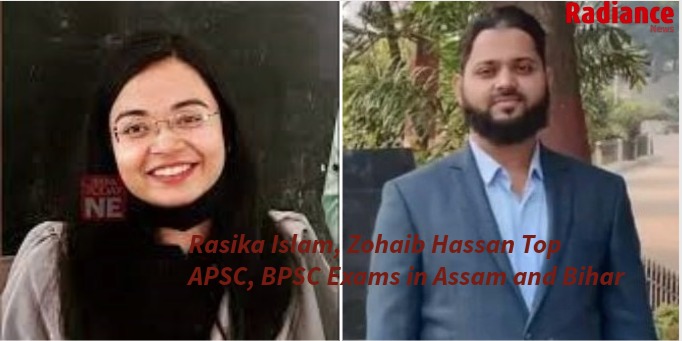
Rasika Islam of Assam’s Dhubri district topped Assam Public Service Commission (APSC) and Zohaib Hassan from Bihar’s Purnia district in Bihar topped BPSC examination for the recruitment of assistant professor in engineering colleges.
Khursheed Khan of Dibrugarh, a Central government employee, who joined as Inspector of Income Tax in 1996 and was promoted to IT Officer in 2005, said, “We are thrilled at the achievement of Rashika Islam. It has been amazing journey from Inspector of Taxes to ACS No.1 within a span of 3 years. A living example of women empowerment, she has brought laurels to her community and entire Dhubri district. Dhubri has the lowest literacy rate in Assam – 60 percent; it is also the district with highest percentage of Muslims – 75 percent. Assam’s literacy rate is around 75% while Muslims’ literacy rate is less than 65 percent.
On the performance of Muslims in APSC, he said, “Overall performance of Muslims in the APSC has been very dismal. In the current list out of 86 candidates selected for ACS cadre, 8 are Muslims, 6 male and 2 female. Out of 65 candidates selected for APS cadre, 4 are Muslims, 3 male and 1 female. Muslims account for more than 1/3 of the state’s population. However, their share in the government job is dismal.”
Hailing from Guaripur of Dhubri district, Rasika is the toper of Assam Civil Services (ACS) 2022, result of which was declared by APSC on April 17. She cleared APSC 2018 exam in her first attempt and was selected as Inspector of Taxes and posted in Dhubri. She has worked for three years as Inspector of Taxes. Her husband Roushin UL Alom is also an ACS and working as election officer in Dhubri district. Her father Shahidul Islam is voluntarily retired colonel of Indian Army.
Rasika scored 89 percent in ICSE-Class X exam, did her XII from Narengi Army School and graduated from Cotton College in 2016.
On the performance of Muslims in BPSC, Dr Maskoor Usmani, former President of AMU-SU, said, “Almost 7 percent of Muslim candidates have qualified for the 67th BPSC examination in 2017. According to reports, among 101 Muslim candidates who have qualified, 50 imparted coaching from Bihar Haj Bhawan, which has set a paradigm for change. I am sure in coming times more Muslims will qualify such examinations and will serve the state and country. Muslims constitute 17% of Bihar’s population and I believe this is a positive step towards achieving affirmative action. More needs to be done to get the results of 20 percent.”
source: http://www.radiancenews.com / Radiance News / Home> Latest News / Radiance News Bureau / January 19th, 2024
In the upcoming budget, my fervent advocacy is for bold and decisive measures to empower women entrepreneurs in India. I demand not just incremental but transformative steps.
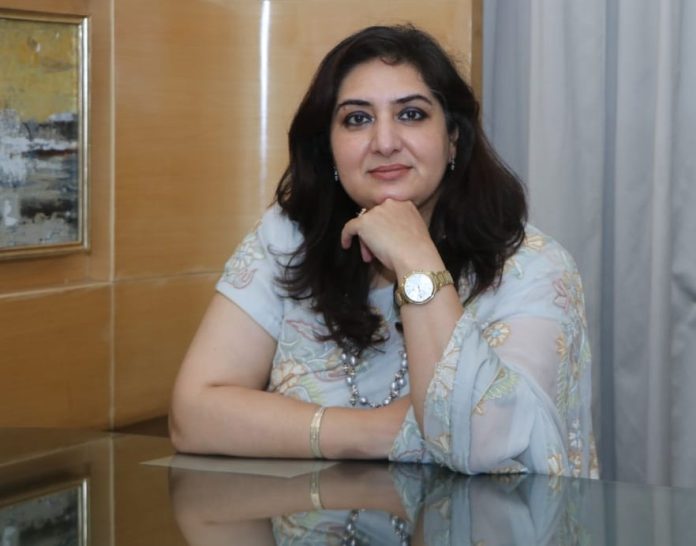
You have been recognized as one of the “Prominent Muslims who shaped the modern world”, and are to be among the “100 Inspiring & Impactful Women of UP”, and listed at “50 Global inspiring Women leaders and Top Women CEO of the year 2023. How do you feel?
It’s truly an honor to be recognized in such prestigious lists. Being acknowledged as one of the ‘Prominent Muslims who shaped the modern world,’ making it to the ‘100 Inspiring & Impactful Women of UP,’ and being listed among ‘50 Global inspiring Women leaders and Top Women CEO of the year’ is humbling.
These recognitions come from esteemed organizations like World Trade Center, RBTC, International organisations like Prodigy, various Trade organisations. They have acknowledged my contributions to the Growth and Development towards Trade and Development, Towards Women Empowerment and declared me CEO of the year 2023. I’m grateful for the support and recognition.
What according to you should be done for women empowerment in India?
Fostering women empowerment in India requires a multi-faceted approach. We need to focus on education, skill development, and providing equal opportunities in all sectors. Encouraging entrepreneurship among women, creating a supportive work environment, and ensuring gender equality are essential. Additionally, awareness campaigns to challenge stereotypes and cultural norms, along with legal reforms to protect women’s rights, can play a crucial role
For any successful entrepreneur what according to you should be the social responsibility?
For any successful entrepreneur, social responsibility is paramount. Beyond financial success, entrepreneurs should actively contribute to the community and address social issues. This can involve initiatives such as supporting education, healthcare, and environmental sustainability. By giving back, entrepreneurs can make a positive impact on society and contribute to its well-being.
How do you like to share the feelings of your parents after your achievements?
When my father came to know about my achievements, he shared his views to me and all by saying, “On the day of having performed another Umrah in Makkah (20th January 2024), my daughter Khair Ull Nissa has been chosen and honoured on the calendar of 2024 as “MUSLIMS WHO SHAPED THE MODERN WORLD. Allah blesses her with blessings and honour her with more respect and be able to perform the duties of Good Muslim. She has made me a proud father and I am humbled.”
I believe my father’s words are a source of great motivation for me. They’re a testament to the support and encouragement I’ve received from my family throughout my journey.
Tell us about your educational, professional journey and family background?
Currently, I am on an international assignment which focuses on USD 500 Billion of Revenue and setting a benchmark for Trade and Investment between two countries.
I had the privilege of being a Board Member of the World Trade Center Association in New York and served as the Executive Director for Asia Pacific and India. In this role, I played a key part in driving monumental growth, catalyzing strategic partnerships, and achieving a 3x growth in global distribution reach. My expertise encompasses spearheading revenue generation, navigating markets in North and South America, Europe, Asia, the Middle East, and Africa, Overseeing the development of 500+ million square meters to achieving notable sales and lease milestones, fuelling global expansion. My strengths lie in optimism, decisiveness, effective communication, collaboration, mentoring, and adaptability.
Throughout my career, I’ve received recognitions such as the Economic Times ICONIC Women in Realty for 2021 and 2022, as well as the Top 50 Global Inspirational Women Award in 2023.
I’ve also been actively involved as a Founding Member of various organizations like NAREDCO MAHI and the Real Estate Women’s Wing of NAREDCO.
I hold an MBA in Marketing & International Business from Leeds University in the UK, which has provided me with a solid foundation in business strategy and global market dynamics.
As a CEO of the year, what would you like to demand in the coming budget for the women entrepreneurs in India?
As the honored CEO of the year, I stand at the forefront, a voice for change and progress. In the upcoming budget, my fervent advocacy is for bold and decisive measures to empower women entrepreneurs in India. I demand not just incremental but transformative steps – increased funding opportunities that go beyond token gestures, robust tax incentives that truly level the playing field, and strategic initiatives focused on enhancing the skill sets and networking capabilities of women entrepreneurs.
We are at a pivotal moment where unleashing the untapped potential of women-led businesses is not just a matter of equality but a strategic imperative for the nation’s economic development. The call is not for mere lip service but for the creation of an environment that not only supports but propels the growth of women entrepreneurs. It’s time for our budgetary allocations to reflect a commitment to inclusivity and to recognize the immense contributions that women entrepreneurs can make to our nation’s prosperity.
This is not just about gender equality; it’s about recognizing and harnessing the power of innovation, leadership, and economic contribution that women bring to the entrepreneurial landscape. As the CEO of the year, I urge policymakers to seize this opportunity, break through conventional barriers, and usher in a new era of empowerment for women entrepreneurs in India. The time for action is now, and together, we can build a future where every aspiring woman entrepreneur has the resources and support needed to thrive and lead.
source: http://www.radiancenews.com / Radiance News / Home> Entrepreneurship / by Mohd Naushad Khan / Radiance News Bureau / January 27th, 2024
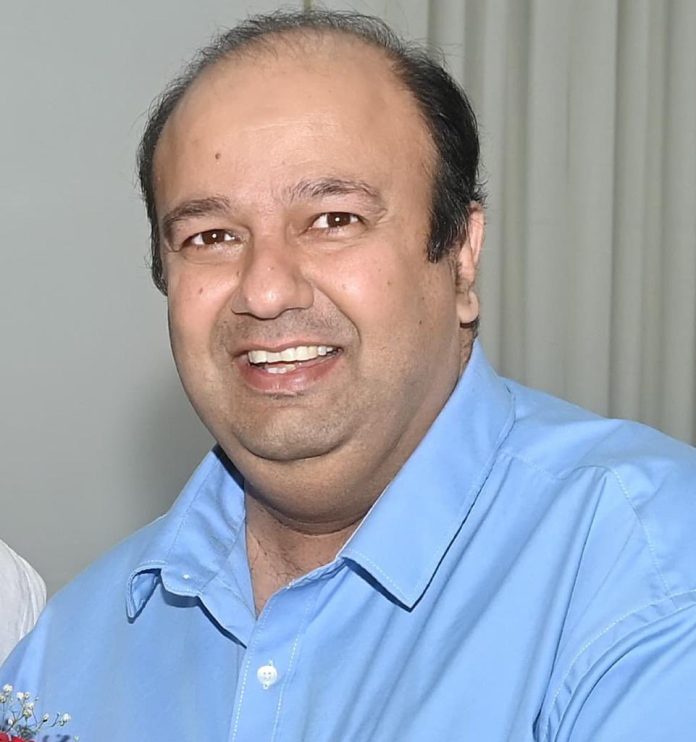
Amer Ali Khan, news editor of Urdu daily Siasat, has been nominated as a member of Telangana Legislative Council.
The Congress government had recommended names of academician M. Kodandaram and journalist Amer Ali Khan as MLC under Governor’s quota.
Governor Tamilisai Soundararajan has accepted the recommendation of the state government.
Kodandaram heads Telangana Jana Samithi (TJS), which had supported the Congress party in the recent Assembly elections.
Amir Ali Khan’s nomination is also seen as a thanksgiving gesture by the Congress party for the newspaper’s support.
The Congress has recommended his nomination in recognition of the social, economic, welfare and educational activities of ‘Siasat’, one of the largest circulated Urdu dailies in India.
Amer Ali Khan has been in the forefront of the movement to demand implementation of 12 percent reservation as promised by the previous BRS government.
The 50-year-old is in-charge of various programmes run by the Urdu newspaper. Having completed his Bachelors in Communication and Journalism from Osmania University and Masters in Business Administration from Sultan–ul-Uloom, he has been instrumental in forming an alliance of 10 Urdu dailies for content. Under his tutelage, Siasat has expanded to Bengaluru and Qatar for the Middle East edition.
Amer Ali Khan is son of Siasat chief editor Zahid Ali Khan, who was earlier associated with the TDP and also contested Lok Sabha elections from Hyderabad constituency in 2009.
He is the first Muslim legislator under the Congress government. It may be recalled that none of the Muslim candidates fielded by the Congress in recent Assembly elections was elected. They included former minister Mohammed Ali Shabbir and former Indian cricket captain Mohammed Azharuddin.
Shabbir was last week appointed as government advisor.
source: http://www.radiancenews.com / Radiance News / Home> Latest News / by Radiance News Bureau / January 27th, 2024
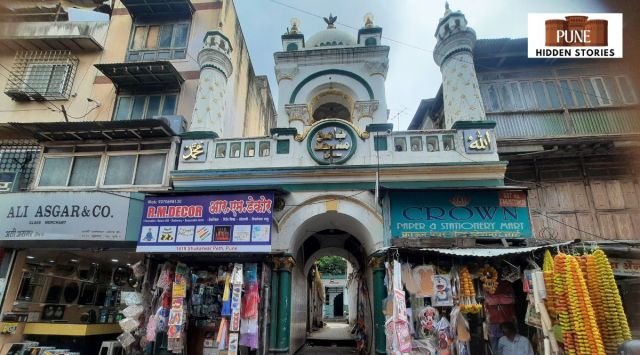
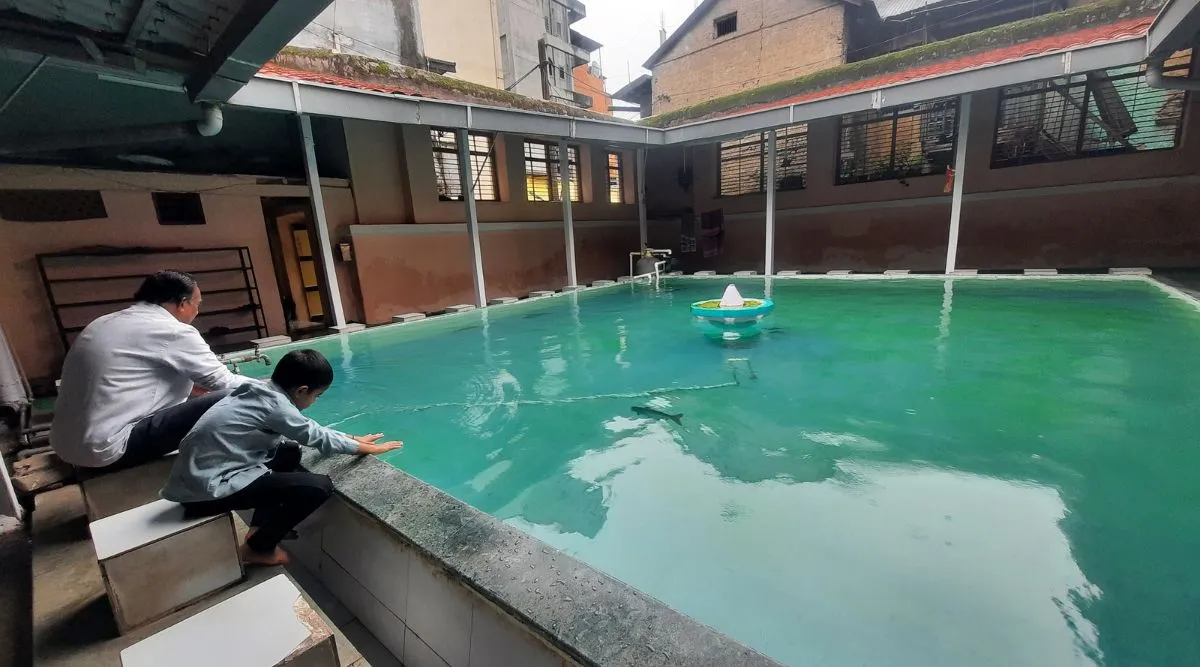
The City Jama Masjid located in Pune’s Shukrawar Peth was built in 1839 for Rs 15,000 from public contributions.
The Gazetteer of the Bombay Presidency of 1885 describes the mosque as a “chief Muhammadan place of worship in the city” built around 1839 by public subscription for Rs 15,000. (Express Photo)
On May 10, 1857, Indian sepoys in Meerut broke into an uprising that is now remembered as India’s first war of independence. While Pune, then Poona, did not see any active conflict unlike several other cantonment towns in the country, tension was palpable as the news reached the city through newspapers and word of mouth. The city did see surreptitious meetings, pamphleteering and a surge in rumours, as per accounts by historians.
Among the reactions to the mutiny that have been recorded by historians is that of prayers offered at City Jama Masjid on May 22, 1857, a Friday, for the success of the mutiny.
“After the usual Friday prayers, some 10-12 men remained in the mosque and commenced talking about the war operations before Delhi. The whole party simultaneously rose clapping their hands in the attitude of prayer, bought with the aid of the Prophet on behalf of the mutineers,” as per a contemporary government report quoted in South India in 1857 War of Independence by V D Divekar.
The attendees were identified as Jaffer Mulla, Mahomed Hayat, Hussain Arab, Rhaimu Naichiwala, Maddar Naichiwala, Imam Pattewala and Jamaluddin who were later reported to the police by the informers. It is not known if any punitive measure was taken against the attendees.
The Gazetteer of the Bombay Presidency of 1885 describes the mosque as a “chief Muhammadan place of worship in the city” built around 1839 by public subscription for Rs 15,000.
“The back wall has a niche with a step against it, and is covered with texts from the Kuran. In front of the mosque is a well-sanded yard with a fountain in the middle. On one side is a washing cistern or haud. Attached to the mosque is a Persian school, a rest house and some dwellings whose rent go to the mosque fund. All Muhammadan social and religious meetings are held in this mosque,” reads the Gazetteer.
The mosque’s imam, says that a few decades ago, the mosque’s roof was extended by 15 metres to accommodate more namazees. (Express Photo)
Presently, the entrance of the mosque in busy Shukrawar Peth is easy to miss as vintage shops stand shoulder to shoulder. The narrow entrance opens into a moderately spacious courtyard, 100 feet in width and 15 feet in length, before the enclosed mosque starts. There is a wuzukhana, the washing cistern, on the left side with a small fountain-like structure in the middle and the cistern’s edges lined by stools for the namazees to sit on as they do the ablutions before prayers.
That the mosque is over 180 years old is barely recognisable – due to the fresh construction of the front Sahan, the courtyard where namaz is offered, and several coats of paint on the exteriors – until one enters the innermost area which reveals its stone build, topped by a dome.
Maulana Zameeruddin, 64, the mosque’s imam, says that a few decades ago, the mosque’s roof was extended by 15 metres to accommodate more namazees. The move, however, shortened the length of the courtyard and also required the removal of a fountain that was in front of the mosque.
Zameeruddin has been the imam here for the last 40 years. “Before me, my elder uncle was the imam. Earlier, people from far-off areas such as Khadki, Dapodi and Deccan used to come to offer Friday prayer here as this is a historic place. Now, people have shifted to newer areas of the city, such as Kondhwa, where bigger mosques have come up and people prefer to pray there. Still, some people make it a point to come here, especially for Friday prayer,” he said.
For a long time, the Pune civic body’s Urdu-medium school (School No 22), operated from inside the rooms constructed within the courtyard until it shifted to a nearby location later.
Siraj Tamboli, a 65-year-old namazee who visits the mosque several times a day, said, “I belong to the third generation from my family that prays in this mosque. My sons and grandsons also come here.”
source: http://www.indianexpress.com / The Indian Express / Home> News> Cities> Pune / by Atikh Rashid, Pune / July 29th, 2024
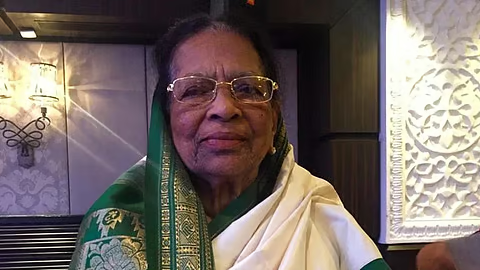
Justice Beevi was the first Muslim woman to be appointed to the higher judiciary in the country and the first woman to be elevated to the Supreme Court of an Asian country.
The first woman to be a judge of the Supreme Court of India, Justice M Fathima Beevi, was on Thursday posthumously awarded the Padma Bhushan.
Justice Beevi received India’s third-highest civilian award in the field of Public Affairs.
The former Supreme Court judge passed away aged 96 in November last year. Justice Beevi was the first Muslim woman to be appointed to the higher judiciary in the country.
She was born in Kerala in 1927 and her father encouraged her to study law. In 1950, she topped the Bar Council exam becoming the first woman to receive a Bar Council gold medal.
She started her career as an advocate in Kerala and worked her way up to become a district and sessions judge in 1974. In 1980, she joined the Income Tax Appellate Tribunal and was appointed as a High Court judge in 1983.
She made history in 1989 by becoming the first woman appointed to the Supreme Court.
As a Supreme Court judge, she became the first Muslim woman in the higher judiciary and the first woman to become a Supreme Court judge in Asia.
After retiring in 1993, she had served as a member of the National Human Rights Commission and then as Governor of Tamil Nadu.
She had resigned from the post of Governor of Tamil Nadu after rejecting the mercy petitions filed by four condemned prisoners in the Rajiv Gandhi assassination case.
Tejrasar Village (Bikaner),RAJASTHAN / Mumbai, MAHARASHTRA:
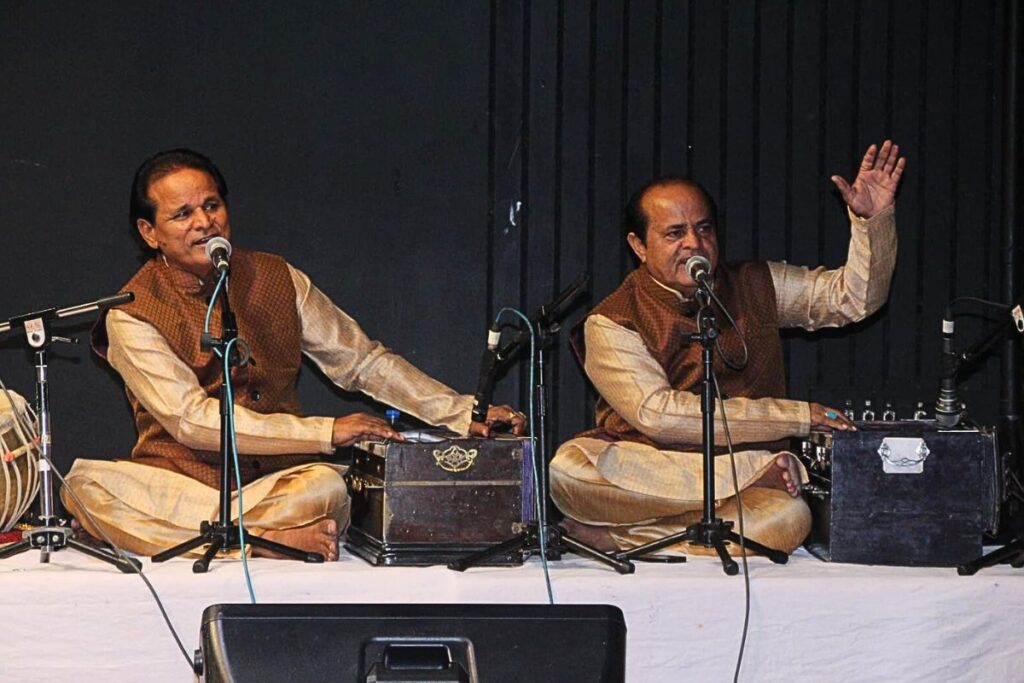
The land of Bikaner is very rich in art and culture and it has given uncountable diamonds of talent not only to the country but to the world. Bollywood musicians Ali and Ghani have been awarded the Padma Shri by the Government of India, the country’s fourth highest honor.
Maand singers Bandhu Ali Mohammed and Ghani Mohammad from Rajasthan were awarded the Padma Shri.
Ali Mohammad and Ghani Mohammad Padmshree: The Padma Awards for the year 2024 were announced on the eve of Republic Day. President Droupadi Murmu announced the Padma awards to 132 personalities, including five Padma Vibhushan, 17 Padma Bhushan, and 110 Padma Shri awardees. The shortlist for this year’s Padma awards includes impersonator Jankilal and Dhrupad singer Laxman Bhatt Tailang from Rajasthan.
Maand singers Bandhu Ali Mohammad and Gani Mohammad from Rajasthan and road safety activist Maya Tandon have also been given the Padma Shri award.
Ali Mohammad and Ghani Mohammad brothers, who live in Bikaner, will jointly receive this award.
Ali-Ghani was completely dedicated to music
The land of Bikaner is very rich in art and culture and it has given uncountable diamonds of talent not only to the country but to the world. In every field, the personalities of Bikaner have proved their mettle. Be it music, art, literature, painting, Bikaner has been rich in every field. Bikaner has established its own place in music and Bollywood. Pakeezah composer Ghulam Muhammad, lyricists Bharat Vyas, Rafiq Sagar, Raja Hassan and Ali-Ghani have all dedicated their all to music.
Inherited music
But here is the talk of Bollywood musicians Ali and Ghani, who have been awarded the Padma Shri by the Government of India, the fourth highest honor of the country. Born in Tejrasar village of Bikaner, brothers Ali and Ghani inherited music. His father Sirajuddin himself was a great knowledge of music, due to the death of Ali-Ghani’s wife in childhood, the responsibility of upbringing was on his father. While father Sirajuddin trained him to become a great person, he also inherited the legacy of music.
Struggle in Mumbai
As the mousiki became mastery, the desire to come out of a completely backward village Tejrasar and build a house in a big place also started shaking in the heart. At the age of youth, both brothers turned to Kolkata and from there traveled to the city of dreams, Mumbai. Ali and Ghani, who lived a difficult life in the village since childhood, did not find it strange to struggle in Mumbai and the struggle gradually brought success, the eyes of Bollywood musicians and directors fell on them.
During the struggle, the two brothers started singing together
Ali-Ghani had to starve several times during the conflict. In a metro city like Mumbai, many kilometers had to be traveled on foot. But he remembered the difficult life in the village. Therefore, the struggle of Mumbai seemed to him a game. During this time, the two brothers started singing together and made the basis of their singing Mand raga, which is considered to be the most popular raga of western Rajasthan. The most important raga in the Bikaner region is Mand and not only Rajasthani folk music has been sung on it, but the king of ghazal singing like Mehdi Hassan also made Mand the basis of his ghazals. Inspired by them, Ali and Ghani also decorated their Gulukari with the beauty of the mand.
Mastery in classical music
Ali-Ghani, who received his basic training in music from his father, the late Sirajuddin Khan, has a great influence in classical music. Both brothers received classical music education from Ustad Munawar Ali Khan and Ustad Bade Ghulam Ali Khan. Both are known in the country and abroad as film composers and singers.
Lata and Asha Bhosle get blessings
Associated with All India Radio since 1981, the brothers have directed music in many films, including Hindi, Rajasthani and Punjabi films. Apart from this, many albums of Naat, Bhajan and Rajasthani folk songs have also been released. Ali and Gani have also decorated the ghazals of big singers like Pankaj Udas, Sadhana Sargam, Chandan Das, Alka Yagnik, Anuradha Paudwal and Hans Raj Hans with their music. These big Gulukars have also sung under the direction of Ali-Ghani. Even the nightingale of Lata Mangeshkar and Asha Bhosle have been blessing Ali-Ghani.
Said – talent got value
Ali and Ghani, who came out of Tejrasar and shined as stars in the glare of Mumbai, have been honored with many awards. Sixty-year-old Ali and sixty-two-year-old Ghani have not moved away politely even after receiving the Padma Shri. On receiving the Padma Shri award, he thanks Allah and says that there is still more to go.
He credits Prime Minister Narendra Modi, Bikaner MP and Union Law Minister Arjun Ram Meghwal for this honor. It is said that the BJP government appreciated our talent and awarded the Padma Shri, also very humbly thanking NDTV, Ali and Ghani say that this channel first informed us and showed us all over the country.
source: http://www.rajasthan.ndtv.in / NDTV Hindi / Home> Sacrifice> Pride of Rajasthan / by Dr Nasir Zaidi / edited by Sachin Samar (and Translated in English) / January 26th, 2024
SRINAGAR, JAN 27 (UNI):- Ghulam Nabi Dar, a 72-year-old master craftsman from Srinagar nominated with the Padma Shri for his contribution to wood carving, in Srinagar on Saturday. (With URDU Story) UNI PHOTO-13U
Srinagar :
In Srinagar, where the echo of chisels against wood harmonizes with the whispers of history, Ghulam Nabi Dar, a venerable 72-year-old maestro, has carved his way into the distinguished realm of the Padma Shri.
His unwavering dedication to the delicate dance between chisel and wood spans over six decades, a testament to the enduring love affair with his craft.
Through the rhythmic strokes of his skilled hands, Ghulam Nabi Dar has woven a narrative in wood, earning him a constellation of accolades that now converge in the dazzling brilliance of the Padma Shri.
The announcement of this national honor on the eve of the country’s 75th Republic Day crowns a lifetime of commitment, marking not just a personal triumph but a harmonious resonance with the nation’s celebratory spirit.
On January 27, the air in Dana Mazar Safakadal resonated with the symphony of celebration as the Department of Handicrafts and Handloom Kashmir orchestrated a commendation ceremony at the residence of the venerable Ghulam Nabi Dar.
The purpose was to pay homage to his latest jewel in the crown – the Padma Shri, a resplendent recognition for his unparalleled contributions to the art of wood carving, with a particular mastery in working wonders on walnut.
Ghulam Nabi’s craftsmanship, a beacon of artistic brilliance, has been a steady force in the cultural landscape. The ceremony not only celebrated his recent honor but also showcased his illustrious journey, embellished with previous accolades such as the State Award in 1984 and the National Award in 1995. His artistic footprint extends far beyond the borders, painting a global canvas of appreciation in countries like Iraq, Germany, and Thailand, establishing him as a luminary on the international stage.
The coveted Padma Shri bestowed upon Ghulam Nabi Dar is hailed by many as more than a personal accolade; it’s a potential catalyst for the renaissance of a craft deeply rooted in the history of Kashmir.
A testament to the resilience of traditions that have endured the test of time, Dar reflects on his arduous journey with a spirit undeterred by adversity.
Born into hardship, Dar’s initiation into wood carving came at a tender age, a refuge from financial turmoil. Despite facing initial rejection from craftsmen unwilling to impart their trade, Dar’s perseverance guided him to Nooruddin Tikoo, a mentor who, despite a paralyzed hand, imparted his knowledge through intricate designs on paper.
Recounting his struggles, Dar narrates being expelled from school at the age of 10 due to his father’s financial losses. His journey led him to a wood carving unit in Sarai Safakadal, sparking an enduring passion for the art form. Determined, he faced rejection from numerous craftspeople but pressed on, thankful for the divine intervention that eventually led him to Tikoo.
As Dar’s artistic journey unfolded, he transcended traditional designs, crafting his own unique pieces inspired by nature. Recognition followed, with a state award in 1984 and an opportunity to showcase his skills in Baghdad during the early 1990s. The pinnacle of his craftsmanship arrived with the National Award in 1995-96.
Amidst the applause, Dar’s happiness resonates through his family. Acknowledging the transformative power of awards, he stresses the importance of government encouragement for artisans, fearing the loss of interest without such support.
Expressing gratitude for the Padma Shri, Dar underscores the critical role of government support in preserving traditional arts. He calls for the establishment of a comprehensive institution or workshop to train and incentivize young artisans, safeguarding the future of wood carving.
With his son following in his footsteps, Dar looks to the horizon with hope, emphasizing the imperative of sustained interest and support from both the government and the public for the seamless continuity of his cherished craft.
source: http://www.morningkashmir.com / Morning Kashmir / Home> Kashmir Latest / by Syed Snober / January 28th, 2024
Two people in Mirzapur have received the Padma Shri award. The first prize went to folk singer Urmila Srivastava and the second prize went to Khalil Ahmed. He has made a special contribution in the field of handmade durries.
Khaleel Ahmed / Photo: Amar Ujala
Thursday was a special day for Mirzapur district from the point of view of art, music and handicrafts. Along with Urmila Srivastava in folk singing, Khalil Ahmed was also selected for the Padma Shri award for his special contribution in the field of Handmade Durry, especially Panja Dari.
75-year-old Khalil, who hails from Imambara area, has not only been associated with the art form for three generations but has enriched it. Khalil was awarded the National Award in 2000 by the then President APJ Abdul Kalam. In 2007, he was awarded the most prestigious award of the Ministry of Textiles, Shilp Guru. His entire family is associated with the carpet business.
His three sons Rustam Sohrab, Iftikhar Ahmed, Jalil Ahmed are also associated with this art. Khaleel Ahmed expressed happiness on receiving the Padma Shri award. He said that this is the result of years of hard work and dedication. He said that this award will empower the new generation to join this genre. Explain that the carpet of Mirzapur has got a GI tag.
GI expert Dr. Rajinikanth said that Mirzapur’s handmade carpet is very special. Khaleel Ahmed has been associated with this task for years and gave it a new height. He wished him all the best for the award.
source: http://www.amarujala.com / Amar Ujala / Home> Hindi News> Uttar Pradesh> Mirzapur News / by Amar Ujala, News Desk (translated from the Hindi edition) / by Pragati Chand / January 26th, 2024
Naseem Bano: Naseem Bano was awarded the state award in the year 1985.She was also felicitated by the then President R Venkataraman in 1988 for his work, he said.
pix: proiqra.com
Naseem Bano: Uttar Pradesh’s chikankari artisan Naseem Bano has been honored with the Padma Award by the government. “I got a call from Delhi last night informing me that I have been awarded the Padma Shri award. Me and my entire family are very happy with this achievement. We thank the government and our God for this award.”
Naseem Bano, a resident of Thakurganj area in the state capital, started chikankari at a very young age. She is known for popularising fine chickan embroidery in the Awadh region of the state. Bano said that she learned the art of chikankari from her father Hajan Mirza.
What did Bano say? “Whatever I am today is because of the support of my family and the education I gave to me through my father. She has tried to keep the tradition of fine chikankari alive and has also made it her goal to spread this tradition to young artisans. “I have trained more than 5,000 chikankari artisans in the art. I hope they will protect this tradition and carry it forward.”
Bano was awarded the state award in the year 1985. She was also felicitated by the then President R Venkataraman in 1988 for her work, he said. Bano said she has been invited to showcase her art in different cities of the country and in nine countries including the US, Germany, Canada and Oman.
source: http://www.zeenews.india.com / Zee News / Home> Zee Salaam / by Taushif Alam / pix edited – source: proiqra.com / June 26th, 2024
Madrasapalli (Jambuni, Bolpur) Birbhum District, WEST BENGAL:
Kolkata :
Takdira Begum of Bengal is to be honored with the Padma Shri this year. Seven people, in various fields, from West Bengal figure in the list of Padma awardees for 2024. Out of the seven, three have been conferred the Padma Bhushan and the remaining four the Padma Shri.
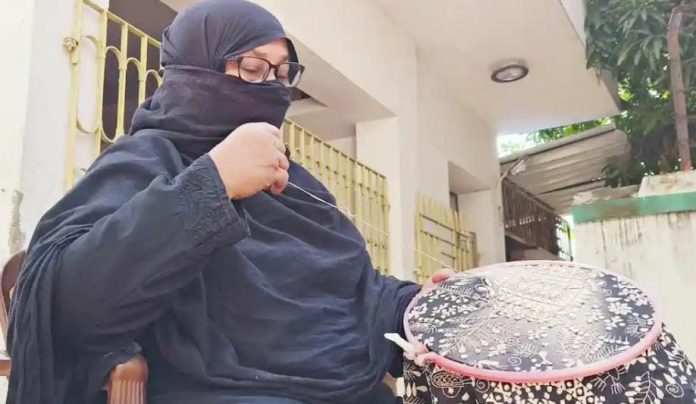
Takdira, a resident of Madrasapalli in Jambuni, Bolpur, has been doing kantha stitch for nearly 30 years. She learned sewing while studying at school. Sewing is now her livelihood and hobby. In Takdira’s words, “I can’t sit still. Love to work. I am overwhelmed with what the Center is rewarding me.”
Her family comprises her husband and three daughters. All the family members are involved in Kantha stitch industry. The women of the area are inspired by her artistic embroidery. Takdira taught this work to other women in addition to her own art practice. In 1996, she received the National Award for Promotion and Development of Kantha stitch industry. In 2009, she received Shilpaguru Sammanna. Now she will receive this honor from President Draupadi Murmu.
Takdira said, “The Central Ministry of Cottage Industries called to inform me that my name is in the list of Padma Shri recipients. I am very happy to hear.”
Takdira also said, “I will tell all those who are backward in the society, to be self-reliant.”
source: http://www.radiancenews.com / Radiance News / Home> Awards> Latest News / by Radiance News Bureau (headline edited) / January 26th, 2024