Tag Archives: Muslim Padma Bhushan

Hakim Abdul Hameed: Visionary who turned medicine into a mission

DELHI :

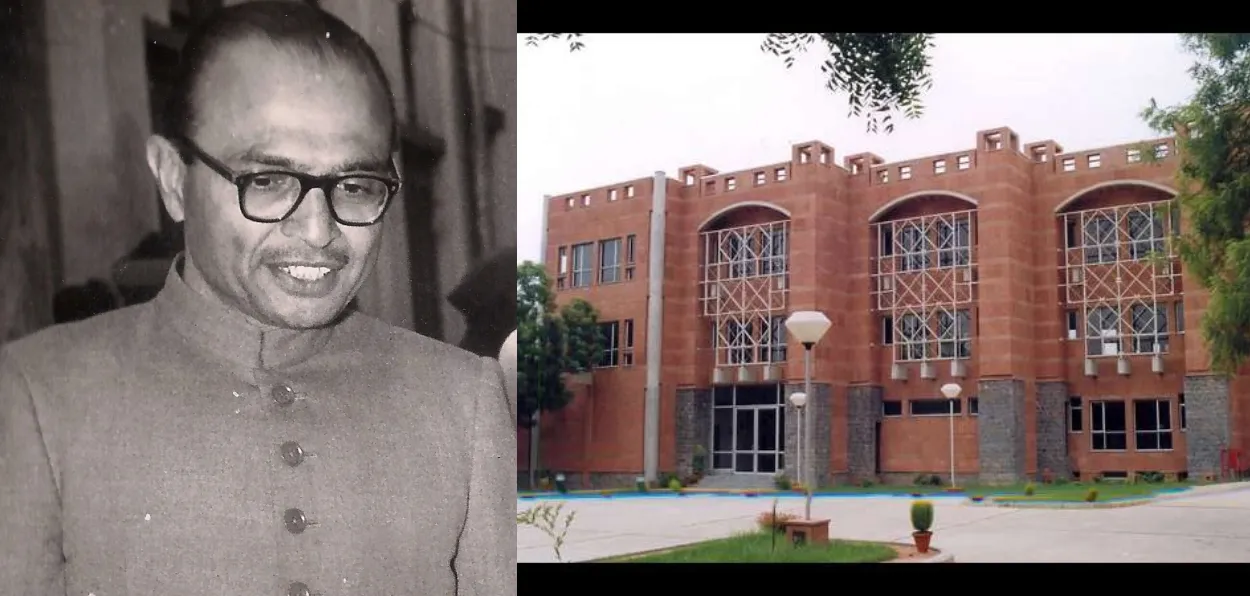
Hakim Abdul Hameed and campus of Jamia Hamdard

Life should be significant, not merely long. While some people make their lives significant by amassing wealth, others contribute to society and future generations. Hakim Abdul Hameed was one such rare individual. He is the founder of Jamia Hamdard, a deemed-to-be University located in South Delhi, which is celebrating its Foundation Day on September 14.

Abdul Hameed was born in Delhi on September 14, 1908. His life story is not merely that of a physician but of a man who transformed a family legacy of medicine into a vast movement encompassing education, research, healthcare, and public service.

His family was deeply involved in medicine and social service; his father, Hakim Hafiz Abdul Majeed, had established ‘Hamdard Dawakhana’ in 1906. ‘Hamdard’ in Urdu means one who empathises with others’ pain. This very sentiment became the guiding principle of Hakim Abdul Hameed’s entire life. He inherited not just a business from his father, but a responsibility. He strived to build Hamdard into an institution that would benefit every stratum of society.

Hakim Abdul Hameed was a practitioner of Unani medicine, yet his vision extended far beyond the treatment of the human body. He understood that for Unani medicine to be passed on to the coming generations, it required systematic teaching, rigorous research, and incorporating modern scientific methods.

He believed that tradition and modern science were not at odds; rather, by preserving the valuable aspects of ancient medical systems, they could be further fortified through scientific inquiry and research. This vision changed him into a pivotal pillar of Unani medicine.

The year 1947 was exceptionally difficult for the country. Partition had impacted millions and created an atmosphere rife with mistrust, violence, and uncertainty. Yet, even amidst such turmoil, Hakim Abdul Hameed was contemplating the establishment of institutions for the India of the future. It was during this period that he founded the Hamdard Charitable Trust and resolved to dedicate Hamdard’s earnings to the service of society. This decision speaks volumes about his character; he viewed wealth not as something to be hoarded for personal gain, but as a trust held for the benefit of society.

Subsequently, he established more institutions — the Hamdard Tibbi College and the Indian Institute of Islamic Studies in 1963; the Hamdard National Foundation in 1964, and the Hamdard College of Pharmacy in 1972.

Gradually, other institutions such as the Hamdard Education Society, Hamdard Public School, Ghalib Academy, and the Hamdard Institute of Historical Research were also added to this fold. He sought to create a comprehensive system where pharmacy, education, history, culture, and research could flourish alongside medical treatment.

The culmination of Hakim Abdul Hameed’s long-standing efforts came in 1989, when the institutions he had established were amalgamated into one to grant ‘Jamia Hamdard’ the status of a to-be Deemed University. This marked a significant achievement, realising a dream and the hard work of decades. He became its founding Chancellor. Hamdard’s own funds and his personal resources played a major role in establishing this university.

Today, it is important to remember that Jamia Hamdard was not backed by government machinery or a corporate conglomerate. Behind it lay the conviction of a single individual who believed that education could be the greatest service to society.

To remember Hakim Abdul Hameed merely as a builder of institutions would be to diminish his true stature. He was, first and foremost, a physician; understanding others’ pain was intrinsic to his nature. In his view, treating a sick person and providing a poor child with the opportunity to study were acts stemming from the same spirit of compassion, and he strove throughout his life to improve the human condition.

The body is healed through medicine, while the mind is nurtured through education. Hakim Sahib regarded both as integral parts of a singular mission of social service. Perhaps this is why the institutions he founded accorded equal importance to the humanities, history, and culture alongside hospitals and medical education.

Hakim Abdul Hameed’s contributions were recognised both within the country and across the globe. He was honoured with the Padma Shri in 1965 and the Padma Bhushan in 1992. In 1983, the then Soviet Union honoured him with the Avicenna Award. During the final years of his life, he also served as the Chancellor of Aligarh Muslim University.

However, considering his personality, it seems likely that he derived greater satisfaction from helping a needy person receive medical treatment or enabling a poor student’s education than from these accolades. For him, achievement was not merely about receiving awards but about making a difference in someone else’s life.

Hakim Abdul Hameed passed away in 1999, yet his work did not end with his departure. Even today, thousands of students study in the institutions he established, patients receive treatment in his hospitals, and the work of research and education continues to flourish.

The Jamia Hamdard campus is more than just a cluster of buildings; it stands as a testament to the idea that if an individual rises above personal interests to think about society, they can achieve a great deal for future generations. Hakim Sahib established these institutions much like a wise person plants a tree—knowing full well that while he might not live to sit in its shade, others certainly will. This was the most beautiful aspect of his life.

Today, the greatest challenge facing everyone associated with his institutions is ensuring that his legacy is not confined merely to names and monuments. The very meaning of ‘Hamdard’ is to understand the pain of others and strive to alleviate it. Hakim Abdul Hameed’s life teaches us that a person’s true legacy lies in the institutions and ideas that others carry forward long after they are gone. This is the legacy Hakim Abdul Hameed left behind. Carrying it forward is not just a matter of honour; it is our responsibility.

Author Prof. (Dr) M. Afshar Alam, is a Former Vice-Chancellor, Jamia Hamdard

source: http://www.awazthevoice.in / Awaz, The Voice / Home> Personality-News / by M Afshar Alam / September 13th, 2026
‘Nothing greater than the country honouring one’: Mammootty on being conferred Padma Bhushan

KERALA :

Fondly called ‘Mammukka’ by his fans and those close to him, the 74-year-old actor described the award as ‘unexpected’.

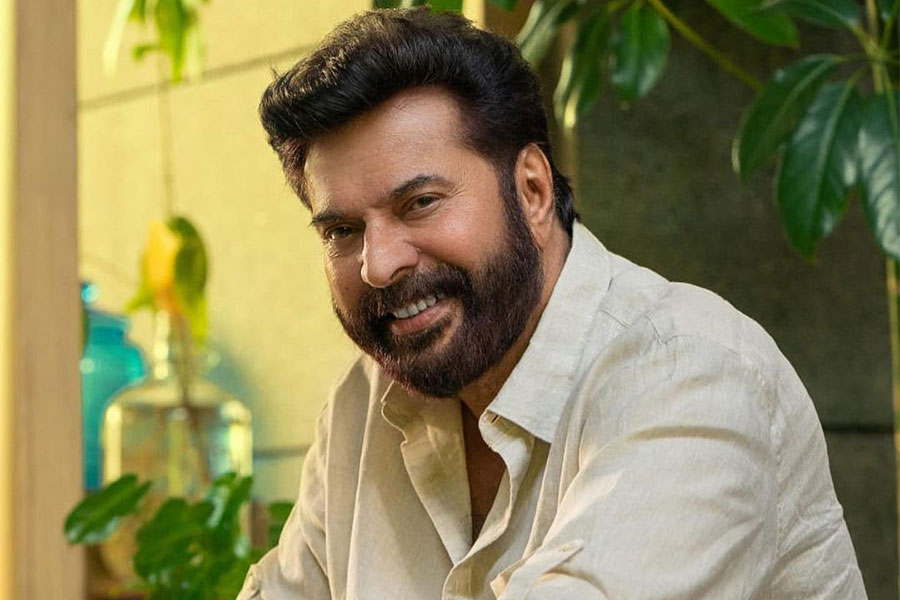
Malayalam superstar Mammootty, who was conferred the Padma Bhushan on Sunday, said he was “very happy” and that there was “nothing greater than the country honouring one”.

Fondly called ‘Mammukka’ by his fans and those close to him, the 74-year-old actor described the award as “unexpected” while speaking to a TV channel.

Wishes poured in on social media as news spread about the honour, which was conferred on Mammootty for his contributions to the field of art. “My friend Mammootty has now become Padma Bhushan Mammootty. Congratulations to my friend,” actor-politician Kamal Haasan wrote on X.

“Congratulations, Mammukka! And thank you for showing us how boundaries are broken, and challenges are taken up with a smile! You’re our pride and one of a kind,” actress Manju Warrier wrote in a Facebook post.

Later, at the Kerala State Film Awards ceremony, Mammootty was congratulated by Chief Minister Pinarayi Vijayan and Culture Minister Saji Cherian. In his address at the event, Vijayan said Mammootty had been honoured by the country with the Padma Bhushan.

“The Kerala cabinet is happy it could take part in this joyous development, as we have been recommending him for the award for the past several years. Everything has its time. Heartfelt congratulations to him. No one in the history of Indian cinema has performed such diverse characters as he has,” the Chief Minister said.

Mammootty has acted in over 400 films across languages including Malayalam, Tamil, Telugu, Kannada, Hindi and English, in a career spanning more than five decades.

He is a recipient of three National Awards, several state awards, and two honorary doctorates, apart from Padma Shri.

Mammootty made his film debut in 1971 with Anubhavangal Paalichakal. His most recent big-screen outing was Kalamkaval.

source: http://www.telegraphindia.com / The Telegraph Online / Home / by The Telegraph, Entertainment Web Desk / January 26th, 2026

Gujjar leader, Padma Bhushan awardee Mian Bashir Ahmed dies at age 98

Wangat Village (Ganderbal District), JAMMU & KASHMIR :

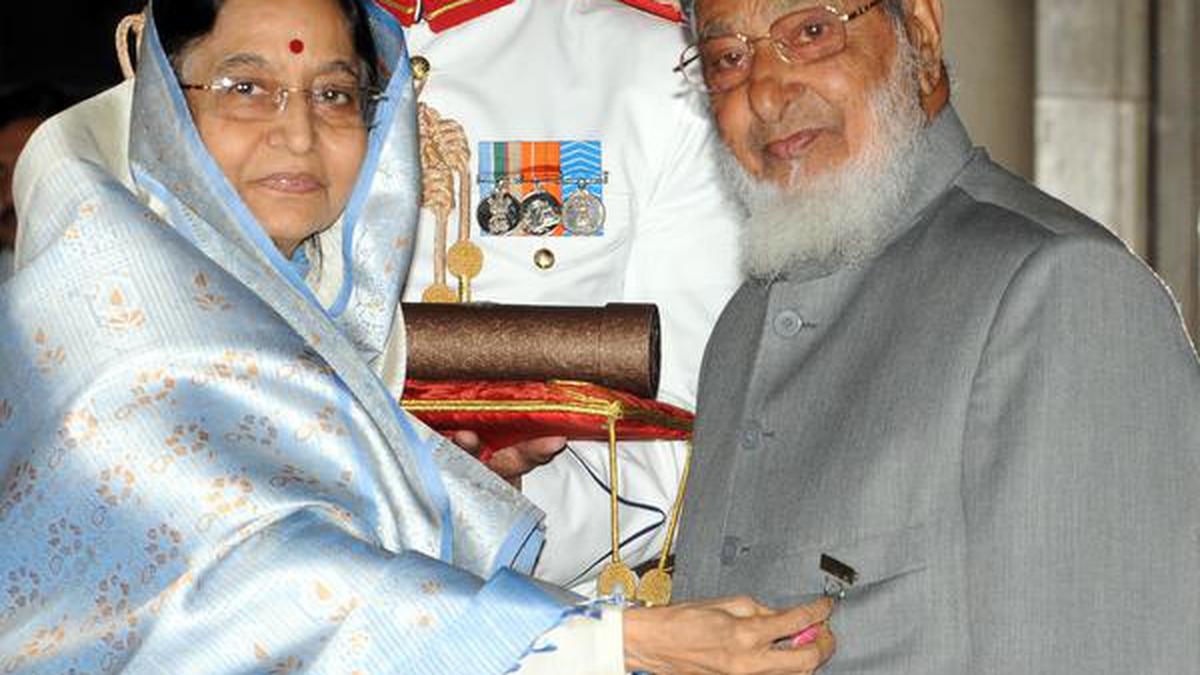
Former President Pratibha Patil presenting the Padma Bhushan Award to gujjar leader Mian Bashir Ahmed, during the presentation of Padma Awards at Rashtrapati Bhavan in New Delhi on May 10, 2008

A former minister in Sheikh Mohammad Abdullah’s cabinet, he was honoured with the Padma Bhushan for his extraordinary service for the Gujjar-Bakarwal community and other downtrodden groups.

Veteran Gujjar leader and Padma Bhushan awardee Mian Bashir Ahmed, a resident of Ganderbal district of Jammu and Kashmir, passed away on Saturday night after a prolonged illness. He was 98.

Ahmed, a resident of village Wangat in Kangan area of the central Kashmir district, breathed his last at about 10 pm, family sources said.

His Nimaz-e-Jinazah (funeral prayers) will be performed on Sunday at Mizar Shrief Baba ji Sahib Larvi located at Baba Nagari Wangat, they said.

Ahmed was the son of top Gujjar leader and saint Mian Nizam Din Larvi and father of former Minister and National Conference (NC) leader Mian Altaf Ahmad.

Born in November 1923, Mian Bashir Ahmed was a minister in Sheikh Mohammad Abdullah’s cabinet. Later, he left politics and started working for Islamic Sufi tradition and to help downtrodden people.

In 2008, he was honoured with the Padma Bhushan award for his extraordinary service for the Gujjar-Bakarwal community and other downtrodden groups.

Condolences to his family poured in from various quarters.

“Just heard about the sad demise of Mian Bashir Sahib, a spiritual leader & a mass leader revered by many especially in the Gujjar community. His demise will be deeply felt by many of us. My condolences to my colleague Mian Altaf Sb & his family,” NC vice president Omar Abdullah said in a tweet.

His party said Ahmed’s death has felt a void that cannot be filled.

“Grieved over the passing of Mian Bashir Ahmad Laaravi, a renowned spiritual leader & political figure. His death has felt a void that can’t be filled. Our condolences go out to Mian Altaf Laaravi, the entire family & Bashir Sb’s admirers. May Allah grant him a place in Jannat,” the NC wrote on Twitter.

Jammu and Kashmir Pradesh Congress committee (JKPCC) expressed profound grief over his passing, describing it as a great loss to the UT.

In his condolence message, JKPCC president Ghulam Ahmad Mir expressed deep sorrow over the passing of the eminent religious scholar, socio-political figure, saying Ahmed was known for his spirituality and social work he rendered to the people of Jammu and Kashmir.

“Saddened to learn about the passing away of Mian Bashir Saheb. I have no words to express my grief,” Mir said.

He expressed deepest condolences to Mian Altaf and other members of the bereaved family and Ahmed’s followers.

Praying for the eternal peace to the departed soul, the JKPCC president said, adding that Ahmed’s guidance and teachings shall continue to inspire generations.

Jammu and Kashmir Peoples Conference chairman Sajad Lone described Ahmed as an inspirational leader.

“Deepest and heartfelt condolences to the family of Mian Bashir Sahab. An inspirational leader, defined by simplicity who had a humbling effect on people he interacted with. May his soul rest in peace,” Lone said.

source: http://www.thehindu.com / The Hindu / Home> News> India> Other States / by PTI / August 15th, 2021

Late Supreme Court judge Justice Fathima M Beevi awarded Padma Bhushan

KERALA:

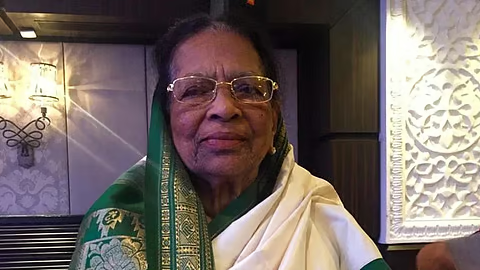
Justice Beevi was the first Muslim woman to be appointed to the higher judiciary in the country and the first woman to be elevated to the Supreme Court of an Asian country.

Late Supreme Court judge Justice Fathima M Beevi awarded Padma Bhushan

The first woman to be a judge of the Supreme Court of India, Justice M Fathima Beevi, was on Thursday posthumously awarded the Padma Bhushan.

Justice Beevi received India’s third-highest civilian award in the field of Public Affairs.

The former Supreme Court judge passed away aged 96 in November last year. Justice Beevi was the first Muslim woman to be appointed to the higher judiciary in the country.

She was born in Kerala in 1927 and her father encouraged her to study law. In 1950, she topped the Bar Council exam becoming the first woman to receive a Bar Council gold medal.

She started her career as an advocate in Kerala and worked her way up to become a district and sessions judge in 1974. In 1980, she joined the Income Tax Appellate Tribunal and was appointed as a High Court judge in 1983.

She made history in 1989 by becoming the first woman appointed to the Supreme Court.

As a Supreme Court judge, she became the first Muslim woman in the higher judiciary and the first woman to become a Supreme Court judge in Asia.

After retiring in 1993, she had served as a member of the National Human Rights Commission and then as Governor of Tamil Nadu.

She had resigned from the post of Governor of Tamil Nadu after rejecting the mercy petitions filed by four condemned prisoners in the Rajiv Gandhi assassination case.

Read more about the former judge here.

source: http://www.barandbench.com / Bar and Bench / Home> News / by Bar and Bench / January 27th, 2024