All posts by mpositiveone@gmail.com

How Jamia helped a scholar raise her daughter

NEW DELHI:

Suhra fought with her family and patriarchal society at large to pursue higher education, overcoming many hurdles.

Suhra with her daughter / Picture by Abdul Shafeeque KP

Jamia Millia Islamia, one of the heritage universities of our country, last year celebrated its 102nd foundation day. Gerda Philipsborn was a founding member of Jamia who fled from Germany when the Nazis came to power. Her biggest contribution to the university was to take care of young children. To commemorate her, Jamia named its daycare centre after her.

Comparing Suhra Hasan to Gerda Philipsborn may be a stretch, but Suhra somewhere touches the motive of Gerda’s foundational ideas. She hails from a village in Kerala, from a family that was expected to marry her off before the age of 20. She fought with her family and a patriarchal society at large to pursue higher education, overcoming many hurdles.

She does not call them hurdles, though, but serendipity. However, for a Muslim girl reaching college and university was a dream, mainly because of compromised economic conditions and societal and religious pressure.

What is tougher? Being a woman in our society, being married, being a mother, being a PhD scholar? Suhra is everything: a married woman, a mother, a scholar who recently finished her PhD at my university, Jamia Millia Islamia, New Delhi.

Mother scholar

Suhra joined Jamia for her PhD in 2015. She met her future husband on campus and got married in 2017, giving birth to a daughter in 2019. Usually, couples practise family planning according to comfort, affordability, etc, but Suhra planned everything around her PhD schedule.

She planned to be pregnant after fieldwork in Kerala because that needed a lot of travelling. Transcribing the fieldwork can be done sitting at home, and Suhra mentally prepared herself to go through her pregnancy during this phase because there would be less need to go out.

But nothing went to plan, and she had to take her daughter to fieldwork in unknown places in Kerala, meeting new people and exploring other dimensions of research work. “Nothing went according to plan; everything happened simultaneously,” Suhra says.

She had become pregnant in her third year of PhD, and had to visit the university to make use of the library. It was a bit awkward for her initially because this was something new on the campus. The BA students, in particular, would stare at her.

But it all turned out beautifully — people started giving her extra support, which encouraged her to be on campus during her pregnancy. Even the security guards gave her tips on how to take care of herself and what to eat during this time. She returned to her home in Kerala in the ninth month of pregnancy and took six months of maternity leave.

She returned to campus when her daughter was five months old. She did not have anyone to help her raise the child. She and her husband raised her while doing their PhD work.

The recent trailer of Anjali Menon’s film Wonder Woman has the line that “it takes a village to raise a child”, but in Suhra’s case it took a university to raise a child. “My pregnancy, my baby, my husband never become a hurdle to my PhD,” Suhra says.

Supervisor

For a PhD scholar, choosing a good supervisor is most important. Suhra got a very good supervisor who helped her with everything.

“Pregnancy is not a disease; it is something very beautiful. You are giving birth to a human, so rather than feel awkward, make good use of this time because once you give birth, you won’t have much time to study,” she advised Suhra.

Suhra lived up to the advice and made good use of her time on campus, where friends helped her with food and reminded her to take her walks and drink juice, etc.

Her husband, also being a scholar, had a busy schedule and his meetings collided with Suhra’s. So her supervisor made a comfortable space for the baby in her cabin where she brought toys and stationery. So, along with supervising her students on research, she also babysat.

Gender roles

Suhra’s husband managed to be a part of the baby’s care. But Suhra believed that in the initial stages, a baby needs its mother more than anything else, and considered herself the primary parent to some degree. But in the past one year, during her PhD submission, her husband became the primary parent. He played with the baby outside the library while Suhra studied late. She would step out of the library in time to feed her.

Talking about her husband’s support, she says: “I know we should not glorify the parenting responsibilities he has taken but considering the patriarchal set-up we are raised in, and the conditioning we have received, his role as a primary parent is immense while my presence was limited to nights.”

Umm-e-Alaa

Umm-e-Alaa is Suhra’s Instagram handle. Alaa is her daughter’s name, and Umme-Alaa means “daughter of Alaa”. Her daughter has given her a new identity: on campus, people know her daughter more than Suhra.

Suhra’s friends keep saying stuff like “Alaa’s first walk was in Jamia”. Suhra says: “For us, Jamia is a university but for her, it is home.”

The child is familiar with all the places on campus because she has friends everywhere. Suhra writes messages on social media about her work on campus and asks people to babysit. Many come and spend time with Alaa, and that is how she (Alaa) became friends with so many people from different regions of the country.

Alaa loves the place. She has her own accreditation to departments and libraries. Jamia has a statue of Mirza Ghalib with a book in hand. Alaa calls him “Uppappa (grandfather) with the book”, her mother’s department “Ummichi’s Mam’s House”, and her father’s department “Vaappachi’s Mam’s House”.

Suhra has given her a childhood without compartmentalised relationships. For Alaa, the whole university is family, and when she goes back home she is unable to understand the concepts of “our family” and “their family”.

“Often people ask me whether it is having a child that took me longer to do my PhD. But I would say pregnancy and childbirth have been instrumental to facilitating my research,” Suhra says.

“I was in the field for data collection during my pregnancy and resumed fieldwork when Alaa was three months old. My daughter’s presence acted as a research tool that made rapport-building with families of prisoners easier. The motherhood identity acted as a cushion, and I was met with empathy by those families.”

At last, when I ask about her PhD journey, Suhra says: “My thesis is also her thesis.”

source: http://www.telegraphindia.com / The Telegraph Online / Home> India / by Nehal Ahmed / February 07th, 2023

Kashmir: A Pashtun village resisting cultural assimilation

JAMMU & KASHMIR:

The community has grappled with sentiments of political alienation and social exclusion Samaan Lateef/DW).© Provided by Hindustan Times


Locals are lamenting an inability to preserve their language and heritage.

The community  is also grappling with sentiments of political alienation and social exclusion. Tucked away 80 kilometers (49.7 miles) from the bustling heart of Srinagar, Wantrag stands as a reflection of traditional Afghan life, where nearly 1,000 Pashto-speaking families fiercely uphold their cultural heritage . The zigzag roads that weave through recently harvested paddy fields and bountiful apple orchards enter into Wantrag, perched majestically atop a hill in the Anantnag district in India-administered Kashmir.

Upon entering the village, a striking sight unfolds — houses line the banks of a water irrigation canal, walnut trees scattered throughout the landscape have transitioned to their autumn attire, and shop signs adorned with Pashto inscriptions. The air carries the shrill of autumn and aroma of Kabuli biryani — a dish consisting of steamed rice, caramelized carrots, raisins and marinated lamb. While women might not be immediately visible, men, both young and old, are seen toiling in the apple orchards. Young boys play cricket on the winding roads while girls wearing headscarves hide behind walls.

Fears over a loss of identity

The Pashtun community’s reluctance to blend with the local Kashmiri population mirrors patterns seen in global diaspora. “Preservation of any community’s identity hinges on the conservation of its language and culture, and unfortunately, we are losing both,” Bashir Ahmad Khan, a retired public school teacher and a Pashto activist, attired in a traditional Pathani outfit, told DW.

In the early 1920s, Khan’s grandfather Noor Khaliq ventured into Kashmir from the Allai region of Khyber Pakhtunkhwa, a province in present-day Pakistan. Khaliq initially arrived for business but chose to stay, and now, his descendants form a major part of Wantrag. He was one of the hundreds of Pashtuns who came to Kashmir for business in the early part of the 20th century and settled here. The descendants of those immigrants have carved out their lives, while resisting cultural assimilation.

Marginalization of the Pashto community in Kashmir

The community has grappled with sentiments of political alienation and social exclusion, a simmering undercurrent that remains prevalent among senior male members who openly condemn the treatment they perceive as discriminatory by the successive governments of India-administered Kashmir.

“Pashto has been confined to being a spoken language here, with no locally-produced texts or encouragement for its promotion,” Khan said, speaking with a deep-rooted concern for the preservation of his community’s identity.

In 1953, the Pashto immigrants were granted citizenship followed by official recognition as one of the backward communities in India-administered Kashmir, a move to uplift the community economically and socially. “Despite having a 12% reservation in government jobs… we had minimal representation in school graduates,” Khan said.

The community received a major jolt after an Indian government-sponsored survey in 1986 categorized Pashtuns under the Gujjar community, creating a sense of injustice and erasing their distinct identity, Khan said.

And four years later, the Mandal Commission or the Socially and Educationally Backward Classes Commission (SEBC) even dropped them out of the Gujjar community, leaving them without any recognition. “Our struggle for recognition as a distinct community and reservation in jobs and university admissions will continue,” Khan said.

The inception of Radio Kashmir in 1948 offered a platform for the Pashto language, featuring news and cultural programs. At that time, no other regional language was represented on Radio Kashmir, except for Pashto, Khan said. “Unfortunately, our community was kept away from modern education resulting in the gradual disappearance of Pashto programs on radio and television,” he added.

“Our space and representation were taken away from us,” said Khan, blaming vested interests among the Other Backward Class (OBC) groups in Kashmir for obstructing Pashto from gaining a presence on radio and television. “We used to have Pashto news and cultural programs on Radio Kashmir. But not anymore.”

Cultural assimilation of Pashtuns in Kashmir

Kashmiri Pashtuns, commonly referred to as Kashmiri Pathans, predominantly reside in the districts of Ganderbal, Baramulla, Anantnag, and Kishtwar, with a population of around 40,000.

Their cultural assimilation within the broader Kashmiri population has become evident, seen through the adoption of the traditional Kashmiri garment, the Pheran, and the acceptance of intermarriages. Yet, the Pashtun community perseveres in preserving distinctive aspects of their heritage, especially language, and food. A small booklet, first of its kind, was recently published to teach Pashto to children. Even tailors are strictly directed to only produce Pathan-style clothing.

“But today, we find ourselves more integrated into Kashmiri society rather than adhering to Afghan customs. As the Pheran culture gradually became part of our lives, we now require political support to preserve our traditions,” Khan said.

At a crossroads

Imbibing local Kashmiri culture while retaining certain Afghan traditions, the community finds itself at a crossroads, straddling the line between cultural adaptation and the preservation of their heritage. Endogamous marriages were once the norm, keeping the Pashtun culture intact, but as inter-community marriages become more common, there is a growing concern that their cultural traditions may erode.

While their unique customs and traditional attire have endured over time, the Pashtun community’s engagement with Kashmiri society has deepened, giving rise to a natural integration of cultures. Yet, Khan harbors concerns about the inevitable and gradual integration of the Pashtun community into the majority Kashmiri population.

“Our kids speak Kashmiri now and community is opening up to marrying their children into Kashmiri families,” said Khan, while acknowledging that, given the numerical disparity, the Kashmiri majority is bound to exert its cultural influence over time.

source: http://www.hindustantimes.com / Hindustan Times / Home> News> Lifestyle> Art Culture / by Deutsche Welle / Hindustan Times / November 10th, 2023

Zameer Uddin Shah: Sarkari Musalmaan who served country as soldier, diplomat and educationist

NEW DELHI:

Lt Gen (Retd) Zameer Uddin Shah

Lt Gen (Retd) Zameer Uddin Shah in his autobiography refers to himself a ‘Sarkari Musalmaan’ – a Muslim who, according to him, is pro-establishment and supports the government of the day. A Sarkari Musalmaan defines his religion in a way that is acceptable to the establishment and projects himself as a modern rationalist by being submissive, or worse, by actively pandering to the bigotry against his co-religionists.

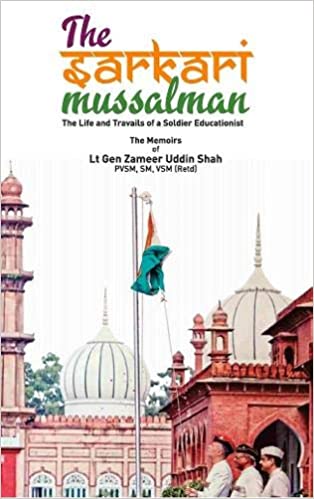
Sarkari Musalmaan: The life and Travails of a soldier educationist released in 2018 is the story of author’s journey from a Madrassa to becoming the Deputy Chief of the Indian Army and finally the Vice-Chancellor of the Aligarh Muslim University.

Book Review:

Zameer Uddin Shah’s ancestors came to India from Afghanistan during early nineteenth century. Being the second of the three children of Syed Aley Mohammed Shah and Farrukh Begum, Zameer was given to his mother’s spinster sister for adoption. He grew up being more attached to his foster mother than his own. At 17, he joined the National Defence Academy at Khadakwasla, Pune. Despite being a lone Muslim in his class of 200 cadets, he ‘was warmly welcomed, treated fairly and experienced affirmative action.’

Cover of the Book

The author talks of living under the shadow of his celebrity brother actor Naseeruddin Shah and being his greatest fan. Nasser always wanted to become an actor and was not as good in academics as he or even their elder brother Zaheer. He recalls Zaheer as being the smartest of all. The family photographs in the book give a visual context of author’s narrative.

The author talks about his indomitable presence in the 1971 Indo-Pak War. Being a part of several hundred officers of the Battle Axe Division, he fought for his country on the desert sands of Jaisalmer. He recounts that this was the most taxing phase of his life that had a strong bearing on his family. Nobody knew whether he would come alive from the war but he did and was awarded a prized posting as a Defence Attache to Saudi Arabia and had an opportunity of serving with Hamid Ansari, the then Ambassador to Saudi Arabia. The author recounts  “The fact that my country could repose faith in me and send me to Saudi Arabia strengthened my belief in the fundamental inclusive and secular fabric of Armed forces.” He goes on to explain in detail his stay and his travels across the Middle East with supporting photographs. This part of the book comes across as a travelog and makes reading even more fun.

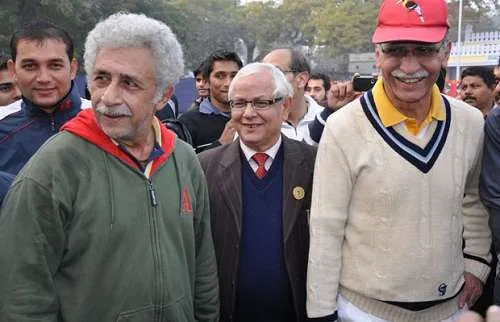
The famous siblings: Zameer Uddin Shah with his brother, actor Naseerudin Shah

He describes the sheer inclusiveness with which his profession treated him as a Muslim and says that ‘I never wore my religion on my sleeve. My beliefs were between me and my maker. Whilst on parade, the Army was my religion. My men cared for my sentiments too. During Ramadan fasts, they would make sure I got breakfast every morning at 3 a.m.’

The most interesting chapter of the book is the one that deals with ‘Operation Aman’, an operation that his regiment carried out to bring peace and quell the riots and communal upheaval of Gujarat in 2002. The then Chief Of Army Staff, General S Padmanabhan handed over this responsibility to Zameer Uddin Shah.

‘We landed on a dark deserted airfield in Ahmedabad’ says the author En route to Chief Minister’s residence at Gandhi Nagar he was horrified to observe the rampaging mobs, burning and pillaging the police as mute spectators. With the army at the helm of affairs, the situation finally came under control and the operation was a success. This added one more feather to his cap.

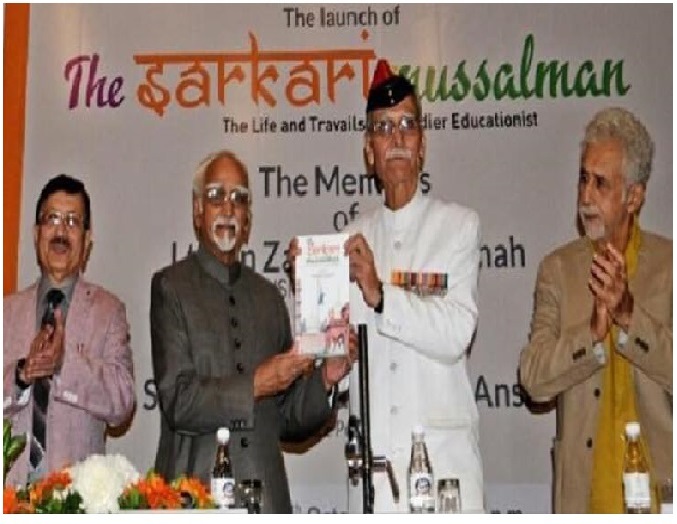
Vice-President Mohd Hamid Ansari releasing the book

In the last chapters, the author talks about his tumultuous tenure as the AMU Vice Chancellor where hostile forces kept trying to pull the rug from beneath his feet. Kapil Sibal, the then HRD Minister had offered him the post and he had taken it, despite the disapproval of his friends and family. During his tenure, the university emerged as the best one in the country according to international ranking agencies like Times Higher Education, London, and US News World Report.

Throughout the book, the author constantly tries to make a case that Indian Muslims need education above anything else and there is an urgent need to draw them into the mainstream.

‘Discrimination’ says the author does exist but it certainly affects the lesser educated. The book would interest anyone who wishes to opt for a military career and also the young Indian Muslims who think that the odds are against them. This autobiography is there to suggest otherwise.

The Sarkari Mussalman: Life and travails of a soldier educationist ; Lt Gen Zameer Uddin Shah, Rs 599, Konark Publishers 

(Saleem Rashid Shah is a research scholar and a non-fiction book critic based in New Delh). 

source: http://www.awazthevoice.in / Awaz, The Voice / Home> Story / by Saleem Rashid Shah / May 2023

Rasul Miya and his song on Mahatma Gandhi’s assassination

Jigna, Gopalganj District, BIHAR:

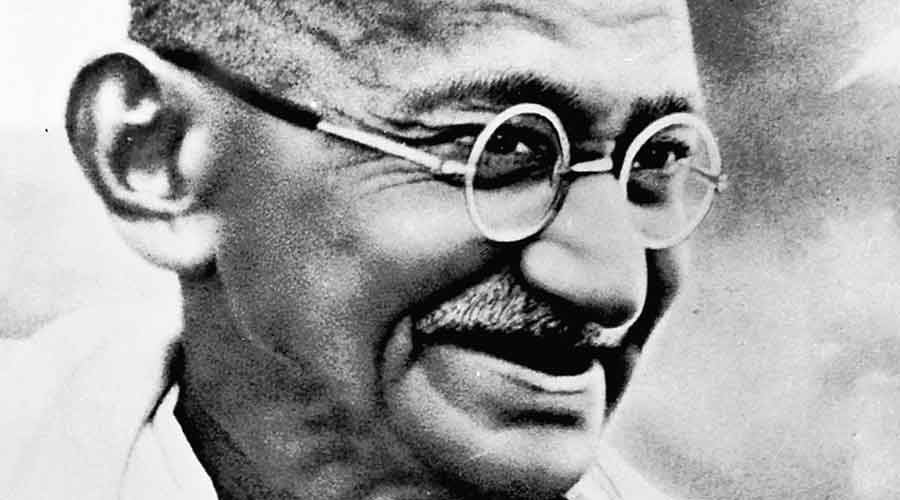
Mahatma Gandhi./ File photo

He was a poet, playwright, lyricist, folk singer and social and political activist.

When it comes to Bhojpuri literature or music, many people are only familiar with the vulgar songs raking in “likes” on YouTube and social media. But there is more that remains unknown outside.

Bhojpuri literature, especially folk music, is profoundly rich and covers a wide range of social, cultural and political issues such as dowry, child marriage, migration, freedom, communalism and caste.

Migration has always been central to Bhojpuri literature. Over the last two centuries, large numbers of people have migrated from this region. Bidesiya, a play written by Bhikhari Thakur that marks the trend, has been adapted into a film. Mahendra Misir and Master Nazir, too, are known for writing on migration and many other issues.

But before them, there was Rasul Miya whose work was not limited to cultural and social issues. He wrote also about the political problems of the time. His poetry is full of agony over issues such as colonialism, feudalism, the Partition, Hindu-Muslim unity and Mahatma Gandhi’s assassination.

Rasul Miya was a poet, playwright, lyricist, folk singer and social and political activist. He was born in 1872 in a village called Jigna in Gopalganj district (neighbouring Siwan) of Bihar and died in 1952. His father and other family elders, too, were members of a drama company known as Naach in the region.

He learnt from his elders but did not follow their tradition. He incorporated contemporary political ideas into his songs. His poetry bore the influence of Mahatma Gandhi.

‘Kalkatwa’ connection

Bihar and eastern Uttar Pradesh have a very old relationship with Calcutta. Since colonial times, this region has not had much employment opportunities, so people migrated to countries like Fiji and Suriname as “girmitiya mazdoors” (indentured labour), to the Gulf countries (called Pardesi) as unskilled labour, and to Calcutta in search of a prosperous life.

Therefore, migration was a very important reason why such literature came into being. In a way, Calcutta was seen as evil because it always snatched the male members of the household.

The people of this region often call the city “Kalkatwa” — a name that carries a negative connotation that is far removed from the “Kalkattey” of Mirza Ghalib, who loved the city.

As Bhikhari Thakur wrote: “Hey sajni re hey sajni, piya gaile Kalkatwa he sajni (Oh, my darling, my beloved has gone away to Calcutta).”

As his father, too, had migrated to Calcutta, Rasul Miya used to go there quite often and perform on stage. The city had a huge number of migrant labourers from Bihar and Uttar Pradesh.

Once, before Independence, Rasul Miya performed in a police station in Calcutta, singing a song that inspired many Indian personnel to quit the British-led force.

“Chhod da gorki ke ab tu khusami balma/ Ekar kahiya le karab ghulami balma (Give up serving the British/ How long will you be slaves to them),” he sang.

The exodus, mainly by personnel from Bihar and eastern Uttar Pradesh, drew the attention of the British. The colonial government arrested Rasul Miya because it felt threatened by his songs. He was taken to a police station through a red-light zone. Later, sex workers of the area pawned their jewellery to secure Rasul Miya’s release.

On the day of the Mahatma’s assassination, Rasul Miya was in Calcutta and was about to perform at a factory. Gandhi’s death shook him. But when he was asked to cancel his show, he insisted that he would perform but would change the content.

He changed the entire performance on the spot. One of the songs he sang was: “Ke maral hamra Gandhi ke goli ho dhamadham teen go/ Kalihe azadi milal aaj chalal goli (Who killed my Gandhi, firing three shots/ We got freedom just yesterday and fired the bullets today).”

Rasul Miya never met the Mahatma but staunchly believed in his ideas. It’s people like Rasul Miya, who registered their protest despite having many limitations, that we need to remember today while dealing with political majoritarianism.

Fearlessness

Other Bhojpuri poets and drama companies portrayed social evils. Bhikhari Thakur, the “Shakespeare of Bhojpuri”, wrote on subjects like child marriage and dowry.

Mahendra Misir’s songs are still popular and help understand the pain of migration, while Master Aziz was a champion of Hindu-Muslim unity through his songs and was known as “Kabir of Bhojpuri”.

But Rasul Miya’s venture into political issues reflected his fearlessness. He wrote against the zamindari system and on the Partition, communal politics, religion and caste, as well as on his philosophy of life.

Why do we need to remember him?

First, when we are dealing with hatred against minorities — especially Muslims but also Dalits — we need to know about a Muslim poet-lyricist who wrote Ram Ka Sehra.

(Sehra is a genre of Urdu poetry. In Poorbi culture, during Muslim and Hindu marriages, sehras are sung for the bridegroom when he arrives at the bride’s door.)

People like Bhikhari Thakur and Mahendra Misir are remembered through books, statues and government facilitation but Rasul Miya has been forgotten. Even his family does not have a single photo of him. Rasul Miya should be remembered the same way as figures like Gaddar, Faiz and Paash.

Although Rasul Miya had been easily forgotten because of the lack of records, the author Subhas Chandra Kushwaha has revived his memory and legacy.

He went to Rasul Miya’s home and collected his songs and details about his life orally from his relatives and other residents of the village.

Chandan Tiwari, a Bhojpuri folk singer, is known for reinventing forgotten Bhojpuri folk songs. He has made Rasul Miya popular and familiar again by singing his songs and making them accessible to the masses.

source: http://www.telegraphindia.com / The Telegraph Online / Home> India / by Nehal Ahmed / May 16th, 2022

Nehal Ahmed to be laid to rest with full state honours

MAHARASHTRA:

Malegaon: 

Veteran socialist leader, a front leader of Samyukta Maharashtra Movement, former minister, one of the founders of Janata Party and Janata Dal (Secular), MLA for more than 30 years and the first mayor of Malegaon, Nehal Ahmed who died on Monday will be laid to rest with full state honours.

“Nehal Ahmed will be laid to rest with full state honours at Malegaon Bada Qabristan tonight at around 11:00 pm”, SDO Malegaon Ajay More said while talking to ummid.com.

“We have already received the official communique from the state government regarding this and the preparations are on for the funeral of Nehal Ahmed with full state honours”, he added.

According to the family sources, the last journey of Nehal Ahmed will start at around 09:00 pm from his MHB Colony residence. The funeral procession will pass through Old Mumbai-Agra Road, Qedwai Road and them halt for a moment at Janata Dal (S) office. It will then proceed to Bada Qabrastan for the last rites.

Nehal Ahmed, the senior most socialist leader who participated in various socialist movements including the Maharashtra Movement, was ailing since last few weeks. He was shifted to a local hospital on Friday. After his condition deteriorated further the family took him to a hospital in Nashik.

“Saheb died at around 09:30 am in Nashik”, Mustaqueem Dignity, his son in law said while talking to ummid.com.

His mortal remains was brought to Malegaon at around 02:30 pm.

Born in 1926 to Maulana Mohammad Usman, Founder of Jamiatus Swalehat, Nehal Ahmed was also Leader of Opposition in the Maharashtra Legislative Assembly.

A socialist leader and political guru, who never compromised with the rules he set in his political career, sported black badge on his left shoulder till his last breath to protest the demolition of Babri Masjid.

Nehal Ahmed began his political career as Mazdoor Leader, won the municipal election and later assembly elections.

When Sharad Pawar became the youngest Chief Minister of Maharashtra, Nehal Ahmed was made the Labour Minister in his cabinet.

In 2001, when Malegaon Municipal Council was converted into a Corporation, Nehal Ahmed contested the civic election, led the Janata Dal (S) to a majority and became the First Mayor of Malegaon.

He also contested the Parliamentary Elections in 2009 but lost to BJP’s Pratap Sonawane.

source: http://www.ummid.com / Ummid.com / Home> India / by Ummid.com Staff Reporter / February 29th, 2016

Nothing Will Be Forgotten: From Jamia To Shaheen Bagh review: An account of fear and hope

INDIA:

A Jamia Millia Islamia University student provides a snapshot of history made at Shaheen Bagh.

The content of Nothing Will Be Forgotten is as direct as its title. A Ph.D. scholar at Jamia Millia Islamia University, Nehal Ahmed, was present on the campus during the days leading up to the police attack on Jamia students on December 15, 2019. What he witnessed on that “darkest day of his life”, he documents in detail.

The 138-pages centre around the peaceful agitation turning into a warzone and the unique gathering of Muslim women in nearby Shaheen Bagh to lead the protest against the Citizenship (Amendment) Act, 2019 (CAA). Ahmed writes a passionate first-hand account of a student shattered by the violence inside his university and how it led to a creative resistance and evolved into an inspiring movement spanning three months.

Harrowing experience

Fearless discussions in college canteens, lawns and libraries taught him more about meaning and purpose of life, values, tolerance and faith. But on that fateful day when police beat up his fellow mates purportedly for joining the protest march against the CAA on December 13, Ahmed felt the only way to give vent to his angst would be to write a book.

“Pliant media demonised us; the distorted truth and incorrect portrayal of a Jamia student’s identity and overnight labelling them as rioters, anti-nationals and terrorists made me put out my version of truth as I experienced it,” he writes.

While the world vividly saw and remembers the visuals on TV channels, Ahmed revisits those horrific hours when he himself was caught in the crossfire and had to run helter-skelter for his life. He details how the police rampaged through reading rooms and libraries, hunting for students, dragging them out and beating them brutally. Bloody wounds, injuries and broken limbs crushed their belief in the ethos of constitutional values and inflicted grave psychological wounds.

Ahmed talks of the harrowing experience of state violence for speaking out against laws that discriminated against Indian Muslims. The venue of agitation shifted to Shaheen Bagh and Ahmed mentions how a three km walk by students and residents brought Jamia and Shaheen Bagh together, shining with the idea of secular India.

But Hindu majoritarianism gave it a communal colour. What transpired between December 15, 2019, and February 24, 2020, (the orchestrated riots in northeast Delhi) was traumatising. The innate power of people cannot be denied but after more than two years, many emotional scars have not healed.

Moments of solidarity

A heartwarming chapter in the book is on ‘Resistance Through Art’ that highlights how students responded to violence and hatred with love, peace, poetry and painting. It radiates positivity and hope that is true of revolutions through art. They focussed on engaging with the community; and created walls of graffiti, slogans, paintings and posters, wrote poems and sang songs of resistance, set up a library with books and pamphlets to educate and explain the CAA to people.

In between the many stories of sadness, fear and pain were also entwined moments of solidarity, happiness and a sense of fire to safeguard the country’s secular fabric. But when the riots began in northeast Delhi, Ahmed says for the first time he felt scared as an Indian minority. “I lost hope as a citizen but the cycle of learning has not stopped,” he writes.

Nothing Will Be Forgotten: From Jamia To Shaheen Bagh; Nehal Ahmed, LeftWord, ₹250.

soma.basu@thehindu.co.in

source: http://www.thehindu.com / The Hindu / Home> Books> Review / by Soma Basu / April 16th, 2022

Stories of courage reverberate amid calls for change

KERALA:

Nilambur Ayesha, Sameera & Ayishumma Thavanur share their struggle to claim rights.

Khadeeja Mumtaz and Nilambur Ayesha during the Muslim Women’s Conference in Kozhikode on Saturday | E Gokul 

Kozhikode :

The Muslim Women’s Conference with the theme ‘Equality is Justice’ held in Kozhikode became a platform for an open discussion on property rights issues being faced by women in the Muslim community and other violations of fundamental rights. 

The conference organised by the Centre for Inclusive Islam and Humanism at Nalanda Auditorium on Saturday also witnessed Nilambur Ayesha, Sameera Bukhari and Ayishumma Thavanur sharing the struggle they took up to claim their rights in the community. 

“Women should be treated with respect and love. In Kerala, many women are suffering torture from their husbands and in marriages, they are just focusing on mahr and dowry. After receiving dowry, the women are treated in a pathetic manner,” said Nilambur Ayesha, who also shared how she struggled to overcome the restrictions of conservatives in the community and became the first female film actor from the Muslim community.

Similar is the case of Ayishumma Thavanur who has been fighting for the past five years for her three daughters to inherit their sole property. “Since we don’t have any sons, our sole property, which was registered under my late husband’s name, has to be partitioned and a portion should be given to the husband’s brothers also. As per  Islamic law, my daughters can’t inherit the property fully. But we are facing financial issues and we are fighting for my daughters’ rights. God didn’t make such rules that make human lives difficult, but they are made by the elites and patriarchal society. This should be changed,” Ayishumma said. Meanwhile, Sameera Bukhari shared her painful experiences that she faced in her married life and how she overcame it and became a motivational speaker.

C H Musthafa Moulavi, advisor for the Centre for Inclusive Islam and Humanism, said that Muslim Personal Law is entirely against the teachings of the Quran. The conference had special sessions led by experts on various issues being faced by Muslim women such as inheritance, guardianship of children and permitting divorce in marriages. 

source: http://www.newindianexpress.com / The New Indian Express / Home> States> Kerala / by Express News Service / March 05th, 2023

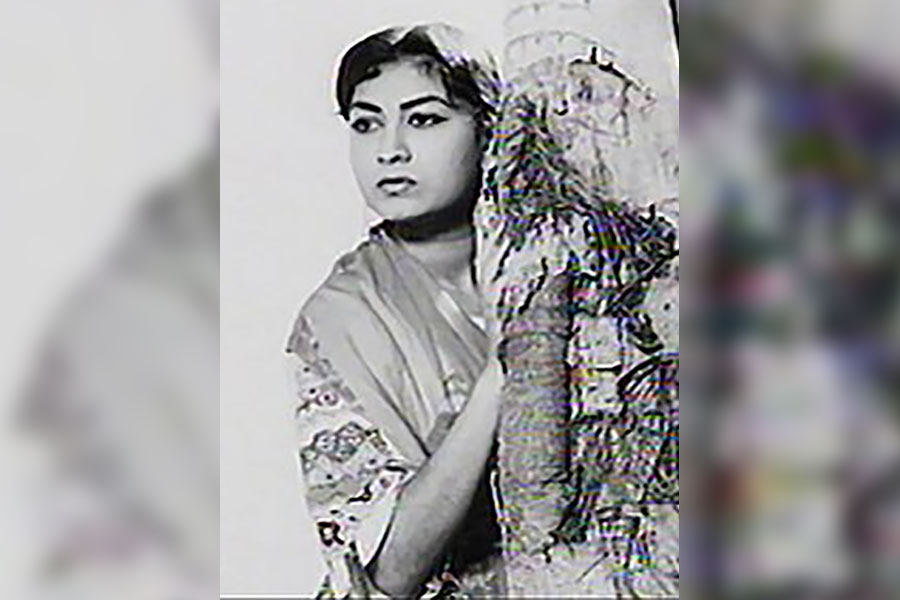
Veteran Actor and Mehmood Ali’s Sister Minoo Mumtaz Dies in Canada

Mumbai, MAHARASHTRA / Toronto, CANADA:

Photo Source: https://commons.wikimedia.org/wiki/File:Minu_Mumtaz.jpg

Minoo Mumtaz aka Malikunnisa Ali, the veteran Hindi actor and comedian Mehmood’s sister, died in Toronto in Canada on Saturday.

She was recently diagnosed with cancer and her health deteriorated quickly, leading to her demise, ETimes reported.

Mumtaz’s nephew Naushad, confirming the news to the publication, said, “Since she was old, 80 plus, there wasn’t much to be done. She was one of the loveliest people I had ever met”.

Her younger brother Anwar Ali, who is also part of the film industry and is now a producer, wrote, “Regret to inform that my loving sister Minoo Mumtaz, passed away (in Canada) a few minutes ago… Deep gratitude to the film fraternity, press, media, fans, friends, for decades of love and adulation showered upon her.”

Born to a family of four brothers and four sisters, Mumtaz was the daughter of Mumtaz Ali, a dancer and character artiste in Hindi films in the 1940s. She was renamed Minoo by actor Meena Kumari, her sister-in-law and Mehmood Ali’s wife.

While she started her career as a stage dancer, Mumtaz appeared in several Hindi films in the 1950s and 1960s as a dancer and character actor. She made her debut with Sakhi Hateem, and moved on to play the lead opposite Balraj Sahni in Black Cat (1959) and appeared in several Guru Dutt films including Kaagaz Ke Phool (1959), Chaudhvin Ka Chand (1960) and Sahib Bibi Aur Ghulam (1962). Other Hindi films that she appeared in include Taj MahalAlibaba, Ghoonghat, Ghar Basake Dekho, Insan Jaag Utha, Sindbad, Jahanaara, Aladin, Gazal, Dharmaputra. She also appeared in the 2002 television serial Chalo Chale Pardes.

Expressing her condolences on the late actor’s demise, author Bhawana Somaaya wrote, “#MinooMumtaz lead dancer of Hindi movies in the 50s and the 60s dies in Canada. Condolences to #AnwarAli family.”

Actor Nasirr Khan also mourned Mumtaz’s death.

Mumtaz is survived by her husband Sayyed Ali Akbar, son and three daughters who lived with her in Toronto.

Namrata Ganguly is a Correspondent at Silverscreen India, and can be reached by email at namrata@silverscreen.in

source: http://www.silverscreenindia.com / SilverScreen India / Home> Hindi> News / by Namrata Ganguly / October 23rd, 2021

Two Circle Network’s Seed Fellow Sufi Parween Wins Laadli Media Award

BIHAR / Kolkata, WEST BENGAL :

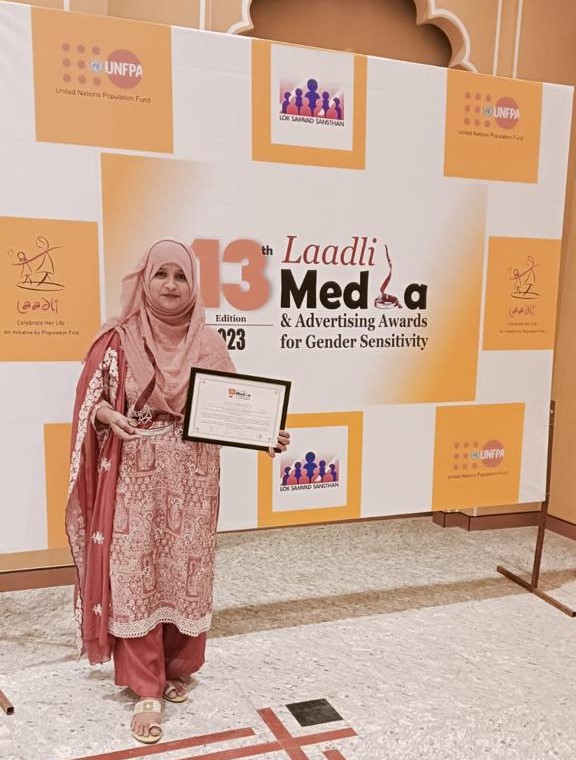
We are happy to announce that TCN’s SEED Fellow Sufi Parween has won the 13th Laadli Media Award for her exceptional contribution to gender-sensitive reporting. 

Her award-winning story, “Bihar: These Muslim women break taboo by learning Madhubani painting – TwoCircles.net,” focuses on a transformative initiative among Muslim women in Bihar who have broken social norms by learning Madhubani painting, the traditional Indian art style.

source: http://www.twocircles.net / TwoCircles.net / Home> Journalism / by TCN News / October 27th, 2023

A Muslim Woman Is Helping Patients of Sickle Cell Disease Get Treatment in MP’s Chhindwara

Chhindwara, MADHYA PRADESH:

At the age of two and a half years, Swaleha Naaz Khan fell down the stairs while playing and broke her hand. This incident marked the first time she visited a hospital. However, for Khan, a patient of Sickle cell disease, it set off a cycle of sickness, incorrect medications, hospital visits, and unsuccessful treatment. Now at 26, she recently completed her M.Sc (Masters in Science) in Computer Science from a private institute in Chhindwara, Madhya Pradesh and helps people fight suffering from Sickle cell disease in this small town of Madhya Pradesh.

Facing Problems in Identifying the Disease

Growing up, she constantly experienced severe body pain. Due to a limited medical infrastructure in the city at that time, doctors were unable to identify the source of her pain.  Her body would frequently stiffen, prompting her father to assume she was possessed by a spirit or djinn. They sought help from hakims and babas in hopes of finding an explanation for her pain but to no avail. Khan and her family went from city to city in order to get her treated. They even travelled to Nagpur in Maharashtra for this purpose. 

Dr. Shrivastav, a doctor at the city government hospital, finally diagnosed Khan with sickle cell disease while she was in 10th grade, after she was brought to the hospital the night before her board exams. “It was for the first time that I received correct treatment,” she went on to say.

The Disease Affected Khan’s Education

Previously, whenever Khan’s condition deteriorated, she was given injections to soothe her unbearable pain. “The injections were given every 8 days, causing me so much pain that I could only sleep on one side. I couldn’t sit down properly. My education was also greatly affected. I often had to miss school,”  she explained. Due to being admitted a day before exams, she flunked in 10th grade. 

Sickle cell disease [SCD] is a hereditary medical condition that persists throughout a person’s life and affects red blood cells, which in turn impacts hemoglobin – the carrier of oxygen in the body. 

Unlike the typical disc-shaped red blood cells found in a healthy person, in SCD, these cells take on a crescent or “sickle” shape. The alteration affects their manoeuvrability in blood vessels, leading to a range of complications such as strokes, vision issues, infections, and bouts of intense pain known as pain crises. 

According to Gautam Dongre, Secretary of National Alliance of Sickle Cell Organisations (NASCO), sickle cell disease can cause great damage to people’s lives. “Without accurate diagnosis, individuals with this condition may not live more than 4 years. They can be affected by organ damage within 20 years. Their joints may stop functioning properly, potentially leading to disability. In the absence of proper treatment, it can result in premature death. Otherwise, their entire life may be centered around going between the hospital and home,” said Dongre stressing that timely treatment of the disease is extremely critical.

Creating a WhatsApp Group of Sickle Cell Patients To Help Them

Khan was admitted in 2016, along with two other SCD patients, Deepika and Aishwarya. She had previously thought she was the lone patient suffering from the disease. However, she began to meet more people suffering from the disease. “Aishwarya formed a group of all Chhindwara’s sickle cell patients.  We discovered that there are numerous patients with SCD in that district. At the time, we were only 15-16 years old,” she explained.

After she discovered more than 500 SCD patients in Chhindwara, Khan decided to visit the District Magistrate’s office in order to demand a separate hospital ward for them. She says that when she used to visit the government hospital, they had to purchase everything from outside. The only thing they provided was a bed, which was free. She observed that patients coming from remote villages faced several difficulties in accessing proper healthcare due to this. 

“We demanded for all patients to get access to Dr. Shrivastav. After that, we asked for the availability of medicines. The whole process was really taxing. After going through several offices and facing rejections, medicines were finally made available in the hospital for free. Rarely does anyone need to purchase something from their own pockets,” Khan stated, proudly.

‘Cared for Me as if I Were Her Own Sister’: A Sickle Patient

22-year-old Nazrana Mansuri, a patient suffering from Sickle Cell Disease (SCD) in Chhindwara, recounted her first meeting with Khan at the hospital. Upon learning that Mansuri is an orphan, Khan assumed full responsibility for her operation. “I used to live with my khala (aunt), who worked as a daily wage earner and didn’t have the means to look after me. Swaleha took all my responsibilities. Despite being unwell herself, she stayed with me throughout the night of the operation. She not only brought me food but also cared for me as if I were her own sister. It’s been two years since my operation, and she still feels like family to me,” Mansuri said.

How Extreme Weather Made Khan’s Condition Worse

Khan said that during wintertime, her blood vessels used to thicken causing her extreme pain. 

Dr. Gaurav Kharya, the clinical lead at the Centre for Bone Marrow Transplant and Cellular Therapy, Indraprastha Apollo Hospital, New Delhi, explained that under normal circumstances, sickle cell disease may not pose a problem. However, during hot weather when dehydration occurs, and in extremely cold temperatures when small blood vessels constrict, a crisis can occur. During these episodes, the shape of sickle-shaped cells can become further distorted and obstruct various blood vessels, resulting in the typical symptoms of sickle cell disease.

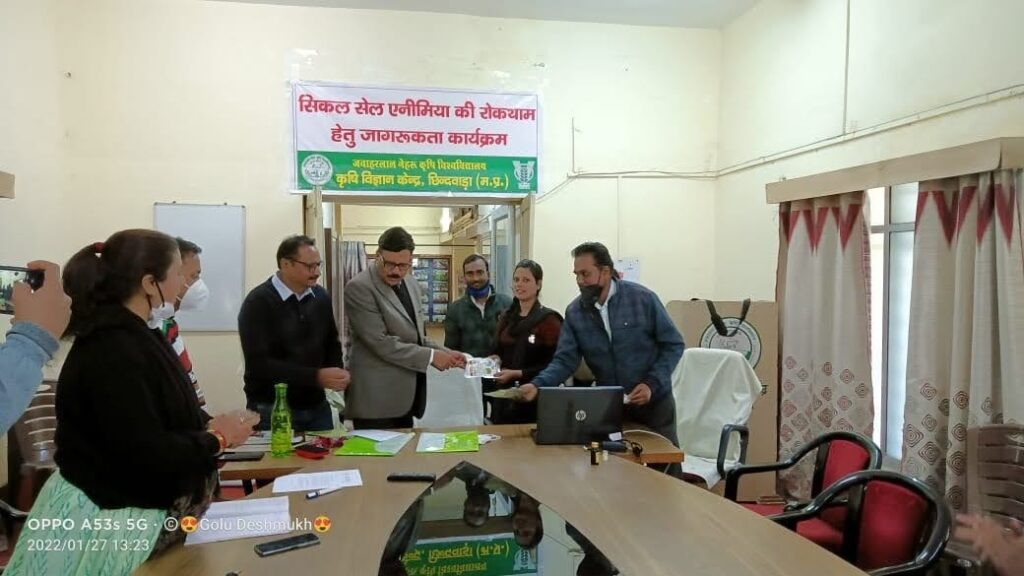
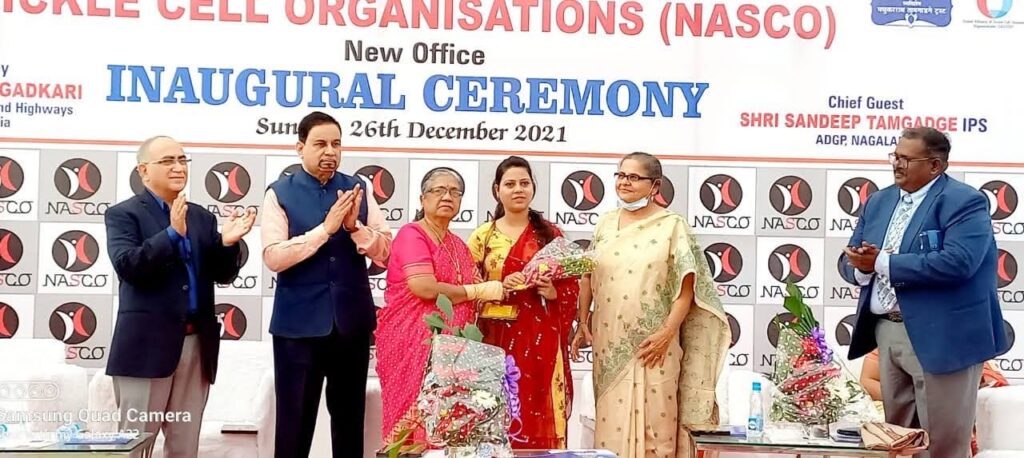
In 2020, Khan joined the National Alliance of Sickle Cell Organisations (NASCO), after meeting Gautam Dongre. Today, she manages all of NASCO’s work in Madhya Pradesh and helps out hundreds of patients of the sickle cell disease with getting them treatment, diagnosis and recovery.

Shaba Manzoor and Nuzhat Khan are independent reporters based in New Delhi, India.

source: http://www.twocircles.net / TwoCircles.net / Home> Indian Muslim> Lead Story> Science-Health> TCN Positive / by Shaba Manzoor & Nuzhat Khan / October 31st, 2023