All posts by mpositiveone@gmail.com

Book Excerpt: Barsa By Kadeeja Mumtas

Kattoor (Thrissur District),KERALA:
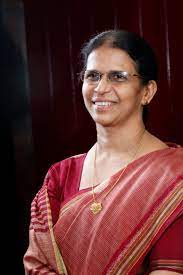
Khadija Mumtaz - Wikipedia

Barsa, written by Kadeeja Mumtas, is the first Malayalam novel to be set in Saudi Arabia and as its introduction states, is a record of “a woman’s scrutiny of Islamic scriptures and Muslim life”.
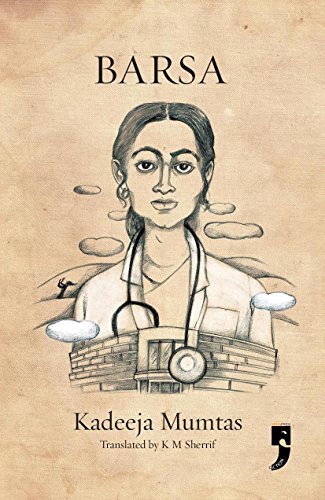
Barsa, as its introduction states, is the first Malayalam novel to be set in Saudi Arabia. Written by Kadeeja Mumtas and translated into English by K M Sherrif, the book acts as a record of “a woman’s scrutiny of Islamic scriptures and Muslim life”. 

Sabitha, the protagonist of the novel, after moving to Saudi Arabia, starts questioning every aspect of her every day life – including religion.


The novel traces her personal journey as she is caught amidst culture, religion, and personal agency, and struggles to assert her own identity.

One hot afternoon, Rasheed and Sabitha first stepped out like refugees on the large expanse of land surrounding the grand mosque which housed the holy Ka’aba. Other travellers who knew their way hurriedly moved on while the two of them stood hesitantly at the crossroads, unsure of their next step. The coppery glare of the sun sat on their heads like the legs of a giant spider.

Rasheed glanced at Sabitha. He could sense her discomfort in the headscarf and the abaya, looking like a lawyer’s coat, which the Malayali workers at the airport had helped her buy. But he thought that even in those uncomfortable clothes, Doctor Prabhakaran’s niece, with her wheatish complexion, had a particular charm. He wanted to tell her this with a little smile, but with his tongue stuck to the roof of his dry mouth. He just couldn’t do it, which was a pity. If he had, maybe the wrinkles on her forehead would have lost at least one crease.

A yellow taxi backed up and stopped near them. Th e face of a man with a shabby headdress clamped down by a black ring came into view, and an arm jerked out of the window at the driver’s seat. “Fain aabga ruh?” Rasheed guessed he was asking where they wanted to go and replied, “Mudeeriya Musthashfa”—the Health Directorate. He had gleaned the Arabic expression from the conversation he had had in halting English with the Palestinian doctor they had met at the airport emergency service. He had seen Sabitha too write it down in her diary.

“Ta’al ”—come. Th e driver opened the car doors and invited them in. As he could not understand the driver’s sarcastic remark, directed obviously at his fairly large suitcase, Rasheed, with some embarrassment, chose to put it on his lap as he sat down and leaned back comfortably.

As the car sped at breakneck speed, Sabitha felt a tremor run through her, but she suppressed it immediately. She felt helpless at having to depend on a complete stranger, an Arab driver whose language she did not know. But she was also reassured by Rasheed’s presence. They had reached this far, trusting strangers, many of whose languages they did not know.

As they boarded the Saudi Airlines flight to Riyadh from Mumbai, Thambi, the man from their ticketing agents Ajanta Travels, had said reassuringly, “The flight will take about four and a half hours. Someone from the Ministry will be waiting to receive you. There is nothing to worry about, Riyadh is a nice city. Okay then, happy journey!”

From the moment Thambi, with that characteristic city dweller’s way of waving goodbye had raised his hands and walked away, Rasheed and Sabitha had taken comfort in each other’s presence. They could make this journey together only because of their decision to stick to each other, come what may. At the interview in Mumbai, it was Sabitha who was selected first, as a lady gynaecologist. The interview for ophthalmologists had not yet been conducted and, as there were a large number of applicants, Rasheed was not too hopeful of getting in. When she was asked to sign the contract, Sabitha hesitated, “I will sign only if my husband too is selected.” She had by then realised that lady gynaecologists were much in demand. “You sign; even if he is not selected, he can come with you on a family visa and then try for a job there.”

The man at Ajanta Travels, a go-getter, tried to hustle her. “No, I am not that keen to go to the Gulf to work. I will go only if he also gets a job there.” Her stubbornness paid off . An interview was fixed for Rasheed as a special case.


Excerpted with permission from Barsa, by Kadeeja Mumtas, Yoda Press. You can buy this book at 20% off at the FII-Yoda Press Winter Book Sale on 21st and 22nd December 2018 in New Delhi. For more details, check out the sale page.

source: http://www.feminisminindia.com / Feminism In India – FII / Home> Culture> Books / by FII Team / December 21st, 2018
Book Review: Muslims In Indian Economy By Omar Khalidi

Hyderabad, INDIA / Boston (MA), U.S.A:

The narrative is lucid, and the book is an important read for individuals, policymakers and think tanks to understand the ground reality.

pix: amazon.in

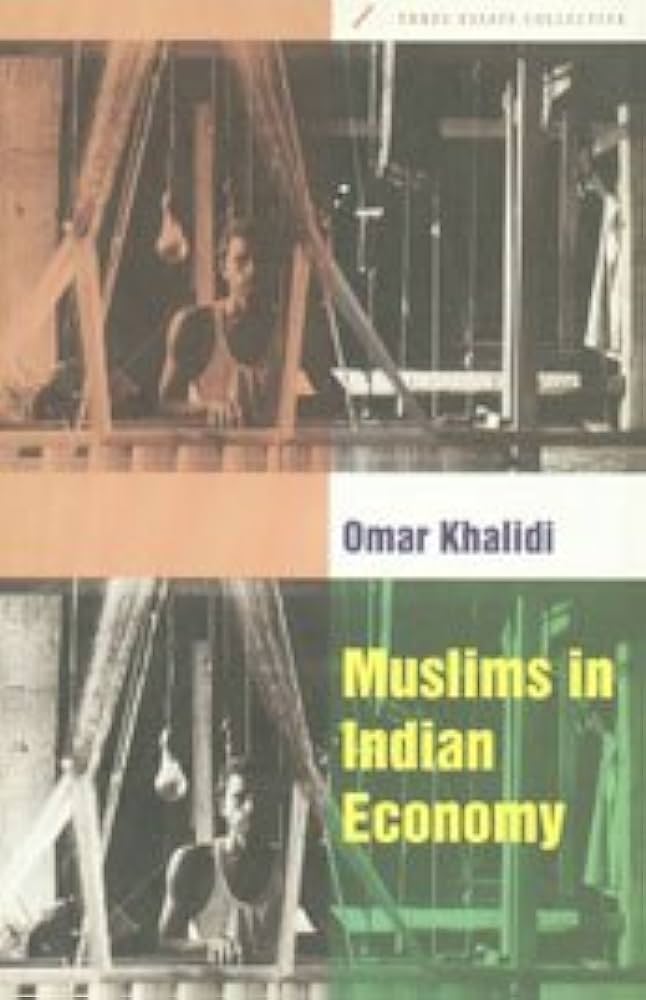
Written by an independent scholar Omar Khalidi, the book Muslims in Indian Economy tries to describe the economic condition of Muslims in India. The narrative is lucid, and Khalidi’s target audience are laymen along with policymakers and think tanks.

The whole book is divided into two major sections. The first is the description of the economic condition of Muslims at the pan-India level. It has two sub-sections dealing with the economic status of Muslims: in colonial India and Independent India. The second major section is the description of the economic conditions of Muslims in the six states of India: Delhi, Uttar Pradesh, Bihar, Andhra Pradesh, Karnataka and Maharashtra. These two sections are followed and preceded by an introduction and conclusion chapter, respectively. 

Written by an independent scholar Omar Khalidi, the book Muslims in Indian Economy tries to describe the economic condition of Muslims in India. The narrative is lucid, and Khalidi’s target audience are laymen along with policymakers and think tanks.

The book states that the revolt of 1857 and the Partition of India in 1947 were the two most important events that affected the lives of Muslims. The Mutiny of 1857 nearly completed the destruction of the Muslim aristocracy in northern India, thus curtailing the prospects of the soldiery, intelligentsia and artisans dependent on feudal patronage. However, the event which affected a significant population of the Muslims of South Asia was the partition of India. It had severe economic consequences, as the poorer Muslims had to stay in India without any protection from the elites. Some Congress leaders also took an anti-Muslim stance during the partition. Similarly, Operation Polo had an enormously negative impact on the Deccani Muslims. 

From its extensive research, the book elucidates how a detailed description and analysis of the state of education among Muslims during British times are absent. An 1870 report shows Muslim students to be a lower percentage when compared to other communities. The Union Ministry of Home Affairs sponsored a survey in 1981 of forty-five districts in states with a large Muslim population. It showed that Muslim enrolment in elementary, secondary, and high schools was poor. 

This is not to deny that Muslim elites in various parts of the country made efforts for the promotion of modern education. Nawab Syed Wilayat Ali Khan’s efforts for Patna College, Syed Ahmad Khan’s for MAO College, which later became AMU and Khan Bahadur Mir Abu Saeed’s endeavours for an educational society in 1865 in Bihar need to be focussed upon. 

The whole book is divided into two major sections. The first is the description of the economic condition of Muslims at the pan-India level. It has two sub-sections dealing with the economic status of Muslims: colonial India and Independent India. The second major section is the description of the economic conditions of Muslims in the six states of India: Delhi, Uttar Pradesh, Bihar, Andhra Pradesh, Karnataka and Maharashtra. These two sections are followed and preceded by an introduction and conclusion chapter, respectively. 

Jawaharlal Nehru and his colleagues like Mahavir Tyagi (Minister of State for Defense) were well aware of the declining number of Muslims in the central services and armed forces in the 1950s. Suren Navlakha, in a study of the elite Central officers like IAS and IES, found that there is a proportionate representation of all religious groups except Muslims and Buddhists. Muslims are not in proportion to their population in the Railways, Armed Forces, and various PSUs.

A Panel headed by Gopal Singh (1983) showed that the economic condition of Indian Muslims was at par with that of the Scheduled Castes. A vast majority of Muslims are landless labourers. More Muslims are unemployed than Hindus. The majority of the big trading and banking concerns are Hindu owned, where Muslims and Dalits are nominal. Contrary to popular perceptions, Muslim women, especially those of the working class, are involved in economic activities.

The book stresses how a major educational institution such as Jamia Millia Islamia also became a victim of the partition and was forced to move from its campus in Karol Bagh to Okhla. It also explains how before Independence, Urdu was the language of instruction in a number of schools. Since the early 1950s, Urdu has been edged out of government schools. One reason many Muslim organisations want to establish their own schools is to escape this discrimination.

One of the major reasons for the poor education among Muslims is the discrimination by both the State and the society. A survey in Delhi showed that poor Muslims are concerned about female education. A psycho-social examination of slum-dwelling Hindus and Muslims showed no difference in positive attitude toward education.

The book stresses how a major educational institution such as Jamia Millia Islamia also became a victim of the partition and was forced to move from its campus in Karol Bagh to Okhla. It also explains how before Independence, Urdu was the language of instruction in a number of schools. Since the early 1950s, Urdu has been edged out of government schools. One reason many Muslim organisations want to establish their own schools is to escape this discrimination.

Similarly, the book concludes that the major reason behind poverty among Muslims is discrimination in the job market. It can be as overt as anti-Muslim pogroms and/ or as systemic as State apathy. Interpersonal discrimination is usually couched in the form of efficiency. Unlike the stereotypical image of Muslim women, various studies find that Muslim women are not averse to earning their own living if conditions are proper. Daily wage earners are normally a highly insecure group dependent on the management’s hire or fire at will. The book narrates how sometimes the government itself has segregated Muslim artisans from the mainstream of business at international fairs!

It has been well established by vast scholarship that communal violence is mainly to quell the upward economic mobility of Muslims. It happens particularly in places where Muslims have either made inroads into or displaced Hindu businesses. As long as the Hindu-Muslim relationship in businesses remains asymmetrical, peace tends to prevail.

Throughout the books, various issues come to light. Political representation for religious minorities was accepted by Vallabhbhai Patel in 1947 but rejected later. Recent scholarship has shown that discrimination against Muslims and Dalits is rampant in the private sector. Muslim Dalits and Christian Dalits do not get SC status. Leaders like Ijaz Ali demands giving SC status to OBC Muslims.

Years after years, the government has constituted committees to estimate poverty among Muslims and the policies to remove it. The majority of those were just for tokenism. For example, Justice Ranganathan Mishra headed National Commission for Religious & Linguistic Minorities (NCRLM), and Justice M.S.A. Siddiqui headed National Commission for Minority Educational Institutions (NCMEI), and Justice Rajindar Sachar headed the Prime Minister’s High-Level Committee for the Muslim Community of India (PMHCMCI).

This book must be read by all those who are sensitive to the plight of minorities in an increasingly parochial society and development practitioners who work for an inclusive plural society.


Zeeshan Husain has done BSc (AMU), and MSW (TISS). He is presently pursuing PhD in sociology from JNU. His research interest is in the society and polity of Uttar Pradesh. You can find him on Twitter.

Featured image source: Three Essays CollectiveIndian Muslim Observer

source: http://www.feminisminindia.com / Feminism In India – FII / Home> Culture> Books / by Zeeshan Husain / July 11th, 2022

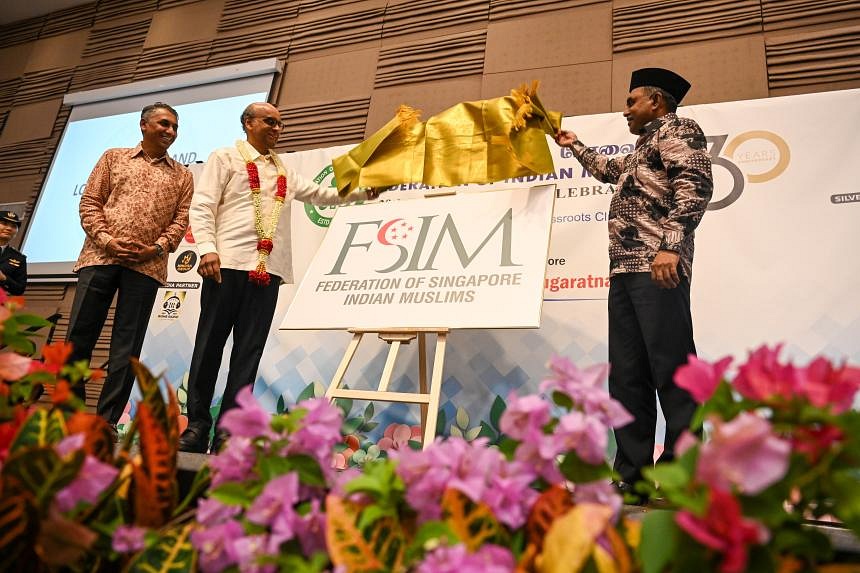
Federation of Indian Muslims celebrates 30th anniversary with new logo and name

SINGAPORE:

President Tharman Shanmugaratnam (second from left) was the guest of honour at the federation’s 30th anniversary celebrations on Oct 27, 2023. PHOTO: BERITA HARIAN

Singapore :

The Federation of Indian Muslims – the umbrella body encompassing 18 Indian Muslim organisations – is now known as the Federation of Singapore Indian Muslims (FSIM).

The federation unveiled its new name and logo at its 30th anniversary celebrations held at The Grassroots’ Club in Yio Chu Kang on Friday.

President Tharman Shanmugaratnam was the guest of honour at the event, which was attended by 500 people including community leaders.

Four individuals were honoured during the event for their contributions to the Indian Muslim community in Singapore.

Hindu Endowments Board chief executive T. Raja Segar and former Islamic Religious Council of Singapore (Muis) president Mohammad Alami Musa were presented the FSIM Harmony Award.

The FSIM Community Service Award was presented to the federation’s founding member, Mr Shaik Alaudeen Osman, while fellow founding member A.R. Mashuthoo was presented the M.K.A. Jabbar Lifetime Achievement Award.

The award is named after FSIM’s founding president, who was also a former MP for Radin Mas.

Speaking at the event, FSIM’s president, Mr Mohamed Bilal, 55, paid tribute to previous generations of Indian Muslim community leaders.

“In the coming years, we strive to focus on the educational development of students, welfare of youth, identifying young leaders, and honing their skills,” said Mr Bilal. 

In recent years, the federation has been reaching out to young people. It has co-opted IMYouth, an Indian Muslim youth organisation, as its youth wing.

source: http://www.straitstimes.com / The Straits Times / Home / by Irshath Mohamed / October 29th, 2023

Heritage walks uncover new angles of Indian history

DELHI:

Historians and enthusiasts are taking public education into their own hands to tell the story of the country’s Muslim communities.

The Chronicles of Mehrauli heritage walk. Sonia Sarkar for The National
The walk takes visitors through Mehrauli Archaeological Park. Sonia Sarkar for The National
it is led by Purani Dilli Walo Ki Baatein. Sonia Sarkar for The National
It is one of the oldest inhabited places in the subcontinent. Sonia Sarkar for The National
Mehrauli is rich in historical ruins, tombs and monuments from many eras of Delhi's past. Sonia Sarkar for The National
Mehrauli is rich in historical ruins, tombs and monuments from many eras of Delhi’s past. Sonia Sarkar for The National
The Qutb Minar heritage tour. Sonia Sarkar for The National
Pigeon-watching on a tour. Photo: Purani Dilli Walon Ki Baatein
A kotha, now a private property, in old Delhi taken during the walk titled 'Tawaifs and Kothas: Exploring Chawri Bazaar' by Enroute Indian History. Sonia Sarkar for The National
A kotha, now a private property, in old Delhi taken during the walk titled ‘Tawaifs and Kothas: Exploring Chawri Bazaar’ by Enroute Indian History. Sonia Sarkar for The National
The road leading to Jama Masjid in old Delhi, with guide Anoushka Jain showing an old picture of the same road in the 19th century. Sonia Sarkar for The National
A tour group on the steps of Jama Masjid. Photo: Enroute Indian History

Chaotic narrow lanes lined with opulent old mansions, shops selling spices, dried fruits and kebabs, all overhung by dangling power cables – any trip to Old Delhi, a bustling Muslim hub built by Mughal ruler Shah Jahan, is a full sensory experience.

Abu Sufyan weaves through the crowd with about 20 people in tow, making his way through streets smelling of flatbread soaked in ghee, the call to prayer at a nearby mosque mingling with the bells of a Hindu temple.

He is on a mission to change negative perceptions of Muslims by showing visitors more of their history in the capital.

“People in old Delhi were labelled as ‘terrorists’ and ‘pickpockets’ because they were predominantly Muslims from the lower economic background, and Mughal rulers were vilified as cruel invaders, as they were considered the ancestors to Indian Muslims,” Abu Sufyan, 29, says.

“My walks involve the local community members including calligraphers, pigeon racers, cooks and weavers with ancestral links in the Mughal era to showcase old Delhi’s heritage beyond these stereotypes.”

Abu Sufyan is one of a growing crop of enterprising men and women using the medium of heritage walks to educate the Indian public and tourists on the nation’s lesser-known history.

He started his walks in 2016, when hatred against Muslim communities was on the rise after Prime Minister Narendra Modi’s ruling Bharatiya Janata Party introduced several anti-Muslim policies.

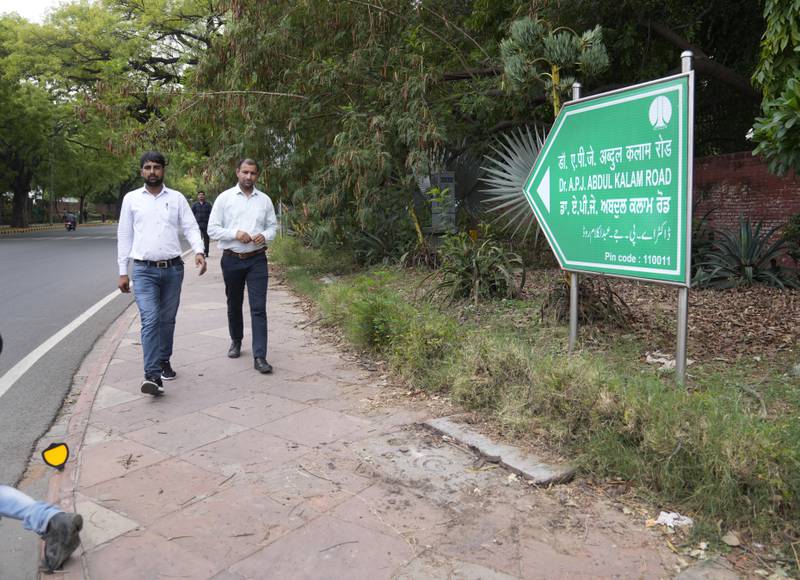
People walk on a road earlier named Aurangzeb Road, after the Mughal emperor, now renamed to Dr. A. P. J Abdul Kalam, India’s former president, in New Delhi, Thursday, June 2, 2022. / AP Photo/Manish Swarup)

In 2015, a BJP politician urged the local civic body in Delhi to change the name of Aurangzeb Road to APJ Abdul Kalam Road. The civic body immediately obliged, removing the reference to the Mughal ruler from the road by naming it after the former president of India, who was always considered a “patriotic” Muslim.

Later, the 2019 Citizenship (Amendment) Act caused further division, as critics said it could be weaponised against Muslims, who are designated as “foreigners” under the National Register of Citizens.

Occasionally, divisions lead to violence: Thirty-six Muslims were killed in Hindu mob attacks for allegedly trading cattle or consuming beef between May 2015 and December 2018, according to Human Rights Watch.

‘A sense of belonging and togetherness’

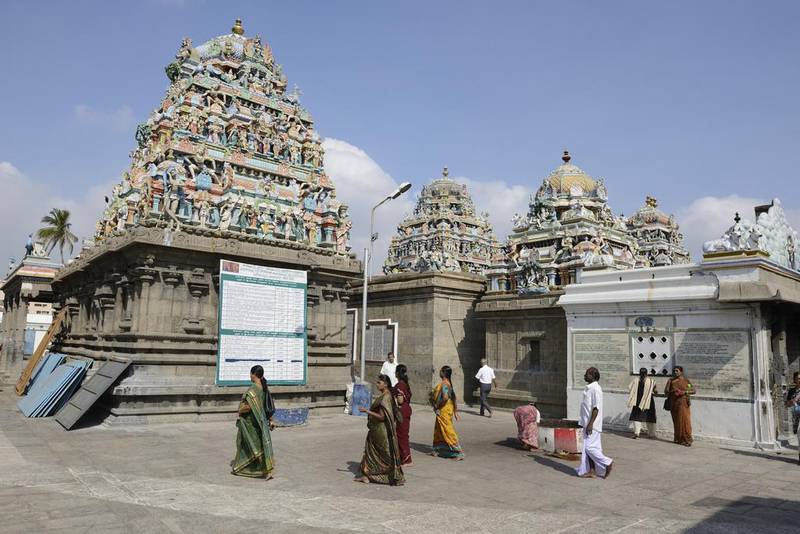
Chennai city is also a major cultural site, offering many things to do and sights to see. Frederic Soltan / Corbis

Over 2,000 kilometres away in Chennai, documentary filmmaker Kombai S Anwar hosts walks in Triplicane to tell stories of Tamil Muslim history, Tamil Nadu’s pre-Islamic maritime trade links with West Asia, the arrival of Arab traders, Mughal emperor Aurangzeb’s rule, the appointment of a Mughal minister’s son Zulfikhar Ali Khan as the first Nawab of Arcot, and the lives of the subsequent nawab’s descendants.

“Predominantly, non-Muslims participate in these walks because they are ‘curious’ about local Muslims and their heritage. During [Ramadan], they are invited to the historic Nawab Walaja mosque, where they experience the breaking of fast and partake in the iftar meal,” Mr Anwar says.

Tickets for heritage walks across India range between 200 and 5,000 Indian rupees ($2-60).

Historian Narayani Gupta, who conducted heritage walks in Delhi between 1984-1997, said any controversy related to history generates more interest.

“Whether history is right or wrong or good or bad, it has to be backed by research findings,” she says.

17th-century Jami Masjid, India’s largest mosque. Unsplash

Saima Jafari, 28, a project manager at an IT firm, who has attended more than 30 heritage walks in the past five years, says it is hard to ignore the historical monuments in the city since they are almost everywhere.

Delhi-based Ms Jafari recalled one of her best experiences was a walk, in 2021, trailing the path of “Phool Waalon Ki Sair”, an annual procession of Delhi florists, who provide sheets of flowers and floral fans at the shrine of Sufi saint Qutubuddin Bakhtiyar Kaki and floral fans and a canopy at the ancient Hindu temple of Devi Yogmaya in Mehrauli.

“When I walked along with others in that heritage walk, I realised that heritage enthusiasts across religion walk together in harmony,” Ms Jafari says.

“One of the best parts of heritage walks is the storytelling that connects places with lives of people of a certain period. Plus, it always gives a sense of belonging and togetherness.”

Anoushka Jain, 28, a postgraduate in history and founder of heritage and research organisation Enroute Indian History, which holds walks to explore the erstwhile “kothas (brothels),” and “attariyas (terraces)” of old Delhi, said during pandemic lockdowns, posts on Instagram helped sparked interest.

“Before the pandemic, barely 40 people participated in two weekly walks as opposed to 50 in each of the four weekly walks which we conduct now,” she says.

But it is not all smooth sailing.

Ms Jain says some people feel uncomfortable when they are given historical facts and research that show Hindu and Jain temples constructed by Rajput rulers were repurposed during the rule of Delhi Sultanate, Qutb ud-Din Aibak.

Iftekhar Ahsan, 41, chief executive of Calcutta Walks and Calcutta Bungalow, adds that sometimes, participants come with preconceived notions that Muslims “destroyed” India for more 1,000 years – but walk leaders hold open conversations to “cut through the clutter” with authentic information.

For some, heritage walks often change perceptions.

“Until I visited mosques in old Delhi during a walk, I didn’t know that women were allowed inside mosques,” law student Sandhya Jain told The National.

But history enthusiast Sohail Hashmi, who started leading heritage walks in Delhi 16 years ago, cautions that some walk leaders present popular tales as historical fact.

A mansion called Khazanchi ki Haveli in old Delhi’s Dariba Kalan is presented as the Palace of the Treasurer of the Mughals by some walk leaders, Mr Hashmi says. The Mughals, however, were virtual pensioners of the Marathas – Marathi-speaking warrior group mostly from what is now the western state of Maharashtra – and later the British and had no treasures left by the time the mansion was built in the late 18th or early 19th century.

Another walk leader had photo-copied an 1850 map of Shahjahanabad, now old Delhi, passing it off as his own research, he adds.

“The walk leaders must be well-read and responsible enough to ensure that the myths are debunked,” Mr Hashmi says.

source: http://www.thenationalnews.com / The National / Home> World> Asia / by Sonia Sarkar / June 01st, 2023

Dawoodi Bohra Muslim community leader in Surat, Zampa Bazaar decked up to host annual seminar

Surat, GUJARAT:

On the sidelines of the educational seminars, various stalls and exhibitions on environment, and business have also been set up at the community’s sports ground in Khaimat al-Riyada to provide a holistic learning experience to the attendees.

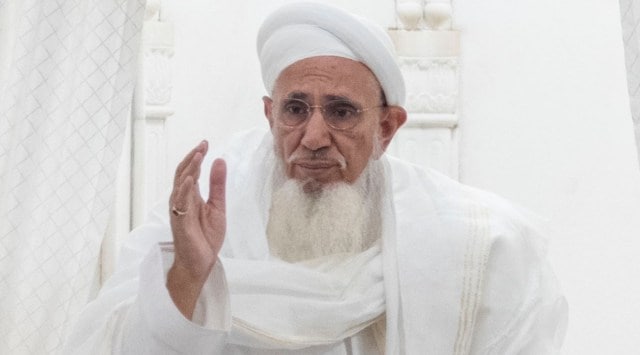
Mufaddal Saifuddin is the spiritual leader of the Dawoodi Bohra community (Express File Photo)

The leader of the global Dawoodi Bohra Muslim community, His Holiness Syedna Mufaddal Saifuddin, the 53rd al-Dai al-Mutlaq, arrived in Surat from Rajkot on Thursday on the occasion of ‘Istifada Ilmiyya’ (education seminar). He will be in the city till first week of November.

Every year, the education seminar — ‘Istifada Ilmiyya’ — is held in Surat that is graced by his presence, said organisers. ‘Istifada Ilmiyya’ comprises a series of learning and skill development sessions that cover a wide variety of topics such as Islamic philosophy, history, and jurisprudence, as well as contemporary topics. The attendees include students, business people, professionals, and teachers as well as members of Syedna’s administration, and graduates of the Aljamea-tus-Saifiyah Arabic Academy.

Thousands of community members annually register their presence at the event. This year, the event kicked off on Friday, and myriad programmes will continue till the first week of November.

Hatim Fakhar, public relations coordinator for the Dawoodi Bohras in Surat, said, “The anticipation and excitement to host thousands of attendees for this annual educational seminar in Surat are palpable, and we hope we will be able to provide them with a memorable experience. This year, the event is even more special as we will mark the 80th birthday of His Holiness Syedna Mufaddal Saifuddin on 3rd November.”

“We are grateful to the local authorities and government agencies for rendering their timely support and assistance as always in hosting thousands of community members in the city,” Fakhar added,

A large number of members of the Dawoodi Bohra community have already arrived in Surat from various parts of India and the world to attend the events in the Zampa Bazaar area on Thursday. With the venue intricately decorated, boasting of colourful lights and freshly painted buildings, hundreds of volunteers are also present to guide visitors.

The Surat unit of the community had been preparing for the event over the last 15 days by hiring open grounds and plots on rent and by erecting tents with various facilities for visitors to stay. Besides hotel rooms, several houses in Zampa Bazar, Sagrampura, Begampura, Salabatpura (walled city areas) have been rented out for visitors. Apart from this, the organisers have also arranged staff to maintain cleanliness on roads and halls. . Apart from this, Burhani Foundation & local organisers have also arranged staff to maintain cleanliness on roads and halls.

The Zampa Bazaar area in Surat is home to a large number of members of the Dawoodi Bohra community in India, where one can find religious places, an Arabic university, and shops run by the community.

On the sidelines of the educational seminars, various stalls and exhibitions on environment, and business have also been set up at the community’s sports ground in Khaimat al-Riyada to provide a holistic learning experience to the attendees.

Ummehani Ismail, a lawyer and a mother of two who travelled from the United States to attend the annual seminar, said, “Every year, I look forward to attending these seminars which have helped me develop new skills and broaden my knowledge base and understanding on various aspects of life. These sessions empower me to be a better person and create a positive impact on society. Throughout the event, we engage in thought-provoking discussions, attend workshops, and benefit from the speakers’ insights.”

source: http://www.indianexpress.com / The Indian Express / Home> News> Surat / by Express News Service, Surat / October 21st, 2023

Jaan Nissar Lone receives global humanitarian award for uniting the world through music

Sheeri (Baramulla District) JAMMU & KASHMIR / Mumbai, MAHARASHTRA:

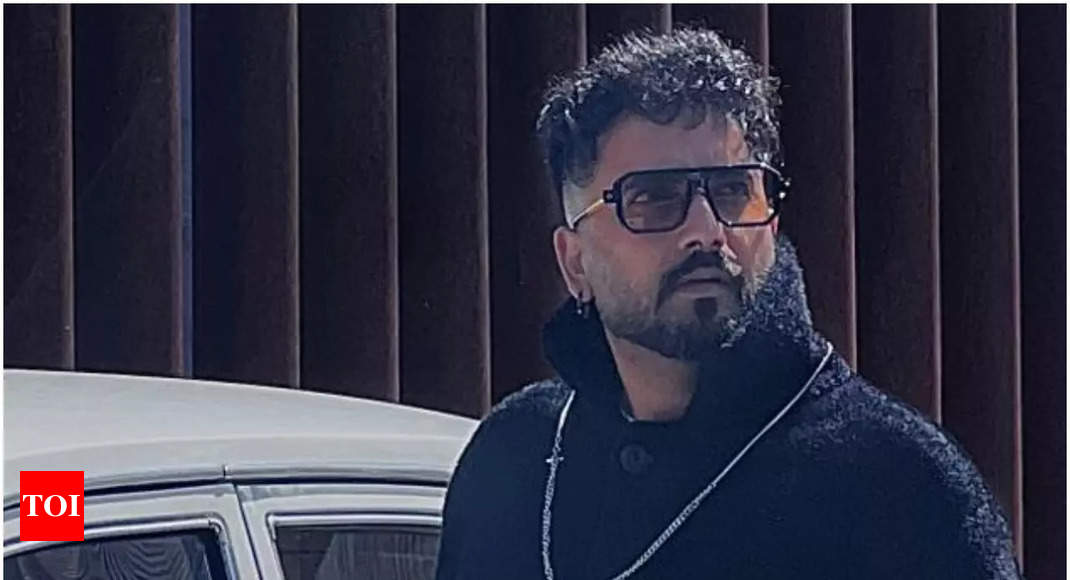
Jaan Nissar Lone receives global humanitarian award for uniting the world  through music | Hindi Movie News - Times of India
Jaan Nissar Lone receives global humanitarian award for uniting the world through music© Provided by The Times of India


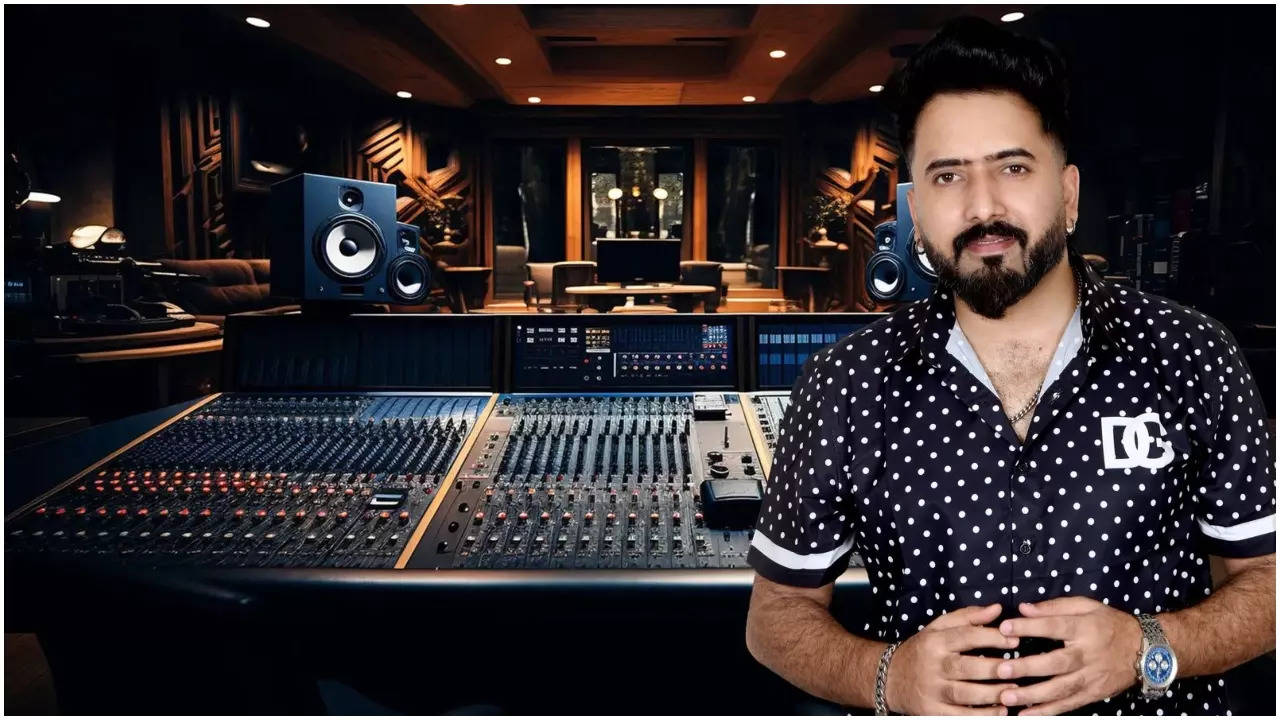
Jaan Nissar Lone was graced with the illustrious global humanitarian award by the World Humanitarian Drive. He is mainly known for his song ‘Harmukh Bartal’ featured in Manoj Bajpai Starrer Webseries ‘The Family Man’. This momentous occasion, graced by esteemed luminaries, reverberated with the essence of his contributions to the realm of music, particularly his role in fostering a sense of unity among diverse populations, including those residing in the picturesque yet troubled valley of Kashmir.

Jaan Nissar Lone’s musical artistry has transcended geographical confines and tugged at the heartstrings of individuals from all walks of life. His melodious compositions served as a wellspring of inspiration, galvanizing countless souls to embark on a journey characterized by love and mutual comprehension, not just for their homeland but for the entire global community. Through his educational music videos, he has empowered a legion of youthful enthusiasts to partake in endeavors aimed at heightening awareness of human unity, thus laying the foundation for a more harmonious and all-encompassing world.

Jaan Nissar Lone receives global humanitarian award for uniting the world  through music | Hindi Movie News - Times of India

The World Humanitarian Drive lauded Jaan’s remarkable endeavors in employing music as a unifying conduit, capable of bridging divides between communities and nations.

The ‘World Humanitarian Drive’ founder Dr Abdul Basit Syed lauded Jaan’s remarkable endeavors in employing music as a unifying conduit, capable of bridging divides between communities and nations. Lone’s journey as a musician and humanitarian transcends borders, languages, and cultures to promote harmony and peace worldwide. His work resonates with people globally, earning him recognition as a symbol of peace and tranquillity.

source: http://www.timesofindia.indiatimes.com / The Times of India / Home> News> Times Entertainment> Hindi> Music / November 08th, 2023

Khader Khan Khaisighi : A Slice of Kodagu History

Kodagu, KARNATAKA:

by Dr. Rekha Chinnappa.

Hyderali had an edge over the competition for the throne between the Haleri and Horamale branches of Ikkeri dynasty after the death of Mudduraja and Muddaiah raja. In the Haleri branch Lingaraja was fighting for his nephew Appajiraja and in the Haramale branch, Mallaiah arasa for his son Devapparaja. Finally, Devapparaja was coronated.

In this circumstance, the disappointed Lingaraja sought refuge from Hyderali along with his nephew Appajiraja and his sons which included his son Veerarajendra Raja. Hyderali took advantage of this situation by using Lingaraja as the spy. Hyder captured Kodagu and got Devapparaja and his family killed in 1774. This extinguished the Horamale branch.

As per the understanding, Lingarajendra-1 was coronated but remained the puppet of Hyder until his death in 1779. At this time, Lingarajendra’s son Veerarajendra being a minor was forcefully shifted by Hyder to Goroor. This was convenient for him to take control of the Kodagu administration through Karnik Subbarasaiah.

Hyder’s autocratic attitude in administration was disliked by the people of Kodagu. Hence they resisted his rule by various kinds of protests. Due to ill health, Hyderali died in 1782. This resulted in his son and heir Tippu sultan assuming the throne. Tippu’s rule was oppressive and this made the situation worst for the people of Kodagu. Eventually, they chose to bring back Prince Veerarajendra, who had been shifted to the Periyapatna prison from Goroor. He was to reinstate the peaceful administration of Kodagu.

Veerarajendra’s close associate Kulleti Ponappa, Hombale Nayaka, Appanarvanda Achaiah, Pattachervanda Bolakka and few other people of Kodagu set out to secretly release Veerarajendra from the prison. The warden of the Periyapatna prison was Khadher Khan Khaisighei. He was a Saurashtrian trader from Afghanistan in India on a trade contact. He was upright and empathetic individual and was sensitive to the ongoing affairs. He aided the Kodagu folks to get their prince out of a six year long imprisonment.

This became the major turning point for Veerarajendra to re-establish the rule of the Haleri dynasty in Kodagu. Soon after his release, Veerarajendra along with his Kodagu army resisted the strong determination of Tippu Sultan to capture Kodagu. The Kodagu army was brave and strong but were not very experienced in organized battle. Hence, they began setting plots in the routes of the enemy through forests and other mountain areas. This ousted the authoritative administration of Tippu who had gained an edge over the natives of Kodagu by pledging themselves in the territory.

While Tippu sent troops under various commanders to capture Kushalnagar, Beppunad and Bhagamandala forts of Kodagu, the Kodagu army won over the Sultans and Veerajendra Raja got Kushalnagar, Beppunad and Bhagamandala forts under his control.

While only Madikeri fort was in control of Tippu Sultan, the Kodagu troops way laid the routes and blocked all the provisions going there. During monsoon, when shortage of supplies was inevitable Tippu sent the necessary provisions under the leadership of Khadher Khan Khaisighei. They were attacked in Kushalnagar and captured by the Kodagu army. Veerarajendra Raja was obliged to release Khadher Khan Khaisighei out of immense gratitude towards him. His memory flashed back to his release from the Periyapatna prison. Khaisighei was also instrumental in protecting his sister when she was attacked by the muslim authorities.

However, Khader Khan Khaisighei’s loyalty was pronounced when he turns down the Raja’s favor, initially. Later on, he accepts the favor and requests that the provisions be delivered to the Madikeri fort and returns to Periyapatna. Thus, Veerarajendra Raja gains control of the territory of Kodagu.

Certain areas in Kodagu was commanded by Paleygars/nayaks. After the fall of Udichanda Palegar in Bilgunda, his property was gifted to Khadher Khan Khaisighei by Veerarajendra Raja. This gift was based on service jhagir under puthra parampara. Henceforth, they were the permanent residents of Bilgunda, living in their Aiynmane beside the Bhadrakali Village temple. This Aiynmane has all features of traditional Kodagu aiynmane.

The lineage of Khader Khan Khaisighei has been enjoying the thakkame and they decorate the respectable seat at the Hoskote Kolemandh reserved for various thakkas. Without overbearing the religious attitude they participate wholly in all the village activities including the festivals – Bhadrakali Namme and Eshwara Namme of the Bilgunda Village.

The Kodagu socio-cultural practices are followed by them celebrating the Kailmurtha and Puthari festival to the present day. These festivals are the celebration of the completion of several stages of paddy cultivation, which was the only source of traditional livelihood of the land. The thakkame of Puthari had been of the Kaisighei and is followed by his progeny now by Kaleemula Khan, the third generation.

The procession for cutting the sheaf begins at their house along with traditional fervor. The sheaf is reaped from Shafila Khan’s paddy field, where he fires the gun symbolizing the beginning of harvest. Later, the sheaf is taken to the temple and their respective homes.

Embracing Islam they have blended into the socio-cultural practice of the land they have inherited. This matured outlook has disseminated peace and harmony in and round Bilgunda Village.

source: facebook.com/ptbopanna.palangada

Seyed Ehtesham Hasnain: scientist who changed the course of TB diagnosis in India

Gaya, BIHAR:

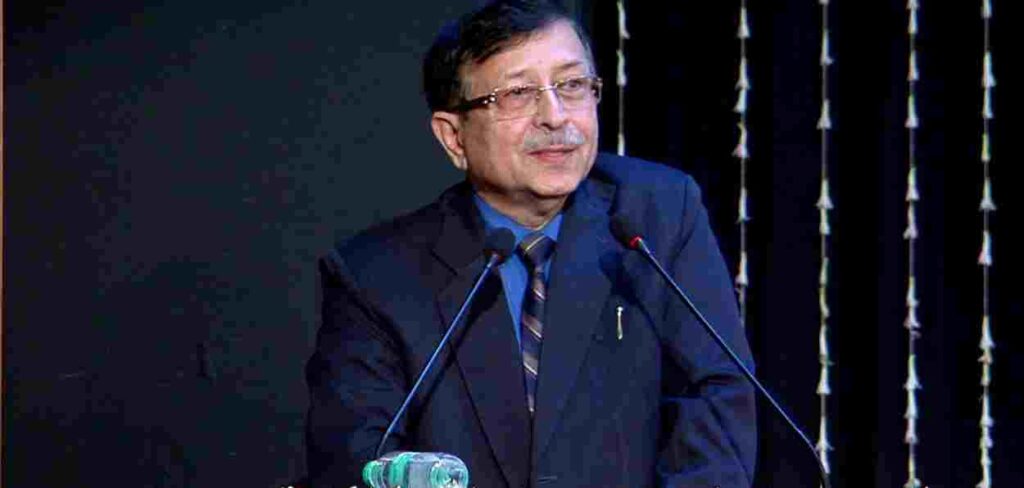
Prof Seyed Ehtesham Hasnain

Prof Seyed Ehtesham Hasnain’s scientific research has changed the complicated regimen for the diagnosis of Drug-Resistant Tuberculosis and the Indian Basmati getting its patent and trademark in the UK in the fight against the Pakistani variant. This Bihar-born scientists’ findings have saved patients suffering from Drug-Resistant TB money and time and helped the Indian government and farmers earn through exports of the Basmati.

He told Awaz-the Voice in an interview that the government of India has taken at least two major policy decisions based on his research. “One decision was that previously the testing of tuberculosis (TB) was based upon antibody-antigen reaction. So, the antibody formed was based on the antigen of a bacterial protein, and the sequence (genetic) used was mostly European or American isolates. 

“When I did sequencing in India, I found out that the Indian variant is completely different. Therefore, the test could give false positives or negatives…. I published this finding and had a meeting with the DG of ICMR (Indian Council for Medical Research) and recommended that the tests based on foreign kits be banned and that made a big impact.” 

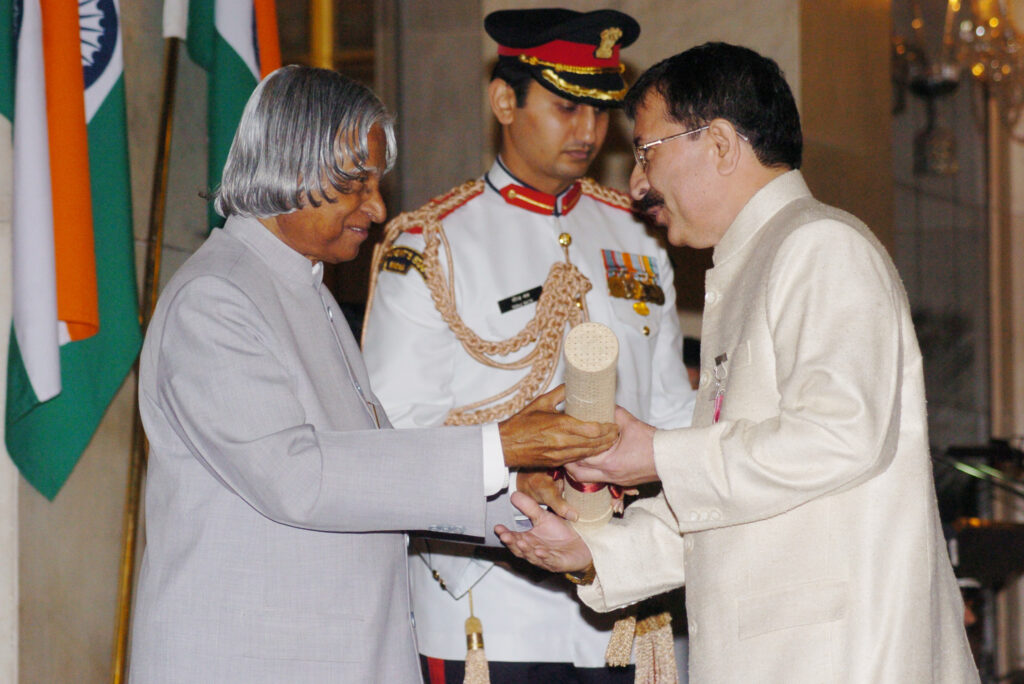
The President, Dr. A.P.J. Abdul Kalam presenting Padma Shri to Prof. Seyed E. Hasnain, renowned biologist, at an Investiture Ceremony at Rashtrapati Bhavan in New Delhi on March 29, 2006.

Padma Shri recipient Seyed Ehtesham Hasnain said. E. Hasnain was awarded the Order of Merit of the Federal Republic of Germany, the highest Civilian decoration of Germany in 2014. Nature, a famous scientific journal, reported on his receiving the award, “With the Order of Merit, he joins the league of outstanding personalities from various fields including Nobel laureate biologist Paul Herman Muller, former German Chancellor Helmut Kohl, former Japanese Prime Minister Yasuhiro Nakasone and music conductor John Crosby.” 

In 2006, he received Padma Shri in recognition of his scientific work. Shanti Swarup Bhatnagar Prize (1995) and J. C. Bose Fellowship (2006), two of the most prestigious Indian Awards in the field of science have also come his way apart from numerous other decorations.

Hasnain was born in Gaya, Bihar in 1954. He was born seven years after India had attained independence. At that time Bihar was not the most developed of the Indian states. Hasnain’s father was a college lecturer and he nursed a dream of studying abroad. He studied at the Nazareth Academy, an expensive school in the town. It’s said that almost 20% of his father’s salary would go into children’s school fees. 

He did his M.Sc. from the Jawaharlal Nehru University in New Delhi. However, though he was selected for his post-graduation studies by Harvard University, for some reason he could not join.

In 1981, Hasnain moved to Canada as a Post-doctoral Fellow (PDF). He worked in Canada and the USA for the next six years. At this stage, his father asked him to return home to serve his country and people. He was advised by many people that he must try to get his green card before moving back to India. 


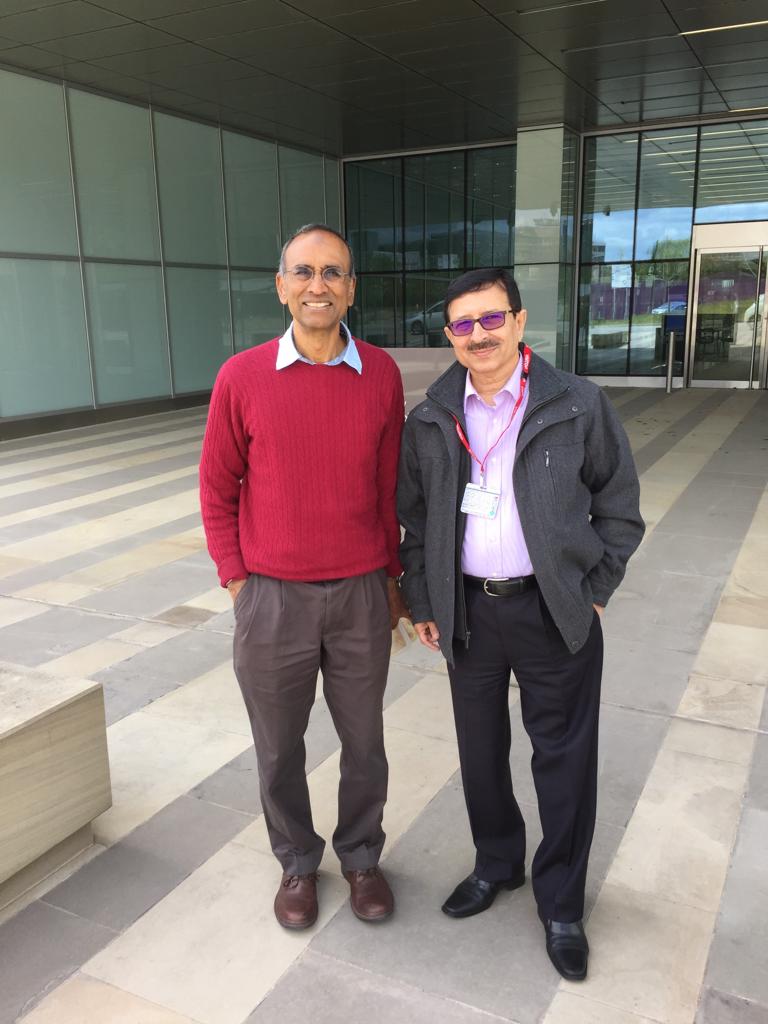
Seyed Ehtesham Hasnain with Dr Venky Ramakrishna, Nobel Prize Winner and President of Royal Society, UK, in Cambridge

In 1987, he joined the National Institute of Immunology (NII) as a scientist. Hasnain says, “I thought that after getting a green card, I would have a fall-back and a plan B. I did not want a plan B. My plan was the only plan A. I will work in India and do something good in India.”

Hasnain broke the convention by not continuing the research he was doing abroad. He started afresh and soon made a name for himself in research of baculoviruses. He established a baculovirus insect cell expression system (BEVS) for the first time in India and used this to express foreign genes and also to ask fundamental questions concerning gene expression in BEVS. The idea was to make India a scientific power.

Hasnain says that when his career was at the peak with research on baculovirus one day, Dr. Sandeep Basu, the then director of NII, asked him, “Seyed, you are publishing in good journals, it is fine, but how does humanity benefit? What is India gaining out of it? How are the common men benefiting from your papers? Doing research is good but do something which will benefit the common man.” 

This was the turning point in Hasnain’s life and career. He says “I decided to do something where I can do direct application.” He started his research on tuberculosis. 

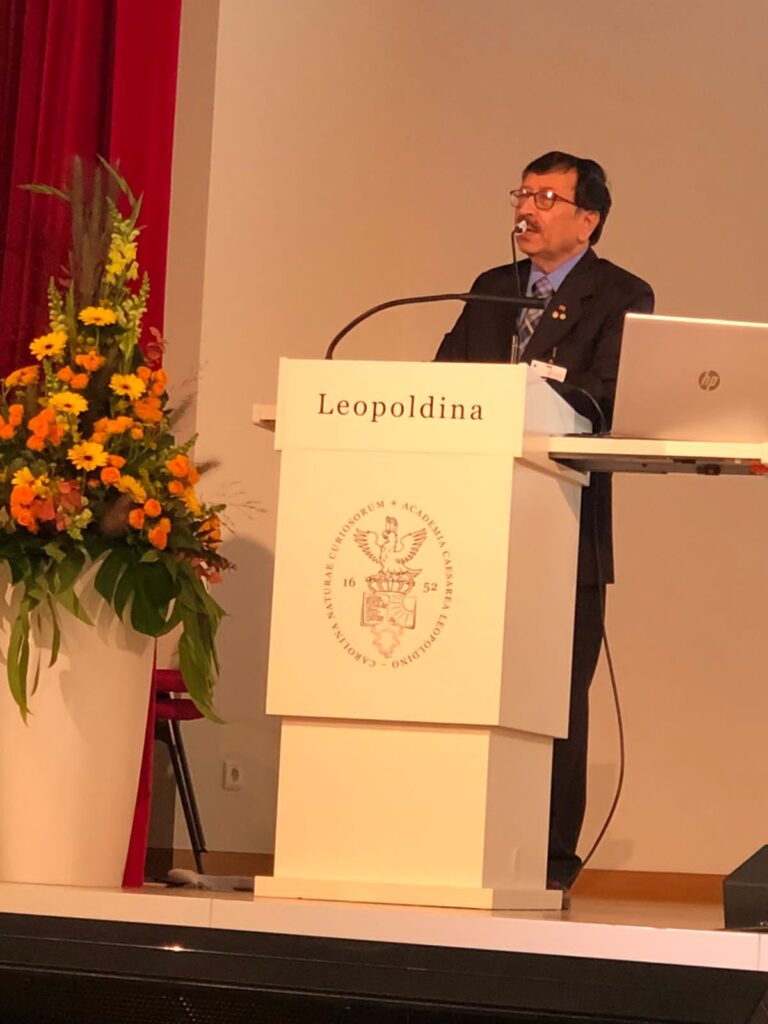
Seyed Ehtesham Hasnain at the Global Health Conference organized by the German National Academy of Sciences, Leopoldina, Halle, Germany

Hasnain initiated studies on molecular epidemiology and genetics of multi-drug resistant (MDR) M. tuberculosis (M.tb). He says, “second important observation that was published, again the first time in the world. We used to test TB for drug resistance. The bacteria was tested against each drug. I showed with my study that if the bacteria are resistant to one drug then it will be resistant to almost all other drugs. I established the correlation and proposed that you don’t need to do multi-drug resistance testing for all the drugs. Just test one drug rifampicin and if it is confirmed then 95%-99% of drugs will be resisted by the bacteria. That has become a standard treatment all over the world. He is still working on developing cheaper methods of diagnosing TB.

In 1999 Hasnain was invited as the first director of the Centre for DNA Fingerprinting and Diagnostics (CDFD), Hyderabad. It was based on his work on Indian Basmati Rice DNA fingerprinting that India won the Patent case against Pakistan enabling the export of the Indian Basmati to the UK. This prevented a major economic loss to India. Subsequently, the Ministry of Commerce established the CDFD-APEDA Basmati DNA Analysis Centre, where all Basmati exports are certified. 

Hasnain also served as Vice Chancellor of the University of Hyderabad (2005-11), and Vice Chancellor of Hamdard University and is currently A National Science Chair of SERB, at the Department of Biochemical Engineering and Biotechnology at IIT-Delhi. 

Hasnain Mantra is: “Nothing is a substitute for hard work.”  

source: http://www.awazthevoice.in / Awaz, The Voice / Home> Story / by Saquib Salim / November 03rd, 2023

Mohammed Shami jerseys sold out around Eden, stadium where Clive Rice once felt like Neil Armstrong

Sahaspur Village , Amroha, UTTAR PRADESH / Kolkata, WEST BENGAL:

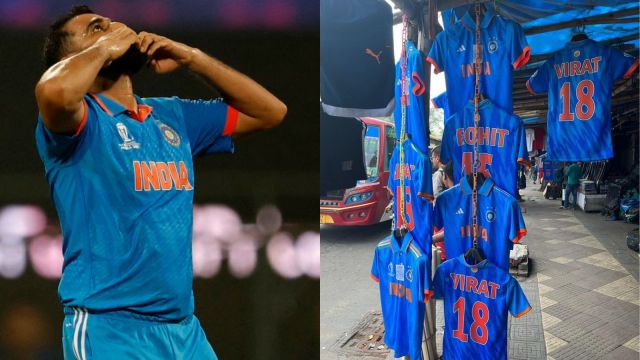
Mohammed Shami jerseys are out of stock at the sports goods market near Eden Gardens. (PTI | Express Photo by Sandip G)

Adjoining the sprawling maidan and the Eden Gardens is what the locals call – the largest sports goods market in Asia. Whether it’s a brag or the truth, the half a kilometer-stretch is the first stop of every aspiring sportsman of the city.

Badminton racquets dangle from creaking ceilings, cricket bats of all sizes, shapes, wood and football boots are a nudge away from falling off the glassed showcases. There are also imitation-gold plated trophies shinning garishly under the glare of tube-lights.

“The journey of every sportsman starts here, and not the maidan,” says Rahman Ali, who owns Palace Sports. “Established 1965,” he asserts. Ali’s grandfather, like most shop-owners had migrated from East Pakistan after the partition.

“Back in the 70s, Abbas Ali Baig tore his shoes one day and bought a pair from us. My grandfather didn’t take any money from him. Dhoni brought a pair of gloves from here too once. And of course, we have spotted Shami bhai a lot of times here (before he got into the Indian team). Now, of course, he can’t. He would be using foreign goods,” he says.

Shami’s jerseys, though, are out of stock. Ali reasons: “Usually, we stock more jerseys of Rohit and Virat. But we didn’t know our bowlers would become such a hit. But no worries, the load will arrive tomorrow, in time for the match,” he says.

Every replica jersey costs around Rs 450, which in normal time is sold for Rs 250-300. “The pandemic struck us badly, we were running on heavy losses. So we have to cash in during the World Cup,” says Armaan, who quips: “We look forward to the sports season more than the sportsmen.”

The three-week window is their equivalent of the harvest season. These days, they sell around 200-300 jerseys a day, and on match-days even more. Match-days are the busiest days, and therein lies their biggest pang. “The stadium is so near, yet we can’t leave the shop and watch the match,” he says.

Search for selfie

The jersey-hunters are swelling by the minute and the narrow passageways have become narrower. Some stop by and chat about Shami’s demolition of Sri Lanka, or whether Virat Kohli would equal Sachin Tendulkar at the Eden. The proximity of the bus station that is ferrying thousands of cricket pilgrims from different corners of the state and the line of hotels in the neighboring New Market Area has made an already crowded part of the city seaming at its bursts.

Some of them wander into the Eden Gardens, across the Maidan with its kite-fliers. These marching cadet scouts go past the hundreds of sports clubs and the Lesilie Claudius Sarai named after the city’s most famous hockey star, in search for a selfie or to merely soak in the atmosphere.

Eden Gardens
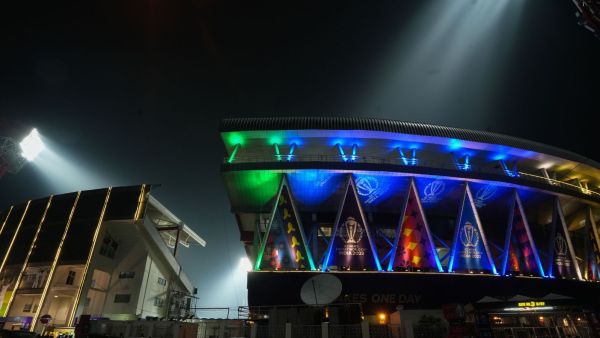
Eden Gardens illuminated with lights ahead of the ICC Men’s Cricket World Cup 2023 match between India and South Africa, in Kolkata. (PTI)

Eden Gardens illuminated with lights ahead of the ICC Men’s Cricket World Cup 2023 match between India and South Africa, in Kolkata. (PTI)

“You should come after six,” a policeman tells a pair of inquisitive tourists.” That is when the facade of the storied stadium glows. A fleet of police cars screeched past the stadium, tired policemen could be spotted leaning against the walls or resting on the cane fence near the stadium.

There is a buzz crackling in the humid air of the city. When the list of games were announced, the city was dejected that it would not host any of India’s marquee games. It’s hosting a semifinal—but it was accustomed to hosting bigger games, the finals (1987 World Cup and 2016 T20 WC). And wallowing about its glorious past is ingrained in the city’s psyche.

SA’s piece of history

Political subplots were read into it. But the sleight of destiny ensured that the city got the most competitive game of the tournament, India versus South Africa. Few considered South Africa contenders, but they are now the second favourites. Two days cannot fly faster is the common refrain. Some fans loitered around the stadium, assuming that the team would practise in the stadium on Friday. A policeman, tired of shooing a pack of youngsters away, now starts shouting expletives and waving the cane lathi. They flee. The new batch arrives, and the policeman is his wits’ end.

Anyone passing along the premises of the stadium is asked the standard question: “Ticket hain?” It could be anyone from a casual inquirer to a desperate fan pleading, or a tout seeking a potential buyer to slap an over-priced ticket. Among them was Ebrahim, from Durban. He landed on Thursday, but has no ticket. Draped in a South Africa flag, he says: “Maybe, I can buy one in the black market, or one of the South African supporters here can manage one. I was so thrilled to watch this World Cup that I didn’t bother about the ticket. I called a friend of mine from Cape Town last week and decided to travel just like that,” he says.

He says it was destiny that has brought him to Kolkata. “We played our first game after reintroduction here, we won our first Test match in India here. Hopefully, we will watch something special here too,” he says.

There is another connect—the administrator credited with bringing South Africa back into the cricket fold, Jagmohan Dalmiya, too was from the city. The series was organised in a week’s time, thanks to a meeting between then West Bengal CM Jyoti Basu and South Africa cricket board administrator Ali Bacher.

A batch of nervous cricketers in a chartered flight landed to a raucous welcome. In the post-match interview, captain Clive Rice would emotionally say: “I know how Neil Armstrong felt when he stood on the moon.” There is a picture of him and his teammates bowing down with folded hands and thanking the crowd after the game. “The most historic match in the history of South African cricket,” he would say.

A sense of history is lurking around the Eden Gardens this week too, as two of the strongest teams in the World Cup encounter on Sunday. And there is a whole ecosystem around it, literally and symbolically, waiting for the match and their catch.

source: http://www.indianexpress.com / The Indian Express / Home> News> Sports> Cricket World Cup 2023 / by Sandip G, Kolkata / November 04th, 2023

Meet India’s second-most generous man who made Rs 1774 crore donation, much more than Mukesh Ambani, Gautam Adani

Mumbai, MAHARASHTRA / Bengaluru, KARNATAKA:

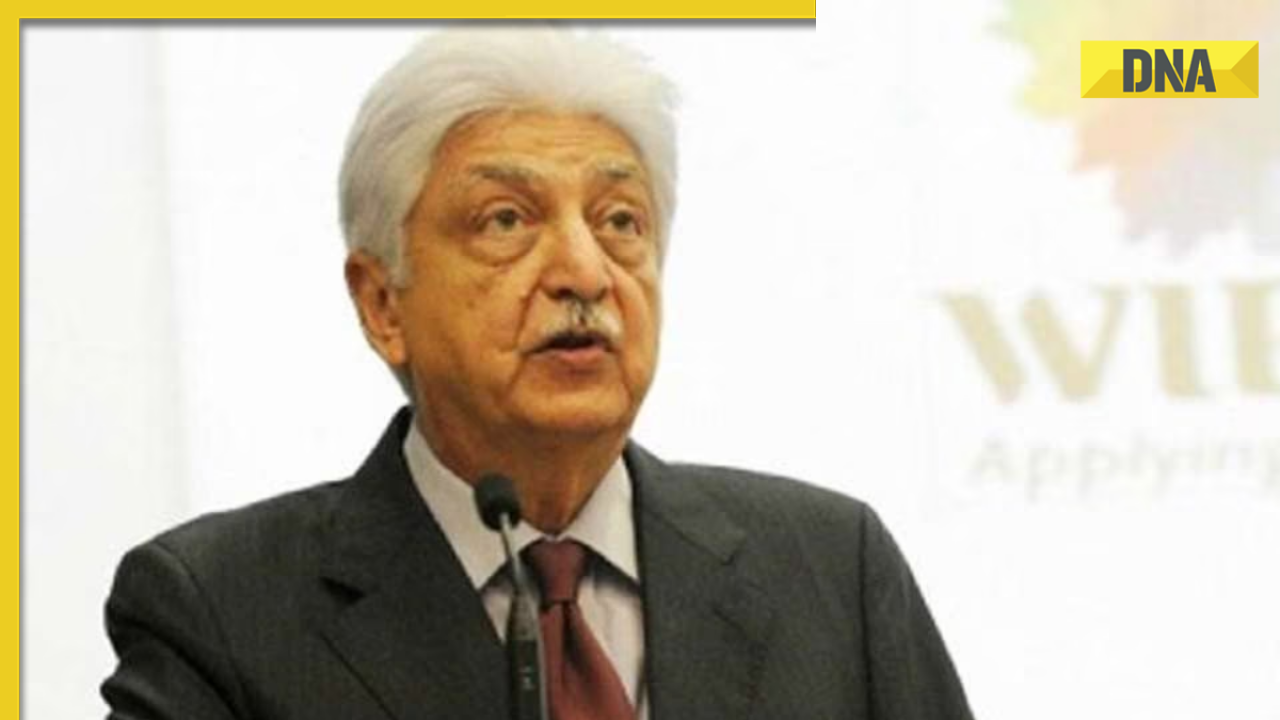
One such figure on the list is Azim Premji, the IT magnate from Wipro, who along with his family gave Rs 1774 crore, making him the second most generous person in India. Premji’s donation has exceeded Reliance boss Mukesh Ambani’s contribution, which was Rs 376 crore.

article-main
DNA Web Team / Updated: Nov 02, 2023, 07:14 PM IST

Indian millionaires have been recognised for participating in several charitable endeavours to give back to the community across a variety of fields. The Hurun India Philanthropy List includes some well-known people, like Shiv Nadar of HCL and Mukesh Ambani, the head of Reliance.

One such figure on the list is Azim Premji, the IT magnate from Wipro, who along with his family gave Rs 1774 crore, making him the second most generous person in India. Premji’s donation has exceeded Reliance boss Mukesh Ambani’s contribution, which was Rs 376 crore. 

Who is Azim Premji?

Azim Premji, a Mumbai native, served as Wipro’s chairman and is currently a non-executive member. Hashim Premji was the name of his affluent businessman father. Azim graduated from Stanford University in 1966 with a degree in electrical engineering. Following his father’s death in 1966, Premji left Stanford to manage the family’s cooking oil company before branching out into software.

Remarkably, he used distance learning to finish his engineering degree from the institution in 1999. Azim Premji has built an enormous empire and is referred to be the “Czar” of the IT sector. Wipro has an innovation centre in Silicon Valley where they work with entrepreneurs and create new technologies.

Rishad, Premji’s son, took over as executive chairman of Wipro in July 2019. Wipro, the Rs 2 lakh crore company owned by Indian IT billionaire Azim Premji, is one of the biggest software services companies in India. Azim Premji is a wealthy Indian tycoon who also happens to be one of the most generous with a staggering net worth of $11.4 billion or Rs 94,000 crore.

He committed to donate half of his money in 2013. He gave the Azim Premji Foundation, which supports education in India, 2.2 billion dollars. In the 1980s, he founded Wipro in response to a request from the government to remove IBM. The 1990s saw a sharp surge in Wipro’s worth.

source: http://www.dnaindia.com / DNA / Home> Business / by DNA Web Team / November 02nd, 2023