All posts by mpositiveone@gmail.com

Trailblazing Muslim teens impart education to elders on a plethora of social issues

Nooniya Basti (Mahingaon Gram Panchayat, Kishanganj District) BIHAR :

Nooniya Basti under Mahingaon Gram Panchayat in Kishanganj district of Bihar is largely inhabited by Shershabadi Muslims, who trace their origins to Bangladesh.

It is in this conservative milieu, where girls are not allowed to even step out of their homes unchaperoned, that Ziratunnisa Khatun, 14, and her friends have been leading a campaign on family planning since the last two years.
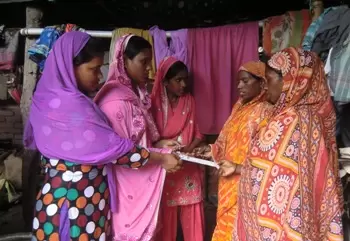
The Kishori group members of Nooniya Basti interact with older women showing them samples of contraceptive pills, Copper T and condoms and telling them about the merits of keeping a five-year gap between children (Photo: Ajitha Menon\WFS)

“Our group comprises girls between 12 and 18 years and we have been trained to create awareness on the need for family planning, the ill effects of child marriage, related maternal health issues and the importance of good nutrition, water conservation and sanitation,” informs an articulate Nasera Khatun, 16, President of the Nooniya Basti Kishori group.

Since October 2012, activists of the Bihar Voluntary Health Association (BVHA) have been running the Kishori programme, as part of the Department of International Development (DFID) supported Global Poverty Action Fund project, ‘Improving Maternal Health Status in Six States in India’, initiated by Oxfam India.

Shares, Meraj Danish, Thematic Coordinator-BVHA, Kishanganj, “I remember how tough it had been for us to convince the elders in the Shershabadi community to give permission to their adolescent daughters to get involved in our maternal health intervention.

“We drew them in by facilitating their access to rations given to teenage girls under the government’s Rajiv Gandhi Scheme for Empowerment of Adolescent Girls (Sabla scheme).

“The scheme provisions for three kilos of rice, two kilos of lentils and 40 iron supplement pills in a month to every out-of-school girl in the 11-14 age group and all girls between 14 and 18 years.

“As we managed to rope in more girls into Sabla, the trust quotient between us and the community increased. These were people who were anyway battling with poor infant and maternal health, anaemia and lack of nutrition in adolescents, so eventually they came around and agreed to let their girls attend our training sessions.”

Girls, for whom family planning had been a taboo subject, were in for a huge surprise at the training sessions conducted by the BVHA volunteers.

“The meetings were a real eye-opener. As we listened to the volunteers, we soon figured out the reasons behind our mothers always feeling weak and lacking energy. We realised that most of our brothers and sisters and, in fact, we ourselves, were suffering from the ill-effects of under nutrition.

“We also understood the need for family planning and the fact that spacing between children is critical for ensuring the good health of the mother and child. Above all, we learnt to improve our eating habits as well as maintain proper personal hygiene,” elaborates Habiba Khatun, 17.

Nooniya Basti’s Kishori group began its family planning advocacy by first speaking to their own family members, relatives and friends.

“We used to carry samples of contraceptive pills, Copper T (intrauterine device) and condoms and go door-to-door, talking to our mothers and their friends. Rather than insisting on use of contraceptives to limit the number of children, we told them about the need to have at least a five-year gap between each child,” explains Tanzera Khatun, 16, adding, “this automatically brings down the number of children per couple and removes any concerns regarding forced family planning.”

Till a couple of years back, most women living in and around Nooniya Basti had no clue about family planning and were mostly bogged down by three-four children, born within just a year of each other. Consequently, the mothers and their children used to be very weak and sickly.

“This is why the women immediately related to our conversations regarding the need for the body to fully recover between pregnancies and showed a keen interest in knowing how to use contraceptives to ensure spacing between children. By and large, we spread the message that it was alright to use contraception to achieve spacing between children even if family planning per se was taboo,” reveals Sabina Khatun, 16.

Of course, it certainly was not always smooth sailing for the girls. Many women were quite unwilling to talk to “children” on issues of family planning and contraception.

“The fact that we could talk proficiently about the use of contraceptive pills and their possible side effects and demonstrate how to use Copper T and condoms added to our creditability in their eyes. After a few interactions, during our house visits, there was no hostility or shyness and the women could voice their different issues and concerns openly before us,” adds Ruksana Khatun, 16.

Whereas the community women have benefited from the Kishori group’s active engagement, the girls too have learnt a lot in the process. This has prepared them well for the future and set them apart from their lesser fortunate peers across the country.

“Thanks to this intervention, most of us have become vocal against early marriages. Moreover, we have become particular about eating nutritious food and taking iron supplement pills to fight anaemia,” points out Nasera Khatun.

The other advantage for this group has been in the form of access to better education. “Once the community elders saw how well the girls were faring, it was possible for them to seek permission to join mainstream schools to acquire better quality education, along with studying at the local madarsa. Many girls in the group are now attending regular school,” says Danish of BVHA.

At present, there are three Kishori groups in Kishanganj. Though there are about 20 girls in each, the health awareness campaign related to family planning and contraception is spreading effectively across several villages in the district, as the peer and friend circles are absorbing the knowledge and experiences of the core Kishori units and putting them to good use by reaching out to women of their own localities.

by Women’s Feature Service 

source: http://www.weekendleader.com / The Weekend Leader / Home / by Ajitha Menon, Kishanganj / Vol.6, Issue 12 / May 23rd, 2015
The Relevance Of IKEA And Its Mysuru Connection

Mysuru, KARNATAKA:

It seems, on Thursday all roads led to a Swedish Furniture Store in Hyderabad — IKEA. The company’s name is an acronym — Ingvar Kamprad the name of its Founder, Elmtaryd name of his Farm and Agunnaryd the name of his Hometown in Sweden.

So the world famous furniture store IKEA opened its first store at HITEC City in Hyderabad and it lured so many people that traffic in the area came to a halt.  Was it just curiosity that drove people there or a real desire to buy? Because Indians love heavy teak furniture that lasts forever and IKEA doesn’t really sell that kind of furniture.

IKEA produces light wood furniture and for the most part it’s a ‘Do It Yourself’ (DIY) project. Which means, when you go to an IKEA store and buy furniture, you will not get a fully assembled product. Instead, you take home all the required components and a detailed manual so you can assemble the furniture yourself.

When I mentioned IKEA’s DIY style of business to a friend he said, “What is this DIY? It’s like going to a restaurant, ordering a dish, and the waiter brings all the ingredients; you have to cook it yourself?” IKEA well understands this reluctance among Indians and has partnered with a company called Urban Clap which will send over a carpenter to assemble the furniture for a fee of Rs. 900.

Apart from contemporary furniture and lifestyle products, companies like IKEA bring something to a nation’s industrial landscape — they make our local companies globally competitive.

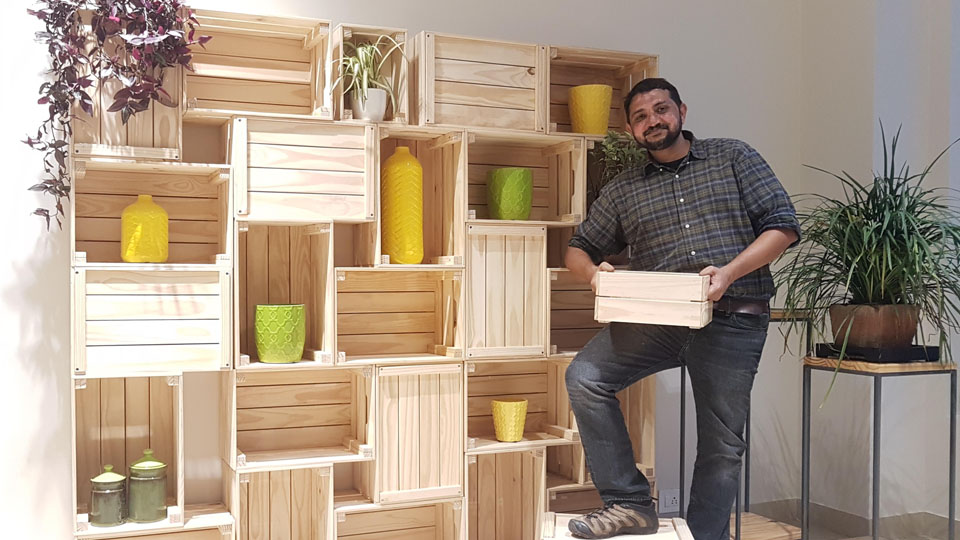
A month ago, I visited MAS Furniture, a Mysuru-based furniture manufacturing company headed by Shabbir Vagh. When I met Shabbir he was busy planting trees at the factory premises. When I enquired about it he replied saying, “We’re now manufacturing for IKEA and they have a requirement which states that every factory must have a certain amount of green cover.”

It seems to be qualified as an IKEA supplier one has to follow IKEA’s IWAY policy.  IWAY is short for the IKEA-Way of doing things. One such IWAY is that vendors that partner with IKEA must have a healthy male to female ratio in the factory.

Shabbir says that ratio is 1:1 and now he has hired a whole lot of women to make for a 1:1 workforce.  IKEA also wanted pay parity that is based on merit and experience rather than gender.

Strict standards have been laid out for workers’ safety, which means all workers on the shop floor have to wear gloves, bright vests and goggles. Apart from this, the vendor has to maintain clean accounting standards.

As for the raw materials, Shabbir shows me a beautiful vegetable crate made from pine wood which he supplies to IKEA and tells me the varnish on the wood has undergone innumerable tests to the point that the wood is safe enough even for a child to chew on.

He also informs me that every piece of wood used by IKEA is certified by the Forest Stewardship Council, an international body governing the sustainable and responsible use of forest resources.

So how has all of this helped Shabbir’s family furniture business? Thanks to following the IKEA way of manufacturing, the company has attracted new global partnerships. MAS Furniture now supplies furniture to the Trump Tower being built in Pune and is making furniture for the world famous French product designer Philippe Starck.

This is proof that when global companies with good practices partner with local manufacturers, they improve their standards making them globally competitive. When our industrialists can learn, adapt and become globally competitive, why can’t our politicians and bureaucrats? Well, it turns out politicians and bureaucrats of Telangana already have.

It was reported that IKEA was first to open in either Mumbai or Bengaluru but suddenly chose Hyderabad. The reason being that the Principal Secretary of Telangana, after reading about IKEA’s plans for India, contacted them and deputed a few proactive bureaucrats to help them get all the approvals and allotted land in HITEC City. The speed at which things moved ensured that IKEA opened its first India Store and the country’s largest retail space in Hyderabad while providing employment to 950 people in the store alone!

In contrast, a mobile phone brand based in Bengaluru approached the Karnataka government for industrial land to setup a mobile research and development lab in 2015.  They even met the previous Chief Minister but nothing came of it. Later, Telangana heard about this project, called the owners, held talks and soon offered them 1.6 acres in Gachibowli to set up their Lab. Today the construction is on track and is expected to be completed by 2019 and will employ over 300 people.

The manufacturing philosophies of companies like IKEA are very relevant for a growing economy like ours. Karnataka needs such companies and for that our leaders have to be proactive. The last time we had such a Chief Minister was S.M. Krishna, who ushered in the IT boom. Now we have a coalition government and there is an atmosphere of industrial gloom.

e-mail: vikram@starofmysore.com

source: http://www.staromysore.com / Star of Mysore / Home> Columns in Black & White / by Vikram Muthanna / August 11th, 2018

Nikhat Zareen receives Arjuna Award

Hyderabad, TELANGANA:

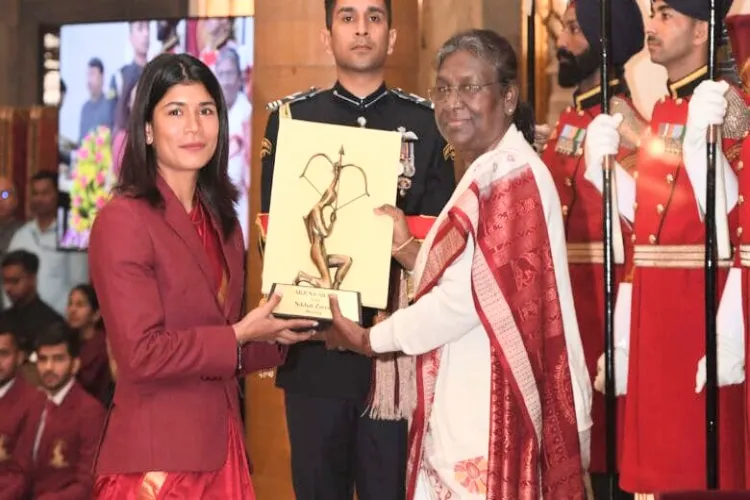
Nikhat Zarin receiving the Arjuna Award from President Draupadi Murmu

New Delhi:

The newest Indian sportsperson to make a splash on the global scene and the world Boxing champion Nikhat Zareen was conferred the Arjuna Award by president Draupadi Murmu in a glittering ceremony at Rashtrapati Bhawan on Wednesday.

The President gave away the National Sports Awards 2022 and National Adventure Awards 2021. The National awards are given every year to encourage and honour outstanding sportspersons.

This time, 25 sportspersons were given Arjuna Awards. Telangana sportsperson Nikhat Zarin, who recently won the World Boxing Championship one among them.

She expressed her joy and gratitude at the award on social media.

President Draupadi Murmu awarded the Tenzing Norgay National Adventure Award, 2021 – to Neena Dhakad. She is the first Indian woman to climb Mount Everest and Mount Lhotse. She accomplished this feat in less than 10 days.

President Murmu presented Dronacharya Award 2022 to Sujit Mann, wrestling coach. He has trained many outstanding racing athletes including Bajrang Punia.

Nikhat Zareen displaying her award

Dronacharya Award was also conferred on Soma Siddharth Shrur, who has trained top shooting athletes including Oni Lekhra, Ishwari Pratap Singh Tomar, and Sunidhi Chauhan; Jeonjot Singh Teja, archery coach. The latter has trained Harvinder Singh, Raj Kaur, Rajat Chauhan, and Maskan Kher.

Raj Singh, the wrestling coach, who was honoured, has trained Yogeshwar Dutt, Sanjay, Ashok Kumar, and Umair.

Bimal Prafla Ghosh, the football coach has also been conferred the Dronacharya award.

Dinesh Jawahar Lad was awarded for his achievements in cricket coaching. He has trained Rohit Sharma, Shardul Thakur, Harmeet Singh Budhan, and Sudhish Lad.

BC Suresh received Dhyan Chand 2022 for his achievements in Kabaddi – Gold Medal in World Cup, 2004 and Gold Medal in Asian Games, 2002 –

Dharamveer Singh got the award for his achievements in hockey.

President awarded the Maulana Abul Kalam Azad Trophy, 2022 to Guru Nanak Dev University, Amritsar for best all-around performance in sports.

Others who received the award are:

Dhyan Chand Award: Ashwini Akunji Chidananda (Athletics)

Arjuna Award: Jarlan Anika J (Deaf Badminton)

Arjuna Award:  Sopanal Sanjay Patil (para swimming)

Arjuna Award: Tarun Dhillon (Para-Badminton)

Arjuna Award: Parveen (Wushu)

Arjuna Award: Sarita (Wrestling)

source: http://www.awaazthevoice.in / Awaz, The Voice / Home> Story / by ATV / posted by Aasha Khosa / January 2023

Guntur Girl Enters Record Books With Periodic Table

Chilakaluvripeta (Guntur District) , ANDHRA PRADESH:

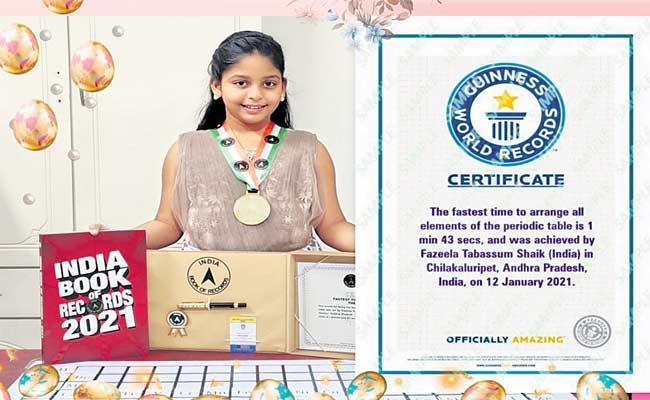
Fazeela Tabassum Shaik, a 9-year-old child from Chilakaluripeta, Guntur district has broken her previous Guinness World Record of “The Fastest time to arrange all elements of the periodic table” in which she took 1min 57sec. Now she arranged in 1min 43 sec setting up a new Guinness record.

Earlier, a Pakistani child had set a record in 2.27 minutes, which has now been broken by Fazeela Tabassum Shaik. Fazeela practised nearly 4 to 5 months for daily 5 to 6 hrs daily to achieve this. Fazeela is presently trying to break her own record by setting the periodic table in 1 min 30 seconds.

In January 2021, Ganapavaram CR College conducted an official attempt at the Guinness Book of World Records and Fazeela Tabassum completed the event in 1.43 minutes.

In this regard, Fazeela has received an official confirmation and certificate from the Guinness Book of World Records on April 27.

source: http://www.sakshipost.com / Sakshi Post / Home> Andhra Pradesh / May 09th, 2021

‘Success is the best revenge’: Tharoor after Tabassum Shaik, who staunchly faced hijab row, tops PUC exams

KARNATAKA:

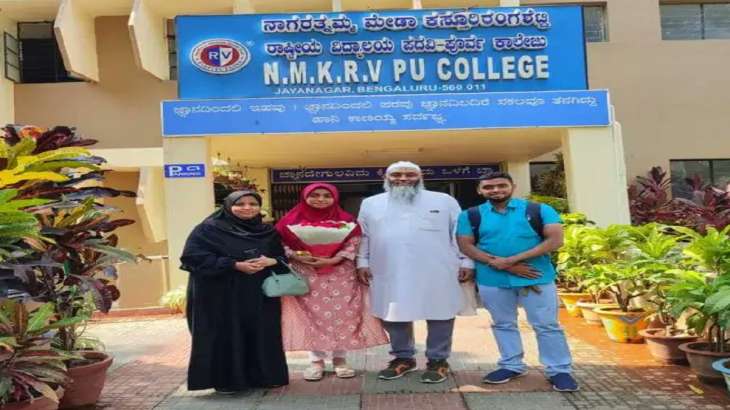
Giving a tight slap to all the protestors, 18-year-old Tabassum Shaik scored a perfect 100 in Hindi, Psychology and Sociology.

Image Source : TWITTER/@TAHSEEN_JNU
Tabassum Shaik with his parents.

A year after Karnataka hit the headlines of major global media outlets following a controversy that erupted after a dispute pertaining to some Muslim students who wanted to wear hijab in classes were prevented by their classmates, it has again gained media attention. But this time, for some good reasons. 

Among the Muslim girls who protested against the college uniform, 18-year-old Tabassum Shaik again hit the headlines and proved “Success is the best revenge”. Notably, Karnataka’s 2nd PUC results were declared on Saturday, April 21. Shaik, who faced thousands of her classmates agitating against her Muslim attire, topped the arts stream in the Second Pre-University (PU) exams. 

Shaik scored 593 points out of 600 

Among the highest scorers, the 18-year-old who still wears a black scarf proudly, received 593 points out of 600 and placed first in the Arts Stream. Giving a tight slap to all the protestors, she scored a perfect 100 in Hindi, Psychology and Sociology. 

Meanwhile, speaking to Indian Express after her achievement, Shaik said that she preferred to choose “education over hijab.” “I decided to give up the hijab in college and pursue my education. We will need to make some sacrifices for education,” Shaikh was quoted as saying to The Indian Express.

Follow the law of the land: Proud father 

Her proud father, Abdul Khaum Shaik, who played a significant role during her tough days, said he always suggested his daughter prioritise her education over other kinds of stuff.

He told his daughter it is important to “follow the law of the land. Education is more important for the children”.

Notably, all the Muslim girls including Shaik stubborn about wearing hijab, had filed a petition in the court, seeking permission to attend classes wearing hijab.

Tharoor praises efforts 

When the controversy broke out, the matter was confined to some regions of the state but soon it evolved into a significant dissension that even the High Court had to intervene. According to the agitating students, wearing a black scarf was their ‘fundamental right’ bestowed under Articles 14 and 25 of the Indian Constitution. Besides, they also argued wearing a hijab is an ‘integral practice of Islam’. However, the Karnataka high court upheld a government order and asserted to continue banning religious attire in educational institutions.

_____________

Post X 9 (formerly Twitter)

Shashi Tharoor@ShashiTharoor “ Success is the best revenge”. #ShabashTabassum !

Image

8:43 AM . Apr 24, 2023·1.3M Views

3,202 Reposts 262 Quotes 27.1K Likes 80 Bookmarks

_________________

Subsequently, Shaik said she accepted the court’s order and resumed her studies without the scarf.  Meanwhile, Congress MP Shashi Tharoor praised the efforts of the student and said, “Success is the best revenge”. #ShabashTabassum!

source: http://www.indiatvnews.com / India TV / Home> English News> Karnataka / by Ajeet Kumar, New Delhi / April 24th, 2023

This organization is providing a platform for Indian Muslims in Canada

INDIA / Calgary, CANADA:

The Canadian Indian Muslims Association is helping people integrate into Canadian society.

About a dozen people gather to eat food and take photos at an event
Members of the Canadian Indian Muslims Association gather at a previous event. (Canadian Indian Muslims Association/Facebook)

When Ali Nizami moved from India to Canada 26 years ago, he struggled to find his belonging in a new country as an Indian Muslim.

“Even though there are so many Indians in the city and in Canada, Indian Muslims share a slightly different culture. Those subtle differences make a huge impact on people when they’re trying to connect with somebody,” said Nizami.

With a lack of organizations in Calgary for that specific community, he also felt alone.

He’s trying to change that for others — whether they’re a new immigrant or have been in Canada for a while.

He co-founded the Canadian Indian Muslims Association two years ago in Calgary. Since then, it’s grown to nearly 300 members across the country, but mostly in Calgary.

Islam is India’s second-largest religion, making up 14.2 per cent of the country’s population, according to the Pew Research Center. It follows Hinduism, which makes up 79.8 per cent of the population.

“We are a minority within a minority,” said Nizami.

Five men pose in front of a banner that says "Eid Mubarak."
Ali Nizami (left) with other members of the Canadian Indian Muslims Association at an Eid event. (Canadian Indian Muslims Association/Facebook)

Still, Indian Muslims are the second biggest Muslim population in the world, says the research centre.

The goal of the organization, says Nizami, is to bring the often underrepresented and neglected community together so it’s easier for Indian Muslims to integrate into the bigger bubbles of Canadian society.

“There’s no voice, there’s no platform. That’s what we’re trying to change. That’s the gap we’re trying to close.”

Nizami says the community is a strong entity in India, and they want to bring that to Canada.

The organization provides career mentorship and support for new immigrants. Nizami says the services and events are not only for Indian Muslims — they’re here to help anyone who needs it.

‘There are lots of Muslims in India, too’

Mir Ali and his wife Humaira Fatima moved to Calgary a year and a half ago. Before that, they lived briefly in Mississauga, and in Chicago for seven years.

They say of all the cities they’ve lived in across the world, they couldn’t find an organization that was focused on promoting Indian culture in addition to Islamic culture — until they heard of the Canadian Indian Muslims Association.

By connecting with people from the same background and with shared interests, they say the organization helped them find their belonging in Calgary.

A few months ago, they officially joined the organization as members.

A collage of a man and a woman smiling at the camera
Spouses Mir Ali and Humaira Fatima are new members of the Canadian Indian Muslim Association. They say joining the organization has made the integration into Calgary easier. (Submitted by Mir Ali)

“They were very open and welcoming,” said Ali. “It’s like an extended family to us right now.”

Fatima says she hopes working with the organization will spread more awareness about the community across the country.

“Whenever I wear a headscarf, people think that I’m not from India, but I’m from Pakistan,” said Fatima. “Not everybody is aware that there are lots of Muslims in India, too.”

Saima Jamal, co-founder of the Calgary Immigrant Support Society, says the community is getting increasingly marginalized in India because of their religion, and that’s now spreading to Canada.

“The Indian Muslims that are here in Calgary, they have been facing it. They’ve been feeling it,” said Jamal.

“The Indian Muslim community decided, you know what, we’re going to make a positive step in all of this. We’re going to help new immigrants that are coming in who are Indian Muslims. And we won’t just stop there — we will help anybody coming in that needs help.”

Grand Iftar dinner event

To celebrate Ramadan, the Canadian Indian Muslims Association is hosting what they believe is one of the biggest Iftar dinner events in Calgary, on April 9. It’s sold out at 350 tickets.

Together, attendees will come together to pray, break their fast for Iftar with “good Indian food,” listen to speeches from organizers and socialize with the community.

“Ramadan is the time to come together. It’s the time to reflect on your own self. Ramadan is the time to celebrate and that’s all we are trying to do — live the spirit of Ramadan,” said Nizami.

Moving forward, Nizami says the organization is also planning a food bank drive and a blood drive. Everyone is welcome to those events, he says, no matter how they identify.

source: http://www.cbc.ca / CBC NEWS / Home> News> Calgary / by Karina Zapata / April 08th, 2023

IECI Making Students Vehicles of Social Change: Dr Bedeeuzzaman

KERALA:

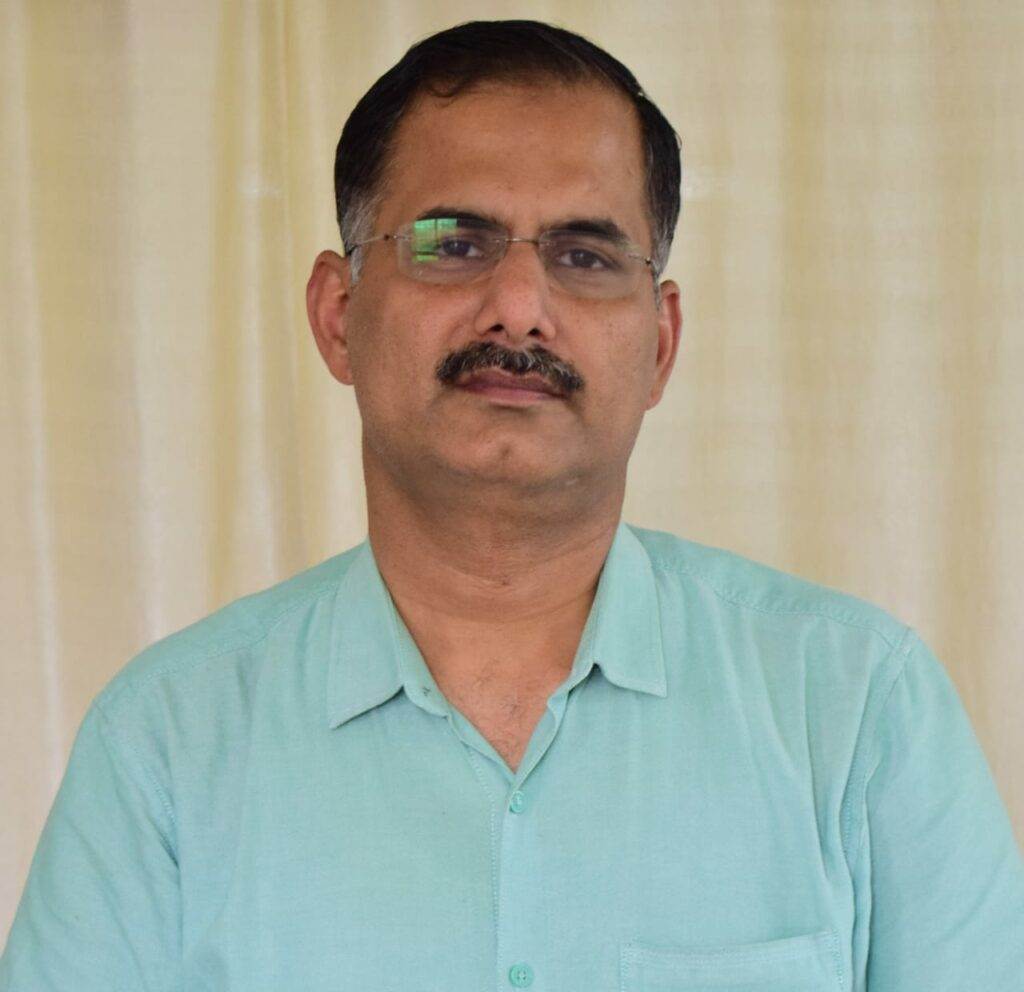
Dr. MOHAMED BEDEEUZZAMAN is CEO of Integrated Education Council India (IECI). He completed his Ph.D in Biomedical Signal Processing from Aligarh Muslim University after having his B.Tech and M.Tech degrees from Govt Engineering College, Thrissur and NIT, Calicut respectively.

Dr. Zaman served MES College of Engineering, Kuttippuram, Kerala in various capacities for 22 years.

He was Vice Principal of the College from 2013 to 2020. He has contributed many papers and attended conferences and workshops at Rome (Italy), Prague (Czech Republic), Loughborough (UK) and Sharjah (UAE).

Dr Zaman is a good orator and prolific writer. He is an expert in outcome-based education, school grading and accreditation. He has conducted many workshops on NEP 2020 and its NCFs.

In an interview with MOHD NAUSHAD KHAN, he said, IECI gives academic support and guidance to about 100 schools, 600 plus primary/secondary madrasas, and 2 dozen colleges.

Excerpts:

What inspired you to work for education?Please tell us about your educational journey and what have you achieved so far?

In the early 90s, during inception of the college, the political atmosphere of Kerala was very much hostile to running of a private college due to its leftist leanings. Running a private college was considered almost synonymous with some anti-social activity. Being part of a team that attempts to establish something anew gave us many insights. It gave us a conviction that strong will and committed team with visionary leadership will make any dream true. The mentoring that we got from elders during the initial phases of the college was unparalleled.

Later, as Professor in the Applied Electronics and Instrumentation Department and Vice Principal of the college, I could shoulder many academic and administrative responsibilities.

By the grace of God Almighty, as NBA coordinatorI could be instrumental in getting NBA accreditation for four undergraduate programmes. This gave me an opportunity to closely learn the importance of outcome-based education. It made us ponder over the positive changes that may happen if the outcome-based approach was brought to different facets of education. Also, I strongly felt that rather than tertiary education, the outcome-based experiments will be more fruitful at the formative levels of education where the stakeholder involvement is much higher.

Fortunately, amid nurturing the dreams of doing something in a larger framework, I have got an invitation from Integrated Education Council India (IECI) to join them. IECI is a public spirited non-profit educational entity. It coordinates the activities of multitudes of educational institutions, from preschools to colleges across Kerala and Gulf region. It is engaged in preparing schemes and plans to promote quality in all facets of education.

What is the objective of your educational vision?

IECI has a rightly crafted vision statement: To make the world a better place by creating generations that uphold the dignity of humankind.  We understand that the root cause of all problems that has afflicted the world today is our miserable failure to honourthe dignity of humankind. The solution to this anathema is to train younger ones to imbibe the values of human dignity, justice, and equality during their formative years.

What is the model of your educational system?

In tune with the noble vision statement, we have developed certain mission statements that act as the basis of multitudes of activities carried out by IECI. They include: To equip people to actively participate in knowledge society by imbibing quality in various facets of education, Lead students to climb the social ladder by fixing suitable benchmarks and thereby making them vehicles of social change, Nurture the future generation as responsible citizens by providing them with a worldview built upon strong moral foundations, Design and implement various curricular and no-curricular programmes that will infuse self-esteem and awareness about the cultural moorings among the stakeholders.

Our attempt is to focus our activities on those who can be linked and mapped to the given vision and mission statements.

IECI gives academic support and guidance to about 100 schools, 600 plus primary/secondary madrasas, and two dozen colleges. Our institutions stand out in that admissions and appointments are made purely on merit without any discrimination based on caste, creed, or religion. Among other things, the IECI strives for educational uplift of the backward and marginalised sections of society by awarding scholarships to meritorious but economically weaker students and for strengthening the associated schools, quality-wise.

Concerns and apprehensions about preserving cultural sensibilities act as a major barrier to the education of children belonging to minority communities.  We are helping people to overcome this fear by providing quality education with due consideration to the culture and tradition of stakeholders. Everybody wants to inculcate values and morals in future generations. Many of the times, this is achieved through earmarking separate periods for value education in the weekly timetable. Though we are also doing the same, our striving is to provide a value-laden ecosystem at our institutions in a level-appropriate manner. We train our institutions to adhere to the proclaimed core values and mentor them to stand witness to these values in the process and premises.

How is your chain of schools different from other existing chains of schools?

Our school activities are organised under the banner of Vidya Council for Education (VCE). It is an agency that stands for an education that aims for good academic standards. It strives for a process by which good citizens who honour the dignity of all fellow beings will be nurtured.

India is a very large country where the educational aspirations of citizens cannot be fulfilled by the government alone. Philanthropic interventions from not-for-profit entities are very much needed to reach our stated targets of access and equity in education. Schools associated with VCE fulfil the educational aspirations of many pupils belonging to rural areas where good education is not readily available. Also, many of our students are coming from socially deprived sections. In that sense VCE is contributing to strivings of our governments to create an equitable knowledge society.

We support the associated schools to improve their governance and process. In addition to the support to improve academic quality, we plan and implement various competitions and talent search examinations. We conduct training programmes for different stakeholder segments, considering their scope in the educational process.

If you ask for two features that make our school system unique, we will immediately tell you that one is its anchoring on values and the other respect for diversity. We are engaged in the process of equipping students to live in the knowledge economy by preserving cultural sensitivities. The twin task is done within the curricular framework created by governments and statutory bodies. We believe that the beauty of India lies in its diversity and it can make use of its demographic dividend if this diversity is preserved and taken care of. We find no difficulty in making respect to diversity a core value and at the same time preserving the cultural moorings of the Muslim community to which the major share of our students belongs. We have been conducting various programmes in our schools to give exposure to students regarding the social mosaic on which they will have to lead life as responsible citizens.

As stated in NEP 2020, teaching students the importance of “doing what’s right” at a young age and giving a logical framework for making ethical decisions is an important aim of school education. Through its multifaceted activities, IECI is working towards achieving this end.

Pre-primary schools have become a market these days.How are you different from those who have only commercial interest?

As stated earlier, not only the preschool, but the entire enterprise of IECI is envisaged as a not-for-profit entity.

Ensuring inclusive and equitable quality education and promoting lifelong learning opportunities for all by2030 is an important component of Sustainable Development Goals (SDGs) of UN. This noble goal can be met only if quality education is provided since the very beginning. That is why much emphasis is being given to enhancing the quality of Early Childhood Care and Education (ECCE) nowadays. Building the foundation for literacy and numeracy skills is a major learning outcome that is expected out of preschool education.

Even at their tender age, children are repository of boundless potentials. On many occasions they pose difficult questions that emanate from their inquisitive minds. Rather than addressing these innate queries properly, elders used to silence them. Our classrooms are also not an exemption. Instead, a conducive environment should be provided for the children where they feel the school as an extension of their homely settings. To reach this end, education must be more experiential, inquiry-driven, learner-centred and flexible.

Education is not mere imparting of literacy and numeracy skills. It should be a process that must help students to build character and enable learners to be ethical, compassionate, and value-driven.

IECI has developed two streams of pre-school curricula for foundational stage of schooling: One is Fly High and the other Heavens. Both were prepared to make the child school ready with 3-year pre-schooling. The latter gives emphasis on teaching recitation of the Qur’ān also along with other subjects.

What are the challenges before pre-primary education in India?

Following are some of the challenges before the pre-primary education:

Access and Enrolment: Due to the absence of sufficient schools or preschool facilities, many children, especially those in rural and economically backward areas, lack access to quality pre-primary education.

Equity and Inclusivity: Ensuring equitable access to all children remains a major challenge. Children from marginalised sections, including those from lower castes, educationally backward minorities, tribal backgrounds, and economically disadvantaged families, often face barriers to pre-primary education.

Medium of Instruction: It is a fact that those who are getting quality English medium pre-schooling have an edge over those who are getting substandard pre-schooling in vernacular languages in their later careers. At the same time, English medium pre-schooling is a luxury beyond the scope of many ordinary Indians.

Parental Awareness and Involvement: Lack of awareness about the importance of early childhood education among parents can lead to low enrolment rates. Additionally, some parents might not have the resources or time to actively engage in their child’s learning process.

Lack of Proper Funding: Adequate investment in early childhood education is essential to improve infrastructure, teacher training, and overall quality. While limited financial resources allocated to pre-primary education can hinder its growth and development.

source: http://www.radianceweekly.net / Radiance Views Weekly / Home> Education / by Mohd Naushad Khan / August 22nd, 2023

OBITUARY : Abdul Basit Anwar is No More

ANDHRA PRADESH:

Mr. Abdul Basit Anwar, former Secretary Jamaat-e-Islami Hind and former Ameer Halqua JIH Andhra Pradesh (united) passed away at a hospital in Hyderabad on August 17, following a brief illness. He was 73. While he was conducting a Qur’ān class during the Arkan Ijtima of JIH Hyderabad, he felt some unease and was admitted to hospital on August 16.

He was Zonal President of SIO Andhra Pradesh. During his last days, he was serving the organisation as Patron of Tarbiyatgah, Telangana.

His funeral prayer was offered at Masjid Darus Shifa Hyderabad after Zuhr Prayer and laid to rest at Sultan Shahi Graveyard on August 17.

A large number of Muslims and their leaders including JIH Ameer Syed Sadatullah Husaini, JIH Secretary Muhiuddin Shakir, Ameer Halqua Telangana Dr. Muhammad Khalid Mubashiruz Zafar, Ameer Halqua A.P. Muhammad Rafeeq, President All India Majlis Tameer-e-Millat Ziyauddin Nayyar, Ameer Amarat-e-Millat-e-Islamia Telangana Muhammad Husamuddin Jafar Pasha and others attended Mr. Anwar’s funeral prayer.

source: http://www.radianceweekly.net / Radiance Views Weekly / Home> Obituary / August 22nd, 2023

Karnataka: Hijab-clad student Ilham Rafiq secures 2nd rank in PUC exam

Mangaluru, KARNATAKA:

The Internet has been overjoyed with Ilham’s success. Many shared her success story and pointed out that her religious identity did not deter her from securing a top rank.

Ilham and Anisha Mallya

On June 18, as Karnataka PUC results were being announced, Ilham, a Muslim woman who wears a Hijab, discovered that she had scored overall state second rank in the science stream. Her batchmate Anisha Mallya from the Commerce section also scored overall second rank in the state.

Both the girls have scored first rank in Dakshina Karnataka. While Ilham scored 597 out of 600, Anisha secured 595 out of 600 marks.

Ilham and Anisha are students of St Aloysius PU College from Mangalore in Dakshina Karnataka. The irony is worth noting as a mere few months ago the hijab row had engulfed the country?

Speaking to reporters, Ilham said, “I am very excited. I checked my percentage which was 91.5%. I informed my relatives. After some time, I started getting calls from my cousins saying my name is coming in the news. At that moment I realised that I got a rank. Till then I was unaware.”

Ilham says she still has not come in terms of her success. Asked what would she want to become in the future, she said she was always interested in pursuing a career in BSc in Clinical Psychology.

Ilham’s parents are over the moon. Her father, Mohammed Rafiq, used to work in the Gulf as an IT employee and now is retired while her mother Moizatul Kubra is a housewife.

The Internet has been overjoyed with Ilham’s success. Many shared her success story and pointed out that her religious identity did not deter her from securing a top rank.

Her classmate, Anisha Mallya, who secured Karnataka second rank in the Commerce section said the results were unexpected. “I have achieved this feat with the help of teachers and they have been really supportive. I gave my 100 percent. I am very happy and content,” Anisha said. She plans to continue studying in the same college.

In December 2021, six Muslim students wearing Hijab were banned from their school in Udupi, Karnataka. The management stated that they cannot enter the school wearing a hijab as it represents a religious symbol.

The issue soon spread in other schools of Dakshina Kannada which then snowballed into a national issue. Female Muslim students wearing hijabs were not allowed on the school premises. Even the teaching staff faced the brunt and many resigned.

In fact, it took a deadly turn with many Hindu students, all from pre-university colleges (PUC) started supporting the anti-hijab movement and partook in proests. Visuals of saffron shawl-clad teenagers in their school uniforms began flashing in news channels as the students revolted against their Muslim peers.

The issue took a legal turn with the six Muslim students filing a petition at the Karnataka high court against the state government of Karnataka. Unfortunately, the verdict was pronounced against the girls and Hijab has been banned.

For many, especially members from the right-wing sector, it was a huge win.

The Karnataka government made it clear that those wearing Hijab will neither be allowed into the classrooms nor allowed to sit in the recently concluded PUC examination. As a result, many young Muslim girls opted to stay at home rather than abandon the hijab.

source: http://www.siasat.com / The Siasat Daily / Home> News> India / by The news desk (headline edited) /posted by Veena Nair / June 20th, 2022

Karnataka State Sunni Student Federation Marks 50th Anniversary

KERALA / KARNATAKA:

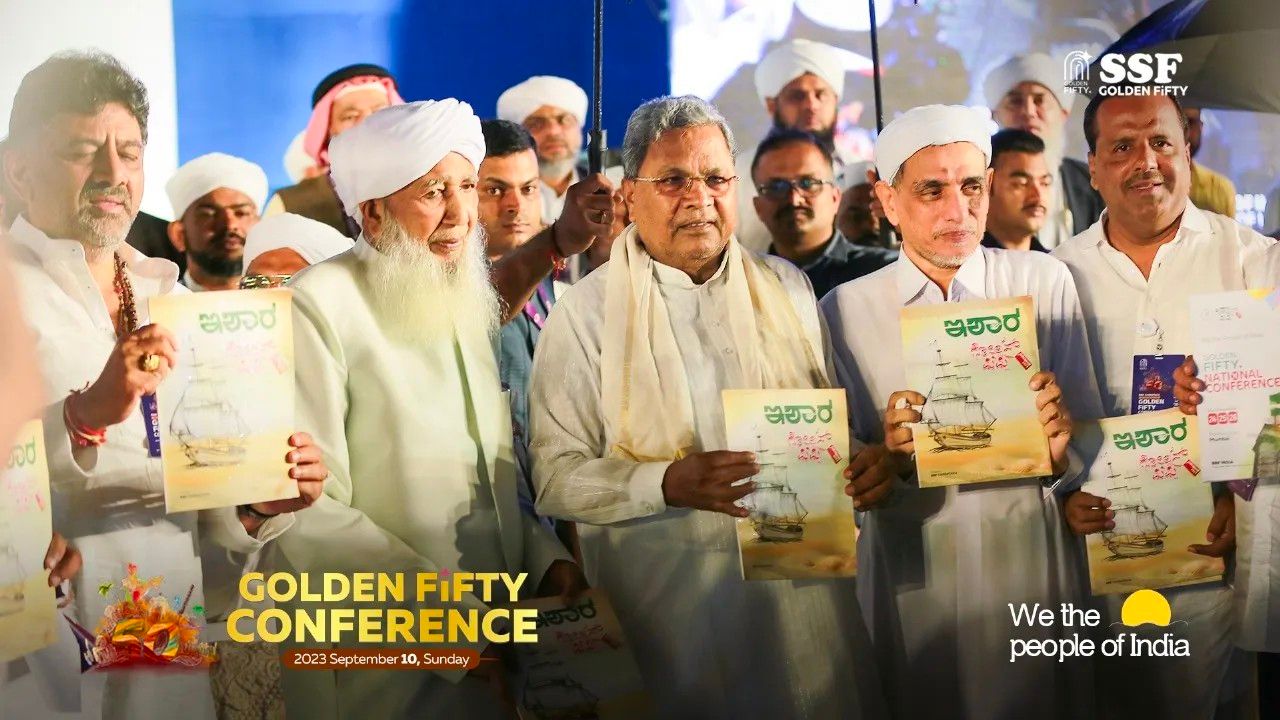
The Karnataka State Sunni Student Federation (SSF) celebrated a significant milestone on Sunday, marking 50 years of dedicated service to the student community. A grand event was held at the Palace Grounds in Bengaluru, where thousands of students and community members gathered to commemorate the organization’s achievements.

Addressing the attendees, Chief Minister Siddaramaiah lauded SSF’s contributions to upholding the values of unity, the constitution, and the integrity of the country. He emphasized the importance of education and urged students to channel their energy and organizational skills to propel India’s development.

The Chief Minister reiterated that India belongs to every Indian and pledged to protect the rights of all citizens, discouraging any form of discrimination based on name, caste, or religion.

Housing and Minority Affairs Minister Zameer Ahmed commended SSF for its exceptional 50-year service in education. He praised the organization for becoming a global model and for its significant contributions to the nation’s prosperity.

Minister Ahmed highlighted SSF’s role in producing IAS and IPS officers from its alumni and reaffirmed the Karnataka Congress government’s commitment to supporting minority community students, particularly in higher education.

He also announced plans to introduce Kannada language teaching in Madrasas within the state and the consideration of establishing a Madrasa Board, drawing inspiration from Kerala’s Madrasa education system.

SSF State President Hafiz Sufiyan emphasized the organization’s educational priorities and its dedication to operating numerous madrasas. He underscored that SSF members have remained committed to societal well-being.

The conference also featured the presence of notable figures, including the Grand Mufti of India, Sheikh Abubakr Musliyar, Kerala Muslim Jamaat General Secretary Syed Kalilul Bukhari Thangal, Waqf Board President Anwar Basha, former Karnataka Wakf Board President Shafi Saadi, Nasir Lucky Star, and others.

Founded in 1973 by Sheikh Abubakr Musliyar in Kerala, the SSF’s mission is to provide students with opportunities for education, social engagement, and community service.

For five decades, the SSF has been actively involved in the field of education, playing a significant role in promoting education and empowerment among Muslim students. Over the years, the SSF has established numerous educational institutions, including schools, colleges, and madrasas. The organization has also offered scholarships and financial aid to deserving students. In addition to its educational activities, the SSF has been engaged in various social welfare projects, including healthcare, housing, and poverty alleviation.

Over the past 50 years, the SSF has evolved from a small group of students in Kerala into a large organization with branches in multiple states.

source: http://www.thecognate.com / The Cognate / Home> News / by The Cognate News Desk / September 11th, 2023