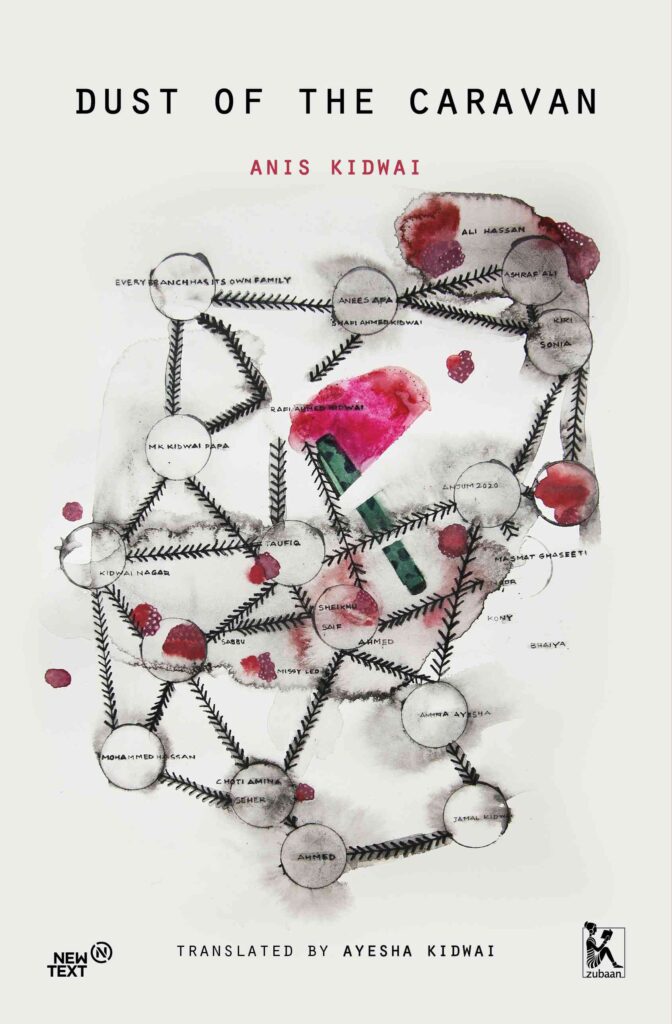
An excerpt from Anis Kidwai’s memoir, translated from the Urdu by Ayesha Kidwai.
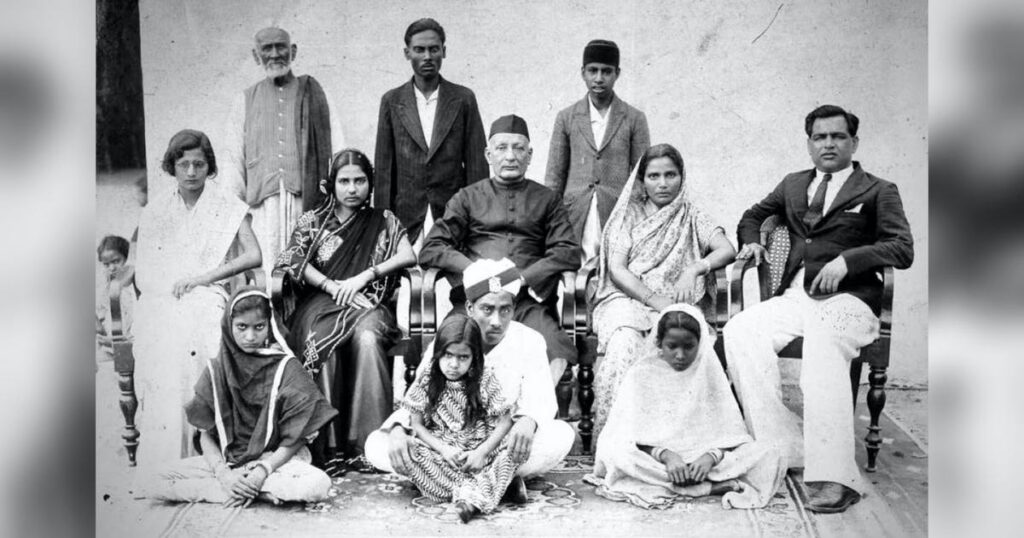
Author Anis Kidwai (second from right, middle row) with members of the family and family retainers.
Amongst the dream-like memories there is also one of an evening in which my Bua has my younger brother in her arms and I am walking alongside them. At a short distance from the house, I see a dirty bundle of clothes lying on the road and I give it a kick. The bundle groans loudly, and my Bua exclaims, “Hai! What are you doing?! You don’t kick a human child, do you?” She sits down besides it and starts speaking to it. In response, the bundle of rags unjumbles. At first, two pairs of arms and legs, burning hot, appear, and soon we are on our way home, a dirty young girl tottering along with us.
The girl was quite a bit older than me, but I went about the house preening – she was my “discovery”, the one I had found and brought home.
Her fever came down with medicines the very next day and my mother herself stood by and supervised as one of the women servants gave her a bath with water, soap, and besan. The grime and dirt were rubbed off of her with potshards. With a kurta from one person, a paijama from another, a pink orhni draped on her, that pitch-black girl was soon transformed into a comely one with large eyes and golden skin the colour of wheat.
Just a few days of a regular diet brought out her beauty even more, and within a month, this twelve- or thirteen-year-old girl was always to be found teasing and flirting with the other servants. We named her Nargis. I was very happy and pleased with her and kept her by my side always.
One day, Nargis accompanied me to the part of the house where the cousins who were living with us for their studies, resided. I don’t know what exactly happened, but soon little pebbles started flying around, and peals of laughter bubbled in the air. I felt compelled to go report to my mother that Nargis was throwing stones. The next I knew, Nargis was given a few slaps and ordered never to even think of making her way to that side of the house ever again. And shortly after, she was sent off to my nānī’s home for education and training.
It was one year later that she returned. In her colourful gharara, shining with gold trim and embroidery, and the red dupatta she wore around her shoulders, she was now a married woman. A dim-witted young man was by her side, and he was at once engaged by our family, and sent off to Aligarh to serve Rafi sahab.
Once I said to Nargis, “Your husband is calling you.” My words were greeted with a loud snort and a gob of spit. She detested him.
And though she stayed with us and grew more beautiful by the day, she never gave that husband of hers a second look. The truth was that she had eyes only for one manservant of ours, handsome in his beplumed turban. Eventually, one night, Nargis disappeared altogether.
It was only three years later that she returned. We all surrounded her, delighted to see her. She now swore by Our Father and Jesus Christ and wore a skirt. The Christian missionaries had inducted her into Jesus’s flock of sheep and had taught her to say, “Oh Heavenly Father, let your will be fulfilled on earth as it is in heaven, and give us our daily bread.”
We brothers and sisters pleaded with her, “Nargis come back to us!” And to our delight, she agreed. However, now her manner was quite brazen. After a year or so of revelry, she decamped with the magnificently turbaned manservant. The next year this esteemed employee was sighted in the mela at Dewa, dressed in saffron robes, now a self-declared pir, but Nargis never returned. And we never got any further news of her.
For everyone else, Nargis soon became long-forgotten, but her memory has always remained in my heart. Today when I am concerned with the education, reform, and improvement in the lives of the girls in the Women’s Service Home, I think of Nargis again. If only we had afforded her some ease and facilities, her ruined life could have been repaired.
One day, my mother told me that I was to go to visit an aunt, whose husband was a senior lawyer in the city.
She had visited us a short while ago and had said that she wanted her daughters to meet me. Since her elder daughter was ill, they couldn’t visit us, so I must go to them, she said.
To be invited as a guest was a matter of great pride and fulfilment for me. I got ready quickly and sat in the palanquin. I was escorted by one uncle and Ramzan Baba carrying his big staff. Arriving in such pomp made me stand up tall as I alighted at my destination.
My aunt received me outside in the veranda. She hugged me affectionately repeatedly, expressed her delight that I had come, and then took me inside saying, “Let me take you to Habiba’s room. She is bedridden with a boil on her leg and cannot walk.”
Habiba was with her two younger sisters, two or three daughters of maidservants and perhaps also a couple of girls who were her relatives. I was invited with great informality to sit on her bed and conversation began. Confidences about themselves, information about their neighbours, stories about their villages, romantic sagas of passion, tales of spectres and demons, black magic, gossip about debauched men… oh lord, how much information these girls had! That was the day that I came to understand what a simpleton I was in comparison.
Ghost stories were forbidden in my home, and I had never even seen philtres and potions. The information that a ḍāyan bewitches men into states of utter foolishness, that certain female ghosts speak through their noses and have their feet on backwards, made my hair stand on end. Habiba was just one year older than me, yet she had seen all these things with her own eyes!
But when the girls started talking about how the Munshi has kept his second wife in his house, I couldn’t restrain myself any longer.
What was odd or scandalous in this – where else was he supposed to keep her? Outside? My foolish questions elicited peals of laughter. But I couldn’t bring myself to believe in the truth of what they said – no man could really have two wives.
Habiba’s insistence was that every man had a randi (prostitute). Her father also had one. She doesn’t come to the house, but we go to hers. But what was a ranḍi like? My question once again induced hysterical laughter.
“What’s she like? You don’t know? You are such an innocent fool!’’
A fool I certainly was, because when I returned home with this treasure trove of new knowledge, I reported it all to my mother, and even repeated a few of the observations the girls had made. My mother was exceedingly displeased. It was perhaps because of this that I wasn’t ever allowed to visit them again, although I was always eager to meet those girls of a thousand tales.
Excerpted with permission from Dust of the Caravan, Anis Kidwai, translated from the Urdu by Ayesha Kidwai.
source: http://www.scroll.in / Scroll.in / Home> Book Excerpt / by Anis Kidwai / February 18th, 2021
A new book questions political wisdom about competitive communalism before and after Independence.
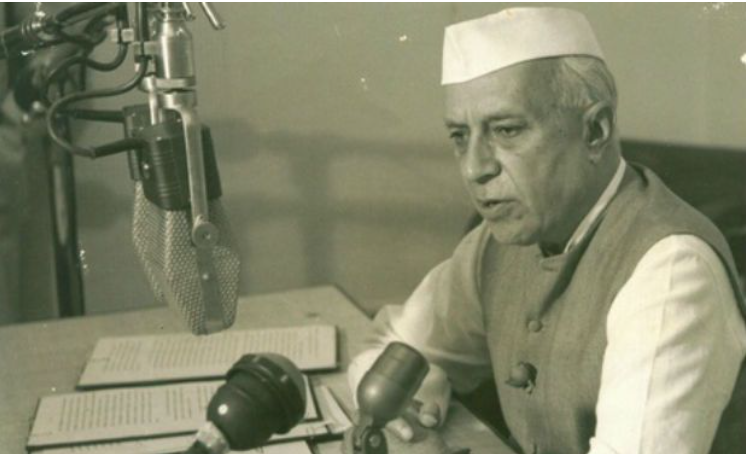
Former Prime Minister Jawaharlal Nehru. Image Courtesy: PTI
The prevailing political wisdom of the day is to chastise Jawaharlal Nehru, his Congress party, and their inclusive vision for the republic. Given this, one is caught in a fix if a published work subjects the Congress-Nehruvian performance to criticism. The republican and constitutional vision of India, and its plans and goals were outcomes of a prolonged anti-colonial mass agitation, which multiple ideological and identitarian political formations joined, complemented and contested.
Besides the aligned or contending forces, intellectuals and activists of various 19th and 20th-century hues also provided inputs. Privileged Muslims articulated some strands, including the exclusionary right-wing politics of communal separatism. Though represented by the Muslim League, and its sole spokesman MA Jinnah, they straddled nearly every shade of political articulation, ranging from Left to Centre, from those who advocated separatism to its vociferous opponents.
Unfortunately, the academic and popular domains popularise Muslim separatism more than their resistance to separatism. Academic studies also focus too much on Uttar Pradesh (earlier the United Provinces of Agra and Awadh). Gyanesh Kudaisya (2002) characterised this province as India’s heartland in terms of population and geographic size but also narrative-making for the Indian polity.
The former landed elites of the Muslims of this region, whom David Lelyveld (1978) called the “Kutchery Milieu”, were in the forefront and mainstay of the Muslim League. An important Muslim League leader from Lucknow, Chaudhry Khaliquzzaman (1889-1973), candidly and proudly proclaimed this in his 1961 memoir, Pathway to Pakistan. Quoting Maulana Azad, he writes, “All students of Indian politics know that it was from the U.P. that the League was reorganised. Mr Jinnah took full advantage of the situation and started an offensive which ultimately led to Pakistan.” Interestingly, in the late 1930s, Khaliquzzaman was the mayor of Lucknow and allied at least once with the Hindu Mahasabha. After Partition, it took him a long time to migrate to the other side of the border.
Against this backdrop, Aishwarya Pandit’s Claiming Citizenship and Nation: Muslim Politics and State Building in North India, 1947-1986, published by Routledge in 2021, is a critical intervention. She writes, “Given the demographic dominance of U.P. Muslims in some constituencies, the threat of revival of ‘Muslim communalism’ continued to impact their politics. In the colonial period, the United Provinces had remained central to Muslim politics around issues of representation, minority safeguards and language.”
Pandit disagrees with Kudaisya and proposes in her introductory chapter that the Uttar Pradesh Congress opposed the Centre’s move to “introduce minority and cultural safeguards after 1947”. Her book examines the intersections of law, identity and property and notes region-specific Muslim—and anti-Muslim—politics and articulations. Notably, she includes in her work the tensions that prevailed within the Muslim community over contemporary concerns.
Pandit says the new Muslim leadership that emerged after independence articulated the weaknesses of Nehruvian secularism, particularly concerning their religious, cultural and identitarian concerns. Further, from the mid-1970s onward, “Fatwa and Ulema politics acquired the centre stage”. Her study ends in 1986, a period that, according to her, “signaled the continuation of Hindu counter mobilisation, which set in the 1950s around the [Babri] Masjid-[Ram] Temple issue [of Ayodhya], the issue of minority appeasement and personal law and also coincided with the dipping fortunes of the Congress party in Uttar Pradesh”.
In her effort to discover reasons for the Congress party’s decline in Uttar Pradesh, she argues that Muslims here [and in Bihar] “made some surprising alliances including those with the Jan Sangh in the 1960s and 70s”. Pandit attempts to absolve Muslims of the responsibility for this, and “challenges the widespread view that Muslims acted as a secure and stable ‘vote-bank’ for the Congress after independence”.
This is where the book would provoke many to raise a few questions that have been left unasked or unanswered. Terminating the study in 1986—and not a few years later—may have excluded the author from raising some crucial questions. Hindu counter-mobilisation got massive support from the Shah Bano issue that raged from May 1985 to April 1986, other than the ‘nationalisation’ of the local Ayodhya dispute, which Pandit chooses not to examine. Scholars, even those not inclined to the right, often sidestep Muslim contributions to communalising narratives that fed Hindu majoritarianism, weakening India’s fragile pluralist secularism.
On 15 January 1986, at a Momin Conference session at the Siri Fort Auditorium in Delhi, then prime minister Rajiv Gandhi announced his intention to amend the law to nullify the Supreme Court’s April 1985 verdict in favour of Shah Bano. Driven out of her home in 1975, 43 years after her marriage, Bano had approached the courts seeking maintenance. Given instant triple divorce in 1978—inside a trial court in Indore—the case moved from the High Court to the Supreme Court. In May 1986, the Rajiv Gandhi-led government passed the Muslim Women (Protection of Rights on Divorce) Act following strident Muslim protests in January that year against the progressive judicial verdict that granted Shah Bano alimony. The law passed in Parliament reversed the maintenance the court had said she was entitled to.
The Urdu memoir, Karwan-e-Zindagi, published in 1988 by Maulana Abul Hasan Ali Miyan Nadvi (1914-1999), makes the conservative Muslim approach to this issue pretty clear. In Volume 3, Nadvi triumphantly writes about how he persuaded Rajiv Gandhi not to accept the proposition that many Islamic countries had reformed their personal laws. He rejoices in accomplishing his effort to stymie similar reforms in India. He says his arguments had a particular psychological impact on Rajiv Gandhi—“Woh teer apney nishaaney par baitha—My arrow hit its target”. Nadvi includes a candid confession: “Our mobilisation to protect the Shariat in 1986 complicated the Babri Masjid issue and vitiated the atmosphere in a big way—“Iss ney fiza mein ishte’aal wa izteraab paida karney mein bahut bara hissa liya,” he writes.
Nadvi admits in his memoir that he had promised to Rajiv Gandhi he would persuade the Waqf Boards to make an endowment available to maintain abandoned women. But this issue remains unaddressed until today. Aishwarya Pandit, rather than exploring the clergy politics of Lucknow’s Nadvi, jumps over to Delhi’s “Imam” Bukhari and his demagoguery and rhetoric.
Nadvi’s politics of 1985-1986 needs to be read with Nicholas Nugent, who writes in his book, Rajiv Gandhi: Son of a Dynasty, published by BBC Books in 1990, that the Congress High Command decided in early 1986 to play the Hindu card like the Muslim women’s bill played the Muslim card. Nugent writes, “Ayodhya was supposed to be a package deal…a tit for tat for the Muslim women’s bill…Rajiv played a key role in carrying out the Hindu side of the package deal by such actions as arranging that pictures of Hindus worshipping at the newly unlocked shrine be shown on television.”
On 1 February 1986, within an hour of the Faizabad district court judgment, the lock of the Babri Masjid was opened. The “deal” between the Prime Minister, the Muslim clergy and the Momin Conference’s Ziaur Rahman Ansari, who died in 1992, had been struck a month earlier. Ansari’s biography, Wings of Destiny, written by his son Fasihur Rahman and published in 2018, refers to this series of events. Yet, nagging questions remain: who wanted the locks opened and why? After all, elections were four years away, and Rajiv Gandhi did not have a direct electoral stake in the event, except for a few reverses in by-elections for the Congress party.
A sizeable section of Hindus was peeved after Nehru reformed, though more symbolically than substantively, Hindu Personal Laws in the 1950s, but left out Muslim Personal Laws. This aspect is brought out by Reba Som in February 1994, in “ Jawaharlal Nehru and the Hindu Code: A Victory of Symbol over Substance ?”
Put another way, what the votaries of Hindutva call Muslim appeasement is the State appeasing the conservative and patriarchic Muslim clergy. Quite often, liberal and left scholars and activists hold the position that reforms must emerge from within the Muslim communities. Nevertheless, competitive communalism adversely affected the Congress party in the electoral sphere. First, the ex-Socialist forces, comprising the backward classes and Dalits, replaced Congress with the Bharatiya Janata Party. Pandit disappoints on this count in her sixth chapter despite delving into primary archival sources on all issues raised in her immensely readable book.
In the third chapter, Pandit discusses Hindi-Urdu battles and blames the ruling Congress for the deficits in State support for Urdu. She misses out that the protagonists of Urdu in Uttar Pradesh also share some blame for the idioms and methods of political mobilisation they didn’t employ for the Urdu cause. Selma K. Sonntag (1996) provides a more informed comparative assessment of the Urdu politics of Bihar and Uttar Pradesh.
Besides Urdu and personal laws, another central controversy has been the minority status of the centrally-funded Aligarh Muslim University. Pandit touches upon this subject but leaves out too much. She does not concern herself with the academic performance or research at the university, which has refrained from examining Muslim concerns such as communal strife, caste among Muslims, patriarchy, and Muslim under-representation. Just a few months before his unfortunate death in 2010, Omar Khalidi candidly raised these issues. Could these deficits possibly have contributed to the disjunctions between State and society as also between India’s Muslims and the Aligarh Muslim University?
Quite often, the ruling party had to yield to pressures from Muslim conservatives and reactionaries, perhaps because despite massive funding to the university, it did not foster enough progressive Muslim opinion-makers and leaders. If true, this would limit the university’s contribution to resisting competitive communalism and can explain why the support base of the ruling Congress deserted it, eventually leading to the rise of what scholars such as Edward Anderson, Christophe Jaffrelot and Deepa Reddy call Neo-Hindutva.
Possibly because of this omission, this book does not help figure out why Uttar Pradesh Muslims could not throw up the kind of ‘Pasmanda movement’, or the short-lived Left-inspired gender movement Tehreek-e-Niswan, which emerged in adjacent Bihar in the 1990s.
Why Muslims in Uttar Pradesh failed to strengthen post-independence movements for citizenship rights and confined themselves to emotive religious, cultural and identitarian issues is a vital but unanswered question. Thus, this book ignores this pertinent question: to claim citizenship, and for the secularization of the state and society, how to strike a balance with rights for religious communities? This approach of the author doesn’t allow her to deal, even when discussing Muslim assets, with why Uttar Pradesh Muslims did not employ their wealth for capacity-building of their community, as South Indian Muslims did and still do, in the spheres of education, and health? Why did they remain highly dependent upon the State?
Notwithstanding these limitations of perspective, Pandit’s considerably well-researched book delves into untapped and under-tapped primary sources. Her analysis of a wide range of evidence and her articulation is lucid. True to its claim, it is a valuable contribution toward understanding post-independence Uttar Pradesh.
The author teaches modern and contemporary Indian History at Aligarh Muslim University. The views are personal.
source: http://www.newsclick.in / News Click / Home> India> Politics / by Mohammad Sajjad / February 20th, 2023
Those unable to access the zoom link may listen to the talk live on YouTube via link.
(Representative image)
Hyderabad:
The Muslim Girls Association has invited teachers to listen to audio lectures on topics that will help them get acquainted with best practices at school and in classrooms.
The audio sessions named ‘Teachers Talk’ will be held virtually on Zoom appliction every thursday from morning.6:30 am to 7 am.
The association located at Shanti Nagar, Hyderabad, has requested citizens intersted to click on the link for joining the session.
Meeting ID: 867 1636 8436 and Passcode talk can be used to log in to the session.
Those unable to access the zoom link may listen to the talk live on YouTube via link.
The association has further invited teachers or other people to be a speaker in the sessions by asking them to forward their details on mobile numbers- 9948909657 and 955012397.
source: http://www.siasat.com / The Siasat Daily / Home> News> Hyderabad / by News Desk, posted by Masarath Fatima / February 16th, 2023
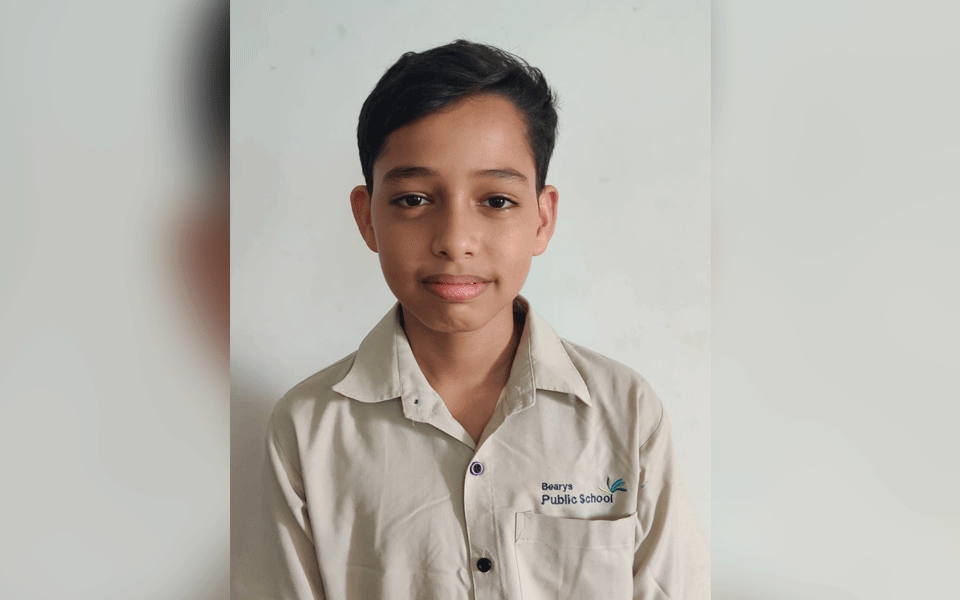
Umar Hamdan, a VII standard student of Bearys Public School, has been selected for the National Level Spell Bee Competition after clearing the State-level round of the competition.
Hamdan, who is the son of Late Abdul Basheer and Shameela, was selected for the state-level round after clearing school and inter-school rounds that were held online due to the COVID-19 pandemic.
The National-level round is scheduled to be held in the third week of January 2021.
Inter-school toppers from each class will be selected for State Level, in which Umar Hamdan of class VI (Present studying in VII) was selected for State Level.
“Out of 20 Toppers of class VI from State Level Umar Hamdan of our School is selected for National Level” an official press statement from the school stated.
Chairman of Bearys Academy of Learning, Syed Mohamed Beary congratulated Hamdan on his achievement and wished him bestfor the national-level event.
source: http://www.varthabharati.in / Vartha Bharati / Home> Karavali / by Vartha Bharati / December 26th, 2020
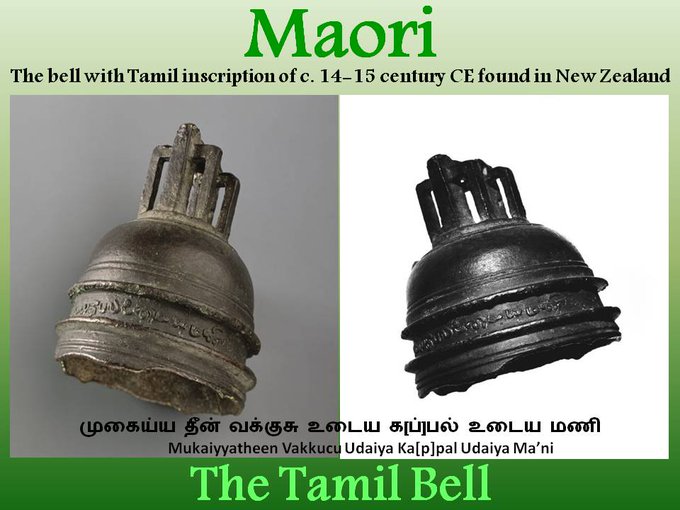
It was 1836 when William Celenso, a Christian missionary from Cornwall in England, first stumbled upon the mysterious Tamil Bell in a remote Maori village in New Zealand. It was being used as a cooking pot by some of the local people, who told the fluent Maori speaker that it had been found under the roots of a large tree, swept up from the ground by a storm many years prior.
Upon inspection, Celenso discovered a series of markings and runes in an unfamiliar language. Realizing the strangeness of the find, he traded it for a cooking pot, and deposited the curiosity in the Otago Museum in Dunedin. It was later bequeathed to the Dominion Museum, which today is the Museum of New Zealand Te Papa Tongarewa in Wellington.
Deciphering the Strange Inscriptions on New Zealand’s Tamil Bell
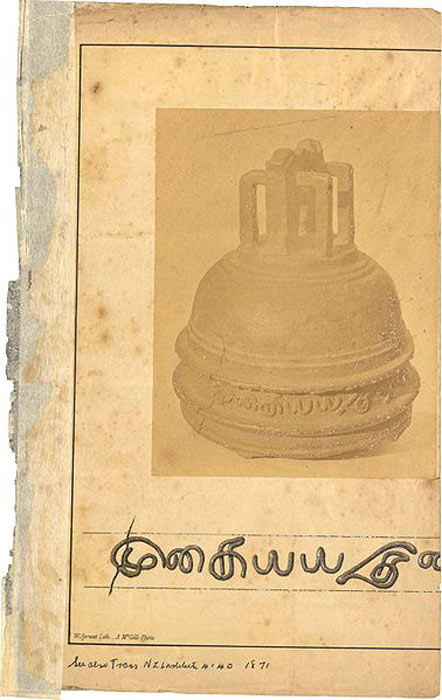
In 1870, ethnographer J. T. Thompson chanced upon the bell, and puzzled by the strange archaic writing, he took photos and sent them all around India in the hope of producing a translation. Just two months later, Thompson had replies from Ceylon, which is modern-day Sri Lanka, and Penang, a settlement on the Malaysian Straits.
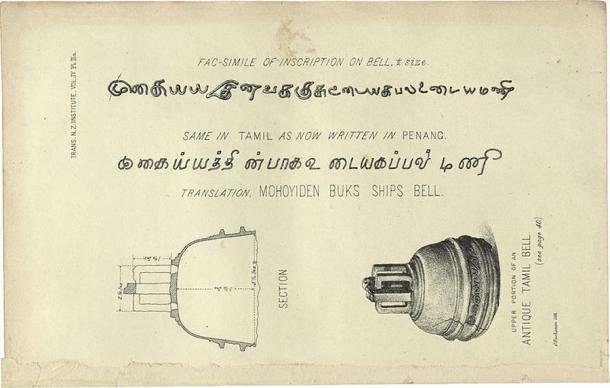
The obscure inscriptions had been identified as ancient Tamil, a language that hadn’t been in use for hundreds of years. The primitive words that adorned the curious metal oddity were Mohoyideen Buks , which were translated to mean “Bell of the Ship of Mohaideen Bakhsh.”
This led to several fascinating revelations. It illustrated that the owner was a Muslim Tamil, of high stature and probably from a famous Indian shipping company based in Nagapattam, in the south-east of India. This was because his name was Arabic, and his first name came from the Tamil phrase meaning “owner of ships.”
Later, in 1940, the age of the Tamil Bell was estimated to be 400 to 500 years old, dating back to the period between 1400 to 1500 AD. This was a remarkable surprise, suggesting that outside contact with New Zealand had been made hundreds of years before English captain Thomas Cook landed on the windswept coast of Poverty Bay in 1769. But had it really?
Facsimile of inscription on the Tamil Bell. ( Public domain )
Evidence of a Tamil Colony in New Zealand
Only 7 years later, another perplexing discovery would further mystify the people of New Zealand, leading to a possible explanation for the out-of-place artifact. In 1877, a shipwreck was discovered half-buried in sand between the ports of Raglan and Aotea. It was first assumed to be a modern ship, as the New Zealand coast was renowned for being extremely dangerous and accidents were common. But this was different.
The vessel appeared to be of Asian origin and extremely old. C. G. Hunt noted how the ship was constructed of teak beams that were placed diagonally and secured by wooden screws, strongly suggesting it was built in South East Asia. Inside, a brass plate with Tamil inscriptions and a plank of wood containing the familiar name Mohoyd Buk were found.
Inexplicably both pieces of tantalizing evidence vanished in Auckland, and experts were never able to compare it to the timeworn letters of the Tamil bell. Nevertheless, several early theories were put forward by the historians of the day. Some argued this was proof of an early Tamil colony on New Zealand. Others maintained that the skillful construction and expertise of the Tamil seafarers made it perfectly possible they could have sailed to New Zealand.
On the other hand, the evidence for such arguments remains scarce. As far as historical record is concerned, the eastern-most frontier for Indian sailors was the island of Lombok, next to Bali in current-day Indonesia. Furthermore, the Spice Islands of West New Guinea, where nutmeg, mace, and cloves could be exclusively found, although in use, were never controlled by the Tamils and instead remained in the hands of local magnates of Ternate, Tidore, and Amboyna. Add to this that no other Indian relics have ever been found in New Zealand.
Facsimile of inscription on the Tamil Bell. ( Public domain )
A Lost Portuguese Trading Ship?
Another theory put forward is that the Tamil Bell was originally Portugese, and from a lost ship sent as part of a fleet by the Portuguese emperor to secure the Spice Islands. From the 1490s, the Portugese became a major player in the Indian Ocean trade network, securing Asian goods for a booming demand back in Europe. In 1511 the Portuguese even established a trading colony on the Malacca Straights and in many places on the Indian mainland.
One of these places was Goa, and in 1521 the Portuguese Viceroy sent out a fleet of three caravels captained by Cristovas de Mendonca, to explore the lands beyond the Spice Islands. Only Mendonca’s caravel returned, the other 2 being lost at sea and never seen or heard from ever again.
In 1877, the shipwreck found on the New Zealand coast was identified as being constructed in Goa, precisely where the Portuguese ships had set out from. Tamil was widely spoken in Goa which neatly explained the Tamil writing on the bell.
However, all of this is incredibly unlikely. There is no direct evidence that points to a bell being on the Portuguese caraval. Lastly, the Portuguese had already established an incredibly lucrative trade system, which meant there was no motive for them to explore further as the known world of the Indian Ocean was already providing them sufficiently.
Spanish Castaways or Anthropological Science Fiction
One of the most famous and controversial theories was advanced by Robert Langdon in his book The Lost Caravel , in which he proclaimed that the Tamil Bell was brought to New Zealand by a group of Spanish sailors from the East Indies who became disorientated and eventually settled in New Zealand, hundreds of years before Thomas Cook’s arrival.
He wrote that in 1524 the King of Spain ordered an expedition to the Spice Islands, sending a sortie of six ships. A maelstrom of disasters ensued, with two wrecked on the coasts of Patagonia and the Philippines, one reaching Mexico, another returning to Spain, and the remaining two disappearing. One of the stray caravels, the San Lesmes, which contained the Tamil Bell, was last observed in 1526, voyaging across the Pacific Sea.
After running aground at Amanu, an atoll of French Polynesia, where four cannons were later discovered, the crew repaired their ships and sailed on to the atolls of Ana and Raiatea, where several of them settled down and married the native woman. Later on, in a bid to return to Spain, the weary seamen set out west, discovering New Zealand in the process and deciding to make a home on its verdant shores.
The descendants of the castaways explored further, discovering new lands as far as Easter Island, and introduced new cultures, customs, and languages to the Polynesian people influenced by their Basque origins. Langdon was convinced that the additional discovery of a Spanish helmet dated from the 16th century in Wellington Harbor in the 1880s gave his hypothesis more credibility.
However, like the Tamil and Portuguese ship propositions, Langdon’s argument has been highly criticized for its extravagant interpretation of available evidence. Bengt Danielsson, an academic from French Polynesia, described it as “anthropological science fiction.” Throughout his account, Langdon disregarded all existing archaeological and historical literature of the Pacific which often contradicts and disproves his ideas.
The existence of Caucasian-like individuals with fair-skin, red hair, and blue eyes on many Pacific Islands was deemed proof of his hypothesis. While there is no doubt that these traits existed, even in the earliest contact with Polynesian natives, Langdon argued the Spanish castaways were the only source of these genetics, a fact that is impossible given that there were only reportedly 20 to 50 castaways in the forgotten band. It was equally as unlikely that they had travelled to all of the Polynesian Islands .
Next, Langdon pointed to linguistic anomalies as a sign that Spanish words were absorbed into the local dialects. However, there are no identifiable Spanish words in the languages of Eastern Polynesians. Without a shred of evidence, Langdon explained that this was because the children only learned the language of their mothers, leading to the decline and eventual disappearance of the Spanish, Basque, and Galician languages of the fathers. He even proposed that the lack of sounds in the Polynesian tongue meant that Spanish words could easily have been changed beyond recognition after only a day or two.
On the other hand, in all other cases of European and native intermixture in Polynesia, European languages were adapted into the local speech. A diverse array of English words still remain in Polynesian languages today after being incorporated 200 years ago. For example, on the Pitcairn Islands, where only one Englishman lived with eight native women, his descendants still speak English!
In addition, Langdon believed that the indigenous beliefs of Polynesians were derived from the Christian faith of the Spanish diaspora. He utilized sources from 1874 from Catholic missionary Albert Montiton, who remarked on how Christian the native religion seemed to him. Yet Langdon completely ignored the wide conversion of natives to Christianity that happened from 1817 onwards, which presents a more reasonable explanation.
Finally, Langdon cited the “talking boards” of Easter Island, a series of stone tablets discovered in the 1860s with archaic runes, as a type of script invented by the Spanish castaways. Yet his main source for this point was a native guru called Hapai, a man who claimed that Europeans had inhabited Easter Island, and whose evidence was subsequently found out to be fabricated. In the end, Langdon’s farfetched argument was systematically disproven, and the confusion over the Tamil Bell persisted.
There are many examples of ghost ships found floating at sea without any sailors. ( muratart / Adobe Stock
The Derelict Theory: Did the Tamil Ship Drift to New Zealand?
After years of fantastical hypothesizes, Brett Hilder entered the debate with a theory more rooted in reality. His so-called derelict theory re-invigorated the earlier claim that the bell came from a Tamil ship. Hilder’s theory attacked the assumption prevalent in most theories that the crew who possessed the Tamil bell were alive. In the choppy, capricious oceans, there had been many instances of intact wooden ghost ships being found without any sailors.
The Flying Dutchman was perhaps the most famous example, having been discovered with full sails and without anyone on board. Nearer the Pacific, the wreck of the sailboat Joyita, on a journey from Apia to the Tokelau Islands, was observed to have no remaining personnel when it was detected half-submerged in the sea.
These “derelicts” were usually still floating, even after many years at sea, because of the buoyancy of their hulls. Hilder entertained the idea that the Tamil Bell originated from a Tamil merchant ship that was caught in the eastward sea current between Antarctica and the southern parts of the continents.
During the late 1400s and 1500s, when the bell was dated, Tamil seafarers dominated the trade networks of the vast Indian Ocean. Muslim Tamils were particularly skilled navigators, plying their wares across the sea as far as the eastern coast of Africa. Indeed, modern examples of the power of the great Southern Current, which stretches from New Zealand to the Cape of Good Hope in South Africa, cement his idea.
For instance, in June 1973 it was reported in the Nautical Magazine of Glasgow that an unmanned lifeboat had travelled 7,000 miles from the coastline of East London, South Africa, to the Princess Royal Harbor in Albany, Australia. Thirty jars of barley, sugar, and lifeboat biscuits were found in perfect condition, sealed in two compartments. It is more likely, then, that a similar fate befell a Muslim Tamil ship, and that the preservation of its wooden hull helped bring the Tamil Bell to a wild new frontier of the world.
@tamilancient
Enduring Enigma of the Tamil Bell
Since its discovery in 1836, most theories surrounding the Tamil Bell were highly speculative and lacked the sufficient evidence to be taken seriously. Unlike others, Brett Hilder’s focus on the Great Southern sea current, a real geographical phenomenon, presented a case for the Tamil Bell that finally made sense without the mental leaps and bounds taken by other theorists such as Langdon, whose sole proof that the crew of the San Lesmes reached Amanu and married the native woman was the fact that four rusty old cannons had been found there.
Yet even Hilder’s theory has weaknesses. All of the theories incorporated the 1877 shipwreck as a key piece of evidence that identified if the bell was brought by the Tamils, Portuguese, or Spanish. Yet by 1890 the shipwreck, said to be half-sunken in the sand, had mysteriously disappeared, never to be seen again. Subsequent attempts to re-find the wreck, as late as 1975, were all unsuccessful.
“The problem with all these and other ‘mystery’ items, such as ancient shipwrecks on New Zealand’s wild west coast beaches that are reputed to be uncovered briefly in storms, is that in the absence of hard evidence to explain their existence and context, numerous fanciful interpretations are often placed upon them according to particular agendas,” explained Katherine Howe, summing up the situation perfectly. Thus, the mystery of the Tamil Bell lives on.
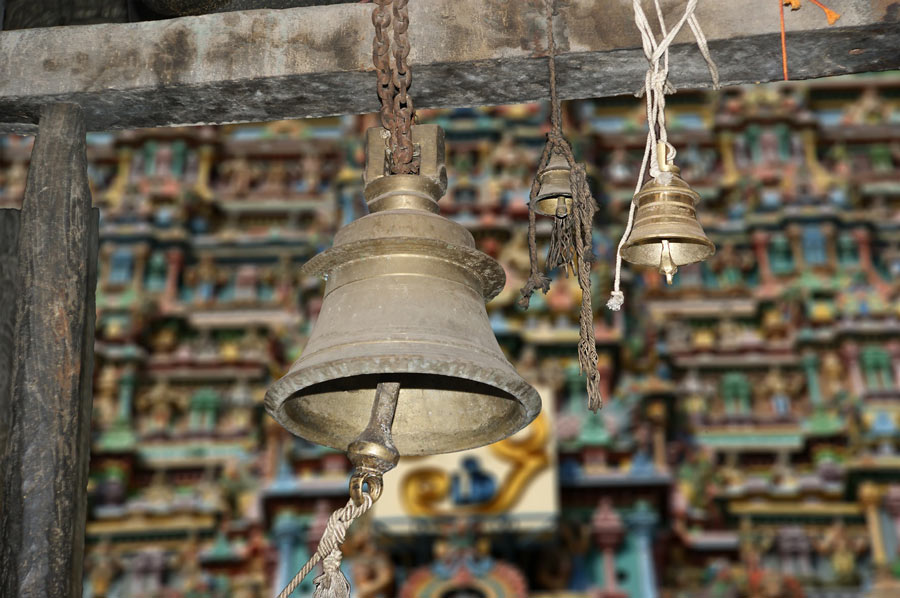
Top image: Representational image of a tamil bell from inside of Meenakshi Hindu temple in Tamil Nadu, South India. Source: Владимир Журавлёв / Adobe Stock
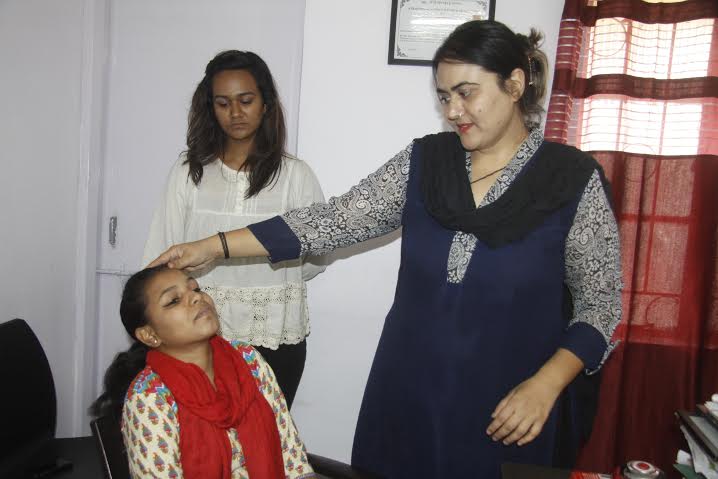
Dr Mobina Khan is nationally acclaimed Acupuncture and Hijama specialist who into practising acupuncture and Hijama therapy in Pune for more than a decade.
Widely respected for her qualities of head , heart and a humane approach in patient care, Dr Khan was born in a village in Rajasthan and later moved to Libya at a very tender age of 2 or 3 years. She grew up and studied in Libya , has travelled widely and Iinteracted with the tribals traditional treatment in the host country and their way of treatment which obviously was quite different from the accepted medical practices. Such treatments were limited to only a few countries in Africa and Libya was one of them. Her family used to get treated with those traditional methods.The Mediterranean climate did not suit her mother particularly and she needed constant medical care. During the time of treatment, she was impressed as to how these traditional methods worked. She secretly wished to learn them one day.
After her return to India, Mobina went to Dharamshala in search of alternative therapy and interacted with the monks there and learnt Acupuncture also. She has a Diploma in Acupuncture, Masters in Acupuncture and is pursuing a Ph.D in Acupuncture. She also has Diploma in Bio-medicine and is a Member of Global Alternative Medical Association and All India Alternative Medical Association. Dr Khan is a student of Hijama Nation, a Society based in London which teaches Hijama. She has submitted some of her successful cases to them and those case studies have been published on their website. It is said that only one condition cannot be cured by Hijama – death!
Q) How did you become interested in acupuncture?
Ans-While in Libya, I had seen some tribals doing treatment with cups, fire and needles which got me interested. Being young at that stage, I had forgotten about it and then while studying for Acupuncture I became aware of wet cupping and then I started researching about Hijama. A combination of Acupuncture and Hijama/ wet cupping gave far better results to my patients than Acupuncture or Hijama alone.
Q) Who all have been your source of inspiration for your career ?
Ans-The tribals in Libya themselves were an inspiration and the effect that their treatment had on my body. I never liked to consume the medicines. To be truthful, I did not have the normal immunisation that all the children had in their childhood. As I began Acupuncture and Hijama, my patients became my inspiration as I saw them leading a normal life.
Q) What have been the key achievements in your career so far ?
Ans- I must have successfully treated several cases, including cancer patients. One gentleman was told that he would not live for more than 8 days and he came to me on the 5th day. After a continuous treatment of 5 months, his Medical Reports did not show any signs of cancer. Another person aged 84 came to me with stage 5 Prostrate cancer. With dedicated treatment his PSA count drop to 0.4 from 1000. A 13 year old girl came to me with Lupus disease which is an auto-immune disease in which the cells start attacking themselves. Her treatment is still on after 10 months. Her condition has improved remarkably. One person was sent back from the Hospital stating that he had Liver failure and had few days to live. It’s been three years now and the person is hale and hearty. One boy came to me with a tumour on his Liver. After the treatment, the Reports showed no sign of tumour. Mr. Subash Sanas had vertigo which was cured within 15 days of treatment. Mr. Yusuf Kapasi was on sleeping pills for years due to his working schedule. With 2 months of treatment, he started leaving a normal life. Mr. Rajiv Kapoor also gets treated for his well being and general de-toxification.
Q) Which role do you enjoy the most in the field of patient care ?Ans-Actually, the whole process – from diagnosis to an ailment free person – is a challenge. For me, a person is a diseased body and my aim is to make that person live happily. I am a friend at times, mother at some other and a teacher too. No one single role is fulfilling.
Q) How has acupuncture contributed to the society ?
Ans-Acupuncture is an alternative medicine which has existed for more than 5000 years now and still exists and helping the mankind with its benefits. The modern life is too fast paced, too stressful and too demanding and intoxicating. Today we see that the humans are looking for ways of the past to deal with the demands of modern life. And Acupuncture also fits the bill.
Q) How does acupuncture stand different from other branches of medicine ?
Ans-Human body becomes diseased when the flow of energy is restricted. Acupuncture opens up these channels and restores the balance of the energy in the body – Yin (female energy) and Yang (male energy). Acupuncture is not invasive and does not introduce anything foreign in the body except of course the needle. It has no known side effects – Acupuncture either works or it does not work.
Q) Is it possible to root out any illness of human body with the help of acupuncture ?
Ans- Yes, it is. Again Acupuncture alone may not be that effective and has to be complimented with other sciences. For example, I use Hijama as a complimentary aid which is another alternative therapy. I specialise in mainly immunity related diseases.
Q) What kind of treatments do you specialize and how has been the patient response to these treatments ?
Ans-I specialise mainly in the immunity related diseases.
Q) Which are your favourite tools for treating patients ?
Ans- All of them. I do not have much choice as there a few that are used.
Q) What are your future professional goals ?
Ans-I want to reach out to as many people as I can by opening Hospitals, have branches. The kind of results that I have experienced are immensely encouraging. I want to see Acupuncture and Hijama to get the same kind of recognition that other branches of medicines are getting. I want the Government agencies to encourage these alternative methods of treatments. I want to open an Academy where I can teach people what I do.
Q) Please explain the concept of Hijama and how is it beneficial to the society at large ?
Hijama is practised in Muslim world and is like wet cupping in Chinese medicine. It involves creating a vacuum by taking a fireball inside cup which causes a suction of superficial level of skin and that area is then pricked by a needle and the vacuumed cup is again placed on the pricked area and blood oozes out into the cup. Hijama facilitates removal of toxic blood, rejuvenates creation of new blood cells and releases endorphins. It is said that Hijama is a cure for all illnesses except death!
Q)Can you list out some of the common myths of acupuncture profession ?
Ans-I have found people being scared of needles. No one wants to experience pain therefore probably popping a pill is so much easier. But no pain, no gain!
Q) How can acupuncture be used for the betterment of humanity ?
Ans-The very fact that Acupuncture is still around even after 5000 years later speaks of its potency. Acupuncture is not being taught as compared to any other form of medicine. One would rarely find a course in India. There should be more practitioners and it should be a part of the Medical Association curriculum.
source: http://www.punekarnews.in / PuneKar News / Home / Pune
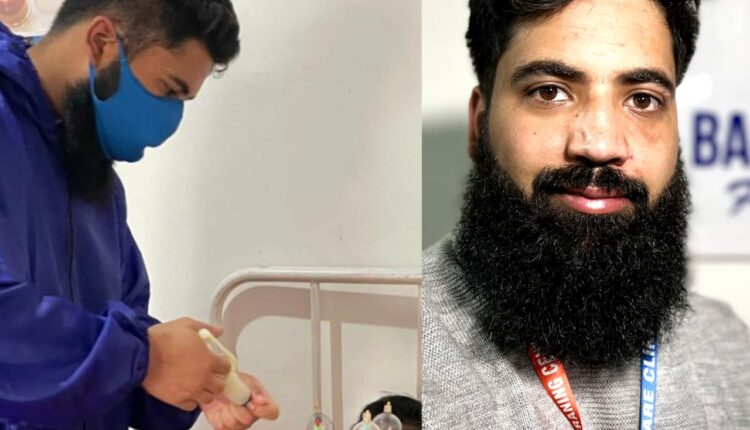
Meet Basit Bashir, Kashmir’s Own Unani Hijama Cupping Therapy Expert
Srinagar:
The rise in depression and various ailments in Kashmir can be cured by Cupping Therapy (Hijama) believes Basit Bashir who is expert in Hijama and Chiropractic.
Detailing out the nitty gritties of ‘Cupping Therapy’ (Hijama), to Kashmir Glory Basit says, in cupping therapy special cups are put on a person’s skin for a few minutes to create suction. Cupping therapy might be trendy now, but it’s not new. It dates back to ancient Egyptian, Chinese, and Middle Eastern cultures, he says.
“One of the oldest medical textbooks in the world, the Ebers Papyrus, describes how the ancient Egyptians used cupping therapy in 1,550 B.C. Cupping therapy was also introduced in Muslim world by Prophet Muhammad (SAW) who promised Hijama to be cure for all aliments expect death”, says Basit.
“Hijama is an Arabic word for cupping therapy and is widely used in Asian countries.”
People get it for many purposes, including helping with pain, inflammation, blood flow, relaxation and well-being, and as a type of deep-tissue massage, Basit says.
This therapy, he says, addresses a wide variety of issues including chronic pain and migraines, immune enhancement, disease prevention, anxiety, depression, health maintenance and various ailments.
With six years of experience in cupping therapy, Basit is one of Kashmiris foremost specialists in alternative healing.
He also specialises in acupuncture and Chiropractic. He brings with him a diverse range of experiences and has worked extensively in Kashmir.
He started his career with one of the renowned Unani hospital – (Unani and Panchkarma Hospital) – where he got expertise from Kashmir’s famous Unani and Panchkarma doctor Dr Nazir.
He received one year of cupping training from ‘Cupcare Training Institute’ Mumbai and subsequently joined Rajasthan Jodhpur in Acupressure, acupuncture and cupping therapy for two years.
Basit opened his own ISO Certified clinic at Pandach crossing outskirts Srinagar City where he is treating hundreds of patients with different aliments with other healing modalities which provides unique perspective in diagnosing and treating chronic health and wellbeing issues.
Basit has been conducting various Hijama camps and has treated many youth with depression and other problems.
As per Islamic traditions, Hijama is the sunnah of Prophet Muhammad (SAW) even as science over the time proving that Hijama can help us in treating various ailments in our body. “The aim of organizing such camps is to increase awareness among people regarding the benefits of Hijama”, says Basit.
“During my practice I came across with patients suffering from different ailments like uric acid, cholesterol, Triglyceride, thyroid, hypertension thankfully they got satisfactory results but I was not personally satisfied treating patients with ortho ailments which prompted me to opt for chiropractic training. I joined a chiropractic training center in Hyderabad and it took me one year to complete this training course,” he further adds.
Each day the clinic of young doctor witnesses a huge rush to get their treatment through traditional means.
I have done Hijama before and I felt a lot of relief and it cured me to a great extent that is why I came again,” says Tabish Ahmad, a patient suffering from fatty liver, high triglycerides and cholesterol.
Bilal Ahmad, another patient who felt relieved after receiving the Hijama therapy says “I was suffering from depression, I feel very much relieved after doing my first Hijama.”
Basit has started his own Hijama training centre in order to teach unemployed youth and create employment avenues in Kashmir.
A female patient Saima Jan hailing from Shopain says she was suffering from pimple and acne problems and had been treating it for the last seven years. “I spent a lot of money on my treatment but finally I did Hijama and Alhamdulillah, my face is fairly glowing now. I have a very strong belief in Hijama now and I’m very much thankful to Basit Sahib who cured me in just a few sessions.”
Basit has started awareness initiatives regarding Hijama wherein he has organised many free Hijama campuses.
Basit has opened his own Hijama training centre and fervently appeals youth to come forward and join his training centre to create their own employment avenues.
source: http://www.kashmirage.net / Kashmir Age / Home> Health / March 13th, 2022
Hashmi gave a motivational speech to youngsters and shared his experience in achieving his goal.
Hyderabad:
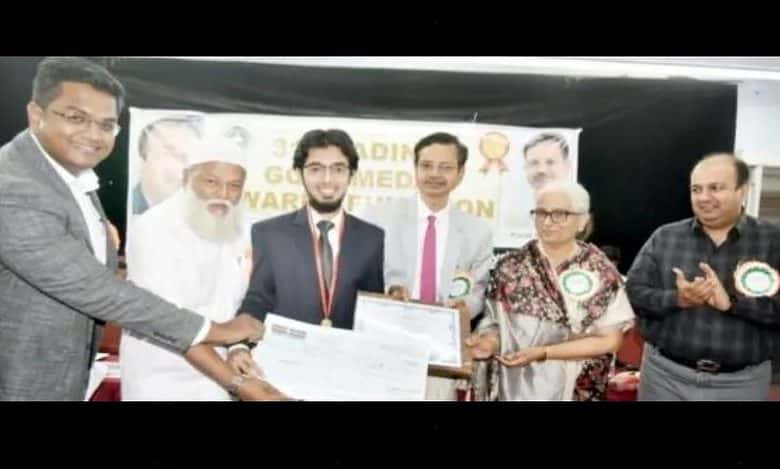
Dr. Mustafa Hashmi who excelled in Civil Services 2021 and secured a 162nd National Rank was felicitated by Madina Education and Welfare Society on the occasion of the 31st Madina Gold Medal Awards Function on 11th November 2022, at Madina Public School, Himayatnagar, Hyderabad.
Prof. Dr. S. Jeelani, Director, CD & VL, the Central University of Hyderabad who was the Chief Guest praises Mustafa Hashmi and said he should be a role model for all Telangana to excel in studies, competitive exams and bag prestigious positions in the bureaucracy. “Every student should set a target and have a vision and commitment to achieve it,” he said.
Amer Ali Khan, News Editor of Siasat Urdu Daily who was the Guest of honour on the occasion has presented the cheque of Rs. 1 lakh to Dr. Mustafa Hashmi, on behalf of Madina Education and Welfare Society, as part of its support programme to candidates who make it to the Civil Services by the society each year.
Dr. Hashmi gave a motivational speech to youngsters and shared his experience in achieving his goal, with a clear vision, dedication, and hard work.
K.M. Arifuddin Memorial Award (Social Service Award in Education field) was presented to Dr. Abdul Qadeer, Founder and Chairman of Shaheen Group of Institutions, Bidar. Nearly 80 gold medal awards were presented to meritorious students including Ph.D.
Mrs. Sabiha Farzana, secretary of the society, Mr. K.M. Fasihuddin, Director, Mrs. Maria Tabassum, Director, also addressed the gathering.
source:http://www.siasat.com / The Siasat Daily / Home> News> Hyderabad / by Sameer Khan / November 15th, 2022
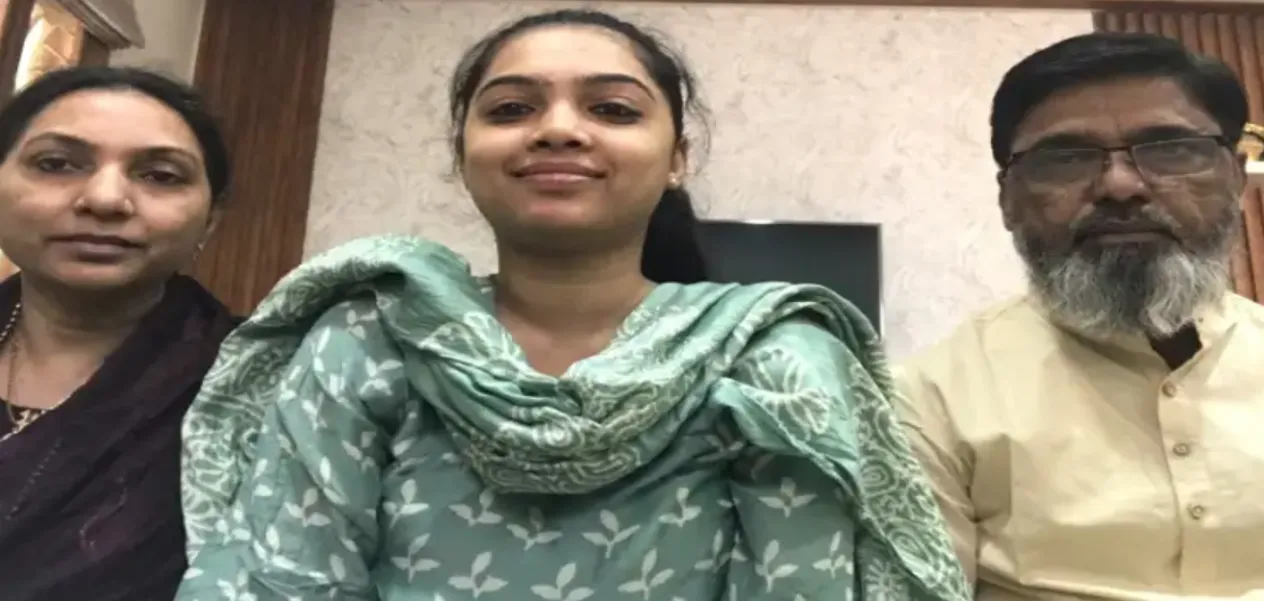
Madiha Habibullah Khan Pathan of Juhapura, Ahmedabad, has secured 10th rank in the Gujarat Public Service Commission in her first attempt.
Madiha Pathan, 24, was home-taught by her father Habibullah Khan Pathan, who is a class one officer in the Gujarat High Court. Her mother is an advocate.
On her success, Madiha Pathan said, “I had been prepared for the examination from 2019. Due to the lockdown in between, I couldn’t write my examination.”
Madiha Pathan has done her schooling in Ahmedabad and graduated in law.
She said “I started preparing for GPSC in 2019 and passed the preliminary exam the same year. However, due to Covid, the final examination was postponed for two years and I could appear only in 2022.”
Habibullah Khan Pathan said since Madiha’s childhood, he had been pushing her to reach the highest position through education. “Today we are very happy that our girl has made her mark by securing 10th rank in the Gujarat Public Service Commission examination.”
“Parents should provide an environment for studies to their children,” Pathan said and added, “through education, one can achieve a lot in the world, the respect and status that you get from it comes in the fate of very few people.”
Habibullah Khan Pathan said he used to teach Madiha every day for two hours in the morning and in the evening after returning from work.
“I am proud that I have successfully played the roles of a teacher and a father.
source: http://www.awazthevoice.in / Awaz, The Voice / Home> Story / by Mohammad Akram, New Delhi / February 24th, 2023
Mouzam Makkar is currently seen on high voltage legal drama “The Fix” on ABC.
Actor Mouzam Makkar, who plays Loni Kampoor on ABC’s ongoing series The Fix, has come a long way since she arrived in the US as an excited 12-year-old. Today, she along with many other South Asians in American entertainment industry, are not only defying brown stereotypes but are also introducing a newer idea of success in otherwise academically inclined South Asian American families.
While The Fix began airing last month, Makkar has been slowly establishing her identity as a talented Indian American actor. Last year, she was seen in Champions on NBC that was created by Mindy Kaling and Charlie Grandy. Before this, Makkar was also seen in The Following, Exorcist, Law & Order: SVU and many other shows.
“It’s a very exciting time to be a South Asian actor,” she says about being among the few brown actresses who may be changing the long-held stereotypes on American TV. “There are more of us doing TV and film than ever before and the types of roles we play continue to expand. There are also more South Asian content creators and that makes a big difference in expanding the types of narratives we get to tell. It’s been wonderful to be a part of a variety of stories where my characters were not solely defined by my ethnicity.”
Makkar, who hails from Kerala, India, spent a few years in the UAE before making America her home. She graduated with a bachelor’s degree in finance and worked in both investment banking and private equity before shifting to entertainment. Asked if it is doubly difficult for a person of color to find a foothold in the highly competitive Hollywood, Makkar says, “Hollywood is a very tough industry and being a person of color when the majority of the stories are still being told through a white lens makes it that much more difficult. However, things are changing and an important aspect of that change come from people behind the camera. Directors, producers and casting agents who are willing to think outside the box when they’re trying to fill a role make a difference in changing what’s on screen.”
Makkar also spoke about a growing number of South Asians in entertainment. “Those creating their own content can make some of the biggest difference in this industry and that’s exactly what the likes of Mindy Kaling, Aziz Ansari, Hasan Minhaj and Kumail Nanjiani have done with their projects,” She says. “When you write the story, you no longer have to play the supporting character – you can be the hero, the story can revolve around you and your experience. That what these folks have done with their TV shows and films – they’ve shown that the South Asian character and story no longer has to be an afterthought – they can be the main attraction.”
She spoke about the kinds of roles that she would want to see more on TV and in Hollywood. “As a Muslim artist, I would love to see a broader representation of Muslims in TV and film,” she says. “Muslims are an especially misunderstood group in this country and I truly believe that more nuanced and diverse portrayals of the Muslim diaspora can go a long way in helping the general public dismantle many of the negative stereotypes they may hold against Muslims. Given the recent attack in New Zealand, understanding and compassion is more important now than ever. The stories you see in TV and film can go a long way in humanizing people and experiences that you yourself might not directly encounter.”
On the artists that may have inspired her, Makkar says, “My dear friend, Fawzia Mirza, is an amazing filmmaker, actor and activist and she is absolutely an inspiration for creating and sharing stories boldly. As a queer storyteller, she brings yet another layer to the narrative and filmmakers like her are instrumental in showing the world that there isn’t just one type of Muslim or South Asian in this world. We are a varied and diverse group, dealing with unique and universal struggles and we can’t be neatly boxed into a single category.”
source: http://www.americanbazaaronline.com / The American Bazaar / Home> News> Entertainment / by Zofeen Maqsood / April 04th, 2019