All posts by mpositiveone@gmail.com

Just like old times

Bengaluru, KARNATAKA :

Musical duo Lucky Ali and Mikey McCleary, who first worked together on O Sanam, is collaborating again after almost 11 years for an album, Intezaar, the first song of which is out and trending.

Singer Lucky Ali. (File | PTI)

Bengaluru :

Lucky Ali turns to music to express himself. He might never be in a hurry to create tunes, but Ali makes sure the wait is worth it. The singer is now out with his latest album Intezaar, which has touched over 2 million views.      

Ali’s loungey music has always been popular among music lovers and Intezaar has something to it that makes it a crowd-puller too. The music of the album is by composer and long-time associate Mikey McCleary. The first time McCleary and Ali worked together was for the singer’s first album Sunoh in 1996, which created magic with the song O Sanam. The duo subsequently went on to work on many projects but is back together after a long break.

Ali says this is the first of many songs that is going to be out. “It’s an album, but we’ll be releasing one song at a time,” says Ali, adding that the composition was done a while ago but they were waiting for the right time to release it. The lyrics are by IP Singh which was a ‘new experience’ for Ali. “IP brings in more depth and has worked around the tunes,” he adds. 

When the seasoned musical duo took a break from working together, 63-year-old Ali says it gave him time to explore live shows. “Music took me to live experiences where I overcame stage fright. Performing live was a new experience all together,” says Ali. 

Meanwhile, McCleary has been a shining star in the Bollywood music scene, whose last project was in Priyanka Chopra and Farhan Akhtar-starrer The Sky is Pink. This song, for McCleary, has been about revisiting some of his older ideas. “Intezaar was actually an idea that we had worked on around 10 years ago. I was going through some of the older works and found a rough outline.

After developing the work, I showed it to Lucky who really liked it,” says McCleary, speaking to CE from New York. “I loved working on it because even if it is not a fast track, there is an uplifting feel to it. It’s a nice track that feels appropriate for the times we live in,” he adds. 

In times where remixes are trending, McCleary’s music, especially his remix of Khoya Khoya Chand for the movie Shaitan in 2011, has revamped the notion of remixing old classics. “My interest in classics, like Hindi film songs from the ’50s and ’60s, came from my wife (Diksha Basu, an author), who used to play Geeta Dutt’s classics. She encouraged me to experiment with that and I started doing that as a passion project,” says McCleary.

source: http://www.newindianexpress.com / The New Indian Express / Home> Cities> Bengaluru / by Monika Monalisa, Express News Service / May 02nd, 2022

Relevant and potent, Naseem is our regional recco this week

INDIA :

The film takes a subtler and restrained turn on the wake of a communal violence surrounding the demolition of the Babri Masjid

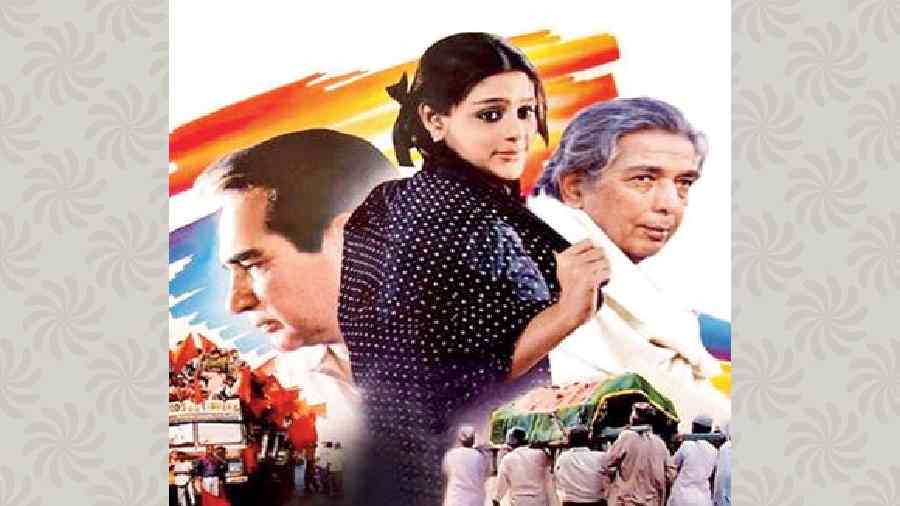
A still from the film Naseem
Sourced by the correspondent

Consider these film titles. Albert Pinto Ko Gussa Kyun Aata HaiSalim Langde Pe Mat RoMohan Joshi Hazir Ho! Arvind Desai Ki Ajeeb Dastaan. Each of them catchy and original. All these titles share a common thread. They are directed by Saaed Akhtar Mirza, one of the most important chroniclers of Indian parallel cinema. Perhaps, it is this fascination with titles that leads to his final film Naseem that released in 1995, which opens with the eponymous protagonist (debutante Mayuri Kango) asking what her name means, in a way addressing the audience’s curiosity as well. It means the morning breeze, her grandfather (played by the late poet Kaifi Azmi) says. The same scene reveals itself again, towards the final act. What blends so beautifully here is how a director meets the needs of character and the audience with disarming ease, through his most succinctly titled directorial, given most of his feature film titles are so iconic.

Naseem, which earned Mirza National Awards for Direction and Screenplay, takes a subtler and restrained turn on the wake of a communal violence surrounding the demolition of the Babri Masjid. Unfolding in 1992, it tells the story of teenager Naseem as she faces the contrast between two different Indias — one that she imagines from the stories recounted by her bedridden grandfather and the other surrounding her in the present with constant threats. As Naseem makes her way through the increasingly intolerant nation that surrounds her, she becomes a thread that connects both the past and present worlds.

Surekha Sikri and Kulbhushan Kharbanda play her anxious parents, slowly processing the changes, fearing for their daughter’s future more than theirs. Mirza paints Naseem with a stubborn paletteof bright colours, collectively letting the audience see the world through his protagonist. For Naseem, whose life revolves in getting good grades in school and helping her mother with household work, nothing else really matters. When a normal working day at school is cut short due to the growing curfew, Naseem goes to catch a Shah Rukh Khan movie with her classmates. At the local shop she befriends the wife of the Hindu shopkeeper, but her friendship is tested as time goes by. She notices it too but does not let it affect her.

This unaffected sense of teenage naivete is what drives the narrative forward. Mirza provides his happy-go-lucky protagonist with a constant sense of wonder and awe. Naseem teaches her classmates how to whistle. Her bargaining power with the local vegetable seller is a winner. Yet, in all these innocent moments, there are echoes of chaos and commotion. Naseem reads the newspaper for her grandfather, “There is tension in Faizabad. Muslim families are leaving….” She is told to stop. Truth is at a distance, yet threatening to break through the morning breeze in all its delirium.

In a brilliantly scripted scene, her grandfather recounts an incident from the time Indians were fighting for independence from the British. Naseem’s mother complains that she never heard this version. So he revisits the same story but with a different perspective. This is Mirza’s plea of recognising stories as part of history, not to be defined only as an amalgamation of facts and important figures. Real people lived too, and howsoever small, their accounts of defiance are part of the same shared history. “Hum bhi toh thhe,” insists her grandfather. Kaifi Azmi’s presence in the film is particularly important. He composed Doosra vanvaas right after the Babri masjid massacre took place.

Mirza had described Naseem as, “the epitaph of my dream of India that I wanted to see”. There is a silently overpowering dichotomy in Naseem, between innocence and ignorance, between restlessness and resilience. Naseem captures Mirza nurturing a seed of hope in a ground that breeds hate and violence. The dream that Mirza builds in Naseem is constantly charged with the fear of waking up to the frightening reality. At the end, it is a requirement. It is an inevitability.

source: http://www.telegraphindia.com / The Telegraph Online / Home> Entertainment / by Santanu Das (t2 Intern) / April 19th, 2022

Meet Mohammed Azmat, Powerlifter With 295 KG Record, Gives Dignified Burial To COVID-19 Victims

Bengaluru, KARNATAKA :

Highlights

  • He said he has rostered himself for this work on Saturdays and Sundays.
  • The deaths due to COVID are rising but that has not scared the powerlifter.
  • Azmat has transported more than 15 bodies and performed the last rites.

There is so much confusion and fear around the COVID-19 pandemic and it has reached a point where even family members are afraid and reluctant to accept the bodies of those dying of the infection and give them a proper burial.

In the past few months, we have heard any number of stories where bodies of COVID-19 victims were disrespected by families and civic authorities due to the stigma around it.

BCCL

But, in Bengaluru, a man doing his bit by ensuring that COVID-19 victims are given a proper burial.

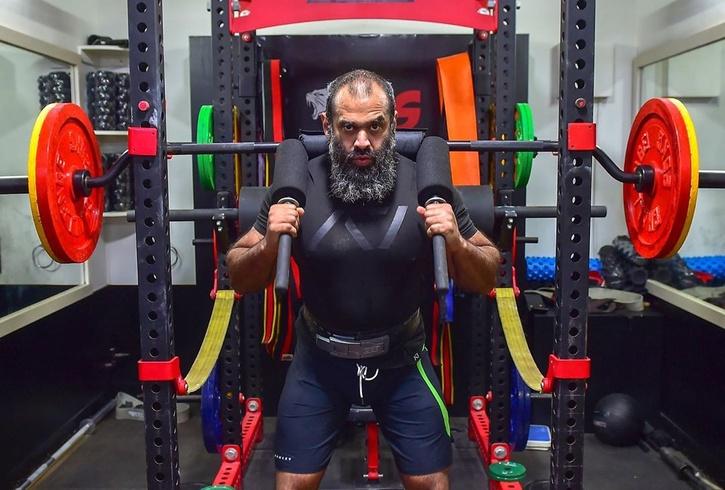
42-year-old Mohammed Azmat doesn’t look like an average man for five feet and eight inches – he looks like a mountain of a man!

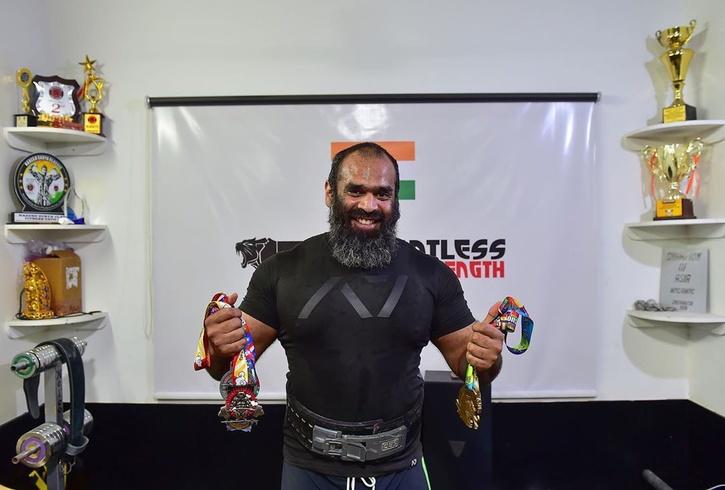
That is because he is a champion powerlifter, who set a record with a deadlift of 295 kg in an international powerlifting championship two years ago

PTI

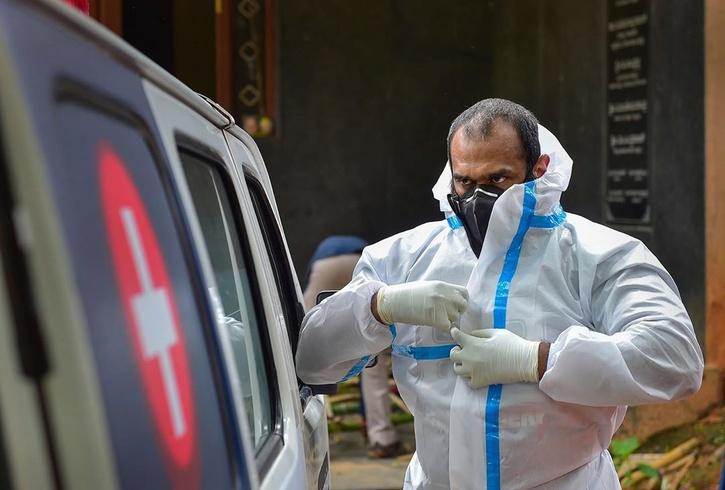
But these days, the programme manager in DXC Technology, an IT firm is spending much of his time carrying bodies of COVID-19 victims and giving them proper last rites.

He said he has rostered himself for this work on Saturdays and Sundays.

PTI

“I was part of the drive for relief work during the lockdown and when I saw people dying in huge numbers in July, I decided to associate myself with the Mercy Mission,” Azmat told PTI.

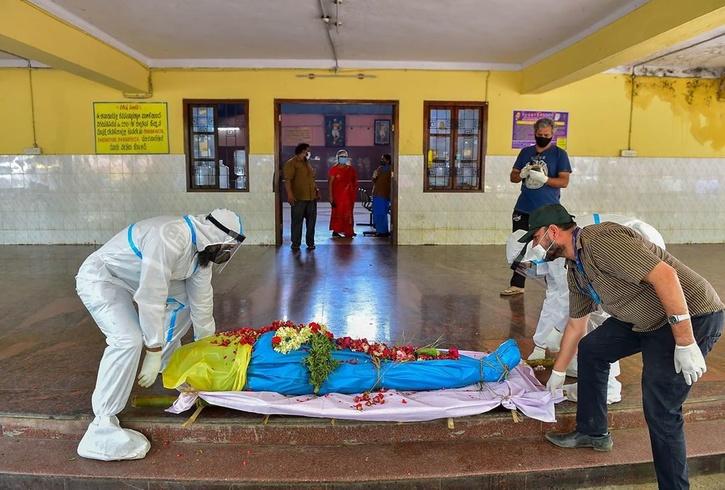
The challenge those at Mercy Mission face is that the last rites is a time-consuming process, right from the procedures involved at the hospital and at burial grounds.

Besides, volunteers also have to confront protests, which further delays the procedure.

PTI

The deaths due to COVID are rising but that has not scared the powerlifter.

“Death is certain, so there is no need to be bothered much about it. But I do take the utmost precautions, which is multi-layered because I too have a family,” Azmat said.

Speaking about his experience, the champion powerlifter said “The pain I experience while carrying the body of someone who has died due to coronavirus can’t be explained.”

PTI

Since he joined two co-workers to carry the senior man to the Christian burial ground, Azmat has transported more than 15 bodies and performed the last rites.

source: http://www.indiatimes.com / India Times / Home> News> India / by Bobins Abraham / July 29th, 2020

Jamia Markaz student grabs International Quran Award

Kozhikode, KERALA :

Hafiz Zainul Abid

Kozhikode:

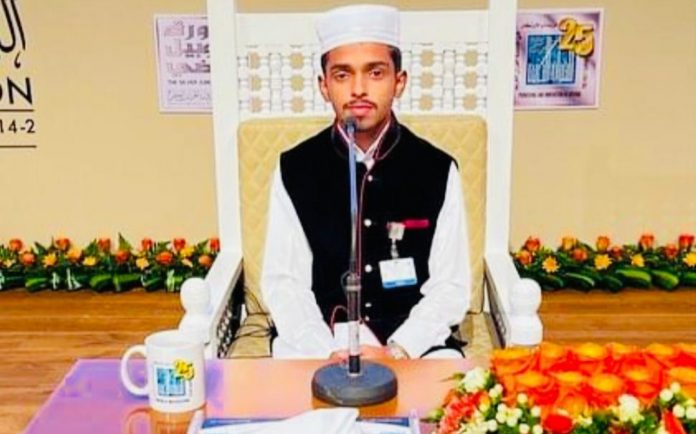
Hafiz Zainul Abid, a student of Jamia Markaz, Kozhikode has won the 6th rank in Dubai international Holy Qur’an Award.

The silver jubilee contest was presided over by His Highness Sheikh Mohammed bin Rashid Al Maktoum, Ruler of Dubai, where Hafiz Zainul Abid represented India from Kerala. He is the disciple of Sheikh Aboobakar Ahmed in Kozhikode Jamia Markaz studying Shariah and BA English.

Contestants from 65 countries worldwide have participated in the event, which started on 3rd April 2022. The contest is the largest Qur’an award in its kind in the world providing the biggest cash prize to the winners; 2.5 lakh dirhams to the first prize winner. Zainul Abid, only one contestant represented India won 6th Rank bagged 55,000 dirhams as cash prize along with certificates. .

Mr. Abid also participated in various international contests including the Tanzania international Holy Qur’an Award last year.

source: http://www.muslimmirror.com / Muslim Mirror / Home> Education> Postitive Story / by Muslim Mirror Network / April 29th, 2022

Mangaluru: Gulbarga University to confer honorary doctorate on Yenepoya Abdulla Kunhi

Mangaluru, KARNATAKA :

Gulbarga University has selected Yenepoya Abdulla Kunhi, chancellor of Yenepoya University, managing director of Yenepoya Group of Institutes and social and religious leader for an honorary doctorate.

The 39th and 40th convocation of the university will be held together and three people each have been selected for honorary doctorate. The honorary doctorate on Yenepoya Abdulla Kunhi will be conferred on the 40th convocation considering his immense achievements in the educational sector.

He has served as the trustee of Islamic Academy of Education, promoter of the Centre for Development Studies, president of Yenepoya Moidin Kunhi Memorial Educational and Charitable Trust, president of Malja-Ul-Islam English medium school, vice president of Badria Educational Institute, president of Takwa Open university, trustee of P A Education trust, president of Yenepoya Institute of Medical Sciences, partner in Moidin Kunhi and Company, managing director of Canara Wood and Plywood Industries, trustee of Yenepoya Saw Mills, convener of Yenepoya Vineers, partner in Yenepoya Transport company, partner in Yenepoya hotels, partner in Yenepoya Builders and Developers, president of Yenepoya Energy Private Limited and SLV Power Private Limited, chief promoter of Yenepoya Football Club, vice president of Islamic Trust, president of Malja-Ul-Islam Orphanage, president of Masjid Zeenath Baksh and Idga Juma Masjid, president of Islamic Cultural Centre, president of Karnataka Muslim Jamat, Dakshina Kannada district unit etc.

Yenepoya Abdulla Kunhi stays at Vas Lane in city his wife P K Nasreen. His two sons and two daughters are also serving in the Yenepoya group of organizations.

source: http://www.daijiworld.com / Daijiworld.com / Home> National-World / by Daijiworld Media Network – Mangaluru (EP) / April 25th, 2022

Ismail Hossain unites Assam through literature, culture

ASSAM:

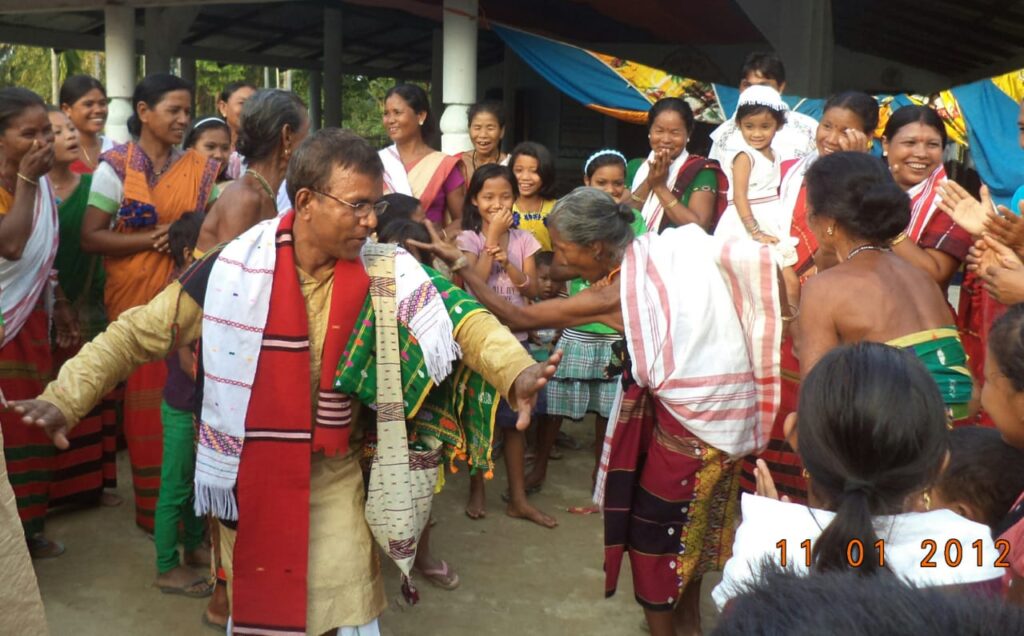
Ismail Hossain dancing with locals during a festival

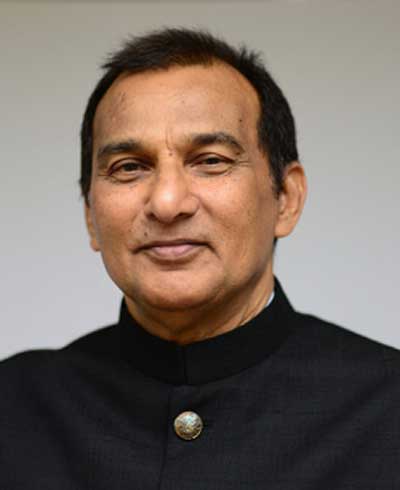
Beyond the walls of his classroom, lies a huge expanse of a field where Ismail Hossain, a teacher in one of the leading polytechnic institutes of the country, HRH Prince of Wales Institute of Engineering, Jorhat, leaves no stone unturned in his quest for knowledge on one of the greatest saint-reformers Srimanta Sankardeva and his teachings.

A prominent writer, researcher, and educationist, Ismail Hossain has also continued his efforts to build a bridge of unity and harmony between different castes and religions in the land of Sankar-Azan called Assam. Hossain has so far enriched the treasure of Assam’s literature with a total of 106 books, which include 19 on Sankari (Neo-Vaisnavite) art and culture, 10 on Assamese Bihu, eight on folk literature and culture of Assam, two books apiece on Hindu-Muslim amity, Sufi saint Azan Peer and Saraniya Kacharis and one on Bodo-Mising-Chutia and Koch dynasty and another on drama and one-act plays.

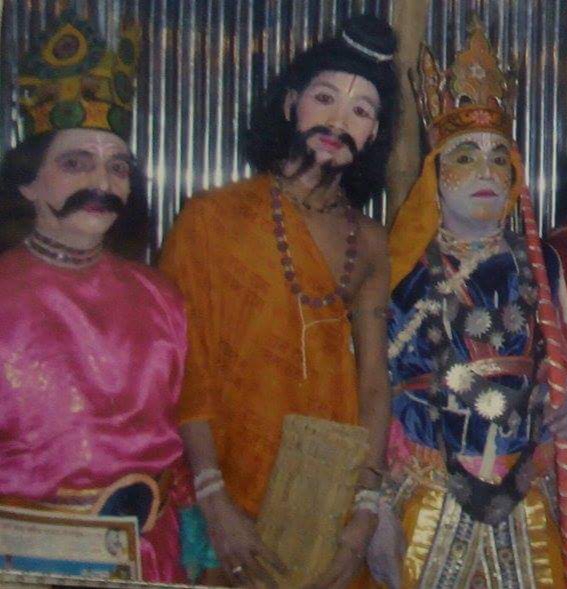
Hossain, who is known in Assamese society as a researcher, scholar, and flag-bearer of unity and harmony, has opted not to keep his work on the great saint-reformer Srimanta Sankardeva’s unique creation ‘Ankiya Bhaona’ (one-act play) confined to writing and speech, only but also raised a drama troupe called ‘Chandasai’ with Muslim artistes and stared acting himself. Similarly, he has been working on promoting Bihu among the minority community people by organizing competitions and Bihu workshops at Kayakuchi in his native Barpeta district every year on the first two days of the month of Baishak. Hossain trains Muslim people to sing and dance Bihu in its pure form at the event.

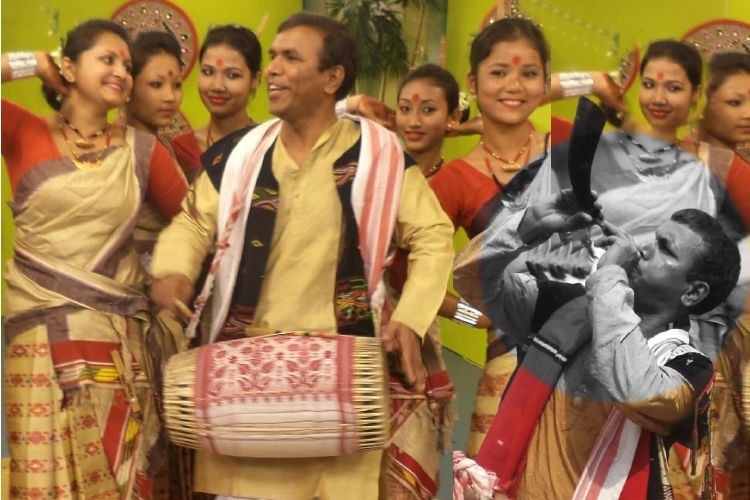
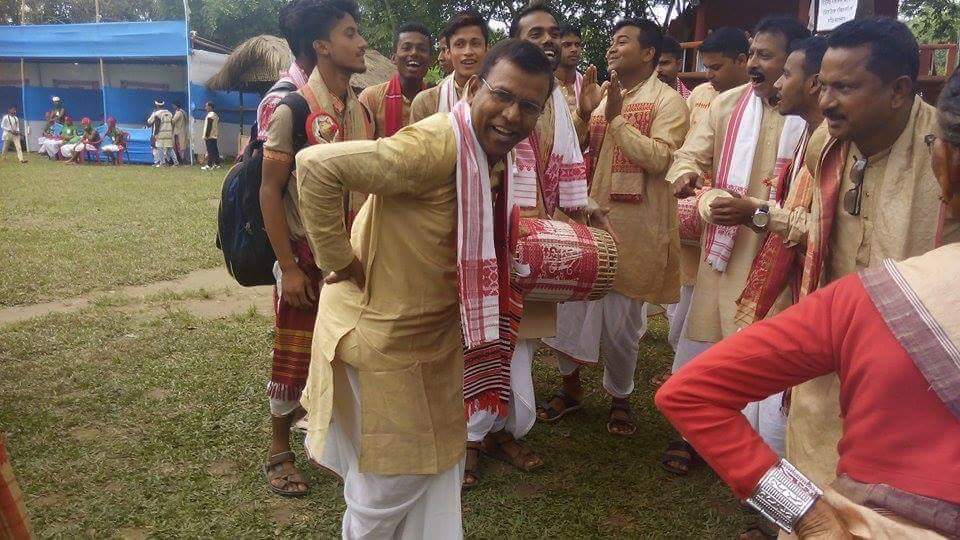
Ismail Hossain dancing to the tunes of his drum beats on Bihu

“I was born in Kayakuchi in Barpeta district,” said Hossain, a prominent researcher in Shankari culture, during an interview with Awaz – The Voice. “Half a kilometer away from our village is Phulaguri village and another half kilometer ahead is Bamunbari village, both of which are villages of Sanatana faith believers. It was a tradition for the two villages to come together and organize raas festival every time. We used to go to see raas there during our childhood. We see the battle of Rama and Ravana there, the battle of Krishna and Kansa, the battle of Ramachandra and Parshurama there. We could always see Rama or Krishna triumph over the evil forces. I was always attracted to the stories of Ramachandra and Krishna from an early age. I felt they are symbols of our Indian civilization and culture,” he said.

“Although we are from the Muslim community, we have never seen a drama about any story of Arabia in our society. Neither are those stories even linked to our society. But, the Krishna and Ramachandra in the ‘Ankiya Bhaonas’ which were penned by our Srimanta Sankardeva are closely associated with Indian culture and are connected with our society. Being brought up in such a society, we have become associated with the Indian culture, the Assamese culture from a tender age. The geographical location of our region planted the seeds of unity in my mind,” Hossain said.

Ismail Hossain during a local festival

Hossain, who works for the harmonious growth of various ethnic groups in Assam with the ideals of Srimanta Sankardeva, Madhavdeva, Azan Peer, Chandasai, was born on February 22, 1965, to an economically backward farmer’s family at Kayakuchi village in Barpeta district of western Assam. He is currently working as a lecturer at the HRH Prince of Wales Engineering Institute in Jorhat in eastern Assam.

The Chandasai Bhaona troupe, led by Ismail Hossain, has been able to sway the crowd with its shows in different parts of the state, including Majuli’s Kamalabari Satra and Auniati Satra. Especially, the troupe’s Ramvijay and Parijat Haran plays have been successful in drawing huge audiences. The members of the Chandhai Bhaona team are Ismail Hossain, Suraj Khan, Mozambique Hossain, Zakirul Islam, Ajgar Ahmed, Fazal Ali Ahmed, Saju Ahmed, Mushtaque Ahmed, Azimuddin Ahmed, etc.

“In 2007, I acted with the Baresaharia Bhaona at Madhabgaon in Jamugurihat,” Hossain said. “There I played Krishna as well as King Satyabrata. I was embraced by 15 Satradhikars after seeing my acting and showered me with blessing and affection. There was such an atmosphere that people started looking for Ismail Hossain. There was an enthusiasm among the people that for the first time, a Muslim youth was acting as a character in a bhaona. I was asked to attend the open meeting held the next day. The crowd at the open meeting was as strong as the one at the bhaona. I spoke for about 10 minutes and it took me about an hour to get off the stage due to the audience’s rush. They showered me with love and blessings. They became emotional. 

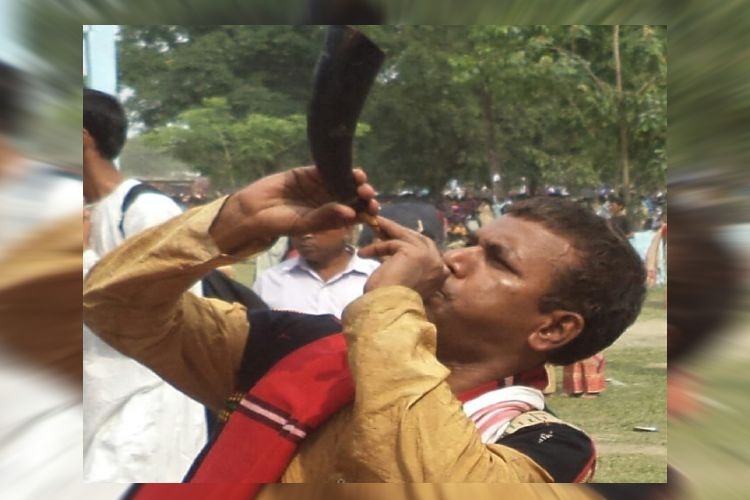
Ismail Hossain blowing a rhino horn during a festival

Overwhelmed by the love of the people, I went back to the stage and promised that I would be back with a troupe of all Muslim actors in the next Baresaharia Bhaona. They were delighted to hear my announcement. It was then that the Chandasai Bhaona troupe started. The troupe was named after Sankardeva’s Muslim disciple Chandasai because it comprises Muslim actors.”  

Hossain, who has delivered over 300 speeches about rural Assam, Namghar, and Satra, Sankardeva-Madhavdev-Azan Peer, played a strong role in introducing Sankardeva, the great man of Assamese culture, to the world by delivering a powerful speech in London on ‘Why shouldn’t Sankardeva be the greatest in the world’.

Hossain acting in Ankiya Bahano

“On October 18, 2008, I delivered a lecture on Mahapurash Sankardeva in London,” Hossain said. The branch of Asam Sahitya Sabha in London and some resident Indians, resident Assamese invited me as a guest on the occasion of Sankardeva’s birth anniversary. Though I was supposed to speak for 30 minutes on Sankardeva’s creations and contribution to various social reforms, I had to speak for 1:20 hours at the request of the audience. There were many dignitaries from different countries including Indians.”

It may be recalled that the writer-critic, who is currently busy writing a research book on ‘biyanam’ (wedding songs), one of the most important elements of folk music in Assam, was able to create an anti-communal awakening in the society through poetry. Ismail Hossain’s collection of poems titled Samprodayikota Birodhi Asomiya Kabita during the communal riots across the country over the demolition of the Babri Masjid received wide acclaim among the readers. His poem titled Advertising also created a stir in the literary world of Assam. The poem was written around casteism.

source: http://www.awazthevoice.in / Awaz, The Voice / Home> Culture / by Mukut Sarma, Guwahati / April 09th, 2022

Atiqa Bano’s Meeras Mahal heritage museum to be refurbished

Sophore (Suvyyapur) Town (Baramulla District), JAMMU & KASHMIR :

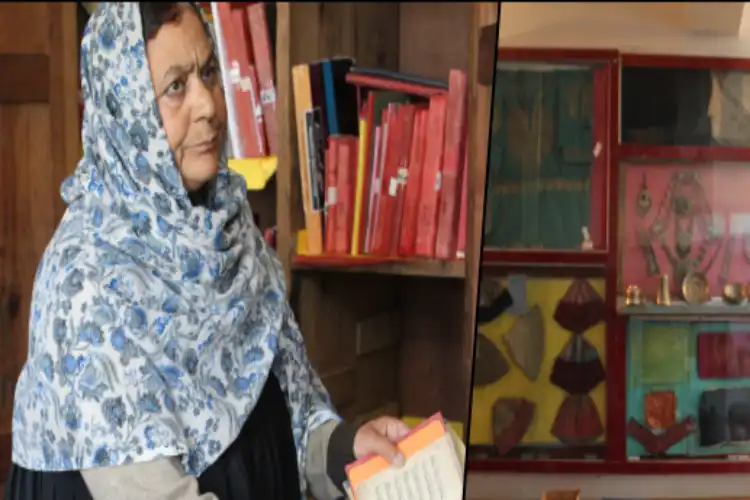
Atiqa Bano
Atiqa Bano

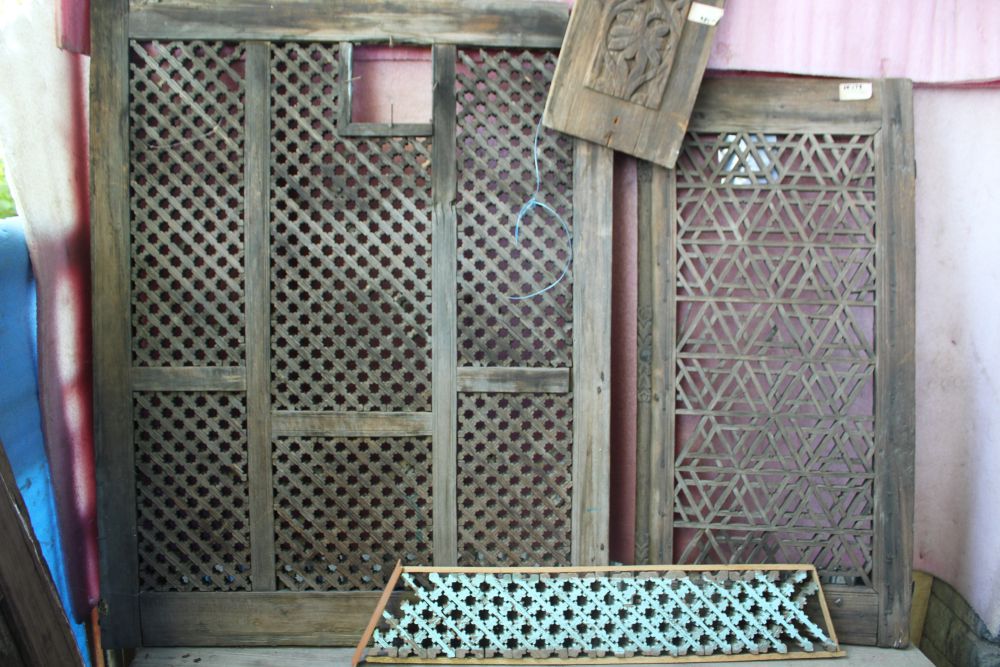
Atiqa Bano’s vision that the generations to come must know how people lived in Kashmir over centuries had made this retired Kashmiri educationist collect ancient households articles like hey mats (Waguv), multipurpose earthen pots, wooden doors, latches, and possibly all things used by humans over two centuries and create the first-ever private museum in the Valley.

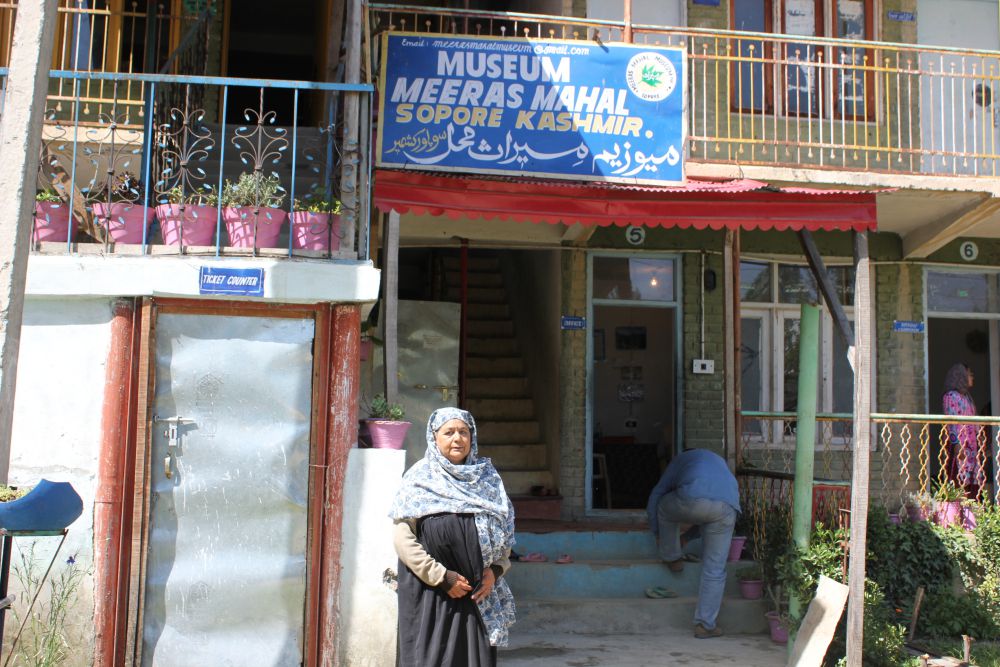
Called “Meras Mahal” (The palace of heritage), it houses more than 5,000 artifacts reflecting the social and cultural life of Kashmir over two centuries.

Atiqa Bano standing in front of Meeras Mahal

Atiqa Bano passed away in 2017 and her family continued to struggle to maintain it and not let forces of Nature damage this treasure trove. However, they always lacked resources for this gigantic task.

Finally, Atiqa Bano’s love of her labour is all set for a major revamp and scientific conservation as this historic treasure had attracted the attention of the Indian National Trust for Art and Heritage (INTACH), J&K Chapter.

Atiqa Bano, an educationist, had made great efforts to collect the exhibits over two decades after she retired from the J&K Government services in 1998. A woman of strong resolve, Atiqaji, as she was popularly called, had taken to looking after her father after her mother’s death. She had chosen to remain single and devote her life to education, women’s welfare, and society.

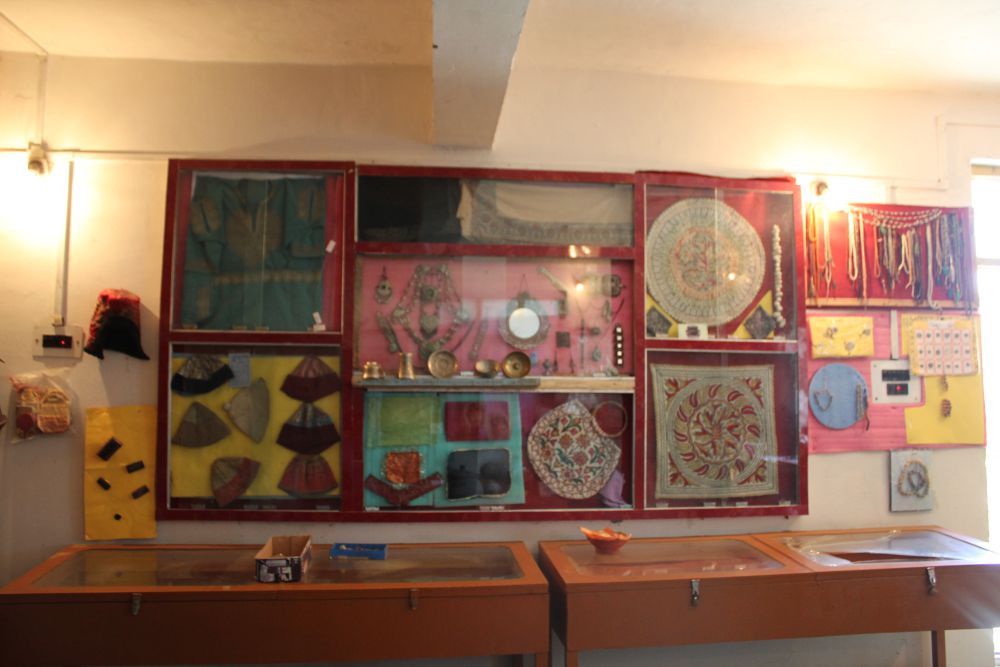
Household items on display in Meeras Mahal

It was during her campaigns for women’s empowerment that she was drawn to the collection of rare kitchenware, old ornaments, agricultural tools, clothing, earthenware, and manuscripts lying around in many Kashmiri households. It dawned upon her that with the changing times, all these human inventions would be lost to time if not preserved for posterity.

She started collecting artifacts in 2002 and continued her mission till her death.

Atiqa Bano is gone from this world, but her memory and work is commemorated for posterity, and, as she wished, for the generations to come.

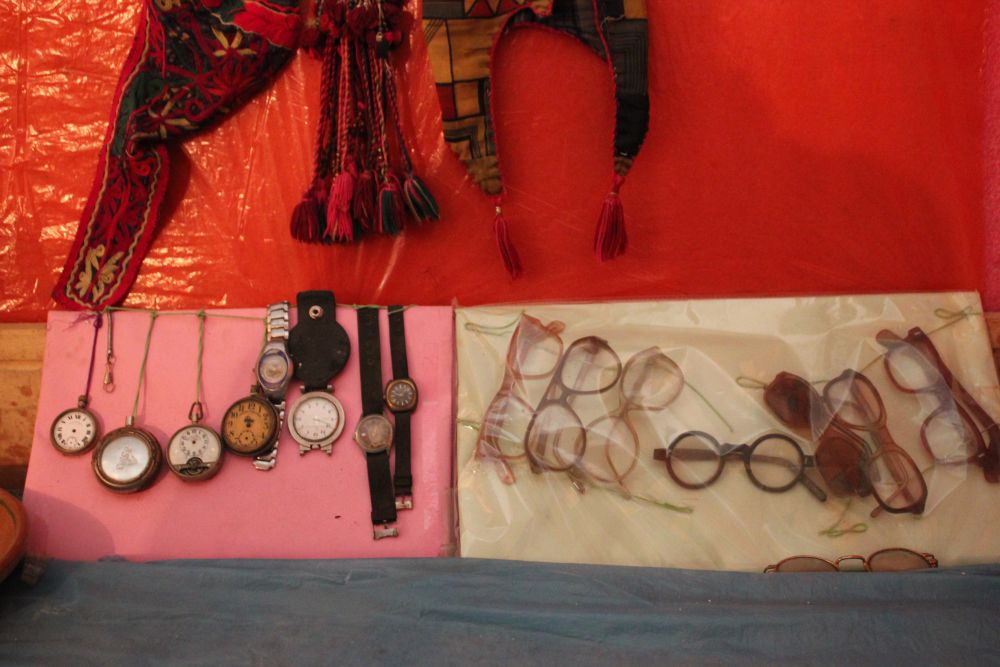
A collection of watches and eye glasses on display at Meeras Mahal

Realizing the importance of Atiqaji’s rich heritage collection, the J&K Chapter of INTACH and HELP Foundation have taken up the gigantic task of rejuvenating  Meeras Mahal.

Saleem Beg, head of the INTACH, J&K Chapter, said, “Saima Iqbal and INTACH team are digitizing, curating and contextualizing the rich collection of vernacular objects after preventive conservation. The museum will have a thematic display demonstrated through sketches and write-ups supported by an elaborate digital presence.”

Saima Iqbal said, the work, supported by ALIPH- an international alliance for the protection of heritage in conflict areas, is getting streamlined. She stated that a team comprising a web designer, photographer, conservator, curator, and illustrator is working in tandem as all are interdependent and need to work in sync.

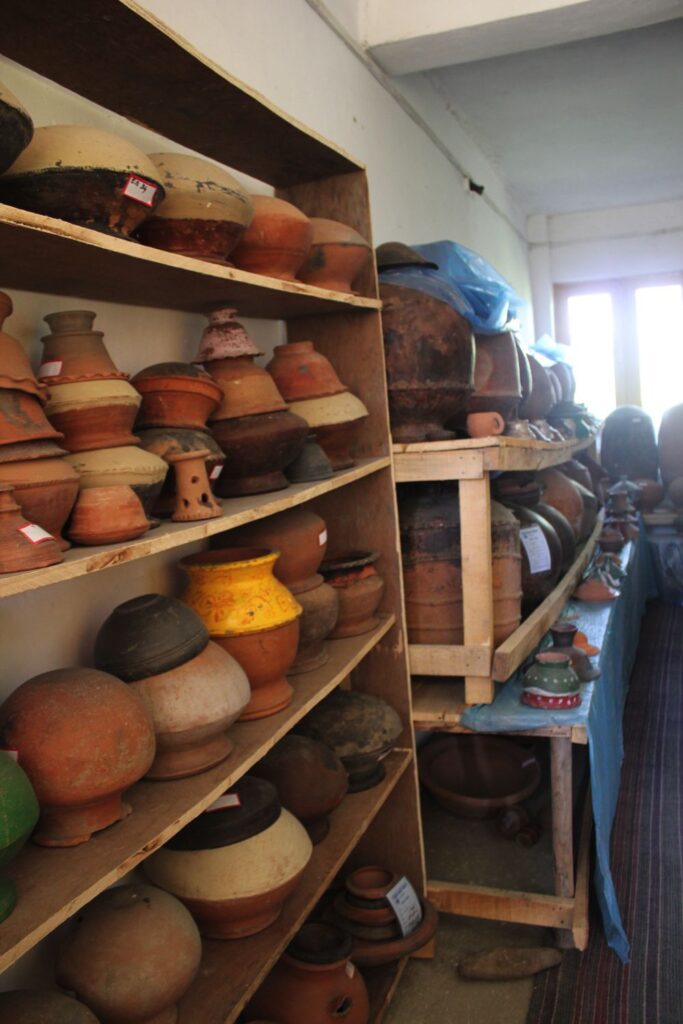
Earthenware used in Kashmiri households in Meeras Mahal

“I have to say that the challenges are many and we are making the best use of available meager resources here but the passion is alive and the project will be a great success”, she said.

“The first article preserved in the museum is Kondul, an earthen bowl that holds smoldering embers in Kangri, a personal and portable heating device of Kashmiri, said Muzamil Bashir Masoodi, Caretaker or (Honorary) President of the five-member Trust of prominent literary personalities, constituted to look after the museum.

Muzamil, who is also Atiqa Ji’s nephew had been taking a keen interest in maintaining and preserving the rare articles of the museum. The initially preserved items also included hand-written books of Ghulam Mohammad Hanfie, a scholar, Ateeqa Ji’s grandfather.

“All the items are counted one by one like 10 different Charkhas (spinning wheels) are counted as 10 separate items”, explained Muzamil.

The museum was initially set up in their private B. Ed College, Kashmir Women’s College of Education, at Noorbagh, Sopore. It was shifted in 2012 and called Meeras Mahal to a Hostel building of the College, at Highland Colony, where the rare items are “stored” due to the paucity of space.

Doors and windows used in Kashmiri architecture

Muzammil said that “we cannot provide the normal gap of at least two feet between the items”, which makes it difficult to maintain the entire treasure. “There has been no support from the Government”, he said. He said so far he has been getting a token amount from the college funds for maintaining the museum.

“During the Covid restrictions, when everything was closed, we managed to be in the museum to provide basic maintenance,” Muzamil said. He had submitted a detailed project report, for conservation and preservation of the museum to the UT Government in 2019.”

Nothing has came his way so far.

source: http://www.awazthevoice.in / Awaz, The Voice / Home> Culture / by Ehsan Fazli, Srinagar / April 11th, 2022

Khassa brings alive the century-old legacy of the Royals

Hyderabad, TELANGANA :

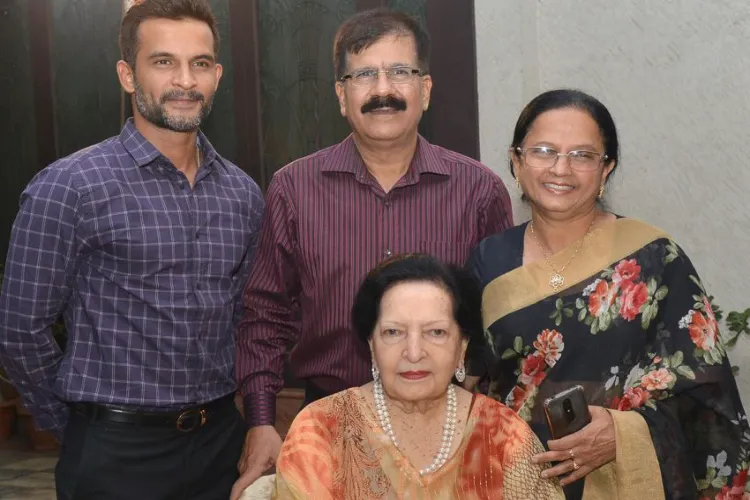
Shahmnoor Jahan with her family

Whether it is a hundred-year-old dish Kuzi or Fish Salad or Badam Ka Kund or the Noorani Seviyaan, Shahnoor Jehan, the descendent of a Sultan of Yemen, dishes out these mystic 100-year old cuisines for the connoisseurs and the gourmands.   

Even as the erstwhile nawabs of India deal with the loss of their titular legacy, tables laden with succulent meats, and the foods flavoured with freshly ground spices and their untranslatable code of tehzeeb- their last standing bastions of power, wealth, and heritage – Shahnoor Jehan, whose grandmother Muzaffar Unissa Begum hailed from the family of the Sultan of Yemen, has kept it alive.

Meeting this soft-spoken lady was a quiet grounding experience given her repertoire of knowledge on food. 

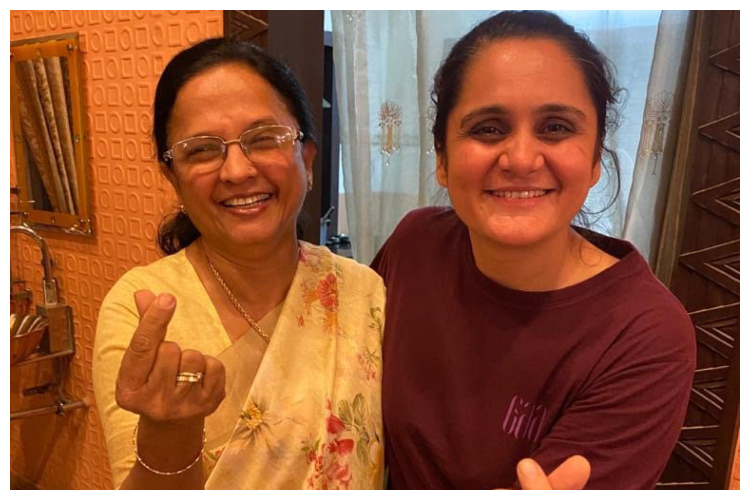
Shahnoor Jehan with her daughter

Daughter of an IAS officer and wife of a very supportive businessman Adil Mirza, Shahnoor Jehan was also encouraged by her adorable children Shohrab Mirza and Nimrah Mirza to use her knowledge and the knowhow inherited from her blue-blooded family and preserve the 100-year-old recipes for posterity. Khassa, a food brand, is a reality because of the support Shahnoor Jehan got from her family.

Shahnoor Jehan says, “There’s a certain etiquette that embraces all nawabi culture. It’s not so much about the commonality of ingredients or dishes but the way the food is prepared and served and the way we host our guests. And for these families, it’s comforting if you understand that,” she says. “Khassa is just that.”

In earlier days people never said “food is ready’ while inviting guests to the table,; they would say but said “Khassa Taiyaar Hain.” Shahnoor Jehan has preserved her well-guarded recipes dating back to several generations.

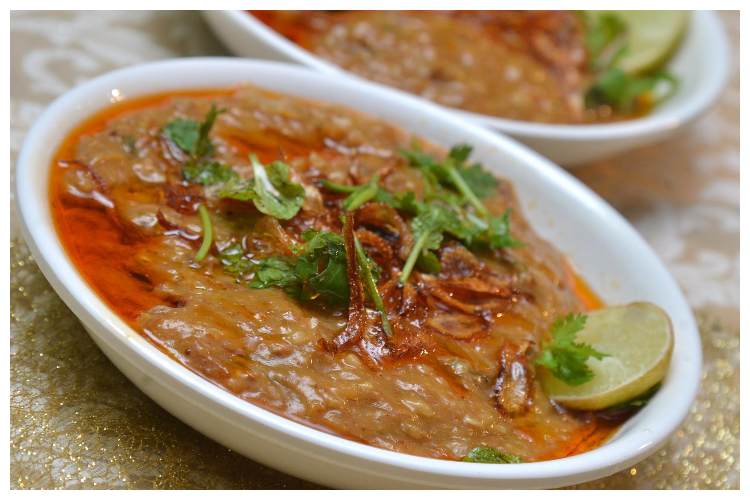
A dish from Shahnoor Jahan’s cook book

Her cookbook which she has preserved to date from her school days takes on a narrative beyond food; it’s about legends, anecdotes, and antiquities that comprise heritage. It is this inherited legacy that has made her take up cooking as a passion and make it her business. “I think cooking was a hidden talent in me. Most of the time friends appreciating my cooking made me ponder over the possibility of taking it up as my profession and when my kids and family support came, I converted my culinary skills into a startup.”

“Till I got married, I never had any experience of cooking; it was only an interest. It was my grandmother and mother who inspired me initially and the realization and confidence that I can cook well came with the appreciation I got from my friends and family who eagerly awaited the indulgence. The original cuisine is slowly fading away. I kept up the tradition of preparing dishes on charcoal and grounding spices made by hand..”   

Begum Shahnoor Jehan the granddaughter of Nawab Ahmed Baig and her Grandmother Muzaffar Unissa Begum shares a princely legacy of the Sultan of Yemen and her food is an amalgamation of Mughal, Turkish and Arabic and influences of Hyderabadi cuisine.

She has infused local foods like rice, wheat, and meat dishes and the skilled use of spices herbs, and natural edibles in Khassa,

Owner of brand Khassa, Shahnoor Jehan serves cuisines like mutton haleem, mutton Shikamaru, dum ka murgh, or whether it is her signature dish a hundred-year-old dish called the Kuzi- leg of mutton cooked in pure almonds, saffron, and spices like black pepper enriched further with dry fruits, sugar candy ( Rock Mishri ) saffron, and silver foil are steeped in history.

Shahnoor Jahan’s recipies

While Khassa has been in the limelight for its iconic Kuzi, mutton roast or the kebabs like Shikampoor Shahnoor has also drool-worthy desserts to her credit that you can never say ever! Whether they are the innovative desserts like the Noorani Seviyan or the most rich ones like the Badam ka Kund– a traditional Hyderabadi dessert rich in almonds infused with saffron and cooked for hours together to get that creamy finish.   

Says Shahnoor Jehan some of the recipes are native but they have been prepared and perfected down the generations at Shah Manzil, which is the present-day Raj Bhavan (the official residence of the State Governor). They have been part of Shahnoors family legacy for generations over a hundred years of age Adds Shahnoor my maternal Grandmother Muzzafar Unissa Begum, the daughter of the Sultan of erstwhile Yemen, and her grandfather Nawab Ahmed Baig, the son of late Shehzoor Jung, was influenced prominently by the flavours of Yemen, where she was from. I picked up most of her techniques and recipes which were well guarded and preserved by Shahnoor Jehan’s mother Faiq Jehan Till date Shahnoor continues to preserve the diaries and books belonging to her royal family. She adds that while her mother has been an inspiration for her she did pick up a few techniques from her mother-in-law Shaheda Begum she adds. 

Today this luxury dining has come alive with her cuisine “Khassa” which is offered to her customers by way of food based on orders from her customers. It is indeed a luxe dining experience as nothing is too extravagant at her end whether it is the use of the saffron or the almonds, or whether it is the use of gold and silver foil, they season most of her meals. Only the finest cuts of meat make it to your orders. Whether it is ordering the mutton roast -chunks of meat soaked in sauces, ginger garlic paste, pepper, and roasted or whether it is Kairi Ka Do Pyaaza chunks of meat cooked alongside with raw mangoes spices and silky onion gravy a seasonal specialty. 

Shahnoor says some of her dishes are cooked languorously , sometimes for entire day-the dum (where food is cooked for hours over low heat in lagan and smoked with the piece of burning coals placed on top to flavor the food , and these remain her techniques of choice.

Shahnoor Jahan with Khassa

In the earlier days, the chefs or the bawarchis at her Shah Manzil sometimes specialized in just one dish. Kitchens were considered laboratories, and chefs artists were encouraged to experiment innovate and create. Today we are preserving this past heritage as an agenda. She recalls the Nawabs of yore were patrons of food, helping the food to evolve Now dining With The Khassa brings back some of the grandeur and is a beautiful reminder of the lavish brilliance of nawabi food.

Says Shahnoor Jehan we want to bring a culinary slice of Yemen and the Nawabs of Hyderabad at Khassa with dishes that resonate with our philosophy of cooking with the choicest of ingredients.

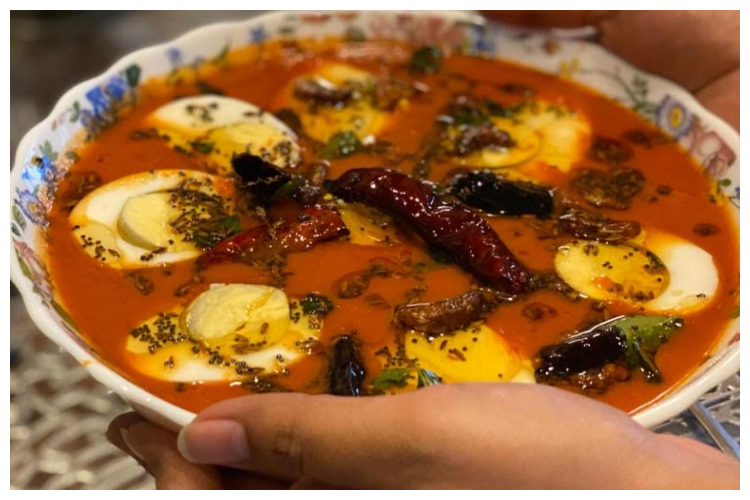
Her spread in her menu looks fit for a king. There are Shammi Kebab-succulent pieces of tender lamb cooked with spices a melt-in-the-mouth experience and the Mutton Shikampur, the iconic kebabs from the royal kitchens of Hyderabad. The main course consists of Tamatar ka Kut a classic Hyderabadi dish and a rich tomato gravy topped with mild temperate spices and boiled eggs. Mutton Dalcha, is an age-old recipe of mutton cooked with lentils and bottlegourd. There are classic dishes such as Chicken or Mutton Korma cooked in rich gravy sauce or the traditional Kairi Do Pyaza a tangy lamb preparation. Her signature dishes include Haleem, Kuzi, Fish Salad Mutton Roast, Dum Ka Murgh, or the Dum Ka Raan all slow-cooked in mild spices.

Also, there are desserts to die for whether it is the Zafrani Badami Kheer, Sheer Khorma, or the Qubani ka Meetha.

Khassa indeed brings the hidden treasures of food that is heavy on aroma and boasts of rich flavours that will hit the spot if you’re looking for a feast.

www.khassabyshahnoorjehan.com

source: http://www.awazthevoice.in / Awaz, The Voice / Home> Culture / by Ratna G. Chotrani, Hyderabad / April 17th, 2022

Shaharabanu is bringing smiles on faces of would-be brides from poor families

Chettali (Madikeri Talu), Kodagu, KARNATAKA :

From pre-wedding shoots to the selection of bridal outfits, the stress, especially on the bride-to-be, is tremendous.

Shaharabanu shows one of the many bridal outfits which is available at The Rainbow Free Bridal Boutique, opened just weeks ago | Express

Madikeri : 

From pre-wedding shoots to the selection of bridal outfits, the stress, especially on the bride-to-be, is tremendous. It is the day when she hopes to look her most beautiful.

However, not every bride can afford a dream wedding, and many young women are forced to stick to simple and inexpensive wear. The Rainbow Free Bridal Boutique in Kodagu is taking these weddings up by a notch. Established by Shaharabanu (20), the Free Bridal Boutique is just weeks old, and operates from the rural part of Chettalli in Madikeri taluk.

Shaharabanu, who quit studies after completing PU examinations last year, is a YouTuber, and had also worked as a beautician for some time. The strong calling to do charity work has manifested itself in the form of this boutique.

“I always looked forward to doing charity work, but my family is not very well-to-do. Financial hurdles are many. However, a unique initiative has been started by one of my friends in Kerala, which led to the establishment of the Rainbow Free Bridal Boutique, a first of its kind in Karnataka,” explained Shaharabanu.

So, what is so unique about this boutique? It provides free bridal dresses to brides from economically weaker sections of society. “Weddings are very special to girls, and almost every girl dreams of wearing a special outfit on that day. However, many cannot afford these bridal outfits, and hence, I started a boutique to collect bridal clothes from women from rich families,” she explained.

She laid out her plan on social media platforms and received positive feedback and support. Responding to her social media post, many women donated their wedding attire, like sarees which they had worn for their own nuptials, and fancy outfits from their trousseau.

The clothes were collected and dry cleaned. “I have collected many wedding clothes, some even from my family members. These clothes will be handed over to brides from weaker sections of society, including orphaned girls who are unable to afford wedding clothes,” she said.

“Our generation is very active on social media and we often make new friends virtually. A WhatsApp group of like-minded girls who were on Instagram was created almost a year ago. In the group, one of the girls, who was poor, requested us to help her out for her wedding,” recalls Shaharabanu.  

However, she felt helpless with her family’s meagre earnings, since her parents, Ameena and Maanu from Chettalli, are daily wage workers. Despite the impediments, the girls managed to collect funds and bought their friend a new bridal outfit, she added.

Following the incident, she realised that many girls face this challenge before their wedding, which the girls discussed in the group. That is when one of the girls from Kerala informed her about a boutique that donates bridal dresses to girls from poor families. “This boutique was started by a Kannur resident, Sabeeda, and I contacted her for support. Initially, when everyone was reluctant to donate their bridal wear to my boutique, Sabeeda helped me and brought many dresses all the way from Kannur to Chettalli,” she recalled.

When dresses were donated to a couple of poor girls, residents from Madikeri and Virajpet came forward and donated their bridal outfits. “My house is small. I had to make space to keep the dresses without damaging them. I bought a shelf for this purpose which is in my mother’s room, where the dresses are kept neatly,” she said. “It has been just 15 days since I started the boutique. There is no bar on religion or community of the brides. They can book the service and visit my place in Chettalli to select the dresses they want from what’s available. They can keep the outfits for themselves. This service is for those brides across the state who are battling economic hardship,” she said.  

To ensure that the dresses reach the needy, she asks the beneficiary to submit a letter from the religious committees concerned, about the family’s financial situation. In just two weeks, more than 40 brides from across the state contacted the boutique, and Shaharabanu is working towards making their weddings special. “I ask the girls to visit my place 20 days prior to the wedding day. Their happy faces when they find the right bridal dress give me immense pleasure and satisfaction,” she added.

source: http://www.newindianexpress.com / The New Indian Express / Home> Good News/ by Prajna GR, Express News Service / April 24th, 2022

Dr. Mehar Sultana

Mysuru, KARNATAKA :

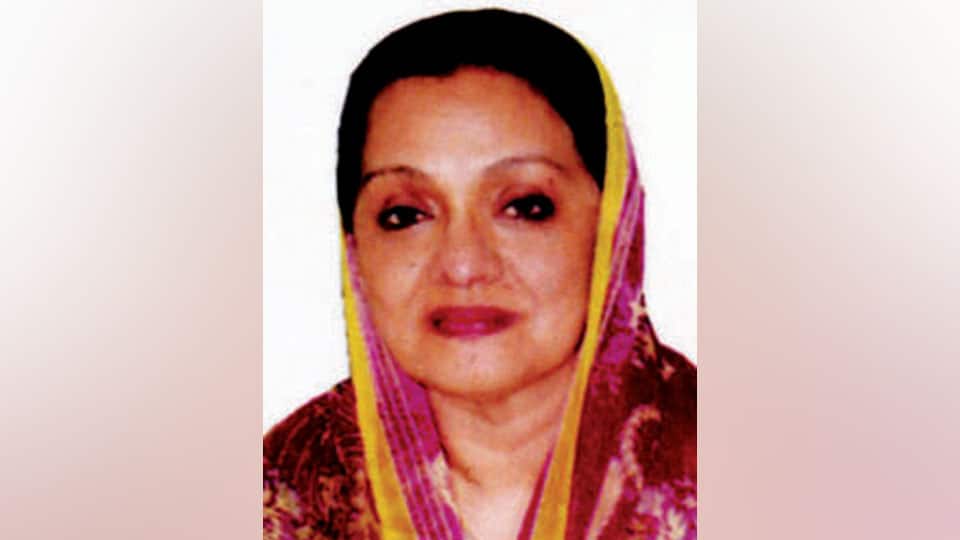
Dr. Mehar Sultana (64), daughter of late Maj. M.S. Khan and a resident of Bogadi here, passed away yesterday.

She was serving as the Principal of Karwar PU College in Karwar.

She leaves behind her husband S. Nisar Ahmed Bilgunda (South Coorg), two daughters, sons-in-law, and a host of relatives and friends. Namaz-e-Janaza was held at Kabristan Mosque in Bade Makan after Zohar.

source: http://www.starofmysore.com / Star of Mysore / Home> Obituary / December 29th, 2018