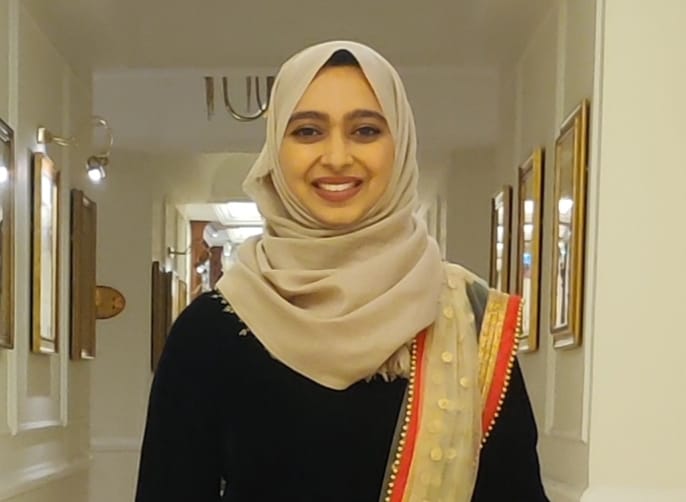
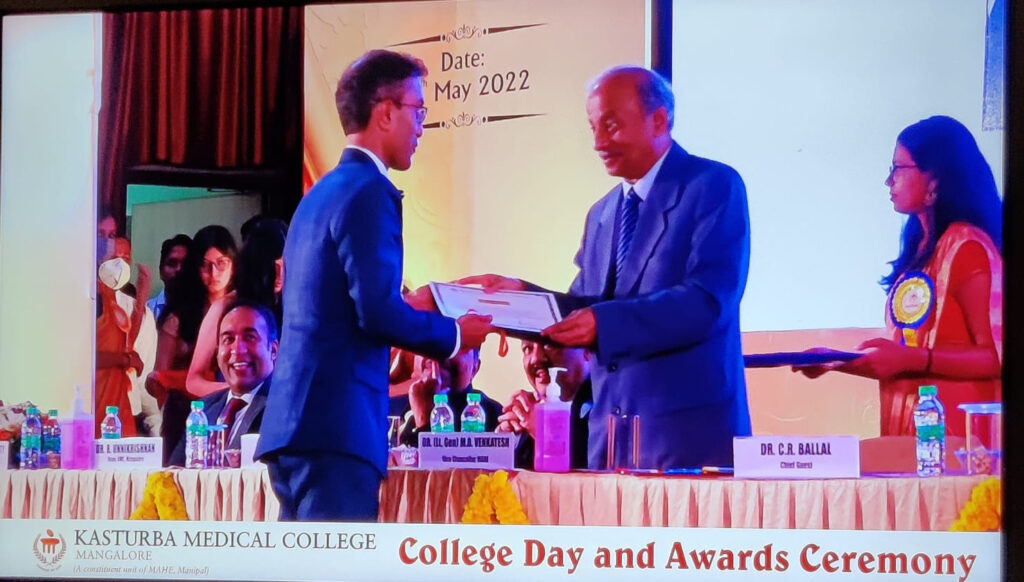
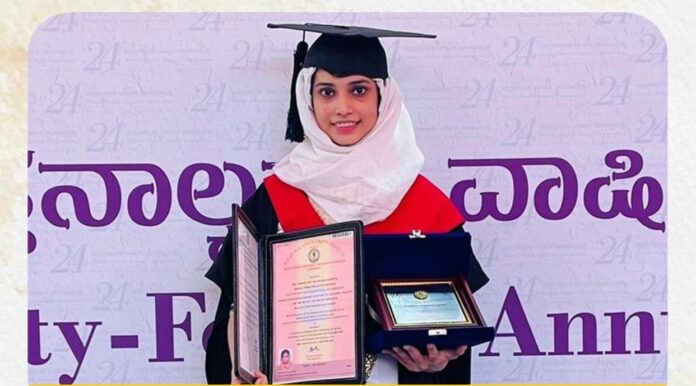
Dr Fathima Raeesa was awarded ‘Prapulla S Hegde Memorial Endowment’ Gold medal for the Best outgoing Post Graduate student in M.D Radiodiagnosis for the year 2021 at the ‘College Day and Awards ceremony’ held on 13th May 2022 in TMA Pai International convention center. This award has been instituted by Dr H.S Ballal, Former Vice Chancellor of Manipal Academy of Higher Education.
Dr Fathima Raeesa currently is working as a Senior Resident in the Department of Radiodiagnosis, KMC Mangalore. Dr Raeesa completed her schooling from Doha, Qatar. She is the daughter of Mr Mumtaz Hussain and Mrs Ishrath Jahan Khan, residents of Qatar. Mr Hussain is an Entrepreneur in Qatar. She is married to Dr Safwan Ahmed, Consultant Neurologist, who is currently working as an Associate Professor in the Department of Neurology, Father Muller Medical College, Mangalore.
Dr Santosh Rai, HOD Radiodiagnosis, KMC Mangalore, received the award from Lt. Gen. (Dr.) M.D. Venkatesh, Vice chancellor of MAHE, on behalf of Dr Raeesa, as she was out of station.
Sabir Ahamed leading a KYN walk. Photo: Special Arrangement
Neighbourhood walks resume after pandemic to promote communal harmony
While history has turned out to be a source of confrontation in some parts of the country, with the Taj Mahal and the Gyanvapi mosque once again in the news for the wrong reasons, history is building bonds between communities in Kolkata.
A social experiment called ‘Know Your Neighbourhood’ or KYN, which began in 2016, has returned after a pandemic-forced gap of two years, and is once again using history — through neighbourhood walks — to dispel apprehensions and promote communal harmony in West Bengal.
The next walk is in June, and the one held most recently — on April 23, during Ramzan — had led to the 1784-built Niyamatullah Ghat Masjid in north Kolkata. The mosque visit was held under what KYN organisers call Dosti-ki-Iftar, which has Muslims and non-Muslims breaking bread together, and saw about 150 participants, several of them non-Muslim women who were allowed into its premises for the first time.
“The idea came to me in 2015, when communal violence was taking place in parts of West Bengal — in Barasat, in Naihati. Rumours were being spread and there were cases of lynching. That’s when we realised that there was inadequate information and adequate misinformation about Muslims. KYN is an attempt to bridge the gap between communities using dialogue as a tool,” Sabir Ahamed, national research coordinator with the Pratichi Trust, and the convenor of KYN, told The Hindu.
“Neighbourhood walks in an important tool of dialogue because even though we share the same geography and live in the same city, we do not go to each other’s neighbourhoods or bother to find out about each other’s customs. Hatred breeds in this atmosphere of ignorance. Today, KYN has become a popular campaign, aiming to tackle religious prejudices and dismantle stereotypes,” Mr. Ahamed said.
The initiative, according to him, has succeeded in breaking new ground. During one of the walks, non-Muslim women climbed to the top of a minaret of the famous Nakhoda mosque for a majestic view of old Kolkata. Participants also discovered that water from the Hooghly river is used for ablutions before the offering of prayers at the mosque.
“Many young people admitted — after our events — that they harboured hatred because of misinformation and that they had changed their minds. A young lady told us that she never got into a cab if she found the driver to be a Muslim. Many students often refuse field surveys in Kidderpore (a locality with a large population of Muslims) because they fear something might happen to them, many believe that all you see in Muslim neighbourhoods is green flags — we need these ideas to change,” Mr. Ahamed said.
“That’s why we would like to work with colleges and univarsities to bring about a lasting change in the way we know each other. We are working with Presidency University and other colleges,” he said.
Samata Biswas, who teaches English at the Sanskrit College and University, said of her experience at recent walks in Kidderpore and in Taltala: “They reminded us of the confluence of faiths, cultures and people that has created modern Calcutta. From the Tamil church at Kidderpore to the historic Calcutta Madrassa which is older than both Presidency and my own institution — this aspect of Bengal’s history is often forgotten, the one that has Anglo-Indians, Jews, Parsis, Muslims, Tamils and Afghans living and working together in Calcutta.”
She added: “The trip to Baker Hostel, where Sheikh Mujibur Rahman was a resident, reminded me of the shared history of the two Bengals and Calcutta’s contribution to Bangladesh’s Liberation War. These are stories we seldom hear — stories that remind us that Calcutta is not merely for and by the Bengali bhadralok (elite), and that it has accommodated multiple cultures, institutions, cuisines and religious beliefs.”
source: http://www.thehindu.com / The Hindu / Home> News> Cities> Kolkata / by Bishwanath Ghosh / Kolkata – May 14th, 2022
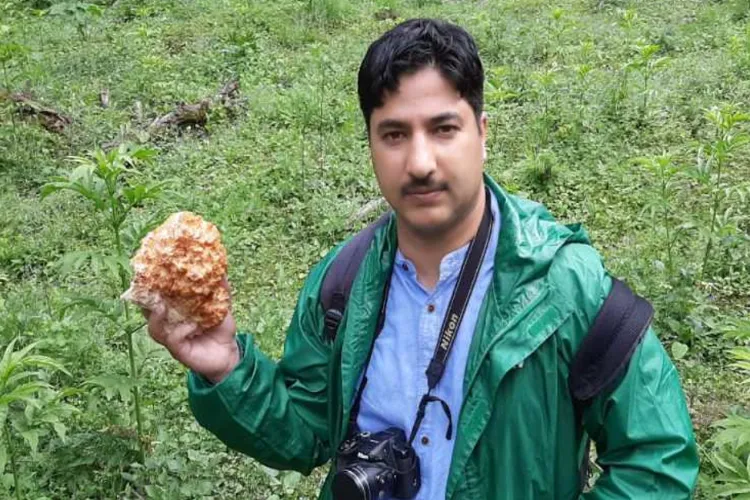
Dr. Rouf Hamza Boda has documented 100 indigenous and yet little known varieties of mushrooms in the Valley to earn the sobriquet of ‘Mushroom Man of Kashmir’. This includes the most expensive fungi in the world – Gucchi (Morel) – and the exotic Porcini.
Dr Boda is the author of Nano Mushroom Identifier, a Book that is beginners’ guide on mushroom cultivation. He belongs to Doru Shahabad of Anantnag and works as a lecturer in Government Higer secondary School, Verinaag in South Kashmir.
He says, “Since I come from a village (Doru Shahabad, Anantnag), I used to be part of the mushroom hunting groups in spring. I used to collect mushrooms in wicker baskets. Along the way, I often saw mushrooms of various shapes and sizes. Sometimes, seeing the large size of mushroom was intimidating.”
His childhood exposure made his pursue a Master’s degree in Botany and, he followed it up with a doctoral research on Mushrooms.
“My guide, Dr. Abdul Hamid Wani inspired me to research on wild mushrooms. I am the first person in the valley to research on wild mushrooms,” he says.
In his research paper, he has documented about 100 mushrooms from forest areas in South Kashmir and evaluated them for antioxidants. Rauf Hamza Boda says, “I have documented their nutritive value, cultivation pattern and studied their classification.”
He said that all mushrooms are fungi and they produce spores similar to pollen or seeds that are spread by wind. A mushroom mature only after this process is completed.In nature the mushroom grow in soil or on wood.
A local variety of mushroom on South Kashmir jungles
Mushrooms grow well on a pine tree. Hamza explains: “Mushroom extracts water and some minerals from the soil and gives it to the roots of these trees and the tree undergoes photosynthesis. This in turn produces many sugars for the mushroom.”
He says Kashmir has many naturally growing types of mushrooms, some of which are edible, including well-known species such as buttons, oysters, porcini and chanterelles, he said.
However, there are inedible ones too that can cause abdominal pain, or vomiting if eaten. Some can even prove fatal.
He says mushrooms are today known for their significant health benefits as these contain a variety of medicinal properties. “Mushroom is a low calorie food. It is rich in many health-boosting vitamins, minerals and antioxidants. Mushrooms have been recognized as an important part of the diet.
For example, mushrooms exposed to ultraviolet light are a good source of vitamin D, an important component in bone and immune health. In addition, many of them have anti-cancer properties.”
However, he pointed out that climate change and urbanization have affected many mushroom species. As a result, there has been a gradual decline in the mushroom production including that of Gucchi mushrooms.
“I have been tracking them for the last 10 years. It is estimated that their production has decreased as a result of climate change, deforestation and habitat destruction. Similarly, other mushrooms that grow in early spring, such as the monkey cap, are beginning to disappear. Earlier, they were seen in March and April.
He said that mushroom growing is a profitable venture for anyone who has the basic knowledge about the technique and art of growing mushrooms.
source: http://www.awazthevoice.in / Awaz, The Voice / Home> Youth / by awazthevoice.in / May 03rd, 2022
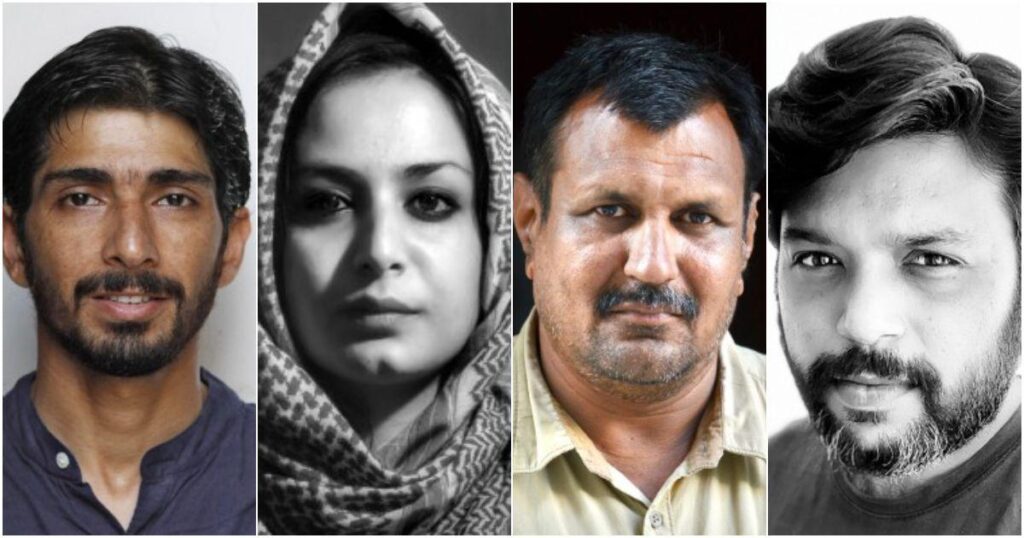
The late Siddiqui, Adnan Abidi, Sanna Irshad Mattoo and Amit Dave won the prestigious prize for feature photography.
Reuters photographers Adnan Abidi, Sanna Irshad Mattoo, Amit Dave and Danish Siddiqui. | The Pulitzer Prizes
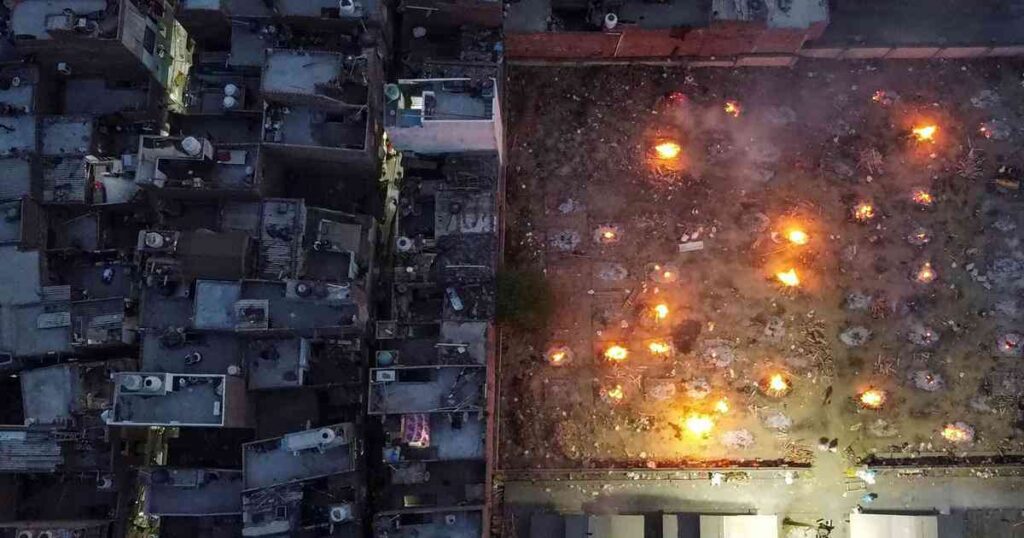
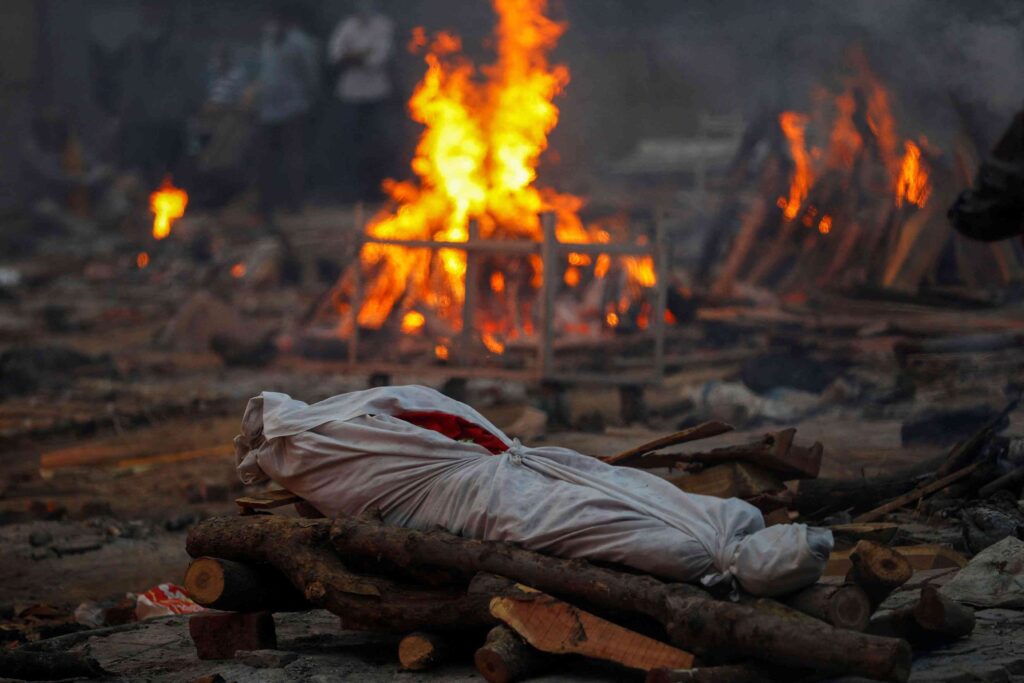
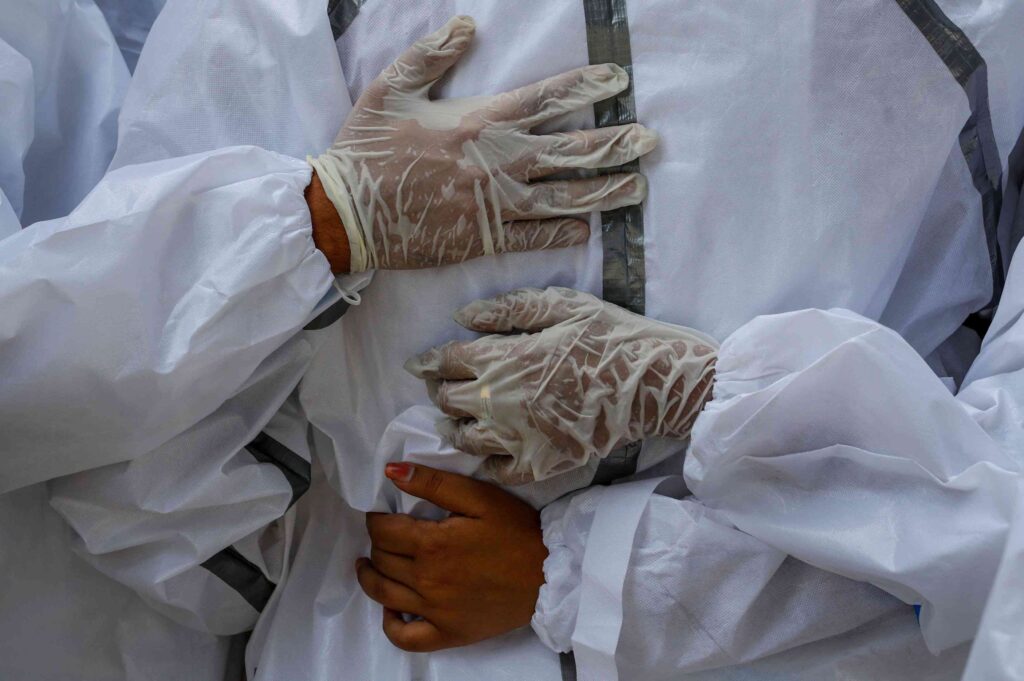
Reuters photographers Adnan Abidi, Sanna Irshad Mattoo, Amit Dave and the late Danish Siddiqui won the 2022 Pulitzer Prize for feature photography on Monday for their coverage of the coronavirus crisis in India.
Siddiqui, 38, was killed while covering a clash between Afghan security forces and Taliban fighters near a border crossing between Afghanistan and Pakistan on July 16.
The jury said that the prize was awarded to the four photographers for their images of the crisis that “balanced intimacy and devastation, while offering viewers a heightened sense of place”.
This is Abidi’s third Pulitzer. Siddiqui had also won the prize before, in 2018.
_____
Twitter
______
Reuters Editor-in-Chief Alessandra Galloni said that the world was “jolted awake” to the scale of India’s Covid-19 outbreak after the news agency’s photographers documented it.
“To have Danish’s incredible work honoured in this way is a tribute to the enduring mark he has left on the world of photojournalism,” Galloni said in a statement.
A mass cremation of victims who died due to the coronavirus disease is seen at a crematorium ground in New Delhi on April 22, 2021. Reuters/Danish Siddiqui
While Abidi is based in New Delhi, Mattoo is a photographer from Kashmir. Dave is based in Ahmedabad, from where he covers local and national news assignments for Reuters.
The body of a person, who died from the coronavirus disease, lies on a funeral pyre during a mass cremation at a crematorium in New Delhi on May 1, 2021. Reuters/Adnan AbidiFamily members embrace while wearing personal protective equipment as they mourn a male relative, who died from the coronavirus disease, during his cremation ceremony in New Delhi on April 21, 2021. Reuters/Adnan Abidi
Other winners
The New York Times won three Pulitzer Prizes and was named as a finalist in five other categories on Monday.
The Washington Post won the award in the public service category for its “compellingly told and vividly presented” account of the attack on Capitol Hill in Washington on January 6, 2021.
The journalists of Ukraine were also awarded a special citation for their coverage of the Russian invasion.
American journalists Corey G Johnson, Rebecca Woolington and Eli Murray of the Tampa Bay Times were awarded the Pulitzer for their investigative reporting.
The three had exposed highly toxic hazards inside Florida’s only battery recycling plant that forced the implementation of safety measures to adequately protect workers and nearby residents.
Novelist Joshua Cohen was awarded the Pulitzer in the fiction category for his book The Netanyahus. The book is based on the life of Benzion Netanyahu, the father of former Israeli prime minister Benjamin Netanyahu.
The Pulitzer Prize in music was awarded to Raven Chacon for his composition Voiceless Mass.
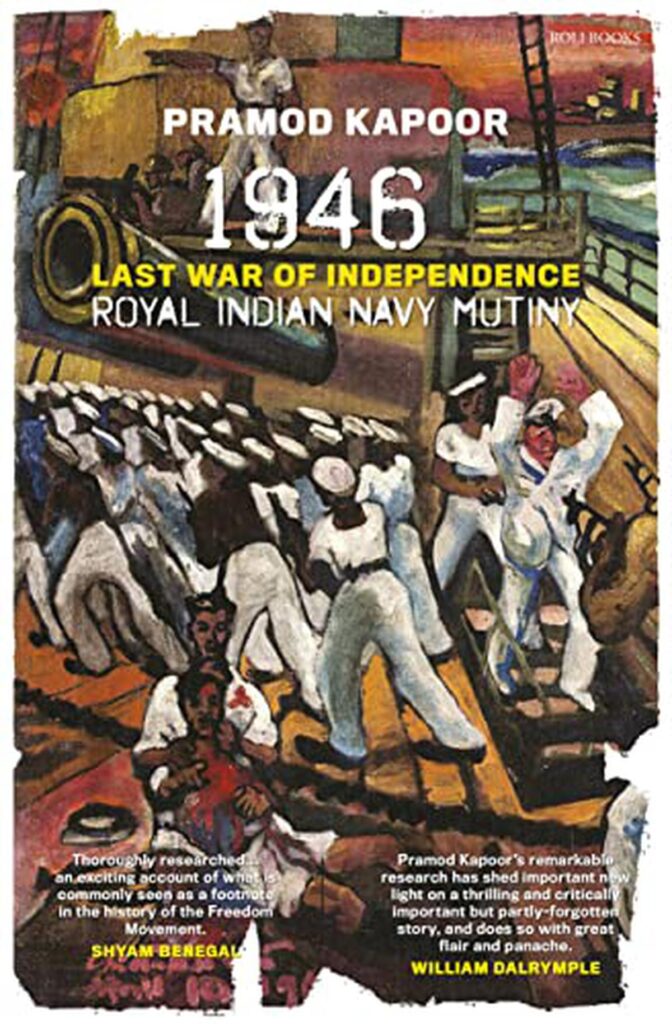
Pramod Kapoor transforms a footnote in history into a remarkable account of a rebellion that convinced the British it was time to leave India
As rightly remarked by Shyam Benegal, a footnote in the history of the freedom movement has been turned into an exciting and important account in Pramod Kapoor’s 1946 Last War of Independence: Royal Indian Navy Mutiny. Pramod himself stumbled onto this forgotten story while researching for his book on Gandhi: “After the draft of the Gandhi book was done, I re-read the Royal Indian Navy mutiny episodes and realised the magnitude of the event.”
Reports of the revolt
When Pramod began his research, he discovered hundreds of reports by British admirals, commanding officers of ships and shore establishments, cables and letters exchanged between London and Delhi, proceedings in the British parliament and debates in the Legislative Council in India. They were “honest,” but were told from the British point of view. For another view, Pramod waded through hundreds of newspaper reports and documents at libraries, met people with knowledge of the revolt and toured HMIS Talwar, the signal school of the Navy at Colaba, where “inflammatory slogans” had been written on the walls and “seditious pamphlets” were circulated. A tour of the dockyard and areas of Navy Nagar in Mumbai helped him understand the “history and geography of the area where the uprising took place.”
In February 1946, ratings, or the lowest rung of sailors in the Royal Indian Navy hierarchy, staged a revolt. The young sailors were protesting against the fact that things they were promised at the time of recruitment had not been honoured: living conditions were horrible; the food worse and there was rampant racial discrimination. Also, says Pramod, inspired by the Indian National Army (INA), they were politically charged and keen to play a part in India’s freedom movement. Within 48 hours, the strength of the mutineers grew to 20,000, and they took over ships afloat and on-shore establishments. Servicemen in the army and air force, and civilians joined the protests.
The sailors pulled down the White Ensigns of the Royal Navy and hoisted three flags — the tricolour of the Congress, the green of the Muslim League and the red of the Communist party, writes Pramod. Their demands included the release of all Indian political prisoners and soldiers who had fought in the Azad Hind Fauj. There was a direct connection, says Pramod, to the INA trials which were going on at the time. In days, the British put down the rebellion with a “combination of brute force and guile.”
Pitched battles were fought in Bombay and Karachi when the British tried to wrest back control of the ships and naval establishments from the sailors. Indian soldiers were reluctant to open fire on fellow Indians. Thus, contends Pramod, though the rebellion was put down, the British realised that it was time to quit India.
For Pramod, however, the politicians did not exactly cover themselves in glory. “They actually helped the British put an end to the uprising, despite widespread sympathy for the ratings across the nation.”
The promises Indian leaders made to the sailors at the time of surrender were not kept, he points out. Pramod also strongly believes that Partition “would have been less bloody if the political leaders had tried to build upon the communal unity created by the events of February 1946 instead of ignoring it.” This had been the view of the firebrand socialist and freedom fighter Aruna Asaf Ali as well. Even after Independence, there have been efforts to “blot out memory of the mutiny,” so much so that the Bengali thespian Utpal Dutt’s fictional play based on it, Kallol (Commotion), faced “obstruction and unofficial censorship.”
Before the protest
In the run-up to the uprising, the British were conducting the open trial of three Army officers of the INA — Prem Kumar Sahgal, Shahnawaz Khan and Gurbaksh Singh Dhillon. “Putting a Hindu, Muslim and Sikh jointly on trial at the Red Fort at a time when most Indians were deeply sympathetic to the INA meant that three major communities stood unitedly behind the call for Independence,” writes Pramod.
But leaders of the Congress were of the view that their idea of a peaceful culmination to a freedom struggle and smooth transfer of power would have been lost if an armed revolt succeeded with undesirable consequences. Thus, it was not an easy situation for political leaders to close ranks with the ratings.
Pramod has done a commendable job in going into all aspects of the rebellion. In the chapter titled ‘The Gathering Storm’, Pramod narrates the genesis and warnings of the brewing revolt. The unjust manner in which the British had treated the INA officers stirred anger and resentment, particularly at the signal school of HMIS Talwar, where the sailors were from a better educational background, and aware of the “rebellious activity taking place beyond the high walls of their barracks.” One of the villains was surely Commander Arthur Frederick King whose rude behaviour and “foul, racist language” sparked the protest at HMIS Talwar. As Talwar was the centre of all communication, the spark soon became a fire, with the strike being disciplined and well-organised.
The chapter, ‘Planning the Mutiny: The Secret Heroes’, reads like a thriller. The initial planning took place in a flat belonging to Pran and Kusum Nair on Marine Drive. The Nairs were friends with two of the key planners, Rishi Dev Puri and Bolai Chandra Dutt, and Pramod profiles the “heroes of the mutiny” in great detail.
He also adds an extensive Epilogue providing a glimpse of the life of the key protagonists post-uprising as also notes on some of the ships and shore establishments. It is an exceptional book and a must-read for anyone interested in the freedom struggle.
1946 Last War of Independence Royal Indian Navy Mutiny; Pramod Kapoor, Roli Books, ₹695.
The reviewer was with the Indian Navy during the Bangladesh liberation war.
source: http://www.thehindu.com / The Hindu / Home> Books> Reviews / by KRA Narasiah / May 07th, 2022
Masiullah Khan on Saturday took charge as the chairman of the Telangana Waqf board for a period of five years.
Speaking of Khan’s appointment as chairman, the waqf board CEO Shahnawaz Qasim said, “Of the 10 board members, eight were present at the election.”
The election took place at the Haj House in Nampally. The government had appointed district magistrate L Sharman as the Election Officer for conducting and overlooking the process of the election process for the board.
AIMIM MP Assaduddin Owaisi, MLC Farooq Hussain, MLA Kausar Mohiuddin, Member of Telangana Bar council M Zakeer Hussain Javid, Sayed Akbar Nizamuddin Hussaini, and Abdul Fateh Syed Bandagi Badesha Quadri are members that have been elected to the board.
Additionally, the government decided to nominate four members of various categories to the board.
Mohammed Masiullah Khan, Sayed Nisaar Hussain (Shia scholar, also known as Hyder Agha), Malik Mohtashim Khan (Sunni Scholar), and Shaikh Yasmin Basha (Government Nominee) have been nominated as members of the board.
source: http://www.siasat.com / The Siasat Daily / Home> News Desk / posted by Mohammed Baleegh / May 07th, 2022
Triumph India has plans to assemble the upcoming Tiger 660 in India. More than 50 percent sales of Triumph are coming from CKD models, and the brand is eyeing to close around 1,200 units.
Over 50% of our sales volumes are coming from CKD models
Over the last 12 months (November 2020 to October 2021), there has been about 10% de-growth in the Indian premium motorcycle segment (usually 500cc and above engine size, and costing more than Rs 5 lakh), but Triumph Motorcycles India grew by about 30% in this period. “We are confident of holding on to this growth over the next few months as well,” Shoeb Farooq, business head, Triumph Motorcycles India, tells FE’s Vikram Chaudhary.
He adds that the Trident, its entry-level 660cc motorcycle, has brought in a new set of customers to the brand. Excerpts:
What all reasons do you attribute to Triumph Motorcycles India’s growth in a shrinking market?
The basic strength of Triumph lies in its product, and we have been pretty aggressive in our product strategy, right from the BS4-to-BS6 transition to now. We have continuously built on our product range; we have 15 models right now, which is one of the largest in the premium motorcycle segment in India.
We have also entered a new territory, which is the 660cc motorcycle segment, and this has given us a completely new set of customers. We also have a very strong dealer network.
Then we aligned our global launches with India launches, and if a product is launched globally we try to ensure that within a few months it is available in India as well.
All these things put together have given us robust growth in a shrinking market.
How many motorcycles have you sold in the last 12 months?
We have sold about 1,050 units in the last 12 months, but in our financial year (which runs from July to June) we will close around 1,200 units.
This will be one of our best sales performances in India.
Did the chip shortage create supply challenges for you?
It’s not just the chip shortage, but also the container shortage (motorcycle parts come to India in shipping containers) that is a challenge, but we are trying to ensure minimum waiting period for our customers.
Have you become India’s largest premium motorcycle player, or is it still Kawasaki?
The premium motorcycle market size in India is close to about 4,500 units, and we represent a quarter of that.
The focus is not about becoming number one, but to create unique post-purchase experiences for our customers, by taking care of all their needs, from curated rides and track days and even choice in terms of riding gear.
Has the Trident become your largest selling single model, considering that it is the most affordable and must have gotten a new set of customers to Triumph India?
We are averaging close to 30-odd unit sales of the Trident motorcycle every month in India, which is about 30% of our monthly sales; our Classic motorcycle range together contributes another 30%, and the remaining is contributed by the Street Triple, the Rocket and the Tiger.
The average age of the Trident buyer is also lower than buyers of other Triumph models.
Going forward, we are getting more products on the 660cc platform, including the Tiger 660, and this will attract a lot of first-time buyers to the premium motorcycle segment.
The 660cc segment has also gotten us some buyers from tier-2 and tier-3 cities, and this is expected to only grow with more models in the 660cc range.
The Trident is assembled in India. Will the Tiger 660 also be assembled in India?
Yes we plan to make it in India; now with the Trident, more than 50% of our sales volumes are coming through CKD models.
source: http://www.financialexpress.com / Financial Express / Home> Express Drives> Auto> Bike News / by Vikram Chaudhary / November 29th, 2021
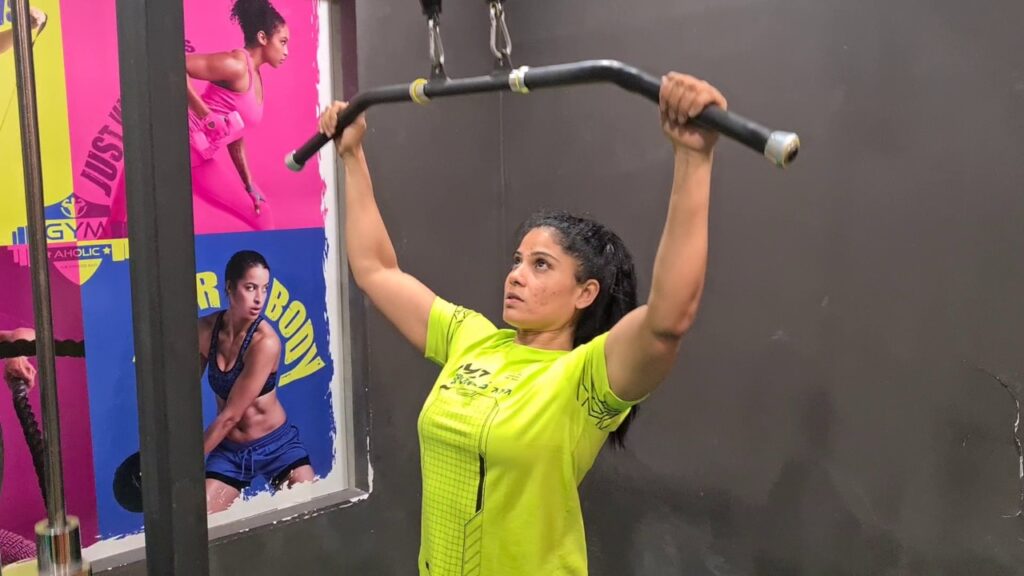
The time an average Indian woman spends grumbling about her health, shape, and figure each day, Guriya Tabassum Parveen aka Guriya Khatun spends the same in the gymnasium. Yes, one and a half hours every day is what Guriya spends in workouts to keep herself fit and healthy.
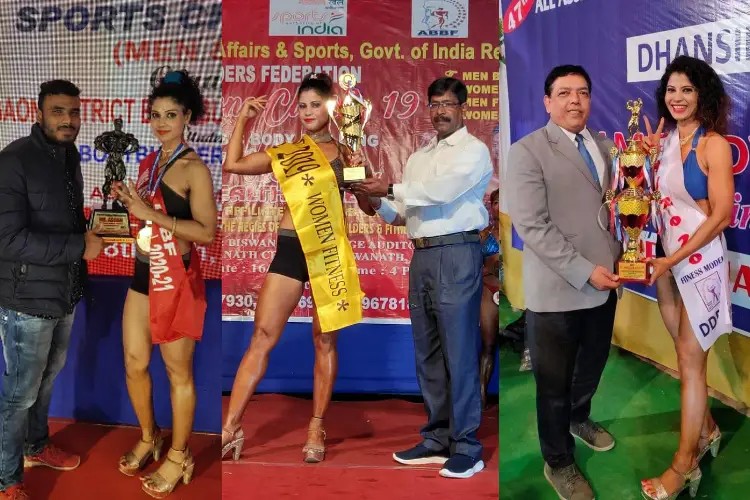
Probably the only Muslim woman professional gym trainer, Guriya has won sports model physique contests in the past couple of years. The bronze medalist of the 10th Federation Cup National Body Building Championships in Women Sports Model Physique event at Lucknow in April 2021, Guriya is the first-ever woman bodybuilder from Assam to bag a sports model physique medal at the national event.
Guriya eats like any other person but knows what, how much, and when to eat and drink. The premium trainer at the posh Gymaholic – The Fitness Bar gym in Guwahati, Guriya’s basic mantra of toning herself to be in good shape is to eat at regular intervals and burn calories through regular workouts.
Guriya Tabassum Parveen training at the Gym
“I do eat as anyone should. But, to maintain good health and fitness it is necessary to maintain a balance. One should never eat like a glutton. Nutrition is always necessary for our bodies. For that, we should eat at regular intervals in the right quantity and at the proper time. After all, it’s like filling a bucket with water. It’ll overflow once it’s full, and the same applies to human fat as well. When you replenish a body saturated with the necessary amounts of fat, it will lead to obesity. One should particularly never eat after 8 pm. Besides, I ensure that if the intake is 1000 calories, I should burn 1500 calories so that the balance is maintained,” Guriya said in a tete-a-tete with Awaz – The Voice.
Guriya’s love affair with the gym and its machines started in 2016 when she first stepped into one to lose weight. “I joined the gym as a trainee in 2016 when I became overweight. I lost the excess weight, but I fell in love with my workouts and continued with the regime and workouts. In due course of time, I started participating in local contests and started winning medals. Then I went on to participate in nationals and won a couple of medals over the past couple of years.”
Having gained the confidence of being crowned a winner in several contests, including Miss Kamrup, the gym trainer now eyes international honours. “I have not participated in any contest in the current calendar year. But, I am preparing for international events. I am also taking to financially strengthen myself for the international events. Bodybuilding is one sport which involves huge financial costs,” she said.
Guriya Tabassum receiving various awards
On being a Muslim, Guriya said, “It is not because of my religion, but because of being a woman, I did face problems. No matter how much we talk about gender equality, society is always critical about a woman’s rise in any field … Although nobody dares to tell me anything, some try to influence my parents by pointing out my contest costumes. Instead of telling them that a bikini costume is the requirement of the sport during contests like any other sport, some would go to frighten them speaking about social and religious implications. But, I am not at all bothered about all those and am focused on my sport.”
“My parents are simple people from Dhubri district (western Assam) who have hardly any knowledge about sports, gym or dumbbells. They are also not very interested in reading newspapers or watching television. They only know that I am a trainer of some kind and also a participant in some sports. They have neither asked me to participate in bodybuilding contests nor have they ever opposed it,” she added.
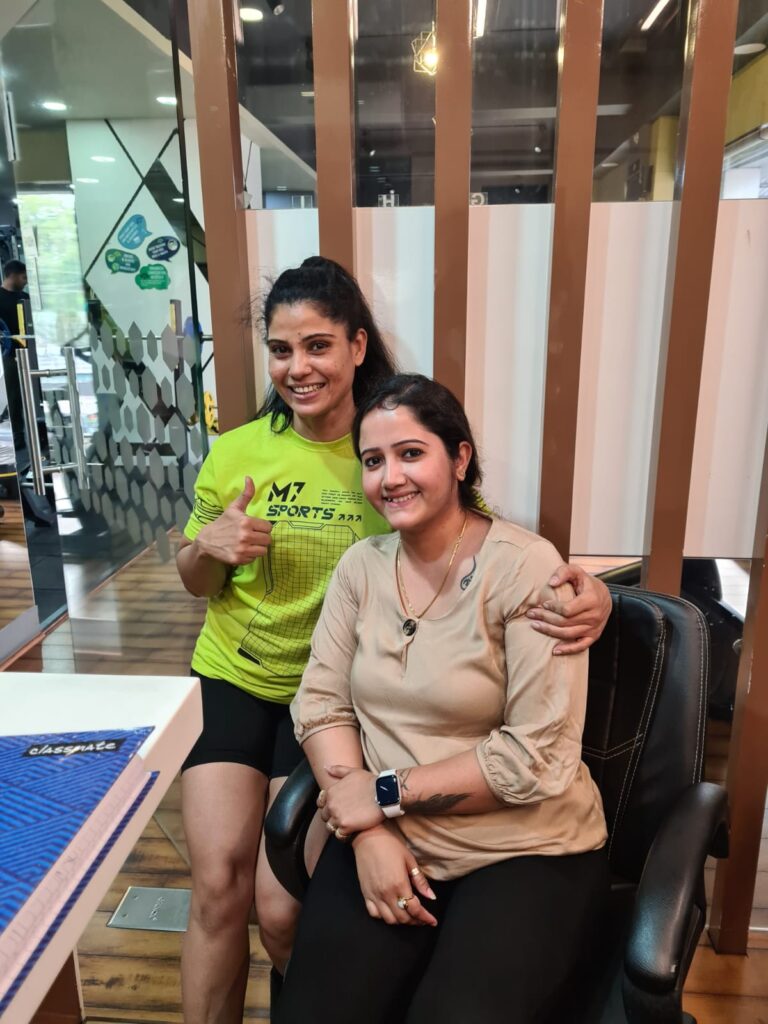
Guriya Tabassum Parveen with the gym owner Neha Dey
Gymaholic’s proprietor Neha Dey Jain also appreciated Guriya’s dedication and professionalism saying: “She is one of the sincerest and most dedicated women I have come across as far as maintaining fitness is concerned. We have a lot of parties and feasts at our gym. But, Guriya is someone who would never take anything sweet. Not even a piece of cake! She has that kind of dedication. And, when it comes to participation in any contest, she does a lot of hard work to give her best. We always stand in support to her.
“As a person, she is a gem! I always bank on her to face any challenging situation. She has been instrumental in shaping many clients as well as guiding them to lead a healthy life,” Neha added.
Guriya has a message about those planning to join a gym: “It is not about the gym where you do your workouts. It is sincerity and dedication that matter in achieving fitness. Besides, a proper trainer is essential in bodybuilding.”
To sportspersons, Guriya said: “Fitness is the basis of every sport. But it is not always necessary to work out in the gym to maintain fitness. Fitness can be maintained with the help of any activity. Even walking and cycling can help maintain fitness.”
source: http://www.awazthevoice.in / Awaz, TheVoice / Home> Women / by Imtiaz Ahmed, Guwahati / April 21st, 2022
Dr. Sekiba Ali Kadur secured the first rank and gold medal in Karnataka MDS (Dentistry) examinations.
Dr. Sekiba reportedly obtained the first rank in the Dental Postgraduate Examinations (Conservative Dentistry and Endodontics) conducted under the Rajiv Gandhi Health and Science University.
Daughter of the couple Ali Kadur and Zuhura Ali, residents of Kadur at Paivalike panchayat in Kasaragod district, Dr. Sekiba was studying at the Hasanamba Dental College and Hospital in Hassan, pursuing a degree in MDS.
She had completed her BDS at the Victoria Medical College in Bengaluru. Before that, she finished her PUC education at the Vitla PU College in Dakshina Kannada district.
Dr. Sekiba obtained her Primary education at Paivalike Panchayat’s Kadur Government School and later studied in the Kurudapadavu School as well.
Dr. Sekiba’s achievement is truly a matter of pride for the Kannadigas residing in the border regions. Having studied in Kannada medium, Dr. Sekiba has garnered admiration from Kannadigas.
Hasanamba Dental College Principal and head of the Department of Conservative Dentistry and Endodontics, Dr. Sahadev C. K., and the chairman of Hassan’s S.H.D.C.H. Yathish H.C have congratulated Dr. Sekiba’s efforts and achievements.
source: http://www.english.vrthabharati.in / Vartha Bharati / Home> Karavali / by Vartha Bharati (headline edited) / February 17th, 2022
The saying that ‘Necessity is the mother of invention’ is so much actualized by Assam’s long-distance runner Abdul Barek. In his case, the ‘necessity’ was the money he desperately needed to buy food and books after his family farmlands were washed away by the mighty Brahmaputra.
“It was not out of love for a particular sport… I was born and brought up in a self-sufficient family in a rural hamlet in the Kamrup district. However, when our farmlands were eroded by the Brahmaputra, we were left with nothing for sustenance. The little produce from our livestock was not enough for the family. I was in standard IX when for the first time I participated in a Rongali Bihu Marathon in a nearby locality and came first in it to win prize money of Rs 1,000. Well, that was a lot of money for me! I could buy my school uniform and books with it.
“Now that I’ve discovered a way of earning and my family was in a very bad financial shape, I have started looking to every marathon event as a means to earn. I participated in every known event and would look for all the prize money up for grabs. Gradually, I developed a yearning for winning all possible cash prizes in marathons in Assam and the Northeast. And, for that, I started practicing regularly and improving my performance with each run,” Barek told Awaz-the Voice.
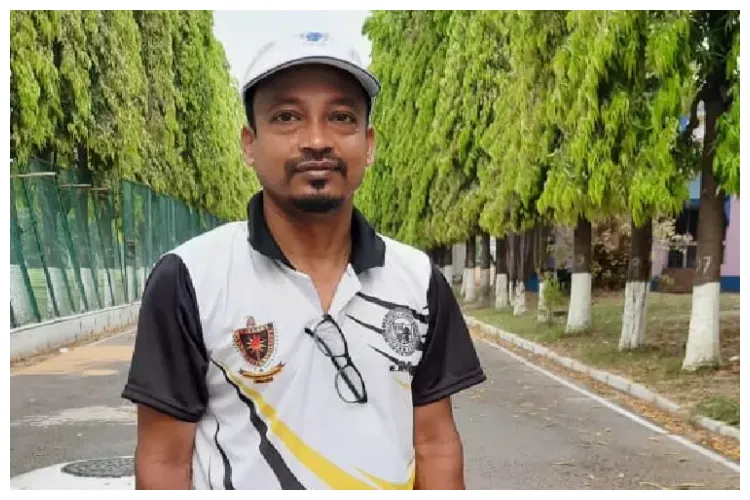
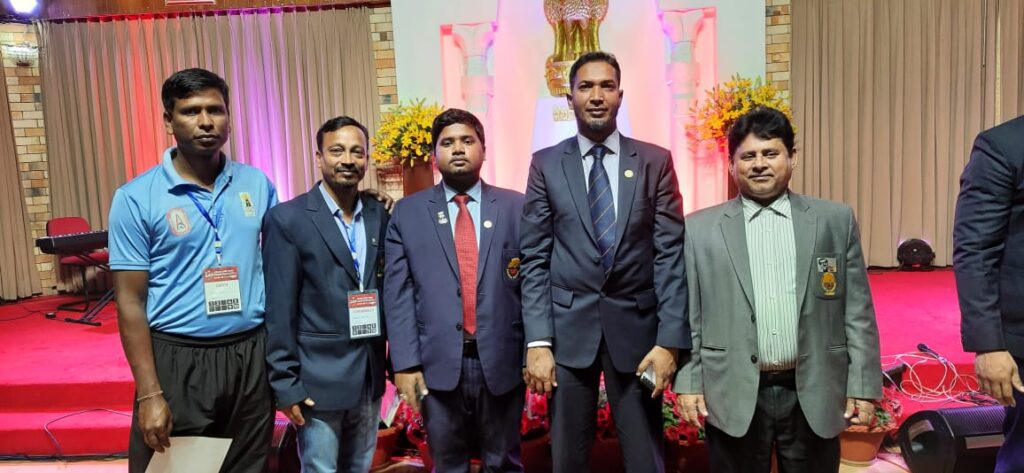
Abdul Barek (second from left) with fellow sportspersons from Railways
Barek craved newer heights in the no-cost sport. Having bagged scores of medals and trophies at state and national levels, his campaign culminated in the World Railways Athletics Meet at Denmark in 2005 where he emerged 10th in the individual event and third in the team event of the marathon championship. He is the first-ever sprinter from NF Railway to participate and win a medal in World Railways Meet.
“My success lies in my perseverance. I’ve never compromised with my practice. My job with NF Railway has helped me a lot because I don’t have to forgo practice due to household work as I did in the past … I would like to thank former international athlete Tayabun Nisha for suggesting my name to the Indian Railways which promotes sports. I had also appeared in interviews with Central Excise and Indian Army,” Barek explained.
On his success, Barek said: “Practice, rest, and nutrition are the key to performance. There was hardly any infrastructure during our times. But, after the 2007 National Games, we’ve got a whole lot of infrastructure and necessary facilities including coaches. However, the problem now is that our young players have lost interest in sports. The smartphone and fast food have spoiled a generation. Most of the youngsters nowadays munch on fast food, and keep themselves glued to their mobile phones when they should be at the playground.”
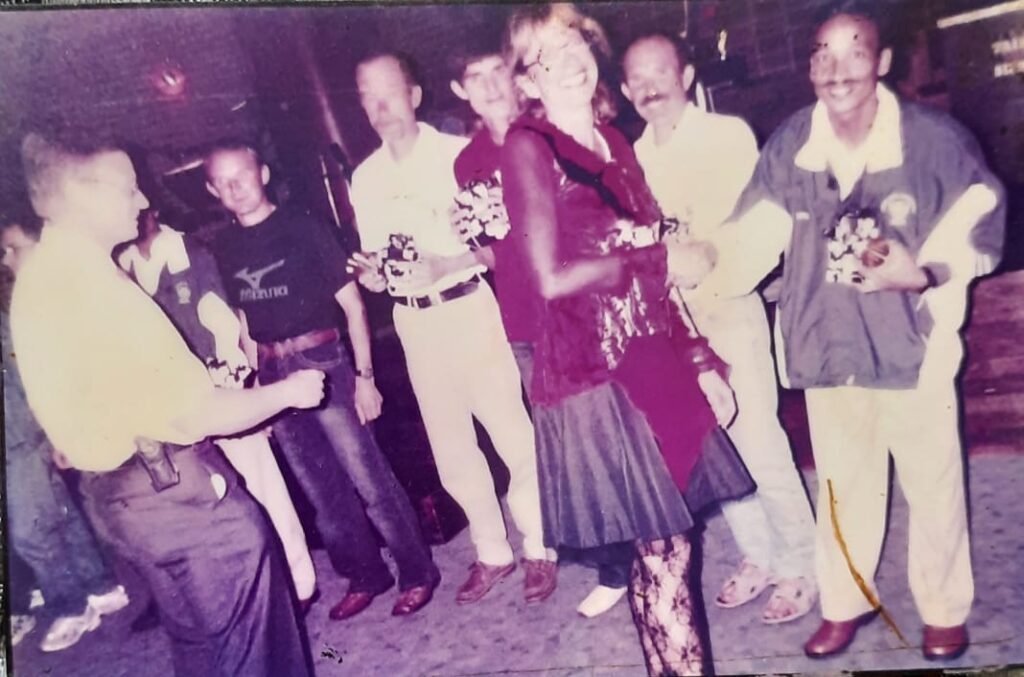
Abdul Barek in the international Railways sports meet
Regarding his food habits, Barek is a follower of cricketer MS Dhoni; both love to drink milk as an energy booster. “I used to drink a lot of milk. My father used to tell us to drink milk instead of water and that I used to do. I don’t like fast food and I’ve always preferred vegetables with our staple rice.” Barek also lamented that the urban youth were reluctant to do hard work. “Since I am based out of Guwahati and I am associated with an athletic academy, I always wanted to groom some good athletes. But, what pains me is that the rural youths can’t sustain long-term coaching and urban youths are reluctant to do hard work. A few very talented youngsters from Baihata Chariali and Morigaon were training under me for some time. But, they could not sustain the tough regime and left. One basic requirement of a marathon runner to be successful is to run at least 200 km a week which is divided into a scientifically designed schedule.”
source: http://www.awazthevoice.in / Awaz, The Voice / Home> Youth / by Imtiaz Ahmed, Guwahati / May 04th, 2022