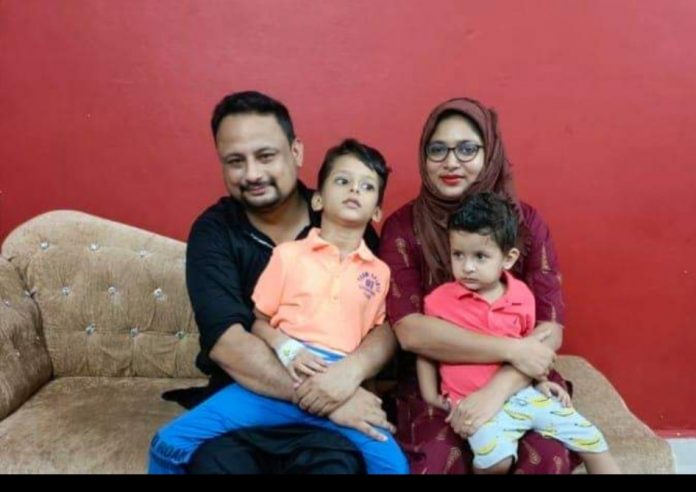
Bushra Arshad with her husband and children. | Photo by arrangement
A mother of two, Bushra Arshad Bano’s story is one of grit and determination. Cracking the civil services exams for the third time last week, Bushra has finally secured her dream job of IPS.
Uttar Pradesh :
It is no easy feat for Bushra Arshad Bano from Kannuaj, Uttar Pradesh, a mother of two, to crack India’s toughest and prestigious civil services exam thrice.
Currently posted as a Sub-Divisional Magistrate (SDM) Sadar in Firozabad, Bushra resumed her studies after thirteen years of marriage and cracked the civil services exam thrice and will be an Indian Police Service (IPS) officer – which has been her lifelong dream.
Bushra told TwoCircles.net that she has undergone four major surgeries but this didn’t deter her to fulfil her dreams. Expressing joy over being allotted the IPS category, she said, “I would join IPS as it has been my aim always.”
In earlier exams, Bushra Arshad was given IRS and was a top ranker in Uttar Pradesh Public Service Commission (UPPCS) exams.
Her achievement has been lauded by one and all.
Bushra Arshad, who hails from Saurikh village in Kannuaj, Uttar Pradesh, was the only Muslim participant to become SDM in UPPCS-2017. When she secured 277th rank in the UPSC result in July last year, she was selected for IRS, which as per her “did not satisfy her.” She appeared again in the exams and got 234th rank and secured IPS in the current seat allotment.
Bushra said she had resolved to continue to work hard till she came on top.
Bushra is fond of breaking the ‘myth’, proving misconceptions wrong, and breaking stereotypes.
Her family and relatives said that they always believed in her.
Bushra’s father is a farmer, and her mother is a homemaker. She comes from an educated family – both parents are graduates, and her siblings are well educated. Bushra, however, is extraordinary. After graduating at the age of seventeen, she completed her MBA degree before turning 20. She completed her studies till class XII from Kannauj and went to Kanpur to graduate.
Bushra said that she wanted to appear in the UPSC exam back then, but she was too young and wasn’t eligible.
According to Bushra’s mother Shama, “Bushra was admitted to 2nd standard at the age of four and a half years.”
“Bushra had learned so much at home that she never came second. She has a habit of being a topper. She has always been on top,” her mother told TwoCircles.net.
Bushra recalls relatives visiting her family and telling her family to make her (Bushra) a collector (considered a coveted job). Bushra has gone a step further and become a police captain.
“Age was never a bar for me. It never occurred to me that that I cannot give the UPSC exams or the JRF exams,” she said.
Bushra cleared the Junior Research Fellow (JRF) exam on her very first attempt and got a PhD in Distress Management from Aligarh Muslim University (AMU). It was while being at AMU that she married Asmar Hussain, an engineer. The couple went to Saudi where Asmar started teaching at a university there, and Bushra got a well-paying job in a company.
Forsaking their jobs, the couple returned to India.
“The only reason to return to my country was patriotism and unconditional love for the country. I often used to think that the knowledge that I have learned from the residents of my country in India, the skill generated from it should also benefit the residents of my own country. They should also get it, as it is their right,” she said.
Her husband Asmar Hussain told TwoCircles.net that she (Bushra) got a job in Coal India while being a mother of two. “Ten years passed, but her hunger for excellence kept on,” she said.
Talking about that period of her life, Bushra said, “I did the job honestly, and fulfilled my duty as a mother and as a wife.”
“Bushra is a hard-working woman who accomplishes what she decides to do,” her husband said.
Bushra’s story is a testament that nothing is impossible for this determined woman from Uttar Pradesh.
source: http://www.twocircles.net / TwoCircles.net / Home> Lead Story / by Aas Mohammad Kaif, TwoCirlcles.net / Devember 02nd, 2021
Kanthapuram says most of Waqf properties in Kerala belonged to Sunnis, and most of them were donated to Waqf with the purpose of conducting prayers for the dead and for ‘dars’ in mosques
Kerala Muslim Jamaat (KMJ) president Kanthapuram A.P. Aboobacker Musliyar has demanded that the government initiate a move to salvage the dispossessed Waqf properties in the State.
“As per the Waqf rules, a Waqf property can be used or managed only as per the will of the person who has bequeathed the property for Waqf. Many dispossessions and encroachments have taken place in violation of the Waqf rules,” said Mr. Kanthapuram, who also holds the title of the Grand Mufti of India.
He was inaugurating a State-level campaign by the Jamaat called ‘Vigil is the Strength’ in Thiruvananthapuram on Tuesday.
Mr. Kanthapuram said that most of the Waqf properties in the State belonged to Sunnis, and most of them were donated to Waqf with the purpose of conducting prayers for the dead and for ‘dars’ in mosques.
“Many such properties are now being used against their donors’ will. Many mosques and Waqf properties have been appropriated and encroached upon,” he said.
Pressure exerted
Although Sunnis used to bring the matter to the attention of the authorities, those in the Waqf Board were found to have been exerting pressure on the authorities to take biased decisions, he said, adding that “this cannot be allowed any longer.”
The Waqf Board and its ancillary systems should help retrieve the lost Waqf properties in the State, he said. “At the same time, the board should carry out programmes meant for the development of the Muslim community in the State,” he added.
Senior KMJ functionary Sayyid Thwaha Thangal presided over the function. Minister for Road Transport Antony Raju delivered the keynote address. N. Ali Abdullah presented the subject. Congress leader K.S. Sabarinathan, KMJ secretary A. Saifuddin Haji, Rahmatullah Saqafi, P.A. Mohammed Kunhu Saqafi and Devarshola Abdussalam Musliyar spoke.
source: http://www.thehindu.com / The Hindu / Home> News> States> Kerala / by Staff Reporter / Malappuram – December 15th, 2021
“To monitor the Covid-19 situation, every night I used to visit safe homes and oxygen parlours to see if everything is in the right condition or not,” said chairperson of administrative board of Kolkata Municipal Corporation Firhad Hakim.
Kolkata, WEST BENGAL :
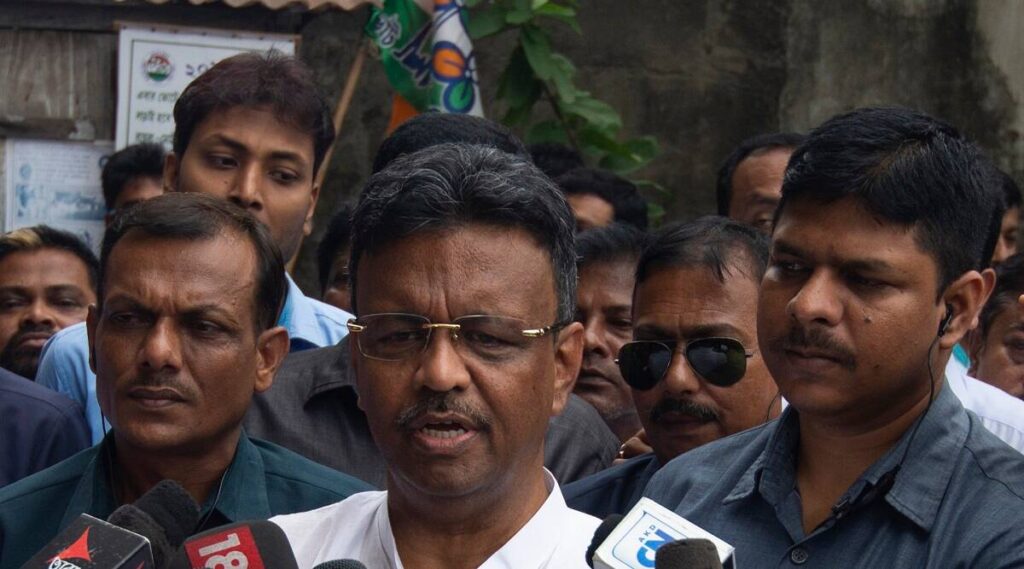
Chairperson of administrative board of Kolkata Municipal Corporation Firhad Hakim. (Express photo)
Firhad Hakim, chairperson of administrative board of Kolkata Municipal Corporation and former Mayor, speaks to Atri Mitra on his tenure at the helm of KMC and his vision for the city.
You became Mayor of Kolkata at a crucial juncture.
When I became Mayor, (in November, 2018) within a few months, Covid-19 came to India. After that, lockdown. Then Cyclone Amphan came. I faced the challenges one by one.
In the initial days of the pandemic, even ambulance drivers were wary of taking patients to hospitals. Dead bodies were dumped at hospitals. Residents around crematoriums objected to bodies of Covid patients being brought for cremation.
We started cremation at our crematorium at Dhapa but some local residents of Dhapa pelted stones. They ransacked a van. Kolkata’s image took a hit. But we then reached out to people slowly and ensured that the cremation of Covid victims was done smoothly.
We also started sanitisation work across Kolkata. [Actor] Amitabh Bachchan also praised our work and said, “if Kolkata can, why not Mumbai?”
What were the challenges posed by Cyclone Amphan?
When we are just recovering from the Covid situation, Amphan came and within one night, all of Kolkata was affected. We accumulated our entire work force in one place. Chief Minister Mamata Banerjee requested Odhisha for help. They sent a team of experts. Then, within 3-4 days, we were able to restore normalcy in Kolkata. Many people can criticise us but they should understand that when Amphan happened, my mayorship was not completed one year and this type of cyclone had not happened in Kolkata in the past 100 years or so. But we fought it unitedly and succeeded.
What is the biggest challenge you faced during your tenure as Mayor?
There were several. Now, we are facing challenge of substantial rainfall. I tried to solve problems from the streets, not from my chamber.
To monitor the Covid-19 situation, every night I used to visit safe homes and oxygen parlours to see if everything is in the right condition or not. Whether people are getting proper service or not. A former mayor (Shovan Chatterjee) may criticise me sitting in his residence but no one knows what he would have done if he had been in my situation.
The opposition is alleging that this board did not do enough to tackle waterlogging in the city.
One has to understand that rain and nature seem to be changing pattern. In the past, we never saw such floods in Kedarnath and Badrinath. Never saw a situation where Chennai, Mumbai, and even Delhi and Ahmedabad are facing flooding.
You have to give time. We have been planning. We are exploring new ways to drive away water. We talked with irrigation department to dredge the canals, too.
If you are again elected as Mayor, what is your plan?
First, I aim to improve the city’s sewerage system and sort out the waterlogging problems. We will call up experts to review the sewerage system of Kolkata and then we need full-fledged planning for this.
source: http://www.indianexpress.com / The Indian Express / Home> Cities> Kolkata / by Arti Mitra, Kolkata / December 18th, 2021
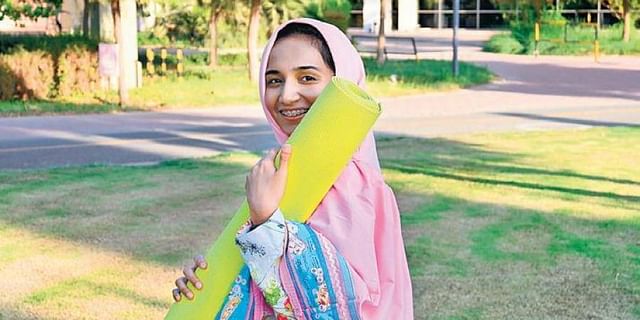
Dr Sharmeen Mushtaq Nizami is a J&K-based philanthropist and adventure trekker who helps cancer patients, widows and orphans. (Waseem Andrabi)
Dr Sharmeen Mushtaq Nizami, a J&K-based philanthropist and adventure trekker, feels that a girl can do big things in life when her parents support her; she has set up a charity trust that helps cancer patients, widows and orphans.
Whatever life throws at Dr Sharmeen Mushtaq Nizami, she takes it as a challenge, overcomes it and moves on. She believes one’s life should be an inspiration for others.
Dr Nizami, in her early 40s, works at a Srinagar hospital and runs a trust for cancer patients besides pursuing her hobby of being an extreme mountain trail motor-sport traveller. Since childhood, she has pursued her passion whether it was studying medicine in the 1990s when militancy was at its peak in Jammu and Kashmir or her love for jeeps.
Her biggest challenge in life came when her husband was diagnosed with cancer and died in 2007 within six years of their marriage, leaving her to bring up their two children, a three-year-old son and a year-old daughter.
“It was a traumatic phase. I struggled but my parents supported me. Initially, being a single parent appeared tough but gradually I came to terms with reality,” she says.
As time went by, she decided not to remarry and moved back to her ancestral home in Srinagar from her husband’s house in Jammu.
Dr Nizami, who is now the medical officer in-charge at a Srinagar hospital and on Covid duties, says that her experience during her husband’s illness pushed her towards helping patients and the needy.
“Though we were relatively well off, we had to go outside for treatment as he was suffering from pancreatic cancer. We realised that the treatment is expensive and drains most families’ savings,” she says.
Even before her husband’s death, she would collect money from attendants using charity boxes outside OPDs. Later, friends and colleagues asked her to setup a trust with a separate account where people could donate money. “We get a lot of donations during Ramazan, which are primarily used to help cancer patients and those needing a kidney transplant. The trust also helps widows and orphans who have no source of income,” she says.
Nizami, the eldest of four siblings, says that her parents Mushtaq Nizami, a military contractor, and Shahida Parveen, a homemaker, have been her strength. “Any girl can do big things in life when her parents support her,” she says.
Ask her what got her interested in jeeps, and she says, “I have imbibed my father’s passion for driving jeeps. In 2018, I came upon some videos of the Kashmir off-road club which organises competitive events and overland expeditions, and decided to participate in a snow-race event (Frozen Rush) at Gulmarg.”
Nizami, who always wears a hijab, was the only woman to participate in the adventure sport and created quite a buzz on social media. “I hadn’t realised that I was breaking stereotypes , until I saw people’s reactions,” says Nizami, who has since participated in dangerous events like mud race and river crossing.
“Some people tried to dissuade me saying it was risky, but I remained unafraid,” says Nizami, adding that she gets a lot of messages from young girls who admire her.
She says her faith in the Almighty has never wavered despite the many challenges in her life. “Not just driving, but life in general throws a lot of challenges at us. We have to accept the challenges and move forward,” she says.
source: http://www.hindustantimes.com / Hindustan Times / Home> Cities> Others / by Ashiq Hussain, Srinagar / September 16th, 2021
A bunch of Bohra women harness the power of social media to ace their careers, clad in their colourful traditional wear
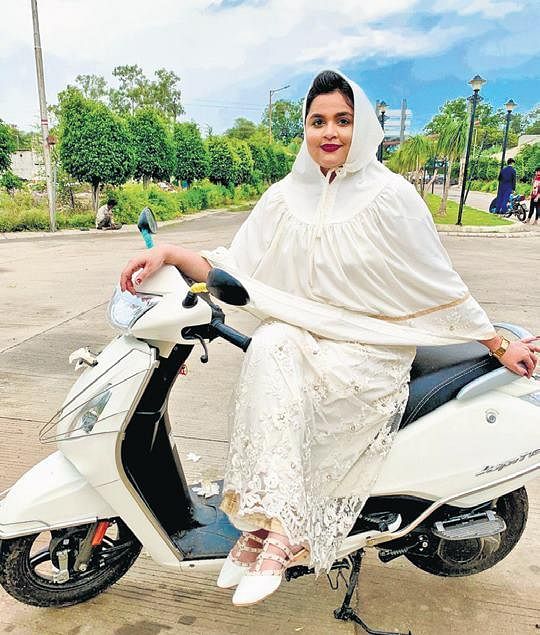
The rida is the traditional attire of the women of the Dawoodi Bohra community, a sub-sect of the Shiite Muslims.
After an adrenaline-charged skydive from 15,000 feet in the USA, everyone around Arwa Merchant was in awe, not because of her daring performance, but for her insistence on doing so in the rida. She wrote about this in a blog post for Dawoodi Bohra Women’s Association for Religious Freedom in October 2019.
The rida is the traditional attire of the women of the Dawoodi Bohra community, a sub-sect of the Shiite Muslims. The two-piece dress is distinguishable from other forms of the hijab by its bright colours, decorative patterns and lace. With their roots in Gujarat, the members of this peace-loving trading community follow the teachings of their spiritual leader Syedna Mufaddal Saifuddin. Although embedded in a tradition dating back to more than 1,400 years, this two million-strong Dawoodi Bohras in India have never been shy to embrace the latest technologies. They even have celebrated festivals like Eid and Shab-E-Baraat online due to the pandemic.
Not one to fall behind, the women of the community have taken social media platforms by storm. From content creators to food bloggers to creating clothing brands, they have managed to expand their careers online, but without giving up their rida.
MariyaKanchwala, 31 Makeup artist and beauty influencer, Indore Instagram: 28,000 followers Kanchwala has carved a niche for herself in the glamour industry by showcasing her makeup skills while wearing her rida. After a brief stint as a public relations executive for a fashion brand, she turned her full attention to makeup. She started posting on Instagram in 2017 as a food blogger, but 2020 made her realise her passion for makeup and she began posting beauty looks on Instagram. In the past year, she has started working on beauty and looks projects for weddings and shoots for makeup.
Rashida Jawadwala, 20 Content creator, Neemuch, Madhya Pradesh Instagram: 32,700 followers Known online as GirlInRida, Jawadwala started posting comic content on Instagram while pursuing her degree in Computer Engineering from Indore in September 2020. And the follower count went up to 32,000 in a year. Jawadwala has brand deals from companies such as VLCC, Urban Clap and Dresscode. Also, offers came her way for anchoring TV and stage shows, but she declined them to focus on her studies.
Arwa Zakir, 25 Fitness expert, GoFit Studio, Salmiya, Kuwait Instagram: 4,200 followers Also known as GoFit Arwa on Instagram and YouTube, Zakir is a certified trainer from the American College of Sports Medicine and owns the GoFit Studio fitness centre in Salmiya, Kuwait, where she trains people of all ages and genders. Her parents are originally from Sagwara, Rajasthan, and until she turned 16 she never paid heed to her health and was an obese child. Today, she posts content around health and workouts on Instagram. Even though some people initially mocked Zakir for posting content in the rida, she never let negativity come in the way of her passion. Zakir believes that social media is the best place for small business owners to grow and for creative people to showcase their talent.
Winner of the 2019 Women Icon of the Year Award in the field of coaching and the Best Life Coach of the Year Award, Ghadiali conducts workshops and seminars on motivation, personality development, life skills, etc—both online and offline—along with personal therapy sessions. Born in Tanzania, but working in Mumbai for the past 17 years, she has a master’s in Counselling Psychology along with a Life Coaching Certification from the International Learning Centre, Manchester, the UK. Ghadiali started posting videos and content on Instagram and Linkedin in 2015 when she found a lot of misinformation being circulated about mental health. It helped her grow from 2,000 to 19,000 followers on Instagram, which helped her garner many clients as well.
source: http://www.newindianexpress.com / The New Indian Express / Home> Magazine / by Zainab MM / December 12th, 2021
Children at Umeed Academy. | Picture by arrangement
Wali Rahmani’s work has earned him recognition and respect and people have come forward to sponsor the students in whatever way they can.
Kolkata :
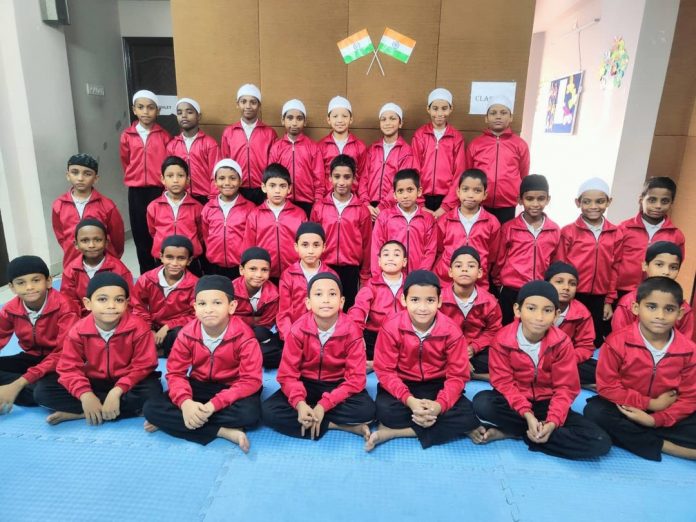
Budding lawyer, human rights activist, orator, motivational speaker, social entrepreneur and a proud father to 140 children, 23-year-old Wali Rahmani hopes that one day all his children will be successful leaders and prove to be invaluable assets to the nation.
The 140 children who fondly call Wali Rahmani Abba Ji hail from different slums of Kolkata. Many of them are orphans and all of these children are from families caught in the vicious cycle of poverty.
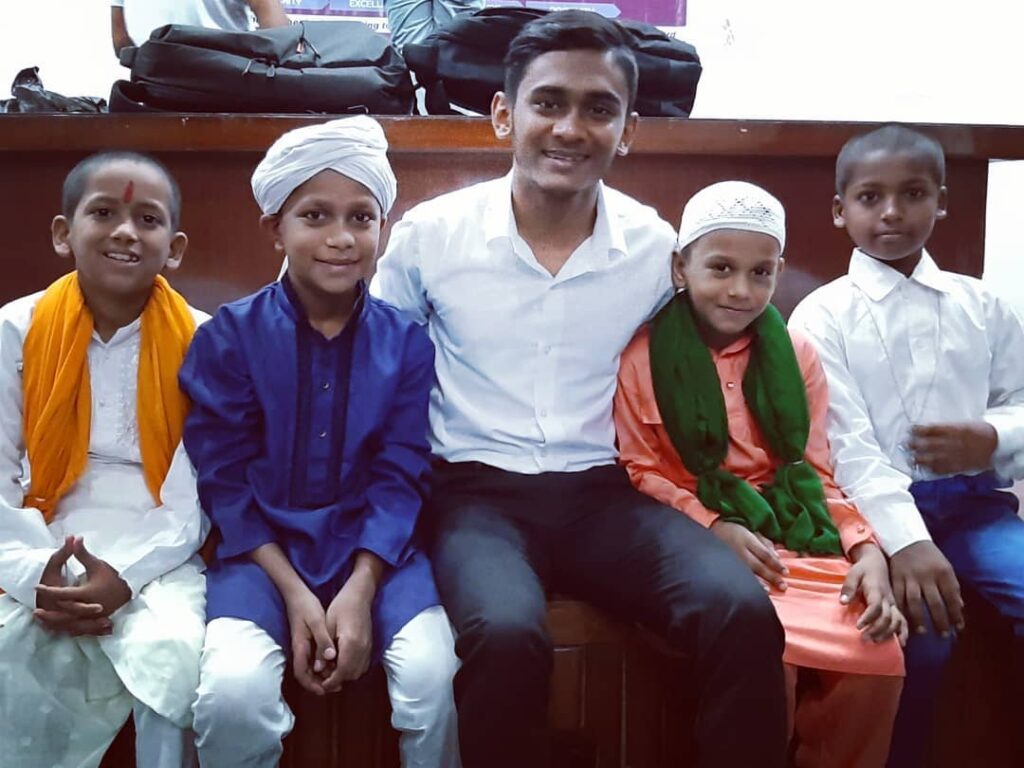
Wali with his boys dressed for a skit on harmony. | Picture by arrangement
Wali Rahmani was just 18 when he first took 3 kids from a slum under his wing. These 3 kids, around 3-4 years old, were orphans. Wali, their Abba Ji, washed the soiled clothes of the kids, bathed, cooked and fed them–playing the role of a mother, a father, a nanny and a maid. His determination did not waver. Gradually, he found more and more people joining him which encouraged him to start and register ‘Umeed’, which served both as an orphanage and an educational academy.
The journey of Umeed When Wali Rahmani was just turning 18, many changes were taking place in the country which he said, “changed him as well.” The assembly elections of 2017 in the state of Uttar Pradesh, which brought Yogi Adityanath as the Chief Minister, became the turning point in Wali’s life and brought in its wake an energized goal and mission to work for the upliftment of the society.
Rahmani said he was “aghast that someone like Ajay Singh Bihist a.k.a Yogi Adityanath could become the CM.” He took to social media to talk about the injustices, violations of human rights and atrocities that were happening in the country. This was the beginning of Wali’s political journey. Soon, his fearless voice got him thousands of followers on Youtube, Facebook and other social media.
At one point, Wali paused to reflect that he is the only one talking against the oppression and gross injustices meted to people. Where are all the other youth leaders? Why are they not standing up against injustices? He spoke to his peers but they were keen only on pursuing their education, having fun and enjoying life. They did not want to take up these issues or even talk about them.
“I realized that my suggestions did not go down well with my peers. They did not want someone to tell them to ‘do this and do that.’ It became more of an ego thing,” Wali said, reminiscing the early days.
People who heard his talks on social media, his debates on the television channels looked up to him as the leader of the future. Wali, however, was not happy being a leader. He wanted more leaders in the community. According to him, a true leader is not someone who does not leave any legacy behind. He believes that a true leader creates more leaders and leaves behind a rich legacy. Instead of asking other youth to join him in the mission to raise their voice against the wrongs of society, he thought it is better to create new leaders. He believed that these will be small children who can be successfully molded to become strong leaders. He took a break from his studies for a year to work on this idea of creating future leaders.
“But where would I find these children whom I could train? Would any parent trust me enough to send the child to me? Then by chance, I came across a Hadith by our beloved Prophet (PBUH) wherein he mentioned the status of a Muslim who is kind to orphans. I felt that through this hadith, Allah was guiding me. So, I decided to take in children who had no parents,” Wali said.
“I had made up my mind that I want to be a father of 10 before I turn 20. And people laughed at me. They advised me to go study and asked me blunt questions related to my financial capability,” Wali said, “But I did not give up. It was the womenfolk who came forward to help me realize my dream”.
Wali said that he approached several people who had wealth and could easily help him but instead they scoffed at his idea.
“The very first person to help me was my mother. She believed in my dream. She was the first donor for Umeed,” Wali said while giving details of other donors who were also women.
He remembers the first donors fondly and with gratitude. One woman gave her gold finger ring because she was not earning and wanted to give what belonged to her. Wali likens this to the woman who donated her gold bangles to Sir Syed Ahmed when he was seeking donations for the Aligarh Muslim University.
Some girl students also promised monthly payments from their pocket money. And as they say, small drops of water make a mighty ocean, Wali Rahmani’s dream project began taking a concrete shape.
Today he runs the Umeed Academy in a rented apartment with 140 children. Some of these children are day scholars who are at the academy for at least 12 hours.
Many of these children are kids from slums whose parents are alcoholics, orphans who are homeless, kids who have parents but stay with their guardians to avoid the brutality that their parents either go through or make them go through, children with parents serving jail time. Some kids have homes not suitable to live in. The children of his academy are mostly from Muslim Ghettos.
Umeed Academy’s vision Wali envisions creating leaders who in turn will become capable to create more leaders. Year after year, Wali hopes, Umeed will produce leaders who will carry forward the legacy of Wali and his academy Umeed.
“Each child that graduates from Umeed shall be an institution builder and a leader. They will leave their imprints in the sands of time,” he said.
Inside Umeed Academy There are no wardens at the Umeed Academy, only house parents who take care of all the needs of the children. From the time of their enrolment to the time they pass out as students have completed their 12th standard ICSE curriculum syllabus, all their costs are borne by the academy including their residential cost, health cost, books, clothing and sports.
The focus is on the holistic development of girls and boys. For their spiritual growth, they are taught Quran and Islamic values.
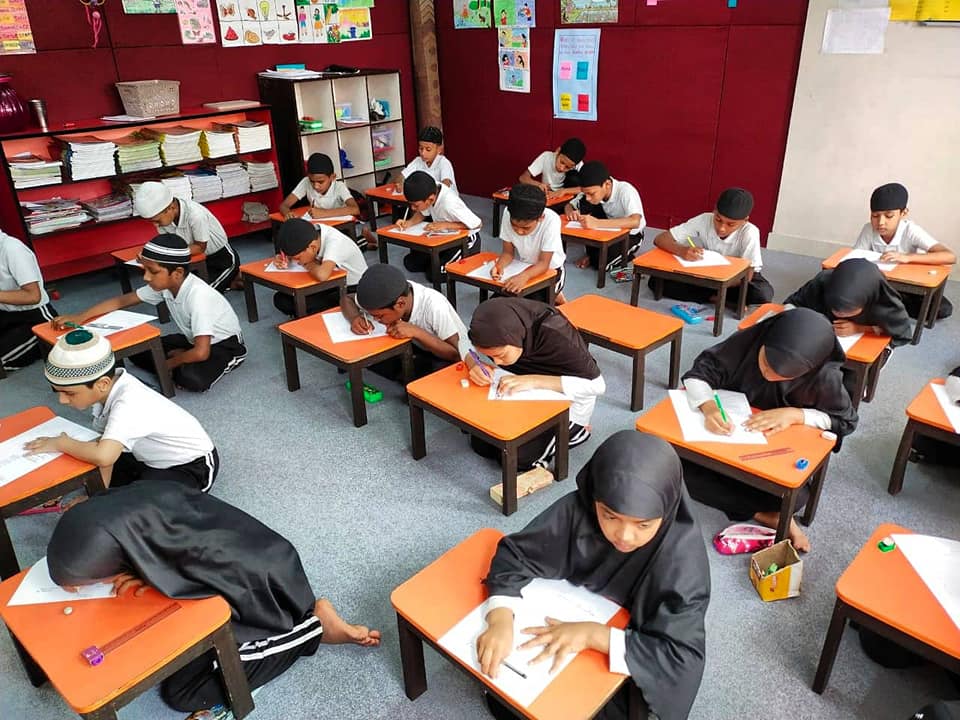
The children are taught regular subjects of the school curriculum which is ICSE and apart from that, they are taught self-defence, drawing, sports, Quran, Hadith and ethics. They are encouraged to participate in many activities conducted in their academy.
Class room in Umeed. | Picture by arrangement
“The transformation in the children is visible. They are all so disciplined and neat that despite sharing common toilets and bathrooms, they keep it all clean,” Wali says proudly, adding, “Ask them to recite the Duas (prayers) of eating, sleeping, going out, going to the toilet, or when it rains, they will recite it.”
The house parents bring up these children as they would bring up their own, insists Wali. He also does his bit by interacting with the children every day, listening to them, talking to them and thus making strong the bond they share.
The core team members, who are his well-wishers not only guide him but also help him make the right decisions.
Asma Alam, director of Umeed, Ghazala Imam and Yusuf Haque who taught Wali at school are now part of the core committee. Others who have joined his mission are an army veteran Abhishek Mukherjee, educationists Shabana Anwar, Usha Banerjee and Mufti Anwar Khan Sargiroh.
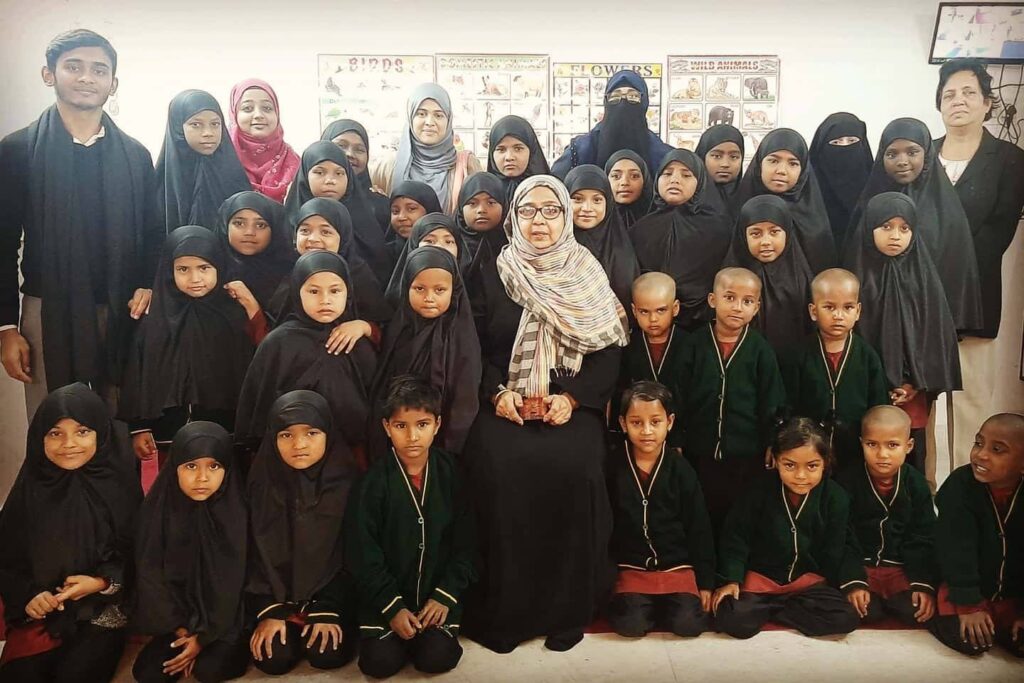
Wali Rahmani, with his staff and children of his academy. | Picture by arrangement
Awards and recognitions Wali Rahmani has appeared in various national television debates and is perhaps the youngest Indian TV debate panellist.
He says that his work for society is not social work, but “his social duty.” He has been awarded the young social Hero award in 2019 at the South India NGO conference. He has also been featured as one of the young top 20 achievers in India under the age of 20 by Mumbai Coworking, and also received the Shan-e-Hindustan award by Youth Ekta Front, Delhi. His work has been acknowledged and featured by India Times, Brut India, and the Indian Express.
Many prestigious institutes and organisations have invited applications from Wali to apply for the awards but Wali Rahmani says “his work should speak for him,” and does not believe in applying for any award.
“The ultimate award will be when these children grow up and lead the nation and establish peace and harmony around them,” he said.
Future of Umeed Wali Rahmani’s work has earned him recognition and respect and people have come forward to sponsor the students in whatever way they can. One generous donor has donated 2 Acre (87120 square feet) of land to Umeed Academy worth Rs 2 Crore.
Wali has plans to construct fully functional hostels on the land for students with separate dormitories for boys and girls, a housing facility for the staff members and a campus which can accommodate approximately 600-700 students at once.
The construction work has started and the cost of the entire project has been approximated at Rs 13.5 crores. Wali intends to complete this work within the next two years and requests donations for his lofty mission through donations.
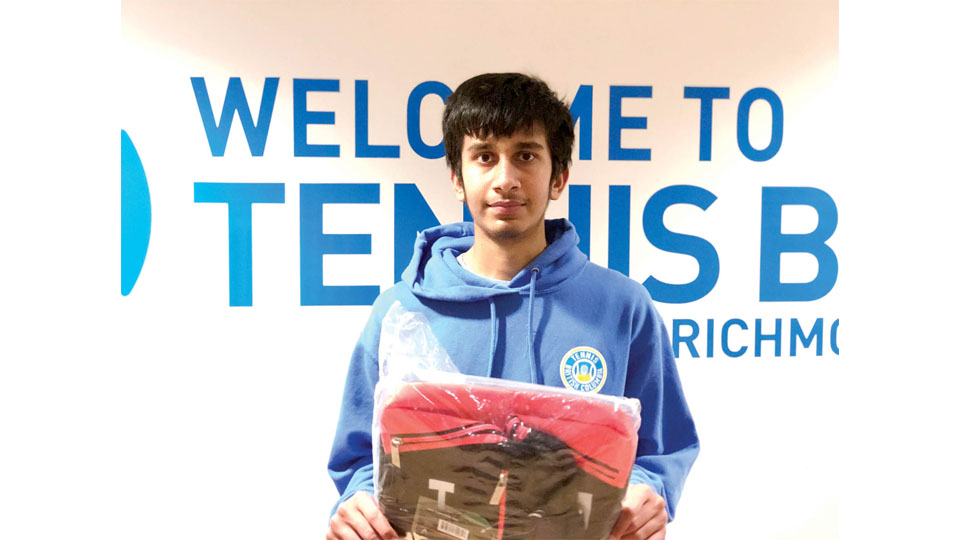
Mysuru boy, 14-year-old Mustafa Raja won his first U-18 Tournament in Vancouver, Canada, today. Mustafa, seeded fifth in the Tennis BC U18 4 Star Tournament, held his nerves at crucial moments, saving two match points in the finals, winning the tournament defeating the top seeded player Denny Bao 2,6; 7,6(7) and 6,1.
By virtue of this win, Mustafa became the top player in his age category in British Columbia and Top 4 in Canada.
Mustafa trains at the Tennis Centre in Surrey, Vancouver and studies at the Sullivan heights Secondary School.
Mustafa has had a good year, he was the Provincial Champion in U-14 category and was also the Canadian National Champion.
Mustafa used to train at the Nagaraj Tennis Centre at SJCE College Campus and is alumni of Excel Public School, Mysuru.
source: http://www.starofmysore.com / Star of Mysore / Home> Sports / December 13th, 2021
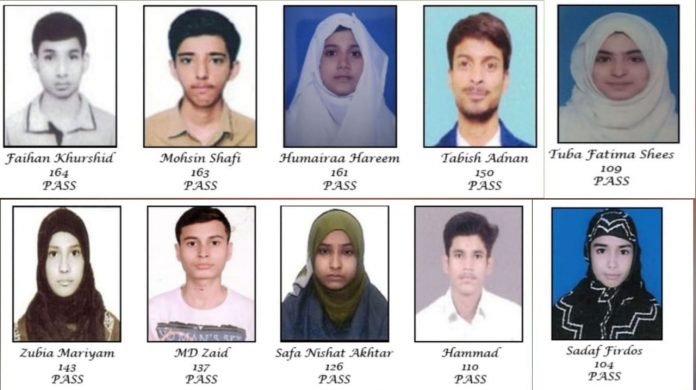
Despite facing the challenges of global pandemic of Covid-19, lockdown and extraordinary interruptions in academic activities,the students of Rahmani30 have set record success in this year’s commerce field with 100% students qualifying for CSEET (Company Secretary Executive Entrance Test), 10 qualifying CA Foundation and 4 cracking CA Intermediate Exams. The BSEB class 12th results were excellent with 100% students scoring more than 75 %( Distinction).
A Company Secretary is a senior position in a private sector company or public sector organisation. Also known as Compliance Officers, it is one of the positions that is a part of the key managerial personnel (which usually includes the CEO & CFO) of any company. Company Secretary is a statutory position as every listed company and every other company having paid up share capital of rupees 10 crores or more shall have a full time company secretary in their board as per section 203 of Companies Act 2013.
Chartered Accountancy is a challenging profession that offers practice or job opportunities in the areas of accounting, auditing, corporate finance, project evaluation, and company and other business laws, taxation and corporate governance. The multi-faceted knowledge a chartered accountant enjoys through unique academic programme blended with practical training is what the business and industry need in the advent of liberalisation, privatisation and globalisation of Indian economy. The scope for this lucrative career is bright in an economically developing nation like ours and as such the career can be termed as challenging and rewarding for competent professionals in the field. Chartered Accountancy Course is a professional course in Accounting introduced in our country in 1949, with the enactment of the Chartered Accountants Act. The Institute of Chartered Accountants of India (ICAI) was formed the same year.
The Rahmani Program of Excellence (Rahmani30), under its mentor organization, the Rahmani Foundation, is effectively turning the educational desperation of the minority community into hope and confidence, making its learning process more effective with each passing year.
Fahad Rahmani (CEO Rahmani30) said that this achievement is definitely due to the tireless efforts and efficient Academic leadership of former DGP of Bihar, Mr. Abhyanand sir and his guidance as well as the tireless hard work of the faculties, management and other team members.
Rahmani30 has emerged as one of the premier institutions for preparation of IIT, JEE, CS, CA, CLAT and NEET in recent years.
source: http://www.muslimmirror.com / Muslim Mirror / Home> Positive Story / by Special Correspondent / December 05th, 2021
Diabetic people with foot sores, fearing limb amputations can heave a sigh of relief as a team of Aligarh Muslim University (AMU) scientists lead by Prof Asad Ullah Khan of the Interdisciplinary Biotechnology Unit has developed a novel ‘Nano-Composite based Photo-Dynamic Therapeutic Approach to treat Chronic Diabetic Foot Ulcers’.
Their remarkable patented study, data and work accepted for publication in the peer-reviewed ‘Scientific Report’ of the Nature Publishing Group has been successful on animal models. The technology successfully treated foot ulcers in diabetic rats.
“Anatomical and physiological similarities prompted us to investigate a large range of mechanisms for assessing this new treatment therapy on animal models with no toxicity before applying it to humans. We are content to have successfully treated foot ulcers in diabetic rats which were not treated by any available antibiotics due to the multi-drug resistant strain mediated infection”, said Prof Asad.
According to him the animal models were cured in a span of 14 days through the newly developed technology.
“Our team has been involved in proving the efficacy of the treatment for the last two years. The study is on its way for human trials”, added Prof Asad.
He pointed out: “Independent studies reveal that across the world, a limb is amputated every few minutes and this actuality becomes even more unsparing when you learn that most of these amputations are the result of diabetic foot ulcers. Therefore, it is of paramount importance to come up with a pertinent treatment for saving limbs and lives”.
“It is hoped that this novel technology will become the final finding for the pursuit of the much awaited treatment for diabetic foot ulcers. We are longing for the world to find out that there is more to the prevention of this infection than just offloading wounds, removing dead skin and tissue, applying dressings and checking blood glucose and other health issues”, said Prof Asad.
source: http://www.amu.ac.in / AMU, Aligarh Muslim University / Home> AMU News / Public Relations Office / Aligarh, December 13th, 2021