All posts by mpositiveone@gmail.com

New Book on Freedom Movement Educates Young Generation About Muslims’ Sacrifices

NEW DELHI :

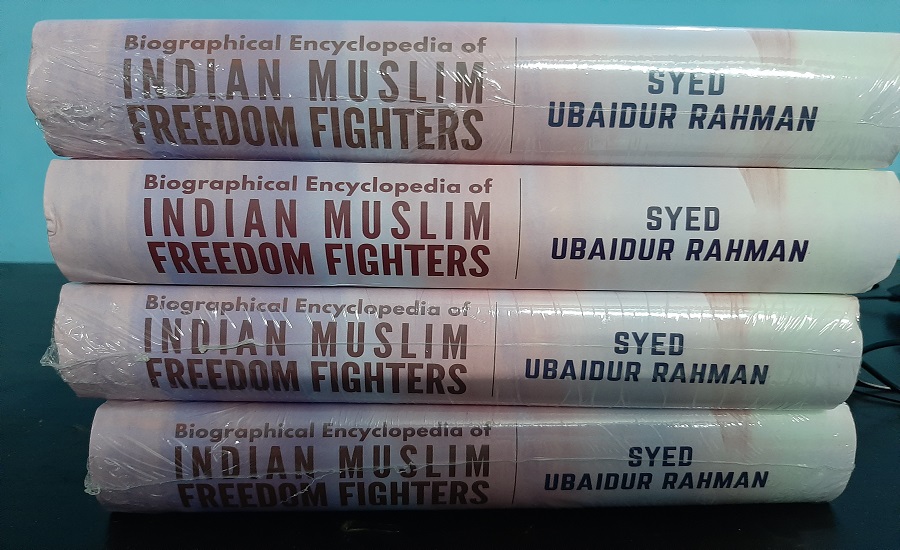
‘Biographical Encyclopedia of Indian Muslim Freedom Fighters’ is an exhaustive work that brings to the fore many unknown facets of the freedom movement beginning with Faraizi Movement to 1857 Mutiny and to later part of the freedom movement.

BE it 1857 Mutiny or the later freedom movements, Muslims have played leading role in all such efforts. British officials and historians have accused Muslims for the 1857 Ghadar. To be true, both British historians and officials have named Muslims as the most important rebels and termed the Mutiny as a sinister plot by Muslim ulema and mujahideen to reclaim their lost powerhouse in India.

Here are excerpts from a chapter on Imam Baksh Sahbai, a great scholar of his time:

Imam Bakhsh Sahbai was one of the most renowned scholars of the 19th century Mughal India. He was among the best scholars of the Persian language and had earned respect as poet and litterateur of the Persian language. At a time when Urdu had almost replaced Persian as lingua franca in much of north India, he was still one of the greatest supporters of the Persian language and spent all his resources in its propagation.

He authored more than thirty books on Persian and Urdu literature that includes three books that were part of the curriculum in the famed Delhi College. He was reportedly appointed a professor of the Persian language there. However, he had a tragic end when after the 1857 Mutiny he and his entire family, including his two sons, who were also renowned scholars in their respective fields, were hauled, taken to Yamuna and shot dead from point blank range. At least 21 members of his family were slaughtered in this most horrendous fashion.

Imam Bakhsh Sahbai was among the most respected scholars of the time and, therefore, every prince wanted to study under him. He was very close to Ghalib, Zauq, Mufti Sadruddin Azurdah, Fazle Haq Khairabadi and even the last Mughal Emperor Bahadur Shah Zafar. Many top scholars of the time were taught by him not just at Delhi College but also at his home. However, the slaughter of his family members including his two sons, and digging of his home by the British thugs had shocked the people of Delhi even during the worst phase of brutality. This digging of his house and the complete destruction of his library also destroyed much of his work. The destruction of his massive library that he had built over a period of decades must have been a huge loss for academia and scholarship.
This is the reason that not much has survived on him.

Some twenty years after his macabre killing, when a Hindu disciple of Sahbai, Munshi Deen Dayal thought of collection and publication of his he couldn’t lay his hands on anything substantial. There was not much available on his life or work. Whatever he could gather, he published it in three volumes as Kulliyat-e-Sehbai.

Sahbai was born in the year 1805 in a respected family of Delhi. His father, Maulana Muhammad Bakhsh settled in Delhi from Thanesar, Punjab. Sahbai’s elder brother Hakim Peer Bakshi was a famed physician of his time. His early education was under Maulvi Abdullah Khan. Sehbai had two sons, Muhammad Abdul Aziz and Molwi Abdul Karim Soz. Both were accomplished scholars and well-known poets. Both were killed along with their father and other relatives after 1857 Mutiny.

While in the mid-19th century the power of Mughal Empire had diminished and its influence confined to the Old Delhi quarters, the capital of the Mughal empire still boasted a huge galaxy of scholars, poets and artists of all sorts. There is no denying the fact that the biggest draw of all were the poets and intellectuals. Altaf Husain Hali said that Ghalib, Zauq, Sahbai and Azurda made the capital one of the best places for the scholars and academics. “There gathered at this time in the capital, Delhi, a band of men so talented that their meetings and assemblies recalled the days of Akbar and Shah Jahan”, wrote Hali.

Hali, who had merely heard the stories of high standards of scholarship in Delhi, its great scholars and poets and great madrasas dotting the town, escaped Panipat and came on foot to Delhi. He eventually got admitted to one of the best madrasas of the town and started frequenting the classes of great scholars of his time before his family tracked him down eventually. However, much before that happened, he had got admission in ‘very spacious and beautiful’ madrasa of Husain Bakhsh and had begun his studies there. He says that he was witness to ‘this last brilliant glow of learning in Delhi, the thought of which now makes my heart crack with regret’.

William Dalrymple while describing the destruction and killing in Delhi in the aftermath of Mutiny says:

Worse still was the slaughter in Kucha Chelan, where an estimated 1,400 Delhiwallahs were cut down. Here Nawab Muhammad Ali Khan had attempted to resist the plundering and had shot dead three British soldiers who had climbed over his haveli wall and entered his zenana. Their companions went back to get the rest of their regiment, and returned with a field gun with which they blew the haveli apart.

Sahbai was respected by fellow scholars including Mughal Emperor Bahadur Shah Zafar, who himself was a top of the line poet and whose respect for scholars and poets was legendary. While Sahbai is not known to have directly fought in the 1857 Mutiny, however, what is known is that he was with Bahadur Shah Zafar and supported his revolt. This was the reason that the rampaging British forces, full of feeling of retribution and revenge were led to his home and the homes of other supporters of Mutiny. These spies were paid Rs 2 for every such input.

When after relentless killing and rapine the British and their allies got tired of killing and bayoneting the inhabitants, they marched forty survivors out to the river Yamuna, lined them up below the walls of the Fort, and shot them. Among the dead were some of top of the line scholars who would have been the pride of the place for any world class capital. While writing about this ghastly massacre Mirza Zahir Dehlavi says, “They were well-known and well-off people, men who were the pride of Delhi…They had had no parallels in their own day, nor will we ever see their like again.’

Mirza Zahir Dehlavi in his Dastan-e-Ghadar writes:

“For example, there was Miyan Amir Panja-kash, the great calligrapher, who had no one comparable to him on this earth. Then there was one of our greatest poets, Maulvi Imam Bakhsh Sahbai and his two sons, and Mir Niyaz Ali, the celebrated story teller of Kucha Chelan. About fourteen hundred people of that Muhalla were killed. Some were arrested and taken through the Rajghat gate to the river side and there they were shot. The bodies were all thrown into the river. Meanwhile, many of their women were so disturbed by what they saw that they left their homes with their children and jumped into the wells. For months afterwards, all the wells of Kucha Chelan were stacked with dead bodies. My pen refuses to describe this further.

“One of the survivors of Sahbai’s family was his nephew Qadir Ali who apparently lived with him in Delhi. He is reported to have told his escape to the Delhi historian Rashid ul-Khairi. “Delhi resembled a place of Judgment. A huge number of prisoners were being shot as hanging them was ‘tiresome’ for their killers.

As the soldiers readied their guns a Muslim officer came forward and told us that ‘your death is imminent. You will be shot to death immediately, so those people who know swimming should immediately jump in the river to survive.’ I knew swimming and was good at it, but Mamun Sahib [Sahbai] and his son, Maulana Soz, didn’t know how to swim. I was not ready to abandon Mamun Sahib and my cousins but he forced me to do so. Ultimately, I jumped in the river and swam away. I kept looking back, and after I had gone fifty or sixty yards, I heard the gunshots and saw the line of people falling dead”.

_______
Excerpted from: Biographical Encyclopedia of Indian Muslim Freedom Fighters by Syed Ubaidur Rahman; ISBN: 81-88869-51-1, PP 626 (Hard Bound), Price Rs 1195, Publisher: Global Media Publications, Tel: 9818327757

__________

source: http://www.clarionindia.net / Clarion India / Home> Books / by Syed Ubaidur Rahman / December 13th, 2021
Bike Restored In City Impresses M.S. Dhoni

Mysuru, KARNATAKA :

Rare RD 350 HT added to cricket legend’s large collection.

Mysore/Mysuru:

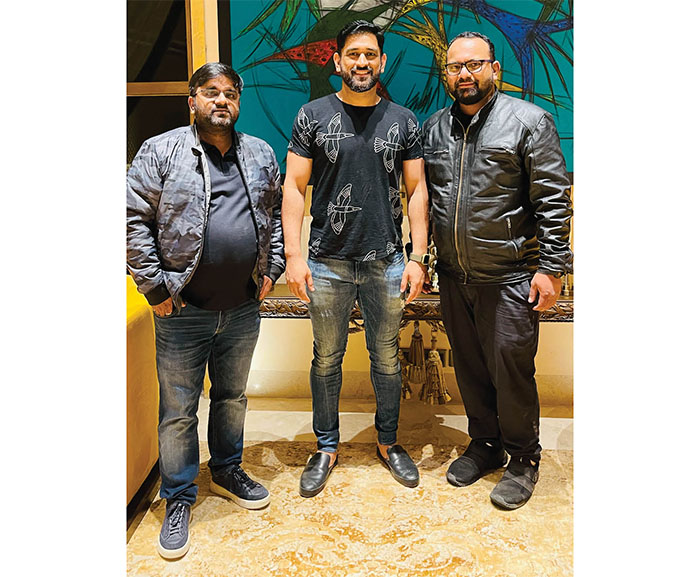
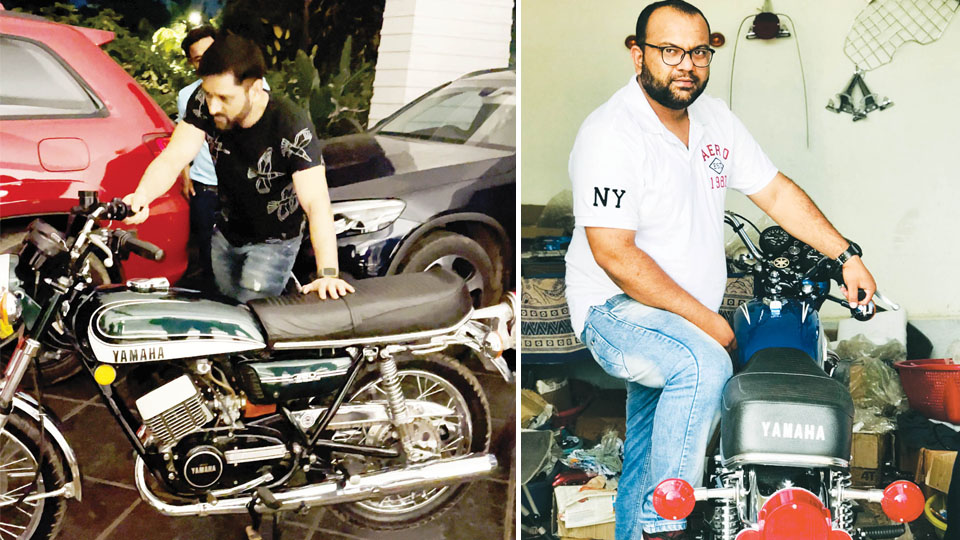
Former Indian cricket captain M.S. Dhoni has a large collection of cars and bikes at his Ranchi home. The latest addition is a Yamaha RD 350 HT bike built by restoration expert from Mysuru Syed Jadeer Husnain. The mean machine was delivered to Dhoni last month.

This competition green-coloured bike may be the 34th or 35th RD 350 bike Dhoni has, Syed said. The all-new paint looks fantastic with white contrast that gives it a rich tone.

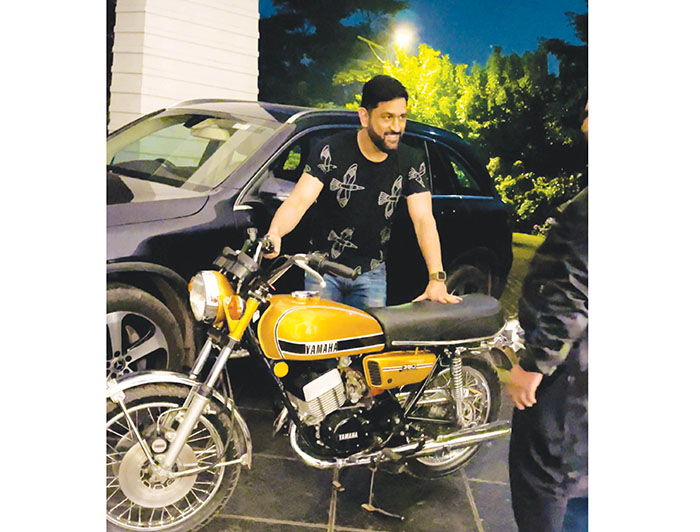
A resident of Manti at Belavatha in Mysuru, Syed restores RD 350 bikes. In fact, he restored one gold-coloured RD 350 for himself and he took both the bikes to Ranchi to show his craftsmanship. “Now, the gold RD 350 carries Dhoni’s autograph on the fuel tank which makes it a priceless bike in my own collection,” Syed told SOM.

 “I am a fan of Yamaha RD-350 and I try to make the best of that bike to find true pleasure. By profession I am a building construction contractor but I love to live my dream,” Syed said.

Picture shows an ecstatic Dhoni at his Ranchi farm house after riding the gold coloured RD 350 HT

Chance to meet Dhoni

On how he met Dhoni, Syed said that a close friend of his, who was in touch with Dhoni’s friend, shared the contact. “I had a restored RD 350 HT bike then which was the 19th bike that was rolled out in India and one of the best projects we had completed. My friend told me to contact Dhoni and get the bike included in his collection since it was a collector’s item. But it did not materialise,” he revealed.

After upgrading the next bike to the 1973 model as per US specification with minute detailing such as colour, seat shape and installation of disc brakes, Syed sent the photos of the competition green bike to Dhoni’s friend, who in turn showed it to Dhoni.

“Dhoni liked the photos and wished to see the vehicle in his farm house at Ranchi. This particular RD 350 was my own project bike which was built to US specification which is entirely different from the Indian Rajdoot specifications. After the project was successfully completed, we discussed it with Dhoni’s friend and the meeting with the legend happened,” Syed explained.

Painstaking process

On the restoration process, Syed said that he and his team first checked the bike for broken, damaged and worn out parts before replacing them. “The spare parts are restored before disassembling the bike so that it can be easily painted and fixed without any problems. Then the bike was disassembled and was divided to different teams for mechanical works, engine overhauling, painting and chrome-plating. New parts were sourced from different parts of India,” he explained.

“Everything was done to make the bike a perfect beast and was assembled. This bike was restored in six months but the process of collecting spares started six months ago,” Syed said.

Syed has different teams to work on his projects. “I try to make the best bike and people who work with me on my projects are all specialists. We specialise in two-stroke engines like Yamaha RX series, Suzuki Shogun and Shaolin,” Syed said.

After the message that Dhoni wanted to see the bike, Syed and his team had the challenge of covering the bikes with packing materials to prevent scratches while being transported in a train. He, along with his wife’s younger brother and a mechanic, boarded a train to Ranchi in November. 

A dream come true

“Dhoni is a fantastic gentleman who spared his time to look at our creations. I got goose bumps when he came in front of me. When we started discussing, I fumbled for words and I admired his passion and interest. He showed me his huge collection. For me it was like a dream come true to meet him in person,” Syed said.

Later, Dhoni took the bikes for a spin. “His eyebrows rose after the rides said it all,” revealed Syed. Dhoni later autographed the gold-coloured RD 350 tank. The cricketer also signed a few posters and posed with Syed for photos.

Yamaha RD 350 was one of the most powerful two-wheelers in the late 1980s and also India’s first performance-oriented bike. It had a 347 cc two-stroke twin cylinder engine that was de-tuned for the Indian markets to produce lesser power of about 30.5 bhp on the High Torque (HT) version and 27 bhp on the Low Torque (LT) version.

‘Race Derived’

The RD 350 from Japan was introduced in the Indian markets under the name Yamaha Rajdoot RD 350 by the Escorts Group from 1983 to 1989. Despite the common notion, RD stands for ‘Race Derived’ and not Rajdoot. It was given the name ‘Rapid Death’ because of the frequent fatal accidents because of its power.

The RD could go 0-100 in about 7 seconds and reached a top speed of around 160 kmph in the top gear. It had a price tag of Rs. 18,000 when it was launched in 1983 and Rs. 30,000 by the time it discontinued, which was expensive then.  A well maintained RD 350 bike will now cost between Rs. 2 lakh to Rs. 2.5 lakh, if at all it is available.

source: http://www.starofmysore.com / Star of Mysore / Home> News> Top Stories / December 12th, 2021

47 years, 16 heirs, Rs 2,664 crore: Rampur Royals’ property dispute finally gets resolved

Rampur, UTTAR PRADESH :

After nearly 47 years of legal battle, the district court of Rampur has delivered the verdict in the Royal family property dispute. The property will now be divided among 16 legal heirs.

The last King of Rampur, Nawab Raza Ali Khan, died in 1966. A verdict on his Rs 2,664-crore property was reached today, after a nearly 47-year legal battle.

This Rs 2,664-crore property will be divided among 16 claimants as per the Sharia law, a district court in Rampur ruled Wednesday, December 8. The legal battle stretched on for nearly 47 years, and it was in November 2019 that the Supreme Court set December 2020 as deadline for the district court to resolve the dispute. But then, there was Covid, and delays followed. The verdict was reached yesterday.

47 years, 16 heirs, Rs 2,664 crore: Rampur Royals' property dispute finally  gets resolved
Rampur Royal Family. Photo: Facebook

THE STATE OF RAMPUR

Rampur came into existence on October 7, 1774, and it remained under British protection until Partition. It was also the first state that acceded to the dominion of India in 1949. The two conditions on which Rampur acceded was ownership of property, and right of primogeniture.

As per the instrument of accession, the government of India recognised Murataza Ali Khan, the eldest son of Nawab Raza Ali Khan, as the sole inheritor of all his father’s properties and also issued a certificate for this. Nawab Raza Ali Khan had three wives, three sons and six daughters.

ONE OF THE LONGEST CIVIL SUITS IN INDIA

rampur-district-cour_120921020333.jpg
Rampur District Court. Photo: India Today

The legal battle started around 1974, when Murtaza Ali Khan, the eldest son of Nawab Raza Ali Khan took over the property of the Nawab as per the gaddi system. His younger brother Zulfiquar Ali Khan, who is married to Lok Sabha MP Noor Bano Begum, along with other sons and daughters, filed a case against Murtaza Ali Khan. Since then, the issue was sub judice.

The reason given by Murtaza Ali Khan becoming the sole owner of his father’s property was one of the two conditions on which Rampur acceded to India in 1949.

SHARIA OVER GADDI SYSTEM

The District Judge on Wednesday delivered the judgement which ran into 34 pages. But the scheme of partition of the property is yet to be decided.

The Supreme Court in 2019 had ruled in favour of Muslim personal law, which certfiied 16 sons and daughters as the legal heirs of the property.

Originally, the Royal property was to be divided among 18 persons, but during the course of the trial, two claimants died and they do not have any heirs. Now, the property will be divided among 16 heirs. 

The Supreme Court in 2019 had asked for the evacuation of the property, and a plan for the division of the assets by a district court judge.

RS 2,600-CRORE ASSETS

the-royal-palace-of-_120921014434.jpg
The Royal Palace of Rampur. Photo: Facebook

The Khashbagh Palace, which spreads over 350 acres, is valued at approximately Rs 1,435 crore. The sprawling residence built in the year 1930 also hosted Mirza Ghalib, Begum Akhtar and Fida Hussein Khan.

Other immovable assets are Benazir Kothi and the orchard of 100 acres, Shahbad Castle of 250 acres, Kunda Orchard at 1,200 square metres, and the Nawab’s private railway station, which is around 19,000 square metres.

The value of the movable assets was conducted by a private interior commercial designing firm, who said they were worth Rs 64 crore. The movable assets are vintage cars (1939 Buick, 1954 Dodge Convertible, 1956 Austin Convertible, 1956 Willys, 1956 Fiat, 1957 Plymouth, and Fargo trucks). Other movable assets include paintings from 5 monuments, thrones, swords, statues, mirrors, carpets, etc.

THE MILLIONAIRE HEIRS

The property will now be divided among Late Murtaza Ali Khan’s daughter Nikhat, son Murad Miya, and claimants on the other side, which include Late Micky Miyan’s wife, former MP Begum Noor Bano, her son Naved Miya, among 16 heirs. Among these, Begum Noor Bano and MLA Kazim Ali Khan stay in Rampur only.

Other members of the Royal family stay in parts of Maharashtra, Bengaluru, California, Germany, New Delhi, Lucknow, and other parts of the country.

source: http://www.dailyo.in / Daily O / Home> Variety / by Mohammad Bilal / December 09th, 2021

Emperor Aurangzeb’s 217.80 carat Shia amulet is world’s largest engraved emerald

DELHI :

Emperor Aurangzeb’s 217.80 carat Shia amulet is world’s largest engraved emerald

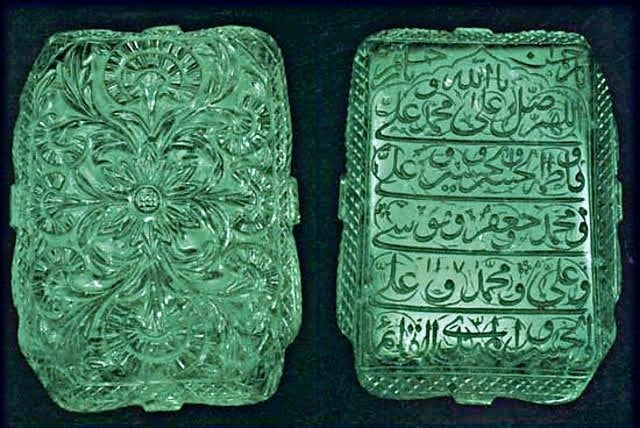
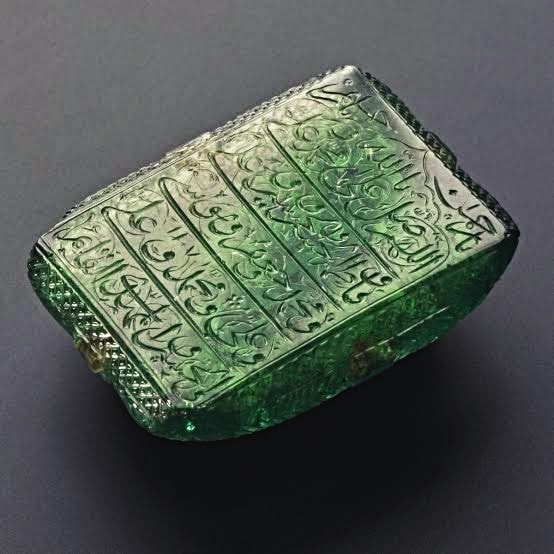
The largest engraved emerald gemstone in the world – The Mogul Mughal Emerald, weighing 217.80 carats.

This emerald tablet dates back to the year 1695. It belonged to the Mughal Emperor Aurangzeb who reigned between 1658-1707 and is adorned with the names of the Fourteen Infallible Guides: the Prophet Muhammad, Fatima al-Zahra and the Twelve Imams of Ahl al-Bayt ending with “wal-Mahdi al-Qaim.”

The gem is on display as part of the Al Thani Collection at the Museum of Islamic Art, Doha, Qatar, after it was acquired from Christie’s for $2.2 Million USD.

Emperor Aurangzeb’s 217.80 carat Shia amulet is world’s largest engraved emerald

The translation of the inscription reads: ‘O Merciful One, O Compassionate One, O God. God bless Muhammad and ‘Ali and Fatima and al-Husayn, and al-Hasan and ‘Ali, and Muhammad and Ja’far, and Musa and ‘Ali, and Muhammad and ‘Ali and al-Hasan and the Steadfast [al-Qaim] al-Mahdi.

source: http://www.therahnuma.com / The Rahnuma Daily / Home / August 19th, 2021

Editor of Rahnuma-e-Deccan Syed Viqar Uddin passes away

Hyderabad, TELANGANA :

He was the Chairman of Indo Arab League and tirelessly worked for the Palestinian cause

pix: therahnuma.com

Hyderabad:

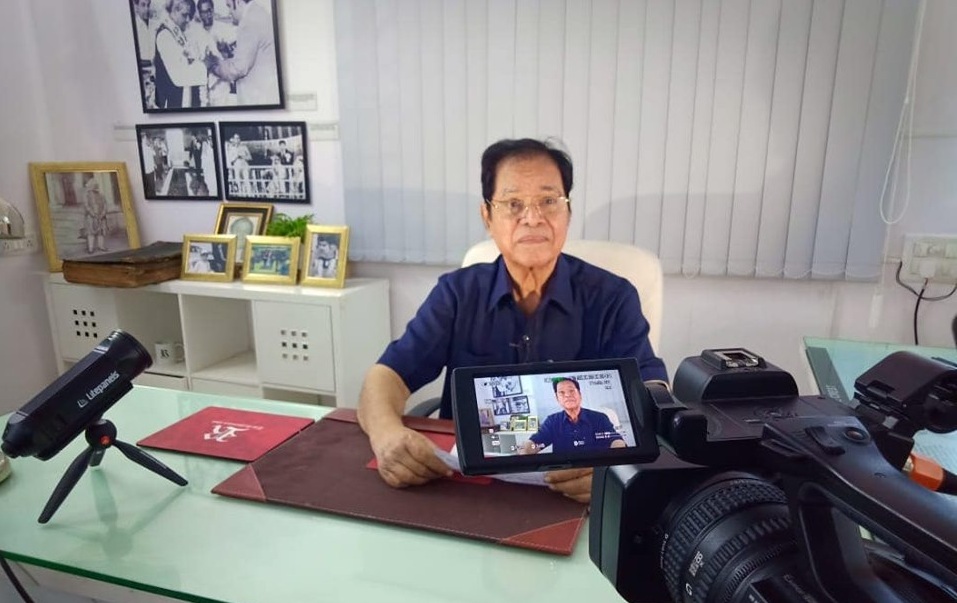
The Editor of Urdu Daily Rahnuma-e-Deccan Syed Viqar Uddin Qadri passed away on Thursday night after a prolonged illness. He was 82 years old.

For a few months, Qadri was under treatment in a private hospital. Yesterday, after Maghrib he suffered a massive cardiac arrest and passed away at 11:30 p.m.

Qadri was the Chairman of the Indo-Arab League and tirelessly worked for the Palestinian cause. He was a reputed journalist with integrity and was very popular among his friends, peers, and relatives.

He had close personal relations with the former Iraq President Saddam Hussein, the ex Palestinian Authority President Yasser Arafat, and the current Palestinian Authority President Mohammad Abbas.

He organized many meetings under the banner of Indo Arab League which were attended by the Palestinian President Yasser Arafat and Indian Prime Minister Indira Gandhi and other prominent world personalities.

Qadri was awarded the “Star of Jerusalem” the highest Palestinian civil award. He was the first and only Indian to receive this award.

He was also awarded the highest civilian award “Sahibul Jllallah” by Morocco King Mohammed IV. His older brother Syed Lateefuddin played a key role in uniting different Muslim groups in Hyderabad. Lateefuddin had passed away in the 1970s.

Qadri was also close to the ex AP Chief Minister N T Rama Rao and has served as Chairman of the Minority Financial Corporation. He is survived by his two sisters.

His funeral prayer will be held in Mecca Masjid after the Friday prayer. His body will be put to rest in his ancestral graveyard at Hazrat Musa Qadri Dargah at Purana pul.

source: http://www.siasat.com / The Siasat Daily / Home> News> Hyderabad / by Mohammed Hussain Ahmed / December 10th, 2021

Maulana Hameed Azhari: A Crusader has left for his heavenly abode

MAHARASHTRA :

Barely two weeks before his death, Maulana Azhari went to Kasganj to meet the family members of Altaf, who was found dead in police custody

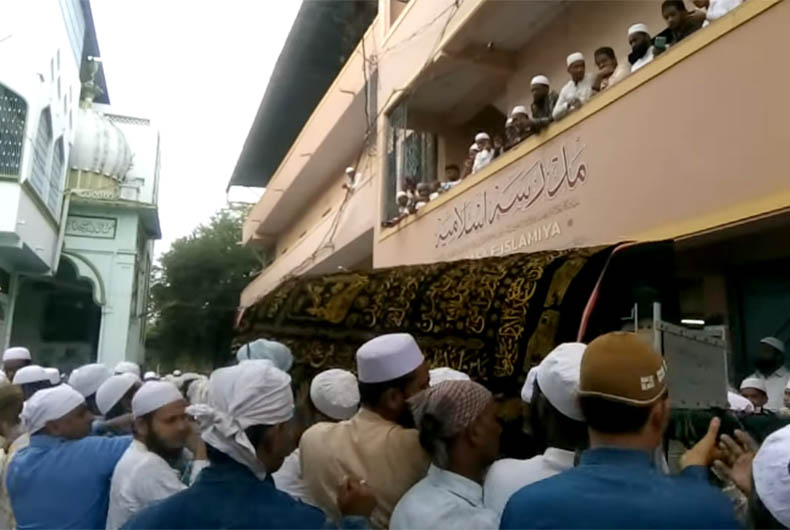
Maulana Abdul Hameed Azahri Funeral / Maulana Abdul Hameed Azhari’s Janaza taken to Bada Qabristan in Malegaon for the funeral and last rites. (ummid.com photo)

September 16, 2006, exactly a week and a day later, we were in a meeting with then Chief Minister of Maharashtra Vilasrao Deshmukh in Matralaya, Mumbai. The meeting was called at the behest of Abu Asim Azmi, then Rajya Sabha MP of Samajwadi Party (SP). Azmi had gathered about 25 Muslim MPs, including Maulana Mehmood Madani, Asaduddin Owaisi and others, along with the relatives and close family members of those arrested after the July 2006 Mumbai train blasts.

Abu Asim Azmi had sought from the Chief Minister a hearing to lodge complaint against the indiscriminate arrests of Muslim youth following July 2006 Mumbai train blasts. The case of September 08, 2006 Malegaon serial blasts at Bada Qabristan and Mushawerat Chowk was added in the agenda in the last minute.

Top police officials including Director General (DG) Police Maharashtra P.S. Pasricha, Mumbai Police Commissioner A.N. Roy and then ATS Chief K.P. Raghuvanshi were also there in attendance.

Family members of those thrown in jail following the Mumbai train blasts were sharing the heart wrenching stories of how their close kin were framed in the case and made accused for something they were not responsible of. It was then that a man in his sixties wearing white kurta and sporting Jinnah cap stood up.

“You have framed innocent Muslims in false cases. Now you want to repeat the same to cover up the Malegaon blasts case”, he said, his fingers pointing at the police officials.

He then turned towards Chief Minister Deshmukh and said, “We don’t trust your police. We have lost our near and dear ones in Malegaon blasts. Any attempt to cover up the case will be dealt with strongly.”

The Chief Minister, not accustomed to such plain speaking, watched in dismay.

The man who had upset the highest chair in the state was Maulana Abdul Hameed Azhari. Besides Maulana Azhari, I had seen only Maulana Mohammad Wali Rahmani (Sample here) talking to ministers and top officials in such a blunt, unapologetic and uncompromising tone.

My very first meeting with Maulana Hameed Azhari was when I went to Riyadh in 1994 to work as an Engineer at Saudi Carpet Factory. Maulana Hameed Azhari was in the Saudi capital since 1978. He served there at Information Centre of Saudi Ministry of Defence till his retirement in 2002 as Supervisor of the Centre.

“We used to work on monochrome computers provided on rent by IBM. Multi-tasking operating systems with GUI support were not yet available for the users. It was literally tiring to work on computers those days. No wonder if we were left completely exhausted after office hours.

“The Maulana however was a workaholic, and despite his hectic and tiring duty hours, would regularly engage with fellow Indians, especially those from Malegaon, listening their issues if any and helping them out in whatever way he could”, Sheikh Ahmed, who worked with him at the same centre in Riyadh, told ummid.com.

“His home in Riyadh was a centre for the expatriates to share their grievances, especially on Fridays when he used to serve lunch to the visitors. His wife was a good cook, and for the expatriates having home-made food in Riyadh was no less than a delight”, he said.

“Maulana Azhari was respected also by his seniors for his devotion to work. This is why he was honoured and conferred upon an award of appreciation and acknowledgement at the time of retirement”, Sheikh Ahmed recalled.

The post Maulana Azhari held was probably the highest by any Malegaonian abroad. Things have changed now a bit. But, getting rewarded for work in Saudi Arabia was rare during those days.

“Early days and Education”

Maulana Azhari was born in 1944. He was among the founding batch students of Madrasa Millat, established by Maulana Abdul Hameed Nomani – his mentor, guide and inspiration. After graduating from Madrasa Millat, Maulana Azhari went to Darul Uloom Deoband for further studies.


Later, he went to Al Azhar in Cairo, Egypt for higher studies. Maulana Hameed Azhari was one among the 05 students of Maharashtra who went to Al Azhar for higher education. Besides him, others were Maulana Nazir Azhari, Maulana Abdul Ahad Azhari and Maulana Mukhtar Azhari –a all from Malegaon. The 5th one was from Sholapur.

Back home from Al Azhar, Maulana Hameed Azhari joined Madrasa Millat, his alma mater, as a teacher. He spent few years here and then went to work at Saudi Embassy in New Delhi. It was because of this assignment that he got the posting at the Information Centre of Saudi Ministry of Defence in Riyadh where he worked till retirement.

During the same period, Maulana Azhari, with the help of some of his friends, worked towards establishing Kulliyah at Taherat – a madrasa for education of girl-students. The madrasa was administered by his younger sister, Gulshan Aapa, till her death.

“A Crusader”

Maulana Azhari was a great admirer of Maulana Abul Kalam Azad – one of the front leaders of India’s freedom movement and the country’s first Education Minister. Post retirement, Maulana Azahri established in his name “Maulana Abul Kalam Azad Research Centre” and devoted him for promotion of research and knowledge. He also undertook Arabic teaching classes and Duroos – sessions to study Quran at Rahmani Masjid, Nayapura on regular basis.

The Malegaon serial blasts on September 08, 2006 however “rekindled the activist” in him, and he led from the front the campaign for the acquittal of local Muslim youths who were wrongly framed in the case.

[Watch in this video Maulana Abdul Hameed Azhari criticising the functioning of ATS, Malegaon blasts, and also referring to his September 16, 2006 meeting with then Chief Minister Vilasrao Deshmukh in Mumbai.]

It was the time when no one, except the close kin of the accused, would dare to speak anything in favour of them. Maulana Azhari however started the campaign – initially with few of his close aides, later expanding it through the Kul Jamaati Tanzeem – an organisation represented by leaders of all Muslim sects.

The formation of Kul Jamaati Tanzeem was a big blow to the investigating agencies that were of the view that the bomb blasts in Malegaon were the result of sectarian differences between various Muslim groups.

During the course of about five-year long campaign, Maulana Azhari met everyone – right from UPA Chairperson Sonia Gandhi, Prime Minister Dr Manmohan Singh, Union Home Minister P Chidamabarm to CPI-M General Secretary Prakash Karat, Mulayam Singh Yadav, Lalu Prasad Yadav and others. This is besides frequently leading representations on a number of occasions to Maharashtra state leadership including Chief Minister Vilasrao Deshmukh and his successor Prithviraj Chavan. In all these meetings, the Maulana had only one point to raise. Local Muslim youths are innocent and there is a need for a thorough investigation into the 2006 Malegaon terrorist attack.

Slain ATS Chief Hemant Karkare had later confessed that it was because of this strong conviction that he decided to explore all possible angles while investigating the another terrorist attack that rocked Malegaon this time on September 29, 2008 at Bhikku Chowk. It is now a history how the motorcycle on which the bombs were planted led to the expose of the Hindutva terrorists who were involved in the terrorist attack not only in Malegaon but also in other places of the country.

The efforts taken by Maulana Azhari-led Kul Jamaati Tanzeem and others bore fruit when the Muslim accused were first granted bail in November 2011 and later discharged from the 2006 Malegaon blast case in April 2016.

“War against Coronavirus”

After the acquittal of Muslim youths in the 2006 Malegaon blasts case, Maulana Azhari kept alive the Kul Jamaati Tanzeem even though some people felt that the organisation was no more needed.

After the outbreak of the Covid-19 when unfortunately Malegaon became a victim at the initial stages of the Pandemic’s first wave and when whole of the city was turned into a prison, Maulana Azhari again rose to the occasion. Taking members of the Kul Jamaati Tanzeem along he met the Health Minister, District Collector and other officials of the civic body and health department to demand adequate facilities for those who were advised quarantine.

Maulana Azhari personally visited with few of his close aides the temporary quarantine centres and met the Covid-19 victims to solace them in the time of distress. This is perhaps why he too became infected with the deadly virus. Lucky as he always was, he won the battle against the Covid-19 but was forced to suspend his regular activities because of weakness and post-Covid complications.

Maulana Azhari resumed regular activities – this time at national level, after the first wave of Covid-19 ceded and his health condition improved. Expanding his activities, Maulana Azhari joined hands with Waman Meshram of BAMCEF and Maulana Khalilur Rahman Sajjad Nomani of All India Muslim Personal Law Board (AIMPLB).

While working with BAMCEF, Maulana was also nominated as the National President of Rashtriya Muslim Morcha. Through this platform Maulana Azhari travelled to far-away places of India and met Dalit and Muslim victims wherever they lived.

Barely two weeks before his death, Maulana Azhari went to Kasganj to meet the family members of Altaf, who was found dead in police custody. During the same period, Maulana Azhari visited a number of districts of Uttar Pradesh before attending the 27th session of the All India Muslim Personal Law Board (AIMPLB) held in Kanpur on November 20 and 21, 2021.

After his return from Uttar Pradesh tour, Maulana Azhari lost no time in meeting with the top police officials in the wake of indiscriminate arrests after November 12 Malegaon bandh and shutdown called to protest against the anti-Muslim carnage in Tripura .

“There should be a distinction between those involved in violence and the organisers who had called for the shutdown. Your tirade against the organisers is arbitrary and unconstitutional. It should be stopped”, he told Additional Superintendent of Police (ASP) Malegaon Chandrakant Khandvi in his signature blunt tone that had dismayed the Chief Minister Vilasrao Deshmukh back in 2006.

Two days later on December 04, 2021, Maulana Abdul Hameed Azhari, whose crusade and statesmanship helped in exposing the people involved in the war against Muslims in the name of fighting terrorism, left for his heavenly abode .

[The writer is Founder Editor of ummid.com and is privileged to work with Maulana Hameed Azhari.]

source: http://www.ummid.com / Ummid.com / Home> Obituary / by Aleem Faizee, ummid.com / December 07th, 2021

Winners Of National-Level Karate Championship

Mysuru, KARNATAKA :

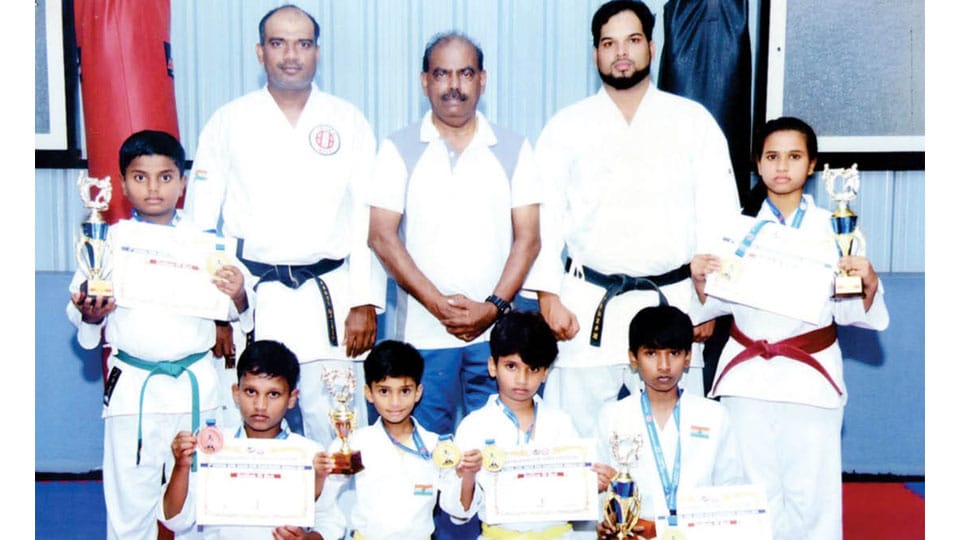
The Karatekas of IKA Karate Academy, Mysuru and Kali Warriors Academy, Karnataka, under Pekiti Tirsia Kali India in city, have bagged various prizes in the 3rd National-level Karate Championship organised by Shotokan Karate Do Sports Association and Sensei Durganada on Nov. 27 and Nov. 28 in Hubballi. 

Seen are (front row from Ieft) : Keerthan (Bronze medal in kata – 7 years), Abdul Malik (Gold in Kata and 2nd prize in Kumite – 8 years), Tharun Kumar (Gold in Kata – 9 years), M. Abhimaan (Gold in Kata – 11 years and 1st prize in Kumite);

(Standing from left): Mohammed Daniyal (Gold in Kata and 1st prize in Kumite – 11 years), Sensei Abdul Waseem (Senior Instructor of IKA), Kyoshi Sivdas (Chief Instructor of IMSKA and Representative of India), Mohamed Saqeeb Ur Rahman (Senior Instructor of IKA), Chayadevi (Silver in Kata and 1st prize in Kumite – 15 years).

source: http://www.starofmysore.com / Star of Mysore / Home> Gallery> Photo News / December 10th, 2021

Aalim Akhtar and Bilal Tanweer jointly awarded the Jawad Memorial Prize for Urdu-English translation

NEW DELHI :

The Jawad Memorial Prize for Urdu-English translation was instituted to honour the literary legacy of poet and scholar Ali Jawad Zaidi (1916-2004).

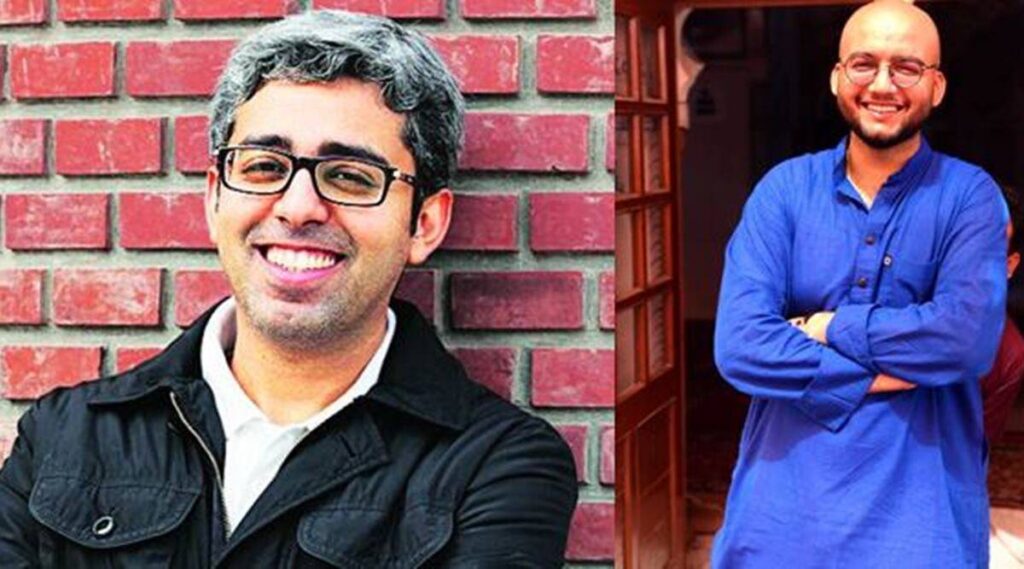
Bilal Tanweer (left) and Aalim Akhtar (right)

This year’s Jawad Memorial Prize for Urdu-English translation has been given jointly to Aalim Akhtar’s translation of Hari Bol, written by Zakia Mashhadi, and Bilal Tanweer’s translation of Parasite (Keera), written by Bilal Hasan Minto.

The Jawad Memorial Prize for Urdu-English translation was instituted to honour the literary legacy of poet and scholar Ali Jawad Zaidi (1916-2004). People from across the world can apply with an unpublished translation into English of an (already published) Urdu short story or essay. All submissions are judged blind.

While there are no runner-ups, the jury — comprising authors M Asaduddin and Aakar Patel — had commendations for two translations. Nazia Akhtar’s translation of Chhottam Jaan, written by Zeenath Sajida, and Fathima M’s translation of Shadows (Saaye), written by Khalid Jawed.

In its comments, the jury called Akhtar’s translation of Hari Bol “lucid and accessible”. It remarked that the language was direct and the translation was close to the original text. “Mashhadi’s Hari Bol depicts life lived at a most basic level. The story examines the complexity of human relationships with an unsentimental, even pitiless gaze,” the jury noted.

Tanweer’s translation of Parasite was applauded by the jury for drawing both major characters with great skill, panache, and a clinical eye for detail. “The translation is free-flowing, an elegant rendering from the original,” it said. The jury mentioned that Manto’s Parasite is an unusual and enjoyable story, bordering on surreal. “It draws its strength from the portrayal of characters, which include a tapeworm,” it added.

Akhtar is a PhD scholar at the Center for English Studies, Jawaharlal Nehru University (JNU), New Delhi. After pursuing a Bachelors’ degree at Delhi University’s Kirorimal College and a Masters’ degree at JNU, Akhtar has taught undergraduate students at JNU and at Zakir Hussain Delhi College, DU. As part of the translation studies course at his current centre, Aalim has translated over 25 micro-fictions by Manto, a play, Anarkali by Imtiaz Ali Taj, and some nazms by Jaun Elia. He has also reviewed Srikant Verma’s Relapse: A Novel, translated by Krishna Baldev Vaid, for The Book Review (Sept 2020).

Tanweer’s novel The Scatter Here Is Too Great won the Shakti Bhatt First Book Prize and was shortlisted for the DSC Prize for South Asian Literature, and the Chautauqua Prize (US). The novel was also translated into French (Editions Stock) and German (Carl Hanser Verlag). His translation of Muhammad Khalid Akhtar’s novel and stories, Love in Chakiwara and Other Misadventures, received the PEN Translation Fund Grant.

source: http://www.indianexpress.com / The Indian Express / Home> Books & Literature / by Aditya Vaddepalli / December 05th, 2021

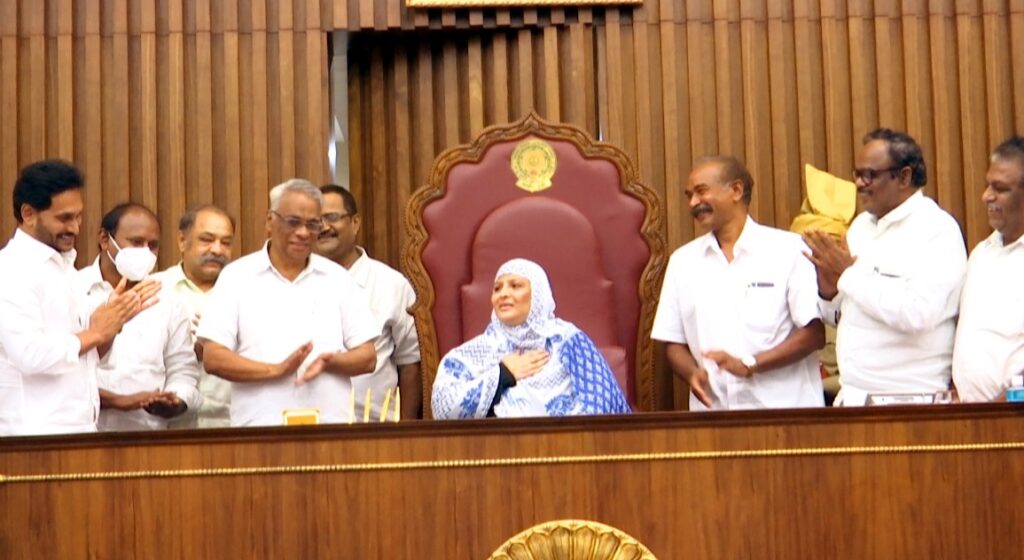
Zakia Khanam Elected Deputy Chairman, Another Milestone In AP

Rayachoti (Kadapa District), ANDHRA PRADESH :

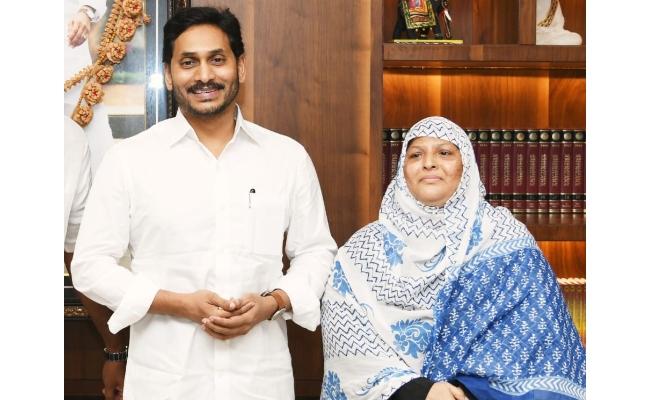
Andhra Pradesh Chief Minister YS Jagan Mohan Reddy congratulated YSRCP MLC Zakia Khanam and said that this is the first time in the Assembly to elect a minority woman as deputy chairman unanimously.

YS Jagan said that she should help and support women and added that this is another step towards women’s empowerment in the state.

Here is the tweet made by Jagan Mohan Reddy.

YS Jagan Mohan Reddy@ysjagan

మన రాష్ట్ర శాసనమండలి చరిత్రలోనే మొట్ట మొదటిసారి ఓ మైనారిటీ మహిళను డిప్యూటీ చైర్ పర్సన్ గా ఏకగ్రీవంగా ఎన్నుకోవడం సంతోషంగా ఉంది. సోదరి జకియా ఖానంకు అభినందనలు. అక్క, చెల్లెమ్మలకు అండగా నిలిచి, మహిళా సాధికారత దిశగా ఈ ప్రభుత్వం వేసిన మరో ముందడుగు ఇది.

Zakia Khanam took the charge as Deputy Chairperson of the Legislative Council on November 26.

She thanked YS Jagan for choosing her as the deputy chairperson of the Legislative Council. YS Jagan said that he was very happy to see Zakia Khanam as the deputy chairperson for the Legislative Council.

He said that the Andhra Pradesh government is working hard to empower women politically and financially.

source: http://www.english.sakshi.com / Sakshi Post / Home> Andhra Pradesh / November 28th, 2021

NRI businessman Yusuf Ali keeps promise, repays loan amount of poor family

KERALA / UAE :

Amina had taken a loan from the Keechery Service Co-Operative Bank for the wedding of their daughter by mortgaging their land and house.

The bank will return the documents for the land after changing it to Amina’s name at the earliest, officials said. (Photo| EPS)

Kochi :

Amina’s family will sleep peacefully at their home in Kanjiramattom, a suburb in Kochi, free from the fear of bank attachment, thanks to the large-heartedness of NRI businessman MA Yusuf Ali. 

She had been spending sleepless nights and had forgotten what it felt like to have a normal day due to a bank loan, which the family struggled to repay.  

Amina had taken a loan from the Keechery Service Co-Operative Bank for the wedding of their daughter by mortgaging their land and house. The land and house were under bank attachment due to the default in repayment. Her savings were used for the treatment of her husband, and there is no money left to pay the recovery amount. 

On Sunday, Amina rushed to Panangad to meet Yusuf Ali, who had come to the village to visit Rajesh and his family, who rescued the Lulu group chairman after his helicopter crash-landed early this year. As soon as Yusuf Ali heard about Amina’s distress, he instructed his coworkers to deposit the money and pay off her loan amount at the earliest.

Amina never thought that her problems would be solved quickly when she expressed her grief over the threat of losing her home to the bank to Yusuf Ali. Amina’s husband Syed Mohammad is suffering from cancer. 

On Monday, Amina and her husband were informed that someone had come to visit them. Both of them rushed to the place and were clueless about the visitors. They asked the visitors who they were and the purpose of their visit. 

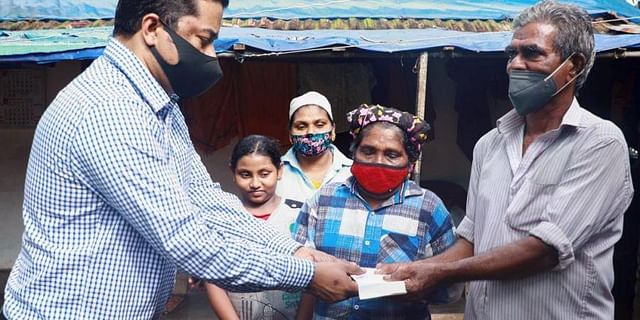
The visitors were the employees of Lulu Group. Though Amina didn’t understand who they were initially, the employees of Lulu told them that they had paid off the loan amount of Rs 3,81,160 that the couple owed to the bank. Amina and her husband were beyond belief when the media coordinator of Lulu Group NB Swaraj, handed over the receipt of the repayment of loan and interest to Amina. He also handed over a sum of Rs 50,000, including medical expenses, to the couple for treatment expenses on Yusuf Ali’s instructions. 

The loan amount of Rs 2,14,242, and a total of Rs 3,81,160 including interest and penalty interest, was deposited by Yusuf Ali in the bank. The bank will return the documents for the land after changing it to Amina’s name at the earliest, officials said.

source: http://www.newindianexpress.com / The New Indian Express / Home> Good News / by Express News Service / December 07th, 2021