All posts by mpositiveone@gmail.com

What’s common between Anil Kumble and Ajaz Patel? The Perfect 10 and cameraman Taqi Raza

NEW DELHI :

From being in the company of snake charmers at Kotla in 1999 to capturing history once again at Wankhede Stadium.
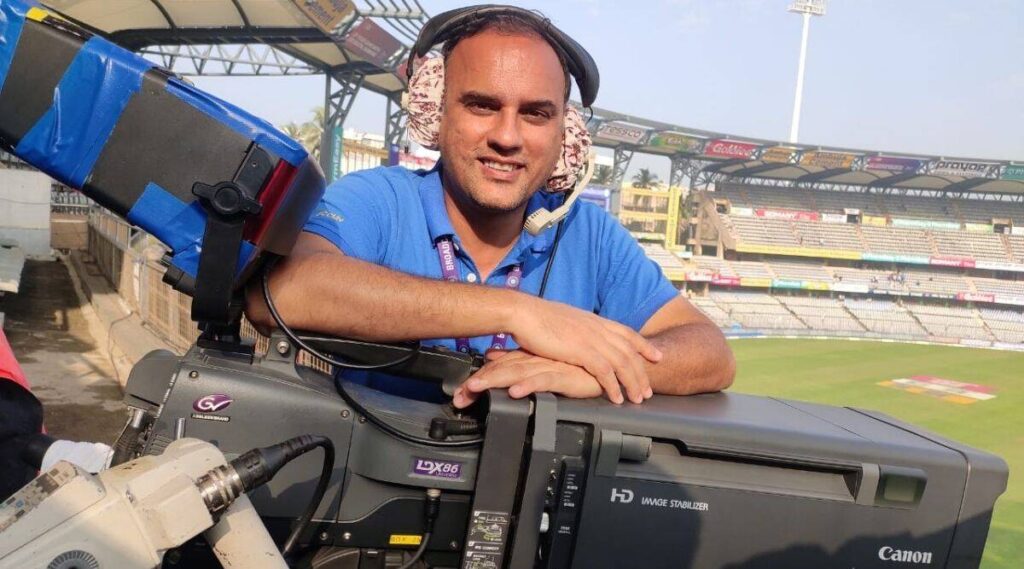
Taqi Raza has the unique distinction of being the camera person for Anil Kumble’s 10-for, as well as Ajaz Patel’s at Wankhede (Express Photo)

When Ajaz Patel twirled around in nervous excitement as the ball started to descend towards Rachin Ravindra, Taqi Raza cleansed himself of emotions and watched from the Grand stand at Wankhede stadium. He would give millions watching the game on television a peep into the mysterious art of a spinner with his spin-cam, the mechanical eye that reveals the ripping release and the revolutions of the ball across the 22 yards in slow-motion.

Now he held his breath and waited. Ravindra, who would later say how his peripheral vision had made him nervous as it had revealed his team-mates were already celebrating the historical moment, managed to safely pouch it. The crowd erupted, the commentators lost their heads, living rooms in New Zealand and even in India filled with joy but Raza struggled hard to check his emotions spinning out of control.

“Sadly I can’t show my emotions because if I express then I can’t concentrate and the world cannot see what is happening inside the stadium,” Raza told The Indian Express . The eye of the world can’t go blind in joy even on a moment that has only occurred thrice in the 144 years of cricket history. A tiny shake of a camera would deprive the viewers. Raza is a ‘slip’ cameraperson, beaming home the fingers of the bowler on the ball at release.

As rare as the epochal moment was, Raza has been there, done that. He had captured the incredible ten-for twice. He was there at Feroz Shah Kotla in 1999 when Anil Kumble snared 10 Pakistani batsmen.

In the company of a snake charmer. But we are getting ahead of the story. Here and now to Ajaz’s and his own tryst with destiny.

__________

Express Sports@IExpressSports

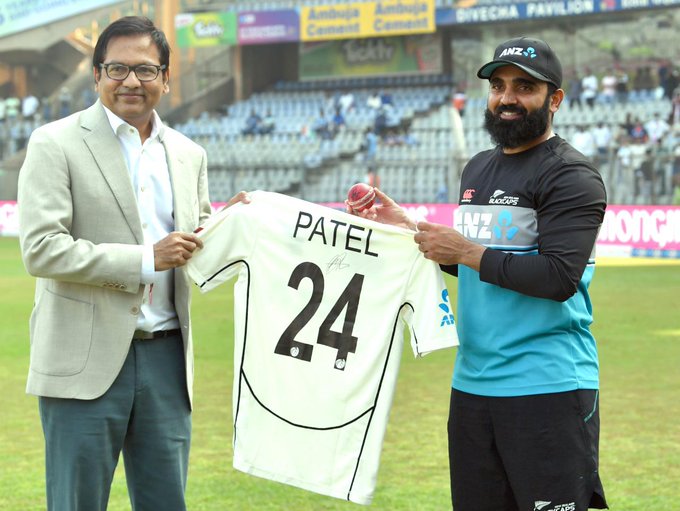
MCA President Dr Vijay Patil felicitated Ajaz Patel with #INDvNZ score sheet and momento. Ajaz handed over the ball and tshirt for the upcoming MCA museum
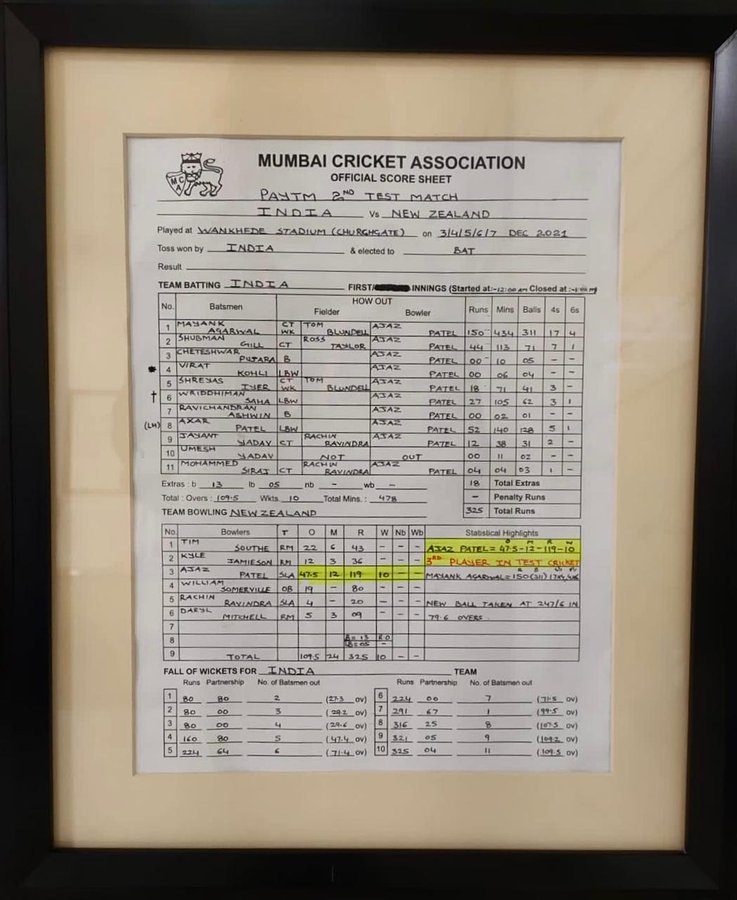
_______12:42 PM · Dec 6, 2021·TweetDeck________

____________________________

Express Sports@IExpressSports·

Replying to @IExpressSports

Ajaz Patel bagged 14 of the 17 Indian wickets to fall in the Mumbai Test He had picked up all 10 wickets in the 1st innings of the 2nd #INDvNZ Test
___________________

7, 8, 9, 10 countdown

Well before the historic moment, Raza had begun the countdown in his mind. 7 down, 8 down, hoping for a historical reprise. “When eight wickets fell down, I asked myself will I have a chance to see history again? I’m the only one in the camera crew who has recorded this achievement before while everyone has retired,” he says. “As a cameraman we don’t have liberty to talk to anyone. Our job demands lots of concentration.” So the internal monologue continued. “When Ajaz took ten wickets, I was overjoyed.”

22 years back, he had witnessed another ball travelling across 22 yards towards history. That memory rebooted now. It was a turbulent time. The political party Shiv Sena had warned of dire consequences if Pakistan were allowed to play at home in India. Uncertainty, tension, fear was in the Delhi air. Raza recalls how the Delhi police had locked all the gates of the stadium to prevent the protestors.

However, the Delhi police also feared the humans might outsource the vandalism to reptiles.

“There was fear that protesters could send snakes inside the ground, so I remember the authorities had kept a snake charmer near the boundary line, incase snake entered the playing area, they could catch it.”

In the end, the only spitting venom that stung the Pakistanis in Delhi winter was released by Kumble. Ajaz’s date with history was captured by 35 cameras. Kumble had got eight. One of which was in the hands of Raza. “Just 8. Now we have around 75 units compared to 30 earlier. There was no technology earlier,” Raza says.

Five years before Kumble had Wasim Akram poking to VVS Laxman for his glorious moment under the smoggy sun, Raza began his job as a technician. He has travelled the world since then, covered all cricket World Cups, including India’s triumph in 2011, trained his camera at Tiger Woods at golf courses, spent time capturing blurs at Formula 1 races, beamed Pro-Kabbadi to homes, and spent his life in various sporting arenas.

He has evolved; so has the broadcasting technology. “In 1999 there was no DRS and Ultra Edge, too much relied on human judgement but now with these tools, bowlers have more chances which wasn’t the case earlier.”

It’s a no-brainer choosing between Kumble and Ajaz’s achievements but the question is asked nevertheless. The answer comes quicker. “For me Kumble’s performance will always be on a higher plane. First it came against Pakistan and the team won because of him. Kumble was under more pressure because he was playing at home. I’m not taking away credit from Ajaz but Kumble was more special for me,” Raza says.

Anil Kumble 10 wickets record against Pakistan

Tough job

The job of the human behind the camera is one of the most difficult ones in the circuit. The pre-game rigging and testing of equipment and the match-day fatigue. Nature might yell, leave alone call, but they can’t abandon their post.

Raza chuckles at a memory from the 2019 World Cup in England. The body screamed for a release at the toilet, but he had to resist. “I somehow controlled and waited.”

Good he did as he could catch priceless moments of the World Cup . “I saw how Virat Kohli was consistently looking to his left side. First I felt there might be some family members seated there but between breaks, Kohli ran towards the stands and told the crowd not to boo Steve Smith, who had come after being banned by Cricket Australia after the ball tampering saga.” Eagle eyed, as ever, Raza didn’t miss the moment.

“I was the only cameraman who got that shot, it showed the other side of Kohli,” he says.
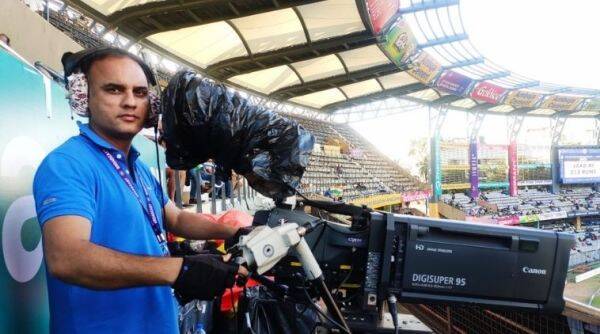
Taqi Raza (Express Photo)

More often than not, it’s a lonely job in some ways though in some stadiums, they aren’t left on their own. “In Multan stadium in Pakistan, Virender Sehwag used to come to our area, which was near the dressing room, and chat up,” Raza says. The new stadiums with segregated spaces don’t allow for that coziness. They are isolated in their corners. They do what the producer tells them to do. They stand for hours under baking sun or chilly winter to get us as close to the action. They stand there, in a cocoon, trying to drag us into the heat of the battle.

Jim Laker, 1956. Anil Kumble, 1999. Ajaz Patel, 2021. And one man with an umbilical cord to two of them – Taqi Raza. Remember the name.

source: http://www.indianexpress.com / The Indian Express / Home> Sports> Cricket / by Devendra Pandey, Mumbai / December 07th, 2021
Prestige Group Co-Founder Rezwan Razack Conferred With Honorary Doctorate By GD Goenka University

Bengaluru, KARNATAKA :

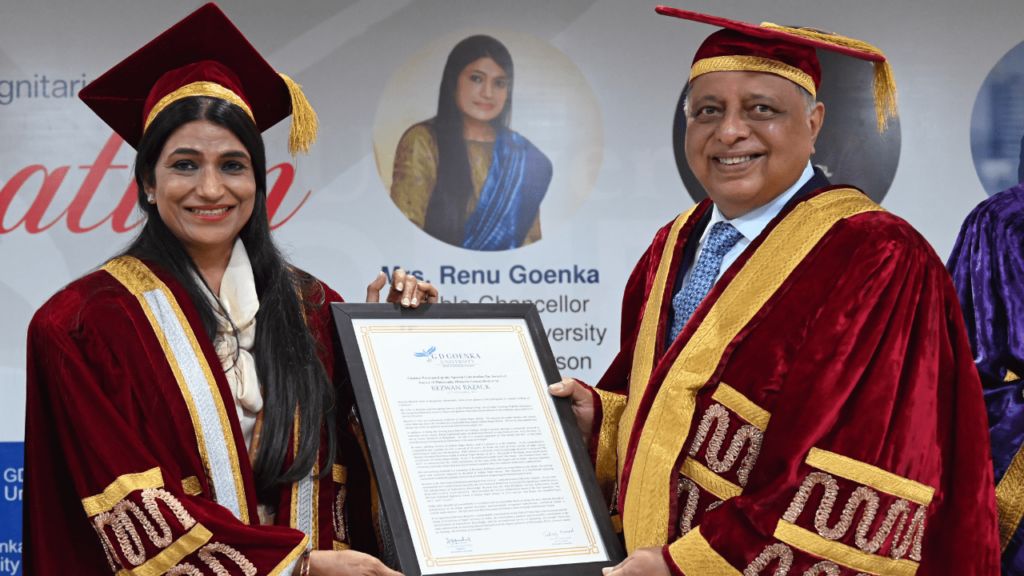
Numismatists and real estate mogul Rezwan Razack was conferred an honorary doctorate on Tuesday by GD Goenka University.

The honorary doctorate was conferred on him during a special convocation attended by Chancellor of the GD Goenka University Renu Goenka, Pro-Chancellor Nipun Goenka, Vice-Chancellor Prof. Dr Tabrez Ahmad, Chairman of M3M group Basant Bansal, and Registrar of the university Dr Dhirendra Singh Parihar. Prof. Dr Tabrez Ahmad, Vice-Chancellor of the GD Goenka University, praised Razack for his contribution to numismatic studies and research.

Rezwan Razack is Co-Founder and Joint MD of Bangalore-based Prestige Group and is hailed as the largest collector of Indian currency. He is also the founder of South India’s first currency museum in Bengaluru, one of the largest and most authentic collections of Indian paper money and coins. He is co-author of the Revised Standard Reference Guide to Indian Paper Money.

After receiving the honorary doctorate from the GD Goenka University Razack said it was an honour for him. A graduate of prestigious St. Joseph College Razack is also the current chairman of the International Bank Notes Society-India Banknote Collectors’ Chapter.

source: http://www.thecognate.com / The Cognate / Home> Business / by The Cognate News Desk / November 25th, 2021

South Africa mourns death of Indian-origin anti-apartheid veteran Ebrahim Ebrahim

Johannesburg, SOUTH AFRICA :

Ebrahim served time on Robben Island as a political prisoner alongside Mandela, Kathrada and others.

Ebrahim Ismail Ebrahim (Twitter Yeni Ozgur Politika)

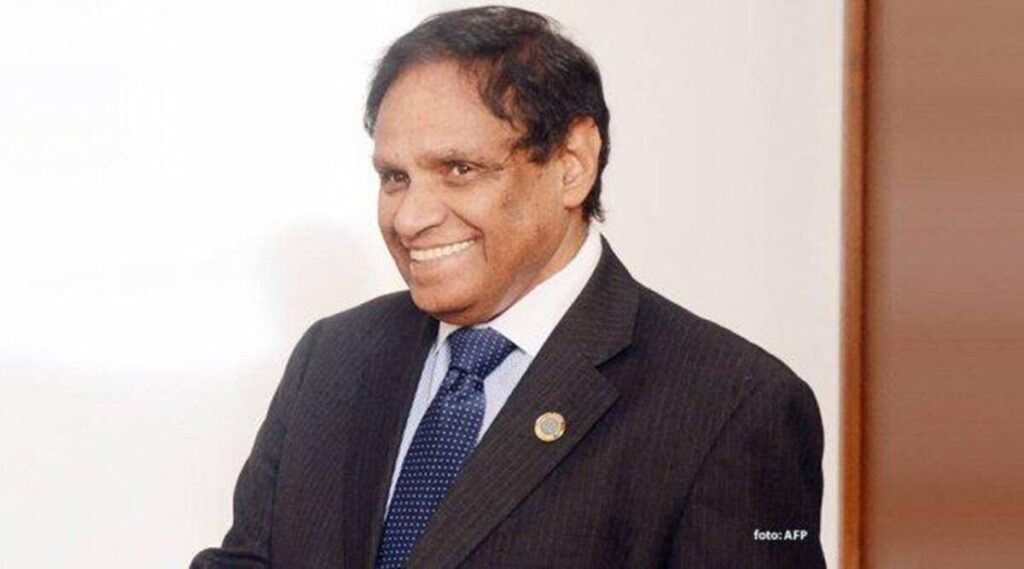
Ebrahim Ismail Ebrahim, an Indian-origin anti-apartheid icon who spent years imprisoned on Robben Island alongside  Nelson Mandela and Ahmed Kathrada, has died. He was 84, South Africa’s ruling party African National Congress (ANC) has announced.

Ebrahim died after a long illness at his home here on Monday, the party said in a statement on Monday.

“The ANC learnt with deep sadness of the passing of Ebrahim Ismail Ebrahim. We offer our heartfelt condolences to his wife and children, as well as their extended family, friends and comrades,” it said in the statement shared on Twitter.

“Comrade Ebi, as he was affectionately known, was a longstanding member of the ANC, a patriot who served his country in different capacities with humility, dedication and distinction,” the party said.

Ebrahim served time on Robben Island as a political prisoner alongside Mandela, Kathrada and others. After his father was arrested twice for defying laws that restricted the movement of Indians in South Africa, he joined the liberation struggle at the age of 13.

He often stated how he had been inspired by the Satyagraha style of Mahatma Gandhi, which he used in his passionate representation of the ANC in global conflict situations in Sri Lanka, Palestine, Rwanda, Kosovo, Bolivia and Nepal.

Ebrahim was arrested in 1963 and imprisoned on Robben Island, where he shared a cell with former president Jacob Zuma, whose role in state capture and corruption he later decried.

After his release, Ebrahim went into exile to continue his work with the ANC, but was abducted by apartheid-era security police from neighbouring Swaziland, tortured and sentenced to a second term on Robben Island.

He obtained two university degrees while on Robben Island.

After the release of all political prisoners and the election of Mandela as South Africa’s first democratic president, Ebrahim served in various capacities, including as Deputy Minister of Foreign Affairs and Parliamentary Counsellor to Mandela.

Sharing their condolences, the human rights organisation #Africa4Palestine acknowledged the role Ebrahim played in the ANC resolution for the immediate and unconditional downgrade of the South African Embassy in Israel to a Liaison Office in 2017.

The Congress of Business and Economics, an offshoot of the erstwhile Transvaal Indian Congress, honoured Ebrahim with a Lifetime Achievement Award in 2018.

“Comrade Ebie, as he was fondly known, recalled at the time how he had spent half of his adult life in prison but that he would do it all over again if he had to because of his firm belief in struggling for peace, justice and the end of the scourge of apartheid and racism across the world,” said CBE Executive Director Yusuf Moosajee.

“In all my interactions with Ebie, both locally and abroad, he was always passionate about South Africa and its role in world politics,” said internationally-renowned filmmaker Anant Singh in a tribute.

source: http://www.indianexpress.com / The Indian Express / Home> World / by PTI, Johannesburg / December 07th, 2021

Mysore Amity Round Table-156 Donates Critical Equipment To MMA Hospital

Mysuru, KARNATAKA :

Mysore/Mysuru: 

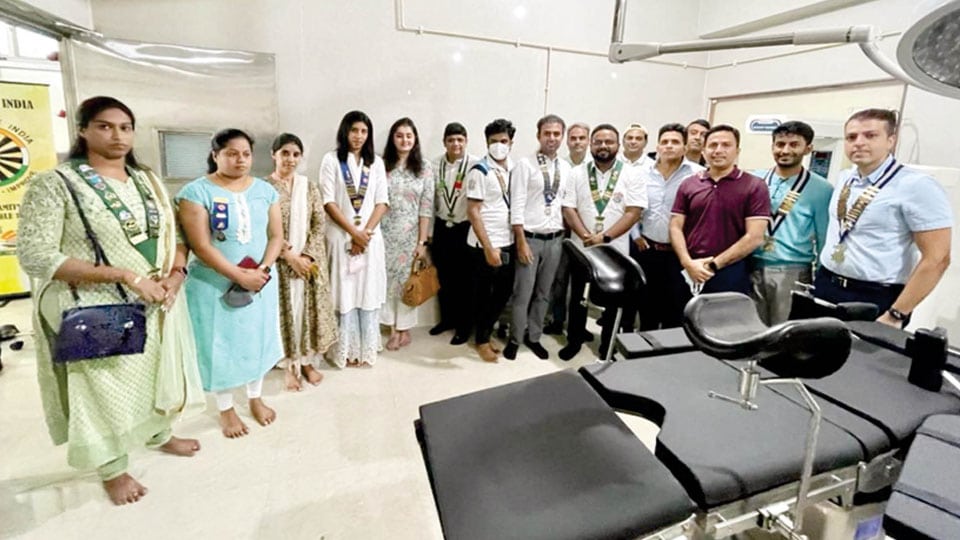
Mysore Amity Round Table-156, in association with Pyramid Timber Pvt. Ltd., Round Table Luxemburg and Mysore Amity Ladies Circle-108 donated critical Operation Theatre equipment to MMA Hospital in Rajivnagar, Mysuru.

RTI Area 13 Chairman T.R. Vinay inaugurated the event in the presence of Area 13 Vice- Chairman H.H. Ram,  MART-156 Chairman Hussain Vagh, MALC- 108 Chairperson Swathi Vagh, Area 13 Chairperson Sapna Kushal, floor tablers, President of MMA Hospital Khadeer   Ahmed and Secretary Khaleem Ahmed.

MMA Hospital is run by a non-profit Charitable Trust and has 30 beds. The hospital had a need of critical equipment in their operation theatre and Mysore Amity Round Table-156 was able to support by providing OT table, OT light and anaesthesia machine, worth a total of Rs. 5 lakh to meet the needs of the hospital.

Speaking on the occasion, Hussain Vagh, said “Good quality equipment is critical at hospitals. We at Mysore Amity Round Table-156 raise funds to be given where there is a need.”

Over the past 15 years, Mysore Amity Round Table- 156 has constructed over 30 classrooms and 20 toilet blocks at Government-aided schools. Further, several medical treatments for  patients and equipment and consumables to hospitals have been provided through various initiatives.

source: http://www.starofmysore.com / Star of Mysore / Home> News / November 27th, 2021

Kerala: 25-year-old to be second woman in state to drive tanker lorries transporting petroleum products

Kilivalankunnu (Nagalassery Panchayat), KERALA :

Barkath, who has already secured a hazardous driving license, is currently waiting for the clearance of a pass from the Chalissery police station.

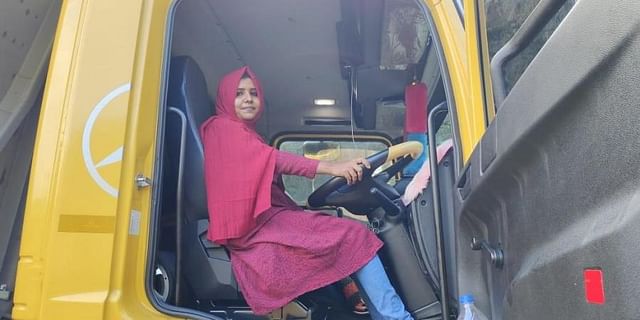
Barkath Nisha in a Taurus lorry

Palakkad :

Outdated gender roles notwithstanding, it was her passion for motor vehicles that propelled 25-year-old Barkath Nisha to lay her hands on the steering wheels of heavy vehicles. Soon, she will be only the second woman in Kerala to drive around tanker lorries transporting petroleum products, following in the footsteps of Thrissur Kandassankadavu native Delisha Davis.

Barkath, who has already secured a hazardous driving license, is currently waiting for the clearance of a pass from the Chalissery police station.

“I have to send this pass to an OMC (oil marketing company) in Kochi to get permission to load and transport petroleum products,” said Barkath, who hails from Kilivalankunnu of Nagalassery panchayat.

“I began riding my elder brother’s motorcycle at the age of 14. Even when I was a kid, I would randomly put the vehicle on the stand and try to kickstart it. I never let go of an opportunity to drive, be it a bike, autorickshaw, car or lorry. Finally, on November 10 this year, my younger brother Nishad and I secured the license to transport hazardous materials after completing our training in Ernakulam,” she told TNIE.

Currently, Barkath drives Taurus lorries for short distances along with Nishad. “But my aim is to drive tanker lorries. With the help of an official at the OMC, I will soon be a regular on the national highway,” said a confident Barkath.

The 25-year-old’s father, the late Abdul Hameed, was a daily wager. After his demise, her mother Hafzath struggled a lot to raise their four children, said Barkath, who is the couple’s third child.

“It was with the assistance of the local panchayat that we built a house for Rs 35,000. My mother, Nishad, and my five-year-old daughter, Aysha Nassar, stay with me there. My elder brother and sister are now married and living separately,” she said.

As expected, Barkath had to initially face resistance from her family against pursuing driving as a profession.

“We are a conservative household, but I was able to win them over gradually,” said Barkath, who has separated from her husband.

“Now my mother takes care of my child when I go out for duty,” she said.

There were many people who helped Barkath on the way to realizing her dreams.

“It was Ashraf, the owner of Myna constructions, and driver Randheep who handed me a Taurus for the first time. Shaji of Lallalam Travels also trusted me with his vehicles. Similarly, understanding my difficulty to make ends meet, Calicut Driving School proprietor Dhananjayan and Ever Safe Training Centre’s Nandagopal gave me huge discounts. I will always be indebted to these people,” she added.

source: http://www.newindianexpress.com / The New Indian Express / Home> Good News / by A Satish, Express News Service / December 05th, 2021

Kolkata : Women entrepreneurs showcase their business models at Minorities Business Summit

Kolkata, WEST BENGAL :

Kolkata:

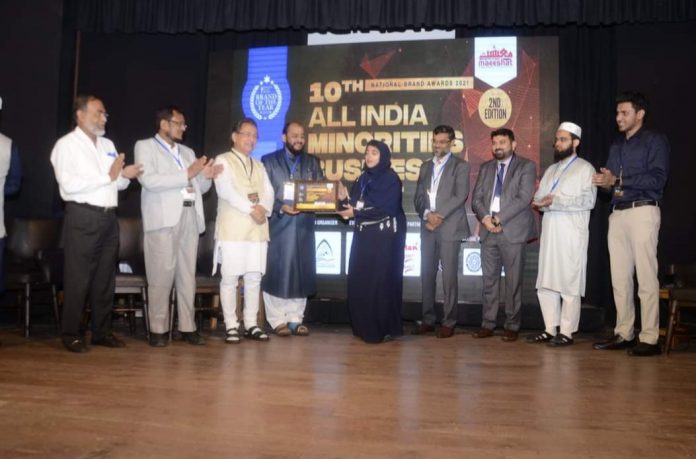
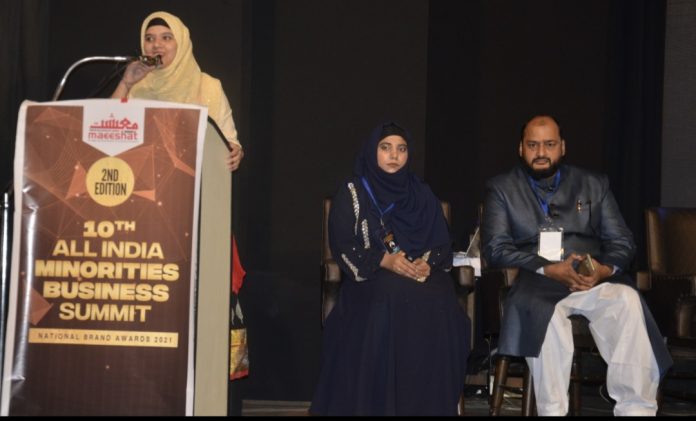
The 10th All India Minorities Business Summit and National Brand Awards for 2021, an initiative from Mumbai-based Maeeshat Media  was organised at Kala Mandir, Kolkata and attended by hundreds of business leaders, delegates, entrepreneurs, social workers from across the country.

The summit provided a great opportunity for the participants from minority communities to come together on one platform to exchange their ideas, opinions, and strategies to drive up business activities both at the personal and community level.

As many as 15 women entrepreneurs working in different fields marked their presence at the event and got the opportunity to showcase their business models to a larger audience in a special segment called “Women Entrepreneurs Showcase 2021.”

Several issues afflicting women entrepreneurship came to the fore due to talks given by women attendees. The biggest obstacle for them is society’s attitude of discounting women’s ability to work beyond the household chores, let alone set up a business.

According to them, people fail to understand that if they are allowed to lead aspirational lives within the boundaries of Islamic laws, not only a family but also the community will benefit at large.

They stressed that with the world changing at a startling pace, minority communities must loosen the shackles on women, letting them pursue their entrepreneurial goals in a more free and welcoming environment.

“During the last two decades, women’s entrepreneurship has been recognized as a vital source of economic growth. Today women have made their existence felt in society by occupying prominent positions in the economy,” Sania Sami, Research Scholar, IISWBM and founder of Indian Institute of Research said.

All the entrepreneur women were high on praise for Maeeshat’s initiative to bring them together and recognise their entrepreneurial skills and hard work.

Maeeshat Media’s Director and group Editor expressed his gratitude and satisfaction over women entrepreneurs gracing the momentous occasion.

He said Maeeshat is committed to connecting minority women entrepreneurs across the country, showcasing their skills, and giving them expert advice so that they are enabled to leap forward in their businesses.

Such summits are annually organised by Maeeshat Media since 2010. This year’s event gave special focus on ensuring the participation of women entrepreneurs.

Here is the list of women entrepreneur attendees at 10th All India Business Summit 2021, Kolkata:

Name                            Entrepreneurial Business/Venture

Shumaila Khalid               Juwi’s Elegant Fashion, Kolkata

Aalima Rahman                Little Stars School, Kolkata

Nageena Eram                 Eram’s Academy, Kolkata

Zareen Khan      ALINA SCOOTY TRAINING CENTER, Kolkata

Saba Hamid        AKASH PAINTS & CHEMICAL WORKS, Kolkata

Afrin Golam       She Fitness Ladies Gym, Kolkata

Arshia Ahmed   Arshia’s Kitchen, Kolkata

Tanzeem Rahman            Adn Interiors–feel the garden of Eden, Kolkata

Saima Bakhtiyar/Anjum Wasim Al Nikah Matrimonial, Kolkata

Jahan Ara            Interiors Designer, Kolkata

Saiqa Azam         Sabia’s Creation, Kolkata

Sabina Yasmin   Velvet Touch, A Boutique of Choice

Miss Tasmiya Ansari       Anees Defence Institute, Pune

Mrs Sania Sami Indian Institute of Research, Kolkata

source: http://www.mulimmirror.com / Muslim Mirror / Home> Economy / by Muslim Mirror Staff / November 24th, 2021

Masters of the Musnud

BENGAL :

The story of what used to be Bengal’s highest seat of power and of some who braved the ascent

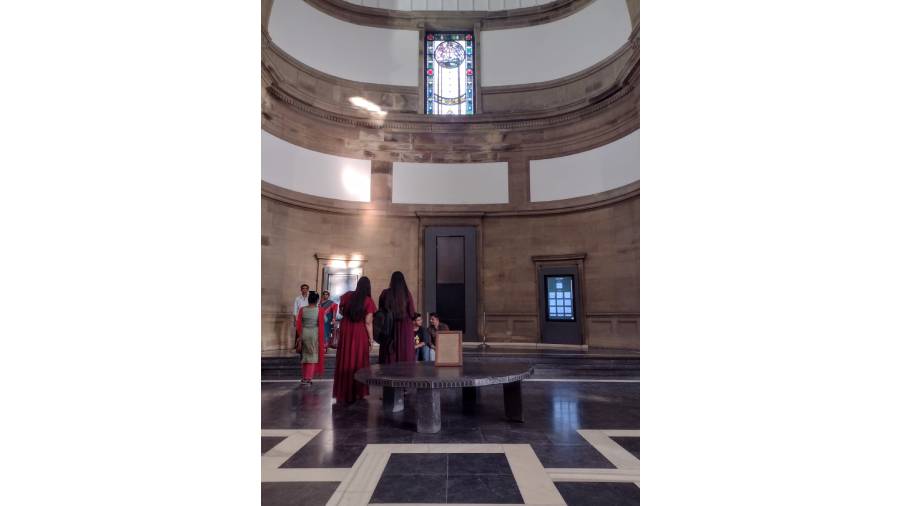
SOVEREIGN STONE : The throne of the Subedars of Bengal (in the foreground) at Victoria Memorial Hall in Calcutta / Paromita Sen

In the circular throne room of Hazarduari, or the palace of a thousand doors, in Murshidabad sits a solid silver chair on a marble platform whose fretwork shows signs of having once been gilded. That intricately carved chair, shaded by an intricately worked silver umbrella, used to be the seat of the nawabs of Bengal.

The maroon velvet cushioned throne, no bigger than a dining chair, might make one wonder how comfortable Siraj ud-Daulah would have been seated on it — after all, it is believed he was nearly seven-feet tall. It most definitely could not have been shared by two as was the black stone throne of Bengal.

In 1766, Robert Clive shared the black stone throne with Najm ud Dowla, second son of Mir Jafar. The East India Company had been granted the dewani of Subah Bangla by the then Mughal emperor. “Clive, as a representative of the company, sat on the throne because he had the right to collect revenue, while the Nawab had the right to dispense justice,” explains Santanu Biswas, amateur historian and Murshidabad resident.   

Should you wonder into the Durbar Hall of Calcutta’s Victoria Memorial, you will find a low black table. You might be tempted to put your feet up on it — it is that inconspicuous. But that is it — the erstwhile musnud or throne of Subah Bangla. The throne that was once Shah Shuja’s, son of Shah Jahan; Murshid Quli Khan’s, after whom Murshidabad is named; Alivardi Khan’s, who stopped the Bargi attacks; Siraj ud-Daulah’s, the last independent Nawab of Bengal; the infamous Mir Jafar’s and Clive’s.

The throne is not round but 16-sided; each facet has a simple design inscribed and one of them bears a Persian inscription that declares it was made by “humblest of slaves, Khwajah Nazar of Bokhara” in Munger, Bihar, on November 11, 1641.

How did someone from Bukhara in Uzbekistan end up in Munger? Says Jayanta Sengupta, secretary and curator of Victoria Memorial Hall, “The Mughals were originally from that region. A lot of people came with them. Some kept the place of their origin as part of their name even after having lived in India for generations. It had prestige value.” So, Nazar may never have seen Bukhara. 

Back to the musnud. The 18-inch-high platform, six-feet in diameter and sitting on four fat legs, is carved from a single block of black slate from the Kharkpur or Kharagpur Hills. A framed write-up at the memorial states that the throne must have belonged to Sultan Shuja and had originally been kept at Rajmahal (in what is now Jharkhand) before being moved to Dhaka and then Murshidabad (by Murshid Quli Khan) as the capital of Subah Bangla changed. 

In Murshidabad too, the throne often changed residence. Mir Jafar, for instance, was enthroned in his palace in Mansurganj, on the western bank of the Bhagirathi, while Clive was enthroned in Motijheel Palace on the eastern bank. It seemed to be the practice for the throne to be moved to wherever the Nawab resided.

The throne is an austere structure. “In India it was always a takht or platform,” says Urvi Mukhopadhyay, associate professor at West Bengal State University. The chair-like throne is a European concept and came later. According to Mukhopadhyay, who is a medieval history expert, the king would always kneel on the throne as it was rude to display his feet.

The throne itself was not made of valuable material, its value derived from the post of the man who sat on it. Says Mukhopadhyay, “It was usually made of stone. You can still see Shah Jahan’s marble throne at the Red Fort, though guides are likely to tell you that it is a platform on which the throne was placed.” There was also a beautifully-embroidered chandoya or canopy over the throne and a richly embroidered screen behind it. The musnud of Murshidabad had four holes in four corners through which the poles that held the canopy were set.

The only readily-available photograph of the black stone musnud shows it in its unadorned state on the terrace before the Moti Mahal of Murshidabad’s Mubarak Manzil. This area was once called Findallbagh after the Briton who developed it. 

Mubarak Ali Khan II, better known as Humayun Jah, was the great great grandson of Mir Jafar and the man who built Hazarduari. He bought Findallbagh in 1830 and built the Moti Mahal and the pleasure garden around it that he named Mubarak Manzil. He gave the throne of the Nawab Nazims of Bengal pride of place, but he held court in Hazarduari, on the silver throne that is called the chair of judgement of Humayun Jah.

In The Musnud of Murshidabad (1905), Purna Chandra Majumdar writes, “Drops of reddish liquid issue from certain parts of the stone which when dried up leaves stains, perhaps due to the presence of iron. These are, however, popularly regarded as tears which have flowed ever since the Subadars of Bengal handed the dewani over to the East India Company.”

At the height of their power the nawabs of Bengal sat on a simple platform of black stone, but when they turned puppets of the British their chair of power was solid silver. Perhaps there is a lesson in there somewhere. 

source: http://www.telegraphindia.com / The Telegraph Online / Home> Culture / by Paromita Sen / November 28th, 2021

Perfect 10 for Ajaz Patel: 3rd bowler after Jim Laker, Anil Kumble to take all wickets in an innings

Mumbai, MAHARASHTRA / NEW ZEALAND :

The Mumbai-born Ajaz took all 10 wickets in India’s first innings and returned with an impressive return of 10-119.

New Zealand’s Ajaz Patel celebrates the dismissal of India’s Mohammed Siraj during the day two of their second test cricket match with India in Mumbai (AP)

Ajaz Patel becomes just the third bowler in the history of men’s Test cricket to take all 10 wickets in an innings (Jim Laker in 1956 and Anil Kumble in 1999).

Resuming on 221 for four, the hosts were bowled out for 325 runs. The Mumbai-born Ajaz took all the wickets and returned with an impressive return of 10-119.

🔹 Jim Laker
🔹 Anil Kumble
🔹 Ajaz Patel

Remember the names! #WTC23 | #INDvNZ | https://t.co/EdvFj8yST5 pic.twitter.com/xDVImIifM6

— ICC (@ICC) December 4, 2021

Indian opener Mayank Agarwal added 30 to his overnight score to 150. All-rounder Axar Patel (52), too scored his maiden Test half-century.

ALL 10 WICKETS for AJAZ PATEL in Mumbai!
Follow the day live in NZ on @skysportnz & @SENZ_Radio. Live scoring | https://t.co/tKeqyLOL9D #INDvNZ pic.twitter.com/5TiPK2syhK

— BLACKCAPS (@BLACKCAPS) December 4, 2021

In his first over of the day the 33-year-old Patel, whose family immigrated to New Zealand in 1996, dismissed Wriddhiman Saha leg before wicket for 27 to complete his third five-wicket haul in an innings in tests.

Incredible achievement as Ajaz Patel picks up all 10 wickets in the 1st innings of the 2nd Test.

He becomes the third bowler in the history of Test cricket to achieve this feat.#INDvNZ @Paytm pic.twitter.com/5iOsMVEuWq

— BCCI (@BCCI) December 4, 2021

Ravichandran Ashwin was out bowled on the next delivery to hand the left-arm spinner his best bowling figures in the format as India were reduced to 224-6.

Axar denied Ajaz the hat-trick and then combined in an unbroken 61-run stand for the seventh wicket with Agarwal to keep India on course for a big total on a track offering assistance to the spinners.

Agarwal has hit 16 fours and four sixes in his knock and looked assured at the crease with Ajaz, who didn’t find much support from the other New Zealand bowlers.

The opening test in Kanpur ended in a thrilling draw, with New Zealand’s last batting pair hanging on in the final session to deny India victory.

source: http://www.indianexpress.com / The Indian Express / Home> Sports> Cricket / by Sports Desk, New Delhi / December 03rd, 2021

Lakshmibai, Hazrat and the Revolt of 1857

Faizabad, UTTAR PRADESH / Kathmandu, NEPAL :

Two women, one war. What sets them apart? Professor Lakshmi Subramanian explores Rudrangshu Mukherjee’s ‘A Begum and A Rani’.

The focus of this work, as evident in the title, is two women who fought the same war in 1857 but who never met, whose lives were strangely similar and yet were recalled very differently. Why this was so, what made for a particular telling of their afterlives and how in course of the retrospective retelling, one became a legend and the other a mere trace, forms the core of Rudrangshu Mukherjee’s narrative.

It departs from his earlier work on the Revolt of 1857, where he placed emphasis initially on the diverse structural elements that made up the popular uprising in Awadh and subsequently on explaining the violence that characterised the actions of both the insurgents and their suppressors. Here, in contrast, Mukherjee prefers to focus on the individual as the actor of history and on the politics that animated the reconstruction of individual lives. He does so with elegance, ever attentive to the dictates of Clio, in unravelling the complexity of the context in which the two protagonists found themselves as they were sucked into the vortex of real politics and popular expectations.

(A Begum and A Rani was published by Penguin Allen Lane in July 2021. Buy it here.)

The first two chapters of the book give the reader a taste of the Revolt in its early stages, when a series of military mutinies collapsed into agrarian rebellion, bringing myriad elements into the fray, ranging from the aggrieved taluqdar to the oppressed peasant, from the disenfranchised ruler to the urban dweller. Amidst the clamour of the rebels for a return to Mughal rule and for an end to the unholy power of the hated firang, emerged a slow political front to embark on campaigns against the British forces and coordinate military activity. 

Two parallel centres of authority

In Lucknow, the discarded wife of Wajid Ali Shah found herself at the epicentre of protest, whereas in Jhansi, Lakshmibai was urged by the rebels to take up their cause. While the latter was found in active combat, Hazrat seems to have attended to the day-to-day requirements of the troops, making sure that they were provisioned and supported. Hazrat seems to have also been pitted against one of the most charismatic leaders, Maulvi Amir Ali, who insisted on Hazrat becoming his disciple — which Hazrat herself resisted. 

That these two individuals represented two parallel centres of authority is clear but what this implied in terms of differing conceptions of freedom is not readily apparent. However, in the analysis of the ishtahars or proclamations that were issued, Mukherjee makes the important point that religion was the integral and unifying idiom in the Mutiny.

The Afterlife

It is in the chapter titled Afterlife that the book really comes into its own. Here, Mukherjee tracks the moments in the emergence of a nationalist historical consciousness in Maharashtra, Bengal, and subsequently in North India, in which the status of the martyr queen gained traction. Analysing poetry, local memories, eulogies and early historical work on the Rani of Jhansi, Mukherjee tracks the making of a very particular historical memory and its amnesiac other, thereby engaging with the complex relationship between myth and history. 

He suggests that these categories were not necessarily oppositional. Rather, both were exercises in remembering and forgetting and reconstructing. It is to his credit as a practitioner of history that he reconstructs as well as he does the lives of two women — one of whom was subsequently pushed on to the centre-stage while the other was relegated to the margins.


Lakshmi Subramanian is professor of History in BITS Pilani, Goa. She is the author of several works on music and nationalism as well as on India’s maritime history. Her latest book is Singing Gandhi’s India: Music and Sonic Nationalism. When she is not steeped in teaching and research, she likes to travel to the hills.

source: http://www.telegraphindia.com / The Telegraph, Online / Home> My Kolkata / by Lakshmi Subramanian / December 03rd, 2021

Wins Best Project Of The Year Award

Mysuru, KARNATAKA :

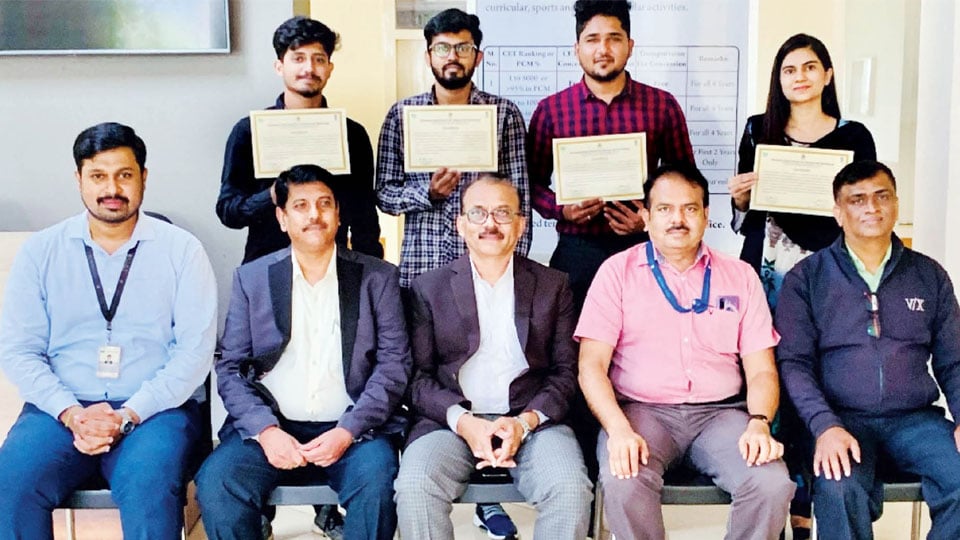
The students of ATME College of Engineering have won Best Project of the Year Award in Electrical and Electronics Engineering Stream in the 44th Series Student Project Programme held under Karnataka State Council for Science and Technology, Smart Personal Protective Equipment for Healthcare Workers to Combat COVID-19.

Seen are (standing from left) Team members Mohammed Huzaif, Haseebulla Baig, Syed Rawoofur Rahman, Simrah Fathima with (sitting from left) R. Shreeshayana, Assistant Professor and Project Guide, Department of EEE, Dr. L. Parthasarathy, Professor and Head, Department of EEE, Dr. L. Basavaraj, Principal, ATMECE, Dr. Sachidanandamurthy, Administrative Officer and Dr. G. Rathnakar, Dean – Student Affairs.

source: http://www.starofmysore.com / Star of Mysore / Home> Photo News / December 02nd, 2021