During a conversation at home, my father Late Janab Shahid Ahmad Shoaib was telling somebody about this young dynamic person who could be the future of the community. I did not understand much about that then. As the time went by, I did my graduation, went to Mumbai to pursue my engineering and then MBA and simultaneously got involved with my corporate jobs.
At this juncture, when I recollect my memory, I find my father was always concerned about the social, economic, educational backwardness of the community. He was no doubt an intellectual who could prove that anything is possible if there is strong will and focus. A researcher, an educationist, a man with highly fertile mind, he was much ahead of time in his vision. He always believed that there has got to be a dream to serve the humanity and positively impact people, take them along and help them realize their dreams.
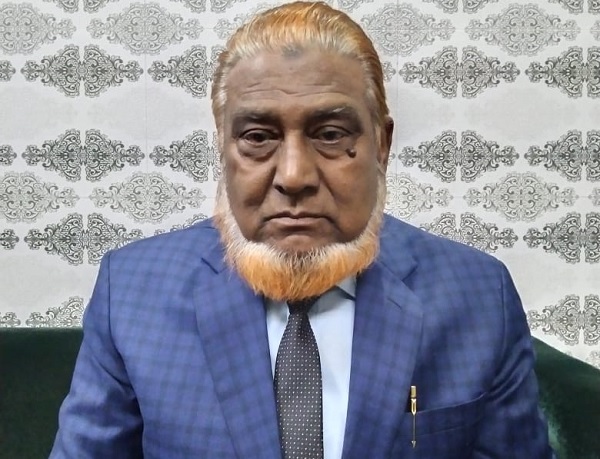
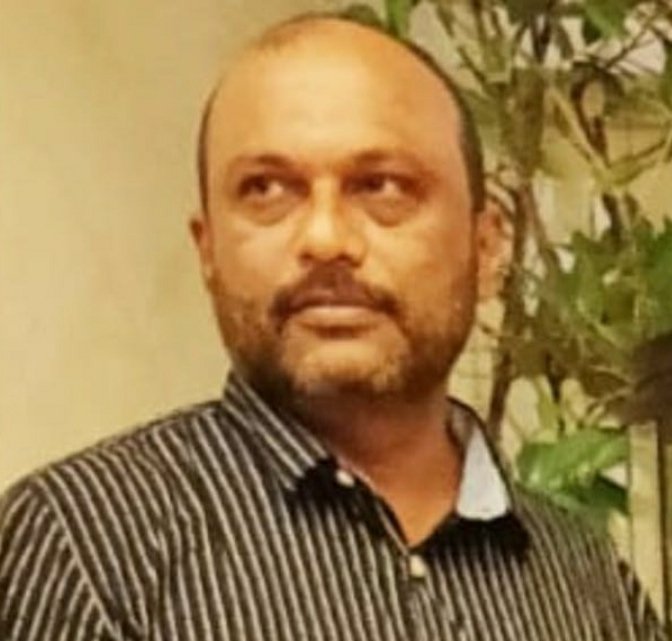
It wasDr Hamid Hussain who could understand the feelings of my father. He was instrumental in creating an active and dedicated team which finally culminated in the successful execution of the Biradari Conference at Itki in 1994.
The grandeur of this conference is still considered as a historic moment which provided a unique platform to the community. Dr Hamid Hussain played the most remarkable role as the Chairman of the Bihar Muslim Kalwar (Kalal/Eraqui) Millat Committee Conference so well that he is considered as the architect of the mission.
He has displayed an effective role of the community leader. A Leader with passion & compassion. As far as I know him, his focus has always been to bring in the basic changes in the community and take this to the most desired progressive level. He is actively contributing to the welfare of the community by serving as the President of ; AnjumanFalahMilli, HamdardAnjuman, Munni Masjid, Madrasa MadinatulUloom Management Committee, Qabrastan Committee,
Dr Hamid Hussain has been able to provide a direction to the community members in many ways. Today there are many success stories under his guidance. We have many people in the community who have proved their mettle in the fields of Education, Industry, Politics, Bureaucracy, Social Service and other fields. There are many members who are serving at various levels in many countries. However, there are lot of work to be done.
As an effective community leader, Dr Hamid has provided a Vision, Established Effective Organizational Structure and Communication Protocols, is an Effective Role Model, has Inspired and Motivated many, Delegated and Empowered the next generation of the community. I found him displaying the roles of a Coach, Facilitator, Strategist, Visionary, Change agent, Decision-maker, Influencer and above all a Team player.
Dr Hamid has emerged as s successful Social Leader who has devoted his life and talents to improving society regardless of social standing, wealth, or privilege. He has served and blessed the community. He has lifted the vision of community, broadened our possibilities and deepened our life experiences. He has preserved peace and ensured prosperity for as many people as possible.
As far as I know Dr Hamid, he is a man on mission. He is not going to rest till he sees his community members’ progress to the highest level. He is relentlessly working towards bringing in Unity & Co-operation among the people through the common agenda and unidirectional alignment. He is trying to set a system wherein Intellectuals, Entrepreneurs, Educationists, Politicians, Health Professionals, Government Employees of the community can come under one umbrella to work together for the welfare and upliftmentof needy & deserving members.
Leadership is the activity of persuading people to co-operate in the achievement of a common objective. This is the activity of influencing people to strive willingly for mutual objectives. Leadership always involves attempts on the part of a leader to affect the behaviour of a follower or followers in a situation. And the entire Biradari is happy to note that Dr. Hamid Hussain has proved to be an able Leader of the Community.
source: http://www.maeeshat.in / maeeshat.in / Home> Corporate> Opinions / by Ainain Shahidi for Maeeshat, Mumbai / July 29th, 2021
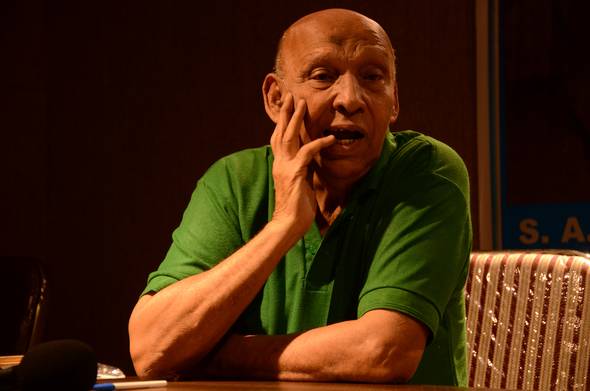
Hakim had represented India in the 1960 Olympics and is the son of the legendary football coach S.A. Rahim.
File image of Syed Shahid Hakim.
Former Olympic footballer and ex-national football coach Syed Shahid Hakim passed away in a private hospital in Gulbarga on Sunday morning. He was 82 and survived by his wife and two daughters.
“He suffered a cardiac arrest at 8 am today and passed away at 8.30 am. He has been getting treatment after he was admitted to the hospital two days ago following the first stroke,” Sadia Syeda, wife of Hakim, informed Sportstar from Gulbarga.
Hakim, son of the legendary football coach S.A. Rahim, was part of the Indian squad for the 1960 Rome Olympics.
The former SAI national coach successfully battled COVID-19 last year in a private hospital in Hyderabad.
Only last week, he was among the many former internationals who were felicitated in Hyderabad.
A vocal critic, Hakim was known for his frank views on contemporary topics in Indian football.
“I was not in the starting XI. The team was packed with heavyweights; only in case of an injury to some of the big names, players like me had a chance in the Rome Olympics,” said Hakim in a recent interview to Sportstar, recapping those experiences.
Hakim became only the second footballer to win the prestigious Dhyan Chand Award for Life Time Achievement in Sports and Games in 2017 and served as the Chief Project Director at Sports Authority of India (SAI).
Hakim, besides playing for nearly 25 years, was also a qualified FIFA referee. He officiated in 33 international games, including the 1988 AFC Asian Cup in Qatar.
At the domestic level, he was part of the triumphant Services’ Santosh Trophy squad in 1960. He was also part of the squad from 1960-66. At the club level, he played for City College Old Boys (Hyderabad) and Indian Air Force.
A former assistant coach of the Indian National team, he also coached Mahindra and Mahindra in 1998-99 and guided it to victory in the Durand Cup in 1998. He also coached Salgaocar SC, Hindustan FC, and Bengal Mumbai Club.
Former India captains Victor Amalraj, Shabbir Ali, Telangana Football Association secretary G.P. Palguna were among those who expressed condolences to the family members.
source: http://www.sportstar.thehindu.com / Sportstar / Home> Football / by V V Subrahmanyam / August 22nd, 2021
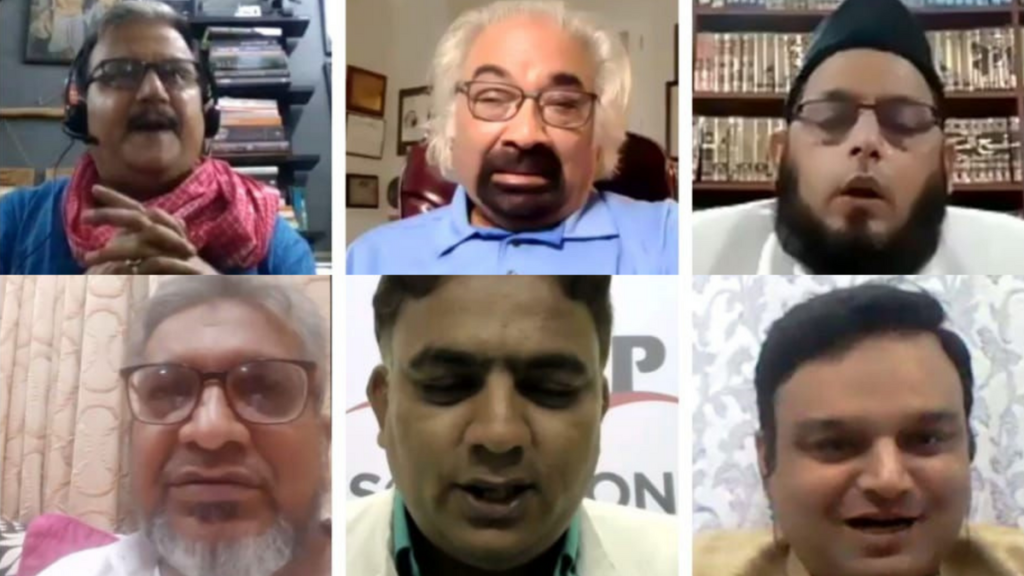
(L-R: Dr Manoj Kumar Jha, Sam Pitroda, Maulana Khalid Rashid Farangi Mahali, Navaid Hamid, Aamir Edresy and Farooque Siddiqui)
inners of 1st AMP National Awards for Social Excellence 2021 was announced on the evening of Independence Day, 15th August in a ceremony attended by guests and a large gathering of participants from across India.
Association of Muslim Professionals (AMP) is an organisation of volunteer Muslim professionals, who are working towards the socio-economic empowerment and development of Muslims in India. Started in 2007 by Aamir Edresy, AMP is present in more than 100 Cities of India and as many as 16 countries globally.
15 Organizations were given the National Award of Excellence 2021 and the Best NGO Award was given to a minimum of 3 Organizations from all the States of India. Also, the Special Jury Award was given to some top performers of every state.
Apart from NGOs, 200 Individual Change Makers were also awarded, including The Cognate‘s Founder, Editor Shaik Zakeer Hussain. These are individuals who worked in the last year for the welfare of the people, especially during the Corona crisis.
While speaking to the audience Former Advisor to Prime Minister Mr Sam Pitroda said that an active civil society is the most important element of any successful democracy. It is the duty of the people who are governing the country to involve civil society in all its decision and policymaking. He congratulated the winners and spoke about the importance of collaboration in today’s world.
Mr Navaid Hamid (President All India Muslim Majlis e Mushwarat) said that it takes courage to appreciate and recognize the efforts of others. He said this spirit is continuously increasing in Muslims and most of the organizations are now open and ready to work with each other. He further said that he hopes AMP will be the torchbearer in this movement of change and will take the community to greater heights.
Rajya Sabha Member Dr Manoj Kumar Jha said that it is very heartening to note that close to 1000+ nomination has come from three States of Bihar, Uttar Pradesh & Jharkhand where we together really need to do a much better job as these three states is at bottom of all index with respect to education, employment and empowerment.
Renowned Islamic Scholar Maulana Khalid Rashid Farangi Mahali from Lucknow spoke about the importance of social work and helping the needy and poor in the light of Islamic teachings. He appreciated the efforts of all the organizations and specially AMP in establishing this platform to work jointly.
In his inaugural speech, AMP President Mr Aamir Edresy spoke about AMP’s efforts in the last 14 years for the welfare of the Muslim community and nation. He spoke about the importance of partnership and collaboration among Muslim organizations across India for better results and wider reach.
National Award for Social Excellence was awarded to Rahmani 30, All India Ideal Teachers Association, Centre For Information And Guidance India (CIGI), Hamdard National Foundation, Human Welfare Foundation, Indian Civil Liberties Union (ICLU), Jamia Markazu Ssaquafathi Ssunniyya, Mercy Mission, Millat Foundation For Education Research & Development (MFERD), Minhaj Interfaith And Welfare Foundation, Quill Foundation, Rehab India Foundation, Safa Baitul Maal, Taraqqi Foundation and Zakat Foundation Of India.
The Lifetime Achievement award was presented to the President of All India Muslim OBC Organization Mr Shabbir Ahmed Ansari Sahab for his relentless service for the cause of not only Muslims but for all for the last 50 Years.
Mr Farooque Siddiqui (Head of AMP NGO Connect Initiative) hosted the event. While introducing the Awards Mr Farooque Siddiqui said that getting nominations of 2300+ organizations is a stepping stone for a big transformation of the rural part of the nation. He said that this Award function is just the beginning and we will work closely with all NGOs who all have shown their interest in joining hands with us in Community/Nation Building.
Dr Zahida Khan gave the welcome speech and Mr Shoeb Syed (AMP West Zone Head) gave the vote of thanks. The awards were presented by AMP Team including Mr Reyaz Alam (AMP Bihar Head), Mr Qamar Faheem (AMP Jharkhand Secretary), Miss. Shaheen Islam (AMP UP Head), Mr Chand Mohammed Shaikh (AMP Rajasthan Head), Mr Sayeed (AMP Hyderabad Head), Mr Manzar Hussain (AMP East Zone Head) and Mr Saphat Ajmeri (AMP Central Zone Secretary).
The program was concluded with the Dua by AMP North Zone Head Mr Ameen Mohammed.
source: http://www.thecongnate.com / The Cognate / Home> News / by The Cognate News Desk / August 17th, 2021
Renowned Bengaluru-based advocate Anees Ali Khan passed away Saturday following a cardiac arrest.
Adv Anees Ali Khan was said to be suffering from kidney ailments for a while. He passed away while he was being taken to a hospital. He is survived by his wife and three children.
Widely regarded as one of the best criminal lawyers in the city, Adv Anees was one of the counsels for the accused in the Bengaluru riots case in which over a dozen people were arrested under UAPA.
He was on the board of many community-based organisations and had recently joined the Aam Aadmi Party (AAP). He was the Organising Secretary of AAP in Bengaluru.
Condoling his passing away, human rights organisation, NCHRO said, “At the time, where Bar Associations influenced by communal elements passed resolution not to represent some of the accused, he dared to represent the innocents, won reversals, or release in fabricated terror cases.”
Adv. Anees Ali Khan Bengaluru,defender of human rights passes away. At the time, where Bar Associations influenced by communal elements passed resolution not to represent some of the accused,he dared to represent the innocents, won reversals, or release in fabricated terror cases.
0726 AM , Aug 21st, 2021
______
source: http://www.thecongnate.com / The Cognate / Home> News / by Shaik Zakeer Hussain / August 21st, 2021
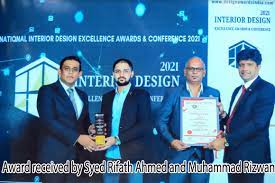
One of the very well-known plywood manufacturers K S Nazeer Ahmed & Co’s Satinply brand, has bagged two top awards namely ‘Most Promising & Innovative Plywood Manufacturing Firm of the year 2021’ India award under ‘Ethical Business Approach & Quality Products’ category for the year 2021 (Global Edition) and ‘Outstanding Contribution In Business & Entrepreneurship Domain’ Award.
K S Nazeer Ahmed & Co, Satinply brand, was honoured with the two national awards at the National Architecture & Interior Design Excellence Awards 2021 held at Taj West End, Bengaluru on August 18.
While the ‘Most Promising & Innovative Plywood Manufacturing Firm of the year 2021’ award was received by Syed Rifath Ahmed and Muhammad Rizwan Husaini, and other award under the category ‘Outstanding contribution in Business & Entrepreneurship Domain’.
About K S Nazeer Ahmed & Co, Satinply
The company, K S Nazeer Ahmed & Co, is a family-run business that was founded by K S Maqdoom Peeran in 1930 as a timber logs sawing firm in Karkala. Using his strong determination and focus, he established connections with the Indian defence forces, Indian Railways and film industry and laid the foundation for the future success of the company. His son, K S Nazeer Ahmed, when holding the reigns of the family company, took the initiative to adapt to new technologies that allowed the manufacture of a wider range of timber products and cater to a growing number of customers.
Upon the untimely demise of K S Nazeer Ahmed in 1994, Rehana Nazeer took over the role of managing partner in the family business, overseeing the industrial and agricultural activities.
Under the directive of late K S Nazeer Ahmed and now Rehana Nazeer, their sons Syed Rizwan Ahmed and Syed Rifath Ahmed, the third generation of the family business, identified the change in the consumer demand in India and an opportunity to expand vertically to enter the plywood industry.
The company had to overcome the initial challenge of getting exposure in a competitive industry operating from a relatively remote area. However, due to persistence and hard work, they have grown to reputable plywood manufacturers with sales all over India.
Future plans of K S Nazeer Ahmed & Co, are to delve further into the niche interior design market and launching new brands for upscale furnishings and interiors.
Contact: K S Nazeer Ahmed & Co, Plywood, Blockboard, Timber Merchants & Saw Mill, Salmar Street, Karkala – 574104, Udupi District, Karnataka State, India / Mobile: +91-98457-46620 / Email: ksnazeerahmedco@yahoo.com / Email: info@satinply.com / www.satinply.com
source: http://www.daijiworld.com / DaijiWorld.com / Home> Business / by Media Release / August 20th, 2021
A total of 181 candidates have been selected as Medical Officer Grade –II (Paediatric) of them 19 are Muslims.
UPPSC Recruitment: As many as 27 Muslims have been selected to join as Medical Officer (Grade II Post) in Uttar Pradesh State Civil Services exam result of which was declared yesterday.
A total of 181 candidates have been selected as Medical Officer Grade –II (Paediatric) of them 19 are Muslims.
On the other hand 114 candidates will be recruited as Medical Officer Grade-Il (Anaesthetist). Of them 07 candidates are Muslims. The list of Muslims selected in the two categories is as under.
Medical Officer Grade-Il (Paediatric)
1. Fatima Afreen Ahmad 2. Mohd Abu Bakar Ansari 3. Farha Khan 4. Uzma Nadeem Siddiqui 5. Naved Akhter 6. Kamran Ahmad 7. Mohd Saleem Khan 8. Mohd Kashif Siddiqui 9. Md Naseem 10. Zakaullah
11. Abdul Quddoos 12. Mohanmad Yunus 13. Abdullah 14. Ati Ullah 15. Mohanmad Badruzzana Ansari 16. Mohanmad Aziz Khan 17. Run Siddiqui 18. Saleem Ahmad 19. Faraz Ahmad Khan
Medical Officer Grade-Il (Anaesthetist)
1. Darvish Hussain 2.Shadia Zia Usmani 3. Arif Husain 4. Mohammad Ahtesham Khan 5. Abdul Wahid 6. Zainab Parween 7. Fahad Khan 8. Nikhat Parveen
The Uttar Pradesh Public Service Commission (UPPSC) has also declared the result of Assistant Statistical Officer to work under Industries Department. Among the 38 candidates who have been selected 02 are Muslims. They are:
1. Naushad Alam 2. M Farman Ali
The Uttar Pradesh Public Service Commission (UPPSC) had conducted the personal interview to select the above candidates in two phases – Phase 1 from July 26 to 30, 2021, and Phase 2 was completed from August 2 to 4, 2021.
source: http://www.ummid.com / Ummid.com / Home> Education & Career / by ummid.com news network / August 21st, 2021
This year’s seven Wikimedian of the Year award winners were announced today at the 2021 virtual Wikimania convening .
Read the interview below with Dr. Netha Hussain, recipient of the Honourable Mention Award.
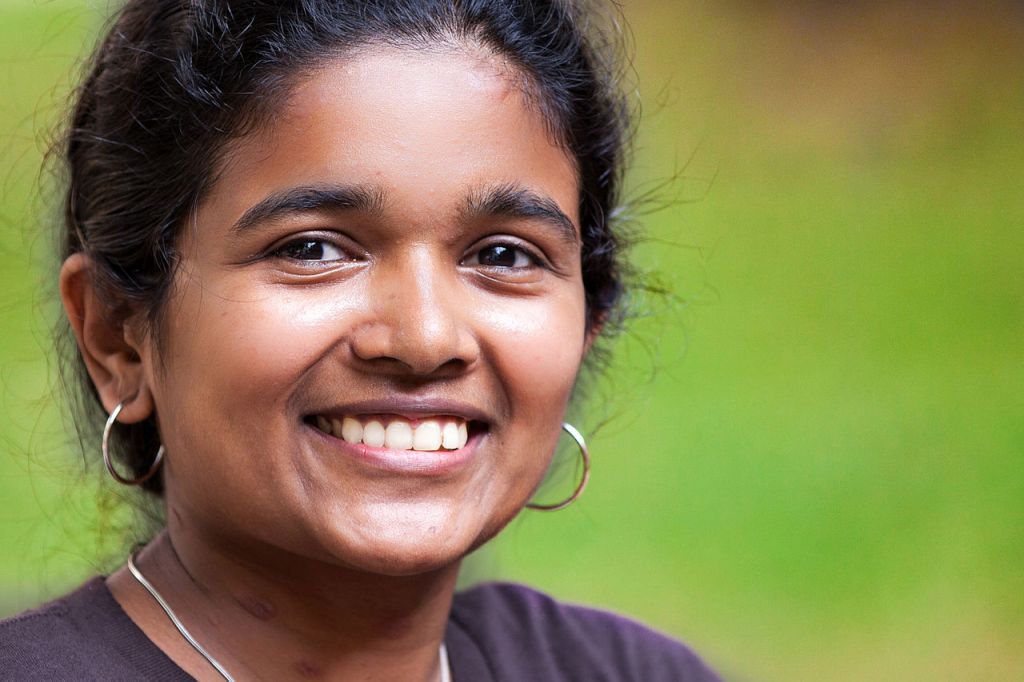
Dr. Netha Hussain has been a Wikimedia volunteer for over a decade, as well as a medical doctor and researcher who has contributed to English and Malayalam languages of Wikipedia, Wikidata, Wikimedia Commons, and Meta-Wiki.
Throughout the COVID-19 pandemic, Netha wrote, updated, and translated dozens of Wikipedia articles to ensure reliable information about the pandemic is available for everyone. She also recently launched a project to improve information about vaccine safety topics on Wikipedia, helping combat misinformation. In the process, Netha has collaborated with Wikimedians around the world and inspired many others to ensure information is verifiable and reliable.
“The idea of sharing free knowledge with millions of people around the world excites me, and this serves as a motivation to keep doing more.”
Additionally, Netha has contributed to outreach and research surrounding the diversity of participation and content on Wikimedia projects, particularly of the gender gap. In 2020, she was recognized by Red Hat as a 2020 Women in Open Source Award winner.
The Wikimedian of the Year Honourable Mention award recognizes exceptional Wikimedians who already have a strong presence in the movement, as well as public exposure such as press coverage, local recognition, and national titles. pix02
This recognition is one of seven awards made this year to celebrate contributors who have made an exceptional impact on our movement. The awards were announced at this year’s virtual Wikimania celebration by Wikipedia Founder Jimmy Wales (watch the announcement!).
“Dr. Hussain is a role model in the Wikimedia movement for her staggering medical and scientific contributions to Wikipedia, contributions she balances alongside her own medical career. Throughout the COVID-19 pandemic, her work has brought increased visibility to Wikipedia’s unique role as a source for reliable public health information about the virus and the vaccines. In addition, her constant advocacy to address the gender gap and her support for Indic communities demonstrate the values of collaboration and contribution that are integral to our movement.”
– Jimmy Wales
We spoke with Netha to learn more about her experiences and perspectives on the Wikimedia movement. Here are some highlights:
Q: Can you share a favorite memory from your time contributing to Wikimedia?
“Creating my first article is a special memory that I cherish to this day. The process did take a long time because, back in 2010, I was running on a 128 kbps internet connection in a six year old desktop computer on an old version of the browser.
I wanted to create an article about an Indian cuisine called chutney in Malayalam language Wikipedia. I wasn’t sure about the rules one has to follow while editing, but I thought I will make a try anyway. I created some text and saved it as a new Wikipedia page. The next day, I was surprised to find out that other editors have improved upon that page by adding media and more content. This was the first nudge which paved the way for the rest of my Wikimedia volunteering journey.
Another memory was when I saw that a pathology image that I added to Wikimedia Commons was re-used on a prominent medical website. This made me reflect on the scarcity of good quality medical images in online sources, and prompted me to start the first of its kind GLAM [galleries, libraries, archives, and museums] collaboration with Government Medical College, Kozhikode.”
Q: What motivates you to contribute to Wikimedia projects?
“I am motivated by the satisfaction of having done a small part in making the world a better place. The idea of sharing free knowledge with millions of people around the world excites me, and this serves as a motivation to keep doing more.”
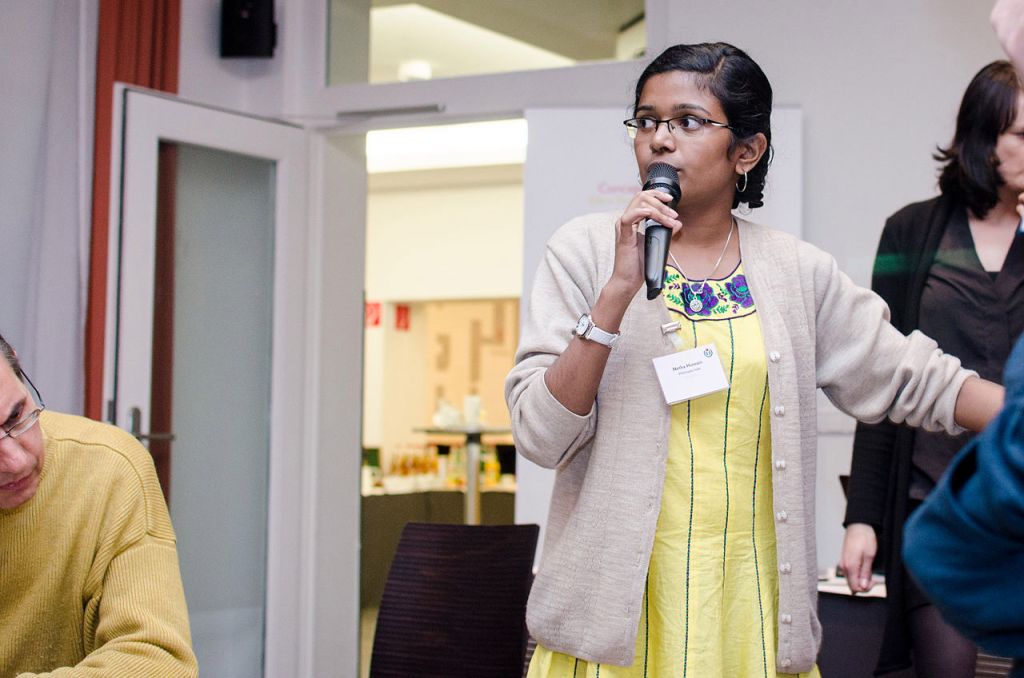
Netha Hussain presenting at the Wikimedia Diversity Conference in 2013 (Christopher Schwarzkopf (WMDE), CC BY-SA 3.0)
Q: How has Wikipedia helped tackle COVID-19 disinformation and misinformation?
“Wikimedia was able to play a large role in tackling COVID-19 disinformation because of its people, technology, and policies.
The people who make up the Wikimedia movement are experts from a wide variety of subject areas. They perform tasks such as copyediting, structuring, and adding rich media to Wikimedia pages. Wikimedia has robust policies around verifiability, neutrality, and original research, which warrants the use of sources with high credibility. The technology used in Wikimedia provides a simple interface for editing and has provisions to counter vandalism.
All these factors taken together, as well as learnings from the movement’s previous experience in responding to crisis situations helped Wikimedia tackle disinformation effectively.”
“It is hard to imagine all the ways that Wikimedia will influence the future of the ecosystem of free knowledge in medicine, but I am convinced that Wikimedia will continue to occupy a central role in the process.”
Q: How does your work on Wikipedia contribute to the future of medicine?
“I was a medical student when I started contributing to Wikimedia in 2010. At that time, I worked on concepts that I learned at medical school. Later on, I focused on building content around specific topic areas. My current focus is on creating content related to COVID-19 and vaccination. The articles created by me in English and Malayalam languages are being edited several times by other editors and are becoming richer and more comprehensive by the day. I think that these articles will continue to educate (and perhaps also entertain and enlighten) people in the future.
The text and media that I and fellow editors created will continue to be remixed, curated and magnified several times by third party sources such as search engines, websites, and virtual assistants. Additionally, the edit history of the work that we performed on Wikimedia is likely to serve as a historical documentation of how events unfolded in time and how scientific evidence changed over time.
Our discussions on talk pages would serve as a reminder for how and why we made some decisions regarding the policy or structure of Wikimedia entities. The metadata of our edits are likely to act as data points for researching about trends and patterns in editing, paving way for insightful conclusions regarding the growth and diversification of Wikimedia projects. The structured data contributed by us would serve as the database for search engine and machine learning algorithms. It is hard to imagine all the ways that Wikimedia will influence the future of the ecosystem of free knowledge in medicine, but I am convinced that Wikimedia will continue to occupy a central role in the process.”
“In the process of researching health conditions and treatment options, people…eventually to Wikimedia projects. Therefore, it is important that Wikimedians should work in the interest of public health.”
Q: What is Wikipedia’s role in public health?
“Wikipedia is the largest non-profit website in terms of pageviews. Wikipedia has become a popular source of healthcare information because of its simplicity of content, higher ranking in search results, easiness in accessibility, availability of citations, presence of photo/video illustrations, ability to edit quickly and possibility to navigate in multiple language editions.
Most often, in the process of researching health conditions and treatment options, people go online, and eventually to Wikimedia projects. Therefore, it is important that Wikimedians should work in the interest of public health and invest resources for making its medical content reliable, comprehensive and updated.”
“I wish everyone knew that they have something to contribute to the Wikimedia movement.”
Q: What is one thing you wish everyone knew about Wikimedia projects?
“I wish everyone knew that they have something to contribute to the Wikimedia movement. People usually shy away from contributing to Wikimedia because they think that the expertise they have is trivial or irrelevant for Wikimedia.
We need not only content creators and curators, but those interested in technology, outreach, fundraising, strategizing, to name a few. We need to make non-content related contributions more visible and rewarding so that everyone knows what is possible for them to do on Wikimedia projects, and enjoys doing what they love or care about.”
Congratulations, Netha!
About the 2021 Wikimedian of the Year Awards
The Wikimedian of the Year is an annual award that honours contributors to Wikimedia projects, including Wikipedia editors, to highlight major achievements within the Wikimedia movement in the previous year. The tradition dates back to 2011 and has evolved since then in dynamic ways to welcome and celebrate Wikimedians from different backgrounds and experiences. This year’s celebration is bigger and more inclusive than ever before, recognizing seven exceptional contributors to the Wikimedia movement in six categories , including Newcomer of the Year, 20th Year Honouree, Rich Media and Tech contributors, and Honourable Mentions, as well as the Wikimedian of the Year.
*This interview has been edited for clarity and length.
source: http://www.diff.wikimedia.org / Wikimedia.org / Home> Wikimania 2021 / by Wikimedia Foundation / August 15th, 2021
Khan says that the story her grandmother told stayed with her for years and when she started researching the Rampur culture, it kept coming back to haunt her while she walked through the old settlement of Rampur city.
New Delhi :
She doesn’t really remember when she heard the story of the woman she named Feroza Begum in her book. Perhaps it was one of those tales her grandmother narrated when the children gathered around in the courtyard of their rambling home. “We loved to listen to the stories of bygone years as they had an immediacy, a reference point – about some relative or friend we knew,” she recalls.
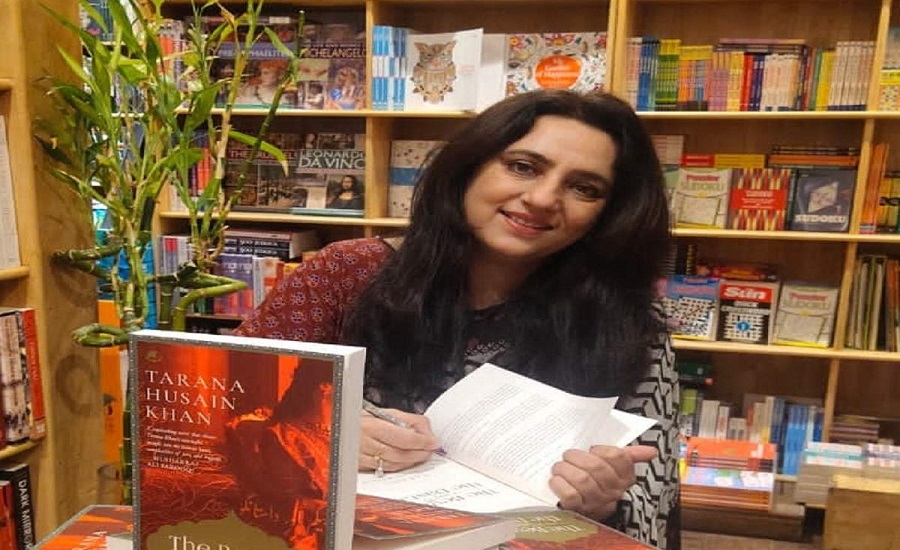
Author Tarana Husain Khan, whose book ‘The Begum and the Dastan’ (Tranquebar) recently hit the shelves goes back to the year 1897 where in the princely state of Sherpur, Feroza Begum, beautiful and wilful, defies her family to attend the sawani celebrations at Nawab Shams Ali Khan’s Benazir Palace. Feroza is kidnapped and detained in the Nawab’s glittering harem, her husband is forced to divorce her, and her family disowns her. Reluctantly, Feroza marries the Nawab, and is compelled to negotiate the glamour and sordidness of the harem.
Khan says that the story her grandmother told stayed with her for years and when she started researching the Rampur culture, it kept coming back to haunt her while she walked through the old settlement of Rampur city.
“I wanted to know how Feroza lived her life, her thoughts and aspirations and her death. I was surprised by my emotional investment in the ancient tale. It made me feel suffocated and vulnerable at the same time maybe because it was a sort of cautionary tale for young girls,” she tells IANS.
Talk to her about the metamorphosis of Feroza’s character — how she starts to ‘accept’ the circumstances with the Nawab, and if a modern reader would be comfortable with that, and Khan asserts that the protagonist’s options were limited by her predicament.
“She was confined in the Nawab’s harem and her family had abandoned her. How did a woman in the late nineteenth century deal with such circumstances? It might be difficult for the ‘modern’ or ‘feminist’ person to understand her actions. I didn’t want Feroza to be a modern woman dressed in ancient clothes. I didn’t want to project these sensibilities to Feroza’s character. In fact, I had to restrain myself from putting my words and thoughts into her persona. She belonged to a certain time in history and her actions and thoughts had to mirror those times.”
The author, who has weaved two timelines in the book, insists that at the core of ‘The Begum and the Dastan’ is the question of patriarchy. “I began with writing Feroza Begum’s story but the question of the state of the girl child in small town India had been troubling me because of my first hand experience teaching young children. Ameera who lives in modern times poses the question — has anything changed for the young girls today. I wanted my readers to think beyond Feroza’s plight. Patriarchy affects young girls in Indian homes by restricting their vision of themselves as well as posing physical constraints. So the life of the veiled Begums and their limited options has a modern counterpoint in Ameera’s life,” she says.
While researching Feroza’s story, Khan realised that there were many women who had disappeared from the pages of history and whose voices inhabited oral history. There were women who left their imprint on political decisions and on cultural developments but rarely found mention in cisgender male histories. “In giving cadence to some of these voices, this book was born,” says Khan, whose previous books include ‘I’m Not a Bimbette’ (2015) and its sequel ‘Cyber Bullied’ (2020).
Currently, Khan is researching on Rampur culinary archives, which is a part of ‘Forgotten Foods: Culinary Memory, Local Heritage and Lost Agricultural Varieties in India’, a project funded by the Arts and Humanities Research Council that brings together researchers and practitioners.
“So my translation of nineteenth century Persian cookbooks meets the skill set of the khansama and we create something that is workable. The ultimate aim is to expand the repertoire of the local khansamas and enhance their employability. This should also popularize the ‘forgotten’ dishes of Rampur cuisine.The penultimate aim is to publish a cookbook of the forgotten dishes and to showcase the dishes at a cultural fest, the ‘Jashn e Benazir’, which we plan to host in Rampur in 2022.”
Editing a book on Rampur cuisine and culture which is slated for publication in April 2022, Khan is also writing a novel. “It is still in its initial stages. I am essentially a storyteller, a dastango like Mirza Kallan, a character in my book, who spins tales till the boundaries of reality and fiction blur,” she concludes. — IANS
source: http://www.clarionindia.net / Clarion India / Home> Books / by IANS / August 02nd, 2021
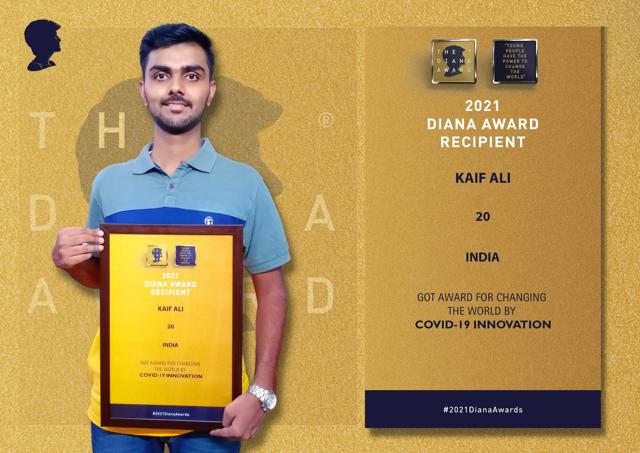
Born and brought up in New Delhi, twenty-year-old Kaif Ali is an architecture student at Faculty of Architecture & Ekistics, Jamia Millia Islamia, New Delhi. Ali was honoured with The Diana Award 2021 for his work on Covid-19 Innovation–Space era recently, which is a module for demountable and portable shelter space for Covid-19 era. This is his story.
New Delhi :
Every child has drawn their family with a house in the background and most probably made sandcastles at beaches too. However, in the grownup’s world, not everyone can have a house built like that. Twenty-year-old Kaif Ali, an undergraduate student of Jamia Millia Islamia, New Delhi after entering the world of architecture found out that homelessness is a major issue in the world and there are many without proper houses.
Born and brought up in New Delhi, twenty-year-old Kaif Ali told TwoCircles.net, “Just 200 meters away from my apartment is a settlement made above the sewage lines. In nights, the people there sleep on footpaths since snakes sneak out of sewage.”
Ali could not help noticing how unjustly the metropolitan city is majorly designed commercially for a few per cent of the population. After witnessing these inequalities, Ali wanted to take up architecture as a profession and develop a sustainable model.
Beyond survival Homeless people are of many types, which include urban poor, migrant labourers and refugees. However, the government made arrangements for these homeless people can barely be called a home. There is no privacy nor any sense of security as sought by a family since most facilities are gender-separated. Open cooking and sanitation, poor waste management, unavailability of electricity and potable water, the list go on.
Ali recollects that it was a documentary called “Cry for Syria” that sensitized him into the refugee crisis. As an attempt to address the issue, Ali went on to design shelter spaces for Syrian refugees, during his early college days.
When asked whether he is concerned about these temporary shelter spaces becoming the permanent settlement of refugees and others, as is the norm, Ali said that his concept of shelter is a home for living and not for mere survival. Therefore, along with houses, Ali also designs schools, gyms, and other recreational spaces using the same modular technology, which facilitates easy assembling and dismantling.
Quoting a few success stories of refugee assimilation with the host country, Ali believes that if refugees are housed holistically, they will not remain on the fringes. “Shelter is the start of all,” he said.
From housing to quarantining For the last two years, Ali has invested himself in designing shelter spaces for the homeless. As the Covid-19 pandemic broke out, Ali witnessed the dire demand for quarantining thousands in cramped up cities.
That is how he began working with his project last March and designed a portable intermediary quarantine facility of 2.5m x 6m, using PUF panels or shipping containers, which can be assembled with ease, have massive room for expansion, with natural ventilation and 6 layers of social distancing.
The facility can also be later used as refugee camps or disaster relief camps.
Kaif Ali was awarded the international Diana Award 2021 for the same. His design follows all Covid-19 protocols and is more efficient than home quarantine or mass quarantining facilities.
Ali’s quests stem from his immediate realities. Even his intermediary quarantine shelter came up observing the spread of the virus in enclosed spaces through the air, even before WHO confirmed the spread through the air. “That is the power of observation and study. I apprehended that Covid-19 would spread through the air from my study and by keeping this in mind, I have designed the quarantine facility,” Ali said.
Thinking architecture ‘out of the box’ Having varied interests, Ali is good at juggling different pursuits. The twenty-year-old has taken home several awards in architecture and photography. It is the introduction to various international competitions that expanded Ali’s network.
Upon winning Climate Innovation Lab conducted by Climate Technology Centre and Network, Ali has been receiving mentorship of Biplab Ketan Paul, IIT Kanpur incubation mentor and social entrepreneur.
Referring to Ali’s Covid-19 relief work, Paul said proudly, “Kaif Ali is a good samaritan.”
Soon, Ali’s design would shelter the people of Lagos in Nigeria. His project has received appreciation across the world from architects of Germany, Iran, South Africa, Turkey, the US, & Brazil. Ali has also featured in the United Nations top 11 emerging innovation start-ups solving climate action.
Twenty-year-old Ali has not shied away from approaching several state governments. After the Karnataka government appreciated him, organizations working with the Maharashtra government are willing to implement his project.
To make his designs financially viable, Ali said he uses his father’s counsel, who is in the construction business. “His advice comes in handy, especially when deciding the materials and other factors. It is the context that is my foremost priority,” Ali said, elaborating that climate and clients’ context guides his design.
Moreover, Ali aspires to make the language of architecture accessible to common people. His drawings are easily readable for policymakers and politicians alike. “Future architectures cannot limit themselves to space and cost crises alone. In times of rising refugees of climate, wars and poverty, expanding socially responsible entrepreneurial perspective in architecture is a must,” concludes Ali.
source: http://www.twocircles.net / TwoCircles.net / Home> Lead Story / by Arfa Backer, TwoCircles.net / July 30th, 2021
Ruler of Oman, Sultan Qaboos bin Said has honoured Dr. M.I.H.Farooqi, with an award of US$ 25,000 (Rs 12 lakh) in appreciation of his books Plants of the Quran and Medicinal plants in the Traditions of Prophet Mohammad.
Both the books contain scientific descriptions of plants mentioned in the Qu’ran and Sunnah .
Dr. Farooqi is a well-known Lucknow-based plant chemist with more than 125 research papers to his credit, published in Indian and foreign journals.
He is also the author of several books and more than hundred articles in English, Hindi and Urdu on science subjects of common interest like environment, modern technology, medicinal plants, economic plants, Islamic science and Prophetic Medicine.
Plants of the Quran has been translated and published in several languages including Hindi, Urdu, Persian, Kannada, Malayalam and Indonesian languages. Based on Quranic and Prophetic Plants, UNESCO has approved Multimillion Dollars Project of Quranic Botanical Gardens in the Gulf countries.
Works on the establishment of such gardens in Sharjah and Qatar have already started.
(Dr. MIH Farooqi may be contacted at mihfarooqi[@]gmail.com)
source: http://www.milligazette.com / The Milli Gazette / Home> News> Focus / by The Milli Gazette / March 26th, 2011