All posts by mpositiveone@gmail.com

HarperCollins presents ‘Riding Free An Olympic Journey’ by Imtiaz Anees

Nargol, GUJARAT :

HarperCollins is proud to present the story of an Indian equestrian rider and his Olympic dream ‘RIDING FREE: MY OLYMPIC JOURNEY’ by Imtiaz Anees.

“The story of a true sportsman whose heart beats for his country. The pulse and emotion of this book are totally relatable. A beautiful real-life story of struggle, relationships, dreams and how Imtiaz overcame all hurdles to reach his goal.” – Sania Mirza, Indian Tennis Player, Olympian, Arjuna Awardee.

“A gentleman’s gentleman, Imtiaz’s cool and clam disposition hides the grit and determination – the dedication and discipline that built the foundation for him to compete with the best at an international level.” – Karan Johar, Film Director.

“It’s one thing to have a dream. It’s entirely another thing to follow your dream with passion and courage. Don’t miss this story of Imtiaz in his quest towards his Olympic dream.” – Viren Rasquinha, Former Indian Hockey Captain, Olympian, Arjuna Awardee.

“Imtiaz’s story is as heart-warming as it is inspiring. It’s so much more than sports – it’s about the power of dreams, self-belief, teamwork and perseverance. I must admit I have a soft spot for any story with animals in it. The bond between man and horse makes this story truly special.” – Alia Bhatt, Film Actor.

“The gap between the impossible and possible is your commitment to do what you want to achieve and enjoy the journey. Think unreasonable, believe, work hard and see how the universe comes together to make it happen. My memoir is about achieving the impossible and I truly hope it inspires you enough to ‘Never give in’.”- Imtiaz Anees.

“Imtiaz’s single-minded pursuit of his Olympic dream, the challenges he counters, the people who offer support to him and the milestones he achieves reads like a work of fiction. Riding Free proves that nothing is impossible if you dare to dream and match it with hard work. We are excited to be publishing this incredible story on the eve of the Tokyo Olympics.” – Sachin Sharma, Senior Commissioning Editor, HarperCollins India.
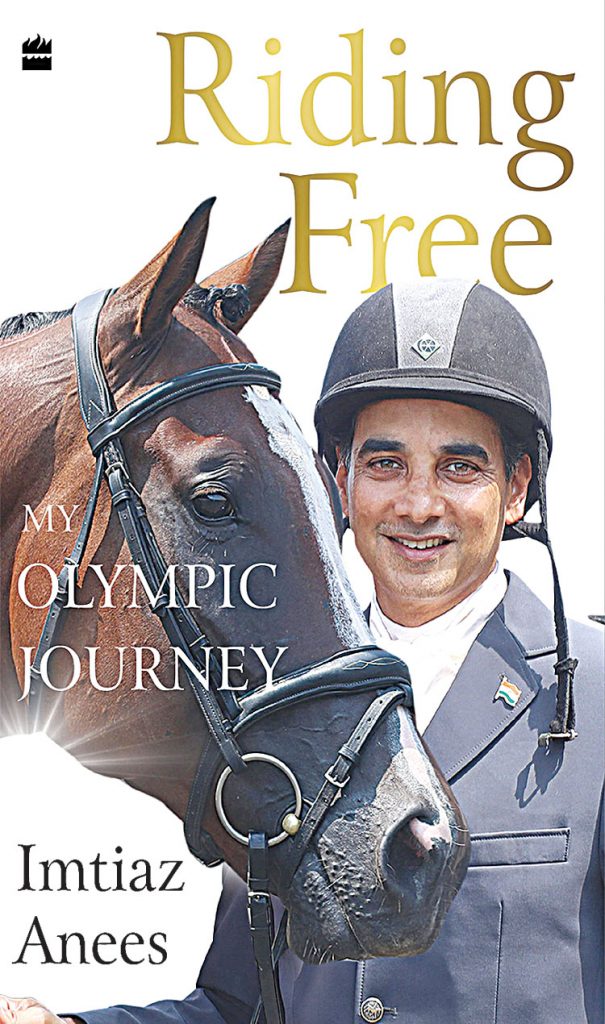
Here is an extract from the book:

My heart was pounding as the starter began the countdown: ’10-9-8-7-‘

This was the most exciting moment of my life-the realization of my boyhood dream and the culmination of many hours of hard work, figuring out how to tackle whatever obstacles the course threw at me.

I was where thousands of eventing riders around the world dreamt of being. At the greatest sporting event in the world-the 2000 Sydney Olympics-and ready to start the cross-country event.

‘6-5-4-3-‘ the countdown continued, and then it was ‘2-1’ and off we went! Spring Invader, my horse, leapt forward on cue and we were thundering down the course, while I had thoughts for nothing but the first jump coming up and getting the take-off and landing right.

About the book

‘My heart was pounding … yet I was sitting still! This was the most exciting moment in my life and the culmination of my boyhood dream. I was where thousands of eventing riders around the world had dreamt of being-the Olympics.’

This is the story of a young boy with an impossible dream-competing at the Olympics. From the age of four, Imtiaz Anees took to horse-riding like fish to water. It soon became a passion, one that continued through his life, beginning with his first competitive win at the age of six, eventually winning multiple equestrian events both nationally and internationally. Imtiaz is the only Indian rider to complete an equestrian three-day event at the Olympics, in Sydney in 2000, at the age of thirty, in an elite sport long associated with royalty and wealth and primarily the army in India.

In Riding Free, Imtiaz re-traces the major milestones of his riveting twenty-year-long journey. The stories he tells are heartfelt, emotional and inspirational for the next generation of dreamers-a way to ‘give back’, in small measure, the enormous goodwill and help he received from all kinds of people in his Olympics journey. Behind Imtiaz’s success are also the struggles and setbacks that pushed him to work harder and achieve peak performance. In a sport where the result depends on both man and animal, the deep bond Imtiaz shares with his horses will leave animal lovers spellbound. Here is a story that will inspire every athlete to ‘never give in’

Pre-order now: https://www.amazon.in/dp/9354227481

About the author

Imtiaz Anees is an equestrian Olympian, trainer, competitor, NBC commentator, qualified Level 2 instructor and coach educator. As the only equestrian Olympian in India, he wants to share his knowledge and experience with all other riders and offers internship programmes to teach equine management. He runs an equestrian training centre-Seahorse Equestrian, a boutique stable with sixteen horses, located on a beautiful beach in a small fishing village in Nargol, Gujarat.

source: http://www.theweek.in / The Week / Home / by PTI / by PR Newswire prnewswire.com / July 12th, 2021

How Iqra International School’s Noor Ayesha Is Nurturing Children To Excel In Education And Live Islam

Bengaluru, KARNATAKA :

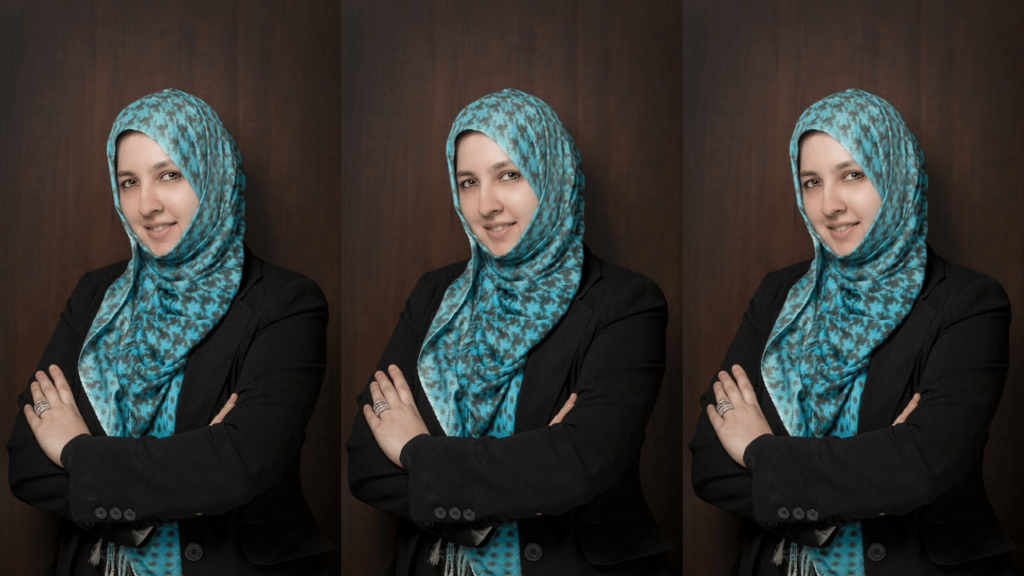
Noor Ayesha, Founder-CEO, Iqra International School

“Women should give themselves a chance, there’s so much that they are capable of, we need to leave behind a legacy and contribute to our ummah and the world at large.”

Noor Ayesha is an award-winning educator, an empowering leader, a mother of three, and the founder of a school that nurtures more than 650 children. Iqra International School – awarded the ‘Most Promising school for Quality Education in Bangalore’ was founded by Noor Ayesha with the aim of delivering value-based education in order to cultivate in each child, the aspiration to ‘learn and live values’.

“To be a great leader, you have to be a great reader,” says Noor Ayesha. She believes that Muslims moved from the golden age to the “dust age” due to the gradual fading of value-based education guided by Islamic principles.

Noor Ayesha was conferred with the Rashtriya Shiksha Ratan Award by The Indian Society for Industry and Intellectual Development and the ‘Fakhr-e-Watan’ Award for her academic and social services. She has been a speaker at the Eldrok Summit 2019, Early Childhood Association Summit 2019, Asia Education Summit 2016, Asia Leadership & Services Awards 2016, and at various MFERD conferences. She has also been chosen as the Global Goodwill Ambassador of India for Global Goodwill Ambassadors (GGA).

She believes that one must always have goals – professional, personal, and spiritual. “When you have determination and passion, Allah makes ways. Always,” she says.

Ayesha, along with her team at IIS has disproven the prejudiced notion that the niqab and hijab are obstacles to development and that veiled women are incapable. “We are proof that Muslim women are no less than anyone,” she asserts. She also strongly believes that there is “no shortage of capacity in the Muslim society but there is a need to unearth it and move forward.”

She efficiently managed the school single-handedly for many years, with the support of her team, comprising only of women. “Many of them who thought nothing of themselves are now leading the institution and representing Iqra at various conferences.” Ayesha gladly affirms. “Women should give themselves a chance, there’s so much that they are capable of, we need to leave behind a legacy and contribute to our ummah and the world at large.”

She points out that the inherent flaws in the existing education system have resulted in educated individuals leading privileged lives but vehemently failing in giving back to society, which she believes is the primary purpose of education. At Iqra, students are instilled with a sense of responsibility towards society, along with the quality education they acquire.

Iqra International School is a dream come true for Ayesha’s father, who has always envisioned being able to educate the children of the community. “We felt that a mosque’s imam would be better at his role of a leader if he was additionally equipped with worldly knowledge,” she explains. The school was set up as a result of Ayesha’s commitment to fulfilling her father’s dream and the dire need for a school that would nurture students with Islamic values along with quality education, with the added advantage of facilitating students with a campus that is within the city. 

The school was conferred with the ‘Best Innovative International Preschool in Bangalore’ award at the Asia Education Summit & Awards 2016, the ‘Most Promising School for Quality Education in Bangalore’ award at the Asia Leadership and Services Awards 2016, ranked No.1 in India for “Individual Attention to Students” at the India School’s Merit Awards 2016, ranked No.1 in India for ‘Holistic Development’ at India’s School Merit Award 2017, awarded Excellence in Flexible Education Programme at The India K12 Awards 2019, declared “Brand of the Year” in National Brand Awards 2019, and was conferred with the International School Award 2019-2022 by the British Council.

“As a school, we are in no competition with any other Islamic schools, as we are all working towards the same beautiful cause – ‘nurturing children to learn and live Islam’,” Noor Ayesha asserts. “We just do our very best and leave the rest in His (God’s) hands.”

Iqra International School provides quality education with the IGCSE curriculum, seamlessly integrated with the QIAS (Quran, Islam, and Arabic Studies) curriculum. They also have an intensive hifdh program for students who perform exceptionally well in the Quran classes. The school also has 25- 30 students from other faiths, who have no problem with learning the Quran, the Arabic language, or using the Islamic salutation of peace.

“Alhumdulillah, two years ago, 3 of our brilliant students became huffadh. All 3 students were excellent in the IGCSE academics as well. I must also mention how good they were at football. Most of our football championships were won with two of them scoring the highest goals. Pursuing religious knowledge only makes it easier to become brilliant at gaining worldly knowledge. A balance between the two could be gained and this was proven by these children who made it possible,” she narrates.

The majority of Iqra’s staff have their own children studying at Iqra. “Even before a problem gets addressed by parents we would’ve already found a solution to it or in many cases solved it because we are all mothers ourselves with our own children studying at our school”, Ayesha says.

They also make sure students get ample exposure to other global cultures and beliefs by conducting inter-faith programs, inter-school competitions, Mock United Nations (MUN), and other such activities.

Before establishing Iqra, Ayesha conducted extensive research in the field of international education, particularly Islamic education, including the works of Dr. Dawud Tauhidi’s Tarbiyyah project that elaborates the purpose of Islamic education – its ideal impact and practicality.

“It’s not just the name ‘international’, our school has been international in all aspects from day one, from the research to the books and the curriculum,” she says.

The project has been completely funded by her father, from its inception until recently. Ayesha explains that the biggest challenge they faced was the difficulty in finding experienced teachers. In order to solve this, they set up ISTARI (Iqra Staff Training and Research Institute), as a result of which, they’ve been able to train and hire passionate and well-trained teachers.

“The trust and support from our school parents and the entire Iqra community, in general, has been immense right from the beginning, and that has helped Iqra reach wherever it has today, Alhumdulillah,” she contends.

Currently, Noor Ayesha is the Founder-Managing Director at Iqra International School, Director at Fantasy Group, Founder & CEO at OURAH, Director at Iqra Games Village, Director at the Centre of Integrative Medicine and Clinically Applied Hijamah Therapy(ICAHT), and Vice-Chairman in the Universal Educational Trust. 

She is also the Member of the Advisory Board at Aspire Residential Public School, Kochi, Patron Principal at Early Childhood Association (ECA), Member of the Advisory Board at Eastern Public School, Bhopal, Member of the Islamic Educators Communication Network operated by Islamic Schools League of America (ISLA) and Council of Islamic Schools in North America(CISNA).

She completed her schooling in Baldwin Girls’ High School, Bachelor in Computer Science Engineering from Visvesvaraya Technological University, and MBA in HRD and Project Management from Cardiff Metropolitan University, Wales UK. She is currently pursuing her Doctorate in Educational Leadership and Policy from July 2021 at the University of Toronto, Canada.

source: http://www.thecognate.com / The Cognate / Home> People> Rushda Fathima Khan / July 12th, 2021

‘I am a practising Muslim, yet I am a very liberal person’: ‘Pratigya’ actress Aalika Shaikh

Mumbai, MAHARASHTRA :

Television actress Aalika Shaikh, who rose to fame from Star Plus show ‘Mann Kee Awaaz Pratigya’, is seen as Kesar in the second installment of the popular drama series.

She has been a part of the industry for almost a decade now and has starred in shows like ‘Tumhari Pakhi’, ‘Tum Hi Ho Banhu Sakha Tumhi’, ‘Pardes Me Hai Mera Dil’ and more.

While Aalika has finally gained fame and appreciation for her work, her journey has proven to be an uphill battle.

Aalika Shaikh had to choose between her acting career and her conservative Muslim family.

The actress, who decided to go against her family’s wishes and pursue a career in showbiz, shares, “I changed my name because of my family, I never had any mental or financial support from them.”

“I changed my name because I come from a Muslim family and in my family girls get married at a very early age. I neither wanted to choose that path nor did I want them to be answerable to people who they thought they would be accountable to, so I changed my name,” she adds.

The actress made her debut with a play on Doordarshan.

She reveals that she first started her career as a real estate investor. However, Aalika, at a friend’s behest, decided to try her luck in acting and gave an audition for ‘Air Hostess’. She was selected for the role of Pia and received a lot of praise for her enthralling performance.

Talking about how difficult it was to follow her dreams, Shaikh says, “It was challenging for me at first because I didn’t have a godfather in the sector and didn’t know anyone who worked in it. It was challenging to carve out that space, get my name out there and have people recognise my work, but once you get into the swing of things, people come out in droves to support you as friends and it becomes a bit easier emotionally and mentally to fight harder and live your dreams.”

Even amidst the personal turmoil, Aalika says that she never felt like giving up on her career.

“When I had detached from my family I tried to focus on work as much as possible, tried to discover new projects and my desire to be successful and recognized kept me going,” she says.

Shaikh reveals that her family eventually reached out to her and they decided to sink their difference.

“My family had contacted And I have accepted them and so have they. All this while, I have been supporting (financially) them,” reveals Aalika.

Asked if all of this has affected her faith in Islam, Aalika states, “I was born into a Muslim household and am a practising Muslim who offers namaz on a regular basis, yet I am a very liberal person who respects other religions. That isn’t to say I don’t respect or believe in other religions… I do, and more than that I believe in and follow the religion of humanity.”

Aalika, who is in a live-in relationship with Rohin Robert and often shares loved up pictures with her beau, seems unperturbed by trolls.

The actress says, “I wouldn’t say much about the trolls or assaults because everyone has their own life choices and rules. So, I choose to stay grounded and I am pretty much proud of the choices I’ve made in life relating to work and profession.”

When asked if she has an advice for aspiring actresses who are afraid of pursuing a career in acting, Aalika says, “I won’t be able to send a message to young girls who are afraid to pursue their dreams because of their family or religion as everyone has different circumstances in life that forces them to make decisions and take steps.”

“I just have one piece of advice: If you truly want to achieve something from the heart, don’t give up,” she concludes.

source: http://www.freepressjournal.in / Free Press Journal / Home> Television / by FPJ Web Desk / July 10th, 2021

Ujjain: Girl students lead villagers to C-vax centre

Ujjain, MADHYA PRADESH :

NSS programme officer Dr Rehana Sheikh said that due to the initiative of the students many people came forward for vaccination.

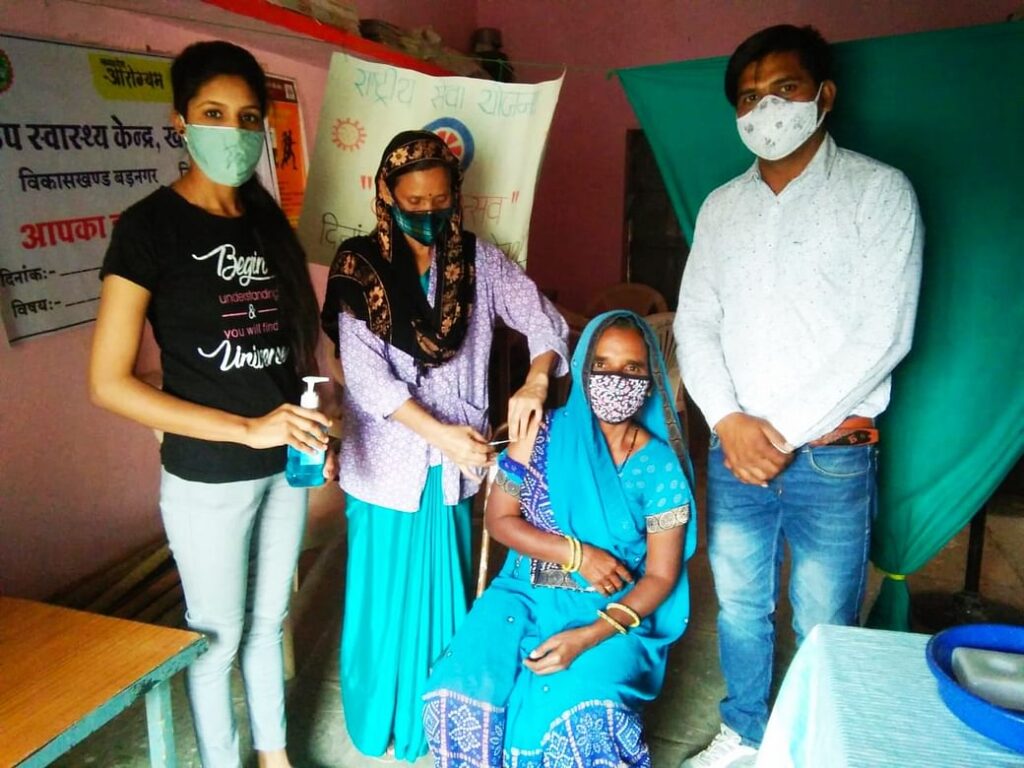
NSS volunteers of Bhartiya College present at the Corona Vaccination Centre along with villagers 
FP PHOTO

Ujjain: 

During the Tika Utsav, the girl students of the NSS unit of the Bhartiya College spread awareness on Covid-19 vaccine among people in the rural and urban areas of the district.

They toured Kharsodkhurd, Lekoda, Javasia, to make people aware about the importance of vaccination and provided information about their nearest vaccine centre.

B Sc student Seema Sediwal said that we helped many people get rid of misconceptions about vaccination.

BA student Pooja Patel lead the residents of village Lekoda to the nearest vaccine centre.

B Com student Anjali Porwal told that people in the Mahakal Vanijya area said that they are waiting for the people around them to get vaccinated.

Porwal asked them to lead from the front, get vaccinated and then encourage people around them for getting jabs and contribute in the fight against corona.

NSS programme officer Dr Rehana Sheikh said that due to the initiative of the students many people came forward for vaccination.

source: http://www.freepressjournal.in / Free Press Journal / Home> Indore / by FP News Service / April 17th, 2021

My refusal may have affected Bhopal hockey

Bhopal, MADHYA PRADESH :

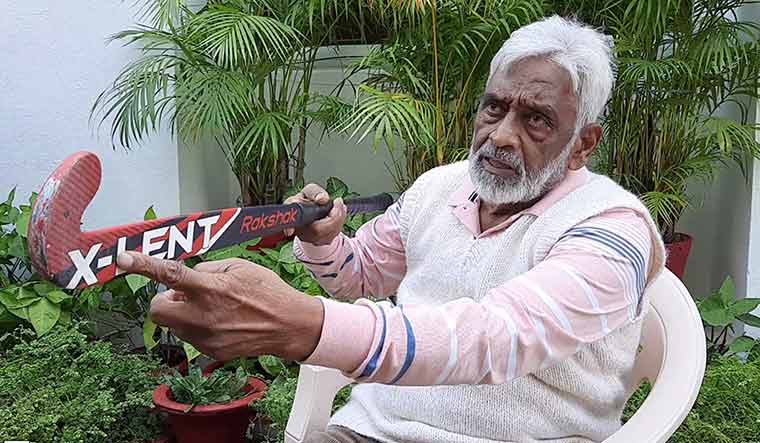
Great memories: Olympian hockey player Inam ur Rehman | Mujeeb Faruqui

We came from a modest background and my father (Abdur Rahim Siddiqui) was a religious, honest, disciplined and upright man. I got the virtues of devoutness, honesty and truthfulness from him and they have stood me in good stead. I would like to narrate an incident from my early playing days as an example. I was playing for East Bengal in 1963. A night before we were scheduled to play a crucial match against arch rivals Mohun Bagan, which was the top club then, I was called to the home of the Mohun Bagan president Dhiren Dey, the owner of Dey’s Medicals.

I was offered a Rolex to not score the next day. I said: ‘Dada, you keep the watch and if a goal is to be scored tomorrow, I will score it.’ As it turned out, I scored and East Bengal went on to become champions that season. This incident later became public and brought all the Bhopal players a lot of respect in Bengal. I played 10 years in Bengal, though I joined Mohun Bagan the next year at higher wages.

I was instrumental in Mohun Bagan winning all four major national tournaments in 1964. As a result, I was called up to the 1964 Olympic trial camp. During the camp in Jalandhar, Ashwini Kumar, the president of the Indian Hockey Federation, offered me a job with the Punjab Police (Kumar was a senior cop) though I was still only a student. But, keeping in mind the focus on education in my family—my siblings studied till doctorate level—I refused as I was not yet a graduate.

Kumar was unhappy and this resulted in me not being selected in the Olympic side despite being highly rated and performing outstandingly against Olympics host Japan the previous year. There was also the historic reason of Bhopali players migrating to, and doing well for, Pakistan. The resultant negative sentiment further hampered my chance of making it to the 1964 team.

In retrospect, I feel that my decision to refuse Kumar’s offer turned out to be a historic blunder not only for me, but for all Bhopal hockey players. He had made me an irresistible offer that would have allowed me to continue my studies. I was also offered an attendant to take care of all my needs, but naive as I was, I simply decided to say no. Had I said yes, the negative sentiment against Bhopal players may have reduced and many more talented Bhopal players would have found places in international and Olympic tournaments.

I was included in the Mexico 1968 camp and this time, luckily, our coach was dada Dhyan Chand. I was dropped again, but Dhyan Chand refused to sign the team list unless I was selected. Thus, a Bhopali made it to the Olympic squad after 20 years. But, I was not fielded in any of the initial matches. Then there came a crucial match against Japan, which we had to win to get into the semi-final and I was included in the team given my record against them.

The Japanese team walked off to protest a penalty stroke awarded to us after I was pushed down, and were disqualified. The movements by me that could have led to goals were then calculated and we were awarded five goals. I was not fielded in the semifinal and the Indian team lost to Australia. Then for the bronze medal, I played again and we easily beat Germany (2-0). Pakistan won gold; we were far better than Pakistan and would have easily beaten them had we reached the finals. I later joined Indian Airlines and formed its first team by drafting in seven boys from Bhopal. I captained the team for many years and it became one of the top teams in India.

As told to Sravani Sarkar

source: http://www.theweek.in / The Week / Home> The Week / by Inam Ur Rehman – as told to Sravani Sarkar / July 18th, 2021

A family repertory: The contribution of the Alkazi and Padamsee clans to Indian theatre

Pune, MAHARASHTRA / NEW DELHI :

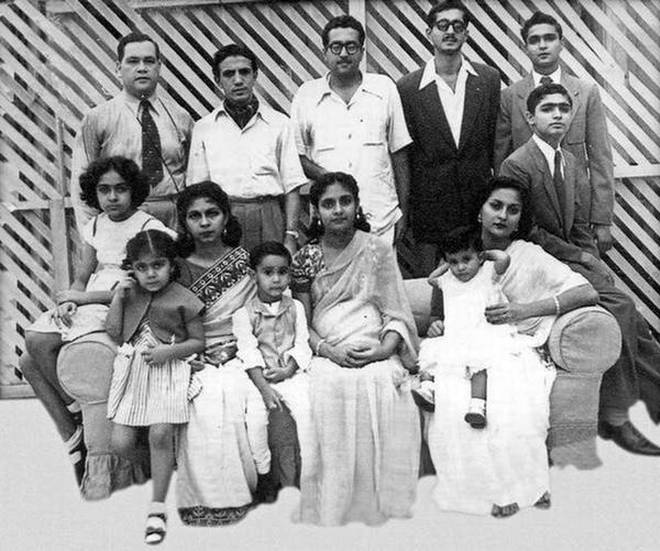
The Padamsee extended family with Ebrahim Alkazi and Alyque Padamsee standing second and fourth from left, respectively   | Photo Credit: From ‘Enter Stage Right – The Alkazi/Padamsee Family Memoir’ . courtesy the Alkazi Theatre Archives

The Alkazi and Padamsee clans have played, and continue to play, an extraordinary role in the history of modern Indian theatre

“Oh god, it’s a page turner!” That was the cry from various family members on reading the first draft of Feisal Alkazi’s family memoirs published earlier this year. Titled Enter Stage Right — The Alkazi/Padamsee Family Memoir (Speaking Tiger, 2021), it is an irresistible, exciting read. The narrative details are gripping, the pace exciting, and viewing the times described in the book of the two families in pre- and post-Independence India through the lens of Feisal allows us to enter a world that we can relate to from stories that our parents and grandparents told us of the times they lived through.

Legendary names

Both names are legendary; the Alkazi and Padamsee clans contributed hugely to the formation and recognition of modernism in both Indian theatre and art. It all started when Bobby, or Sultan, Padamsee, the eldest Padamsee brother — the two families had 17 siblings between them, several of whom would distinguish themselves in theatre and the arts — had to return to Bombay after just six months as a student at Oxford due to the outbreak of World War II. What followed was a period of creative efflorescence as

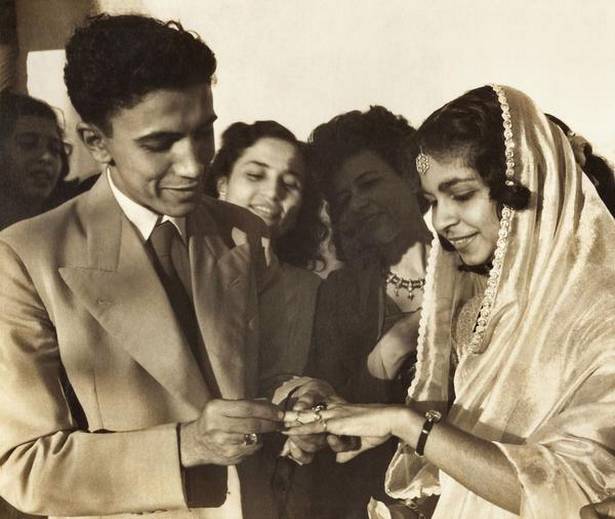
E. Alkazi weds Roshen, October 1946   | Photo Credit: Photo Credit: From ‘Enter Stage Right – The Alkazi/Padamsee Family Memoir’ . courtesy the Alkazi Theatre Archives  

Bobby penned more than 100 poems, drew, painted watercolours and, one day in 1943, gathered a group of keen college students around his mother, the Padamsee matriarch Kulsumbai’s, horseshoe-shaped dinner table weighed down with mouth-watering Khoja cuisine. Bobby announced a plan to launch their own theatre group, the aptly named Theatre Group, as an alternative to commercial theatre, inspired by the group theatre movement of 1930s’ New York. One of those in attendance at that dinner was the young Ebrahim Alkazi.

Human angle

The group would flourish over the next few years, and court controversy with productions like an adaptation of Oscar Wilde’s Salomé, in which Bobby’s 19-year-old sister, Roshen, performed the risqué dance of the seven veils. Bobby would die by suicide aged just 24 in 1946, but the group went on, reaching its zenith in the coming decades, and three of his disciples married his sisters to found a cosmopolitan clan — including Ebrahim, who married Roshen. These were heady times of enormous intermingling, set in the dying days of the Raj and the dawn of Nehruvian India. The search for a new way of living creatively through a rich cultural life that was looking for a unique national identity drew in a very intense and close-knit community and family theatre with a galaxy of close friendships between authors, poets, painters, musicians and actors. As Feisal comments in the memoir, “Going to London together in 1947, there was a Roman Catholic like [F.N.] Souza, a Muslim like my dad, a Jew like Nissim Ezekiel, great friends like Krishna Paigankar and Akbar Padamsee, the idea that they were from different communities was not in anybody’s mind at all… we were always in and out of each other’s houses as well, in my family it was all the artists as well as the theatre people. We grew up with that — it gives a human angle to all these great giants that art historians write about.”

The cover of ‘Enter Stage Right — The Alkazi/Padamsee Family Memoir’  

After training at the Royal Academy of Dramatic Art in London in 1947, Ebrahim returned home and rejoined Theatre Group. However, following a rift with others in the group, he left and founded his own Theatre Unit company at the Bhulabhai Desai Memorial Institute in the 1950s. The Institute played an important role in nurturing modern Indian art and drama, and Ebrahim

found a space for uninhibited creativity there, before he moved to Delhi in 1962 to head the National School of Drama for 15 years. Over the years, his contribution to widening the scope, subject matter and audience for Indian theatre would be extraordinary, as would those of his brother-in-law Alyque Padamsee, Mahesh Elkunchwar, and Safdar Hashmi. Alyque, known for directing productions ranging from the English version of Girish Karnad’s Tughlaq to Jesus Christ Superstar, has also been called the father of Indian advertising, and played Jinnah in Richard Attenborough’s Gandhi. His first wife was Pearl Padamsee, a stage and film actor, director — her oeuvre included Godspell, the first big musical produced in Mumbai — and producer. Their daughter, Raell Padamsee, runs her own production house, ACE, in Mumbai.

Home to stage

The rich family legacy also continues through Ebrahim’s son Feisal, who started devising plays with friends in Barry John’s Music Theatre Workshop in the early 80s. Although theatre is his first love, Feisal wears many hats — theatre and television director, author, educationist, counsellor, filmmaker and founder of Ruchika Theatre. His works include Noor, a sympathetic, gendered lens on Noor Jahan and Mumtaz Mahal; A Quiet Desire, the story of Rabindranath Tagore and of his brother and sister-in-law Kadambari; the adaptation of Kipling’s The Jungle Book into a coming-of-age story, retitled Yeh Bhi Jungle, Woh Bhi Jungle, in which the character Mowgli epitomises every important transition of adolescence in his search for identity.

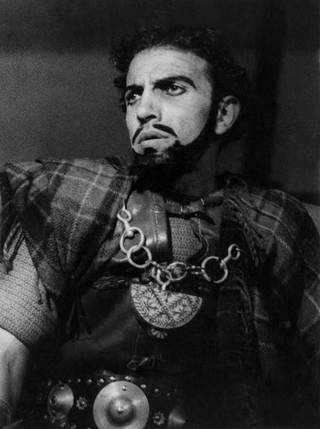
E. Alkazi as Macbeth in a production directed by him   | Photo Credit: From ‘Enter Stage Right – The Alkazi/Padamsee Family Memoir’ . courtesy the Alkazi Theatre Archives

Along with his sister, Amal Allana, and her husband, Nissar Allana, Feisal has strongly believed in the mixing of generations in creative work. “I make it a point that the infusion of the next generation in all the years of Ruchika is so crucial. All our kids are there and the people who started it… to keep the generations going and learning from each other.” Radhika, Feisal’s wife, an accomplished actress and arts educator, says, “It was so new to me, this world — in the family, in the home, in the drawing room — your furniture would be on stage, your clothes would be on the stage.” When Zohra Sehgal worked with Feisal in the Ruskin Bond serial Rusty, she found herself wearing a costume that was from Radhika’s trousseau. Feisal recalls her saying, “Hamare gharon mein aise hi chalta hai” (This is how it is in our homes).

The story of these two families, who played such a vital role in the history of theatre and art, is an imperative chapter in the country’s socio-cultural history.

The writer is a Delhi-based artist, arts educator, curator and researcher.

source: http://www.thehindu.com / The Hindu / Home> Society> Spotlight / by Kristine Michael / July 10th, 2021

‘I chose studies to stay sane:’ Kashmir man looks back at 11 years in Gujarat jail under anti-terror law

Srinagar, JAMMU & KASHMIR :

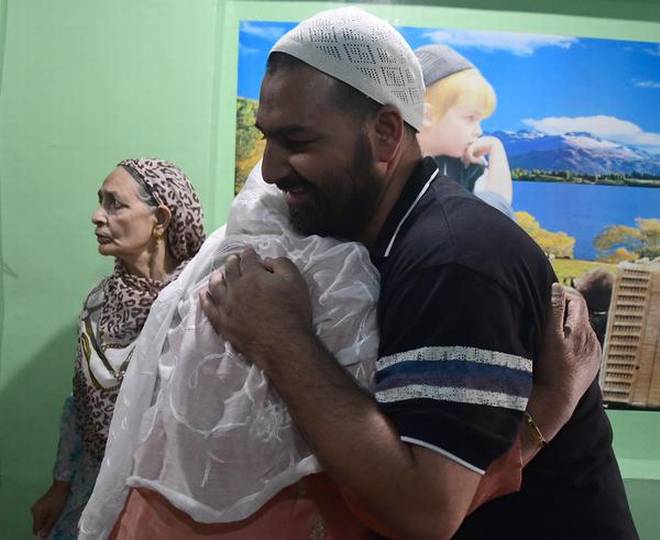
A relative hugs Bashir Ahmad Baba who is acquitted of all charges in Rainwari area Srinagar, Wednesday, June 30, 2021.   | Photo Credit: Nissar Ahmad

He was acquitted recently by court, which said there was not enough evidence to prove charges levelled against him

Back home after 11 years of detention on unproven charges, Bashir Ahmad Baba , 44, from Srinagar’s Jogi Lankar area, wants to just remember his post-graduate degrees and diploma certificates he earned in his 8×10 jail cell and the letters of his now dead father.

Mr. Baba, booked under the Unlawful Activities (Prevention) Act (UAPA) in 2010, was acquitted of all charges this week by a Gujarat court.

“I decided to keep myself busy in a constructive way in the jail. I chose studies to stay sane. I completed a post-graduation course in Urdu and other diploma courses,” Mr. Baba said, who is busy meeting his friends, neighbours and relatives, whom he was seeing for the first time in 11 years.

“The look of most people have changed,” he added.

The jail authorities, Mr. Baba said, helped him with study material and met his requirements to complete the courses.

Mr. Baba, who had a computer degree then, was just 33 when he decided to attend a camp management course for post-cancer cases in Ahmedabad in February 2010.

“Within six days of my arrival in the city, I was picked up by the Anti-Terrorism Squad (ATS) team. Later, in March, I was produced before the media. I did not even know what the charges were as the charge sheet was in Gujarati,” Mr. Baba recalled.

The Gujarat ATS booked Mr. Baba on charges of recruiting boys into militancy and affiliation with Hizbul Mujahideen handlers across the border on email and phone. He was charged under the IPC and UAPA.

“It was a long struggle to prove my innocence. I have to nurse the wound all my life for not being able to participate in the final rites of my father in 2017,” Mr. Baba. His father died of colon cancer and bail was denied to him on the occasion.

Mr. Baba has a metaphoric way to explain his prolonged tenure in the jail and the visible changes he observed in Kashmir now. “There are smartphones everywhere. I remember the phones would run by pressing buttons and not screens then,” he said.

His mother, who met him once in the jail in 11 years “only after selling gold ornaments for tickets and stay”, said, “I had given up on everyone. I had faith in Allah. When Baba left home in 2010, I had bid him saying ‘Ghas Khodayas hawali’ [Go and Allah be your protector]. And Allah has returned him to me,” she said.

Mr. Baba wants to start afresh. “I am hopeful of a good beginning now,” he said.

The Anand district court released him this week, saying there was not enough evidence to prove the charges levelled against him.

source: http://www.thehindu.com / The Hindu / Home> News> National / by Peerzada Ashiq / Srinagar – July 03rd, 2021

From Kerala to Kashmir: A young woman’s solo adventure

SAUDI ARABIA / Kozhikode, KERALA :

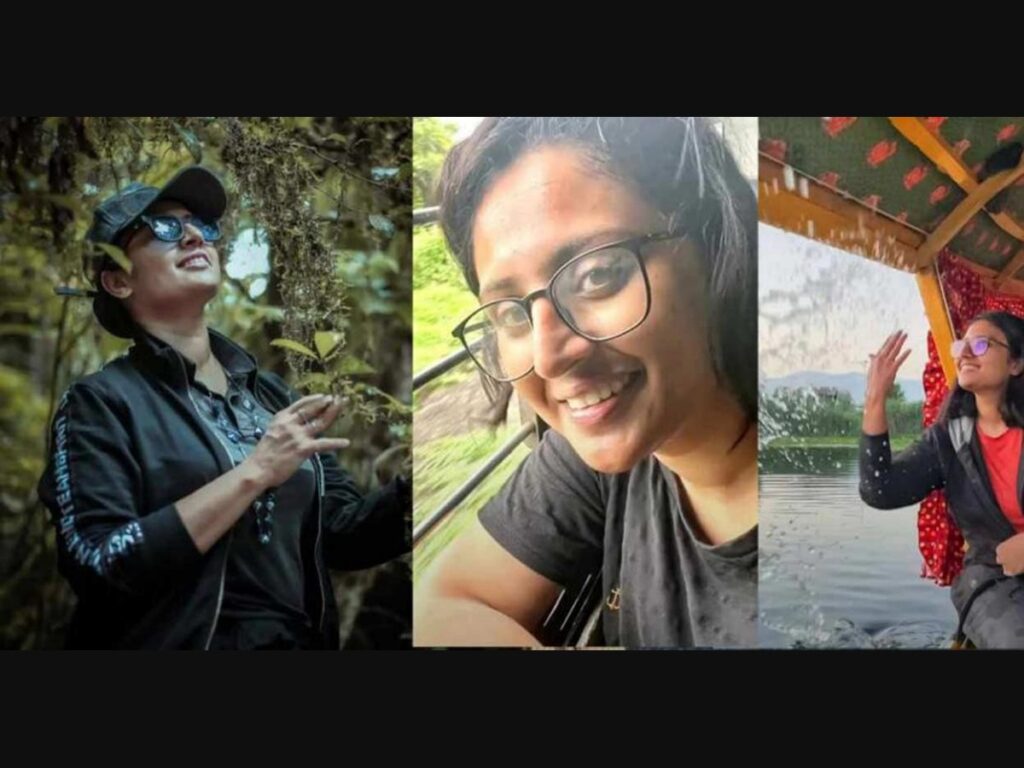
She was not allowed to go on school trips. There was a reason behind it though. She had a habit of wetting her bed at night. Since then she wanted to travel, savour in the free-spiritedness of exploring the world alone. And Amish Mushabir has come back after embarking on a solo trip to Kashmir.

This entrepreneur and mother of two kids took to Kashmir without any prior planning on a stringent budget. She savoured the snow-capped mountains, luminous lakes, and the gorgeous gardens before heading back.

Love for travelling is hereditary

Amis is Tirur Kainakkara Mohammed Ibrahim’s second daughter. Till the age of 40, Ibrahim travelled travelled the world. He came back and married at the age of 40. Her mother hails from Kozhikode. Five years ago he passed away. Amis has inherited his love for travelling.

Amis after finishing her MBA got married at the age of 21 and settled in Saudi Arabia. She worked in an American Company in Saudi for 10 years. Her husband Mubashir, who works as an HR Manager in a Saudi company is aware of her wanderlust.

From Saudi to home

There was a restriction for women to drive alone in Saudi. But Amis would take time off to travel despite the restrictions at GCC.

Two years ago, she came back to India. She had two things planned- a place to pursue her psychology and another to take up her love for travelling. Through a vlog called Travel Badaais, she hoped to chronicle her solo travels. But lockdown put a lid on her plans. Earlier she would book the best of resorts, chart route maps to ensure safety before getting ready to travel. But this time she decided to dodge such safety measures and travel like a common man.

Heaven on earth

So Amis decides to travel to Kashmir without any prior plans. From Kerala, she reached Delhi by train. The plan was to reach Srinagar from Delhi by road. But they weren’t allowing tourists to take the road to Srinagar. That’s why she decided to take a flight to Srinagar. From Srinagar, she hired a scooter and scouted the length and breadth of Kashmir. While travelling to Gulmarg and Pahalgam, she would meet villagers on the way and uploaded them in her vlog. In 8 days she covered 800 km. She would make do with the offered food and lodging and explore Kashmir. No wonder it turned out to be one of the most memorable days of her life.

A few unusual places to see in Kashmir

Kokernag: Which translates as “Hen shaped springs” is 80 km from Srinagar and 25 km from Anantnag and is situated 7,000 feet above the sea level. You can see a collection of freshwater springs, which is also the largest freshwater spring of Kashmir. Trout fishing is hugely popular in this part of the world, and they are even sold to tourists. It’s also famous for Namdah, handicrafts, Gabbah carpet and shawl weaving. You can also catch several places of worship like Hazrat Baba Reshi, Shilagram Temple, Goswami Gund Ashram, Hanuman Temple, Sita Temple, Nila Nag, Ganesh Temple, and Shiva Temple.

Daksum valley: This valley is located in Bhringi River which is ahead of the Mughal Gardens of Achabal. It offers something for everyone—stunning scenery, mountains, picnic spots, plenty of romantic getaways, cone-bearing forests; hidden grassy meadows and snowy mountains. You can see the beauty of natural springs and embrace the lifestyle of traditional villages. It is also a perfect place for camping and trekking. The path that leads to the Simthan Pass is exquisite so are the wooden slopes on either side of Daksum which are covered with grass coating. It’s also a great place for trout fishing.

Gurez: This high-altitude Himalayan village is perched at a height of around 2400m and is 86km from Bandipore and 123km from Srinagar. The valley is encircled by snow-coated mountains and presents a spectacular view of the Kishanganga River flowing through the valley. It’s considered as one of the most amazing places to visit in Kashmir as this valley gives shelter to a small number of exotic wildlife including snow leopard and brown bear. Due to heavy snowfall, Gurez is cut away from the world from November to May. By this time Razdan Pass will be completely snowed out. The tourism department of Kashmir provides Gurez Helicopter services for tourists to promote tourism. Trekking can be dangerous due to its close proximity to the border. However, the scenic landscapes, the beautiful green turf on the woodlands, fishing in Kishen Ganga River, Potato and maize fields posses distinctive charms of their own. Endless forests cling from the bottom of the valley to the peaks; mesmerizing beauty of the Habba Khatoon Peak offers a blissful experience to the tourists. It is difficult to describe the colours of Gurez valley without visiting it once in life.

Tulail Valley: Adding Tulail Valley to your Kashmir Tour list is a great idea. In fact, it can be covered on the same day trip from Gurez as it is a Himalayan sub–valley of Gurez. The road to Tulail from Gurez passes through the scenic landscapes of the Kishanganga River. En route, you will cross the villages of Barnai, Chakwali, Kashpat, Zargai and finally, you can get to see the Purani Tulail Village. The scenic landscapes are a visual treat to your senses. The virgin valley which keeps flourishing in summer is ideal for Instagramming. Again, you can find a lot of freshwater trout here. The green mountains and the flower meadows add a special beauty to this valley. You need a permit to enter the Tulail region from Dawar Police Station. As the village is on the LOC, it is compulsory to seek a series of permissions from Army Camps and SP of this area.

Bangus Valley: This hidden gem is located in the north of Kashmir in the Kupwara district and lies within the Handwara sub-district. The valley is positioned close to the line of control between India and Pakistan and has some really interesting ecological areas surrounded by green grasslands,, meadows, and springs. It is even proposed to be a biological reserve as it produces a fine quality of grass for cattle which also has a medicinal value. Try the spring and summer seasons (April to June) as the weather is pleasant and even monsoon months (July to September) are favourable.

Poonch: Undoubtedly one of the most beautiful places in Kashmir, you can see lush green meadows, snow-capped mountains and the eighteenth century Poonch Fort which is spectacular to say the least. The seven lakes of Girgan Dhok have to be in your itinerary, alongside many religious shrines like Baksh Sahib and Gurudwara Nangali Sahib.

Jama Masjid: This mosque, situated in Nowhatta is considered a pivotal one in Srinagar. This was constructed by Sultan Sikandar during the 1400 AD and was expanded by Sikandar’s son, Zain-ul-Abidin. You’ll find 370 wooden pillars in this mosque and a mesmerizing courtyard – both of them are considered to be the major highlights of this mosque.

Aru Valley: Aru Valley, put together against the snow-clad peaks of the Himalayas is only 12 km from Pahalgam. The valley serves as a base camp for several treks and lakes including Tarsar Lake and Kolhoi glacier. It is also home to the Aru River which is a tributary of the Lidder River. Apart its scenery, you can also try horse riding and hiking. During the winter months, the view of the whole valley covered with snow is a comfort to the eyes.

Amis will be the guide

That’s her dream! A travel institution along with her training academy. She wants to organize travel vacations for single and group tourists. Thankfully, both her children (Faila and Faas) enjoy travelling. Her next plan is a trip with her daughter.  

source: http://www.onmanorama.com / OnManorama / Home> Travel / by V Mithran / July 08th, 2021

M’luru: Mohd Shameer Katipalla appointed president of Surathkal Block Congress minority wing

Surathkal, KARNATAKA :

M'luru: Mohd Shameer Katipalla appointed president of Surathkal Block  Congress minority wing - Daijiworld.com

Mangaluru: 

Mohammed Shameer Katipalla has been appointed the president of Surathkal Block Congress minority wing.

He is the son of P Basheer Ahmed, a former corporator of 3rd ward, Katipalla.

He is the owner of Saheb Contractors and Builders as well.

Mohammed Shameer Katipalla is also the secretary of Mohammad Salih Juma Masjid, Baikampady, president of Guys X1 Youth Council, Katipalla, and vice president of Katipalla Sangha Samstegala Okkuta.

source: http://www.daijiworld.com / Daijiworld.com / Home> Karnataka / by Daijiworld Media Network – Mangaluru (ANK) – July 11th, 2021