Film stunt director Fayaz Khan wants to set up institute in Kodagu
HIGHLIGHTS
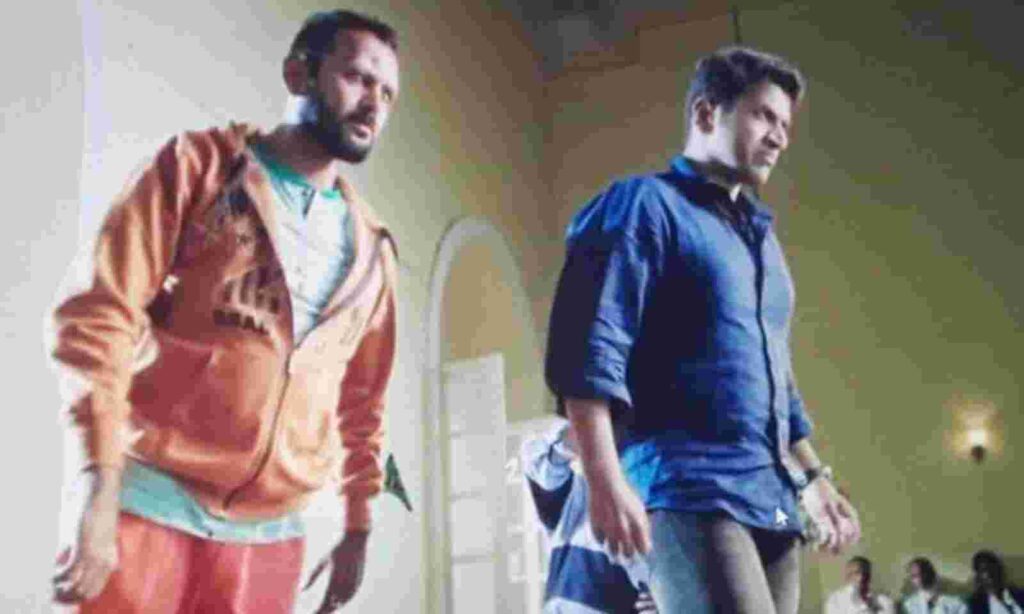
Fayaz Khan who has directed stunts and acted in 1,560 films in various languages wants to set up an institute to train youths in the art in his native Kodagu district.
Madikeri:
Fayaz Khan who has directed stunts and acted in 1,560 films in various languages wants to set up an institute to train youths in the art in his native Kodagu district. As small boy in 1980s, he sold peanuts in cinema halls to support his family in Gonicoppa, a small town in Kodagu district. Sounds like a film story? But it’s true. Fayaz Khan who directed stunts for 1,560 films till now once sold peanuts in cinema halls and never studied beyond class III.
Born in a poor family and fond of films, Fayaz Khan left home in 1985 and landed in Bengaluru in search of his dream. He came to Gandhinagara and begged film directors for a chance and got a small role in Tamil film Idiyadagam. After seeing his performance, many directors gave him a chance. However, his passion lay in stunts. Later he became a stunt artiste and worked for 1,560 films in various languages including Kannada, Hindi, Tamil, Telugu and Malayalam.
Fayaz started his own stunt artists association and trained more than 1100 artists since the outbreak of Covid-19.
Apart from being a stunt master, he acted with such stalwarts like Dr Raj kumar, Vishnuvardhan, Rajanikanth, Salman Khan, Akshaya Kumar, Mammootti, Mohan Lal, Chiranjeevi, Punit Raj Kumar. Speaking to this reporter, Fayaz said that there is a good environment for films in Kodagu. “There is a lot of employment potential in film industry for youths from the tourism district if we train them properly,” he said and expressed his wish to open a film training institute in Kodagu to tap hidden talent.
source: http://www.thehansindia.com / The Hans India / Home> News> State> Karnataka / by Coovercolly Indresh / Hans News Service / July 09th, 2021
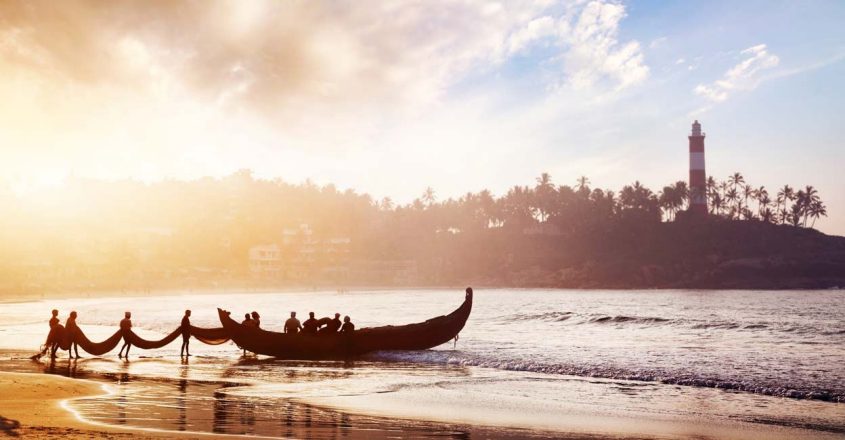
Forgotten amidst waves of bad news, including geopolitical conflicts, environmental disasters and the global pandemic, is the humanitarian crisis caused by a civil war that began in 2014 in the fabled country of Yemen. For several centuries, the southern Arab country was a bridge between Kerala and lands to the west such as West Asia, Africa and Europe.
It was enterprising merchants from modern-day Yemen who began to make use of the monsoon winds to come to Muziris. The word monsoon comes from the Arabic mawsim, which means season. These businessmen lived a pretty globalised lifestyle by splitting their time between the Malabar Coast and southern Arabia at a time when there were no identity cards, passports, visas or even a concept of a nation-state. Some of these Arabs chose to settle down in the Malabar Coast and marry local women.
In a paper for the Indian History Congress in 1976, noted historian S M Mohamed Koya was able to trace the origins of the Malabar Muslim community.
“Some of these Arabs may have come from Hijaz, Oman and Bahrain. However, they were chiefly businessmen from Yemen and Hadramaut and many .Mappila families, particularly those known as ‘tangal’ families trace their origin to this area,” Mohamed wrote.
Interestingly enough, at the time of their migration to India, these merchants probably spoke Hadramautic, a language that belongs to the Old South Arabian subgroup of Semitic. “A large number of Mappila families find their origin in the interior Hadramaut town of Tarim, a wealthy town dominated by Sayyids which was once the intellectual and religious centre of Hadramaut,” Mohamed, who was a professor at the University of Calicut for decades, added.
In the paper, Mohamed stressed the fact that the traders started coming to India well before the advent of Islam, but their presence and established relations with the people of Malabar helped spread the religion in Kerala. “As pre-Islamic traders, the Arabs provided a friendly situation that facilitated the introduction of Islam and as Muslims, they introduced the faith,” he wrote.
Ponnani’s Makhdum family
Ponnani, a historic town that was once a major trading port, is also linked to Yemen. The town, at the peak of its glory, was home to the revered Makhdum family of Islamic theologians. Under Zain-ud-Din Makhdum and his grandson Zain ud-Din Makhdum II, Ponnani became a major centre of Islamic studies and is believed to have attracted students from Java, Sumatra, the Malay Peninsula and Ceylon.
It was also in this coastal town that the Arabi Malayalam or Ponnani script was invented. Since only 28 letters of Arabic orthography were available for 53 phonemes of Malayalam, additional letters established for Persian were used for this script.
Several old Mappila folk songs and works of literature were written in the Ponnani script, which stayed popular among Kerala’s Muslim community until the middle of the 20th century.
It has been on the wane since Indian independence and is taught mainly in a few madrassas in northern Kerala and the Lakshadweep Islands. There is no clear evidence though that this script has a Yemeni connection, but it was the script of choice for the Makdhum theologians.
This brilliant article by Kozhikode-based journalist Nijeesh Narayanan provides insights into the script, which is now in serious peril.
Zain ud-Din Makhdum II’s Tuhfat Ul Mujahideen chronicles the struggles between the people of the Malabar Coast and the colonial Portuguese. The book, originally written in the Ponnani script, describes the fierce resistance put up by the Kunjali Marakkar’s navy along with the Zamorin of Calicut against the Portuguese.
Culinary and cultural impact
There is little doubt that Yemeni elements have given an extra layer of depth to Kerala cuisine. Meen Pathiri and Irachi Pathiri are the results of Malayali and southern Arabic cuisine coming together.
Another dish that found its way from Hadraumat in Yemen to Kerala is Mandi or the famous Malabar Biriyani. Interestingly enough, the Yemeni version of the dish is usually made with chicken or lamb, and not with beef. If the Yemenis did bring Saltah, their delectable stew and the national dish, to Kerala, it did not manage to survive in its original form in the state, although many Malabari families have their own variations with different names.
Professor Mohamed in his paper wrote about how the mingling of the Yemeni immigrants with Malayalis has enriched the society of Kerala. He wrote, “Culturally the Malayalis were as far removed from the Arabs as the high topical scenery of Kerala is removed from the austere landscape of Arabia. But once wedded, the offspring of that union, the Mappilas have remained loyal to both parents.”
Before Yemen slipped into its latest civil war, there was a small and vibrant Malayali community in the country. One can only hope that the geopolitical puppet masters that have brought so much misery to the country allow it to once again live in peace. It is only when peace returns to the country that its millennia-old links to Kerala can be traced and re-established.
(The writer is the author of ‘Globetrotting for Love and Other Stories from Sakhalin Island’ and ‘A Week in the Life of Svitlana’).
source: http://www.onmanorama.com / OnManorama / Home> Lifestyle> Column / by Ajay Kamalakaran / June 28th, 2021
(However) The strength these women brought to the cause has sadly never been recorded or acknowledged, Dr Syeda Hameed said.
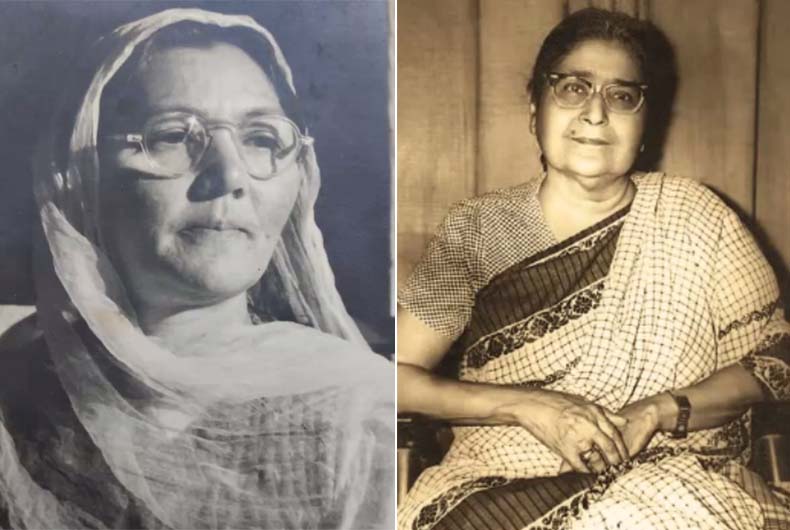
Dr Zakir Hussain’s wife Shah Jahan Begum [Shah Jahan Begum, wife of Dr Zakir Hussain – former President of India and one of the founders of Jamia Millia Islamia in a file photo shared by Dr Syeda Hameed.]
Mumbai:
Highlighting their contribution in the movement the result of which we see today as “Jamia Millia Islamia”, Dr Syeda Hameed said women were a presence and a power in the Jamia from its very inception though it was never acknowledged.
“From its very inception in 1920, women were a presence and a power in Jamia Millia Islamia. But they never emerged as individuals, always overshadowed by men, who were undoubtedly committed, dedicated, and passionate, but so were the women”, Dr Hameed, scholar, author, writer and former member of the Planning Commission of India said while delivering 17th Dr Asghar Ali Engineer Memorial Lecture.
“(However) The strength these women brought to the cause has sadly never been recorded or acknowledged. It’s time to speak of these women, the architects of Jamia”, she said.
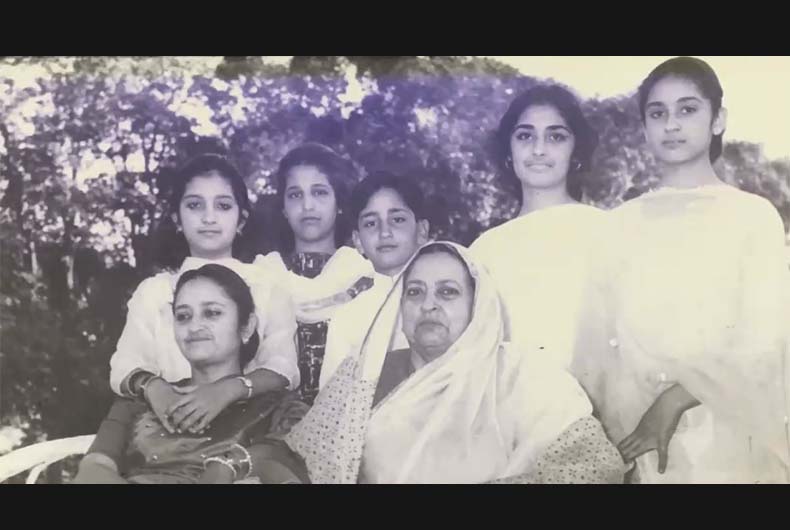
During her lecture, Dr Syeda Hameed especially praised and acknowledged the contributions of Nawab Sultan Jahan Begum – the Ruler of the Princely State of Bhopal, Shah Jahan Begum – wife of Dr Zakir Hussain , Asifa Mujeeb – wife of Mohammad Mujeeb, and Saliha Abid Hussain – wife of Syed Abid Hussain.
Calling them “The Khwateen-E-Awwal of Jamia” – the first women of Jamia, Dr. Syeda Hameed also detailed the last Begum’s contributions in the fields of education, sanitation, public health and her efforts in establishing Aligarh Muslim University (AMU), of which she was the founding Chancellor, and the first and only woman to have served in the position.
“(But) their roles have been diminished and their work remains unacknowledged in the mainstream”, she said in her key-note address titled “Contribution of Muslim Women to Educational Institutions: The Case of Khwateen-e-Awwal of Jamia Millia Islamia.”
Dr Hameed quoted from Saliha Abid Hussain’s speech on Jamia’s Foundation Day in the mid-eighties to prove her point.
“I want to speak of (the) women of Jamia who were like Mughal era Raj majdoors behind Emperor Shah Jahan and the Royal Architects who built the Taj Mahal and never, ever thought of etching their names anywhere on the marble”.
Dr. Hameed also detailed the accounts of Saliha Abid Hussain and Gerda Philipsborn – a German national who later became known as “German Appa-Jaan” of the Jamia.
Dr. Syeda Hameed talked of the jalsas they organised, and their journey from attending events behind the pardah to firmly holding their ground and being in “high demand” at traditionally-male dominated intellectual and literary gatherings and their outspokenness about the rights of women in Islam.
Dr. Hameed talked of the unfinished works of Saliha and the final resting place of Gerda and of Professor Sughra Mehdi, who wrote extensively on the two women and on Jamia, and on the need for their works to be made accessible to more people and in more languages.
Dr. Hameed also recalled Turkish Poet and Activist, Halide Edib Adivar’s series of lectures at Jamia Millia in 1935, and of the early days of the Jamia in Okhla, the basic environment, the lack of electricity, of running water, of roads, and of sidewalks.
“By the banks of river Jamuna, houses were built, modest houses. Very limited income, but plenty of enthusiasm and lots of spirit, and a desire to live together as a human family in which women were the binding force.”
[Begum Saliha Abid Hussain (R) and Asifa Mujeeb.]
While introducing, Begum Asifa, Dr Syeda Hameed detailed how despite coming from a well-to-do family, she chose to live within the means afforded by the newly moved Jamia.
Dr. Hameed’s also remembered the contributions of Begum Syeda Khursheed, who according to her, “was brought up by parents who literally birthed the Jamia” and Shafiqa Kidwai, wife of Shafiqur Rahman Kidwai, former Minister of Education Govt of India. Sahfiqa Kidwai established Balak Mathia Mahal in Delhi for education of girls, and was the member of various apex committees of the Jamia.
“The spirit of the Jamia comes from all these strong and resilient women who collectively built the Jamia and the Muslim women’s movement over decades”, she said.
“That it transcends the test of time and will continue to surface whenever there is a threat to the core values, imbibed in the idea of India, the idea of the university and the idea of Jamia Millia Islamia”, she said.
Professor Zoya Hasan, while throwing more light on the contribution of women in the founding movement of Jamia Millia Islamia talked about Turkish activist, Halide Edib Adivar, who came to Jamia to deliver a series of eight lectures titled ‘Inside India’.
Professor Zoya Hasan said in her lecture series Adivar admired the Jamia movement for its harmonizing intermingling of anti-imperialism and tradition.
“What she found very interesting and impressive was the combination of Indian nationhood with Islamic identity”, Professor Zoya said.
source: http://www.ummid.com / Ummid.com / Home> India / by ummid.com News Network / June 19th, 2021
The right blend of star and actor, he was part of the discovery of cinema in India as a means of mass communication seen today
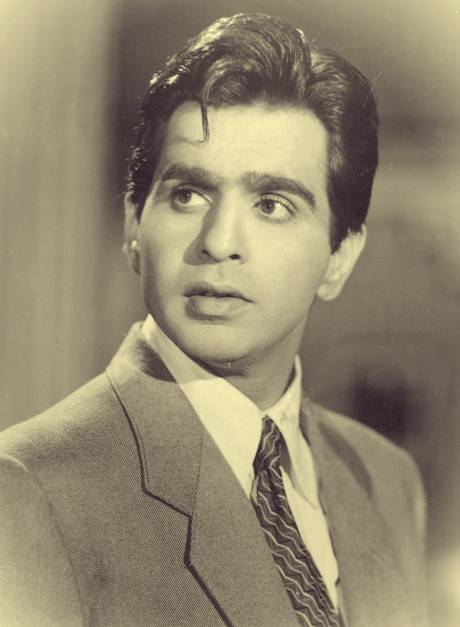
When Marlon Brando was struggling to find a footing in Hollywood, a shy Pathan boy from Peshawar was practising method acting in what was then the Bombay film industry, helping it come out of the Parsi theatre’s influence. As Dilip Kumar transcends to a new stage , the pole star of the golden age of Hindi cinema would be remembered for setting a template of acting for generations to come.
A veritable cultural icon who inspired economist Meghnad Desai to draw parallels between his films and the newly independent India’s tryst with socialism and capitalism in his seminal work, Nehru’s Hero: Dilip Kumar in the Life of India, there is a bit of Dilip Kumar in everyone’s life.
Discovered and later rechristened by Devika Rani of the famed Bombay Talkies, Dilip Kumar, along with Raj Kapoor and Dev Anand, were part of the discovery of cinema in India as a means of mass communication as we see it today. They had had few examples to follow and perhaps it worked to their advantage as each one carved out his own niche.
Out of the three, Dilip Kumar’s naturalistic style never became stale or dated. The right blend of star and actor who could keep both the public and the purist engaged with his craft, he kept his performances subtle, understated but always believable.
Not just his younger contemporaries like Rajendra Kumar, Manoj Kumar and Dharmendra, generations of dependable actors, from Amitabh Bachchan to Shah Rukh Khan and Aamir Khan to Irrfan, built edifices of their performances on the foundation laid by Dilip Kumar. Mr. Bachchan, who played Dilip Kumar’s son in Shakti, once said there was such finality to Dilip sahib’s performances that once he enacted a scene, there was no alternative to it. Irrfan once told this journalist that he often wondered when trained actors like him found it difficult to deal with scars left by tragic roles, how Dilip Kumar, who learnt the craft on his own, came to terms with it. Well, he did approach doctors in London, who advised him to consider lighter roles.
Film historians often label the thespian as the tragedy king for his moving portrayal of a loner who loses everything in love in a series of films such as Jugnu, Deedar and Devdas, but the eight-time Filmfare Award winner was equally compelling as a winsome romantic in Shabnam, Azaad and Kohinoor. Not to forget his intense performances as a revolutionary in Shaheed and a trade union leader in Paigham.
Be it the lawyer who rapes a village girl in Mehboob Khan’s Amar, the journalist who becomes black-marketeer in Zia Sarhady’s Footpath, the atheist in love with a mendicant in Kidar Sharma’s Jogan or the wheel-chair bound Raja Sahib in Aadmi, a role earlier essayed by Sivaji Ganesan, the Padma Vibhushan constantly lunged for complex characters where he was expected to evoke multiple emotions in a single frame.
He experimented not just with characters but also directorial styles. Both Amar and Footpath deal with moral guilt but while Mehboob Khan visualised a mass entertainer, Zia’s treatment was neo-realist. With Tapan Sinha’s Sagina Mahto, he ventured into parallel cinema and earned praise from his contemporaries.
At the time of Mughal-e-Azam, he was the top draw, but the narrative demanded Kumar to play second fiddle to Prithviraj Kapoor, a senior and a friend of his father. He delivered a restrained performance, a subtle counterpoint to the bombastic Kapoor that is etched in the minds of cinegoers. The way he caresses the luminous face of Madhubala with a feather is perhaps the most elegant romantic sequence filmed without a dialogue.
The one that stands out and inspired many adaptations is the dacoit in Gunga Jumna, his ambitious home production where the sophisticated Kumar transformed into an Awadhi speaking rustic who’s forced to pick up the gun.
He played serious roles with such dignity that he didn’t need to be loud to make people laugh. He brought his craft to comic roles as well. In Ram Aur Shyam, the scene that still leaves everyone in splits is the one where Shyam starts playing a poor copy of Ram.
It is this constant urge for variety and chiselling of the craft that the megastar, despite the world at his feet, chose to do only around 60 films spanning over almost five decades. He refused Guru Dutt’s Pyaasa for he found the character similar to Devdas. He said no to David Lean for Lawrence of Arabia as he was not keen to commit the amount of time that the director was asking from him.
In a BBC interview, he once said that when the director came to him with a 30-year-old character, he tried to find and build the first 29 years of his life from the script so that, “I start identifying with the character. Often directors leave it to me to interpret the character.”
Known to help out his colleagues in finding a rhythm that suited the narrative, the actor is said to have ghost directed many films such as Gunga Jumna, Ram Aur Shyam and Aadmi.
He took the preparation for a character to a different level. For “Madhuban Mein Radhika Nache Re” from Kohinoor, where he played sitar on screen, he trained with sitarist Ustad Halim Jaffar Khan for six months.
It is said while filming for Dil Diya Dard Liya, he ran four rounds of the studio because in the next sequence he was supposed to snatch a rifle from Pran, playing the villain, in a state of breathlessness.
Even in his second innings, when his mannerisms became marked, he impressed with power-packed performances in Shakti, Mashaal and Karma.
Off-screen, as a philanthropist, he always maintained that “industrialisation has made us narrow-minded”. He would always say “being developed and being civilised are two different things”.
In the late 1960s, when an argument was made about films promoting alcoholism and that they could be used to promote population control, Dilip Kumar said he was for promoting good values through films but that didn’t mean films become “instructional” or a “vehicle for propaganda”.
A connoisseur of the finer things of life, he had an abiding love for poetry and literature. Often, when he had to sidestep a controversial topic, he would come up with an Urdu couplet that would capture his emotion on the subject. Once when he was asked about his relationship with Madhubala, Kumar invoked Sahir Ludhianvi: “Mohabbattark ki maine, garebaan see liya maine, zamane ab toh khush ho, zehar ye bhi pi liya maine” (Love I have renounced and sewn the collar [of the soul/ conscience] that was ripped; O world, now you be happy, for this poison as well I have sipped).
Deeply entrenched in Indian ethos, he never got over his childhood connection with his home town Peshawar where the young Yusuf Khan would be found dribbling a football or listening to stories at Qissa Khawani Bazaar. He remained a symbol of the undivided India as the Pakistan government bestowed upon him its highest civilian honour, the Nishan-e-Imtiaz. He wrote to the then Prime Minister Atal Bihari Vajpayee that if he considered it prudent, he would surrender the award. However, many feel it made his wait for the coveted Bharat Ratna longer.
source: http://www.thehindu.com / The Hindu / Home> Entertainment / by Anuj Kumar / New Delhi – July 07th, 2021
A grand-daughter connects with her nonagenarian grandfather Mohammed Nizamuddin, a trend-setter of football in Mysore State
Indians have seen many names coming forth. It could be in the field of science, technology, freedom struggle, sports etc. — few known, few unknown and a few remained in oblivion.
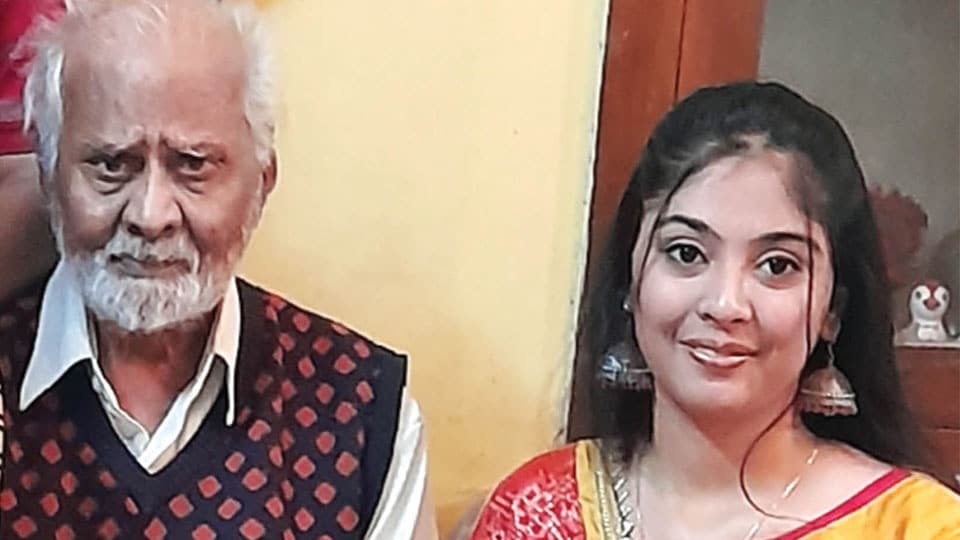
One such sportsman was a young boy from Kolar, my grandfather Mohammed Nizamuddin, who was a terrific football player and was the trend-setter of football in Karnataka, then called the Mysore State. He played and won many matches. Now as a nonagenarian, he is leading a simple life as a retired Tahsildar, enjoying his success in life with utmost gratitude faraway from fandom.
Journey of football dream
It was a normal day. Out of boredom (lockdown effect) I just thought of talking to my grandfather about his football days. But looking at the sparkle in his eyes and hearing his excited voice, my time-pass conversation became one of the most enlightened high voltage story-telling session. He began with his life as a kid who played football as a mere game, but it was in his teens that football became his passion. He started playing for his University first and then for his State.
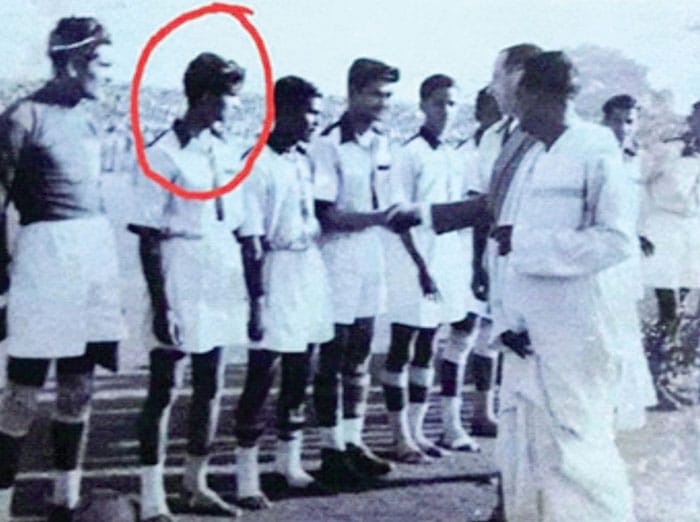
Mohammed Nizamuddin (standing second from left) and his team seen with the Secretary of All India Football Federation.
Born on June 20, 1929, his football career as such started with Mysore University, where he was the captain of his football team and he, along with his team, won many trophies. His University Professors and those who used to see his matches started encouraging him. He was also much appreciated among his team members and slowly his popularity began to grow.
Looking at his skills, a well-known team of Karnataka at that time “The Bangalore Blues” approached him and he became a part of that team. As the saying goes “It takes a right moment to strike”, that moment in my grandfather’s life came as an opportunity to play the Santosh Trophy for his State (then Mysore State).
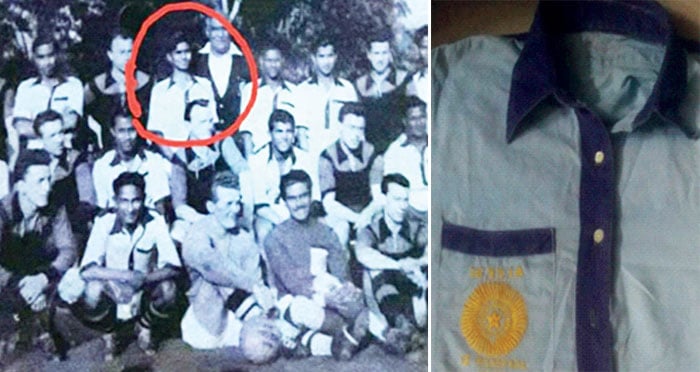
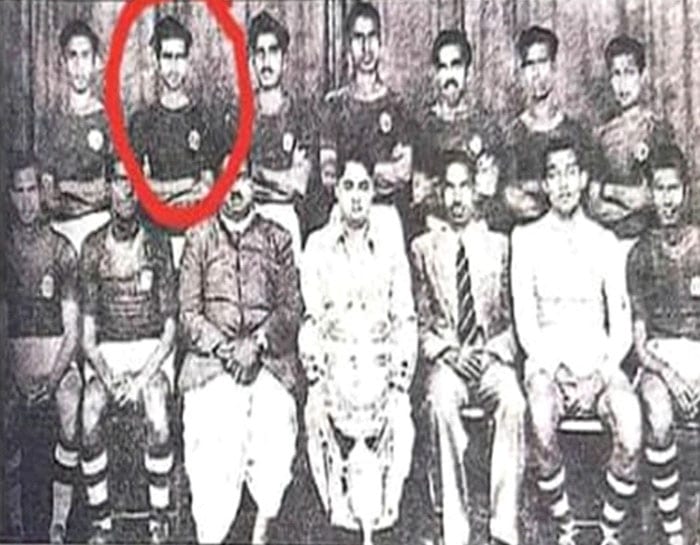
Mohammedan Sporting Club members with the Austrian team at All India Football Federation in 1953. The encircled person is Mohammed Nizamuddin.
1952 – SANTOSH TROPHY
Santosh Trophy is a State-level Football Tournament where many States participate. My grandfather played for the Mysore State. Mysore State in 1956 had won this trophy after a wait of 6 long years. The State was playing well and had entered the semi-finals. It was an interesting nail-biting match. The match was against Orissa (now, Odisha) and Mysore State (now, Karnataka) won by two goals — both scored by my grandfather (Lo, a new star was born in Mohammed Nizamuddin).
Then came the finals. As usual there was a lot of expectancy from the star goal scorer. The match was against Bengal (a very strong team of that time). Mysore won by a goal (again a right goal at right time) and guess what? That one winning goal was scored by none other than Mohammed Nizamuddin.
After six years, Mysore had finally won the Santosh Trophy and so the celebration went on for days. He became a sensation among the youths, who copied his walking style and waited for hours just to shake their hands with him. Such was his euphoria. He also played for the Netaji Club in Mysore.
Later he was invited by Mohammedan Sporting Club (Kolkata) to play for their Club. For nearly 8 years he was with the Mohammedan Sporting Club playing several tournaments like Rover’s Cup, National Championships and scoring many winning goals.
Bangalore Blues team (Pic. courtesy: Times of India).
In 1956, Mohammedan Sporting Club made a major come back in the Rover’s Cup. They won the trophy after a gap of 12 years and Mohammed Nizamuddin was responsible for the major goals scored, which led to the lifting of the Rover’s Cup in 1956 and 1959 matches.
Throughout his career span of 15-20 years in the national football, he had come across many people from different backgrounds like general public, celebrities etc. and not to forget the numerous countries he has visited. All of these have had a great influence on him (he keeps telling me and my sister about the different places he visited, their culture etc.). For great achievements it requires great support too. One such strong pillar of support to my grandfather was his father Abdul Razaq. Along with his father, there were many people like his University College Principal, his Professors, his coaches etc., who encouraged and supported him to the fullest. They played a key role in his success too and he is forever grateful to them.
In the 1960s, he gracefully retired from his football career. A very simple man with simple but strong principles, he never took his celebrity status to his head. He did not crave for limelight instead he opted for a simple life as a Government servant (Tahsildar) and discharged his duties with utmost sincerity.
Even today, when he looks back at his life, he says with pride in his eyes that he was neither dependent nor a burden to anybody in the family and that God blessed him with the best.
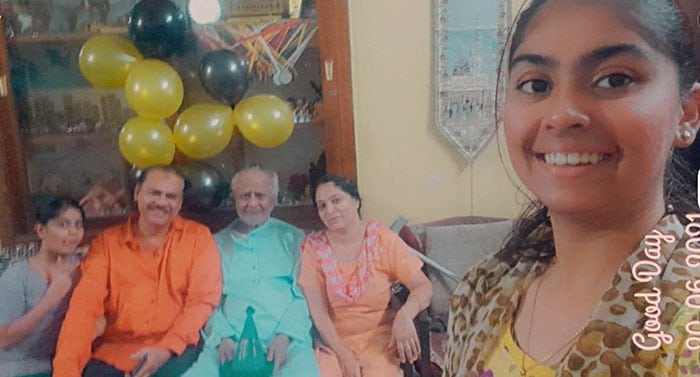
Mohammed Nizamuddin with his family members on his birthday celebration this year.
A BA graduate from University of Mysore, Mohammed Nizamuddin served as Tahsildar in many places including Gundlupet, Yadgir, Sullia and Malavalli. After his retirement, he served as Estate Officer of WAKF Board in Srirangapatna.
His wife passed away 9 years ago. He has 4 children (1 son and 3 daughters). He stays in Bannimantap A Layout in Mysuru with his son, daughter-in-law and two grand-daughters.
source: http://www.starofmysore.com / Star of Mysore / Home> Feature Articles / by Areebah Tasdeeq / July 07th, 2021
Manjuwara Mullah from the north-eastern state of Assam is a social activist whose initiative Amrapari has changed the lives of many women in the poorest region of Assam. This is her story.
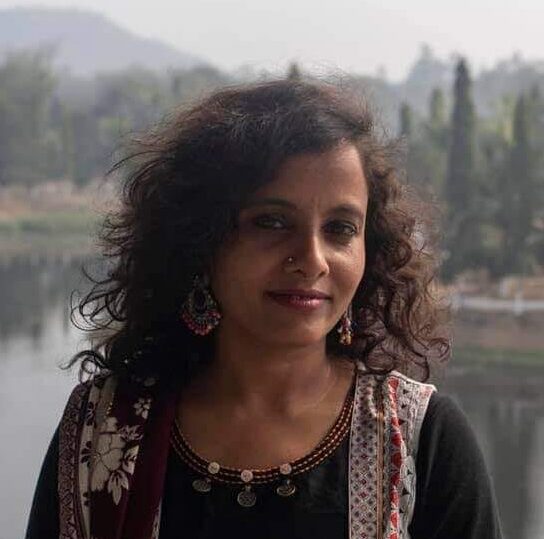
Manjuwara Mullah | Picture by Amrapari
Guwahati :
As a woman social activist Manjuwara Mullah from Barpeta district’s Rupakuchi village in the north-eastern state of Assam would get anxious when distress phone calls from numerous women from the Char areas would pour in seeking her help to get their male family members back home during the Covid-19 lockdown. She faced twin problems — getting the sole breadwinners of the families back home and ensure income for these people so that the impoverished families can sustain the pandemic as well as the economic hardship.
The people of the riverine sandbanks, known as Char areas in Assam, are one of the poorest in the state, have the highest illiteracy rates, a fewer number of landholders and very limited source of income. This crisis, along with the devastating yearly floods force massive labour migration from Char areas of the state to southern Indian states where they work as daily wagers.
For 36-year-old Mullah facilitating the process of getting the migrant labourers back home was an immensely difficult job, and as the migrant labourers took the uphill task of travelling thousands of kilometres to their homes, she started to focus on the women members of the migrants’ families and how they could be engaged in something that earns them money to fend for their families.
Being an activist and with academic exposure to the workings of non-profit organizations, Mullah incorporated her learnings from the sector to form a collective called Amrapari, which eventually turned into a non-profit organization, intending to employ the organic and traditional knowledge of the women from Char areas to provide them financial independence.
Amrapari, a Bangali as well as Miya (dialect) phrase for “we can”, initiative weaponized the traditional knowledge of the women of stitching Kanthas, an embroidery craft on clothes with multiple usage (used as bed covers or also as summer blankets) and also considered as a traditional and cultural artefact of the Bengali origin Muslims of Assam.
“I have been working with urban as well as rural communities for more than a decade. That’s how I am connected with the people at large. My work involved microfinance for the upliftment of women, citizenship issues, child marriage and women rights in the chars. When I got to know about the ensuing financial hardships of these families with whom I have been connected, I was in a lot of distress,” Mullah said when she narrated the circumstances that led to the foundation of Amrapari initiative.
The Char areas are also grappling with issues of girl-child rights violation, women rights violation apart from women in the family facing the economic burdens as men generally migrate for work to other states.
“Amid the trying times of coronavirus induced hardships, I was thinking about change in the Char areas. Merely supporting the women would not help them in the long term. Until they are financially independent their social condition will not change much,” she said.
The women from Char areas and the community, in general, are traditionally skilled in stitching kanthas. “I facilitated the use of the craft and ancestral knowledge to weave for their independence and empowerment,” she said.
The initiative is currently operating from Rupakuchi village, around 130-kilometers away northwest from state capital Guwahati, and sandwiched between Beki and Chaulkhua river which cause ravaging floods and erosions during the monsoon months.
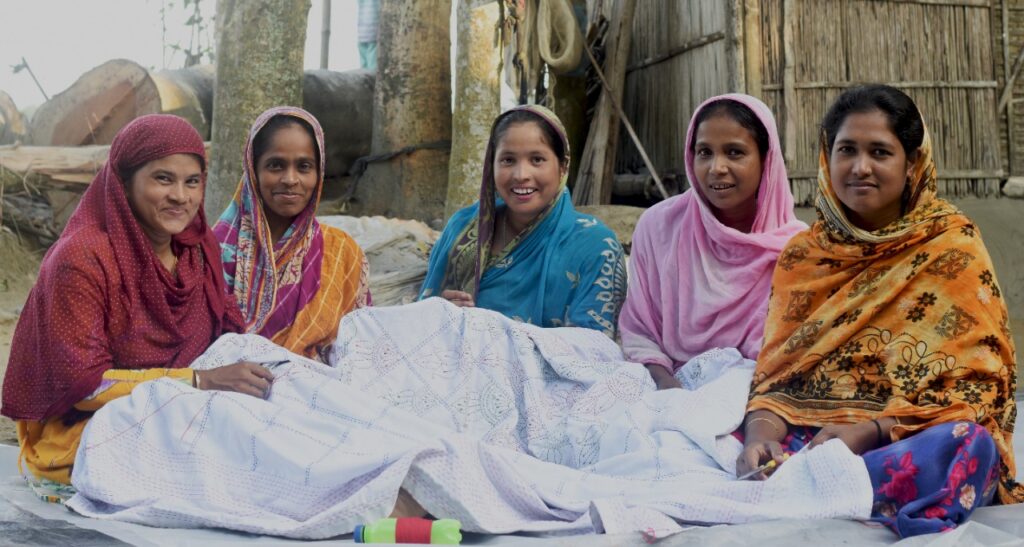
At least 35 women are working as stakeholders, following a model of cooperative benefit sharing at Amrapari.
Women supported by Amrapari doing stitching work | Photo by Amrapari
Mullah said that during the initial days of the organization, Anjuman Ara Begum, a human rights activist, helped her a lot. “We discussed at lengths with women from villages and they said that they know stitching and were interested in engaging with the traditional craft,” she said.
More than monetary gain For 24-year-old Nur Nehar from Rupakuchi village, her engagement with Amrapari means she can bear the educational expenses of her two children.
Married in 2009 as a child bride, Nehar used to stitch small fishing nets at her village which would earn her a meagre amount and living on the constant fear of being uprooted from her house by the annual flooding waters from Chaulkhua river, she is now confident that she will be able to earn the months ends by weaving the quilts.
“Though I knew stitching, but I didn’t know the designer works. It was Manjuwara madam who introduced the designs to us,” Nehar told TwoCircles.net, being happy with the fact that she has earned Rs 15,000 by working with Amrapari.
Moreover, the small initiative has been a ray of hope for many women from remote Muslim villages. Many find respite from the mental trauma that they endured when their husbands had done injustice to them.
A note on the social media page of Amrapari narrates the mental trauma that a woman had to go through. The post reads, “The most painful incident that had happened in my life was when my husband married twice. My mental health was badly affected. But upon working here, I can distract myself and pay the fees of my kids for their education which matters the most,” said one of the members from the group no. 2.”
It has also boosted confidence among many of the participants associated with the organization.
30-year-old Inuara Begum was said, “I would get shy and angry when I first saw my photograph in the posters. But now my photos have become some kind of viral on (social media). The people here and my family encouraged me so much so that I am not shy anymore. This has given me a lot of courage.”
For Umme Sabira Khatun, who is in her mid-twenties and coordinates among the women groups at Amrapari, her imaginations becoming arts on the kanthas is more than satisfactory. “Amrapari has given that platform where I can see my designs turn into appealing arts which I could never have imagined before,” Sabira said.
Mullah said that more than financial aid to the women, Amrapari envisages empowering the women from very remote places. “The experiences shared by the women reflect their own sense of self-identification as well as their independence,” she said.
Promoting their products via social media and e-commerce platforms, the women from Amrapari have been able to tap the market for their traditional kanthas and the women are extending their range of products as well.
source: http://www.twocircles.net / TwoCircles.net / Home> Lead Story / by Mahibul Hoque, TwoCircles.net / May 28th, 2021
Mr. Siraj Thakor, from Toronto, Canada, has undertaken the monumental task of creating an online database of all the Islamic Heritage Sites of India. He likes to preserve it digitally and make it available to all to cherish the Islamic past of this great country.
Mr. Siraj is looking for volunteers to assist him with the information on Islamic Heritage Sites in India. In response to his call, someone wrote to me with detailed information about a graceful mosque that lies in ruins in the Gaya district of Bihar.
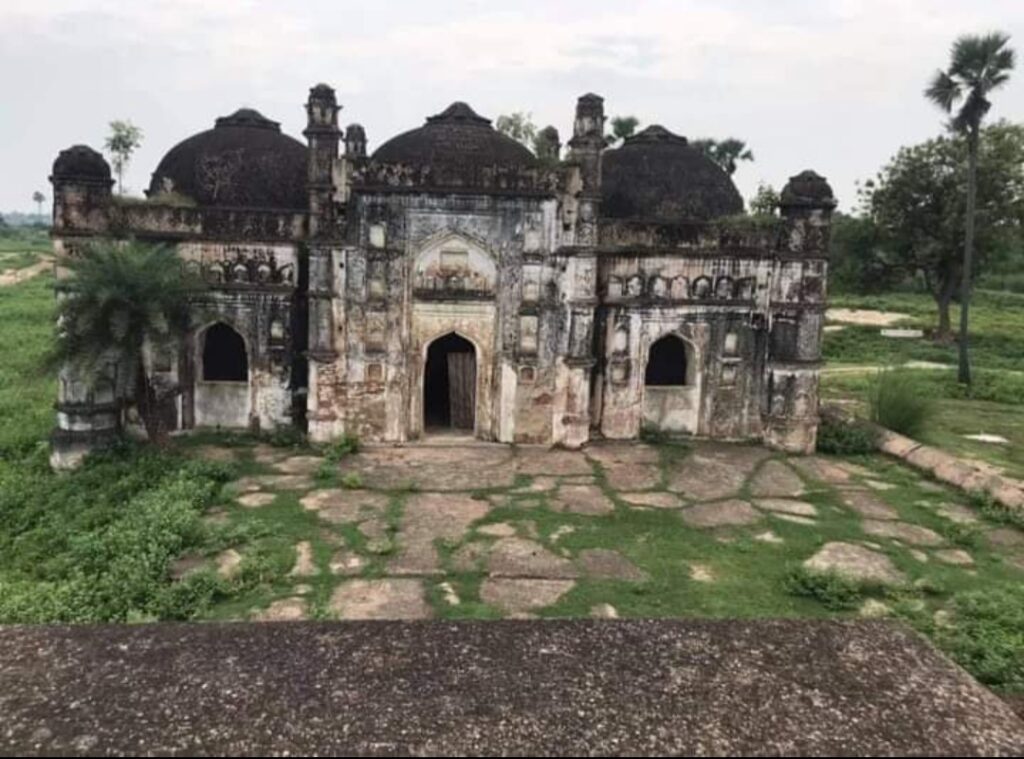
This mosque popularly called ‘Lodi mosque’ was built around 1536 AD during the Lodhi rule in India. It is believed that Sultan Ibrahim Lodi, one of the rulers of the Lodhi dynasty had taken initiatives to get this mosque constructed.
This mosque is about 25 km from Gaya on Gaya-Patna road. It is exactly near Kundwa village at Khijrasarai block in Gaya district. It is situated on the banks of the river Falgu, a kilometer from village Kundwa. On the West of the river is Lodhipur village colloquially called Lodpur, while on the east is Kundwa village.
The mosque becomes functional only during ‘Eid’ and ‘Bakrid’ festival when some Muslims from Kundwa village come to offer prayers in this mosque.
For the rest of the years, this mosque remains a picture of neglect and want for maintenance. There is no Azaan called from this mosque as there is no one to take care of this house of worship. Some people have illegally occupied the land around this mosque but there is none to challenge such encroachments.
This historical mosque comes under the Archaeological Survey of India but neither ASI nor the Bihar government nor the Waqf Board, have any concern in protecting this Islamic heritage site.
It is in this context people like Mr. Siraj Thakor, who is Past President of the American Federation of Muslims of Indian Origin (AFMI), comes into the picture. He wrote to me:
“Dear Brother Syed Ali Mujtaba, ASAK, I am a Past President of the American Federation of Muslims of Indian Origin (AFMI), We have undertaken the monumental task of creating an online database of all the Islamic Heritage Sites of India to preserve it digitally and make it available to all. I would take this opportunity to request you to be part of our team to collect info on Islamic Heritage Sites in your area. Alternatively, can you put in touch with someone or the organization which would be interested in such a historical task and leaves a legacy for the Indian Muslim generation to come? Wassalaam- Siraj Thakor.”
Mr. Siraj has started an All India campaign to document such historical Islamic heritage sites in ruins. If you have any similar story of any such Islamic heritage site near you, please write to him directly with photographs; (thakorsiraj@hotmail.com. You can even contact him on ‘WhatsApp’ -+1 416-277-7082.
This is a huge initiative and the efforts of people like Mr. Siraj needs to be strengthened by giving him a helping hand. Anyone, anyone where in the country who feels concerned about vanishing Islamic Heritage Sites in India must come forward and join his team.
A book titled ‘The Identity Quotient: The Story of the Assamese Muslims’, authored by Zafri Mudasser Nofil, attempts to define the Assamese Muslims as distinct from the Muslims in other parts of India and different from the immigrant Muslims in Assam.
New Delhi-based author Zafri Mudasser Nofil, who hails from Dibrugarh, says the Assamese Muslims are different from the rest of the community in the country.
Over the years, they have assimilated to the greater Assamese society to such an extent that barring religion, there is not much to differentiate them.
But of late, this community has been suffering from the ignominy of being bracketed with illegal immigrants as ‘Miya’, Nofil, who himself is an Assamese Muslim, laments.
Muslims residing in the state for centuries consider themselves to be an integral part of Assamese society, he writes.
In the book, he cites an example of this aspect: The ancestors of the Daullahs, a respected Muslim family in Sivasagar town played the negera – a kind of drum – at the Dols in Sivasagar during the reign of the Ahom kings.
During those days, animals were sacrificed on Ashtami day of Durga Puja as offering to the goddess.
As a gesture of respect to people of other beliefs, the Sivasagar Dol Development committee offers a sacrificial goat to the Daullah family even now. (From an edited excerpt)
Another excerpt which reveals the assimilation reads: “Magh Bihu for Deshi Muslims is Pushna while Bohag Bihu is Beshoma. On Goru Bihu, the first day of the Bohag Bihu, people in the state give a traditional bath to their cows and bulls they rub a paste of pulses and turmeric and then birch them very gently with leaves of some shrubs… After the cattle are given a bath the Deshis eat Misheli, a preparation of fried rice, lentils, onions and chillies.”
Nofil says that the contribution of Assamese Muslims over the years had been multi-faceted, diverse and immense.
“Be it politics, civil services, literature, art, education, medical science, law, sports, music, films and entertainment, they have excelled in every field. Of the most valuable contributions to the cultural richness of Assam are the Zikir and Zari songs,” he elaborates.
“Litterateur Imran Shah says the contribution of Assamese Muslims to the greater Assamese society is unparalleled. But it’s a case of ‘little done and vast undone’ as far as documentation is concerned,” he further says.
As he was toying with the idea of this book, he remembered what Toni Morrison once said: “If there’s a book that you want to read, but it hasn’t been written yet, then you must write it.”
Despite the vastness of the subject and the challenges it posed, the fact that there was very little published materials regarding the Assamese Muslims prompted Nofil to go ahead and write the book on this topic.
The book unravels the journey of this community and looks at how they have contributed significantly to the composite heritage of the state.
It profiles icons like Bagh Hazarika and Bahadur Gaon Burha to achievers like Imdad Ali, Yamin Hazarika, Adil Hussain and Begum Parveen Sultana, and also looks at some of the interesting customs of Deshis, Moriyas and Julhas.
“Assam is a land representing cohesive social and cultural tapestry and Muslims have a history of over seven-and-a-half centuries in the state.”
“The indigenous Assamese Muslims trace their lineage to the medieval period when Muslim rulers and generals invaded the region. They came to Assam in various phases.
“Ali Mech is believed to be the first person to convert into Islam sometime in the early 13th century and ever since, Muslims have merged into the sociocultural milieu of Assam,” Nofil says.
“I have attempted to write this book as narrative non-fiction though I have profusely quoted from historical texts that are relevant to the discussion,” he adds.
There are several nuggets highlighting age-old camaraderie and also chapters on Azan Pir and his Zikirs, cuisine, Muslim marriages, the NRC and the CAA.
(‘The Identity Quotient: The Story of the Assamese Muslims’ is available on Amazon and with Har-Anand Publications. The author can be reached at zafri.nofil@gmail.com and @zafrimn on Twitter)
source: http://www.nenow.in / North East Now / Home> Article / by Smita Bhattacharya / December 26th, 2020
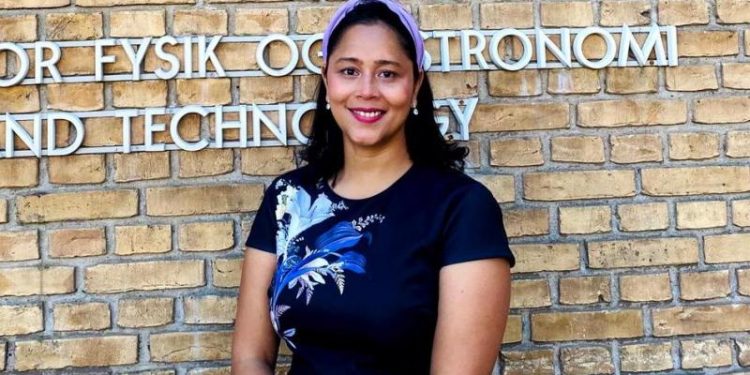
Shaeema Zaman Ahmed, a youngster from Guwahati, brought laurels to Assam and India for her visionary work on quantum physics research, for which she was awarded the PhD from Aarhus University, in Denmark, on June 28.
After her earlier schooling at Maria’s Public School, Guwahati, and her Masters in Physics from Delhi University, Shaeema was at the forefront of science outreach and astronomy education with Zlife Education in New Delhi.
Thereafter, she was offered a Marie Sklodowska-Curie PhD fellowship at Aarhus University, Denmark, and was part of the Quantum-enhanced Sensing via Quantum Control (QusCo) EU programme.
Her work focussed on investigating the use and impact of quantum games and simulation tools in quantum physics education, science outreach, and quantum control research.
She was part of the design process in Quantum Moves 2 and Lab Manager and simulation tools like the Quantum Composer.
Her research studies on these tools explored how simulations can improve student learning of quantum mechanics.
Additionally, her work also addressed the potential of a citizen science game as a method to crowdsource solutions to solve quantum control problems, and the impact of the use of simulations in quantum physics outreach training.
The work was carried out under the supervision of Prof Jacob Friis Sherson, and the external examiners were Prof Sabrina Maniscalco from the University of Turku, Finland and Prof Stefan Heusler from the University of Münster, Germany.
Shaeema is the daughter of Guwahati-based paediatrician, Dr Shabina Ahmed and anesthesiologist, Dr Khafiluzzaman Ahmed.
The defence was viewed online, including her teachers at her alma mater, Maria’s Public School, Guwahati.
In a message to her alumnus, Nellie Ahmed Tanweer, Founder Director of the School, said “…the pride you bring to your school further inspires the next generation …
source: http://www.nenow.in / North East Now / Home> Northeast News> Assam / July 04th, 2021
Indian motorsports’ governing body FMSCI has nominated its own president Akbar Ebrahim for the Dronacharya Award besides sending Jehan Daruvala’s name to the government for Arjuna Award after inexplicably ignoring him last year.
Racer turned coach Ebrahim’s name was also recommended for Dronacharya last year but none of FMSCI’s nominations for the national sports awards was short-listed by the government appointed selection panel.
However, Ebrahim was not heading the FMSCI back then and some within the FMSCI feel his name should not have been included in the nominations this time as he is holding office.
“It is ironical isn’t it. Effectively the president only decides on the nominations and he has nominated himself . Two names were discussed initially but the Council decided to send only Ebrahim’s name.
“Last year was fine but his name shouldn’t have been gone this year as he is holding office. As far as Jehan’s nomination is concerned, I am glad it has happened this year as his named should have been there last year itself,” a FMSCI official told PTI.
Top rally driver Gaurav Gill is Indian motorsports’ first and only recipient of a national sports award, having got the Arjuna in 2019. His co-driver Musa Sherif has been nominated for the Rajiv Gandhi Khel Ratna but he is highly unlikely to be considered for the country’s highest sporting honour.
Jehan’s name on the other hand should have been sent last year. India’s biggest racing star at the moment, Jehan stands the best chance of getting the award.
“He is one deserving candidate and should be honoured by the government,” the FMSCI official added.
The 22-year-old is into his second year in Formula 2 and has multiple podium finishes to his name. He won the sprint race in Bahrain last year and has scored two podiums, a second and third place, this season.
He is also a Red Bull junior driver.
In 2019, Jehan finished third in the Formula 3 Championship, which is another support series to Formula 1.
source: http://www.timesofindia.indiatimes.com / The Times of India / Home> News> Sports News> Racing News / by PTI / June 29th, 2021