All posts by mpositiveone@gmail.com

Drugs Laboratories becomes first Unani Company to get prestigious ‘Ayush Premium Mark’

Meerut, UTTAR PRADESH :
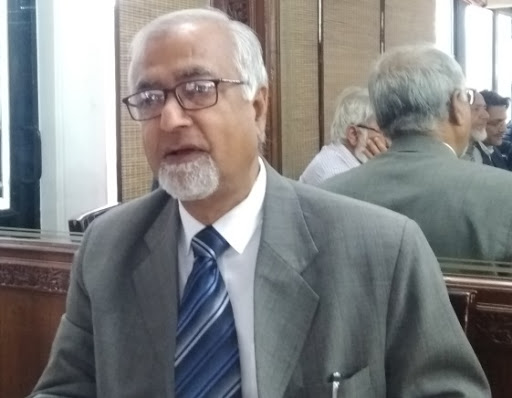
Dr. Sirajuddin Ahmad

New Delhi:

Meerut- based Unani drugs manufacturing company ‘Drugs Laboratories’ is the one and only among the Unani pharmaceuticals companies which was recently accorded the prestigious ‘Ayush Premium Mark’ by the Ministry of AYUSH.  Now it would able to export Unani medicine abroad legally.

Considering the  state of  Unani pharmaceuticals industry in the country, it is not a mean achievement for the DL,  especially  if one compares it with well-known Hamdard company  which even did not get such certificate despite having much more popular and  older than the DL.

Talking to Muslim Mirror, Dr. Sirajuddin Ahmad, chairman of Drugs Laboratories said “Ayush Premium Mark’ assures that the product quality and GMP requirement is of international standard”.  Terming it a big achievement, Dr Ahmad said DL has become the first Unani and top Ayurvedic Company in India to get this prestigious certificate.

India has emerged as the world leader in Unani medicine but it has not been able to export Unani medicine to the world and Ayush Premium Mark has opened new horizons and possibilities for the promotion of Unani system, he said.

 Ayush Premium Mark’ recognition is given by the Quality Council of India in collaboration with Ministry of Ayush government of India. ‘Ayush Premium Mark’ is mandatory for export of Ayush products and supply of medicine in government institutes.

The certificate recognises that the products of a particular company are based on GMP requirements that are based on WHO guidelines and followed worldwide.

Dr. Ahmad said ‘Drugs Laboratories’ is the first Unani Company to modernize Unani products according to market needs which has 64patented drugs.

Currently company has more than 50 patented products and 64 classical Unani products. Apart from this Ayurvedic product are also manufactured.

We have developed 12 highly-effective drugs for instant relief ranging from cough to fever and even now allopathic doctors also prescribed these drugs to patients, he said.

Drugs Laboratories” with a fervour to keep Unani and Ayurvedic flag high and to serve the mankind, initiated extensive research in the field of Herbal with modern techniques in quality control and production.

We are also working how to make Unani medicine more popular across the communities and the country as it is a very effective medicine which has no risk of any side-effect, he said who’s father Padma Shree Hakim Saifuddin Ahmad was a very prominent Unani Physician. Hakim Saifuddin was also served as a Unani Physician to three Indian Presidents and was also appointed as the first Unani advisor to the government of India.

Talking about his family association with Unani medicine, Dr. Sirajuddin said this profession has been running in our veins for more than seventh generation as he has inherited this from his father Hakim Saifuddin Ahmad. His both sons have also been assisting their father in this venture.

 We did not keep the family prescriptions secret but made it public for the benefit of the humanity, he added. Highlighting the company’s future plans, he said we are doing scientific research on a number of drugs including how to get rid of the dialysis  which has become a mandatory for a kidney patient and many more things.

source: http://www.muslimmirror.com / Muslim Mirror / Home> Indian Muslim / by Abdul Bari Masoud / March 26th, 2019
Kashmir’s first-ever igloo restaurant turns selfie spot for tourists

Gulmarg (Baramulla District) , JAMMU & KASHMIR :

It’s well furnished inside and leaves one wondering in awe, says a visitor

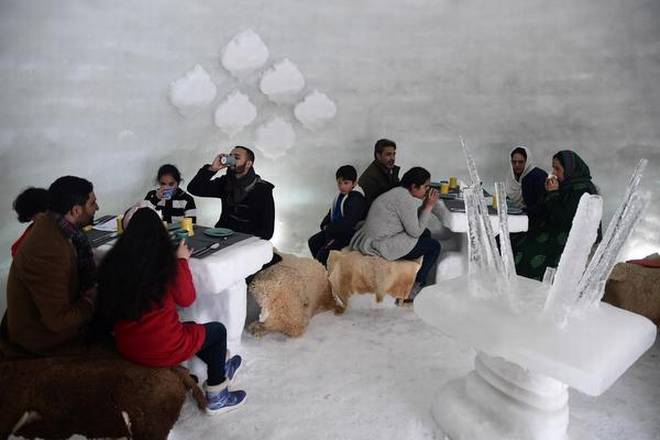
With the minimum temperature plummeting to minus 18 degree Celsius in north Kashmir’s tourist hotspot Gulmarg, a spherical 22-feet-wide and 15-feet-high igloo restaurant has become a major attraction among the tourists, more for selfies than food served inside.

“We threw the igloo restaurant open to the public two days ago. It’s the country’s biggest igloo ever made. It took 15 days to construct it with the help of 20 workers,” Waseem Shah, managing director of the Kolahoi Resorts, told The Hindu.

The all-snow covered restaurant has eight tables, serving lunch and dinner inside it, and can accommodate 18 people simultaneously. The novel idea has been picked from the cold places of Europe.

“I have travelled to Switzerland, Norway and Finland and saw similar snow sculptures. We too have snow in abundance and can experiment on such projects,” Mr. Shah said.

He said the cafe shall make it to the Limca book of records as Asia’s biggest igloo. “So far tourists come more for selfies than food. But I am happy they are leaving with cherishable memories,” he said.

Sonia Kapoor, a tourist from Delhi, said the restaurant is a must for a selfie. “The sight of igloo is amazing. The fact that it’s well furnished inside, leaves one wondering in awe,” Ms. Kapoor said.

The idea has come as a shot in the arm of tourism, which was struggling in Kashmir, first due to the abrogation of special status in 2019 and then by the pandemic.

Director, Tourism, Kashmir, G.N. Itoo said Kashmir is fast emerging as “an all season destination”.

“Kashmir is offering visitors not only mesmerising beauty of its natural landscape, its perennial rivers and lakes, gardens and meadows, mountains and valleys, forests and wildlife but also diversity of tourism products with its adventure potential, cuisine, heritage, pilgrimage circuits and plenty of leisure tourism,” Mr. Itoo said.

source: http://www.thehindu.com / The Hindu / Home> News> States> Other States / by Peerzada Ashiq / Srinagar, January 28th, 2021

Eight Muslims selected for Padma awards this year

NEW DELHI : 

The BJP-led Hindu nationalist government has conferred Padma awards on 119 personalities. The awardees include eight Muslims.

Two renowned Islamic scholars, Maulana Wahiduddin Khan and Maulana Kalbe Sadiq have also been selected for the award.

Padma Vibhushan, the second-highest civilian award have been presented to Maulana Wahiduddin Khan, while Maulana Kalbe Sadiq have been provided Padma Bhushan, the third-highest civilian award.

Both the scholars had urged Muslims to give away their claim on Babri Masjid. Currently, a Ram Temple is being constructed on the site where Babri Masjid was standing till its demolition by Hindutva mobs, aided by BJP-RSS veterans, on 6 December 1992.

The awardees include, polymath Ali Manikfan, who has been awarded with the Padma Shri for his contribution in grassroots level innovations at Lakshwadeep. Born into an aristocratic family in 1938 in the Minicoy Island of Lakshwadeep, Manikfan is as marine researcher, ecologist, shipbuilder, agriculturist, and a polyglot.

Gulfam Ahmed from Uttar Pradesh for his contribution in the field of Art, Lakha Khan for Literature from Rajasthan, and Ghulam Rasool Khan for Art from Jammu and Kashmir, Sanjida Khatun for Art from Bangladesh and Col Quazi Sajjad Ali Zahir for Public Affairs from Bangladesh are among the recipients of the Padma Shri.

These awards cater to various disciplines including art, social work, public affairs, science and engineering, trade and industry, medicine, literature and education, sports and civil service. While ‘Padma Shri’ is awarded for distinguished service in any field, ‘Padma Bhushan’ is awarded for distinguished service of high order. ‘Padma Vibhushan’ is awarded for exceptional and distinguished service.

source: http://www.muslimmirror.com /Muslim Mirror / Home> Featured / by Muslim Mirror Staff / January 28th, 2021

All you need to know about Padma Vibhushan awardee Maulana Wahiduddin Khan

Badharia Village (Azamgarh District), UTTAR PRADESH / NEW DELHI :

Maulana Wahiduddin Khan has been given Padma Vibhushan, India’s second-highest civilian award, for his exceptional contribution in the field of spiritualism.

All you need to know about Padma Vibhushan awardee Maulana Wahiduddin Khan  | Hindustan Times
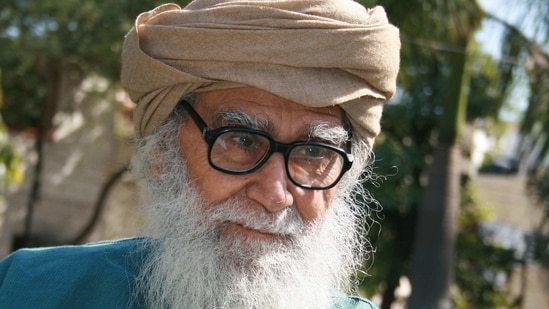
File photo of Maulana Wahiduddin Khan.(CPS Global)

The Centre on Monday released the list of Padma awards on the eve of India’s 72nd Republic Day in which it has honoured 119 people for their achievements and contributions to their respective fields of work.

One of the names that is sure to pique interest is that of renowned Islamic scholar Maulana Wahiduddin Khan. He has been given Padma Vibhushan, India’s second-highest civilian award, for his exceptional contribution in the field of spiritualism.

Khan first shot to limelight when he gave a clarion call to Muslims to relinquish claims over the disputed Babri Masjid site, one the first community leaders to do so.

He then floated, along with others, the “Vajpayee Himayat (support) Committee”, which had extensively campaigned for the former BJP prime minister in the Lucknow constituency in the 2004 Lok Sabha elections.

Khan is known for his association with Vajpayee and his senior colleague in the Bharatiya Janata Party (BJP) L K Advani.

Khan has contributed articles to the RSS mouthpiece Organiser which presents him “as an enlightened alternative to Islamic fanaticism” for “reportedly counselling Muslims to abandon their claim on Ayodhya”.

His verified Facebook page describes the Islamic scholar as, “Maulana Wahiduddin Khan is an Islamic spiritual scholar who has adopted peace as the mission of his life. Known for his Gandhian views, he considers non-violence as the only method to achieve success.”

He established Centre for Peace and Spirituality (CPS) in 2001 to promote and reinforce the culture of peace. The website of the organisation says the Khan was born in Uttar Pradesh’s Azamgarh in 1925.

Padma awards – conferred in Padma Vibhushan, Padma Bhushan and Padma Shri categories – are among the highest civilian awards given in various disciplines/fields like art, social work, public affairs, science and engineering, trade and industry, medicine, literature and education, sports, and civil service.

source: http://www.hindustantimes.com / Hindustan Times / Home> India News /by HindustanTimes.com – edited by Amit Chaturvedi / January 25th, 2021

Ayodhya’s Dhannipur mosque project launched with unfurling of tricolour on R-Day

Ayodhya, UTTAR PRADESH :

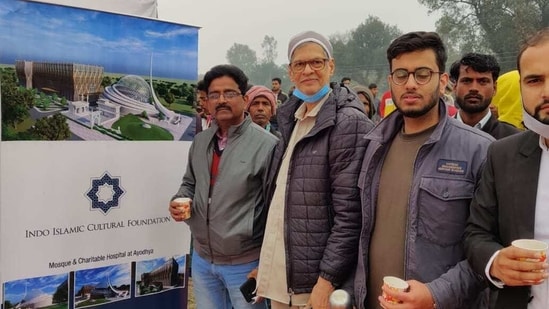
The Dhannipur project includes a mosque, hospital, museum, library, community kitchen, Indo-Islamic Cultural Research Centre and Publication House.

A plantation drive was also organised to mark the launch of the Dhannipur project(Sourced)
A plantation drive was also organised to mark the launch of the Dhannipur project (Sourced)

The Uttar Pradesh Sunni Central Waqf Board (UPSCWB) formally launched the Dhannipur project on the allocated five-acre land at Dhannipur village of Ayodhya by hoisting the national flag and planting saplings to mark Republic Day celebrations on Tuesday.

The Dhannipur project includes a mosque, hospital, museum, library, community kitchen, Indo-Islamic Cultural Research Centre and Publication House. The land was allotted to UPSCWB in compliance with the Supreme Court directives in the Ayodhya title dispute case in which the apex court, on November 9, 2019, paved the way for construction of Ram temple at the disputed site.

“I believe there is no better way than to start the project by planting saplings on the five-acre land. The plantation was carried out in the area of the project meant to be developed as a green area. The area will have plants and trees from all different geographical regions of India and from different parts of the world in order to create awareness about the imminent threat of climate change,” said Athar Hussain, spokesperson for Indo-Islamic Cultural Foundation (IICF) which has been set up by UPSCWB to look after the construction of the Dhannipur project.

Senior members of the board along with the members of the IICF hoisted the flag at 8.30 am on the 5 acre land in Dhannipuur village. The flag hoisting was followed by plantation drive where members and trustees of IICF planted saplings.

On December 19, the trust had released the blueprint of the mosque and other structures designed by Professor SM Akhtar, a Lucknow-based architect and town planner, whom the trust has hired to design the mosque that would come up in Dhannipur in place of the Babri Masjid that was demolished in 1992.

Akhtar is the founder dean of the Faculty of Architecture at Jamia Milia University, Delhi.

source: http://www.hindustantimes.com / Hindustan Times / Home> India News / by HT Correspondent / January 26th, 2021

Indian community in Jeddah slaute patriotic valor of Army hero Brig. Usman

Bibipur (Azamgarh District) , UTTAR PRADESH / NEW DELHI / Jeddah, SAUDI ARABIA :

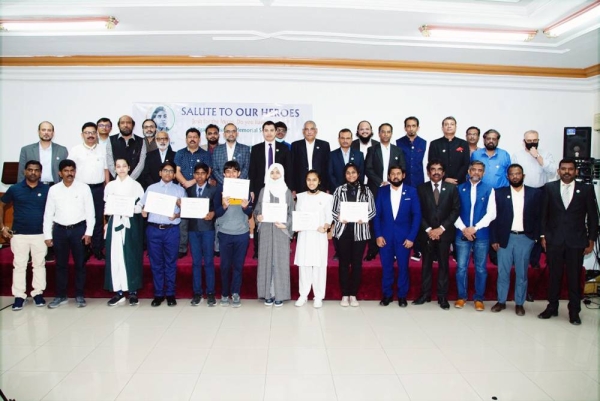
Acting Indian Consul General Y.Sabir poses for photos with winners of Brig. Usman Storytelling Contest and Organizers of the event at Indian Consulate in Jeddah

Jeddah :

Members of the Indian Community in Jeddah gave a big salute to the patriotic valor and great sacrifice of Brig. Mohammed Usman, who laid his life defending the honor of his great nation. Brig. Usman, who at a young age, declined the offer to assume the highest military rank of another country and instead preferred to defeat them in a crucial war by sacrificing his precious life on the war front and thus becoming the highest-ranking Indian Army officer to be martyred in the war.

This great Indian war hero, nicknamed as the “Lion of Nowshera,” was remembered recently during the community’s celebration of the Indian Army Day, which falls on Jan. 15, and that marked paying rich tribute to members of the Indian Armed Forces.

Acting Indian Consul General Y. Sabir was the chief guest of the event, titled “Salute to our heroes,” held in the presence of prominent community members at the conference hall of the Jeddah Consulate in which several highly decorated officers of the Indian Army joined virtually to speak about their experiences right from the field with great enthusiasm and passion.

The most distinguished among them was the keynote speaker Lt. Gen. Bhupinder Singh, former lieutenant governor of Andaman and Nicobar Islands. The younger generation of the community also were part of the celebration and posthumous honoring of the great Indian war hero with their participation in the “Brig. Usman Memorial Storytelling Contest.”

In his speech, Sabir shared with the audience how an Indian Army soldier goes through tough and arduous training that enables him to achieve all round personality development as a true role model of an Indian citizen.

“An Indian Army soldier is the epitome of courage and determination to his duty, and his role and responsibilities are not limited only to warfronts but rather cover much wider areas of serving the entire nation and people,” he said, while calling on the younger generation to come forward to take up a brilliant career in the Indian Armed Forces.

Sabir also lauded the efforts of Indian community for holding a unique event in honoring Brig. Usman, coinciding with the Army Day.

President of India Forum Mir Ferozuddin, who hails from the bloodline of Brig. Usman, spoke about the ‘josh’ of the soldiers that is more ferocious than the roar of a lion. “It is this josh that made the “Sher of Nowshera” reject the offer to become the Chief of Army of the neighboring country and continued to command his country’s army until he became a martyr on the soil of his own beloved country,” he said.

Ferozuddin invited Kargil war veteran Capt. Yashika Tyagi to join the session virtually to give a brief biography of Brig. Usman and insights into his heroic martyrdom.

She began her speech with the remarks of “Shera Shera Nowshera” feeling of pride of belonging to the banner of the great Brigadier. Tyagi described the courage and determination of Brig. Usman in recapturing Jhangar village in Kashmir. “In all senses of the word, Brig. Usman was a great warrior, who faced each set back in his life head-long and defeated each setback with the strength of his character.”

Capt. Tyagi, the first lady officer to be posted in extreme cold weather, also spoke eloquently about how a woman, a mother of a toddler and four-month pregnant, fought bravely to safeguard India’s borders. She motivated Indian girls and boys to join the Indian Armed Forces, with a promise to train them personally.

In his keynote address, Lt. Gen. Bhupinder Singh recalled: “Brig. Usman continued to remain an inspiring war hero all throughout my military and civil life ever since my joining of the Indian Army at the age of 19. Brig. Usman was among my heroes about whom I have been mentioning in all my writings,” he observed and lauded the family of Mir Ferozuddin as a fine example of true patriots.”

The event also saw a virtual CatFit deliberations to mark the Army Day. CatFit, a pioneer of M.A.S.T.S (Military Application and Special Forces Tactics for Students), covers all domains of psychological, mental, physical and emotional development and thereby ensuring that students achieve their optimum potential. Global Head of CatFit Arpan Dixit introduced the speakers.

Maj. D.P. Singh, a distinguished military officer who fought in the Kargil war and sustained serious injuries, spoke about the sheer determination of a soldier. Singh talked about the kind of soldiers the Indian Armed Forces develop with tough trainings. He showed his journey from 1999 when he got injured by a mortar bomb in Kargil to being the first blade runner of India.

Defense expert Brig. Anjum Shahab, who has over three decades of services in Indian Army, addressed the young generation and motivated them to join the Armed Forces and showed direction on how they can join. On his part, Maj. Mohammed Ali Shah drew attention to various TED (Technology, Entertainment and Design) Talks, giving full of inspiration and well connected with the young generation. Shah started off as an actor and then joined the Indian Armed Forces where he served for five years.

The Squadron Leader Meena Arora narrated her stories from the war field. She mentioned the use of technology in the Air Force and how it is influenced in winning a war. Arora talked about the strength of the Indian Air Force and mentioned the fight of Wing Commander Abhinandan Vardhaman, who landed in the enemy area but showed bravery in the face of death.

Zakaria Biladi, a prominent Indian community leader, was mainly behind organizing this unique event with the core objective of creating awareness among the younger generation about picking their brilliant career path in the Indian Defense Forces. In his speech Biladi said: “There is a dire need to ignite the passion for such services in the Indian youth living in Saudi Arabia particularly because they are not exposed to seeing the activities of Indian Army as much as the youth living in India are.”

Earlier, the event began with a welcome speech by Asim Zeeshan, the master of ceremonies, while Mohammed Hyder proposed the vote of thanks. The organizers of the event also included M. Siraj, Mohsin Sharif, KTA Muneer, and Imran Kausar.

Acting Consul General Y. Sabir gave away prizes to winners of the Brig. Usman Memorial Story telling contest. The winners are the following: Junior Category (7-9 classes) — Kavin Adhitiya & Ms. Danhushri Subramanyan (first); Syeda Umamah Qadri (second); and Ashwin Karuppasamy & Ms. Aishwarya Jayasankar (third). Senior Category (10-12 classes): Rimy Tomy (first); Marial Aranha (second) and Sana Ferozuddin (third).

Speaking to Saudi Gazette, Biladi said that the competition has been instrumental in inculcating a huge amount of patriotism and passion among the Indian students as well as to instill in them high esteem to the great sacrifices of Brig. Usman in defending the homeland.

Brig. Usman was the highest ranking officer of the Indian Army killed in action during the Indo-Pakistan War, immediately after the partition of the subcontinent in 1947. At the time of the partition, he, along with many other Muslim officers, declined to move to the Pakistan Army and even turned down the offer to become the first Chief of Army of the new state of Pakistan, and thus becoming a great symbol of India’s inclusive secularism.

It was during the defense of Jhangar in Jammu and Kashmir Usman was killed on July 3, 1948, by an enemy 25-pounder shell. He was then 12 days short of his 36th birthday. His last words were “I am dying but let not the territory we were fighting for fall for the enemy.”

For his inspiring leadership and great courage, he was awarded posthumously with the second highest military decoration for gallantry in the face of enemy, the Maha Vir Chakra. India’s first Prime Minister Jawaharlal Nehru and his Cabinet colleagues attended the funeral of Brig. Usman, who was buried in a grave in the Butla House near the Jamia Millia Islamia campus in New Delhi.

source: http://www.saudigazette.com.sa / Saudi Gazette / Home> Saudi Arabia / by Hassan Cheruppa, Saudi Gazette / January 25th, 2021

Joe Biden nominates Indian-American Uzra Zeya to key State Department position

BIHAR / Chapel Hill (North Carolina), U.S.A :

Joe Biden nominates Indian-American Uzra Zeya to key State Department  position
  • According to key nominations for the Department of State announced by Biden, Uzra Zeya has been nominated to be Under Secretary for Civilian Security, Democracy, and Human Rights

An Indian-American diplomat Uzra Zeya, who had quit the foreign service in 2018 in protest against the policies of US President Donald Trump was nominated on Saturday to a key State Department position by President-elect Joe Biden.

According to key nominations for the Department of State announced by Biden, Uzra Zeya has been nominated to be Under Secretary for Civilian Security, Democracy, and Human Rights.

Sharing the news on Twitter, Uzra Zeya wrote, “In my 25+years as a diplomat, I learned that America’s greatest strength is the power of our example, diversity & democratic ideals. I will uphold & defend these values, if confirmed, as Under Secretary for Civilian Security, Democracy, and Human Rights.”

_________________

Uzra Zeya @UzraZeya

In my 25+years as a diplomat, I learned that America’s greatest strength is the power of our example, diversity & democratic ideals. I will uphold & defend these values, if confirmed, as Under Secretary for Civilian Security, Democracy, and Human Rights.

President-elect Biden Announces Key Nominations for the Department of State / President-Elect Joe….
www.buildbackbetter.gov

Twitter

___________________

Wendy R. Sherman has been nominated to be Deputy Secretary of State, Brian McKeon as Deputy Secretary for Management and Resources, Bonnie Jenkins to be Under Secretary for Arms Control and International Security Affairs and Victoria Nuland to be Under Secretary for Political Affairs.

“This diverse and accomplished team, led by Secretary of State-designate Tony Blinken, embodies my core belief that America is strongest when it works with our allies,” Biden said.

“Collectively, they have secured some of the most defining national security and diplomatic achievements in recent memory — and I am confident that they will use their diplomatic experience and skill to restore America’s global and moral leadership. America is back,” he said.

Uzra Zeya served most recently as CEO and President of the Alliance for Peacebuilding, where she drew on over two decades of diplomatic experience in Near East, South Asian, European, human rights, and multilateral affairs.

As Chargé d’Affaires and Deputy Chief of Mission at the U.S. Embassy in Paris from 2014 to 2017, she oversaw the day-to-day operations of the Embassy, six constituent posts, and 50 offices and agencies engaged in U.S. government work. She quit against Trump’s policies in September 2018.

“Up to now, Foggy Bottom’s upper echelons are looking whiter, more male and less like America,” Zeya wrote in Politico in September 2018 alleging that the State Department under the Trump Administration was facing racial and gender bias.

“In my own case, I hit the buzz saw that Team Trump wielded against career professionals after leading the US Embassy in Paris through three major terrorist attacks over three years and after planning President Trump’s Bastille Day visit,” she wrote.

She said that upon returning to Washington, she was blocked from a series of senior-level jobs with no explanation. “In two separate incidents, however, colleagues told me that a senior State official opposed candidates for leadership positions — myself and an African-American female officer — on the basis that we would not pass the ‘Breitbart test’,” she wrote in Politico.

From 2012 to 2014, Zeya served as Acting Assistant Secretary and Principal Deputy Assistant Secretary in the Bureau of Democracy, Human Rights, and Labour.

She joined the Foreign Service in 1990, serving in New Delhi, Muscat, Damascus, Cairo, and Kingston. From 2011 to 2012, she was Chief of Staff to the Deputy Secretary of State and helped shape the U.S. response to the Arab Spring and worked to deepen U.S. engagement with emerging powers.

Zeya has also served as Deputy Executive Secretary to the Secretary of State, Director of the Executive Secretariat Staff, and as UN General Assembly Coordinator.

She is a recipient of the Légion d’honneur, France’s highest civilian honour, a Presidential Rank Award, and 15 Superior Honour and Senior Performance Awards.

She is a graduate of the Georgetown University School of Foreign Service.

On the key State Department nominations announced by Biden, Vice President-elect Kamala Harris said, “This remarkable team of distinguished diplomats and seasoned leaders reflects the very best of our nation”.

Secretary of State-designate Tony Blinken said, “To meet this moment, we need a Department of State that looks like America, led by diverse women and men who will be unafraid to challenge the status quo.

“That is this team. America at its best still has a greater capacity than any other country on earth to mobilize others to meet the challenges of our time. These passionate, energetic, deeply experienced nominees will help keep our people and our country safe, secure, and prosperous”.

With agency inputs

source: http://www.livemint.com / Mint / Home> News> India / by Staff Writer / January 17th, 2021

Dr. Maryam Afifa Ansari to become the youngest neurosurgeon from Muslim community

Malegaon (Mumbai), MAHARASHTRA / Hyderabad, TELANGANA :

New Delhi: 

Dr. Maryam Afifa Ansari, who has secured admission for a postgraduate course in neurosurgery at Osmania Medical College, Hyderabad, is set to become the youngest neurosurgeon from India’s Muslim community following completion of her degree in three years.

She had gotten 137th rank in the All India NEET SS exams held in 2020.

Interestingly, Ms. Ansari, who has left many amazed with continuous successes, has been educated in Urdu medium schools till 10th class.

She studied till seventh class in the Tahzeen High School in Malegaon, Maharashtra. Then, she moved to Hyderabad and took admission to Princess Durrushawar Girls High School. She was a topper in her school in the 10th class examination and also a gold medalist.

After completing intermediate from MS Junior College, Hyderabad with the top rank, Afifa managed to take admission in MBBS at Osmania Medical College free of cost.

She received five gold medals during her MBBS course. After completing her course in 2017, she succeeded to get admission for a masters course in general surgery in the same college for free.

In 2019, she completed a postgraduate degree, MRCS, from Royal College of Surgeon, England.

In 2020, she did the Diplomate of National Board course. This is a special postgraduate degree awarded to the Specialist Doctors in India. After scoring high in the 2020 NEET SS exams, she was granted free admission in MCH at the Osmania Medical College.

Speaking to Muslim Mirror, she said ” my success is a gift from Allah and a responsibility’ .

She would try to serve the community through her profession, she added.

‘Don’t give up, never let anyone say you can’t do it… Prove them wrong, by achieving it, she said in her message to Muslim girls.

Ms. Ansari’s continuous hard work has helped her cross every hurdle on the path of success. She is an inspiration for the young generation in India.

source: http://www.muslimmirror.com / Muslim Mirror / Home> Featured / by Muslim Mirror Special Correspondent / January 11th, 2021

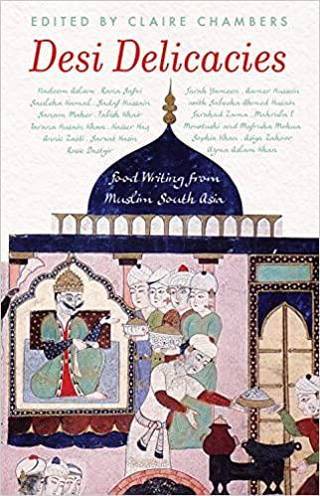
The kitchen’s calling: Rahul Verma reviews ‘Desi Delicacies: Food Writing from Muslim South Asia’

xxxx

A mouth-watering collection of stories and essays, each chapter ending with a recipe

It is the season of black carrots — and a refreshing drink called kanji. Prepared with these antioxidant-rich carrots and spices, the velvety, reddish drink helps us battle the cold in North India. Chilled to the bone in a long cold spell, I had been thinking of kanji when a book arrived at my doorstep with an ode to the drink.

There was no kanji at home, so I had to make do with an appetising description of it in a story called A Brief History of the Carrot by Rosie Dastgir, included in the Claire Chambers-edited anthology, Desi Delicacies: Food Writing from Muslim South Asia. “He poured out two glasses that glowed in the afternoon light. Room temperature, as the aunt’s recipe specified. The taste of it was sour and pungent and strangely restorative, though not exactly as he remembered,” it goes. “Was some vital ingredient missing?”

Where’s the story?

Chambers writes that South Asian kitchens are the “engines of an entire culture”. The volume seeks to capture this essence through essays and short stories. “The picture that we get of Muslim South Asian food is extremely eclectic, taking in everything from taco parties to lotus root slow-cooked in yoghurt, and from khichri to barfi,” the York University professor says in a recent interview.

The collection is quite mouth-watering, especially since each chapter ends with a recipe. The works of fiction, however, left me a bit puzzled. These are nice food pieces, no doubt, but are they stories?

Take, for instance, Jackfruit with Tamarind by Mahruba T. Mowtushi and Mafruha Mohua. The short story is peppered with aunty this and uncle that — interesting characters, all, but each of them making only brief appearances. I would have liked to know more about them, especially about Manwara aunty, for I enjoyed the comparison between her fish curry and Amma’s.

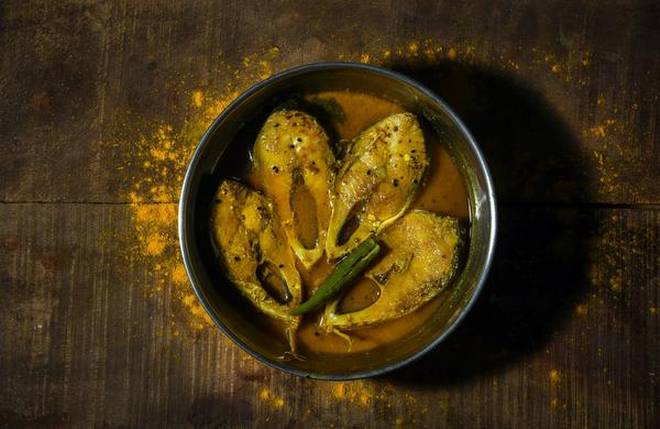
“Amma is fussy when it comes to preparing a fish. It has to be cleaned numerous times… She then smears the pieces with turmeric and salt and lightly fries them — for a minute or two — in mustard oil. Amma has a fervid dislike of people who skip this process. Macher jhol should have a light, refreshing taste and so spices are added sparingly,” the authors write, adding, “Amma always complained of Manwara aunty’s macher jhol, which contained such inordinate quantities of vegetables and an odd assortment of greens that eating it was like walking through a virgin jungle with a machete in hand!”

It is always fun to read about food, but the problem is that this isn’t really a story. It works well as an essay, and is eminently readable, with little descriptions of dishes after every paragraph or two. But a story needs a beginning, middle and end, and this had none.

Stomach rumbling

The Hairy Curry by Asiya Zahoor does have a twist in the end. The story is about young Gulla, a Kashmiri boy who has moved to Srinagar and is working in Bibiji’s kitchen. The description of a lotus-stem dish is invigorating. “The velvety white curry was first to touch his palate. The softness and tangy taste was a delight. Each of the spices had given their essence fully to the curry. Its starchy texture, carrying the spices that complemented each other, was delectable. The lotus stems were cooked properly yet retained a certain crunchiness.”

But Gulla is troubled: there’s hair in the curry — a lot of it!

I was drawn more to the non-fiction part, and particularly enjoyed Rana Safvi’s piece (‘Qissa Qorma aur Qalia’), in which she recounts food memories and practices of Lucknow.

I relished the conversation between two uncles-in-law where they complain (in chaste Urdu) about digestive problems, which persist although they have been following their doctors’ advice and eating “vegetarian khichri”. It transpires that the cook has been adding large amounts of dried fruit and meat to the dish.

The problem with a book like this is that it sends you straight to the kitchen. I certainly felt like cooking khichri after reading Farah Yameen’s well-written story about a child and her troubled phua.

“One does not serve khichri without mash and chutney to someone who is loved,” Yameen writes. Or without papad or pickle, in my neck of the woods. Shows that food, really, has no religion.

Desi Delicacies: Food Writing from Muslim South Asia; Edited by Claire Chambers, Pan Macmillan, ₹450

The reviewer is a food columnist.

source: http://www.thehindu.com / The Hindu / Home> Books / by Rahul Verma / January 16th, 2021

Ahmedabad: Auto driver’s daughter in Top 25

Ahmedabad, GUJARAT :

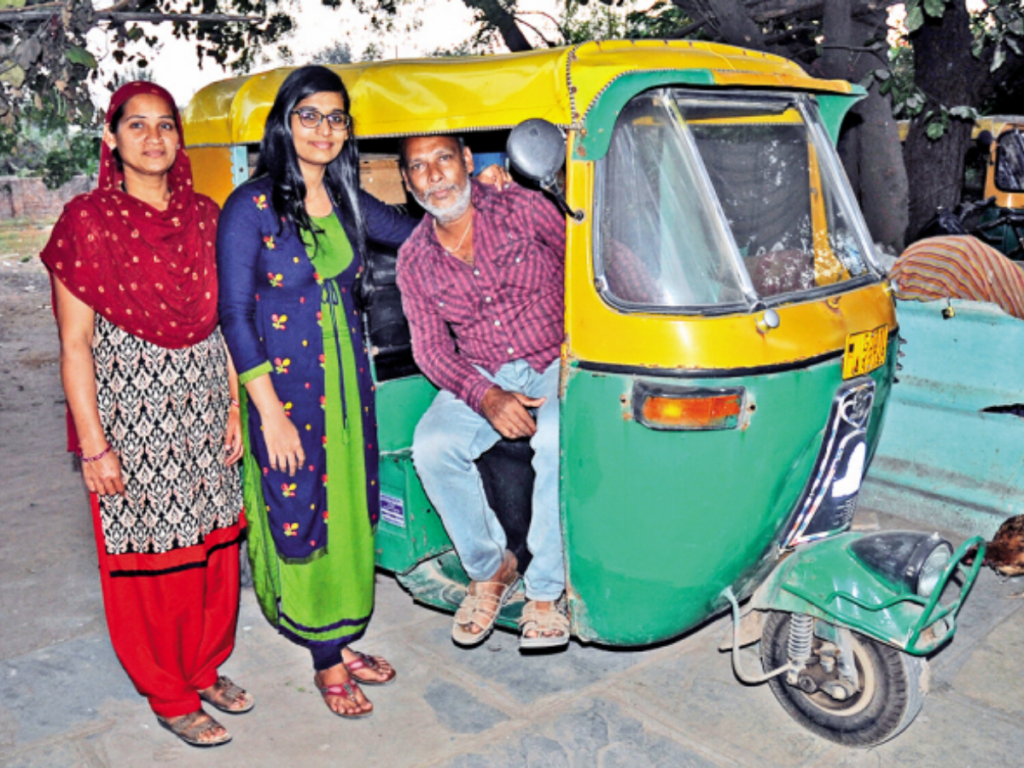
Muskan Sheikh (centre) with her family. Her father in the auto

Ahmedabad :

Muskaan Sheikh is all smiles as she made it to the Top 25 in the country who cleared the Company Secretaries (CS) Foundation Programme Examination held in December.

While her All India Ranking (AIR) is 24, she ranked fifth in Ahmedabad Chapter with 77.50%. The results were declared on Monday.

A student of SLU College where she is pursuing her second year in BCom studies, Muskaan says she has leaped closer to pursuing her dreams of joining a large corporate and helping her family come out of their financial troubles.

Her father is a rickshaw driver whose work has been affected, like many others, in the Covid-19 induced lockdown.

She lives in an one-room house in Behrampura in Satya Jivan Leprosy Colony, a special housing colony built for people suffering from leprosy. Her father’s yearly income is less than 1 lakh.

Sheikh’s grandparents, who passed away some time ago, were victims of the deadly disease.

source: http://www.timesofindia.indiatimes.com / The Times of India / Home> City News> Ahmedabad News / TNN / January 19th, 2021