Open to form alliance with Left & Cong; planning to contest all 294 seats, says Pirzada Abbas Siddiqui, the 34-year-old cleric of Furfura Sharif.
Ahead of the Assembly elections in West Bengal, Pirzada Abbas Siddiqui, the 34-year-old cleric of Furfura Sharif in Hooghly district, on Thursday launched a new political party — Indian Secular Front – and said that his party plans to contest all the 294 seats in the state with alliance partners.
His 26-year-old brother Nausad Siddiqui has been named chairman of the new party and Simul Soren the president of the party’s working committee.
“We announced our party today. Now, we will sit for talks with other parties, including AIMIM (of Asaduddin Owaisi), and then we will make clear on how many seats we will contest in this election. For now, we are considering to contest all the 294 seats,” Abbas Siddiqui told mediapersons at a press conference in Kolkata.
Stating that his “doors are open” for an alliance with the Left Front and the Congress, Siddiqui said: “CPI(M) and Congress leaders have sent feelers to us. Both the parties suggested that we first launch our political platform. Let us wait and see.”
“The party will start working from Republic Day. Thereafter, we will announce further programmes. We also plan to hold rallies including one in brigade parade ground,” he added.
He, however, ruled out contesting the elections, saying that he would like to be the “kingmaker”.
“I want to be the kingmaker. I will not contest the election but will do everything possible for the party. We will work for the betterment of Muslims, Dalits, tribals, and the poor. Our party is for all,” said Siddiqui, one of the descendants of Pir Abu Baqar Siddiqui.
Rejecting the charge that his party would enable the division of Muslim votes in the state, Siddiqui said, “So many political parties are there. Many like AAP are coming to Bengal. Some of them will get Hindu or Muslim votes. Why do you say that our party will divide Muslim votes.”
Accusing Chief Minister Mamata Banerjee of failing to deliver, Siddiqui blamed the Trinamool Congress for “allowing BJP to get into Bengal”
“We supported her and she came to power in Bengal. But then her government failed to deliver. So many unemployed youths are in Bengal. It was TMC which facilitated communal discord and allowed BJP to come here. BJP is enemy of the country,” Siddiqui added.
Furfura Sharif is the second most prominent Sufi mazar or shrine in the country after Ajmer Sharif in Rajasthan.
source: http://www.indianexpress.com / The Indian Express / Home> Cities> Kolkata / by Express News Service / Kolkata – January 22nd, 2021
These libraries are then handed over to local villagers for day-to-day management by forming a committee.
The renovated buildings – libraries — are provided a general set of books, chairs, tables and other amenities through crowd-funding and under the Corporate Social Responsibility funds.
Jharkhand :
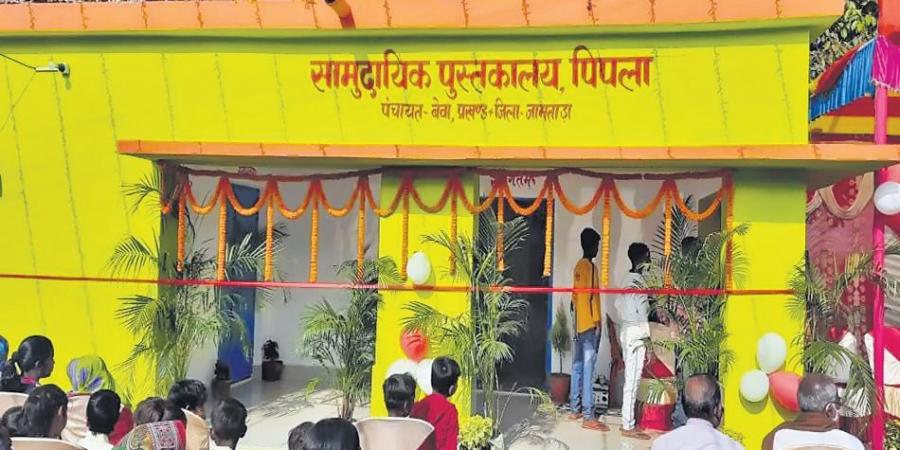
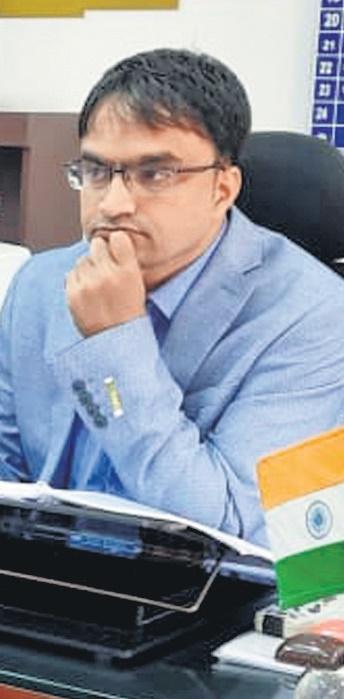
IAS officer Faiz Aq Ahmed Mumtaz has a unique task at hand — that of setting up rural libraries in remote villages of Jamtara so that the poor are motivated to read and write. For that he has made use of abandoned government buildings which have been transformed into 30 libraries under different panchayats of the district. Ahmed says the idea is to provide a better environment to develop reading habits and space at the doorstep of rural youths so that they can clear competitive exams without moving out to cities and towns.
The renovated buildings – libraries — are provided a general set of books, chairs, tables and other amenities through crowd-funding and under the Corporate Social Responsibility funds. These libraries are then handed over to local villagers for day-to-day management by forming a committee. Ahmed says his initiative serves two purposes: the dilapidated buildings are put to use after renovation and, secondly, it develops a community feeling among the villagers.
It has especially benefited girls whose parents are reluctant to send them to a city for education. The deputy commissioner hit upon the idea while holding a ‘janta darbar’ in Chengadih panchayat. A villager while pointing at the lack of education facilities said a library could be a great help for youths who have no means to travel to nearby towns for preparing competitive exams. “I thought in every gram panchayat, there is at least one government building which remains unused. I started renovating these buildings into community libraries.
A first such library was set up at Chengaidih panchayat on November 13 last year,” said Ahmed. The availability of books in these libraries is being ensured under public participation which requires only a modest expenditure, he said. Ahmed said resources are being mobilised with the help of different departments in terms of providing water and electricity to these libraries for which the committee, formed for the purpose, pays. Resources like tables and cupboards are being raised from CSR funds and books are being collected through donations and crowdfunding, he said.
“One bank account has been opened for each library which will help the local committee to raise funds through donations and other means,” said the Deputy Commissioner. The enthusiasm of local villagers has prompted him to expand the initiative to all 118 panchayat in Jamtara. “Reading and education should be given more importance and a library culture should be developed and promoted with community participation. Once this model is successful and a culture of reading develops among rural youths, inter-library competitions could be organized in order to provide a better learning environment to the people, he said. Ahmed believes that libraries can play an important role in the development of any community. “Jamtara is notorious for cyber crimes.
My initiative can help in removing the tag of ‘hub of cyber-crimes’ for Jamtara. Cyber-crimes possibly spread due to the lack of education in the region,” said the Deputy Commissioner. Jharkhand Assembly Speaker Rabindra Nath Mahto, who has inaugurated several such libraries in his Assembly constituency Nala, appreciates Ahmed’s initiative. “Libraries are the temple of knowledge. They ignite our thirst for knowledge and raise one’s mental level,” said the Speaker.
“This is a commendable step taken by the Deputy Commissioner”, he said. Youths are excited about such libraries. “We must thank the deputy commissioner for the precious gift to Chengadih panchayat. We had to travel long distances to get a book,” said Nasiruddin Ansari, a student. “The library is helping us a lot for preparing for various competitive exams”, he said. Ashraf Ali, another student, said the library has given a new hope to the youths in his village. “The library in Chengadih has brought about a positive change among the youths; they are now more serious about books and their studies,” Ali said. Dipankar Mondal, a student, said many youths like him will make him proud one day.
source: http://www.newindianexpress.com / The New Indian Express / Home> Good News / by Express News Service / January 24th, 2021
File image of Sameera Fazili, Deputy Director, National Economic Council at the White House| Twitter/ Sameera Fazili
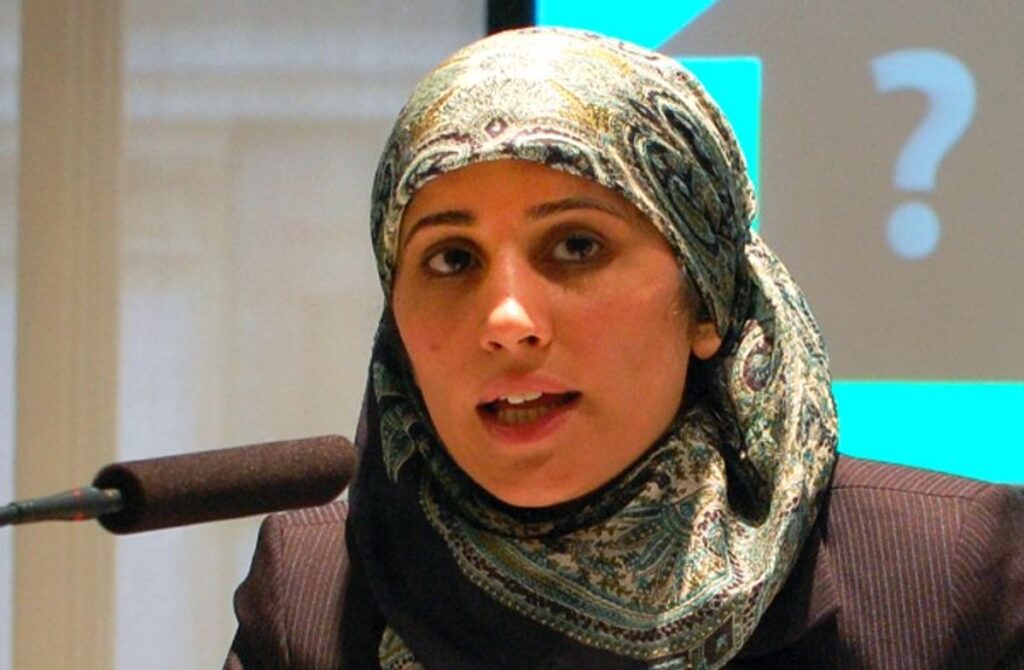
‘Sameera Fazili has been named as Deputy Director, National Economic Council at the White House, the Biden-Harris Transition announced on Friday.
US President-elect Joe Biden has appointed Indian-American Sameera Fazili to a key White House position related to economy.
Sameera Fazili has been named as Deputy Director, National Economic Council at the White House, the Biden-Harris Transition announced on Friday.
The National Economic Council coordinates the economic policy making process and provide economic policy advice to the US president.
Fazili is currently the Economic Agency lead on the Biden-Harris Transition. She was earlier posted at the Federal Reserve Bank of Atlanta where she served as the Director of Engagement for Community and Economic Development.
Fazili is the second Kashmiri-origin Indian-American appointed to a key position in the incoming Biden administration.
In December, Aisha Shah was named as Partnerships Manager at the White House Office of Digital Strategy.
In the Obama-Biden administration, Fazili served as a senior policy advisor on the White House’s National Economic Council and as a senior advisor at the US Treasury Department in both Domestic Finance and International Affairs.
Prior to that she was a clinical lecturer of law at Yale Law School. Originally from Buffalo, she now lives in Georgia with her husband and three children. Fazili is a graduate of Yale Law School and Harvard College.
Before her time in government, Fazili was a clinical lecturer at Yale Law School’s community and economic development clinic, where she helped start a CDFI bank and a local anti-foreclosure initiative, and expanded the clinic’s work to international microfinance.
She also worked at ShoreBank, the nation’s first CDFI (community development financial institution) bank. Her work in finance has spanned consumer, housing, small business and microfinance.
She received her law degree from Yale Law School and her bachelor of arts in social studies from Harvard College.
source: http://www.indianexpress.com / The Indian Express / Home> World / by PTI / Washington – January 16th, 2021
Delhi-based poet Shalim M. Hussain’s Miyah poetry provides the metaphorical loudspeaker to the long-ignored voices of the Bengali-Muslim migrants living in the riverine plains of the Brahmaputra by documenting their stories of love, loss, celebration and injustice
Nana I have written attested countersigned And been verified by a public notary That I am a Miyah Now see me rise From flood waters Float over landslides March through sand and marsh and snakes Break the earth’s will draw trenches with spades Crawl through fields of rice and diarrhea and sugarcane And a 10% literacy rate See me shrug my shoulders curl my hair Read two lines of poetry one formula of math Read confusion when the bullies call me Bangladeshi And tell my revolutionary heart But I am a Miyah See me hold by my side the Constitution Point a finger to Delhi Walk to my Parliament my Supreme Court my Connaught Place And tell the MPs the esteemed judges and the lady selling Trinkets and her charm on Janpath Well I am Miyah. Visit me in Kolkatta in Nagpur in the Seemapuri slums See me suited in Silicon Valley suited at McDonalds Enslaved in Beerwa bride-trafficked in Mewat See the stains on my childhood The gold medals on my PhD certificate Then call me Salma call me Aman call me Abdul call me Bahaton Nessa Or call me Gulam. See me catch a plane get a Visa catch a bullet train Catch a bullet Catch your drift Catch a rocket Wear a lungi to space And there where no one can hear you scream, Thunder I am Miyah I am Proud.
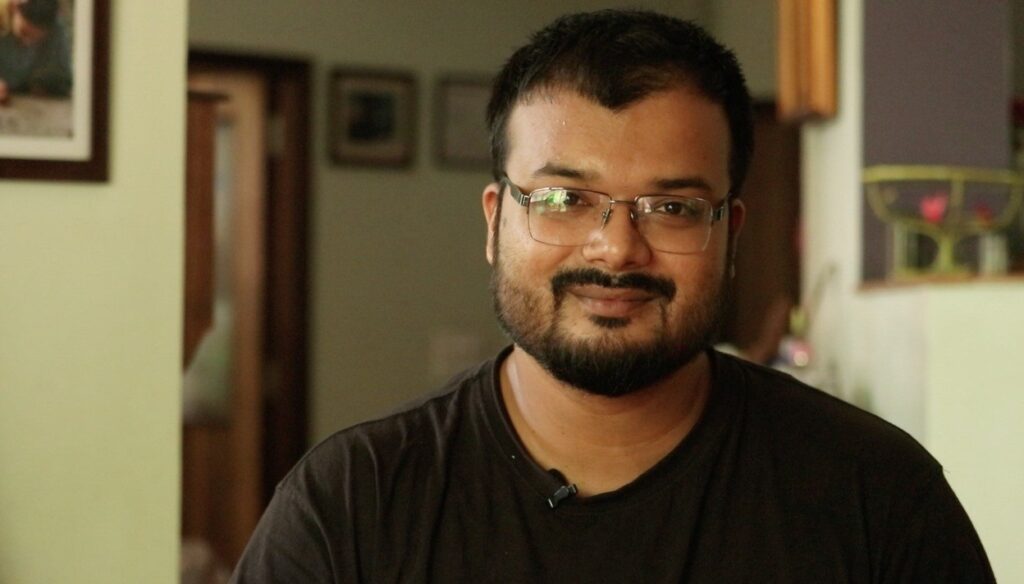
Shalim Muktadir Hussain is not an easy man to get a hold of. He belongs to the long tradition of Bengali-Muslims who have been sharing their lived experiences through the genre of Miyah poetry. The genre originates from the Bengal Partition-era migrants residing in Lower Assam, locally known as Char-Chapori. With stories of love, loss, celebration and injustice, it has historically served to lift up the long-ignored voices of the Bengali-Muslim migrants living in the riverine plains of the Brahmaputra and document their interactions with the world outside the region. But Hussain’s activism isn’t limited to the written word – the first time that I’m able to get in touch with him, he is attempting to rescue his fellow Miyah poets, who have been arrested on account of their ‘divisive’ poetry. I try again, and this time, I catch him in the middle of helping the victims of a bus accident. This humanitarian spirit shines through in his poetry, which I was first acquainted with at Godrej Culture Lab’s Migration Museum, a one-day pop-up that shed light on partition-era struggles. Months later, he shares his views on the Miyah genre, the under-representation of Assamese voices, and more.
Tell us about your personal journey as a poet. My journey with Miyah poetry, or the current phase of assertive Char Chapori poetry, started in 2016. Prior to it, I had been publishing poems for more than a decade. My first book of poems was published in 2017. Poetry as an art form came organically to me; I was looking at the world through a unique lens and had the ability to present this vision through carefully chosen words. Over the past few years, there has been a steady flow of literature from the Chars. This includes a strong collection of poems which depict the lived experiences of residents. Miyah poetry, in my opinion, is a continuation of the genre of Char Chapori poetry and its evolution. When the president of Char Chapori Sahitya Parishad, Hafiz Ahmed published the poem Write Down I am a Miyah on Facebook in April 2016, I responded to it with my composition titled Nana I have Written. Other poems were written in response to our poems and a small body of poetry emerged within a week. I realized that these were written primarily in Assamese and our local dialects which had to be translated to English so I started translating them and sent them out to literary journals and blogs. In the last couple of years, I have been writing poems in both English and the local dialect and translating both my own and works of other poets. Since then more translators have also emerged and by translating their works into other widely read languages such as English and Hindi, we have been able to reach wider audiences.
Do you think stories from Assam are under-represented? The national media focuses only on certain parts of the country. However, if the maximum potential of social media is harnessed, stories from not just Assam but other states too can find representation. Poetry is very personal for me, when I write about the land I was born and other fiction, the stories come from my personal experiences. The documentary films I have been involved in spotlight the performing arts of the Char Chaporis. According to me, all narratives – creative, journalistic, archival and academic are equally important. Miyah poetry gives a holistic view of life in Assam and the Chars.
How has digital media been helpful in popularising Miyah poetry? Digital media has aided in increasing reach and accessibility. For instance, one the offshoots of Miyah poetry is music videos and audio-visual recording of the poems. In August 2016, three poets started Itamugur, a YouTube channel named after a hammer-like instrument used to break hard clumps of earth before preparing the fields for sowing. That it is less aggressive and has a more meaningful purpose than a regular hammer is a telling quality of what they stand for. Their Bhatiyali music videos which have drawn great attention to the stories of the Char-Chaporis.
Do you think spoken word is more powerful to bring attention to the art form? I am just getting acquainted with spoken word but yes, it has played a huge role in the spread of Miyah poetry. We have read our poems at different venues and received great response from the audience.
Have you been able to change people’s perception about the community through this device? We have been able to change the perception of many people — even the residents of Assam — who didn’t know much about life in the Chars. Since Miyah poetry talks about lived experiences of love, loss, and celebration, it has been successful in bringing the ordinary life in the Chars to light. Until a couple of months ago, the representation of the Bengal-origin Assamese Muslims in media wasn’t positive; they were portrayed as thieves, dacoits and rapists. Today, we are representing ourselves appropriately through poetry regardless of others’ opinions. The narrative has definitely shifted.
You have explored various fields as a writer, poet, professor and filmmaker. Which one do you prefer? I like being a professor. One can communicate in real-time with their audience, which puts a lot of responsibility to be careful with the selection of material that should be used in the class and the language of communication. Writing allows me to tell my own stories, so there’s more freedom. As far as film-making is concerned, I wouldn’t call myself as a filmmaker. There are some art forms I think should be documented, and I do my best.
What is the future of Miyah poetry, according to you? As long as Miyah poems are written, the tradition will remain alive. In the absence of organisational structure, independent poets write poems and share them on social media platforms. There isn’t a formal definition of ‘Miyah Poetry’ which we abide by; poets themselves decide if their work qualifies to be termed in this genre. It is democratic, as no one decides if a work is a ‘real’ poem or critiques it as a good or bad poem. Every Miyah poet is an individual and each voice is precious for us.
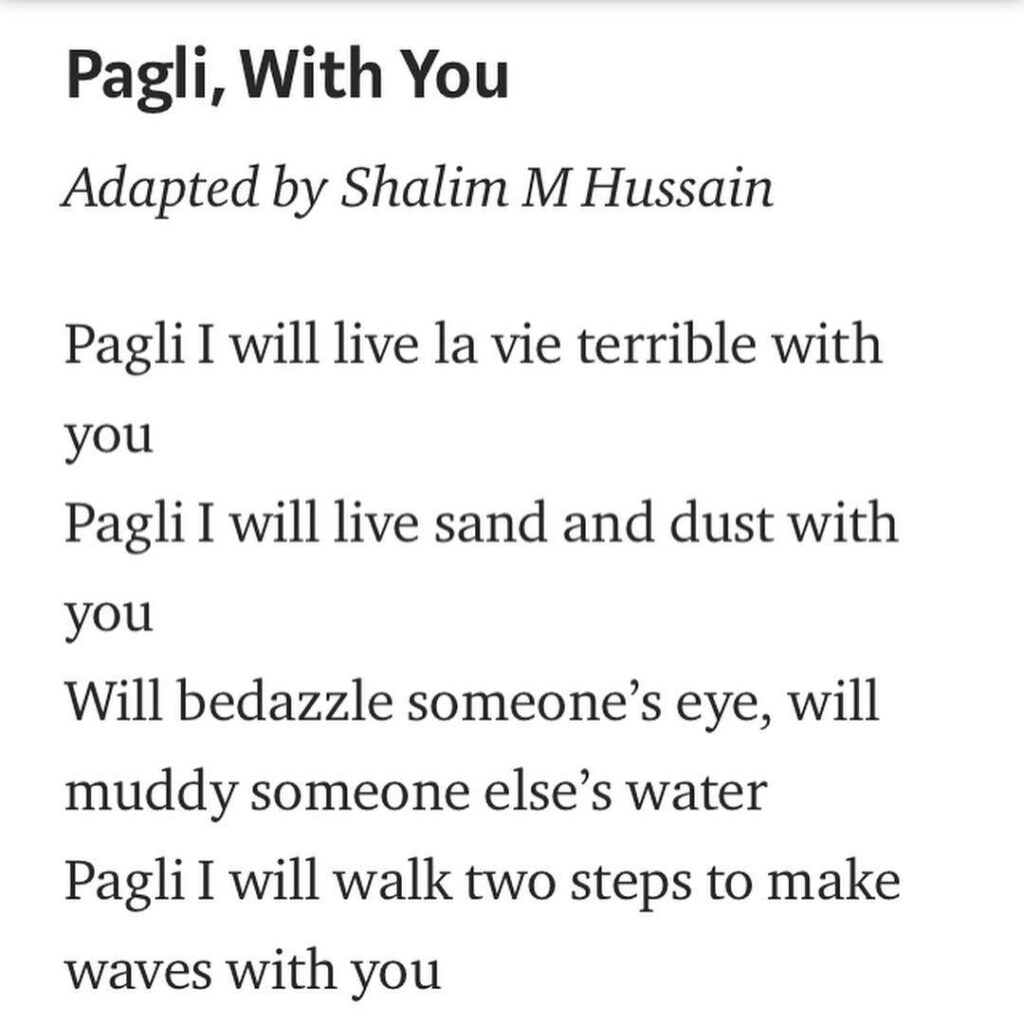
*To reproduce the above poem in any form, copyright permission must be sought from Shalim.
source: http://www.vervemagazine.in / Verve / Home> Arts & Culture> Library / by Ojas Kolvankar / August 28th, 2019
Be it heirloom dishes or new-age recipes, this cookbook, penned by Badrunissa Irfan – mother of Uzma Irfan, director, Prestige Group – dishes out something for everyone
Bengaluru :
Ever wondered what makes the food coming from your grandmother’s or mother’s kitchen yummier than even the best chef in the world?
There’s something comforting in these dishes prepared by seasoned hands sans any sort of measurement.
The recipes in Duniya-e-Ziyafat, a cookbook by Badrunissa Irfan, mother of Uzma Irfan, director, Prestige Group, dishes out some recipes that are sure to give you hunger pangs. The book was launched on Saturday at Sublime Art Galleria.
In the 184-page book, Irfan spills the secrets to some mouth watering dishes like Nalli Ka Salan, Herby Chicken among a host of others. According to Irfan, minimum spices and processes are secrets behind the taste. “The recipes that are shared in the book are simple which even beginners can follow. I always try to keep my recipes minimal so that the flavours are enhanced. With extra garam masala and red chilli powder, you tend to miss out on the delicateness of the dishes,” says Irfan, adding that the other best kept secret is a clean kitchen. “I see many people who make a mayhem in the kitchen even if they just chop a cucumber. A clean kitchen provides clarity of mind,” she adds.
The book is a compilation of recipes that Irfan had written for her daughter, Uzma, when she was in London. “In uni, there’s not enough time to prepare an elaborate meal, so you need quick ones, which also give you a taste of home,” says 62-year-old Irfan, adding that she hopes the book helps people churn out some delicious recipes even during a busy schedule.
Although there is no doubt that her meat dishes steal the show, her vegetarian dishes also have an equal number of takers. With options like Stir Fried Tofu, Herb Roasted Potato and more, the book has something for everyone. “It’s mandatory to have a veggie dish in every meal that is cooked. My husband, Irfan Razack, is man of simple taste, he enjoys any vegetarian dish,” she says, adding that there are enough dessert options too.
Family ties remain strong in this book since it also contains some recipes Irfan had learnt from her mother. “I started cooking at the age of six. Coming from a joint family, it used to be such nice way to bond,” recalls Irfan, who went on to also learn how to make pickles from her grandmother. Besides some heirloom recipes, Irfan’s cookbook also contains newer recipes which she discovered over time. The book can be pre-ordered on sublime.in
source: http://www.newindianexpress.com / The New Indian Express / Home> Cities> Bengaluru / by Monika Monalisa / Express News Service / January 19th, 2021
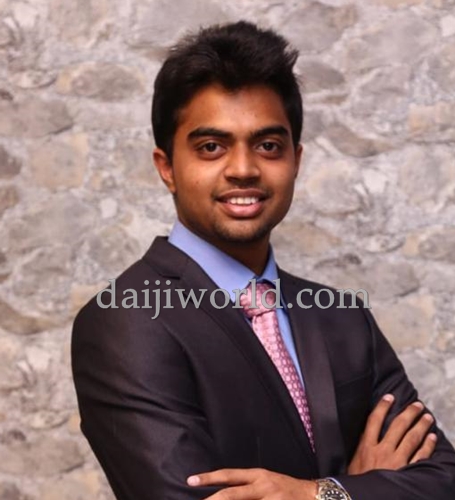
A future surgeon in the making, Syed Mohammed Adnan has done the city proud by bagging an array of gold medals and ranks in MBBS from Rajiv Gandhi University of Health Sciences.
In the recently announced results, Adnan secured the first rank in physiology, third rank in pediatrics, sixth rank in ophthalmology, and ninth rank in forensic medicine, totally four ranks in MBBS.
A former student of Expert College, Mangaluru, Adnan is the son of Dr Syed Ashraf and Nazma Tabassum Ashraf, and grandson of Syed Abubaker and the late M Azeezuddin.
pix: daijiworld.com
A brilliant, hard-working student, Adnan’s dedicated all his time and energy to following a strict study schedule while pursuing his goals.
He bagged free admission to Al-Ameen Medical College, Vijayapura along with winning a scholarship from Karnataka government for four years.
For his accomplishments, Adnan will be felicitated with a gold medal by his college on the day of convocation on February 7.
Asked about his plans for the future, the young doctor said that he wants to become a surgeon and help the underprivileged and economically weaker sections of society who do not have the means to access healthcare.
Here’s wishing Adnan all the best in his endeavours!
source: http://www.daijiworld.com / DaijiWorld / Home> Top Stories / by Daijiworld Media Network – Mangaluru / January 17th, 2021
When Suvendu Adhikari crossed over to the BJP, it was said there’s no reason to fuss over the desertion of Mir Jafars. Now actor Rudranil Ghosh has earned the sobriquet of Mir Jafar 2.0. But what is it to be the progeny of a man-turned-pejorative?
The setting of this story is Lalbagh, a locality in Murshidabad, erstwhile capital of Subah Bengal or present-day Bangladesh, Bengal, Bihar and Odisha. According to the book The Musnud of Murshidabad (1704-1904), “Being more conveniently situated than Dacca for the collection of revenue and the supervision of trade… Murshed Kuli Khan, the Great Dewan of Bengal, selected it as his headquarters and embellished it, giving it its present name after his own.” This was in the early 1700s.
Thirty kilometres away from Lalbagh is Plassey, and Calcutta is 200 kilometres away. The nawab’s estate here has an enormous entrance; it was designed such that stately elephants could saunter through. To its left there is a two-storey stretch limo of a building punctured with countless square windows. “It is the house of the Bade Nawab and the Chhote Nawab,” says local guide Swapan Chowdhury. Yes, the Government of India abolished the princely order in 1971, which means titles are not recognised; but the usage endures in various orbits of society to suggest legacy, status or power, oftentimes as veneer on a less grand present.
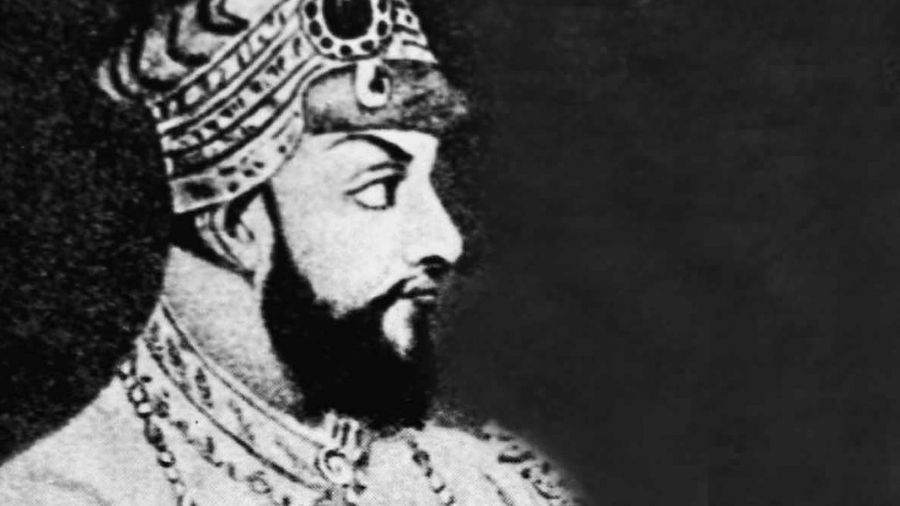
The two “nawabs” are among the living descendants — eighth generation to be specific — of Syed Mir Jafar Ali Khan Bahadur, commander of the Bengal army under Nawab Siraj ud-Daulah. He whom we today know as Mir Jafar, shorn of all gallantry, accomplishments and grandeur he might have been associated with once. The same who is synonymous with the betrayal he perpetrated on the young Siraj in Plassey in 1757.
And so you have — mir jafar (n) once man, now pejorative; most commonly used Indianism for traitor or turncoat.
***
Syed Mohammad Reza Ali Meerza or Chhote Nawab greets me as he hurriedly picks a white kurta from the clothesline and slips it over his head. “This is the building that housed the sentries during Mir Jafar’s time,” says the 79-year-old.
Reza Ali has worked as a state government employee all his life. “My tenure as a permanent employee fell short by a few days and that’s why I do not get any pension, etc.,” he lets slip a crib and thereafter quickly arranges some plastic chairs, and with a wave of his hand and a “tashreef rakhiye” continues his narration.
Pointing to the recently installed statue of Siraj ud-Daulah bang opposite his house he says, “Siraj ke aami khoob bhalobashi… I love Siraj very much. People say Mir Jafar betrayed him. Bhul bole… that’s wrong.”
And yet from what he says, it is clear this is one “wrong” he and his kin have trouble living down even today. Tourists, visitors, researchers, all continue to raise eyebrows when they learn about the family tree. What about locals? He replies, “Oh! People here love me. They say: ‘We do not care about Mir Jafar. We know you are a good human being’.”
He offers a quick tour of the andarmahal. There are pictures and memorabilia aplenty littered all over. Is any of this Mir Jafar’s?
No. Most of the belongings of the nawabs are kept in the museum inside Hazarduari Palace. That collection includes Mir Jafar’s sword, shield and dagger, his footwear, the cutlery he used.
The Hazarduari Palace, Wasif Manzil, and Begum Manzil are all part of the nawab’s estate. Reza Ali offers to take us around. On our way out, we meet Syed Mohammed Abbas Ali Meerza, or Bade Nawab.
Abbas Ali has a persona quite distinct from his younger brother’s. He is of reserved bearing and stands on ceremony. He is quick to inform that, in 2013, he won “the case” in the Supreme Court and since then he and his brother have been recognised as genuine claimants to the title of the Nawab of Murshidabad.
Without the prodding, Abbas Ali starts talking about his ancestor. “Who says Mir Jafar was a traitor? Mir Jafar hails from the Najafi dynasty. We are the direct descendants of Prophet Hazrat Mohammad.”
The Najafi dynasty was born when the Prophet’s grandchildren Hasan and Husyain’s children married. Abbas Ali explains, “Hasan’s son Hassan e Mussanah and Husyain’s daughter Hazrat Fatimah Sughra married. And then the Najafi dynasty was born. We are the descendants of Husyain Najafi. His son Ahmad Najafi was married to Zinnat-un-Nissa, daughter of Shah Jahan’s son Dara Shikoh. Mir Jafar was their son.” He adds, “Mir Jafar was much higher in status to Siraj ud-Daulah, both by bloodline and given that he was the son-in-law of Alivardi Khan, the nawab of Bengal and grandfather of Siraj.”
Says Abbas Ali, “Had he wan-ted to kill Siraj, he wouldn’t have had to go through all the drama of Plassey. He could have got the musnud (throne) from the Mughal emperor himself.”
Dr S.M. Reza Ali Khan is another descendant of Mir Jafar. The Telegraph had interviewed him in January 2020; months later he died. Khan was a professor of history and had done a lot of research on the Battle of Plassey and Mir Jafar. He had said over phone from Hyderabad, “The ignominy attached to this name does not give us a good feeling.”
Dr Khan believed it is not quite right to judge Mir Jafar by cutting him away from the age he belonged to, the environment and those circumstances. He had said, “It was the 18th century and there was no concept of nationalism. And even if there was, let me tell you Siraj was not a great nationalist either. Besides, he had killed his own brother, his uncle and even the husband of Alivardi Khan’s eldest daughter, Ghaseti Begum, to get the musnud.”
Through the lockdown Dr Khan would call many a time with this reference and that reference from history texts. He spoke about the Sheths of Murshidabad, a very powerful community in the 18th century. They did business with French and British traders. Jagat Sheth Mehtab Chand, one of the most prominent businessmen of Murshidabad, used to lend money to the British at a steep interest. Dr Khan had said, “When Siraj declared the British as his enemy, Mehtab Chand could not have been very pleased. His business would have been hampered.” It seems a fair number of Sheths had stood up against Siraj.
Abbas Ali too spoke about Siraj’s unpopularity. Siraj had planned to kidnap the daughter of Rani Bhabani, the queen of Nator. “This was not well received by the Hindu nobility… Siraj had insulted Mir Jafar once in the durbar by having his beard shaved off.”
Octogenarian Baquir Ali Meerza is yet another descendant; he too is based in Lalbagh, but in Kella Nizamat. He says, “It is true we have to suffer the ire of people because the history books say Mir Jafar did not fight in the Battle of Plassey. But these books do not say why he did not fight.”
In The Black Hole of Empire, Partha Chatterjee cites from the Fort William Select Committee Proceedings of May 1, 1757. It reads, “The Committee then took into consideration, whether they could (consistently with the Peace made with the Nabob) concur in the measures proposed by Meer Jaffir of taking the Government from Souragud Dowla, and setting himself up…” Sometime end-June, the British won Plassey. In the same book, Chatterjee writes, “The battle was over by the fall of dusk. The next day, Clive wrote to Mir Jafar: ‘I congratulate you on the victory, which is yours not mine…’”
Baquir Ali’s version differs. He says, “Mir Jafar’s tent was closest to the British forces. The British had come to fight the French, not Siraj ud-Daulah. Armed with only 2,000 soldiers, they came to Plassey and found that Siraj was waiting there with an army of 20,000. The French army stood in front of Siraj’s camp. Mir Jafar’s camp was far away.”
According to him, the British approached Mir Jafar and asked him to mediate with the nawab. Mir Jafar sent a messenger to Siraj but it would have taken a day to cover the distance. In the meantime, the French army opened fire. The British mistook it as Siraj’s rejection of their proposal and retaliated. “Mir Jafar was confused and did not know what to do… What happened at the battlefield of Plassey is a case of misunderstanding and not betrayal,” says Baquir Ali.
The Telegraph asked Abu Taher Khan, the Trinamul MP from Murshidabad, his views on Mir Jafar. A guarded Khan replied, “In this atmosphere it is best I don’t comment on Mir Jafar… But it was because of Mir Jafar that our country lost its independence. Many people say, ‘These people come from the land of Mir Jafar’. Anyone can understand in what context it is being said.”
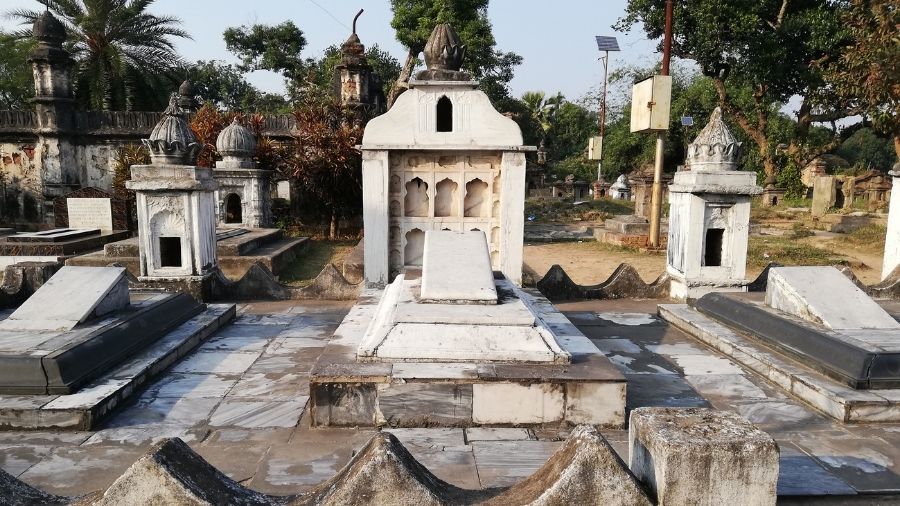
Grave Truths : Mir Jafar’s tomb in Murshidabad / Picture by Moumita Chaudhuri
On my way back from Murshidabad, I make two more stops — Mir Jafar’s palace and his tomb. As it turns out, there is no trace of the palace, only remains of what used to be its gates. The place is still referred to as nimakharam deuri or traitor’s gate. The Jafarganj cemetery that houses the tomb is also closed that day. The auto-rickshaw driver who has driven me around says, “Earlier it was always open, but then tourists would come and spit on it, kick it. That is when the local administration had it walled; a gate was installed.”
Locked too behind that gate are the graves of Heera and Panna, actors of the era’s dubious games of estate and empire. Falcons both, Heera and Panna flew spying sorties for the house of Mir Jafar — to the Siraj camp or, some say, to the British battlements, who knows? They were both killed in the line of duty, shot out of the skies — some say by Siraj’s marksmen, others that it was actually the British, who knows? Both were dear enough to be accorded resting places at the back of where Mir Jafar lies — to that there is sacrophagal evidence. The rest is contrary apocrypha, pick your version. That’s often the case with history too, narratives compete, interpretations duel.
I remembered what Abbas Ali had told me, “The British wrote our history. What I don’t understand is why the nawabs after Mir Jafar did not take it upon themselves to put out their version. If only…,” his voice had trailed off.Bloodline
Mir Jafar had three wives
Shahkhanum Begum
Offspring:
Fatima Begum and Mir Miran
Mir’s son is Murtaza Khan
Murtaza’s son is Mustafa Khan
Mustafa’s son is Asadullah Khan
Asadullah’s son is Azam Ali Khan
Azam’s son is Faiyaz Ali Khan
Faiyaz’s son is Jafar Ali Khan
Jafar’s son is *Dr S.M. Reza Ali Khan
Munni Begum
Offspring:
Nazam ud-Daulah
Saif ud-Daulah
Both died young
Babbo Begum
Offspring:
Mubarak ud-Daulah
Mubarak’s son is Babar Jung
Babar Jung had two sons, Ali Jaj and Wala Jah
Wala Jah’s son is Humayun Jah
Humayun’s son is Firadun Jah
Firadun’s son is Hassan Ali Meerza
Hassan Ali’s son is Wasif Ali Meerza
Wasif Ali’s daughter, Sahibzadi Hasmat-un-Nissa, married Sadiq Ali Meerza
Sahibzadi’s sons are
*Syed Mohammed Abbas Ali Meerza and
*Syed Reza Ali Meerza
*Descendants quoted in the story
source: http://www.telegraphindia.com / The Telegraph Online / Home> Big Story / by Moumita Chaudhuri / January 17th, 2021
He was awarded the Padma Shri in 1991, Sangeet Natak Akademi Award in 2003, Padma Bhushan in 2006 and Padma Vibhushan in 2018.
Ustad Ghulam Mustafa Khan
In Umrao Jaan (1980), filmmaker Muzaffar Ali’s seminal film, a five-minute melody manages to put life’s ebb and flow in perspective. The raagmala Pratham dhar dhyaan dinesh illustrates the induction of the protagonist, Ameeran, into classical music and dance and showcases her metamorphosis into Lucknow’s fanciful courtesan, Umrao Jaan.
Composer Khayyam’s composition is ambitious and arduous—based on seven ragas each of which defines time, mood and colour of varied moments in life. To sing this, Ali chose Ut Ghulam Mustafa Khan—the Hindustani classical giant whose deep and dazzling voice was representative of not just an iconic lineage but also a rigorous riyaaz and years spent teaching some of the greatest musicians of our time.
Opening with an alaap that chimes with the word Allah, the melody merges into Brahma, giving a glimpse into the Awadh of the 19th century, when the syncretic fusion of cultures in music was a norm. But a more remembered piece is perhaps Jhoola kinne daala re amaraiyan in raag Desh, the story of a bedecked swing on which two lovers sway together.
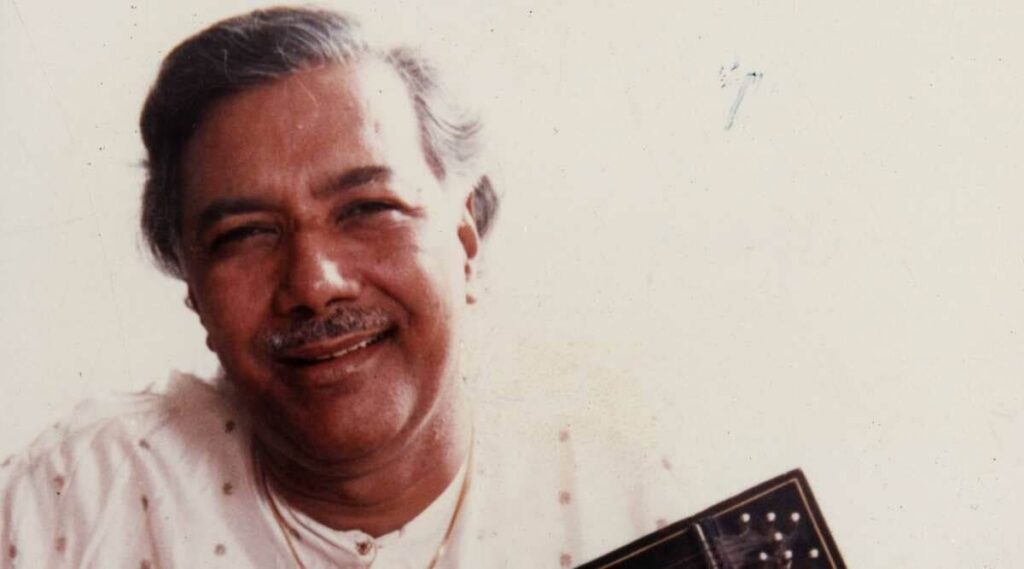
Ut Ghulam Mustafa, one of the finest Hindustani classical vocalists and torchbearer of the Rampur Sahaswan gharana, died at his home in Mumbai on Sunday. He was 89.
Expressing his condolences, PM Narendra Modi tweeted, “The passing away of Ustad Ghulam Mustafa Khan Sahab leaves our cultural world poorer. He was a doyen of music, a stalwart of creativity whose works endeared him to people across generations. I have fond memories of interacting with him. Condolences…”
President Ram Nath Kovind tweeted, “…In his passing, music world has lost not only a doyen but also a mentor for young generation…”.
Ut Ghulam Mustafa was born and raised in Badaun, Uttar Pradesh. His mother was the daughter of the legendary vocalist Ut Inayat Hussain Khan, the court musician in Nawab Wajid Ali Khan’s court. He learned from his father Warish Hussain Khan, followed by tutelage under other family members, including Ut Fida Hussain Khan, court singer of Baroda’s royal durbar and then his cousin, Ut Nissar Hussain Khan.
His first performance was at a Janmashtami concert at the age of eight, where he was hailed as a child prodigy. What was also interesting about Ut Ghulam Mustafa was his openness to all forms of music, a rarity in classical maestros of his time. So when most classical singers were banishing Hindi film music, he found it easier to adapt.
According to Pune-based dhrupad maestro Uday Bhawalkar, Ut Ghulam Mustafa changed the colour and tone of how music in Rampur Sahaswan gharana sounded. “Someone like the great Ut Nissar Hussain had an aggression in the tone. Ut Ghulam Mustafa toned it down and made it softer,” says Bhawalkar.
The musician also sang in Mrinal Sen’s Bhuvan Shome (1969), and Badnam Basti (1969) among others. Another significant performance was a part of Coke Studio @MTV where composer and Ut Ghulam Mustafa’s student AR Rahman presented his guru on stage. The musician sang a composition in raag Yaman alongside guitars and drums.
Ut Ghulam Mustafa, till he died, remained an eminent guru to many leading musicians including Asha Bhosle, Manna Dey, Ut Rashid Khan (also his nephew), Waheeda Rehman, Geeta Dutt, Hariharan, Sonu Nigam, Alisha Chinoy and Shilpa Rao.
He was awarded the Padma Shri in 1991, Sangeet Natak Akademi Award in 2003, Padma Bhushan in 2006 and Padma Vibhushan in 2018.
Once at a concert in Mumbai, Ut Ghulam Mustafa sang a thumri in Pilu, and got Ut Bade Ghulam Ali Khan on his feet. “Iitne dooble patle ho, kahan se gaate ho?” asked the musician. Ut Ghulam Mustafa Khan’s music, his bracing voice, its irrepressible vigour, probably came from his strict training. But also, from the joy he got from the seven notes that represented life for him.
source: http://www.indianexpress.com / The Indian Express / Home> Lifestyle> Art and Culture / by Suanshu Khurana, New Delhi / January 18th, 2021
Expatriate businessman C P Salih had a happy reunion recently after 60 years — with a gleaming Studebaker car that had left his home in 1960.
Salih’s father Chandanaparambil C P Mohammad had bought this American car from Delhi. It is estimated that the car, manufactured in 1947, arrived in India in 1949.
It was in this car that the wedding party of the mother-in-law of prominent businessman Galfar Mohamed Ali had travelled to the wedding.
C P Mohammad sold the car in the 1960s. After changing several hands, it finally reached Delhi again. What’s more, it had the same old number — DBG 8213. Mohammad had written in his diary that he had bought the car for Rs 2,400. The car was tracked in Delhi with the help of the old number.
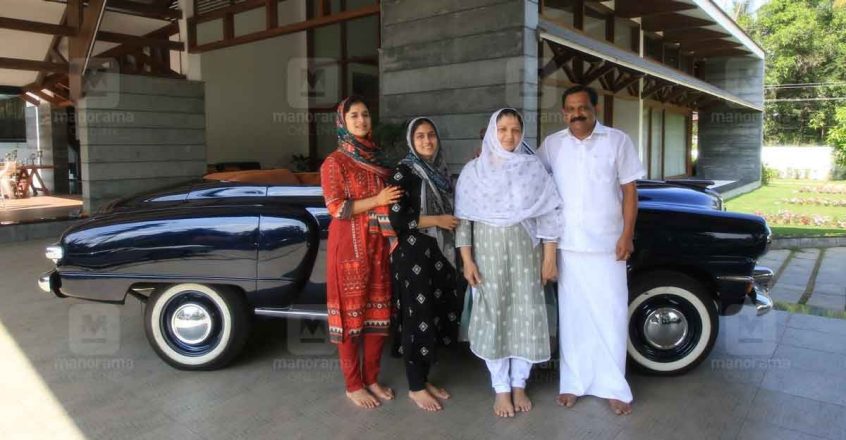
Salih purchased the car and brought it to his Valappad home to give it to his son Anhar Salih as a wedding gift. The car was originally red in colour. It has now turned blue. The top was lost due to age. But the engine is still the old one.
C P Salih with his family.
On seeing its return, many elders shared their memories of having seen the car in the past. All this was recorded and kept by Salih’s family. Many were not even allowed to touch the car. But C P Mohammad took everyone in the area in the car.
While the old car has been found, one puzzle related to it remains. CP Mohammad had written in his diary that an Ezhuthachan in Thrissur had helped him buy the car. Salih has not yet been able to find out who that was.
source: http://www.onmanorama.com / OnManorama / Home> News> Business / by OnManorama Correspondent / January 17th, 2021
A short documentary on Malayalam cinema’s evergreen star Prem Nazir, which surfaced online a couple of days ago, has garnered thousands of views, in testimony to the actor’s enduring popularity, thirty-two years after his passing away. On his death anniversary on Saturday, the video, which was made for Doordarshan back then, was shared across social media platforms, providing a glimpse of the actor to many from the younger generation too.
The documentary titled Nithyavasantham Nithyavismayam, converted from an old VHS tape, was uploaded on Facebook by Orbit Videovision. It was directed by Baiju Chandran, presently head of programmes, Doordarshan, Thiruvananthapuram. The film has interviews with actors, filmmakers, and producers who have worked with him, recollecting their memories.
Actor Mammootty speaks of how he, as a youngster unaware of the technicalities of filmmaking, assumed that Nazir was the same larger-than-life persona in real life as he was shown on screen.
Poignant memories
One of the poignant recollections is made by veteran script-writer Sarangapani about the special relationship the actor shared with Udaya studio, having starred in many a film produced under the banner. “He was not just a cinematic hero for the employees here. He used to enquire after each of the employees here, including the sweepers and the light boys and financially helped them out during difficulties,” he says. Actor Jose Prakash echoes these sentiments and says that Nazir was particular that whatever he is doing to help others should not be known to anyone else.
The documentary looks at how he became the romantic hero of the masses, how he was sometimes limited in his experimentation owing to that image, and of the instances when he successfully broke out of that mould and stunned everyone.
Rare camaradarie
His camaradarie with actor Sathyan, with whom he acted in several films, also becomes a point of discussion. Actors Saradha and Kaviyoor Ponnamma speak of how he was gracious enough to make everyone around comfortable, and treated everyone equally. There are rare interviews with his family members too.
The documentary ends with some rare visuals of his last journey, and of the multitudes waiting on both sides of the road, to catch a last glimpse of the star.
source: http://www.thehindu.com / The Hindu / Home> News> Cities> Thiruvananthapuram / by Staff Reporter / Thiruvananthapuram – January 17th, 2021