All posts by mpositiveone@gmail.com

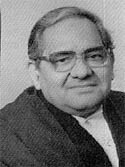
Ishrat Firoz — A Fearless Activist Who Championed AMU’s Cause

Azamgarh , UTTAR PRADESH :

OBITUARY
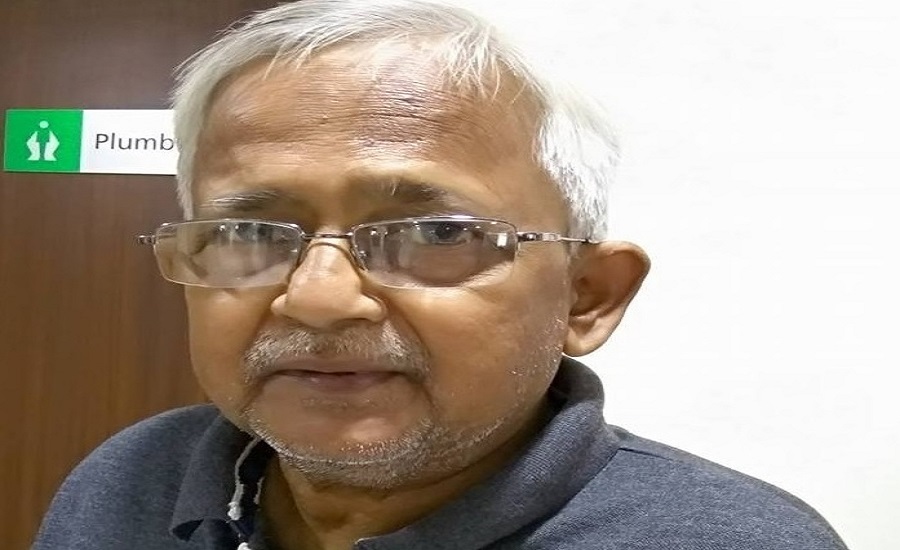
Senior Aligarian Ishrat Afroz passed away on September 30, 2020.

A senior Aligarian and one of the soldiers of the struggle of AMU’s Minority Character, Ishrat Firoz, breathed his last in JN Medical College, AMU on September 30, 2020.

He was my senior in VM Hall’s Nasrullah Hostel. For two years, I lived in Room 33 and he was in 34 and thus we were neighbours as well. Later, I moved to Room 25 with my classmate and close friend Waseem Ahmad Qadri (now a senior advocate at Supreme Court of India). Nevertheless, Ishrat Bhai and I lived in Nasrullah Hostel for nine years—1974-83.

Although much junior to Javed Habeeb, Arif Mohammad Khan (sorry to mention the name of this man who does not want to have anything to do with the community but a historical fact has to be mentioned), Akhtarul Wasey, Z.K. Faizan, Mushtaq Ahmad Khillu and several others, Ishrat Bhai and his close friend Nadeem Tarin —both PUC (Pre-University Course) students at that time—took an active part in the long struggle for the restoration of AMU’s Minority Character and went to jail for this cause.

In our student days, AMU used to be the hub of positive Milli activities. In such a lively culture and environment, our hostel, with residents like Azam Khan, Nadeem Bhai and Ishrat Bhai, was bound to be more vibrant and active. Not only was Ishrat Bhai an active student leader, he was also a cabinet member (perhaps senior cabinet, if my memory is not failing me) in the students’ union in which Azam Khan was Honorary Secretary.

In order to give young Aligarians and non-Aligarians an idea of the Aligarian spirit of those days, I feel it necessary to narrate an interesting incident. In our hostel, we had two groups: anti-Azam Khan and pro-Azam Khan. The pro-Azam Khan group was led by three seniors and very close friends:  Ishrat Bhai, Nadeem Bhai and Akhtar Zameer Bhai. Akhtar Bhai and Ishrat Bhai were roommates as well.
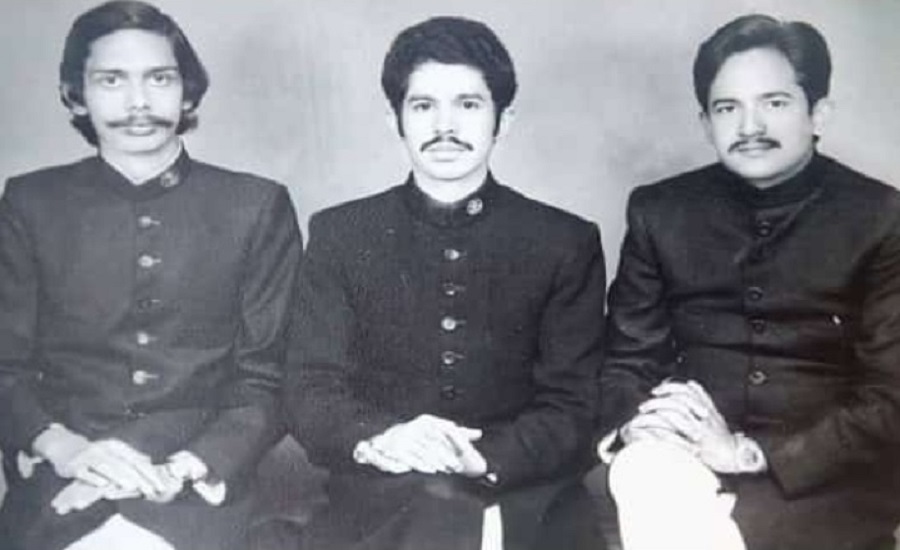
Akhtar Zameer, Nadeem Tarin and Ishrat Afroz in 1970

After leaving AMU Akhtar Bhai got a job in Dubai. Like any dutiful son and brother, obviously, he would have shared the joy of getting his first salary by sending money or gifts to his parents and siblings. But, along with them, he remembered his hostel mates as well and sent some money to Ishrat Bhai to arrange a dinner for the whole hostel total numbers of whose residents were around 109. Since Ramadan started only a few days after, Ishrat Bhai arranged a magnificent Iftar instead.

During the emergency, an atmosphere of fear and suffocation had gripped the country. Everyone was trying to be more loyal than the king and outdo even the most loyal Congress members by doing something extraordinary. In AMU, students’ union was dissolved and Azam Khan was arrested. As per tradition, our hostel was going to have an annual group photograph.

Even in that fear-stricken atmosphere, Ishrat Bhai, Nadeem Bhai and Akhtar Bhai showed the courage to propose that in the group photo Azam Khan’s portrait be put on one of the front chairs reserved for senior students, warden and the provost. 

Obviously, this was opposed by the anti-Azam Khan group and the warden and, as a result, that year there was no group photograph.

Born in Azamgarh in 1955, Ishrat Bhai came to Aligarh at an early age to join Minto Circle . He was a bright student and did his Ph.D. in Psychology from AMU. He was not only a good writer but was a fine orator too. He conducted cultural and social gatherings in his typically attractive Aligarian style quoting Urdu verses. But he had a passion for writing, took journalism as a career, and published a serious magazine Satoon from Delhi. But sadly, he could not pursue his journalistic career for long. He suffered from diabetic and related ailments affecting his kidneys and worsening his health rapidly forcing him to close his magazine and take leave from an active life. 

After leaving Aligarh, I lost touch with him. Whenever he happened to see my uncle (chacha), Dr Mohammad Yusuf Khan (Dept of Arabic), he told him without fail that he wanted to talk to me. But Chacha jan always forgot to give Ishrat Bhai my number or take his phone number. When Ishrat Bhai came on Facebook, I talked to him via voice mail and later by phone. On a couple of occasions when I phoned him he was not feeling well and had been hospitalised. Thinking that I might be disturbing him, I stopped calling him this way. I remained in touch on Facebook though. From his Facebook activity it was becoming clear that he was not keeping well.

In Ishrat Bhai’s demise, I have lost a good friend and the community has lost a sincere and dedicated activist. May Allah SWT grant him maghfirah (forgiveness) and bless his family the courage to bear this loss.

source: http://www.clarionindia.net / Clarion / Home> India / by M Ghazali Khan , Clarion India / October 05th, 2020

Conserving Native Varieties of Rice

Kiragavalu village (Malavalli Taluk, Mandya District) , KARNATAKA :

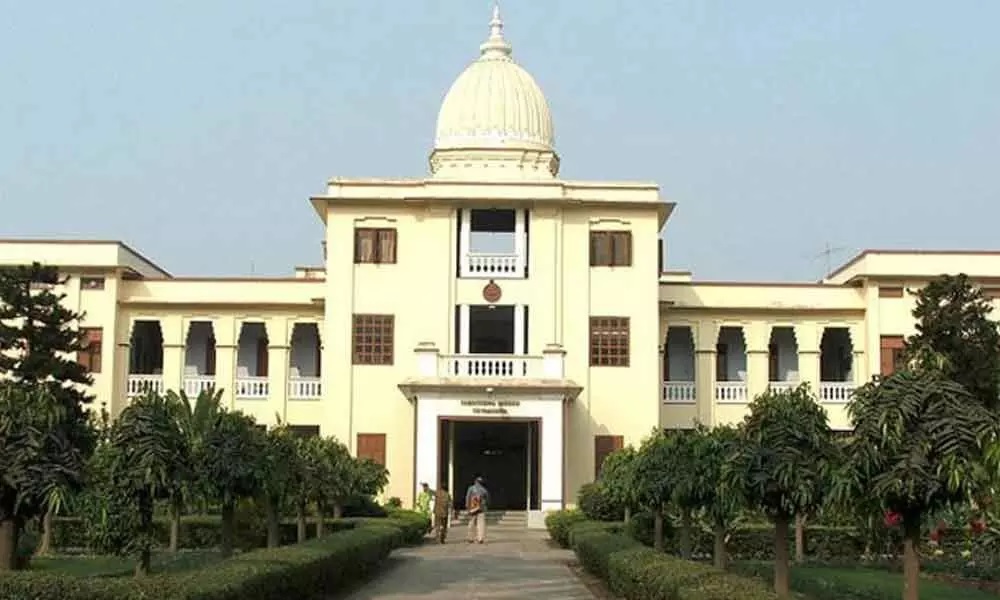
Syed Ghani Khan of Kirgavalu village has been conserving and propagating hundreds of native varieties of rice which are threatened with extinction in the race for high-yielding commercial varieties.

For Syed Ghani Khan of Kirgavalu village in Karnataka, preserving native varieties of rice is a lifetime passion.

This 42-year old has been cultivating virtually hundreds of varieties of rice on his 14-acre farm in the village located 20 kilometres from Mandya in the Cauvery basin. He preserves seeds of nearly a thousand of these varieties in a tiny museum that he has organized at his house in the village.

Walls of his first floor hall display these seeds, held in clusters of panicles neatly pinned on several panels with tags bearing the names of the varieties alongside.

Museum at Home
Son of a farmer and someone who does not fight shy of calling himself a farmer, Ghani Khan holds a degree in Archaeology and Museology from Mysore University.

Pained at the increasing use of chemicals, fertilizers and pesticides and loss of native varieties, Khan took up the task of preserving seeds of these varieties in packets. He would supply the same to local farmers around his village before the arrival of the next monsoon. But he was not satisfied. It needed a little more effort. He conceived the idea of a museum for promoting general awareness together with the supply of seeds. Two halls in the upper floor of his old, tiled house were readied for the purpose. The clustered panicles were arranged on wall panels in a hall, while those in bottles were arranged on shelves in the second one.


Ghani Khan feels that commercialization of farming has led to rejection of traditional varieties of crops, be they cereals, lentils, vegetables or fruits. The farmers were influenced by the publicity to seeds produced by large firms that promised better yield. This has resulted in en masse switching over to hybrid varieties like MTU-1001, IR-64, Jaya etc.

Sustainable
Ghani Khan says conservation of traditional varieties is critical to sustainable agriculture as several of them carry medicinal properties, some give out aroma on cooking, some can withstand drought and yet others can be grown with just one or two showers.

He wanted to conserve these varieties for future generations. So, he began collecting varieties like Ratnachudi, Gandhasalai, Rasakadam, Rajamudi, Ghamgadale, Doddibatta, Doddabyrenellu, Chinna ponni, Mysore Mallige, Zeerge Sanna, Parimalla Sanna, Basumati, Burma Black, Thai Jasmine etc.

Dedicated Zone
He says while agricultural colleges or universities used freezers to preserve seeds, he applied on-field conservation methods which can ensure a life of at least 18 months for the paddy seeds without pesticides. He has dedicated one acre of land in his farm in a demarcated zone where seeds of several varieties are sown in documented segments.

He even wrote to the Chief Minister of Karnataka to initiate measures to preserve and conserve native varieties. But no response has been received from him.

During the last two decades, he has supplied free seeds of native varieties to around ten thousand farmers and received positive responses from them. He keeps a meticulous record of all those who have visited him or sought seeds from him. Shiv Prasad, a farmer from the outskirts of Hyderabad has taken seeds of around 200 varieties from him and forwarded the seeds from the resulting crop to his associates. Krishna from nearby Maddur village has been a constant procurer of seeds from him. Rachanna from Hosamalangi village in T. Narsipur taluk has successfully grown around 25 varieties of rice after having taken from him.

Honours Conferred
A corner of his museum displays several trophies, medals and certificates that were presented to him in recognition of his work for propagation of native varieties. He was conferred Krishi Pandit Prashasti by the Government of Karnataka in 2008. Plant Protection Variety Forum conferred on him National Genome Seed-saver Recognition a year later. Directorate of Rice Research, Hyderabad selected him for Rice Innovative Farmer’s Award for 2011-12. Government of Karnataka chose him for Bio Diversity Award in 2010, while Suvarna TV channel declared him winner of the ‘Man of the Year Award’ in 2017.


According to Ghani Khan, India is home to thousands of varieties of rice and one should not be surprised to find one variety being replaced by another after every forty kilometres. He says several varieties are known for medicinal properties. If Navara of Kerala is good for those who have joint pain, Karigajvilli and Ambe Mohur from Karnataka are said to be good for lactating mothers. Mehdi is held to be good for healing of bone fracture, while Mapillai samba from Tamil Nadu improves virility. Khaima is said to be good for those suffering from piles.


Ghani Khan is a mobile encyclopaedia of knowledge on varieties of rice. He says it is wrong to presume that paddy is an aquatic plant. He refers to several varieties such Doddi Batta, Ghangadale and Biddi Doddi which can be grown in farms that receive just one or two showers. He says Ratnachudi, HMT, NMS-II are high-yielding varieties while Zeerge Sanna, Rasakadam, Gandha Sale, Parimala Sanna and Mugadh Sugandh emit pleasant aroma on cooking.


For the last few years Ghani Khan has taken up conservation of native varieties of mango too and has registered himself with the National Bureau for Plant Genetics, New Delhi. He has trees that have been there with his family farm for the last six to seven generations.

These trees yield native varieties like Mosambi ka Aam (tasting like sweet lime); Seb ka Aam (tastes like apple); Pheeka Aam (for diabetics); Kaale Malghoba, Bada Gola; Mangamari; Manji bi Pasand; Mittmia Pasand. Some of these varieties are procured from him by suppliers attached to Lulu Mall in Dubai.


Syed Ghani Khan can be reached at 99017-13351, email: muhinuha786@gmail.com.

source: http://www.islamicvoice.com / Islamic Voice / Home> Features / by Maqbool Ahmed Siraj / February 15th, 2019

Welcome to Bengal, Where Thirty Muslim Professors Teach Sanskrit

WEST BENGAL :

At a time when faculty members both present and past have even written to the President of India, Ram Nath Kovind, requesting him to intervene and stall the appointment of Dr Feroze Khan in Banaras Hindu University (BHU)’s Sanskrit Dharam Vidya Vigyaan department, West Bengal seems to embracing its Sanskrit professors hailing from the ‘other’ community, comfortably.

Going by a loose headcount there are at least 30 Muslim professors in West Bengal, teaching Sanskrit. Around 14 were recruited last year through College Service Commission and 12 this year. The most recent recruitment being of Ramzal Ali at the Sanskrit department of Ramkrishna Mission Vidyamandir, Belur. Speaking to eNewsroom, regarding his recruitment, he said, “I am in a state of shock with so many calls being made to me, seeking my comment. A Muslim learning Sanskrit is nothing new. There is a history to it. In every Sanskrit department across the state, you will find at least one Muslim student. Muslim Sanskrit teachers in Bengal, is also not rare.”

Perhaps Ali has a point. For, Dr Shaikh Sabir Ali, a gold medalist in Sanskrit from the University of Calcutta has been teaching the language for almost a decade now. Dr Ali, at present, teaches Sanskrit at the West Bengal State University, Barasat. According to him, Sanskrit, as a language is beyond Vedas and Upanishads.

He said, “There is more to this language, apart from the Vedas, Purans and Upanishads. This language has a rich literature and grammar too. It was these two that attracted me as a child. Luckily, my teachers encouraged me to take up this language for my higher studies. You, see one can’t make people take up a language simply based on one’s religion. History is a witness to many Muslims mastering this language.”

Speaking from experience Ali said, “Every batch has at least one Muslim student in the Department of Sanskrit. In Kolkata, I presume, Rabindra Bharati University has a huge number of Sanskrit students.”  Dr Ali is also a topper from Ramkrisha Mission Vidyamandir.

Adding to the experiences of Muslim Sanskrit teachers in Bengal, Rakibul Sk, assistant professor at SBS government college said, “I have never been discriminated on the basis of my religion, neither while I was mastering Sanskrit, nor while teaching it. I would like to add that while I hail from a small place like Jangipur, my place of birth has taught me that there is no religious attachment to any language. Hence, when I took up Sanskrit for my higher education, the Hindu neighbours of mine never raised an eyebrow. On the contrary, they were quite happy. The teachers who guided me to reach this position are all Hindus. It’s sad that today, we are discussing all this from a religious perspective.”

However, on being asked about the faculty members writing to the President of India, Ali, said, “I don’t want to open up a new controversy. But let me be very clear, there is a particular department of Sanskrit, which is accessible only to the Brahmin. Even Hindus from other sect are not allowed to enter that domain, so the question of a Muslim being appointed in that domain can be quite challenging. As per my knowledge, Dr Feroze Khan has been appointed in the Sanskrit Dharam Vidya Vigyaan department, which is the domain that I just talked about. I don’t want to get into a further debate, but I guess, his recruitment in the literature department wouldn’t have caused this huge controversy.”

Given the new twist in the story, it would be interesting to see President Kovind’s call on the letter written by the faculty members of BHU, seeking his intervention to stall Khan‘s recruitment, especially when earlier this year, he had awarded Padma Sri for Literature and Education to Sanskrit Scholar Mohammad Hanif Khan Shastri.

(Courtesy: Sabrang India)

source: http://www.janataweekly.org / Janata Weekly / Home /by Shabina Akhtar / December 10th, 2019

Designing change, one stitch at a time

Bengaluru, KARNATAKA :

Fashion, as we know it, is one of the most influential industries in the world.

Bengaluru : 

Fashion, as we know it, is one of the most influential industries in the world. And when brands not only make top quality products but also come full circle and give back to the community through their choices, they become good influencers of fashion.

Kulsum Shadab Wahab, based in Bengaluru, is a philanthropist recognised by Chime for Change, a global campaign founded by Gucci, which features 25 women activists from around the world working to advance gender equality.

A true fashion enthusiast, she believes in altering the perception of high fashion through inclusivity. Ara Lumiere, an initiative by her Hothur Foundation, works with acid attack survivors in making avant-garde head gears. Worn by the likes of pop star Katy Perry, Ara Lumiere’s head gears have won many international awards. They have also collaborated with Shah Rukh Khan’s Meer Foundation to create awareness on skin banking.

Ara Lumiere X Dhruv Kapoor bucket hat collection

The spring summer ’21 edition of Ara Lumiere, in collaboration with ace designer Dhruv Kapoor (Ara Lumiere X Dhruv Kapoor), which was made out of diligence, love and hope by the survivors, was recently unveiled at the first-ever digital Milan Fashion Week.

Showcased through a short film, the gender neutral collection features embroidered bucket hats in sheer organzas and taffetas, handcrafted and hand embroidered by the brave acid attack survivors. All proceeds have gone into the rehabilitation of the survivors, where fashion has acted as a powerful tool in empowering these women. 

The government’s leather ban in 2015 destroyed jobs for leather work artisans, mainly from marginalised communities. A fight for justice against caste and ostracised communities got artist-activist Sudheer Rajbhar to develop a new recycled material – one that is made from waste but close to leather in its texture and durability – to celebrate and conserve crafts from a banned industry. This is how Mumbai-based Chamar Studio was conceived.

Says Rajbhar, “Chamar was once used as a slur and we have tried to end that. Our brand’s promoters in Germany, the USA and France tell us the name sounds like a mix of ‘Chanel’ and ‘Shalimar’ and associate it with luxury.” These bags, which come in striking bold colours, are high on functionality, design and skilled craftsmanship and proudly stand at par with any global luxury brand. These timeless pieces are waterproof, cruelty free and vegan as well. 

Brands with a cause make us believe that fashion can be something bigger, more than just a style statement. Along with creating high quality products that are recognised globally, fashion also puts out good into the world. Whether it is supporting a cause or sourcing sustainable material, these brands are definitely the game changers of fashion today.

(The writer is a lifestyle consultant and mindful fashion advocate)

source: http://www.newindianexpress.com / The New Indian Express / Home> Cities> Bengaluru / by Sarayu Hegde / Express News Service / October 01st, 2020

100 Indian students join UK university’s new online diabetes course

UNITED KINGDOM:

Birmingham City University launched its new Master’s Degree in Advancing Diabetes Care in partnership with the University Hospitals Birmingham Diabetes Team this week.

Representational image.
Representational image.(Bloomberg file)

Around 100 Indian students have enrolled for a UK university’s newly-launched online course focussed on supporting people living with diabetes and leading new research into the condition.

Birmingham City University launched its new Master’s Degree in Advancing Diabetes Care in partnership with the University Hospitals Birmingham Diabetes Team this week. The course is aimed at helping healthcare professionals develop specialist skills and techniques to enhance the level of care provided to people living with diabetes. The first cohort of students taking up their places on the course are based in India and are sponsored by Mumbai-headquartered pharmaceutical company Lupin Pharmaceuticals.

“When I was an undergraduate student of medicine, at that point in time in India we used to read about diabetes in the subcategory of lifestyle diseases. Now we have seen the spread of this disease across all age groups, impacting people with different social backgrounds,” said Dr Shishank Vikram, Consul General of India, Birmingham.

“At this particular juncture the launch of the MSc is a very important step which will go a long way in not only providing quality training but in the exchange of best practice between the two sides. The students that are joining this course are all medical doctors and I wish them the best,” he said.

According to figures quoted by the university, India is home to nearly 77 million people with diabetes and the course has been designed to further research and development into diabetes care, particularly with COVID-19 causing a disproportionate mortality rate for people with diabetes. It is open to healthcare professionals including general practitioners (GPs), hospital-based doctors, specialist nurses and practice nurses, midwives, dietitians, podiatrists, pharmacists, psychologists and other roles across healthcare sectors.

“By providing training to medical doctors who specialise in diabetes care, we know what this is going to do, is to reach out to those communities who are most impacted by diabetes,” said Professor Philip Plowden, Vice-Chancellor at Birmingham City University. “The skills and knowledge that you develop on this course are going to result in evidenced-based effective diabetes care. We know the impact of this is going to be felt for generations,” said Plowden.

Professor Wasim Hanif, Professor of Diabetes & Endocrinology, Consultant Physician, & Head of Service in Diabetes at University Hospital Birmingham, said the reason the new course is important is that there are currently 463 million people living with diabetes globally.

“Globally every seven seconds somebody dies from diabetes, including in countries like India. To give you some perspective on these things, every day nearly 12,000 people die from diabetes. The aim of this course is to try and give the most advanced skills to healthcare professionals trying to manage diabetes,” he said.

The university says it hopes the brand new course will meet the needs of interdisciplinary healthcare practitioners working in partnership with people living with diabetes. 

source: http://www.hindustantimes.com / Hindustan Times / Home> Education / by Press Trust of India / posted by Akhilesh Nagari / October 04th, 2020

Historian Rana Safvi gets Yamin Hazarika award

NEW DELHI :

istorian Rana Safvi. Credit: Twitter/@iamrana

Read more at: https://www.deccanherald.com/national/historian-rana-safvi-gets-yamin-hazarika-award-891896.html

Historian Rana Safvi has been conferred an award instituted in memory of Yamin Hazarika, the first woman from the Northeast to join the central police service.

Safvi, who has published several books on culture, history, and monuments of India, was chosen for her “contribution to the syncretic culture of India”.

Hailing from Assam, Hazarika was selected for the NCT of Delhi, Andaman and Nicobar Islands, Lakshadweep, Daman and Diu and Dadra and Nagar Haveli Police service (DANIPS) in 1977. She held the post of assistant commissioner of Police in Chanakyapuri (Delhi) and went on to become deputy commissioner of police (Crime against Women Cell) in the national capital.

In the crucial period after the 1984 anti-Sikh riots, Hazarika was in-charge of three key police stations. In 1998, she was posted in Bosnia as part of the UN peacekeeping force. But her life was tragically cut short by destiny as she succumbed to cancer at the age of 43 in 1999.

The ceremony was held online though Hazarika’s daughter Huma presented the silver salver to Safvi in Delhi. Assam DGP Bhaskar Jyoti Mahanta was the guest of honour. He recalled the contribution of Hazarika and also spoke about her grit and determination.

The award is given every year by a collective of women professionals since 2015. Previous winners are author Indrani Raimedhi, athlete Tayabun Nisha, actor Moloya Goswami, environmental activist Purnima Devi Barman and social activist Hasina Kharbhih.

source: http://www.deccanherald.com / Deccan Herald / Home> National / by PTI, New Delhi / September 23rd, 2020

Freedom fighter Capt Abbas Ali passes away

Aligarh, UTTAR PRADESH :

Aligarh (UP):

Freedom fighter Captain Abbas Ali who was part of the Indian National Army (INA) died of a cardiac arrest today at the Jawaharlal Nehru Medical College here.He was 94 and is survived by son Qurban Ali and two daughters.

freedom fighter capt abbas ali passes away

Aligarh (UP): 

Freedom fighter Captain Abbas Ali who was part of the Indian National Army (INA) died of a cardiac arrest today at the Jawaharlal Nehru Medical College here.

He was 94 and is survived by son Qurban Ali and two daughters.

“He will be laid to rest later this evening at Qila Road graveyard,” a family member said.

An alumnus of Aligarh Muslim University (AMU), Ali had joined the British Indian Army in 1939, shortly before the outbreak of World War II. In 1945, when Subhash Chandra Bose raised the banner of armed revolt, Abbas left the British army and joined the INA.

Shortly thereafter, he was arrested, court marshaled and sentenced to death. When India gained independence, he was released from prison before the death sentence was meted out.  Abbas Ali joined politics under the influence of socialist party leaders including Ram Manohar Lohia, Acharya Narendra Dev and Jai Prakash Narain.  In 1966, he was appointed State General Secretary of Sanyukt Socialist Party.

He was appointed as a member of the national executive of the Socialist Party.  He was arrested again during the national Emergency under the Defence of India Rule (DIR) and remained behind bars during the entire period of emergency.  In 1977, when emergency was lifted and his party merged with the Janata Party, he was elected to Uttar Pradesh Legislative Council and was appointed as the first President of Uttar Pradesh Unit of the Janata Party.

Shortly before his death, while attending a public function at Aligarh on the eve of 15th August, Captain Ali had said, “There is only one unfulfilled wish of my life and that is that the true story behind the last few days of my leader Subhash Chandra Bose should see the light of the day.  “West Bengal Chief Minister, Mamta Banerjee has assured me that she will leave no stone unturned to unravel the mystery behind his death”, he had said.

source: http://www.indiatvnews.com / India TV / Home> English News> India / by PTI / October 11th, 2014

Syed Sagheer Ahmed: Last of Committed, Principled Socialists

UTTAR PRADESH :

Syed Sagheer Ahmad was not much of a public figure but he always had access to the highest echelons of power and politics.

OBITUARY

In spite of his close associations with some of the giants of Indian politics, he never became an MLC, MLA or MP. He was, in a true sense, a compassionate and dignified face of Indian politics.

IT was 10:45 in the morning yesterday when my friend and class fellow at AMU Mr Najam uz Naqvi called me to inform that Sagheer Mama had passed away at a hospital in Bareilly. The news was so unexpected that it had me shivering, too numb for any reaction. For quite some time I was stunned beyond words still trying to fully grasp the heart wrenching information perhaps very much in denial.

This was not any news of a relative’s death. It is not that unusual for us to hear about the death of someone close, but the passing away of Syed Sagheer Ahmad (Najam’s Mama) was not the death of an ordinary person. It was as if I was witnessing right before my eyes the end of an era.

Syed Sagheer Ahmad was born on the 4th of December, 1934, in the Tahseel/ Qasba Sehsawan in Badaun district. He received his education from Aligarh Muslim University, the same place from where he picked up interest in socialist politics and remained a lifetime loyalist. Janab Syed Sagheer Ahmad was not much of a public figure but he always had access to the highest echelons of power and politics. He was one of those rare young turks in Congress who had dared to revolt against the dictatorial regime of Mrs. Indira Gandhi along with Chandershekharji and Mohan Dharia.

He was an avowed socialist, a well-known and respected face among the notable socialist leaders and movements. Mrs. Gandhi personally knew him well. He was a close friend and confidant of Chandershekharji. Chandershekharji mentions him fondly in his Jail Diary.  V.P. Singh knew him personally too. The two great leaders of Congress party in Uttar Pradesh, Mr. Hemwati Nandan Bahuguna and Mr. Narayan Datt Tiwari kept him close to their hearts always consulting him on critical minority issues. He often played an important role in removing misgivings between Mrs. Gandhi and her party satraps in Uttar Pradesh. He worked under patronage of giant leaders like Jai Parkash Narayan, Acharya Kripalani, Ram Manohar Lohia. He was closely associated with renowned socialist leaders like Babu Tarloki Singh, Dr. Abdul Jalil Faridi and Narayan Datt Tiwari.

In spite of his close associations with some of the giants of Indian politics, he never became an MLC, MLA or MP. He was, in a true sense, a compassionate and dignified face of Indian politics. He belonged to Muslim aristocracy in UP. However, he never used politics for personal favours. Throughout his life, he depended on his family or personal resources for his political activities and finances. He would never speak or ask for himself but for the populace, he was a firm and assertive advocate.

There are numerous persons in UP who reached Assembly and Parliament only because of his consistent backing. He neither sought nor was he rewarded for his unfaltering selflessness, sacrifice, honesty and self-esteem. Those who know Janab Syed Sagheer Ahmad would definitely agree with me that he was the greatest victim of political injustice of his time. He was not an ordinary politician or a socialist thinker. He had closely watched all the important political developments, especially in North India. He was aware of the ins and outs of political circuits.

It wouldn’t be wrong of me to say that he was a mini encyclopedia of Indian politics in the post independent era. He new most of the ins and outs of political upheavals during sixties, seventies, eighties and nineties. He was a close watcher of Muslim politics and observed with disdain the discriminatory policies of the government against Muslim minorities.

With his advent in Indian politics, Syed Shahabuddin created many controversies around him. He was nominated as the general secretary of Janata party and Rajya Sabha member in 1979. Many a stalwarts in Janata party and later Janata Dal turned against him. This still didn’t deter Janab Syed Sagheer Ahmad sahib to stand like a rock in support of late Syed Shahabuddin. In 1991, Janata Dal had completely ignored Syed Shahabuddin in parliamentary election and denied him the party ticket from his favored constituency Kishanganj. Yet it was only the magnanimity, political stewardship and endless backstage efforts of Sagheer sahib that at the last moment Janata Dal had to concede and accommodate Syed Shahabuddin for a ticket from Kishanganj.

Sagheer sahab was an ardent admirer of Chandershekharji and considered him the bravest leader of his time. He was considered a close confidant of Chandershekharji, yet on occasions he would take a stand contrary to the wishes of his leader. One incident, I remember well. In 1986, when organisational elections for UP Janata Party was going on, Manager Singh an MLA from Ballia was candidate for district Presidentship. Chandershekharji somehow didn’t want Manager Singh to become the party president of his home constituency. But Sagheer Saheb openly went against the wishes of Chandershekharji and played an instrumental role in getting his friend Manager Singh elected as the Ballia Distict president.

I am personally aware of it that during his 60 years long political career, he helped many people achieve their political aims without seeking any return. I am sure nobody in the world of politics could ever claim that he accepted even a penny from anybody during his extensive political tenure. He used to travel much but he would never travel alone. He would usually stay in a middle class hotel. There were few exceptions who were fortunate enough to host Syed sahib. He would always strain his own pocket for all the expenses, not only for himself but for all those who accompanied him. He was a very caring person. If you were travelling with him, he would make sure to take care of every little thing – your ticket, your accommodation, your food and even your laundry.

Today even his political adversaries would agree with me that he was the gentlest and most honest politician of his time with an unmatched sense of self respect — something he never compromised upon.

I have no qualms in saying that India politics ill-treated its two great sons – Captain Abbas Ali khan who was a freedom fighter, a captain in Netaji’s Indian National Army and consequently got arrested and was awarded a death sentence but luckily India won independence before he could be executed.

After Independence, Captain Abbas Ali Khan spent his whole life in opposition and socialist politics. He was the president of UP Janata party when it was in power there. But all his sacrifices in the freedom movement and his contribution in the socialist movement was ignored. He was favoured only once with a single tenure of MLC. Second one is of course, Sagheer sahab. He shall be recorded as the most unfortunate and prejudiced victims of the discriminatory Indian political mindset.

In fact both Captain Abbas Ali Khan and Syed Sagheer Ahmad deserved a seat in Rajya Sabha or a provincial governorship.

Few days back he had penned down his autobiography named as “abhi ummeed baqi hai” “hope still remains” in Hindi and it was inaugurated in the Constitution Club of India. The event was joined by top socialist and intellectuals from across the country. The book received much appreciation and acknowledgement.

Today he is no more leaving behind a void which can never be filled for where can we find again this level of honesty, integrity, philanthropy and discipline. Those who know him must have plunged into deep sorrow and darkness. With Sagheer sahab a beacon of gentle light of Indian Politics has extinguished. May Allah rest his soul in peace.

____________

The author is ex-President of AMU Students Union. 

source: http://www.clarionindia.net / Clarion / Home> Culture> India> Indian Muslim / by S.M. Anwar Hussain / September 28th, 2020

Jobless Kerala anthropologist goes down history lane

Vatakara (Kozhikode District), KERALA :

Illustrated book on legendary hero Kunjali Marakkar brought out for children

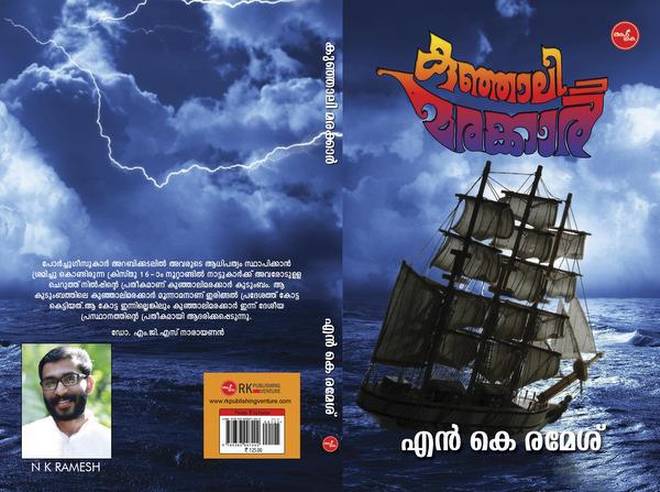
The popular witticism – when the going gets tough, the tough get going – has literally set off a young anthropologist- cum- archaeologist to author a book for children on Kunjali Marakkar, the legendary hero of the 16th century.

For N.K. Ramesh, a guide at the Kunjali Marakkar Memorial Museum at Vadakara, it was an opportunity to trace the history of the four Kunjali Marakkars, when his contract was terminated after the museum was closed to the public from March.

“Certainly a difference existed between writing for children and for adults. So I put down a simple narration and included illustrations based on important events during the period of Kunjali Marakkar and also a picture of a mural painting of a sea war,” he says.

Kunjali Marakkar was a honorific title given to the Muslim naval chief of the erstwhile Zamorin of Calicut. “The four Kunjali Marakkars who were the naval commanders of Zamorin fought against the Portuguese from 1507 to 1600. In fact, the Kunjali Marakkars were maritime merchants and supporters of Arab trade who lived in the coastal regions of Kayalpattinam, Kilakarai, Thoothukudi, and Karaikal. But they shifted their trade to Kochi and then migrated to Ponnani after Portuguese trade interference,” Mr. Ramesh says.

He took about four months to pen the book with 104 pages. The book has already hit the stands although the official launch has been deferred in view of the COVID-19 protocol.

Historian M.G.S. Narayanan has given an introduction to the book on Kunjali Marakkar, whose battles against the Portuguese were portrayed as a symbolic national movement.

The book also delves into the objective of the construction of a fort by Pattu Marakkar, the third Kunjali Marakkar, at Iringal (Kottakkal) in 1571 and the political dispute between his nephew Mohammed Marakkar, who became the fourth Kunjali Marakkar, and the Zamorin.

Later, the Zamorin joined hands with the Portuguese to defeat the last Kunjali Marakkar. The fort was also demolished and Kunjali executed by the Portuguese. The decline of Kunjali Marakkar, he says, led to establishment of Dutch Dominion and later British rule in India.

Mr. Ramesh, who holds a postgraduate degree in anthropology from Kannur university and Post M.Sc. Diploma in Museology from Aligarh Muslim University, has been credited with numerous discoveries, including the unearthing of Palaeolithic tools from north Malabar.

For a living, the 34-year-old is now engaged in de-husking at farms and odd jobs at Nadapuram and adjoining areas.

source: http://www.thehindu.com / The Hindu / Home> News> States> Kerala / by Biju Govind / Kozhikode – September 15th, 2020

Justice Saiyed Saghir Ahmed – A Tribute

Lucknow, UTTAR PRADESH :

by Naved Masood *

News had come last week of the hospitalisation of Justice Saiyed Saghir Ahmed with respiratory distress in Lucknow. When I rang up to inquire his welfare his son in law gave the glad tidings that he was out of the woods and I could briefly speak to him. On Sunday it was gathered that he was well on his way to recovery and will be discharged on Monday morning – news came late last night (Monday) evening that he was no more! This brings the curtain down on the life of a loveable, affectionate human being.

Saghir Bhai, as he was almost universally known, was born in 1935. His father Mr. Syed Mohammed Husain was not only a well known lawyer but a versatile jurist whose compendium of legislations and regulations from the days of the East India Company onwards is a testimony to his erudition. Saghir Bhai had his early education in Christian College Lucknow. After passing the Intermediate examination he went to Aligarh and obtained his BSc from the AMU. He came back to Lucknow to be in his father’s foot-steps and joined the legal profession after obtaining a degree in Law from the University of Lucknow. He soon became Standing Counsel for the Central Government at the Lucknow Bench of the Allahabad High Court; his fairness and diligence stood Organisations like the Railways in good stead. He was elevated to the Bench of the High Court in 1981 and was appointed Chief Justice of the Jammu and Kashmir High Court in 1993. He was transferred to Hyderabad as Chief Justice of the Andhra Pradesh High Court in 1994 from where he moved over to the Supreme Court in 1995 retiring in June 2000.

As a judge he was very popular among the lawyers due to his unfailing politeness and consideration particularly to the younger members of the bar. Though he left Uttar Pradesh in 1991 he maintained contacts with the members of the subordinate judiciary. To the younger judicial officers with a reputation of integrity he was some kind of a patron saint. His major contribution to public affairs came after retirement when in 2005 the Prime Minister appointed him to head a Committee to work out a consensus among different regions and sections of Jammu and Kashmir for enhanced autonomy. Although the recommendations of the Committee remain unimplemented any future initiative to iron out local differences will have to substantially lean on the “Saghir Ahmad Committee” report.

This writer had the good fortune of enjoying his unselfish love and attention. Whenever he happened to visit Delhi he would invariably ask for a ‘nashist’ or a sitting for general conversation.

Even as late as last Friday when he had come out of coma and we spoke over the phone, he was solicitous of my welfare and expressing a keen desire to meet face to face at an early date. He was a generous host and a real connoisseur of good food awho was genuinely pleased to have at least a few guests share the repast at the dining table.

Deeply attached to his father, during his judgeship of the High Court in Lucknow he would drive most evenings from his residence in Kali Das Marg to the old city to have Dinner with him.

His innate goodness and lack of aggressive covetousness came in the way of receiving post retirement sinecures and assignments that come all too frequently to retired judges of the apex court – his reward was however the high degree of love and respect that he enjoyed among the members of the bar and general public.

In the death of Justice Saiyed Saghir Ahmed the country and community has lost a most decent human being and this writer has been deprived the company of someone considerably older than him but who was a dearly respected friend.

*Mr. Naved Masood is an AMU Alum and a senior Civil Servant in Govt. of India and he is based in New Delhi. He can be reached at  naved.masood@gmail.com

source: http://www.aligarhmovement.com / Aligarh Movement / Home> Blogs> Admin’s Blog / by Naved Masood

Notes: Justice Saiyed Saghir Ahmed passed away on 30th January 2011