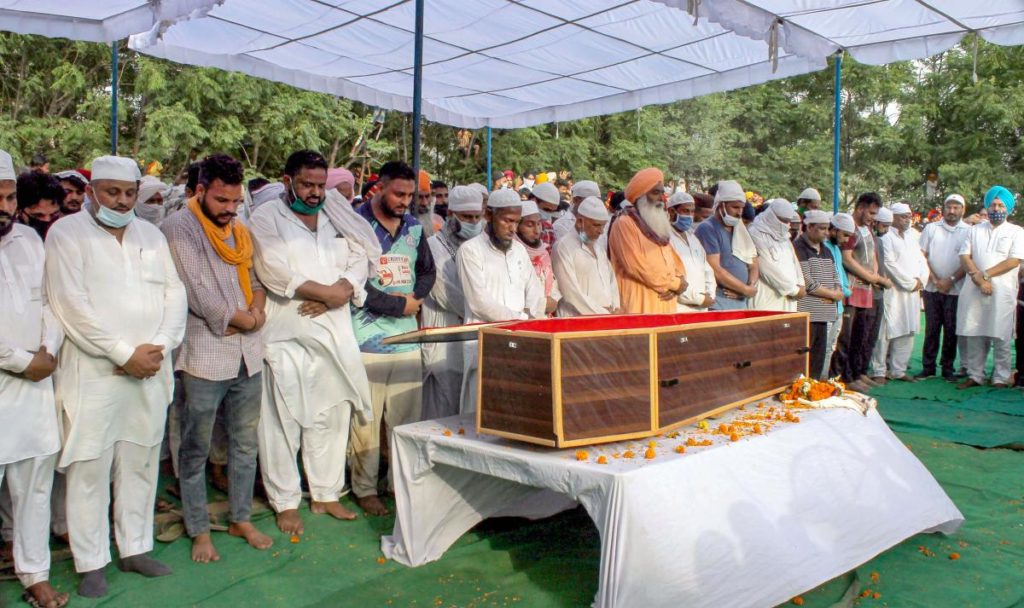
Kins and villagers pay tribute near the mortal remains of martyr Lance Naik Saleem Khan who died after his boat capsized while doing rescue work in Ladakh’s Shyok river, at Mardanheri village in Patiala, Saturday, June 27, 2020. / Credit: PTI
The mortal remains of Lance Naik Saleem Khan, who lost his life in the line of duty in Ladakh, were laid to rest at his native village of Mardaheri in Punjab’s Patiala district with full military honours on Saturday. He was 24.
Deployed with the Bengal Engineer Group, Khan became a battle casualty on June 25 while patrolling at a river close to the LAC (Line of Actual Control) in Ladakh sector, said a government release here.
Punjab Chief Minister Amarinder Singh on Saturday announced ex-gratia compensation of Rs 50 lakh, along with a government job to a family member of Khan.
“Saddened to hear about the demise of Lance Naik Saleem Khan in Ladakh. He belonged to Mardaheri village in Patiala district. My sincere condolences to his family. The nation salutes the brave soldier. Jai Hind!,” Singh said in his tweet.
Scores of people bid a tearful adieu to the soldier. Slogans of ‘Saleem Khan Amar Rahe’, ‘Bharat Mata Ki Jai’ rent the air when his body, wrapped in the Tricolour, reached his native village.
Villagers showered flower petals on the military vehicle when the mortal remains of Khan were being brought to his native place.
Khan’s family members were inconsolable when the body arrived. They also saluted him for the last time.
Khan had joined the Army in February 2014.
He is survived by his mother, brother and a sister.
His father Mangal Deen had also served in the Army and passed away 18 years ago.
Punjab Cabinet Minister Sadhu Singh Dharamsot along with senior officials from the Army, police and civil administration and other political leaders paid their last respects to the soldier.
source: http://www.deccanherald.com / Deccan Herald / Home> National> North and Central / by PTI, Chandigarh / June 27th, 2020
He has helped over 7,000 workers return home in Birbhum and over a lakh stranded workers get food
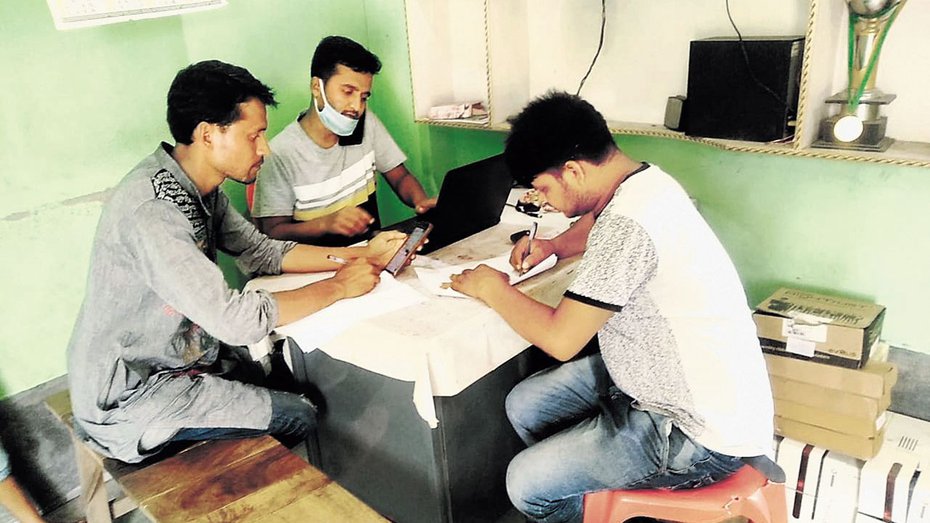
IT professional Sadekul Islam (in front of the laptop, wearing a mask) and his friends at work in Birbhum’s Muraroi / Telegraph picture
Armed with a laptop and a mobile hotspot, an IT professional from Birbhum claims to have helped over one lakh migrant workers during the Covid-19-induced lockdown.
Sadekul Islam, 28, who works in an IT firm in Calcutta, had to return home in Birbhum’s Muraroi during the lockdown.
With help from friends Mohammed Noor Alam and Nasiruddin Ansari in Muraroi, Sadekul set up a network of contacts — mainly phone numbers and email ids of government officials — on his laptop that he said helped over 7,000 workers return home in Birbhum and over a lakh stranded workers get food.
Sadekul said the idea of forming a database of officials came to him when he saw villagers thronging post offices and Aadhaar centres last year in the wake of the amended citizenship law to rectify their documents. “I thought it would be simpler if people knew whom to contact,” he said. His expanding database of officials proved helpful when Covid-19 struck.
From April, Sadekul and his friends started identifying stranded workers from their area and contacting government officials for help.
Sadekul said his contacts ranged from the “panchayat to the PMO”. “The system works,” he said. “Kerala officials were the most helpful.”
Worker Saribul Sheikh, home in Muraroi, said Sadekul arranged food for him and four others when they were “virtually starving in Chennai”.
Muraroi is located along the Birbhum-Murshidabad-Jharkhand border. Many youths work as construction labourers and masons in states such as Kerala, Maharashtra and Tamil Nadu.
“We liaised with officials in Bengal as well as in states where we knew youths from Muraroi were stranded. We gathered information on other places where youths were stranded with insufficient food and contacted officials there,” he said. “Fortunately, it worked out well for everyone.”
Minakshi Bhattacharya, a PhD research scholar from Santiniketan’s Visva-Bharati, was so impressed by Sadekul’s “ingenuity” that she contacted him this week for a study of his initiative.
Sadekul added that times had changed. “One can contact the whole world sitting at home. Only thing is one needs to know whom to call.”
source: http://www.telegraphindia.com / TheTelegraph, online edition / Home> West Bengal / by Snehamoy Chakraborty in Bolpur (Birbhum) / June 26th, 2020
The Bengaluru-based Dr. Majeed Foundation, a non-profit institution has contributed ₹10 crore to PM CARES Fund, to help combat the widespread outbreak of COVID-19, according to a press release. The Foundation was set up by Muhammed Majeed, Founder and Chairman of Sami-Sabinsa Group.
It contributed ₹2 crore to the Karnataka State Disaster Management Authority.
The Foundation has been actively supporting people in distress, by ramping up its community outreach programmes to reach out to the poor and vulnerable communities. It helped those who have been most affected by the pandemic in Bengaluru and Hyderabad and provided them with essential food items, protective equipment, hand sanitizers and health supplements.
source: http://www.thehindu.com / The Hindu / Home> News> State> Karnataka / by Special Correspondent / Bengaluru – June 19th, 2020
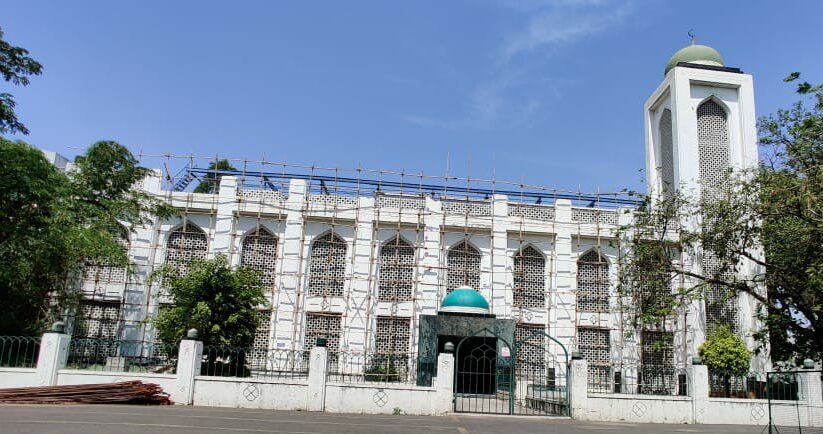
The Azam campus masjid, which is one of the biggest in Pune, will be used as quarantine centre for Coronavirus COVID19 patients. The management of the mosque and Pune district administration has joined hands for the same.
Given the increasing prevalence of corona infection in the central suburbs of Pune, the management had indicated its readiness to hand over the premises of the Azam campus located in Camp area, which is adjacent to Bhavani Peth, Nana Peth, where most of the patients have been detected, to the administration for quarantine of suspected patients.
Dr PA Inamdar, president of Haji Gulam Mohammed Azam Education Trust, “After getting approval from the administration, we started preparation and have readied the floor. We will also provide food to people housed at the mosque. Corona is an international crisis and as a responsible citizen, we are ready to fulfil our duty as an organization in the government’s efforts to address it. It is time to lend our resources to the government.”
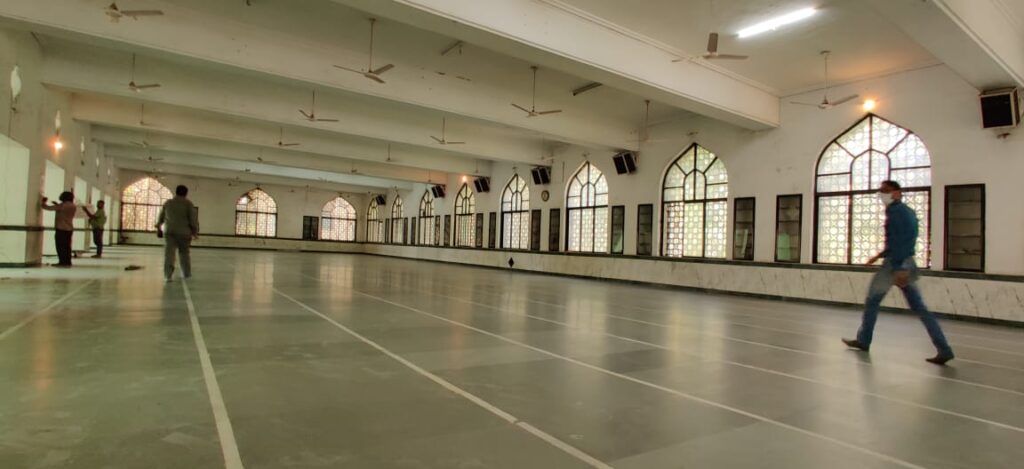
The management of Azam Campus had indicated its readiness to provide 9,000 square feet of space on the first floor of the place of worship with all electricity, fans, toilets and parking facilities. In a letter to the district collector, Inamdar said that he was ready to provide breakfast, meals, to the police and government officials as well as the patients.
There are 30 educational institutions of Maharashtra Cosmopolitan Education (MCE) society in Azam Campus and it is spread over 24 acres. One of them already has a mosque. The first floor of the mosque has a 9,000-square-foot hall-like floor. It can be converted into a quarantine ward. Schools and colleges in the educational buildings here are currently closed. The management is proposing to provide more space when needed, informed Dr Inamdar.
At present, 25 doctors of Unani Medical College on the campus and their five ambulances are serving patients in the central (Peth) areas of Pune. Also, Azam Campus has so far distributed groceries worth over Rs 25 lakh to the needy. Dr Inamdar has also appealed Muslims to perform prayers (namaz) at home without going to mosques during the holy month of Ramadan (Ramzan).
Azam Campus Masjid Pune
Due to the Coronavirus outbreak, all establishment including schools, colleges, shops, offices etc are closed across the country. Only essential commodities shops are allowed to function. In Pune, the number of Coronavirus positive patients has reached 800 and 56 of them have died while 122 have been cured till now.
source: http://www.punekarnews.in / Punekar News / Home> Pune / April 23rd, 2020
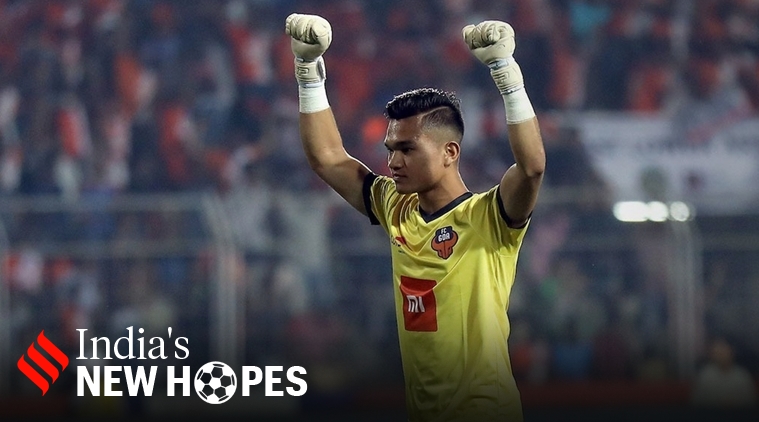
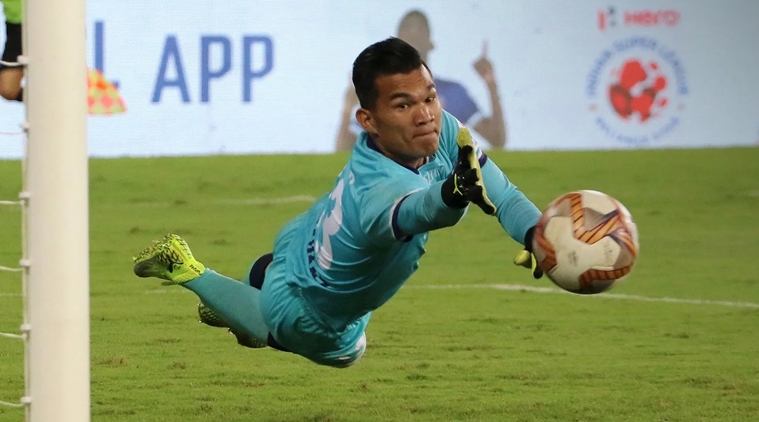
Shaking off initial hiccups in his career, Mohammad Nawaz is slowly but surely becoming a household name in India having helped FC Goa win the ISL League Winners Shield last season.
Mohammad Nawaz kept four clean sheets in his maiden ISL season in 2018/19. (Source: ISL)
With the restart of the domestic season weeks away, The Indian Express looks into the up-and-coming stars of tomorrow in ‘India’s New Hopes’.
What happens when a player’s professional debut is marred with a brain-fade leading to an opposition goal? More often than not, the debutant’s self-confidence shatters and he loses his nerves. Not Mohammad Nawaz though.
When FC Goa’s leading man between the sticks made his Indian Super League (ISL) debut against NorthEast United in October 2018, he had cost his team a goal — Federico Gallego had scored into an empty goal after Nawaz had handled the ball some 25 yards away from goal. “Honestly, I never considered what happened in Guwahati as a mistake. On the pitch itself, I had decided that I would focus on the next minute and learn from that experience,” Nawaz recollects while talking with indianexpress.com over phone from Imphal.
Already a backbone of the Gaurs’ setup and a holder of the ISL League Winners Shield, Nawaz’s meteoric rise can be credited to his unflinching attitude in the face of adversity. Before his debut-debacle in the ISL, the Manipuri suffered heartbreak in 2016 when he was left out of India’s U17 World Cup squad.
“When I was in the AIFF Elite Academy, I had one goal — to make the U17 World Cup squad, but I wasn’t selected in the end. But I didn’t let that setback affect me, as I signed for FC Goa in January 2018,” said the 20-year-old.
“Initially, I kept my head down, and then, after six months, the head coach [Sergio Lobera] came up to me and had a talk with me. I was surprised that he picked me for my debut, as there were two senior goalkeepers — [Laxmikant] Katti-bhai and [Lalthuammawia] Ralte-bhai — but he believed in me,” continued Nawaz, who had made a mark playing in the Goa Pro League in early 2018.
Mohammad Nawaz’s 2019/20 statistics. (Source: ISL)
Nawaz is set to make history by being the first Indian goalkeeper to play in the AFC Champions League next season, but he didn’t always intend to don the gloves.
“After watching my cousin, Mohammad Yasir [who plays for Hyderabad FC now], in training back in my childhood, I got into the sport. I used to play as a forward in the beginning, but when I was around eight years old, things changed. I played as a goalkeeper for my local club, YOSC (Youth Organisation Social Club), in one tournament as they didn’t have one,” he reminisced.
“Then, in 2010, I went for a district trial. Since there were only three goalkeepers in contention, my uncle told me to apply as a goalkeeper. I did just that, because in the end, I just wanted to have fun playing the game. From there, I was selected for Manipur and played in Kolkata in 2012. Then I got selected for the national team at the U13 level and I was recruited by the AIFF Elite Academy in 2013.”
Although he ended up as a goalkeeper by accident, Nawaz has fit the role like a glove. At 5’9″, Nawaz is not exactly of the imposing goalkeeping specimen, but there’s more than what meets the eye. Aside from being able to throw himself like a missile to effectively stop venomous volleys in their tracks, he has his ambipedal feet on which he can rely on.
“I believe passing is a very essential trait for a goalkeeper. At FC Goa, most of the attacks start from the back and since I have experience playing as an outfield player, choosing the right pass comes easily to me. Sometimes, it’s very scary, but a good sweeper-keeper should always be able to deal with tension,” said the 2000-born who tries to emulate the likes of Manuel Neuer and Ederson.
No other goalkeeper had a higher passing accuracy than Mohammad Nawaz last season. (Source: ISL)
Ever since the lockdown, Nawaz has been cooped up inside his Imphal house with his father, who works as a driver, and his mother, who is an anganwadi worker.
“I’m getting to spend some quality time with my parents because of the lockdown, but it has hampered my fitness. As soon as Ramadan ended, I started training. Lately, I have been playing with some youth players in the mornings, doing some drills with them, and in the evening, I have been hitting the gym,” he said.
“From time to time, I also play a lot of gully-cricket,” Nawaz continued. “I am not a wicketkeeper though… I can do my fair share of both batting and bowling.”
Having helped his team to the top of the table, play in an ISL final, and qualify for the continent’s premier club competition within the space of just two years, the accidental goalkeeper from Manipur is slowly but surely becoming a household name in the country.
Even after all that, Nawaz’s ambition knows no bounds. “Next season, my goal is to win the ISL Golden Glove. But more importantly, I will continue working hard to finally break into the senior national team this year itself.”
source: http://www.indianexpress.com / The Indian Express / Home> Sports> Football / by Debkalpa Banerjee / June 21st, 2020
First free community chartered flights benefit 395 Indians stranded in UAE due to COVID-19
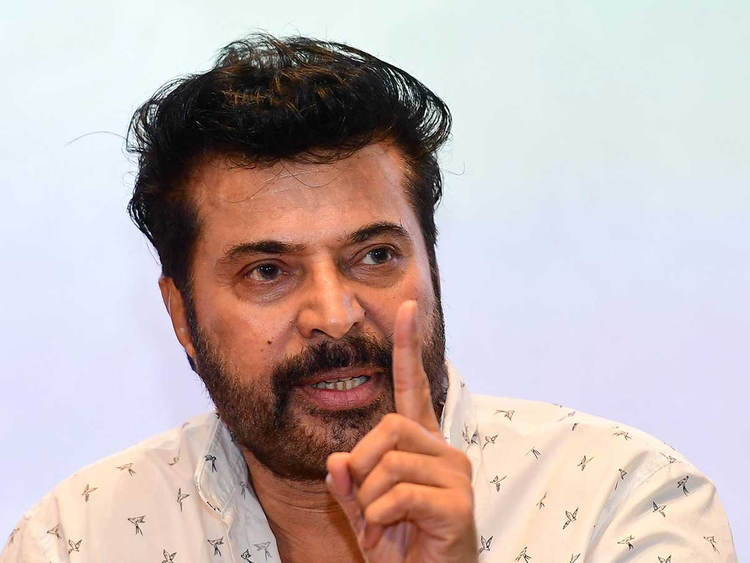
South Indian superstar Mammootty in Dubai, / earlier.Image Credit: Virendra Saklani/Gulf News
Dubai:
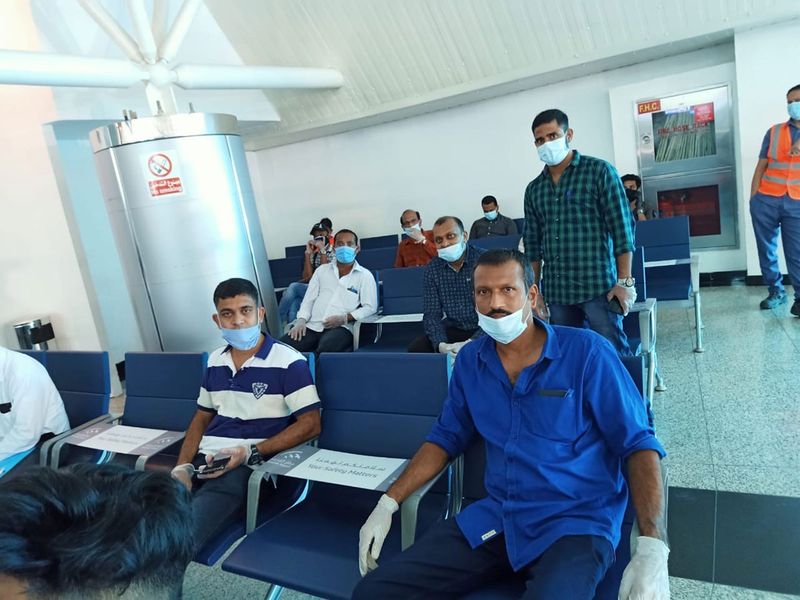
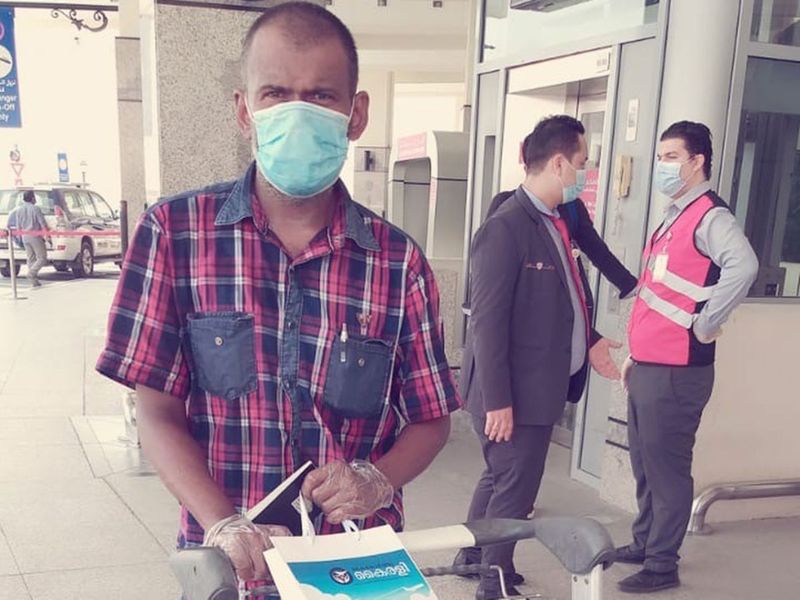
For the first time, two free community chartered flights repatriated 395 stranded Indians in the UAE to their hometowns in Kerala today.
While one flight was organised by Malayalam TV channel Kairali TV, under the leadership of its chairman superstar Mammootty, the other one was sponsored by the community group Overseas Malayali Association (Orma).
Kairali TV flew 215 stranded Malayalis home on an Air Arabia flight from Sharjah to Thiruvananthapuram at 6pm today, said E.M. Ashraf, the channel’s Middle East director for news and programmes. “Under the COVID-19 relief programme Kaikorthu Kairali, we had announced 1,000 free flight tickets to Keralites stranded in the Gulf countries. While we had given away some tickets to deserving candidates, we decided to also charter some flights from the UAE,” he told Gulf News on Sunday morning.
At least four free chartered flights are being planned for repatriation from the UAE with the contribution of several community members, businessmen and actors apart from Mammootty.
“We have also received the support from community groups in the UAE such as the Indian Social Centre in Ajman and MAS in Sharjah for organising today’s flight,” said Ashraf.
He said the channel had invited applications from the most deserving members of the community and a committee shortlisted the passengers from stranded visit visa holders, those who lost jobs, elderly patients and the like.
First from Dubai
While several community organisations in the UAE have chartered flights to repatriate stranded Indians, with some offering free tickets and subsidised fares, the first free chartered flight for repatriation by any Indian community group was the one arranged by Orma from Dubai to Kannur on Sunday.
Also on Sunday, a GoAir flight flew home 180 stranded Malayalis hailing from various districts of Kerala, said N.K. Kunhammed, a coordinator of the flight and a delegate of the Loka Kerala Sabha (LKS), a global body of expatriate Malayalis.
He said priority was given to stranded labourers, part-time maids, visit visa holders, pregnant women and families in distress.
Rajan Mahe, an invitee of LKS, who also coordinated the flight, said the group had been trying to arrange free chartered flights for some weeks under the initiative ‘Fly with Orma Care’.
“With the support of the Indian Consulate in Dubai, and the offices of the Kerala chief minister and Assembly speaker, we finally managed to make all the arrangements,” Mahe added.
He said the state government would facilitate the transportation of the repatriated passengers to their respective districts once they land in Kannur International Airport.
“We have arranged dinner for them through the Kannur local administration. If there are people who need further help to reach home from there, we will arrange that also,” he added.
Vipul, the Consul General of India in Dubai, appreciated the charity initiatives.
“I understand that both of these are free chartered flights that will be of great help to the community, especially in this hard economic times due to the COVID-19 pandemic,” Vipul said, appreciating the efforts of all those who had contributed to sponsor the tickets for distressed Indians.
Distressed passengers express gratitude
Distressed and stranded Indians who got a chance to fly home for free on Sunday’s chartered flights expressed their gratitude towards those who had organised these flights.
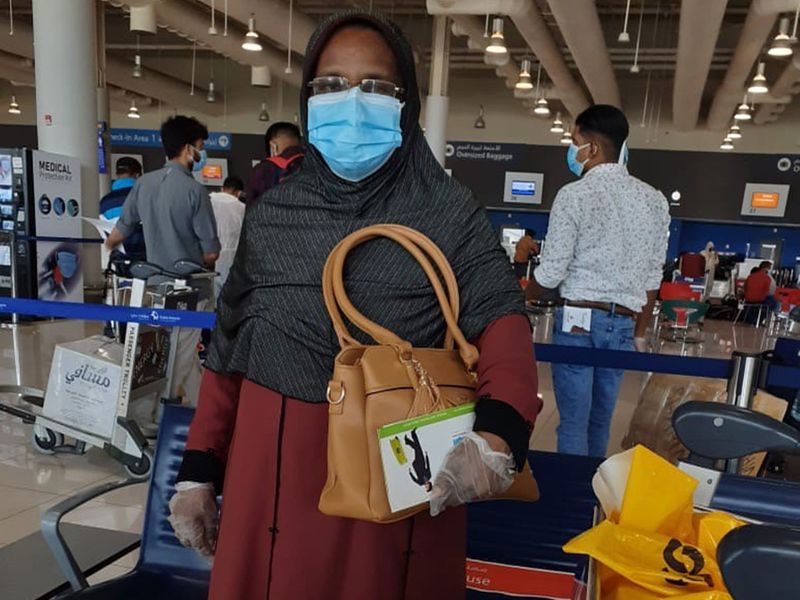
Sahira Beevi / Image Credit: Supplied
Sahira Beevi, who had come to Dubai after her son had fractured his leg, following a fall at a worksite, was among the stranded visit visa holders who were were being flown home by Orma.
“I struggled a lot because my son had already lost his job and was facing Dh30,000 in overstay fines. I had approached many associations for help. It was one Ansari and Orma members who helped us,” she told Gulf News.
“I am thankful to Orma for sending me home. I hope they will help repatriate my son also. He will be able to fly only when his condition improves a bit. He will try for repatriation along with my niece, who had also lost her job and came back on visit visa.”
She also thanked Emirates Companies House for presenting her a ‘Gulf Gift Box’ containing goodies that the company was gifting to returning expatriates.
Two other passengers on the same flight were Nafeesa Kutty and her daughter-in-law Majida Farsana, who had come on visit visas five months ago.
“She came looking for a job and I tagged along. But we didn’t expect the situation to change so fast. She didn’t get any job and my son’s salary was cut. Finally, we have to go back like this. We are thankful to Orma for helping us fly home for free,” she said.’
Gineesh Oliyil and colleagues / Image Credit: Supplied
Gineesh Oliyil, an employee of a four-star hotel in Sharjah, and six of his colleagues who have been left unpaid for three months, were among the lucky passengers on the Kairali flight.
“We served people quarantined in the hotel for a month. But, the hotel was shut in April and we have not been paid since then. We were only provided two meals per day.”
He said the members of MAS Sharjah supported them with food kits and also helped them register for the free chartered flight arranged by Kairali TV.
“We somehow wanted to reach home in these uncertain circumstances. We are grateful to MAS Sharjah and Kairali TV for helping us. The free chartered flight is a great initiative that is benefitting many distressed people like us. This is the first time we are hearing about such an initiative and I hope they will fly home more distressed people, including our remaining colleagues.”
Saravan KH / Image Credit: Supplied
Another passenger on the same flight was Saravanan K.H. He said he was hospitalised for a month after he had a fall in the washroom of his labour accommodation.
“Doctors said my brain was affected due to the head injury and I needed help to move around. It was Shameer from my native place who helped me after I got discharged, at a time when nobody dared take care of a patient.”
He said he had approached many groups to fly home for further treatment and physiotherapy. “Finally, Shameer managed to register me on the Kairali flight and their help has come as a big boon for me,” said Saravanan.
source: http://www.gulfnews.com / Gulf News / Home> UAE / by Sajila Saseendran, Senior Reporter / June 21st, 2020
The Kashmiri photojournalist has received the Anja Niedringhaus Courage In Photojournalism Award and been booked under the UAPA. She continues to tell stories from one of the most militarized zones in the world.
Afew days after 5 August 2019, when the Union government revoked Kashmir’s special status, 26-year-old photojournalist Masrat Zahra hopped on to her scooty and rode to Anchar, a locality in Srinagar’s Soura. The region had been plunged into a communication blackout, curfew imposed, military presence heightened and people detained as some of the mainstream media pushed the narrative of normalcy.
Soura was seen as a pocket of resistance—protests and rallies were commonplace.
When Zahra reached, Friday prayers had just ended and the protests began almost instantly—residents raised flags, chanted slogans and began to march towards the main road, Zahra recalls. “From the other end, the (Armed) Forces began to fire tear-gas shells and pellets; there was smoke everywhere. Smoke from the tear-gas shells, and from the cardboard people lit on fire to protect themselves,” says Zahra. “A few pellets hit me as well but did not penetrate (the skin) since I was further away,” she adds. Zahra began taking photographs with her DSLR from behind a tree.
Suddenly, she saw a young woman emerge from among the smoke and protesters. Her face was covered in salt (which helps neutralize the effect of tear gas) and she was screaming in Kashmiri, “Come out, the forces have entered. We have to save ourselves!”, to the other men of the locality. For Zahra, this was a powerful visual. “Meri nazron se, I saw a courageous girl with anger in her eyes. It was so stunning in that moment,” she says.
It was a memory and photograph that endured. Zahra, who describes herself as “the only woman photojournalist in Kashmir”, reporting the conflict from close quarters, is driven by the need to inspire women. Documenting their role and space in Kashmir as more than grieving mothers or devastated kin presents a break from what Zahra calls “the male gaze with which Kashmir was previously seen”.
A woman in Kashmir puts salt on her face to neutralize the effect of tear gas shells fired by the forces. Credit: Masrat Zahra
In a span of two months, Zahra has been awarded for her work by an international forum and booked by the cyber police under the Unlawful Activities (Prevention) Act (Uapa) for uploading “anti-national” posts on social media. On 11 June, she was honoured with the Anja Niedringhaus Courage In Photojournalism Award by the International Women’s Media Foundation (IWMF)—named after German photojournalist Anja Niedringhaus, who was killed in Afghanistan in 2014.
“This award was for my work. When I was charged under Uapa, they didn’t even acknowledge I was a journalist, they called me a ‘Facebook user’,” she says. “But the outpouring of support has made my mother, who was initially reluctant about my profession, come around to accepting it.” So far, Zahra’s work has appeared in The Washington Post, TRT World, Al Jazeera, The New Humanitarian and several other media outlets.
The photojournalist grew up in the 1990s, at the height of militancy in Kashmir. As a young girl, she recalls looking out from her school bus at military personnel, jackboots entering her home during cordon and search operations, taking officers around the house when ordered. “We would talk to our friends about it in school the next day—yesterday the army men came to our home with guns, you know! We had no idea at the age of 8 or 9 what those operations were, we only found out much later,” she says.
A resident of the old town in Srinagar, Zahra is no stranger to clashes, rallies and funeral processions. As she grew older, she began noticing that every photojournalist in the field was male: “They were telling intimate stories even of women and I would wonder, is this profession made only for men?” She recalls she had no role models to cite to explain her aspirations to her reluctant family. She studied for the journalism entrance test in secret, heading for the exam amidst curfew the city.
“When I was in college (Central University of Kashmir), I would go on assignments with my friend, who was already a journalist. I learnt on the field from a group of photojournalists. Some of the first few things they taught me are things that have stayed with me even today,” she says. “They taught me not to take photographs from the protester’s side, otherwise we would get hit by pellets or bullets, we had to be alert to stones and slingshots, they taught me where to hide, where to get the most powerful shots,” adds Zahra.
She is driven by the conviction that as a Kashmiri, she is able to provide more authentic accounts of her home and people. “When everyone is supposed to be celebrating Eid with their families, I report clashes,” says the photojournalist, describing a time in 2018 when she was hit with pellets on the forehead. “But I know I will not stop doing my work, especially at a time like this when the authorities are trying to muzzle journalistic voices in Kashmir.”
Since 5 August, the government has not allowed high-speed internet access in the valley. Functioning on 2G speeds for nearly a year has made work difficult, particularly during a pandemic. In a region like Kashmir, Zahra maintains, social distancing is a distant dream. On 20 May, for instance, a gunfight between the Armed Forces and militants left a trail of tragedy—at least 15 homes were completely destroyed. “A 12-year-old boy died—small rooms packed with so many people grieving,” says Zahra. “Everyone says stay home, stay safe, but if homes are destroyed, where are people supposed to stay?” she asks.
Still, she has been reporting through the pandemic. Zahra files stories from the media facilitation centre for journalists set up by the government, where they are granted internet access for a few hours of the day. This, she says, increases the risk of contracting the coronavirus, given the number of people using the limited systems available.
But Zahra says nothing can deter her—not being “falsely branded a mukhbir” (informer), not “intimidation by the State” and certainly not any form of discrimination. “I remember on one of my first assignments covering clashes, a boy told me to go home because I will get hurt.
“It has always made me wonder, do male photojournalists not get hit by pellets? Would they not bleed the same way I do? Why must I leave?”
source: http://www.livemint.com / Live Mint / Home> Explore> Lounge> Features / by Asmita Bakshi / June 20th, 2020
A 22-year-old Indian Kashmiri has invented a ventilator made only from scrap parts: a soap box, a DVD drive, a bottle cap…
Even though the project is still at the prototype stage, the young inventor hopes his creation can contribute to India’s battle against the coronavirus.
source: http://www.arabnews.com / Arab News / Home / by AFP / June 19th, 2020
At 88, actor Farrukh Jafar, whose scene-stealing turn as Fatto Begum in “Gulabo Sitabo” is the highlight of the movie, has retained her childlike enthusiasm and love for camera, which she considers as the secret behind her acting.
“I never feel nervous in doing any role. I only see the camera and my role and nothing else. That’s my secret,” the actor told PTI over phone from Lucknow.
Jafar plays the 95-year-old wife to Amitabh Bachchan’s 78-year-old Mirza who is awaiting his Begum’s death to finally own Fatima Mahal, the derelict mansion at the centre of the conflict in the movie streaming on Amazon Prime Video.
Begum, with her quick repartees and a fondness for Pandit Jawaharlal Nehru, keeps a tight control over Mirza and is responsible for the film’s surprise twist in the final moments.
Jafar said director Shoojit Sircar and writer Juhi Chaturvedi came to her home in Lucknow to offer her the part.
“I am a big Amitabh Bachchan fan. I was like ‘Wah! I will get to work with a superstar. I had his romantic image as the star of ‘Silsila’, a tall and handsome guy but in this film his get-up was ugly. He was playing Mirza with a fat nose and big beard,” she said.
“Shoojit told me ‘Please forget that he is Amitabh Bachchan. He is the greedy, old Mirza and you are his wife, Fatto Begum’. I immediately understood what he meant.”
The actor said she had hoped to talk to Bachchan on the sets but the actor would disappear after doing his scenes.
One of the first radio announcers of Vividh Bharti Lucknow in 1963, Jafar made her acting debut with 1981 movie “Umrao Jaan” where she played Rekha’s mother.
After her debut, roles in TV shows beckoned but it was Shah Rukh Khan-starrer 2004 film “Swades” that gave her a memorable second innings in Bollywood.
In 2010, she starred in “Peepli Live” where her expletive-laden rants as the bidi-smoking mother-in-law made her an instant hit.
She followed it up with roles in Salman Khan-starrer “Sultan”, Aamir Khan-starrer “Secret Superstar” and “Peepli Live” co-star Nawazuddin Siddiqui’s “Photograph”.
Jafar said she also wanted to work with Irrfan Khan but with the actor’s untimely death in April this year, it is no longer possible.
“I wanted to work with Irrfan but he left us early. I really liked him. Nawazuddin is like my child. I met him during ‘Peepli Live’. Nobody recognised him then but he has now become famous. I got to work with him again in ‘Photograph’,” she said.
The actor credits radio for giving her a career as a performer.
“I had a relative who needed a job. I told her I cannot do much but I know someone in the radio so I will take you there. We went there and ‘mujhe vahan ka mahaul bahut achha laga’ (I really liked the atmosphere there). I asked them whether I could also read the script. They said I could. I started reading and later got to know that I had been selected,” she recalled.
The actor is happy that her performance is being appreciated.
“Maine suna ki Begum baazi maar le jaati hai picture mein. ( I have heard that Begum outruns everyone in the film). Such praise about my character makes me happy,” she added.
Jafar, who was married to journalist-politician Syed Muhammad Jaffar and has two daughters — Mehru and Shaheen, said her bond with camera always pulls her towards cinema.
“I will keep acting if I get good offers. When the camera is on, I forget everything,” she said adding that some of her projects are currently stuck due to the coronavirus situation.
PTI BK SHD SHD
source: http://www.outlookindia.com / Outlook / Home> The News Scroll / by Bedika / PTI / June 20th, 2020