Helping Hand Foundation has stepped up with its services during the pandemic.
Hyderabad:
City-based NGO Helping Hand Foundation (HHF) has launched two different packages with the aim to provide COVID-19 emergency care services. The NGO introduced two packages which include free oxygen supplies, testing, and free transportation for patients.
Here are the details about the packages
PACKAGE 1: Free Oxygen supplies and Testing
– Free Supply at the doorstep of 65 Kgs of oxygen cylinders, with pulse oximeters for medically prescribed for suspected and positive cases under home isolation care (Free refilling with no security deposit)
– All patients on Oxygen therapy will be medically supervised and monitored by a competent team of doctors online along with round the clock command and control centre.
– Patients will be provided the inflammatory markers test free of cost.
– RT-PCR (SARS-COV2) at Rs 1500/- every Monday & Thursday in collaboration with Lepra (Blue Peter) ICMR Lab
– This can be done only by appointment and you may call: 8897867726/8977898706 for the above services
PACKAGE 2: Free Patient Transportation in Emergencies
– Ambulance services fitted with Oxygen/Drop to and from Hospitals and only in containment zones from 6 pm to 12 am You may call: 9603540864/9490810914
– Apart from these services the HHF is for any coronaemergency in providing assistance are available at OGH (6pm – 12am) daily chest Hospital, Erragada (9 am to 1 pm), District Hospital, King Koti (Shortly).
– For pregnant women who are facing difficulty in seeking treatment, our services are available at, Govt Maternity, Petlaburj, Govt Community Center, Barkas, Govt M.N. Area hospital, Malakpet. Services are also available at ENT, Koti, MNJ cancer Hospital & NIMs.
source: http://www.siasat.com / The Siasat Daily / Home> News> Hyderabad / by Mohammad Hussain / July 08th, 2020
In India Muslims number about 180 million and are found in good numbers in most regions. After ruling for a period of about 600 years (1200 to 1857), during which beginning from limited footholds in north India they expanded their rule and the followers of their faith through most of the Indian subcontinent, from the Khyber pass in the west to Assam in the east, and from Kashmir in the north to Kerala at the southern tip of the Indian subcontinent. At the end of the British colonial rule in 1947, when the Muslim population formed about one-third of India’s population, the subcontinent was divided between a Muslim majority Pakistan and a Hindu majority India.
Following the partition and the formation of the new India, the situation of the Muslim community, whose population was reduced to about 14 percent, has continued to decline. While discrimination in various walks of life from the government as a reaction to the partition of the country is a major factor for that, the lagging behind in education at all levels and the poor condition and standard of education in the community and the community’s schools has substantially reduced the ability of Muslims to compete with others in various walks of life. The educational backwardness is a lot more pronounced among Muslims in north and west India compared to south and east India
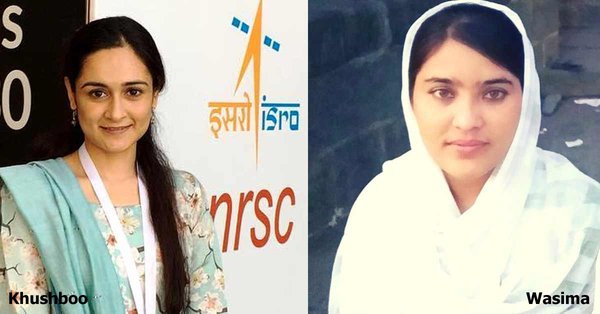
Since 2014 when BJP acquired power in New Delhi, the overall progress of Muslims has declined further due to substantial increase in governmental bias against them. However, every so often one comes across instances of remarkable successes. It is interesting to note that more Muslim young women compared to men are found among the list of high achievers. I recently came across two such instances.
Khushboo Mirza
One such instance is a relatively young Muslim woman by the name Khushboo Mirza from Amroha, a city in western Uttar Pradesh. Khushboo Mirza is an electronics engineer with the Indian Space Research Organization (ISRO) since 2006 when she graduated from the engineering college of the Aligarh Muslim University, Aligarh, U.P. She was a bright student in high school and at the engineering college.
ISRO, headquartered at Bangalore, Karnataka, is one of India’s high performing, high technology organizations. At low budget it has achieved much success in launching several pathbreaking outer space exploration missions and satellites. ISRO launches a variety of communication and weather satellites on contract to various global space organizations like National Aeronautics and Space Administration (NASA) of US, Japanese Exploration Agency, Japan et al. This is in addition to space research satellites that they develop and build themselves. Some of the most notable recent ISRO missions include the Chandrayan 2, 2019, a moon orbiter that circled moon and sent data. And Chandrayan 1, 2008, that sent a satellite to impact the surface of moon.
Khushboo Mirza was a team member on the Chandrayan 1 mission. For that, she received good recognition from ISRO management. Just recently ISRO promoted Khushboo, where she will lead groups in challenging tasks.
In the last few decades several professional women in India have reached leadership positions in private sector companies, banks, Science & Technology organizations, universities and government bodies. But it is extremely rare to find a Muslim woman among them. There are two main reasons for this sad happening. One is the bias of the government authorities against Muslims and the other is the fact that a large number of Muslim families do not encourage their women to seriously focus on attaining leadership roles in their professional careers. Muslim families are happy with women becoming principal of a girl’s school.
Wasima Shaikh
The second instance that warmed my heart recently is the story of the young woman by the name Wasima Shaikh of village, Sanghavi, district Nanded, in Maharashtra. Wasima is among four children of a Muslim farm laborer in the village of Sanghavi. Her mother is also a farm labourer and they live in a small hut in the village. Her father has been sick for a few years and her mother is shouldering the responsibility for the family in these years. Wasima’s village is plagued with the problem of men habitually drinking liquor and indulging in violence. Wasima is a brilliant student who topped the list of successful candidates in in Nanded taluka in the Maharashtra State Secondary School Certificate examination. In 2015 studying on scholarship she obtained the BA degree from the Yashwant Chavan University, Nanded.
Then she sat in the tough competitive examination of the Maharashtra State Public Service Commission for an officer job in the state. To prepare for the competition she needed training from a coaching center and additional books that cost money, that her mother could not afford, especially since her brother was also studying for B.Sc. degree. To help Wasima with the coaching center fees, in her quest, her brother dropped out of college and started driving an auto-rickshaw. Wasima did succeed in the competitive examination but did not achieve a high enough rank. Due to that she was selected as a Class II sales tax officer for the Maharashtra Sales Tax Office in Nagpur.
However, both Wasima and her mother wanted that in view of her brilliant academic record she should get a better Class I Maharashtra State civil service job, like a Deputy Collector. Although her extended family members pushed strongly that she should get married now, her mother encouraged her to try the State Public Service Commission competition one more time. While working as a government Sales Tax officer Wasima prepared for and sat in the competition again in 2019. With her salary she also put her brother back in college to complete B.Sc. degree. This time her perseverance and merit paid off and she achieved third rank from top among all women competitors in Maharashtra. And just last month she has been selected for the position of a Deputy Collector in the state of Maharashtra.
On our part we Indian Muslims must strive to give better high quality educational opportunities to promising young women and men from our community. Women must be encouraged as much as men to try harder and achieve higher levels of success. That is the only way the Indian Muslim community is going to overcome the intense discrimination and injustice and deprivation from economic opportunities that is happening to them in India.
—The writer is the executive director of the Association of Indian Muslims of America, Washington DC.
source: http://www.milligazette.com / The Milli Gazette / Home> News> Education & Careers / by Kaleem Kawaja / June 30th, 2020
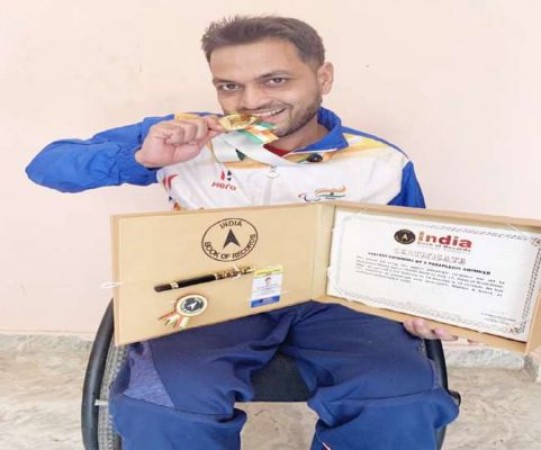
National-international para swimmer Mo Shams Alam has registered his name in the India Book of Records, performing excellently. On December 8, 2019, 24 general and differently abled swimmers took part in the Misri Lal Smriti Open Swimming Championships organized by Bihar Swimming Association at Ganga on Law College Ghat in Patna. Shams completed the first place by completing two km of swimming in 12 minutes 23 seconds. Mohammad resident of Rathaus village of Bisfi Block Shams (33), son of Naseer, says that after getting the name in the India Book of Records, now the Asian Book of Records, Limca Book of Records and Guinness World Record will apply for registration. In the Lok Sabha elections 2019, the commission made them brand ambassadors.
Did not lose courage, started working hard: Even after half of the body is paralyzed, Shams has received five dozen medals from district to international level. In the year 2010, while studying mechanical engineering, there were complaints of spine pain. Operation was done in a hospital in Mumbai. Five months later, the operation took place in another hospital. In the year 2012, the doctors said to be Divyang. Days passed with the help of wheelchairs. But, I did not lose courage. Started working hard in swimming. He wishes to pursue disabled sports talents in rural areas.
Participated in competitions in several countries: Shams, who won the title in Florida in the US in Para Swimming, has won several awards including gold medal in Para Swimming Competition in different parts of the country. Black belt shams in martial arts In the year 2018, he was selected for the Global Sports Mentoring Program organized under the joint aegis of the US Government Department of Sports and Tennessee University of America.
Record Rate Record: In the year 2017, the Umoja Beach Festival organized by a Travels Company in Goa set a record by swimming eight km in four hours and four minutes. At the Para World Series Swimming Championships held in Berlin in July 2017, with 634 players from 54 countries, they achieved seventh rank in the S5 category in performance. Participated in the wheelchair rugby championship of Patna as captain of Bihar team in August 2017. Participated in the Asian Para Games to be held in Jakarta in the year 2018. The year 2017 was conferred by the Bihar Divyang Sports Academy and the Bihar Government in the same year at the Sports Honor ceremony in Patna.
source: http://www.english.newstracklive.com / NewsTrackLive.com / Home> Sports / by Harshita Jain / June 25th, 2020
“To live like a TIGER for a day is far better than to live like a jackal for a hundred years.” – Tipu Sultan
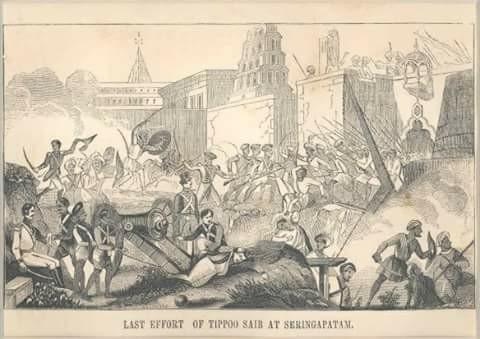
Today marks the 221th death anniversary of Sultan Fateh Ali Khan Tipu, better known as Tipu Sultan the Muslim warrior-king of Mysore, who died fighting the British today, May 4th 1799. Tipu ruled the kingdom of Mysore, which he inherited from his father Haidar Ali. His bravery, valour and skills were so talked about that French commander-in-chief Napolean Bonaparte once sought an alliance with the ruler of Mysore.
Tipu Sultan was born as Sultan Fateh Ali Sahab Tipu on November 10, 1750 in Devanahalli, present-day Bangalore. He was born to Fatima Fakhr-un-Nisa and Hyder Ali, the Sultan of Mysore. Tipu Sultan succeeded his father in 1782. The 18th-century ruler is popularly known as the Tiger of Mysore and Tipu Sahib.
We, as a citizen of India pay heartfelt tribute to Tipu Sultan, the Tiger of Mysore on his 221th death anniversary and salute his valour against the British forces. He was considered to be the first Indian freedom fighter, was a great patriot of India, who fought whole life against the British occupation and colonialism. He was glorified as India’s original Missile man by Ex-President of India A.P.J. Abdul Kamal. Tipu Sultan is revered as a pioneer in the use of rocket artillery. Sultan’s rockets were the first iron-cased rockets successfully deployed for military use. He deployed the rockets against advances of British forces and their allies during the Anglo-Mysore Wars. The rockets used during the Battle of Pollilur in 1780 and Siege of Seringapatam in 1799 were said to be more advanced than the British had previously seen.
Tipu’s portrait is in a NASA facility. It shows his passion and willingness towards scientific and technological advancements as well as innovations. It is said that Tipu was fascinated by western science and technology.
Admired by Abdul Kalam, Ex-President of India
After becoming President, in 2006, Kalam sent a top Defence scientist to Srirangapatana in Karnataka to study Tipu Sultan’s efforts to use rockets against the British over 200 years previously.
At the end of his visit to various sites associated with Tipu Sultan’s rocket launching activities at Srirangapatna, then Chief Controller of Research and Development at Defence Research and Development Organisation (DRDO), A Sivathanu Pillai declared, “There is no doubt that this is the birthplace of rocketry.”
“Now, I will report to the President what I have seen here (Srirangapatna). He (Kalam) is a rocket scientist. Naturally, he is interested to know,” Pillai had said.
After this visit, Pillai said he would recommend President Kalam to build consensus in the community of rocket scientists that Srirangapatna was the birthplace of rocketry by holding seminars and other initiatives.(courtesy: The Quint)
Tipu’s startup hubs and rockets
“Tipu Sultan was perhaps the first ruler to understand that there was a marked difference between Europe of the 1700s and 1790s, thanks to scientific innovations,“ says aerospace scientist Roddam Narasimha, who has been studying Tipu’s rockets for many years now. “He realised the power of technology , combined with discipline, and set up four innovation hubs (like modern-day tech parks) in Bengaluru, Chitradurga, Srirangapatna and Bidanur. He called them Taramandalpets.”(courtesy: The Economics Times)
He was the only Indian ruler who understood the dangers the British posed to India, and fought four wars to oust them from India – in that sense, he could be called the first freedom fighter in the subcontinent. He fought four wars against British colonialism with heroism, valour, and bravery, moreover to the last. He sacrificed his life for the nation and martyred a historical and brave death.
Tipu was a generous patron of several Hindu temples, including the Sri Ranganatha temple near his main palace at Srirangapattana, and the Sringeri Math, whose swami he respected and called Jagadguru. The Editor of Mysore Gazetteer Prof. Srikantaiah has listed 156 temples to which Tipu’s regularly paid annual grants. His progressive measures in the administration were equally commendable.
His reign is remembered for many technological and administrative innovations. Among them was introduction of new coin denominations and new coin types. He also introduced a luni-solar calendar. During his rule, he introduced a land revenue system which gave a boost to the Mysore silk industry and helped in establishing Mysore as a major economic power.
In the Fourth Anglo-Mysore War between 1798-99, he was defeated when the forces of the British East India Company, the Marathas and the Nizam of Hyderabad came together. He was killed on May 4, 1799, while defending his fort of Srirangapatna, present-day Mandya in Karnataka.
Md Irshad Ayub, Founding English Editor at Millat Times
http://www.heritagetimes.in / Heritage Times / Home / by Team HT / May 02nd, 2020
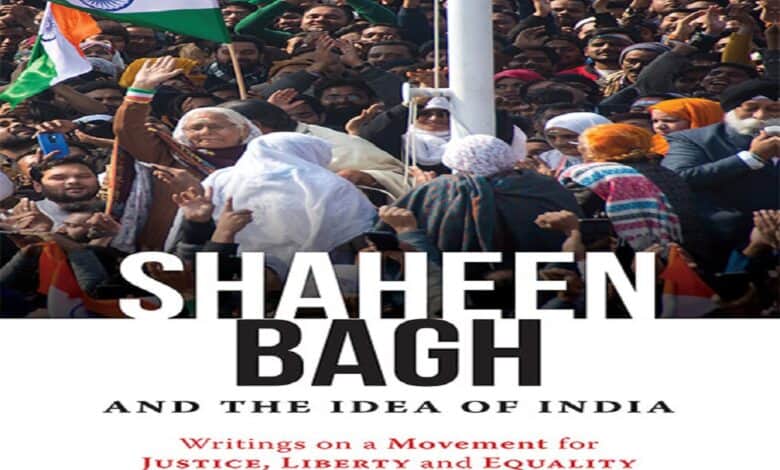
The first comprehensive book on one of the most important civil rights movements in the history of Independent India.
On 15 December 2019, police in riot gear stormed Delhi’s Jamia Millia Islamia University and attacked unarmed students protesting against the Citizenship (Amendment) Act (CAA), which makes religion a factor in the process of granting Indian citizenship. In neighbouring Shaheen Bagh, mothers and other relatives and friends of the students came out into the streets in outrage and anguish.
They sat on a main road demanding repeal of the CAA, which, twinned with the National Register of Citizens (NRC), could make Indian Muslims aliens in their own homeland. Within days, similar protests broke out across the country. Free India had never seen anything like it.
Shaheen Bagh and the Idea of India examines how the sit-in by a small group of Muslim women—many of whom had stepped out of their homes alone for the first time—united millions of Indians of different faiths and ideologies in defence of the principles of liberty, equality and secularism enshrined in our Constitution.
It also throws up many important questions: Can the Shaheen Bagh protests reverse the damage done to our democracy in recent years? How did the non-violent movement sustain itself despite vilification, threats and persecution by the establishment? Is this movement the beginning of new solidarities in our society? Will it survive the aftermath of the communal violence that devastated northeast Delhi in February 2020, and the witch-hunt that was launched under cover of the Covid-19 pandemic and lockdown.
This necessary collection comprises interviews with some of the brave women at the core of the protests; ground reports and photographs by journalists like Seema Mustafa, Seemi Pasha, Nazes Afroz and Mustafa Quraishi; and essays by thinkers, writers, lawyers and activists, including Nayantara Sahgal, Harsh Mander, Subhashini Ali, Nandita Haksar, Zoya Hasan, Apoorvanand, Enakshi Ganguly, Sharik Laliwala and Nizam Pasha. It is a book that must be read by everyone who cares about India’s democracy and its future.
About the Editor:
Seema Mustafa has been a journalist since the age of nineteen. She has worked in or written for a number of major Indian newspapers—including The Patriot, The Pioneer, The Indian Express, The Telegraph, Economic Times and Asian Age—and travelled across the globe on assignments. She also worked for a couple of years as the National Affairs Editor for the News X television channel. She has covered conflict in Assam, Punjab and Kashmir; communal violence in different states of India; and was the first Indian journalist to cover the first war in Beirut. She is presently the Founder-Editor of The Citizen, an online initiative.
source: http://www.siasat.com / The Siasat Daily / Home> News / by Sana Sikander / July 05th, 2020
Naseer Ahmed who was a minister in S Bangarappa’s cabinet has been a council member three times previously.
Bengaluru :
Two Congress members, B K Hariprasad and Naseer Ahmed, took oath as members of the Legislative Council on Thursday. Speaking to TNIE, Hariprasad said, “After decades in national politics, the party high command has decided to bring me into state politics.’’ Naseer Ahmed said, “The State is facing grim challenges like Covid-19. We will fight to make the lot of the citizen better.’’
Hariprasad, a four-time Rajya Sabha member and who has served as AICC general secretary and state in-charge of 17 states, is expected to add to Congress’ formidable strength in the Council. They already have 32 members. In comparison, BJP’s numbers will go up to 23 after getting four new members.
Naseer Ahmed who was a minister in S Bangarappa’s cabinet has been a council member three times previously. BJP MLC Ravi Kumar said that the party’s Council members will take oath at 12.15pm on Friday.The lone JDS member, Inchara Govindraj, said he would take oath after July 20 depending on the availability of former PM H D Deve Gowda.
source: http://www.newindianexpress.com / The New Indian Express / Home> States> Karnataka / by Express News Service / July 03rd, 2020
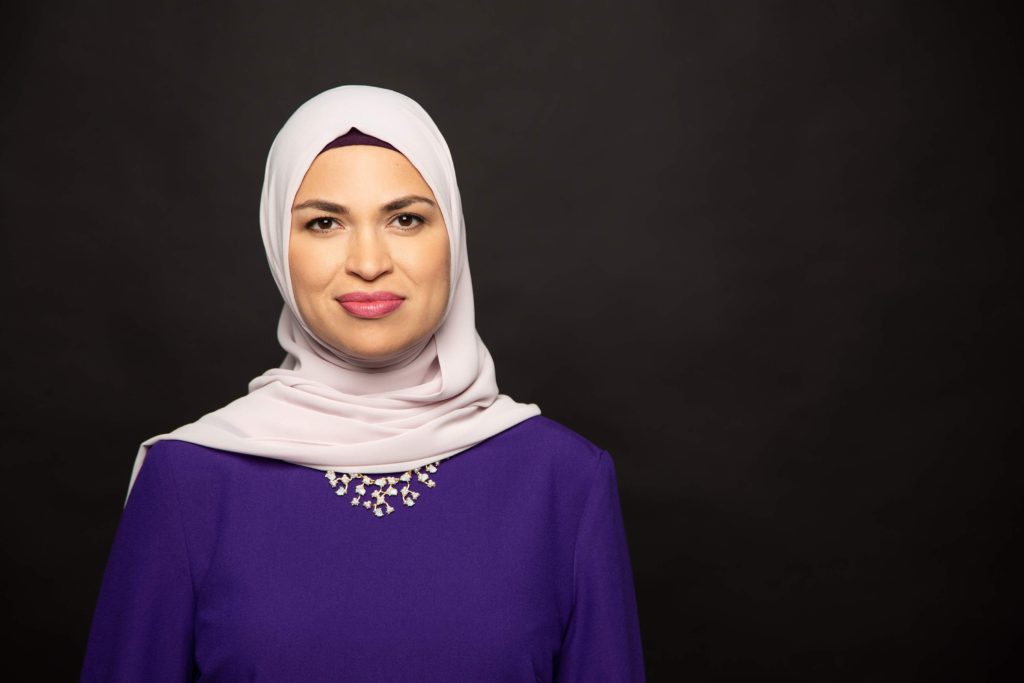
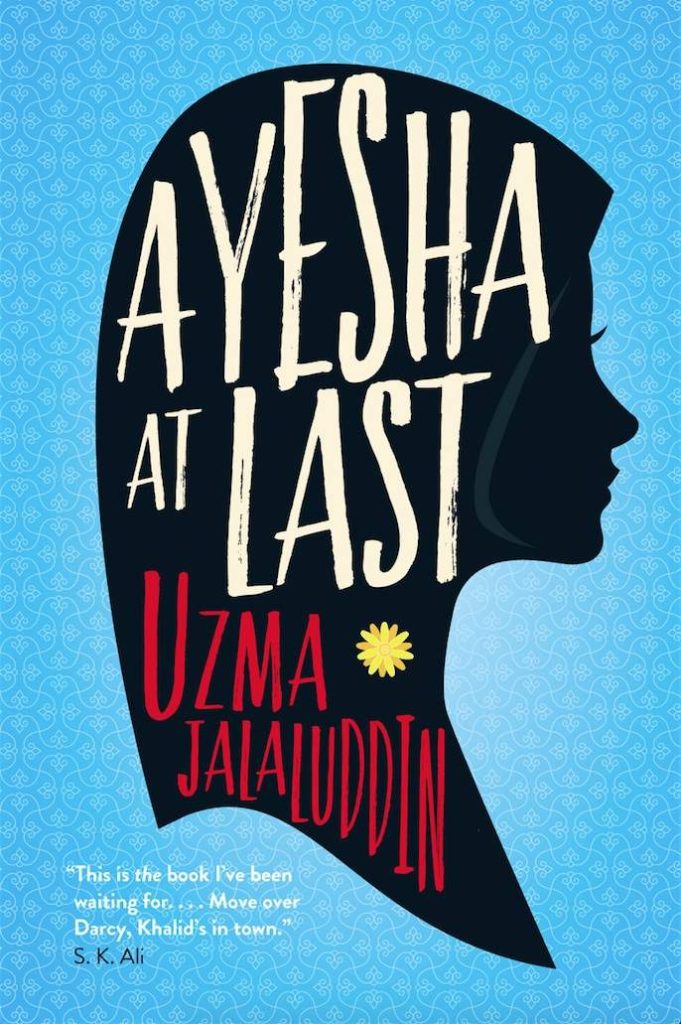
Ayesha At Last‘s Muslim characters are a far cry from the stereotypes we often come across. There are no gun-wielding terrorists in this debut novel by Uzma Jallaluddin. Instead the author’s characters are real, believable people. The protagonist Ayesha and her family are immigrants in Canada who are living regular lives dealing with their own tiny battles, and there’s Khalid, Ayesha’s love interest who is putting up with his bigot boss, even as he lives up to the demands by his unreasonable mother.
There’s a lot of drama happening in this narrative that’s inspired from the classic Pride and Prejudice. Uzma without trivializing anyone’s ethnicity throws light on the idiosyncrasies of people from different nations. Although this book can be classified into the chick lit genre, it brings to fore some critical questions about the changing dynamics of the contemporary world. Yet, the easy and effortless writing makes it a fun and light read.
In an email interview, Uzma answers questions about what made her write this story, her approach to prejudices and way forward for Ayesha At Last.
Is this to a certain extent an autobiographical account? I am asked this question all the time, and I can say that this book is definitely not autobiographical! However the themes within are mined from my own life. Like Khalid, I am a second generation Indian Muslim Canadian. Like Ayesha, I have lived in an extended family, with grandparents and aunts and uncles. Like many of the characters, I have tried to reconcile my identity as an Indian, as a Muslim, as a Canadian. And of course, I had my share of rishtas when I was younger!
Most of the women in your story – Ayesha, Farzana, Zareena (and I guess even Ayesha’s mum and Hafsa too) are terrible cooks – why did you want your characters to be like this? Was it just on a lighter note or did you want to highlight Khalid’s cooking talent? Only Ayesha, Zareena and Farzana were bad cooks. I assume the rest of the women characters were decent at meals. Growing up, my mother never really emphasized that I should learn to cook. It wasn’t until I was married and had children of my own that I tried to learn, from her and my mother-in-law, both of whom are excellent home cooks. However, AYESHA AT LAST has one excellent female home cook – Nani, Ayesha’s grandmother. In fact, Nani teaches Ayesha and Khalid an important life lesson, while also teaching them how to make delicious parathas. I wanted to make Khalid an excellent cook to dismantle stereotypes. There is something so loving and nurturing about the act of cooking, and I wanted my male lead character to have that quality.
However, all your women characters are quite strong-willed and forthcoming, a few are breaking stereotypes, while others are reinforcing those stereotypes – Ayesha and her family versus Khalid’s mum – could you explain why you wanted to bring out this contrast? As a writer, my primary responsibility to readers is to write a story that is entertaining, and authentic. I wanted to write about characters who felt true to life, while also providing a way for readers to laugh at the foibles of others. Some of my characters are foolish, some are wise and kind, others are shallow and misguided. That’s how regular people behave too, and in fact we all cycle between many different ways of being. My book is set in Canada, and it was also important to me that I showcase how much diversity there is within diverse communities. Sometimes books set in the West only have few characters who are not White, and those characters are limited in their presentation. My book is mostly populated by characters whose families hail from India, the Middle East, Afghanistan, etc., and I took this opportunity to play around with character types, to emphasize how no matter where you are from or where your family is from, people come in all different flavours.
Why is it that all the characters who have roots in the Asian subcontinent have run away from some kind of a disturbance – be it the Babri Masjid issue or the bombing in Afghanistan – this seems like a typecasting Indians, Afghanis etc? Was it because your readership in Canada isn’t aware of how the countries are now? I disagree with this assessment. Sulaiman Mamu, Ayesha uncle, and his family immigrated to Canada without any dramatic events precipitating this move, same with Khalid’s family, and Tarek’s family, the Imam, etc. I think it is fair to say that readership in Canada has a somewhat limited understanding of the way that regular life in India, or Afghanistan is today. At the same time, Canada, and Toronto in particular, has a very diverse immigrant population that maintains close ties with their roots. In Scarborough, the suburb where Ayesha At Last is set, 85-90% of the population is first or second generation; they or their parents were born outside of Canada, mostly from Asia in fact. Though Ayesha’s immediate family and one other character were running from something, I wanted to highlight that many others move to a country like Canada for a variety of reasons, and must figure out how to all get along and live in their new environment. The focus of the book is not on immigration, or refugee status, however – it is about what life is like for the children of immigrants/refugees in this new place, how to navigate between two worlds and cultures, and how they find love.
There is similarity to the classic, Pride and Prejudice. Your thoughts on this. My novel has been described as Pride and Prejudice remix set in a close-knit Toronto South Asian Muslim community. I love Jane Austen, and Pride and Prejudice is one of my favourite books, so I am pleased and honoured at this comparison. While I did not set out to write a straightforward retelling, I think the themes in P&P are echoed in my book, namely class differences, family expectations, and the search for identity mixed in with the search for love.
Eventually, the idea that being glamorous is equivalent to being frivolous (reference-Hafsa) and being focused and determined means you cannot be glamorous (reference-Ayesha) gets reinforced in the end… was it intentional? Glamour is certainly not equivalent to frivolity, as Ayesha has her fun moments – such as when she passionately performed poetry in a bar, or when she dressed in a beautiful sari at the end of the book. Ayesha and Hafsa have different family situations, and through their contrasting characters, I wanted to explore the effect of wealth disparity even within a single family. Mostly, I hope my story will make readers think about the dangers of snapping to quick judgements about others, as people are quite complicated and cannot simply be described as being only either ‘glamorous’ or ‘determined’!
The book is quite insightful and offers an understanding about the Muslims living in Canada, this is something that I truly enjoyed and was informative – through this book would you say you are trying to show the world that Muslims can be normal (and are not all are terrorists)? When I set out to write Ayesha At Last, my aim was to tell a fun, joyful, and romantic story about Muslims in the West. Unfortunately, most stories about Muslims contain negative stereotypes that reinforce xenophobic, one-sided narratives that can cause real harm to vulnerable populations. I hope that more stories about Muslims, or Hindus, or Buddhists, etc., set in the West, will help readers understand immigrant communities better, but most importantly will also allow those immigrant communities to see themselves as worthy of being featured in all types of stories, not just highly politicized ones. Your question reinforces the dangerous effect of this lack of representation – and yes, Muslims are normal. We are people, like everyone else.
How long did you take to complete this book, how many drafts did it go through? The book took a long time complete, because like most people, I wear many different hats. I am a parent to two sons, I teach high school English, and I also write a column for The Toronto Star, Canada’s largest daily newspaper. So I wrote Ayesha At Last in stolen moments over many years – about eight years in total. I’m not sure how many drafts I went through, because after a while I simply lost count. More than a dozen for sure.
Where did you write this – at home, in the kitchen, on the dining table or at a coffee shop? Since the book took so long to draft and revise, I can honestly say I have written Ayesha At Last everywhere: in coffee shops, in waiting rooms, on my desk at home, the kitchen table, while waiting for my children to finish soccer, baseball, swimming, and Scouts.
What are your writing rituals and how does your atelier look like? I like to write in the mornings if I can. This is tough with teaching, so I make use of any time off and my weekends. I have a small office in my basement, which has an old desk, a monitor, and speakers for music (I love pop music and Top-40 hits). It also has a large bulletin board where I pin ideas for my book, plot details, and inspiring quotes.
What are you working on next? My second novel is also a romantic comedy set in Toronto, featuring Muslim Indian characters and takes place in the restaurant world.
What about Ayesha At Last being adapted to the screen? Any updates? Ayesha At Last was optioned for film by Pascal Pictures last fall, which was a very exciting development. Right now a screenwriter is working on the adaptation.
Rs 399. Published by Penguin Random House.
ayeshatabassum@newindianexpress.com @aishatax
source: http://www.indulgexpress.com / The New Indian Express – Indulge / Home> Culture / by Ayesha Tabassum / June 04th, 2020
Her father K A Abootty died amid a prolonged legal battle to get justice for the death of his elder daughter Shamna.
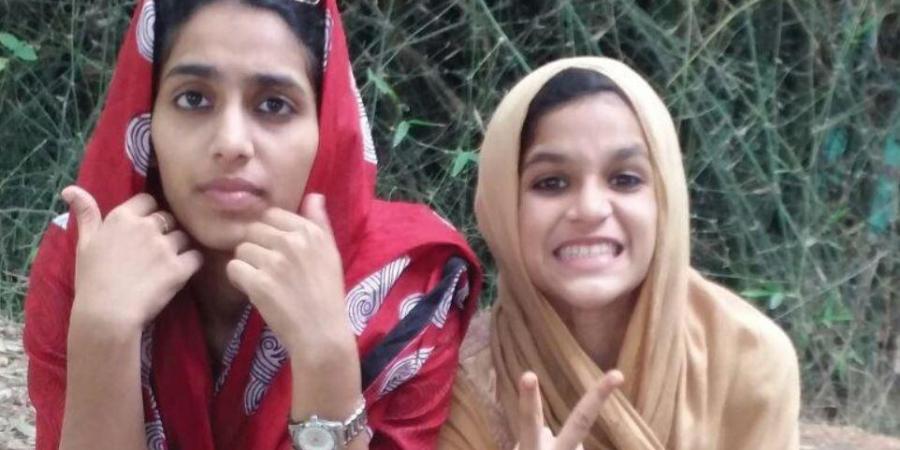
Shamna and Shifa
Kochi :
Shifa Thasneem, the sister of Shamna Thasneem, the medical student who lost her life three years ago allegedly due to medical negligence, passed the SSLC examinations with A+ in all subjects.
The exam results were declared on Tuesday. Shifa’s success comes against all odds. Her father K A Abootty died amid a prolonged legal battle to get justice for the death of his elder daughter Shamna.
Shamna lost her life due to the medical negligence, allegedly, by her own teachers at the Ernakulam Medical College.
P K Shereefa, Shifa’s mother who is now fighting for justice, had sent a legal notice to the state chief secretary a year ago demanding compensation of Rs 1 crore for the death of her daughter.
Shifa is among the 3,406 students who secured full A+ from Ernakulam district.
source: http://www.newindianexpress.com / The New Indian Express / Home> Good News / by Express News Service / July 01st, 2020
Karad Village (Malappuram District) , KERALA / Doha, QATAR :
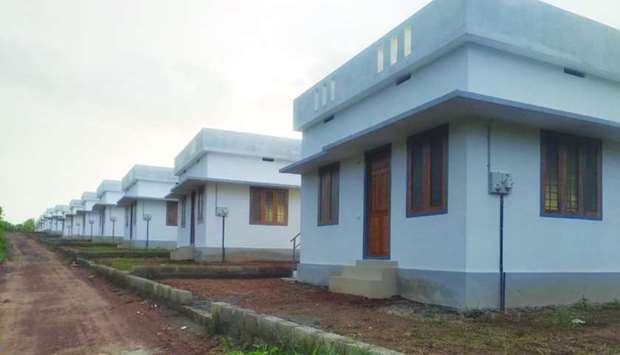
Some of the houses constructed on land donated by Iqbal.
It was a day of immense joy and fulfillment for Qatar-based Indian businessman Ahammed Iqbal who donated 1.5 acres of land in his native place to build houses for 15 families left homeless by floods last year.
Karad, a village in Malappuram district of the southern state of Kerala, Sunday witnessed a function where the families received the keys to their new homes.
Ahammed Iqbal
“The smiles of gratitude gave me a feeling of delight. I am glad that I could uplift some flood victims from despair to happiness,” Iqbal told Gulf Times.
After the land was handed over to the district administration, the 15 houses were built with funds contributed by M P Ramachandran, chairman of Mumbai-based Jyothy Laboratories Ltd.
Iqbal recalled that the district administration had received several applications from many families whose houses were washed away in the deluge. The beneficiaries were selected after scrutiny and drawing lots.
Most of the beneficiaries came from Kavalappara village that was wiped out by a massive landslide and flash floods on the night of August 8 last year. The natural calamity claimed 48 lives while leaving hundreds homeless.
Iqbal, who was in Qatar during the deluge, approached the Kerala district administration expressing his readiness to extend a helping hand to the victims.
On behalf of Iqbal, his friend Mujeebu Rahman handed over the documents to the district administration.
“I simply wanted to do my part for the victims and stand with my people during the tough times. I have sufficient land and my religion allows me to take only three pieces of cloth when I depart,” he said, adding that his parents very often inspire him to help landless people.
Kerala’s Higher Education Minister K T Jaleel and magician Gopinath Muthukad handed over the keys to the beneficiaries.
source: http://www.gulf-times.com / Gulf Times / Home / by Shafeeq Alingal / June 28th, 2020
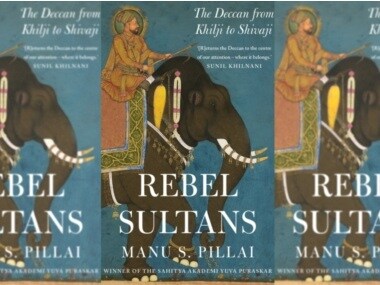
In Rebel Sultans, Manu S Pillai traces the history of the Deccan from the end of the 13th century to the dawn of the 18th, punctuated by tales of drama, betrayal and murder.
Editor’s note: The Deccan, miles away from the empire of the Mughals, was eyed with envy by rulers such as Aurangzeb, so much so that it is said to have contributed to his downfall. Its kingdoms had much to offer; in their courts were Persians and Marathas, in their ranks were African nobles, and in their treasuries were gold and fortunes.
In Rebel Sultans, Manu S Pillai traces the history of the Deccan from the end of the 13th century to the dawn of the 18th. He tells the story of the Vijayanagar empire, the court of the Bahmani kings, and the Rebel sultans — punctuated by drama, betrayal and murder. The book features characters such as Malik Ambar, Chand Bibi and Krishnadeva Raya, and is published by Juggernaut Books.
The hero of the Deccan had skin the colour of coal. Emperors snarled at him from afar, while enemies at home rattled in fear when he marched into their neighbourhoods. Many were those who despised him, but many more still were the masses who discerned in him a champion. His story was certainly unusual, though he was neither the first of his people to serve in the Deccan, nor extraordinary in his antecedents. And yet he emerged as the strongest of them all, reigning indeed as king in all but name. ‘He has a stern Roman face,’ wrote one traveller, ‘and is tall and strong of stature’ though his ‘white glassy eyes’, it was added, ‘do not become him.’ His charities were legendary, as was the valour of the men who pledged themselves to his service. When at last he died, not on the battlefield but secure in a formidable fortress, the Mughals admitted that this enemy was ‘an able man. In warfare, in command, in sound judgment, and in administration he had no rival or equal… He kept down the turbulent spirits of [the Deccan], and maintained his exalted position to the end of his life, and closed his career in honour. History,’ the obituary concludes, ‘records no other instance of an Abyssinian slave arriving at such eminence.’ It was high praise, coming as it did from the imperial court, where two generations of emperors revealed nothing but spite for the man called Malik Ambar.
The Deccan, as we know, had long attracted foreigners to its shores, offering them wealth and a future in these eastern lands. Persians arrived, as did Arabs and Central Asians. Some graduated to princely ranks, while others soared to gratifying aristocratic heights. But among the legions of men absorbed by the Bahmanis and their heirs were also Africans who came primarily from the land we now call Ethiopia. And they too would thrive in the Deccan far above the stations where they began their lives. Some were associated with tales of treachery – Mahmud Gawan’s confidant, who struck his seal on the forgery that delivered him his death warrant, was a habshi (an African) as was his executioner. When Yusuf Adil Shah died, one of the regents who ruled in the name of his son was a black man from Ethiopia – the latter was stabbed to death for displacing Westerners and favouring the Sunni faith. When years later Chand Bibi was imprisoned, her liberator who briefly stood at the forefront in Bijapur was a habshi, as was the man Ibrahim Adil Shah II rejected after eight years of living under his guard. In Ahmadnagar, during the wars of succession in the 1590s, one ruler, whose reign lasted less than a year, found himself without support from his nobles because his mother was ‘a negress’, though when Chand Bibi was besieged by the Mughals, the man who led Bijapur’s and Golconda’s troops to her rescue was also a habshi called Suhail Khan. And many years later, on the eve of the final Mughal conquest of the Deccan, in Bijapur once again would rise a habshi exercising as a short-lived vizier the full and tragic authority of power.
The habshis had almost all of them begun their careers as slaves. And there certainly was a thriving market for men from Ethiopia in the courts and demesnes of the east. Writing as early as the 14th century, Ibn Batuta reports how habshis were ‘guarantors of safety’ for ships sailing in the Indian Ocean, with such fearsome reputations that ‘let there be but one of them on a ship and it will be avoided by… pirates’. Centuries later a Portuguese missionary noted how ‘all the country of Arabia, Persia, Egypt, and Greece are full of slaves’ who made for ‘great warriors’. In India too, this was true. The favour and affection shown by Raziya Sultan in the 1230s to Jamal al-Din Yakut, an Abyssinian warrior, provoked a rebellion and contributed to her brutal murder in Delhi at the close of that decade. At the end of the 14th century, a habshi servant of the Delhi Sultans had established a near-sovereign state in Jaunpur, in present-day Uttar Pradesh, which sustained itself till 1479. Firoz Shah Bahmani in the early 15th century had habshis in his harem, while in that same century a 1487 coup by Africans in the court of the ruler of Bengal led to the rise of a short-lived ‘Habshi Dynasty’ hundreds of miles away, on the other side of the Indian subcontinent. The exquisite Siddi Saiyyed Mosque in Ahmedabad was built by a habshi in 1572, and generations later the Mughal emperor Aurangzeb would appoint the African lord of the fortress of Janjira his naval commander, allocating to him an annual grant of 400,000 rupees to maintain the imperial fleet. In the old quarter of Delhi there is even an area by the name of Phatak Habash Khan, named, evidently, after a habshi courtier who bid farewell to the Deccan, embracing the cause of the Mughal emperor.
While these are episodes that stand out, where Africans from humble origins arrived at positions of honour and power (and sometimes infamy), the beginning of their journeys on this path were never happy. The habshis were often taken as children and sold at a price to be transported abroad. Ethiopia, at the time, was called Abyssinia in the trading world, and the very word ‘habshi’ is a derivation denoting the origins of these slaves. Malik Ambar, too, emerged from this commercial exchange of human goods. Born around 1548 into the Oromo tribe, he was captured as a boy and sold to an Arab for 20 gold ducats. In Baghdad he passed, temporarily, into the hands of another owner, who then sold him to the man who would bring him to India – and to his destiny. It was this master who educated him, though by now he had renounced his name, Chapu, and converted to Islam. ‘Whether he assumed a Muslim identity at the time as an act of genuine faith or simply as a practical matter of assimilation is not known.’ But it certainly helped him in his life ahead, to share faith with the powerful kings and noblemen of the east, in whose service lay his ascent.
Around 1571, now in his early 20s, Ambar, as he was known, arrived in the Deccan where his long-time master sold him to the peshwa (chief minister) of Ahmadnagar. The sale itself was not unusual – though his master had brought him up, the ‘bottom-line was never in dispute: Ambar was property’ and not ‘an heir or son’. However, the man who had just purchased the slave must have opened Ambar’s eyes to a world of possibilities, for the peshwa was himself black and had arrived in the Deccan under similar circumstances. He would, in due course, be assassinated, but to Ambar it must have been clear that in India it was possible to rise beyond slavery and to come into great power and wealth – he himself was merely one of a thousand habshis the peshwa possessed.
Rebel Sultans by Manu S Pillai is published by Juggernaut Books
source: http://www.firstpost.com / FirstPost / Home>Living News / by Manu S Pillai / June 21st, 2018