All posts by mpositiveone@gmail.com

Doctors at UP district hospital design cabin for collecting COVID-19 samples

Maboba District , UTTAR PRADESH :

Gloves attached to a long-sleeve are affixed to the glass cabin through which the doctor can pass his hands to collect the sample.
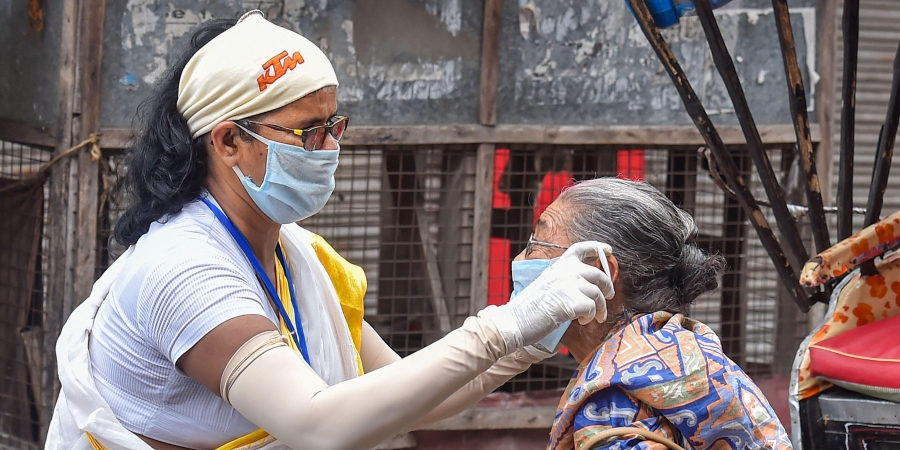
Representational Image. (Photo | PTI)

Lucknow  :

Doctors at the district hospital in UP’s Mahoba have designed their own version of an air tight cabin for collecting swab samples to test coronavirus.

Called the Sample Collection Cabin for COVID-19, the structure has been inspired by one planned by a doctor in Kanpur and also by testing facilities in South Korea.

Behind the designing of the cabin is a team comprising Chief Medical Superintendent of Mahoba district hospital Dr R P Mishra, Dr Gulsher Ahmed, Dr Narendra and Dr Yogendra.

“We modified a structure planned by a doctor in Kanpur, about which we came to know through newspapers. As we worked on it we encountered difficulties and worked on removing them. We also got suggestions from some people,” the CMS said.

The cabin has two holes through which the doctor can pass his hands for collecting the swab sample.

Gloves attached to a long-sleeve are affixed to the glass cabin through which the doctor can pass his hands to collect the sample.

“This cabin was inspired by a photograph of a testing facility in South Korea, which we saw on the Internet. As the idea came to our mind, we spoke to our CMS, explained him the entire concept, and he agreed to it,” Dr Gulsher Ahmed told PTI on Sunday.

The booth was made in two days.

“The person to be tested is outside the booth while the person from the medical team is inside the booth and wearing a complete PPE kit. If a person whose samples are being taken sneezes, then the droplets will fall on the outer walls of the testing booth. After the sample is taken, one member of our medical team sprays the entire booth with sodium hypochlorite solution. The one who is wearing PPE kit sprays alcohol on the gloves of the lab technician (taking sample),” he said.

“The second sample at the Sample Collection Cabin for COVID-19 is taken after a gap of 10 minutes. We are exercising extra caution to ensure that infection does not spread,” Dr Ahmed, who is posted as a master trainer for COVID-19 said.

So far, we have taken 124 samples, and 94 persons have tested negative for COVID-19, Dr Ahmed said.

As many as 6 districts of UP — Pilibhit, Prayagraj, Bareilly, Maharajganj, Lakhimpur-Khiri and Hathras have now been declared as COVID-19 free.

Apart from this, 125 new patients have been confirmed as positive for novel coronavirus in various districts of UP taking the total number of positive cases to 974, of which 582 are related to Tablighi Jamaat.

Total deaths in the state stand at 14 (1 each at Basti, Varanasi, Bulandshahr, Kanpur and Lucknow; 2 each in Meerut and Moradabad and 5 in Agra).

source: http://www.newindianexpress.com / The New Indian Express / Home> Nation / by PTI / April 19th, 2020
Jamia Millia Islamia’s Centre for North East Studies gets Centre of Excellence status

NEW DELHI :

JMImpos18apr2020

New Delhi :

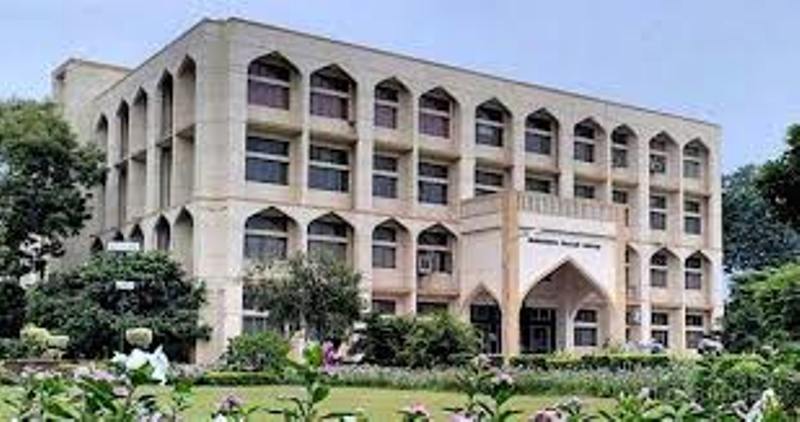
The Centre for North East Studies and Policy Research (CNESPR) of the Jamia Millia Islamia(JMI) has been recognized as a Centre of Excellence (CoE) by the Ministry of Tribal Affairs (MoTA), the varsity said on Friday.

The CNESPR received its CoE status under the component ‘Financial Assistance for support of Centre for Excellence” of the ministry.

The ministry has also sanctioned a grant of Rs 15 lakh to the CNESPR for a pilot study on ‘Documenting the lifeworld of the Bhutias in Sikkim.’

This status will facilitate grant-in-aids to the Centre on the basis of approved research study and project proposals covering one of the areas listed by the ministry.

Professor Simi Malhotra, Director of the Centre, said “The CoE status envisioned to develop and strengthen institutional resource capabilities of the CNESPR at JMI in organising qualitative, action-oriented and policy research on tribal communities in an effort to uphold cultural diversity by empowering the Scheduled Tribe (ST) communities.”

The policy-oriented research studies for the development of Scheduled Tribes (STs) communities of the country under the auspice of CoE status includes documentation of tribal cultures, women’s rights in scheduled areas, creating awareness among Scheduled Tribes on various Acts & Rules, migration, displacement and resettlement affected by major projects. (IANS)

source: http://www.sentinelassam.com / The Sentinel / Home> National News / by IANS / by April 18th, 2020

JMI Professor gets Shastri Indo Canadian Collaborative Institutional Research Grant

NEW DELHI :

Prof Zubair Meenai of the Department of Social Work, Jamia Millia Islamia (JMI) has been awarded the Shastri Indo Canadian Collaborative Institutional Research Grant, 2019-20. He shall collaborate with Prof Christine Walsh of the University of Calgary, Canada to conduct research on “Care Reforms in India: Operationalising the ‘Best Interest of the Child’ in the Child Protection Decision Making System”.

A team of researchers from India and Canada shall be focusing on the research during the two year grant.

Prof. Zubair Meenai’s team includes Prof. Sheema Aleem and a research scholar whereas the Canadian team headed by Prof. Christine Walsh includes Prof. Dorothy Badres and Angelique C. Jenney of the University of Calgary, Canada.

Prof. Meenai is also the Director of Centre for Early Childhood Development and Research of the university.

source: http://www.jmi.ac.in / Jamia Millia Islamia / Home / by Ahmed Azeem / April 16th, 2020

The lost world of spy fiction in Urdu returns: Akram Allahabadi’s detective novels are back for his fans

Allahabad, UTTAR PRADESH / Mumbai, MAHARASHTRA  :

AkramAllahabadi01mpos16apr2020

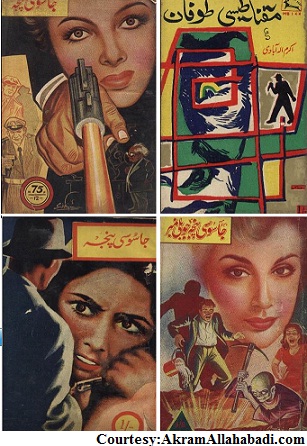
For years, Akram Allahabadi’s detective novels that were once a rage, had  become rarer to find.

Finally, there is good news, as his family has decided to print his novels once again and bring them in public domain.

The website AkramAllahabadi.com has also been put up for the fans of the late author who wrote spy fiction for well over three decades.

Many today may not be aware about the magical world of Urdu detective fiction that was weaved by him.

It was in the post-independence era (starting from 1952-53), when detective fiction in the sub-continent reached dizzy heights.

Akram Allahabadi, who was born in Allahabad, and who had later settled in Mumbai, was among the most popular writers of the era.

In those days, his novels sold like hot cakes. Today, it is unimaginable the kind of following Akram Sahab or Ibn-e-Safi, had among masses.

Akram Sahab created many famous characters. Among them were Inspector Khaan and his assistant Baalay, Madhulkar and Raazi were most popular.

The novels were published in Urdu and Hindi, and were awaited every month by fans in India and Pakistan. But by 1990s, the novels were hard to found, except in libraries or personal collections.

AkramAllahabadi02mpos16apr2020

In my childhood, I have seen almirahs full of Jasoosi Panja and Mahnama, in towns in UP. While Ibn-e-Safi novels were republished, Akram Allahabadi’s (or Ilahabadi) works became rare to find.

Sometime back I spoke to a Delhi-based publisher who prints digests that has 2-3 old [Ibn-e-Safi’s] detective novels every month [of course, without caring about royalty].

The publisher said that he tried hard but couldn’t get Akram Sahab’s novels. He asked me if I had any and said that he would love to purchase them and re-publish them.

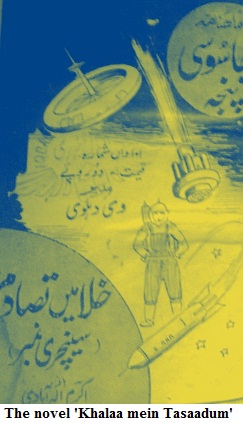
Till recently, Akram sahab’s famous novels like ‘Sputnik’, ‘Junction Bilara’, ‘Salazar Series’ and ‘Operation Venus’ were remembered. His forte was science fiction.

The website brings back the memories of the era. As an ardent fan, I expect at least of his famous novels to be made available [entire text, for free] for visitors to the website.

This would be a ‘tabarruk’ for his fans. Also, those who haven’t read him before, will get to read at least one of his complete work.

The photographs of the master writer and his family, apart from covers of his novels, are treat to his fans. As a fan of the late writer, I am thankful to all those who helped create the website. Hope, they will keep updating and adding more novels to it. It’s very important to keep his legacy alive.

Go, check the website : www.AkramAllahabadi.com

source: http://www.anindianmuslim.com / Indscribe / August 28th, 2014

Heart-warming story of the Hamieds, who set up CIPLA and have been saving lives

Mumbai, MAHARASHTRA :

When CIPLA started producing generic medicine, the US complained of patent-violation. Indira Gandhi stood by CIPLA. It is ironical therefore that the US should now dial India for supply of HCQ

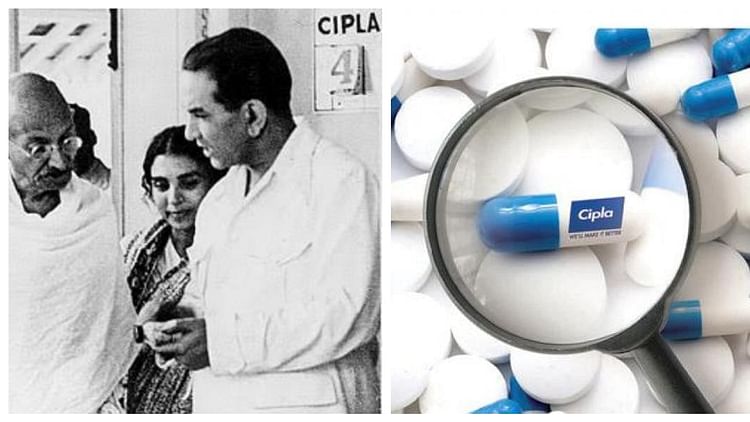
Khwaja Abdul Hamied was a great fan of Mahatma Gandhi

The manner in which Muslims are being demonised in this country by a section of the media and Bhakts of the BJP, here is a story that should uplift the hearts of almost everybody else.

In the 1920s, a rich man in India put his son on board a ship from Bombay to the United Kingdom in order to acquire a law degree and become a barrister, as was fashionable among all privileged families in the country at the time. The boy, however, did not want to be a lawyer; his heart was in chemistry, a pursuit without a seeming future in those days.

But his father gave him little choice, so while he waved to his father as his ship pulled away, Khwaja Abdul Hamied was already running over other plans in his mind while standing on the deck. He jumped ship halfway through the seas to land in Germany which, in the early decades of the last century, was leading in the study of chemistry and chemicals. He acquired a degree, married a German Jew who was also a communist – two communities the Nazis hated the most. But before they could be caught by Adolf Hitler’s Gestapo, they escaped from Germany and safely reached India.

With his vast knowledge of chemicals, Khwaja Hamied set up the Chemical, Industral and Pharmaceutical Laboratories in 1935 which was shortened to CIPLA decades later after Independence.

Khwaja Hamied was a great fan of Mahatma Gandhi and Pandit Jawaharlal Nehru and got down, in true nationalist spirit, to producing cheaply priced generic drugs for the common people. These included not only medicines for malaria and tuberculosis but also other respiratory disorders, cardiovascular diseases as well as routine and mundane ailments like diabetes and arthritis.

Sometime in the 1970s, Cipla (so renamed in the 1980s) began to manufacture a drug called Propranolol, patented by a US pharmaceutical giant from Brooklyn in New York, that was used in treating blood pressure, migraines and heart ailments, among others. In a bipolar world at the time, the US was no friend of India and a real superpower. Unlike Donald Trump, it did not need to issue threats for any country in the world to comply to its diktats.

The US complained to the Indian government. But unlike Narendra Modi last week, the then Prime Minister Indira Gandhi did not immediately cave in. She sent for Yusuf Hamied, Khwaja’s son, himself a chemistry graduate from Cambridge, who had by then taken over the running of the company. When Mrs Gandhi asked how he could violate the patent law on drugs and get India into trouble, Yusuf told Mrs Gandhi the story of his father and why he had set up the company – to bring low priced quality drugs to the poor.

When he had handed his company to his son, Khwaja had told Yusuf just one thing – remember why this company was founded. “Unlike other pharmaceutical companies around the world, we are not here to make profits but to bring relief and healthcare to the poor who may otherwise have to die for want of quality drugs.”

That is all he was doing, Yusuf told an impressed Mrs Gandhi who could empathise with the concern for the poor. And she turned down the US’s command to India to stop producing the drug, knowing it could have consequences. Americans hated her for this and other acts of defiance, but she always had the interests of her own fellow citizens on top priority.

On Yusuf’s suggestion she also had the patent law on drugs changed to not include the drug per se, only the process of manufacture as inviolable, so that Cipla could go ahead and produce as many low-priced generic drugs for the poor as possible. Since then Cipla has also produced a low-cost drug to treat HIV and expanded operations into several developing countries, including African nations, where most HIV and poor patients existed at one time.

This then is the company which produces hydroxychloroquine used in the treatment of malaria, lupus and rheumatoid arthritis which now has been exported in such large numbers to the United States under threat by a weaker Trump administration, depriving poor Indians of the same.

Even before Trump had bullied India into exporting the drug, Dr Hamiduddin Pardawala, the infectious diseases specilast at the Saifee Hospital in Bombay, had told some of us to note carefully that countries where malaria (and perhaps tuberculosis) was common were suffering less from Coronavirus than those where malaria was almost non-existent.

So where is malaria almost non-existent? The US, UK, Israel, France, Germany, Spain, Canada etc. In other words, countries which have suffered the maximum infestations. When I think of Germany, I wonder where these nations, who are profusely thanking India now for supplying HCQ to them, would have been today if Khwaja Hamied and his wife had been caught by the Gestapo and sent off to the concentration camps.

That goes even more forcefully for the bigots of this country, who have so demonised the Muslims and communalisedthe disease. There is something like karma in this world, even if not you but your future generations have to pay for it. Many of them might have got malaria in the past and been prescribed with HCQ that would have helped them develop the anti-bodies to resist COVID-19.

Many possible afflictions among them will need treating with this drug. Unknowingly, they may have taken many other generic drugs manufactured by this “Muslim’ company and owe the Hamieds a debt of gratitude for keeping their blood pressure under control and diabetes counts in check.

I would like to call this poetic justice without gloating over the fact. No other company in India, and certainly not the world, has done as much to bring affordable health care to poor Indians as has Cipla – and it has not been stingy about its research, often providing pharmaceutical ingredients and processes to other drug companies in the country to manufacture their own.

When India was partitioned Mohammad Ali Jinnah, who was also a Bombay resident and part of the same social circles as the Hamieds, offered Khwaja an honourable move to Pakistan. The Hamieds were sure where their sympathies lay – with Gandhiji – and chose to stay back in India.

There are Muslims and then there are Muslims like the Tablighee Jamaatis of this particular Nizamuddin meet (not others who cancelled their own meets across the country in wake of the pandemic; even the Tablighi Jamaat was denied permission to hold a similar congregation in Mumbai) just like there are Hindus and Hindus, who kill other Hindus because they do not agree with bigotry.

It is not right to target all Hindus for the acts of a few crazy cult members among them. Similarly, a handful of Tablighi Jamaatis do not a whole community make.

We must stop demonising all for the acts of a few.

source: http://www.nationalheraldindia.com / National Herald / Home> India / by Sujata Anandan / April 12th, 2020

Mangaluru MLA helps Italy returnee reach home at Kulai

Mangaluru, KARNATAKA :

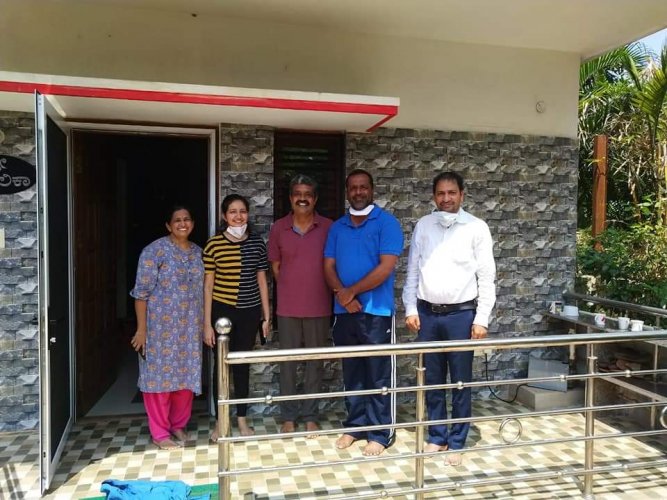
MLA U T Khader with the family of Shree Madhu Bhat at her house in Kulai in Mangaluru. (DH Photo)

Mangaluru MLA U T Khader has helped a PhD scholar, who had arrived in India from Italy, to reach her home at Kulai in Mangaluru from Bengaluru on Sunday.

Shree Madhu Bhat, a PhD student at the University of Turin in Italy, had arrived in Delhi in a  special flight arranged by the Government of India.

“After completing the quarantine period in Delhi, she was brought to Bengaluru in a special bus arranged by the central government on April 11. However, she could not reach Mangaluru owing to non-availability of any mode of transportation. Her parents had contacted district administration seeking help and also me through a common friend. When I received the information, I was in Bengaluru and brought her in my car,” Khader said.

She is the daughter of Shivaram Bhat and Shailaja Bhat.

After completing the quarantine period, she along with others were sent in a special bus to their respective states on April 8.

The bus had travelled via Uttar Pradesh, Madhya Pradesh, Andhra Pradesh, and reached Bengaluru on April 11.

The MLA had shared a photograph of the family of Shree Madhu Bhat on his Facebook page.

source: http://www.deccanherald.com / Deccan Herald / Home> State> Mangaluru / by Naina J A / DHNS, Mangaluru / April 13th, 2020

Retired soldier shot by militants, succumbs

Buchroo Village (Kulgam District), JAMMU & KASHMIR :

Srinagar :

A retired army soldier shot by militants on Sunday evening in Jammu and Kashmir”s Kulgam district succumbed to injuries in a Srinagar hospital on Monday.

Militants had fired at Abdul Hamid Mandoo, the retired soldier in the Buchroo village of the Kulgam district on Sunday evening.

He was shifted in a critical condition to government medical college hospital in Anantnag district from where doctors referred him to Srinagar for specialised treatment.

Police sources said the retired soldier succumbed to injuries in the Army”s 92 base hospital in Srinagar on Monday.

A manhunt has been launched to trace the assassins.

–IANS

sq/dpb

source: http://www.outlookindia.com / Outlook / Home> The News Scroll / by IANS / April 13th, 2020

Kerala girl sketches Spanish street, wins hearts

Thrikkakara,  KERALA :

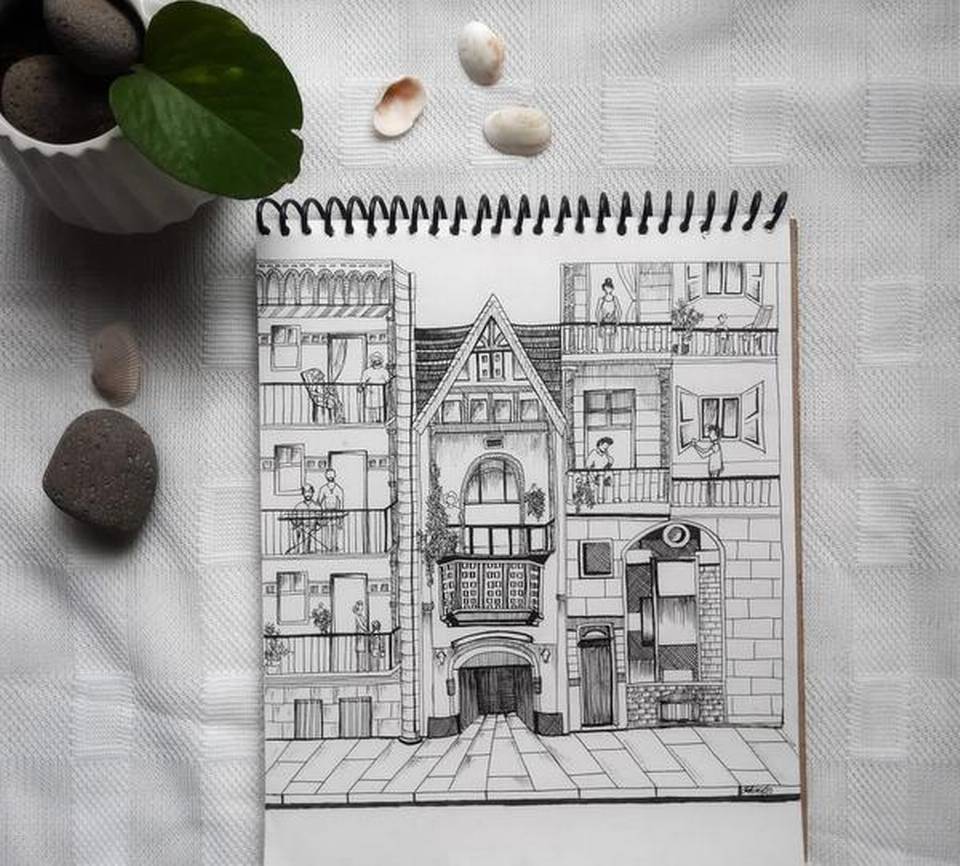
The pencil sketch of a Spanish street during the COVID-19 epidemic drawn by Shehana Fathima.

Work depicted an ‘eerie’ locality during the pandemic

For Shehana Fathima, a 20-year-old engineering student from Thrikkakara, the evening of March 24 will always be memorable.

Just an hour before the Prime Minister announced a 21-day nationwide lockdown, the budding artist posted on Instagram a pencil sketch that portrayed two artistes serenading an eerily empty Spanish street from their balconies even as quarantined neighbours emerged on their balconies to enjoy the music.

The video of noted Spanish pianist Alberto Gestoso and saxophone player Alex Lebron Torrent performing Canadian singer Celine Dion’s My Heart Will Go On in the middle of March had gone viral.

Musicians take notice

The youngster was on cloud nine when hardly a couple of hours later she posted the image, both the musicians praised her work, with Mr. Torrent even promising to repost it from his Instagram account.

Shehana Fathima working on her latest picture.

Later, the partner of one of the artistes also personally messaged her.

“The video was going around for a while, and that inspired me. It took me a day to complete the picture. Actually, I don’t know how to draw buildings, and I simply replicated the scene from the video,” said Ms. Shehana, a self-taught painter who is still basking in the glory of completely unexpected adulations.

Hoping to go further in the world of arts, she is now using the lockdown period to master digital drawing tools.

Other mediums

Having started with painting two years ago, the youngster has since then moved on to other mediums and a wider canvass.

“I plan to conduct an exhibition and even a workshop once I have enough collection of works,” Shehana Fathima said.

source: http//www.thehindu.com / The Hindu / Home> News> States> Kerala / by M. P. Praveen / Kochi – April 10th, 2020

Oxford University Press launches ‘Poetry of Belonging’: Muslim Imaginings of India 1850–1950

Mahmudabad (Sitapur District), UTTAR PRADESH :

Oxford University Press launched ‘Poetry of Belonging – Muslim Imaginings of India 1850-1950’ by Ali Khan Mahmudabad. The book engages with the question of Muslim rootedness in India

Oxford University Press launches ‘Poetry of Belonging’: Muslim Imaginings of India 1850–1950

Oxford University Press, the world’s largest university press, launched ‘Poetry of Belonging – Muslim Imaginings of India 1850-1950’ by Ali Khan Mahmudabad on Wednesday. The book engages with the question of Muslim rootedness in India.

The book launch took place in the presence of the author Ali Khan Mahmudabad, Ali Khan Mahmudabad is an academic, columnist, and public speaker. This was followed by a panel discussion and remarks on the books with eminent panellists.

The Poetry of Belonging is an exploration of north-Indian Muslim identity through poetry at a time when the Indian nation-state did not exist. Between 1850 and 1950, when pre-colonial forms of cultural traditions, such as the mushairas, were undergoing massive transformations to remain relevant, certain Muslim ‘voices’ configured, negotiated, and articulated their imaginings of what it meant to be Muslim. Using poetry as an archive, the book traces the history of the mushairas, the site of poetic performance, as a way of understanding public spaces through the changing economic, social, political, and technological contexts of the time.

The book seeks to locate the changing ideas of ‘watan’ (homeland) and hubb-e watanī (patriotism) in order to offer new perspectives on how Muslim intellectuals, poets, political leaders, and journalists conceived of and expressed their relationship to India and to the transnational Muslim community.

The volume aims to spark a renegotiation of identity and belonging, especially at a time when Muslim loyalty to India has yet again emerged as a politically polarizing question.

The Author is currently an assistant professor of history and political science at Ashoka University, Sonipat.

source: http://www.nationalherald.com / National Herald / Home> Reviews & Recommendations / by NH Web Desk / February 27th, 2020

Woman, 50, rides 1,400 km on scooty to bring back son stranded in Andhra

Bodhan Town (Nizamabad District) , TELANGANA :

Razia Begum, a government teacher in Bodhan town of Nizamabad district, started her journey for Nellore, 700 km away in Andhra Pradesh Monday morning and returned home Wednesday evening.

Razia Begum with her son Nizamuddin.

Razia Begum with her son Nizamuddin. (Sourced)

A 50-year old woman from Telangana’s Nizamabad district travelled on a two-wheeler to Nellore 700 km away to pick up her teen son stuck in Andhra Pradesh due to the COvid-19 lockdown.

Razia Begum, a government teacher in Bodhan town of Nizamabad district, started her journey on Monday morning riding her Scooty and reached Nellore town in Andhra Pradesh on Tuesday afternoon. She picked up her 17-year old son Mohammed Nizamuddin, who was stuck at his friend’s place in Nellore, and headed back home. She was back by Wednesday evening, covering a total of 1,400 km in three days.

It helped that Bodhan assistant commissioner of police V Jayapal Reddy had helped her out with a letter that asked authorities to let her travel to Nellore and bring her son back. Razia Begum said she was stopped at several places by the police in the two states on account of the lockdown but was allowed to pass because of the police officer’s letter.

Razia narrated her tale to reporters at Kamareddy on her way to Bodhan on Wednesday. She had lost her husband 12 years ago due to illness and brought up her two children, a son and a daughter.

Nizamuddin, who completed his Class 12 in 2019, has been preparing for medical entrance examination by joining a coaching institute in Hyderabad. On March 12, Nizamuddin went to Nellore along with his friend whose father was hospitalised. The lockdown took them by surprise and he was stuck with his friend due to the lockdown imposed in the state on March 23.

Razia, who did not hear from her son for a long time, came to know that he was at his friend’s house in Nellore. “I approached the ACP and sought his help in bringing my son back to Bodhan. He gave me a letter permitting me to travel despite lockdown and also appealing to the Andhra Pradesh police to allow me to into the state,” she said.

“I travelled continuously through deserted roads and dusty villages midway. I was not scared at all,” she said.

The police stopped her at several places, but when they saw the letter from the Bodhan ACP, they allowed her to proceed. “Even at the inter-state borders, I had no issues, as the police cooperated with me. They advised me to take breaks for every two hours of journey so that I did not get tired,” she said.

She did not even stay in Nellore for a day, but immediately began her return journey. “The only wish to see my son gave me so much energy. Nothing more than that,” Razia said and thanked the police for their cooperation.

ACP Jayapal Reddy said he was very impressed by Razia’s determination to bring her son back home. “I was moved by her love for her son. I only requested all the police officers on the way from Bodhan to Nellore to allow her. She thanked me for the help I have rendered,” Reddy said.

source: http://www.hindustantimes.com / Hindustan Times / Home> Bengaluru / by Srinivasa Rao Apparasu , Hindustan Times,  Hyderabad / April 10th, 2020