All posts by mpositiveone@gmail.com

Little-known fact: Aurangzeb had more Rajput administrators than Akbar

DELHI , INDIA :

In ‘Understanding Mughal India’, Meena Bhargava writes about how Aurangzeb patronised several Hindu institutions & was supported in the war of succession by Rajputs.
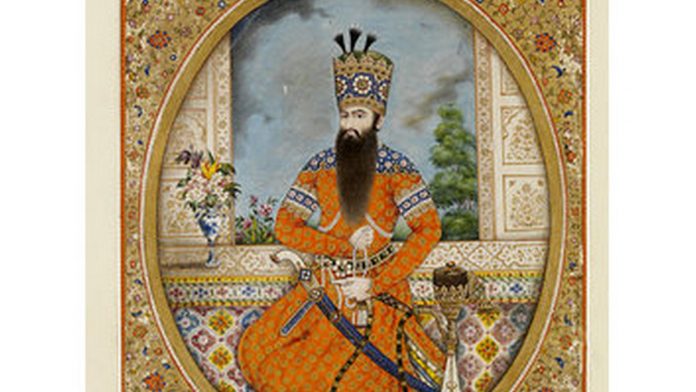
A portrait of Mughal ruler Aurangzeb | Photo: collections.vam.ac.uk/

That Aurangzeb’s orthodoxy and his dedication to his beliefs was personal rather than a matter for political interference is evident in his reactions and responses during the war of succession of 1658, a quadrangular conflict between Dara, Shuja, Aurangzeb, and Murad. Throughout the struggle, Aurangzeb was concerned about Dara’s political manoeuvres. Their individual feelings and religious outlook—which stood in sharp contrast—remained confined to the personal level. Aurangzeb referred to Dara as mushrik (heretic) while Dara called Aurangzeb kotah pyjama (narrow pants), a symbolic attribute of orthodoxy. Both attempted to rally public opinion, but never on religious grounds. In fact, the support that largely came for Aurangzeb was from the Rajputs, notably Rana Raj Singh of Mewar, Raja Jai Singh Kachwaha of Amber, and later, Maharaja Jaswant Singh of Marwar. In this context may be related an interesting nishan that Aurangzeb sent to Rana Raj Singh of Mewar, condemning such kings who practised intolerance that could become the cause of dispute, conflict, and harm to the people, and could ‘devastate the prosperous creations of God and destroy the foundations of the God-created fabric’. Such attitudes of kings, Aurangzeb ordained, deserve ‘to be rejected and cast off’. This document from the Udaipur records is a clear revelation of what Aurangzeb intended as his public policy. It further confirmed that Aurangzeb, in the struggle for succession, did not raise the cry of jihad or Islam in danger, nor did he promulgate a new religious policy contrary to that of his predecessors; neither did Dara claim to be the champion of liberal forces. The issue was not religious or ideological, or whether orthodoxy would triumph or liberalism. It was a question of personal vested interest, political in nature but free from religious connotations, that is: Who would be the emperor of India, Dara or Aurangzeb? It is in such a context that Aurangzeb deserves to be assessed.

Debating Aurangzeb’s leanings—religious orthodoxy or political pragmatism—one needs to ask: Did Aurangzeb really intend, as Jadunath Sarkar suggested, the establishment of dar-ul-Islam or a truly Islamic State in India, the conversion of the entire population to Islam, and the annihilation of dissenters? Or, as Ishtiyaq Husain Qureshi argued, was it rigid adherence to the shari’a and undoing the damage caused by Akbar; or the triumph of Muslim theology, as Shri Ram Sharma asserted? If this was really the case, then the emperor’s personal valour, military skills, and single-minded commitment to achieving territorial expansion and consolidation would stand negated. The biased ideological portrayal of the emperor, regardless of historical accuracy, makes it difficult to explain the increase in the number of Rajput mansabdars in Aurangzeb’s administration as compared to Akbar’s period, and their rise from 24 per cent under Shahjahan to 33 per cent in 1689. Nor can Raghunath Ray Kayastha’s dominance as diwan-i kul be understood rationally. Raghunath Ray not only supported Aurangzeb but also participated in several expeditions of the period. Aurangzeb honoured him with the title of Raja and when Raghunath Ray died in 1664, the emperor, in his obituary written in Ruqa’at-i Alamgiri, remembered him as the greatest administrator he had ever known.

There are well-documented evidences of Aurangzeb’s patronage of various Hindu religious institutions, namely temples, maths, grants to Brahmins and pujaris:

  • Land grants were renewed to the temples at Mathura, Banaras, Gaya, Gauhati, and others, while the emperor is known to have donated ghee for the navadeep in a few temples, including the Mahabateshwar temple at Agra;
  • Gifts were offered to the Sikh gurudwara at Dehradun;
  • Madad-i ma’ash grants, as listed in the Rajasthan documents, were continued to a math of Nathpanthi yogis in pargana Didwana, sarkar Nagor;
  • Grants were also made to Ganesh Bharti faqir and his successors in pargana Siwana with the instructions that the faqir should not be disturbed so he could ‘pray for this sultanat’.
  • The Vrindavan document of 1704 referred to a parwana which sanctioned the rights of Chaitanya gosains who had founded Vrindavan and established pilgrimages in Braj Bhumi, and recognised the right of Brajanand Gosain to receive a fee from the followers of the sect on account of kharj sadir o warid, that is, expenses on guests and travellers from each village. In effect, it was a government levy for the benefit of Brajanand Gosain and his Vaishnavite followers.

From the above description, Aurangzeb’s patronage to temples appears without doubt. And yet some temples were attacked, while others were spared. This aberration in the emperor’s attitude can be explained by only one rationale: it was not iconoclasm, but reprisal for rebellion or political misconduct or disloyalty to the emperor. This exposition can be applied to understand the attack on the Vishwanath temple at Kashi, the Keshav Dev temple at Mathura, and several prominent temples in Rajasthan. In 1669, during a zamindar revolt in Banaras, it was suspected that some of them had assisted Shivaji in his escape from imperial detention. It was also believed that Shivaji’s escape was initially facilitated by Jai Singh, the great-grandson of Raja Man Singh, who had built the Vishwanath temple. It was against this background that Aurangzeb ordered the destruction of that temple in September 1669.

Around the same time, in a Jat rebellion that had erupted in the neighbouring regions of Mathura, a patron of the local congregational mosque was killed, leading to Aurangzeb’s order in 1670 to attack the Keshav Dev temple at Mathura. Temples in Marwar and Mewar were also attacked following the death of Maharaja Jaswant Singh to reprimand and crush the Rathor rebellion and the development of a Sisodia– Rathor alliance. These included temples in Khandela patronised by rebel chieftains; temples in Jodhpur maintained by a former supporter of Dara Shukoh; and the royal temples in Udaipur and Chittor patronised by Rana Raj Singh after the Rana entered into an alliance with the Rathors that signalled the withdrawal of loyalty to the Mughal State. It may be observed that the Rathor rebellion was not a reaction or a protest against the re-imposition of jizya. Instead, this re-imposition, as Abu’l Fazl Ma’muri observed in the context of the suppression of the Satnami revolt and prior to the emperor’s expedition to Ajmer, was meant for ‘the affliction of the rebellious unbelievers’.
MughalBookMPOs24feb2020

This excerpt from Understanding Mughal India: Sixteenth to Eighteenth Centuries by Meena Bhargava has been published with permission from Orient BlackSwan.

source: http://www.theprint.in / The Print / Home>  Page Turner> Book Excerpts / by Meena Bhargava / February 19th, 2020
Have lost one eye, not resolve: Jamia student who won best paper after police lathi-charge

Samastipur, BIHAR   :

Mohammed Minhajuddin had just submitted his paper when Delhi Police lathi-charged students in the Jamia library on 15 December. He lost his left eye in the incident.

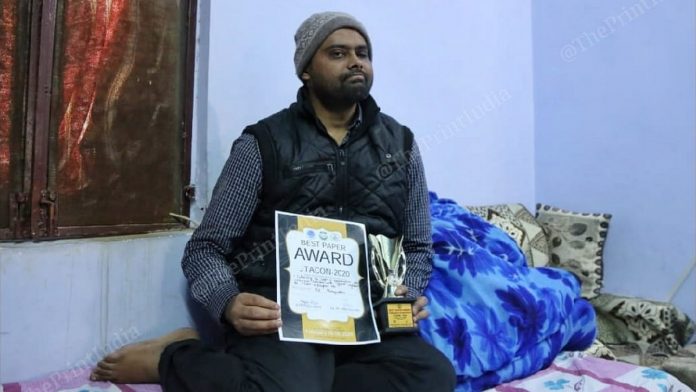
Jamia Millia Islamia law student Mohammed Minhajuddin with the best paper award he won Tuesday | Photo: Manisha Mondal | ThePrint

New Delhi:

Mohammed Minhajuddin, 26, was writing a paper on the theme of human rights and development on 15 December 2019 in the Jamia Millia Islamia library when the Delhi Police barged in and lathi-charged the students. A lathi blow cost law student Minhaj vision in his left eye; doctors say it will never come back.

On Tuesday, over two months after the incident, Minhaj’s paper was named the best paper in its category at the Jamia Teachers’ Association award. The paper, titled ‘Enhancing the scope of opportunities for religious scholars with special reference to Islam’ deals with the intersection of human rights and religion. The deadline for submission was 15 December, and Minhaj had submitted it just minutes before the police lathi-charge.

Since then, life has been a struggle for Minhaj, but he hasn’t lost his resolve to make the best of a bad situation.

“After losing my eyesight, I struggled a lot to prepare for the presentation. I had to work with just one eye, my head constantly aching. It was tough to even concentrate,” Minhaj told ThePrint.

Feeling vindicated

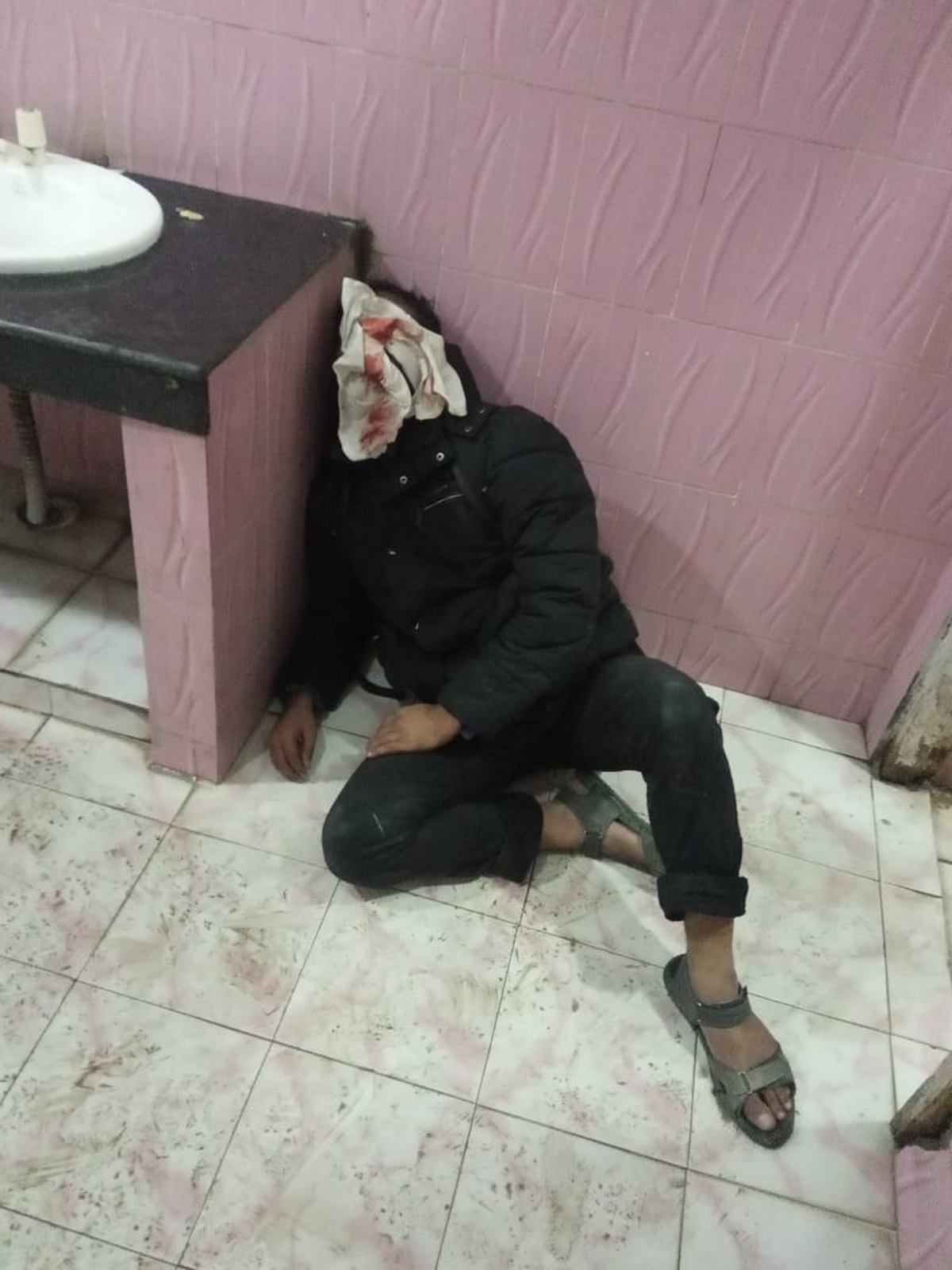
On 15 December, the Delhi Police had entered the Jamia campus amid protests against the Citizenship Amendment Act . A picture of Minhaj lying in a university washroom bleeding from his eye was widely shared on social media, and several students, including him, had alleged that the police lathi-charged students in the library, a claim the police had vociferously denied .

This picture of Minhaj with his face covered by a blood-stained handkerchief was widely circulated on social media after the Delhi Police entered the Jamia Millia Islamia campus on 15 December

However, multiple videos have surfaced  since 16 February, showing policemen beating the students in the library with batons. Today, Minhaj feels vindicated.

“It wasn’t just me. Several students had given testimonies highlighting police brutality in the library. But with these videos out now, there is no scope of lies anymore. The truth is out in the open,” he said, adding that he was offered Rs 5 lakh compensation and some words of sympathy by the Aam Aadmi Party MLA from Okhla, Amanatullah Khan.

After the video showing police beating the students triggered a storm, the Delhi Police too released footage showing  alleged ‘rioters’ entering the library. But Minhaj says the library he was in — the old reading room in the MPhil department — didn’t have any protesters.

“Everyone in this library was a student who had just been studying here. The protesters may have entered another library, not this one,” he said, adding that those who can be seen wearing handkerchiefs on their faces in the video were merely protecting themselves from the tear gas shells fired by the police.

Minhaj is hopeful that with the videos out, policemen will be taken to task.

Not willing to give up on dreams

Minhaj came to Delhi from Bihar’s Samastipur two years ago aspiring to practise law in the capital, and that’s a dream he is not willing to give up on.

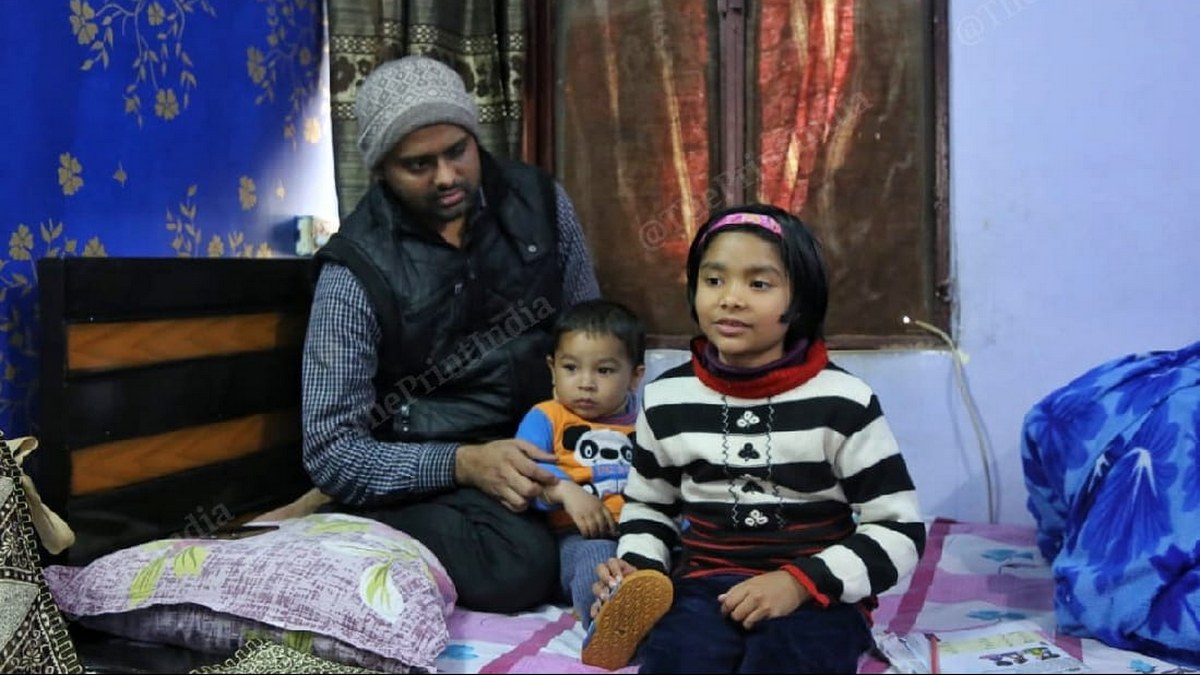
“I know life will be a challenge now. But I can’t give up or fall into despair. I have to keep studying and working towards a better life,” Minhaj said, while playing with his nephew and niece at his sister’s home in Jamia Nagar, where he has been staying since the incident.

Jamia Millia Islamia student Mohammed Minhajuddin with his nephew and niece at his sister’s home in New Delhi | Photo: Manisha Mondal | ThePrint

Minhaj’s father, who is a school teacher at a government school in Samastipur, keeps asking him to come back.

“They (parents) are scared, which I understand. But I can’t leave until I complete my final semester,” said Minhaj, who completed his LLB from Aligarh Muslim University (AMU).

No help from university

Two months on from the life-altering incident, Minhaj isn’t resentful or angry, but disappointed at Jamia Millia Islamia.

“It is the university’s duty and responsibility to keep its students safe. It failed to do so,” he said, adding that Jamia vice-chancellor Najma Akhtar met him once after the incident.

“She said I can submit my treatment bills to the university and they will reimburse it. But my friends say that just reimbursement isn’t enough — I should be given compensation for the physical loss and mental trauma,” he said.

Minhaj has managed to keep his calm through this entire period, but he said his friends are still angry.

“It is my batchmates who took me to the hospital that day. No one from the university administration helped. My friends took me from one hospital to another, as all doctors refused to check on me,” Minhaj said.

Finally, Minhaj got treated at AIIMS, and he has to visit the doctor every two weeks to check on his eye.

“I need to keep going for a check-up to ensure the infection doesn’t spread to the other eye.” he said.

source: http://www.theprint.in / The Print  / Home> India / by Fatima Khan / February 28th, 2020

Indian-American entrepreneur launches ‘Holi Ghee’

Mumbai, MAHARASHTRA / New York,  U.S.A :

New York :

Nazia Aibani, a New York-based Indian-American entrepreneur, has launched a special type of clarified butter called ‘Holi Ghee’ to add more taste to the Holi delicacies like ‘matthis’ and ‘gujiyas’, a media report said.

Aibani, who originally belongs to Mumbai, owns Gourmet Ghee Company who she founded in 2017, Indica news said in the report on Wednesday.

Asked about why she chose to come up with ‘Holi Ghee’, she said: “Holi Ghee is a specialty flavoured clarified butter we made to pay homage to my Indian roots. Also with the turmoil going on, I felt it was important to show the one thing Indians have in common which is a love for food.”

On the unique flavour and what does it taste like, the entrepreneur told Indica news: “This flavour was inspired by Holi, the festival of colours. We used rainbow-coloured crunchy sprinkles. This ghee is on the sweeter side with a rich spreadable taste and texture.

“I wanted this ghee to appeal to kids especially, to get into the spirit of the holiday, and to use all year around not just for one particular day. The taste is very smooth with a soft crunch, it can be used as a spread or also in baking.”

Gourmet Ghee offers clarified butter in other different flavours including roasted garlic, Celtic sea salt and toasted almond.

It sells for $14 to $18 for a 9-ounce jar.

source: http://www.indianewengland.com / India New England News / Home> Business / by India New England News / February 20th, 2020

Majrooh Sultanpuri: The wounded heart

Nizamabad Town (Azamgarh District) UTTAR PRADESH / Mumbai, MAHARASHTRA  :

MajroohSultanpuriMPOs21feb2020

A committed communist, Majrooh Sultanpuri wrote about matters of love and freedom with equal conviction

Main akela hi chala tha janib-e-manzil magar

Log saath aate gaye aur karvan banta gaya

( I set out towards my destination all alone but people began to come along and a caravan was formed.)

With the exception of master poets like Mir Taqi ‘Mir’ or Mirza Ghalib, it seldom happens that an Urdu couplet becomes so popular and is quoted so often that it becomes part of everyday speech and people do not even remember the name of its creator. This is what happened to the above quoted couplet of Majrooh Sultanpuri whose enormous contribution to the Hindi film industry was acknowledged when he became the first lyricist to be decorated with the prestigious Dadasaheb Phalke Award in 1993. In 2013, a commemorative postal stamp was also issued on him.

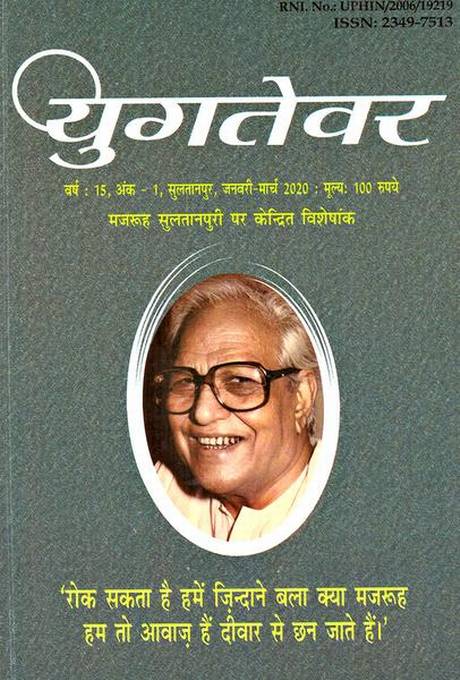
Hindi literary journal Yugtevar has come out with a special number (January-March, 2020) on him to celebrate his life and work. It offers detailed information about the poet and contains critical appraisals and reminiscences written by, among others, top Urdu critics such as Prof. Shamim Hanfi, Urdu poets like Ali Sardar Jafri and Javed Akhtar, Hindi poets like Subhash Rai, and singers such as Lata Mangeshkar. A selection from his poetry has also been given in the concluding section of the journal.

Majrooh was born on the eve of Id as Asrar ul Hasan Khan in town Nizamabad that fell under police station Sarai Mir in Azamgarh district where his father Sirajul Haq Khan was posted as a police constable although his family belonged to village Ganjehdi near Sultanpur. There seems to be some confusion about the year of birth while the date is unanimously given as October 1. In his article, Akhtar Farooqui mentions 1918 as the year of Majrooh’s birth but Utkarsh Singh settles for 1919 while Rekhta website takes it back to 1915.

Asrar ul Hasan began writing poetry at an early age using the pen name ‘Naseh’ (religious preacher). As a young lad, he fell in love with a girl but failed to receive her affections. Soon, on the advice of his close friends, he became Majrooh (wounded) to the world and remained so until the end. Little wonder that his song “Jab dil hi toot gaya” in film Shahjehan remains hugely popular even now after more than 70 years. Initially, he wrote songs and lyrical song-like nazms but soon turned towards ghazal. As Prof. Shamim Hanfi recalls, in a creative life spanning nearly 60 years, he wrote only fifty odd ghazals and two notable nazms, besides penning more than two thousand film lyrics.

Traditional physician

Young Asrar ul Hasan studied Unani medicine to train as a traditional physician but he practised for only a few years as a Hakim appointed by Sultanpur District Board. He studied Arabic and Persian in Sultanpur and Tanda. While training to become a Unani hakim in Lucknow, he took admission in a music college to learn classical Hindustani music. However, his destiny was not to sing but to write songs for others to sing.

Top Urdu poet Jigar Muradabadi had noticed Majrooh’s talent and Majrooh too treated him as his ustad. He wrote that although Jigar never advised him on his ghazals, but he did shape his poetic temperament. Jigar Muradabadi was the uncrowned king of mushairas (poetic soirées) and he took Majrooh to Bombay (now Mumbai) in 1945 to take part in a mushaira where Majrooh proved to be a big hit. A R Kardar wanted Jigar to write songs for his film Shahjehan but Jigar recommended Majrooh’s name. Thus, the film lyricist was born. Perhaps, it it not common knowledge that Majrooh, whose mother tongue was Awadhi, wrote lyrics for a number of Bhojpuri films too and was a great success.

Impressive persona

It was during the Emergency when Majrooh Sultanpuri and Jaan Nisar Akhtar came to Jawaharlal Nehru University. Majrooh’s was a very impressive persona and he recited his ghazals in a tuneful but robust voice. And, fearlessly, he recited a ghazal that had shades of Kabir in it as it challenged the injustice and oppression. This couplet continues to resonate with me even today.

Sutoon-e-daar par rakhte chalo saron ke chiragh

Jahan talak ye sitam ki siyaah raat chale

(March ahead while placing the lamps of our heads on the opening of wounds till the dark night of oppression lasts.)

This was a poet who had spent two years in jail for reciting a poem at a mill union workers’ meeting in 1949 that harshly criticised the then prime minister Jawaharlal Nehru. A committed communist and member of the All India Progressive Writers’ Association (AIPWA), he followed the communist party’s line that held “Yeh aazadi jhoothi hai” (This freedom is false). The Maharashtra government slapped a case on him and asked him to seek forgiveness if he wanted to avoid jail.

Instead, Majrooh went underground and appeared in public in 1951 to attend a meeting organised to protest the arrests of Faiz Ahmed ‘Faiz’, Sajjad Zahir and others in Pakistan in the Rawalpindi Conspiracy Case. He was arrested after the meeting was over.

Majrooh breathed his last on May 24, 2000.

source: http://www.thehindu.com / The Hindu / Home> Books> Authors / by Kuldeep Kumar / February 20th, 2020

Three Keralites behind ‘Bandicoot’ win Infosys Gold award

KERALA :

Bandicoot has already made its way into 12 states and the company has also grown to the strength of 100.

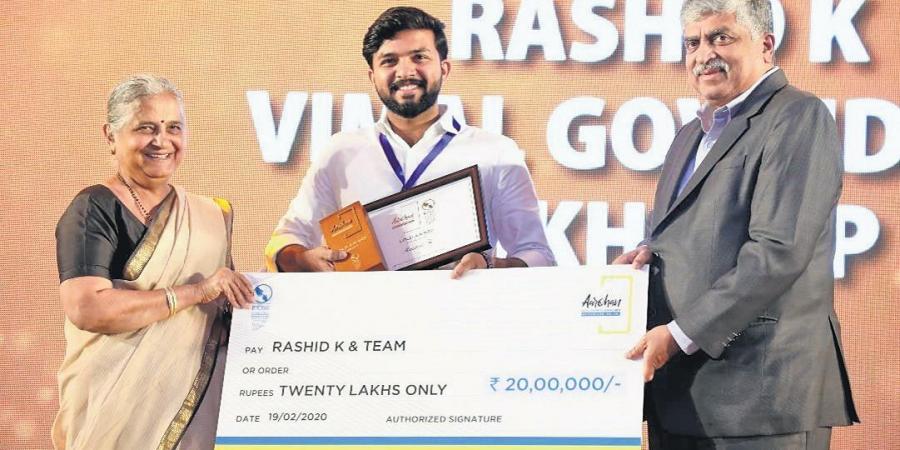
Rashid K, co-founder of Bandicoot, receiving the award on Wednesday

Thiruvananthapuram :

Malayalis Rashid K, Vimal Govind MK and Nikhil NP of startup ‘Genrobotics’ won the gold award instituted by Infosys Foundation. The award was given for their innovation ‘Bandicoot’, a robot developed by the startup. ‘Bandicoot’ is stated to be the world’s first manhole cleaning robot. It’s the second edition of the Aarohan Social Innovation awards.

The innovation won the award in the sustainability category. The award carries a purse of `20 lakh. Other award categories included healthcare, rural development and destitute care. Rashid, Govind and Nikhil are the core founders of Genrobotics and Bandicoot has been designed by nine engineers from Kerala.

After its successful trial in Thiruvananthapuram by clearing manholes filled with plastic and other kinds of waste, it is being used successfully by the Kerala Water Authority for various purposes.“Through our innovation, we aim to eliminate manual scavenging completely from our country. We were able to create awareness with the support of the government and other organisations.”

“We are happy to receive this prestigious award and we hope that we will be able to end manual scavenging in five years,” said Govind, the chief executive officer, Genrobotics.

Bandicoot has already made its way into 12 states and the company has also grown to the strength of 100. “We plan to expand in more states thereby reducing the number of manhole deaths,” according to Govind
“Besides Bandicoot, we are also working on other projects for the welfare of the society,” he said.In  healthcare category, three awards were presented.

Recipients include Partha Pratim Das Mahapatra from Kolkata, who developed a non-invasive, non-contact, portable device to measure human bilirubin, oxygen saturation and haemoglobin levels without drawing blood from the body; Dr Binita S Tunga and Dr Rashbehari Tunga from Bengaluru.

source: http://www.newindianexpress.com / The New Indian Express / Home> States> Kerala / by Express News Service / February 20th, 2020

Theatre personality Mohammad Ali Baig on acting in Vikram’s ‘Cobra’, Netflix’s ‘Baauhubali’ series and Telugu film ‘Kalinga’

Hyderabad, TELANGANA :

MohammedAliBaigMPOs19feb2020

The theatre artist-turned-actor made his Kollywood debut with ‘Aruvi’ in 2017

As a child, Mohammad Ali Baig used to be terrified of watching his father (theatre veteran Qadir Ali Baig) on stage. “One week he’d play a Mughal emperor, and the next week he’d be a saint. The week after, he’d be a wife-beating drunkard. In a month, he’d play a war veteran on crutches,” recalls Mohammad, “I’d be so scared to venture near the green room.”

Mohammad hero-worships his father so much so that he carries a portrait of him on his person wherever he travels, a custom he follows to this day. A reluctant entrant to the theatre scene, he has since then gone on to win several accolades across the world, and is now considered as the highest-paid theatre actor in the country. He has a Kollywood link as well: after debuting in 2017’s Tamil hit Aruvi, he’s now sharing screen space with actor Vikram in his upcoming film Cobra. Excerpts from a free-wheeling chat with the actor who is in Chennai currently:

What made you join the team of Cobra?

I think it was because of my performance in Aruvi that the makers of Cobra approached me. It’s an interesting role — one that I cannot talk much about at the moment. The director (Ajay Gnanamuthu) and I worked a lot on the character’s look and behaviour. What’s most important to me is to internalise a character. I believe actors are performers, and not mimics.

Did Aruvi open the doors of Tamil cinema to you?

What I loved about Shakeel Waqaab, the IPS character I play in the film, was that he couldn’t be defined as a protagonist or antagonist. After the acclaim I got for the role, I did get a lot of offers from some of the biggest production houses in Tamil cinema. Most of them wanted me to be a cop or play the Commissioner. But that was not what I really wanted to be doing. So, I gave them all a pass till Cobra came along.

That an actor-star like Vikram plays the lead might have made your decision easier?

All my shots are with him (Vikram). He’s an extreme sweetheart and a very charming co-star. He’s blessed with not just talent but also abundant energy. That is extremely inspiring and contagious. At 4 am, he would be a bundle of energy. While most of us would be looking forward to pack up, he would be discussing his next shot.

The director is two films old, but you’re an experienced theatre personality. How did the meeting of minds happen?

An actor should always submit to the director; it’s like fluid in a bottle. You cannot come with a set mind to approach a role in a certain way and not be open to ideas. Cinema is a director’s medium.

You’re the youngest Padma Shri in theatre in India. Do filmmakers think about that while casting you?

Sometimes, it does put off people. Filmmakers are unsure about how to handle me. For them, it’s like having a boil on the palm… so they keep away. But people who know me and my work approach me.

Like the makers of upcoming Telugu film, Kalinga, in which you play the lead role?

Ah, yes. In Kalinga, I play a celebrated anthropologist in Kerala who has a tragedy, then takes to alcohol, and shifts base to Hyderabad. There, he loses his daughter, and the film is about the journey of finding her. They had spoken to a few stars earlier, but when they spoke to me, I explained what I thought about the character.

On the first day of shoot, I did what the director asked of me, and afterwards, I requested him to approach the same thing in a different way. The director was floored by that, and we have modelled the entire film based on that characterisation.

With such a rich theatre background, how did you get into films in the first place?

Shyam Benegal brought me into screen acting. He was close to my father — my dad’s first film, Ankur, was directed by him — and I’ve grown up respecting him. One day, he called me and said that he wanted me to play Jinnah in an upcoming project. He wanted an actor who is equally proficient in Hindi, English and Urdu, and who can carry tuxedos and sherwanis with equal ease. We got a whole wardrobe done, but as we were going through the script, he realised that Jinnah, in his project, was already elderly and ailing, and that I was too young to play it.

So, it didn’t happen. But I thought that it was encouraging that the first call I got from the cinema industry was from an ace filmmaker like him, and not from a casting director.

Do you take inspiration from something particular for your varied characters? Some actors say that they observe a real person to play a role…

I differ a bit there. When some actors say that I watched a real-life person to play a character, I think that’s imitating. Personally, I don’t think that’s performing. The only exception to that is when you’re playing a character in people’s memory like Mahatma Gandhi or MGR or Jayalalithaa.

Apart from your theatre productions, you are also doing a web series (Baahubali for Netflix) in which you play a warrior…

He’s not just a warrior, but also a womaniser. I had my doubts about the intimate scenes; there was some discomfort that I had with that. I think that actors have to draw their line of ethics and comfort zone when they choose a role, and be careful about what is, in his mind, a legitimate performing zone.

Of course, it can differ from one actor to another. Fortunately, the makers of Baahubali worked it out to a level of comfort that I was agreeable with.

How smooth has the transition from theatre to other mediums like cinema and OTT platforms been?

Adapting is the key. As an actor, it’s a challenge to adapt to various dynamics. With theatre, there’s strict discipline and regimen. With cinema, it’s more liberal.

For me, it’s a two-fold challenge: not only is the format different, but I’m also getting out of my comfort zone, which is my own production and direction. But I’m having fun, and that’s most important.

source: http://www.thehindu.com / The Hindu / Home> Entertainment> Movies / by Srinivasa Ramanajum / February 19th, 2020

Take note of this…

Bengaluru, KARNATAKA :

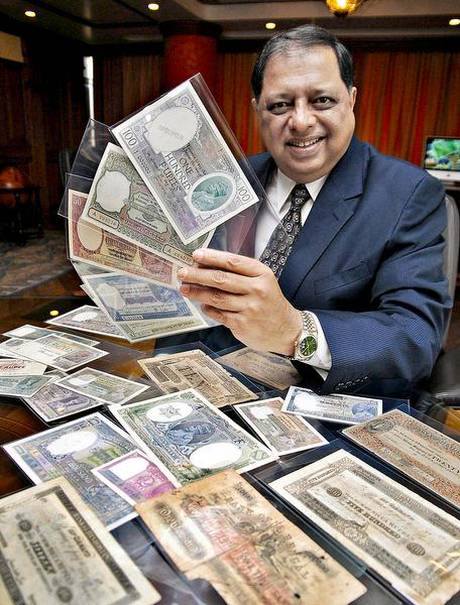
India’s history in currency is the subject of Rezwan Razack’s Museum of Indian Paper Money

Back in timeThe concept of money has existed since almost the beginning of civilization, says Razack / bhagyaprakash k

India’s history in currency is the subject of Rezwan Razack’s Museum of Indian Paper Money

Hailed as the largest collector of Indian currency, Rezwan Razack has opened South India’s first currency museum in Bengaluru. “I am so happy that the former Governor of the Reserve Bank of India, C. Rangarajan inaugurated the museum,” says Razack.

Razack, co-founder and joint MD of Prestige Group, is the Chairman of the International Bank Note Society, India Banknote Collectors’ Chapter, and is recognised for his contribution to the advancement of numismatic knowledge. Razack, who built his collection over 50 years with exhaustive research, enjoys sharing his knowledge with students and encourages budding collectors to promote numismatics as a hobby.

He has co-authored The Revised Standard Reference Guide to Indian Paper Money in 2012, and in 2017 wrote One Rupee One Hundred Years 1917-2017 to mark the centenary of the issuance of the one rupee note. “Rezwan Razack’s Museum of Indian Paper Money will not only be the first of its kind in India, but also the world,” says Razack.

The museum at Prestige Falcon Towers on Bruntun Road, has trained guides to take visitors through the history of currency in India. “The story of money is woven into our very being, uniting us, dividing us, giving us a sense of identity and mapping people or the nation’s power, crises and triumphs. I consider it a comprehensive restoration and preservation of an important national heritage. It is also something that numismatists worldwide will benefit from.”

The initiative, he says, is to help educate, inform and entertain. “The rupee is one thing that is ever present in our lives but never seen as a source of history, information and national pride. I hope visitors understand, enjoy and value this museum of our collective economic heritage.”

The museum displays a diverse collection of Indian paper money and the related material drawn from the Indian subcontinent. “While the concept of money has existed since almost the beginning of civilization, the invention of paper currency is more recent,” says Razack. From the early barter systems and the use of coins as currency, the museum introduces the visitor to paper currency, its origins and its use.

Apart from its selection of banknotes dating back to the early 1800s, an auxiliary collection has also been put together to explain the inspirations and techniques of making paper currency. While original hand-painted essays, patterns, proofs, trials, specimen notes, autographed notes and a rare Star of India Medal demonstrate fascinating aspects of money, meticulously sourced cheques, stamp papers relating to Indian paper money, booklets and banknotes help decode the world of money.

“This museum has been planned meticulously over three years to conform to international standards of lighting and climate control,” says Razack, adding that people don’t often retain paper money  My visits to cut-note dealers in Chickpet and in Fort Bombay gradually increased my collection,” he says, acknowledging that his persistence paid off.

Razack says his collection includes the oldest surviving note from 1812 of Bank of Bengal right up to the notes of 2017 of all denominations. The rare ones are the early Presidency Banknotes of Bank of Hindostan, Bank of Bengal, Commercial Bank, Calcutta Bank, Bank of Bombay, Bank of Western India, Asiatic Bank and Bank of Madras; British India’s Portrait Notes of Queen Victoria, Portrait Notes of King George V and King George VI; and Indian Notes used in Burma and Pakistan; Notes of Indo-Portuguese and Indo-French Territories and Indian Notes since Independence, also used by Haj Pilgrims and in Persian Gulf States.

There is also a lot of importance behind his book dedicated to the One Rupee note. The first One Rupee Note in India was issued on November 30, 1917. “To celebrate 100 years of the one rupee note in India, my book focusses on the origin and journey of the smallest existing denomination through the century, while examining its genesis. As the general population in India were unacquainted with paper notes until 1917, one of the methods adopted to increase the popularity of the one rupee note was to print a picture of the silver one rupee coin on both sides of the note.”

At Prestige Falcon Towers, 19 Brunton Road, Bengaluru; 10-30 a.m. to 5-30 p.m.; closed on Mondays and public holidays;entry Rs. 100

While the concept of money has existed since almost the beginnings of civilization, the invention of paper currency is more recent

source: http://www.thehindu.com / The Hindu / Home> Features> MetroPlus / by Ranjani Govind / February 17th, 2020

Birthday special: How Nawab Banu became Nimmi

Agra, UTTAR PRADESH / Mumbai, MAHARASHTRA :

NimmiMPOs18feb2020

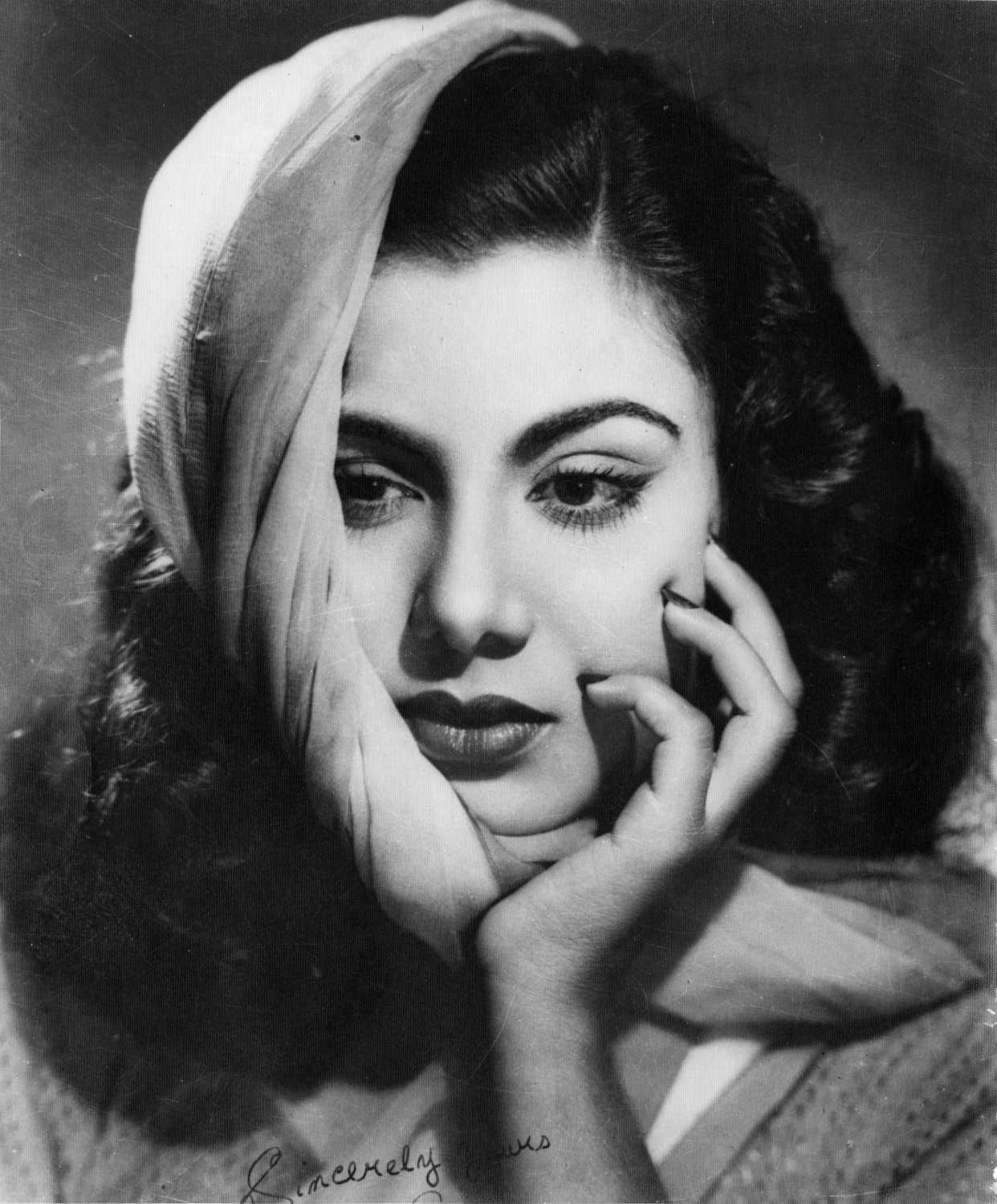
As the Barsaat (1949) and Aan (1952) actress turns 85, a closer look at how a fortuitous visit to a film set one day, led to an offer to join the movie industry.

Filmindia magazine called Nimmi’s rise to stardom “a fairy tale”. It’s easy to see why. The actress had a spectacular launch in Hindi cinema under RK Films with Barsaat (1949) with Raj Kapoor, Nargis and Prem Nath. She played the second lead in her first film.

Nimmi was born as Nawab Banu in Agra on 18 February 1933. In a 1993 interview, the actress explained her origins. “My maternal grandfather was a small zamindar in pre-independent India. Those days few people acquired the title of Nawab. My grandfather always craved for one, without success. So, when I was born he gave me the title and insisted on calling me Nawabsaab, till he died. But my nani called me Banu,” she said.

The young Nawab Banu came to visit Mumbai (then Bombay) from Lahore with her aunt Jyothi, the wife of singer GM Durrani. She took the young girl to the sets of Andaz (1949), directed by Mehboob Khan, where a scene was being filmed between Raj Kapoor and Dilip Kumar. Banu’s mother, Wahidan, had acted in Khan’s films in small roles during the 1930s.

When Nimmi turned down Errol Flynn’s kiss

On set, she sat next to Jaddanbai, mother of Nargis, who was the leading lady of the film. When Kapoor came over to them during takes, he noticed the newcomer.

“He saw me sitting next to her and asked, ‘Aye ladki naam kya hai tumhara?’ It took me five minutes to utter my name. Few days later he sent across a posh car and asked me to come for an audition. I was so nervous that I started crying during the test. Rajji thought that I was such an emotional artiste,” the actress told Filmfare magazine about her first encounter with the Showman.

The actor-director was looking for a new face to play the simple, naive village belle for his second film and after conducting a few other screen tests, he selected Nawab Banu as his heroine and changed her name to Nimmi for her debut.

With hit songs composed by Shankar-Jaikishan for Barsaat (1949), the film was a success and Nimmi followed up with more memorable film roles in Deedar (1951), Aan (1952) and Kundan (1955).

In 1965, as her acting career was winding down, Nimmi married S Ali Raza, known for his writing on Andaz (1949), Mother India (1957), Saraswatichandra (1968) and Reshma Aur Shera (1971). The actor-comedian Mukhri played matchmaker for two. However, in a television interview show, Guftagoo, she remembered that her makeup artiste, seeing his photo in Filmindia magazine, had remarked to her that she should marry him.

The couple did not have children, though Nimmi adopted her younger sister’s son after her death. Raza died on 1 November 2007.

source: http://www.cinestaan.com / Cinestaan / Home>News>  Article> Hindi / by Sonal Pandya / Mumbai – February 18th, 2020

A new kind of capitalism: Innovation and technology will help overcome wealth inequality

Bengaluru, KARNATAKA :

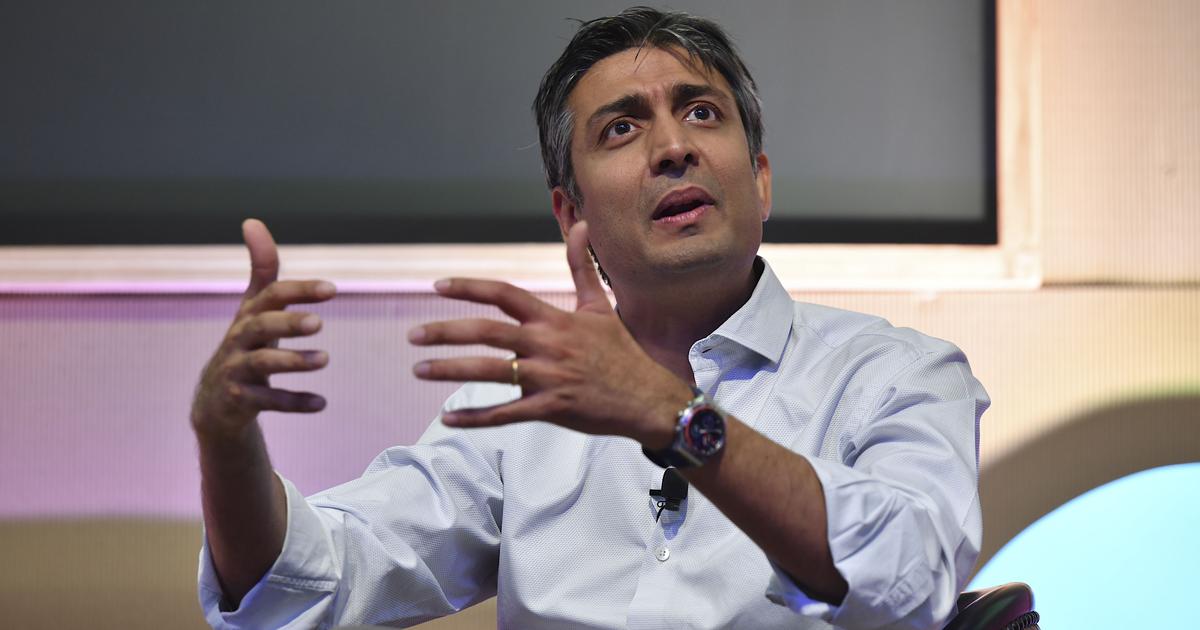
Rishad Premji, chairman of Wipro, says that stakeholder capitalism is increasingly gaining ground.

Wipro chairman Rishaad Premji. | Manjunath Kiran /AFP

No matter how you measure it, inequality has been on the rise since the 1970s.

According to Inequality.org, the richest 1% now own 45% of the world’s wealth , while The Guardian reported that chief executives at FTSE 100 companies in 2017 earned 145 times more than an average worker , up from 47 times in 1998.

This concentration of wealth at the top has emerged as a potential source of conflict in modern society. With new technologies like artificial intelligence, robotics and the internet of things creating opportunities for growth, businesses are increasingly expected to contribute positively to the communities that surround them rather than just chasing profits and maximising returns for shareholders.

In this era, businesses need to have a clear purpose and act as responsible corporate citizens. Stakeholder capitalism is increasingly finding acceptance and is becoming the “right business thing to do.”

New developments can be an amazing social equaliser: 3D printing is democratising manufacturing, while mobile banking provides easy access to banking services and increases the earning power of small businesses. But access to technology often dictates what opportunities are available. A 2019 US Census Bureau report found that a lack of access to the internet has become inherently intertwined with inequality.

So how can these new innovations help companies make the world a better place?

Democratising services

Innovations in the ed-tech space are helping to provide affordable and accessible education across society. In the area of healthcare, technology is bridging the gap between medical practitioners and end-users, enabling early detection, improving well-being and lowering costs. For example, Chikitsak, a portable, easy-to-use and cost-effective medical screening device that can be used by low-skilled healthcare professionals, and Niramai, a low-cost, safe, non-contact and radiation-free breast cancer screening software for early detection.

Water-tech companies like Swajal design, manufacture and assemble water ATMs that vend water at affordable prices using IoT. Agri-tech companies like DeHaat provide an online platform that connects small farmers with micro-entrepreneurs supplying different farm inputs and offering services.

Jobs that require specific motor skills have traditionally been off-limits for those without a full range of physical movements. Robots are expected to take on some elements of these, opening up previously inaccessible jobs to those with disabilities. For those isolated by geography, delivery by drones will enable those normally outside of companies’ high-speed shipping zones to order products at short notice, something usually reserved for more densely populated urban areas.

Being able to order clothes or groceries for delivery within hours rather than days might seem frivolous, but it’s exactly these kinds of services that will bring populations who are at the fringes into mainstream society.

All of the above examples illustrate the power of technology to democratise access and drive affordability at scale. All these may seem too good to be true and there are, as always, reasons to be cautious or skeptical. Advances in technology have historically led to increased inequality, not less, as those that can afford the new developments take advantage of them before less privileged people are able to do so. More basic technology may spread further as a result, but cutting-edge technology often remains in the hands of the rich.

However, unlike in the past, we are increasingly witnessing the power of technology through real-world success stories that have brought the less privileged and unbanked to the mainstream fold. The increasing recognition and growth of impact investing and venture capital focused on social impact startups bode well for the future and will play a key role in making the world flatter and a better place for all.

This is part of a series of articles in partnership with the NASSCOM Technology and Leadership Forum 2020, to be held in Mumbai from February 12-14. Read all stories in the series here.

This article first appeared on Quartz.

source: http://www.scroll.in / Scroll.in / Home> Tech Buzz /  Rishad Premji, qz.com – Quartz / February 11th, 2020

Delhi polls: All five Muslim candidates of AAP won

NEW DELHI :

The victory by AAP clearly indicates that the minority voters from these segments prefer the ruling party.

AAPdelhiMPOs12feb2020

New Delhi :

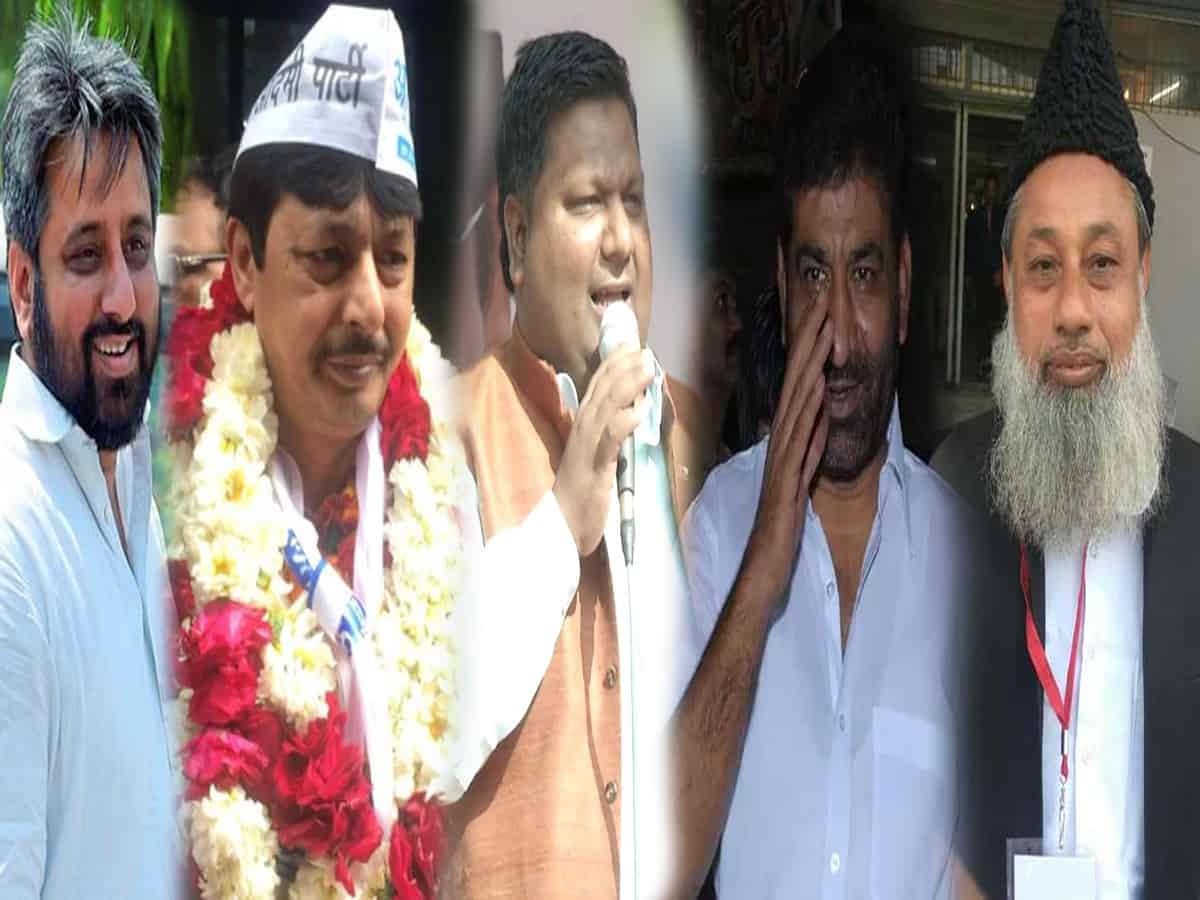
All five Muslim candidates of Arvind Kejriwal-led- Aam Aadmi Party who contested Delhi Assembly elections have won with significant margin.

The victory of five Muslim candidates put up by the AAP over their BJP and Congress rivals in community-dominated seats in Delhi clearly indicates that the minority voters from these segments prefer the ruling party.

AAP’s Amanatullah Khan again won from the Okhla seat by more than 70,000 votes where Congress candidate Parvez Hashmi failed to save his deposit.

In Seelampur , AAP’s Abdul Rehman defeated the BJP’s Sanjay Jain by the margin of 36,920 votes even as Congress rival Matin Ahmed, who has been a five-time MLA, came a poor third.

In the Ballimaran seat, AAP candidate Imran Hussain won over the BJP’s Lata Sodhi by 36,172 Votes, apart from five-time MLA and ex-minister Haroon Yusuf, who came third.

In Matia Mahal, Shoaib Iqbal won convincingly against Ravinder Gupta of the BJP by the margin of 50,241 votes and Mirza Javed Ali of the Congress .

In Mustafabad, AAP’s Haji Yunus defeated the BJP’s Jagdish Pradhan by a margin of 20,704, even as Congress candidate Ali Mehdi could not cross the five-digit vote figure. Ironically, Mustafabad was one of the three seats won by the BJP in the 2015 Assembly polls.

Reacting to the AAP victory in the Muslim-dominated segments, AAP leader Mehmood Ahmed from Zakir Nagar said: “It’s the work done by Chief Minister Arvind Kejriwal  that gave us this huge victory. We have devoted all our time to public welfare, be it drinking water, sewage, or installing CCTVs.”

source: with IANS inputs

source: http://www.siasat.com / The Siasat Daily / Home> News> Delhi / by Safoora / February 12th, 2020