The recipient of Padmashri award for communal harmony had earned the sobriquet of ‘Karnataka’s Kabir’
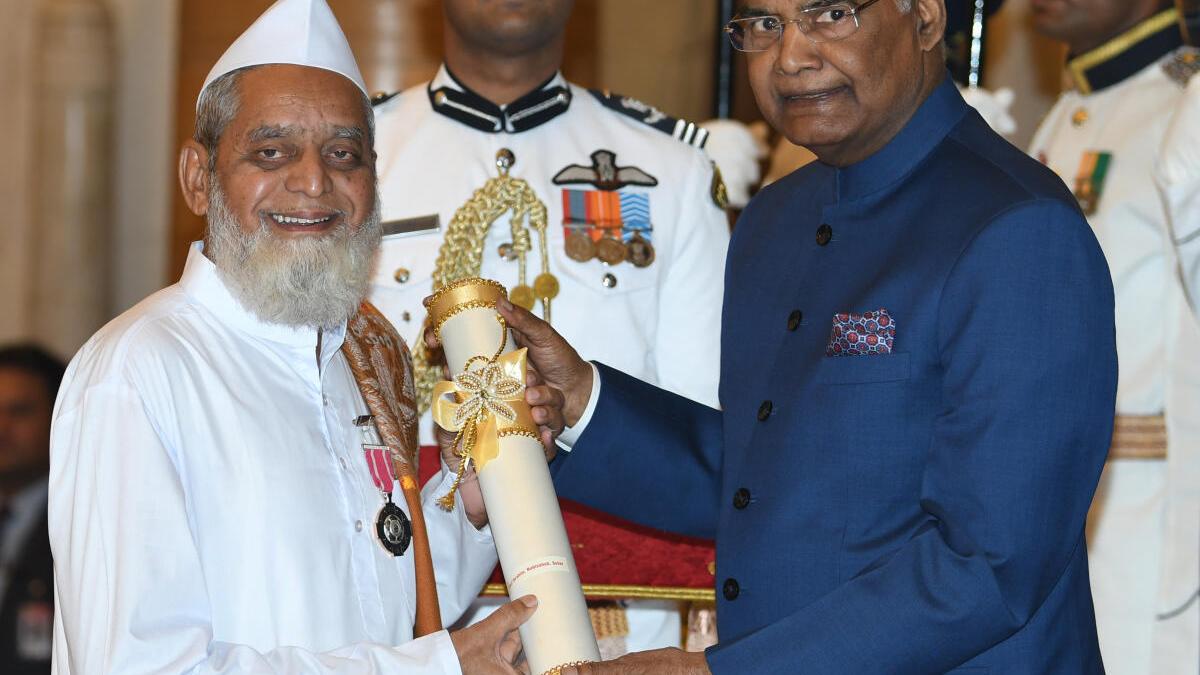
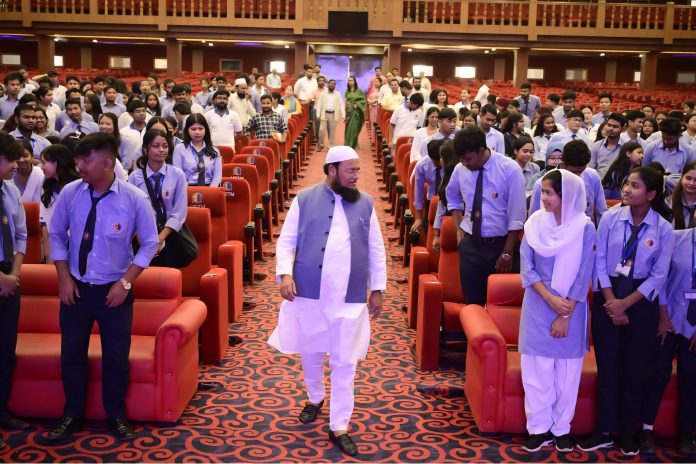
‘Karnataka’s Kabir’ Ibrahim Nabisaheb Sutar is presented the Padmashri award by President Ram Nath Kovind at Rashtrapati Bhawan, in New Delhi on April 2, 2018.
Ibrahim Sutar, polyglot folk singer, who toured India spreading the message of Hindu-Muslim unity, died in Mahalingpur in Bagalkot district on February 5. He suffered a massive heart attack around 6.30 in the morning. He died a few minutes later, family sources said. He was 82. He leaves behind his wife, son and two daughters.
The recipient of Padmashri award for communal harmony had earned the sobriquet of ‘Karnataka’s Kabir’.
The founder of ‘Bhavaikyate Bhajana Mela’ began his career as a Harikathe bhajan singer going around villages and towns. He regaled audiences with stories from Hindu and Islamic scriptures always leaving with a message of harmony, and need for ethics in personal life. He sang songs and gave lectures, quoting from multiple scriptures without the need to read from notes. He was equally well-versed in Kannada and Urdu.
In his later life, he emerged as a public speaker, visiting schools, colleges and Lingayat mutts to speak on vachana and dasa literature. He was honoured with the Karnataka Rajyotsava award in 1995, and the Padmashri in 2018.
Born in a poor weaver family in Mahalingpur, he dropped out of primary school to work as an assistant to a weaver. He developed a spiritual bent of mind early in life. He began attending lectures in the Sri Basavananda Swami mutt and participating in bhajans in Sadhu Maharaj temple. He was a member of the mosque committee that went around villages, asking the faithful to wake up early during the month of Ramzan. He studied Hindu and Islamic scriptures with equal zeal and developed a team of bhajan singers. The ‘Bhavaikyate Bhajana Mela’ performed across Karnataka and Maharashtra.
A routine performance was in the question–answer format interspersed with songs of dasa saints and vachanas . One of the team members came up with a question that sounded very ordinary, but had deep spiritual undertones, like: ‘Who is important in life – god or guru?’ Sutar used anecdotes from the Ramayana and Mahabharata, Islamic scriptures and stories from the life of prophets to give his opinion, that was directed at the audience, rather than the team member who kept asking questions.
source: http://www.thehindu.com / The Hindu / Home> News> India> Karnataka / by Special Correspondent / February 05th, 2022
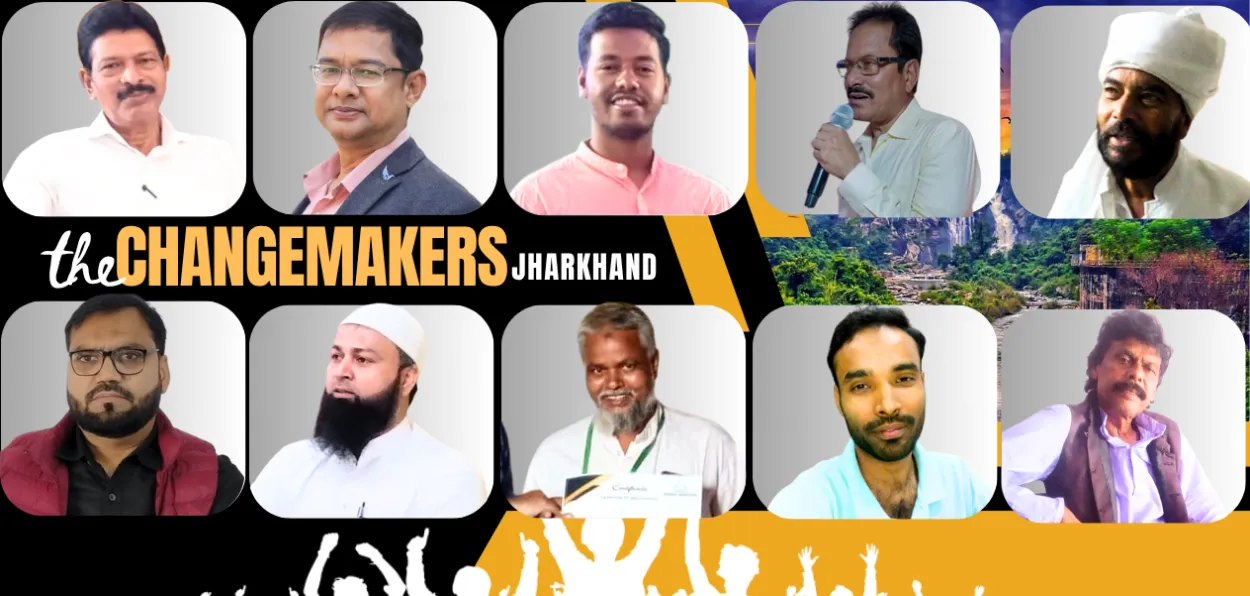
Jharkhand is one of the youngest Indian states, located in eastern India, and is also known as the tribal homeland. Since its inception, it has seen good growth, but the teething problems posed their own challenges. During these exciting times, some individuals have made significant contributions to society.
We, at Awaz-The Voice, bring to you stories of such unsung heroes from the length and breadth of India. Here are stories of ten extraordinary Muslim personalities of Jharkhand, who made a lot of difference to the lives of people and thereby helped state’s growth:
Dr Sajid Hussain
Dr Sajid Hussain left a prestigious research career to build a brighter future for the children of Chitarpur village in Ramgarh. His model, ‘Schoologium’, is redefining education across India.
Sajid explains, “Just as our body needs exercise to stay fit, the brain too needs regular practical workouts to stay active.” At Schoologium, children don’t just study from textbooks — they learn through touch, smell, taste, and experience. It’s learning through interaction and imagination — reminiscent of Rabindranath Tagore’s vision of Shantiniketan.
Sajid worked as a scientist at the National Aerospace Laboratories. But his exposure to premier institutions in India and abroad revealed a painful truth — rural children do not lag because of a lack of intelligence, but because they lack access to quality educational tools.
Determined to bridge this gap, Sajid resigned from his government job in 2012 and returned to his village. That’s where Schoologium was born — the name itself blending “school” and “gymnasium.”
Sattar Khalifa
Sattar Khalifa, better known as Painter Jilani, has brought hope to the people of Palamu, a division in Jharkhand that lags in development and where people face economic deprivation.
In college, Jilani always dreamed of serving people. A painter by profession, Jilani channels his earnings into helping the needy. “Art is my tool, service is my purpose,” he says.
His reputation made sure that even during the peak of Naxal and extremist dominance, Jilani travelled fearlessly between Bishrampur and Daltonganj, through a Naxal-dominated area.
For the poor, Dalits, Mahadalits, and marginalised communities of Palamu and Garhwa, Jilani is a symbol of assurance. From securing ration cards and pensions to arranging drinking water and hospital aid, he is always there.
Mohammad Minhaj
Mohammad Minhaj’s calm countenance hides the fire inside his mind that has driven him to serve society for over four decades. Mihaj has changed many lives in Ranchi’s slums. He ensures the people living in slums get education, health services, and social rights.
His journey began in 1982, when Ranchi was rapidly expanding, but its slums remained shrouded in neglect. Daily wage earners, rickshaw pullers, and working-class families struggled each day just to earn enough for two meals. For them, education was a distant dream. That was when Minhaj decided to step in and make a difference in many lives.
Muzaffar Hussain
Muzaffar Hussain’s dream is simple yet profound — no one in Jharkhand’s Santhal Pargana should sleep hungry. In this remote region, poverty isn’t just a condition — it’s a living reality. The six districts of Pakur, Godda, Sahebganj, Dumka, Jamtara, and Deoghar carry a long and painful history of deprivation, now slowly being rewritten.
A study claims that 82 percent of Santhal people live in extreme poverty, with most owning no land. In the middle of this harsh reality stands Muzaffar Hussain of Pakur, whose battle began even before the Right to Food Act was passed in 2013. Today, while the Act exists on paper, the real task is ensuring food reaches the truly needy — a task Muzaffar has made his life’s purpose. His efforts have borne fruit: around 600–700 families now have ration cards and receive regular supplies of food grains.
Ibrar Ahmad
In Ranchi, the capital of Jharkhand, its lanes, neighbourhoods, and beyond, one name that resonates hope is that of Ibrar Ahmad. Once employed in a bank and associated with the cultural organisation IPTA, Ibrar has been engaged in improving the lives of people around for over three decades. He is known as the person who steps in when a child drops out of school for want of fees, where poor patients wander helplessly for treatment, or where communal tension threatens to tear society apart.
Ibrar Ahmad has consistently reached out to children and youth. As President of Anjuman Islamia Ranchi, he arranged scholarships for poor children, launched talent shows and quiz competitions, ensuring that education went beyond textbooks to build both confidence and skills.
Dr. Shahnawaz Qureshi
The Quraish Academy of Ranchi has produced doctors, engineers, teachers, software developers, and many other bright minds. Located close to Ranchi’s iconic Albert Ekka Chowk is Gudri Qureshi Mohalla, officially declared a slum by the municipal corporation, where the founder of this academy, Dr Shahnawaz Qureshi, was born.
Whether through journalism or social service, Dr Qureshi changed not just the image of his locality but also the mindset of its people.
In 1993, while working with the National Literacy Mission, Dr. Qureshi established a night school in his own neighbourhood. After long days of labour, elderly men and women would gather after evening prayers, notebooks and pens in hand. The sight of wrinkled fingers tracing letters under the dim glow of a kerosene lamp became a symbol of hope and awakening. The classes were free, and the locals provided fuel for the lamps.
Mukhtar Alam Khan
Mukhtar Alam Khan’s efforts have transformed the image of Azad Basti in Jamshedpur, which was once a notorious place. It was once associated with crime, fear, and a negative image—much like Dhanbad’s Wasseypur. Mukhtar is among the few locals who brought about a positive change in this area. Today, Azad Basti’s name is taken with pride.
On any given day, Mukhtar and his team could be seen arranging blood and medicines for patients, feeding the hungry, or supporting children in education and competitive exams.
Tanveer Ahmad
In 2010, when areas like Islam Nagar and Baba Khatal in Ranchi were demolished under encroachment drives, hundreds of families were rendered homeless. The greatest sufferers were children, as some missed their exams, and others dropped out of school permanently.
In this situation, Tanveer Ahmad decided to extend a helping hand to the suffering children.
He thought, if circumstances had taken schools away from them, why not return education to them, as friends. This idea marked the beginning of a journey—from friendship to education.
Tanveer Ahmad says, “Our mission is to reach underprivileged children in Ranchi and Jharkhand who are drifting away from mainstream education. We believe education is the key that can transform their future.”
When one hears the name Ranchi, images of lush greenery, hills, and a rapidly developing city often come to mind. But hidden behind this image lies another reality—a large section of the city’s population lives in slums and makeshift settlements.
Anwarul Haq
Anwarul Haq, a resident of Chadri village in Kanke block, has launched a unique initiative that is changing the lives of children who would otherwise lag due to poverty. By day, he teaches football, and by night, he tutors children. In just three years, his efforts have transformed the lives of many children for whom both education and sports were once a distant luxury.
It all began when Anwarul Haq, a sports teacher at a residential girls’ school in Ranchi, decided to go beyond his job to make a difference. He was disturbed by the condition of children in his and neighbouring villages. Most children were from families surviving on daily wages, skipped school, and some fell into bad company. He had a plan up his sleeve to change their lives by imparting education and sports training to the underprivileged children.
SyedTariq Alam
Syed Tariq Alam has been quietly transforming lives, supporting poor and underprivileged families through education, employment, and social welfare in the Kolhan region of Jamshedpur.
His efforts have been focused on Kapali, a small township just 20 kilometres from Jamshedpur — the industrial hub of eastern India. Jamshedpur draws thousands of laborers from across the country, many of whom settle in Kapali where living costs are lower. While these workers find temporary employment in the steel city, the jobs are often low-paying and unstable.
This insecurity directly affects their children’s education, leading to high dropout rates in Kapali and nearby areas. It was this grim reality that moved Syed Tariq Alam deeply. Determined to bring change, he embarked on a mission that has now become a beacon of hope for thousands.
source: http://www.awazthevoice.in /Awaz, The Voice / Home> The Changemakers / by Aasha Khosa / October 26th, 2025
Tamkeen Fatima, a past student of Aligarh Muslim University (AMU), has been selected as Scientist ‘B’ by the Defence Research and Development Organisation (DRDO), Ministry of Defence, Government of India
Aligarh Muslim University:
Tamkeen Fatima, a past student of Aligarh Muslim University (AMU), has been selected as Scientist ‘B’ by the Defence Research and Development Organisation (DRDO), Ministry of Defence, Government of India.
Tamkeen Fatima is a recent M.Tech. graduate from the Department of Computer Engineering. Her selection came through a highly competitive process comprising academic performance, GATE score and interview.
Tamkeen completed her M.Tech. (Computer Science & Engineering) in 2025 with an outstanding CPI of 9.944, securing the top rank in her class.
She also completed her B.Tech. from AMU in 2023 and qualified UG-NET (JRF) 2024 in Computer Science with an All-India Rank 2 (99.9933 percentile) in her very first attempt.
“A Consistent Performer”
Tamkeen is a Second Year student pursuing M. Tech. in Computer Science and Engineering at the Department of Computer Engineering, Z.H. College of Engineering and Technology, Aligarh Muslim University.
She completed her B Tech from AMU in 2023 with 9.703 CPI. She has been a consistent recipient of Merit Scholarships from class X onwards, including UP STSE, University Merit Financial Award (AMU), and GATE scholarship.
During her B Tech, Fatima participated in research internship programmes at ISRO, McMaster University, Toronto, Canada (Mitacs GRI), and The Fields Institute, Toronto, Canada (Fields Undergraduate Summer Research Programme). She has also published a research paper in ACM Conference Proceedings.
Recognising her academic excellence and research potential, she was selected as Assistant Professor (Contractual) through the Local Selection Committee and joined the Department of Computer Engineering, AMU in August 2025.
source: http://www.ummid.com / Ummid.com / Home> Career / by Ummid.com news network / November 01st, 2025
(Here pitched their tents those ardent dreamers; Who rose at the first call of their homeland’s liberators)
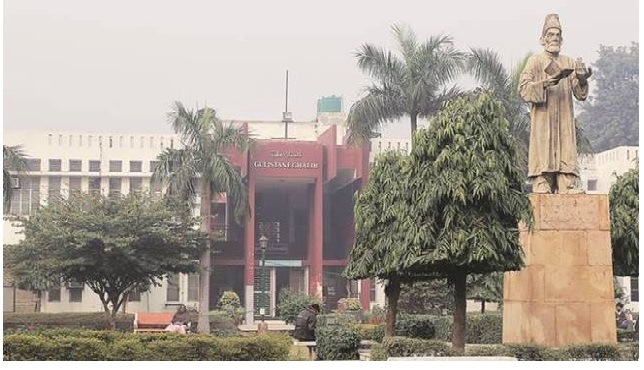
Step through the Centenary Gate, and you enter not just a campus but a living conversation between history and hope. Every lane carries memory; every wall speaks of struggle. Jamia is not made of stone and mortar alone; it is built of ideals, of founders who were freedom fighters and reformers, of teachers who worked for life on modest pay, of students who turned learning into service, and of a dream that education could make a nation free not only in body but in spirit.
Maulana Mohammad Ali Jauhar, Jamia’s first Vice-Chancellor, and a firebrand nationalist who, at the Second Round Table Conference in 1930, declared he would not return to a slave country, a vow he kept, breathing his last in London and resting forever in Jerusalem. His courage gave Jamia its pulse of defiance. Dr. Mukhtar Ahmad Ansari, a physician and President of the Indian National Congress, lent Jamia its healing vision, a belief that education, like medicine, must restore dignity to the human condition. Dr. Zakir Husain, later India’s President, gave Jamia its soul, transforming education into a moral act and underscoring that a teacher’s duty is not to instruct but to awaken.
On its 105th foundation day, let me take you on a Jamia tour. The Mohammad Ali Jauhar Marg leads through the majestic Centenary Gate into the heart of Jamia Gulistan-e-Gandhi, whose presence still seems to guide the university he envisioned.
The M.A. Ansari Auditorium stands ahead, alive with the echo of debates, drama, poetry, and protest, a place where generations have learned that knowledge without courage and compassion is incomplete. Nearby, the Mahmoud Darwish, a revered Palestinian poet and voice of resistance, exile, and identity lane winds toward the M.F. Husain Art Gallery, a riot of colour and imagination. The Nehru Guest House still echoes the voices of thinkers who stayed there. Beside it, the Maulana Azad House completes a poetic pairing — Nehru and Azad, once neighbours in prison, now neighbours in memory. Inside, guesthouse rooms are named after figures like Ritwik Ghatak.
The serpentine path leads past the Mohibbul Hasan House and Deen Dayal Kaushal Vikash Kendra and onward to the West Asia Centre, the Ho Chi Minh Conference Hall, Saadat Hasan Manto Lecture Hall, and the Shaikh Sabah Al–Ahmad Al–Jaber Seminar Library, where Jamia’s dialogue with the world continues. Through Jahane Kushuru, you arrive at Gulistan-e-Ghalib, where Ghalib’s statue stands beneath the trees, inscribed with his immortal verse:
Jaam har zarra hai sarshar-e-tamanna mujh se,
Kiska dil hoon ke do aalam se lagaya hai mujhe!
Every particle is intoxicated with longing for me,
Whose heart am I, that both worlds are drawn to me?
Ghalib’s verse mirrors the spirit of Jamia itself, a place that draws seekers from every corner, as if knowledge, memory, and desire converge upon it. A reminder that the soul of a true university is to become the heart of many worlds.
At the center of Jamia stands its intellectual sanctuary, the Dr. Zakir Husain Library; its silence is dense with thought. Not far away, the Sarojini Naidu Centre for Women’s Studies and the Nelson Mandela Centre for Peace and Conflict Resolution remind every visitor that dialogue and equality are central to Jamia’s compass.
Enter through the Qurratulain Hyder Gate, named after the Gyanpeeth award-winning Urdu novelist, and you arrive at the lush green Nawab Pataudi Cricket Ground, with its Virender Sehwag Pavilion, a tribute to the alumnus who brought glory to the nation. Nearby stands the King Abdul Aziz Faculty of Dentistry, a graceful emblem of international collaboration. Around it, hostels named after B.R. Ambedkar, Allama Iqbal, E.J. Kellat, and Obaidullah Sindhi reflect Jamia’s plural legacy, a living reminder that its map is also a moral landscape.
Closer to the metro station, the Noam Chomsky Complex, a reminder that free thought is Jamia’s lifeblood. Next door, the K.R. Narayanan Centre for Dalit and Minority Studies ensures that inclusion here is not a slogan but a lived truth. Through the Mahmud Hasan Gate, named for the scholar who inspired students and clerics to join the freedom struggle and who endured years of harsh imprisonment in Malta — the campus opens into its schools: the Mushir Fatima Nursery, the Abid Hussain School, and the Gerda Philipsborn Day Care Centre, where the smallest minds learn under the same canopy of values that shelter scientist, scholars and philosophers.
Gerda Philipsborn, a German-Jewish educator who left Germany and found a home in Jamia, is fondly remembered as Aapa Jaan. She embodied the university’s transnational conscience, the belief that education builds bridges, not boundaries. Mujeeb Bagh hosts the Ramanujan Science Block, named after the mathematical genius whose brilliance continues to inspire curiosity and wonder across generations. The women’s hostels named after Begum Hazrat Mahal and Aruna Asaf Ali celebrate the courage of women who turned resistance into art and activism. Further on lies the Khan Abdul Ghaffar Khan Enclave, honouring the Frontier Gandhi who preached non-violence not as political expediency but as an article of faith. And in the Munshi Premchand Archives lives the memory of the great storyteller, who wrote Kafan during his stay at Jamia.
Located near the Administrative Block on Khayaban-e-Ajmal, the Jamnalal Bajaj Block honours Jamia’s benefactor, whose steadfast support and financial contributions were instrumental in sustaining the university during its formative years. Within its serene precincts stand the Yasser Arafat Hall, the Edward Said Conference Hall, and the Mir and Tagore Convention Centre, spaces that echo Jamia’s spirit of dialogue, dissent, and cultural encounter, where ideas from East and West, past and present, continue to converse in quiet harmony. Nearby, APJ Abdul Kalam Gate takes you to India’s most reputed Anwar Jamal Kidwai Mass Communication and Research Center, a testament of global cooperation with Canada, which buzzes with cameras, questions, and conversation.
Few universities wear their philosophy so visibly on their map. These names are not labels; they are moral coordinates of a century-old experiment in inclusive education. Each block is a story of struggle; each road a reminder of Jamia’s founding spirit, where taleem (education) and tehreek (movement) are inseparable.
Jamia was not born of privilege; it was born of protest. Founded amid the Khilafat and Non-Cooperation Movements, it was a quiet act of rebellion, an insistence that colonialism would not define the Indian mind. Education at Jamia was never meant to produce clerks for an empire, but citizens of conscience. Zakir Husain, Mohammad Mujeeb, and Abid Husain, three of Jamia’s philosophical pillars, envisioned Nai Talim, a pedagogy that unites head, heart, and hand. Long before “experiential learning” became educational jargon, Jamia built it into its foundation. Knowledge was tied to labour, intellect to ethics, and inquiry to empathy. The Ustadon ka Madrasa, the first of its kind teachers’ training institute, became a living laboratory of this vision, where teaching was not merely a transaction of knowledge but a pursuit of truth, a cultivation of inquiry, and a moral apprenticeship in the art of understanding. It embodied the meaning of a true university, not a place that fills minds, but one that frees them.
In the dark days of Partition, when Delhi burned with fear, Jamia’s students and teachers became healers, offering shelter to the displaced, solace to the broken, and humanity to a city in despair. From those flames emerged a university that made communal harmony its cornerstone.
Perhaps no moment captures Jamia’s moral stature better than its Silver Jubilee in 1946. On that day, Dr. Zakir Husain brought on the same stage Nehru, Asaf Ali, Rajaji, Jinnah, Fatima Jinnah, and Liaquat Ali Khan. At a time when the country teetered on the edge of partition, Zakir Husain’s possible one of the best speeches, “For God’s sake, sit together and extinguish this fire of hatred,” moved them to tears.
To walk through Jamia today is to stroll through the living soul of pluralism, a quiet republic of ideas where liberty, plurality, inclusiveness, and fraternity breathe in every courtyard, in every classroom. Here, Gandhi still converses with Mandela, Chomsky finds his echo in Edward Said, and Ghalib whispers to Mir beneath the shade of red-brick walls. Darwish recites for Tagore, Arafat debates with Ho Chi Minh, Ramanujan solves number puzzles with AJP Abul Kalam, Manto reads his script to Ritwik Ghatak, Prof. Mujeeb debates with Pt. Deep Dayal Upadhyay, Maulana Azad, and Nehru discuss an education roadmap over jasmine tea, and Ambedkar stands in thoughtful dialogue with Sarojini Naidu. It is a rare moral geography, a constellation of minds, where the ideals of freedom, justice, equality and fraternity converge without collision, illuminating the enduring idea of India itself.
While many century-old universities are withering away, Jamia Millia Islamia continues to grow step by step. It carries not only a proud and luminous history, rich in struggle and idealism, but also a radiant present, consistently ranked among the nation’s top universities, with rising scientific citations and breakthrough research that place it firmly on the global academic map.
Yet in a time when higher education bends under market pressures and ideological conformity, Jamia endures as a counter-memory, a quiet act of defiance against becoming a mere factory of certificates. Its administration, faculty, students, staff, and alums continue to zealously guard the Idea of Jamia — where knowledge is pursued, not prescribed; where questions are not censored, and truth is never pre-decided. A true university must protect the space where evidence triumphs over ideology, where disagreement deepens understanding, and where inquiry itself becomes an act of freedom.
The idea of Jamia is not simply a place, a campus, but a proposition that education is not merely obedience or a commodity, but an awakening of the mind and conscience.
To walk through Jamia is to walk through the Idea of India itself – plural, principled, and forever in motion along the path of progress.
“Yahaan pe shamme-hidayat hai sirf apna zameer.”
Here at Jamia, the beacon of guidance is none other than one’s own conscience.
source: http://www.muslimmirror.com / Muslim Mirror / Home> Opinion / by Aftab Mohammad / November 01st, 2025
Professor Ghulam Muhammad, widely known by his pen name Marghoob Banihali, was an illustrious scholar, poet, and cultural historian whose literary and academic contributions have left an indelible mark on the landscape of Kashmiri literature and thought.
Born on 5th March 1937 at Bankoot, Banihal, in the erstwhile princely state of Jammu and Kashmir, he emerged as a multidimensional personality whose erudition encompassed not only Kashmiri language and literature but also Persian, Urdu, and English.
Marghoob Banihali’s journey, marked by personal loss, intellectual rigor, and literary innovation, reflects the resilience of a scholar deeply rooted in his cultural milieu yet transcending regional boundaries in his vision.
He passed away on 27th April 2021 at his residence in Srinagar, leaving behind a rich legacy of scholarship, poetry, and cultural reflection. The formative years of Marghoob Banihali were fraught with challenges. He lost his mother at the tender age of eight and his father when he was merely fourteen. The successive losses not only plunged his family into economic hardship but also exposed the young boy to the harsh realities of life at an early age. The family’s business suffered a severe blow, forcing Marghoob to traverse arduous paths—both literal and metaphorical—toward education and personal growth. In March 1954, he undertook a challenging journey to Islamabad to appear for his matriculation examination, traveling around seventy kilometers through snow-clad mountainous terrain. These early experiences of adversity instilled in him resilience, humility, and a deep understanding of human struggles, qualities that would later find expression in his literary and scholarly endeavors.
Marghoob Banihali received his early education under several prominent Kashmiri educators who shaped his intellectual and literary sensibilities. Among these were Haji Ghulam Ahmad Shah, who later became his father-in-law, Hakim Muhammad Hafiz Allah of Rawalpora, Srinagar, and Molvi Ghulam Muhiuddin Kirmani of Pattan Baramulla, who advised him to adopt the pen name “Marghoob.”
Another significant influence in his formative years was Master Ghulam Nabi Geeri, a member of his own family, who provided guidance and support during his early scholarly pursuits. Despite financial constraints, Marghoob pursued his education in a private mode, simultaneously embarking on a teaching career that would span decades. He eventually completed his Masters in Persian and went on to earn a PhD in the same field, laying the foundation for a distinguished academic career.
Professionally, Marghoob Banihali held diverse roles that reflect his commitment to education and literature. He served as headmaster and vice-principal at higher secondary schools and as a Tehsil Education Officer (TEO) before joining the University of Kashmir in 1969 as a lecturer in the Persian Department. His tenure at the university spanned over three decades, during which he contributed to the Department of Kashmiri, the Central Asian Studies Department, and the Iqbal Institute. He retired in 1997 as the Head of the Department of Kashmiri, leaving behind a legacy of mentorship, scholarship, and administrative excellence.
Marghoob Banihali’s literary oeuvre is vast and varied, reflecting his erudition, spiritual depth, and commitment to human values. His writings primarily focus on Islamic subjects, communal harmony, and ethical and cultural reflections. He authored over fifty books in Kashmiri, Urdu, Persian, and English, covering poetry, literary criticism, cultural history, and translations. His first poetic collection, Partavistan, earned him the Sahitya Akademi Award for Kashmiri literature in 1979 and the state Sahitya Akademi Award in 1977, establishing him as a prominent voice in contemporary Kashmiri poetry. His works transcend mere literary expression; they engage deeply with the cultural, spiritual, and philosophical dimensions of Kashmiri society.
Among his notable works is Marghoob Theory, published in English in 1982, which offers a systematic proposal for the improvement and modernization of the Kashmiri script. This work has been lauded by scholars such as Prof. Syed Maqbool, former Director of the Centre for Central Asian Studies, who described it as a scientifically viable and practical method that preserves the connection of Kashmiri with its source languages while making it more accessible to the Kashmiri-speaking populace.
Similarly, Prof. Nazir Ahmad Malik, a distinguished linguist, recognized the significance of this contribution for the development and preservation of Kashmiri language and literature.
Another seminal work, Kashir Bale Apare (1989), provides a detailed account of Kashmiri culture, language, and literature as prevalent in the Pir Panchal region. Through meticulous research, Marghoob Banihali chronicled the evolution of Kashmiri literature, highlighting its linguistic and cultural heritage.
His translations further enriched Kashmiri literary resources; in 1975, he translated Kalilah wa Dimnah into Kashmiri, introducing the classic collection of fables to a broader audience.
He also translated the monograph on the “Nightingale of India” (Bulbul Hind), Sarojini Naidu, thereby familiarizing Kashmiri readers with the Bengali poet Qazi Nazrul Islam. Marghoob Banihali’s engagement with historical and cultural scholarship is exemplified in Qadeem Kashur: Some Glittering Milestones of Ancient Kashmiri (with Special Reference to Shaikhul Alam), published by the Central Institute of Indian Languages, Mysore, in 2001.
This work provides the cultural and linguistic background of Shaikhul Alam’s poetry, situating it within the broader historical and intellectual traditions of Kashmir.
Similarly, his scholarly inquiry into Iqbal’s thought culminated in Kalam Iqbal kay Ruhani, Fikri wa Fani Sarchasmay (2006), a critical exploration of Iqbal’s philosophical, spiritual, and literary dimensions.
He also authored Ikhliqiat Marghoob (2005) and Khas Ihsan, poetic collections that address Islamic themes such as Tawhid, Risalah, and Akhirat, blending devotional fervor with literary sophistication.
His translation of the rare manuscript Noor Namah of Baba Naseebuddin Ghazi into Urdu (published in 2013) further attests to his dedication to preserving and disseminating Kashmir’s spiritual and literary heritage.
“Professor Marghoob Banihali was a cultural beacon of Kashmir, revered in literary and social circles for bridging the region’s historical, linguistic, spiritual, and literary traditions with contemporary scholarship. His work, including his writings, teachings, and translations, deeply engaged with Islamic thought, human values, and communal harmony. Banihali significantly contributed to the Kashmiri language through the Marghoob Theory and rejuvenated Sufi poetic traditions. As a poet, scholar, teacher, and humanist, his legacy is a testament to the power of knowledge and devotion to culture, faith, and humanity, making him a jewel in the crown of Kashmiri literature.”
Marghoob Banihali’s scholarship was not confined to the written word; he was a dedicated teacher and mentor, particularly in the study of Persian poetry of Iqbal.
Associated closely with Aali Ahmad Saroor, whose monumental works on Iqbal he studied and taught, Marghoob enabled research scholars at the Iqbal Institute of Philosophy and Culture to engage with Iqbal’s Persian poetry critically and independently.
By teaching the fundamentals of Persian language and literary analysis, he empowered a generation of scholars to navigate complex texts and philosophical concepts with confidence. In the foreword to Adam Gharay Iqbal (Iqbal’s Humanistic Philosophy), Professor Abdul Haq aptly observed: “Prof Marghoob is a knowledgeable person and a thinker as well. He is truthful, sincere, and honest in thinking, and practical in dealings. His multidimensional personality, combined with his erudition in Urdu, Persian, and Kashmiri literature, provides students and teachers ample guidance.”
A prominent dimension of Marghoob Banihali’s personality was his humility, nobility, and spiritual inclination. Mir Ghulam Rasool Nazki affectionately called him “mahboobi” (my beloved), while Akhtar Mohiuddin described him as an Islamic poet and writer endowed with pure nature (salim al-tabah).
Yusuf Taing, a renowned literary critic, noted that Marghoob Banihali’s poetry, whether in ghazal, naat, nazm, rubai, or manqabat, consistently reflects a profound love for the Prophet Muhammad (SAW), serving as a versified biography of the Prophet and reviving the spiritual essence of Kashmir’s Sufi poetic tradition.
Through works such as Tohfai Tawhid (2017), he rejuvenated the age-old legacy of Kashmiri Sufi poetry, imbuing it with tawhidic thought and devotional depth.
Professor Marghoob was a vital link between Kashmir and Jammu, belonging to the distinguished line of Pir Panchal poets and literary figures, including Kamghar Kashtwari, Rasa Javeedani, Nishat Kashtwari, Janbaz Kashtwari, Bashir Badrwahi, Shahbaz Rajourwi, and Manshur Banhali.
He was described by Bahar Ahmad Bahar as “a movement, a history, and a trendsetter,” and Prof. Ghulam Mohiuddin Hajni famously likened him to “a jewel coming from the sky-rocketing mountains of Pir Panchal.” Mohan Lal Aash extolled him as “a diamond carved out from the high rocks of Pir Panchal,” recognizing his deep understanding of global literary trends, mastery over expression, and devotion to the Rishi philosophy of Hazrat-e-Alamdari in Kashmir. Prof. Waheed-u-Din Malik, former Vice Chancellor of the University of Kashmir, hailed him as “a brilliant scholar of oriental languages, a sincere Kashmiri who undertook the arduous task of bringing out the best of Kashmiri culture and language through creative writings.”
One of Professor Marghoob Banihali’s seminal contributions to Kashmiri linguistics is the Marghoob Theory, a concise yet powerful work in English that chronicles the birth and evolution of the Kashmiri language and proposes a practical framework for its script reform. This work, consisting of around 100 pages, received praise from scholars and linguists alike for its scientific approach, practical applicability, and preservation of linguistic heritage. It has been recognized as a landmark achievement in Kashmiri language studies, providing a bridge between tradition and modernity in the realm of script and literacy.
Throughout his life, Marghoob Banihali exemplified the qualities of a consummate scholar, poet, and humanist. His multidimensional personality combined erudition, humility, devotion, and a profound sense of social and cultural responsibility. He engaged deeply with the literary and spiritual heritage of Kashmir while extending his intellectual reach to encompass Persian, Urdu, and English literature. His literary output, comprising over fifty books, reflects a commitment to ethical values, spiritual insight, and cultural preservation. His translations, critical studies, and original works enriched the literary corpus of Kashmir and created pathways for future scholars to explore the region’s rich literary and philosophical traditions.
Marghoob Banihali’s contributions were recognized with numerous accolades, including the prestigious Sahitya Akademi Award in 1979 for Partavistan, the state Sahitya Akademi Award in 1977, and the Ghalib Award from the President of India in 2008.
Beyond awards, his enduring legacy lies in the generations of students, scholars, and readers he inspired, the rejuvenation of Kashmiri Sufi poetic traditions, and the preservation and propagation of the Kashmiri language and culture.
Professor Marghoob Banihali’s life exemplifies resilience in the face of adversity, intellectual curiosity, and unwavering dedication to cultural and spiritual values. His scholarly rigor, poetic genius, and commitment to education rendered him a guiding light in Kashmir’s literary and academic spheres. The impact of his work continues through his sons, particularly Prof. Mushtaq Marghoob, who carry forward his philanthropic and intellectual legacy, ensuring that the torch of knowledge and cultural enrichment remains alight.
In conclusion, Professor Marghoob Banihali was not merely a literary figure or an academic; he was a cultural beacon whose life and work bridged the historical, linguistic, spiritual, and literary traditions of Kashmir with contemporary scholarship. His writings, teachings, and translations reflect a deep engagement with Islamic thought, human values, and communal harmony, while his humility, sincerity, and spiritual devotion rendered him a revered personality in both literary and social circles. He rejuvenated the rich Sufi poetic traditions of Kashmir, contributed to the evolution of the Kashmiri language through the Marghoob Theory, and inspired generations of scholars and poets. As a poet, scholar, teacher, and humanist, Marghoob Banihali remains a jewel in the crown of Kashmiri literature, a legacy that will endure for generations to come. His life is a testament to the power of knowledge, perseverance, and devotion to culture, faith, and humanity. May his soul rest in peace.
(The author a veteran academician is a former Professor and Head Department of Islamic Studies, Kashmir University. The views, opinions and conclusions expressed in this article are those of the author and aren’t necessarily in accord with the views of “Kashmir Horizon”) hamidnaseem@gmail.com
source: http://www.thekashmirhorizon.com / The Kashmir Horizon / Home> Opinion / by Prof. Hamid Naseem Rafiabadi / October 28th, 2025
Born in 902 or 910 Hijri, Hazrat Wajihuddin Alvi, son of Qazi Syed Nasrullah Alvi, belonged to the Hashmi family and Alvi Sadat
Main Points:
1. A key figure in the ancient Shattariya Silsila, linked to Shaykh Sirajuddin Abdullah Sattar and Hazrat Khwaja Bayazid Bastami, he helped spread Islam in India.
2. Received direct knowledge from Hazrat Prophet Muhammad (Sallallahu Alaihi Wasallam) in a dream, earning the title Ali Us-Sani for his profound wisdom.
3. Mastered over 60 Islamic disciplines by age 24, founded Madrasa Alia Alvia, and educated 80,000 students, earning the title of Mufti in Gujarat.
4. Transformed by Pir-Murshid Khwaja Ghaus Muhammad Gwaliori, he became a Wali-e-Kamil and Mujaddid, with his Gujarat Astana inspiring generations.
Hazrat Wajihuddin Alvi, a revered figure in the annals of Islamic history in India, is celebrated as a towering spiritual and scholarly personality. Known as the Mujaddid, Qutub, and Wali-e-Kamil, his life is a testament to unparalleled devotion, intellectual brilliance, and spiritual excellence. His contributions to the propagation of Islamic knowledge and the Silsila-e-Shattariya have left an indelible mark on the subcontinent’s religious landscape. This article delves into his life, lineage, spiritual journey, and enduring legacy.
According to historical traditions, Hazrat Wajihuddin Alvi was born either in 902 Hijri or 910 Hijri, a matter of scholarly debate. His father, Syed Nasrullah Alvi, served as the Qazi of Gujarat, a prestigious position that underscored the family’s deep-rooted connection to Islamic scholarship and jurisprudence. His name, Wajihuddin, meaning “leader of the religion-serving community,” aptly reflected his destined role as a guiding light for the faithful.
Hazrat Wajihuddin belonged to the illustrious Hashmi family, tracing his lineage to the noble Alvi Sadat. Despite his exalted ancestry, he maintained remarkable humility, never publicly revealing his status as an Alvi Sadat. This modesty only enhanced his stature as a true servant of Allah, whose life was dedicated to the pursuit of divine truth and the upliftment of humanity.
Hazrat Wajihuddin Alvi is intrinsically linked to the Silsila-e-Shattariya, a lesser-known but profoundly significant Sufi order in India. While the general populace is more familiar with the four prominent Sufi Silsilas, Chishtiya, Qadriya, Naqshbandiya, and Soharwardiya, the Shattariya Silsila boasts a rich and ancient heritage. Known as Bistamia in some regions, Ishqiya in Iran, and Shattariya in India, this Silsila traces its origins to Shaykh Sirajuddin Abdullah Sattar, a descendant of Shaykh Umar Sahabuddin Sohrawardy and a caliph of the revered Sultanul Arifeen, Hazrat Khwaja Bayazid Bastami.
Shaykh Sirajuddin Abdullah Sattar, the founder of the Shattariya silsila, arrived in India with a mission to spread the message of Islam. Known for playing the Nakkara (a traditional drum), he would attract crowds with its captivating sound and invite them to seek Allah. His powerful call, “Come, if someone is seeking to meet Allah, let me introduce him to Allah,” resonated deeply, drawing countless souls to the path of righteousness. As the son of Shaykh Sahabuddin Sohrawardy and a caliph of Hazrat Bayazid Bustami, Shaykh Sirajuddin’s spiritual stature was immense, and his legacy laid the foundation for the Shattariya silsila’s prominence in India.
The Shattariya Silsila, alongside Qadriya, Chishtiya, Naqshbandiya, Soharwardiya, and Owaisiya, played a pivotal role in disseminating Islam across the Indian subcontinent. These six Silsilas, through the sacrifices and efforts of their saints, transformed the spiritual landscape of the region, guiding millions towards the light of faith.
Hazrat Wajihuddin Alvi’s spiritual eminence earned him the title of Ali Us-Sani (the second Ali), a reference to the unparalleled status of Hazrat Ali Karamallahu Wajhul Kareem. This title was not merely honorific but a reflection of the divine knowledge bestowed upon him. Like Hazrat Ali, who received direct knowledge from the Hazrat Prophet Muhammad (Sallallahu Alaihi Wasallam), Hazrat Wajihuddin was blessed with divine wisdom in a remarkable incident.
During his education, when his teacher Allama Ilamuddin passed away, Hazrat Wajihuddin was consumed by worry about the knowledge he had yet to acquire. One night, the Hazrat Prophet Muhammad (Sallallahu Alaihi Wasallam) appeared in his dream, addressing him as “Nawase Wajihuddin” and assuring him, “Don’t worry, we have given you the knowledge of everything that even you and your teachers did not know.” The Prophet handed him a paper, instructing him to refer to it when questioned about his knowledge. This divine encounter transformed Hazrat Wajihuddin into an ocean of wisdom, earning him the epithet Ali Us-Sani for receiving knowledge directly from the Hazrat Prophet, much like Hazrat Ali.
Hazrat Wajihuddin’s family hailed from Yemen, a land the Hazrat Prophet Muhammad (Sallallahu Alaihi Wasallam) described as a “city of angels.” His ancestor, Hazrat Syed Bahauddin, migrated from Yemen to Mecca, where he preached Islam before receiving divine guidance to settle in India. This marked the beginning of the family’s illustrious journey in the subcontinent.
His grandfather, a Qazi in the court, exemplified the family’s tradition of combining religious scholarship with judicial authority. This legacy continued through his father, Syed Nasrullah Alvi, and his forefathers, Syed Atauddin Alvi and Syed Imamuddin Alvi, who served as imams and Qazis. The family’s intellectual and spiritual influence was profound, shaping Hazrat Wajihuddin’s upbringing and his commitment to the Shariah.
Hazrat Wajihuddin’s education began at the tender age of four with the Bismillah ceremony, marking the start of his formal learning. By the age of 19, he had memorized the Quran Majeed, a feat that underscored his prodigious intellect. Raised in a Persian-speaking household, he pursued higher education under the guidance of his uncle, Hazrat Allama Syed Shamshuddin Ahmed, and other family scholars. By the age of 24, he had mastered over 60 disciplines of Islamic knowledge, earning him widespread acclaim.
Recognizing his scholarly prowess, the ulema of Gujarat conferred upon him the title of Mufti at the remarkably young age of 24. This was no small achievement, as a Mufti in those times was a figure of immense respect, commanding authority over religious rulings across the region. Hazrat Wajihuddin established the Madrasa Alia Alvia on his own land, where he educated over 80,000 students, transforming them into Alims and hafiz of the Quran. His dedication to teaching reflected the Hazrat Prophet’s saying, “The best of you is the one who learns the Quran and teaches it to others.”
Remarkably, Hazrat Wajihuddin left the madrasa only four times in his lifetime, such was his commitment to education. His institution attracted scholars and students from far-off places like Lahore, cementing his reputation as a beacon of knowledge.
No account of a Wali-e-Kamil is complete without acknowledging the pivotal role of a Pir-Murshid (spiritual guide). For Hazrat Wajihuddin, this guide was Hazrat Khwaja Ghaus Muhammad Gwaliori Sattari. In 948 Hijri, when controversy arose over Khwaja Ghaus’s work Merajnama, with Hazrat Shaikh Ali Muttaqi declaring it un-Islamic, Hazrat Wajihuddin intervened. He met Khwaja Ghaus in Gujarat, spending an entire night in his company. This meeting was transformative, as Hazrat Wajihuddin later remarked that without it, he would not have truly become a Muslim. This underscores the profound impact of a spiritual guide, even on a scholar of his stature.
When presented with a fatwa against Khwaja Ghaus, Hazrat Wajihuddin tore it apart, declaring, “We are the people of the past, and they are Arabs.” His decisive action nullified the controversy, earning him the title of Mujaddid from Shaikh Ali Muttaqi. This incident highlighted his ability to balance Shariah with spiritual insight, a hallmark of his legacy.
Hazrat Wajihuddin’s piety was evident from childhood. As an infant, he refused to drink his mother’s milk unless she performed wudu, a testament to his innate spiritual purity. This incident earned him immense respect within his family, who recognized his extraordinary connection with Allah.
His adherence to Shariah was uncompromising. For two months, he abstained from eating home-cooked food, fearing that his father’s position as Qazi might lead to inadvertently consuming haram provisions. Instead, he sustained himself on grass and leaves from the forest. When his father inquired about his weakened state, Hazrat Wajihuddin explained his concerns, prompting his father to reassure him of the family’s commitment to halal. This incident reflects his meticulous observance of Shariah and his fear of Allah.
In his later years, weakened by age, Hazrat Wajihuddin considered retiring from teaching Hadith. However, the Hazrat Prophet (Sallallahu Alaihi Wasallam) appeared in a dream, saying, “O Nawase, when you recite Hadith, we sit and listen to you.” Moved to tears, he continued teaching with renewed devotion until his passing. His death sent shockwaves through Gujarat, with millions attending his funeral, yearning to carry the bier of the Naib-e-Gaus-e-Azam and Aashiq-e-Rasool.
Hazrat Wajihuddin Alvi’s legacy endures through his contributions to Islamic scholarship and the Shattariya Silsila. His Astana in Gujarat remains a source of spiritual strength, and his teachings continue to inspire generations. Muhaddis Abdul Haq Dehlvi noted Hazrat Wajihuddin was a Wali-e-Kamil who lived a life of rigorous spiritual discipline. Mulla Abdul Qadir Badayuni wrote that no book was beyond his knowledge, and his prayers could bring divine favour to any endeavour.
In summary, Hazrat Wajihuddin Alvi was a shining light of the Hashmi family, a Mujaddid, Qutub, and Wali-e-Kamil whose life exemplified the perfect blend of knowledge, piety, and spirituality. His contributions to Islamic education, his role in the Shattariya Silsila, and his unwavering devotion to Allah and Hazrat Prophet (Sallallahu Alaihi Wasallam) ensure that his legacy will remain alive until the end of time.
—–
A regular contributor to New Age Islam, Sahil Razvi is a research scholar specialising in Sufism and Islamic History. He is an alumnus of Jamia Millia Islamia.
source: http://www.newageislam.com / New Age Islam / Home> Islamic Perspectives / by Sahil Razvi / July 17th, 2025
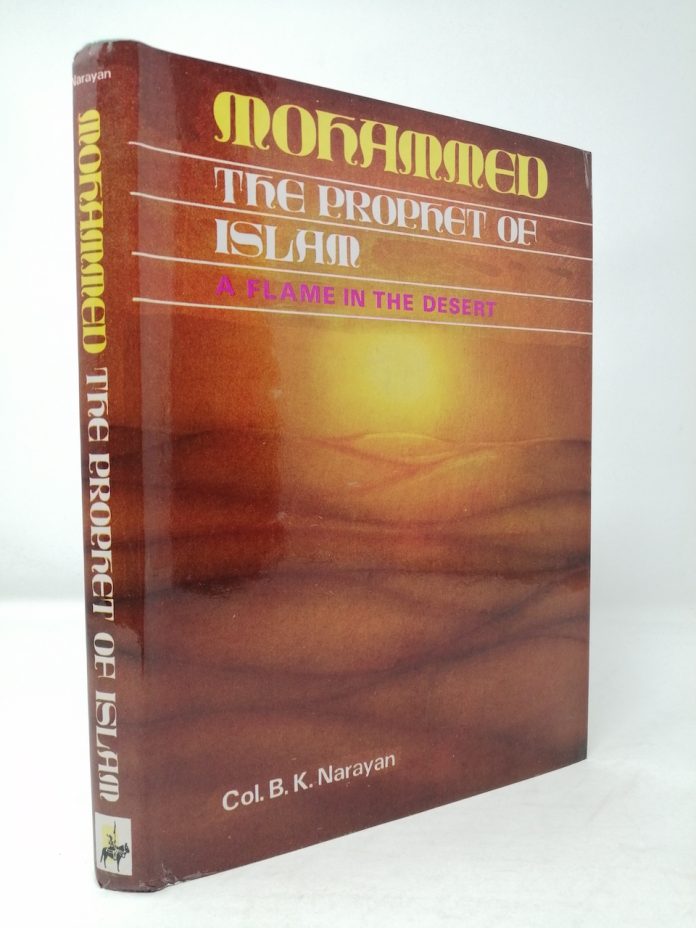
Muhammad: The Prophet of Islam, authored by Colonel B.K. Narayan
In 1978, a rare and remarkable book was published in Delhi – Muhammad: The Prophet of Islam, authored by Colonel B.K. Narayan, a retired officer of the Indian Army and former military attaché at the Indian Embassy. Known for his distinguished service during the 1971-72 India-Pakistan war as an infantry commander, he was also a man of deep intellectual curiosity and cultural sensitivity. Muhammad: The Prophet of Islam, published by Lancers Publishers, Delhi, stands as one of his most significant contributions beyond his military career – a comprehensive English-language biography of the Prophet Muhammad ﷺ.
More than a mere historical account, the book presents a deep and insightful reflection on the life and legacy of the Prophet Muhammad ﷺ, highlighting the enduring relevance of his moral and spiritual example.
Colonel Narayan’s profound admiration for the Prophet’s ﷺ character and achievements moved him to write a full-length English-language biography – a rare undertaking for a non-Muslim author, particularly one from a military background. His unique perspective offers readers a fresh and unbiased narrative rooted in historical context, moral analysis, and intellectual sincerity. His work stands as a bridge between cultures, illuminating the universal values embodied by the Prophet ﷺ.
In addition to this work, Colonel Narayan authored several other important books on the Arab world and geopolitical events of his time, including: The Fourth Arab-Israeli War (1974), Anwar al-Sadat: Man with a Mission (1977), Lessons and Consequences of the October War (1977), General J.N. Chaudhry: An Autobiography (1978, as narrated to him).
Spanning 205 pages, Muhammad: The Prophet of Islam is thoughtfully organised into three distinct sections, each offering a deeper understanding of the Prophet’s ﷺ life, message, and lasting influence.
Section One explores the life and mission of the Prophet Muhammad ﷺ, presented across 12 well-structured chapters. Colonel Narayan opens with an insightful overview of the socio-political conditions in Arabia before the Prophet’s birth. The narrative then follows key events and milestones throughout the Prophet’s life, offering a clear and compelling account of his journey and legacy. Topics covered include:
The state of Arabia before the advent of Islam,
The commercial significance of Makkah,
The Prophet’s ﷺbirth, early life, and journey to Syria,
His marriage to Hazrat Khadijah (RA),
The commencement of Prophethood, and
The Hijrah (migration) to Madinah.
Colonel Narayan meticulously discusses Key milestones such as the first revelation, the Prophet’s ﷺ interactions with Jews, Christians, polytheists, and hypocrites following his migration. The section also covers major expeditions and battles, the opposition from Jewish tribes, and strategic responses led by the Prophet ﷺ. Further discussions include the Kaaba’s history, types of revelation, and miracles of the Prophet ﷺ by the will of Allah. The book also examines the Prophet’s ﷺ battles, diplomacy, and social reforms.
This section concludes with the passing (Wafat) of the Prophet Muhammad ﷺ. A unique feature of this section is its inclusion of illustrative materials – historical photographs and maps, such as Jeddah Airport, the Black Stone (Hajr-e-Aswad), Bab-e- Kaaba, the mountainous terrain surrounding Makkah, and pilgrims clothed in the traditional white garments of Ihram. These visuals not only enhance the reader’s understanding but also offer a deeper emotional connection to the sacred geography of Islam. This part of the book extends from page 1 to 146.
Part Two focuses on the Sayings of the Prophet – the Hadith. Spanning pages 149 to 174, this section features English translations of over 100 carefully selected Hadiths, offering insight into the Prophet’s guidance across various aspects of life. The Hadiths are thoughtfully arranged under a wide range of themes, including belief and worship, justice and business ethics, the management of anger, responses to illness and poverty, the importance of guarding one’s tongue, the virtues of patience, mercy, repentance, and the sanctity of human life. Together, they reflect the profound moral and spiritual wisdom that continues to inspire and guide countless lives. Colonel Narayan expresses deep admiration for the enduring relevance and lucidity of these teachings, noting their ability to convey profound truths with striking simplicity. He writes:
“They are capsules of wisdom, simple, direct, and effective.”
Part Three centres on the noble wives and esteemed companions of the Prophet Muhammad ﷺ. The final section introduces the 11 noble wives of the Prophet Muhammad ﷺ – Khadijah, Aisha, Hafsa, Zainab, Zainab bint Jahsh, Safiyyah, Umm Habiba, Juwayriya, Rayhana, Maymunah, and Maria (may Allah be pleased with them all). The author praises their outstanding virtues – piety, sincerity, and loyalty – and he underscores the profound influence each of these noble women had on shaping the moral, spiritual, and social foundations of the early Islamic community. The author emphasises the social and moral significance of these marriages. He writes:
“The text reveals the circumstances under which these marriages were contracted and the benefits which accrued to society through them. All the wives of the Prophet made a distinct impact on society, by virtue of their piety, devotion, and dedication to the Prophet and the faith.”
In addition, this section offers concise biographies of the four Rightly Guided Caliphs – Abu Bakr, Umar, Uthman, and Ali (may Allah be pleased with them all) – highlighting their pivotal roles and contributions in the development of the early Muslim community.
A standout feature of this book is the author’s consistent focus on the humanistic portrayal of the Prophet Muhammad’s ﷺ humanity. Narayan emphasises that the Prophet ﷺ never laid claim to supernatural powers, yet through his character, wisdom, and unwavering commitment to justice, he transformed a fragmented, tribal society into a cohesive and ethically grounded civilization. He observes:
“To judge the greatness of his actions appropriately, one has to transport oneself to those days, and judge what Meccan society was before him and what it became after him.”
Commenting on the Prophet’s eloquence, Narayan writes:
“The Prophet was brief in his conversation and every word which he used had a specific purpose. Nothing could be added to his speech and nothing could be deleted from it.”
Colonel Narayan also notes the significance of the Prophet’s ﷺ oratory in an age when eloquence was revered. Drawing parallels with earlier prophets, he writes that while prophet Moses was given miraculous powers suited to his time; Jesus was given healing abilities, the Prophet Muhammad ﷺ, who lived in an age of eloquence and oratory, was gifted with unparalleled eloquence – a form of divine expression perfectly attuned to his time.
The book ends with a well-curated bibliography, citing sources such as Majmu‘ah Sirat al-Rasul by Ahmad Baraniq, Mishkat al-Masabih, Mohammedanism by H.A.R. Gibb, and Muhammad by Maxime Rodinson.
What distinguishes this book from many other Seerahs (biographies of the Prophet) is its remarkably balanced tone – reverent yet scholarly, empathetic yet analytical. At the same time, his deep respect for the Prophet Muhammad ﷺ and the Islamic worldview imbues the narrative with sincerity and insight.
Colonel B.K. Narayan’s Muhammad: The Prophet of Islam stands as an exceptional work – one that bridges faith, history, and scholarship. It offers a rich, respectful portrayal of the Prophet’s ﷺ life. In his portrayal of the Prophet’s ﷺ virtues – honesty, compassion, eloquence, restraint, and humility – the author invites readers of all backgrounds to reflect on timeless values. His unbiased presentation serves as a bridge between cultures, beliefs, and histories.
At a time when interfaith dialogue is more important than ever, Muhammad: The Prophet of Islam serves as a remarkable testament to respectful dialogue across religious and cultural lines. Written by a decorated Hindu military officer, the book represents not only a literary and historical contribution but also a moral undertaking – one that resonates far beyond its pages.
For those seeking a thoughtful, accessible, and historically rich account of the life of Prophet Muhammad ﷺ, Colonel B.K. Narayan’s biography remains a valuable and rare contribution.
source: www.radiancenews.com / Radiance News / Home> Features> Focus / by Dr Syed Wahauddinj Hashmi, Hyderabad / October 31st, 2025
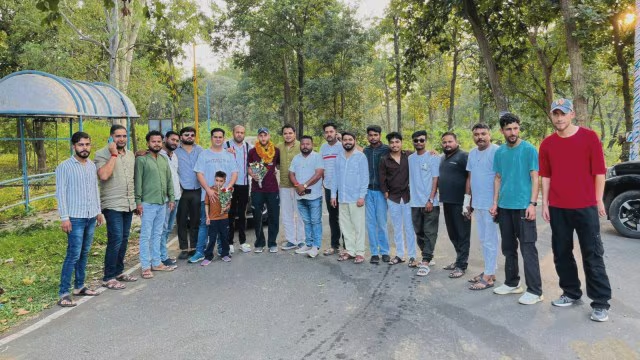
Kashmiri local guide Nazakat Ahmed Shah, who saved the family of a BJP youth worker during the April Pahalgam terror attack, received a warm welcome in Chhattisgarh nearly six months after the incident. The attack in South Kashmir had left 26 people dead and several injured.
Shah, who has been visiting Chhattisgarh for over three decades to sell clothes, became a hero after rescuing the family of BJP youth wing worker Arvind Agrawal. During his first visit to the state since the attack, Shah was felicitated by Agrawal and around 50 residents in Chirmiri, Manendragarh-Chirmiri-Bharatpur district. The group expressed their gratitude with garlands, flowers, and a shared lunch.
Agrawal recalled that Shah’s quick thinking saved his wife and four-year-old daughter. “When the firing began, he asked us to lie down and shielded my daughter and my friend’s son. He took them to safety and returned to rescue my wife,” Agrawal said.
Speaking to reporters after the ceremony, Shah said he felt emotional meeting the families he had saved. “Chhattisgarh feels like home to us. We come here for three months every year for business, and people here have always treated us like family,” he said.
Shah’s act of courage has been widely praised across communities, highlighting the enduring human bonds that transcend politics and geography.
source: www.radiancenews.com / Radiance News / Home> Latest News> Reports / by Radiance News Bureau / November 01st, 2025
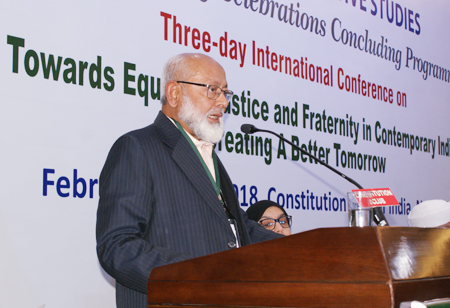
Dr. Mohammad Manzoor Alam, the founder of the Institute of Objective Studies (IOS), stands as one of the most prominent leaders of the Indian Muslim community. Recently, his biography “Dr. Manzoor Alam: Empowering the Marginalized” written by senior multilingual journalist A. U. Asif, was released at the Constitution Club of India in New Delhi. The event was attended by several distinguished personalities from politics, academia, the judiciary, and the media.
The biography reveals many unknown aspects of Dr. Manzoor Alam’s life, his contributions, and his wide national and international connections — from Dr. Manmohan Singh to Ahmed Patel, from cabinet ministers to chief ministers and governors. His close friendships extended to Malaysian Prime Minister Anwar Ibrahim and several prominent personalities across the Gulf Cooperation Council (GCC), including ministers and academicians. Among his international associates were Prof. Omar Hasan Kasule, Secretary General of the International Institute of Islamic Thought (IIIT), USA; Dr. Ahmad Muhammad Ali, the first President of the Islamic Development Bank (IDB); Dr. Ahmed Tutunji, General Secretary of the International Islamic Federation of Student Organizations (IIFSO); and Professor Ismail Raji al-Faruqi, co-founder of IIIT, Dr. Abdullah Al-Maatouq, Chairman of the International Islamic Charity Organization (IICO) Kuwait etc.
The Institute of Objective Studies: A Pioneering Muslim Think Tank
Undoubtedly, the IOS — the first Muslim-run think tank in India — has played an unparalleled role in academic and intellectual engagement. Over the past four decades, it has organized more than 1,230 conferences, seminars, symposia, and workshops on diverse issues affecting Muslims and Indian society at large. It has completed over 410 research projects and produced around 405 publications focusing on socio-economic, educational, and cultural challenges.
Through its data-based research, collection, and presentation, IOS provided valuable insights into the conditions of marginalized communities. The institution succeeded in building a network of more than 500 research scholars, social scientists, academicians, judges, lawyers, and politicians. Its studies and deliberations form a crucial body of work on the socio-economic conditions of Indian Muslims.
However, despite its achievements, the IOS has failed to evolve a sustainable mechanism for implementing the findings of its research. After nearly four decades of existence, the impact of its ideas on the ground remains negligible. The think tank, while rich in intellect and intent, fell short of translating its research into practical policies for the empowerment of marginalized communities. When one examines the ground realities, the absence of tangible transformation makes this collective effort appear more like an academic exercise than a movement for social change.
The Promise and the Reality
The Institute of Objective Studies was established in 1986 with the vision of empowering the 200 million-strong Indian Muslim community — a group that, even today, lags behind many other marginalized sections, including Dalits, on multiple socio-economic parameters. While IOS produced a wealth of research and data, it failed to create models of empowerment or tangible change on the ground.
It would be unfair to assume that Dr. Manzoor Alam’s vision was limited to research and conferences alone. He unsuccessfully attempted to extend his work into education, media, and healthcare. Unfortunately, many of those initiatives remained unrealized.
Dr. Alam had conceived numerous projects, including a dream university and television channels Al-Hind and Falak TV — both designed to serve as platforms for education and social awareness. He presented these projects at several events in India and abroad, yet they never materialized beyond the planning stage. Why these ideas remained confined to files is a question that only Dr. Alam himself can answer.
Dr. Manzoor Alam’s Tryst with Education and Development
In the 1990s, Dr. Alam invited Mohammad Yunus Saleem, then Governor of Bihar, to lay the foundation stone of an educational institution in his native village, Ranipur, in Madhubani district. Decades later, that very school continues to function from a thatched hut.
Similarly, he invited another Governor, Akhlaqur Rahman Kidwai, to lay the foundation of a hospital in the same village. However, there is no trace of that foundation today, and the land has reverted to agriculture. It is said that even a few delegations of Arab dignitaries visited the site to explore funding possibilities for these projects. Yet, despite such visits and promises, Ranipur remains a mirror reflecting the unfulfilled dreams of Dr. Alam’s vision for grassroots empowerment.
Akhlaq Ur Rehman Kidwai, then Governor of Bihar, during his visit to Ranipur — the native village of Dr. Manzoor Alam — for the foundation stone-laying ceremony of a school.
The Unfulfilled Dream of an Islamic University in India
Following the model of the International Islamic University Malaysia (IIUM), the International Islamic University Islamabad, and the International Islamic University Dhaka, it is said that funds were once earmarked for a similar university in India. The responsibility for establishing it reportedly rested with Dr. Manzoor Alam. A 25 acres of land were even purchased in Palwal district, Haryana, under the Taawun Trust which was formed in 1980s for the same purpose. However, the project never moved forward, and its current status remains unknown.
Under the same trust, a clinic in Zakir Nagar, New Delhi, was inaugurated by the then Chief Minister, Sheila Dikshit. But today, little remains of that initiative — its fate is known only to its former manager, Mohammad Alam, son of Dr Manzoor Alam. Likewise, a valuable piece of land (D-16 worth over 10 crores) in Abul Fazal Enclave, earmarked for the Taawun Trust office, was later developed into a five-storey building. The ownership and purpose of this property are known only to Dr. Alam and other trustees.
Other Institutions and Initiatives
Along with the late Qazi Mujahidul Islam Qasmi, Dr. Manzoor Alam co-founded several organizations, including the All India Milli Council, Islamic Fiqh Academy (IFA), Qazi Publications, Universal Peace Foundation (UPF), Featured and News Analysis (FANA), United Mass Media Association (UMMA), Indo-Arab Economic Cooperation Forum, and the Taawun Trust. Except for IOS and IFA, most of these institutions are now nearly defunct.
In earlier years, FANA and UMMA operated from 166 Zakir Bagh but were later shifted to the IFA premises at Zakir Nagar. The present status of the Zakir Bagh flat remains unclear. Similarly, behind the IOS office once stood the premises of the Universal Peace Foundation (UPF), which was closed many years ago.
A Malaysian organization once sponsored Bharat Offset Press, located at 2035 Mumtaz Building, Gali Kasim Jan, Ballimaran, Delhi. The press was set up under Dr. Manzoor Alam’s patronage to provide financial support to widows and orphans. One can only hope it continues to serve that noble purpose today.
Interestingly, most of the important publications of the Institute of Objective Studies are now being published and marketed by Genuine Publications and Media Pvt. Ltd., where Dr. Alam’s younger son, Ibrahim Alam, serves as the Executive Director.
Now, his elder son Mohammad Alam has taken over as the General Secretary of the IOS. It is hoped that the unfulfilled dreams of Dr. Manzoor Alam will be realized and a university will be established on the proposed land in Palwal
The Unasked Questions
A serious question arises: Why has no one from among Dr. Manzoor Alam’s large circle of associates — including intellectuals, professors, writers, and bureaucrats — ever raised concerns or sought accountability? Why has there been such silence around the unrealized projects and abandoned initiatives?
Dr. Alam is a man of extraordinary connections and resources, with access to national and international leaders, institutions, and philanthropists. Yet, despite such privilege and goodwill, he could not establish even a modest school or clinic in his own native village — a village that once saw two governors visit to inaugurate his projects.
Dr. Manzoor Alam’s journey represents a paradox: a leader of vision and intellect who created one of India’s most influential Muslim think tanks, yet whose dreams for practical empowerment of the marginalized remain largely unrealized. His ideas, no doubt, inspired a generation of scholars and activists. But without concrete implementation, the towering edifice of research and conferences risks standing as a monument to missed opportunities.
source: http://www.muslimmirror.com / Muslim Mirror / Home> Exclusive Reports / by Syed Zubair Ahmad / October 30th, 2025
The Academic Insights Magazine, a prominent Indian monthly publication, has selected Mahbubul Hoque, Honourable Chancellor of the University of Science and Technology Meghalaya (USTM), as one of India’s 25 Most Inspiring Education Leaders.
This recognition celebrates the transformative changes Chancellor Hoque has brought to the educational landscape of North East India while empowering youth across the region and beyond. Responding to the honour, Chancellor Hoque said, “I deeply appreciate The Academic Insight’s honourable recognition. I am a great admirer of this monthly powerhouse. My motto to move forward positively in a competitive world is simple — keep trying, don’t look back; if you pick up ten things and only four work, move forward with them, and success will eventually materialise.”
Over the past 23 years, Chancellor Mahbubul Hoque has built a robust educational ecosystem under the Education Research and Development Foundation (ERDF), establishing fourteen institutions that span from kindergarten to PhD levels. What began with just four students has now grown to over 10,000 learners, making ERDF one of the most impactful educational networks in the region.
The honour goes beyond individual achievement — it signifies the North East’s growing prominence on India’s national education map and stands as a testament to Hoque’s vision of perseverance, inclusivity, and people-centric leadership.
The University of Science and Technology Meghalaya, the first state private university dedicated to science and technology in the North East, earned an ‘A’ Grade accreditation from NAAC in its very first assessment cycle in 2021. It continues to hold a top position nationally, being the only private university from the North East to feature in the NIRF Rankings for four consecutive years, including 2025.
The Academic Insights, launched over a decade ago, today guides more than 450,000 readers monthly through the evolving landscape of school and higher education across India.
source: http://www.muslimmirror.com / Muslim Mirror / Home> Education> Positive Story / by Muslim Mirror Desk / November 02nd, 2025