All posts by mpositiveone@gmail.com

An engineer with a witty approach to Urdu writing

Mumbai, MAHARASHTRA :
NadirKhanMPOs22dec2019

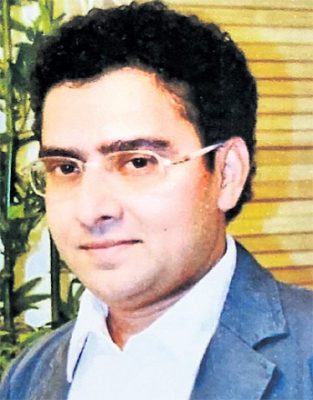
Nadir Khan Sargiroh’s stories about trivial things like raasta, chuha-billi and joote are full of proverbs, puns and punchlines.

To improve is to change, to be perfect is to change often. He has done  just that and is garnering significant attention. Nadir Khan Sargiroh, the new kid on the block, has come as a breath of fresh air in Urdu literary circles. With a whole new approach to humour writing, he is trying to be ahead of the curve.

What is different about him is his out-of-the-box thinking and alternative way of telling stories. As his name suggests, Nadir has novel ideas. He has chosen to move off the beaten path, think freely and creatively. He doesn’t carry the burden of his contemporaries or constraints of his predecessors. Humour gets a fresh lease of life at his hands.

Humour is usually created by poking fun at someone. Urdu humourists do it at the expense of biwi, saas and saali. Nadir Khan steers clear of these stereotype characters. He doesn’t need a fixed image to construct his story or connect with readers. He is adept at creating humour by talking about such trivial things like raasta (way), chuha-billi (mouse and cat), janwar ki dum (animal tail), joote (shoes). He sets store by well-known phrases and expressions. His writings are proverb-packed and pun-based, something unheard of in Urdu literature.

In the story Duniya Bhar Ke Raaste Waaste, he writes: Kisi bhi manzil tak pahunchne ki awwaleen shart hai raasta. Shahron main raaste iss liye banaye jaate hain ke waqt be-waqt khudai ke liye koee maqool jagah maissar ho, aur hadison ka koee bahana ho (Roads are the prerequisite to reach any destination. In cities roads are laid so that they come in handy for on and off digging and there is some pretext for accidents). About the roadways in China, he says Cheen ke raaste duniya ke raaston ke muqable main zara chain ka saans lete hain. And here is the masterstroke: Cheen ke tamam raaste Made in China hain.

Nadir Khan has developed the craft of playing on words. Idiomatic construction of sentences is his strong point. And he loves to exploit multiple meanings of a term. There is, of course, spontaneity in the use of expressions and this adds to the charm. Readers never feel that an expression has been squeezed in needlessly. In the story Hunooz Billi Door Ast, Nadir Khan’s writing prowess comes to the fore as he goes on a wordplay binge. The story is all about the terrific time rats give, their secret holes and clever exit points. There is nothing new about rat infestation, but the way Nadir Khan weaves the story with idioms and expressions makes it highly readable. Sample these sentences:

Baaz janwar dil main ghar kar jaate hain aur chuhe ghar main bil kar jaate hain. Nadir plays on the word ‘ghar’ and ‘bil’ to say how some animals make a home in hearts while some a burrow in homes. Then, he goes on to explain the ‘naak main dum’ created by rats and also the importance of ‘har-bil azeez’ rodents in medical testing. If only they stopped making runs from here to there. For this wishful thinking, he puns on Mirza Ghalib’s famous verse: Gharon main daudte phirne ke hum nahin qaail

Nadir Khan, who hails from Mumbai, is an engineer in urban designing. He took to Urdu fiction writing in 2006 but soon realised that he should write something different if he wants to stand out from the rest. Endowed with a natural flair for humour, he decided to make it his passion. But here too, he faced challenges as there are many big names in Urdu humour writing like Ibne Insha, Mushtaq Ahmed Yousufi (Pakistan) and Mujtaba Hussain of India.

“I have evolved a different style of humour writing which is engaging and full of proverbs,” says the 48-year-old writer who enthralled the audience at the recently-held annual humour conference of Zinda Dilan-e-Hyderabad.

Nadir Khan is careful in avoiding double meaning words and below-the-belt remarks. His stories are humorous in a dignified way. No wonder he has a good fan-following among women. The title of his first book itself is humorous. He has named it Baa-Adab Baa-Muhaawara Hoshiyaar.  His second book Nadir Shahi Tukde is almost ready and will be released shortly.

Nadir Khan keeps his short stories really short, sometimes just a few paragraphs. But, every para is laced with phrases and punchlines. When he writes about cricket, he says how Australia ‘cricket ko khel samjhta hai’. Describing the nabbing of a thief from a well he twists the well-known proverb to say ‘chor geele hathon pakda gaya’. In a ten-line write-up on Payedar Paye, he uses as many proverbs. Playing on the word ‘paya’ (goat’s legs), he writes how badi der tak paye aag par aur hum intezar main galte rahe (for a long time, the lamb trotters on fire and me in waiting kept roasting). In the short piece on Ainak Ka Bojh, he explains how spectacles rest on naak ke sar par pate ke bal while uski tangon ka bojh donon kanon ke kandhe sambhalte hain.

Writing about the shoe-hurling incident at George Bush by an Iraqi journalist, he says the media highlighted the targetted attack more than the gola-bari on Iraq. But, see the bravado of Bush who jootiyan kha ke be-maza na huva. Nadir Khan resorts to Ghalib’s famous verse to deliver the punch by replacing the word ‘gaaliyaan’ with ‘jootiyan’. His write-ups are such that readers will die laughing. And surely zindagi naam hai hans-hans ke mar janeka.

Nadir Khan’s sense of humour and irony come out in the story on matrimonial ads. He writes: Alliance is required from a teacher who is educated, a policeman who is honest, a professor who is attentive and a politician ‘jo galiyan kha ke be-maza na hua’.

Like all humour writers, a sidekick figures in Nadir Khan’s stories. This Quixote goes by the name Purjosh Puri and comes in handy for the author to take pot-shots. Many writers, including the king of humour, Mujtaba Hussain, feels Nadir Khan has the potential to emerge as the leading humour writer of Urdu.

Karta nahin hai tanz-nigari main aiyen-gaiyen

Khail hain iske rang ke khud Mujtaba Hussain

Ye Sargiroh-e-Khafila haraf saaz hai

Iss par to Urdu ke adeebon ko naaz hai

source: http://www.telanganatoday.com / Telangana Today / Home> Literature / by J S Ifthekhar / December 15th, 2019
An incredible Saudi-Indian tale

SAUDI ARABIA :

Eminent Saudis of Indian origin evoke nostalgic memories

SaudiIndianOriginMPOs20dec2019

Jeddah :

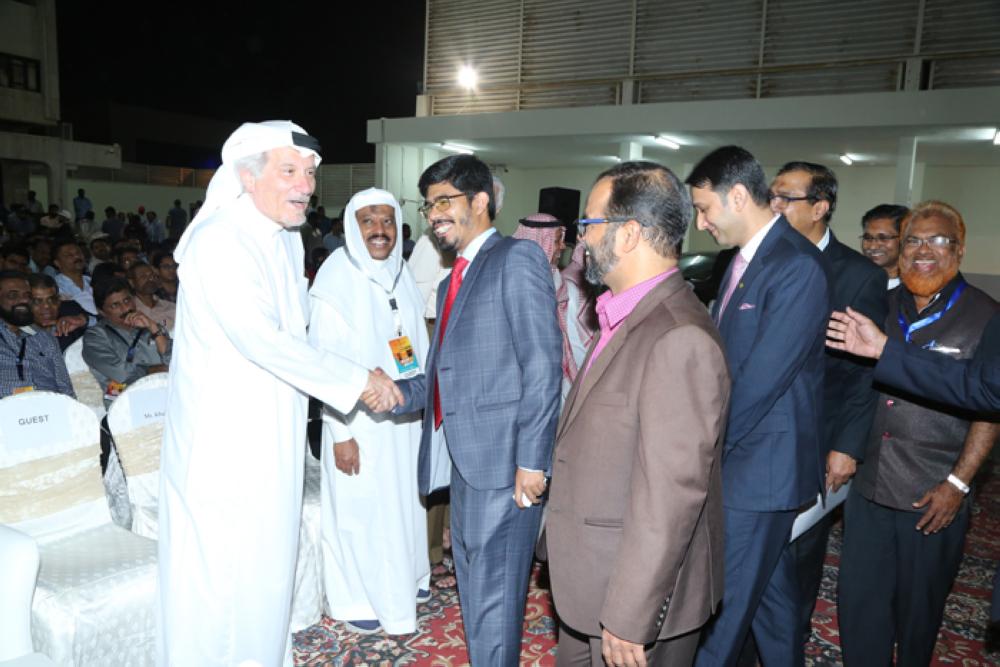
Jeddah, the gateway of the Two Holy Mosques, witnessed a historic event during the weekend, with the gathering of eminent Saudis of Indian origin and thus adding a golden page in the annals of history of centuries-old deep rooted Saudi India ties. The interaction titled “Muziris to Makkah”, the first of its kind in the Kingdom, was organized by the Consulate General of India, in association with Goodwill Global Initiative. More than 20 guests were honored on the occasion.

Going down memory lane, they shared with the august audience, including prominent figures from the Indian and Saudi communities, the untold stories of the beginning of migration by their forefathers from the Indian subcontinent to the Arabian Peninsula nearly two centuries ago.

When they spoke in the original slang of the language of their forefathers that they had inherited with showing their keenness to pass on to their younger generation, it was an enthralling experience for the attendees. They interacted with the Indian expatriate community in Jeddah in English, Arabic, Malayalam, Telugu, Urdu and Manipuri languages.

Ahmed Attaullah Farooqui, founder and CEO of Farooqui Group and representative of UN World Human Rights Service Council, recalled that his family’s lineage reaches the second caliph Umar Al-Farooq, and that his forefathers migrated to India during the period of Islamic conquests. “My great grandfather Haji Imdadullah Farooqui emigrated from Jaipur to Makkah 150 years ago and had a role in establishing Madrasa Saulatiya, the first school in the Arabian Peninsula, along with its founder Maulana Muhammad Rahmatullah Kairanavi.

“The school was named after Saulathunnisa Beegam, a rich Haj pilgrim from Kolkata and wife of Bengal nawab, who made the necessary funding for building the school, which was demolished a few years ago for the largest ever Haram expansion.”

In his interaction, Abdullah Mohyadeen Melibary, popular as Kubba, recalled the arduous journey of his father along with many others to escape persecution of British colonial rulers to Makkah and other parts of Arabian Peninsula. “While I was a child, my father died and so I had to work hard to make ends meet. We used to go to school in the morning and do some work in the evening to make a living.”

“After working as teacher and head of a school in Makkah for 34 years, I continued serving Haj pilgrims for more than half a century since childhood,” Kubba said, adding that he learned Malayalam mainly from Haj pilgrims.

Melibary is the finance manager of Madrasa Malaibariya, established in Makkah 92 years ago. At present, the school is running 12 Qur’an memorization centers in Makkah. Adel Bin Hamza Melibari, supervisor of Madrasa Saulathiya and Melibariya, also shared his experiences.

Talal Bakur Melibari, who served as head of schools in Makkah for 36 years, is the supervisor of Nusratul Masakeen Endowment in Makkah since seven years.

“Our ancestors came 120 years ago from the southern Indian state of Kerala and they established three endowments for education, charity and pilgrims’ accommodation. My father Bakur Muhayyaddeen Melibary, along with 10 others, founded Nusratul Masakeen to feed Malaibari Hajis, as well as to handle their transportation in the holy cities besides extending services for the burial of the dead and hospitalize those who fell sick. Keyi Rubat, established by Mayankutty Elaya, first translator of the Qur’an to Malayalam, and Madrasa Malaibariya are other endowments.

Dr. Abdul Raheem Mohammed Moulana, a renowned Islamic scholar, who serves as chief nephrologist in a Makkah hospital, shared his unique experiences as a physician as well as a great scholar. “When we started the dialysis unit in 1978 in Makkah for Hajis free of cost, there was only one dialysis center in India. At that time, we used to provide free dialysis for Hajis. I also started concentrating in learning more about Qur’an.”

A translator of the Holy Qur’an and Qur’an Encyclopedia and Hadith collection from Arabic into Telugu language, Moulana is now working on an Arabic-Telugu dictionary.

Dr. Abdullah Ramizuluddin Ghouth Ali of King Abdulaziz University shared with the audience about the arrival of his great grandfather Barakatullah Khan from the Kingdom of Manipur. He was the chief justice and the second Muslim who performed Haj in 1825. He returned back to India and then Ghouth Ali’s father came to Makkah and settled down there. “Out of 200,000 Muslims of Manipur, four or five families came and settled down in Makkah,” he said.

Musthafa Bakur Melibary narrated the last moments of Sayyid Abdurahman Bafaqi Thangal, a towering Indian Muslim leader and president of Indian Union Muslim League, who died while taking rest at his home in Ajyad close to Haram during the third day of Haj in January 1973.

Those who were honored also included Mohammed Ramizuluddin Ghouth Ali, a retired mechanical engineer, Faisal Al-Saddik, former CEO of Private Aviation, Adil Mohammed Iqbal Sanai, former senior vice president and head of risk management at the National Commercial Bank, Abdulsalam Ramizuluddin Ghouth Ali, head of maintenance department, Savola Co., Abdulgafoor M. Hassan, founder and CEO of Swipe IT Saudi Arabia, Abdul Qadeer Siddiqi, founder and CEO of Modern Gates Company, Ather Anwer Al-Aqqad, CEO of Mantech Systems Company, Abdul Rahman Abdullah Yousuf, chairman of Al Fadul Freight Solutions Company, Jeddah, Mohammed Saied Malibari, managing director of MOSACO, Taqiyuddin Omar Melibary, retired Control Room Operator at Saudi Electricity Company Makkah, Abdul Basit Abdullah Baitan, head of school in Makkah, Mohammed Bakur Melibari, director of SABIC’s Al-Sharq Company Jubail, Saud Bakur Melibari, operation manager at SWCC Shuaibah plant, Jaafar Ali Melibari, students’ dean at Makkah school and supervisor of Madrasa Malaibariya, Hamad Abdurazak Melibary, administrative supervisor of Madrasa Malaibariya, Eng. Adil Mohammed Ali Walanshira, general manager, Savola Foods and Dr. Gadeer Talal Melibari, lecturer at English language center, Umm Al-Qura University.

source: http://www.saudigazette.com / Saudi Gazette / Home> Saudi Arabia / a Saudi Gazette Report / April 17th, 2019

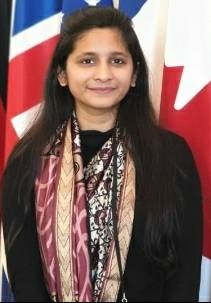
Hamna Mariyam assumes charge as Indian consul of community welfare

Kozhikode, KERALA / Hyderabad, TELANGANA / Jeddah, SAUDI ARABIA :

Hamna Mariyam
Hamna Mariyam

Jeddah :

Hamna Mariyam, a young woman diplomat of 2017 Indian Foreign Service (IFS) batch, joined the Indian Consulate General, Jeddah on Dec. 10 as the new consul of community welfare.

Speaking to Saudi Gazette, Hamna expressed her happiness to get an opportunity to serve the one-million strong Indian community in the Western Region of Saudi Arabia. “I see the community welfare as a major area where I can do a lot in serving the vibrant community in this part of the world,” she said.

Hamna assumed the new position after her stint at the Indian Embassy in Paris where she had completed her French language training before leaving Europe in October this year. Earlier, Indian Consul General Mohammed Noor Rahman Sheikh told Saudi Gazette that that he was very happy to have the first woman IFS officer joining the consulate team at a time when the centuries-old historic economic and socio-cultural ties between India and Saudi Arabia have touched new heights of strategic partnership. Saudi Arabia is India’s 4th largest trade partner with a major source of energy and is the 15th largest market in the world for Indian exports.

“Hamna is a very good combination of Malayali who married to someone from Hyderabad, as the Keralite and Telangana communities are the major communities in this part of the world. Hamna’s appointment would help in the consulate’s outreach programs and interaction with these communities at a time when the consulate is very actively reaching out to all segments of the Indian community,” Sheikh added.

Hamna is married to Abdul Muzammil Khan, an IAS officer of Telangana cadre of the same batch and son of retired IPS officer A.K. Khan, who is presently an advisor to the Telangana government. Muzammil Khan, who is working as assistant collector in Vikarabad, left Jeddah on Saturday after performing Umrah along with Hamna.

Though daughter of a well-known doctor couple from Calicut in Malabar region of Kerala, Hamna chose a career other than medicine, and studied English language and literature from Ramjas College and obtained her master’s degree in the same discipline from Delhi University. While serving as asst. professor at Farook College, Calicut, she bagged the 28th rank in the Civil Services examination.

Renowned pediatrician Dr. T.P. Ashraf, former superintend of Calicut Medical College and former executive director of Kerala government’s Social Security Mission, is Hamna’s father while Dr. P.V. Jowhara, a physiologist at Calicut Medical College, is her mother.

source: http://www.saudigazette.com / Saudi Gazette / Home> Saudi Arabia / by Hassan Cheruppa, Saudi Gazette / December 15th, 2019

Masjid Jamaths Launch 100-days Awareness Campaign against Drug Addiction

Mangaluru, KARNATAKA :

Mangaluru:

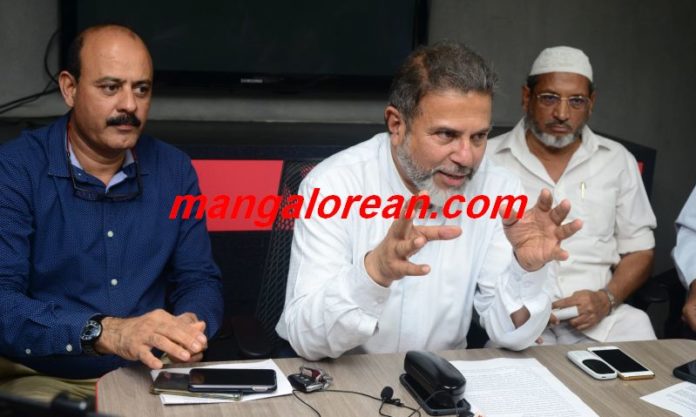
Taking note of the growing incidents of drugs abuse and increase in the number of youth falling prey to drug menace in Dakshina Kannada District, local socio-religious leaders of Mangaluru and Dakshina Kannada on Saturday, December 14 called a press meet and announced the launch of the campaign by Masjid Jamaths across the district against the menace.

Photo : mangalorean.com

Addressing the mediapersons Syed Mohammed Beary, Chairman, Bearys Group, said, “In Dakshina Kannada District especially in Mangaluru the drug menace has been rising rapidly and to curb the drug menace educational institutions, as well as the NGOs, are working along with the police department. If we don’t curb it now, in three years from now the situation in Dakshina Kannada will go out of control and will be worse than Punjab”.

Syed Beary further said, “The most tragic part of the story is that the curse of drug abuse has already found inroads into our rural areas wherein school going students are being exposed to the addiction. Students of sixth and seventh grades including girls are falling prey to addiction. The situation is turning worse with each passing day. Some of the youth take it as a means of easy money and indulge in drug peddling. Some take it as business and the business addiction always results in the swift increase in crime rate. This has a direct impact on the safety and security of the people in the region”.

Syed also said, “Normally almost every parent believes that their children are innocent and will not get addicted to drugs. Such an illusion prevents them from being vigilant. Mosques in Dakshina Kannada have already decided to run a campaign across the District to fight against the drug menace. Their focus is to educate the parents, the students and the youth on the issue and create awareness in every family under their jurisdiction. The 100-days campaign will include a series of awareness programs involving all the Masjid Jamaths and Committees across the region. The drive will run under the guidance and supervision of Twaqa Ahmed Musliyar and Bekal Ibrahim Musliyar, the two prominent Qazis of the region. The District and City Police have offered their full support to this campaign”, he added.

“The District and Mangaluru City Police have initiated various campaigns and drives against drugs and have been on a constant state of alert. Several voluntary organization have also been doing their bit to curb the menace. Despite all the efforts, lack of awareness among the masses, the youth, and their parents have resulted in the situation going out of control”, he stated.

Speaking at the press conference B M Mumtaz Ali, General Secretary Karnataka Muslim Jamath, Dakshina Kannada added that the Masjids alone cannot curb the drug menace in the District and called on religious leaders and places to play their part in order to make the District drug-free. There is an immediate need to educate people in the region about the power and networks of the drug Mafia, the cunning ways used by them to promote extremely dangerous addictive substances and the grave consequences of addiction. Temples, Mosques, Churches and all such places revered by the masses can play a great role in educating the masses and making the entire society vigilant against the devastating epidemic of addiction.

Syed Mohammed Beary also called for support from all sections of the society and anticipated the active participation of the leaders and representatives of all the communities, parties, educational institutions, NGOs, Social activists and various student and youth organizations in this campaign. He also called for support from the media and other organizations in the noble initiative.

Haji Mohammed Haneef, General Secretary, Zeenath Baksh Juma Masjid, Mangaluru, Haji Golthamajalu Mohammed Hanif, President, Hidaya Foundation, B A Mohammed Ali, Member, Karnataka State Food Commission and Riyaz Ahmed Kannur, President Talent Research Foundation, Mangalore were also present.

source: http://www.mangalorean.com / Mangalorean.com / Home> Mangalore News / by Violet Pereira, Team Mangalorean / December 14th, 2019

Meet Malik, the teashop owner VVS Laxman had tweeted about

Kanpur, UTTAR PRADESH :

MalikMPOs17dec2019

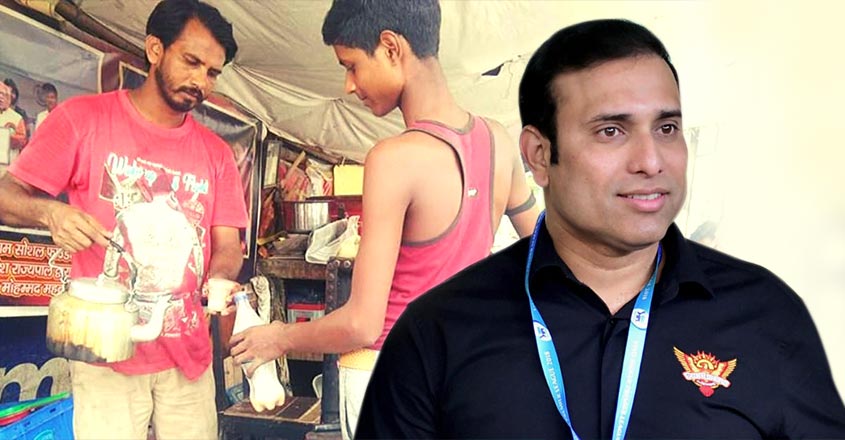
A quaint teashop on one of the dingy lanes in Sharda Nagar in Kanpur has been the talk of the town for the past few weeks. The teashop is often seen crowded. It is not the tea but the owner of the teashop Muhammad Mahboob Malik who draws the crowd now. This 29-year-old commoner  had become an overnight celebrity in the locality after he was mentioned by former cricketer VVS Laxman in one of his tweets recently.

Laxman had shared the incredibly inspiring life of Malik who has been sponsoring the education of 40 poor kids, for the last three years, using 80% of his income. Forty students study in various divisions till class 4 in his school.

Malik’s father was the only earning member in his family which had six children. His income alone was not enough to make the two ends meet. So, the kids didn’t have enough opportunities to fare well in their studies. Amidst all these struggles, Malik could only study till class 10.

Soon, Malik too began working at his father’s teashop. It was then that he began noticing how a few  kids from the poor families in the locality were roaming around or begging, without attending  school. Most of them were the children of single mothers who struggled even to feed their kids at least one meal a day. For them, sending their children to the school was unthinkable.

Malik, who saw himself in those kids, had decided to sponsor their education. He believes that he would not have ended up in the small teashop on the street and could have done more for the development of the nation had he got the opportunity for better education. It was this thought which motivated  Malik to take the significant decision to help the poor kids complete their education.

In the beginning, Malik opened coaching centers in the locality and also at Gurudev Talkies and Kanshiram Colony where around 350 children were taught for free. He even appointed teachers for a  remuneration of Rs 2,000 per day for training the kids for two hours every day. However, soon he realized that the two-hour classes were not enough to bring significant changes in the attitude or life of those poor kids.

In 2017, as instructed by a friend, Malik began an NGO called the Tujhe Salam Foundation with the sole aim to provide free and quality education for the poor children in the locality. A core team of 5 members and other volunteers are responsible for training the 40 kids. The NGO provides uniform, shoes, socks, bag and other stationery items to these students absolutely free of cost. Malik finds the money to run this school, which functions in a rented building, from his income at the teashop.

Malik, who wakes up at 5 in the morning, works in the teashop from 5.30 am to 7.30 am. After 7.30 am, his father would manage the teashop when Malik goes to the school. He returns in the afternoon and would again work in the shop from 3 pm to 11 in the night. Malik tries to save at least Rs 500 per day to meet the expenses at the school.

In the beginning, a few neighbours had criticised Malik for spending his hard-earned money on this social cause. Some had even called him mad. But the same people began appreciating him when more people came to know about his amazing effort. After Laxman’s tweet became viral, lots of people are coming to meet him at his teashop and school.

Now, Malik is all set to register his NGO and secure 80G certification that will enable tax exemption for donors. Malik wishes to work even harder so that he can extent his school to class 10 where he could give free education to at least 200 poor kids.

source: http://www.english.manoramaonline.com / OnManorama / Home> News> Campus Reporter / by OnManorama / December 15th, 2019

Ranji Trophy: Arslan Khan makes it count

CHANDIGARH  :

Chandigarh opener hits 233 not out on debut

Arslan Khan (Sourced by Correspondent)
Arslan Khan
(Sourced by Correspondent)

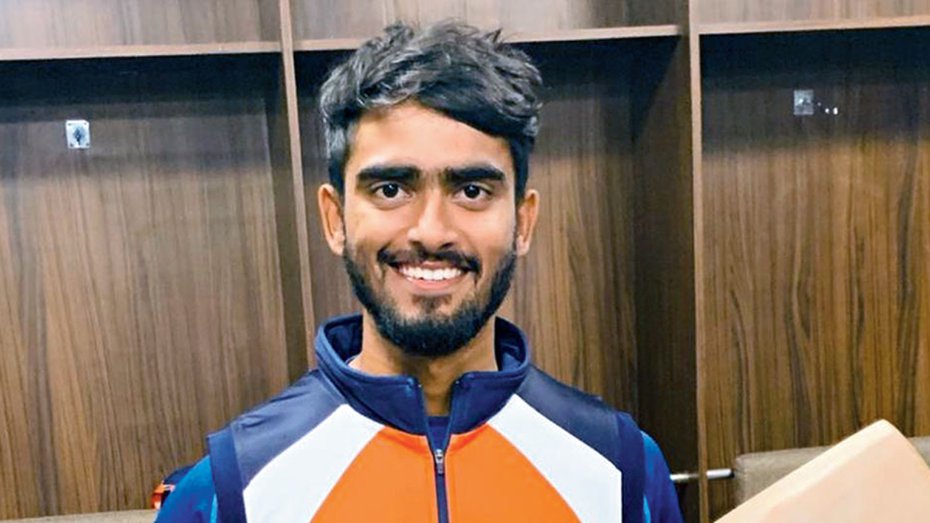
Arslan Khan has been in the news at the Sector 16 Cricket Stadium in Chandigarh on the first two days of the ongoing Ranji Trophy Plate Group match between Chandigarh and Arunachal Pradesh.

The left-handed Chandigarh opener, who has been going through a purple patch, has scored 699 runs in 11 innings, including five centuries and two fifties, in the under-23 one-day championship.

But to top it all, Arslan scored 233 not out in his first Ranji Trophy match. He could have broken the record of Ajay Rohera, who scored 267 for Madhya Pradesh against Hyderabad in Indore in 2018-19, the highest by any Indian batsman on first-class debut.

Arslan, however, does not have any regrets. “I do not have any complaints about the decision taken by the team management. It was decided that we would declare once we reach the 500-run mark. I only came to know about the record after the day’s play,” Arslan told The Telegraph on Tuesday.

“I have had a memorable Ranji Trophy debut. As a player my aim is to help the team. We would love to wrap up things quickly in the morning session of the third day. The team’s success is most important,” he said.

“It was on my mind that I need to play long. I was losing my wicket soon after reaching the century in the U-23 tournament. Today I made sure that I would go on and convert the century into a double ton. I am glad that I was able to do it,” Arslan said.

Batting first, Arunachal Pradesh were bundled out for 147. In reply, Chandigarh, who are playing their first Ranji match, declared after reaching 503 for two. At the end of the second day’s play, Arunachal were 164 for six in their second innings, still 192 runs behind.

“I would like to thank all my teammates and coach for my performance,” Arslan, who loves to watch David Warner bat, said.

“I would like to thank my first coach Sukhwinder Bawa, who helped me to learn the basics of the game. I am still very young and learning everyday,” he said.

“I never thought of playing the game seriously but Sukhwinder sir always inspired me and one day suddenly my mind changed,” Arslan recalled.

Former India player VRV Singh, who is the coach of Chandigarh, praised Arslan. “He has been doing very well. We picked him up in the senior team for his beautiful performances at the U-23 level. He has done remarkably well… hope his form will continue.

“It was our first match and we have done decently well. Our captain Manan Vohra (124) and Shivam Bhambri (105) also scored centuries. Bowlers also did well, hope our good run will continue,” VRV said.

“We didn’t get much time before the start of the Ranji Trophy. We just had a ten-day camp. As the tournament progresses, I believe we will improve,” VRV said.

source: http://www.telegraphindia.com / The Telegraph, online edition / Home> Cricket  / by Arindam Bandyopadhyay in Calcutta / December 11th, 2019

22-year-old Hasan Safin to become the youngest IPS officer in the country

Kanodar Village (Banaskanth District), GUJARAT :

HasanSafinMPOs16dec2019

Rajkot :

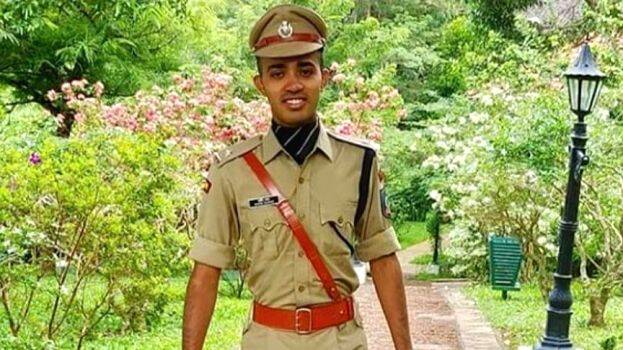
Hasan Safin, a 22-year-old boy from Gujarat, is all set to create history on December 23 by taking charge as the youngest IPS officer in the country. Safin, who comes from a humble background, hails from Kanodar village of Palanpur.

Safin had secured an all India rank of 570 in his very first UPSC attempt. When quizzed about his achievement, Sajin said, “I actually wanted to join IAS but I could not clear the exam. Hence I decided to pursue my career as an IPS officer and will use this opportunity to serve my country.” Safin is the son of Mustafa Hasan and Naseembanu, both labourers in a diamond mining unit.

According to Safin, his journey to success wasn’t easy as his parents found it difficult to pay his fees due to their low incomes. He added that his mother even prepared chappatis for nearby restaurants to find extra money to fund his education.

source: http://www.keralakaumadi.com / Kaumadi Online / Home> India> General / December 16th, 2019

From homemakers to life coaches: The inspiring stories of Gazelle Khan and Yasmin Mehtab

Kolkata, WEST BENGAL :

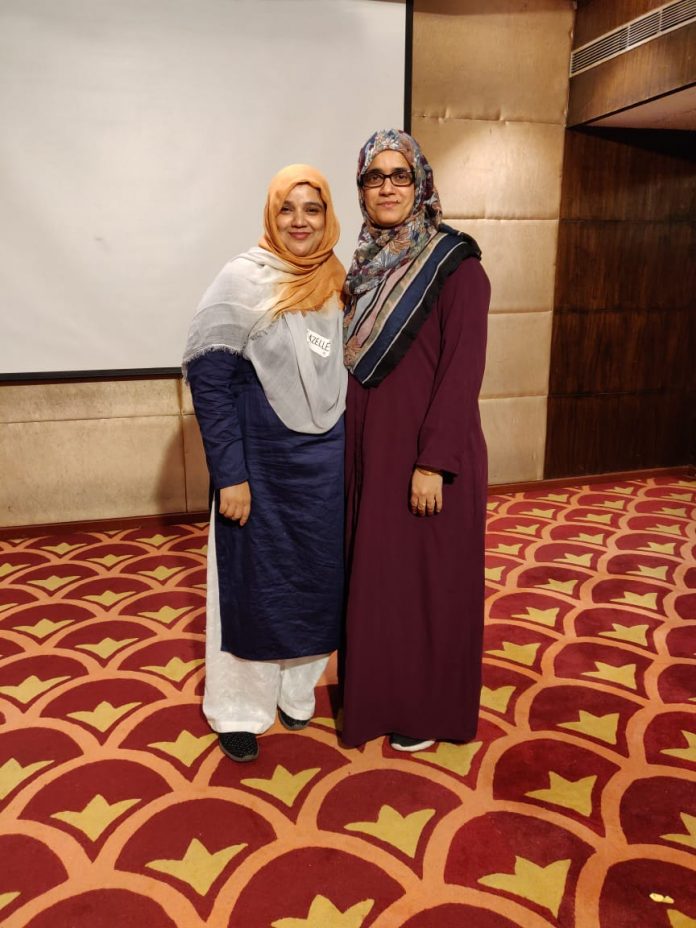
Gazelle S Khan (Left) and Yasmin Mehtab

If you believe in first impressions, you are likely to be disappointed by Gazelle S Khan and Yasmin Mehtab. The two lifelong friends were full-time homemakers, busy taking care of their family, kids and other responsibilities to make their homes run smoothly. There was something they both aspired for but were unclear about the exact nature of what they wanted till they attended a workshop on self-management.

Speaking to TwoCircles.net, Yasmin said, “It started in December 2017 when Gazelle and I participated in a workshop and witnessed a transformation in ourselves.” Adding to the Gazelle says, “Often, we homemakers forget our happiness and keep making sacrifices for our families. But we need to strike a balance. The workshop that we attended touched our lives and we decided to take the skills we learned to others in need to be transformed. And that is how You Touch Lives (YTL) began.”

It was Yasmin who came up with the idea of having YTL (platform to help many who are even clueless about the crisis they are in), to which Gazelle readily agreed. While Yasmin uses her operational acumen to organise the workshop, network etc, Gazelle chose to become the face.

“I also realised that one workshop was not enough to conduct a life-changing workshop for women. I thus became a certified life coach and since then, as they say, there has been no looking back,” she added.

source: http://www.twocircles.net / TwoCircles.net / Home> India News> India Politics> Indian Muslims> Lead Story> TCN Positive / by Shabina Akhtar – TwoCirlces.net / December 13th, 2019

Shivajinagar (Karnataka) Bye-Election Results 2019 Live: Congress’ Rizwan Arshad wins

Bengaluru, KARNATAKA :

Shivajinagar (Karnataka) Assembly Bye-Election Results 2019, Karnataka Bypoll Results 2019 Live: Get all the updates on Shivajinagar assembly constituency bye-election results on indianexpress.com. Shivajinagar assembly constituency went to polls on December 5.

Shivajinagar (Karnataka) Assembly Bye-Election Results 2019, Karnataka Bypoll Results 2019 Live:

Congress’ Rizwan Arshad won by nearly 13,000 votes over BJP  candidate M Sarvana from the Shivajinagar constituency. Bye-election for Shivajinagar constituency in Karnataka was held on December 5.

The seats fell vacant after 17 rebel MLAs from the Congress and JD(S) parties defected to the BJP in a bid to bring down the coalition government. The MLAs were subsequently disqualified from the House but were allowed by the Supreme Court to the contest bypolls. However, elections to two seats — Rajarajeshwari Nagar and Maski — were not held as separate election petitions challenging the results of the 2018 elections are still pending in the Karnataka High Court.

About 66.25 per cent voter turnout was recorded in the bypolls to 15 constituencies across nine districts of Karnataka.

In the 2018 Assembly elections in Karnataka, BJP won 104 seats, Congress 80, and the JD(S) 37 seats in the 224-member House. Three seats were won by others.

After BJP failed to muster a majority, Congress and JD(S) forged an alliance to form the government, with HD Kumaraswamy becoming the Chief Minister.

In July 2019, 14 MLAs from the Congress and three from the JD-S quit the Assembly; a trust vote on July 23 led to the collapse of Kumaraswamy’s government. The BJP staked claim to form a new government under Yediyurappa on July 26.

source: http://www.indianexpress.com / The Indian Express / Home> India / by Express Web Desk / December 09th, 2019

Sher Shah Suri – Creator of the Grand Trunk Road

BENGAL / Sasaram, BIHAR :

We must thank Sher Shah Suri, the founder of the Suri Empire, for creating this amazing road connecting the major cities of India

GrandTrunkRoadMPOs13dec2019

New Delhi:

For travellers in India, moving from North to South or East to West, would have been almost impossible if the magnificent Grand Trunk Road did not exist. We must thank Sher Shah Suri, the founder of the Suri Empire for creating this amazing road connecting the major cities of India. Whenever there are discussions about this splendid road, Sher Shah Suri’s name is always mentioned with awe. But the Grand Trunk Road is just one of his major creations. Few know what an extraordinary personality he was and how much we owe him. In his seven-year rule he added a vast number of improvements that we continue to see today.

Born Farid Khan Lodhi in 1486 at Sasaram in modern day Bihar, he was the grandson of an ethnic Afghan, a noble of the Pashtun Sur tribe named Ibrahim Khan Suri. Farid Khan became known as ‘Sher’ when as a young man he saved the King of Bihar, from a tiger that had suddenly leapt upon him. He was later re-named Sher Shah and rose to become the founder of the Suri Empire in the northern part of the Indian subcontinent.

A landowner (Jagirdar) and a representative of the Delhi rulers of that time, he was an adventurer with royal connections and was recruited by Sultan Bahlul Lodi of Delhi during his long confrontation with the Jaunpur Sultanate. He was one of the eight sons of Mian Hassan Khan Suri – a prominent figure in the government in the Narnaul district. His grandfather Ibrahim Khan’s ‘Mazar’, still stands as a monument in Narnaul.

Sher Shah rose from being a private to the status of a commander in the Mughal army under Babur to the level of being the governor of Bihar. In 1538, when Babur’s son Humayun was away at war, Sher Shah took over the state of Bengal and established the Suri dynasty – naming it after the ‘Sur’ tribe to which he belonged. A gifted administrator and strategist during his rule from 1538 to 1545, he introduced a number of important changes, which continue to benefit us till today.

As a brilliant general Sher Shah laid foundations for later Mughal emperors – among them Akbar son of Humayun, was probably the one who benefited the most from this. Among Sher Shah’s more important strategies in his administration, was the setting up of new civic and military rules. Under him, the first ‘Rupiya’ was issued in place of ‘Taka’ – and still continues to remain. Another important improvement was the reorganisation of the postal system of the Indian Subcontinent. To ensure that he would be remembered, Sher Shah renamed the name of Humayun’s city, changing it from ‘Dina-panah’ to ‘Shergarh’ and simultaneously he also revived the historical city ‘Pataliputra’, which had been steadily declining since the 7th century. The feather on his cap is however the Grand Trunk Road, for which he is justly famous.

It is said that Sher Shah and his father were constantly fighting with each other. His father, Hassan Khan Suri, then a jagirdar of Sasaram, had several wives with whom Sher Shah did not get along and so, he decided to run away from home. When his father discovered that Sher Shah had requested Jamal Khan, the governor of Jaunpur to give him shelter, he wrote a letter that stated, “my son being annoyed with me, has gone to you without sufficient cause. I trust in your kindness to appease him, and send him back; but if refusing to listen to you, he will not return, I trust you will keep him with you, for I wish him to be instructed in religious and polite learning.”

But Sher Shah refused and replied in a letter, “If my father wants me back to instruct me in learning, there are in this city many learned men: I will study here.”

Sher Shah started his service under Bahar Khan Lohani, the Mughal Governor of Bihar. Because of his valour, Bahar Khan rewarded him with the title ‘Sher Khan’ After the death of Bahar Khan, he became the regent ruler of the minor Sultan, Jalal Khan. Jalal soon realised that Sher Khan’s power in Bihar would make things difficult and sought the assistance of Ghiyasuddin Mahmud Shah – the independent Sultan of Bengal. Ghiyasuddin sent an army under General Ibrahim Khan but Sher Khan defeated the force at the battle of Surajgarh in 1534 after forming an alliance with local chiefs – and achieved complete control of Bihar.

In 1538, Sher Khan attacked Bengal and defeated Ghiyasuddin Mahmud Shah. But could not capture the kingdom, because of the sudden appearance of Emperor Humayun and his army. On 26 June 1539, Sher Khan faced Humayun in the Battle of Chausa and defeated him. Assuming the title ‘Farid al-din Sher Shah’, he defeated Humayun once again at Kannauj in May 1540 and forced him out of India.

Thereafter Sher Shah turned his attention towards the Rajput Forts. He attacked Malwa and Jodhpur, but was killed during the siege of the Rajput Fort of Kalinjar. Sher Shah had ordered the walls of the fort to be blown up with gunpowder, but he was himself seriously wounded, by the explosion. He died on May 22, 1545 and was buried in Sasaram. His son Jalal Khan succeeded him, taking the title of ‘Islam Shah Suri.’

The founder of the Suri Dynasty lies under the splendid Sher Shah Tomb that is 122 ft high and stands majestically in the middle of an artificial lake in Sasaram – located on the road that he is famous for – India’s magnificent Grand Trunk Road.

(Shona Adhikari is a lifestyle and travel columnist.)

source: http://www.ummid.com / Ummid.com / Home> Life & Style / by Shona Adhikari – IANS / December 11th, 2019