All posts by mpositiveone@gmail.com

Meet M Nurul Islam, the ‘Sir Syed of West Bengal’

WEST BENGAL :

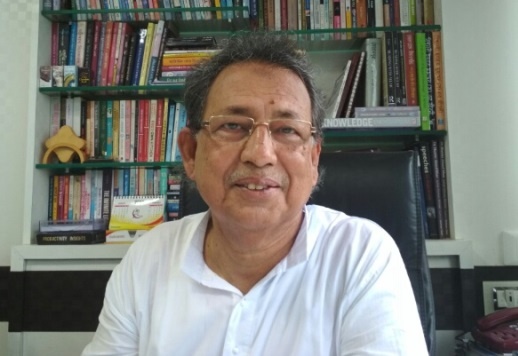
M Nurul Islam, the founder of Al-Ameen Mission

Education advocate M Nurul Islam, who started coaching seven students in small room of a madrasa where he was a teacher, never knew he would be once compared to great education reformer Sir Syed Ahmad Khan.

Through hard work and a commitment towards his moral compass, he was able to set up a learning center which is credited to have produced more than 2400 doctors (MBBS & BDS) and 2500 engineers so far apart from scores of researchers, administrative officers, teachers and professors.

Islam’s journey began in 1986 when he started teaching a group of seven students in a small room of a madrasa in Hawrah district of West Bengal. Now his Al-Ameen Mission has produced more than 2400 doctors (MBBS & BDS) and 2500 engineers apart from scores of researchers, administrative officers, teachers and professors.

Today Al-Ameen Mission has over 17000 residential students and more than 3000 teachers as well as non-teaching staff in their 56 branches across 15 districts of the state.
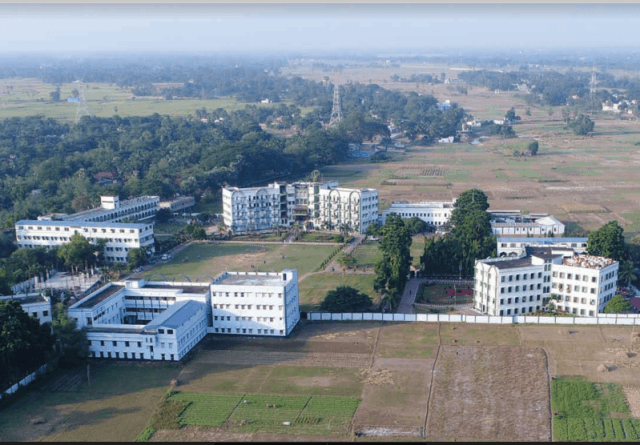
The main campus of Al-Ameen Mission located at Khalatpur village in Howrah district of West Bengal

It was in 1976 that Nurul Islam, Secretary General of the Al Ameen Mission, set up the Khalatpur Junior High Madrasa when he was still studying his 10th standard. The idea was  educational empowerment of poor and backward minority sections.

The journey was tough and tiresome.  In May 1984, he started the Institute of Islamic Culture, setting up a hostel for the institute in 1986 in the Madrasa building itself with the help of door to door collections of fistful rice in his village, Khalatpur. In January 1987, it was renamed as Al-Ameen Mission.

“I started coaching with 7 students of fifth class in 1986. In 1993 there were 11 students, four became doctors, four became engineers. Then came a feeling of satisfaction that I am doing the right thing. I never looked back,” reminiscences Islam who had revolutionized the concept of education among one of  the most unprivileged community  in one of the most backward region in India.
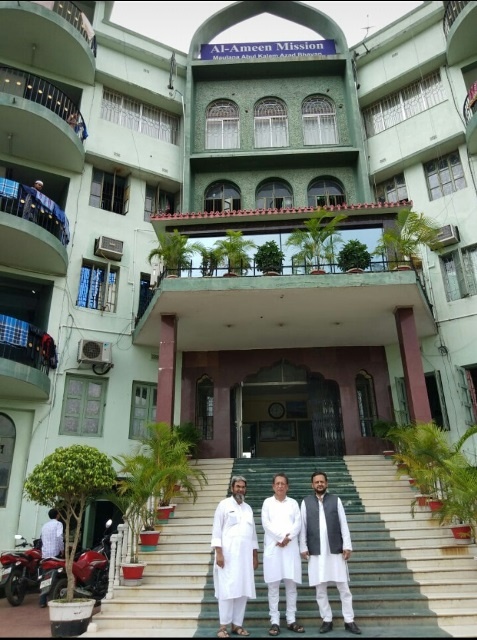
L-R, Inamul Haque, Nurul Islam and Syed Zubair Ahmad at Khalatpur campus .

“The motto was to give modern education with moral values in a fully residential system where students from all strata of the society, irrespective of their financial condition, would live, learn and grow together,” adds Islam.

The mission of the institute is to “achieve quality and excellence in the field of education and to support meritorious students who are socio-economically disadvantaged, following the principles of Fairness, Equality, Equity and Transparency.”

The main campus of  Al-Ameen Mission is located at Khalatpur (Udaynarayanpur) in Howrah district of West Bengal. It has 56 branches  spread across 15 districts of the state. It has 12000 residential students now. It also runs residential coaching classes for engineering and medicine aspirants across West  Bengal and in neighboring Assam, Bihar, Jharkhand and Tripura.

The Al-Ameen Mission also has a facility for girls at Khalatpur, Howrah from class fifth to 12th.
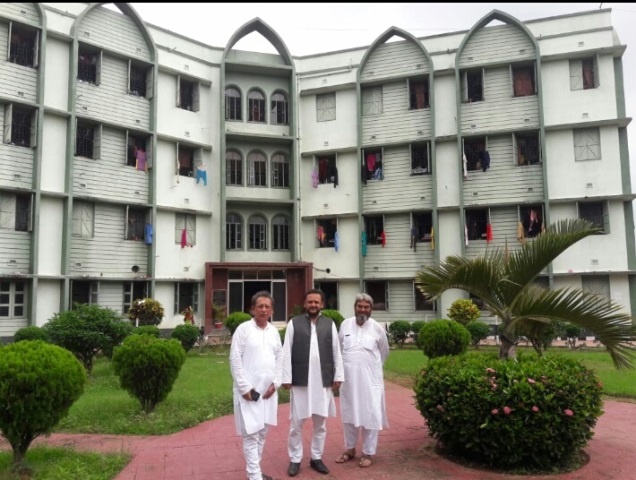
Girls hostel at Khalatpur campus

Al- Ameen Mission has bagged many awards for their excellent work in the field of education in West Bengal. They have been winners of The Telegraph School Award for Excellence in 2002 & 2009. The Mission has also been awarded The Telegraph School Award for the best academic performance in competitive examinations in the year 2004 and the Certificate of the Honour in the year 2005, 2006 & 2008. In 2018  Mr. M Nurul Islam also  received  the prestigious ” Banga Bhushan Award” from Mamata Banerjee,the  Chief Minister of West Bengal.
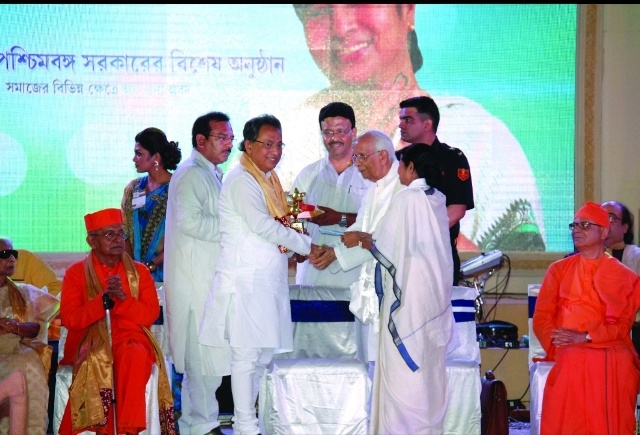
M Nurul Islam receiving the prestigious ” Banga Bhushan Award” from Mamata Banerjee , the chief minister of West Bengal and Governor Keshari Nath Tripathi

The Mission is mostly run by donation and zakat. Muslims throughout the country contribute their zakat to the Mission, which takes care of 25% of seats reserved for poor, destitute and orphans.

A part from education Al-Ameen Mission does charitable works for the Muslim community. It has helped unemployed Muslims with loans and has scholarship programs to help other communities’ needy students.

Al-Ameen gives full financial support up to six months to those needy students of Al-Ameen who get admission in medical colleges.

The Mission has a unique feature of having different fee-structure for the students of different categories depending upon their financial conditions. The students from well to do families pay their fees in full whereas remittance is given to those who can’t pay the full amount. Those, who can’t pay at all, are exempted of all kinds of fees. Moreover, a considerable number of seats are reserved for meritorious orphan students.

At present 5338 students (42%) enjoy half-free studentship and 3432 students (27%) enjoy full free studentship facilities from the Mission.

The flexible fee –structure of the Mission had made it possible for many students from most poor background to achieve their dream and become doctors and engineers.

This year too Al-Ameen Mission has broken all its previous records as its   422 students  cracked NEET,  out of which 128 (30.5%) students are from poor and BPL families, 133 (31.5%) are from middle and upper middle income group and 161 (38%) from lower middle income group.

Above all 62 students of the Mission got AIR within 1500, 147 within 25000, 246 within 35000, 367 within 45000 and 422 within 55000.

Most surprisingly 105 students from Murshidabad and  80 from Malda who were enrolled in different branches of Al-Ameen Mission among those who cracked NEET this year.

Out of 422 qualifiers 360 were boys and 62 girls.

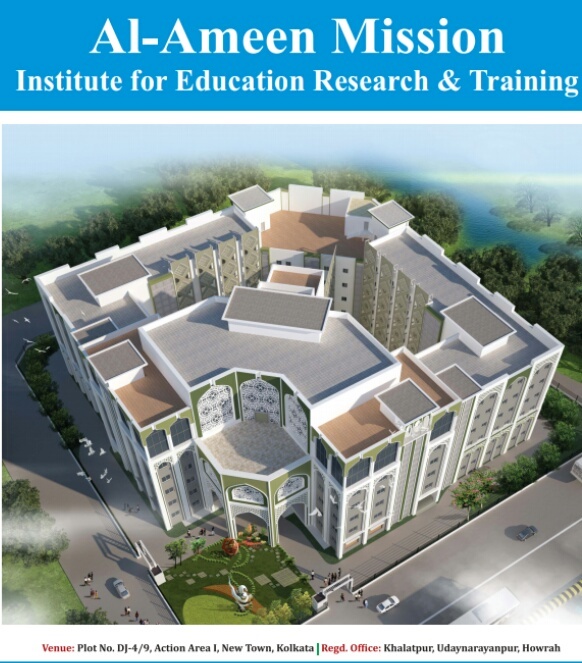
This year in February Al-Ameen Mission Trust has taken up a new project, ‘Al-Ameen Mission Institute for Education Research and Training’. This foundation stone of the institute has been laid in the Newtown. Here, under one roof there will be facilities to provide coaching for the Medical post-graduation course and Residential Training Centre for competitive examinations like IIT,IIM, CLAT,CAT,MAT,UPSC and WBCS. Besides, there will be facilities to train teachers as well as non-teaching staff. Moreover, there would be provision for higher research in different fields of social sciences. In future , it will be the leading center of the Al-Ameen Mission; the Centre  of Excellence, said Islam about his future plan.
NurulIslam06MPOs21oct2019

Proposed Al-Ameen campus.

source: http://www.muslimmirror.com / Muslim Mirror / Home> Editor’s Pick> Education> Indian Muslim> Interviews> Positive Story / by Syed Zubair Ahmad / October 08th, 2019
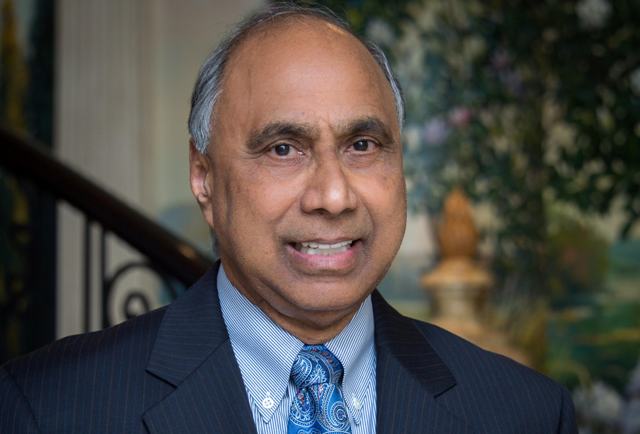
Jamia Hamdard to confer honorary doctorate to Frank F Islam

UTTAR PRADESH / NEW DELHI / U.S.A. :

Frank F. Islam
Frank F. Islam

New Delhi :

Jamia Hamdard, an institute of higher education announced that it will confer Honorary Doctorate to Dr. Frank F. Islam.

Islam will be formally conferred Doctor of Science (Honoris Causa) by the Jamia Hamdard University in a Special Convocation on 15th October, 2019, the registrar of the institute, S. S. Akhtar said in a statement.

Islam is an information technology entrepreneur, investor, philanthropist, civic leader, and writer who heads the FI Investment Group. He was the founder and CEO of the QSS Group and has served on numerous boards and advisory councils including the Board of Trustees of the John F. Kennedy Center for the Performing Arts, Board of Directors, Strathmore Center for the Arts, Ford”s Theater Society Board of Trustees and Kennedy Center International Committee on the Arts.

Islam joins the list of other distinguished recipients who have been honoured by Jamia Hamdard which includes N. R. Narayana Murthy (Co-Founder of Infosys), Bharat Ratna C.N. R. Rao, Sheila Dikshit (Former Delhi CM).

Inaugurated by late Rajiv Gandhi, former Prime Minister of India on August 1, 1989, Jamia Hamdard has recently been recommended by the Empowered Committee appointed by the Government of India for recognition as an “Institution of Eminence” and placed at the 5th rank among the 500 or so privately funded Universities of India.

–IANS

source: http://www.muslimmirror.com / Muslim Mirror / Home> Education> Indian Muslim / by IANS / October 12th, 2019

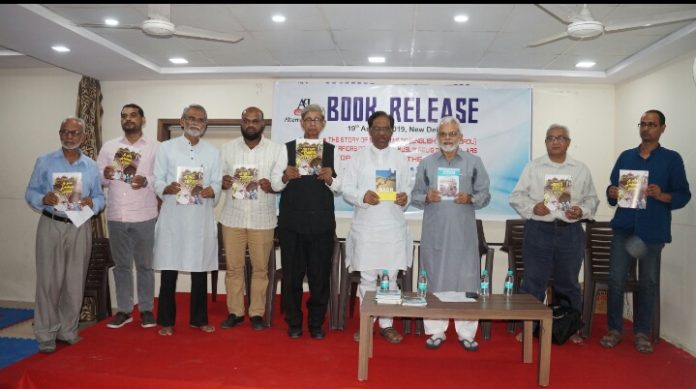
Story of Babri Masjid: Pictorial book on Babri Masjid history released

NEW DELHI :

BabriMasjidBookMPOS19oct2019

New Delhi :

“The Story of Babri Masjid” (Babri Masjid ki Kahani), a pictorial history book in English, Hindi and Urdu was released in a function organised by the publishers, Aternate Press in New Delhi. This book is being published at a time when Ayodhya case arguments are progressing in Supreme Court. Though this book with cartons and narrations is primarily meant for children, it is equally aimed at the new generation who are born after the demolition of Babri Masjid.

In the book release program along with the above title, two other relevant books namely “Warriors of Malabar: Muslim Religious Scholars” (English) and “Badr: Lessons of the Battle” (English) were also released.

Advt. A. Mohammad Yusuf introduced the book on Babri Masjid. The other two books were introduced by E.M. Abdul Rahiman. He also paid tribute to the author of the book Badr A. Sayeed who has passed away a few months back.

While delivering his presidential address, A.S. Ismail, the Managing Director of Alternate Press stated that in the context of efforts of rewriting the history by the fascist forces, these books are aimed at creating awareness among the youth towards the real history of the country and their forefathers.

Popular Front of India Chairman E. Abubacker while expressing his views on the books said that we should never let the memories of Babri Masjid vanish from the minds of people. “The three books are most relevant to the contemporary situations of this country and I hope the efforts of all those who are behind this work, will bring fruits”, he said.

The meeting was also addressed by Ravi Nair (Director, SAHRDC), Advt. N.D. Pancholi (Forum for Citizens for Democracy), Dr. Taslim Ahmad Rahmani (National Secretary, SDPI) and Prof. Rakesh Ranjan (Delhi University).

Parvez Ahmad (Director, Alternate Press) welcomed the guests and Salim Shaikh presented vote of thanks.

source: http://www.muslimmirror.com / Muslim Mirror / Home> Book Review / August 20th, 2019

India vs South Africa: Shahbaz Nadeem added to squad after Kuldeep Yadav complains of shoulder pain

JHARKHAND :

Nadeem, who plays for local team Jharkhand, has been a India A regular recently.

File image of Shahbaz Nadeem

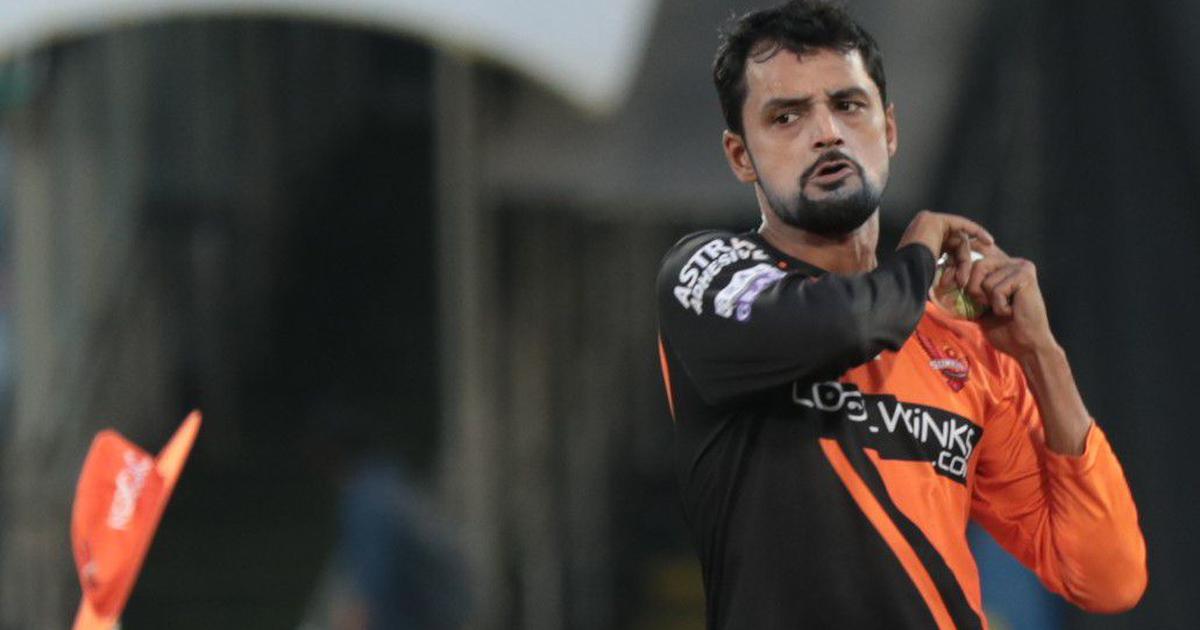
Left-arm spinner Shahbaz Nadeem has been added to India’s Test squad for the third and final match of the series against South Africa, starting in Ranchi on Saturday.

The decision to add Nadeem was made after Kuldeep Yadav complained of shoulder pain on his left hand on Friday, the Board of Control of Cricket in India confirmed on Friday.

Yadav has not played in the series yet, with Ravichandran Ashwin and Ravindra Jadeja being preferred in Vizag and Pune. But with a turning track expected in Ranchi, there were talks of India using a third spinner.

The left-arm wrist-spinner is still part of the squad as confirmed by chief selector MSK Prasad in the statement released by BCCI but it remains to be seen if either Nadeem or Yadav get selected in the XI.

Nadeem, who plays for local team Jharkhand, has been a India A regular recently and has been in action for the state side in Karnataka for the Vijay Hazare Trophy. Jharkhand have not qualified for the quarter-finals in the 50-over tournament. India lead the three-match series 2-0 after convincing wins in Vizag and Pune.

India’s squad for 3rd Test: Virat Kohli (Captain), Mayank Agarwal, Rohit Sharma, Cheteshwar Pujara, Ajinkya Rahane (vice-captain), Hanuma Vihari, Wriddhiman Saha (wicket-keeper), Rishabh Pant (wicket-keeper), Ravichandran Ashwin, Ravindra Jadeja, Kuldeep Yadav, Mohammed Shami, Umesh Yadav, Ishant Sharma, Shubman Gill, Shahbaz Nadeem

source: http://www.scroll.in / Scroll.in / Home> The Field / by Scroll Staff / October 18th, 2019

Oman raring to go for 8-nation ACC U-16 Championship

Chennai, TAMIL NADU / Muscat, OMAN :

AymanMPOs17oct2019

Muscat :

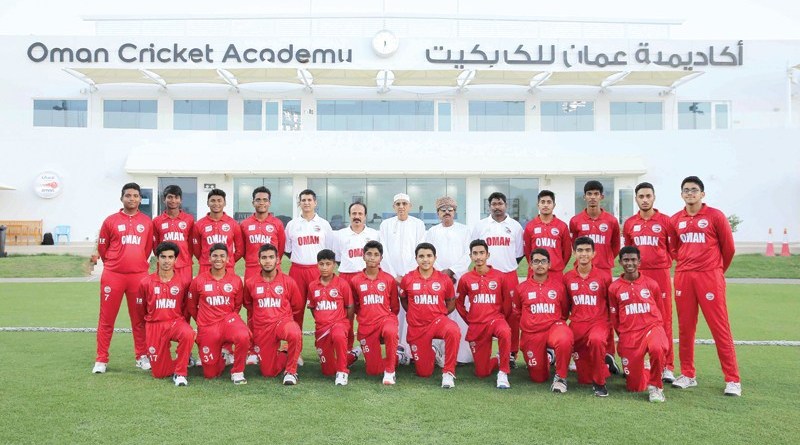
Soon after successfully hosting the Pentangular T20 Series, Oman is now gearing up to hold the Asian Cricket Council’s Under-16 Western Region Championship, starting on October 21 at its picturesque twin grounds in Al Amerat.
Having won the five-nation T20 series at senior level, Oman are now looking to repeat the feat at junior level too but this time the matches will be a 35-over a side affair.
Group A comprises UAE, Saudi Arabia, Iran and Bahrain while Group B consists of Oman, Qatar, Maldives and Kuwait.
With top class indoor and outdoor training and practice facilities, apart from the two wonderful grassy grounds, Oman is now emerging as a busy international cricket venue. Many bilateral and multilateral tournaments are going to be held here in the coming months.
Young Amanpreet Singh Sirah has been appointed captain of Oman team for the tournament and will be assisted by wicketkeeper batsman Shanmugarajan.
The team is being coached by Syed Tariq Hussain who is being assisted by Pervez al Balushi. Packed with plenty of penetrating spinners and all-rounders, Oman is expected to reach the semifinals.
“The boys have been training hard for the tournament and I am quite confident we will do fairly well,” said Oman coach Tariq Hussain.
Two games are scheduled to be held at 9.30 am daily, one each on OC ground 1 and 2.
The first day will see UAE taking on Bahrain and Saudi Arabia facing Iran on October 21. Oman will play their first game on Tuesday, October 22, against Kuwait while Qatar will take on Maldives on the adjacent ground.
The semifinals will be held on Monday, October 28, followed by the final the next day at OC ground 1.

Oman squad:

Amanpreet Singh Sirah (captain), Shanmugarajan (wicketkeeper, vice-captain), Mohammed Nihal Siraj, Yash Verma, Bilal Asim, Arjun Dhiman, Siddh Mehta, Ayman Ayaz, Jayesh Anil, Sanjaya Ravindra, Zayed Ali Khan, Viraj Ashar, Abdullah Iftikhar and Tanuj Sivakumar.
Reserves:

Navneeth Krishnan, Aditya Gurumukhi, Qais Khalid al Balushi and Ishan Jabir.
Officials:

Sher Mohammed (manager), Syed Tariq Hussain (coach), Parvez al Balushi (assistant coach), Suresh Kumar (physio).

source: http://www.omanobserver.com / Oman Daily Observer / Home / by Shahzad Raza / October 16th, 2019

A retired official’s intensive research on Holy Quran

Coimbatore, TAMIL NADU :

Dr M Ameer Althaf
Dr M Ameer Althaf

Coimbatore:

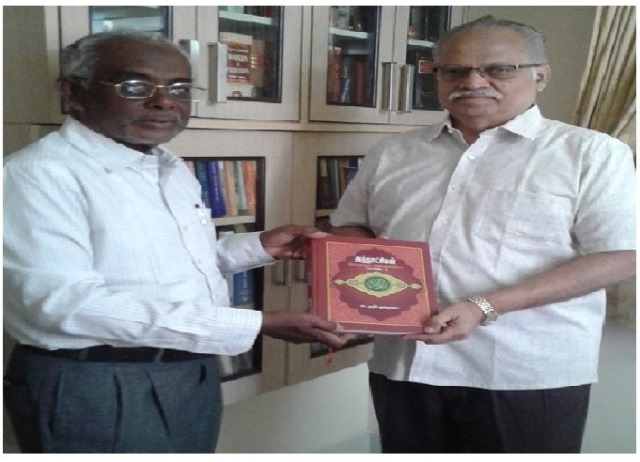
Retired, but not tired of working for former NTC official Dr M Ameer Althaf, who took up intensive research on Holy Quran for well over three decade. And in his seven yearlong untiring effort, he has penned the book ‘Athaatchigal Thirukkuran Kalai Kalanjiam’ in a four part series, which is close to his heart. Undoubtedly, this is a magnum opus for the author.

Notably, Ameer Althaf had won the heart of Kovaiites for his different avatars in Thirukkuran Arakkattalai, Coimbatore District United Jamaath, AIMMS Muslim Women Community College. Adding another feather to his cap, he brought out the book ‘Pettagam’, a compilation of 300 long history of Coimbatore Muslims which was released at a gala function in 2014.

As to the adage ‘Hardwork pays rich dividends’, his research papers on Holy Quran were presented and published in global forum like Umma-al Qura University in Mecca, King Fahad University in Madina, University Malaya, Islamic Science University Malaysia besides universities in Istanbul, Jordan, Qatar, Mali.  His four decade central government service and three decade research on Holy Quran made him go places across the globe. Significantly, he became to be known as International Holy Quran researcher.

A function is being organised under the aegis of Dhaanish Ahmed Institute of Technology (DAIT) and Al Azhar Educational Trust on October 20 at Podanur Thendral mahal to release the book ‘Athaatchigal’ by former supreme court judge Fakir Mohamed Ibrahim Kalifullah and former High Court judge K N Basha in the presence of leading luminaries Alhaj K Moosa, chairman, DAIT group, Alhaj UAK Jailani, managing trustee, Al Azhar Education Trust.

Sunnath Jamaath Federation general secretary Alhaj M A Inayathullah will preside while Ranipet Additional District and Sessions Judge A Mohamed Ziyavudeen will felicitate at the event.

Moulavi Alhaj M A Abdur Rahim, president, Coimbatore-Nilgiris-Tirupur district Jamathul Ulema Sabai, Moulavi Alhaj M A Mohammed Imdhadi, president, Coimbatore city Jamathul Ulema Sabai, social activist Aloor Shanavas, Coimbatore district United Jamaath president Alhaj A R Basheer Ahamed, Tamil Nadu Haj organisors association president Alhaj A Mohamed Rafeek, Iqra Educational Trust president Alhaj H E Iqbal Sait, Project Manager in Kuwait Haji M A Azad will address the audience at the book release event. Himayathul Muslimeen Sunnath Jamaath, Podanur secretary Haji KTS Riyas Kapoor will propose the vote of thanks. Other dignitaries who will speak at the event include Holy Quran translator Prof Mohamed Khan baqavi, TN state Jamathul Ulema deputy general secretary Moulavi Alhaj  K M Ilyas Riyaji, Chennai Anna Salai Makkah Masjid chief imam Moulana M Mohammed Mansoor Kasimi, Madras University HoD Arabic,  Persian and Urdu Dr A Zakir Hussain Baqavi and senior network consultant, Abudhabi Dr Mohamed Ibrahim.

source: http://www.muslimmirror.com / Muslim Mirror / Home> Indian Muslim> Positive Story> Religion / by M. Rafi Ahmed / October 10th, 2019

Smartness, not coaching centre, needed to crack competitive exams: UP PCS (J) Qualifier

KERALA / UTTAR PRADESH :

Farha emphasized on hard work, and smart work aimed at achieving goals with quality, to qualify competitions

FarhaNaazMPOs16oct2019

Aligarh:

The popular myth that it takes a superior, distinctive and an elite school background and perfect coaching institutes with record selection percentage to crack competitive exams was broken by Farha Naaz Parveen.

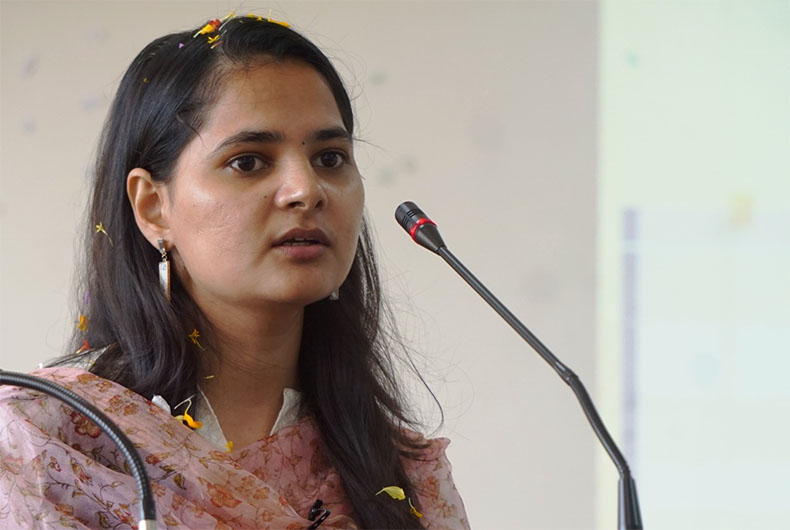
Farha is a law student of Aligarh Muslim University (AMU) Malappuram Centre. She has qualified the Uttar Pradesh Judicial Service Civil Judge [UP PCS (J)] 2018 exam without attending a coaching institute.

“I did not attend a regular coaching for my exam preparation,” said Farha adding that she comes from a UP Board schooling background during an interaction with students in Malappuram Centre where she was also felicitated.

Farha, who clawed her way to success with sheer dedication, die-hard determination, commitment and proper guidance from teachers, urged students to have self-study routines for qualifying competitive exams.

“One of the major advantages of self-study is that students can take control over their own learning. It can be hard to get into the self-study right routine, but with the right approach, anyone can set themselves up with an unbreakable study routine,” said Farha.

Farha emphasized on hard work, and smart work aimed at achieving goals with quality, to qualify competitions.

Giving the credit of her success to the teachers at the Department of Law, Malappuram Centre; Farha also shared tips for successful competitive exams preparation with the students.

Felicitating Farha for the success, Dr Faisal KP, Director, Malappuram Centre said that Farha’s success story has inspired and motivated students.

In the welcome address, Mr Ghalib Nashter, Co-ordinator, Department of Law said that Farha’s success is testimony to the quality education and student mentoring at the Malappuram Centre.

source: http://www.ummid.com / Ummid.com / Home> Business & Economy / by ummid.com News Network / October 01st, 2019

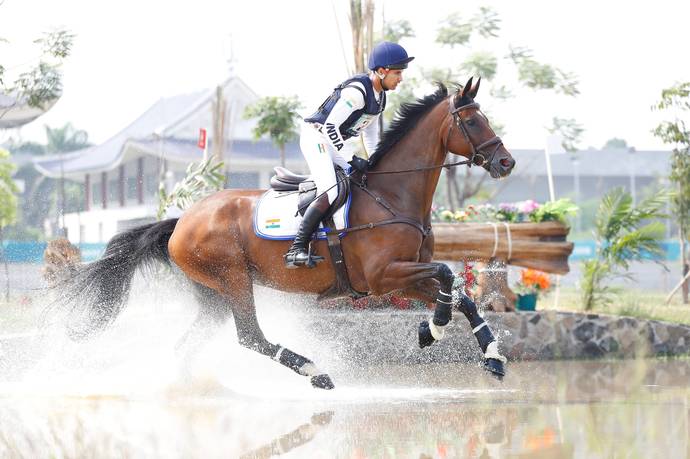
Equestrian: Fouaad Mirza wins gold at Olympic qualifying event

Bengaluru, KARNATAKA :

Fouaad is currently the highest ranked in Group G for Asia Pacific Zone with 34 points on Fernhill Facetime, 30 points on Touchingwood and at present qualifying his third horse, Dajara.

Fouaad Mirza will next compete at the events in Montelibertti ITY CCI3*S (Italy) and Le Pouget FRA CCI4*S (France). - SPECIAL ARRANGEMENT
Fouaad Mirza will next compete at the events in Montelibertti ITY CCI3*S (Italy) and Le Pouget FRA CCI4*S (France). – SPECIAL ARRANGEMENT

India’s double Asian Games silver medallist Fouaad Mirza  bagged the top honours at the CCI3*S, an Olympic qualifying event, held in Strzegom, Poland.

Fouaad is currently the highest ranked individual in Group G for Asia Pacific Zone with 34 points on one horse Fernhill Facetime, 30 points on the second horse Touchingwood and at present qualifying his third horse, Dajara.

The eight-year-old Dajara, procured by the Embassy Group, is a promising German Holsteiner with an excellent track record of wins including a German National Championship, Bundeschampionat.

“I am very excited about our new horse Dajara, which has immense potential for success at the Olympics. Through the event CCI3*S, we were able to level up the horse rider combination to 4* and building up my points to qualify for the Olympics,” Fouaad said on Sunday.

Fouaad started the week with a solid dressage score of 26.8 which placed him second with a very close score to Germany’s Antonia Baumgart, who was one penalty better at 25.8.

This was followed by the showjumping event where Fouaad maintained the second position with a clear round. He finished the deciding cross-country round in four seconds over time, leading him to the gold in the Strezgom CCI3*S in Poland.

Fouaad has completed Renswoude NED CCI 4*S placed 11th, Jardy FRA CCI4*S, Strzegom POL CCI4*S placed 15th, Sopot POL CCI4*S placed seventh so far for Olympic Qualifying Events.

He will next compete at the events in Montelibertti ITY CCI3*S (Italy) and Le Pouget FRA CCI4*S (France).

source: http://www.sportstar.thehindu.com / SportStar / Home> More Sports / by PTI / Bengaluru – October 14th, 2019

Food in Indian Muslim households is beyond biryani & kebabs: Recipes are subtle, and include various vegetables

JHARKHAND / NEW DELHI :

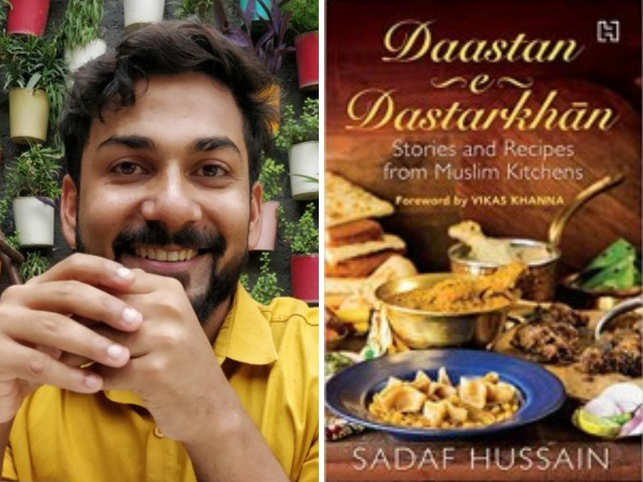
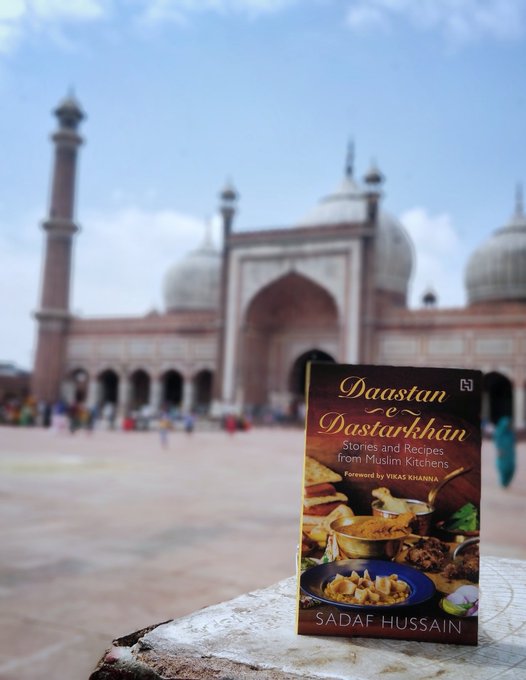
Sadaf Hussain chronicles home-made food in his new book Daastane-Dastarkhan.

​Sadaf Hussain’s charming new, first book Daastane-Dastarkhan​ has been published by Hachette India​.

Sadaf Hussain’s charming new, first book Daastane-Dastarkhan has been published by Hachette India.

Sadaf Hussain’s charming new book Daastane-Dastarkhan starts with the story of a pir who, every Thursday, visited his mother’s family in Sasaram, Bihar. But one day he appeared on a Wednesday, throwing his grandmother into panic because there was no meat for the aloo-gosht she always fed him. She had to be inventive. She used dried figs and poppy seed paste, to make a salan, threw in fried potatoes, balanced it with garam masala and chillies, and served it with rice and besan rotis. The pir was delighted: “May Allah bless you with an abundance of food and may no one ever leave your home hungry.

A recipe like this is not what many would think of as Indian Muslim food. Where is the intense meat focus? Where are the kebabs and biryanis? The problem starts with thinking there is something that can be neatly labelled Indian Muslim food. The fact that people do this might be just another way in which Indian Muslims are diminished by clubbing their many communities into one and ascribing easy stereotypes to them.

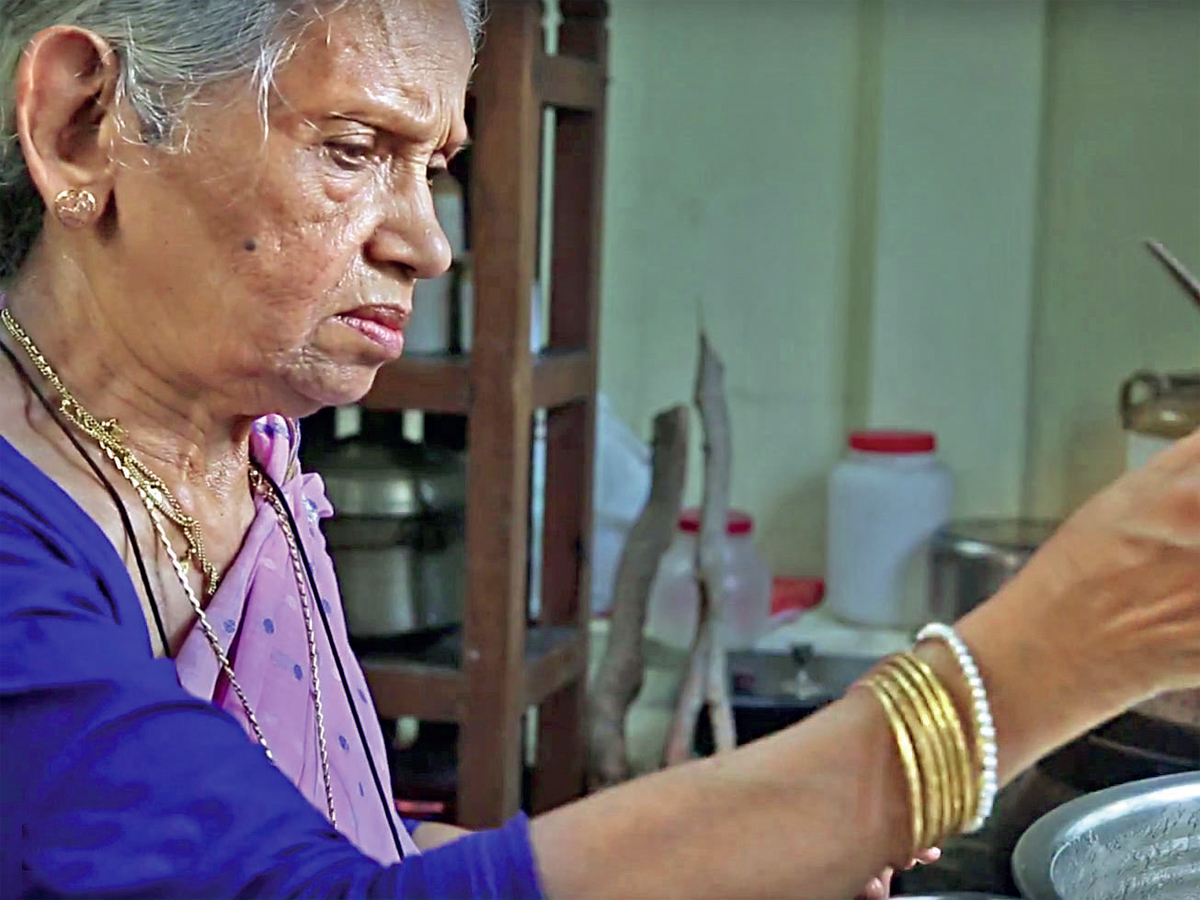
Ummi Abdulla, who has documented the food of Malabar Muslims, makes mutta mala or egg threads.

Part of the problem is that there is a market in catering to such stereotypes. Once a year during Ramzan, many people decide to have an iftar experience and go out — without fasting — to eat the rich food cooked on street sides for the occasion. But this has as little relation to regular home food in Muslim communities across India, as does a Diwali or Christmas feast have for Hindu or Christian home food.

One way people get exposed to home food of different communities is when they share food with neighbours, especially as kids. But as housing becomes increasingly segregated, this is becoming harder.

This lack of knowledge has been compounded by a curious lack of cookbooks from different Indian Muslim communities.

There are cookbooks from cities like Lucknow and Hyderabad where certain types of Muslim food dominate, but what’s presented tends to be street food or special occasion dishes, both mostly made by men. These are important, but it means that the daily, home dishes get left out.

SadafHussainMPOs14oct2019

There have been a few exceptions. Ummi Abdulla made a pioneering contribution by documenting the food of the Malabar Muslim, or Moplah, community, with all its complex interactions between the local ingredients of Kerala and influences from Arab traders.

Bilkees Latif ’s Essential Andhra Cookbook captured similar interactions from Hyderabad. Mumbai’s Inquilab newspaper brought out a collection of booklets, in Urdu and English, on Memon, Kokani, Bohra and Kashmiri food. There were a few other books printed privately or abroad, but little else.

Adil Ahmad’s Tehzeeb chronicles the home food of an upper-class Lucknow family.

Doreen Hassan’s Saffron and Pearls does the same for her husband’s family from Hyderabad, but with roots in both Persia and Uttar Pradesh. Zaiqa e-Kadwai provides a very different perspective. It is a team effort to document the food of a village in Ratnagiri district, where most of the families just happen to be Muslim, but their food is quite typically Konkani. Hazeena Syed’s Ravathur Recipes: With a Pinch of Love shows, in a very impressively produced volume, the food of this Tamil Muslim community.

 These books show the food of these communities to be, as with all communities in a region, primarily dictated by what’s locally available, but with small tweaks. As Hassan’s husband’s family shows, at a more upper-class level there were more likely to be interactions with communities across countries, and recipes travel with daughters-inlaw, who are one of the least acknowledged agents for social change.

 There is certainly a lot of meat eaten in all these communities, but the recipes are much simpler and subtler than what is served up to unthinking eaters as “Muslim” food. Meat is often cooked with vegetables as in the chuqandar gosht, beetroot and mutton; or keema kakdi, cucumbers and mince, given in Tehzeeb. There are inventive egg dishes, like boiled eggs stuffed with mince and then skewered, that Hassan discovers in Hyderabed, or eggs fried in gravy that are a favourite in Kadwai.

Other similarities might be slightly more use of some spices, like star anise, and less of others — hing rarely features since onions are widely used. Chefs will tell you that Muslims in their kitchens are particularly adept at frying, and that copper, with its excellent heat conduction, is the metal of choice for utensils. Many traditional vessels shown in these books are copper, and careful distinctions are made in types of frying: shallow, deep, braising and so on.

Books like these are important because, apart from the problems of unthinking stereotypes, the food of Indian Muslim communities faces another kind of obliterating pressure. Many cooks from the communities have gone to work in the Gulf and have picked up the kind of Lebanese-Arab food that is becoming a standard across the world. It is easy to produce, cheap and tasty enough and has the allure of being modern, rather than old-fashioned, labour-intensive home food. People shouldn’t be faulted for opting for what’s cheap and convenient, but it is important to remember, as these books remind us, that there are also other ways to nourish our roots.

NalliNihariMPOs14oct2019

source: http://www.economictimes.indiatimes.com / The Economic Times / Home> Business News> Magazines> Panache / by Vikram Doctor / ET Bureau / October 13th, 2019

The nihari kulcha you must have if you’re in Lucknow

Lucknow, UTTAR PRADESH :

While in Lucknow’s Chowk area, the quickest way to sate hunger is with a plate of Raheem’s nihari kulcha.

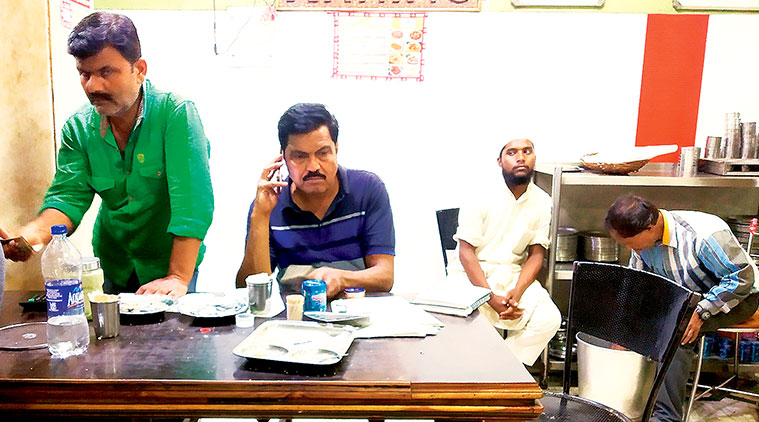
Raheem nihari kulcha, Umar Raza, Azam Hussain

(What’s for Breakfast? (Above) Bilal Raheem Ahmad (in blue) at Raheem’s

When Umrao Jaan was being shot in the early 1980s, the cast and crew of the Rekha-starrer film would visit Raheem’s regularly. “I was too young then, so I don’t have any memory, but my father told me that the entire cast ate at our restaurant on more than one occasion and Farooq Shaikh had loved the nihari,” says Bilal Raheem Ahmad, one of five brothers who run the restaurant now.

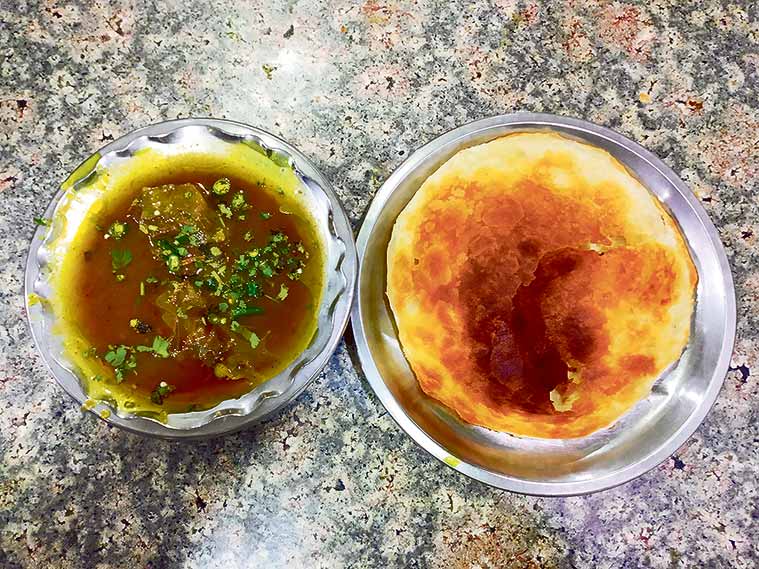
At 8 pm in old Lucknow’s Chowk area, Raheem’s hotel is one of the busiest spots in the area. Most customers thronging the restaurant, in a basement near the Tehseen mosque, are there for the nihari kulcha — meat stew with baked flatbread. The nihari, which is traditionally a breakfast dish, is available all day at Raheem’s. In the alley leading to the restaurant, one can smell the kulchas being baked on the tandoor from a distance. After entering the basement, the aroma changes to that of slow-cooked meat.

Raheem’s nihari kulcha.

Bilal says the delicacy has always been the bestselling item at his restaurant, which was started by his great grandfather Haji Abdul Ghani in around 1920. The family belongs to old Lucknow’s Chowk area. The restaurant started selling the nihari kulcha in the 1940s under Haji Abdul Ghani’s son and Bilal’s grandfather Haji Abdul Raheem, after whom the restaurant is named. “It was Raheem sahab who invented the ghilaf kulcha which is served with the nihari,” says Bilal, 48, who generally sits at the restaurant’s counter every day from 5.30 pm to 11 pm.

After Haji Abdul Raheem, who ran the restaurant till 1983, the restaurant was taken over by Raheem’s father Fakruddin, who managed it till 2000, after which Bilal and his four brothers — Manzoor Ahmad (60), Mohammed Usama (47), Mohammed Shuaib (40) and Zaid Ahmad (37) — run it.

“The word ghilaf means a cover. The ghilaf kulcha has two layers which makes it so special. The upper layer has flour, ghee and creamy milk, while the lower layer has flour and yeast which makes the kulcha rise. The nihari is cooked overnight, for 6-7 hours, on very low heat over wood,” says Bilal.

He says, one of the most important aspects of his restaurant is the tehzeeb (etiquette). “We never return a customer without serving them. There are several madrasas for the poor near our restaurant. My grandfather Haji Abdul Raheem had written two points in his will — one was that we must always serve the poor and, second, that we will never ever compromise on the quality of the food. We are doing everything to follow his orders and hence, did not open a single branch,” says Bilal with a smile, while he returns change to 14-year-old Owais, who studies at the Furqania madrasa next to the Tehseen mosque.

The madrasa student says he comes to the restaurant almost every second day. “I get my own tiffin box and get one kulcha and some nihari for Rs 20,” says Owais, who belongs to neighbouring Barabanki district and stays at the residential madrasa.

The mutton nihari and two kulchas are priced at Rs 148, while the buffalo nihari and two kulchas for Rs 83. The paaya nihari, both mutton and buffalo, comes for an additional Rs 20. In between serving the evening crowd karara (crispy) kulchas, Habib Ahmad (62), who has been working at Raheem’s for the last 45 years, says, “The paaya nihari is mostly made with meat from the calf area.” The restaurant also sells mutton biryani for Rs 300 with four “big” pieces of mutton. Another bestseller is pasanda. A plate of nihari and two kulchas used to be sold at Rs 1.40 in the early 1980s when Habib started working there.

Bilal says, till date, the restaurant buys raw spices and uses them only after getting them cleaned and ground. “Our nihari has around 95 types of spices. We put them in a potli (bundle) and drop them into the nihari when the cooking starts. The recipe was given to us by our father, who got it from his grandfather Haji Raheem sahab,” says the co-owner. The meat used to make the nihari is bought daily. No artificial ingredients are used, and “it is only cooked in a copper deg (cauldron) with kalai (a layer of tin) on the outside. The kalai is a must for slow cooking. It doesn’t let the food burn,” he says, with a wry smile, before adding, “I can’t tell you what our spices are.”

Waiting for their “wholesome meal” at the restaurant are childhood friends — Umar Raza (44) and Azam Hussain (42) — both tailors. but Raza is getting annoyed by the delay, their order — two plates of steaming hot paaya nihari with a sprinkling of green coriander and chilli on top and one kulcha each — finally arrives and they start guzzling the food. They say they have been coming together to the restaurant for the past 15 years. “It is a filling meal which is the secret to our great health,” says Hussain, pointing to Raza’s bulging tummy.

Bilal says, people from “far-off” places come during Ramzan, when the restaurant remains open from iftar (meal eaten to break the fast) to sehri (pre-dawn meal before the fast). “Ramzan is when Lucknow and Chowk has the highest number of visitors. All the tables are occupied through the evening and nights,” says Bilal, adding that the next generation will continue to serve the food the way it has been served for almost a hundred years.

This article appeared in the print edition with the headline ‘A Plate of Sunshine’

source: http://www.indianexpress.com / The Indian Express / Home> Eye / by Asad Rehman / October 13th,2019