Kozhikode, KERALA / Hyderabad, TELANGANA / Paris, FRANCE :
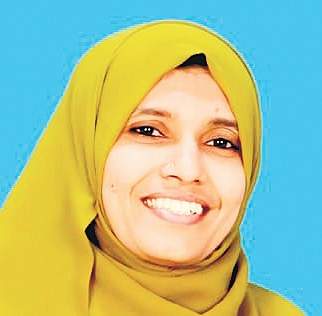
Hamna Mariyam, a young diplomat of 2017 IFS batch and wife of Abdul Muzammil Khan, an IAS officer of Telangana cadre of the same batch,
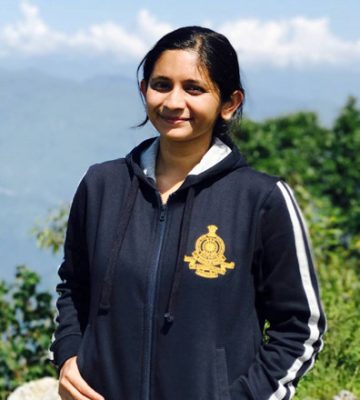
The young diplomat Hamna Mariyam
Jeddah:
A young IFS officer married to a Hyderabadi, is likely to be posted in Saudi Arabia, according to reliable sources here.
Hamna Mariyam, a young diplomat of 2017 IFS batch and wife of Abdul Muzammil Khan, an IAS officer of Telangana cadre of the same batch. Muzammil Khan is the youngest son of retired IPS officer AK Khan, who is presently an advisor to the Telangana government.
The Ministry of External Affairs has reportedly decided to transfer Mariyam to Consulate General in Jeddah, sources told ‘Telangana Today’. She is currently serving at the Indian Embassy in Paris, France.
The Indian government is keen to cement Indo-Saudi relations further and strengthen its missions in the Kingdom, said sources. Shifting Mariyam to Saudi Arabia is perceived to be part of that idea. Hyderabadis and Malayalis constitute a lion’s share of Indian community in Saudi Arabia.
Mariyam hails from Kozhikode in Kerala, where her parents are doctors. An alumna of Ramjas College in Delhi, she taught English literature in a college in her home town. She cracked the civil services examinations and bagged the 28th rank in 2017.
source: http://www.telanganatoday.com / Telangana Today / Home> NRI / by Irfan Mohammed / September 13th, 2019
Shopian District (South Kashmir) , JAMMU & KASHMIR :
When the author asked Ummer’s schoolmates whether they would want to be like Lt. Ummer Fayaz, they said no. ‘’Ma’am he joined the army, the society here does not accept him and some who don’t even consider him a Kashmiri.’’
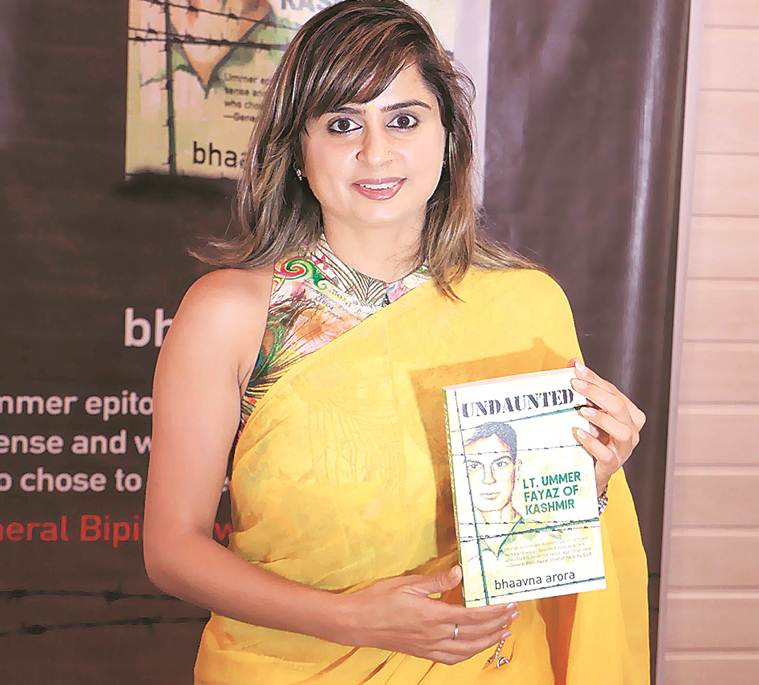
Bhawan Arora with her book at Chandigarh Press club
“Musrat is my sister, mama. If I don’t come for her wedding, what sort of brother am I? And for how long will I run, Mama? Kashmir is my home. With all of you there, can I stay away forever?” These were the words of Lt. Ummer Fayaz, when his family, fearful for his life, was urging him not to come home, weeks before he was killed by militants on 9 May 2017.
‘Undaunted: Lt. Ummer Fayaz of Kashmir’ by Bhaavna Arora, chronicles his life. The 232-page book took the author two years during which she visited Ummer’s family and met a large number of people who knew him.
Lt. Ummer was born on 8 June 1994, to an apple orchardist of South Kashmir’s Shopian district. He was abducted by veiled gunmen at 8.00 pm from his maternal uncle’s house on 8 May 2017 where he was attending the wedding of his cousin sister Musrat. His body drenched in blood was found at Herman Chowk of Shopian the next morning.
“Three men with scarves covering their face and shawls around their bodies swiftly entered through the front door of the house. They climbed the stairs and threw open the door of the room that Ummer was sitting in and asked, Are you Ummer Fayaz? Yes, I am, Ummer replied. Come with us, one of the veiled man commanded,” writes the book.
The book brings to life the high-spirited youngster, right from his childhood days. ‘’One day, a child from the Ummer’s class lost his geometry box. The teacher called all the students and asked them to swear by the holy Quran that they had not stolen it. One by one the students did and when it was Ummer’s turn, he took one look at the book and said, ‘Sir, this this is a dictionary, not the Quran.’ After that the teacher informed his father of his son’s cheekiness. His father gave him a dressing down, but was secretly pleased that his son had spotted what the entire class had missed.’’
Bhaavna Arora said he was also a very wam-hearted and friendly young man .
Bhawan Arora with Ummer’s famil
“At the National Defence Academy (NDA), he was the first to seek permission from instructors for offering Friday prayers; from then on every Friday Muslim soldiers are allowed to pray even during trainings,” she said.
Piecing together the life of the young officer turned out to be an emotionally charged journey. Bhaavna said, ‘’It is not easy to meet a family that has lost a son. When I first met his sister Asmat, we cried for half an hour. She asked me what does your brother do, and I had no answer.’’
Ummer was 11 when he joined Jawahar Navodaya Vidyalaya (JNV) in Anantnag district. The author recounts in the book how she was bombarded by questions from his schoolmates at JNV Anantnag. ‘’Students were eager to know if I was on their side. They asked me why I was there. When I told them whether they knew Lt. Ummer Fayaz, they said, ‘Yes, ma’am, he was our senior’.’’
When she asked them whether they would want to be like Lt. Ummer Fayaz, they said no. ‘’Ma’am he joined the army, the society here does not accept him and some who don’t even consider him a Kashmiri.’’
Once on his way home from Khodwani to Kulgam he was stopped by Army soldiers near Kulgam. They wanted to inspect his bag but he refused to let them do so. Ummer was trying to free himself from the grip of the soldier but failed. When the soldier could not control him anymore, he slapped Ummer, and he cried. Later, Ummer asked him whether he would let him go if he did not find anything in the bag. The soldier said, of course, and asked him what he wanted to become when he grew up. ‘’Someone like you. How can I become like you?’’, Ummer asked the soldier. When the soldier asked him what was so special about him, Ummer said, ‘’You are not like other soldiers who beat and torture my friends.’’
Before Ummer left the camp, the officer said to him, if you want to be an officer like me, join the National Defence Academy when you complete your Class XII.
Ummer reported at National Defence Academy, Pune, on December 30. Bhaavna Arora, who comes from an Army family, says it was Lt Fayaz’s coursemate who asked her to wrote the book. ‘’They wanted him to be immortalised in words.’’
Arora has in the past written three works of fiction. Her first book ‘The Deliberate Sinner’ revolves around infidelity.
source: http://www.indianexpress.com / The Indian Express / Home> India / by Dar Ovais / Chandigarh – March 29th, 2019
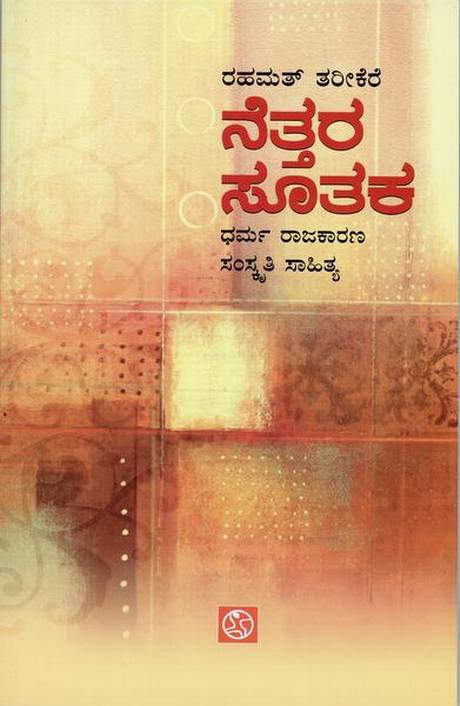
Nettara Sootaka by Rahmath Tarikere is a collection of articles written for different occasions in the last five to six years on contemporary writers and issues
What it means to write in Kannada at present as an intellectual or, to be more specific, as a literary and cultural critic? Keeping this question in mind, I would like to introduce Rahamath Tarikere’s Nettara Soothaka: Dharma, Rajakarana, Samskriti, Sahitya (Spectre of Bloodshed: Religion, Politics, Culture, Literature), a collection of articles written for different occasions in the last five to six years on contemporary writers and issues.
Rahamath Tarikere, one of the makers of cultural criticism in Kannada, has been a prolific writer. His research into the culture of Sufis, Nathapantha, Shakthapantha and Moharum of Karnataka is an exemplary field-work investigation in Kannada scholarship. Apart from travelogues, his scholarly engagements encompass writings on literary texts and cultural issues, literary criticism, research methods, edited volumes on Kannada literature, and interviews of intellectuals among others. He works largely in the field where literary and cultural studies intersect.
Tarikere has kept his writerly life alive by contributing pieces to journals and periodicals, and the present book, the sixth of his collected writings, consists twenty-two articles. Six articles in the early part of the book are reminisces of writers after their death.
Among these, Tarikere’s observations on the life and works of U. R. Ananthamurthy, Gauri Lankesh, Vasu Malali and M.M. Kalburgi are worth reading.
“Ananthamurthy: Kashtakalada Naitika Dani” (Moral Voice of Hard Times) — one of the best tributes to Murthy I have ever read in Kannada — delves deep into his intellectual and political complexities. Tarikere is at his best in identifying the archaeology of Ananthamurthy’s thought as ‘resistance’ (to structures of power and fascism), ‘dialectical mode of analysis’ (Right-Left, Kannada-English, Brahmin-Shudra, etc.), ‘dialogic’ and ‘transgressive’ (going beyond). Similarly, “M.M. Kalburgi: Kalakelagini Agnikunda (Fire-Pot beneath Feet)”, written in academic style, explores the philosophical underpinnings of Kalburgi’s research work against the larger backdrop of violence and intellectual life today.
This is a major point of departure for those interested not just in Kalburgi’s work but in Kannada research in general. Further, the portraits of writers and other eminent personalities including Dr. Rajkumar, celebrated Kannada film actor, Jawaharlal Nehru, N. K. Hanumanthaiah, B. M. Rasheed, Ramadas, H. S. Raghavendra Rao and A. K. Ramanujan have been sketched informatively in plain and clear prose.
The articles on Muslim and Sufi culture give a detailed account of the Muslim way of life in India. “Muslimarigobba Ambedkar Agatya” (Muslims Need an Ambedkar) and “Muslim Samudayada Sankathanada Tathvika Nelegalu” (Philosophical Foundations of Discourse on Muslim Community) and “Muslim Samskrutikalokada Swarup”(The Nature of Muslim Cultural World) unfold the dynamics of Muslim identity politics, socio-historical problems of Islamic culture and the formation of different discourses on Muslims. Those interested in understanding the nuances of Sufism and Islam will find these articles enormously useful.
One more article which deserves our attention in the collection is “Hyderabad Karnataka Sahitya: Chaharegalu” (Literature of Hyderabad Karnataka: Traces). It raises an important question about literary culture: what is the relationship between literary expression and its geo-political conditions? While sketching the uniqueness of literary culture in the region of Hyderabad Karnataka, Tarikere shows how it is unique and different from literary cultures in Dharwad and Mysuru regions. His insights in this article open up further scope for in-depth investigations into Kannada Literary Studies.
Overall, the articles in the book try to diagnose what ails our times, particularly how writing and intellectual life have become vulnerable. As the title of the book suggests Tarikere grasps it with the metaphor of bloodshed, modelled on how Sharanas problematized the interconnectedness of experience, acts and speech in ‘Nudi Soothaka’ (Spectre of Speech). The practice of Fearless Speech, according to Tarikere, has become the target of violence in the 21st century. In tune with this perspective, the book is dedicated to Dabholkar, Pansare, M.M. Kalburgi and Gauri. Throughout the book the reader can experience the author’s anxieties, concerns and aspirations about our socio-intellectual life in India. The book certainly contains some insightful articles which Kannada readers should not miss. However, some articles could have been left out from the selection. What is the rationale behind bringing out a collection of articles written for different occasions? A careful selection of articles, rewriting some of them when they go as part of a book and a long introduction that connects these articles on different themes would make the anthology more useful than merely compiling hitherto published articles.
Rahmath Tarikere’s prose, though wanting in liveliness, does not fail to convey what it intends to. However, his mode of analysis still remains largely ‘ideology criticism’, the modernist reasoning scrutinizing all types of issues. We need to go beyond the Marxist- ideology-critique and explore different forms of analytics as the nature of evil we are confronting today does not reveal itself easily to worn-out tools of analysis. It might be useful to examine cognitive structures of contemporary society, instead of resorting to ideology criticism. In this respect, a scholar like Tarikere can bank upon his own studies on Indian intellectual traditions such as Sufism, Nathapantha, Shakthapantha, etc. to develop new tools of analysis and grasp the reality differently, if not from the informed understanding of the western scholarship available in English.
If this project, further, calls for thinking how to shape the Kannada critical thought, I could not help but invoke the writings of, just to mention two critically important forerunners among several others, D. R. Nagaraj and Keerthinath Kurthkoti. The present Kannada literary and cultural criticism can fruitfully learn from their art of thinking, making powerful narratives and analysis.
Rahamath Tarikere also belongs to this tribe, and his individual talent certainly promises new modes of thinking and renewing this tradition.
source: http://www.thehindu.com / The Hindu / Home> Books> Reviews / by N. S. Gundur / September 05th, 2019
In a revolutionary move, Kerala State Haj Committee has got its first woman member. INL leader and Kanhangad municipality vice-chairperson L Sulaikha will serve the Haj Committee for the next two year
Malappuram :
In a revolutionary move, Kerala State Haj Committee has got its first woman member. INL leader and Kanhangad municipality vice-chairperson L Sulaikha will serve the Haj Committee for the next two years.
(Photo | EPS)
“It is a happy occasion and I am glad to serve the committee,” Sulaikha told Express.
The INL Kanhangad constituency committee secretary received official confirmation from officers concerned on Saturday, and she is all set to leave for Thiruvananthapuram to attend the new committee’s first meeting. Sualikha said that she will give emphasis on reducing the inconveniences faced by women pilgrims to Mecca. “In fact, females outnumber male pilgrims when it comes to Haj, and it’s the need of the hour to ensure women representation in Haj Committee,” she said.
This year, around 1,120 women applicants have left for Mecca without Mahram (male escort) after reforms were brought in the revised Haj policy by the Haj Committee of India. This relaxation for women was brought in lines with changes in Saudi Arabia’s Haj rule. In 2014, Saudi changed its rule that prevented women from performing Haj without related male or husband.
A graduate in English Language and Literature, Sulaikha was elected to Kanhangad municipality for the first time in 2010; she was the health standing committee chairperson in the civic body.
Sulaikha is thankful to INL leadership: “The support extended by my leaders helped me get the new position.”
Sulaikha’s husband Abdul Ameer is a Qatar-based businessman. Their daughter, Fathimath Naj Beegum, is third class student.
Apart from Sulaikha, the new committee has P V Abdul Wahab MP, MLAs Karat Razak and Muhammed Muhsin, Bahauddeen Muhammed Nadwi, Kadakkal Abdul Azeez Moulavi, C Mohammed Faizy, Abdu Rahman, Musliyar Sajeer, Anas MS, VT Abdullakoya Thangal, Mohammed Qasim Koya, H Muzammil Haji and PK Ahammed as elected members.
Besides, Kerala State Wakf Board chairman Syed Rasheed Ali Shihab Thangal and Malappuram district collector Amit Meena are ex officio members.
The first meeting, which is to be held in Thiruvananthapuram on Monday, will elect the new chairman.
source: http://www.newindianexpress.com / The New Indian Express / Home> States> Kerala / by Shafeeq Alingal / Express News Service / August 13th, 2018
Hyderabadi Takbir Fatima is an architect, engineer and educator who is always on the lookout for projects that challenge her.
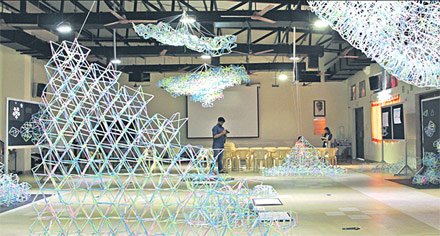
As part of Hyderabad Design Week, Takbir Fatima from Designaware is doing a series of workshops and installations leading up to the event. She is in the city to conduct workshops on design. “We’re experimenting with crowdsourcing the design process to bring together many minds to create something collectively.
Under the theme of Humanizing Design for Hyderabad Design Week, we are crowdsourcing through multiple activations leading up to the event, involving students, young designers, architects and children in designing installations and public art for Hyderabad,” says Takbir, who has completed her BArch from CSIIT School of Architecture & Planning (JNAFAU), Hyderabad, and an MArch (Architecture + Urbanism) from the Design Research Lab at the Architectural Association (AA) School of Architecture in London.
Born in Hyderabad, Takbir was shuttling on and off between Saudi Arabia and Hyderabad. She was inspired by one of the greatest architect in Hyderabad sparking her interest in the profession.
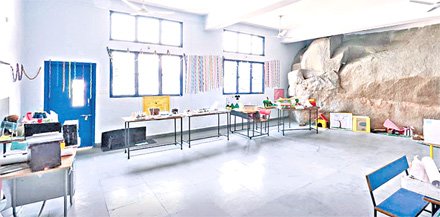
Highly creative, she has handled some challenging projects at a very low cost. One such project was a hilltop school located in Golconda. She explains, “Bright Horizon Academy is a charity school. The challenge was the Golconda fort, which has an outer wall and inner wall, which is a part accessible to the public.
The outer wall has a very old settlement as old as the fort. All these houses share a common wall. Everything is on a hill, so for this particular site we had to completely sheer rock and boulders. Half of the site was on the upper part of the cliff and half made up the lower part. It was quite challenging to navigate the terrain.
And budget was an issue as it was a charity school. We designed a building which uses low energy as much as possible, and with lot of windows and natural light in the centre. There is sunlight and natural ventilation in every part of the building. It has been awarded the silver rating by the Indian Green Building Council in 2018.”
For most of her projects here, Takbir follows Vastu in residential and commercial properties. “If the client is not particular, we do recommend the vastu, as the property will have a resale value,” says Takbir who was given the Telangana Young Architect award by the Indian Institute of Architects in 2016 and was also recognised as Emerging Architect of the Year by NDTV Design & Architecture Awards 2016.
Takbir feels that now there is lot of opportunities for design aspirants and she aims to bring design to as many people as possible. She wants to do away with the misconception that design is not affordable and not for common people. Currently, her company is handling a few residential projects, restaurants, series of workshops, etc.
source: http://www.telanganatoday.com / Telangana Today / Home> Personalities / by Madhuri Dasagrandhi / September 11th, 2019
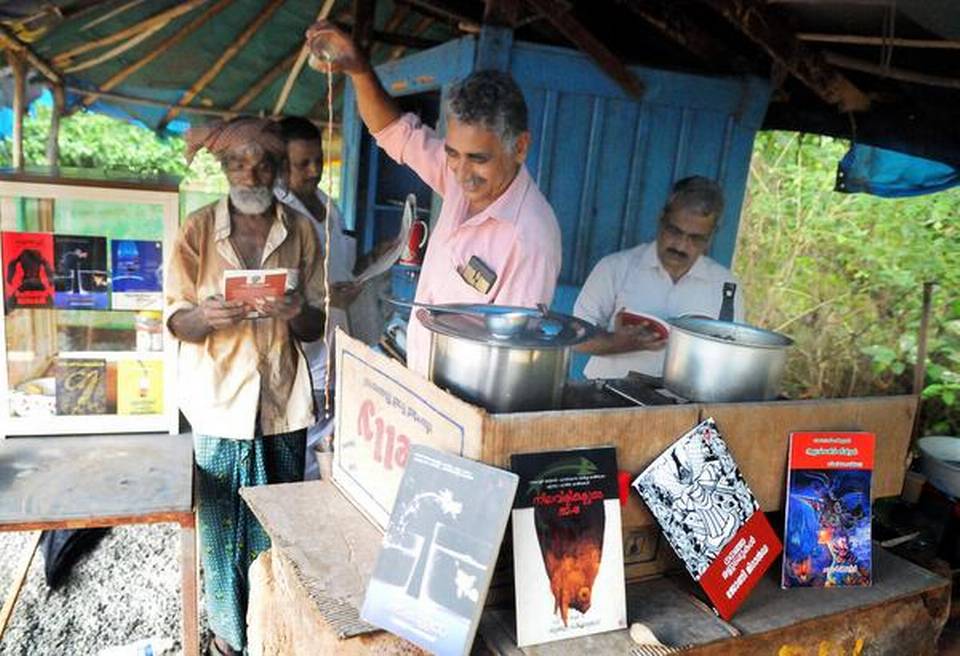
Symposium: Shukoor Pedayangode (centre) has been holding literary gatherings at his tea shop for four years. | Photo Credit: S.K. MOHAN
Welcome to Veranda, a teashop in a Kerala village, where ideas flow as liberally as the tea, run by school dropout-turned-littérateur Shukoor Pedayangode
At first glance, the roadside tea shack with a blue poly tarp stretched on wooden poles seems nondescript. Shukoor Pedayangode, its 50-something owner, looks equally unassuming as he tosses the sweet milk tea back and forth from saucepan to glass before serving it to his customers. But don’t be fooled: both this chayappeedika (teashop) in Pedayangode village, about 35 km from Kannur, and the tea-seller are as special as it gets. Over the years, this teashop called Veranda has become a literary hub, with celebrity authors not just from Kerala but also from neighbouring Karnataka and Tamil Nadu gracing it with their presence.
When I meet Pedayangode, it is late August and he has just reopened Veranda after a longish break when his shop was submerged under the waters of River Bavali when it breached its banks earlier in the month. But Pedayangode’s spirit hasn’t been dampened: he is all cheer as he talks about the next literary gathering at his teashop, scheduled for September 29. The special guest at the event? Tamil author Perumal Murugan — copies of the Malayalam translation of Murugan’s Poonachi are displayed at the teashop.
Free for all
The school dropout Pedayangode began to organise informal monthly literary gatherings at his teashop some four years ago. And he has so far hosted 34 discussions. Among the Malayalam writers and poets who have visited are Paul Zacharia, M. Mukundan, Khadeeja Mumtaz, P.F. Mathews, Kalpetta Narayanan, Rafeeq Ahmed and N. Prabhakaran, a veritable who’s who. Kannada writer Vivek Shanbhag and Tamil writer B. Jeyamohan have also been there.
“I announce every event in advance on my Facebook page,” says Pedayangode. The events generally last three hours and the audience is free to express views on the book under discussion and interact with the author. For non-Malayalam writers, Pedayangode gets friends who speak the language to act as moderators.
A bookworm from childhood, Pedayangode used to devour anything he found in print. “I read Vaikom Muhammad Basheer’s Mucheettukalikkarante Makal (Card Sharper’s Daughter) when I was in Class V,” he says. He hated Maths, and after Class V, he started skipping classes since he dreaded his teacher’s wrath. Eventually, he stopped school altogether.
One of 12 siblings, Pedayangode started odd jobs to help the family along. He worked in quarries, sold fish. “I earned some money selling fish; that’s when I started buying books both to read and to sell,” says Pedayangode.
In fact, even as a teenager he used to write poems for richer friends who would buy him books in exchange. His published poetry collections are quite a few: Onpathu Pennungal (Nine Women), Nilavilikalude Bhasha (Language of Screams), Mazhappollal (Rain Burn) Azhangalile Jeevitham (Life in the Depths).
Novel idea
He even wrote a novel called Veranda, which would later become the name of his teashop. It’s apt, given the idea of open space it connotes. Pedayangode envisaged his shop as a free space for discussions. “I wanted to encourage the reading habit and create an ambience for healthy discussions devoid of restrictions or posturing,” he says.
The monthly gatherings are open to all. “Around 30 to 50 people usually attend,” says Ashraf Macheri, Pedayangode’s neighbour and close friend. Macheri, who used to run a printing press before moving to the Gulf, recalls how Pedayangode would visit his press to collect waste paper to write poems on.
Publishing houses give copies of their books for sale at the teashop; books of the author under discussion are sold on the day. Pedayangode funds the literary meets from the commissions he gets from book sales.
He also organises book fests in Kannur schools to promote reading among students. Pedayangode misses no literary event in the area. These days, he is regularly invited to local colleges to inaugurate literary events. And he does all this while reworking a novel he had finished and left unpublished four years ago.
mohamed.nazeer@thehindu.co.in
source: http://www.thehindu.com / The Hindu / Home> Books> Tea Time / by Mohamed Nazeer / September 07th, 2019
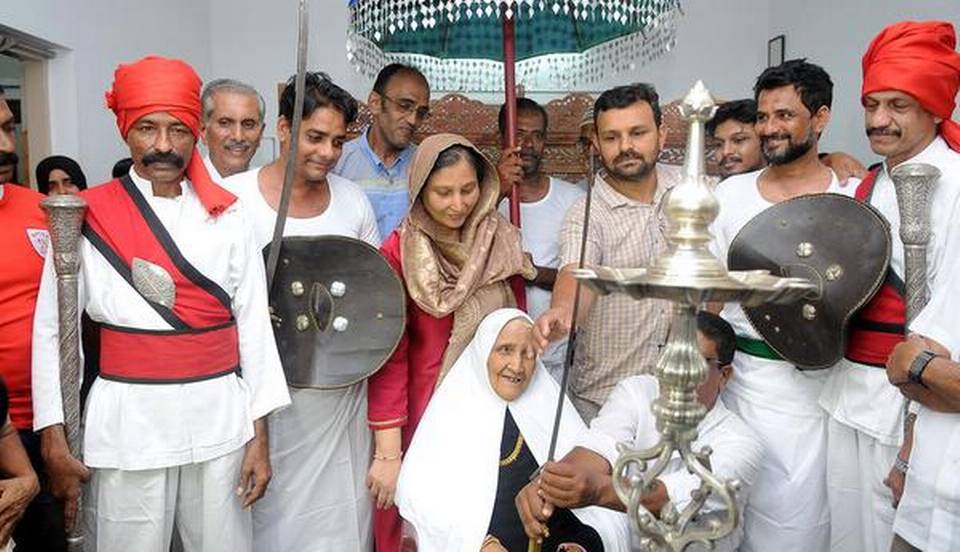
Adiraja Mariyumma, alias Cheriya Bikkunhu Beevi, taking over as head of the royal Arakkal family in Kannur on Wednesday. | Photo Credit: S_K_MOHAN
Octogenarian assumes charge after death of her cousin Fathima Muthu Beevi on May 4
Octogenarian Adiraja Mariyumma, alias Cheriya Bikkunhu Beevi, is the new head of the Arakkal family, the royal house that once ruled old parts of Kannur and controlled some islands which form part of Lakshadweep.
Ms. Beevi, who resides at her residence at Arakkal Kettu, the compound comprising houses of members of the royal family, took over as new head of the family in a simple and brief function attended by family members on Wednesday evening. Wife of the late A.P. Aluppi Elaya, retired administrative officer, Chennai Ports Trust (CPT), 85-year-old Ms. Beevi has been residing at Almar Mahal here ever since she returned from Chennai 19 years ago.
She assumed charge as new head of the family following the death of her predecessor and cousin, 86-year-old Sulthan Arakkal Adiraja Fathima Muthu Beevi, on May 4.
Matrilineal system
As the family follows the matrilineal system of succession common among Mappila Muslims in the region, the eldest member of the family becomes the head of the royal family which once ruled the lone Muslim principality in the State.
“The senior-most member of the Arakkal family, regardless of gender, becomes the titular head of the family,” said Abdul Shukkoor, son of the new head of the family. When the Arkkal properties were partitioned in 1960 there were 59 members and 39 of them had died after serving as head of the family as per the seniority norm in succession, said Mr. Shukkoor, 58, who is working as Superintendent in the Finance Department of the CPT.
Titles
Traditionally, female heads of the Arakkal house are known as Arakkal Beevis, while male heads are called Ali Rajas.
The royal family had good relationship with Hyder Ali and Tipu Sultan of Mysore. When the British had defeated Tipu Sultan in the last decade of the 18th century, the family was forced to cede their land to the British.
Mr. Shukkoor said the Arakkal family once had revenues from landed properties and rented buildings and trade activities including pepper and coir.
Much of the land of the family had been surrendered following the enforcement of the Land Ceiling Act during the rule of former Prime Minister Indira Gandhi.
source: http://www.thehindu.com / The Hindu / Home> News> States> Kerala / by Mohamed Nazeer / Kannur – May 09th, 2019
Surat , GUJARAT / Bombay (now Mumbai) MAHARASHTRA / London, ENGLAND :
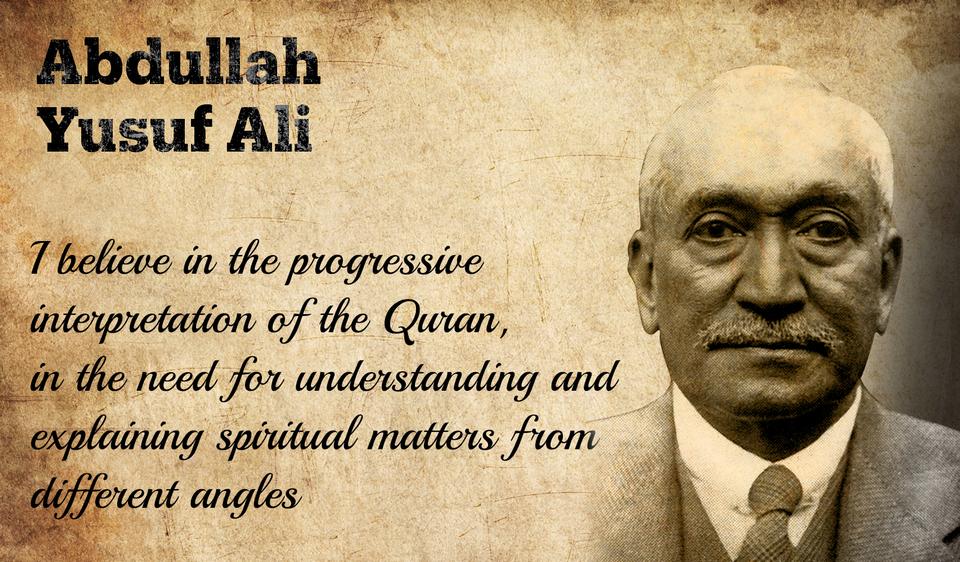
Abdullah Yusuf Ali wrote perhaps the most famous translation of the Quran but he also supported the British against the Ottomans and died a lonely man.
On a frigid December morning in 1953, a policeman found a half-conscious old man slumped on a street bench in the Westminster area of London. He was in a delirious state and died a day later on December 10. Ali
That man was Abdullah Yusuf Ali, the famous 20th-century translator of the Quran. He died alone, homeless, and with no one by his side. When the news reached Pakistan’s embassy in London, it dispatched someone to pay for his last rites.
“It pains me to think that so able and eminent a gentleman should have met with so pathetic an end,” Mirza Abul Hassan Ispahani, Pakistan’s High Commissioner in London, wrote in a letter to his prime minister two days later.
Generations of Muslims in English-speaking countries have grown up reading Yusuf Ali’s interpretation of the Quran. More than 200 editions of it have been published so far, making it perhaps the most read commentary in any non-Arabic language.
“Ask any English-speaking Muslim what translation and commentary of the Quran they originally studied, and the chances are that it was the one by Abdullah Yusuf Ali,” writes a commentator.
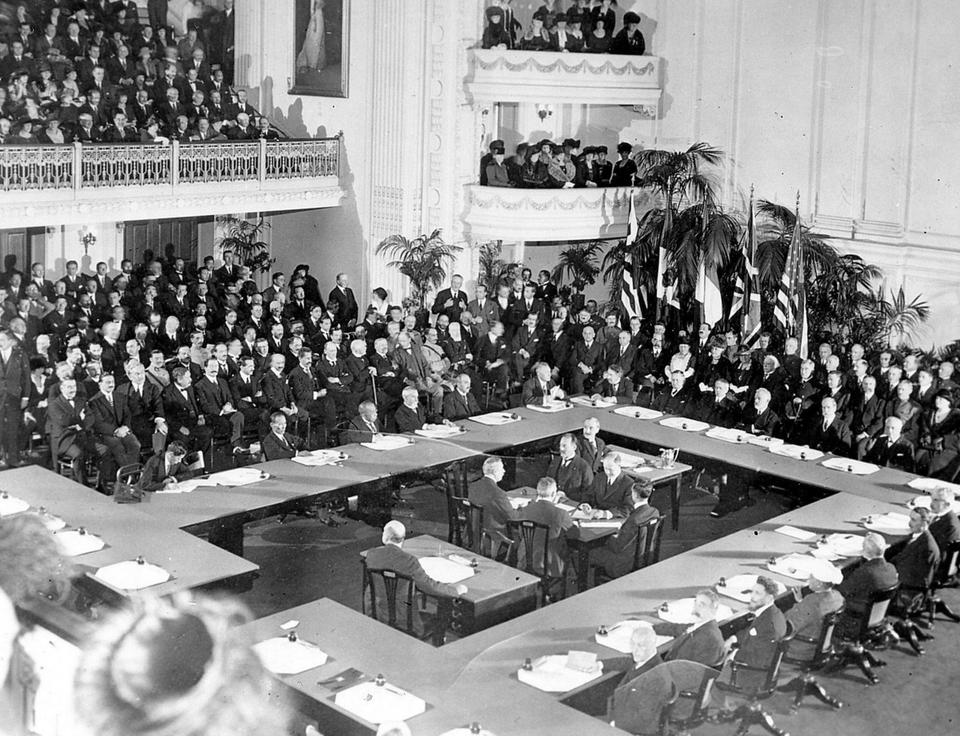
Yusuf Ali’s work and affiliations solidify his place as a giant of his time. He was one of the most senior Muslim civil servants during the British Raj, rubbed shoulders with the likes of Mohammad Ali Jinnah and the Aga Khan, inaugurated the first mosque in Canada, represented India at the Paris Peace Talks in 1919, was a trustee of London’s oldest mosque, and a known educationist. He was also a prolific writer on Islam.
But how did a prominent Muslim like him meet such a terrible end? Why was he forgotten so quickly?
A child of his time
In 1915, during World War I, the British faced a dilemma. Nearly half a million soldiers were Muslims from the Indian Subcontinent — modern-day India, Pakistan and Bangladesh — which was then under colonial rule. Some refused to fight the Turkish Ottoman soldiers who had joined the war against the allied army.
A mutiny broke out in November of that year in Singapore where Indian Muslim soldiers turned their guns on officers and took control of the island. The uprising was quickly crushed and 70 Muslim men were lined up against a wall and executed.
The events shook British officials. Many Muslims considered the Ottoman Sultan Mehmed Reshad as their Caliph. Their personal affinity and strong connection led to the Khilafat Movement in India that called for boycotting the British.
Abdullah Yusuf Ali thought otherwise.
“Fight ye glorious soldiers, Gurkha, Sikh or Muslim, Rajput or Brahman!” he said in a November 1914 speech at a London event in front of top British military officials. “You have comrades in the British army whose fellowship and lead are a priceless possession to you.”
In his talks and articles throughout the war, he urged fellow Muslims to side with the British, at times doing it so effusively that his rhetoric appeared jingoistic.
“The Ottoman Caliph announces Jihad against the British and what does Yusuf Ali do? He goes around European countries asking Muslims to fight for the British,” Humayun Ansari, a professor of Islam at the University of London, told TRT World.
“He was consistently loyal to the British and considered the British Empire to be a blessing. In his understanding of Islam he was very liberal. He wanted a reconciliation between the Muslim and Western philosophy.”
Abdullah Yusuf Ali attended the all-important Paris Peace Conference in 1919. (Getty Images)
Yusuf Ali was born in 1871 in Surat, western India, during a period of great introspection for the Muslims of India as their rule over the region for centuries came to an end and they were at the mercy of the English and a more politically organised Hindu majority.
Among the Muslims there was a realisation that they would have to study English, attain a modern education and learn British ways to get government jobs and regain their lost social status.
Yusuf Ali, who came from a middle-class family, proved to be an exceptional student throughout his school years and after matriculating from a missionary school, he won a scholarship to study at Cambridge University in London. The scholarship was given to only nine Indian students each year.
“We have to look at him in the context of his times. That was a generation when the British claimed superiority over the natives. And then you have somebody who can emerge and beat them at their own game,” says Jamil Sherif, who wrote Yusuf Ali’s biography titled Searching for Solace.
“Yusuf Ali’s approach was to show through his writing that Islam had made major contributions through the ages. But I think his compromise was that he saw religion mainly in spiritual terms and he saw socio-political dimensions of Islam as not really relevant in the days of empire,” he told TRT World.
At Cambridge, Yusuf Ali excelled in English composition, Arabic and other subjects. He also cleared the intensely competitive exam for the elite Indian Civil Service (ICS). In subsequent years, he rose to become perhaps the highest-ranking Muslim civil servant in India when he worked under Cabinet’s member of finance.
He was a devout Muslim, making sure he offered daily prayers, attended religious congregations and led prayers at the Shah Jahan Mosque in Woking, a town near London.
At the same time, he was against political Islam and insisted that Muslims could do better under British rule and that they should focus on educating themselves as opposed to agitating for independence.
Over the years, he remained affiliated with different institutions and also served as the principal of Lahore’s Islamia College – he was invited to take the position by the venerated poet Allama Muhammad Iqbal.
But behind the veneer of his intellect, busy schedule and scholarly importance, he was a man suffering from internal conflicts.
When the east meets west
Yusuf Ali was a troubled man. He married twice and both relationships ended bitterly.
In 1900, just a few years into his role as a civil servant, he married Teresa Mary Shalders, in a ceremony at the St. Peter’s Church in England.
“It was a bold and uninhibited act by the young couple, who may have looked at the dawn of the new century and thought everything possible – including the harmony of races, religions, and continents,” Sherif, who uses M.A. Sherif as his pen name, writes in his book.
But any hope of making a statement with this marriage of two different cultures faded in a few short years. They had four kids over the years but Yusuf Ali spent most of this time in India as a government officer while Shalders, who was in England, fell in love with another man.
Their divorce in 1911 was particularly painful for Yusuf Ali and he might have hinted at that period in the preface of his Quranic commentary when he wrote: “A man’s life is subject to inner storms…which nearly unseated my reason and made life meaningless.”
He won custody of their children but became estranged from them over time.
“These children by their continued ill-will towards me have alienated my affection for them, so much that I confer no benefit on them by this will,” Yusuf Ali later wrote in his will.
As an ICS officer, he rose swiftly from an assistant magistrate to more important positions, and the British government increasingly relied on him as its key propagandist.
Yusuf Ali was not entirely oblivious to the systematic discrimination that Muslims faced under British rule.
“He wrote about how Britain was using Indian revenue in the Great War. That’s a very subtle way of criticism. He also made references to discrimination suffered [by locals] on the basis of colour,” says Sherif.
In the early 1920s, Yusuf Ali married Gertrude Anne Mawbey, who he liked to call Masuma (innocent). That marriage didn’t work out either.
(TRTWorld)
It was during this personal crisis that Ali began the monumental work of writing an English translation of the Quran, often working on solitary ocean liner journeys which he took at the behest of the British government.
“Yusuf Ali’s bond with the Quran was forged in these times of anguish when searching for solace,” writes Sherif.
Prominent scholars such as Marmaduke Picktall and others had already done a lot to introduce the West to Islam’s holiest book but Yusuf Ali did it with humility and open-mindedness which set his work apart.
“His interpretation is very balanced. It doesn’t force you to any particular corner, it can be read by all the schools of thought. It’s a very broadminded, compassionate approach to studying religion,” Sherif tells TRT World.
Yusuf Ali was a Dawoodi Bohra, a strain of Shia Islam, but he garnered enough respect across the spectrum to lead congregations at Sunni mosques.
“In his translation of the Quran, published between 1934 and 1937, Yusuf Ali expounded the spiritual side of Islam more than its worldly view,” writes A R Kidwai, a prominent researcher.
His excellent command over the English language lends a poetic touch to the thousands of footnotes and he didn’t shy away from using English poets such as Longfellow and Milton to explain the word of God.
Besides dealing with his matrimonial failures, he had a hard time coming to terms with what happened to Arab Muslims after World War I.
“Unlike many of his contemporaries, he did not criticise the League of Nations when it dismembered the Ottoman empire,” says Sherif. “But what really shook him was the proposal to partition Palestine.”
Hundreds of thousands of Palestinians were forced to live in camps in neighboring countries after Israel pushed them out of their homes. (TRTWorld)
For someone groomed to believe that the English people were true to their word, the haphazard division of the Ottoman Empire and the creation of Israel was unsettling for Yusuf Ali.
In 1937 he attended many meetings and conferences fighting the case of Palestinians and warned Western powers about creation of a Jewish state on Muslim land.
“One way alone can bring thee peace:
That ancient rights be not suppressed,
That aliens from encroachments cease,
And Quds be given its rightful rest,” he wrote in the poem Palestine published in January 1938.
However, Palestine’s tragedy wasn’t enough to deter his loyalty to the British as he travelled to India at the urging of England’s Ministry of Information to rally Muslim support after it declared war on Germany in 1939.
In Delhi, he met Sir Sikandar Hayat Khan and spoke to students about the need for India’s support for the British. That was a time of turmoil in India as both Muslims and Hindus had begun rallying for independence.
Upon his return, he wrote articles and gave speeches, asking Indians to unite in defence of the empire and drop their demand for political reforms. But his appearance as an important player in international events quickly faded after the war ended in 1944.
We might never know what broke him in the end. But as the British pulled out of the subcontinent in the days of its waning global status, so did Yusuf Ali slowly recede from the newspapers, his powerful friends no longer found a use for him.
Yusuf Ali spent his last years living in the National Liberal Club on a monthly pension that he received against his government job.
“How did the British treat him? There’s certainly a question mark there. They didn’t recognise his contribution as much as he probably expected,” says Humayun Ansari.
His powerful friends in the Muslim community including Pakistan’s then ambassador Ispahani had also lost track of Ali’s whereabouts, not bothering to check on him.
“That is an indictment of the Muslim society that we were not able to honour and care for someone of his stature,” says Jamil Sherif.
Source: TRT World
source: http://www.trtworld.com / TRT World / Home> News> Magazine / by Saad Hasan / September 04th, 2019
Despite a self-imposed limit on the Nadaprabhu Kempegowda Award 2019 to only 70 people, the BBMP announced 100 recipients of the same on Tuesday.
Senior Kannada writers Chandrashekhar Patil, Keshavareddy Handrala, Abdul Rasheed, Pratibha Nandakumar, actor-politician Mukhyamantri Chandru, singer Manjula Gururaj, educationist Gururaj Karjagi, Dalit activist Mavalli Shankar and senior advocate Ravi Verma Kumar are among the awardees.
IPS officer M.N. Anucheth, the chief investigation officer in the Gauri Lankesh murder case, and six members of his team, have also been given the award for the successful probe that eventually led to breakthroughs in three other murder cases.
Another IPS officer D. Roopa is also on the list of awardees.
While 10 women, including social activist and JD(S) leader Leeladevi R. Prasad, have been awarded the Nadaprabhu Kempegowda Sose Mahatyagi Lakshmidevi award, five organisations including Bosco Mane, that helps children, have been awarded the Paramapoojya Dr. Shivakumara Swamiji award.
Chief Minister B.S. Yediyurappa will present the awards on Wednesday, observed as the 508th Nadaprabhu Kempegowda Jayanti.
source: http://www.thehindu.com / The Hindu / Home> News> States> Karnataka / by Staff Reporter / Bengaluru – September 04th, 2019
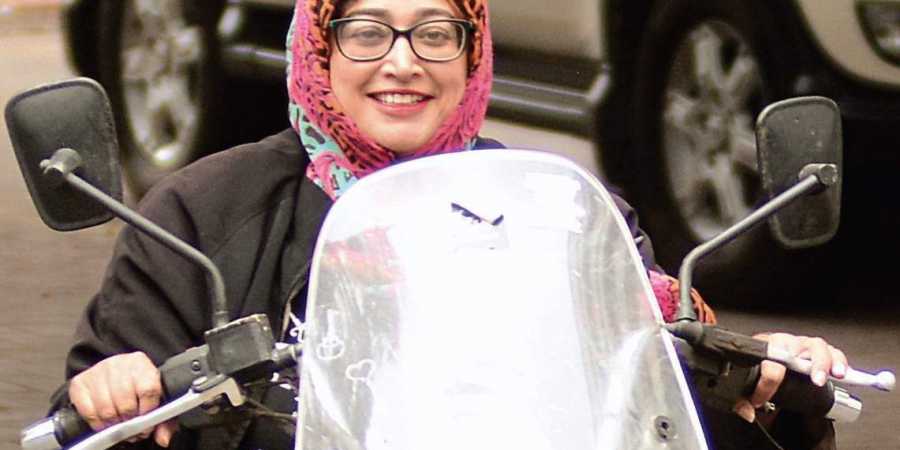
In order to pursue her dream of bike riding, Mehdia Fathima took up the hobby after 20 years of managing career and family; plans to take a trip from Kanyakumari to Kashmir next.
Mehdia Fathima
Bengaluru :
Mehdia Fathima had been keeping herself busy with her life, career and children’s studies. But almost four years ago, she took a break from her mundane daily routine and started exploring her true self as a solo bike rider. “During my college days, I was interested in bike riding and learned to ride one from a friend. It took me almost 20 years to get back to my hobby. All this time, I didn’t get time to think about pursuing this. I had to build my career, look after my kids and family,” said Fathima.
Today, the 48-year-old solo biker has been on two trips – Golden Quadrilateral Ride and Indian Coastline Ride – covering around 15,500 km. “I always prefer two-wheeler to four-wheeler, thanks to the horrible traffic in Bengaluru,” she smiled, adding, “But my interest in bikes bloomed again when a colleague gave a chance to ride his bike three-and-a-half years ago. I bought a Bajaj Avenger 220 Cruise and started taking part in group rides with my colleagues and Avenger club. Once I participated in a group ride with another club and they were riding at a speed of almost 120 km/hour on highways, which made me feel uncomfortable. We have to consider others’ speed and comfort when we travel in a group. I desperately wanted me-time and that’s how I started solo rides.”
In her Golden Quadrilateral Ride, she rode across 16 Indian states in three weeks and took more than four weeks for Indian Coastline Ride. “My preparations for each trip start two months ahead of the trip. They are self-funded and done out of passion and hobby.” Fathima, who is a mother of two teenagers, also shared that she had to face a lot of criticism from others when she took the decision of riding solo. “Many asked what I want to prove at this age. My question is, why should a woman always have to prove herself for everything? We have to prove we are equal or better than men at the workplace, home, and so on,” she said. Not just gender stereotypes, she questions generalisations about women riders. “I always wear hijab. In fact, while riding, hijab gives more protection from dust and sun exposure. I don’t think solo driving is unsafe for women in the country. There are differences in the attitude of people in different places. But if you are a normal traveller and avoid night rides, I think our highways are safe for all riders,” she added.
Fathima, an IBM employee who lives in RT Nagar with her family – her husband works with an FMCG company – completed her last solo ride in January.
“During my coastline trip, I interacted with a lot of fishermen communities across the country and realised how privileged I am as a city dweller. I learned self-confidence, patience and tolerance towards other cultures and people. I wanted to give back some values to the bike riding community and started teaching bike riding free of cost,” said Fathima, who finished a course with her first batch and is planning to do another soon.
Her dreams don’t stop there.
“Kanyakumari to Kashmir is my next trip that I’m planning in December. I also want to upgrade my bike. Triumph Tiger 800 is my dream bike. Since bike riding has always been a male-dominated field, women rarely find good bikes as per their height and size. There should be more bikes produced for women.”
source: http://www.newindianexpress.com / The New Indian Express / Home> Cities> Bengaluru / by Lesly Joseph / Express News Service / September 03rd, 2019
 Bhawan Arora with her book at Chandigarh Press club
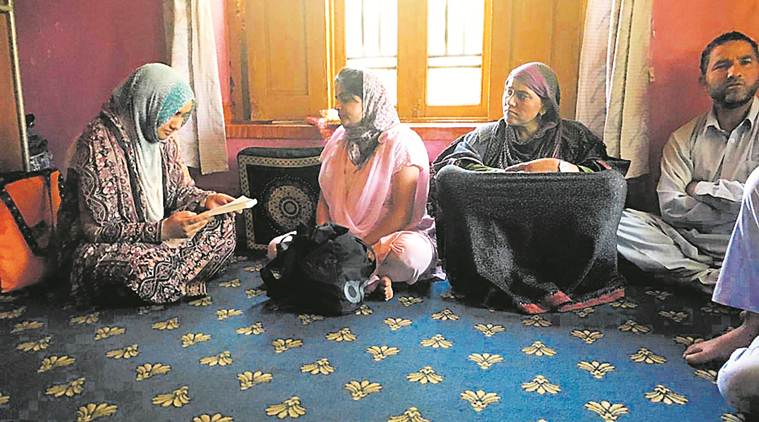 Bhawan Arora with Ummer’s famil