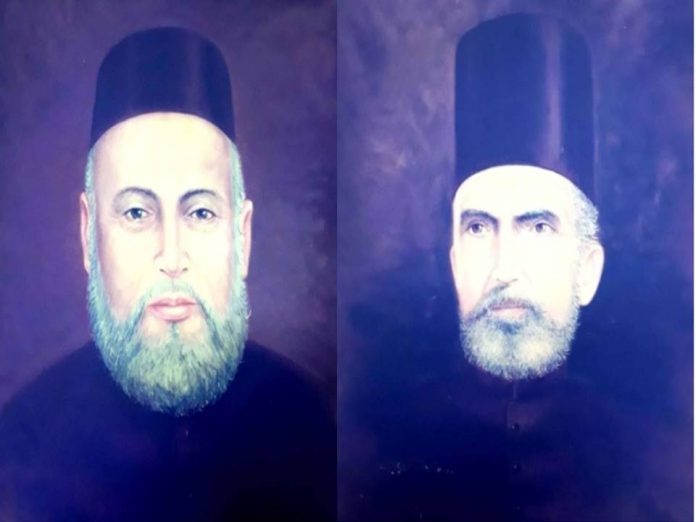
Hakim Mohammad Abdul Aziz Lakhnawi & Hakim Mohammad Kabiruddin
Two Unani physicians are among the 12 ‘Master Healers’ of AYUSH systems to be commemorated with postage stamps on 30th August. The stamps will be released by the Prime Minister of India in New Delhi.
Hakim Mohammad Kabiruddin (1894–1976) and Hakim Mohammad Abdul Aziz Lakhnawi (1854–1911), the eminent scholars and physicians of Unani Medicine, are the two legends who will be immortalised on the postage stamps.
The Central Council for Research in Unani Medicine (CCRUM) in their press released shared this information about these two physicians.
While Hakim Mohammad Kabiruddin was one of the most prolific writers and a great academician of Unani Medicine in the twentieth century, Hakim Mohammad Abdul Aziz Lakhnawi was a great philosopher-physician of his time. Hakim Kabiruddin realized that education of Unani Medicine through Arabic or Persian medium could no longer sustain and felt the need to convert Unani text books in Urdu language. He devoted his efforts to fulfil this need and successfully translated many important books in Urdu language. His translation works include ‘Tarjama-e-Mujiz al-Qanoon’, ‘Tarjama-e-Kabir’ (Translation of Sharah al-Asbabwa al-Alamat), ‘Tarjama Hummayat-e-Qanoon’, ‘Tarjama wa Sharh Kulliyat-e-Nafisi’, ‘Tarjama Kulliyat-e-Qanoon’, etc.
With a view to popularize Unani Medicine and promote its scientific literature, he started Al-Masih, a monthly magazine in 1921 and established ‘Daftar al-Masih’, a publishing house, which published his original works as1) well as translations done by him and his colleagues. He also contributed to compilation and translation of medical syllabus of Jamia Usmania Hyderabad and was honored with the title of ‘Shahanshah-e-Tasnifaat’ (Emperor of Compilations) by Nizam of Hyderabad.
On the other hand, Hakim Mohammad Abdul Aziz Lakhnawi was a member of the famous Azizi family of Unani Medicine which is named after him despite the fact that there were many illustrious Hakims amongst his ancestors. His remarkable contribution is the establishment of Takmil ut-Tib College, Lucknow. He had exceptional expertise in the principles and philosophies of Unani Medicine. In spite of being over occupied by medical practice and teaching, he found time to write medical books / booklets that included Risala Tuhfa-e-Azizi, Bayaz-e-Mujarrabat and Hashiya ala al-Qanoon.
source: http://www.twocircles.net / TwoCircles.net / Home> Event> Indian Muslim> Lead Story / by TCN News / August 29th, 2019
For decades, a book wrongly identified as ‘The Holy Koran’ was kept at a mosque in Broken Hill. Who was the unnamed traveller who brought Bengali stories of the prophets to the Australian desert?
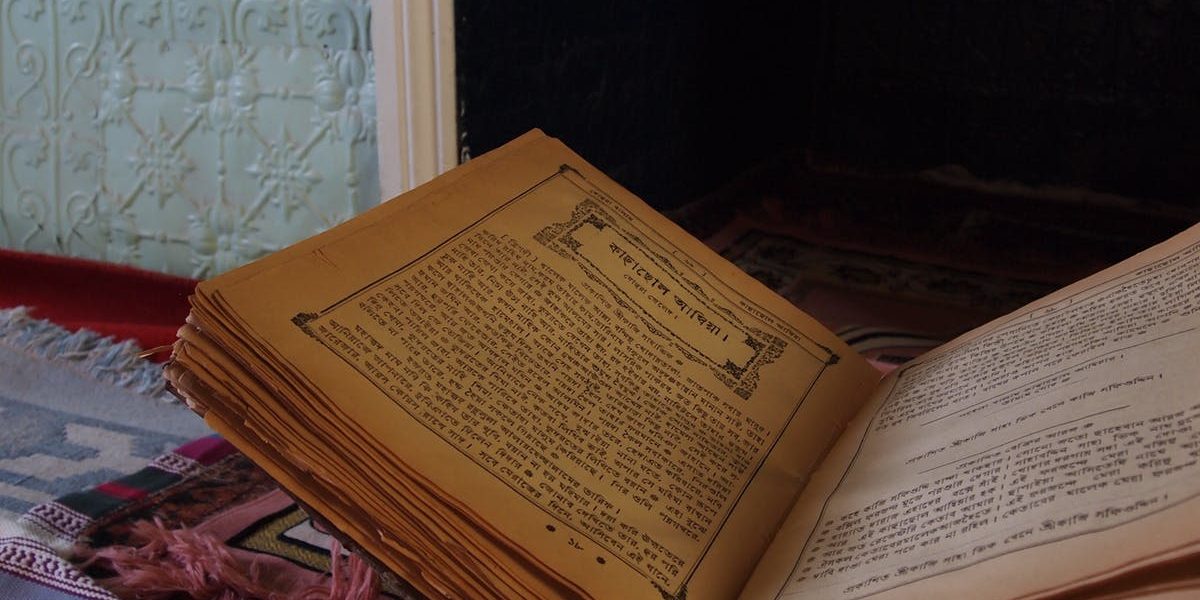
The large book bearing a handwritten English label, ‘The Holy Koran’, was not a Quran, but a 500-page volume of Bengali Sufi poetry. Photo: Samia Khatun/The Conversation
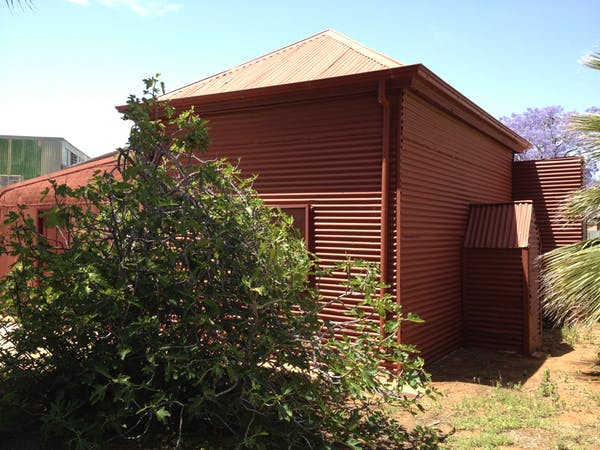
Some 1,000 kilometres inland from Sydney, over the Blue Mountains, past the trees that drink the tributaries of the Darling River, there stands a little, red mosque. It marks where the desert begins.
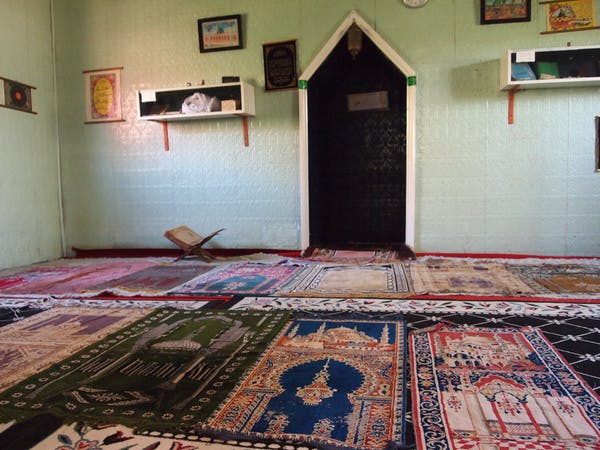
The mosque was built from corrugated iron in around 1887 in the town of Broken Hill. Its green interiors feature simple arabesque and its shelves house stories once precious to people from across the Indian Ocean. Today it is a peaceful place of retreat from the gritty dust storms and brilliant sunlight that assault travellers at this gateway to Australia’s deserts.
The corrugated iron mosque in Broken Hill. Photo: Samia Khatun/The Conversation
By a rocky hill that winds had “polished black”, the town of Broken Hill was founded on the country of Wiljakali people. In June 1885, an Aboriginal man whom prospectors called “Harry” led them to a silver-streaked boulder of ironstone and Europeans declared the discovery of a “jeweller’s shop”.
Soon, leading strings of camels, South Asian merchants and drivers began arriving in greater numbers at the silver mines, camel transportation operating as a crucial adjunct to colonial industries throughout Australian deserts. The town grew with the fortunes of the nascent firm Broken Hill Propriety Limited (BHP) — a parent company of one of the largest mining conglomerates in the world today, BHP-Billiton.
As mining firms funnelled lead, iron ore and silver from Wiljakali lands to Indian Ocean ports and British markets, Broken Hill became a busy industrial node in the geography of the British Empire. The numbers of camel merchants and drivers fluctuated with the arrival and departure of goods, and by the turn of the 20th century an estimated 400 South Asians were living in Broken Hill. They built two mosques. Only one remains.
In the 1960s, long after the end of the era of camel transportation, when members of the Broken Hill Historical Society were restoring the mosque on the corner of William Street and Buck Street, they found a book in the yard, its “pages blowing in the red dust” in the words of historian Christine Stevens. Dusting the book free of sand, they placed it inside the mosque, labelling it as “The Holy Koran”. In 1989, Stevens reproduced a photo of the book in her history of the “Afghan cameldrivers”.
I travelled to Broken Hill in July 2009. As I searched the shelves of the mosque for the book, a winter dust storm was underway outside. Among letters, a peacock feather fan and bottles of scent from Delhi, the large book lay, bearing a handwritten English label: “The Holy Koran”.
Turning the first few pages revealed it was not a Quran, but a 500-page volume of Bengali Sufi poetry.
Sitting on the floor, I set out to decipher Bengali characters I had not read for years. The book was titled Kasasol Ambia (Stories of the Prophets). Printed in Calcutta, it was a compendium of eight volumes published separately between 1861 and 1895. It was a book of books. Every story began by naming the tempo at which it should be performed, for these poems were written to be sung out loud to audiences.
The mosque’s interior. Photo: Samia Khatun/The Conversation
As I strained to parse unfamiliar Persian, Hindi and Arabic words, woven into a tapestry of 19th-century Bengali grammar, I slowly started to glimpse the shimmering imagery of the poetry.
Creation began with a pen, wrote Munshi Rezaulla, the first of the three poets of Kasasol Ambia. As a concealed pen inscribed words onto a tablet, he narrates, seven heavens and seven lands came into being, and “Adam Sufi” was sculpted from clay. Over the 500 pages of verse that follow, Adam meets Purusha, Alexander the Great searches for immortal Khidr, and married Zulekha falls hopelessly in love with Yusuf.
As Rezaulla tells us, it was his Sufi guide who instructed him to translate Persian and Hindi stories into Bengali. Overwhelmed by the task, Rezaulla asked, “I am so ignorant, in what form will I write poetry?”
In search of answers, the poet wrote, “I leapt into the sea. Searching for pearls, I began threading a chain.” Here the imagery of the poet’s body immersed in a sea evokes a pen dipped in ink stringing together line after line of poetry. As Rezaulla wrote, “Stories of the Prophets (Kasasol Ambia) I name this chain.”
Its pages stringing together motif after motif from narratives that have long circulated the Indian Ocean, Kasasol Ambia described events spanning thousands of years, ending in the sixth year of the Muslim Hijri calendar. Cocooned from the winds raging outside, I realised I was reading a Bengali book of popular history.
Challenging Australian history
In the time since Broken Hill locals dusted Kasasol Ambia of sand in the 1960s, why had four Australian historians mislabelled the book? Why did the history books accompanying South Asian travellers to the West play no role in the histories that are written about them?
Moreover, as Christine Stevens writes, the people who built the mosque in North Broken Hill came from “Afghanistan and North-Western India”. How, then, did a book published in Bengal find its way to an inland Australian mining town?
Captivated by this last enigma, I began looking for clues. First, I turned to the records of the Broken Hill Historical Society. Looking for fragments of Bengali words in archival collections across Australia, I sought glimpses of a traveller who might be able to connect 19th-century Calcutta to Broken Hill.
As I searched for South Asian characters through a constellation of desert towns and Australian ports once linked by camels, I encountered a vast wealth of non-English-language sources that Australian historians systematically sidestep.
A seafarer’s travelogue narrated in Urdu in Lahore continues to circulate today in South Asia and in Australia, while Urdu, Persian and Arabic dream texts from across the Indian Ocean left ample traces in Australian newspapers.
One of the most surprising discoveries was that the richest accounts of South Asians were in some of the Aboriginal languages spoken in Australian desert parts. In histories that Aboriginal people told in Wangkangurru, Kuyani, Arabunna and Dhirari about the upheaval, violence and new encounters that occurred in the wake of British colonisation, there appear startlingly detailed accounts of South Asians.
Central to the history of encounter between South Asians and Aboriginal people in the era of British colonisation were a number of industries in which non-white labour was crucial: steam shipping industries, sugar farming, railway construction, pastoral industries, and camel transportation. Camels, in particular, loom large in the history of South Asians in Australia.
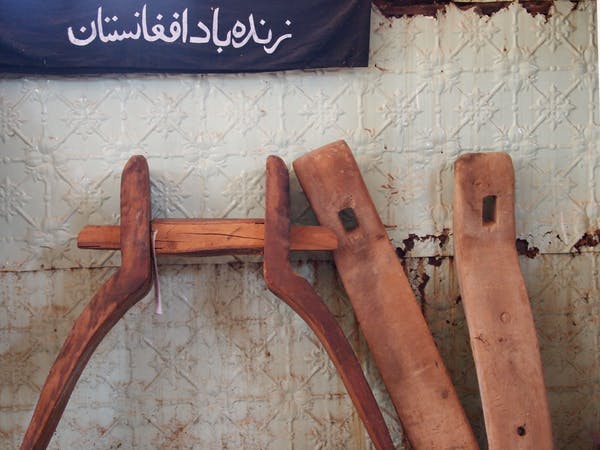
Camel harnesses at the mosque. Photo: Samia Khatun/The Conversation
From the 1860s, camel lines became central to transportation in Australian desert interiors, colonising many of the long-distance Indigenous trade routes that crisscross Aboriginal land. The animals arrived from British Indian ports accompanied by South Asian camel owners and drivers, who came to be known by the umbrella term of “Afghans” in settler nomenclature.
The so-called Afghans were so ubiquitous through Australian deserts that when the two ends of the transcontinental north-south railway met in Central Australia in 1929, settlers rejoiced in the arrival of the “Afghan Express”. Camels remained central to interior transportation until they were replaced by motor transportation from the 1920s. Today the transcontinental railway is still known as “the Ghan” .
As a circuitry of camel tracks interlocking with shipping lines and railways threaded together Aboriginal lives and families with those of Indian Ocean travellers, people moving through these networks storied their experiences in their own tongues. Foregrounding these fragments in languages other than English, this book tells a history of South Asian diaspora in Australia.
Asking new questions
I start by reading the copy of Kasasol Ambia that remains in Broken Hill, and interpret the many South Asian- and Aboriginal-language stories I encountered during my search for the reader who brought the Bengali book to the Australian interior. Entry points into rich imaginative landscapes, these are stories that ask us to take seriously the epistemologies of people colonised by the British Empire.
My aim is to challenge the suffocating monolingualism of the field of Australian history. In my new book, Australianama, I do not argue for the simple inclusion of non-English-language texts into existing Australian national history books, perhaps with updated or extended captions.
Instead, I show that non-English-language texts render visible historical storytelling strategies and larger architectures of knowledge that we can use to structure accounts of the past. These have the capacity to radically change the routes readers use to imaginatively travel to the past. Stories in colonised tongues can transform the very grounds from which we view the past, present and future.
In July 2009, when I first encountered Kasasol Ambia, the Bengali book long mislabelled as a Quran made front-page news in Broken Hill. With touching enthusiasm, the journalist announced that I would “begin work on a full translation shortly “.
Overwhelmed by such a task, I began trawling mosque records held by the Broken Hill Historical Society, soon beginning a search through port records, customs documents and government archives. I did not know how to decipher the difficult book, and so in these archival materials I hoped to glimpse, however fleetingly, the skilled 19th-century reader who had once performed its poetry.
Slowly, it dawned on me that I was following the logic that Rezaulla outlines in his schema for translation. For I too had stepped into the imaginative world of the poetry in search of answers to some hard questions: How do we write histories of South Asian diaspora which pay attention to the history books that travelled with them? Who was the unnamed traveller who brought Bengali stories of the prophets to Broken Hill? Can historical storytelling in English do more than simply induct readers into white subjectivities?
Threading together seven narrative motifs that appear in Kasasol Ambia, I began to piece together a history of South Asians in Australia.
Samia Khatun , Senior Lecturer, SOAS, University of London
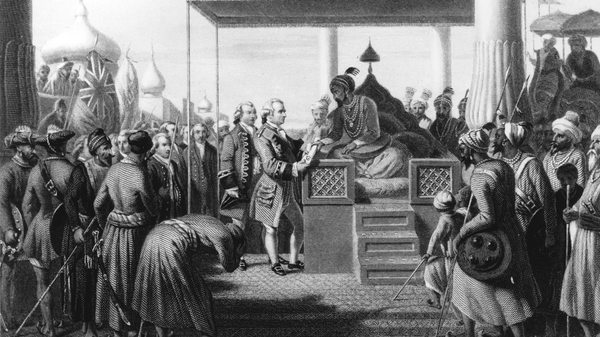
A sketch showing Robert Clive receiving, from Shah Alam II, the decree conferring on the East India Company the right to receive Bengal’s revenues.
The reign of Shah Alam, one the last Mughal emperors, was upturned by the Rohilla chief Ghulam Qadir
The vengeful treatment of the emperor caused such outrage that even the Afghan king offered to send aid
In August 1788, the Red Fort in Delhi witnessed what one observer would recall as the most “unspeakable and indescribable” crimes. As in the previous year, the Rohilla chief, Ghulam Qadir, had descended on the Mughal capital, threatening to unleash chaos. While his last attempt had been aborted, thanks to Begum Samru, a dancing girl turned princess, nobody rode to Shah Alam II’s rescue on this occasion. In fact, the officer in charge of the fort, despite orders to the contrary, threw open its gates, and 2,000 of Ghulam Qadir’s troops quickly took charge of the premises. Secure, the warlord made his way to the audience hall. And there, as William Dalrymple recounts in his splendid new book, The Anarchy, he “sat down on the cushions of the imperial throne”, blowing smoke from a pipe into the face of the badshah of Hindustan.
Shah Alam had not had a particularly glorious career, but even with its general turbulence, this was unprecedented. It was decades since the empire of the Mughals had begun to unravel, but while the emperors had been reduced to ciphers, their dignity had never been so insolently offended. Shah Alam had tried in vain to reclaim power for the crown: For over a decade, he was not even in control of his capital, and, during his peregrinations, was forced (after military defeat) to grant governorship of the empire’s richest province to the East India Company (EIC). In 1772, he finally returned to Delhi, his general Najaf Khan bringing order to the surrounding regions. When the latter died, the Marathas stepped in to supply protection. For all his outward marks of authority, though, this came at the cost of giving free rein to Shivaji’s political heirs. As the contemporary chronicler Prem Kishor wrote, “The king (had) abandoned his sovereignty and taken up the ways of beggary.”
As a man, Shah Alam was not, to be clear, all incompetence, but, as scion of the Mughals, he inspired little support. He was a poet of talent, writing verses in languages as diverse as Braj Bhasha and Persian. EIC officer Col Polier described him as “a good and benevolent man” so far as his private characteristics went, but acknowledged that he was not by any stretch a “great king”. The English governor Warren Hastings, who refused to remit even the share of Bengal revenues that were due to the emperor, was more blunt: Shah Alam was merely a “wretched King of shreds and patches”.
And, as Dalrymple reminds us, while others in theory paid homage to the crown, Tipu Sultan discarded even this pretence. Those who bowed before Shah Alam, announced Mysore’s sultan, “act through ignorance, since the real condition of the so-called Emperor is…(that he is) the servant of (the Marathas) at the monthly wages of ₹15,000″.
And yet for all this contempt, Ghulam Qadir’s actions in 1788 sent shockwaves down the entire subcontinent: As the colonial-era historian W. Francklin wrote, to this man “it was reserved to…add the last outrage to the miseries of a long and most unfortunate reign”. The sequence of events that confirmed the Rohilla as one of the worst villains of the 18th century is chilling. Soon after taking charge of the Red Fort, Ghulam Qadir had Shah Alam locked up, planting in his place another prince on the throne. But what the trespasser really wanted was gold, not empty titles and grants of land, and none of the coin heaped before him satisfied the demand. Old begums were dispossessed of their jewels, and even the officer who opened the fort gates paid up—threatened that he would be drowned in excrement, the latter surrendered his own money to escape this revolting fate.
Furious, Ghulam Qadir turned on the imperial family, which for all its bloody intrigues had never quite experienced what he now decided to unleash. Princes of royal blood, including sons and grandsons of Shah Alam, were dressed in drag and made to dance for the Rohilla troops. The emperor’s daughters were stripped, raped and humiliated. Even Malika-i-Zamani, the formidable widow of a previous emperor, Dalrymple writes, was left naked in the hot sun after failing to deliver to Ghulam Qadir the riches he believed she possessed. And finally, bringing to his presence Shah Alam himself, the “ferocious ruffian” had the emperor blinded. In some accounts, in fact, he sits himself on Shah Alam’s chest, scooping out the old man’s eyes with a dagger.
Theories abound on Ghulam Qadir’s diabolical ferocity. His father had rebelled several times against Delhi, and, after defeating him, Shah Alam had taken Ghulam Qadir, then eight or 10 years old, hostage. One apocryphal tale says that after seeing the uncommonly handsome boy, the emperor had him castrated, often making him dance in women’s clothes. In an account left behind by a disgruntled Mughal prince, there is a suggestion of something beyond a regular relationship between Shah Alam and the Rohilla boy. Even as the emperor described Ghulam Qadir as his “special son”, wishing him great happiness in his poems, this contemporary noted that the boy suffered from ubnah, or “an itching in his behind”, hinting that he was made to serve as the emperor’s catamite. This, more than mere ambition or greed, it is believed, explains the horrors Ghulam Qadir let loose in 1788 on Shah Alam and his children.
But the act was for the Rohilla a death sentence. The treatment of the emperor caused such outrage that aid was offered even from Kabul. The Maratha general, Mahadji Scindia, led a large force to Delhi, and while Ghulam Qadir escaped, he was cornered and captured in Mathura very soon. Placed in a cage, his ears, nose, lips and feet were cut off, one by one, each of these circulated in the Red Fort by the emperor. And finally, the story goes, Shah Alam, in whose reign the Mughals lost their final vestiges of power, received one last box, holding within it Ghulam Qadir’s eyes.
Medium Rare is a column on society, politics and history. Manu S. Pillai is the author of The Ivory Throne (2015) and Rebel Sultans (2018)
source: http://www.livemint.com / Live Mint / Home / by Manu S. Pillai / August 30th, 2019
A new organisation seeks to represent Indian Muslims, as well as help dispel the negative stereotyping about their community
On 16 July, the Indian Crescent Society of Australia (ICSOA) held its inaugural Eid function at the Himalaya Restaurant in South Granville. The hugely successful event provided an opportunity for Indian Muslims to connect with Indians from other religions.
The evening was attended by Dr A.S. Nakadar (founder of the American Federation of Muslims of Indian Origin), Rajeev Kumar (Vice Consul CGI), Peter Doukas (Chair, Ethnic Community Council NSW) and Julia Finn (Member for Granville) amongst other dignitaries.
The soon-to-be launched ICSOA aims to promote a positive image of Indian Muslims and help them integrate into mainstream society. Indian Link scratched the surface to find out more from the President of the society Mr Abbas Raza Alvi.
A well-known community leader, poet and businessman, Mr Alvi began by summing up the need for such an organisation:
“For the last 30 years, we’ve felt that the participation of Indian Muslims in the mainstream society has been limited. Most Indian Muslims are highly educated professionals, but due to a lack of networking and proper representation, they are not being recognised and celebrated as they should be. After lengthy discussions with the Indian High Commission and the Consul General, we finally came to the conclusion that Indian Muslims needed a special representation in Australian society. There was a need for a platform to allow them to participate and integrate like other Indians.”
In the wake of the hysteria against Muslims being kicked up by public figures like Pauline Hanson and Sonia Kruger, Mr Alvi feels that ICSOA has suddenly become the need of the hour. He realises the urgency to dispel the negative stereotype by integrating and showing the world that Muslims are a peace-loving people.
Touching briefly on the issue, he said, “Pauline Hanson must understand the effect of her provocative comments on the Australian economy. She has a history of inciting racial hatred; initially she targeted Indigenous Australians, then Chinese and Indian origin Australians, and now Muslims. Her comments can have a negative impact on Australian jobs, businesses and families. Australia currently exports $15 billion worth of goods to parts of the Muslim world. Include in that the exports to India and China and this figure may exceed $120 billion.”
On a lighter note he added, “I do suggest that PH (Pauline Hanson) should neutralise herself to the value of seven. (pH for pure water, H2O) is 7). Continuously spreading hatred through racist comments towards ethnic communities will not benefit any Australian and this includes those who have voted for her.”
There are around 5000 Indian Muslim families in Australia, but Mr Alvi feels, “Even though there are several small Indian Muslim organisations, their overall participation is rather small. When Muslims are not seen playing a role in society it creates disharmony and unbalance. India can never be properly represented in Australia until Indian Muslims are included in its representation.”
HIGHLIGHTING SOME OF THE MAIN GOALS OF ICSOA, MR ALVI EXPLAINED, “OUR AIMS WOULD BE TO HELP INDIAN MUSLIMS IN ISSUES AFFECTING THEIR DAILY LIVES LIKE EDUCATION, COMMUNITY WELFARE, MENTORING AND SUPPORT FOR NEW MIGRANTS.”
In addition, the organisation would work towards the integration of Indian Muslims within their own community, with other Indians and with the wider Australian society. “We will send our representatives to attend functions arranged by other organisations and invite them to ours in order to share and learn and work together for the welfare of all Indians.”
Programs will include working towards better recognition of the Urdu language, promoting creative talents within the community, supporting high achieving students, encouraging women in their goals and working with Aboriginal people to create artworks that depicts both cultures.
Another issue that concerns Mr Alvi is the demise of Indian cultural values in Australia. “I grew up with Hindus, Sikhs and Christians all living side by side in India. I don’t remember calling them by name, they were either mama, chacha, taya or dada. When we misbehaved, our parents weren’t the only ones to discipline us. If the neighbours got to know they would chastise us before them. That’s the Indian culture I love, but sadly when we come here, we get so busy trying to make a living, educating the kids, building a house, that the only spare time is either spent in home maintenance or religion. This is creating an isolation and disconnect with our Indian culture and is the cause of major problems and stress not just for Indian Muslims but for all Indians. Being religious is good, but the community connection is important for people to thrive and be happy. So, we want to bring back the integration, community feel and brotherhood we were used to in India and we want to promote peace.”
Mr Alvi took great pains to stress that ICSOA is not a religious organisation but an organisation to promote the Indian Muslim culture, language, food and traditions in order to help them integrate in the mainstream society.
To get the ball rolling, ICSOA has contacted individual organisations to form an ad hoc board which will represent Indian Muslims from all corners. The board is ironing out the finer details, compiling a database, advertising, initiating coordination in other cities and getting the website and logo in place before the formal launch. Mr Alvi informed that there will be a membership but the fee will be nominal. “We want every single Indian Muslim to join ICSOA.”
On the question of funding, he advised, “ICSOA will be self-funded by the large Indian Muslim business and professional community.”
The immense support for ICSOA was apparent at the Eid function where the expected turnout of 150 guests ballooned to over 250 attendees. Mr Alvi is optimistic about the future of the organisation, remarking, “Since ICSOA is a need based organisation with an experienced leadership I foresee it growing rapidly in future.”
Professor Sharib Rudaulvi was awarded the All India Bahadur Shah Zafar Award
[Manish Sisodia, who is also the Minister of Art, Culture and Languages, appealed to the writers to create more literature to inculcate the feelings of communal harmony and patriotism. (Photo: IANS/Twitter)]New Delhi:
Delhi Deputy Chief Minister Manish Sisodia on Tuesday conferred the annual awards to Urdu scholars for their contribution to Urdu literature.
Sisodia, who is also the Minister of Art, Culture and Languages, appealed to the writers to create more literature to inculcate the feelings of communal harmony and patriotism.
He congratulated the Urdu scholars and said it is the writers and thinkers, who ensure change and bring about ‘inqlab’ in the society through their creative writings with the “power of the pen”.
Professor Sharib Rudaulvi was awarded the All India Bahadur Shah Zafar Award.
“Hailing from Lucknow, Rudaulvi is a prominent critic and poet. He started his career as an Urdu faculty member at Dayal Singh College of Delhi University. In 1990, he joined Jawaharlal Nehru University as a Reader in 1990 from where he retired in 2000. He started his career as a poet, but he later turned towards criticism with greater attention,” the government said in a statement.
Ghazal singer-brothers Ustad Ahmad Hussain and Mohammed Hussain were given All India Award for Promotion of Urdu Language and Literature.
“Ahmed and Mohammed Hussain are two brothers who sing classical ghazals. Born in Rajasthan as sons of the famous Ghazal and ‘Thumri’ singer Ustad Afzal Hussain, the two touch genres like Indian classical music and ‘Bhajan’ as well as ‘Ghazal’. They started their singing career in 1958. They have uniqueness as they always sing the ‘ghazals’ together,” the statement said.
The award for Urdu poetry was given to G.R. Kanwal, who has published five anthologies of self-composed Urdu poetry.
Professor Atiqullah was awarded Pt. Brij Mohan Dattaria Kaifi Award.
“Atiqullah is a noted Urdu Critic and author of numerous books. He was also a professor at Delhi Univerisity.”
Ghazal singer Radhika Chopra received the award for ‘ghazal’ singing, the statement added.
The Deputy Chief Minister released and uncovered a book of Urdu pronunciation “Talaffuz” written by Shakeel Hasan Shamshi.
Delhi’s Urdu Academy, since its inception in May, 1981, has been conducting various educational, cultural and literary activities for the promotion, propagation and development of Urdu language, literature and composite lingual culture.
source: http://www.ummid.com / Ummid.com / Home> India / by IANS / August 20th, 2019
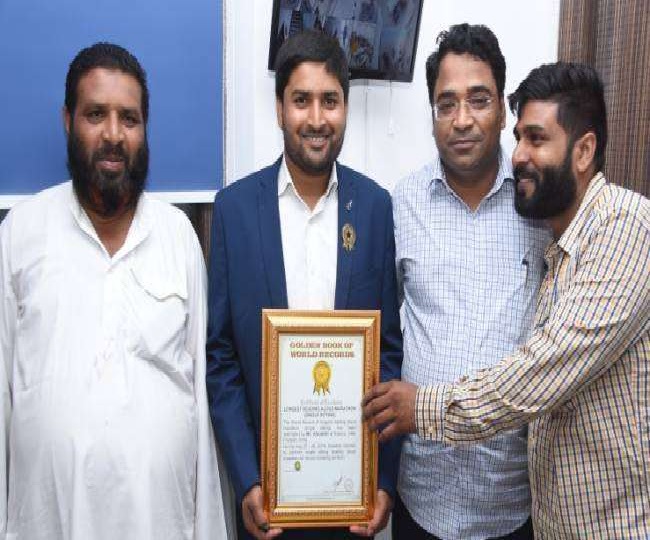
A student from Chhatrapati Shahu Ji Maharaj University (CSJMU), Kanpur created a world record for continuously reading books for 27 hours and five minutes.
Kanpur | Jagran Trending Desk:
A student from Chhatrapati Shahu Ji Maharaj University (CSJMU), Kanpur created a world record for continuously reading books for 27 hours and five minutes. His feat was acknowledged by the Guinness Book of World Records on Monday.
The 22-year-old boy, Allauddin, broke the previous record of continuous reading for 24 hours which was held by Yatish Chandra Shukla of Lakhimpur Kheri, who achieved this feat two years back.
His teacher, Dilip Gangwar, who helped him achieving this milestone said that the executive officers of the Guinness Book told him that he could break the earlier record if he could read for 24 hours and five minutes, but Allauddin said he would continuously read for 27 hours.
The Gangwar coaching made subsequent arrangements for Allauddin and a judge Mahesh Vishnoi, from Guinness Book of World Record was assigned to monitor the reading feat.
According to the rules to set this record, Allauddin could only take breaks of 30 seconds to sip water or to take some edibles and he would not be allowed to go to the washroom during the reading time.
Allauddin, standing firm on his desire to break the record started reading at 10 am on Sunday and finished on Monday. He took less than three breaks of less than 30 seconds to sip small quantities of water, said Dilip Gangwar.
Several eminent people, including former union minister Sri Prakash Jaiswal, MLC Arun Pathak and Satish Nigam witnessed the challenging task.
source: http://www.english.jagran.com / Jagran English / Home> English News> Trending / posted by Talib Khan / August 27th, 2019
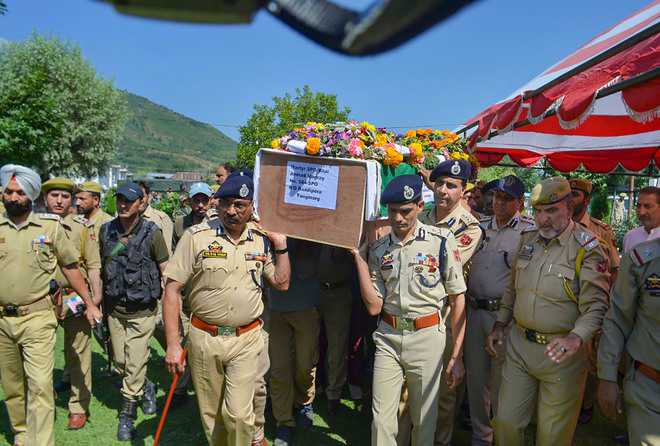
Police officers carry the coffin of SPO Bilal Ahmad in Baramulla. PTI
Srinagar :
In the first encounter between militants and security forces in Kashmir since the restrictions were imposed on August 5, a militant and a policeman were killed and a police officer injured while no major law and order situation was reported on Wednesday.
The encounter took place in Ganai Mohalla of Baramulla town in north Kashmir which concluded early this morning, DIG Police, Central Kashmir, VK Virdi said at media briefing here this evening. The militant has been identified as Momin Gojri of the Lashkar-e-Toiba. An SPO, Bilal Ahmad, was also killed in the encounter while SI Amardep Parihar was injured, who is undergoing treatment.
The police had declared Baramulla as a militant-free town in January this year.
“No major law and order situation was reported from any part of the Valley today while relaxations were further eased in many areas,” the DIG said. There were some minor incidents of stone pelting in some areas, he said, and added that the situation was being monitored closely by the authorities at the ground level.
A law and order situation was reported from the Telbal area on the outskirts of Srinagar late last night and dealt, he said.
On the functioning of other facilities, Director of Information, J&K Government, SyedSehrish Asghar said all hospitals, banks, ATMs and healthcare services were functioning normally in the Jammu region as there were adequate stocks of medicines and other supplies.
In view of the upcoming harvest season, the preparations for transportation of horticulture produce were reviewed at the Kashmir Divisional level, she said.
She urged people not to believe in rumours about unavailability of transport facilities.
source: http://www.tribuneindia.com / Tribune India / Home> J &K / by Ehsan Fazili / Tribune News Service / Srinagar, August 21st, 2019
While Haji gave the land for the new houses, Lokesh pledged his for an accessible road that can be built towards the plot.
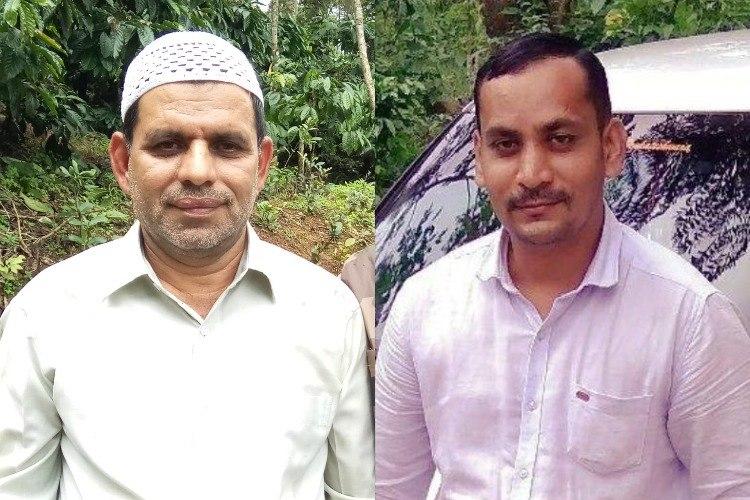
In the face of terrible tragedy, the only glimmer of hope is often people coming together in solidarity and healing each other with love. Placing humanity ahead of religious differences, a Muslim man and his Hindu counterpart from Kodagu district have united to donate over 1.5 acres of agricultural land for the rehabilitation of flood victims.
According to Kodagu Deputy Commissioner Annies Kanmani Joy, the recent rains accompanied by flood in the Kodagu region have washed away over 5000 homes in several villages close to the Kaveri river, including Kondangeri.
It was then that 55-year-old Abdulla Haji came forward with an offer to part with 1.5 acres of his 6-acre agricultural land and donate it to the Kondangeri Masjid Committee, so that the government can put it to use.
“When a person sees the people around him suffering so much, it is only natural that he would go and help others. Although I’m a not a rich farmer, I’m in a position to help them. I hope that the bereaved people get some strength from God to overcome their losses and grief,” Haji said.
As per Haji’s proposal, the land is suitable for building permanent houses for the flood victims. But while the Masjid committee was considering the housing proposal, they soon realised that the construction site will face the problem of an inaccessible road.
“But without any hesitation, another Kondangeri resident, Lokesh, approached the Masjid committee and pledged that the Masjid may attach his part of land to the charitable cause and lay down a road towards the residential project,” said Yusuf Haji, President of Kondangeri Muslim Jamath.
According to the Masjid authorities, most of the flood victims are labourers who’ve lost whatever little they had.
“Almost all the flood victims whose houses have been destroyed are labourers from coffee plantations. They had to forcibly leave their homes as the water level rose and in the process, they also lost their possession and valuables along with their home,” said Yusuf.
While government authorities are engaged in the rehabilitation process, there is a lack of temporary relief centres built by the government at Kondangeri village. Hundreds of victims, including women and children, irrespective of their religious beliefs, have taken shelter in relief centres at the Kondangeri Masjid while mourning their losses.
“Haji was thoroughly involved in serving the needy at the Masjid when they had started coming to this shelter. We think he was overwhelmed by their losses and felt that it was necessary to look into providing the people with long-term solutions,” Yusuf said.
This duo’s decision was hailed by the local authorities who confided that the district was facing a shortage of land to rehabilitate the victims of floods and landslides.
“There is already an ongoing process undertaken by the district administration to identify government land that has been encroached by a few agriculturists. The process of its recovery will commence. In the meanwhile, the generosity of people like Lokesh and Haji is really commendable,” Assistant Commissioner T Javare Gowda said.
This is not the first time that ordinary people in the flood and landslide prone coffee belt have rushed to help others. Last year, Abdul Latif of Suntikoppa had come forward and donated 2 acres of his estate land for the rehabilitation of victims.
Story by Story Infinity (Subs and Scribes Media Ventures LLP.)
source: http://www.thenewsminute.com / The News Minute / Home> Karnataka Rains 2019 / by Mubarak / August 20th, 2019
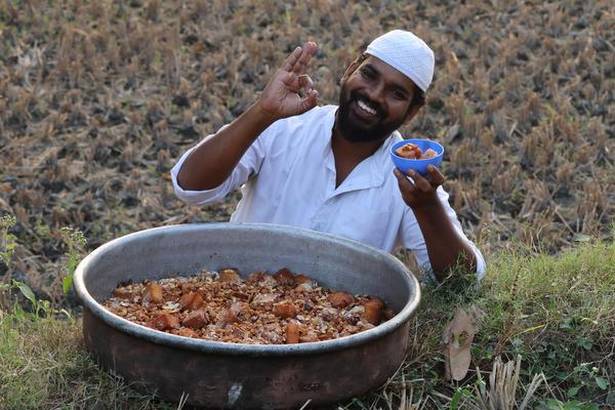
Cooking demo videos galore, but Khaja Moinuddin’s popular no-frills videos serve to fill hungry orphans as well
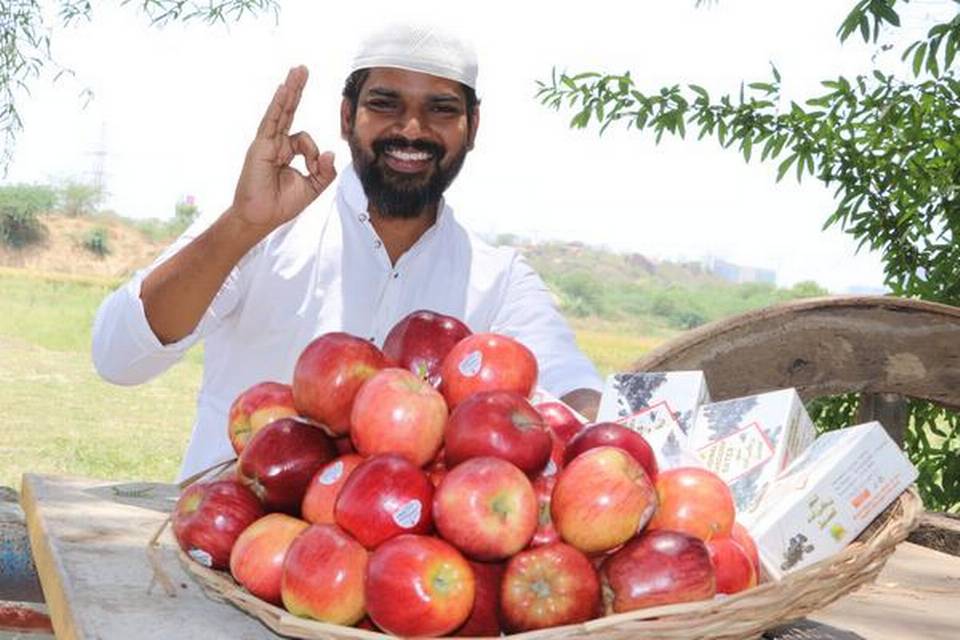
If you are able to look away from Khaja Moinuddin’s ear-to-ear grin, you will notice a 40 kilogram-capacity degcha or a handi that is either resting over a bed of embers or bubbling with food in the heat of a wood fire. His kitchen is always outdoors; Moinuddin is either cooking in the open under the sky or, during the summer months, under the shade of a tree. His smile remains intact, no matter where.
Moinuddin’s cooking is on a big scale, similar to his boundless smile. And if you are one of those who gets sucked into the web of cooking demo video feeds, then you are sure to have come across his.
If Moinuddin’s name doesn’t strike a bell, the YouTube channel Nawab’s Kitchen sure will. Popular as one of the viral content creators from Hyderabad, the chef is almost always cooking to be able to feed 40 people. The cooked food is distributed in orphanages and their staff, as well as among people who stop by and wait patiently to watch him cook.
“I always cook extra and never come back with leftovers. Once we are done cooking, everyone in and around the area where we cook is free to join us to eat. Initially we would pack the cooked food in boxes and distribute it, then we thought we would feel even better if we are able to serve the people directly,” says Moinuddin.
And who is the ‘we’ he is referring to? Moinuddin clarifies he might be the face of Nawab’s Kitchen, but there are two others who work equally hard to put every video on YouTube. “My colleagues-turned-friends Srinath Reddy and Bhagat Reddy are with me in this. We conceptualised Nawab’s Kitchen (NK) together,” smiles Moinuddin.
Moinuddin has over 10 years of working experience in regional TV channels as a producer. His friends and partners Srinath and Bhagat who prefer to work behind the scenes are experienced at working in the video editing department. Having known each other for a good number of years, the three decided to quit their jobs and start a YouTube channel that will engage, educate and be on a neutral topic like food. “There are very few people who don’t pause while scrolling, to watch a video on how a certain dish is being cooked. Especially if it is an dish Indian, and been shot to show the richness of rustic regional cuisine,” adds Moinuddin.
NK’s no-frill videos and a relaxed explanation of the ingredients and cooking process, wins him fans on his YouTube channel. His recipes are easy and simple to follow. “However, we choose a venue to cook that is close to some orphanage so that we can share the food with them. When we set out to put together NK we wanted to do social service through what we were gaining,” adds Moinuddin.
None of the three friends are trained chefs, they function with the knowledge and experience that comes with observing their families cook. Moinuddin adds, “My nani was an excellent cook, when I was in Tenali with her while doing my graduation, I learnt her style of cooking.”
For dishes like pizza and cakes, Moinuddin equips himself by learning online. “When we reach the gates of the orphanages, the smile and love with which the children greets us, banishes the day’s stress. The love and appreciation they show towards us makes us wonder where the children get their wisdom from,” says Moinuddin. NK regularly visits about 15 orphanages to share their food.
What is Nawab Kitchen’s signature dish? “My mutton biryani has a lot of fans,” he laughs.
source: http://www.thehindu.com / The Hindu / Home> Life & Style>Food / by Prabalika M. Borah / August 20th, 2019
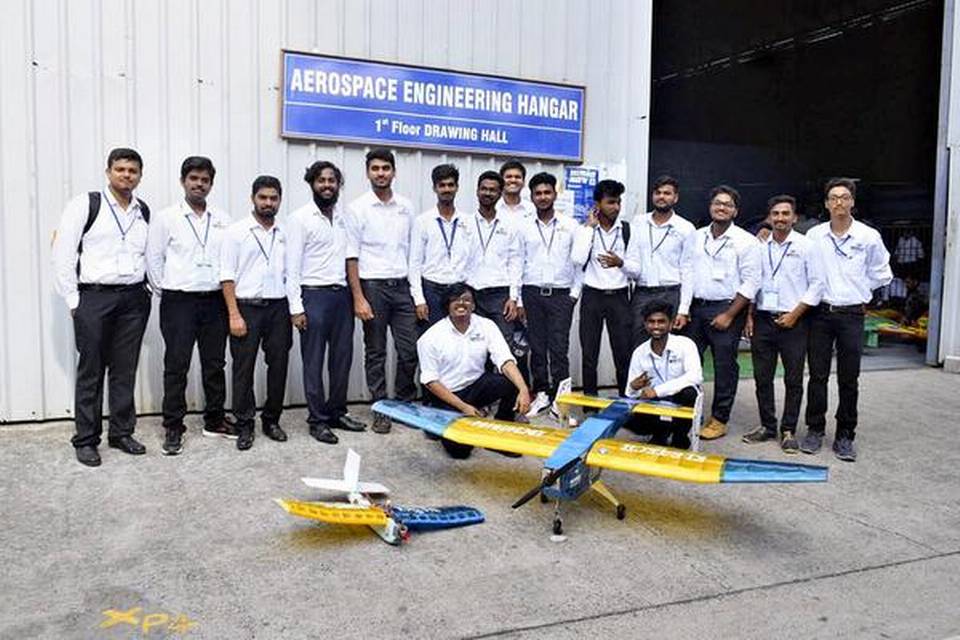
The AeroKLE team with their working models. | Photo Credit: Special Arrangement
They come first in regular class and third in micro class in national tournament
AeroKLE, a team of 17 students of KLE Technological University (KLETU), has secured the top place, in the regular class, at the national-level SAE India Aero Design 2019 competition held in Tamil Nadu.
In the recent competition, organised by SRM Institute of Science and Technology, they also secured the third rank in the micro class. As many as 146 teams from across the country took part in the competition.
The team comprised Vineet Anand Bedarman (captain), Amit Allimatti, Sayyed AhmedZuhair, Rohit Anvekar, Rahul Pattar, Shridhar Hadimani, Om Prakash Patel, Yajnesh Poojari, Koustubh Annigeri, Sujay C, Nilesh Bandekar, Mallikarjun Pattanshetty, Yeshwanth Kumar, Ajey Joshi, Alex Steven Dharmdas, Calvin Lobo, and G.V. Srikar.
The team was guided by Head of School of Mechanical Engineering, KLETU, B.B. Kotturshettar; Head of Centre of Material Sciences Nagaraj Banapurmath, and faculty coordinator G.M. Hiremath.
They were involved in designing and testing different prototypes in Hubballi.
They also optimised the final aircraft designs and submitted the technical design report at the event.
The report too was praised by judges and was has adjudged the ‘best technical design report’ at the event.
The students have bagged a purse of ₹1.35 lakh.
At the contest, the regular class demanded the highest payload to be lifted, whereas the micro class demanded the highest payload fraction.
The teams had to conform to the mechanical and electrical limitations as prescribed by Society of Automotive Engineers (SAE), India.
Experts from the Indian Space and Research Organisation, the Defence Research and Development Organisation, Hindustan Aeronautics Limited, and National Aerospace Laboratories were the judges for the event.
source: http://www.thehindu.com / The Hindu / Home> News> States> Karnataka / by Special Correspondent / Hubballi – August 02nd, 2019
![[Manish Sisodia, who is also the Minister of Art, Culture and Languages, appealed to the writers to create more literature to inculcate the feelings of communal harmony and patriotism. (Photo: IANS/Twitter)]](http://www.mpositive.in/wp-content/uploads/2019/08/ManishMPOs31aug2019.jpg)